Month: January 2024

  • The Moist Future for MSNBC

    I was invited to write a story for MSNBC.com about the coming new normal of casual sobriety, aka the end of Dry January. 

    I made a bunch of points about generational drinking habits, parallels to vegetarianism, and flaws and challenges of serving nonalcoholic spirits in bars.

    Read the story here.   


    Screenshot 2024-01-31 at 4.36.47 PM

  • Directional Freezing on The Weather Network

    Well here's something I never expected when I started experimenting with ice all those years ago: The Weather Network did a segment on directional freezing to make ice for cocktails. 

    I wish I was smart enough to have pitched them The Ice Book when it came out! 

    Check out the video here.


    Screenshot 2024-01-13 at 10.36.10 AM

  • The Gibson is a New York Drink Gone Big in San Francisco

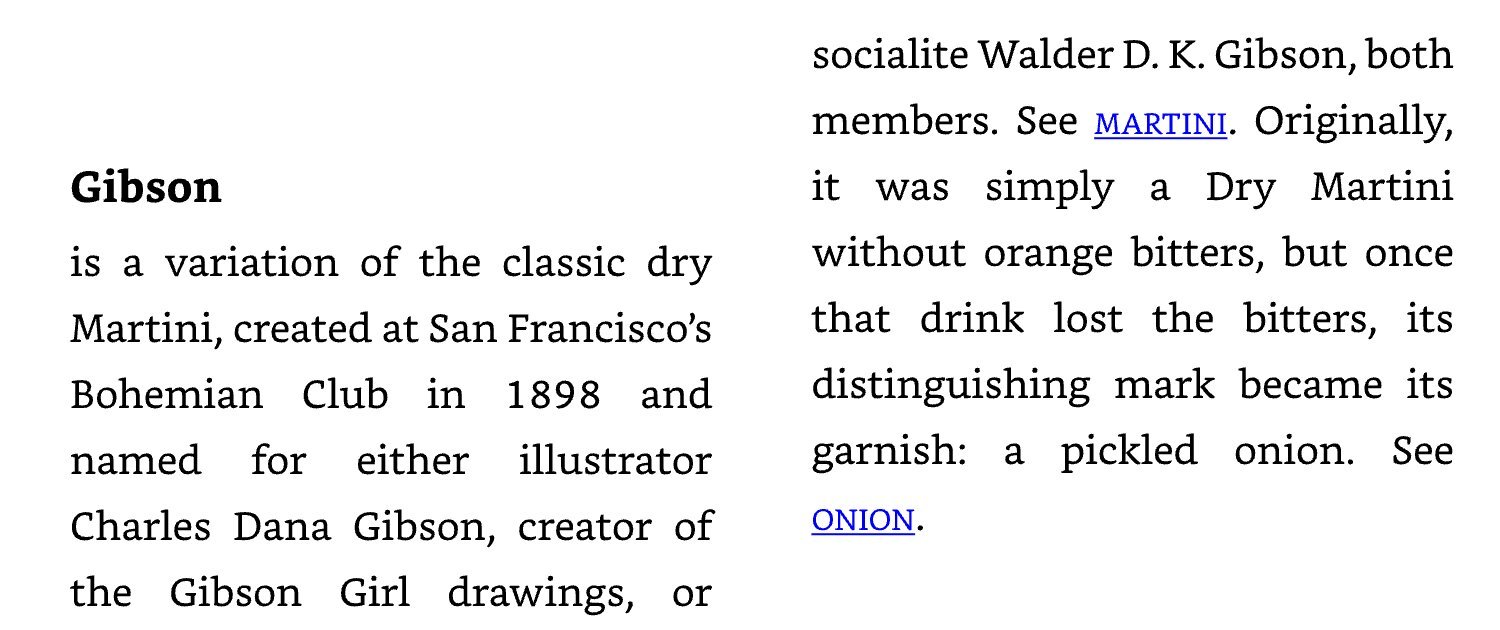
    It was believed that the Gibson cocktail was created in San Francisco. In this 2008 blog post I cited what David Wondrich told us on a tour. The information is repeated in the Oxford Companion to Spirits and Cocktails

    Screenshot 2024-01-08 at 6.31.38 PM

    But now new information has come to light. Martin Doudoroff shared information from a tweet on the Spirits and Cocktails bulletin board

    It is an article from the San Francisco Examiner from 1896, a new earliest first reference to the drink. From this story it seems that:

    • The Gibson was probably invented in New York 
    • It became popular at The Bohemian Club in San Francisco – maybe not invented there but transmitted from NY to SF there
    • And then it became popular in New York later, after it was popular in SF
    • It could have been equal parts genever to dry vermouth rather than dry gin but became famous with dry gin

    I always say (to myself): History is a moving target. 

  • The Mystery Pillar aka The Sacrificial Ice Cube

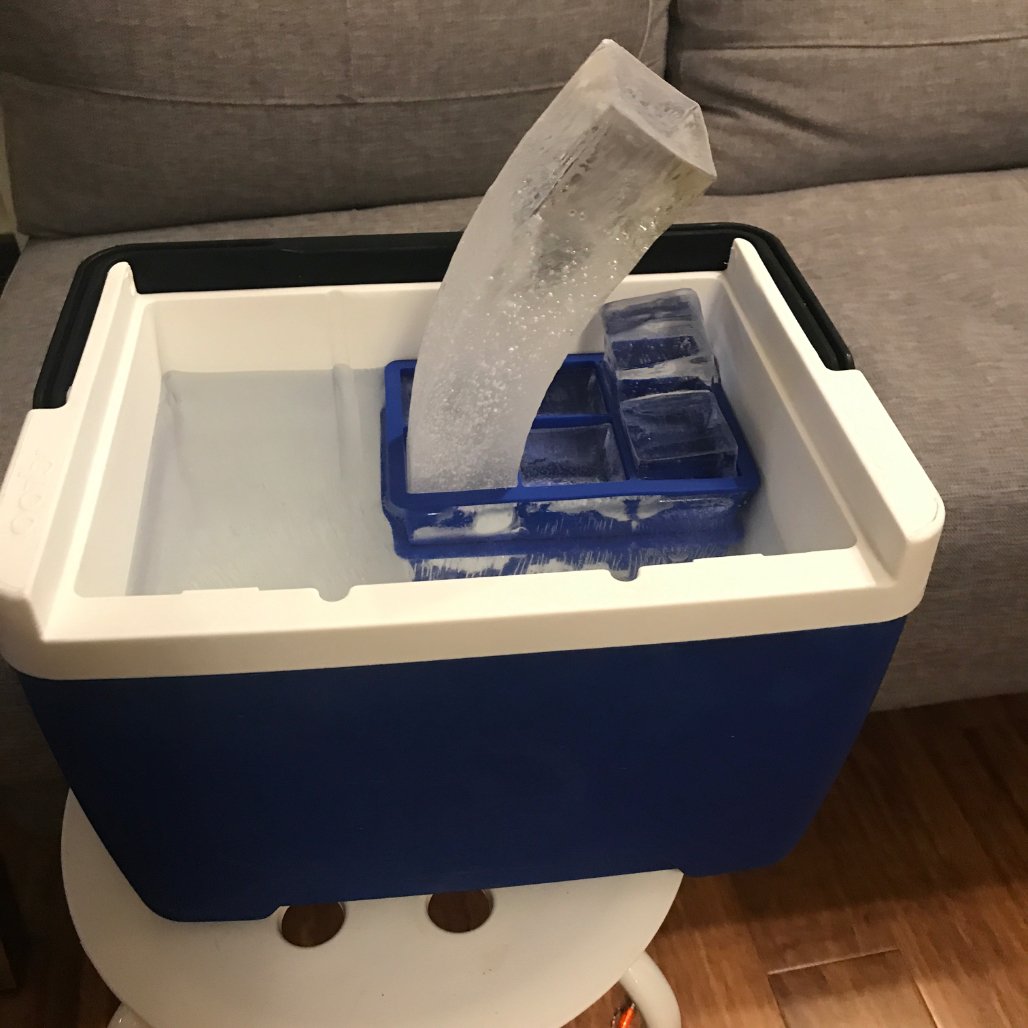
    In clear ice cube trays, one cube (or a few) almost always pops up and starts growing upward after some time of freezing. I call this The Mystery Pillar. Others call it the Sacrificial Cube, because it is usually cloudy and must be discarded. 

    The mystery pillar


    While it would be theoretically possible to build a deformable tray that avoids this, in general I think you just need to live with it. Pull the tray out of the freezer when it starts forming- if you let it go too long, you may end up with the pillar hitting the freezer ceiling and pinning your tray into the freezer. I say this from experience. 

    As water cools and turns into ice, it expands. In a rigid container, this exerts pressure on the system, and it seems that pressure pushes one or more cubes up from the hole in the bottom of the tray. It seems it's the last cube compartment to freeze that becomes the mystery pillar. A sciency video that explains the phenomenon in ice spikes is here.

    I think that sometimes the water pushing up into the tray pushes the existing cube up – so that it's clear on top and cloudy down the cube shaft. And other times I think water squeezes up around the cube and onto the top surface so it grows that way – cloudy on the top. 

    I've been asked about the Mystery Pillar four times in the past week so going forward I'll point everybody to this post! 


  • Aqua Vitae Vs Arrak, Terminology and History

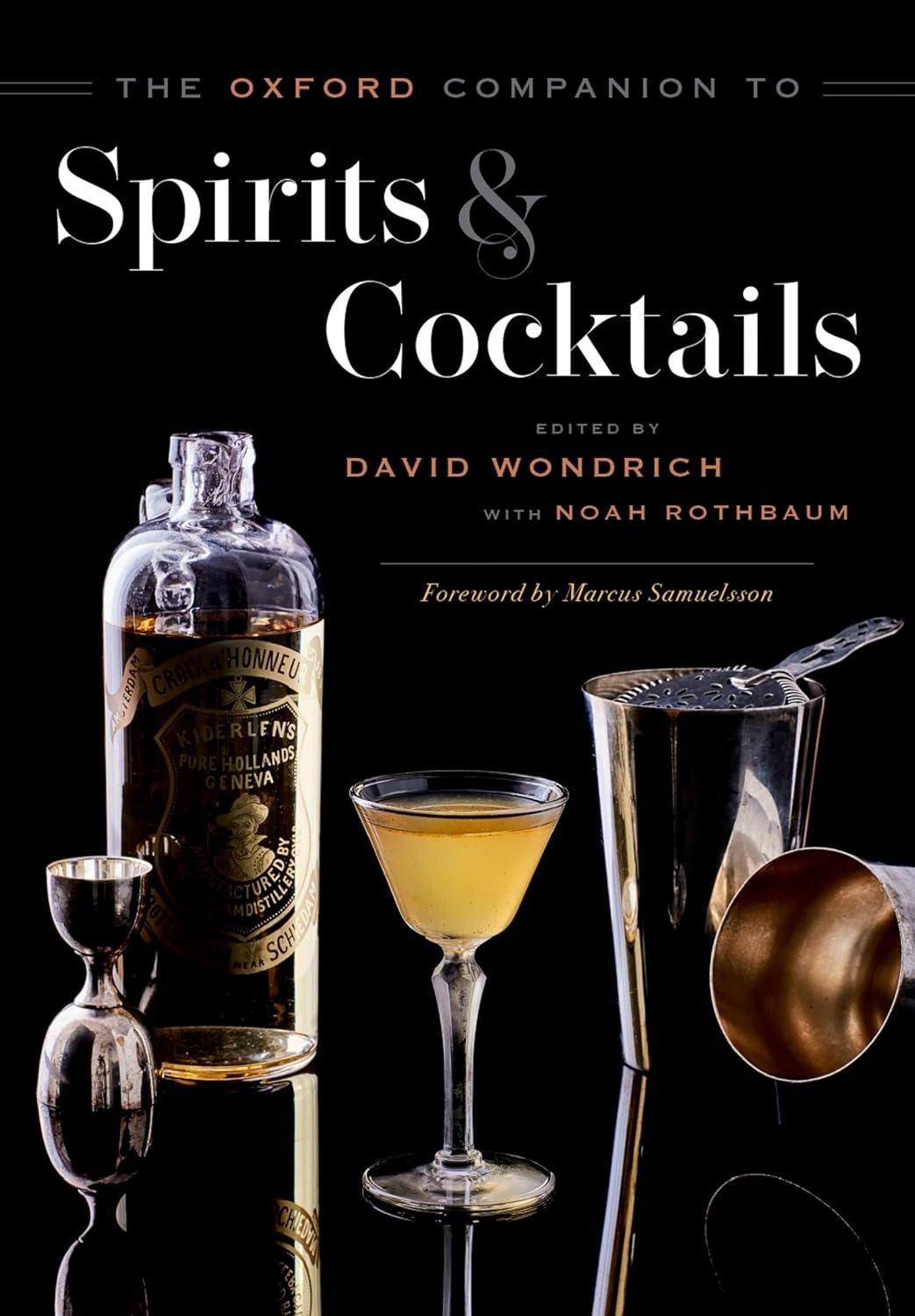
    I am reading The Oxford Companion to Spirits and Cocktails in order with the Alcademics Book Club, which you may join on Facebook if you wish. (We're on the A's in early January.) 

    I've already learned so much new information and also old information I'm seeing in a new light. 

    One example of the latter is in the terminology of Aqua Vitae, the Latin term for distilled spirits ("water of life") vs arrack, the name of several different spirits. 
    Oxford coverAqua Vitae as a terminology comes from the "alchemico-medical" background – the medical alchemists separating a pure essence of the universal life force (supposedly) from wine. The name refers to the method (distillates were called waters) and (supposed) healthy life-giving impacts to the person who drinks it. It first referred to wine-based spirits but came to mean distillates of all sorts (and is the base of the words for aquavit, eau de vie, and whiskey) but then words like whiskey, brandy, etc came to dominate as spirits differentiated. A thing to note here is that this terminology and technology was from Southern Italy and spread up north in Europe toward the UK and Scandinavia, and eastward into Germany, Poland, and Russia. The technology of distillation of aqua vitae followed the path of knowledge with travelling monks. 

    Arrack was the Arabic word for distilled spirit, and according to Oxford, "is the first widely accepted umbrella term used to differentiate spirits from fermented beverages." It was first referenced in the later 1200s and early 1300s (the same time, but in different places, as references to aqua vitae). It also referred to several different distillates – palm arrack from Goa, cane arrack from northeast India, rakia from grapes/raisins in the Ottoman Empire/Middle East, and Batavia arrack from Indonesia that was made from palm sap and sugar. Many of these spirits travelled with sailors on the spice trade routes and were made into punch. Though not stated explicitly in Oxford, it seems terms referred to distilled beverages

    "All of these spirits preceded the rise of brandy, genever, rum, and whisky, the European spirits" according to Oxford. 

    So arrack (in its various spellings) seems to be the blanket term for distilled beverages that came out of the Asian tradition and ingredient set that travelled along Asian-oriented sea and land trade routes, while aqua vitae was more the European term for distilled medicinal spirits from wine and grain that travelled along routes of monastic and medical-alchemical knowledge from Southern Europe north and northeast. 

    "In general the newer trade networks supplanted the older ones, and the various arracks fell back on their local markets."  And the spirits born from the tradition of aqua vitae came to dominate the European markets and evolve into their more modern forms. 
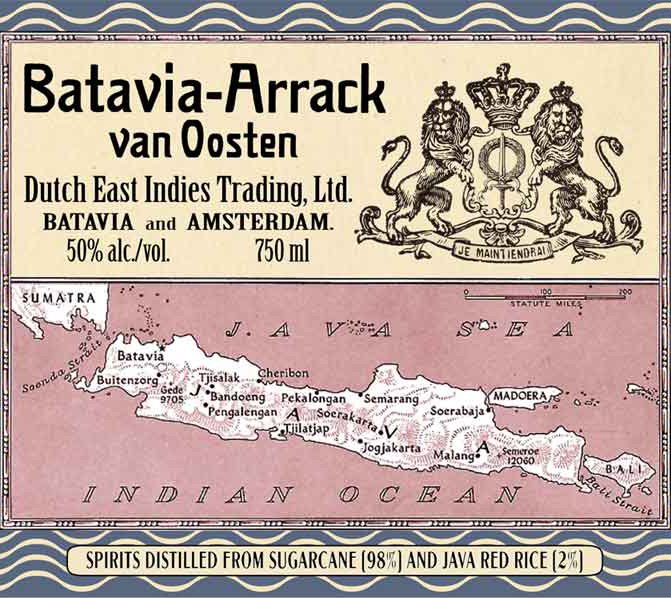
     

    Batavia.label


  • Did British Gin Come from Dutch Genever? Part 2

    Screenshot 2023-12-27 at 2.11.13 PMI watched a video by Philip Duff on the history of gin – is gin the British interpretation of Dutch genever? Or does it come from a more or less independent distilling tradition since British spirits were usually based on a neutral base distillate? 

    I watched a seminar by Jared Brown and Anistatia Miller that claims independence and wrote about that here.

    Phil Duff adds some new information about the historical use of botanics in genever and on Dutch distilling styles. 

    Duff cites a couple key pieces of information:

    • The most popular style of distillation in Holland was not distilling a beer mash with botanicals one single time [which leads some to the conclusion that gin, based on a neutral spirit base, was born independently of Holland] but 2 distillations then a third with botanicals, which is essentially how gin is made.
    • The Distiller of London contains a recipe that looks like gin but is more of an expensive medicinal liqueur, and a book published after it to "correct the mistakes" in it says differently 

    And thus he concludes basically that gin was invented in England after column distillation comes on boaord in the early 1800s, but it's a direct line of invention from Dutch distilling/genever. 

    Click the link above for Jared/Anistatia's first video, then watch Phil's video below.