The Daily Pour will be sponsoring a water judging called the Water Choice Awards later this year.
I quickly realized our host was one of those rare people who moves through the world like an almanac, collecting knowledge that may seem trivial to some, but to those who care is deeply valuable. English has spent years investigating the overlooked corners of drinks culture: niche spirits, ice, water and cocktails. He does it with a rare intellectual curiosity, pursuing knowledge not for profit but out of genuine interest. He brought up the library in the building several times, almost like an undercover cheerleader for it.
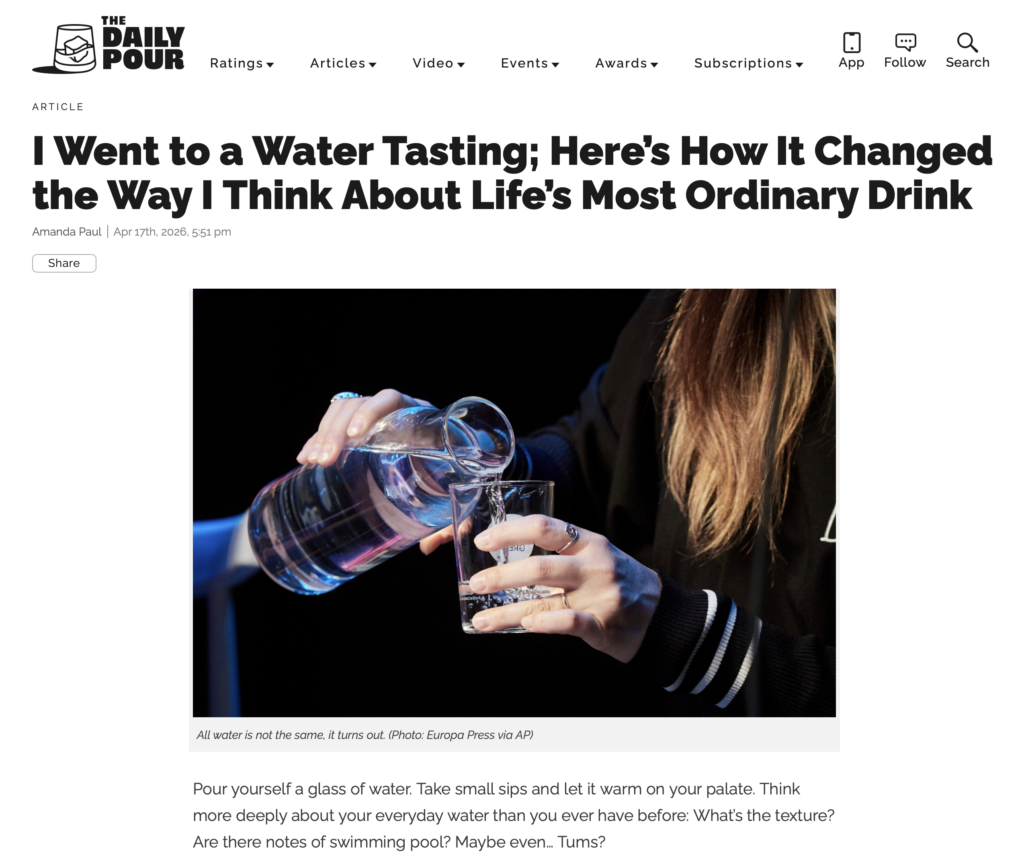
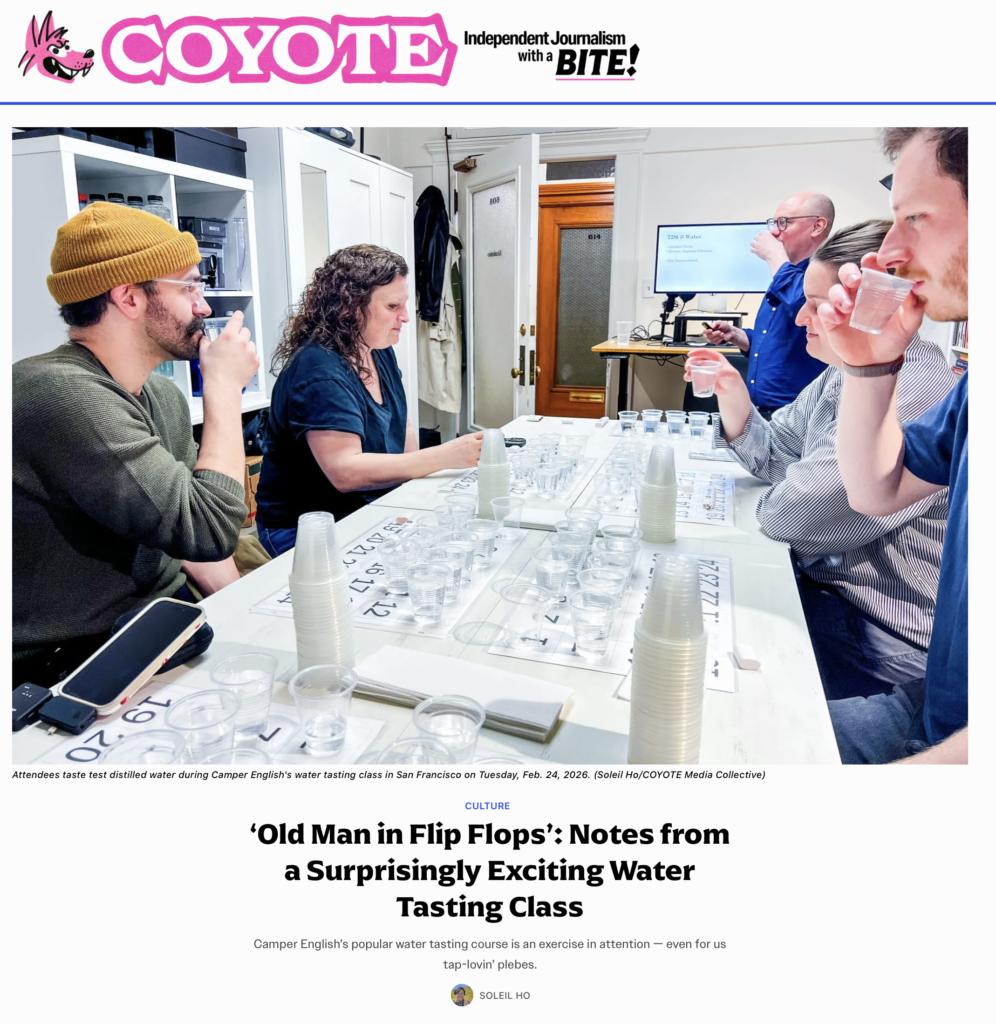
Over the course of the evening, a handful of strangers and I sat in a tiny office tasting 19 different waters: still and sparkling, artesian and well water, local bottles and imports from far away. We tasted Evian, a classic mineral water that’s the real deal — dare I say, holy grail. We tasted Topo Chico, which English recommended as one of the best sparkling waters for cocktails (though he noted the brand has been reworking wells in Mexico, leading to supply shortages). We tasted FIJI Water, which may not win sustainability awards but stands out for its unusually high level of silica.
We tasted Vichy Catalan, the No. 1 water in Spain, which has a distinctly salt-and-limestone character, a profile that, it turns out, works beautifully in a country where the climate is hot and the cuisine leans heavily toward seafood and salty dishes. Have you ever thought about that — a certain type of water being popular in a certain climate? It had never crossed my mind.
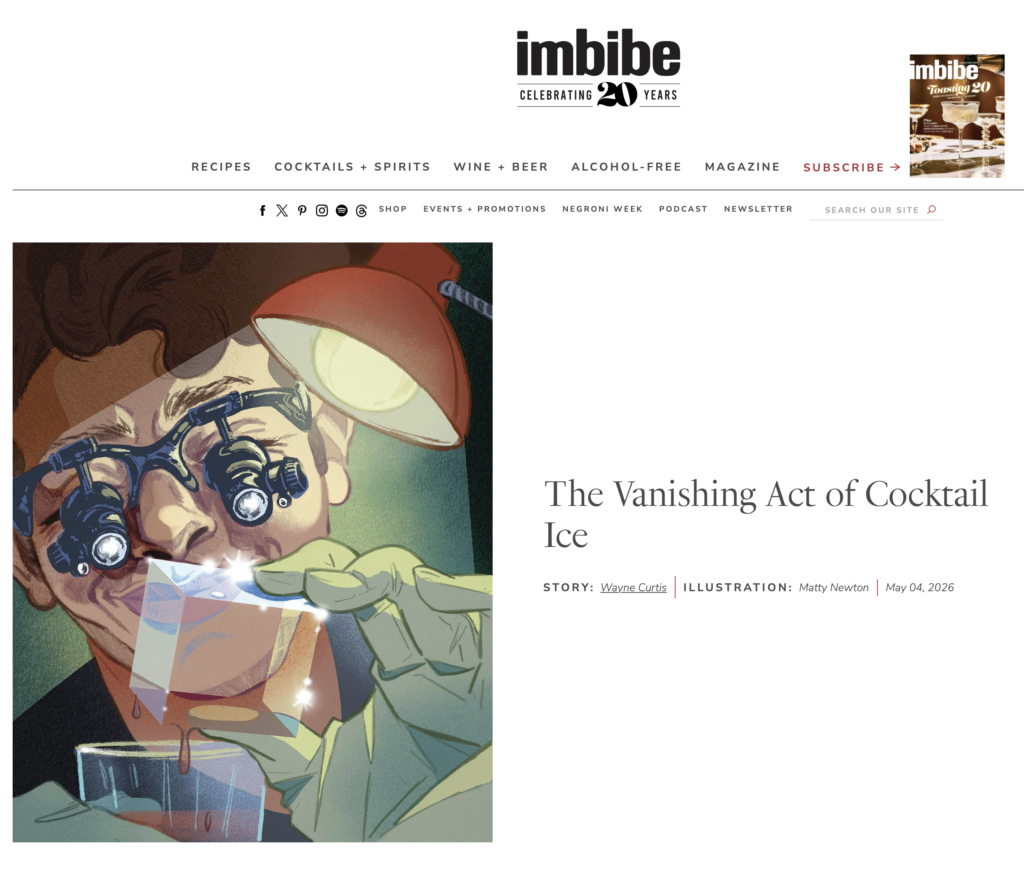
For the 20th anniversary issue of Imbibe Magazine (to which I have subscribed all 20 years, and written for a few times), Wayne Curtis wrote a story on my work on and solution to creating clear ice at home.
Among these was Camper English. A spirits writer based in San Francisco with a background in science, he was curious about the physics of clear ice. By the 1990s, commercial outfits were producing large blocks of clear ice for banquet and wedding sculptors. In New York, clear cubes were sold wholesale to bars. But how to do this at home? “I decided to just test some stuff out systematically, not expecting to actually figure anything out,” English says.
His early experiments included the “freeze twice” theory, and he published the results on his blog, Alcademics. (“I repeated the freezing something like 12 times,” he reported. “It’s not getting any clearer, folks.”) He started with hot water and then very cold water, and set his freezer at various temperatures. He tried carbonated water, “which made the cloudiest of ice.” The results were always the same.
The class was a particularly fun session, with two very opinionated bartenders in attendance.
I don’t usually consider water in my daily life. I drink good ol’ tap water to wash down medication, hydrate during a hike; if I’m feeling wild, I’ll toss in an electrolyte tablet. Any emotional attachment I might feel to water has to do with context: the bracing quality of a cold, 20-peso Mineragua on a humid tropical afternoon, or the glass of room-temperature tap that I grab when I randomly wake up at 3am. I’m probably not the only person who looks at the ever-expanding array of branded bottles of water on grocery store shelves and thinks it’s all a scam.
But that Tuesday night, I set aside my cynicism and tasted 19 different types of drinking water: still and sparkling, artesian well and tap, local and imported from far, far away.
And you know what? He convinced me, once and for all, that being a water nerd is a completely rational behavior.
Lost Lantern independent whiskey bottler released their Spring 2026 collection, which was themed as a collection of high vs low proof whiskeys.
The collection includes American single malts with unsmoked barley, Rocky Mountain bourbons with different mashbills, southern bourbons with different mashbills and malt influence, and rye whiskies with different ryes – and each of these sets of two whiskeys includes a low proof one (well relatively low proof at 50+ percent ABV) and a high proof one (as high as 77 percent ABV!).
These pairings are of the same styles, but not identical bottlings. In the same collection though, they include one for direct comparison:
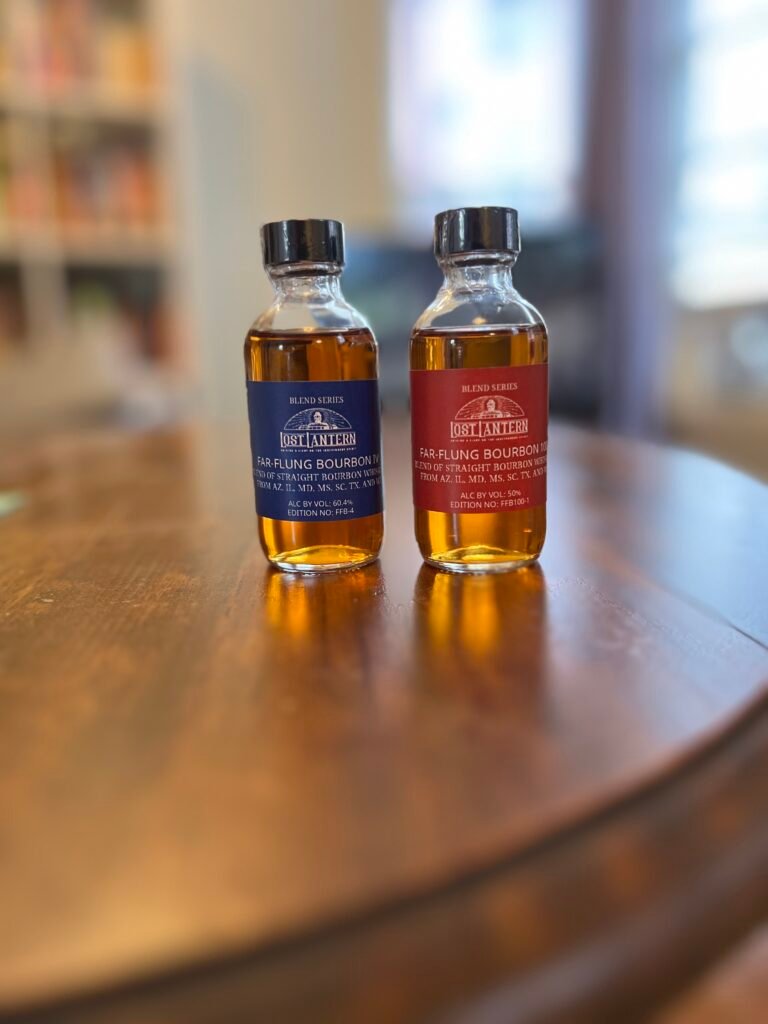
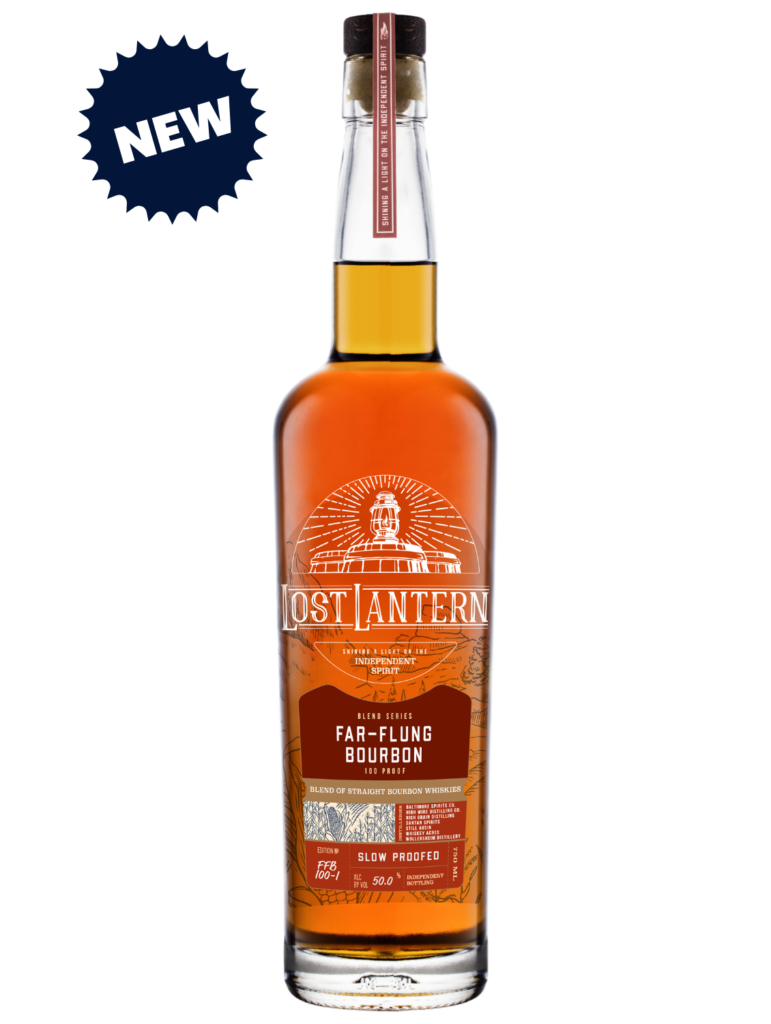
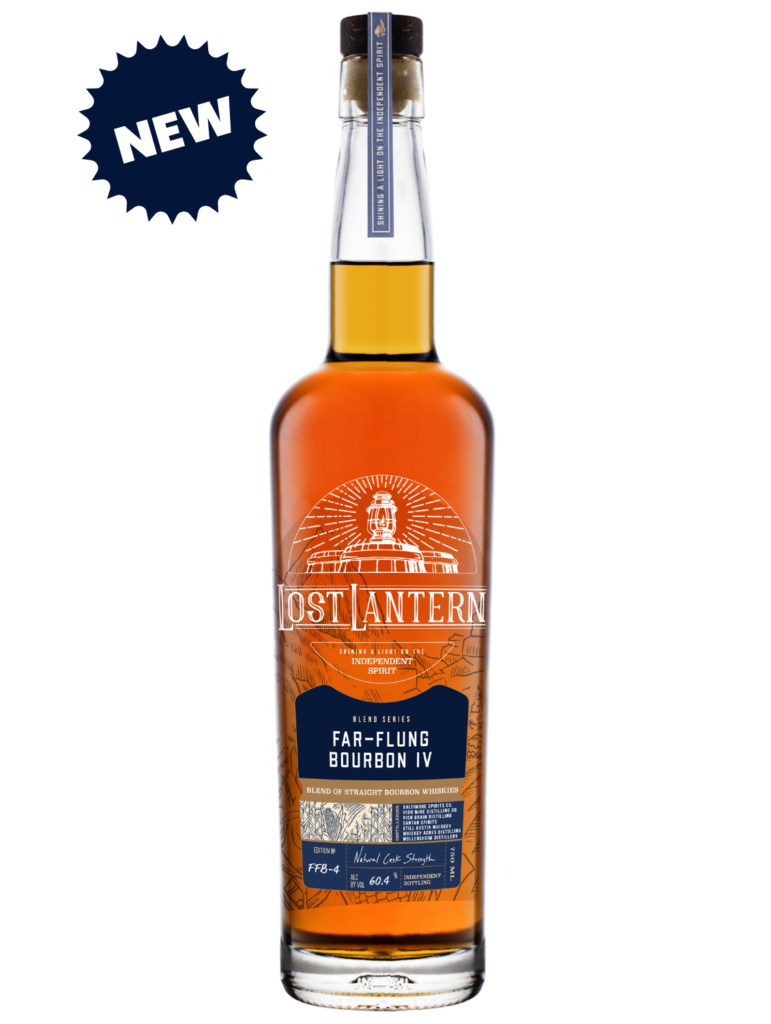
Far-Flung Bourbon IV 60% vs Far-Flung Bourbon 100 50%. These are both blends of straight bourbons from seven different distilleries in seven states: Baltimore Spirits, Baltimore, MD High Wire Distilling Co., Charleston, SC Rich Grain Distilling, Canton, MS (ghost distillery) SanTan Spirits, Chandler, AZ Still Austin Whiskey Co., Austin, TX Whiskey Acres Distilling Co., DeKalb, IL Wollersheim Distillery, Prairie du Sac, WI
Comparing the 50% and 60% Bourbons:
Because they were kind enough to send samples, I compared the two.
I found the 50% ABV bourbon to be a little thinner on the nose than the 60% that smelled richer and woodier. The 50% tastes relatively hot for its proof, and seems like it’s going to be thin but really opens up to a buttery body with notes of mahogany wood (I used to have a mahogany desk) and copper, with a lot of other flavors flitting about, making it clear this isn’t a straight bourbon but a blended of straights.
The 60% bourbon also enters a bit thin, but like the 50% what seems like it would go right into wood flavors stays thick and almost syrupy, a touch of nuttiness; and rather than a finish, a lingering body. I think I like the 50% dilution better, but that’s typical for me.
The decision to bottle at a certain proof is a conversation between the distiller, who should find the proof at which a spirit/blend shines best (within the legal and typical parameters of its category), and the marketing team that may dictate products that speak to trends or holes in the current line – such as a need for older, high-proof American whiskey; or whiskey finished in a certain trendy barrel like mizunara oak.
Can You Dilute Your Own Whiskey, and Who Would Want To?
It’s rare that we are given the chance to compare the exact same blend of the same age at different proofs. Technically I could add the right amount of water to the higher proof one and reduce it to the lower proof that I prefer. So I chose to ask the bottlers if it would taste the same, or how they do it.
Lost Lantern Co-Founder Nora Ganley-Roper wrote, “At Lost Lantern we slow-proof our whiskey, which means that we gradually add water over the course of multiple weeks. We do this to ensure that solids don’t come out of solution when the water is added (i.e. saponification) but we also find that the mouthfeel of the whiskey is entirely different after slow-proofing. The process provides a creaminess that I don’t generally experience when I add drops to a glass or when I taste whiskey that has been proofed quickly. The profile is also more integrated than we see otherwise.
To be clear, I’m all for adding a few drops of water to your whiskey! I think it’s an important part of understanding the whiskey itself and is something we expect that people will do when I’m blending a whiskey. But, the whiskey you get won’t taste like our proofed version!”
So if you’re going to proof down your own whiskey, do it slowly – and probably with distilled water btw.
Who Proofs Down Their Own Whiskey?
There’s a huge trend toward high-proof, ‘hazmat’ strength whiskeys, which I think is largely macho bullshit, like seeking the smokiest scotch or the hoppiest IPA or… Malort. But people like it.
I decided to ask some people – specifically the people in a Facebook Bay Area whiskey group I am a member of. I asked, “Do you think of super high proof whiskeys as “whiskey concentrates” that you proof down, or do you enjoy everything at the super high strength.
The least number of people responded that they think of them as concentrates. The second least number of people (a much larger percentage) said that they drink everything at high proof. And probably 60 percent of responders said that it depends on the whiskey – that they like to try it and see. (Most wouldn’t be pinned down to name specific whiskies better at lower proof though.)
As for me, I *could* have done the math to slowly lower the 60% ABV Far Flung bourbon down to the 50% ABV version and compared the two, but not today. Today I mixed the two together and poured them over a big ice sphere. I’ll wait until the ice slowly melts to a point at which I’m enjoying the mix the most.
On Saturday, April 18, we marked the date of the 120th anniversary of the 1906 San Francisco earthquake and fire that destroyed about 80% of the city.
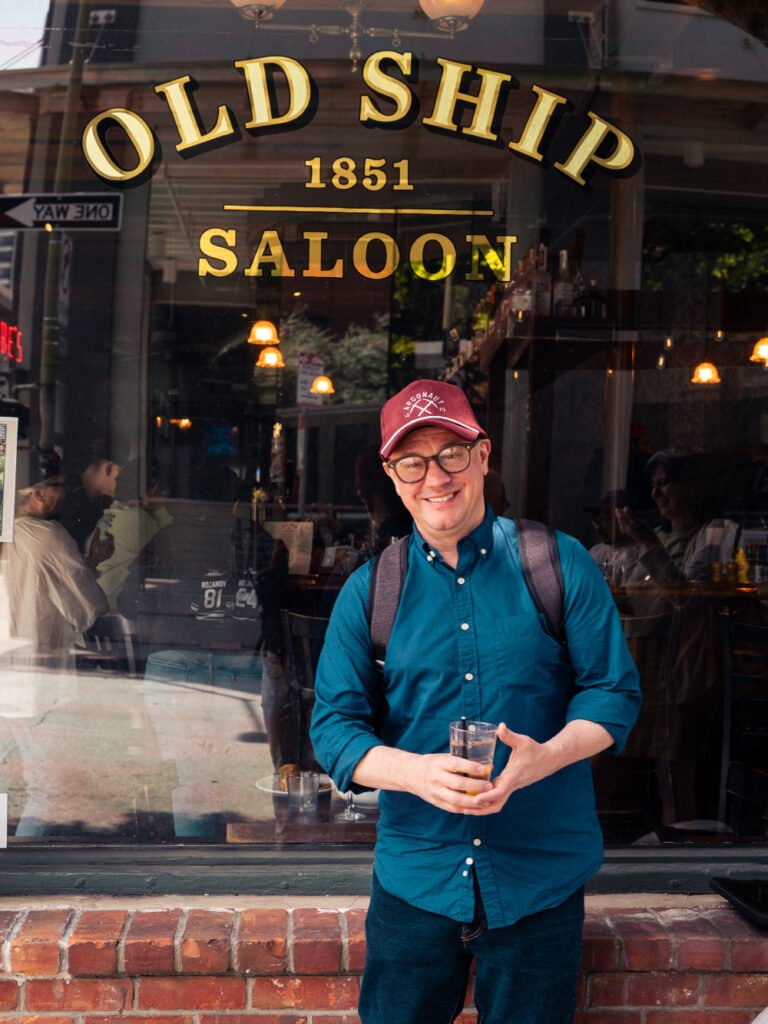
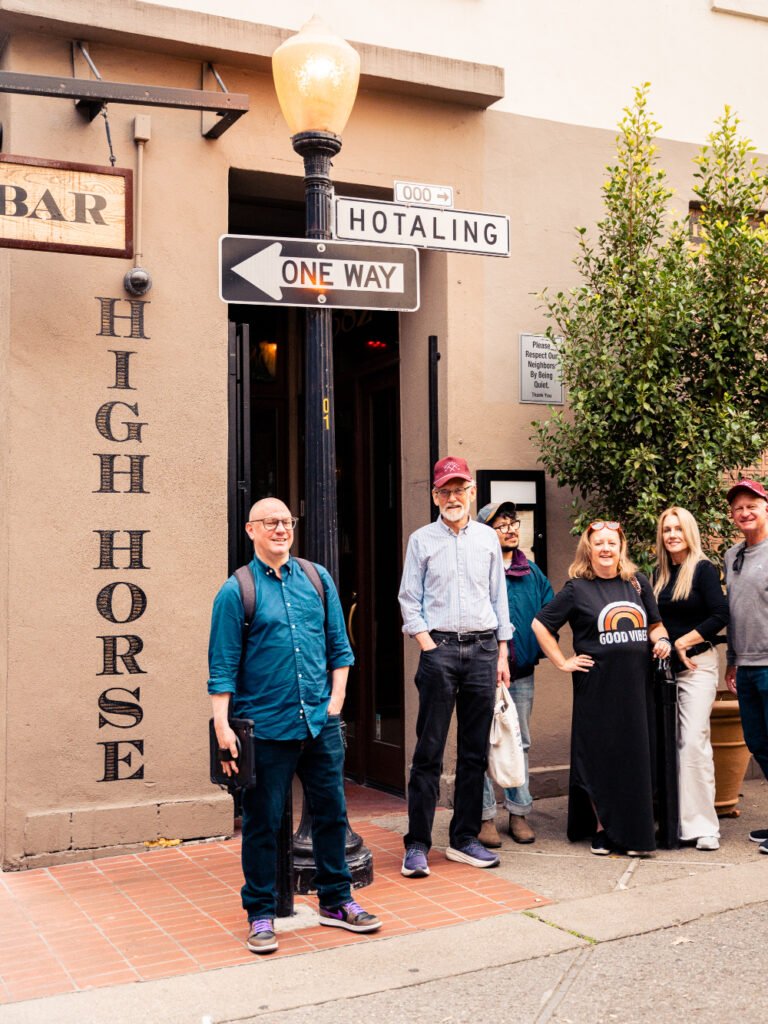
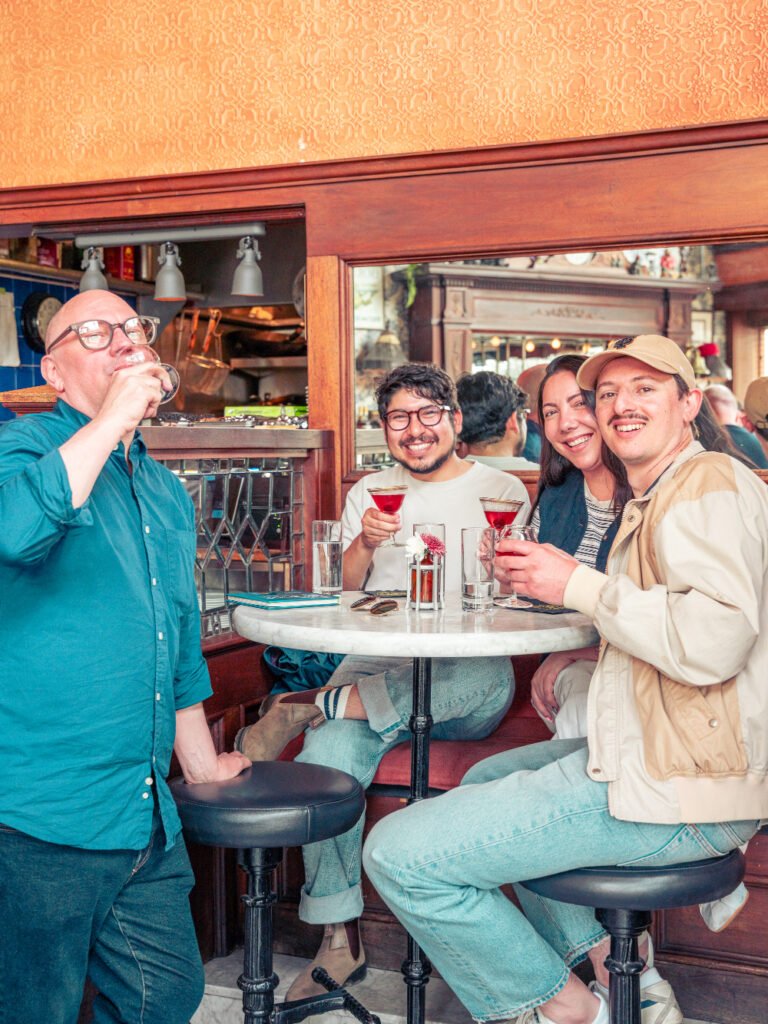
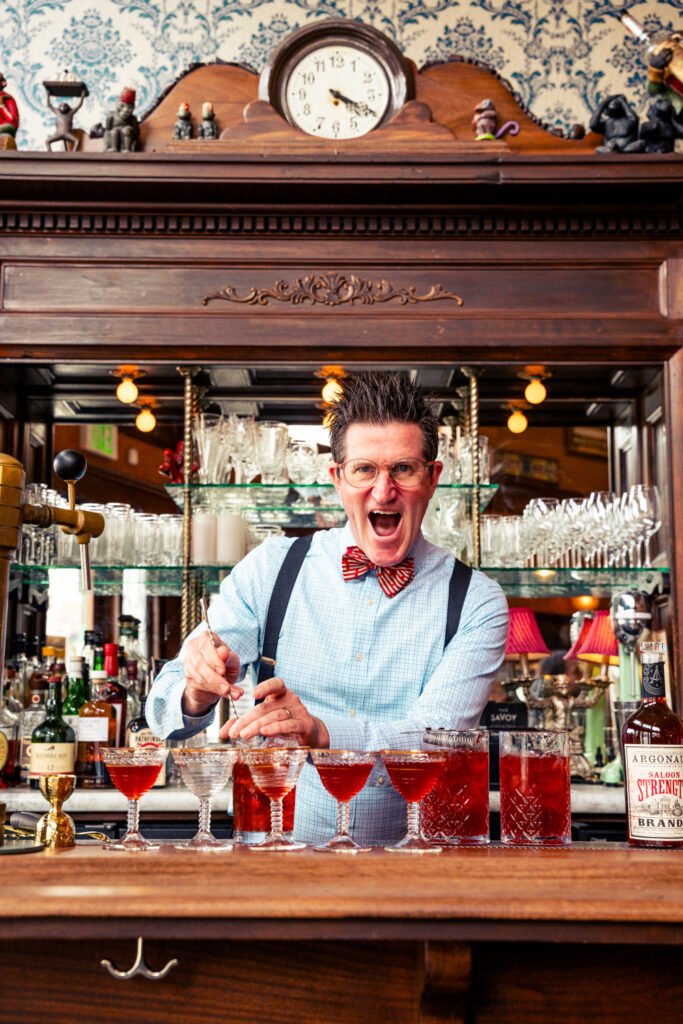
I partnered with Argonaut California Brandy and we stopped into three bars (my usual tour only stops inside one) for cocktails and light snacks.
It was a great group and a lovely day. I’ll have more pictures to share than just these after they get processed. We hope to do this big tour again, maybe in 6 months.
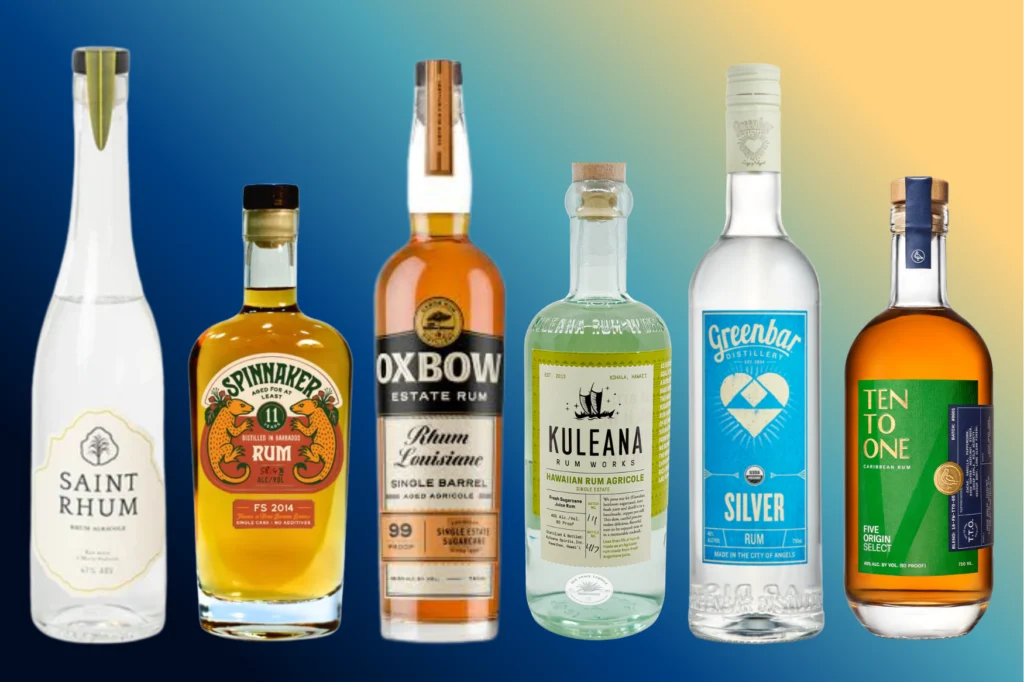
I wrote a story for AlcoholProfessor.com about additives in rum. The initial point of the story was that the term “additive-free” has become charged due to its use in the tequila industry, and now the term is spilling over into rum.
I learned in the process of reporting the story that some brands have used the “additive-free” terminology for a long time. I then became curious about whether caramel coloring is considered an additive by people using the term.
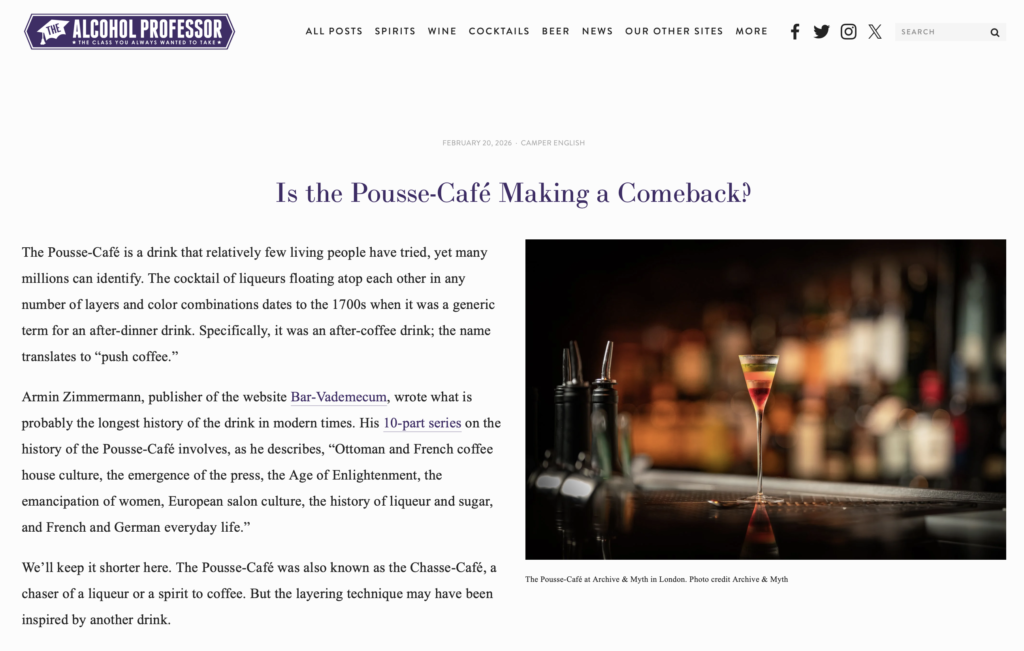
For AlcoholProfessor.com I wrote a story about the Pousse-Cafe, they layered drink that many of us have seen but never tried. I have never had one!
I wrote a bit about the history, but the real bang for your buck is learning how Jack Sotti and his team at Archive & Myth in London have developed a way to make an 8 layer Pousse-Cafe quickly by using squirt bottles kept in a freezer caddy. Smart!
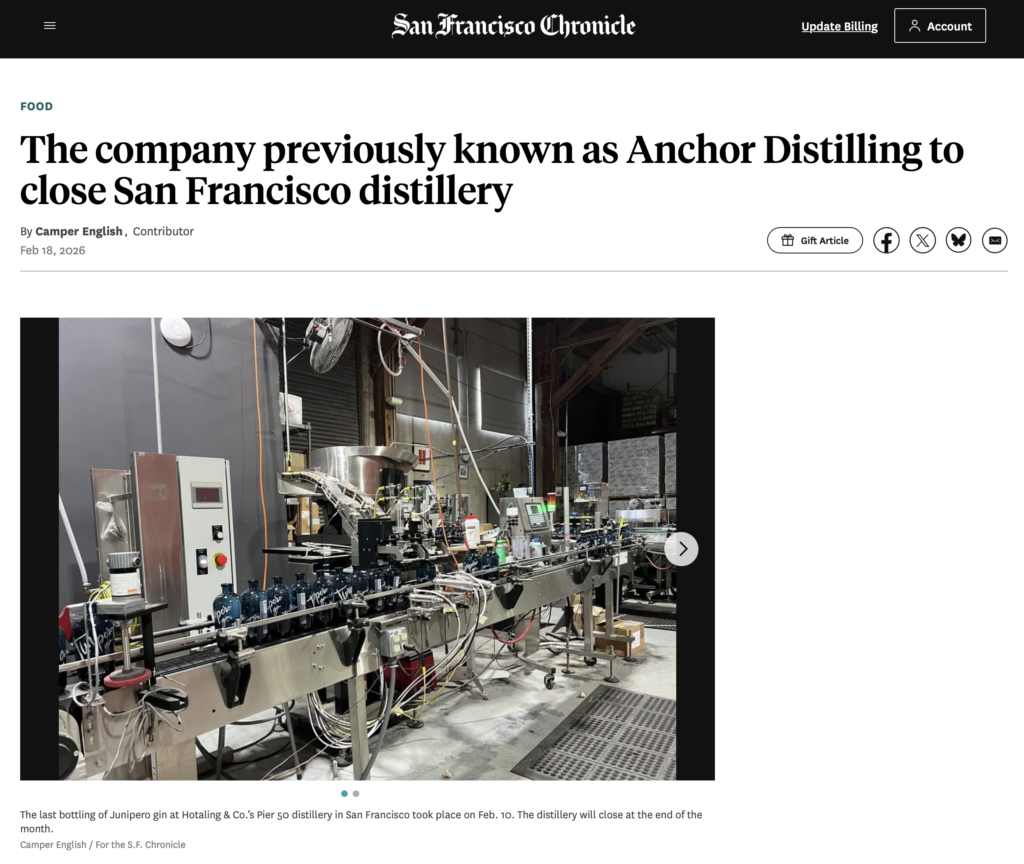
I’m very late on reposting this to my website, but in February I wrote about the closing of the distillery on Pier 50 in San Francisco where Hotaling & Co produces Junipero gin.
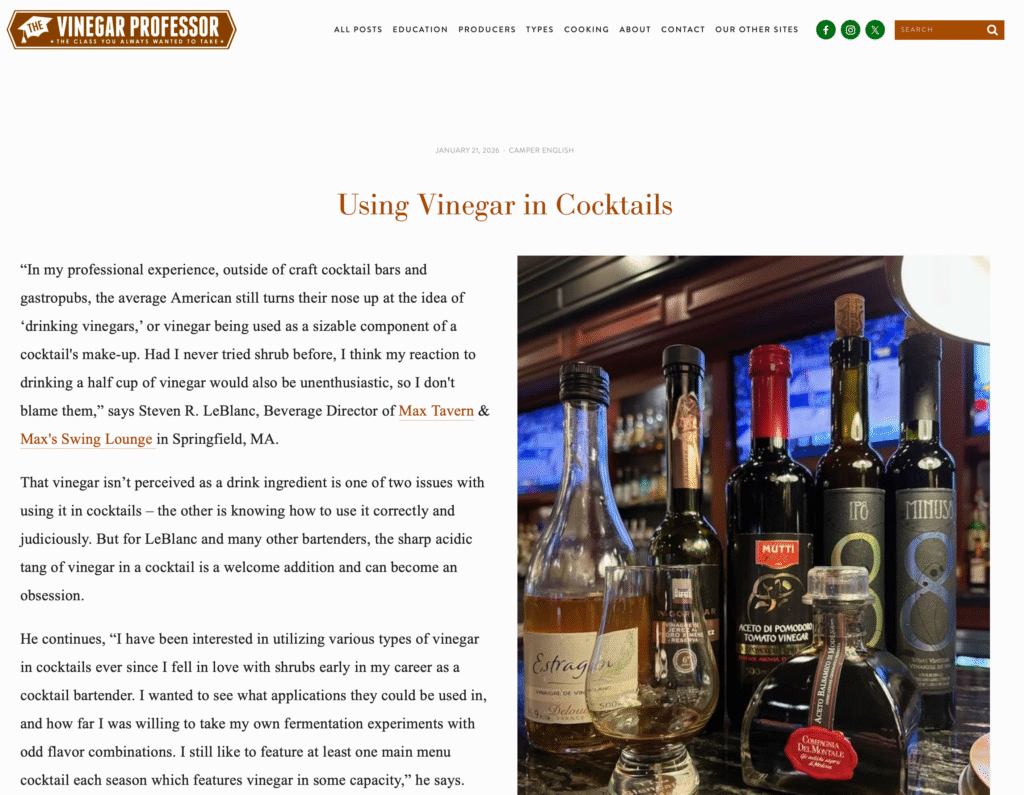
I wrote a story for VinegarProfessor, sister site to AlcoholProfessor, about using vinegar in cocktails. It contains some very good advice from several bartenders.