Author: Camper English

  • Review of Doctors and Distillers in Publishers Weekly

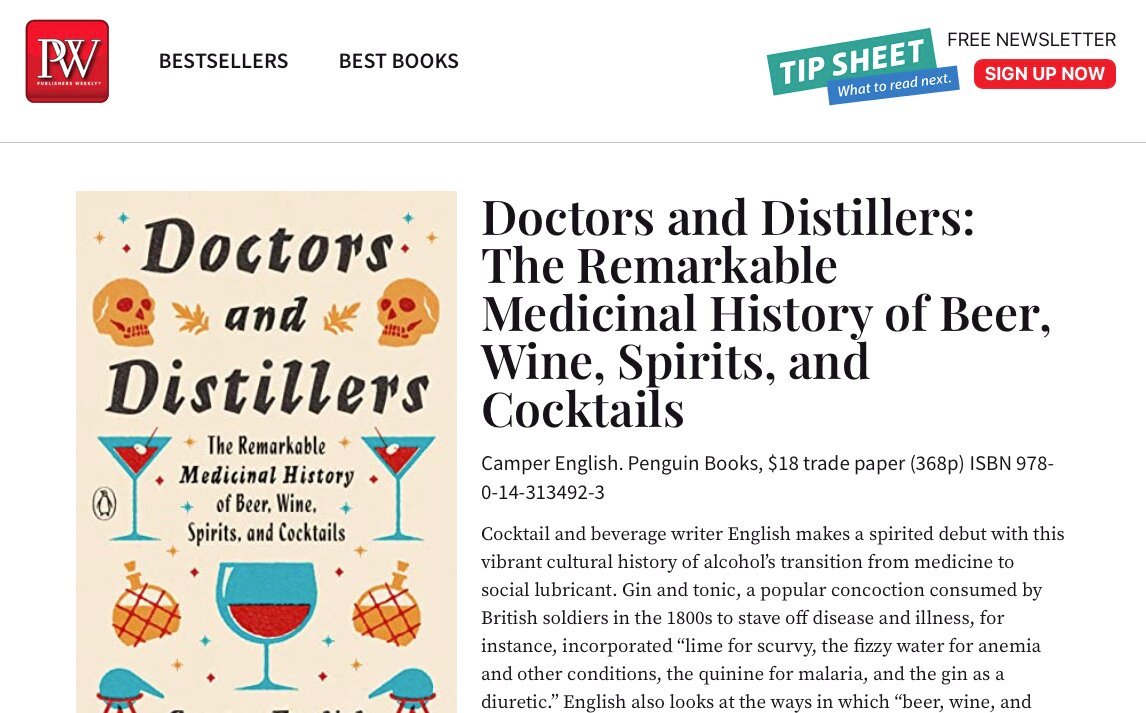
    My book Doctors and Distillers got a nice review in Publishers Weekly!

    Screen Shot 2022-05-19 at 3.43.36 PM

    Cocktail and beverage writer English makes a spirited debut with this vibrant cultural history of alcohol’s transition from medicine to social lubricant. Gin and tonic, a popular concoction consumed by British soldiers in the 1800s to stave off disease and illness, for instance, incorporated “lime for scurvy, the fizzy water for anemia and other conditions, the quinine for malaria, and the gin as a diuretic.” English also looks at the ways in which “beer, wine, and fizzy spa water inspired great progress in medical science”: 12th-century physician Moses Maimonides prescribed wine for mad-dog bites, while the plague was combated with special beers. English knows his stuff, but he also knows how to have a good time. Cocktail recipes provided throughout are cheekily positioned: after a discussion of the maladies suffered by absinthe addicts, including “seizures, dementia, vertigo, hallucinations, violent outbursts… and epilepsy,” English offers up an absinthe and champagne drink called Death in the Afternoon. Distillations made by monks (including the Carthusians with their Chartreuse liqueur) and aperitifs and digestifs also get their historical due. For the curious imbiber, or simply those looking for a few choice trivia tidbits to drop at cocktail parties (sadly, Saint Bernards never wore little barrels of brandy around their necks to revive those lost in the Alps), this is a winner. (July)


  • An Alcademics Study of Liquor Bottle Weights

    Since 2009 I have been weighing liquor bottles before recycling them. I was up to 1226 bottles weighed and decided it was about time for me to analyze the data.  

    At the bottom of the post I'll include a link to my spreadsheets. Note that I dated when I weighed the bottles because bottles often change. In my final analysis I took only the more recent bottle weights if I had them, but it's likely that some of the data in my spreadsheet represents older bottles that have since been changed. 

    This data obviously doesn't include every bottle on the market, and there may be some mistakes in it, such as a typo when I was putting in weights or I didn't weigh the box/tube that a scotch whiskey came in, etc. So take it with a grain of salt. 
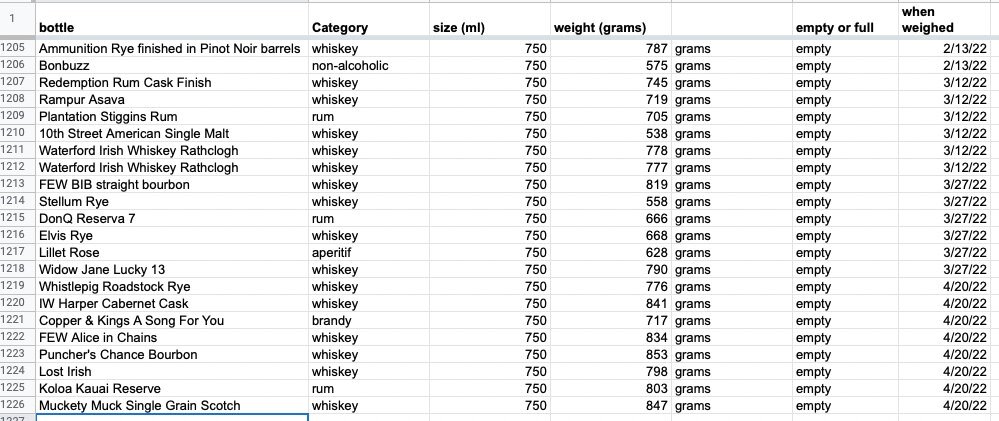
     

    Screen Shot 2022-05-07 at 11.55.41 AM

    Some things I learned: 

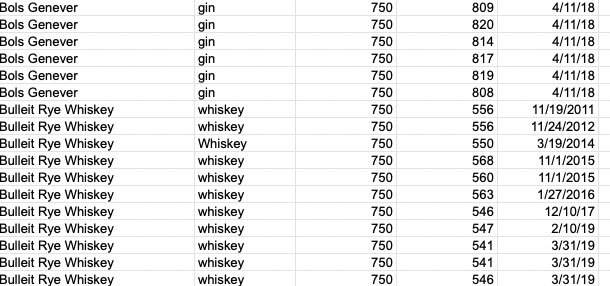
    I did weigh duplicates of the same bottle. The variance in bottle weights was about 10 grams. This is probably mostly due to me leaving a touch of liquid in the bottom of the bottle before weighing. Some varied by up to 15 grams but this was rare. So we can round our data to within 10 grams. 

    Here are some duplicates so you can see:
     

    Screen Shot 2022-05-07 at 12.03.37 PM

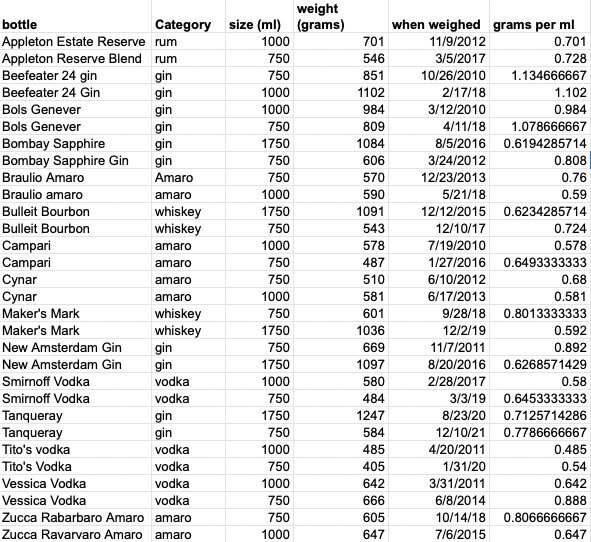
    The larger the bottle, the less weight per volume of liquid. Some times by a lot! Some times by not so much.

    This is fairly obvious but nice to show. If you want to be better for the environment you should buy your booze in bulk. 
     

    Screen Shot 2022-05-07 at 12.05.53 PM

    Brands change their bottles, and often not for the lighter. In recent years some brands have started moving to lighter bottles, but the common wisdom is that heavier bottles reflect a more premium (and expensive) product. That's the more typical direction. 

    Some changes include:

    • When Aviation gin moved from a wine-style bottle to a custom one, the weight jumped up by 100 grams. 
    • When Don Julio changed the bottles in 2011, the blanco may have become lighter but the repo and anejo gained weight. Now Don Julio bottles are weighted in order, getting heavier from blanco, repo, anejo, to 70. 
    • Highland Park jumped up by 70 grams
    • Junipero gin increased by OVER 300 grams
    • There were a few other changes that were within 30g that I don't think are worth mentioning. 

     

    Screen Shot 2022-05-07 at 12.09.25 PM

    Screen Shot 2022-05-07 at 12.11.29 PM

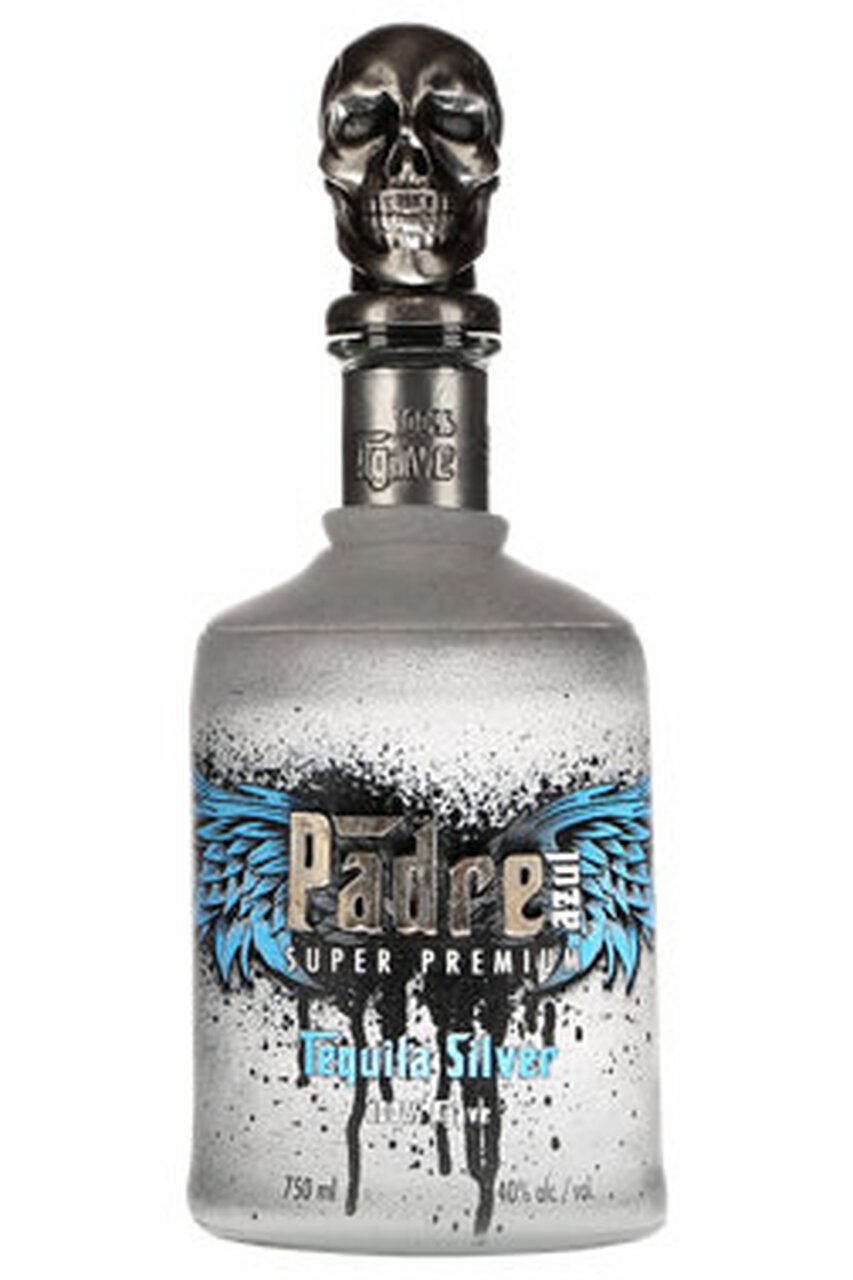
    13329518_is__63772.1573251260A weighed a few of the more egregious bottle caps. The Padre Azul skull comes in at over 300 grams.

    Somehow I only ever weighed St. Germain one time and not the bottle cap separately. The bottle is not as heavy as it feels though coming in at 800 grams. 

     

    Screen Shot 2022-05-07 at 12.19.45 PM


    I then reduced the data down to avoid repeats, and to only include 750ML bottles so I was comparing apples to apples (or rather, applejack to applejack).

    My "final" clean data represents a total of 798 bottles.

    There are repeats of bottles, for example a flavored vodka versus the unflavored, and different ages of some whiskies, but I kept those in on purpose.


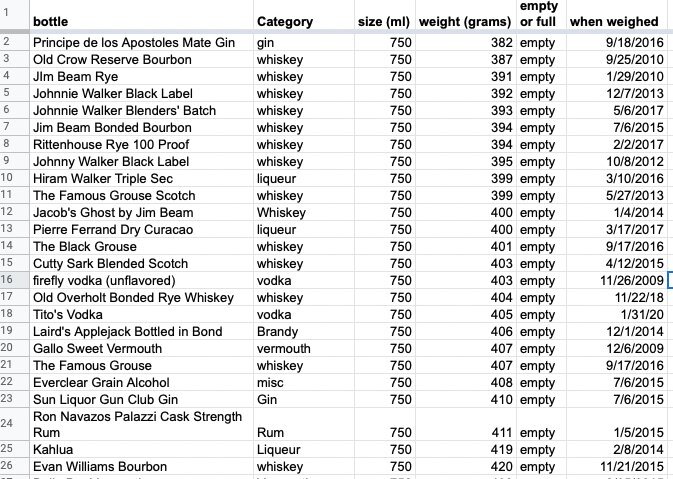
    The lightest bottles overall:
    Screen Shot 2022-05-07 at 12.27.07 PM

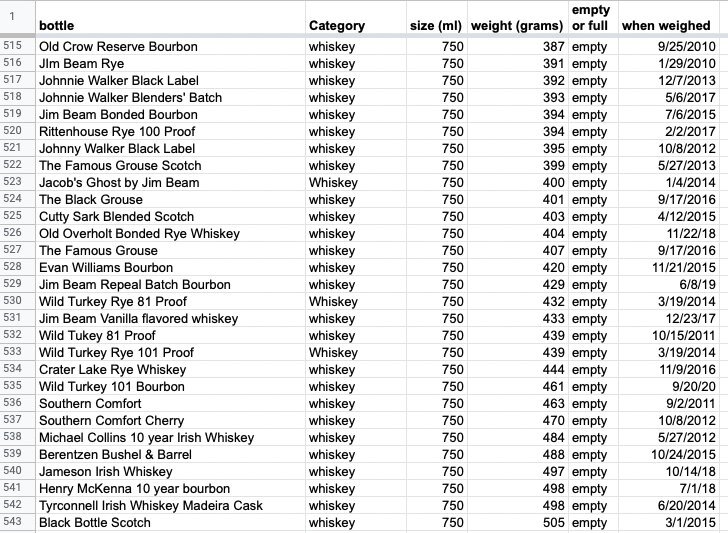
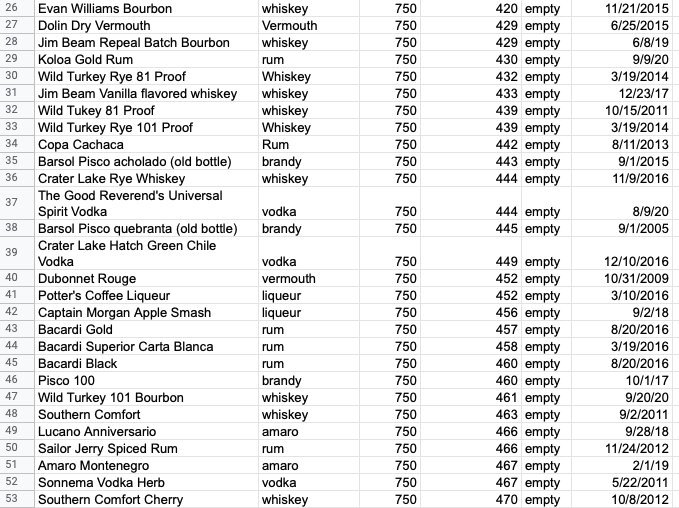
    400 grams or lighter is about the lightest we seem to get with glass bottles. It's a lot of the American value bourbons and blended scotch whiskies as the lightest bottles.

    Here are the next batch:
    Screen Shot 2022-05-07 at 12.29.04 PM


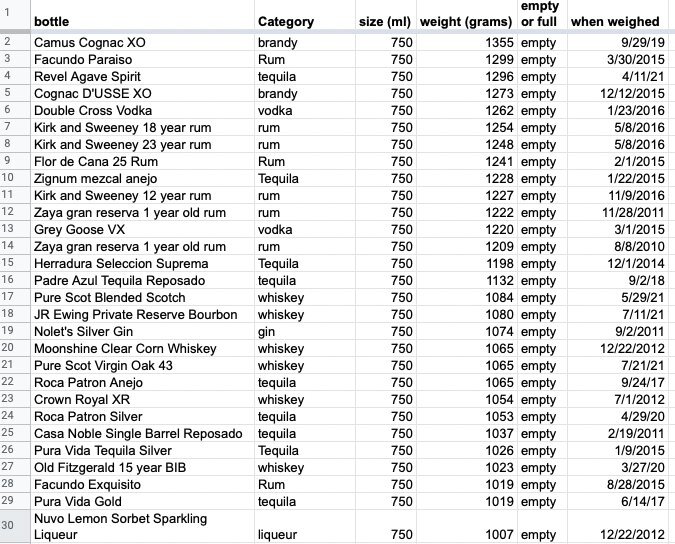
    Heaviest Bottles:

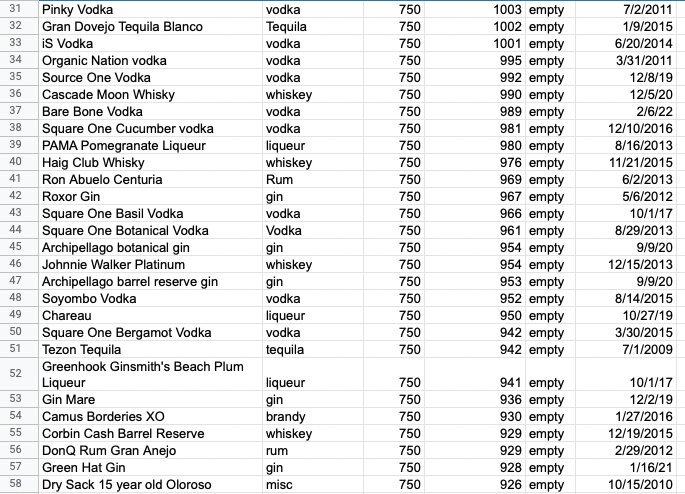
    And now for the heaviest, ordered from heaviest down. In some cases like Double Cross Vodka that may include the box. I had intended to mark when I included boxes or not but didn't do a great job at it. 
    Screen Shot 2022-05-07 at 12.30.55 PM


    The next batch:

    Screen Shot 2022-05-07 at 12.33.26 PM
    Now let's look at it by category! 

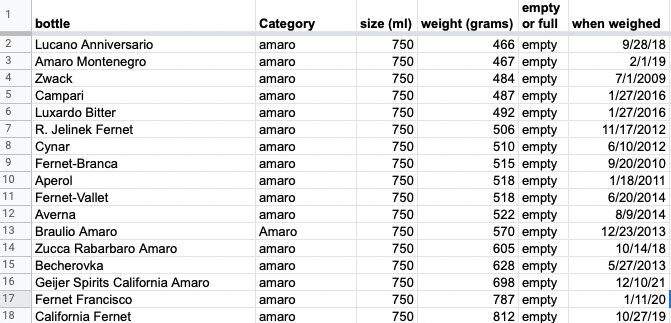
    Amaro, lightest to heaviest: 
    Screen Shot 2022-05-07 at 12.36.37 PM

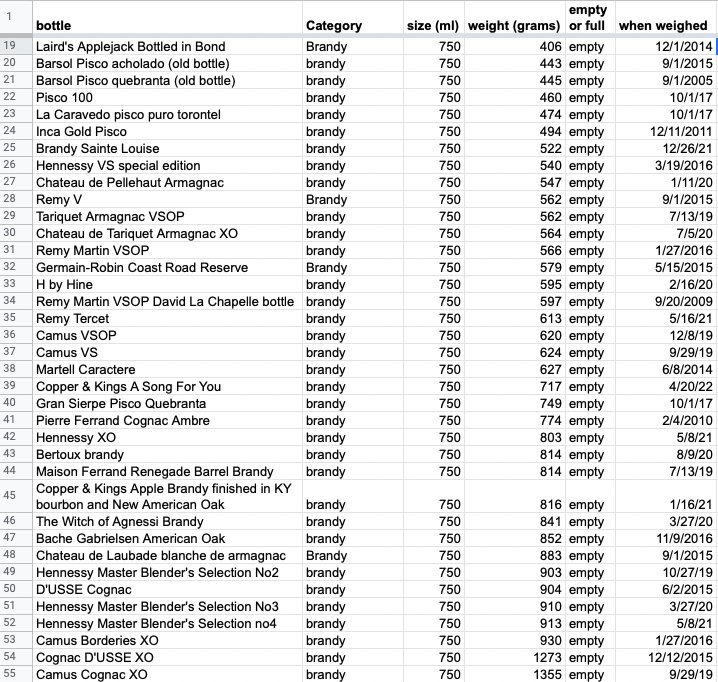
    Brandy: Note that Laird's has since moved to a new (assumedly heavier) bottle. 
    Screen Shot 2022-05-07 at 12.38.47 PM

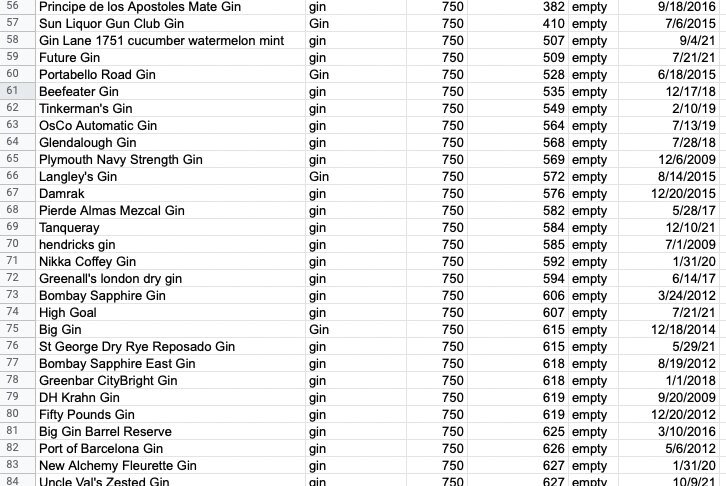
    Lightest gins:

    Screen Shot 2022-05-07 at 12.40.54 PM

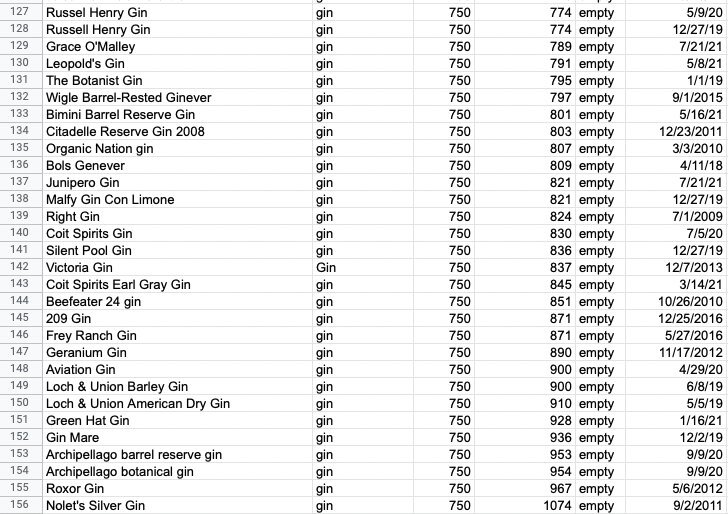
    Heaviest gins (heaviest on bottom):

    Screen Shot 2022-05-07 at 12.42.00 PM


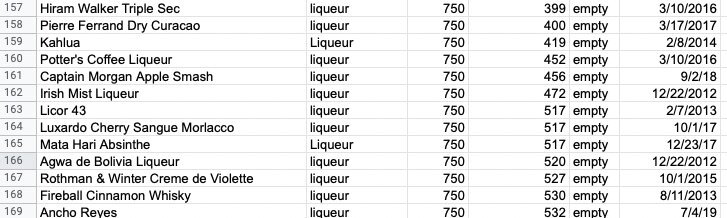
    Lightest  Liqueurs:

    Screen Shot 2022-05-07 at 12.43.16 PM

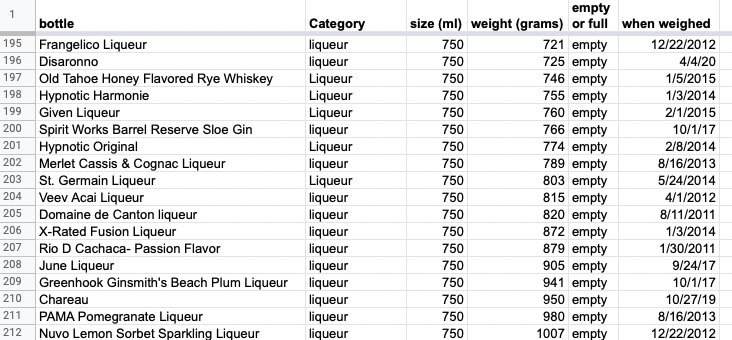
    Heaviest Liqueurs:

    Screen Shot 2022-05-07 at 12.44.25 PM

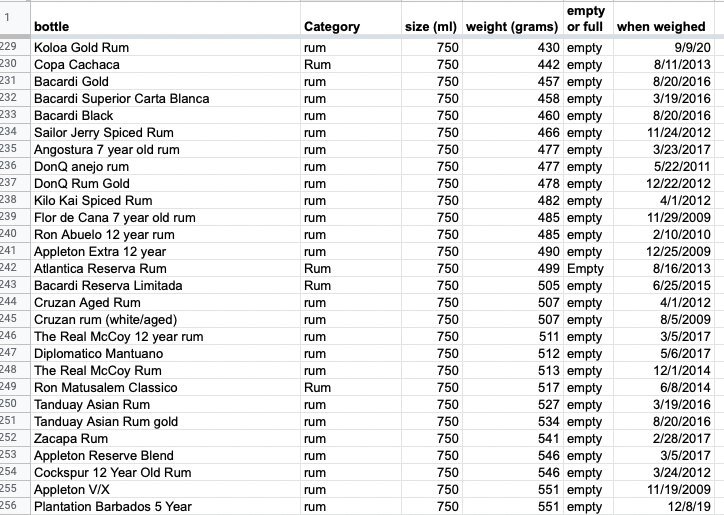
    Lightest Rums:

    Screen Shot 2022-05-07 at 12.45.37 PM

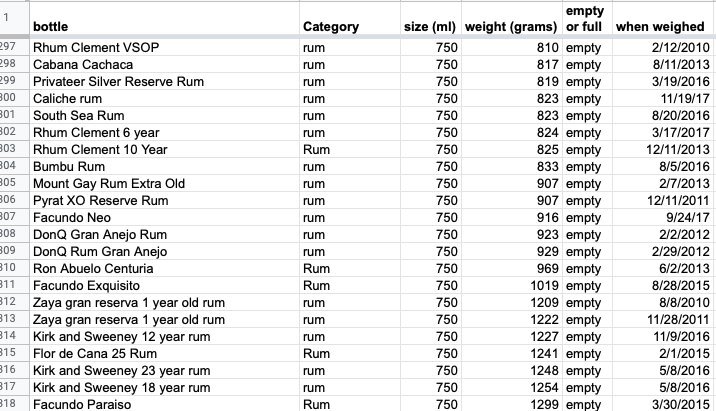
    Heaviest Rums:

    Screen Shot 2022-05-07 at 12.46.39 PM

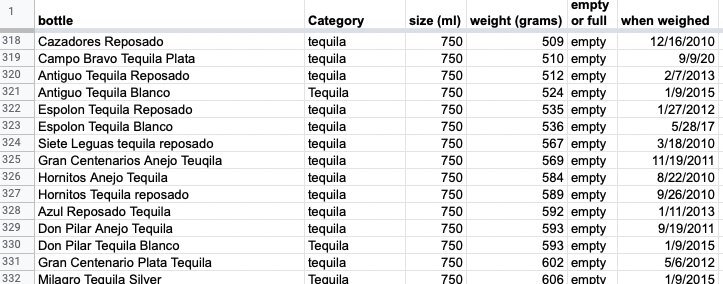
    Lightest Tequilas:

    Screen Shot 2022-05-07 at 12.47.56 PM

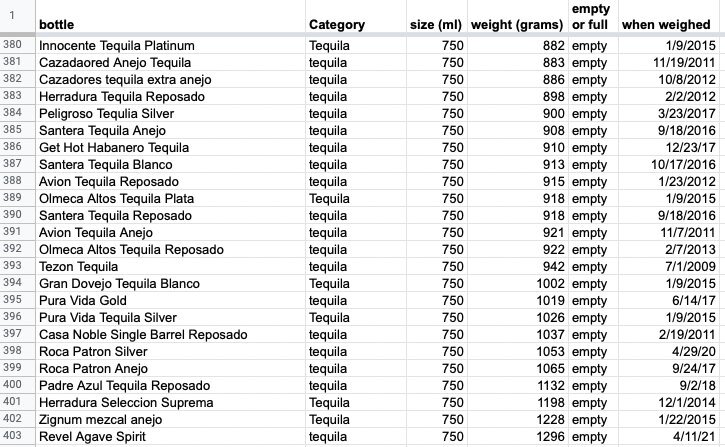
    Heaviest Tequilas:

    Screen Shot 2022-05-07 at 12.49.01 PM

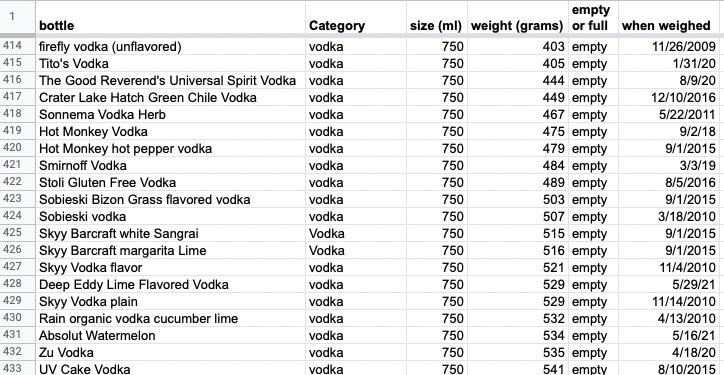
    Lightest Vodkas:

    Screen Shot 2022-05-07 at 12.49.41 PM

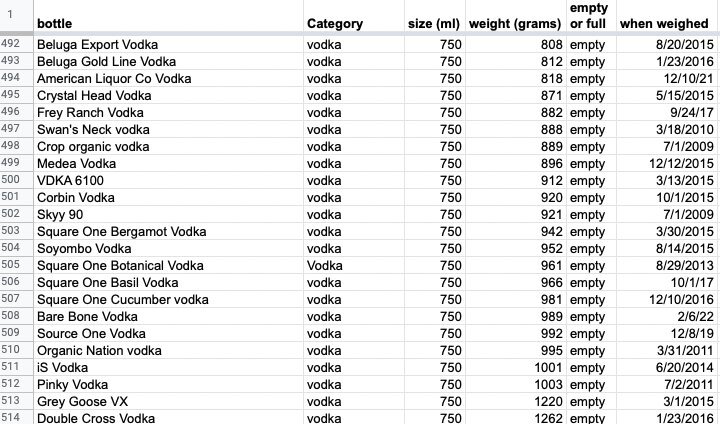
    Heaviest Vodkas:

    Screen Shot 2022-05-07 at 12.50.16 PM

    Lightest Whiskeys:

    Screen Shot 2022-05-07 at 12.50.59 PM

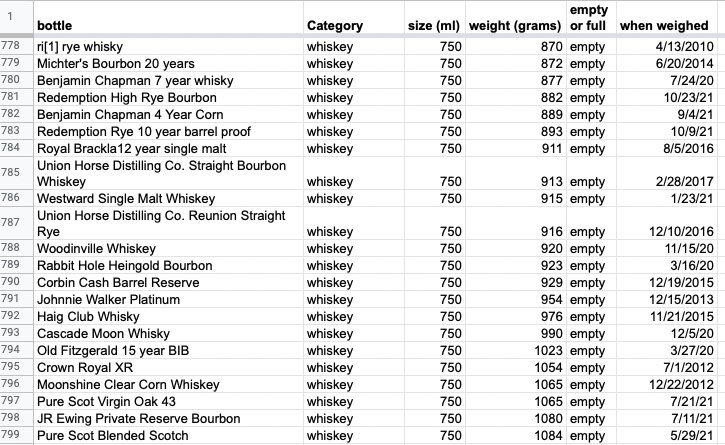
    Heaviest Whiskeys:

    Screen Shot 2022-05-07 at 12.51.36 PM

    I hope you enjoyed this analysis. Do you want to look at the data and maybe even subcategorize it into things like bourbon vs scotch rather than just whisky? 

    You can find a copy of the sheet here. I have it set so that you should have to copy it in order to make your own changes. Let me know if you further analyze it!

    There are certainly duplicates and other errors in my data, no need to point out anything minor. 


  • Measuring the Rate of Freezing of an Ice Block in my Freezer

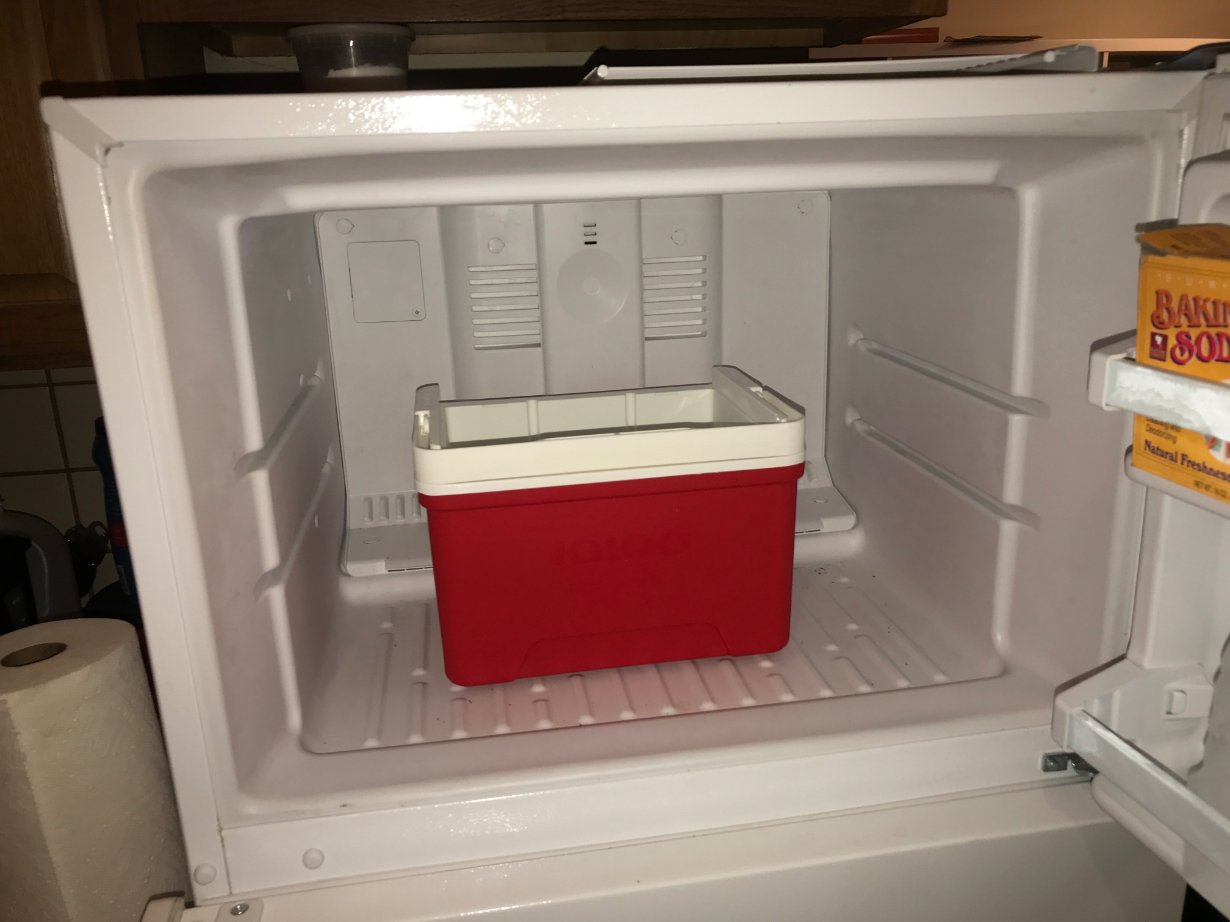
    I decided to measure the rate of freezing of an ice block in my (pretty crappy) freezer at home. It's just a standard apartment freezer. 
    51jcPLGI2EL._AC_SL1024_For all four times, I began with the same set of parameters:

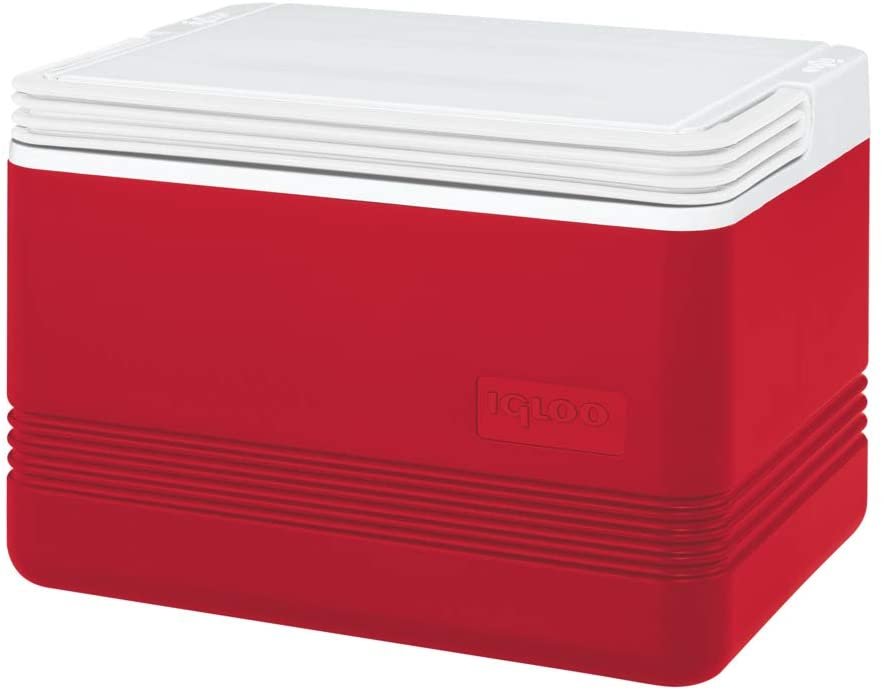
    • Igloo Legend 12 cooler
    • 6 liters of cold tap water (this fills up the cooler a little more than halfway), in the freezer with the top off 

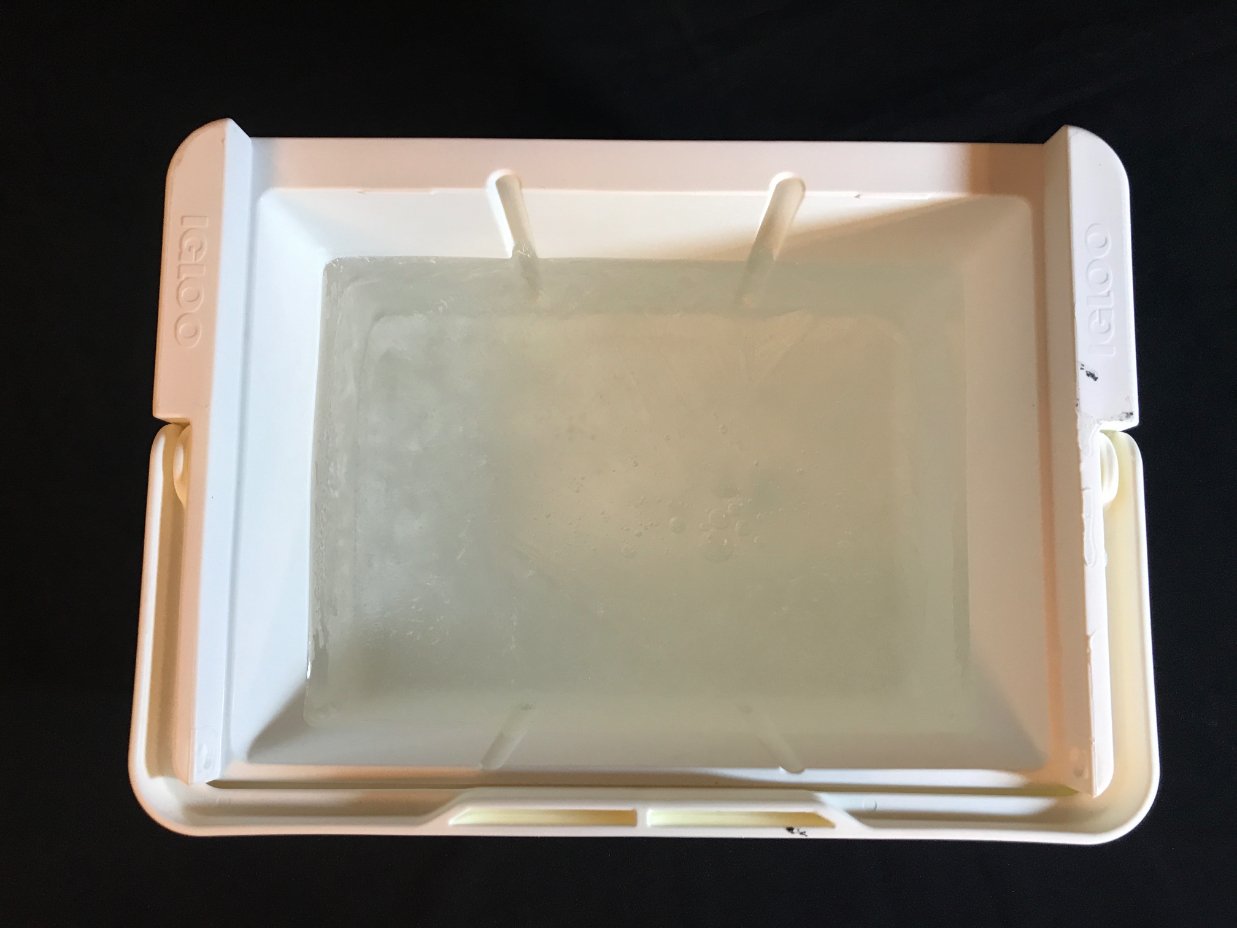
    This is the typical set-up to make crystal clear ice slabs via directional freezing

    Then I froze the water for 24 or 48 hours, setting the temperature on the coldest of warmest setting. 
    I kept checking what those temperatures were, and found that there was a huge variation of temperature when set on setting.

    • Warmest setting = 0F to 11F, average about 5F (-17C to -11C, average -15C)
    • Coldest setting = -15F to 10F, average about 0 to -5F (-26C to -12C, average -17C to 21C)

    The rates were

    Temperature Setting Length of Time Thickness (cm)
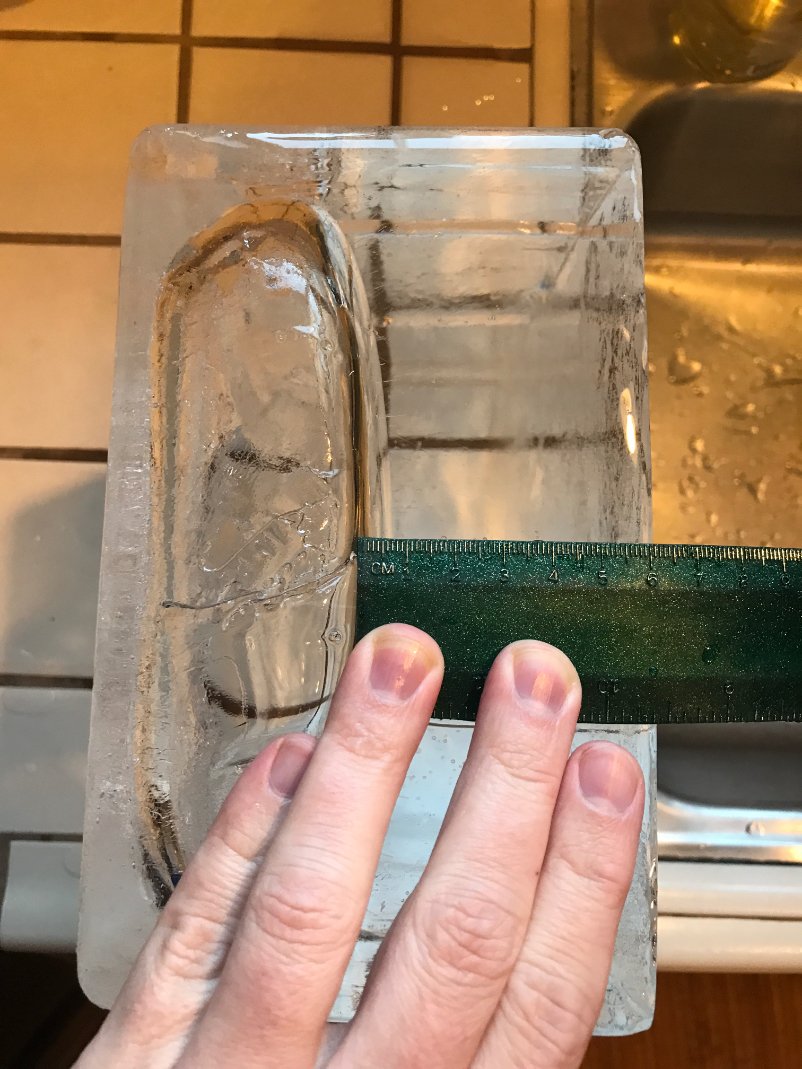
    Warmest     24 hours 2 – 2.25
    Warmest 48 hours 5.75 – 6.5
    Coldest     24 hours 2.5 to 3
    Coldest 48 hours 8.5


    So if I want to make a slab of ice that is a little more than 2 inches thick, I can fill a cooler to 6L and leave it in for 2 days at the warmest setting. For me, this is ideal thickness to make big ice cubes. 

    What is interesting here is that leaving the water in the freezer for double the length of time more than doubles the thickness of the slab, while we'd expect the rate of freezing to slow down. There is extra energy required to cool down the water to freezing temperature before it begins freezing, but most of the energy used should be in converting the water to ice. Perhaps this has to do with the insulated container, that cooling from one direction only is more energy intense than from all sides. Makes sense to me. 

    Maybe I'll try 3 days to see how thick it gets. 


    IMG_8051


  • Books That Cite Camper English’s Work

    UnnamedThe other month I came across a citation of something I wrote in a book that I'd not previously known about. This lead me to do a Google Books search to see if there were any more, and there were – a lot! So this post is more or less an item for my resume. I don't think I included books that only cite my work in the bibliography but in the body of the text in some way. 


    Books That Cite, Quote, or Otherwise Mention Camper English

    1. The Oxford Companion to Spirits & Cocktails 
    2. Return of the Artisan: How America Went from Industrial to Handmade
    3. Road Soda: Recipes and techniques for making great cocktails, anywhere
    4. Holy Waters: Searching for the Sacred in a Glass
    5. The Way of the Cocktail: Japanese Traditions, Techniques, and Recipes
    6. Ice: From Mixed Drinks to Skating Rinks–a Cool History of a Hot Commodity
    7. Tropical Standard: Cocktail Techniques & Reinvented Recipes
    8. Modern Caribbean Rum: A Contemporary Reference to the Region's Essential Spirit
    9. The Bartender's Pantry: A Beverage Handbook for the Universal Bar
    10. Strong, Sweet and Dry: A Guide to Vermouth, Port, Sherry, Madeira and Marsala
    11. Martini: The Ultimate Guide to a Cocktail Icon
    12. Cocktail Theory: A Sensory Approach to Transcendent Drinks
    13. This Is A Cocktail Book
    14. How to Be a Better Drinker: Cocktail Recipes and Boozy Etiquette
    15. American Whiskey Master Class: The Ultimate Guide to Understanding Bourbon, Rye, and Other American Whiskeys 


  • A Huge Ice Cube Bling Necklace

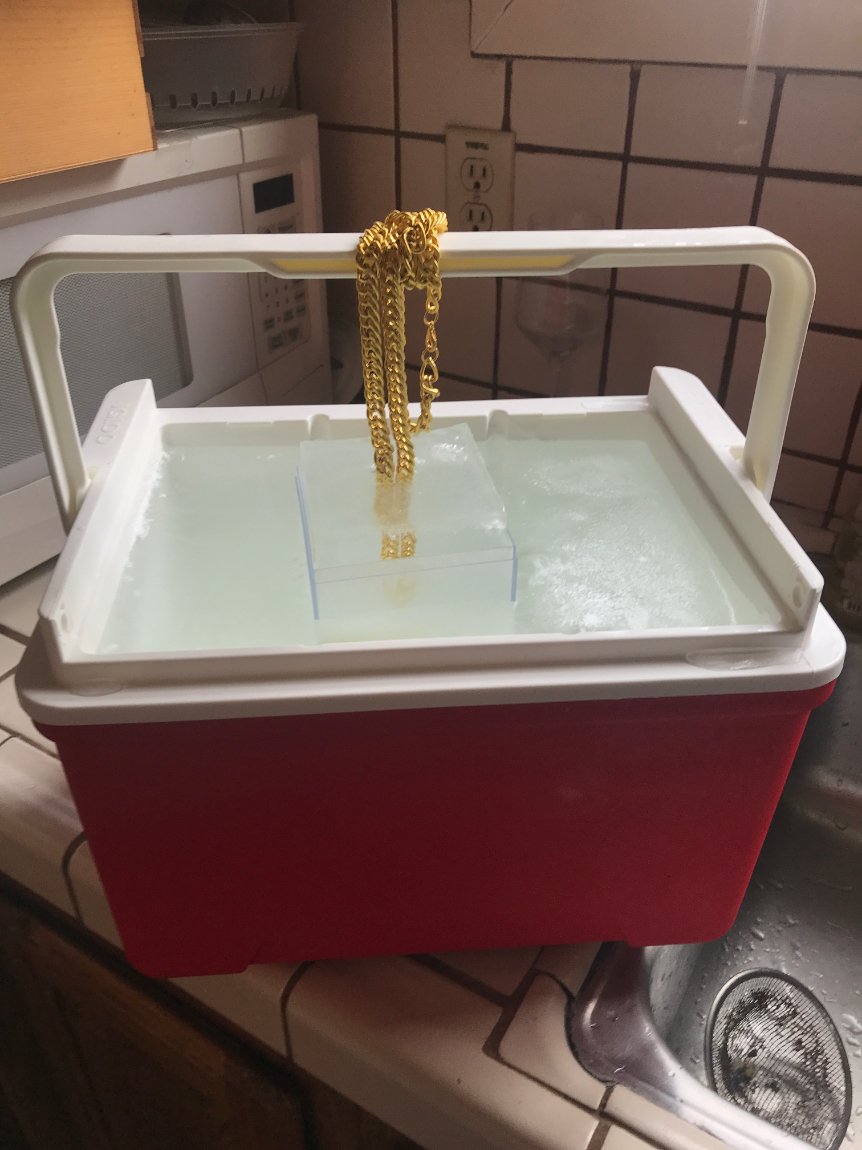
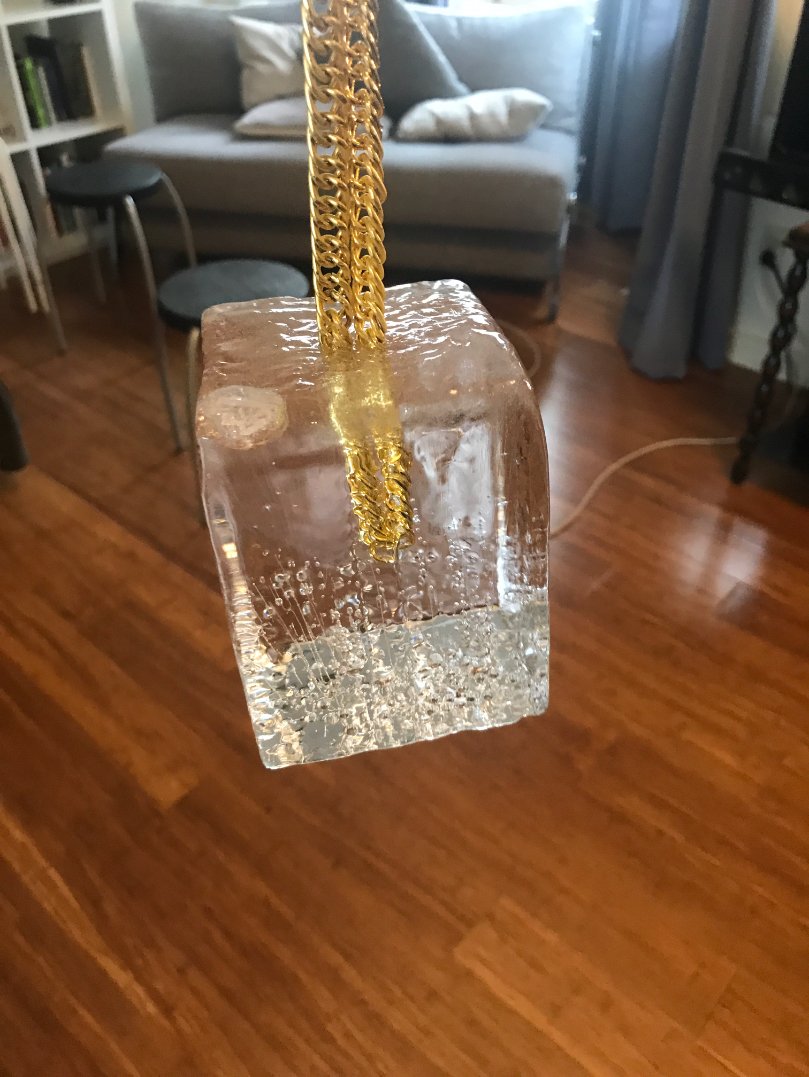
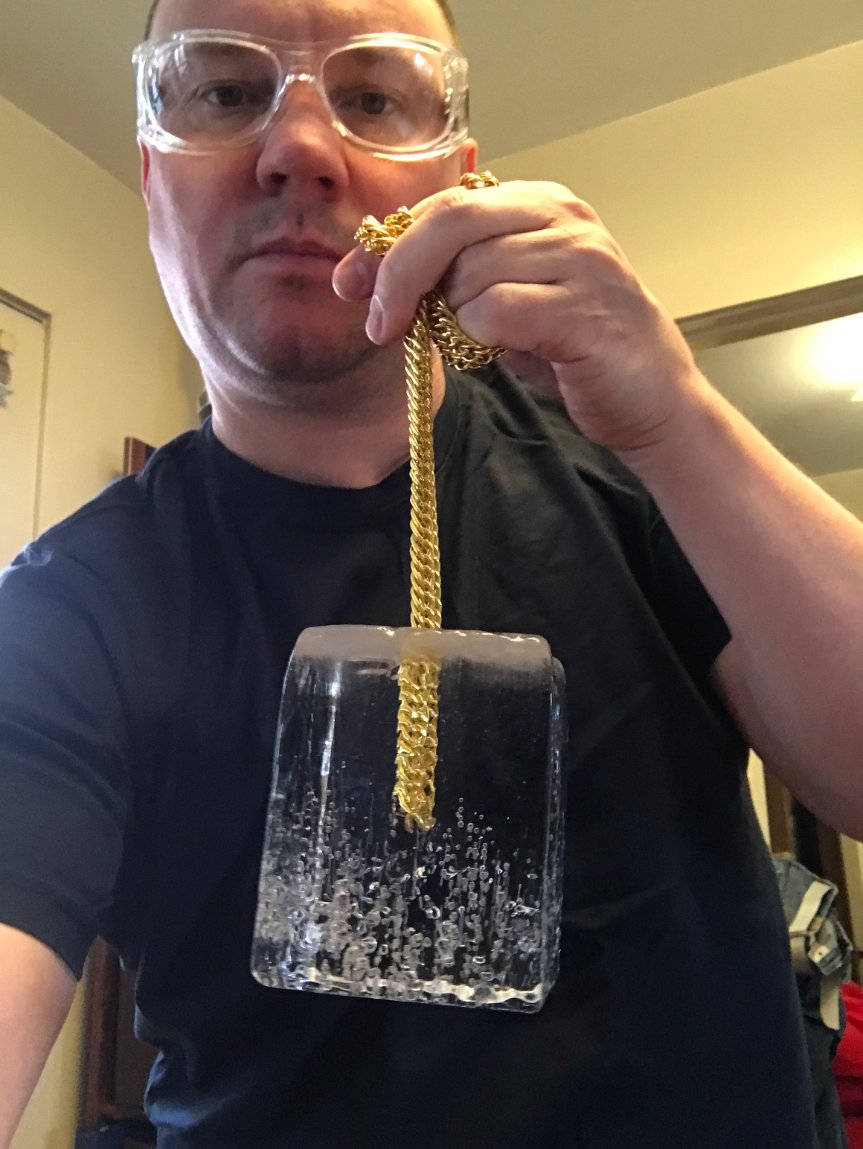
    Photo on 12-28-21 at 11.03 AM #4Nobody gave me a huge diamond chain for the holidays this year, so I had to make my own. 

    I used the typical cooler method for directional freezing, and

    • Put a clear plastic box with holes drilled in the bottom in the cooler. The holes allow trapped air/impurities to be pushed out below it. 
    • Put this box on a salsa tub as a riser to keep it off the bottom of the cooler so that the trapped air had somewhere to go.
    • Hung a "gold" chain dipping into the middle of the plastic box from the handle of the cooler.
    • Let it freeze for about 3 days until it was just below the level of the plastic box.
    • Chipped away at the extra ice so that there was just the box, then slid the big cube out of the plastic box.
    • Looked good wearing it. 

    IMG_7197
    IMG_7197
    IMG_7197
    IMG_7197 IMG_7330 Ice cube bling necklace622
    Ice cube bling necklace622


    The index of all the ice projects on Alcademics is here

  • Cutting Up a Slab of Ice Using an Ice Pick or Bread Knife

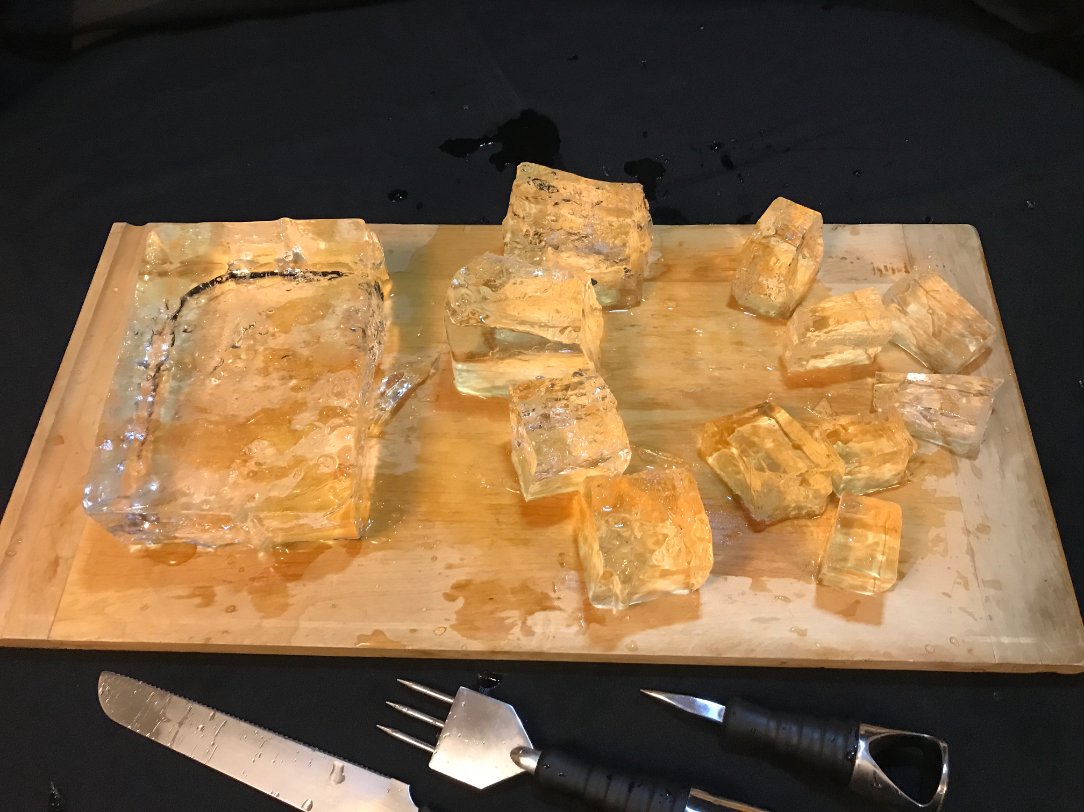
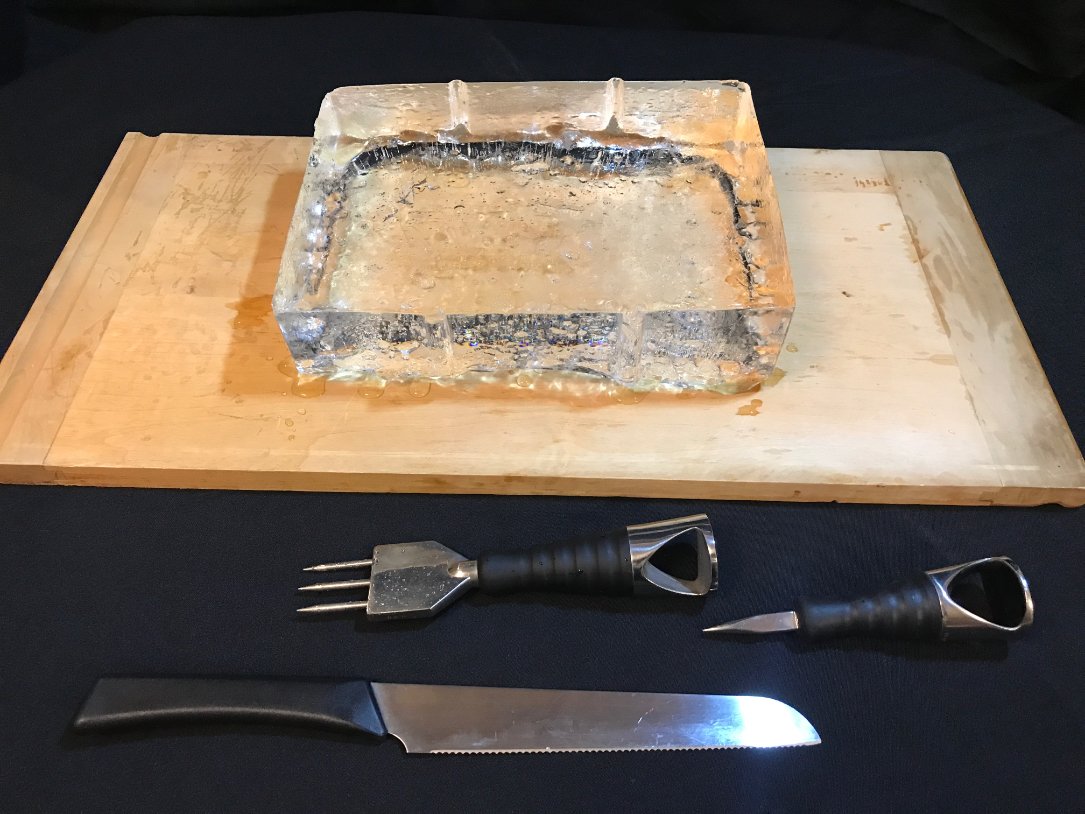
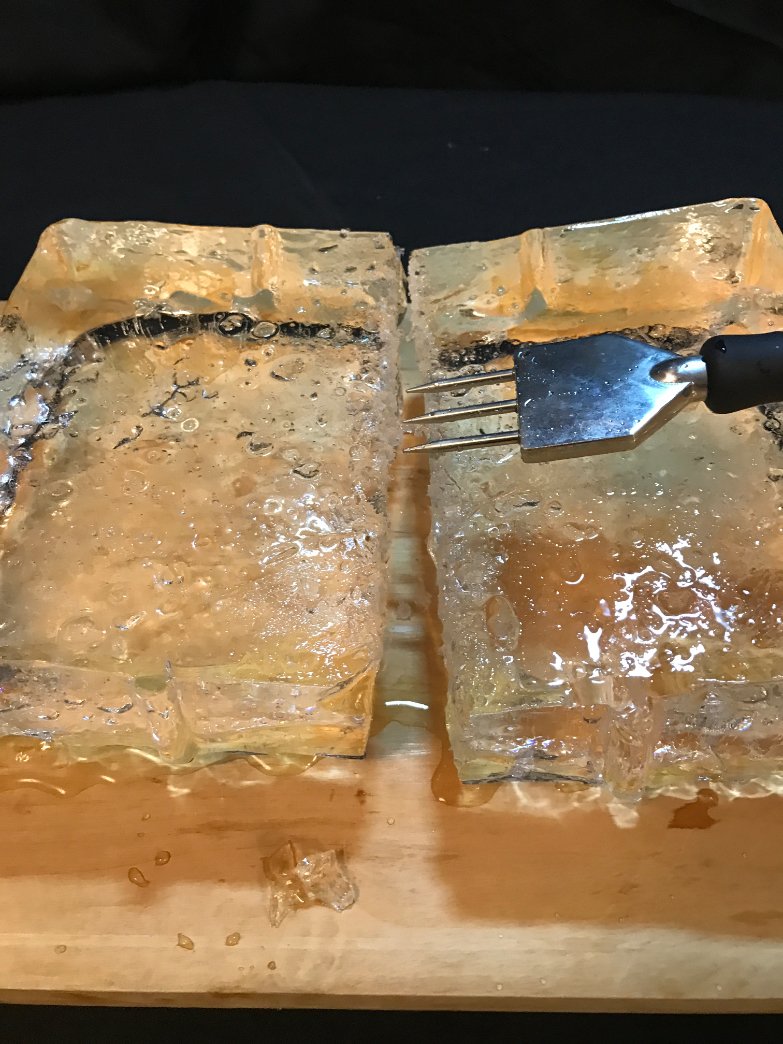
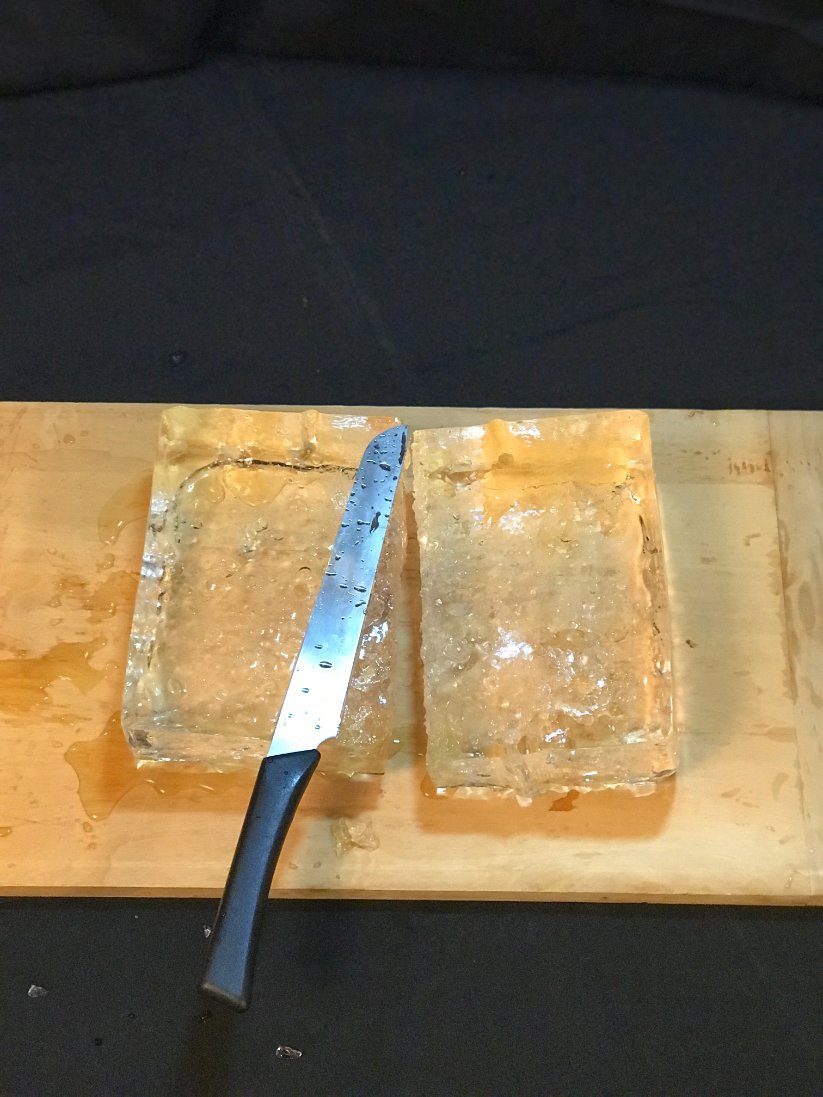
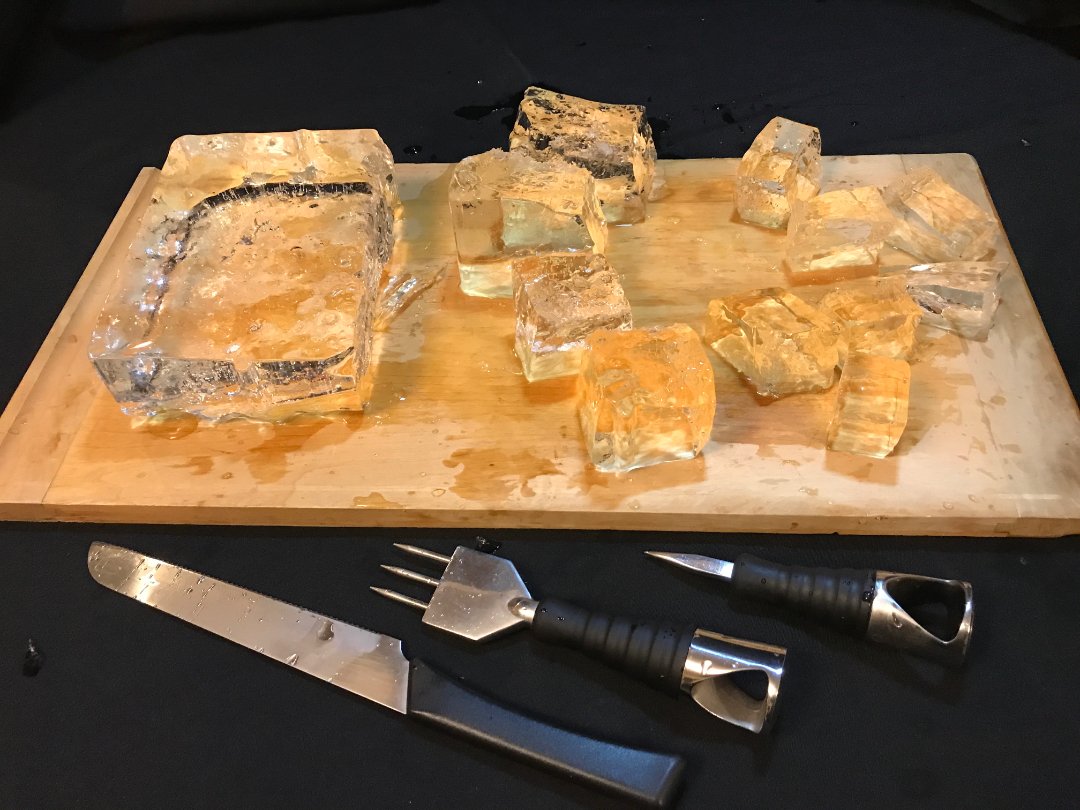
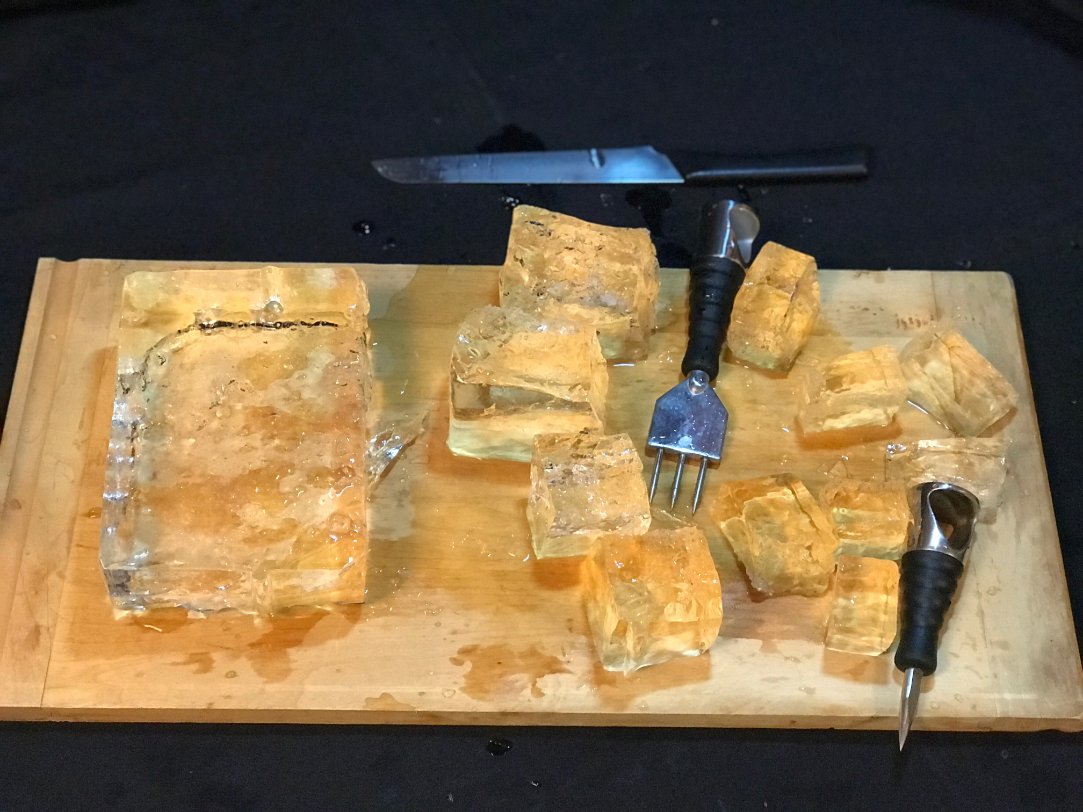
    IMG_7132Years ago I learned how to cut up slabs of ice using only an ice pick, but boy have I improved my technique since then. 

    But the method is the same: 

    • Fill a cooler with water and put it in the freezer with the top off.
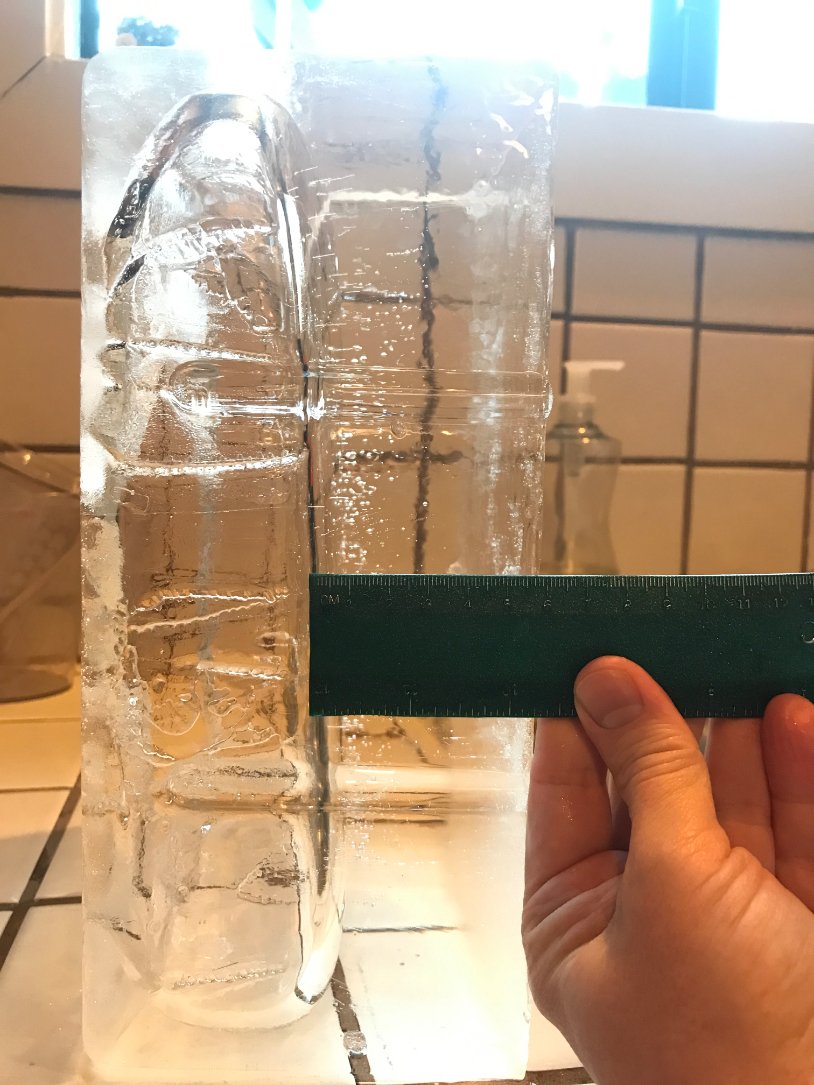
    • After a couple days pull it out and dump out the unfrozen water. You'll have just a clear slab.
    • Wait for it to temper before cutting.
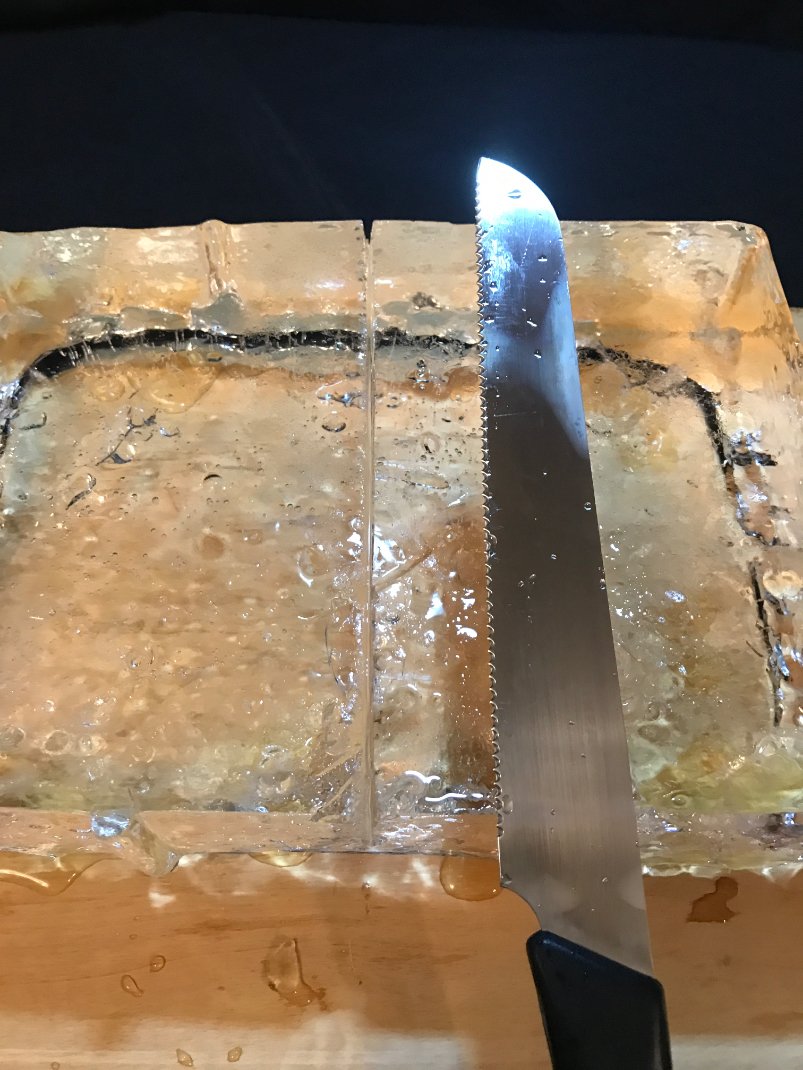
    • With a bread knife or an ice pick, score a line across the surface.
    • Set the knife across the surface in the groove, or put the ice pick in the center of the line.
    • With a mallet or muddler or hammer or (in my case the back of another ice pick) whack the knife or ice pick.
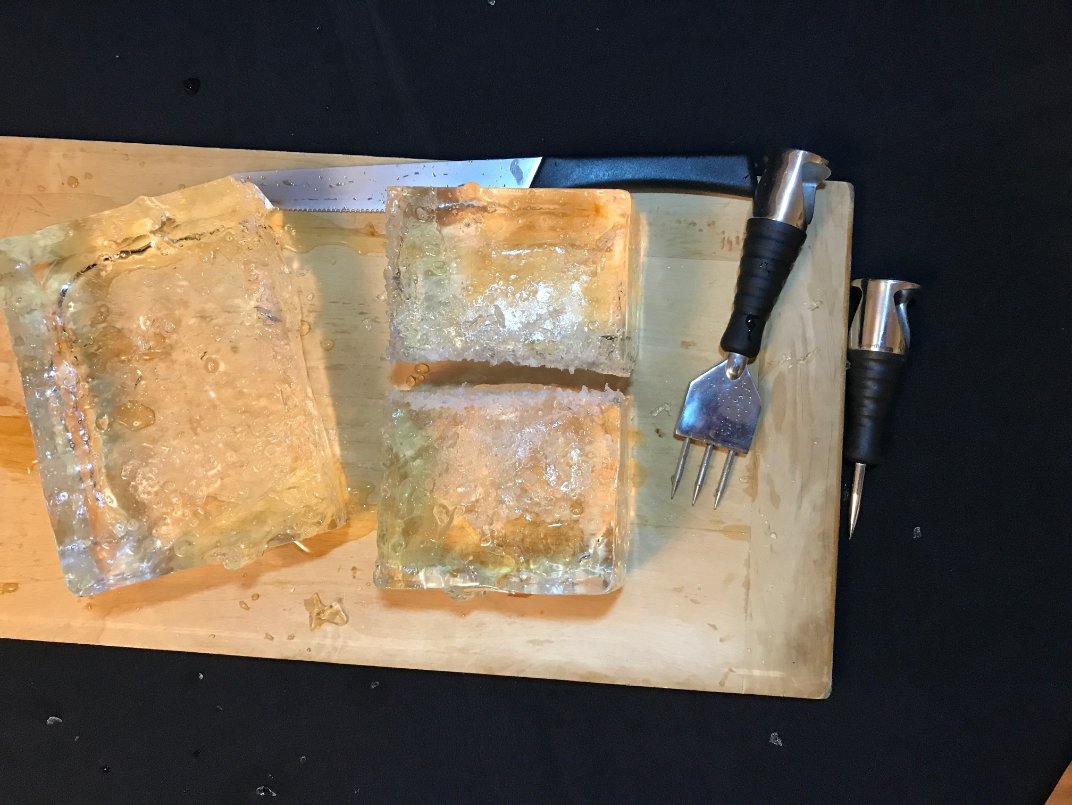
    • The ice should split into two.
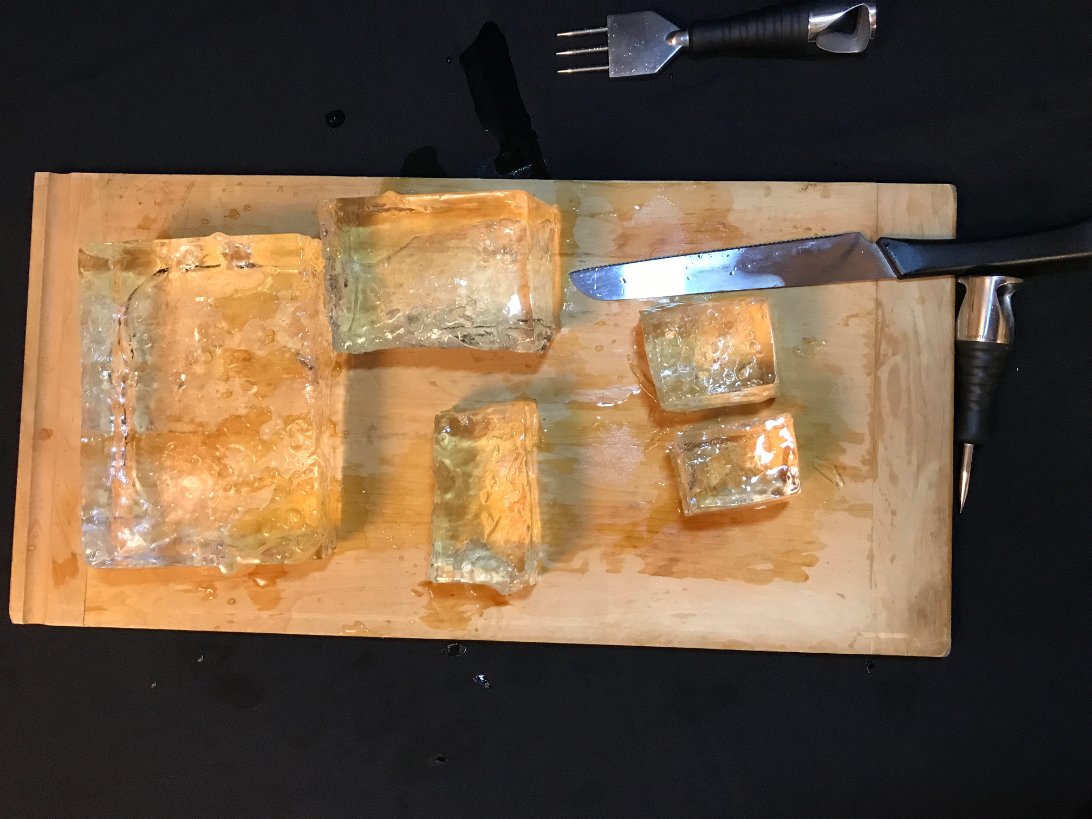
    • Repeat, cutting the block in half each time – I think it's easier/less prone to splitting unevenly than trying to cut a cube off the side. 

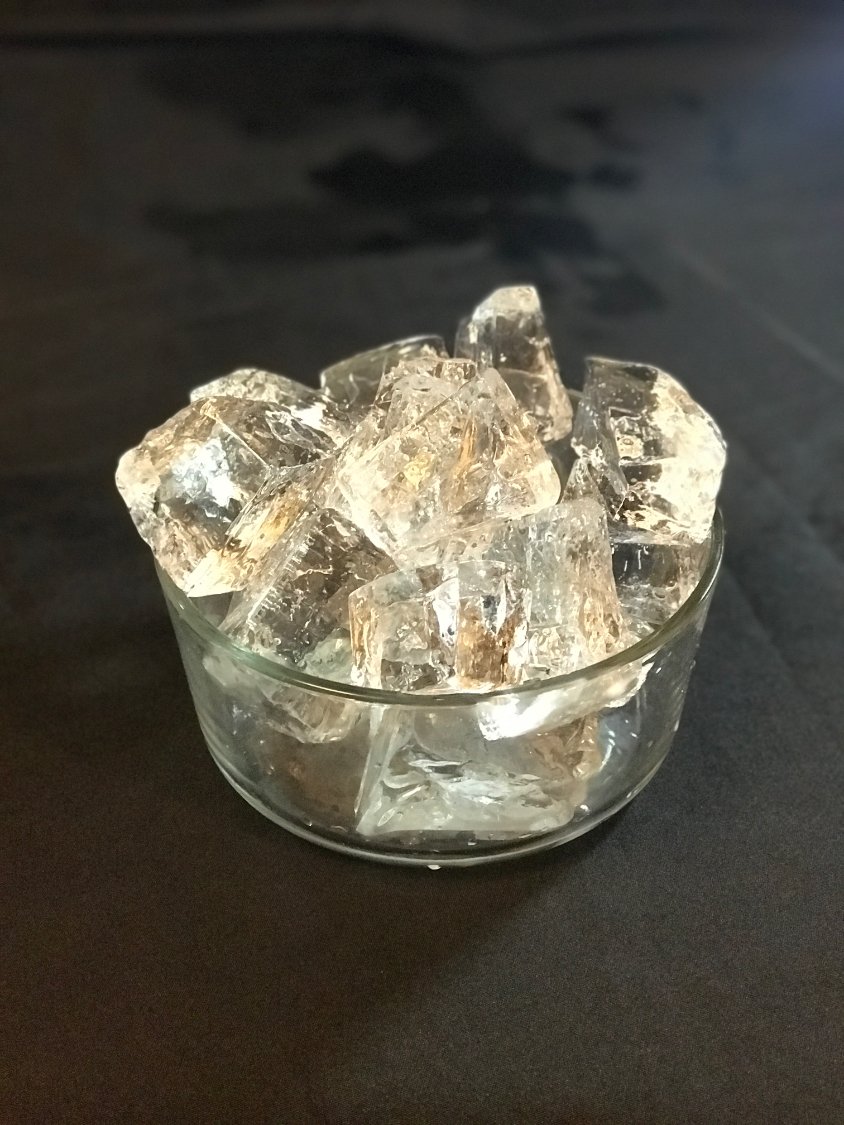
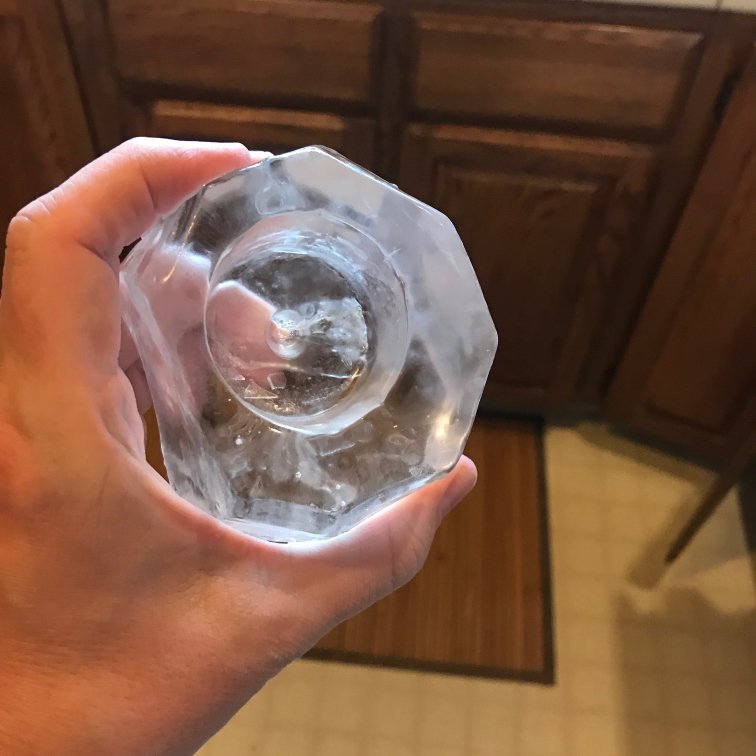
    Here are some new pictures I took: 

    IMG_7045
    IMG_7045 IMG_7087
    IMG_7087
    IMG_7087 IMG_7104
    IMG_7104
    IMG_7104

    IMG_7133
    IMG_7133
    IMG_7133
    All of the ice posts can be found at the Index of Ice Experiments

  • Ice Shot Glasses With a Drill and a Knife

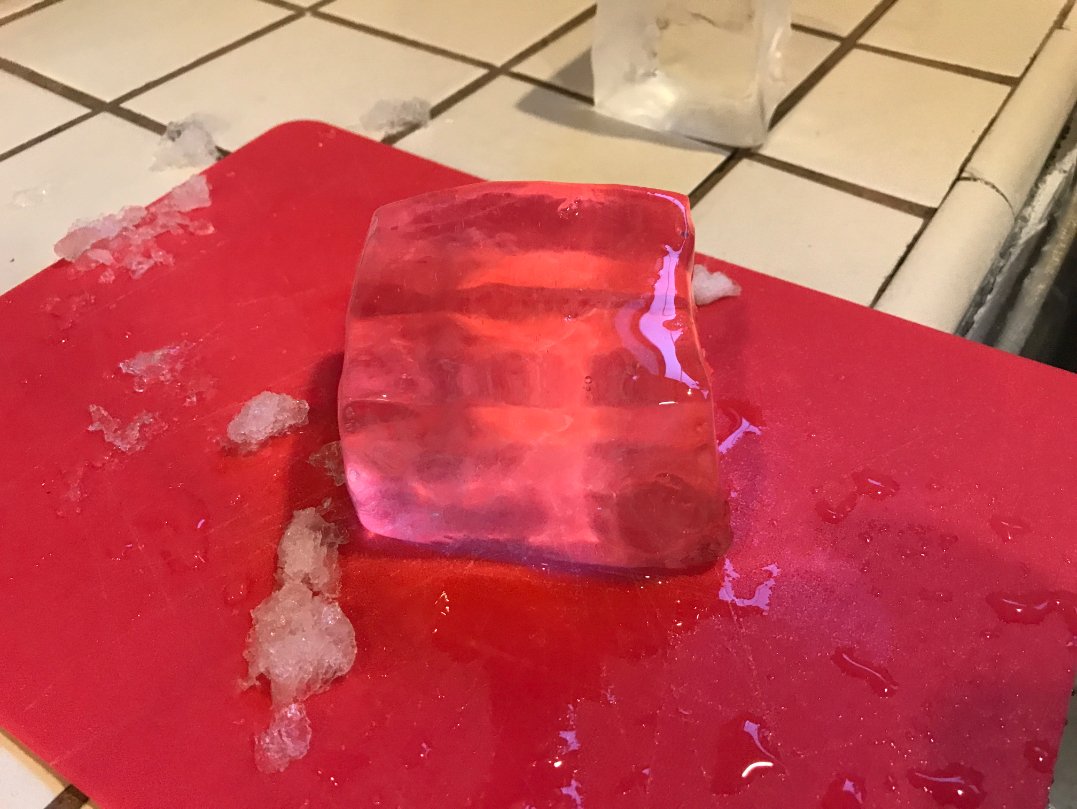
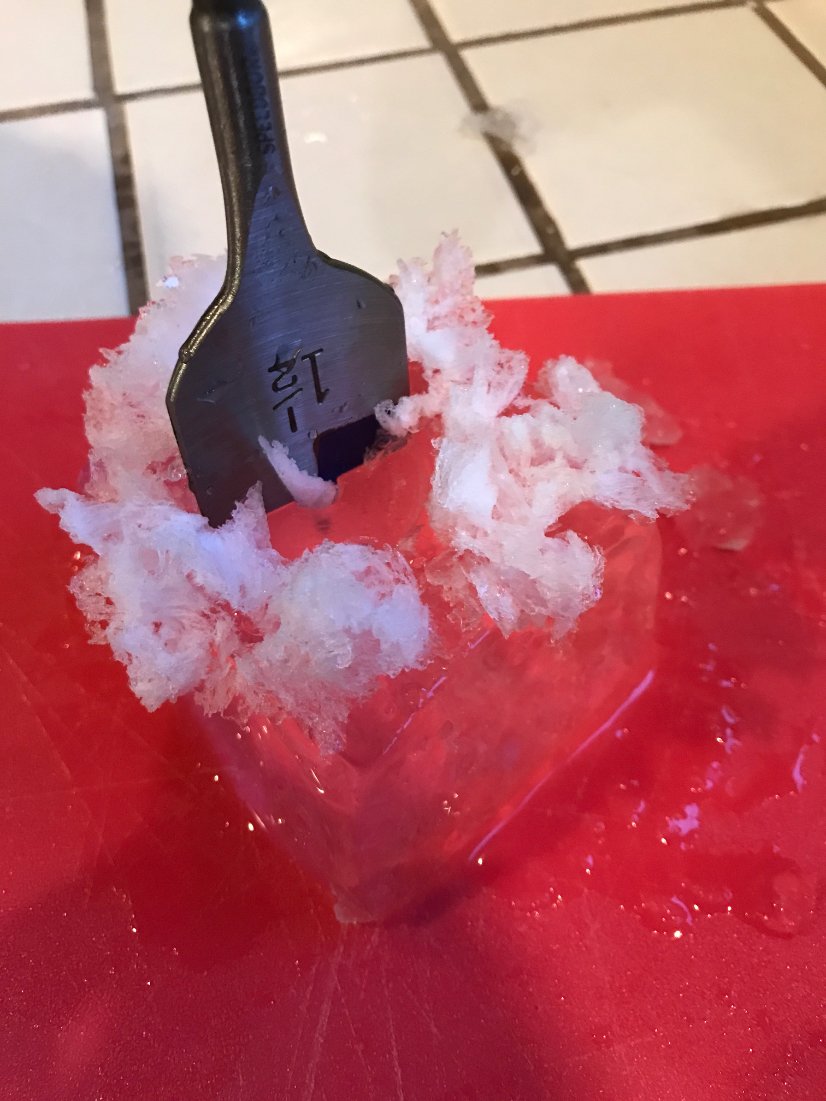
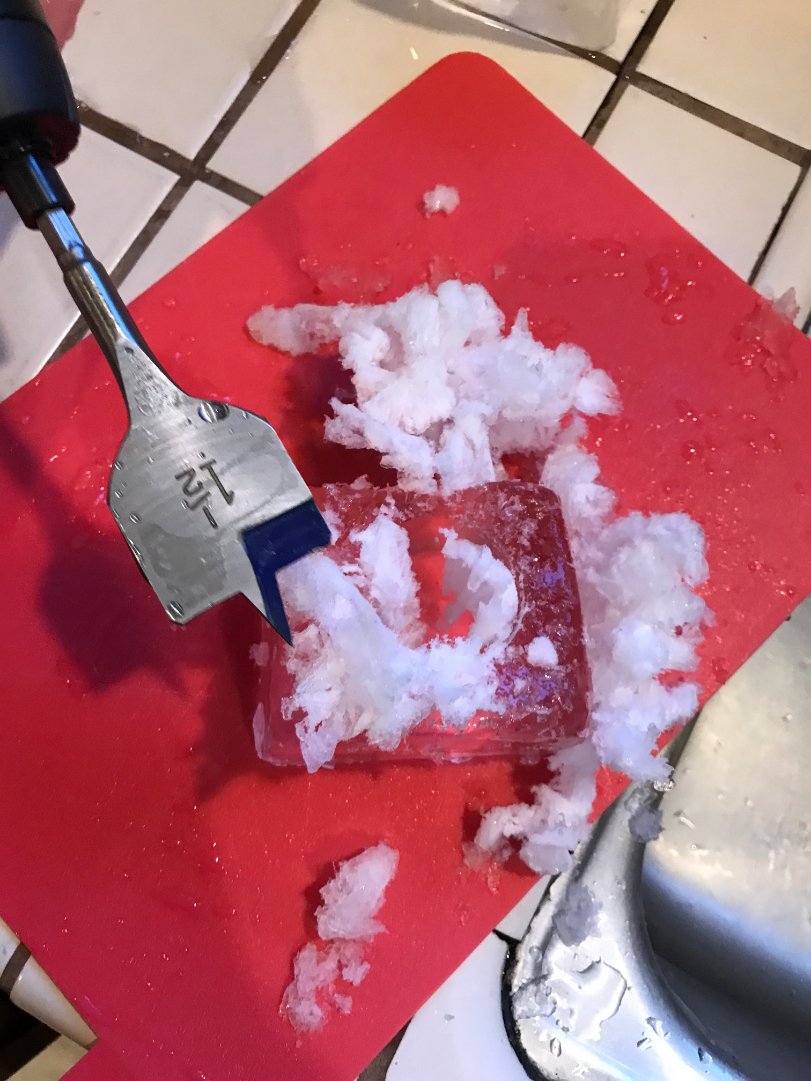
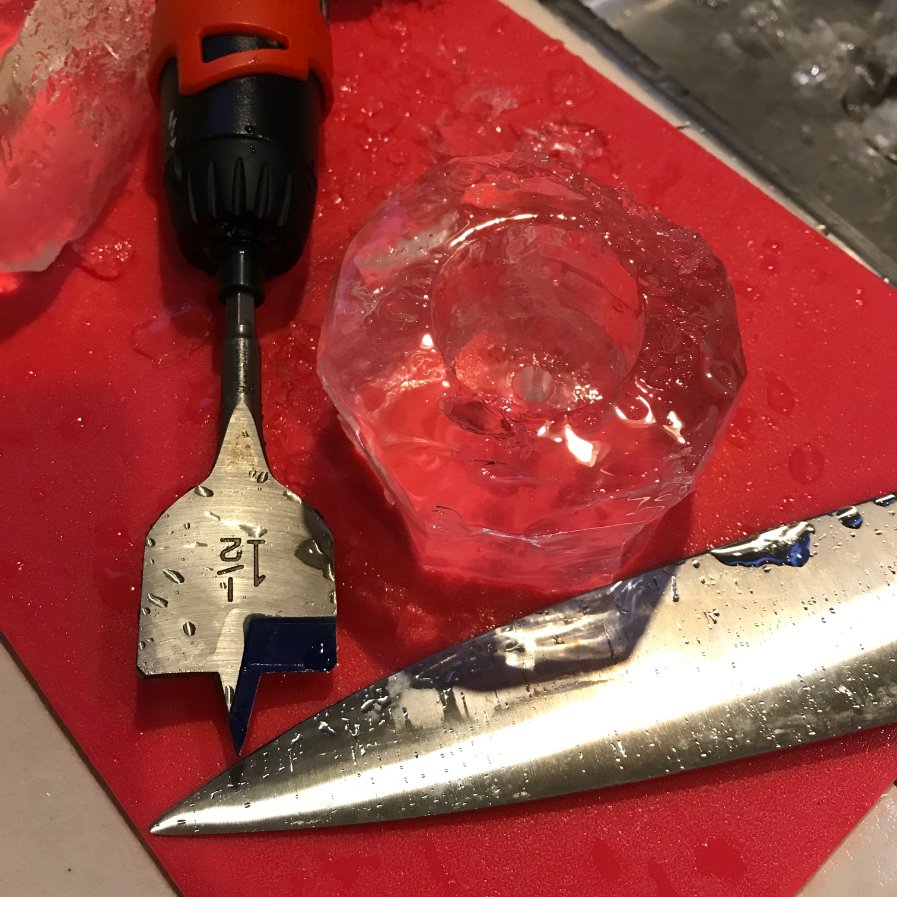
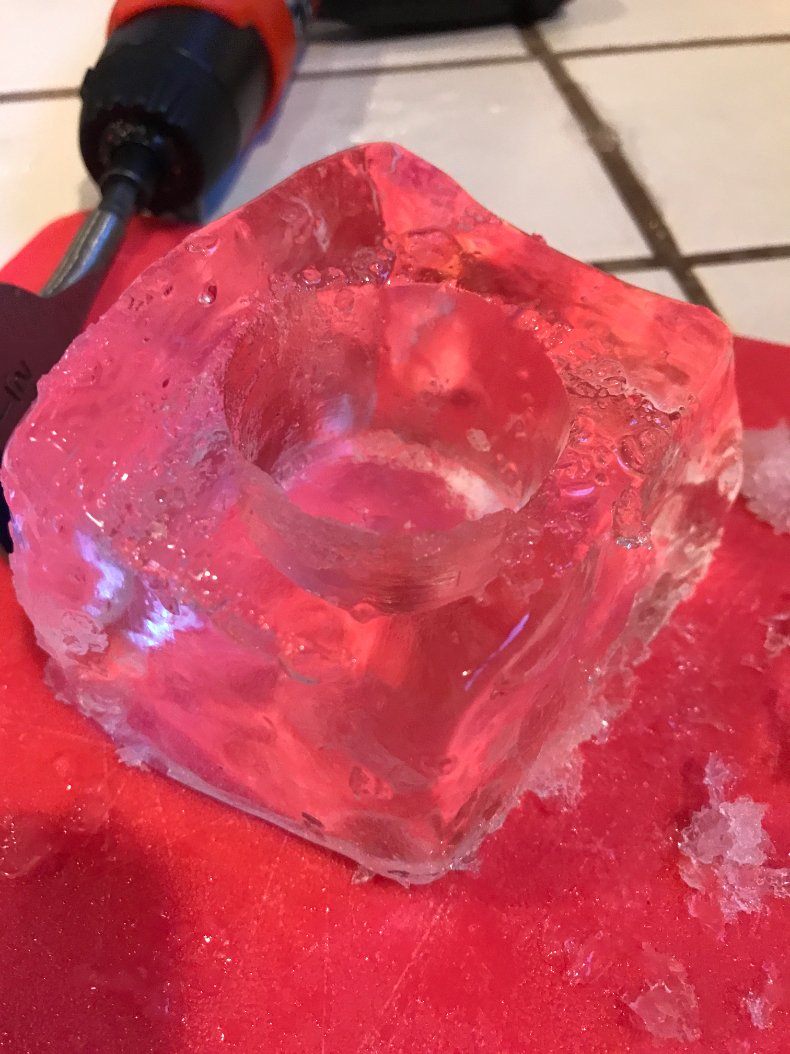
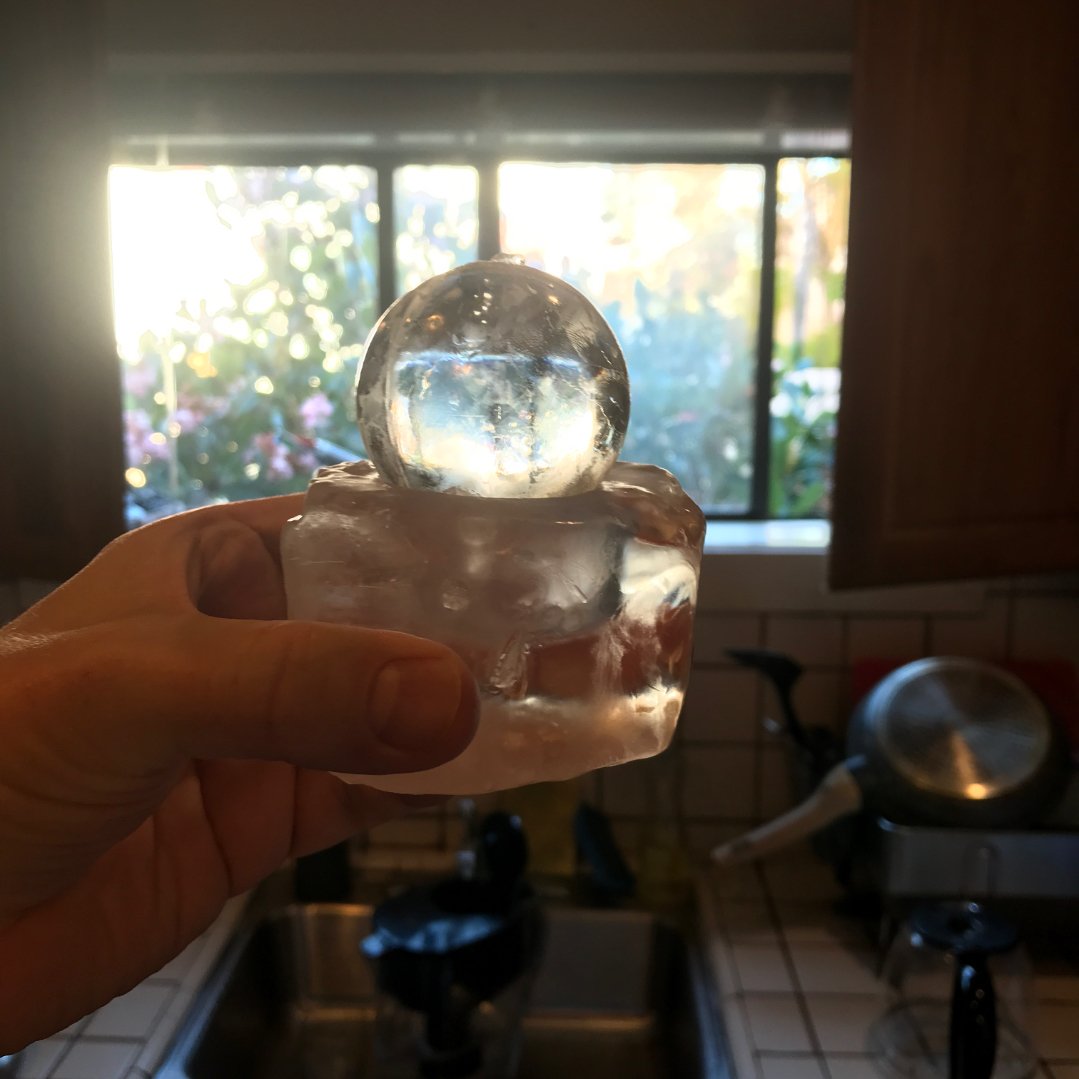
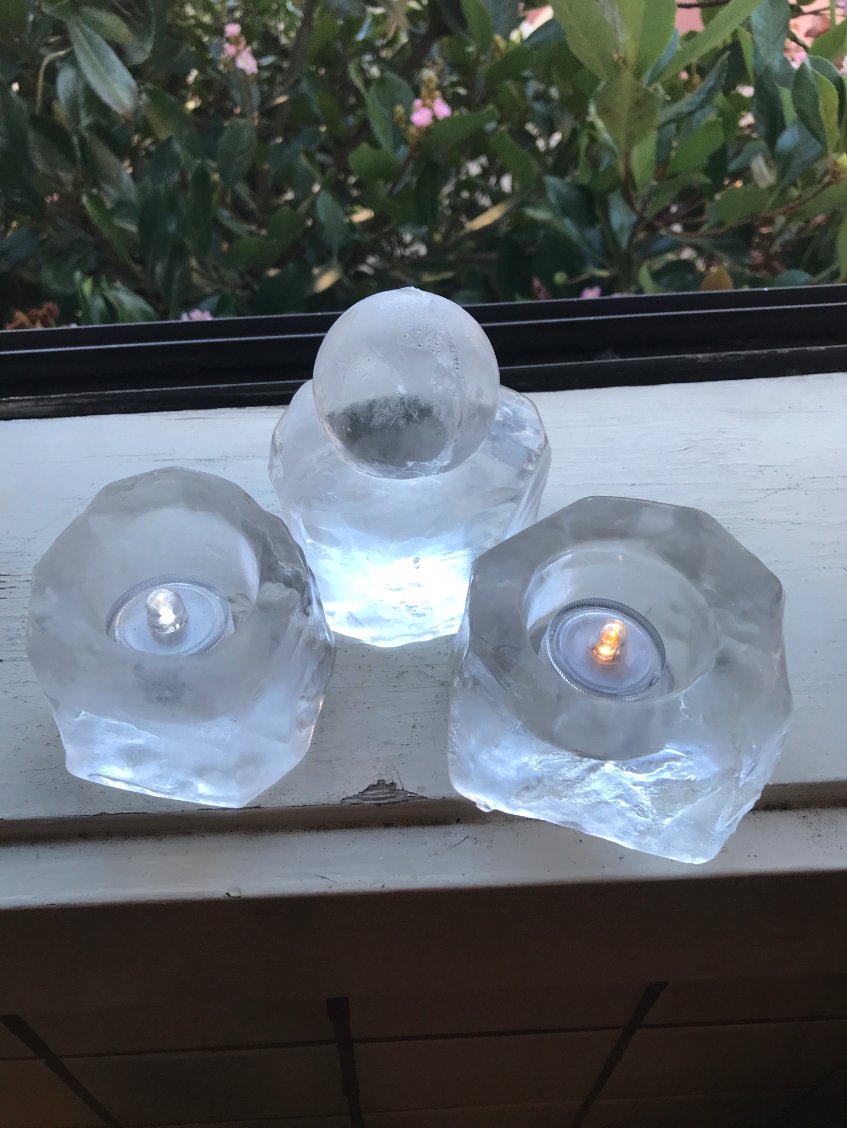
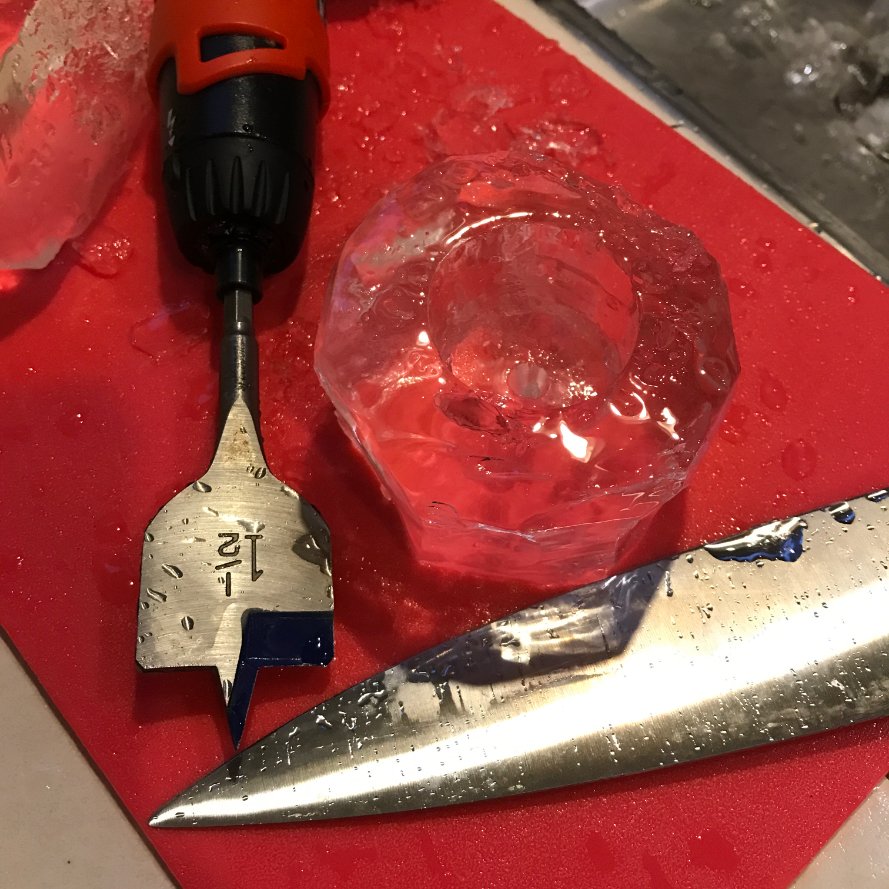
    I decided to try to make shot glasses out of ice slabs made in a cooler. I froze water, cut it into big cubes and then bought a 1.5 inch drill bit. 

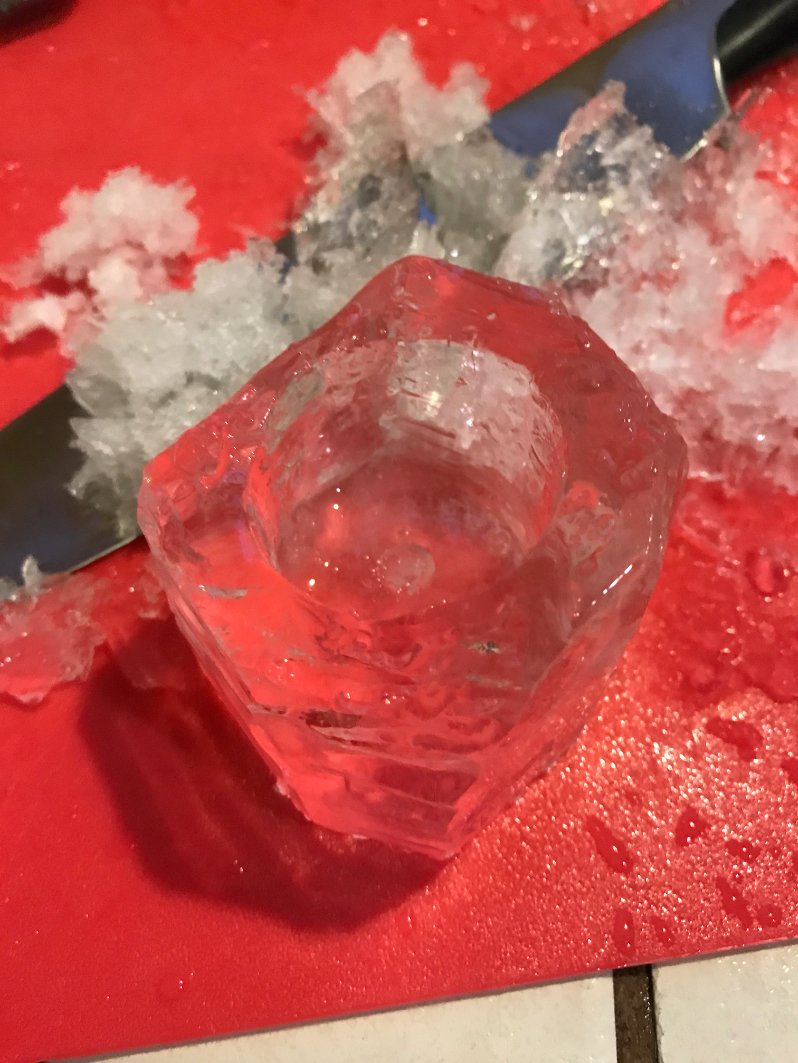
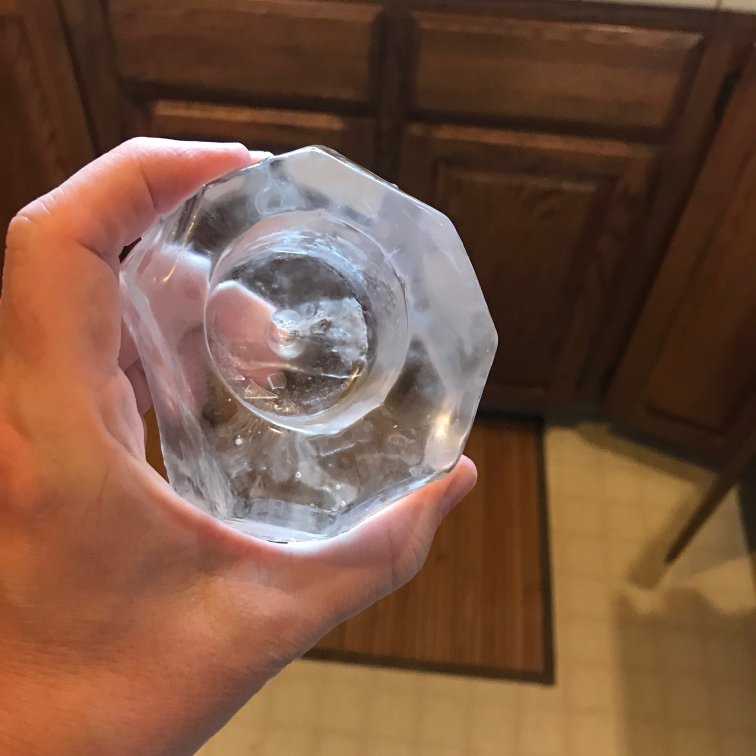
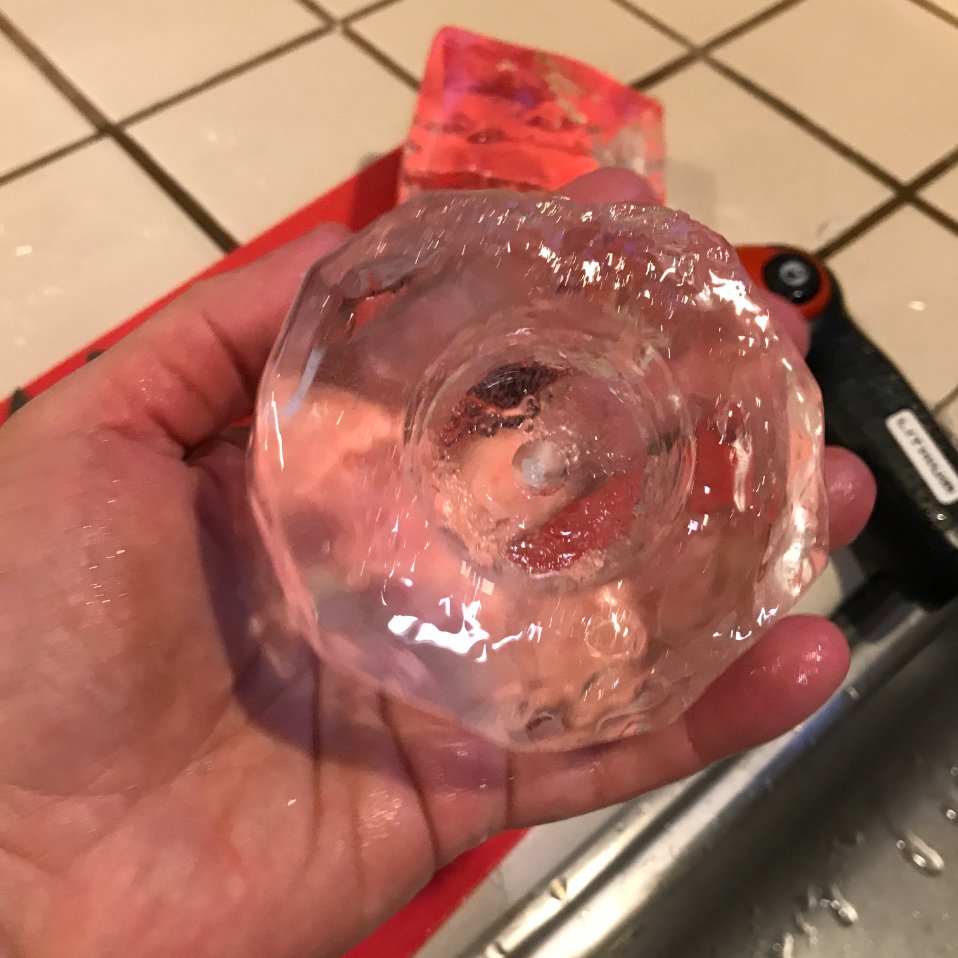
    I was surprised to find how easy it was after that. I drilled a hole in the middle of each. Then, knowing that with the huge amount of room outside the hole it would be impossible to actually drink a shot out of them without spilling it everywhere, I decided to chop off some of the side of each cube with a big knife.

    Oddly, though I've been making shapes with ice blocks for a decade, I don't think I've ever tried to carve it with a knife. Turns out it's super easy. 

    So these will make shot glasses and/or votive candle holders. 

    IMG_6851 IMG_6824
    IMG_6824
    IMG_6824
    IMG_6824 IMG_6839

    IMG_6824
    IMG_6824
    IMG_6824
    IMG_6824


  • Halloween Ice: Magic Wand and Plastic Rat

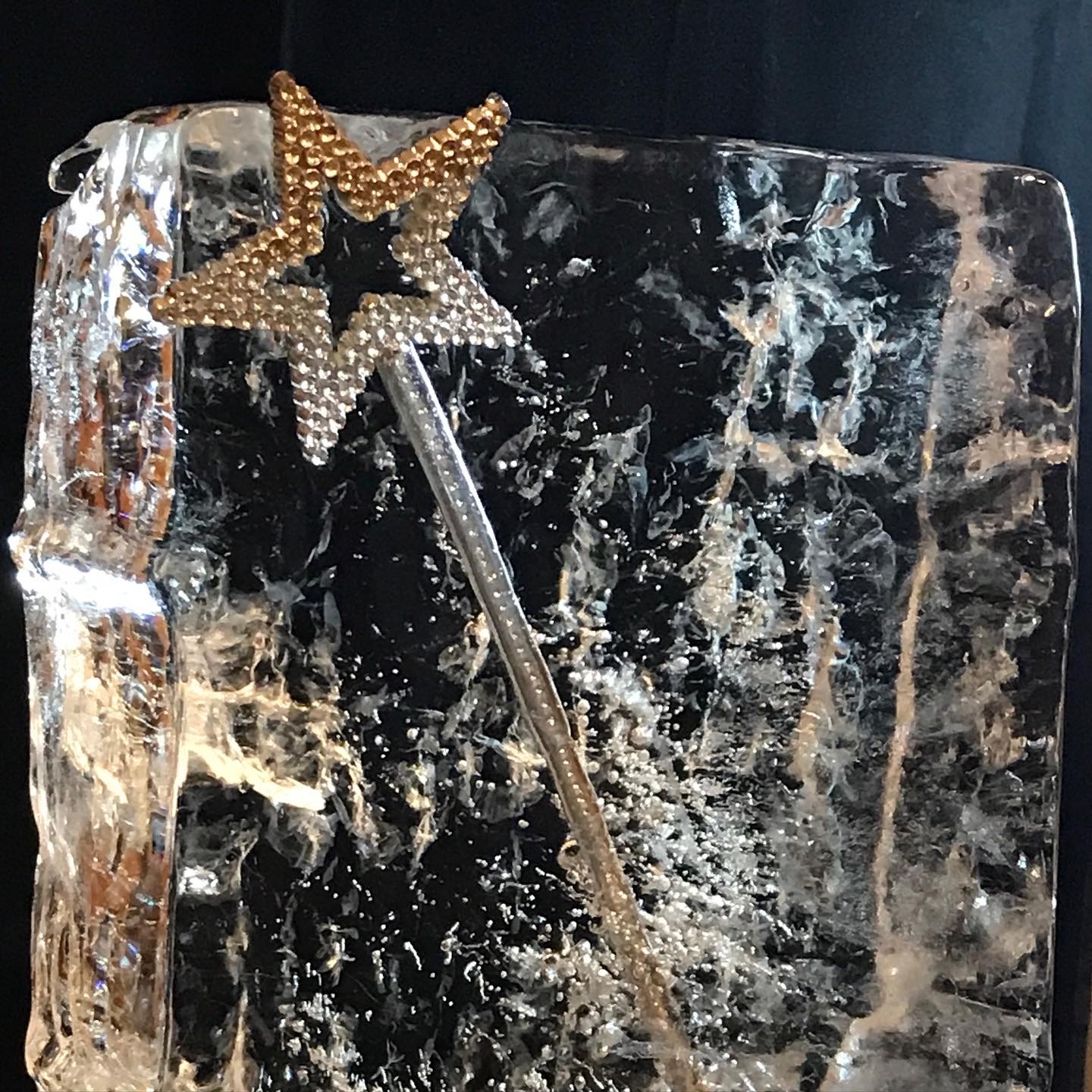
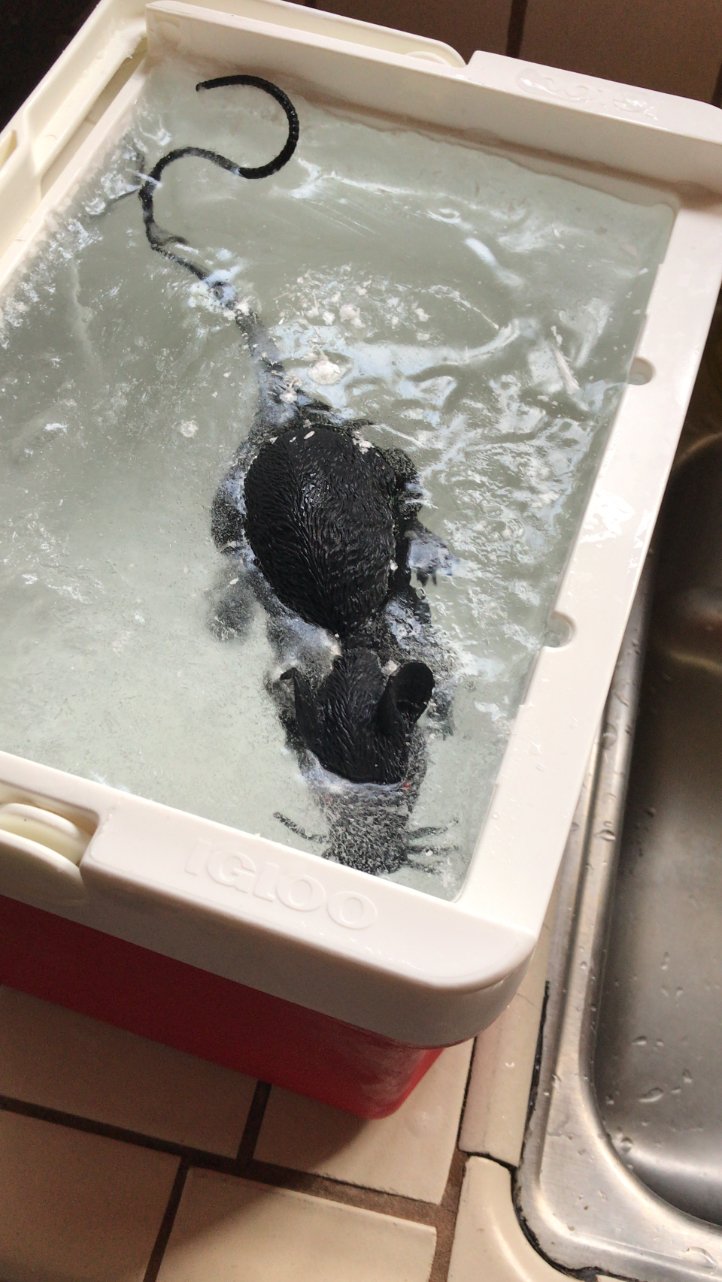
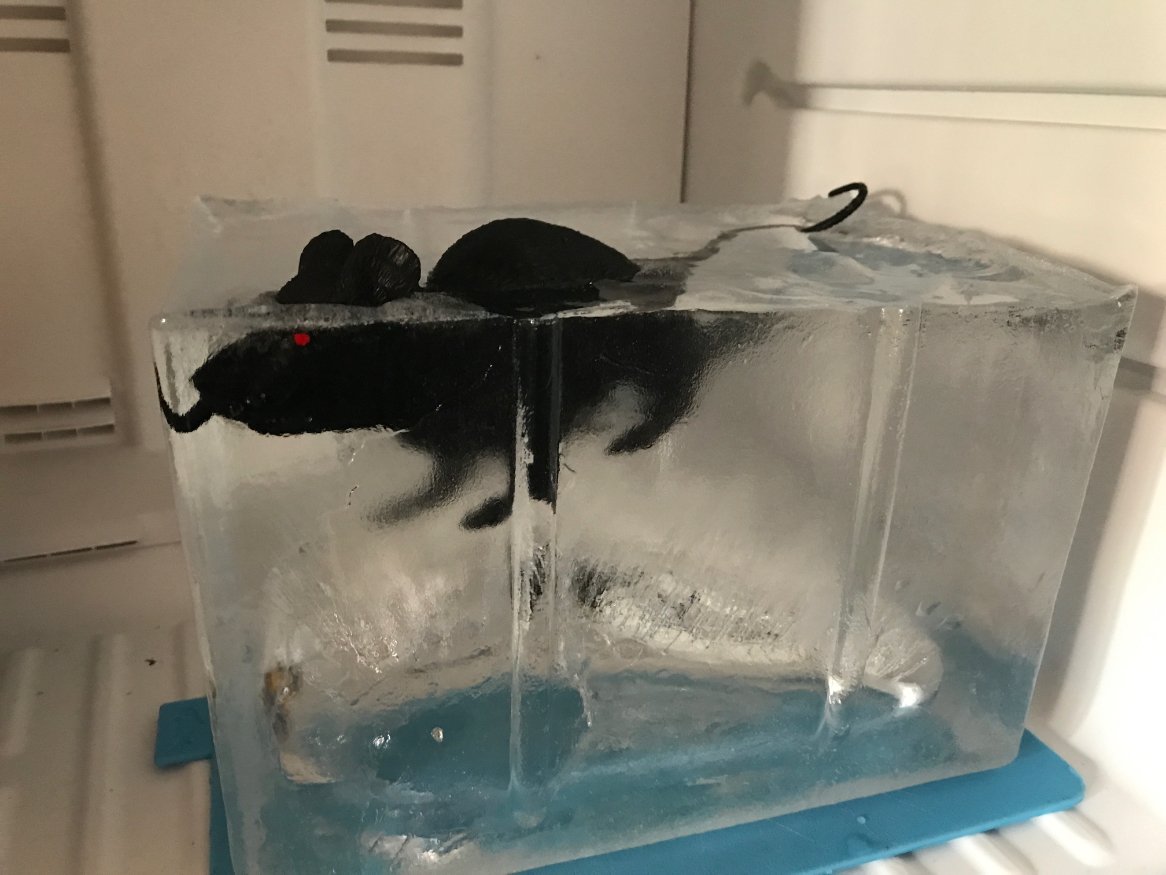
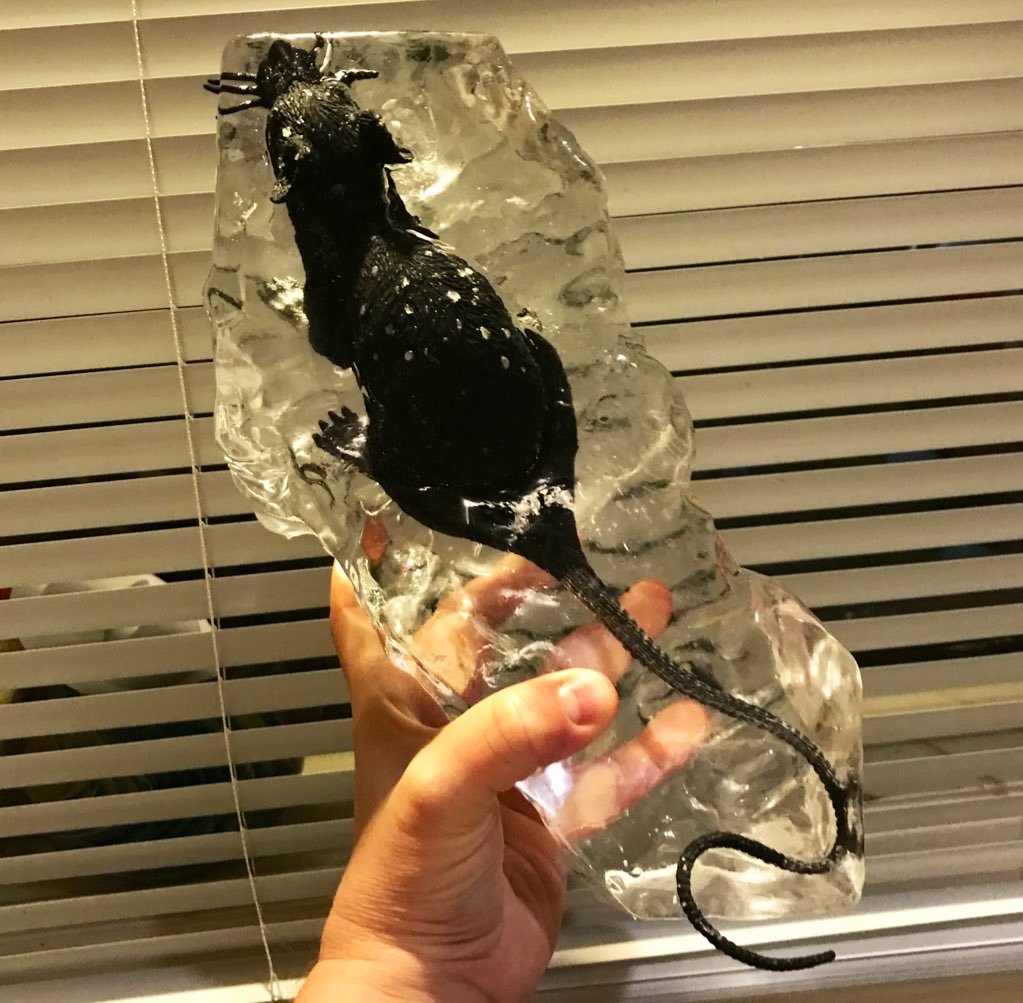
    Over on my Instagram account, I posted a lot of pictures of goofy ice projects for Halloween. I realized I should also share them here on the blog for posterity. This is one of several posts. All my 10+ years of ice posts are here

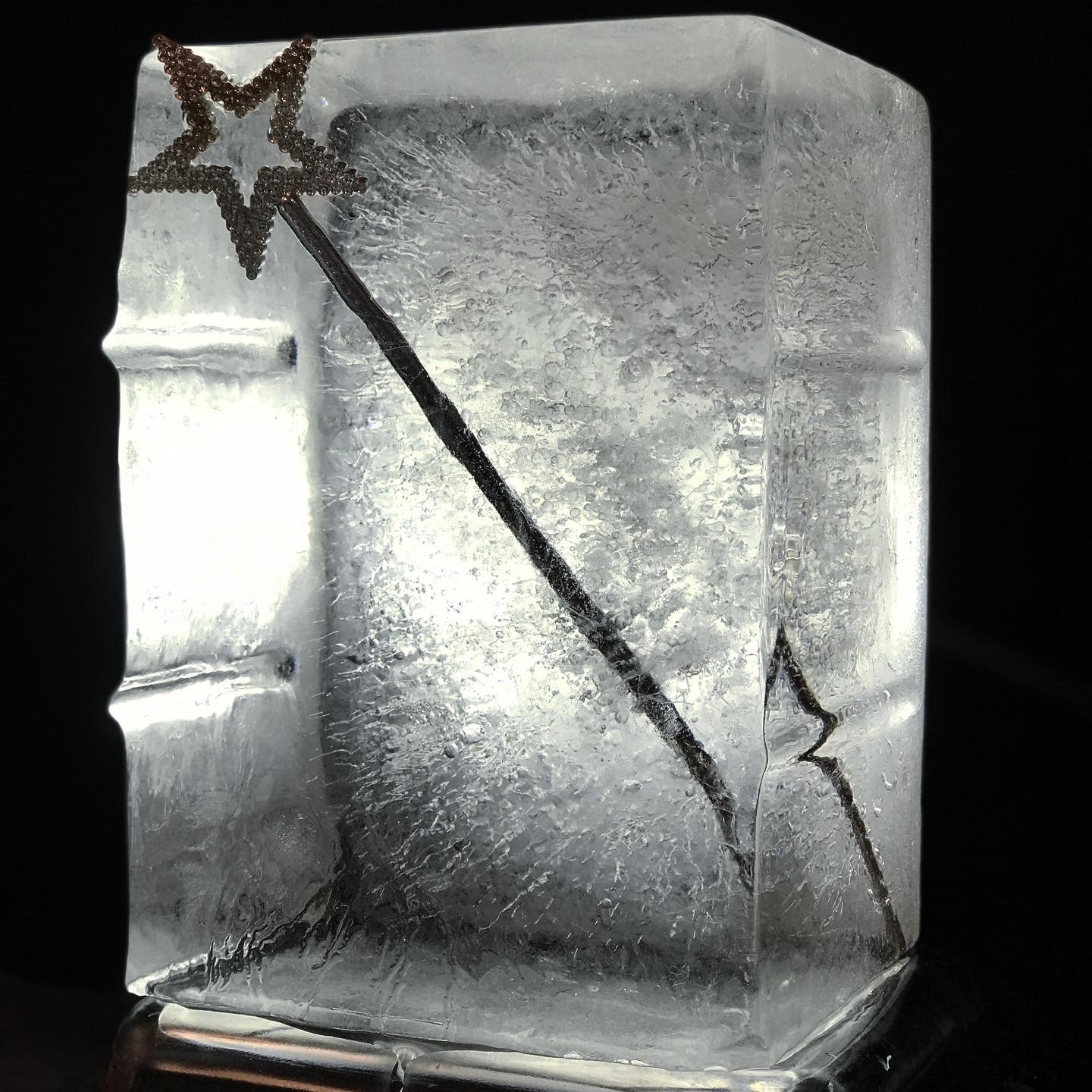
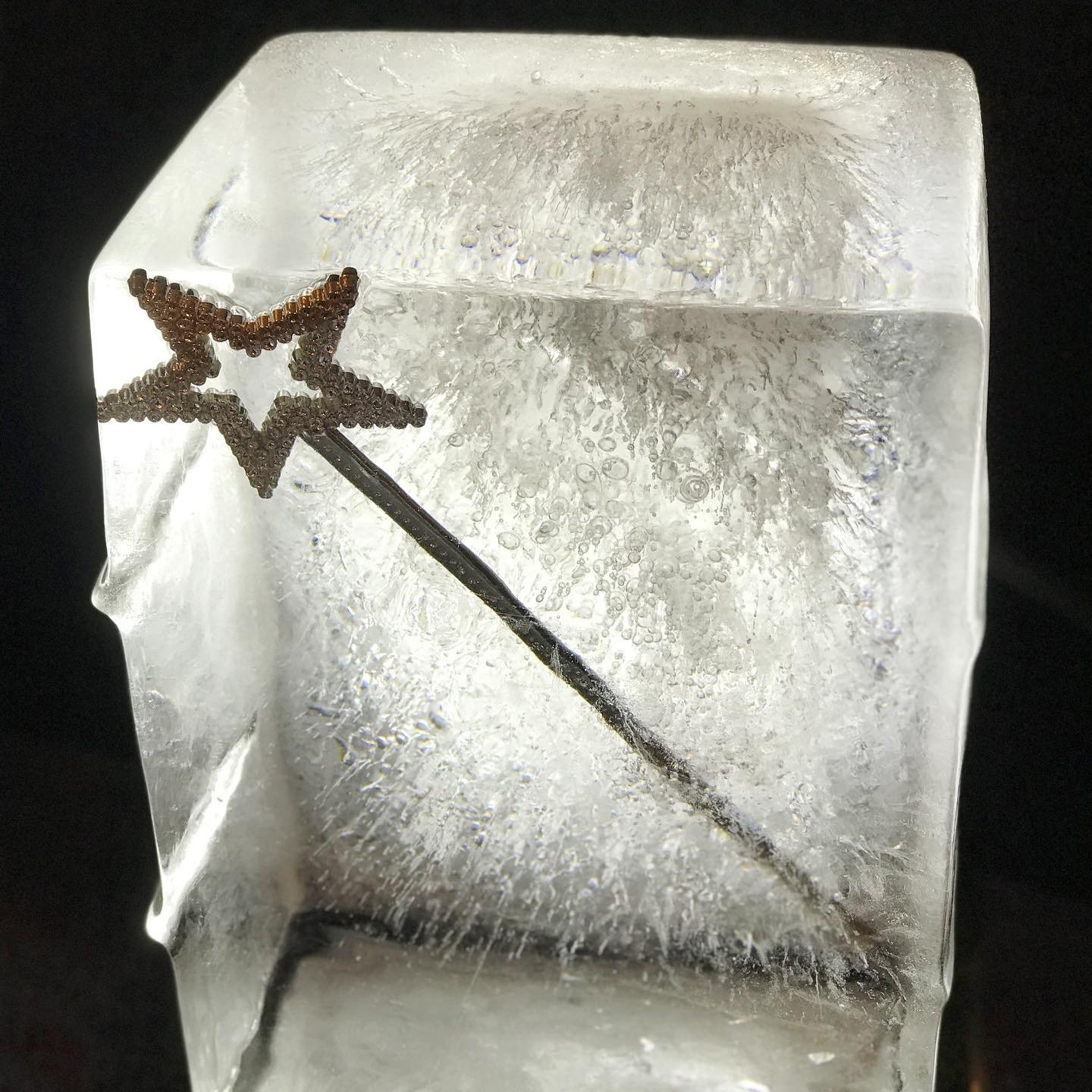
    I bought a bunch of silly junk at the Halloween store and froze it into ice blocks. On this post there are pics of a magic wand and a plastic rat that I froze. 

    F5D2BA4E-33B8-4853-ABCC-84C07509A962
    F5D2BA4E-33B8-4853-ABCC-84C07509A962
    F5D2BA4E-33B8-4853-ABCC-84C07509A962
    F5D2BA4E-33B8-4853-ABCC-84C07509A962
    F5D2BA4E-33B8-4853-ABCC-84C07509A962
    F5D2BA4E-33B8-4853-ABCC-84C07509A962

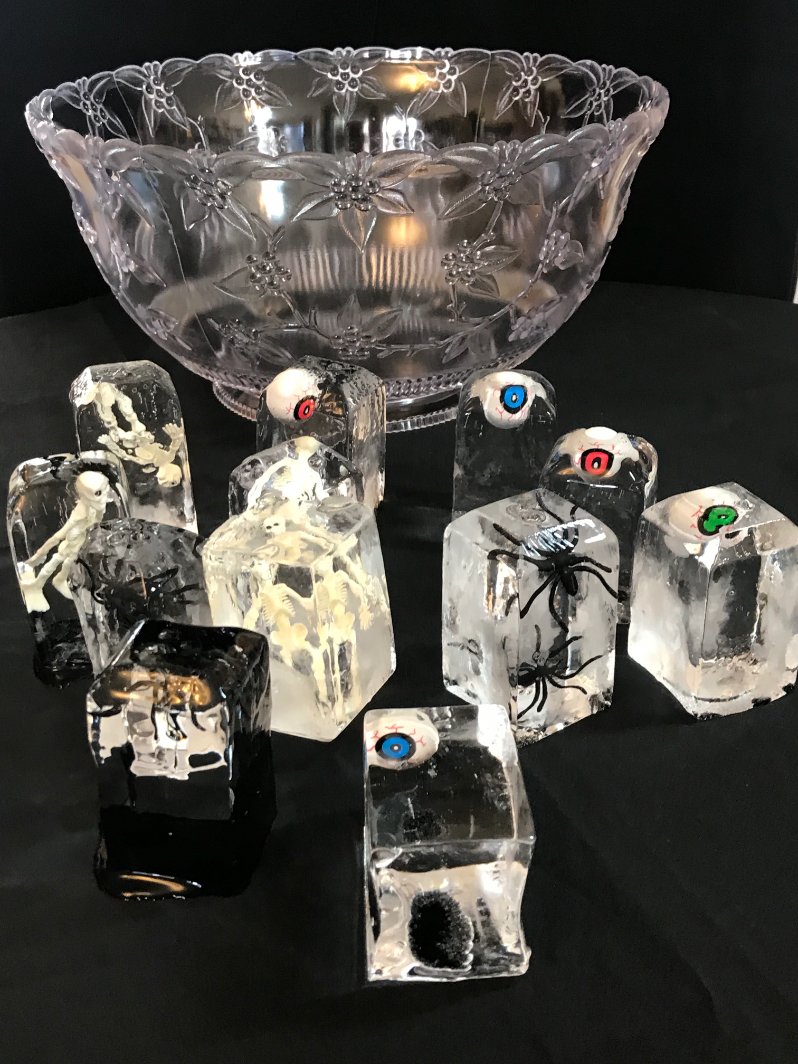
  • Halloween Ice: Skeletons and Spiders in Ice Cubes

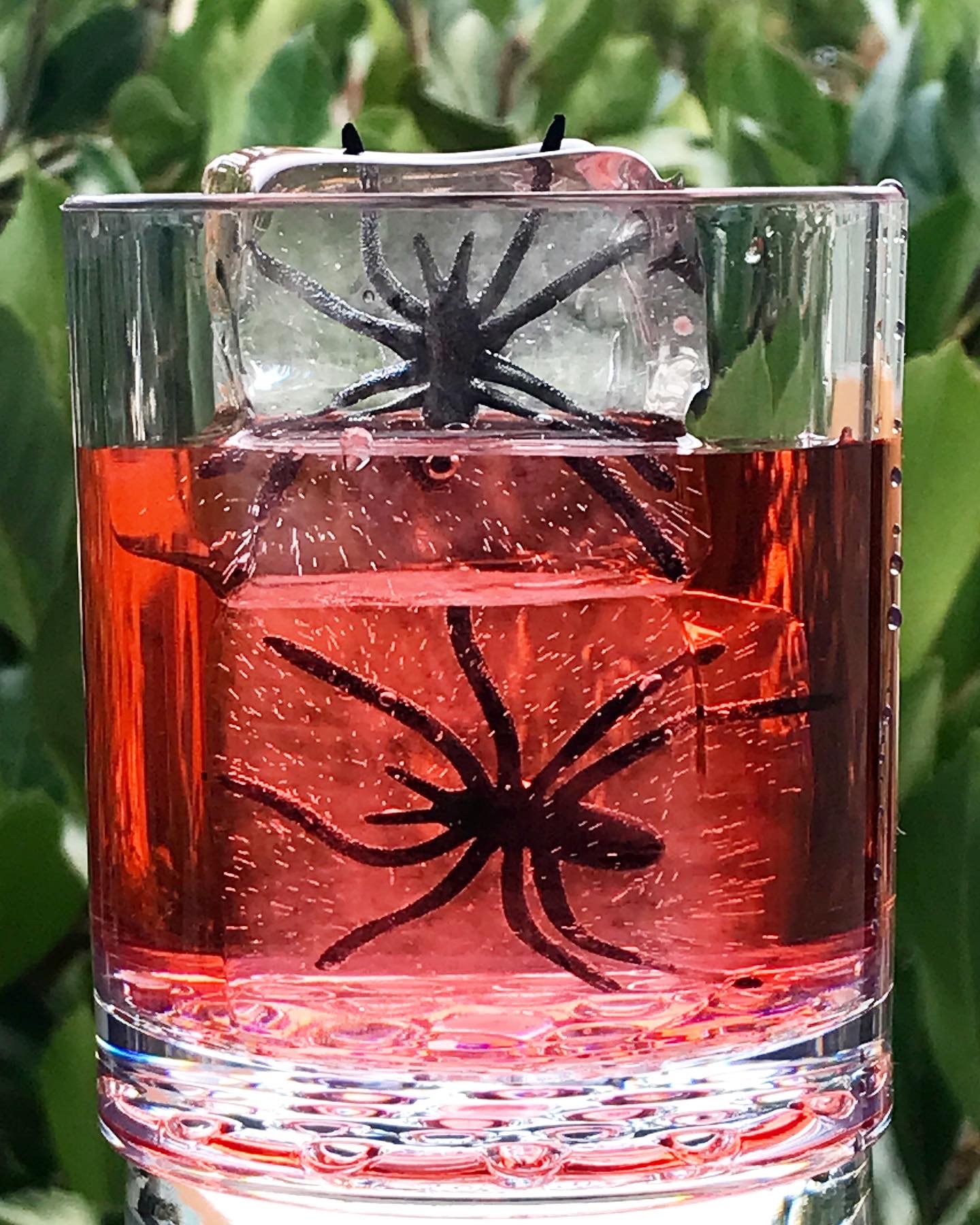
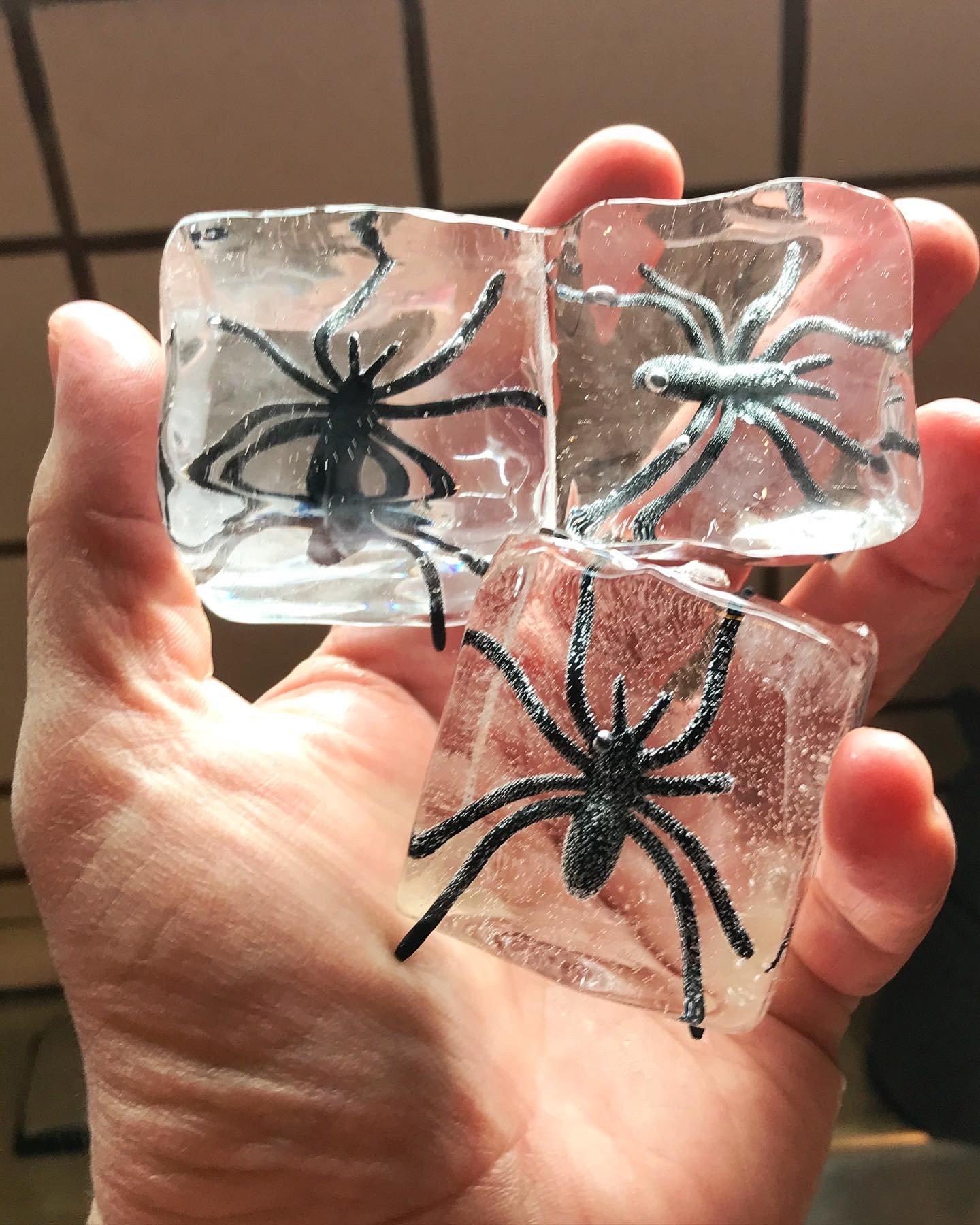
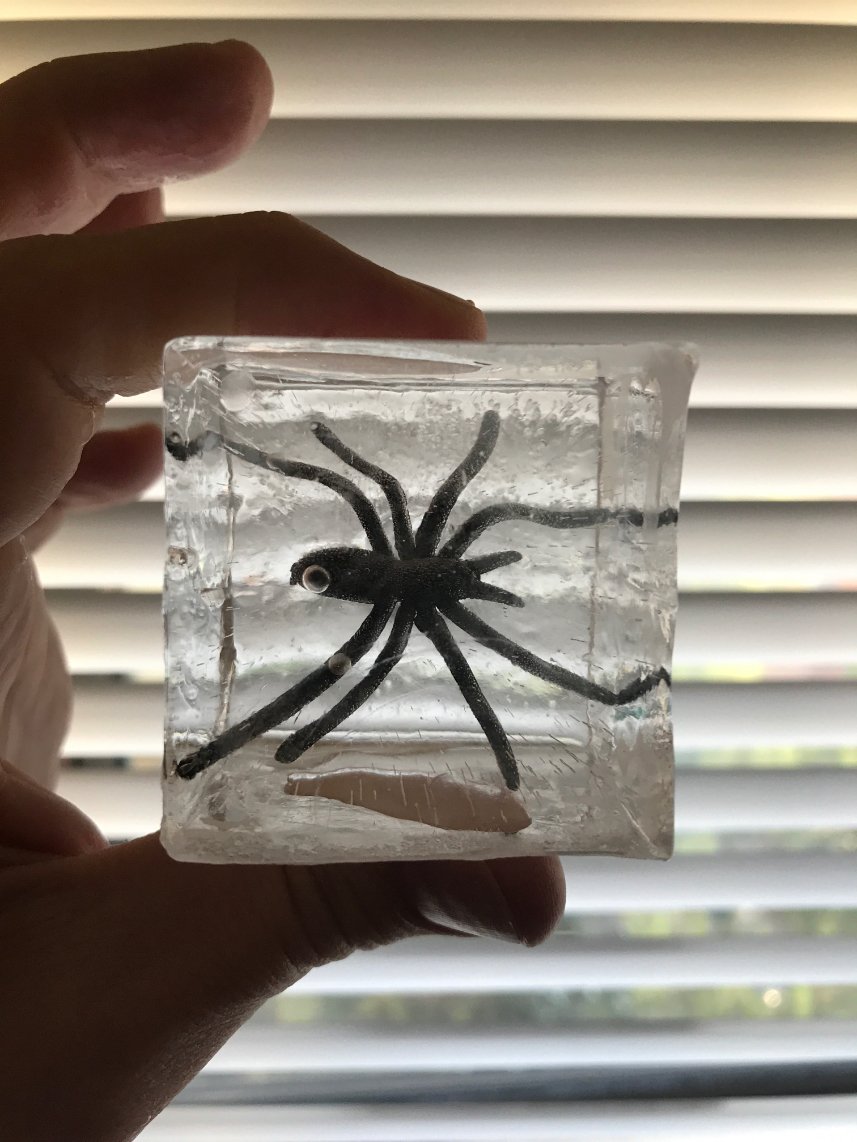
    Over on my Instagram account, I posted a lot of pictures of goofy ice projects for Halloween. I realized I should also share them here on the blog for posterity. This is one of several posts. All my 10+ years of ice posts are here

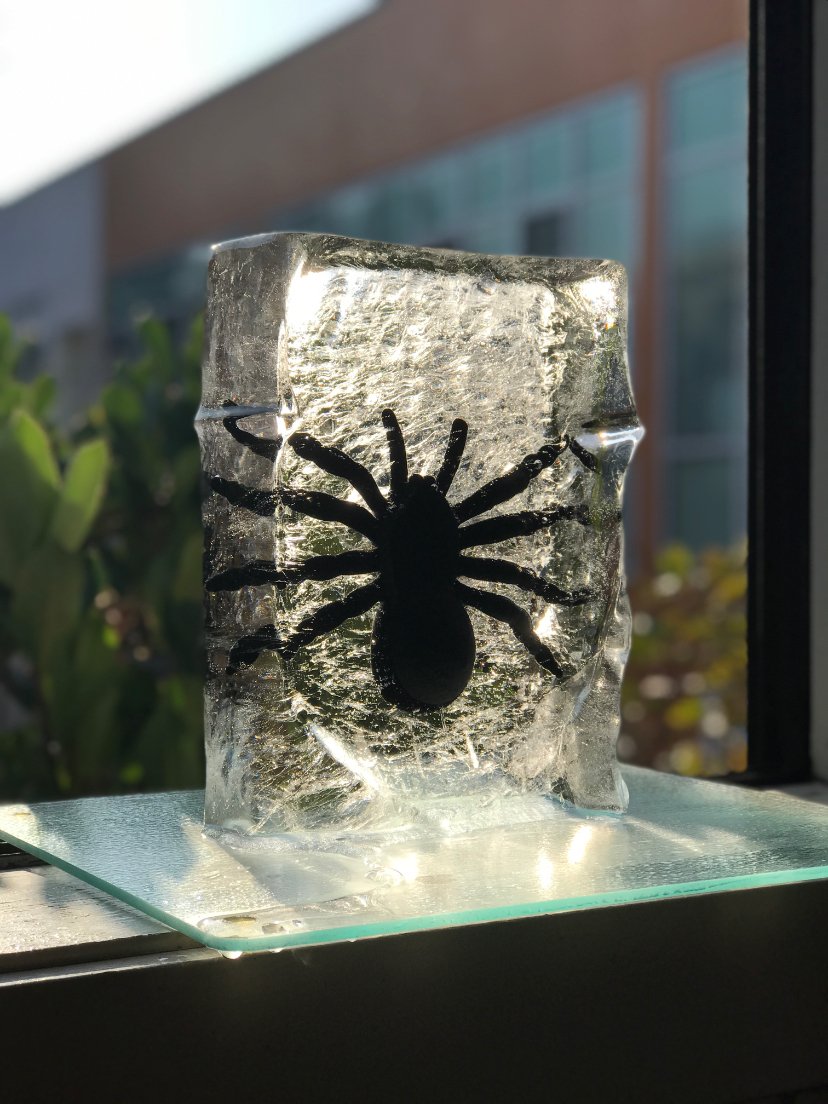
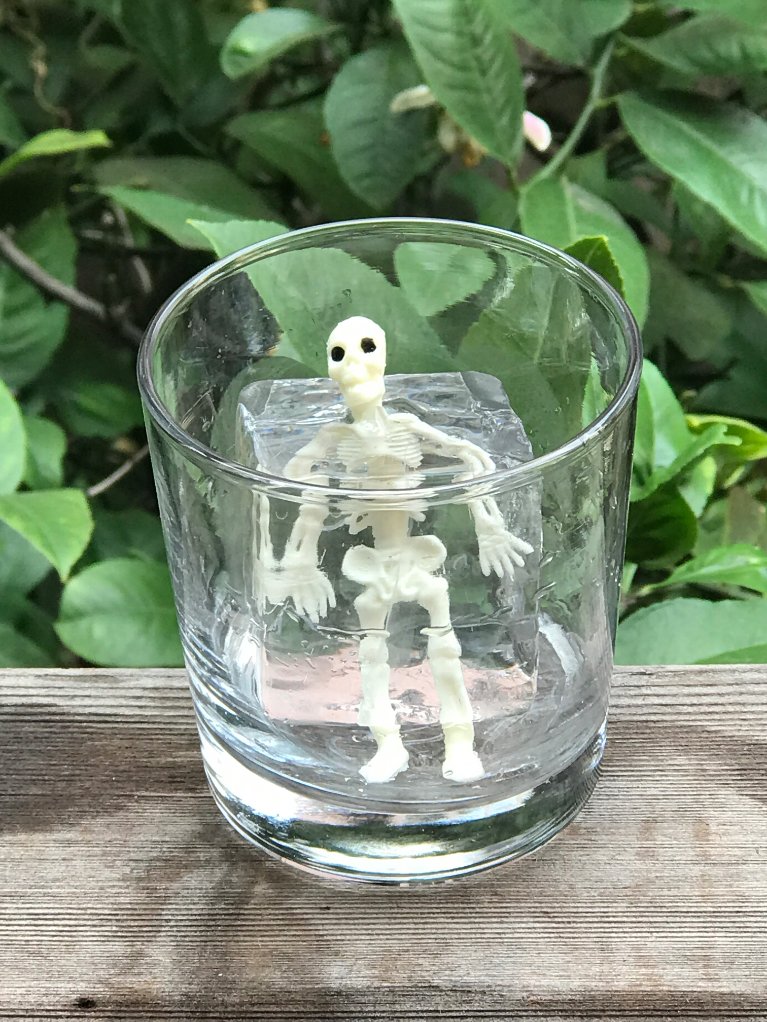
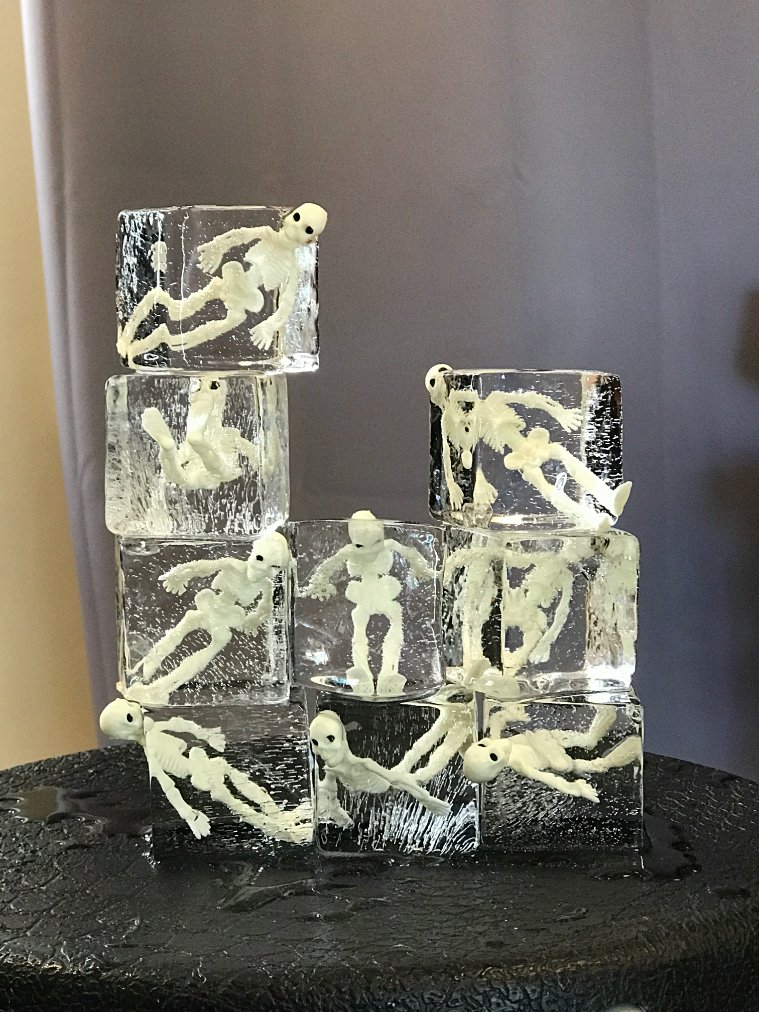
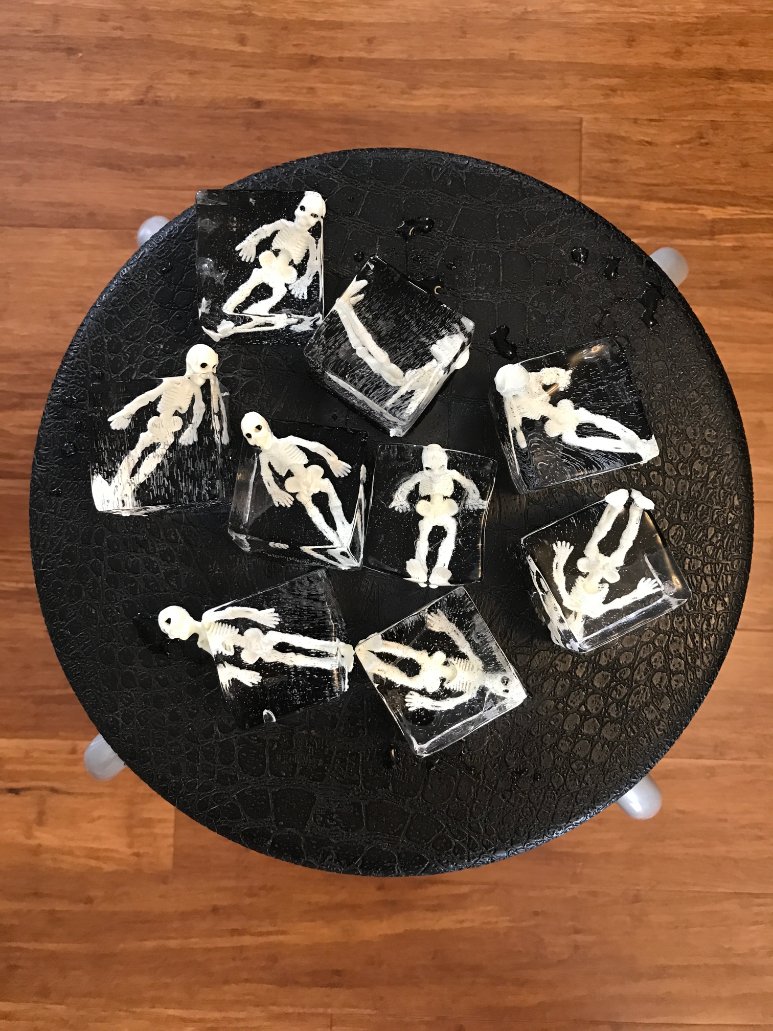
    I bought some small plastic skeletons and spiders at the Halloween store and frozen them into cubes, mostly using the Ghost Ice system or the Clearly Frozen tray (see recommended trays by following link above). Oh and it's hard to tell but the last spider pic is of a giant plastic spider I froze into an ice block using a cooler. 


    96B1B046-0FA5-4D4B-AE32-5B5696CD45F4
    96B1B046-0FA5-4D4B-AE32-5B5696CD45F4
    96B1B046-0FA5-4D4B-AE32-5B5696CD45F4
    96B1B046-0FA5-4D4B-AE32-5B5696CD45F4
    96B1B046-0FA5-4D4B-AE32-5B5696CD45F4
    96B1B046-0FA5-4D4B-AE32-5B5696CD45F4
    96B1B046-0FA5-4D4B-AE32-5B5696CD45F4
    96B1B046-0FA5-4D4B-AE32-5B5696CD45F4

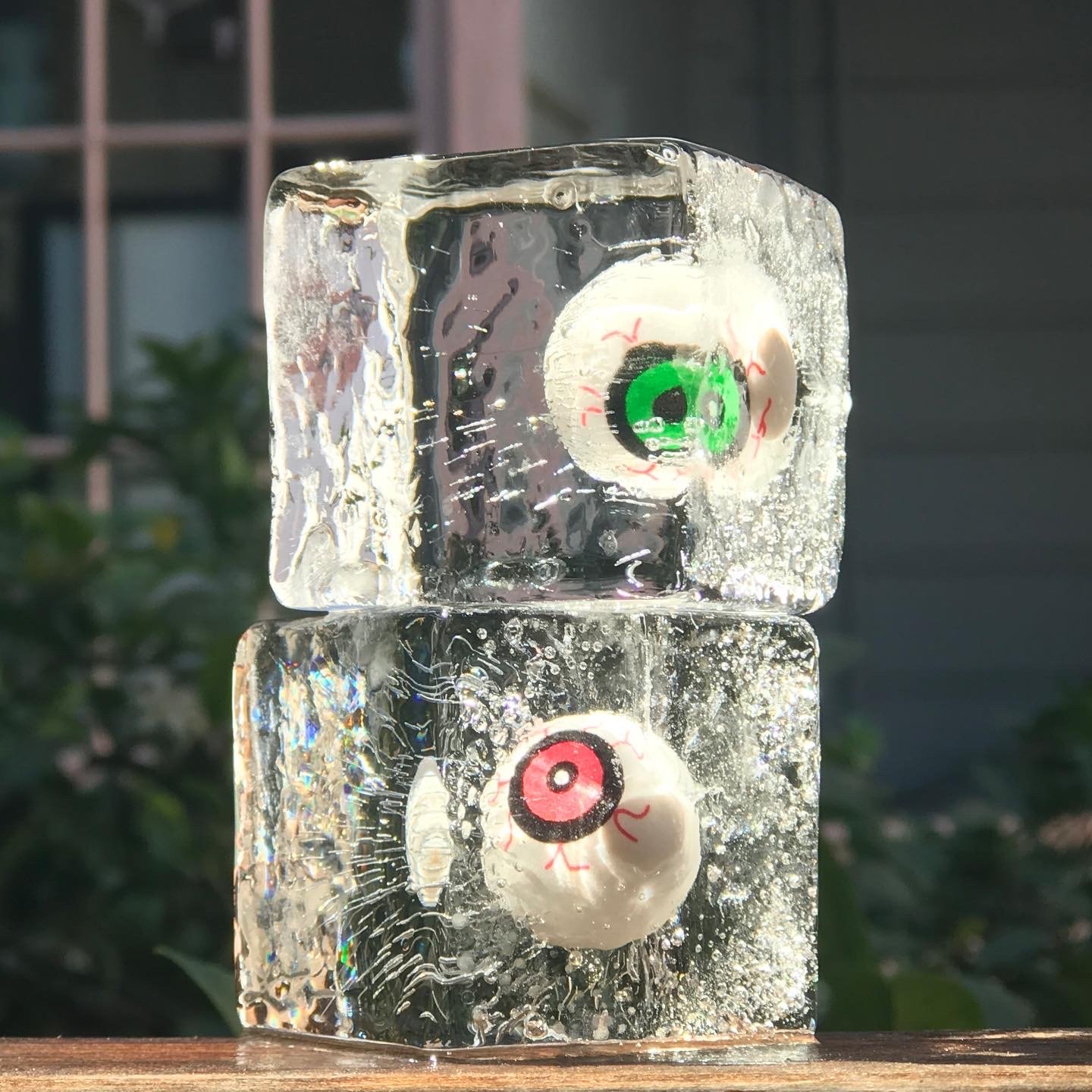
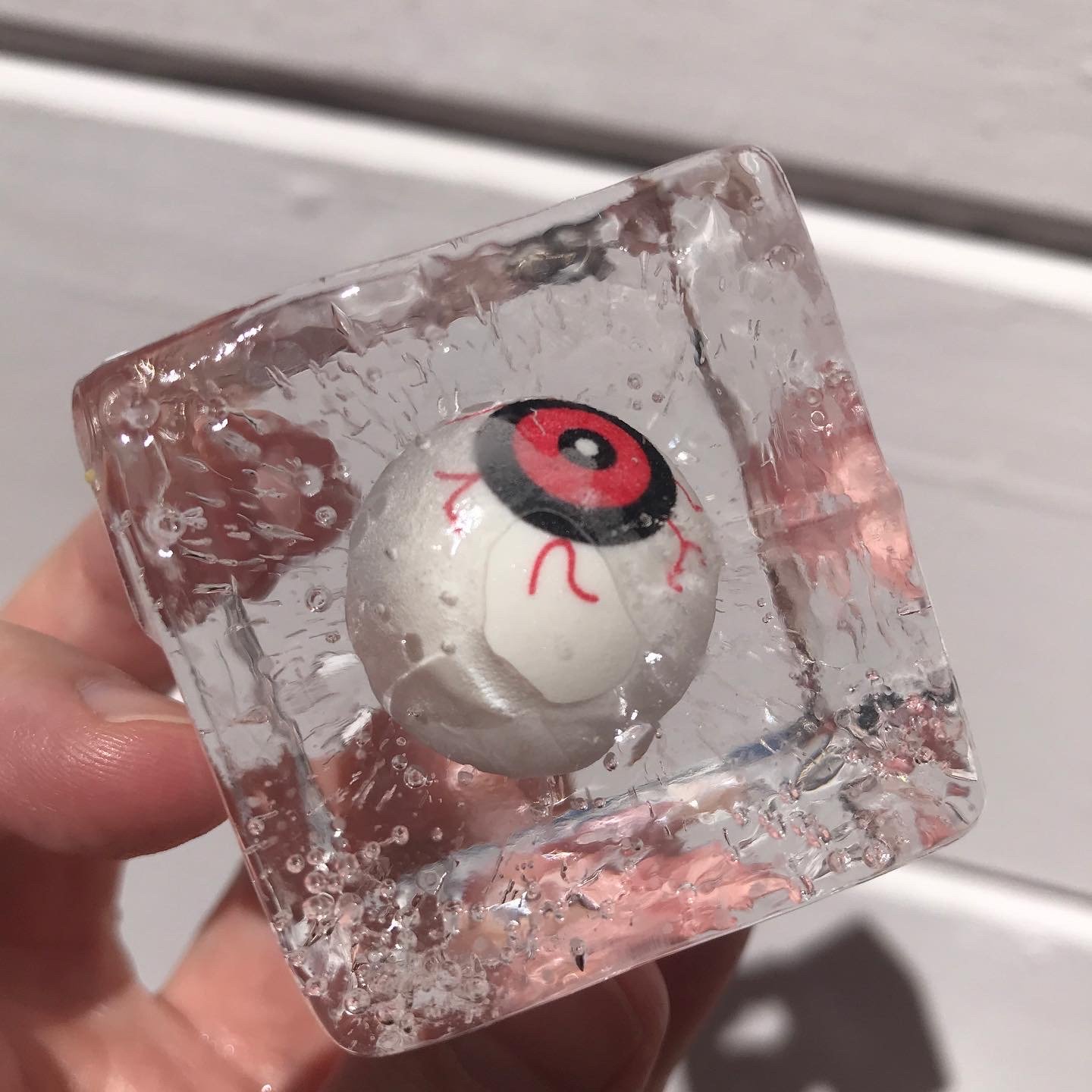
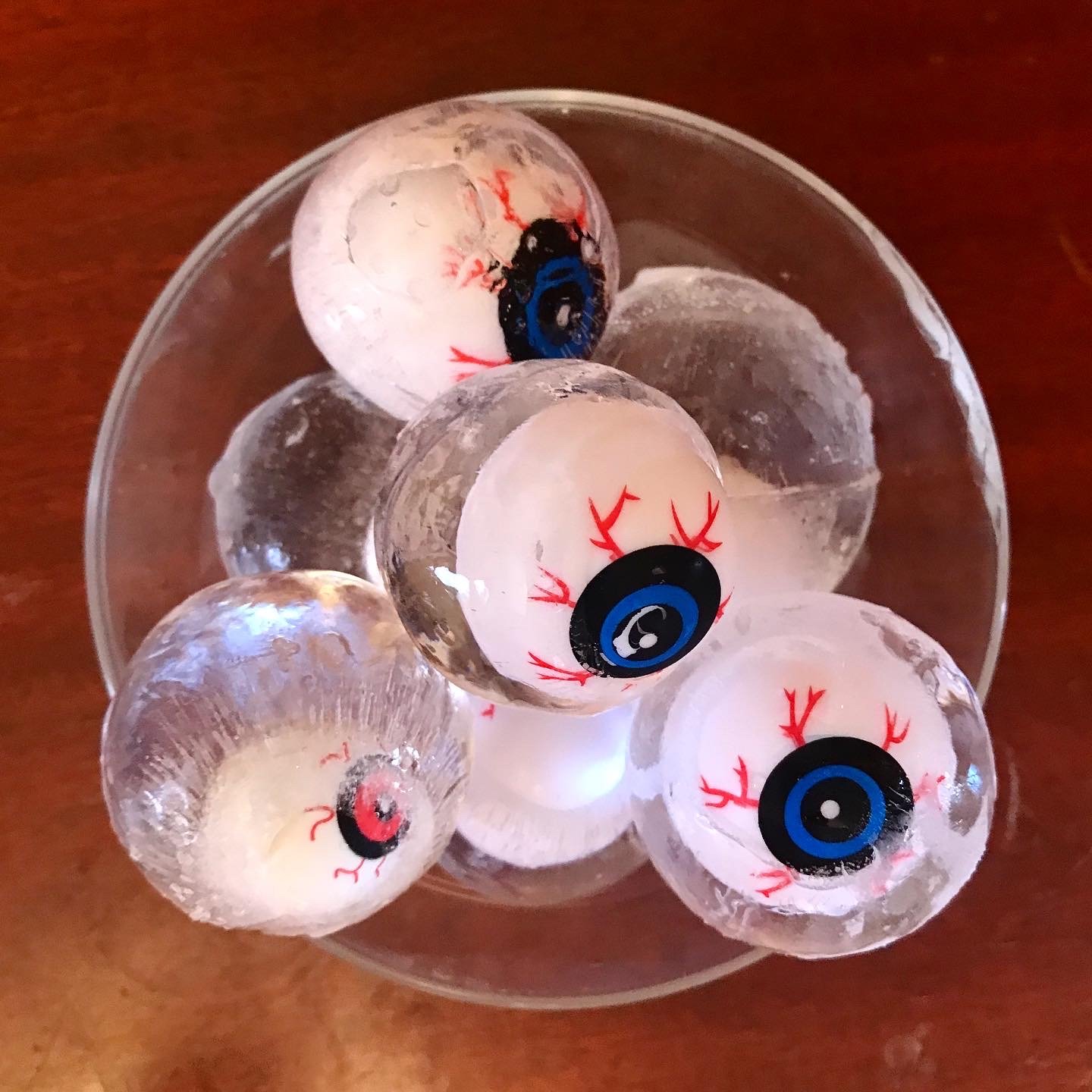
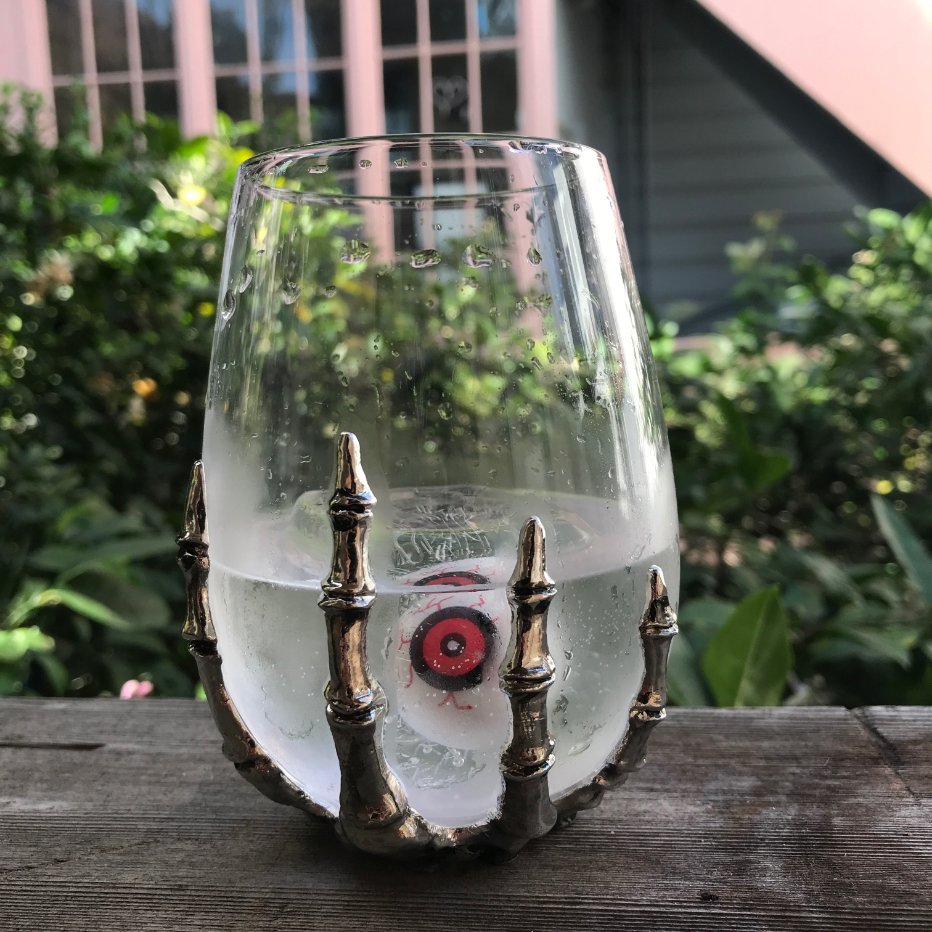
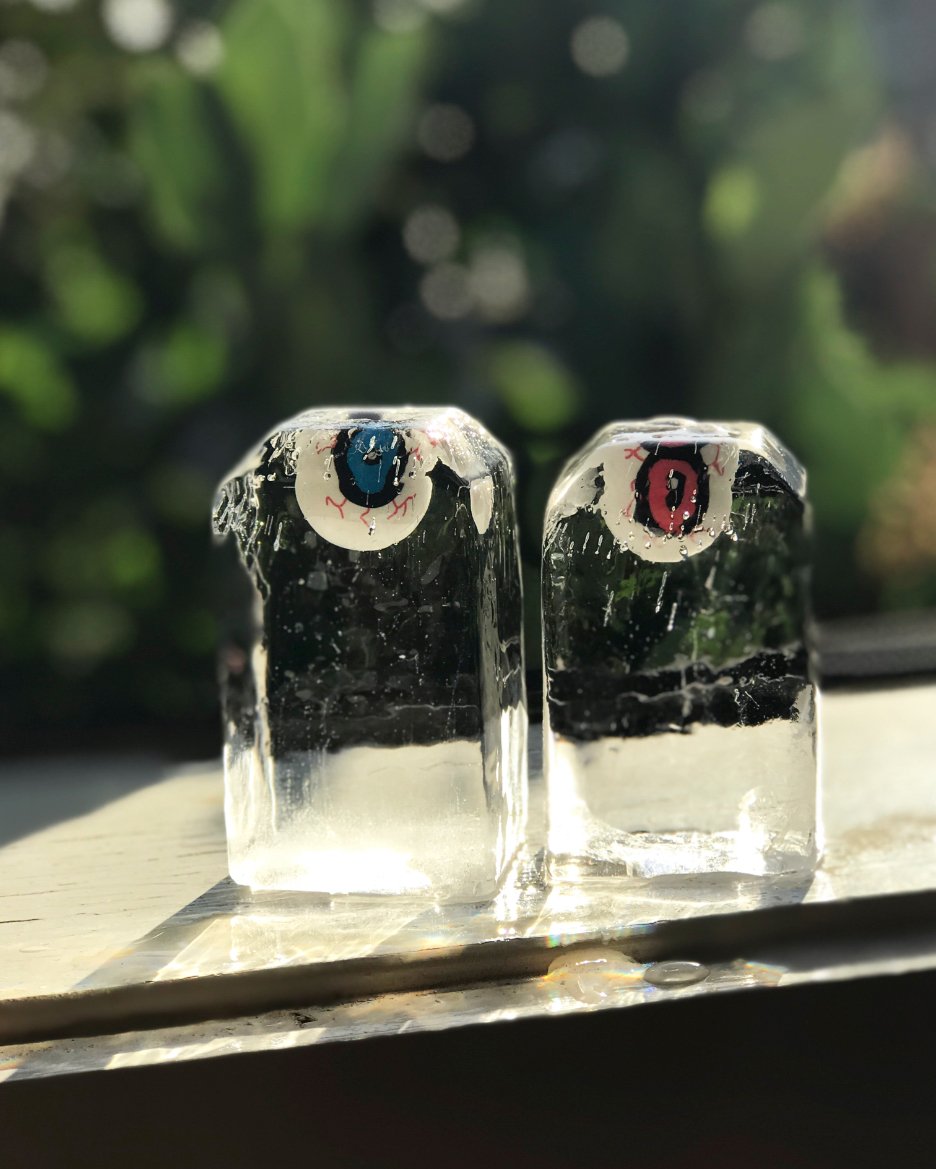
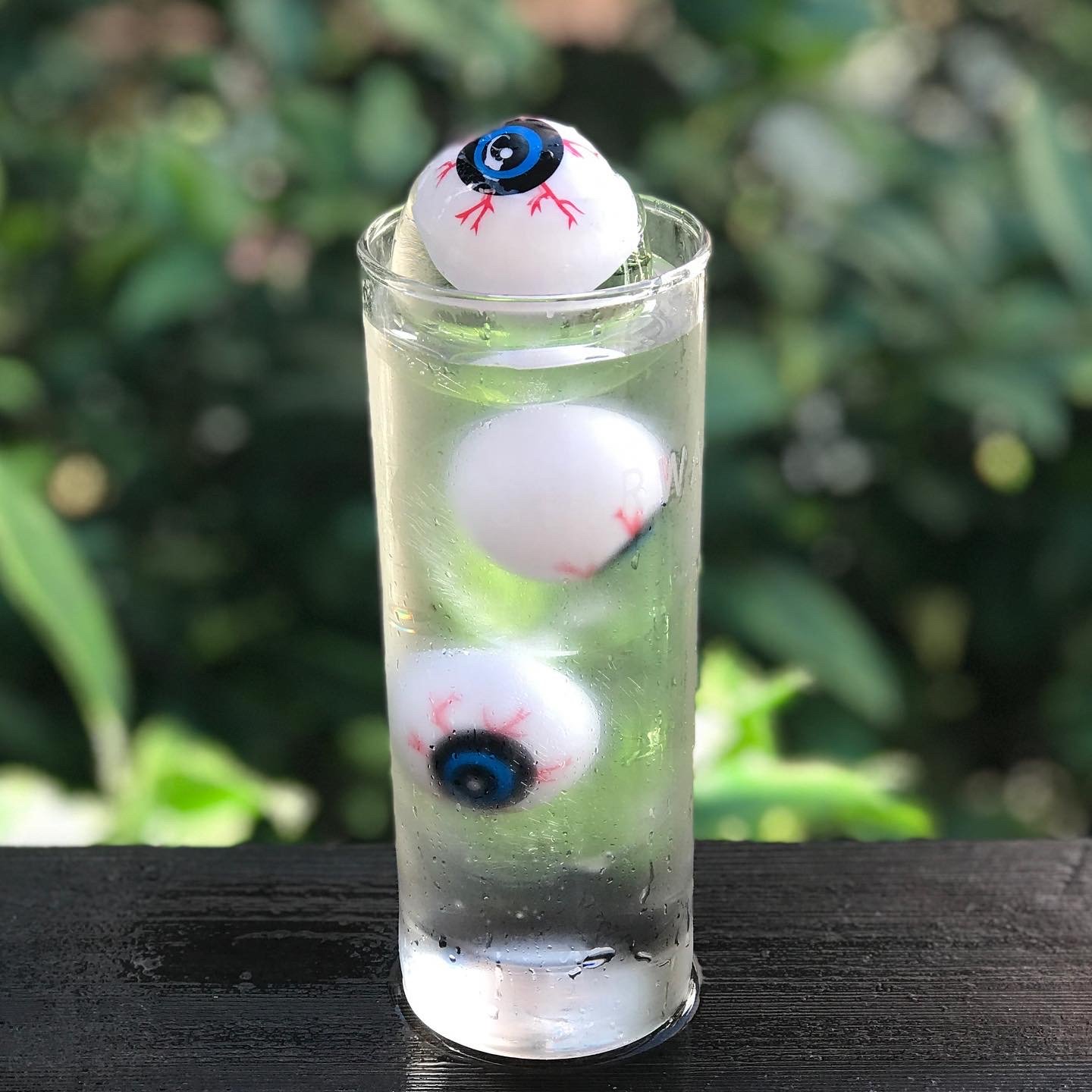
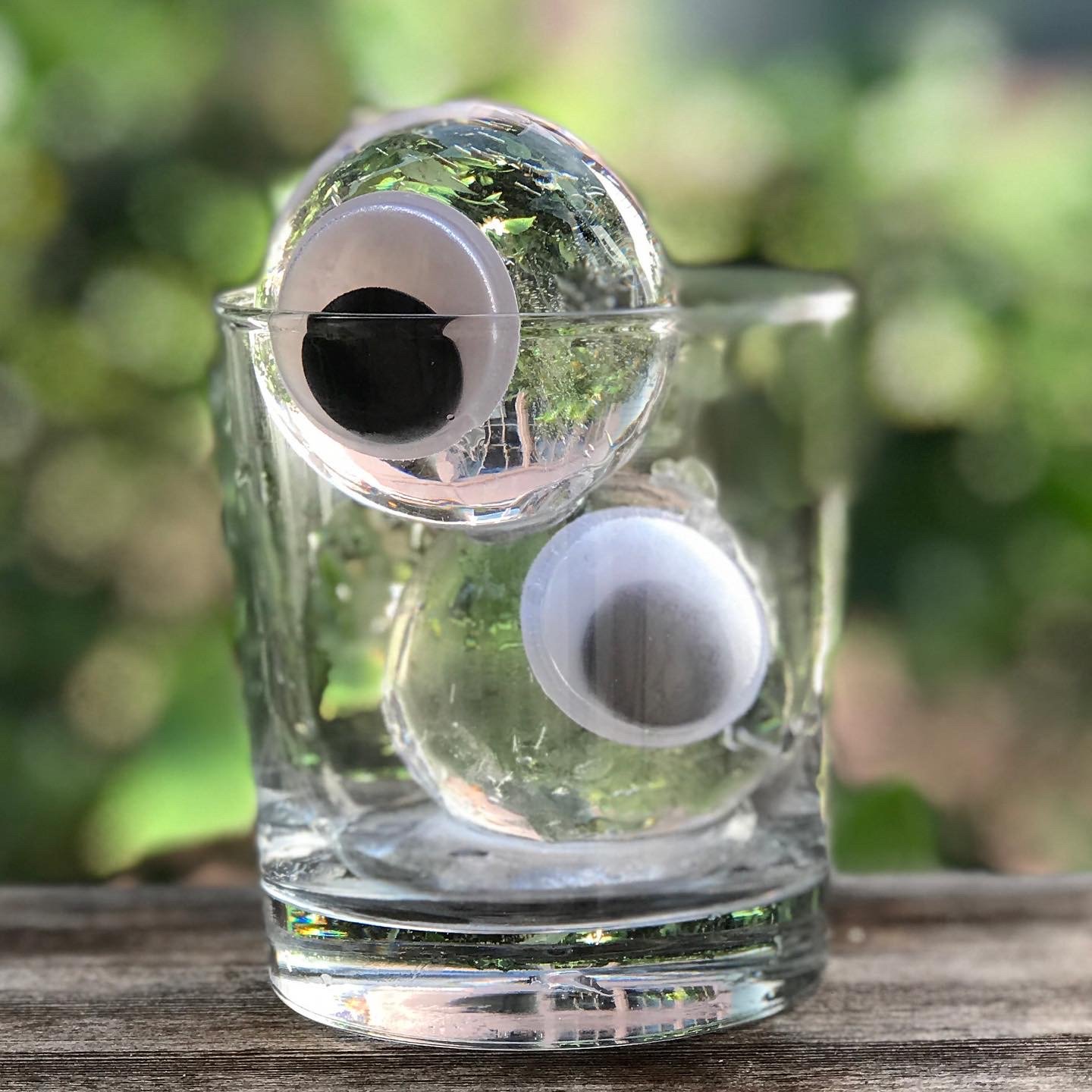
  • Halloween Ice: Eyes in Ice Spheres and Cubes

    Over on my Instagram account, I posted a lot of pictures of goofy ice projects for Halloween. I realized I should also share them here on the blog for posterity. This is one of several posts. All my 10+ years of ice posts are here

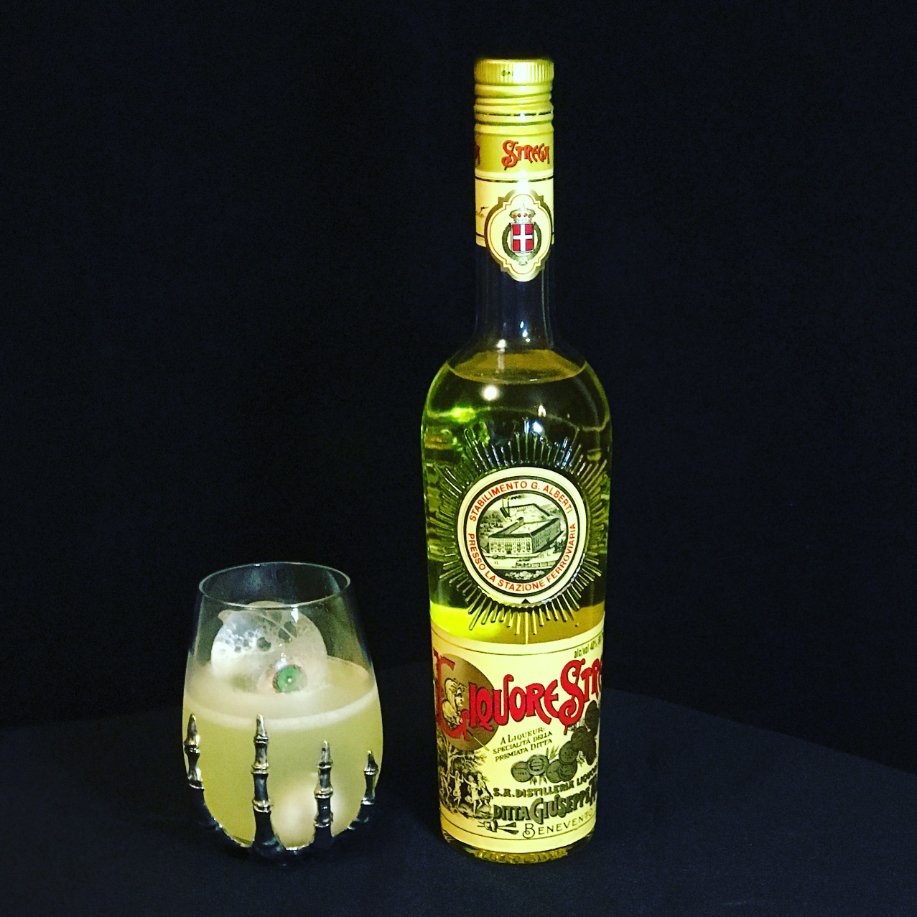
    These pictures are of various eyes I scored from a few stores. There are eyes on ping pong balls (that float), rubber ball eyes (that sink), and some flat googly eyes. 

    B8DFEC10-1693-4E2D-BDB4-F4C93518A51F
    B8DFEC10-1693-4E2D-BDB4-F4C93518A51F
    B8DFEC10-1693-4E2D-BDB4-F4C93518A51F
    B8DFEC10-1693-4E2D-BDB4-F4C93518A51F
    B8DFEC10-1693-4E2D-BDB4-F4C93518A51F
    B8DFEC10-1693-4E2D-BDB4-F4C93518A51F
    B8DFEC10-1693-4E2D-BDB4-F4C93518A51F
    B8DFEC10-1693-4E2D-BDB4-F4C93518A51F