Author: Camper English

  • The History of Orange Curacao and Triple Sec, Updated

    Historical Cointreau ad smallerThis post is merely to refer you to another post – sorry about that.  Years ago I wrote a post about the differences between orange Curacao and triple sec. I have just significantly updated that post with new information and conclusions.

    For SEO purposes I am pointing you to the updated post rather than posting the new stuff on this post. It's Google's world, we just live in it.

    Please give it a read: 

    What's the Difference Between Orange Curacao and Triple Sec


  • Campari Production Info: Extraction, ABV, Coloring, and Fining

    At this year's Tales of the Cocktail, I went to a terrific seminar called Til The Bitter End, lead by Audrey Fort of The Rooster Factory brand development agency.

    I also gave a seminar about bitterness at Tales, with an emphasis on understanding the flavor of different bittering agents. This seminar, on the other hand, was about bitterness in general and measuring the impact of bitterness in different spirits in particular.  Though I researched the heck out of my own seminar, I also learned a ton in this one. 

    One of the panelists was Mike Capoferri, Italian Portfolio Ambassador for the Campari Group. I'd not met him before and his part of the presentation was great. While Campari, the liqueur, doesn't disclose any of the ingredients in the bottle that make its distinctive flavor, Capoferri was able to share some of the very complicated production processes that go into it. And they're so complicated that it wouldn't matter if they disclosed every ingredient. 

    So first, some technical terminology that I'd not seen in this way before, defining various extraction techniques depending on whether it's done in alcohol or water: 
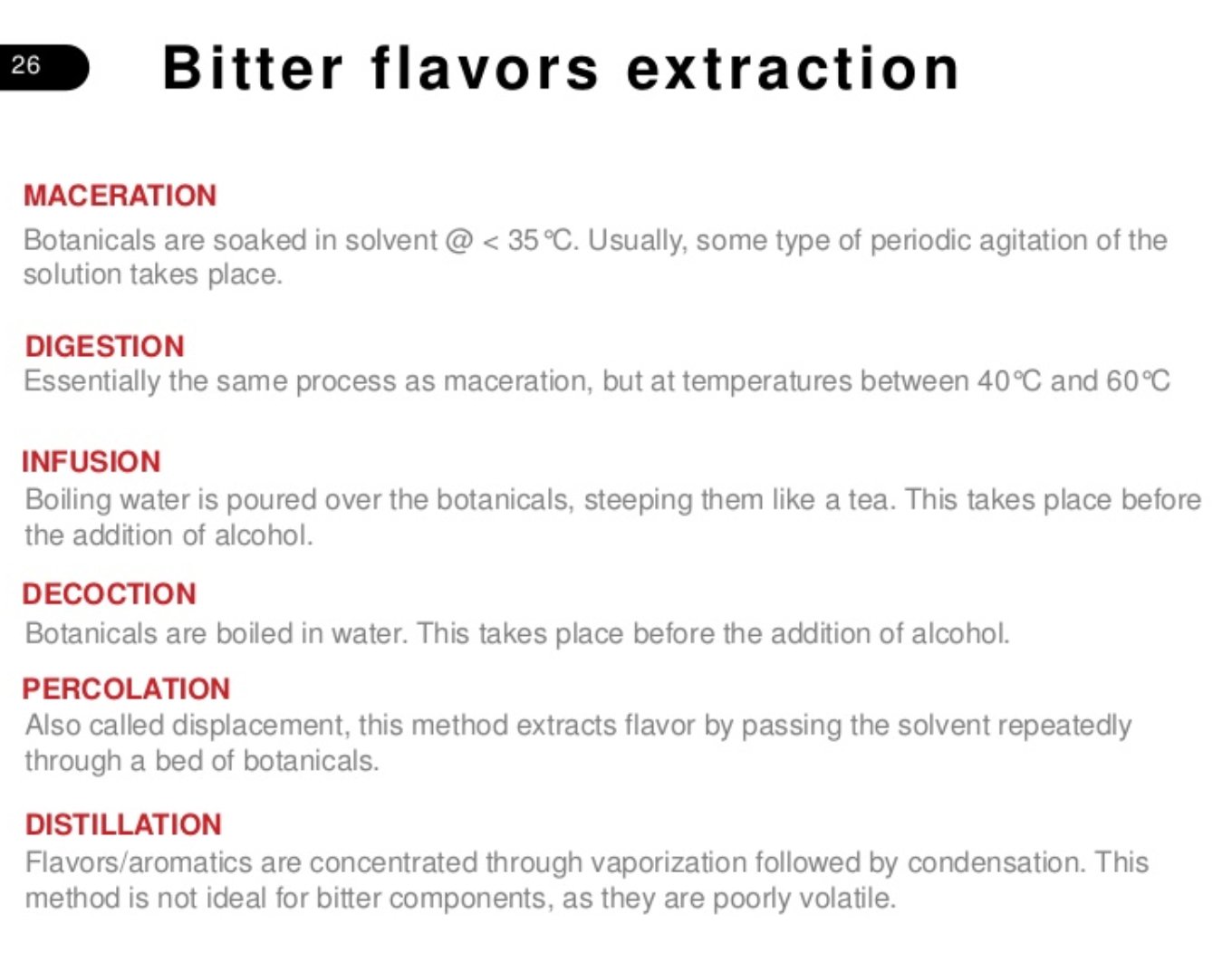
    Bitter flavors extraction

    One thing he mentioned in the seminar is that bitter compounds are not soluble in high-ABV alcohol. And I learned in the preparation for my own seminar that bitter flavors do not generally distill. That's why most bitter ingredients are macerated in the spirit rather than redistilled like gin. (In the case of Cointreau, I learned when I visited the distillery a few years ago, they distil their bitter oranges that have been macerated with pith in order to remove bitterness from the infusion.)

    Essential oils (like from the peels of those oranges in Cointreau) on the other hand do distill well, and are soluble in high-ABV alcohol. 

    Within the Campari portfolio, Averna is a simple extraction of botanicals in high proof spirit, so the result is a not-super-bitter amaro. 

    Braulio, in contrast, is macerated at a lower proof, to enhance the bitter flavors.  


    Anyway, those maceration techniques are used in the production of Campari:
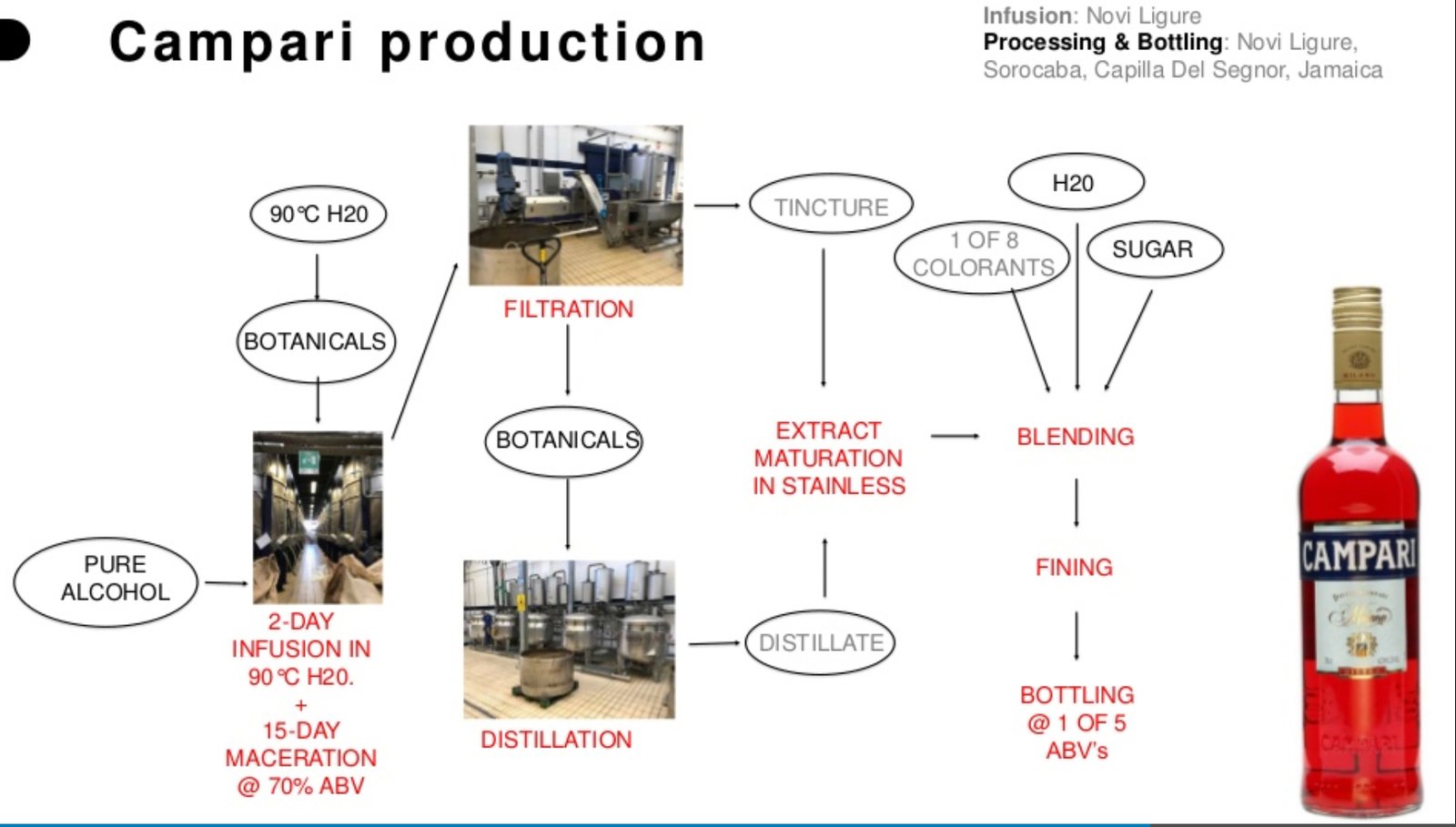
     

    Campari Production

    I'm glad to see Campari isn't just  Herbs -> Infusion -> Filtration -> bottling. I like it when things are interesting. 

    Three important observations (of mine) from this:

    1. "1 of 8 Colorants": As I revealed on this blog post about how Campari is made differently around the world, insect-based natural cochineal coloring seems to have been replaced by artificial coloring in most parts of the world, but not all. The post identified some of the ways that the red coloring is labelled – and now we know there are eight variations (or at least there were at the time this slide was made)!
    2. "1 of 5 ABV's": Also on the blog post we knew there were different ABVs. I'm surprised there are only 5. But on the other hand, 5 ABVs times 8 colorants means they could make up to 40 variations of Campari. 
    3. "Fining": On that same blog post, we saw from the bottle in Jamaica that Campari "contains eggs." I am pretty darn sure that is from the fining process (also used in beer and wine) that brings the liquid to clarity. The only thing to note here is that they use the term "fining" rather than "filtration" which helps build our case.  To repeat from that blog post, even though in most countries Campari is no longer colored with insects, it is still almost assuredly not vegan.  

    So, that was awesome. Thanks to Audrey Fort and Mike Capoferri for the info. 


  • A Little Overkill at my Tales of the Cocktail Seminar on Bitter Flavors

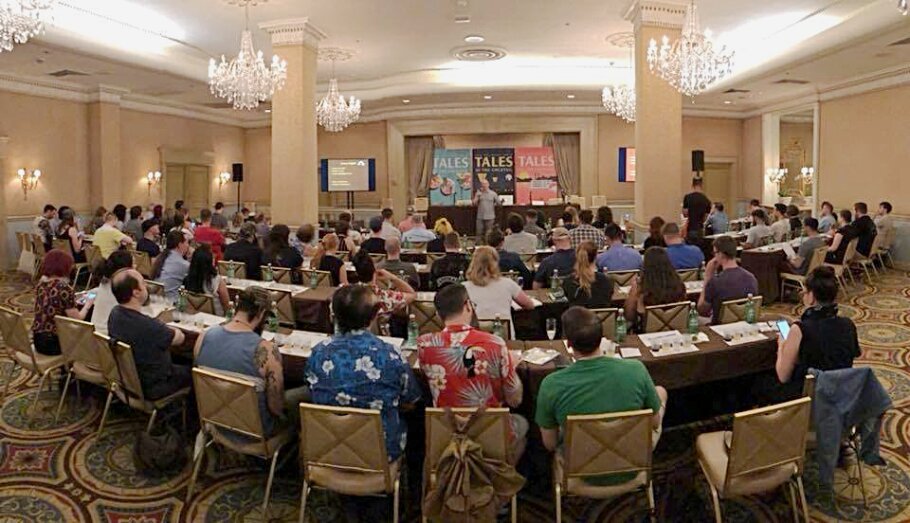
    This year as usual I gave a seminar at Tales of the Cocktail (well this year I gave one myself and then was on a panel for another one; this post is about the one I gave solo). This one was called Bitter Flavors: Taste the Rainbow. 


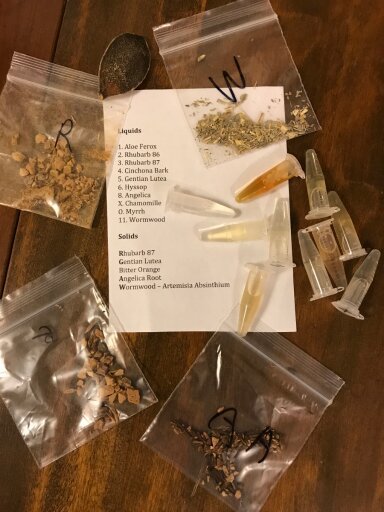
    bitter samples

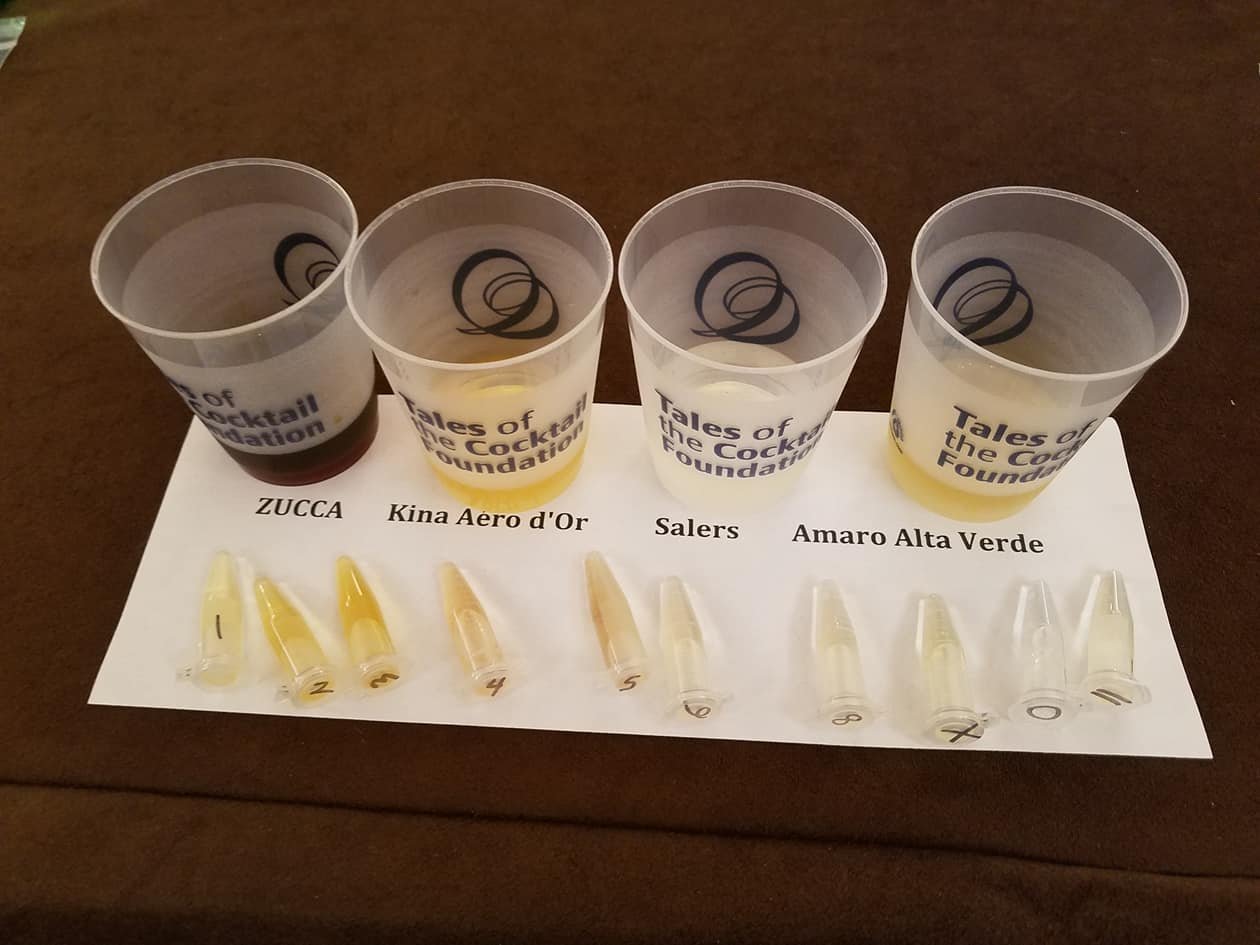
    The idea was to give everyone information and tasting on individual bitter flavors- particularly the major ones of quinine/cinchona, wormwood, gentian, and rhubarb- because so often they're mixed together in amari and bitters. I chose for my tasting spirits that I thought were most indicative of the bitter flavors:

    • Rhubarb: Zucca (they sponsored the seminar)
    • Wormwood: Amaro Alta Verde 
    • Gentian: Saler's Gentiane
    • Cinchona: Kina Aero d'Or

    Plus Zucca wanted to feature a couple of cocktails, so at just 1 sample of each type of bitters I was worried that I wouldn't be able to ensure everyone could really isolate each type of bitter flavor. 

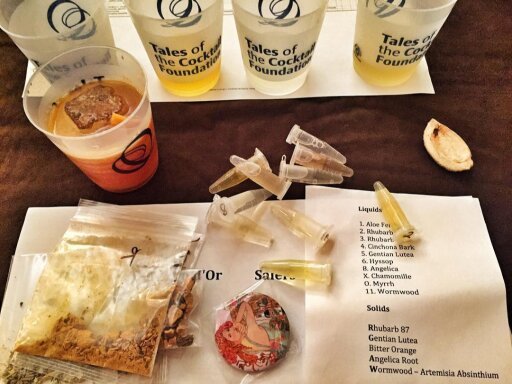
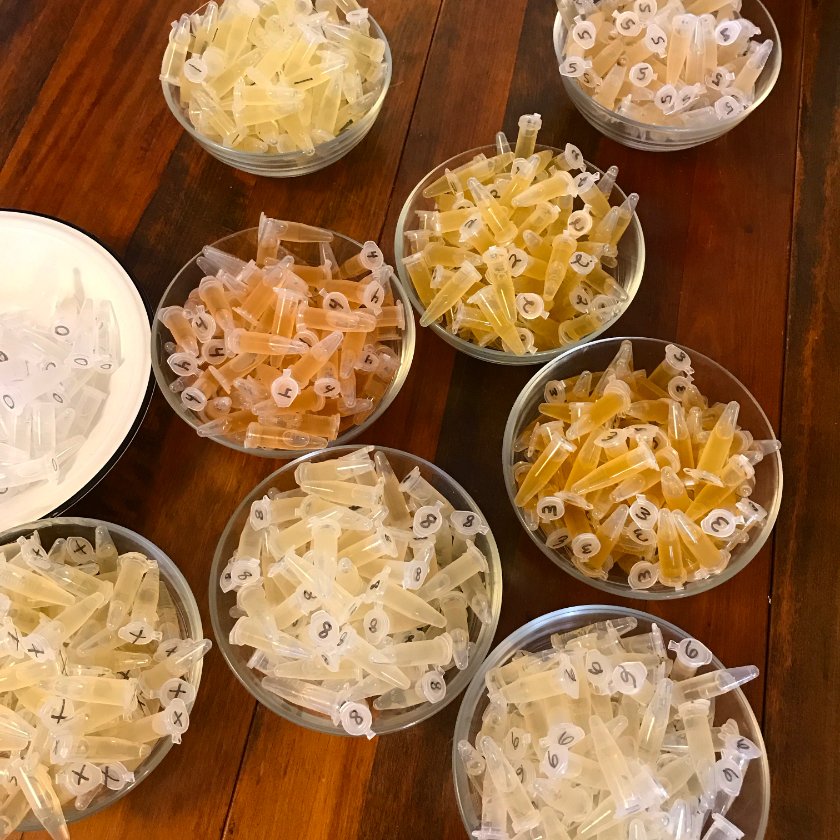
    So, as is my way, I panicked and went way overboard on homemade samples. By the end, everyone at their seat had 2 cocktails, 4 bitter beverages, 10 microtubes of bitter tasting samples, and 5 bitter solids. 


    37330947_10157530501435830_4166365589926838272_o
    37330947_10157530501435830_4166365589926838272_o

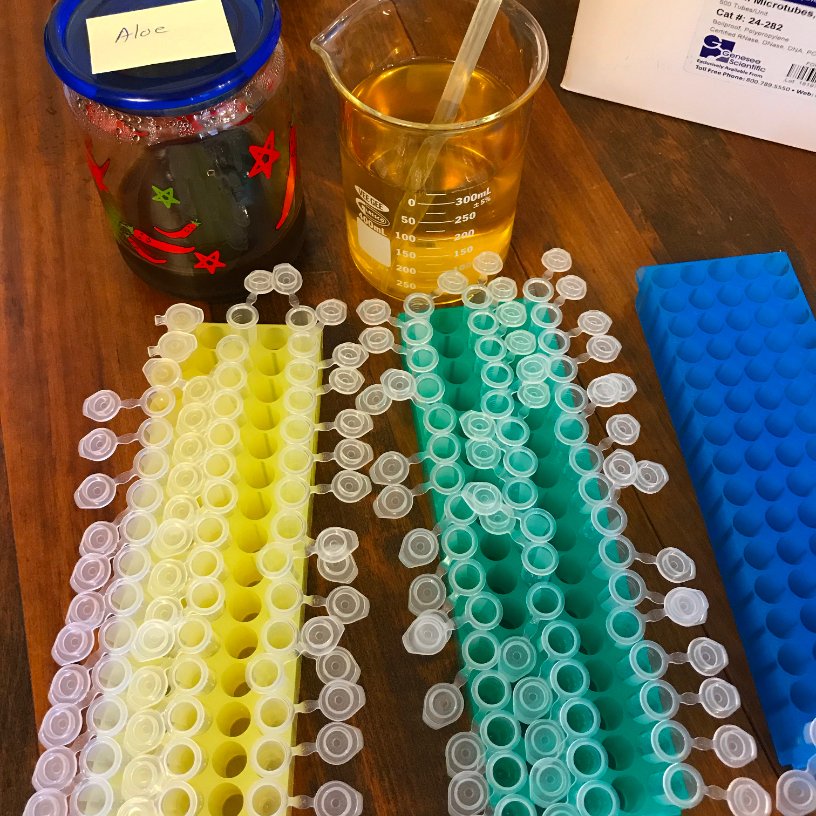
    The preparation took me (along with help from my pal Maria) dozens of hours. I made infusions of various bitter flavors in alcohol, then diluted those down with water so they were essentially non-alcoholic. Then we put them all in microtubes and the solids in little baggies (luckily I live near a bong store), labelled them all, and then made an index and assembled ziplocks of everything. 


    IMG_0825
    IMG_0825
    IMG_0825

    Oh, and I also created a print-out of most popular vermouth and amaro brands, and what the known and suspected bittering agents are in each. That project took me another 20 hours or so. Sometimes I think I might go too far.

    So during the seminar we now had plenty to taste and in the case of those big four bitter flavors, a finished product to confirm that taste in a product they could find on the shelf. The seminar seemed to go really well (we'll see when I get the reviews back) and I certainly felt everyone got their money's worth- a big fear of mine when I'm presenting. 

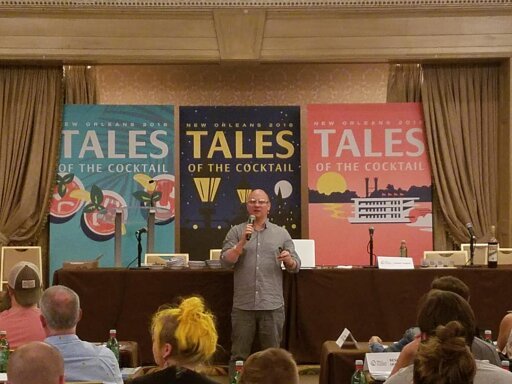
    Camper English at Tales of the Cocktail

    (photo stolen from Maggie Campbell)

    Camper English at Tales of the Cocktail

    I'm not sure that I'll ever do this seminar again in this format, but I may put together an ebook of some sort with the information from the seminar in it. 


  • Bitter Ingredient Flavors and Use from Martini Vermouth Masters

    Bitter martiniAt this year's Bar Convent Brooklyn, I had the opportunity to sit down with Ivano Tonutti, Master Herbalist for Martini & Rossi (and Bacardi products generally) and Giuseppe "Beppe" Musso, Master Blender of Martini & Rossi.

    The timing was excellent, as I am preparing to give a talk on bitter ingredients for Tales of the Cocktail, and they were in town promoting the newish Martini & Rossi Riserva Speciale Bitter Liqueur. 

    The Bitter is part of the new premium Riserva line, along with Rubino (red) and Ambratto (white) vermouths. We spoke primarily about the new Bitter and and plants used in the Riserva line; but in some cases we were generalizing beyond that. So please consider this general information rather than super specific to any one product. 


    General Stuff

    • The goal in using different bittering agents is to create a rounded bitter experience with multiple parallel bitters rather than a single-note bitter. 
    • Speaking of single-note bitter, they indicated quinine/cinchona bark pretty much gives that. 
    • When speaking about how different bittering agents impact the flavor, Tonutti would intuitively point to certain parts of his face, indicating where the individual bitter most impacts the palate – for example cinchona is a singular bitterness felt most in the far back of the mouth, different artemisia species were more forward. Gentian and rhubarb root impact the middle of the mouth more. It's interesting to see as we know the "tongue map" is false but yet we feel the impact of different bitter flavors in different parts of the mouth.
    • They use all dried herbs, rather than fresh, for all the many Bacardi products (including things like Bombay, etc.) with the exception of some fresh citrus peels in Oxley gin. Dried herbs are used to ensure consistency and can be more easily measured for water content, etc. 
    • All these bitter agents are infused rather than distilled into products (we're talking about the Riserva line). 
    • They use only yellow gentian root – not the blue stemless gentian that a few producers use. They prefer French gentian as it's particularly bitter and more aromatic than from other places. They say the blue gentian is not super bitter, and it can be thought of more like an herb with root rather than just the root. 
    • Holy thistle is used in salads. In their products, it's used to impart mouthfeel, not bitterness. It is used in most of Martini's products. 
    • Dandelion – Leaves, not roots, are used. In production, leaves must be dried immediately after picking. 
    • Roman Chamomile – The bitterness of it depends on the extraction technique (lower ABV extraction is better for bitterness in general, they say) and the concentration. (I asked about this as I've made chamomile infusions in the past and none were bitter.) 

    Artemisia

    • Between the Rubino and Ambratto there are different ratios of the three artemisia plants used – absinthia, pontica, and vulgaris. (grand/common, lesser/small, mugwort)
    • Absinthium – boldest, bitterest, with a delicate herbal flavor
    • Pontica – herbal and floral, a signature note of Martini vermouth, top note
    • Vulgaris (aka mugwort) – aromatic, with a different and milder expression of bitterness. 

    Barks

    • As noted, Cinchona bark gives a back-palate discreet bitterness.
    • Columba bark is an aromatic bitter with mid-palate bitterness.
    • Angostura bark is between cinchona and columba in its bitterness. 
    • Red cinchona (succirubra) is more bitter than yellow, with higher amounts of quinine, but they describe the flavor as more boring.
    • Yellow cinchona (calisaya) they get from Ecuador. It is slightly aromatic, but there is less of it available on the market. This is used in Ambratto and probably other products. 

    Safety Stuff

    • The amount of thujone in artemisia and quinine in cinchona bark are regulated. They say that their approach to this is to get as far under the legal limits of the active substances as possible. For example, their artemisia providers grow a strains of the plants with super low thujone content, and though they may be plants like grand wormwood that supposedly have a lot of it, they use varieties that don't. Thus if the legal limits of thujone were ever lowered, or as in the case of the US where the legal limit is lower than in the EU, they don't have to worry as they're not close to the limits.
    • For quinine, there is a legal limit of 83 ppm allowed. That is just for quinine, not for quinidine and the other (two, I believe) active alkaloids present in cinchona bark. Tonutti said that rather than counting just the quinine, they keep the total number of all the alkaloids under the 83 ppm limit.  
    • Calamus is banned in the US and in Australia by name, meaning you cannot use it in a product's formulation at all, while in Europe and other countries, you may use the plant as long as the beta asarone levels are kept below a certain amount. [They noted the nonsensical nature of this, as if the problem with calamus is beta asarone, they why not limit the beta asarone?] Thus there are formula differences in some of their products in different countries. They also keep the beta asarone way below the legal limits in Europe anyway. 


    This may all seem like random stuff to you, but it was extremely helpful for the talk I'm preparing!


    For those of you new to these products, here's the basic info from the brand:

    RISERVA SPECIALE BITTER

    The new Bitter joins the Riserva Speciale Rubino and Riserva Speciale Ambrato as part of a dedicated craft of exceptional Italian Aperitivi for bartenders and drinks enthusiasts. To develop the new Riserva Bitter, MARTINI & ROSSI used 100% natural ingredients and the original 1872 recipe, created by MARTINI & ROSSI founder Luigi Rossi, as their inspiration. MARTINI & ROSSI Master Herbalist, Ivano Tonutti, has carefully selected three rare botanicals (Saffron, Angostura and Columba), to deliver a unique richness and complexity to its taste profile through different dimensions of bitterness. The Bitter is also rested in the same Tino cask that is used for MARTINI & ROSSI Riserva Speciale Vermouth di Torino extracts and shares the vermouth’s common botanical, Italian Artemisia, allowing its unique complex bitter taste to perfectly complement it. ($26.99)

    RISERVA SPECIALE RUBINO

    The small parcels for full-bodied Langhe DOC Nebbiolo wines used to create MARTINI & ROSSI RISERVA SPECIALE RUBINO are blended with extracts of Italian Holy Thistle and Red Sandalwood from Central Africa to deliver a bright ruby red vermouth, which inspired the name of the expression. The delicate balance of botanicals creates a full-bodied herbal and complex style of Vermouth di Torino with a long aftertaste. ($14.99)

    Ambrato packshotRISERVA SPECIALE AMBRATO

    The floral and aromatic blend of small parcels of Moscato d’Asti DOCG wines, used to create MARTINI & ROSSI RISERVA SPECIALE AMBRATO, produces a beautifully honeyed Vermouth di Torino. The yellow Cinchona bark from Ecuador and Chinese Rhubarb create a light bitter taste profile that aromatizes and elevates the flavors of the wines. ($14.99)


  • Three East Bay Drinking Itineraries in the July Issue of San Francisco Magazine

    DgOUVVTVQAAs4ddFor my latest story in San Francisco Magazine, I wrote about three drinking itineraries in the East Bay. The five-page story is called The New Beverage Belt and it involves three tours:

    • Cocktail bars in Uptown Oakland, including the just-opened Hello Stranger and forthcoming Here's How. 
    • Tasting Rooms of Alameda, with seven stops including the Hangar One and St. George Spirits distilleries.
    • Day Drinking in Jack London Square, which was 100% an excuse to write about Heinold's First and Last Chance Saloon – and happily they took the photos of the bar to accompany the story. 

    I did a lot of drinking as research for the story, so out of respect for my liver go out and pick up a copy of the magazine or read it online!

    Sf mag story

  • More Ice Ball Shenanigans

    If you're not following alcademics on Instagram… well you really should be. I've been having some fun over there freezing stuff into ice balls. I'm using the same technique you've seen here on Alcademics before – a thermos and an upside-down ice ball mold. 

    Lately I did a couple fun ones with money, which I'd never serve to a real person because money is filthy.


    IMG_0568
    IMG_0568


    I did a few with jalapenos for one event, and some with mint for another event. (Also some blue ones for it.) 

    IMG_0587
    IMG_0587
    IMG_0587
    IMG_0587


    And for gay pride, I made some ones with rainbow flags. I printed out and laminated some rainbow flags, and then froze those inside the ice spheres. 

    IMG_0608
    IMG_0608

    If you're looking for more amazing ice projects, check out the Index of Ice Experiments.


    Any suggestions on other things to freeze inside clear ice balls? 


  • Once Always Almond, Orgeat Has Gone Nutty!

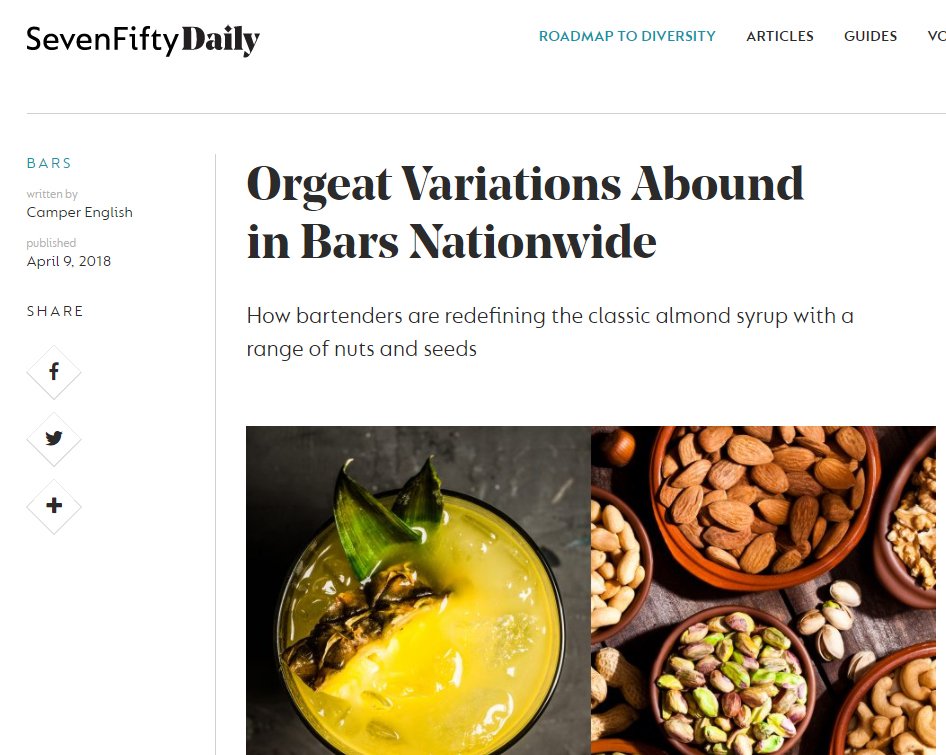
    In my new story for SevenFifty Daily, I wrote about how orgeat, the French almond syrup famously in the Mai Tai, is now being made with a range of nuts, seeds, and other ingredients. 

    The story cites examples from around the country and we come up with a new working definition for orgeat. 

    Check it out!


    Orgeat

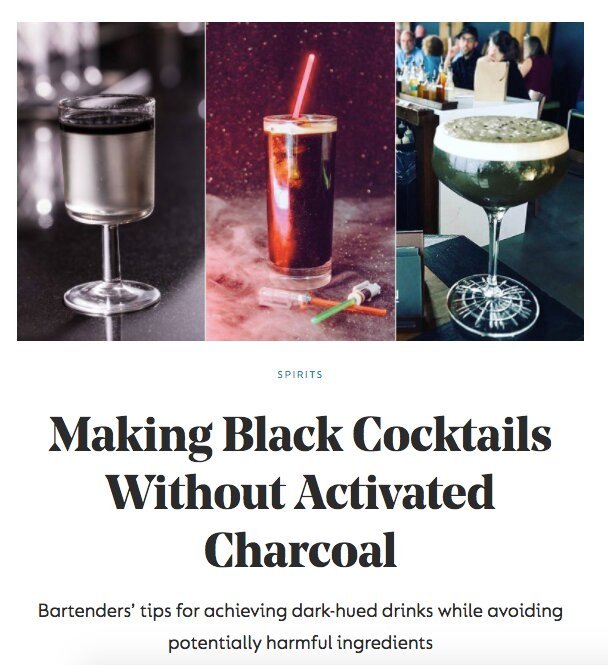
  • Black Cocktail Alternatives to Activated Charcoal

    In my latest story for SevenFifty Daily I wrote about how to turn cocktails black without using activated charcoal

    Screen Shot 2018-03-23 at 9.59.37 AM

    While black cocktails may be extremely Instagram-worthy, the activated charcoal often used to give the drinks their inky hue could have serious health consequences. Activated charcoal can adsorb oral medications (and poisons, in the case of drug overdoses, for which it’s commonly used by emergency room doctors) so that the drugs never reach the bloodstream. It’s an uncomfortable fact that the sexy obsidian-colored old-fashioned you serve to a customer may affect the medication that person has taken shortly before, or after, imbibing.

    While one could add a medication-interaction warning about activated charcoal, like an allergen label on a drink menu, there are other ways to color a drink black that don’t require a scary-sounding note. SevenFifty Daily asked bartenders around the country for cocktail-darkening alternatives and learned that black sesame seeds, cuttlefish ink, and black food coloring are among the ingredients being used.

    The full story is here


  • The Future of San Francisco Cocktails (Predicted By Me) in San Francisco Magazine

    SF Mag cover Feb 2018It has been many years since I have contributed to San Francisco Magazine, but now I'm back! In the new February Bars & Nightlife issue, I have ten stories loosely themed around "Future proofing the cocktail: How Bay Area drink makers are reinventing our favorite alcoholic beverages."

    Below is the intro with links to all ten stories and brief intros from me. 


    Two decades into the Bay Area’s cocktail awakening, you’d think that bars would have settled into a comfortable middle age—the imbibing equivalent of staying home to Netflix and chill. But you’d be wrong.

    Creativity stirs all over the region, and drink makers and bar owners continue to spin out new ways to stay relevant and keep us guessing: with secret menus, popup concepts, and menu launch parties; with vibrant drinks, exotic ingredients, and bar-specific spirits; with quality concoctions served at double the speed, thanks to newfangled juices and outsourced ice. And to meet the expanding demand for quality, novelty, and expediency in booze consumption, new clusters of great bars have sprung up not just in the East Bay but also to the north and south. These changes are often nuanced but pervasive, taking place across many bars in many precincts throughout the ever-thirsty Bay Area.

    Scanning the cocktail horizon, you can spot the big ideas and the small revisions that are changing the way we drink in 2018 and beyond. Here are 10 of them.

    Bartenders Are Going Straight to the Source 

    How bartenders are directing spirits creation from distillers. 

    Forget The Simple Description: These Are Very Complicated Cocktails

    A look into the mind of Adam Chapman from The Gibson.

    Wine Country Has An Unofficial Cocktail AVA

    Drinks at the fantastic Duke's and other Healdsburg cocktail bars. 

    The Future (and Present, Actually) Is Female

    Who runs the bars? Girls. A sampling of ten women running things in Bay Area Bars. 

    Asian Restaurants Are the Center of Cocktail Innovation

    Once the home of sake bombs and soju immitations of real drinks, now Asian restaurants are some of the most forward-looking. 

    Viking Drinks Are So Hot Right Now

    Aquivit will be everywhere in 2018.

    You'll Be Spending the Night in San Jose

    Paper Plane and other great bars in San Jose.

    Your Highball Intake Is About to Increase Dramatically

    Whiskey and other highballs are happening. 

    Outsourcing Is In

    Blind Tiger Ice and Super Jugoso are going to have a major impact on prep work in SF bars. 

    The Mission Has Only Just Begun 

    So, so many new bars are opening in the Mission District. 


    I've already got my next assignment for San Francisco Magazine, so hopefully this will be a regular thing. 


  • Allergy Labelling Approaches on Cocktail Bar Menus in the US and Abroad

    AllergyIn an era when customers are more and more attuned to their allergies, aversions, and dietary restrictions, and as bartenders are using evermore exotic ingredients in their drinks, it may be time to consider adding warning labels to the cocktail menu.

    In a story I wrote for SevenFifty Daily, I took a look at some bars’ philosophies on the matter and the labeling schemes they’re employing to warn customers about potential dangers in their drinks.

    We looked at labelling for nuts, seafood, soy, gluten, vegan/vegetarian, how these are listed on various menus or handled only in person, and look at a few unusual things that need to be labelled in UK bars. 

    Bars I spoke to include Trick Dog, the Proper Hotel, and the Tonga Room in San Francisco, Bar Clacson in LA, Bresca in DC, Saint Ellie in Denver, Bar Fiori in NYC, The Aviary in Chicago and New York, and The Hide Bar in London. 

     I hope you get a lot out of the story, I had a great time researching it. Read it here

    SFD_Allergies_CR_Courtesy_Rhymes_with_Trick_Dog_2520x14203-768x433