Author: Camper English

  • Directional Freezing, Freeze Distillation, and an 1890 Story About Ice Purity

    Ice nerds will recall that directional freezing is a method for making clear ice by forcing the water to freeze in one direction, rather than from the outside-in as in a typical ice cube tray. 

    It's also pretty similar to, if not the same thing as, freeze distillation  – using freezing to separate liquids. Freeze distillation is the method by which early American applejack was made: take a cider and freeze it, scoop off the frozen ice, and then you have a more concentrated cider, higher in alcohol. Keep doing this and eventually you get something pretty high proof. 

    This was also the process used by BrewDog to make their high-proof Tactical Nuclear Penguin beer. 

    Experimenting with directional freezing shows that when using the process, the clear ice freezes first and the air and any minerals in the water are treated as impurities, pushed away from the point of freezing. But as many people have found out, it treats everything not pure water in the same way – when you try to add food coloring or a flavoring to the cooler in a directional freezing system, unless you put a ton of it in the color is treated as an impurity and your ice still comes out clear. (The bottom/last part to freeze will be gooped up with the color/flavor. )

    Jim Blakey of the ClearlyFrozen ice cube tray found a story in JAMA, the Journal of the American Medical Association, that talks about how clear ice less polluted than the lake water from which its formed. I'd assume this is for the same reason. 

     “clear ice from polluted sources may contain so small a percentage of the impurities of the source, that it may not be regarded as injurious to the health."

    Here's the story. 


    JAMA 1890 clear ice more healthy than water

    The original reference in Google Books is here


  • Directional Freezing, as a Patent Law Exam Question

    PatentAs readers of this site know, I figured out "directional freezing" – the process of making clear ice by controlling the direction in which water freezes – in 2009 and first posted it here on Alcademics

    I had always assumed that I couldn't patent the process because it's something that happens naturally (like how ponds and lakes freeze), but perhaps could have patented a device for producing clear ice cubes had I been entrepreneurial enough. (As you know, many such devices now exist.) 

    Well, this question became an exam question from Jason Rantanen, Professor at the University of Iowa College of Law. 

    On this post on the website Patentlyo.com, he talked about the test as he proposed a hypothetical:

    Camper English was the first person to discover that clear ice could be produced in a home freezer by freezing the ice in a directional manner.  English published these findings on a weblog on December 28, 2009, a copy of which you were provided in Appendix A.  English immediately filed a patent application that contained the following claim.

    I claim:

    1. A method of producing ice comprising freezing water in a directional manner in a home freezer.

    Analyze the patentability of the claim under current patent eligible subject matter law.


    The rest of the test question involved the Wintersmith's clear ice maker. Keep reading the post for more info an an image from the patent application. It's pretty interesting. 

    Rantanen didn't provide the answer on the Patentlyo website, but he did give me permission to post a rough technical explanation of the answer, with the understanding that the below does not constitute legal advice

    The full answer involves application of an analytical framework that the U.S. Supreme Court articulated a few years ago in a case called Alice v. CLS Bank.  Basically, you first ask whether the patent claim is "directed to" an unpatentable concept like a law of nature or physical phenomena.  If it is, you then ask whether the patent claim adds an "inventive concept": basically, something that transforms the claim into something more than just a claim to natural law itself.  A formalistic addition isn't enough: saying "I claim the process of risk-hedging, done on a computer" or limiting it to a particular technological field, such as ice-making, isn't enough.  
     
    In this case, claiming the concept of directional freezing would fail the eligible subject matter requirement since it's a natural law or physical phenomena.  Even limiting it to being done in a home freezer is very unlikely to be enough of an inventive concept.  However, claiming a specific process for making clear ice could be sufficient.  For example, a claim to "a method of producing clear ice by placing water in vessel that is insulated on every side except the top and placing that ice into a home freezer" would likely be enough to satisfy the patent eligible subject matter requirement.  There's a neat recent case that my students would have been aware of called Rapid Litigation Management v. CellzDirect that involved a process of freezing and unfreezing liver cells.  The Federal Circuit (the Federal appeals course that hears appeals in patent cases) held that that particular method did constitute patent eligible subject matter.  
     
    The Wintersmith device on the other hand strikes me as a pretty clear application of natural principles.  I doubt anyone would be able to mount a serious patent eligible subject matter challenge to that patent.  
     
    All that said, there's still the issue of whether or not the invention is new.  If someone else described the same process then the process wouldn't be patentable.  But newness is a different issue that's governed by a different set of rules.  

    Got all that? Sure you do. Me too :) 

    In any case it's awesome that after all these years I got an answer for a lingering question about The Blog Post That Launched A Hundred Ice Cube Trays. 


  • Making Clear Ice with the Clearly Frozen Ice Cube Tray

    While I'm not going to get in the habit of testing out every clear ice cube maker on the market, I decided to try out the Clearly Frozen tray because they sent me one. 

    This ice cube tray uses directional freezing, the process to make clear ice first described here on Alcademics back in 2009. This particular system is pretty much the same as in this blog post about poking holes in silicone ice cube trays and using directional freezing to ensure the part inside the tray is clear. The difference is that in the Clearly Frozen device, the shape of the 'cooler' is custom made to fit the ice cube tray and retaining tray. 

    The device is just three parts: a 10-cube silicone ice cube tray (makes 10 2-inch cubes at a time), a plastic retaining tray to hold the cloudy ice beneath the tray, and the foam insulated box that enforces directional freezing. You put it together, fill it with water, and leave it to freeze. My timing was perfect at a little over 12 hours of freezing – there was still plenty of unfrozen water in the plastic tray so it was easy to separate. 


    IMG_9136

    IMG_9077
    IMG_9077
    IMG_9077
    IMG_9077 IMG_9119
    IMG_9119
    IMG_9119


    Pros:

    • Makes more cubes than most clear ice cube trays on the market – ten 2" cubes
    • More space-efficient relatively than others – it takes up a bunch of space, but you get more ice out of it than with other clear ice makers
    • Costs less than others- $25 including shipping 

    Cons:

    • I have no complaints for my first attempt, but I do have some doubts about its long-term durability. The interior clear tray is quite thin and I could see it cracking. 2019 update: They have updated the interior tray with a much thicker and more durable plastic, so it seems this tray will last a long time.    


    Personally I will probably continue to to make my ice one big Igloo cooler at a time, because I enjoy the process of breaking up an ice block and don't care that much about having super-square ice cubes. But of the commercial products I've tried, this one has a low price and some nice features


  • Ice Tips in Southwest Airlines Magazine

    IMG_8963If you're traveling in December on Southwest, you may notice an illustration of an ice ball with a strawberry in it. That's based on a real strawberry inside a real ice ball, that you may have seen here on Alcademics. 


    IMG_8964
    IMG_8964


    I don't see the story online, so I'll post it below.  

    IMG_7168 (1)

    For more information on how to make awesome ice balls with stuff inside them, check out this post and this post, and of course the Index of Ice Experiments here on Alcademics.

    Thanks to writer Michael Cook for writing the story and thanks to my friends who spotted it in magazine and snapped pictures for me!


  • Almost All the Cocktail and Spirits Books Published in 2017 for Reading or Gifting

    Behold! Here is my round-up of all the cocktails and spirits books (plus a few others) that were released in 2017. This year, beyond the annual deluge of whisky books, there are books aping the bartender lifestyle (Drink Like a Bartender, Straight Up), more narrative books (I Hear She's a Real Bitch, By the Smoke and the Smell), and recipe books seeking to simplify the process (3 Ingredient Cocktails, The Imbible, Road Soda) rather than reveal the secrets of complex drinks from top bars.

    All in all, another great year for reading about drinking. 

    The links below are to Amazon.com and if you order from there I get a little percentage from the affiliate program. However if you want to be even more awesome, you can buy my book on the Gin & Tonic too!  


    Best Cocktail Books 2017


    Cocktail/Bartender Lifestyle Books 

    6a00e553b3da20883401bb09d333e2970d.jpgThe Drinkable Globe: The Indispensable Guide to the Wide World of Booze by Jeff Cioletti 

    Distillery Cats: Profiles in Courage of the World's Most Spirited Mousers by Brad Thomas Parsons

    The Art of the Bar Cart: Styling & Recipes by Vanessa Dina, Ashley Rose Conway

    The Bar Cart Bible: Everything You Need to Stock Your Home Bar and Make Delicious Classic Cocktails

    Drink Like a Bartender  by Thea Engst and Lauren Vigdor 

    The Cocktail Competition Handbook by Andy Ives

    Straight Up: Where to drink & what to drink on every continent  by Joel Harrison and Neil Ridley

    Meehan's Bartender Manual by Jim Meehan 


    History Books

    6a00e553b3da20883401b8d2afccb8970c.jpgMuskets and Applejack: Spirits, Soldiers, and the Civil War by Mark Will-Weber 

    B.A.S.T.A.R.D.S.: Bars And Saloons, Taverns And Random Drink Stories (Volume 1)  by Brian F. Rea 

    Bay Area Cocktails: A History of Culture, Community and Craft  by Shanna Farrell

    Bumbershoots: Abridged by Dominic C Pennock


    Single Cocktail Books

    The Bloody Mary Book: Reinventing a Classic Cocktail by Ellen Brown 

    The Bloody Mary: The Lore and Legend of a Cocktail Classic, with Recipes for Brunch and Beyond  by Brian Bartels 

    Gin Tonica: 40 recipes for Spanish-style gin and tonic cocktails by David T Smith 


    Whiskey and Whisky Books

    6a00e553b3da20883401b7c925786b970b.jpgMoonshine Mixology: 60 Recipes for Flavoring Spirits & Making Cocktails by Cory Straub 

    The Way of Whisky: A Journey Around Japanese Whisky by Dave Broom 

    The Bourbon Bartender: 50 Cocktails to Celebrate the American Spirit by Jane Danger and Alla Lapushchik

    Canadian Whisky, Second Edition: The New Portable Expert by Davin de Kergommeaux 


    Rum Books

    The Curious Bartender's Rum Revolution by Tristan Stephenson 

    Rum Curious: The Indispensable Tasting Guide to the World's Spirit by Fred Minnick 

    Spirit of the Cane by Jared McDaniel Brown and Anistatia Renard Miller 


    Other Spirits

    6a00e553b3da20883401b8d2ba6be7970c.jpgMezcal: The History, Craft & Cocktails of the World's Ultimate Artisanal Spirit by Emma Janzen 

    AKVAVIT - Rediscovering a Nordic Spirit  by Sune Risum-Urth and Rasmus Poulsgaard  

    Dr. Adam Elmegirab’s Book of Bitters: The bitter and twisted history of one of the cocktail world’s most fascinating ingredients by Adam Elmegirab 


    Brand Books

    Hennessy: A Toast to the World's Preeminent Spirit by Glenn O'Brien 

     Fever Tree: The Art of Mixing: Recipes from the world's leading bars  by Fever Tree 

    Brewdog: Craft Beer for the People  by Richard Taylor with James Watt and Martin Dickie


    Recipe-Focussed Books

    6a00e553b3da20883401b7c92577e6970b.jpgThe Imbible: A Cocktail Guide for Beginning and Home Bartenders by Micah LeMon 

    Let's Get Monster Smashed: Horror Movie Drinks for a Killer Time by Jon Chaiet and Marc Chaiet 

    Code Name: Cocktail by Vicky Sweat & Karen McBurnie

    The Modern Cocktail: Innovation + Flavour by Matt Whiley

    Road Soda: Recipes and techniques for making great cocktails, anywhere by Kara Newman 

    The Poptail Manual: Over 90 Delicious Frozen Cocktails by Kathy Kordalis

    The Cocktail Guide to the Galaxy: A Universe of Unique Cocktails from the Celebrated Doctor Who Bar by Andy Heidel 

    Cooking with Cocktails: 100 Spirited Recipes by Kristy Gardner 

    The Classic & Craft Cocktail Recipe Book: The Definitive Guide to Mixing Perfect Cocktails from Aviation to Zombie  by Clair McLafferty 

    Boston Cocktails: Drunk & Told by Frederic Yarm

    Beach Cocktails: Favorite Surfside Sips and Bar Snacks

    A Spot at the Bar: Welcome to the Everleigh: The Art of Good Drinking in Three Hundred Recipes by Michael Madrusan and Zara Young

    The Wildcrafted Cocktail: Make Your Own Foraged Syrups, Bitters, Infusions, and Garnishes; Includes Recipes for 45 One-of-a-Kind Mixed Drinks by Ellen Zachos 

    The Cocktail Hour (L’Heure du Cocktail): 224 recipes  Collected by Marcel Requien Presented by Lucien Farnoux-Reynaud 

    3 Ingredient Cocktails: An Opinionated Guide to the Most Enduring Drinks in the Cocktail Canon by Robert Simonson

    Cocktail Chameleon by Mark Addison 

    Prosecco Cocktails: 40 tantalizing recipes for everyone's favourite sparkler by Laura Gladwin

    New York Cocktails by Amanda Schuster 

    Good Together: Drink & Feast with Mr Lyan & Friends by Ryan Chetiyawardana 


    Narrative Booze Books

    DownloadThe Angels' Share by James Markert 

    Breakfast Tea & Bourbon by Pete Bissonette

    Pure Heart: A Spirited Tale of Grace, Grit, and Whiskey by Troylyn Ball and Bret Witter

    I Hear She's a Real Bitch by Jen Agg 

    By the Smoke and the Smell: My Search for the Rare and Sublime on the Spirits Trail by Thad Vogler


    Wine Books

    Note: I don't really cover wine books and  these are just a few of them that came out this year. These are merely the ones that showed up in my mailbox. 

    The Complete Bordeaux  by Stephen Brook 

    Cork Dork: A Wine-Fueled Adventure Among the Obsessive Sommeliers, Big Bottle Hunters, and Rogue Scientists Who Taught Me to Live for Taste by Bianca Bosker

    The Dirty Guide to Wine: Following Flavor from Ground to Glass by Alice Feiring 

    6a00e553b3da20883401b8d2c11b96970c.jpgThe New Wine Rules: A Genuinely Helpful Guide to Everything You Need to Know by Jon Bonne

    Champagne: The Essential Guide to the Wines, Producers, and Terroirs of the Iconic Region  by Peter Liem 

    Larousse Wine


    Beer and Cider Books 

    Note: Same as wine, this isn't my primary focus but here are a few books. 

    Best Beers: the indispensable guide to the world’s beers by Tim Webb and Stephen Beaumont

    Modern Cider: Simple Recipes to Make Your Own Ciders, Perries, Cysers, Shrubs, Fruit Wines, Vinegars, and More by Emma Christensen


    Food, and Miscellaneous Related Books 

    6a00e553b3da20883401bb09a29c97970d.jpgGastrophysics: The New Science of Eating  by Charles Spence 

    Miracle Cure: The Creation of Antibiotics and the Birth of Modern Medicine by William Rosen

    Popular: The Power of Likability in a Status-Obsessed World  by Mitch Prinstein

    What She Ate: Six Remarkable Women and the Food That Tells Their Stories by Laura Shapiro 

    The Secret Lives of Color by Kassia St Clair 


    Not Enough Books For Ya?

    Here are all the books published in the last three years as well. 

    More Than 40 Drink Books Published in 2014 for Reading or Gifting

    All the Cocktails & Spirits Books Published in 2015, For Reading or Gifting

    All the Cocktails and Spirits Books Published in 2016 for Reading or Gifting


  • Paloma History – Tracing the Facts and Fiction about this Tequila Cocktail’s History

    I'm still searching for the first book reference to La Paloma, the cocktail with tequila, grapefruit soda, a squeeze of lime, and a dash of salt. However we know enough information about the drink's history – especially the false parts of the drink's history – to push the conversation forward. 

    Finding the False Lead: Popular Cocktails of the Rio Grande

    For years, the Wikipedia entry for this drink cited a first reference as coming from Popular Cocktails of the Rio Grande, and this reference was cited and spread throughout the internet. Nobody could seem to find a reference to this book though. The answer to this mystery comes from Jeremy Foyd of the Distinguished Spirits YouTube channel. As he mentions in his video entry for the Paloma, the reference is a clearly fake. 

    Jeremy Foyd and I emailed back and forth about it, and here's what Foyd had to say:

    In terms of Popular Cocktails of the Rio Grande, I really dug into that one. The book was not registered with the Copyright Office and no one named Evan Harrison has registered works. That doesn’t mean anything definitively if it was self-published, but if it was self-published, it may also be a red flag in terms of authenticity.

    The references to Rio Grande only date back to when it first appeared on Wikipedia. The first references to Rio Grande popped up almost a year to the day when it first appeared on Wikipedia. The first reference to Rio Grande was Feb 17 2013 and Rio Grande was added to Wikipedia on Feb 16 2012. Its first entry on Wikipedia was not cited in the References and Sources sections. The entry was made at 2am from a cell phone in Connecticut. The location in CT was about 2 hours outside Cambridge, MA.

    The subsequent 12 changes to the Rio Grande Wikipedia entry all happened between Nov 9, 2013 and Nov 30, 2013. Each entry, with the exception of one, was made from an IP address in Cambridge, MA. All of the entries embellished, changed and gave more and more elaborate and obviously bogus details to the story. One of the changes was the following:

    The first published recipe for The Paloma is attributed to Evan Harrison in a 1953 pamphlet entitled, "Popular Cocktails of The Rio Grande" but it was thought to be created by rival tavern manager Manuel Gonzales who named it for his true love. Manuel had courted her for many years but when Evan published the drink in his pamphlet Manuel in a fit of jealous rage arrived to her small pueblo of La Guadalupe del Tortugas and shot both her and himself in front of her family at her Fiesta de quince años . Legend has it his last words were "con limon, no es pomelo." Which is a crazy story, because is means the rival tavern manager started courting this girl when she was 11, in order to kill her at her 15th birthday party 4 years later. But such was life in 1950's Mexico.

    Clearly just spam. Then a moderator pulled the reference to Rio Grande from the Wikipedia page and no one tried to add it back.

    There is a bartender who has worked at several bars in the Cambridge area named Evan Harrison. He currently works at two places, one of which, Mamaleh’s, he owns a piece of. Evan’s jokey profile on Mamaleh’s website says, "EVAN HARRISON. OWNER / BAR MANAGER. Is a bartender from Texas with a dual degree in feminist studies and a language he doesn’t speak who, according to some sources, invented the Paloma cocktail fifty years before he was born."

    Here’s my hypothesis on this situation, it seems like Evan or Evan’s buddies, put this up on Wikipedia maybe as a joke. Then almost two years later, elaborated on that joke to make it obvious that it was spam. When the adult in the room caught on, they pulled the reference and the pranksters let it die. But by then it had already been cited in a couple blogs and other bloggers just passed along the bogus info.

    Anyway, looking at all of that has made me fairly confident that this was a joke that got out of hand and I’m certain that Popular Cocktails of the Rio Grande does not exist.

    Excellent sleuthing Mr. Foyd. 

    8/24/18: Update to this story: I received an email about the Harrison Hoax which clears things up. It turns out that wasn't the only drink that lead to some false founder assertions on the internet. A bartender writes: 

    In 2009 a couple of ridiculous jokesters from Drink [Boston] decided to make changes to some wikipedia pages on cocktails to see who would notice it. No one around us except our friends cared about drinks and we were curious how long it would take to see it changed back (I won't reveal the exact people who made this change). There were some funny consequences. From what I remember the following edits were posted: Misty Kalkofen invented the Margarita,Scott Marshall invented the Mai Tai, John Gertsen the Sazerac, Josey Packard the Old Fashioned, and I was listed as inventing the Bijou (which wasn't edited out until about 2 or 3 years ago).  


    Don Javier of La Capilla

    The other popular theory is that the Paloma was created by Don Javier of the famous bar in the town of Tequila, Mexico, called La Capilla. Don Javier has denied creating the Paloma, according to Jim Meehan in his new Meehan's Bartender Manual


    The Squirt and Grapefruit Connection

    Meehan reached out to me a while back as I had done some research on the Paloma for a presentation I gave years ago. Meehan says in his book that he first saw the recipe in David Wondrich's 2005 book Killer Cocktails, and further that "Neither the combination of ingredients nor the name appears in any recipe guides before this, despite Squirt's being imported to Mexico in 1955 and the maker's claim that it became popular as a mixer in cocktails like the Paloma in the 1950s." 


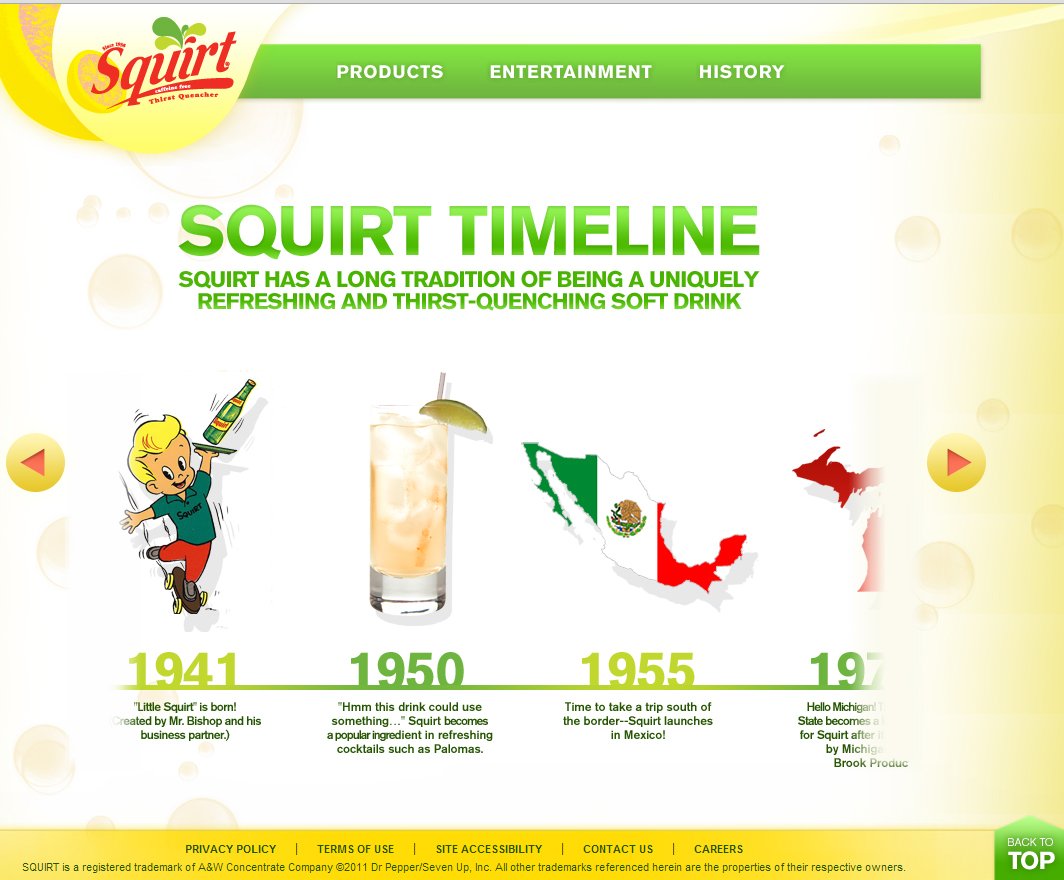
    The latter bit of information about Squirt came from my research. I found the following curious timeline on the Squirt website. It claims that the soda was used for Palomas in the early 1950s, yet it wasn't exported to Mexico until 1955. (If we take this to be true, that means the Paloma is actually an American drink.)
     

    Squirt in paloma

    Here is what I found researching grapefruit sodas and grapefruit generally:

    Squirt soda was invented in 1938 in Phoenix, AZ. As far as I can find, it was the first commercial grapefruit soda. Other grapefruit sodas are:

    • Squirt created 1938 
    • Rummy, a short-lived soda created in 1948
    • 1950 Jarritos created (no grapefruit initially)
    • 1955: Squirt first exported to Mexico
    • 1966: Fresca invented
    • 1976: Ting created

    Grapefruit production in Mexico didn't take off until the 1960s, according to some citrus research I did.

    My belief, based on intuition ab0out how cocktails come to be and the timeline of grapefruits in Mexico, is that the Paloma never existed before grapefruit soda did. I doubt that there is a tradition of fresh grapefruit used in the Paloma, but that's yet to be proven. 

    Back to David Wondrich, via Jim Meehan's book: "According to Wondrich, 'In the 1940s, you start seeing references in Mexico to 'changuirongo,' which is simply tequila cut with soda- any kinds, from ginger ale to Coke to whatever.'"

    This aligns with my beliefs as well – people put spirits into sodas, and eventually someone put squirt with tequila and figured it was delicious. Though I never trust any definitive history of a spirit-and-soda highball, I'd still love to find the first reference to this drink. 

    A Squirt advertisement from 1963, visible here (the carousel ad), mentions tequila by name (along with other base spirits) with Squirt. 

    Wondrich responded to this post on Twitter with an ad from 1973, in which Squirt advises you to try it mixed with your favorite drink: gin, vodka, whiskey, rum, or tequila. They don't call out the Paloma by name, but neither do they for any of the others. 


    Wondrich further tweeted that the first reference he's found by name doesn't come all the way until 2001: 


    And then mid-tweeting, he found an earlier book reference from 2000:  


    So then our goal as researchers is to now find the first reference to the Paloma in a book, ideally before Wondrich's Killer Cocktails from 2005 Cowboy Cocktails in 2000

    Below is what I've found (or rather, not found):


    Searching for the Paloma in Vintage Cocktail Books

    Jeremy Foyd says, "I’ve got the 1947 Trader Vic’s Bartender’s Guide and the Paloma is not in that one. The only tequila drink is the El Diablo."

    He follows, "I have 4 Floridita books from 1939. I didn’t see any Palomas in them. However, there is a Tequila Cocktail in each one that is basically a Tequila sour. The Tequila Cocktail was the only drink with tequila in it in each book." 

    I asked Marcovaldo Dionysos, who owns a ton of cocktail books from this era, about the drink. I thought it might turn up in the old Esquire cocktail books, which are a great source of first references to many drinks. He wrote, "

    No luck on the Esquire books. 1949 & 1956 have no Paloma. I found a Paloma in a book published in Madrid in 1957 (El Bar en el Mundo), but it’s a different drink (gin, orange juice, Cointreau). No mention in the Trader Vic books, even in his Book of Mexican Cooking (1973).

    I think of the Paloma as a Mexican drink with just tequila and Squirt, with maybe a squeeze of lime and a sprinkle of salt, though it has gotten the craft bar treatment in the last 10-15 years or so. I’m not sure when it would have been first mentioned as a proper drink.


    So, do you, dear reader, have any cocktail books written between say 1940 and 2005 that you can check for me? I don't know where we'll find the Paloma, but we can certainly eliminate some books. For example:

    • 1937: The Cafe Royal Cocktail Book lists both tequila and grapefruit in the book, but not in the same recipe. 
    • 1948: I have the Mud Puddle Books printing of David Embury's The Fine Art of Mixing Drinks (I'm not sure if this is the 1948, 1952, or 1958 edition or a combination of all three). It is not in this book, despite it mentioning a Tequila Collins, Tequila Fizz, and Tequila Sour. 

    Let me know if you find anything!

     Here's another one that came in over Twitter:


    Update! David Wondrich found a 1950 Squirt ad, not the Paloma by name but the drink:

  • That Time I was a Resident Ice-Pert

    Screen Shot 2017-11-20 at 7.27.25 PMLast week in New York, I was the "resident ice-pert" for the Hennessy Le Grand Voyage. The experience was a walk-through super-Instagrammable introduction to the production of the cognac. 

    There was a rain room representing the vineyards, a color-changing still room, an aromatic barrel room, and an interstellar sort of tasting room, all before one arrived in the lounge where I was stationed on press preview day. 

    It was pretty cool. Here is a story about it from The Latin Times, and here is the press release on PR Newswire


    And here is another awesome picture of me. 

    Camper Hennessy Photo by Dave Kotinsky:Getty Images for Hennessy

    Photo by Dave Kotinsky:Getty Images for Hennessy
  • What is a Blended Straight Bourbon Whiskey?

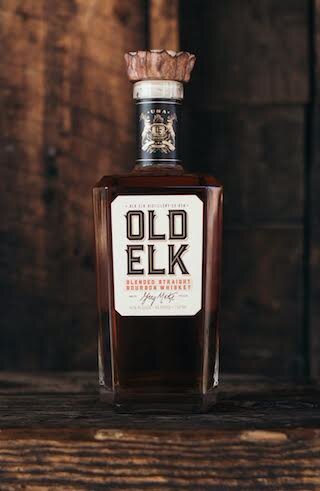
    Old Elk Blended Straight Bourbon WhiskeyI was about to casually add a product to the New Booze page when I realized I didn't know what it was: Old Elk Blended Straight Bourbon Whiskey. 

    I thought that "blended" and "straight" whiskey were at odds with each other, as blended whiskeys must contain at least 20% straight whiskeys in their blend.  

    The press release doesn't address what is a blended straight bourbon is in the description: 

    With four times more malted barley than conventional recipes and a slow cut proofing process which allows more time for flavors to marry between proofing stages, the Old Elk Bourbon recipe transcends tradition to craft a rich, smooth bourbon. 

    “We use traditional ingredients – malted barley, corn and rye – in an innovative, yet steadfast recipe to create a bourbon with smooth, rich flavors that act in harmony with caramel cues brought out by the charred barrels and spicy rye notes,” said Greg Metze, Master Distiller at Old Elk Distillery. “After testing a variety of proofing periods, we found that these flavors come together in a smoother bourbon when the proofing stages are longer. Instead of taking the usual 24 to 48 hours for proofing, we use a slow cut proofing process during which full-barrel proof bourbon is cut and left to rest – and we repeat this patient technique until the ideal character is achieved. It takes significantly longer than most common recipes, but taking the time to proof slowly makes all the difference.” 

     (SRP $49.99), now available in Colorado and California

    So I looked it up. 

    According to the US Government

    (5)(i) ‘‘A blend of straight whiskies’’
    (blended straight whiskies) is a mixture
    of straight whiskies which does
    not conform to the standard of identify
    for ‘‘straight whisky.’’ Products so designated
    may contain harmless coloring,
    flavoring, or blending materials as
    set forth in 27 CFR 5.23(a).
    (ii) ‘‘A blend of straight whiskies’’
    (blended straight whiskies) consisting
    entirely of one of the types of straight
    whisky, and not conforming to the
    standard for straight whisky, shall be
    further designated by that specific type
    of straight whisky; for example, ‘‘a
    blend of straight rye whiskies’’ (blended
    straight rye whiskies). ‘‘A blend of
    straight whiskies’’ consisting entirely
    of one of the types of straight whisky
    shall include straight whisky of the
    same type which was produced in the
    same State or by the same proprietor
    within the same State, provided that
    such whisky contains harmless coloring,
    flavoring, or blending materials as
    stated in 27 CFR 5.23(a).

    So a blended straight bourbon whiskey like this is a blend of straight bourbons that may contain coloring, flavoring, or blending materials. 


     Update: A PR representative for the brand clarified that although Old Elk could legally use additives in its formulation according to the whiskey category it is in, they do not. They wrote:

    Long story short:

    • Old Elk Bourbon conforms to Section 2 Grain Spirits (1)(i) Bourbon Whisky
    • Old Elk Bourbon also conforms to Section 2 Grain Spirits (1)(iii) as a “Straight Bourbon Whisky” except that it is a blend of straight bourbon whiskies from other states, not the same state.
    • Therefore, Old Elk Bourbon is relegated to Section 5 (ii) “A Blend of Straight Bourbon Whiskies” which allows the use of coloring, flavoring or blending materials but does not mandate it.

    Old Elk Bourbon does not use additives, but still falls under the “Straight Bourbon Whiskey” designation since the bourbon whiskies used in the blend were produced in three different states (Colorado, New York and Indiana). They do plan to change that, as they’re expanding their distillery in Colorado.


  • The Gin & Tonic Stage Show at Bar Convent Berlin

    I thought I'd share the awesome stage set-up put on for my talk at the recent Bar Convent Berlin, since it was awesome. I gave a talk on the Weird and Wild History of the Gin & Tonic. The talk was sponsored by Rutte Distillery, and they went all out in creating stage props. 


    IMG_7222

    The talk was divided into six chapters, and for each chapter there was a corresponding panel on the side of the stage. The panels were about 10 feet tall, and my "assistant," brand ambassador Steffen Zimmermann, opened the panel to reveal the illustration. 

    IMG_7216

    Steffen and I got matching suits so that he could be "Maxi-Me." I found suits that have tulips on them to play up the Holland connection of the gin. 

    22405650_10211361482286955_244816248415454052_n

    The panels were based on stories in my book. The first one is a pope transitioning into a blood-sucking mosquito. The most fun one is a scientist discovering the color mauve. The top panel is the scientist discovering the color; the bottom half that opens separately is the scientist wearing a dress as he abandons science for the fashion industry. 


    IMG_7219


    Thanks to Hanna Lee for taking and sending me these pictures, and the Rutte for sponsoring the talk, the props, and the special printing of the book!


    IMG_7208

    22406341_10211361482246954_7050358981630298931_n

  • Boiled Versus Rested Water Clarity with Directional Freezing: A Comparison

    The main water factors that affect ice clarity in an ideal environment:

    • Gasses in water
    • Minerals/other impurities in water

    Factors of the freezing environment that also impact clarity:

    • Rate of freezing (warmer temperatures better)
    • Shape of container, which impacts whether the last part to freeze will crack the ice (as it does in a typical ice cube tray)
    • Jostling/moving of the cooler in a home directional freezing system (cooler with the top off) as this causes bubbles to form earlier

    I've been studying each of these factors carefully, as I may be contributing a section on the science of ice to the Oxford Companion to Cocktails and Spirits (which hasn't been edited/approved yet, and isn't due out for a while so don't get too excited). 

    One factor that has always confounded me is the gasses in water. We know from observation that gas in water becomes trapped in ice in the form of bubbles, whether that's in the center of an ice cube or the bottom of the block using a cooler in the freezer.

    Most kitchen sinks have aerators on them that add more air to water, so that's a factor. But there are also lots of theories (boiling water, freezing then melting then refreezing) that are meant to minimize the air in water. 

    My issue has always been: If trapped air in water is water's natural state, then if you boil the water to eliminate that air, wouldn't air just be re-absorbed into the water when it returns to room temperature?

    Dave Arnold in Liquid Intelligence asserts that you should boil the water, put it in your cooler, let it cool a bit, and then put it in the freezer. I was doubtful that this actually helps, but Dave Arnold is usually right, so I finally decided to test this.

    Click on the image below to expand it greatly. 


    Boiled vs unboiled water ice blocks

    Experiment

    For the first block of ice, I boiled tap water briefly, put it into the cooler, let it cool down for several hours, then froze it on the highest (warmest) setting in my home freezer. 

    For the second block of ice, I used tap water that I poured into the cooler, let it set out overnight, and froze it the same way. The theory of letting it sit overnight was that the air bubbles introduced via the sink aerator and pouring water from one vessel to another would fizz off naturally. 

    For the third block of ice, I put tap water through a Brita filter, and was generally extra careful to not introduce air by splashy pouring. (I was hoping the filtering and light handling would further reduce aeration.)

    Results: The fully cloudy, opaque (unusable) section of of the block is slightly reduced in the boiled water vs. unboiled. If I were making ice in an industrial capacity using coolers, it probably wouldn't be worth the time/effort/heat to boil the water to produce rather than getting it done 5 hours earlier and having a half an inch less usable ice. 

    However, the amount of thin streams of bubbles in the clear part, which look okay but not perfect when cut into cubes (though a bit more dramatic in pictures), seems significantly reduced in the boiled water block.

    Conclusion: Boiling water before freezing in the directional freezing system does appear to improve the clarity of ice, in particular by eliminating bubble streams in the section of ice just before the solidly cloudy final bit.

    It does not improve ice clarity on its own more than directional freezing does in the first place, and therefore won't replace directional freezing (and boiling water was the first experiment I did in trying to make clear ice eight years ago), however it can make directionally-frozen ice better. 

    It seems the natural aeration of water poured from the sink is reduced, though certainly not eliminated, by boiling the water before freezing it. 

    A future experiment (not sure if I'll actually do it) would be to let the boiled water cool down to the same temperature as the unboiled water before freezing, though I doubt this would have any impact. 

    How will I change the way I make ice at home? I will not. I try to use filtered water, frozen in a cooler, removed after 2-3 days so the cloudy bottom part hasn't formed at all.