Category: camper_clips

  • High-Falutin’ Boozin’

    CaviarAffairCover Another magazine I write for that is not usually online is Caviar Affair, for which the tagline is, "Celebrating wordly indulgences and luxury living."

    That's so *me*, right? Actually it really is, except that other people indulge me in the luxury to which I've become accustomed.

    Anyhoo, they did put the new issue online. Unlike much of what I write for other publications, there is a definite emphasis in my stories for this magazine on stuff that you can buy, rather than, say, ruminations on flavor combinations and the deeper meaning of cocktail culture.

    The whole issue online is here.

    For this issue I wrote some stuff on vodka, some on rare scotch, a bit about my trip to Guatemala, and information about some new cocktail bars.


    CaviarAffairScotch

  • Flowers and Champagne

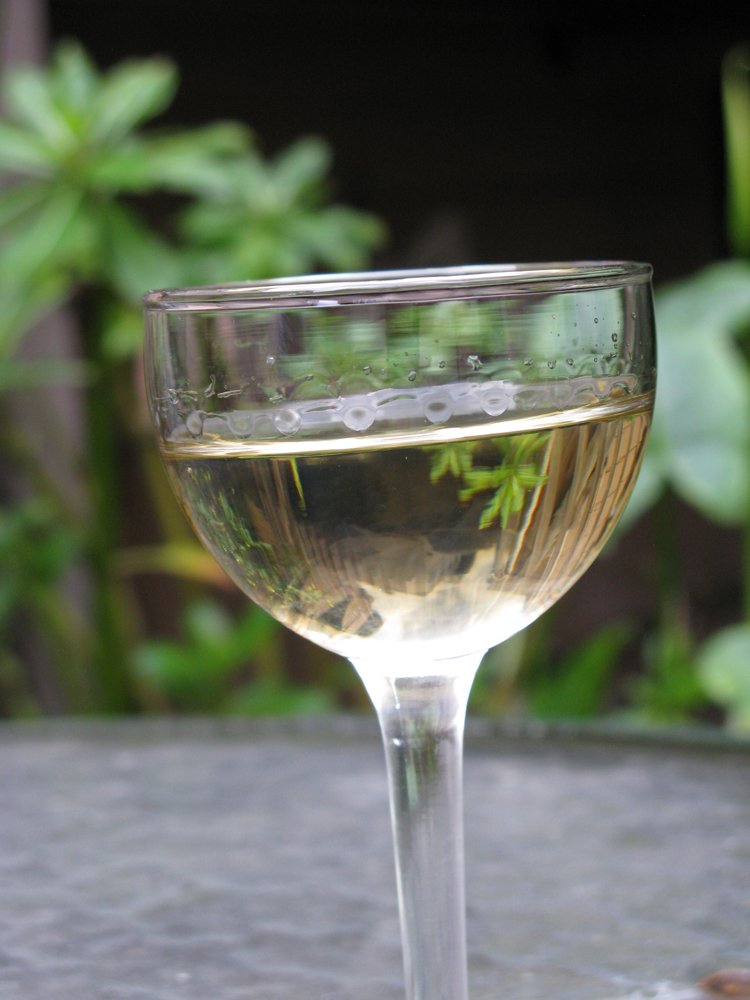
    June & Champagne with garnishM Here's something you already know: Sparkling wine + Floral liqueur = fun drink.

    I hadn't realized until I started writing my latest Fine Cooking blog entry just how many new floral liqueurs have hit the market.

    In recent years several new floral liqueurs have been brought to market, including St. Germain (elderflower), Esprit de June (grape vine flowers), Rothman and Winter Crème de Violette (violet), Crème Yvette (violet and berries), Fruit Lab Theia (jasmine), J. Witty Spirits Organic Chamomile, and Loft Liqueurs Organic Lavender.

    So, here is the rest of the story.

  • Big in Germany

    Mixology cover blood and sand I try to link to all my writing available online, but you really only see two-thirds or so of it. And even if you could see it all, most of us couldn't read it because it's in German.

    I am a regular contributor to Mixology magazine, based in Berlin, and for this magazine I write these insanely long stories usually about a single cocktail.

    I've written 2000 words about eggnog, 2500 on the Blood and Sand, and 4000 words on the Mai Tai.

    All of it gets translated into German so when I see the print version I can't read it but I like to look at the pictures. 

    One picture that I particularly enjoyed seeing was this cover illustration for my eggnog story.


    Mixology Mag Cover Eggnog

    I don't know if I've ever had the cover image before, so that's pretty awesome. (Update: Realized I've had it twice before- sweet!)

    I shall now use this ego boost to get me through my next story, which is 2500 words on the Caipirinha, due tomorrow.


  • Which Vermouth is Which?

    In Friday's FineCooking.com blog entry, I have a little story about how I remember which vermouth is which: sweet, French, white, Italian, dry, red. I could never keep them straight until I came up with a mnemonic device.

    Read it here.

    Bamboo1m

    Plus! There is also the recipe for the Bamboo cocktail.

  • Sherry, Reconsidered in the Los Angeles Times Magazine

    **Update: This story is no longer on the LA Times Magazine website, so I have pasted it here.


    In yesterday's LA Times Magazine I have a huge feature on sherry.

    Sherry2 (photographs by Nigel Cox)

    As a wine category, sherry has practically everything going for it: a tremendous range of flavors, a rich history dating at least as far back as the Romans, the ability to pair magnificently well with food and an increasingly hip status as a cocktail ingredient used by top bartenders.

    Most people, when they think of sherry at all, consider it an ingredient their grandmothers cooked with rather than something ripe for sipping on its own. Sherry is about due for a comeback, but it’s so unfamiliar to us now that it really needs a thorough reintroduction.

    The story features eight drink recipes from the lofty likes of Murray Stenson, Andrew Bohrer, Alex Day, Zahra Bates, Kenta Goto and Audrey Saunders, Brian Miller, Neyah White, and Kevin Deidrich.

    Go read the story, and then go make the drinks!

    Sherry3 (photographs by Nigel Cox)

  • Cocktails and Italian Spirits

    Vino2011logo Last week I spoke on a panel in New York for the Vino 2011 convention. The event mostly focuses on Italian wines, but this year they also offered a cocktail seminar.

    The seminar was called “Renaissance of the Cocktail in America: Top Spirit Professionals Assess the Role and Opportunities for Italian Spirit.” The panel was moderated by Francesco LaFranconi and the other panelists were Anthony Dias Blue,  Lamberto Vallarino Gancia, Paolo Domeneghetti, and Tad Carducci.

    I figure I may as well share my answers with people who couldn't attend the seminar.

    Question 1: As one of the industry’s most credited spirits’ blogger and writer, what fascinates you the most about Italian liquors (Spirits, Amari, Aperitifs and Liqueurs) and which category provides you the most opportunities to write your stories/articles?

    Prettymuch what I do for a living is identify and report on trends in cocktails and spirits, most of which are generated by progressive bartenders at the nation's top bars. So I'm most interested in what they're interested in.

    Category-wise, we see the most action in amari and aperitifs as bartenders are playing with bitter modifiers, better vermouths/vermouth substitutes, and low-alcohol cocktails.

    But across all categories there are other flavor trends into which different Italian spirits can fit.

    • Extreme spirits. The most bitter, the most raw, the highest-proof, the funkiest, most challenging spirits are all the rage. Think: Smith & Cross, mezcal, Islay scotch, barrel-strength everything.
    • Flavorful white spirits. Think: genever, pisco, cachaca, agricole rhum. Why not grappa too?

    Question Two: When did you start noticing interest (among bartenders and mixologists) in the US for Italian liquors (Spirits, Amari, Aperitifs and Liqueurs) and cocktails made with them?

    Back in the early 2000s when classic cocktails started their comeback. Back then it was all about making the most authentic Negroni, Aviation, Hemmingway Daiquiri, etc. These drinks need their original Italian ingredients like Campari, maraschino liqueur, vermouths, etc.

    Now, even though we're still in the classic cocktail craze, it's more about spin-offs of classics: variations of the Manhattan using various amari, spin-offs of the Bamboo with other fortified wines, Negronis switching out everything for something else, and so on.

    Question Three: Which Italian liquors (Spirits, Amari, Aperitifs and Liqueurs) categories do you believe are the most favorite by the American palate these days, and which are not fully embraced yet (what would you suggest to do about it)?

    Now we're talking about consumers, and I don't think most consumers are in love with any of these spirit categories at all. That said, they all have their place in cocktails, which consumers love indeed. Italian (and any) spirit owners should think about their spirits as ingredients in popular cocktail formats and sell to the cocktail. Right now, consumers are especially interested in drinks they can make at home that they've tried out. Some top examples are:

    • Anything that mixes with ginger beer in a Buck/Dark & Stormy format.
    • Cocktails with baking spice flavor- allspice, cinnamon, clove, nutmeg. Many tiki drinks would fall into this category.
    • Aromatic herbs like mint, basil, cilantro, lemon verbena, etc. These can be used both in the Gimlet and Mojito format.
    • Anything coffee – cold or in the future, hot. With the fresh-roasted, slow-drop coffee phase that's sweeping  the nation, perhaps the grappa producers could work on a deluxe version of Cafe Correcto.
    • Anything floral in the wake of St. Germain, or with strongly floral aromas.
    • Any liqueur that can be mixed with sparkling wine.  

    I even tried to look like I know what I'm talking about wearing a suit and tie (and an expression that says "I'm up in your seminar, dropping knowledge.") But you know, since it was in a room full of Italians, my wardrobe probably fooled no one.

    Camper in a suit

  • Absinthe Apparatus

    Absinthe Fountain Completes In my latest post for FineCooking.com, I discuss what all that absinthe-serving equipment is for.

    The fountain is not, of course, filled with absinthe, as in this music video. It is filled with plain old ice water.

    Read more about that here.

  • The Anti-Malarial Further Fortified Fortified Wine Cocktail

    DubonnetCocktailm_lg In my latest post for FineCooking.com, I touch on Dubonnet and the Dubonnet Cocktail. Dubonnet was invented as an anti-malarial wine. It's useful even if you don't have a mosquito problem.

    Read! Learn! Behold!

  • Back In My Day, It Was Called A New-Fashioned

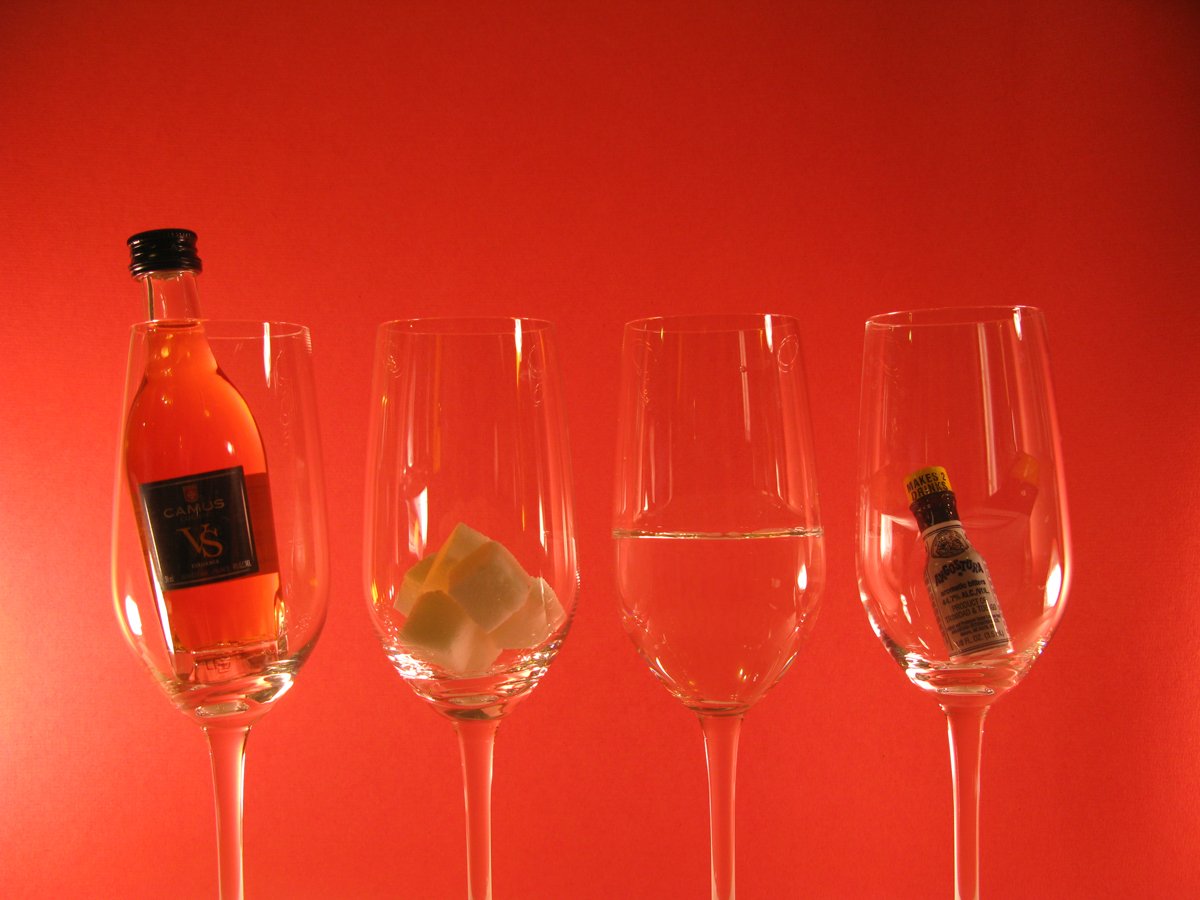
    In my latest post for FineCooking.com, I cover the history of the cocktail- the original one. I'm sure you've heard of it: spirit, sugar, water, bitters.

    Spirit sugar water bitters7s

  • Spicy Mary

    Infusions1m_lg A bunch of years ago I tried to sell a book on infusions, because there weren't any at the time. In some ways I'm glad it didn't sell, because my cocktail knowledge and abilities are so much better now that I would have been embarrassed by many of the cocktail recipes you were supposed to use after the infusions were done. 

    But I did do enough recipe development that I learned the timing for a lot of infusions. In my latest post for FineCooking.com, I list the quantities of spicy things like pepperonchini, peppercorn, chili peppers, and horseradish to make a 1-day infusion. 

    Then you can add those to tomorrow's Bloody Mary. 

    When I was working on the book, I had all the different infusions sitting around and decided to dump them all into the drink at the same time. It was pretty amazing how you could clearly taste each infusion separately, rather than them being all muddled together into one new flavor.