Category: trips

  • Tequila Distillery Visit: Don Julio

    In November I visited seven tequila distilleries in Mexico. Here are some pictures and notes from my visit to the Don Julio distillery in the town of Atotonilco.

    Cutting agave tequila don julio distillery_tn
    (Cutting up the pinas before baking.)

    Agave pinas tequila don julio distillery_tn
    (Now when I see pinas, I get thirsty.)

    Fermenting agave juice tequila don julio distillery_tn
    (Fermenting agave.)

    Stainless stills with copper inside tequila don julio distillery_tn
    (Stainless steel pot stills.)

    Our team's shots luxury drop contest tequila don julio distillery_tn
    (We had a cocktail contest after the distillery visit. My team of writers won, of course.)

    • Don Julio uses all estate-grown agaves
    • Has a widerspacing between agaves than average
    • They have 18 furnaces, each of which holds 25 tons
    • Fermentation takes 24-30 hours
    • Their agave is larger than industry standards, with a higher sugar content
    • Inside the stainless steel stills is a copper coil
  • Sherry Bodega Visit: Bodegas Williams & Humbert

    In September 2010 I visited several sherry bodegas. Here are pictures and a few notes from Bodegas Williams & Humbert. 

    Bodegas williams and humbert12_tn
    (The bodega is absolutely enormous.)

    Bodegas williams and humbert horse show5_tn
    (There's a horse show inside the bodega for visitors.)

    Bodegas williams and humbert eonologist2_tn
    (For barrel tasting, the venenciador (in this case, the chief oenologist) inserts the venencia into the barrel to pull out a cup of liquid, then pours above a glass to aerate.)

    Bodegas williams and humbert17_tn
    (From a high perch in the bodega, you can see nearly the whole thing. Center in the picture is a tour group.)


    • They make Dry Sack – actually a medium sweetness sherry
    • Huge tourist visitor center- enter through the bodega and go to the horse show
    • Brandy de Jerez is very popular in the Philippines
    • Bowmore 1964 was aged in their casks
    • Macallan new casks prepared here
    •     New wood with aged sherry added to them
    •     The sherry is not sold afterward- too woody
    • Fino was first developed in an industrial way in the 1920’s and 30’s
    • Dry sack is the top selling medium sweet sherry in the world. 
    •     Tio Pepe is top selling fino. (Not made here.)
    •     Harvey’s Bristol Cream is the top cream. (Not made here.)
    • Dry sack is blended with PX right at the beginning  before it enters the solera system
    • 15 year oloroso is very yummy. 
    • I also liked Gran Dulque de Alba XO
    • They make the Dos Maderas rums
    • Liked the VORS amontillado, VOS Palo Cortado


  • Tequila Distillery Visit: Sauza

    In November I visited seven tequila distilleries in Mexico. Here are some pictures and notes from my visit to the Sauza distillery in the town of Tequila.

    Tequila sauza agave nursery2_tn
    (First we visited the agave nursery. Sauza is unique in that they propagate their agave not by using baby plants but by… fancier scientific means.)

    Sprouted agave tequila sauza agave nursery_tn
    (This is what an agave looks like if allowed to propagate.)

    Sprouted agave tequila sauza agave nursery2_tn
    (You can see close-up that instead of producing seeds, the mother plant produces little baby plants.)

    Talk about sprouting sprouted agave tequila sauza agave nursery2_tn
    (We had a lecture about plant propagation.)

    Cooked juice tequila sauza distillery_tn
    (I just like this picture from the distillery.)

    Diffuser tequila sauza distillery_tn
    (This is the diffuser. Super clean at Sauza.)

    • The blue color of agave comes from a wax on the plant. This wax covers the pores of the plant to protect it from drying out in the dry season.
    • Unlike most tequila distilleries, at Sauza they shred agave and use the diffuser before they cook the agave juice in autoclaves.
    • Then they only cook the juice for 3-4 hours.
    • They ferment in covered fermentation tanks
    • The first distillation is in a column still, second in a stainless steel pot still
    • The Tres Generaciones line has a third distillation in a copper pot still


  • Sherry Bodega Visit: Bodegas Sanchez Romate

    In September 2010 I visited several sherry bodegas. Here are pictures and a few notes from Bodegas Sanchez Romate. 

    Bodega sanchez romate 3_tn(Our guide used a barrel as a chalkboard.)

    Bodega sanchez romate 2_tn
    (Our host.)

    Bodega sanchez romate8_tn
    (The bodega is relatively small and sort of goth.)

    Bodega sanchez romate ouru signed barrel_tn
    (We signed a barrel.)

    • Not a touristy bodega- don’t do tours
    • Fino has more oxidation than manzanilla because the flor dies in winter and summer in Jerez. 
    • Delicious amontillado 5 years under flor
    • Muscatel was like blueberry pie filling with curry
    • Brandy Cardenal Mendoza top selling brandy de Jerez in US
  • Tequila Distillery Visit: Herradura

    In November I visited seven tequila distilleries in Mexico. Here are some pictures and notes from my visit to theHerradura distillery in the town of Amatitan.

    Stacks of agave tequila herradura distillery_tn
    (Here they split the agave in two before baking.)

    Fermentation tanks tequila herradura distillery_tn
    (The magic of Herradura is that it ferments naturally- no yeast is added.)

    Barrel aging tequila herradura distillery_tn
    (Sleeping tequila.)

    • Agave grows for 7-10 years before harvesting
    • Jimadors work for 6 hours a day and harvest about 120 plants
    • They use clay/brick ovens, each one holding about 48 tons
    • Agave cooks for 26 hours then cools for 24
    • They use a rollermill to shred the agave after cooking, then a diffuser to get out the last bits of sugar
    • The fermentation takes about 4 days
    • The first distillation takes 3 hours, the second 6
    • They use stainless steel stills
    • They don't move the barrels around, refill them where they are. Use same barrels for about 10 years before replacing
    • Between Herradura, El Jimador, and Antiguo, all of which are 100% agave products, they say the only difference is the amount of aging and the percent of alcohol. [That's not quite true, here is a chart that spells out the differences.]
    • They age in all new American oak barrels. 
    • The reposado is aged for 11 months
  • Sherry Bodega Visit: Bodegas Osborne

    In September 2010 I visited several sherry bodegas. Here are pictures and a few notes from Bodegas Osborne. 

    Camper bodegas osborne_tn(The logo for Osborne is the silhouette of a bull. You see it all around.)

    Bodegas osborne barrel flor 3_tn
    (This is barrel with a clear end so you can see how flor (a layer of yeast) lives on top of the sherry. The yeast consumes nutrients in the alcohol, and also protects it from oxidation in fino and manzanilla sherries.)

    Bodegas osborne 2_tn
    (Aging sherry.)

    Bodegas osborne food selection_tn
    (After the Osborne bodega visit, some local food to soak up the sherry.)


    • Huge company with biggest selling products port, water, ham, etc.
    • Their fino has a five level solera, fairly unique
    • Have a “Fino-Amontillado” with a lot of time under flor. It’s their signature product.
    • Want more humidity in bodegas where fino is aged
  • Tequila Distillery Visit: Jose Cuervo

    In November I visited seven tequila distilleries in Mexico. Here are some pictures and notes from my visit to the Jose Cuervo distillery in the town of Tequila.

    Tequila jose cuervo agave fields2_tn(First we visited an agave field.)

    Sharpening coa tequila jose cuervo agave fields_tn
    (The jimador harvested the agave plant to get the pina, or pineapple, center.)

    Camper english planting agave at tequila jose cuervo field4_tn
    (I planted my own agave from the cuttings of a mother plant. I'll need to go back there in 7 or so years and drink that sucker.)

    Loading agave ovens tequila jose cuervo distillery2_tn
    (After harvesting, they load the agave pinas into the ovens. I didn't notice at the time, but it appears they put the whole agaves into the ovens without chopping them into smaller pieces.)

    Copper pot stills tequila jose cuervo distillery2_tn
    (Copper pot stills.)

    Barrel sample tequila jose cuervo distillery_tn
    (We sampled some Reserva de la Famila out of the barrel.)

    • April and May are the planting months for agave
    • Agave is harvested year-round, though they usually avoid the rainiest month
    • Cuervo irrigates their agave
    • They prune the leaves of their agave plants for three reasons: Because they're sharp, to avoid insects laying eggs in them, and to help the heart grow faster
    • For Reserva de la Familia, they cut out the cogollo, not for the mixto
    • Cuervo owns 4 distilleries
    • The distillery had 110,000 visitors last year
    • They use only oven, no autoclaves
    • The product of the first distillation, called ordinario, is cloudy
    • Heads and tails are called vinasas. They are mixed with the agave fibers and made into fertilizer. This happens here and at most distilleries we visited.
    • Reserva de la Familia agave is grown in special fields. It is aged in a combination of French and American oak barrels.


    Crow in cage tequila jose cuervo distillery_tn
    (I think it's a raven and not a crow, but hey look, I took a cool picture!)

    Horse and lasso show tequila jose cuervo distillery4_tn
    (We had a horse and lasso show before dinner. )

  • Sherry Bodega Visit: Bodegas Grupo Estevez

    In September 2010 I visited several sherry bodegas. Here are pictures and a few notes from Bodegas Grupo Estevez. 

    Bodegas grupo estevez 14_tn
    (Sherry sleeping peacefully in the bodega.) 

    Bodegas grupo estevez lola flores_tn
    (One of the warehouses is named for flamenco dancer Lola Flores.)

    Bodegas grupo estevez horse 3_tn
    (Horse stables and ring behind the bodegas. Jerez is home to flamenco, dancing horses, and sherry.)

    Bodegas grupo estevez 3_tn
    (The interior is a fancy place with fine art and marble statues.)


    • Tio Mateo, Agostino, Tesoro, La Gita are some of their brands
    • They used to have several bodegas, centralized them all to the one we visited 20 years ago
    • One bodega named after flamenco dancer Lola Flores 
    • La Gita manzanilla from Sanlucar is the only manzanilla that has a production date on the bottle- should help us Americans know when its too old to buy
    • Inocente Fino is fermented in the barrel not in stainless tanks. 

  • Tequila Distillery Visit: Cazadores and Corzo

    In November I visited seven tequila distilleries in Mexico. Here are some pictures and notes from my visit to the Cazadores and Corzo distillery in the town of Arandas.

    Autoclaves tequila cazadores_tn
    (Autoclaves cook agave much faster than traditional brick/clay ovens.)

    Tequila pipes tequila cazadores_tn
    (It's a huge operation here. The liquids travel in pipes through a tunnel beneath a road separating parts of the distillery.)

    Stainless steel stills tequila cazadores (2)_tn
    (Stainless steel stills.)

    • In 1922 the recipe for Cazadores reposado was created
    • They process 200 tons of agave per day in the distillery
    • The autoclaves cook agave for 10 hours at 120 Celsius. Soon they're reducing the cooking time to 8 hours. 
    • After shredding the agave (after cooking it in autoclaves), they put it in a diffuser; a relatively recent technology that gets the last bits of the sugar out of the agave
    • They allow the agave to ferment for about 4 days. The tequila undergoes an alcoholic then a malolactic fermentation
    • The first distillation takes about 10 hours, the second takes about 24 hours
    • The stills are stainless steel
    • They do have a column still that they use "when demand is high"
    • Corzo starts from Cazadores reposado. It is then redistilled and re-aged.
    • They aged in new white American oak, with some French oak for Corzo

    Dancers tequila cazadores10_tn
    (After the tour, dinner and a dance show in the distillery.)

  • Four Roses Bourbon Distillery Visit

    This week I was in Kentucky for a quick visit to the Four Roses distillery. For some history on this brand, see this post a I wrote a few years ago. In short, Four Roses was only a bourbon in Japan for many years, and has recently come back to the US market. They use two mashbills (grain makeup) and five strains of yeast to make ten recipes of bourbon. 
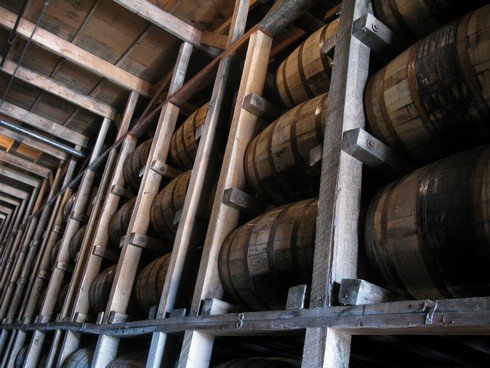
    Four roses rickhouse3_tn

    The ten recipes blended together ensure a consistent bourbon from batch to batch. Another way they help do this is by having single-story rickhouses. While other brands have several floors in their rickhouses with quite extreme temperature variations in them, at Four Roses they're only one floor high, six barrels tall, with a much less variation in temperature from top to bottom.
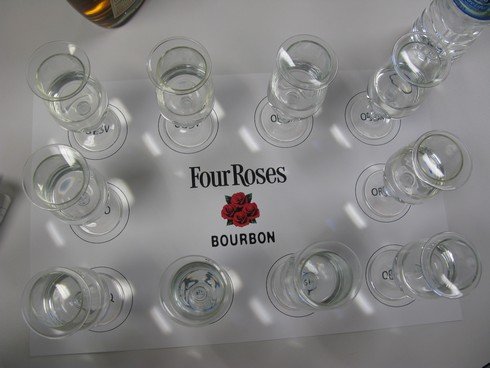
    Four roses tasting 10 recipes_tn
     We did two tastings at the distillery. One was tasting all ten recipes of the white dog. They have quite the wide range of flavor, from fruity to spicy. The second was tasting several barrels all with the same recipe from different barrels. This was fascinating as there was a surprisingly large difference: one tasted like oloroso sherry, one like apricot socks, one like creamed corn.
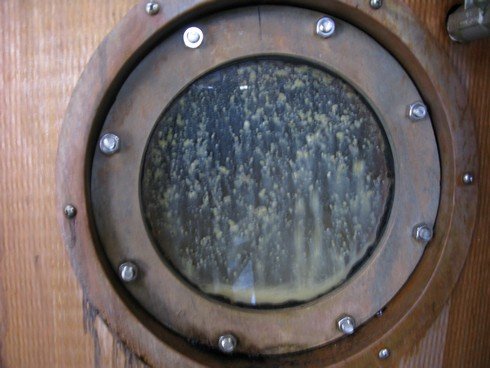
    Four roses still_tn

    Largely because they've been selling mostly in Japan, they use all non-GMO corn. Distillery Jim Rutledge says they don't really advertise that because he doesn't expect they'll be able to get enough non-GMO corn to continue doing so: everything is being replaced by the modified stuff. 
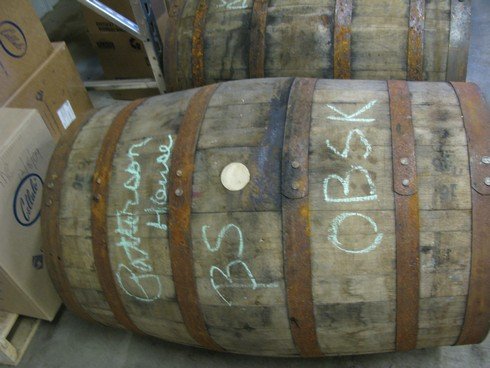
    Four roses obsk_tn

    Well I have to run to another event- more on this interesting brand another time.