Author: Camper English

  • EU Regulations for Vermouth, Americanos, and Quinquinas

    I've had to look up this information a few times so this blog post will make it easier for me to find this information in the future. 

    In the EU

    Vermouth = fortified aromatized wine with artemisia (wormwood) species.

    Americano = fortified aromatized wine with artemisia (wormwood) and gentian species.

    Quinquina = fortified aromatized wine with quinine flavoring.

    Bitter Vino = fortified aromatized wine with gentian species.


    Aromatized wines


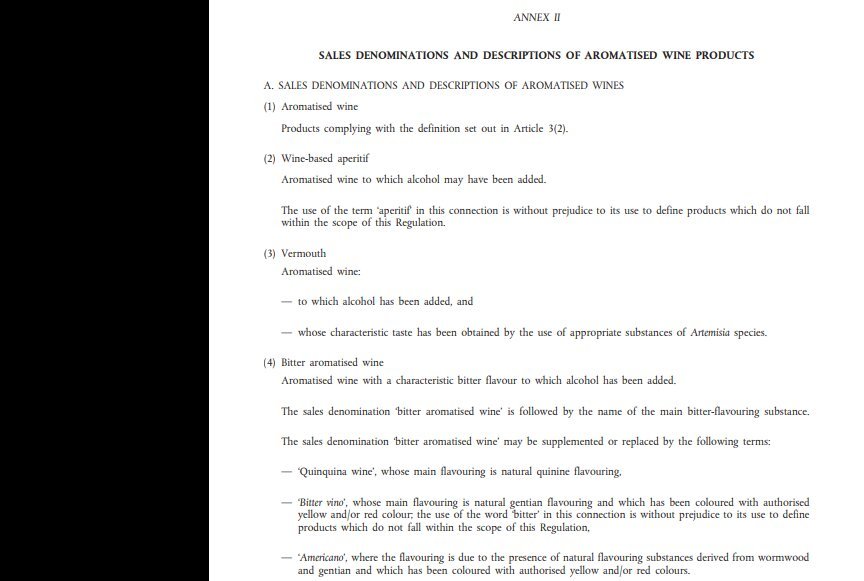
    The Regulations are found here.  The text of this section of aromatized wines is below. 

    SALES DENOMINATIONS AND DESCRIPTIONS OF AROMATISED WINE PRODUCTS
    A. SALES DENOMINATIONS AND DESCRIPTIONS OF AROMATISED WINES
    (1) Aromatised wine
    Products complying with the definition set out in Article 3(2).
    (2) Wine-based aperitif
    Aromatised wine to which alcohol may have been added.
    The use of the term ‘aperitif’ in this connection is without prejudice to its use to define products which do not fall
    within the scope of this Regulation.
    (3) Vermouth
    Aromatised wine:
    — to which alcohol has been added, and
    — whose characteristic taste has been obtained by the use of appropriate substances of Artemisia species.
    (4) Bitter aromatised wine
    Aromatised wine with a characteristic bitter flavour to which alcohol has been added.
    The sales denomination ‘bitter aromatised wine’ is followed by the name of the main bitter-flavouring substance.
    The sales denomination ‘bitter aromatised wine’ may be supplemented or replaced by the following terms:
    — ‘Quinquina wine’, whose main flavouring is natural quinine flavouring,
    — ‘Bitter vino’, whose main flavouring is natural gentian flavouring and which has been coloured with authorised
    yellow and/or red colour; the use of the word ‘bitter’ in this connection is without prejudice to its use to define
    products which do not fall within the scope of this Regulation,
    — ‘Americano’, where the flavouring is due to the presence of natural flavouring substances derived from wormwood
    and gentian and which has been coloured with authorised yellow and/or red colours.

  • How Much Alcohol Do Bitters Contribute to a Non-Alcoholic Drink?

    71z8Pv+8ubL._SL1500_I was a speaker on a panel for Tales of the Cocktail 2020 in which I said that we should be careful about bitters in non-alcoholic cocktails. In my experience, if you ask someone who orders a non-alcoholic cocktail if "a dash of alcohol is okay" to put bitters in the drink, most people get uncomfortable with the conversation and then almost all of them say no. So I stopped offering. 

    When you ask someone if a touch of alcohol is okay, you're really asking them to agree to drinking alcohol even when they're just told you they'll have the non-alcoholic drink. For several different segments of people who are not drinking, this is like asking "will you violate your sobriety a little bit?" and I've come to see it as inappropriate. 

    After the talk I had a nice chat with Camille Vidal of La Maison Wellness, who has also been thinking about the impact of bitters. The real question was not so much about asking someone if they want to take alcohol in their drink, but what if the impact of bitters in a cocktail is so insignificant that we can skip the question and use them anyway? 

    We know that products legally allowed to be labelled as "non-alcoholic" can have up to .5 percent alcohol in them.  We also know that some food products like bananas and orange juice and even bread can have tiny percentages of alcohol in them. 

    Out of the conversation we decided it would be interesting to do the math. 


    What is the alcoholic impact of alcoholic bitters in a non-alcoholic cocktail?

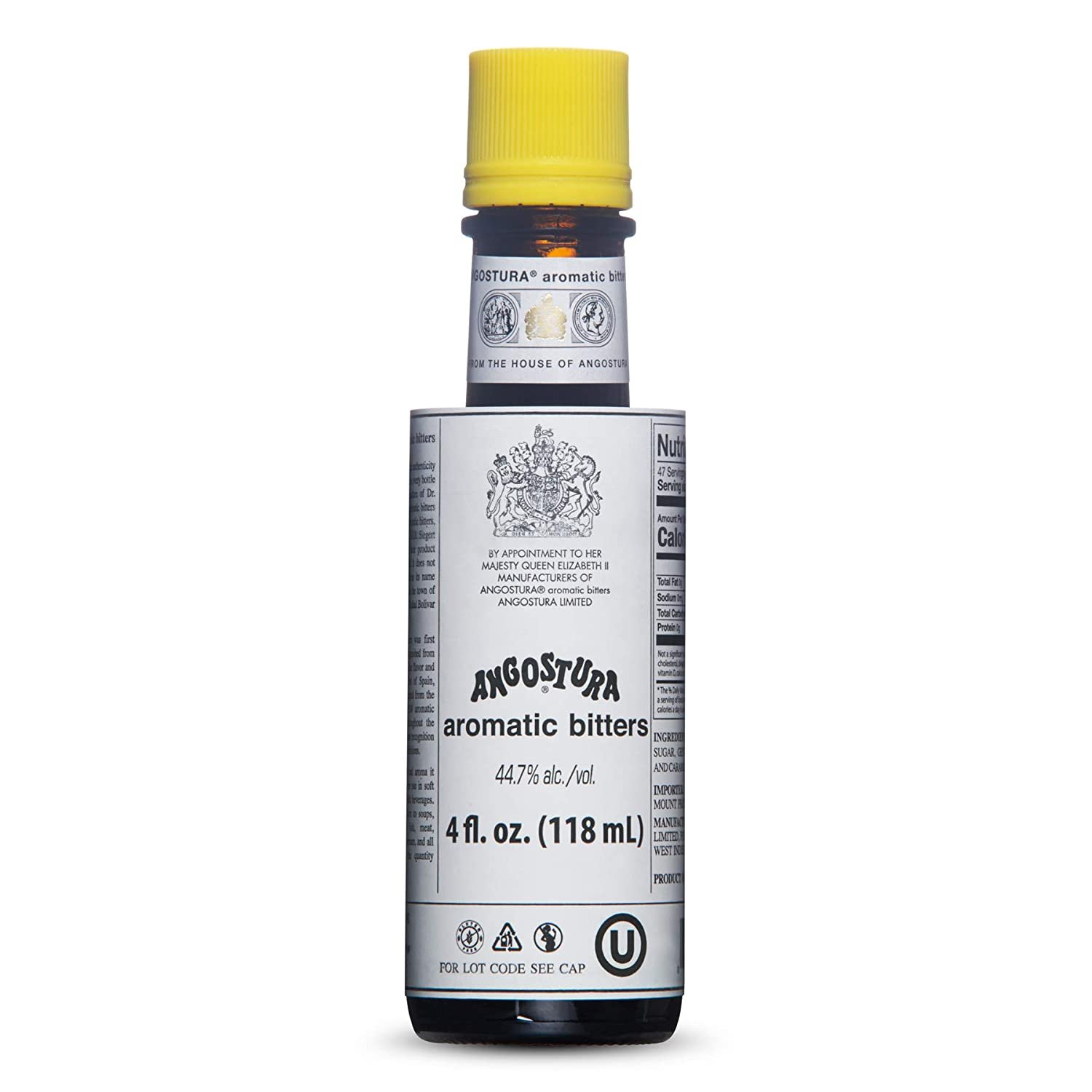
    We'll use Angostura bitters to figure it out.  Angostura bitters are 44.7% ABV

    How much is a Dash? 

    According to Don Lee, 41 dashes equals one liquid ounce. (this is .7 ml per dash). Dave Arnold in Liquid Intelligence puts it at .8ml. 

    A dash is "little less than one milliliter" according to this post. According to this 1/8 tsp is a dash and that's .6ml. 

    I decided to say we're adding 2 dashes or 1.5 ml of alcoholic bitters to a non-alcoholic drink

    1 fluid ounce is approximately 30ml 


    To calculate the ABV of a drink, our math is:

    Volume of each alcoholic component x ABV% Divided by Total Volume of Drink


    For a one ounce cocktail with 2 dashes of bitters = 1.5ml X 45% / 30ml = .02 = 2 percent 

    For a two ounce cocktail with 2 dashes of bitters = 1.5ml X 45% / 60ml = .01125 = 1.12 percent 

    For a three ounce cocktail with 2 dashes of bitters = 1.5ml X 45% / 90ml = .00755 = .75 percent 

    For a four ounce cocktail with 2 dashes of bitters = 1.5ml X 45% / 120 ml = .005625 = .562 percent 

    For a five ounce cocktail with 2 dashes of bitters = 1.5ml X 45% / 150 ml = .0045 = .45 percent 


    First Conclusion: If you want to make a cocktail that's legally non-alcoholic with 2 dashes of Angostura bitters, the cocktail must be 5 ounces in volume and contain no other alcohol. 

    Soft_see1Now let's look if we used a non-alcoholic spirit in the five-ounce drink along with bitters.

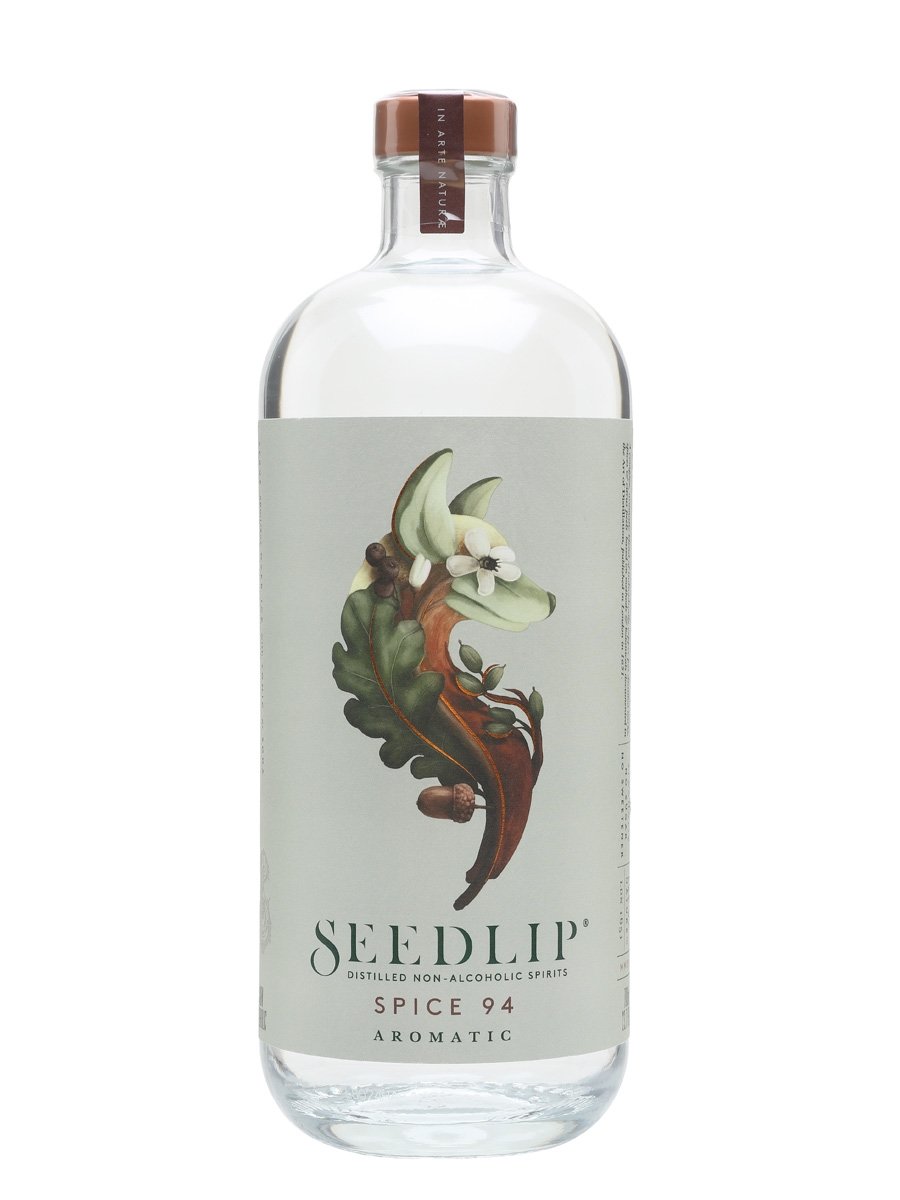
    A non-alcoholic spirit like Seedlip must be less than .5 percent ABV. We'll use a Non-Alcoholic Daiquri as an example:

    If we didn't add bitters, we'd have:

    60 ml N/A Spirit at .5% + 30 ml lime + 30 ml simple + 30 ml dilution +  = .3  / 150 = .2 percent ABV cocktail.

    And with bitters plus n/a spirit, we have: 

    60 ml N/A Spirit at .5% + 30 ml lime + 30 ml simple + 30 ml dilution + 1.5ml Angostura bitters at 45% = .3 + .675 / 150 = .65 percent.


    A 5-ounce cocktail with 2 ounces of non-alcoholic spirit base and 2 dashes of bitters is barely over the .5 ABV limit, still under 1 percent ABV.

    Second Conclusion: The bitters in a cocktail with n/a spirit contribute more alcohol to the overall drink than the "non-alcoholic spirit," as the bitters are so concentrated in alcohol.  


    Final Boss Conclusion: If you wanted to serve legally non-alcoholic (<.5%) cocktails with bitters, you can 

    1. Use non-alcoholic bitters, such as the ones from Dram Apothecary
    2. Make sure the drink is at least 5 ounces (including dilution) in volume for cocktails with 2 dashes of bitters
    3. If you want to make the drink with a non-alcoholic spirit base like Seedlip, dial down the bitters to one dash or leave them out to stay within the legal limit if your drink is 5 oz or less. 


  • Kold Draft Ice Machine History from Dale DeGroff

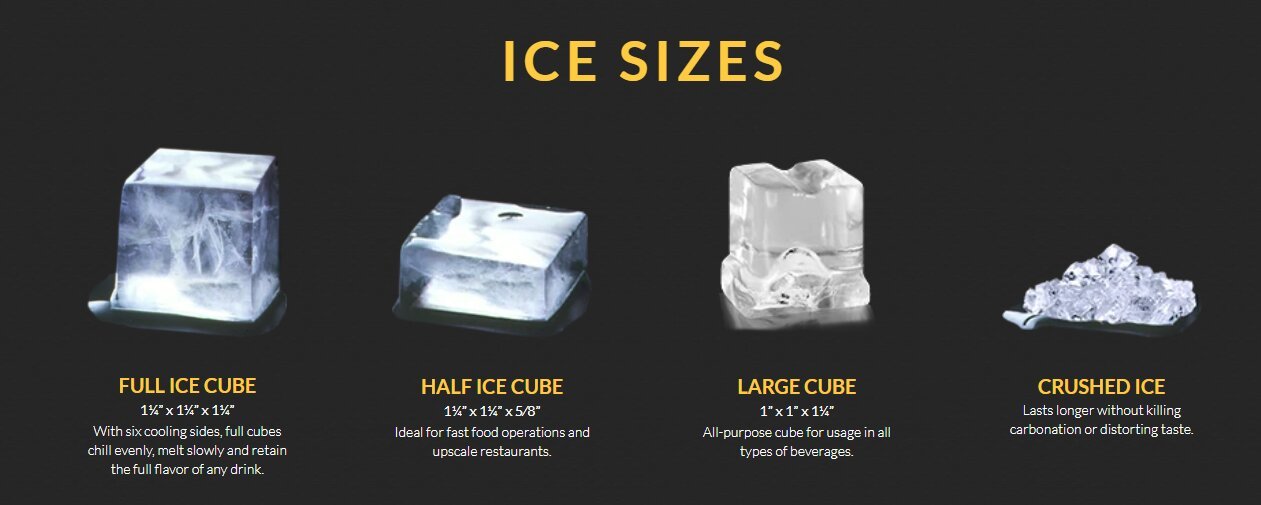
    I was emailing with Dale DeGroff about the new edition of his book The New Craft of the Cocktail: Everything You Need to Know to Think Like a Master Mixologist, with 500 Recipes and ice came up, as it does. It turns out he was using the big 1.25 inch (32 mm) Kold-Draft cubes at the Rainbow Room way back in the day. 

    I was not aware that the machine went back that far. I first became familiar with it at the new bars of the craft cocktail renaissance around 2006-2010. Here's me quoting myself in a story:

    “I used to say at the time that the Venn diagram of America’s best cocktail bars and bars that owned Kold-Draft machines was a near-perfect circle,” recalls drinks journalist and ice enthusiast Camper English.

    I forgot that I gave that quote in a story written by Drew Lazor for Punch.  So I forgot that I'd already read some of the brand history. Lazor also wrote: 

    Manufactured since 1955 in Erie, Pa., Kold-Draft once dominated domestic placements “in bars, restaurants, hospitals, and fishing and sporting locations, because of the long life of the cubes,” according to DeGroff.

    DeGroff was first introduced to Kold-Draft in 1984 by the late restaurateur Joe Baum, who installed two of the machines at Manhattan’s Rainbow Room, the post from which the pioneering DeGroff helped spark the modern cocktail revival. During this era, a definite ebb in American barcraft, Kold-Draft had largely faded from prominence, ceding ground to cheaper, quicker machines that spat out smaller, faster-melting cubes. As DeGroff’s detail-oriented approach to drink-making gained steam, ice became a major talking point again—and he stumped for Kold-Draft so passionately in the press that the company brought him on as a consultant.


    Kd1


    Meanwhile, I followed up with Dale DeGroff, basically asking "Oh you had Kold Draft then? I didn't realize it was around that long." He replied to me:

    The Kold-Draft company had a monopoly on ice machines for bars and restaurants, sporting lodges (fishing parties loved them for long outings to keep the fish fresh in their coolers), hospitals for bedside pitchers, anywhere that big cubes that lasted were needed. Joe [Baum] used those machines starting in 1953 at the Newarker Restaurant and used them throughout the RA properties, Four Seasons, Las Fonda Del Sol Forum of the 12 Caesars etc. etc…

    The demise of that company came swiftly in the late 1970's and early 1980's. The Japanese swept into the market with machines that made all manner of small ice very quickly so bars could get away with one instead of two machines. That was the "…tini" era of sweet and fruity drinks and that sort of ice was actually helpful in cutting the cloying sweetness of many popular juicy style drinks.

    The serious on-the-rock scotch and other strong spirits drinkers were not too thrilled, but they were a dwindling crowd.

    I worked for Kold-Draft from early 1990s as a consultant through the early new millennium to drive bar restaurant business back in their direction. Julie [Reiner] and Audrey [Saunders] all went with them but then the problems started.

    The company was floundering with three different owners and 4 different president / CEOs and they hadn't kept up with the improving technology so their machines needed constant repairs. The trick became to lease the machines with a service contract rather then buy.

    Then early millennium (I think) there was a possible merger with Hoshizaki that fell through when Kold-Draft sold again, but not before Hoshizaki got the moving water large cube technology that made those cubes special. They improved the technology, but could only use that particular machine in Europe at first. I don't know where that is these days, maybe they finally were able to introduce their larger cube machines in the USA.


    Kd2


    So good ice used to be a thing and it was killed by disco drinks! 

    My understanding of the status of Hoshizaki in the US is that their largest cube is a bit smaller than Kold-Draft; about 1 inch by 1.25" rather than 1/25" square. In Europe, they have adapters for the machines that can make larger cubes, ping pong ball-sized spheres, and shapes like hearts and stars. They have a briefcase they display at Bar Convent Berlin every year that instead of being filled with diamonds like in a heist movie, is filled with ice options. 

    The reason we don't see those shapes of ice in the US, from my understanding, is that they do not meet US energy compliance standards. 


    Anyway, that's enough ice talk for today, See you tomorrow probably. 


  • Halloween Ice Fun 2020: Bats, Skeleton Hands, Finger Puppets

    This isn't the first year I decided to freeze some goofy stuff in ice for Halloween. Remember that all the years of ice experiments can be found at the Index of Ice Experiments page

    Some previous years I've done:


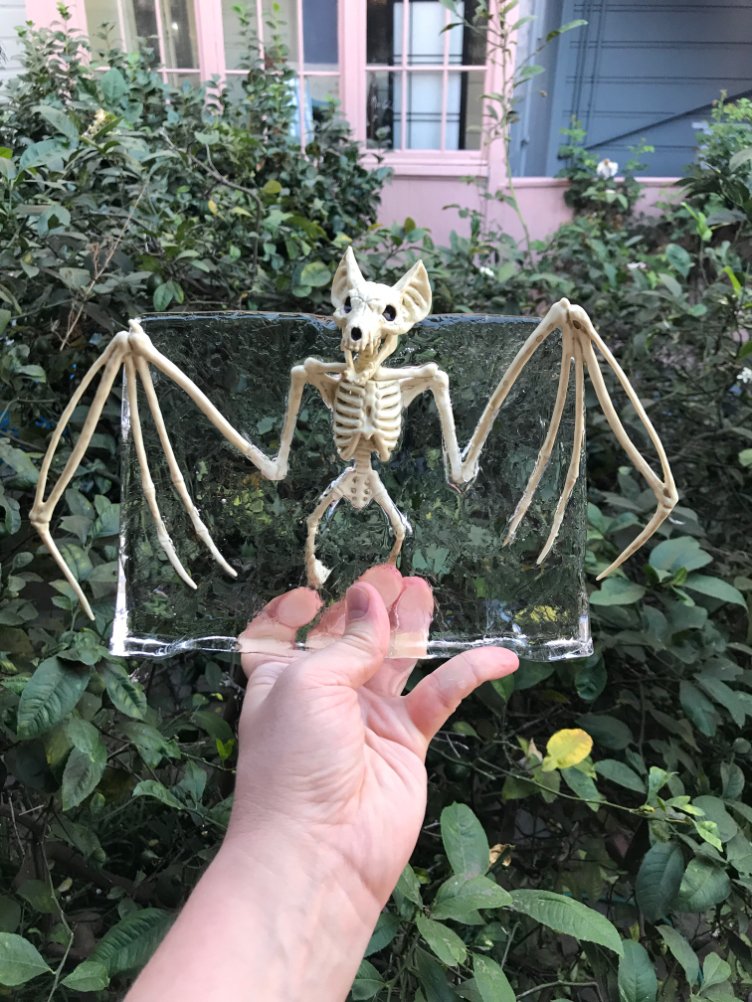
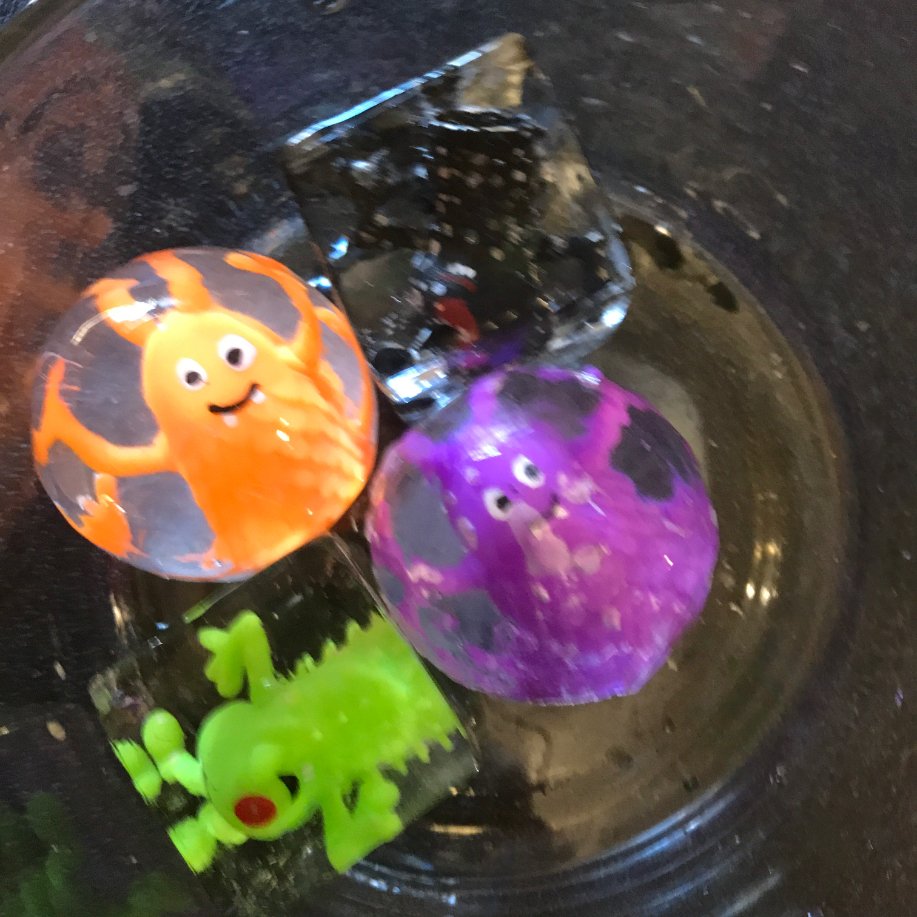
    This year I went back to ye olde drugstore and bought more stuff I thought would freeze well. I ended up with some skeleton hands, a vampire bat skeleton, and some little finger puppets. 

    IMG_0106
    IMG_0106
    IMG_0106

    IMG_0106
    IMG_0106

    Next up, a bat skeleton. This I just placed across the top of the cooler – it fit snugly into place. 


    A4BF4ABF-8229-4907-9747-DF104E2C748D IMG_0204 IMG_5107

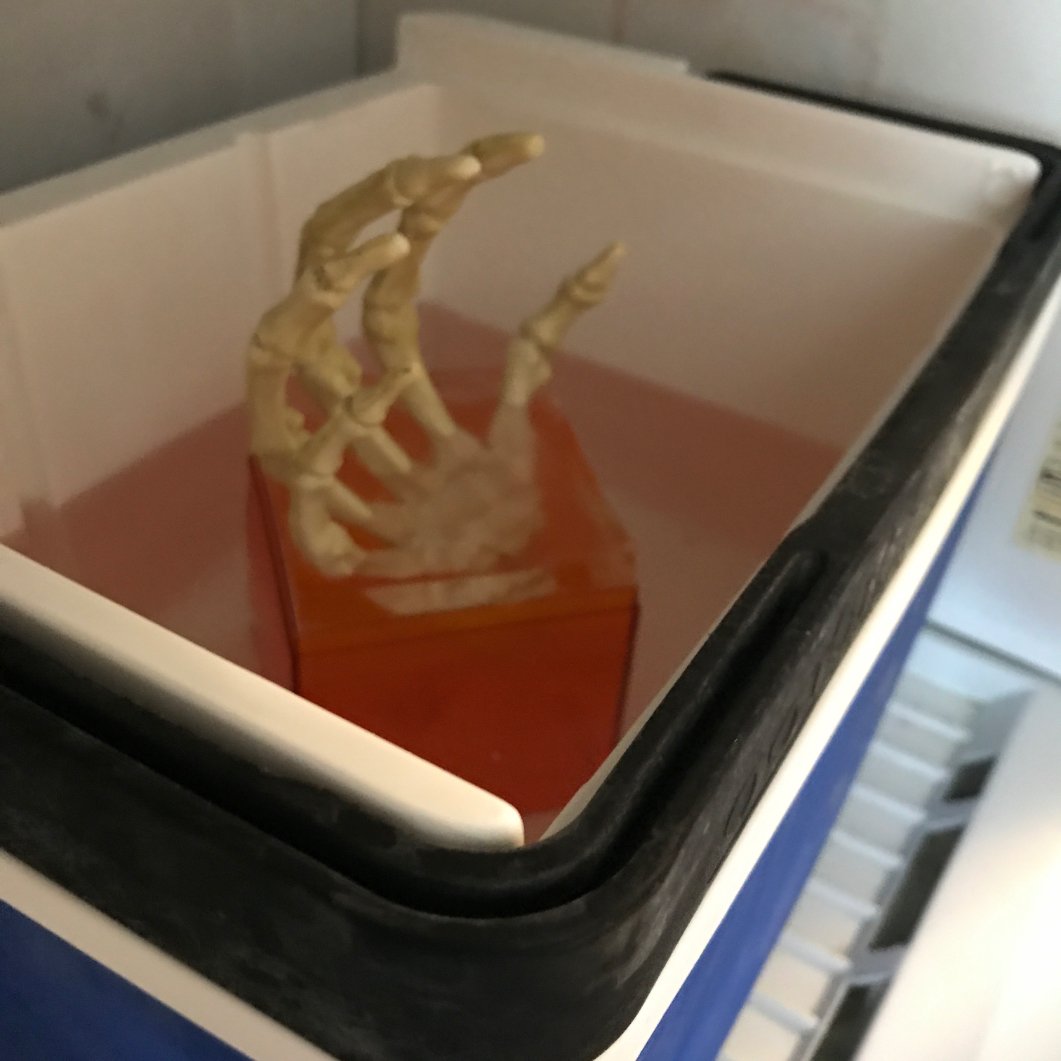
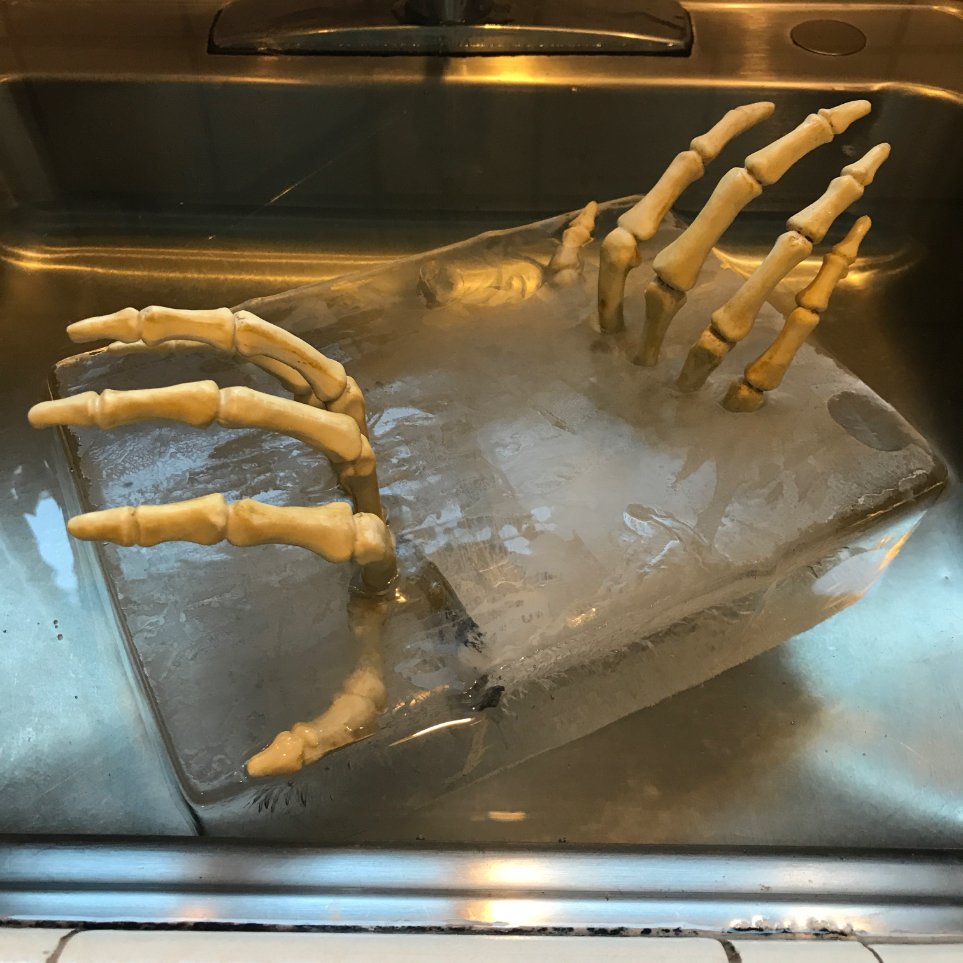
    And finally, I made ice with these skeleton hands frozen in it – a single hand in a plastic box inside the cooler, and two hands just resting in the block. 

    IMG_0074 IMG_0057
    IMG_0247


  • Designing A Club Soda From Scratch

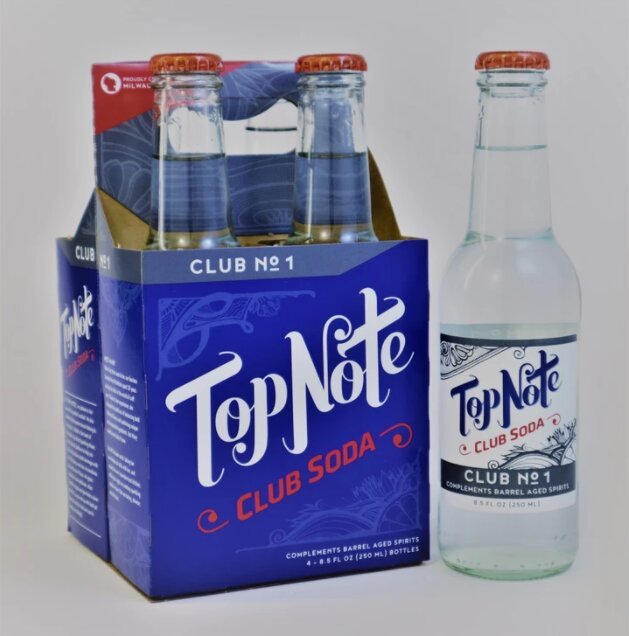
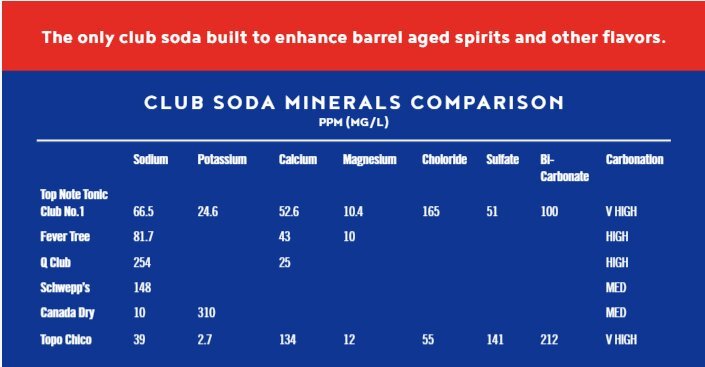
    I was recently in touch with Top Note Tonic founders founders Mary Pellettieri and Noah Swanson about their new Club Soda that was created specifically for making highballs with whiskey. They went into the process with specific goals in mind to pair it with whiskey, researched styles of water and other brands' mineral content, then experimented with specific minerals to use for best results. 

    The end product contains water, potassium bicarbonate, sodium bicarbonate, calcium chloride, magnesium sulfate, and salt. 

    TnTo achieve their ideal club soda, Pellettieri says that they followed "standard beer chemistry rules – to make malty beer the brewer will add chloride ions and have a 2:1 chloride:sulfate content minimum. The goal was to make it high chloride, low sodium. [Other brands] didn’t take a position on what a club is. It was time to make club soda different, not just salty water. " 

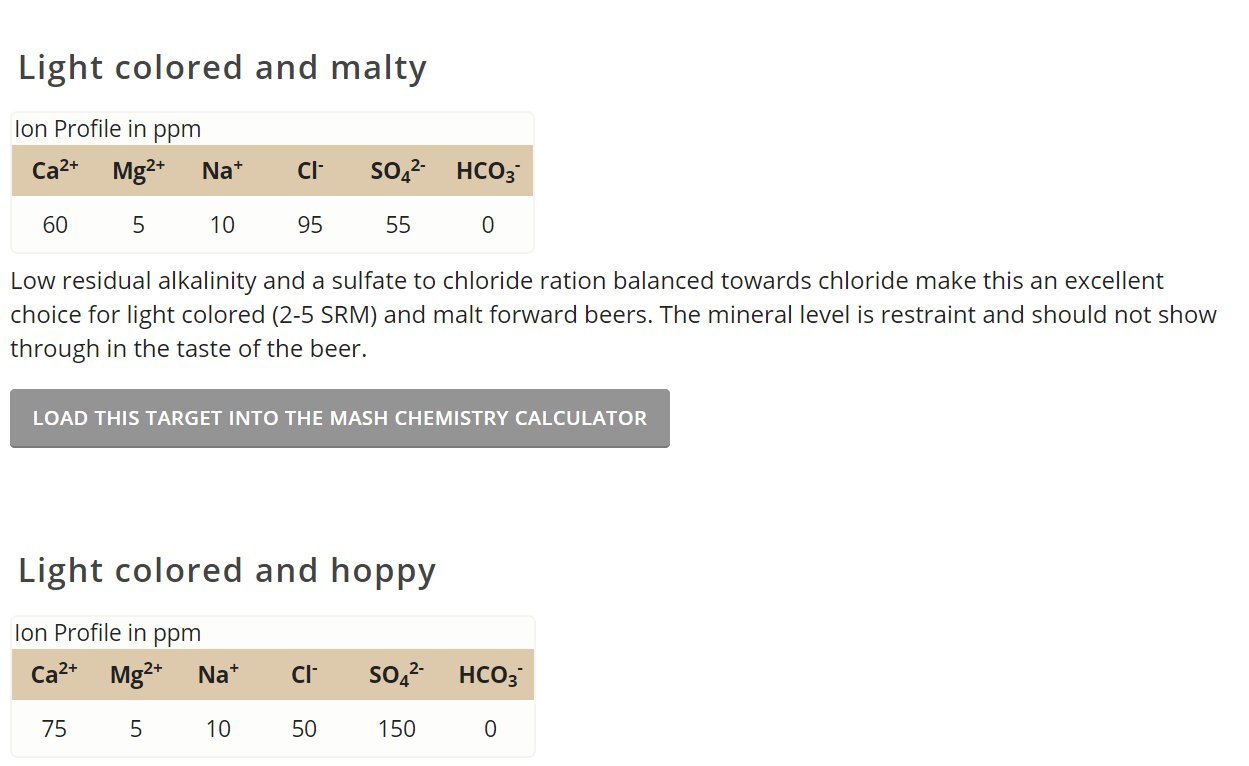
    "We really followed beer brewing fundamentals and built our club soda water base to amplify malt, like a beer brewer would do to make a light malty beer. It so happens the core ion, chloride, is what we focused on here. I think this reference is the best to explain the different mash water chemistry and the impact to beer across the world.
    https://www.brewersfriend.com/brewing-water-target-profiles/

    "In brewing, they look at the ions separately, and focus on ratios. SO4/Cl ratio is an important one, as is the hardness and alkalinity of the water. They all play a factor in the final product, because of how the malt interplays with the mash."

    But water of this style is also similar to Kentucky limestone water.  "Noah found after researching that it was close to Kentucky water. We found out indeed Kentucky water was close, but not exact to what we set out to do. We focused on the mineral content, keeping it low sodium, but high in calcium, magnesium and minerals that amplify flavor."

    Differentiation

    Pellettieri  says, "The chloride helps pop the citrus [notes], so it plays nice with vodka too. It's probably not best in a bitter drink."

    They had other brands of club soda analyzed. 


    Minerals

    All graphics provided by Top Note


    Swanson  says, "[We looked at] a few waters from Japan –those were also low sodium, but some were also low in other minerals." 

    Pellettieri  says, "Mineral waters are variable, so the numbers change a bit…. Schweppes is hugely salty. Q is salty. Our target was 54, a little lower than Fever Tree.   I think later in the game we decided to add more potassium – it adds some mouthfeel. But too much potassium chloride gave it a swimming pool character. Topo Chico is high in sulfate. So is San Pellegrino – it almost has an eggy character from sulfate [sulfur]." 

    I asked about Burton Water Salts, which are a pre-mixed ratio of minerals that are used to make beer, but they also closely resemble the mineral ratios in San Pellegrino. 

    Pellettieri responded, "Burton salts famously produce really hoppy beer and we didn't follow that sort of chemistry. We followed the rules for making 'light/malty' beer as the image below shows. You can see the light hoppy beer water chemistry formal below as well, it has nearly 3:1 So4/Cl. Brewing research shows the higher the SO4, the higher the hop perceptions. Even 4:1 is what they strive for. But we were not going for that." 


    Unnamed


    Carbonation

    Swanson said of carbonation, "We did a lot of whisky highballs in the office.  [We were aiming for] a subtle mouthfeel, super bright carbonation to lift the maltiness of whiskies." 

    "Our goal was 4.0 volumes.  Most beer is 2.5-2.8 volumes. Champagne can be 6.0."

    I don't recall if they had other brands measured for carbonation level. I asked if it is possible to get that high carbonation in cans versus bottles. They told me it's challenging to reach high carbonation levels in cans by nature of canning and the large surface area of the top of a can, versus bottles. 


    Production and The Future

    Swanson says, "Our co-packer packs with 100% RO [mineral-free reverse osmosis-filtered] water. Other ones only use a portion of RO water. So that was a problem with others. [Our co-packer] mixes minerals into water then dilutes with more water [before force carbonating]."

    I asked – since this is "Top Note Club Soda No 1, aka 'Kentucky Club" if that means there are plans for this to be a range of club sodas. Yep, there are. 

    Pellettieri  says they're, "Planning to do a series of them – low and higher sodium sodas: High sodium for more bitter drinks [like bitters and soda]; lower for malty more subtle. A little sodium goes a long way."


    DIY at Home

    Are you curious about making your own custom soda water at home? A few years back I did some experiments I called The Water Project. The most relevant posts are:


  • Ice Tools Recommended by Camper English of Alcademics

    These are the ice tools that I have used and recommend. Most of these products are used/shown in The Ice Book. Most of these links go to Amazon. 

    If you're coming to this page fresh, you'll want to check out the Index of Ice Experiments here on Alcademics.


    Clear Ice Cube Trays


    Ice Picks

    • Three-Prong: Most of the time I just use a 3-pronged ice pick for cutting up blocks of ice.  Several manufacturers make the same model. I have one by Fortune Candy.
    • Cheap: Three-pronged pick.
    • Single-Prong: I rarely use a single-prong ice pick, favoring the three-prong one in nearly all situations. I do have the Anvil Ice Pick and it's well-made.  


    DIY Ice Cube Trays using this method

    • I found that this tiny cooler fits a 2.5 inch ice cube mold perfectly! 
    • Ice cube trays – Any of the large 2-inch silicone ones from Tovolo, CocktailKingdom, etc. 
    • Drip Irrigation Standard Tubing Hole Punch pokes small holes, but you can also use a metal straw or piece of metal tubing to poke nice round holes in ice cube trays. 


    Cooler to Make Clear Ice 

    • I use a small cooler – about 12-pack size- nearly every day. The Igloo Legend 6 is about that size.


    Clear Ice Balls, Death Stars, Skulls Using a Thermos

    • Thermos: As I wrote about here, I typically make ice balls using a Thermos Funtainer and 2.5" ice ball molds. Since then I have favored a Yeti tumbler, particularly for the Death Star molds.
    • 2.5" Ice Ball Molds: Here is one that looks like what I buy but these links tent to change. Just be sure to buy 2.5" ones that are separate rather than stuck together in a 4-pack.
    • Death Star Ice Mold
    • Skull Ice Molds


    Small Ice Balls


    Patterned Ice


    Knives, Chisels, etc. 


    Misc Ice Tools

    • Polishing cloths: These are good for holding ice while you cut ice diamonds or spheres; they don't stick to the ice nearly as much as typical kitchen towels.
    • Cut-Resistant Gloves: I don't use these at home in favor of the polishing cloth, but for my ice classes my students wear them. These are cheap ones that probably don't offer much protection. 
    • Ice Ball Press: Makes 55mm ice spheres (a little small) from a cubes. 


    For Larger Programs – Bars and Events

    • The Ghost Ice Tray makes 48 2-3-inch cubes in about 2 days, and new inserts make Collins spears and there are sphere trays on the way. 


  • Testing Out The Ghost Ice Clear Ice Tray Insert

    Tony Gonzales is a bartender and fellow ice nerd who had clear ice cube trays made. The brand is called Ghost Ice

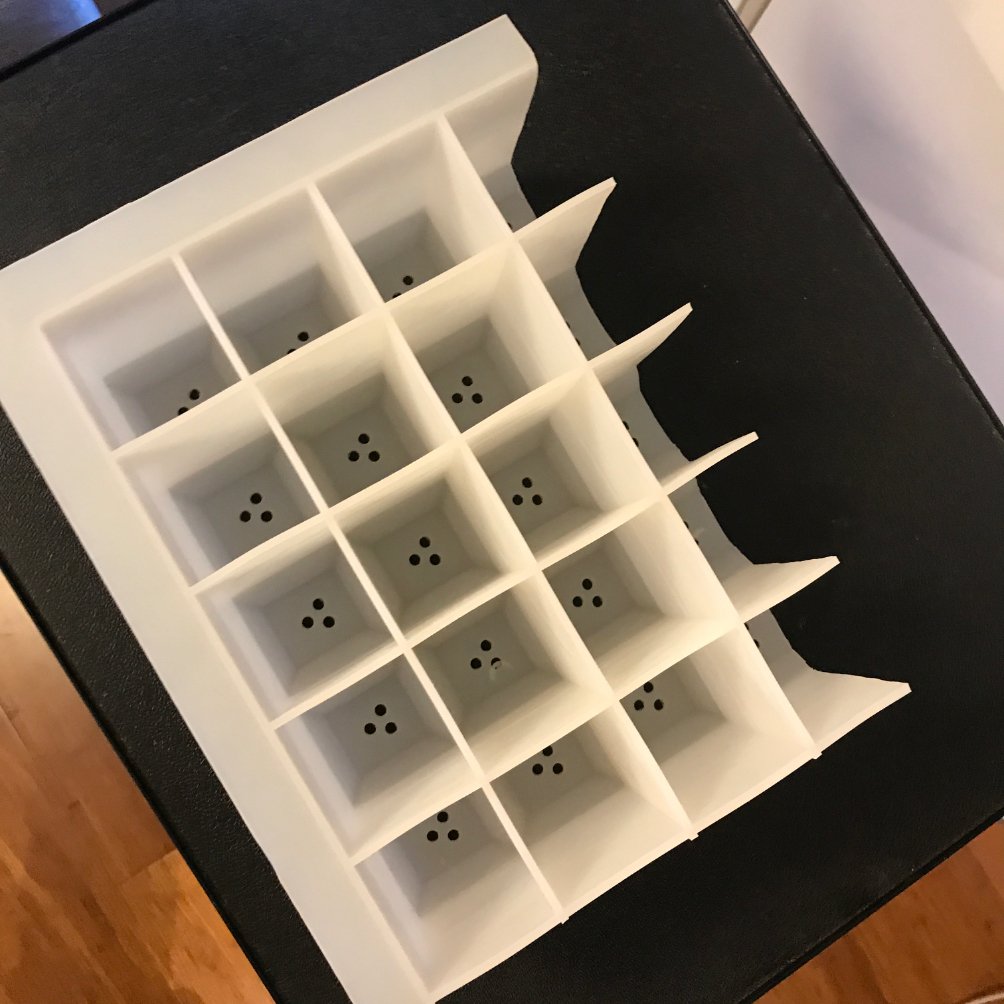
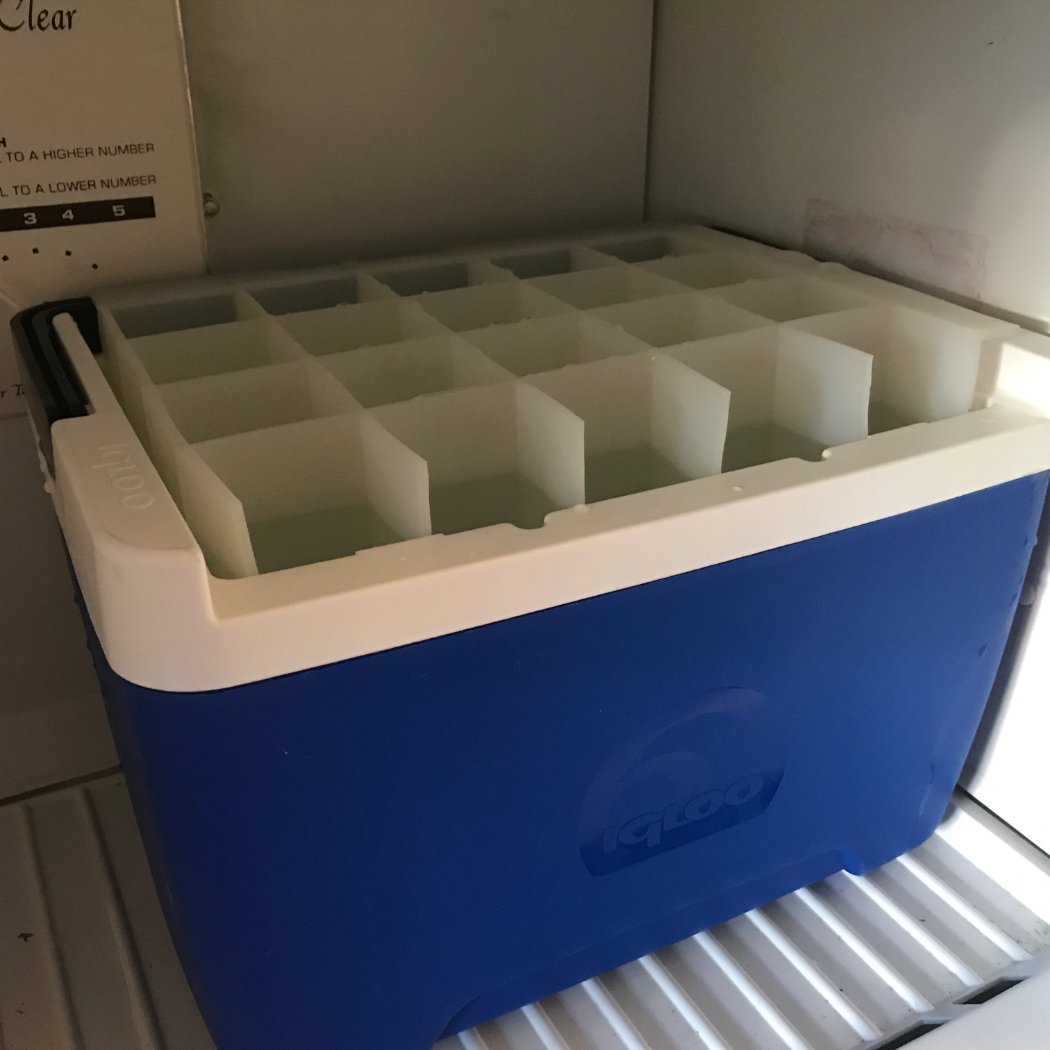
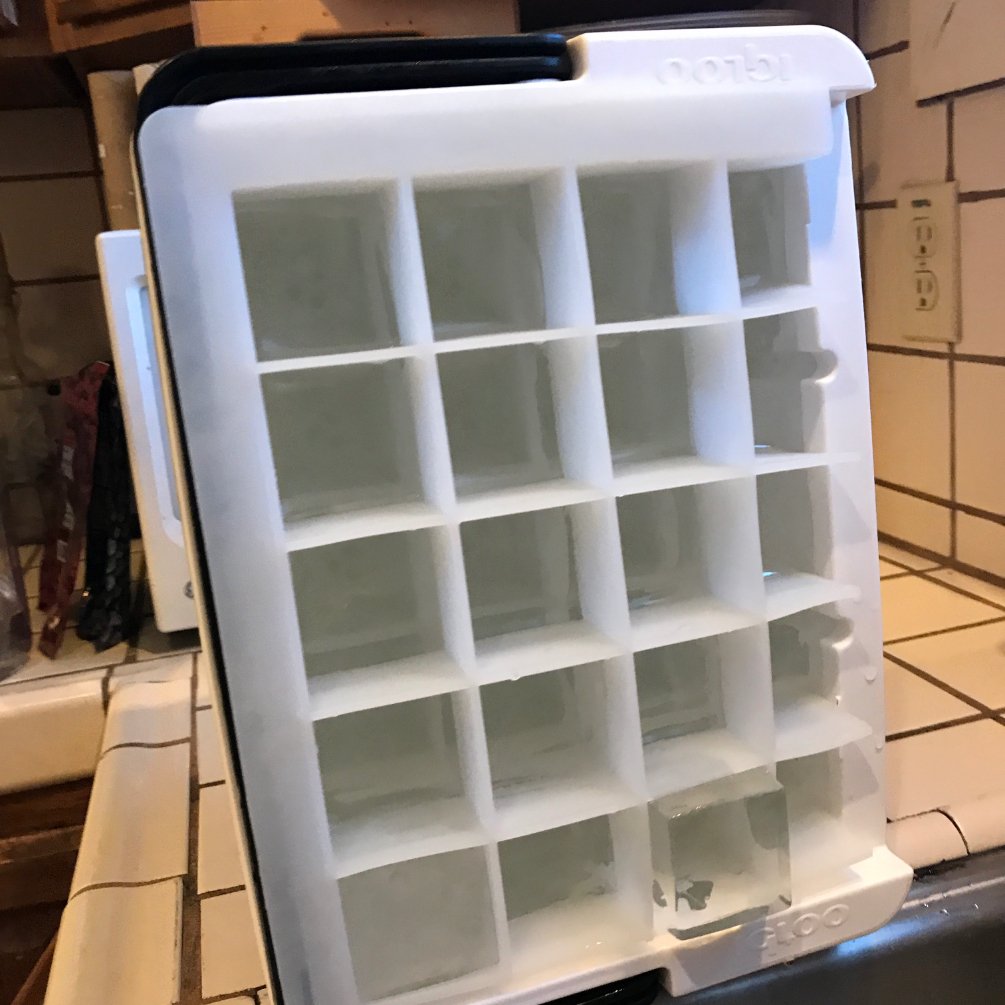
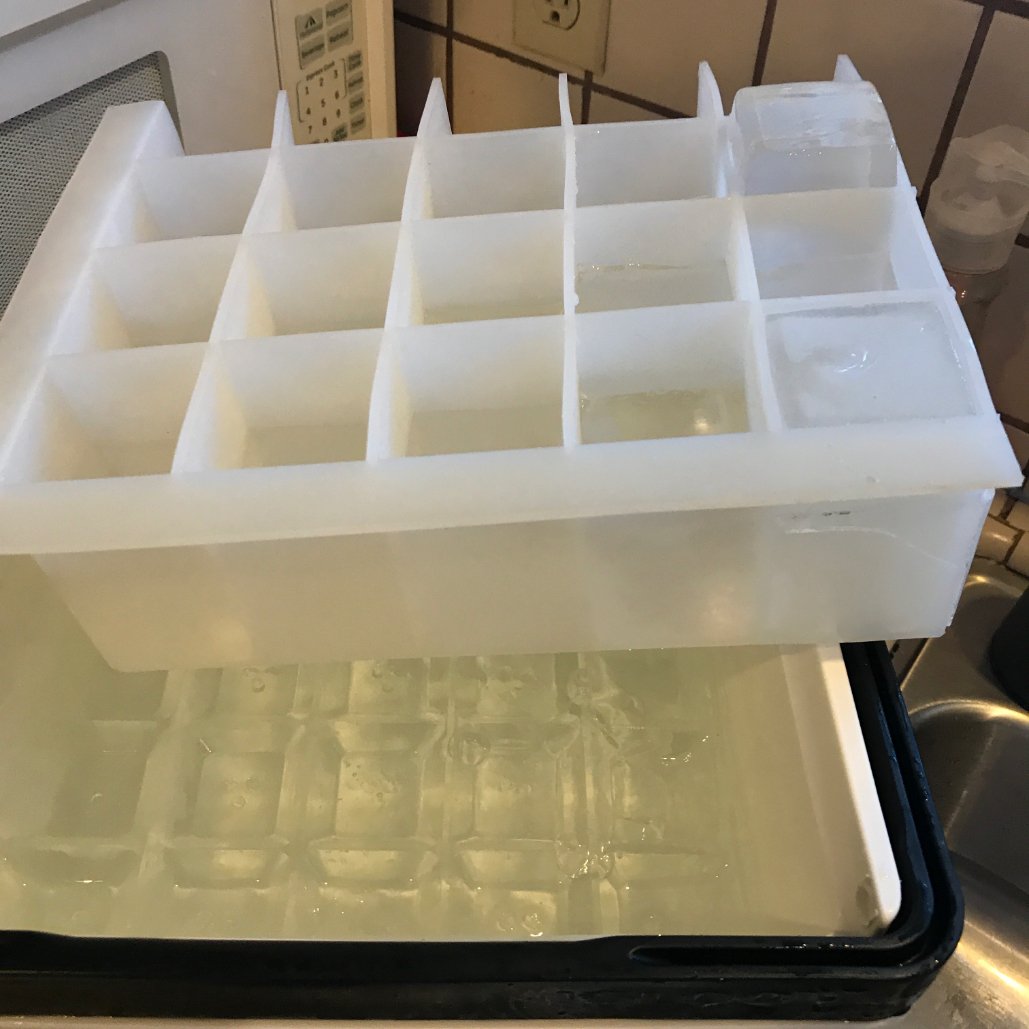
    Well, not really trays, they're inserts that fit into insulated coolers to take advantage of the directional freezing. If you're familiar with the method of poking holes in the bottom of silicone ice cube trays and placing them on the bottom of the cooler, it's the same thing except these trays rest on the top. 

    This is a better system because you can adjust the size of the cubes you make in it. You place the tray on top of your cooler and fill it with water. Fill it so that the ice cubes are only two inches high, or all the way up to three. 


    IMG_9343
    IMG_9343


    Gonzalez originally built the trays to fit the Coleman Party Stacker cooler – a longer cooler meant for holding a lot of beer cans. Some bars have been using this cooler in their bars (if they have walk-in freezers) to make ice via directional freezing and cutting it up with a band saw like pro ice companies do. With the Ghost Ice trays, the insert makes 48 big cubes in about 48 hours. 

    However, due to popular demand, Gonzalez cut some trays down for the Ghost Ice For Home model so that they fit into the Igloo Island Breeze that everyone (me first in 2009) uses to make ice blocks at home. These make 20 cubes in about 2 days. 

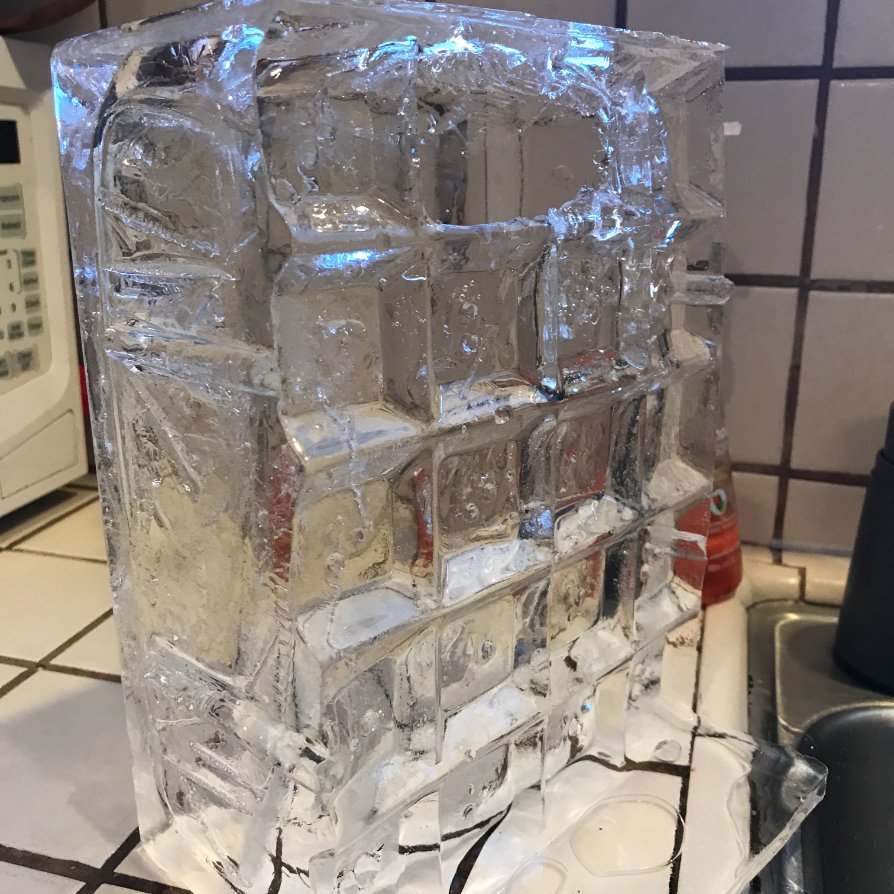
    He sent me a tray to try. I put it in my freezer which at its highest setting is about -9C/15F. I let it freeze for 48 hours and it was just right – the ice had frozen in the trays and just barely underneath the tray. It made a groovy pattern in the ice below it when I pulled out the tray. 


    IMG_9372
    IMG_9372
    IMG_9372


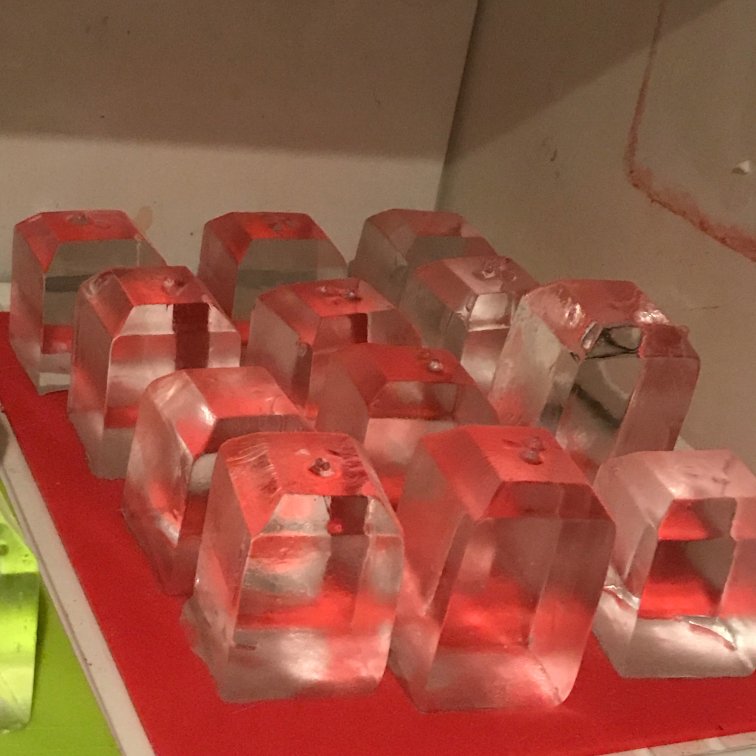
    The ice popped out super easily, better than any other tray I've tried. I should also mention that the silicone these trays is made from is super thick and seems like it will last years. 

    The thing is that if you use this size cooler to make ice anyway, this insert actually maximizes your ice harvest compared with freezing a block of ice and cutting it up yourself. These trays go down pretty far into the cooler so that you're not wasting a lot of clear ice beneath them, plus when you carve up an ice block you lose a lot of the ice to chips and shards. With the Ghost Ice insert you can use every bit of the ice that comes out of this tray. I wasn't expecting that; a nice bonus. 

    IMG_9391
    IMG_9391


    Oh and just because I know a lot of y'all are perfectionists and may not like the slightly 'pointed' tips on these cubes, I wanted to let you know you can always flatten ice even. I used a thaw plate (remember the Thaw Master from 80s TV commercials anyone?), but you can use a cookie sheet or any conductive metal. 


    IMG_9410
    IMG_9410

    The price on these is quite steep – $300 for the large size and $150 for the small, but this is a one-person company and a custom-made product. For a bar with a walk-in freezer or other large freezer space, and a relatively small volume for cocktails to serve each night, it's a great deal over a short time – if you're paying .50 a cube for two-inch cubes from a specialty ice provider (which is low), that's only 12.5 times (25 days) you have to make ice cubes in the Ghost Tray system (plus the cost of the coolers which is low) to make your money back. 

    As a home ice nerd like me, well let's not pretend the small model isn't a big splurge. The cubes are awesome though. 

    Check out the videos on the Ghost Ice website and Instagram page for more info and demos.  


    IMG_9410


    The index of all the clear ice experiments on Alcademics is here


  • Distilling Honey Into Vodka: An Interview with Caledonia Spirits Owner/Distiller Ryan Christiansen

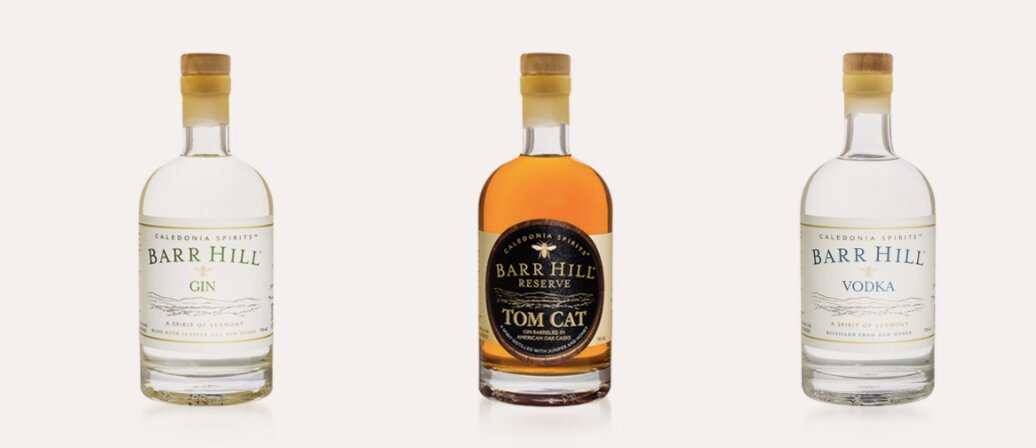
    Years ago when I first heard of – and tried- Barr Hill Gin, it was a revelation. The gin is neutral spirits with added juniper and honey- that's it. The honey brings with it other aromatics from the flora the bees feed on. 

    The gin is made by Caledonia Spirits in Vermont. A recent press release stated: 

    Caledonia Spirits is known best for its flagship gins, but the distillery's Barr Hill Vodka is a truly unique offering within the vodka category. Made entirely from raw northern honey and nothing else (~3000 lbs per batch), it’s distilled only twice – a stark contrast from many of the popular vodkas that get distilled 3-5 (or more) times and filtered to oblivion. Vodka was traditionally thought of as a spirit that became better the more times it was filtered, but doing so leaves a spirit that is completely odorless and tasteless.

    Knowing just how beautiful of an ingredient the raw northern honey is, Caledonia Spirits wanted to flip tradition on its head and create a vodka that retains some of the flavor and aroma from its sugar source. Distilling and filtering it too many times would totally lose the honey flavor, but thanks to Caledonia Spirits’ unique process, the resulting vodka is fragrant and flavorful…yet not sweet at all. The honey tasting notes are very subtle, but they’re present enough to tell you that you’re not having the same neutral-tasting vodka that is so often served. Every year, Caledonia Spirits purchases 60,000-80,000 pounds of raw honey from beekeepers within a 250-mile radius of the distillery.

    Sine then, the brand has released a vodka and a barrel-aged gin.  I hadn't tried the vodka before. It is absolutely waxy almost to the point of greasy, with notes of Honey Nuts Cheerios, and I think I love it. 


    Screen Shot 2020-07-29 at 6.22.56 PM


    I was given the opportunity to interview Caledonia Spirits Owner/Distiller Ryan Christiansen, so that's just what I did! 

    Is the base of Barr Hill Gin purchased grain neutral spirits (plus honey and juniper)? Or is there distilled honey spirit in it also?

    The base of Barr Hill Gin is grain neutral. It is then distilled in one of our two custom-built botanical extraction stills with Juniper. The spirit is proofed down with raw honey and our water.


    Is Barr Hill Vodka 100% distilled from honey or is it a blend of GNS and distilled honey? If a blend can you give an approximate ratio? 

    Barr Hill Vodka is distilled entirely from raw northern honey.


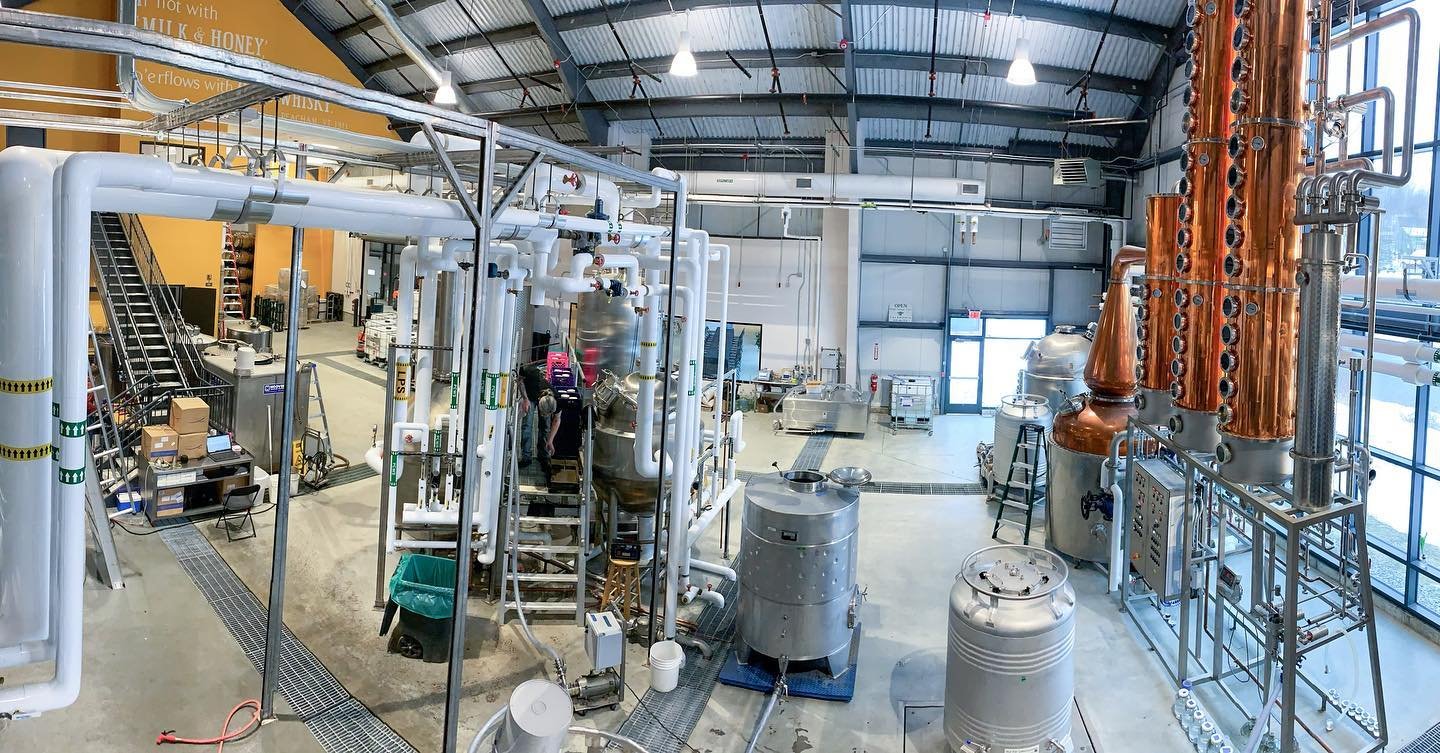
    I see several stills in the image on the website – the big pot and a small and tall finishing column. Which set-up do you use to make the gin vs the vodka?  

    Our gin is distilled in Irene and Ramona, two custom-built botanical extraction stills. Our vodka is distilled twice, once through a pot stripping run, then through the column still to 190 proof.


    88347072_3058134717532525_8511479553980366848_oImages stolen from Barr Hill.


    Is the honey sold by the pound? Is there a standard conversion for pounds of honey to liquid volume? Do you know the liquid volume of honey for the "60,000-80,000 pounds" you buy annually? 

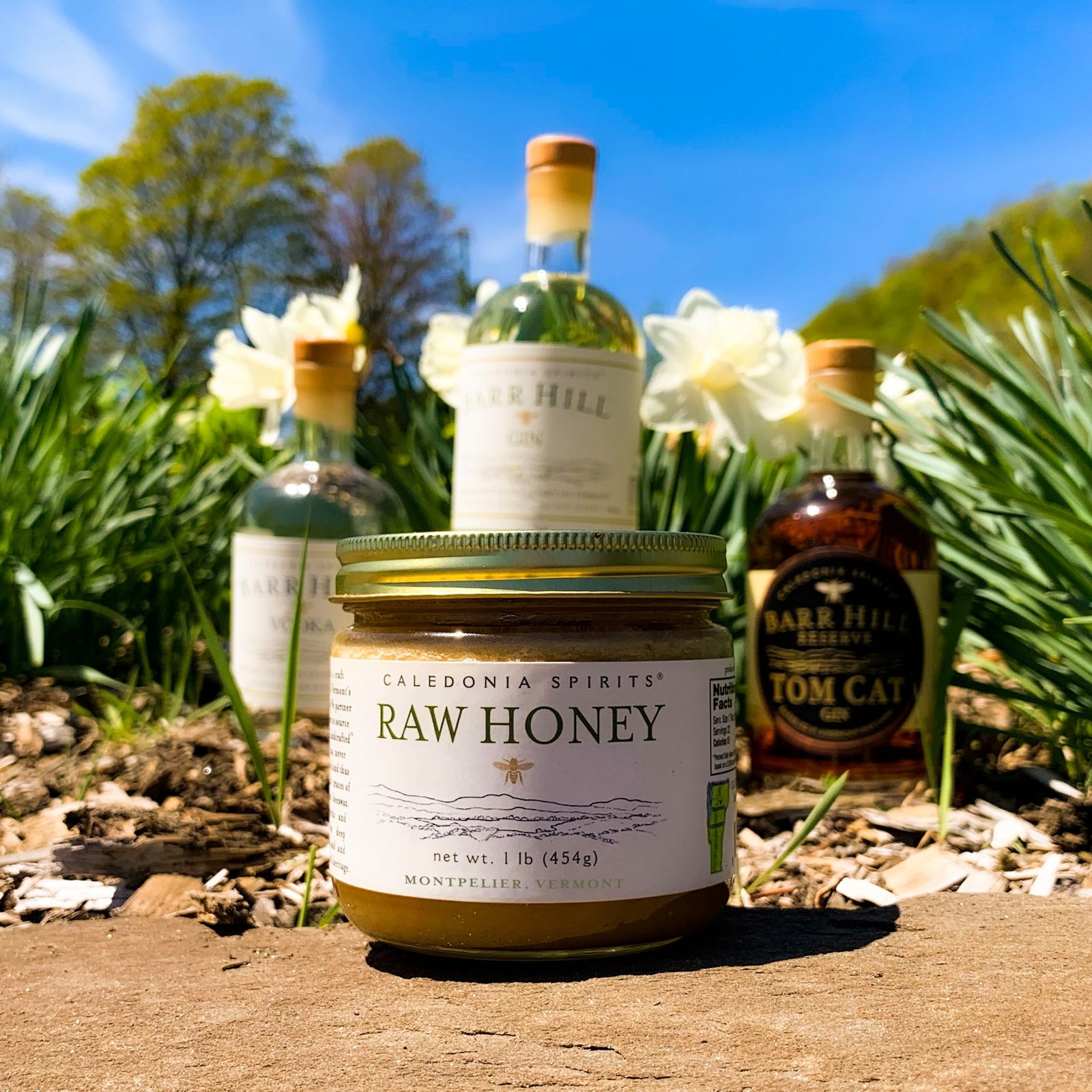
    We purchase our honey by the 55 gallon drum, which holds about 650lbs of honey. In the last year we’ve used over 67,000 lbs to make our spirits. Each bottle of vodka requires 3-4 pounds of raw honey to make. Where we fall in that range from 3-4 depends on the batch size. 

    We do also sell our honey by the pound for use by bartenders and chefs.


    For fermenting/distilling honey, do you dilute to a certain standardized sugar level (and do you measure this in BRIX) before fermentation? Can you say what that level is? 

    We pitch yeast at 24 brix, and ferment to dry.


    How long does fermentation take? I imagine it's super fast. 

    Honey fermentations are much slower than grain fermentations, usually about 2-3 weeks to dry.


    Do you temperature control the fermentation? Do you let it go longer into a malolactic fermentation? If not, is there a reason, such as it becomes disgusting? 

    We control fermentation temperatures with a water jacket on the fermenter. Honey fermentations don’t need much cooling. Our grain fermentations for whiskey production require much more heat extraction. We do not let our fermentations go to malolactic.


    What's the ABV you get after fermentation? 

    Approx 12%.


    You say you never heat the honey prior to fermentation, would heating it make it lose flavor/blow off volatile aromatics? (If I'm making a honey simple syrup should I not heat the water?) 

    This is a hard question to answer without a deep conversation. In short, it really depends on the honey. The botanical influence of the bees foraging varies significantly between honeys. As a general rule, keep the honey raw (below 110 degrees) when possible.

    Obviously, our distillation process cooks our honey, but that occurs after fermentation. We’ve found it crucial to keep the honey raw during fermentation to develop and accentuate flavors that will stay intact through distillation.


    105482665_3332294440116550_6815040999433764063_o


    And if you don't heat it and you do add water, is it very hard to mix? What do you use to mix it? Do you need specialized equipment for handling honey? It all seems incredibly sticky. 

    In our early days, it was a food grade shovel, bucket, electric drill, and a paint paddle with many trips up the ladder to the top of the fermenter. It was sticky and backbreaking, but it worked. We’ve added some fancy honey pumps and circulation lines in our fermenters that have made our lives a little easier. The honey is a sugar so with enough movement, it’ll dissolve. Keeping it raw certainly adds some challenges, but it’s essential for the finished spirit.  


    When purchasing huge volumes of honey as you do, how does that honey come? In what sort of container? 

    Beautiful reused and dented metal drums. Beekeepers never throw them away, they just keep traveling around the world. Even local honey is often delivered with old stickers and labels from all over the world.


    Clearly as a vodka, you distill the fermented honey up to 95% to be a member of the category. I remember researching a while back to find that there wasn't a standardized terminology for what you'd call a lower-ABV honey distillate (other than "honey spirit") – some brands were calling their products "honey rum" for example. I'm wondering if you've heard any sort of consensus on this or your opinion on what to call honey spirit that isn't distilled to the vodka ABV?

    I’ve heard a handful of terms. My favorite is Somel. This is an initiative led by a handful of distillers working with honey. https://somel.org/


    Thanks to Caledonia Spirits for answering my questions!


    101387028_3266727603339901_2985417413668896768_o


  • Getting Nerdy About Soju Production: Sticky Rice, Nuruk Fermentation, Multi ABVs, Korean Production

    I received an email from a newish soju brand Tokki Soju with a really interesting story. Given the technical skill of one of the founders, I thought I could get some additional information, and that's just what happened. 

    First, the background:

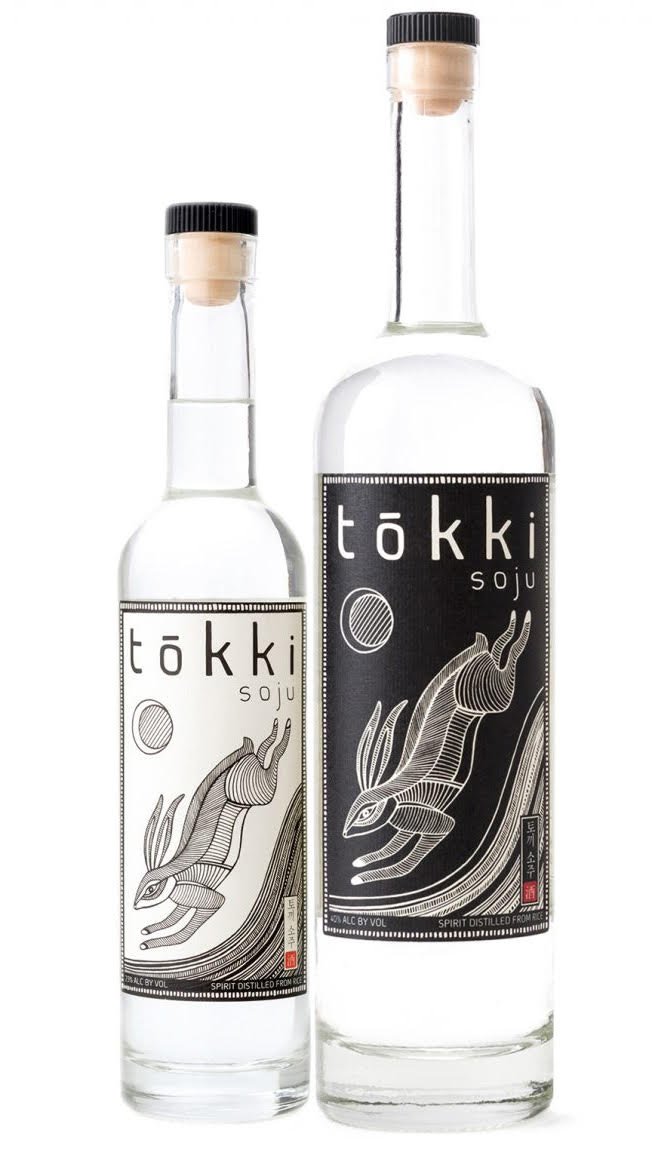
    The brand was launched in 2016 by Founder Brandon “Bran” Hill and CEO Douglas Park and currently includes two soju offerings in its portfolio: the White Label (23% ABV) and the Black Label (40% ABV). 

    Armed with a BS in Molecular Biology, Tokki Founder Brandon “Bran” Hill moved to South Korea in 2011 to study traditional Korean fermentation and distilling. After receiving a Masters in Korean Traditional Alcohols at Susubori Academy, and having put some time in at a Korean yeast bank, he returned home to become the Head Brewer for Van Brunt Stillhouse in Brooklyn, NY. While at VBS, Bran began distilling soju as a passion project, and by 2016, the first bottles were hitting the shelves of NYC liquor stores.
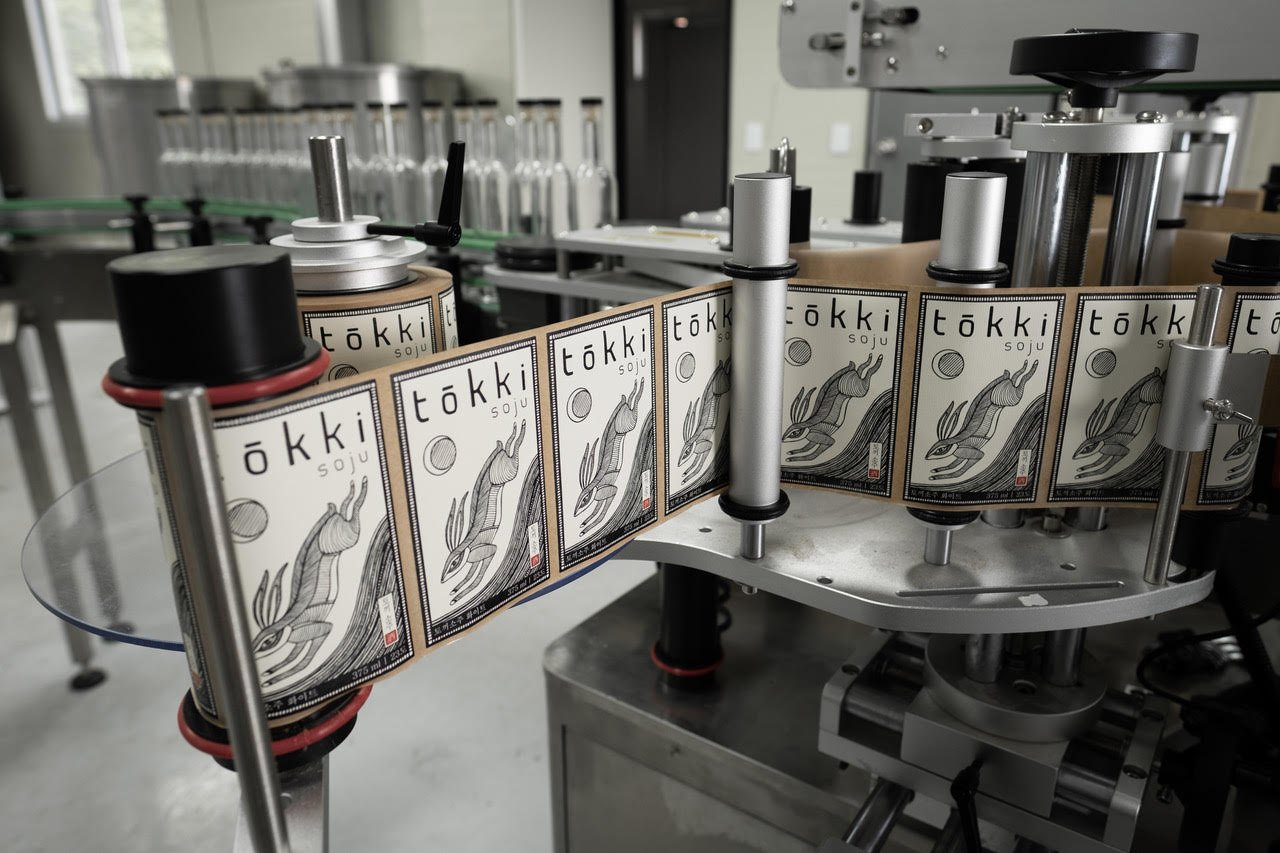
     

    Unnamed-1


    What Is Soju and How is Tokki Different 

    Soju is a Korean distilled spirit that was traditionally made with rice, however during the Korean War, when rice was banned, most soju producers were forced to switch to alternative starches like wheat, sweet potatoes and tapioca. Although the ban was lifted in the 1990’s, many of the best selling brands in Korea still use alternative starches and chemicals to replicate the taste. Tokki Soju is the first American small-batch rice soju. Tokki is made with glutinous (“sticky”) rice, water, yeast and nuruk.

    Soju is not to be confused with other Asian spirits, including Shochu and Sake (both of which hail from Japan), although there are some overlapping similarities to note. For instance, all three are made from rice, however both Soju and Shochu are distilled (while sake is brewed). Shochu and Sake are made with koji (inoculated rice), while Soju is made from rice. Most mass Soju and Shochu brands are distilled from alternative starches, including barley, sweety potatoes, wheat, etc. – but Tokki remains one of the few that uses rice, and again, glutinous rice at that.

    What sets Tokki apart is that it’s the only soju brand on the market that uses glutinous (sticky) rice in the distilling process. They also hand-cultivate their own nuruk starter (a labor-intensive and costly process).


    Nuruk for Soju Versus Qu for Baijiu 

    Nuruk is a traditional fermentation starter meant to saccharify the rice – most soju producers do not use the traditional ‘nuruk’ starter due to the intensive labor and costs. Tokki uses hand-cultivated nuruk that takes 2-3 weeks to grow. Tokki is distilled in a copper pot still and only 35% of the run is bottled. As for the sticky rice that Tokki sources, it is all local from Chungju, where the distillery resides, and as a result, will over time have a positive effect on the local agriculture as Tokki becomes the number one purchaser.

    Nuruk in Korean alcohol seems similar to qu for Chinese spirits. I wrote about qu after a visit to China:

    Qu is a combination of mold, yeast, and bacteria. It is used not only for baijiu production but also for undistilled Chinese beverages. 

    • The mold we could say is similar to koji used in sake and shochu production. It helps break the starches in the grains down into fermentable sugars (saccharification). In whiskey, this is accomplished by adding malted barley and/or enzymes to the grains. 
    • The yeast makes alcohol, as it does in other spirits.
    • The bacteria helps in flavor development of the alcohol.
    Unnamed-2Back to nuruk: According to Wikipedia, "Microorganisms present in nuruk include Aspergillus oryzae, Rhizopus oryzae, lactic acid bacteria such as Lactobacilli, and yeasts, predominantly Pichia anomala and Saccharomyces cerevisiae. Aspergillus provides the enzyme amylase, which saccharifies the rice's starches. The resulting sugars are consumed by the yeasts, producing alcohol, as well as the Lactobacilli, producing lactic acid. Rhizopus provides the enzyme protease and lipase, which break down the protein and fat in the outer layers of the rice grain (endosperm), allowing the amylase access to the starches in the inner part.

    Camper: Can you name any differences in composition/action of nuruk vs qu, and also any production differences if you know? 

    Brandon “Bran” Hill: 

    Yes, traditional nuruk is similar to qu or "big qu" as far as the method of cultivation and how it is used in a fermentation, as a saccharification enzyme. Qu is different than what we personally use, because qu has wild yeast strains and bacteria attached to it. We only want aspergillus oryzae in our nuruk for conversion purposes and consistency. So, in our case, our nuruk is more similar to koji production, except koji is cultivated on whole rice and nuruk uses milled wheat cakes.

    Camper: For other brands that use "alternative starches" and don't use nuruk, do they just add enzymes? (I see on Wikipedia that many/most mass market sojus are distilled to vodka levels then just diluted so probably!)

    Bran:

    The mass produced sojus brands (green bottle soju) do not make their soju. They operate more as bottlers of mass produced neutral spirit (like vodka) that they purchase and then add sweeteners, chemicals, and dilute before bottling. I currently do not know another soju brand that uses traditional nuruk, but not to say they don't exist, but it is rare. Brands who make their soju today, often use Japanese koji in their fermentations.

    Fermentation 

    Korean Fermentations with sticky rice and nuruk purely depend on what you are trying to do with the fermentation. There are no set times for Korean fermentations and many different styles. Lots if variables come into play that will effect what determines the end of the fermentation. For example, the style or method used to start the fermentation process, feeding the culture multiple times, temperature of the fermentation, desired attenuation of the ferment, etc. Our fermentations take about 9 days for what we are trying to accomplish.

    Sticky Rice

    Camper: Sticky rice – from a production standpoint, why sticky rice? Wikipedia says "Glutinous rice is distinguished from other types of rice by having no (or negligible amounts of) amylose, and high amounts of amylopectin (the two components of starch)." and that amylose is "hard to digest" – does this imply that fermentation with nuruk would be much easier with sticky rice than with traditional rice as amylose is harder to break down from starch into fermentable sugars? I'm kind of making a guess here.

    We tested many types of rice and combinations of rice in the beginning of Tokki, when we were deciding on a recipe. We choose to use just sticky rice or more specifically Korean Chap Ssal (잡쌀) for a few reasons. First, we knew wanted to use a Korean variety of rice for our soju. Second, for quality the flavor. Sticky rice is more glutinous and has a much sweeter and rounder flavor and feel that we prefer over other varieties of rice.

    Yes, nuruk does break down the starch and into fermentable sugars to aid the start of the fermentation process. We also pitch yeast after our nuruk is added. It is true that amylose is harder to breakdown than other starch structures, but with our practices, I personally have never had a problem with liquefaction, conversion, or hitting desired attenuation in our fermentations with sticky rice. Also, I would not say that nuruk breaks down sticky rice easier than regular rice varieties in my experience. I have had great results with nuruk applied to both types of rice and haven't personally noticed a big discrepancy favoring one over the other as far as speed and yield of the fermentation goes.

    By "hard to digest" amylose as a resistant starch on the Wikipedia page, I think they are referring to human digestion and not yeast digestion.

    Humans have a problem physically digesting amylose when eating cereal grains because its molecular structure, but when we are mashing we break down the polymer and then distill it. The end soju product does not have the same molecular structure so, doesn't effect human digestion the same way. Also, haven't had any issues with yeast propagation in the fermentations either, but like you said…sticky rice has small amounts of amylose.

    Camper; Also, is there a taste difference between using sticky and traditional rice? If so, how would you describe that difference?

    Yes, as I said above, sticky rice is more glutinous and has a much sweeter fuller flavor that translates to the distillate. We preferred this flavor and thought it was much more versatile for our product when pairing. Most other rice varieties, like Korean Meb Ssal (멥쌀) lack sweetness and are more dry, flat, and less complex when distilled.

    Why These ABVs, and Why Two Versions? 

    Camper: Bottling at two ABVs – In Korea what is the standard ABV (if there is one) – the lower or higher proof? If one or the other is standard (I think the lower proof), why did you decide to release it at two proofs in the US? I've noticed that some shochu brands have started doing this, I think to appeal to the bartender/mixology set.

    Traditional soju in the past was consumed a high abv, usually whatever it came off the still at or slightly diluted to taste. The lower abv soju trend came during war times in Korea. To make sure there was enough soju to go around to all the soldiers, they would diluted it in half to double the quantity. The trend of low abv sojus held after the war and never really went back to the high abv style, at least not for the mass market.

    There is no regulation or standard for soju abvs that you have to adhere to in Korea. You are free to release it at what expression you feel is best. Green bottle sojus have been declining in abv every year. Currently, most of the mass produced brands of soju have abv percentages that are in the teens.

    We decided to release at two different abvs. The lower abv (Tokki White) at 23%, which also comes in a smaller 375ml bottle is more for the current trend of drinking with friends paired with food. The higher abv (Tokki Black) at 40%, comes in a 750ml bottle and is more of a nod to the old style sojus and more versatile. It is great for cocktails or just by itself.

    Moving the Distillery to Korea

    In recent news, Tokki Soju just moved their distillery from Brooklyn, New York, to Chungju, Korea. They also have plans to open a tasting room later this year, as well as their flagship bar in 2021. Tokki is launching a gin and a vodka brand this summer, making them the first to distill Western spirits in South Korea. A rum brand is also planned for 2021. 

    This will be a game-changer for cocktail bars in Korea, saving them on high import costs by giving them a local option.

    The gin, Sonbi, will be distilled using citrus, flowers, and spices all native to Korea; only the juniper will be imported.

    Camper: The decision to move the operation to Korea is a unique choice. What was the reason? I'm wondering if there were business reasons/incentives (such as the ability to be the first gin/vodka as a branding move, or government tax breaks or something), versus personal/relationship ones? I see it was mentioned "since all non-Korean spirits are currently imported at extremely high tax rates" that could be a factor if you're betting on sales in Korea.

    There we many factors that went it to the move to Korea. First, you are correct, Korean importation taxes are very high on alcohol. We had an overwhelming fan base in Korea of people who wanted our products, but we were not able to come to market at a reasonable price exporting to Korea from New York. By not being able to offer a competitive price point exporting, we felt we would eliminate many demographics and send the wrong message about our mission.

    Two, we thought if we were going to elevate the Korean spirits category we should start at the source and and produce in Korea. Three, the soju market is much larger here in Korea than the US and gives us more opportunities to grow.

    Camper: Distilling – copper pot still in the US – pot with a column on top or just a pot still?

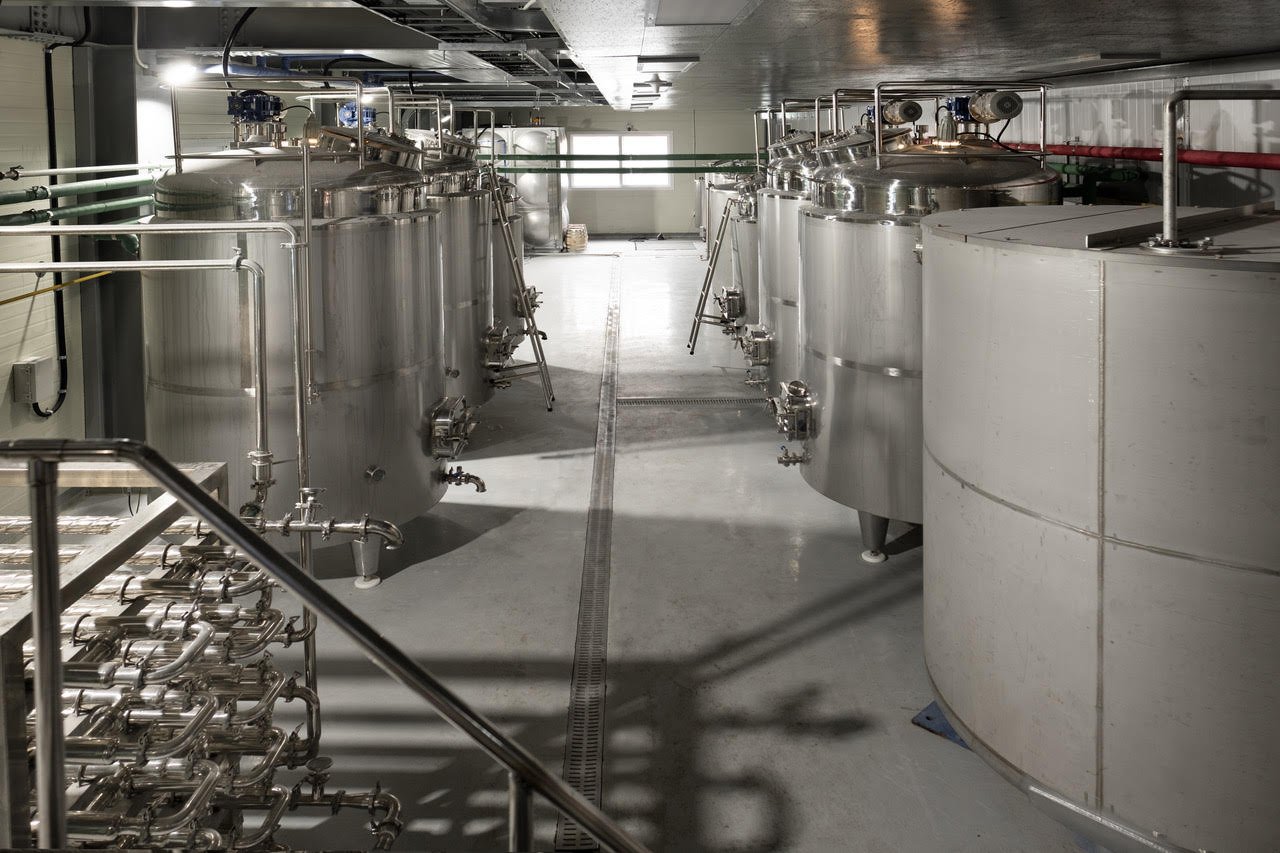
    We have a hybrid still. We can run it as a pot and as a column. We do a two phase distillation in our process where we use both styles for our soju. First, is the pot stripping run and then cleaned up and finished with the column spirit run.

    Camper: Did you move the still itself to Korea or get a new one?

    We got a brand new still. We are using a much larger system now compared to our Brooklyn operation days. It is double the capacity of our old still.(1500 liters)

    Camper: Assuming the soju will be made the same in the new distillery (it's a new distillery right?), did you get a new still for the vodka/gin – maybe not as I see the vodka base is rice plus GNS – are you planning to do self-distilled rice spirit plus GNS for the vodka? And for the gin is it just GNS or rice spirit in there too? 

    Yes, we have a new facility.

    We did need a hybrid still to continue our same soju recipe, but it is great for a wide range of spirits. Our gin and vodka recipes are not finalized yet. We are in the trial and testing phases for both and looking forward to locking them down this year.

    I can tell you that our vodka will be made with local sticky rice as well and our gin will most likely not contain rice, but will consist of botanicals unique to Korea that I have not seen in a gin before, like kul (귤) for example, which is a variety of Mandarin orange grown on the Korean island of Jeju.
     

    Unnamed


  • Quinine and Tonic – New Info from Just the Tonic Book

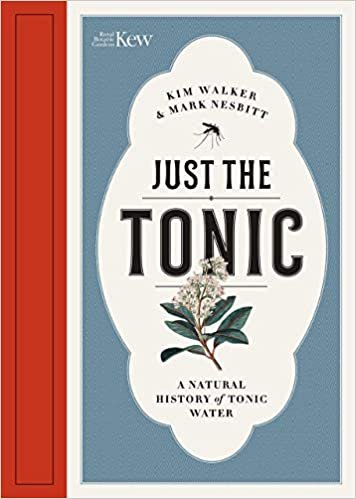
    412DpHeawsL._SX354_BO1 204 203 200_I recently read the book, Just the Tonic: A Natural History of Tonic Water by Kim Walker and Mark Nesbitt. As you know, I also wrote a self-published book about the history of the Gin & Tonic, but mine doesn't have the rich illustrations of this handsome hardbound book – and this book brings forth a lot of new-to-me information about quinine, tonic water, and its use in alcoholic beverages. 
    As this book was written by actual botanists/herbalists and published by Kew Gardens, they brought to light a few things I missed or on which I was mistaken. It also confirmed many theories I was iffy on.

    This blog post is some of my notes from what I highlighted in the book.  

    • Humans learn about medication from plants by observing self-medication by wild animals. (This hadn't occurred to me.)
    • Cinchona was often confused with another medicinal tree, the quinaquina or Peruvian balsam. (I thought cinchona was the same as quinaquina.)
    • Talbor's remedy also contained opium. 
    • Cinchona bark as a cure for fevers contradicted Galenic medicine – fevers should be treated by cooling remedies, but the bitterness of bark means that it is a heating remedy. 
    • Some additional treatments for malaria pre-cinchona included gentian, agrimony, and barley water. 
    • There are 25 species of cinchona. 
    • Quinine is still used in some cases of lupus and rheumatoid arthritis. 
    • The Hippocratic corpus assigns different mineral waters distinct properties for different maladies. 
    • Up to the 1760s aerated waters didn't contain sodium bicarbonate. Richard Bewley (of Bewley's Mephitic Julep fame) found that sodium bicarbonate helped the absorption of fixed air (carbon dioxide).
    • Cinchona was not only used to treat malaria but also dysentery, sore throat, toothache, smallpox, tremors, and (externally) baldness. 
    • **Cinchona bark in various beverages and medicines functioned "as a tonic" (this was before tonic water became associated solely with cinchona), which is basically non-essential medicine that helps strengthen the body generally rather than treat specific diseases. The electrolytes of its day, I suppose. 
    • The authors have found an earlier first reference to quinine soda! Everywhere I've seen lists Erasmus Bond's 1858 patent for Pitt's Tonic Water. But they found an 1835 advertisement for a quinine soda water produced by Hughes & Co.
    • Tonic waters initially contained sulfuric acid, which was later changed to citric acid – both of these help dissolve the quinine alkaloids.
    • The authors found new references to quinine mixed with gin (Netherlands 1841), arrack (India and Ceylon 1863), and in the rum ration about British ships (recommended by James Lind – solver of scurvy) implemented in 1803. 
    • Jerry Thomas' Bon Vivants Companion lists a recipe for fever drops that include Peruvian bark. 

    There is a lot more from the book I'll take away to use for my purposes (especially on tonic and soda water's early use in cocktails) but these are just a few highlights. 

    If you're a G&T fan, you should most definitely buy the book!