Author: Camper English

  • Cocktail Coloring – Natural Food Colorings to Use in Drinks

    Below is a list of colorings that can be used to turn your cocktails  blue, green, red, yellow, black, white, etc. and include everything from dragon fruit to squid ink. 

    I've made tasting notes when I've tried the colorings, and sometimes added some commentary about the colors. The links are to purchase items from Amazon. 


    Blue and Purple
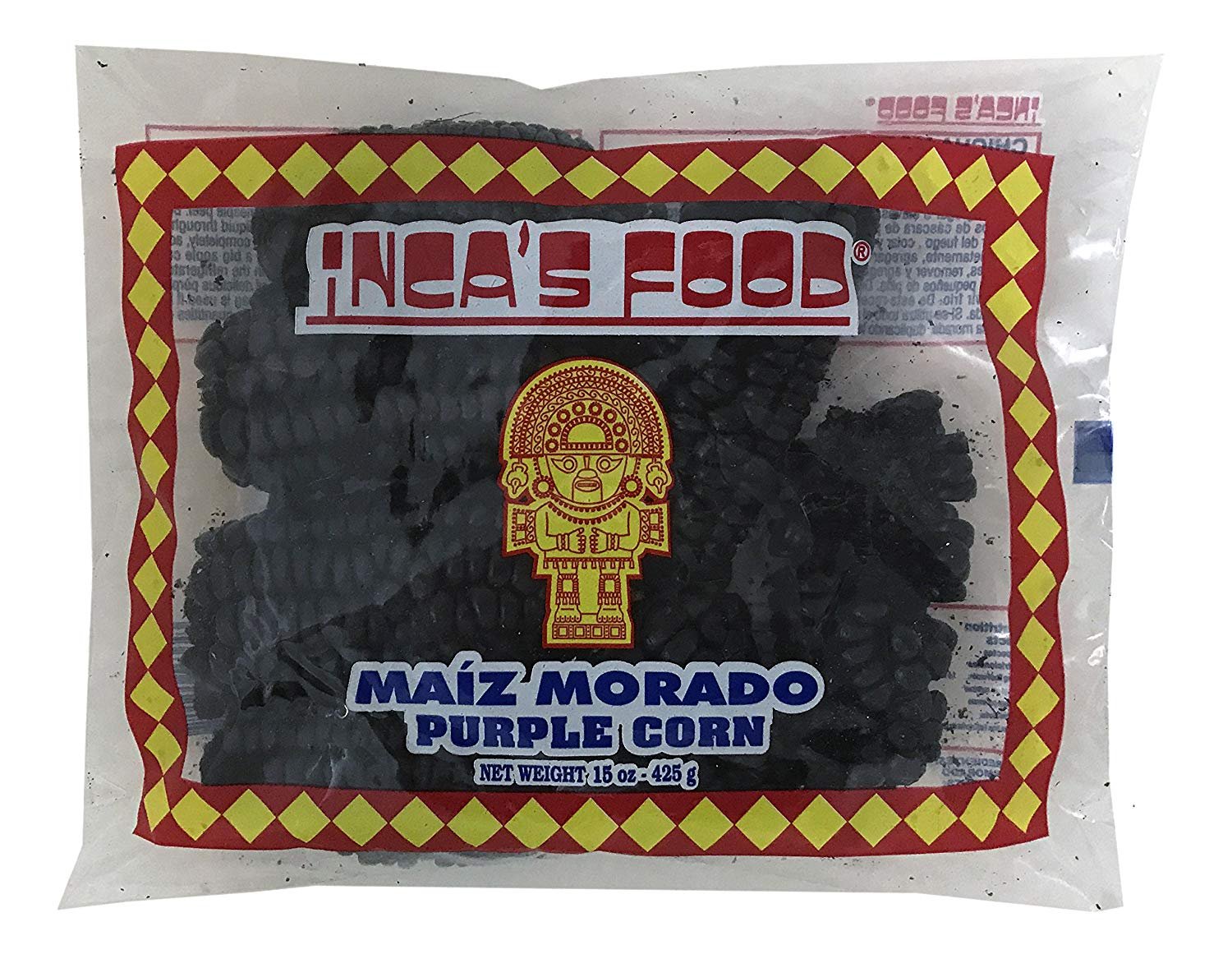
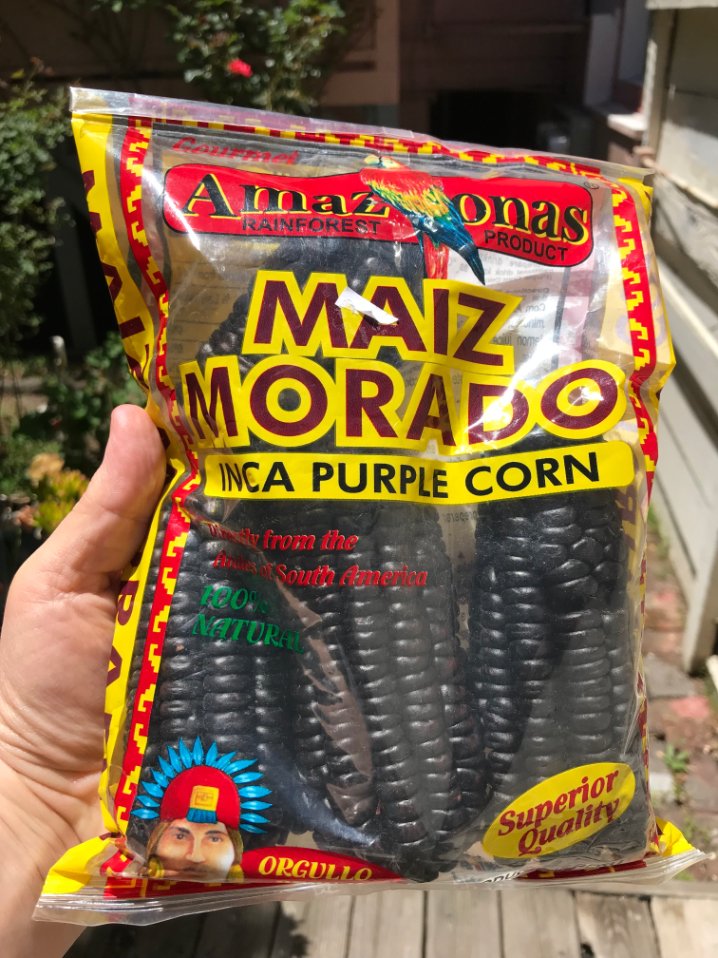
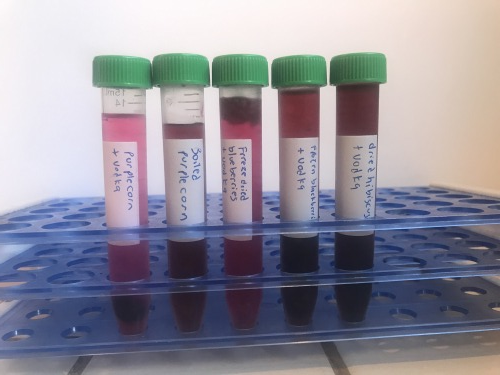
    • 916CFBVuqdL._SL1500_Purple Corn [buy]  no flavor when added to liquor/water. Boiled purple corn produces tons of deep purple color and has a slight corn husk note. 
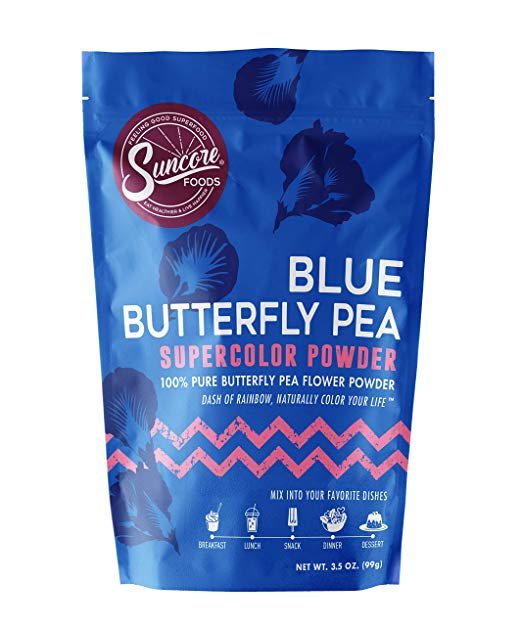
    • Butterfly Pea Flower [tea bags] [flowers] [powder form] – This flower starts off bright blue in neutral water/alcohol/syrup. It changes to purplish to pink when something acidic is added, like most cocktail ingredients. It tastes only slightly tannic with a subtle wilted vegetation note. 
    • 913NZ+Mh2ZL._SX522_Blueberries [freeze dried] – These turn from light blue to pink. They have a vegetal grassy note; slightly perfumy. Not enjoyable as a flavor. Perhaps fresh is best. 
    • Blackberries – Produce good purple color. Taste (frozen blackberries) weedy, earthy; fresh grass notes. 
    • Blue Spirulina Powder [buy] Brilliant color! There is a slight seaweed nose but not much flavor at all, so this is good for coloring. With added acids like citrus juice, it changes to a turquoise blue.  See the picture below. 
    • Acai Powder [link
    • Ebony Carrot Supercolor Powder [link]


    Red and Pink 
    • 81WWupJAPfL._AC_UL320_Raspberries [freeze dried] – These don't release as much color as one might suspect. The taste is super bright citric sharpness. These would probably add citric acid taste to beverages. 
    • Hibiscus [dried] -  Produce an intense color with a small amount; purplish red. They have a sharp dried leaf note. 
    • Strawberries [freeze dried] – Because the red color is just on the outside, strawberries tend to give off only a slight gentle pink color. Freeze dried strawberries seem to give more color than frozen/fresh. 
    • Beets [beet powder] – Fresh beets give bright color; dried more often a dried blood color. The taste of beet powder can be cardboard-meets-super dry earth/dirt, so best to minimize the amount used. 
    • 91wVBs-4RxL._SL1500_Cranberry – Does not release much color. Not recommended. 
    • Dragon Fruit Powder [buy] – I have not tried this but it was recommended to me by someone who has. I believe this is was Starbucks and other brands use to make "unicorn foods." 
    • Cochineal – This dried insect makes a red to purple color range and is used in some liqueurs including Bruto Americano. It is available for purchase but please ensure you buy a version approved for food use. By default it will be intended for use on fabrics. 


    Yellow and Orange

    • 91FUxZ1XMiL._SL1500_Annatto [buy] – These can be either red seeds or ground to yellow in color to start with, and can produce a bright orange color. The flavor has touch of anise and dry carrot peel, very much in the range of cocktail flavors. 
    • Turmeric [buy] – Deep mustard yellow color. Taste is bright yet grounded earthy; will provide base notes in drinks. 
    • Saffron [buy] – Gorgeous golden honey yellow color with only 1-2 threads. Not much flavor; grassy like sucking on a flower petal; slightly woody. 
    • Mustard Seed/powder – Most is a mellow yellow color. 
    • Orange Carrot Supercolor Powder [buy]
    • Paprika – Doesn't seem very effective as a colorant but has strong flavor.  


    Green
    • 61wmdwqda3L._SX522_Matcha tea [buy powder] – The kind I tried was a tea with jasmine. It had a swampy tannic bad flavor. Probably other brands taste better. (The linked powder is not the brand I purchased.)
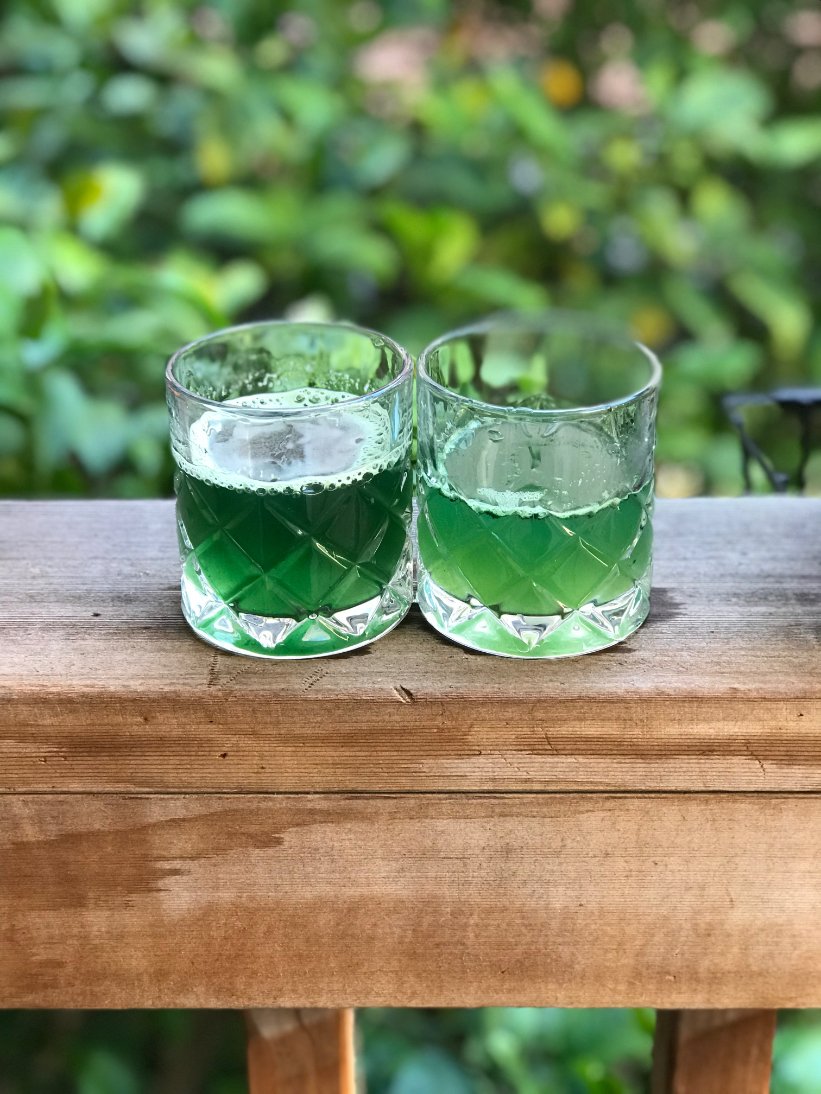
    • Green Spirulina Powder [buy] – Unfortunate "low tide" smell; seaweed to fishy. However the taste comes through only slightly and is probably hideable beneath other ingredients. 
    • Fresh green herbs and plants, muddled to order – anything with chlorophyll
    • Wheatgrass powder [buy]
    • Pandan Leaf Powder [buy]


    Black

    • 813hGZPPLbL._SL1500_Activated Charcoal (not recommended) – Note that activated charcoal can disable medications if taken within a few hours. I don't recommend using it on cocktail menus. This is not an approved food coloring in the United States. More information here
    • Carbon Black – This is an approved food color in the EU and Canada, but not in the United States. 
    • Food Coloring [link]
    • Black Sesame Seeds [link] – These can make cocktails look greyish to blackish. 
    • Squid or Cuttlefish ink [powder] [jar] – Available powdered or in liquid form. This is a commonly used food coloring though not vegetarian-friendly. 
    • Black Currants – Have a very dark red/black color. 


    White

    • Milk
    • Blanche Absinthe 
    • Cloudy Ice 
    • Anything that louches


    Below: Blue spirulina diluted with water, with added citric acid, and with lemon juice. 

    Blue spirulina (2)


    Green Spirulina, in water or with added lemon juice. 
    Green spirulina

  • Purple Food Colorings: Anthocyanin

    Purple cornAnthocyanins are pigments that, depending on their pH, may appear red, purple, blue or black. Food plants rich in anthocyanins include the blueberry, raspberry, black rice, and black soybean, among many others that are red, blue, purple, or black. [wikipedia]

    That purple color-changing butterfly pea flower tea? [tea bags] [flowers] [powder form] Anthocyanin. The purple cabbage science experiment you did in middle school? Anthocyanin. 

    Wikipedia offers a list of food sources with high anthocyanin levels. I put them in descending order below. You might choose to use them to color your cocktails. 

    • Purple corn leaves
    • Purple corn [buy]
    • Dried red cabbage
    • Norton Grape
    • Eggplant
    • Blueberry
    • Black Raspberry
    • Raspberry
    • Concord grape
    • Acai
    • Plum
    • Ube

    In my next post, I have links to many different natural food/drink colorings. 

    IMG_5491


  • Extracting Natural Color from Plants: The Freeze-Thaw Method

    In advance of my seminar at Tales of the Cocktail on Color in Cocktails and Spirits, I am putting up a few blog posts that the attendees (and you know, you) can use as reference. The images below are exported PowerPoint slides. 

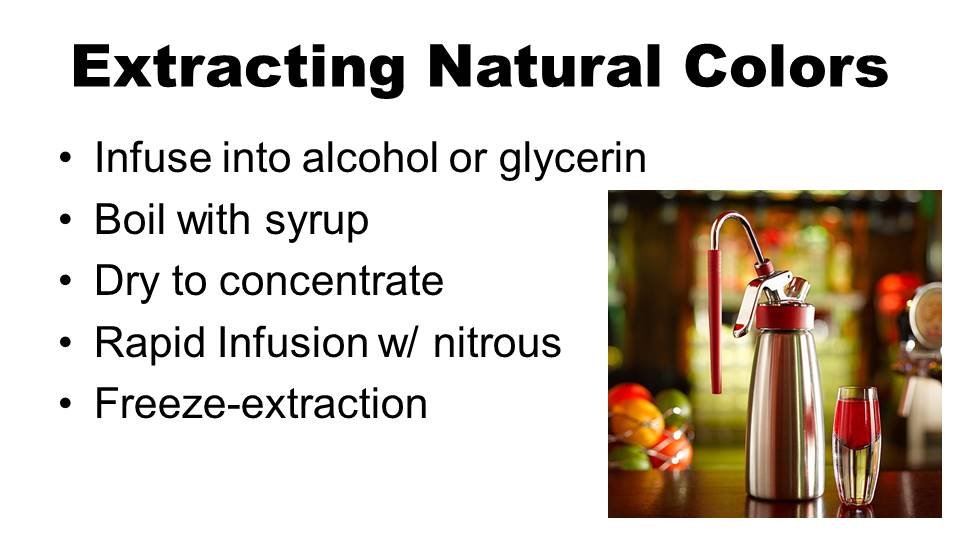
    I was trying to create some natural colors from plants and read about how dyers do it. Many of them are not practical (or safe) for food and beverage use. Some ways to extract color that are safe include: 

    Slide123


    But one method I read about suggested freezing flower petals overnight, then thawing in hot water. This actually didn't work for me, but it gave me the idea for how to do it similarly. 

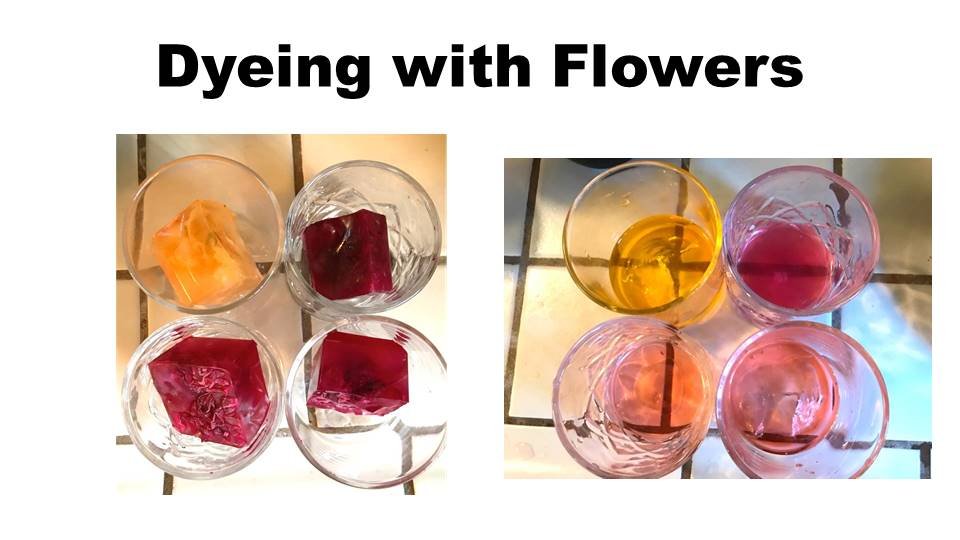
    The idea is that freezing plants breaks the cell structure and allows the natural colors to release when you add water. So what I did on my second attempt was to freeze the flower petals in water, then let it thaw out and strain out the solids. 

    This worked much better for me, and then I decided to repeat the process (not with new petals but just freezing and thawing the same ice cubes three times). Each time the color of the water became more intense. It worked! 

    Slide123

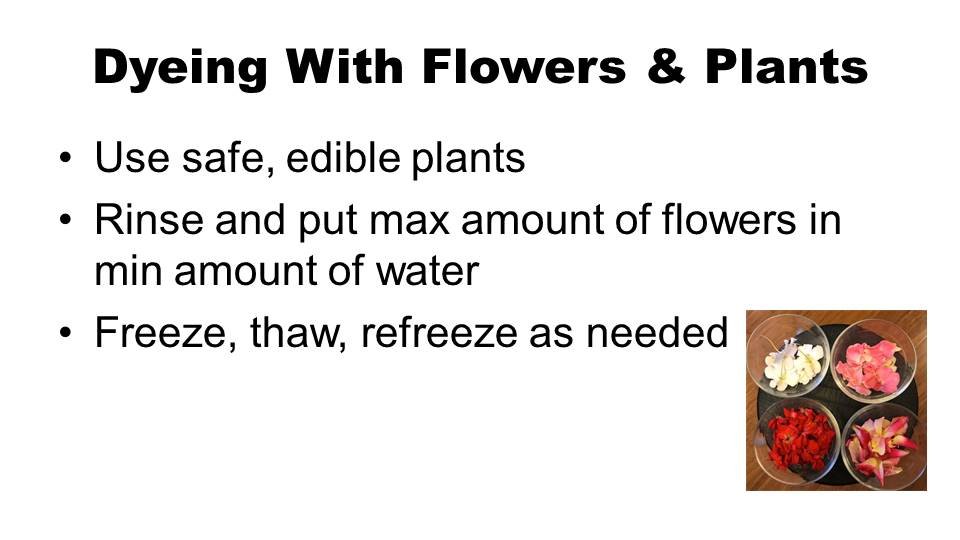
    With any flowers in particular or plants in general picked from nature (as opposed to the produce section), make sure that they're safe and edible. A great resource for that is CocktailSafe.org

    Slide123

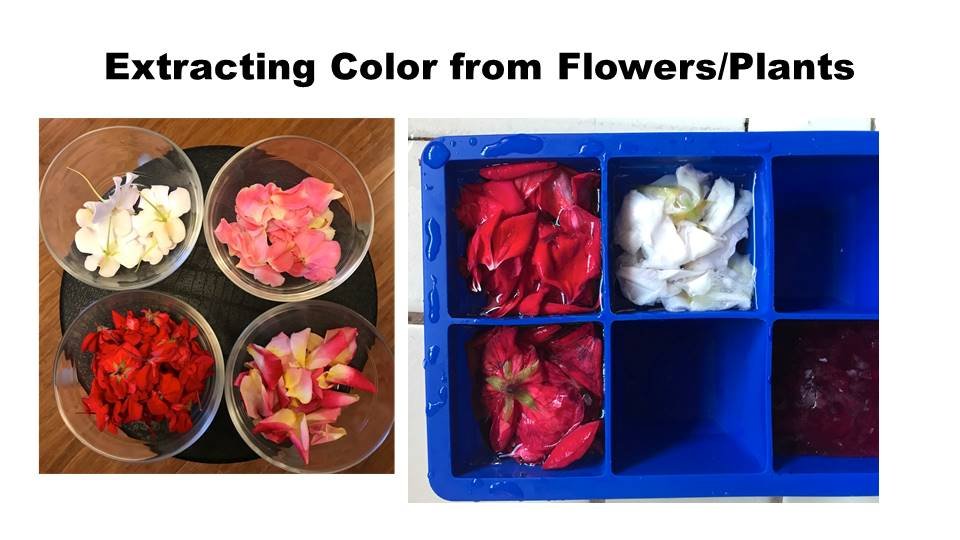
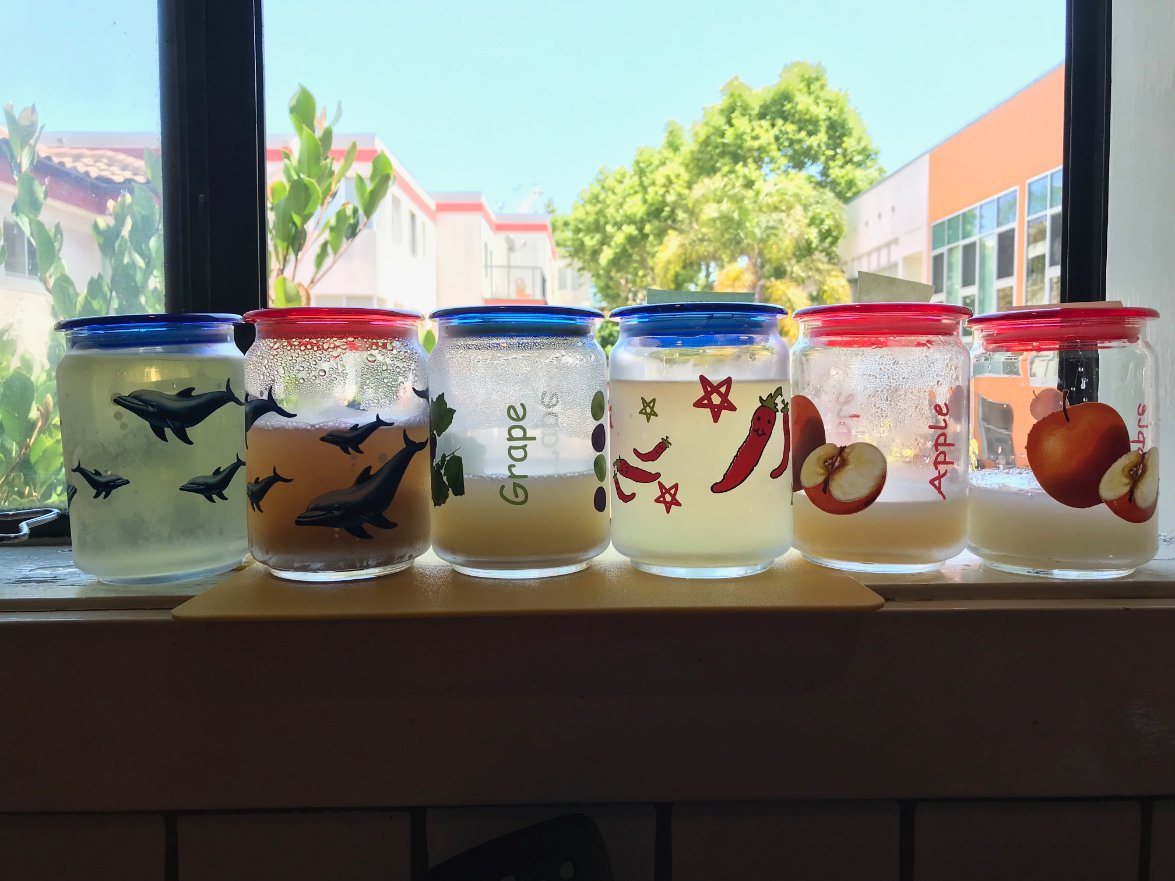
    Above are the flower petals I harvested from my patio. I put them in 2' ice cube trays with some water. 

    Slide123As you can see, the colors came out lovely. 

    The idea is that you could now use this water as a base for a simple syrup, soda, or ice cube with the natural color in it. 

    Though I haven't experimented with other plants yet, I bet this technique would work great for many things. 


  • Aquafaba Future Experiments and Suggestions

    This week we've been learning about how to prepare aquafaba – chickpea or garbanzo bean water – to replace egg white as a frother in cocktails. The previous posts have been:


    712HMjfNlaL._SL1500_Along the way I've heard a few good ideas and suggestions that I have not yet tried. These all sound like great ideas and I love that they come from three different countries. 

    So far I haven't come up with a "best" way to make aquafaba, largely because I'm just trying small experiments at home rather than working in a bar with high volume. Hopefully these posts will inspire some folks to keep on trying and sharing their experiments too. 


    Frozen 'Faba

    Forest Collins of 52Martinis.com in Paris says, "I've recently tried freezing my chickpea water in 10ml batches and then pulling it out of the freezer when needed. It seemed to work well in the freezer, although I didn't do a comparison and only tried it in a blended pisco sour, but there was still a lot of froth on it." 


    Density Check for Consistency

    Daniel Seehuusen, Bar Manager at Avalon Hotel in Gothenburg, Sweden, says (edited for clarity): 

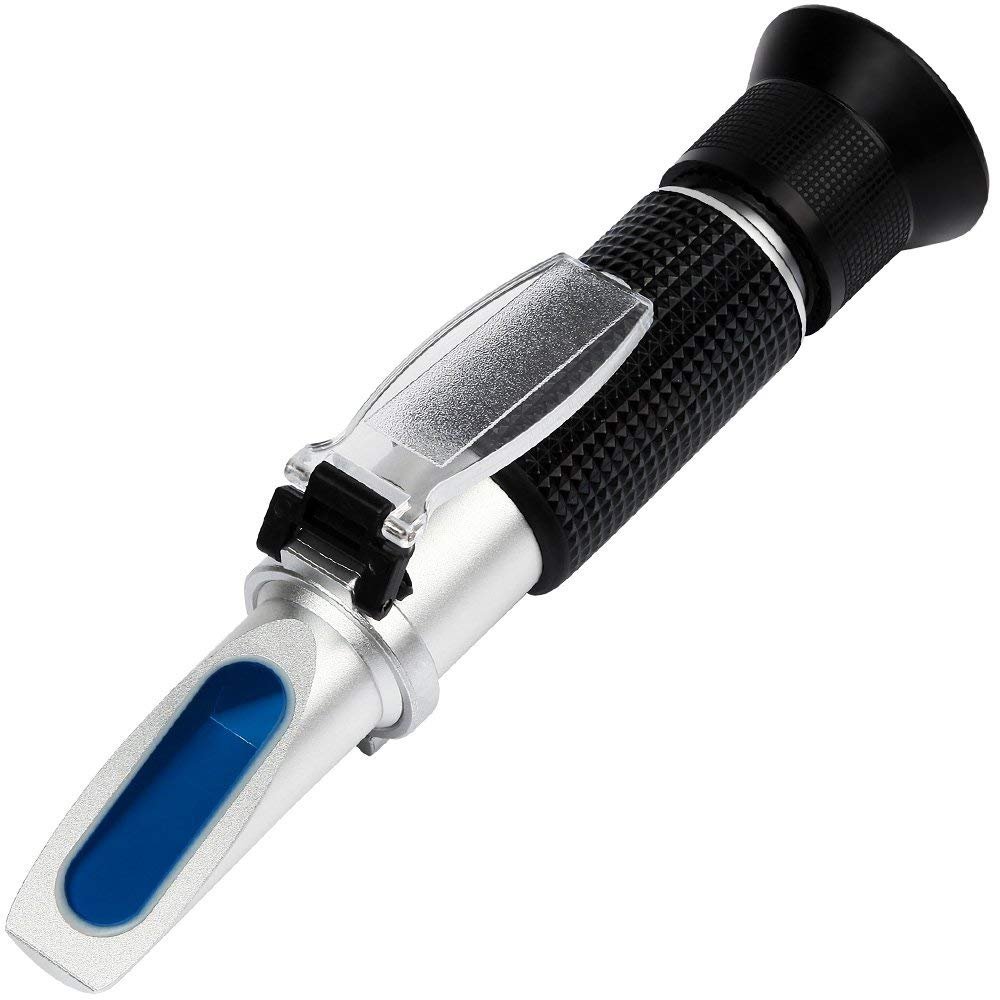
    I used to work with this a lot a while ago. Since we got our aquafaba from the kitchen it never was the same consistency.  So we used a oechsle meter, I think the sweet spot was around 35-37 OE (or was it 45….). [Note: an oechsle meter is analogous to a refractometer for measuring brix]

    I think that the most bang for the buck would be boiling the peas 2 times. Combine the liquids and dilute/reduce to the oechsle of your choice. We had it in a bottle, on ice. I think we used around 20 ml per cocktail.


    61Zzbmzh1+L._SL1000_Pressure Cooker

    Andrew Nicholls, co-founder of William George Rum from The Netherlands, says,  "I make an aquafaba by rehydrating chickpeas and placing one cup of the rehydrated chickpeas in a pressure cooker with three cups of water. Bring up to pressure and cook for 40 minutes.  The pressure helps “extract” more of the proteins/globulins, which makes for a more stable foam than canned chickpeas (in my opinion).


  • Aquafaba Experiments Round 3

    In previous experiments with aquafaba to replace egg white for froth in cocktails:

    I tried chickpea/garbanzo bean water from canned beans, from uncooked and cooked beans, and from chickpea flour both cooked and uncooked. 

    I found in those experiments that canned water was best for the amount and quality of froth produced, followed by uncooked flour water, followed closely by boiled bean water.

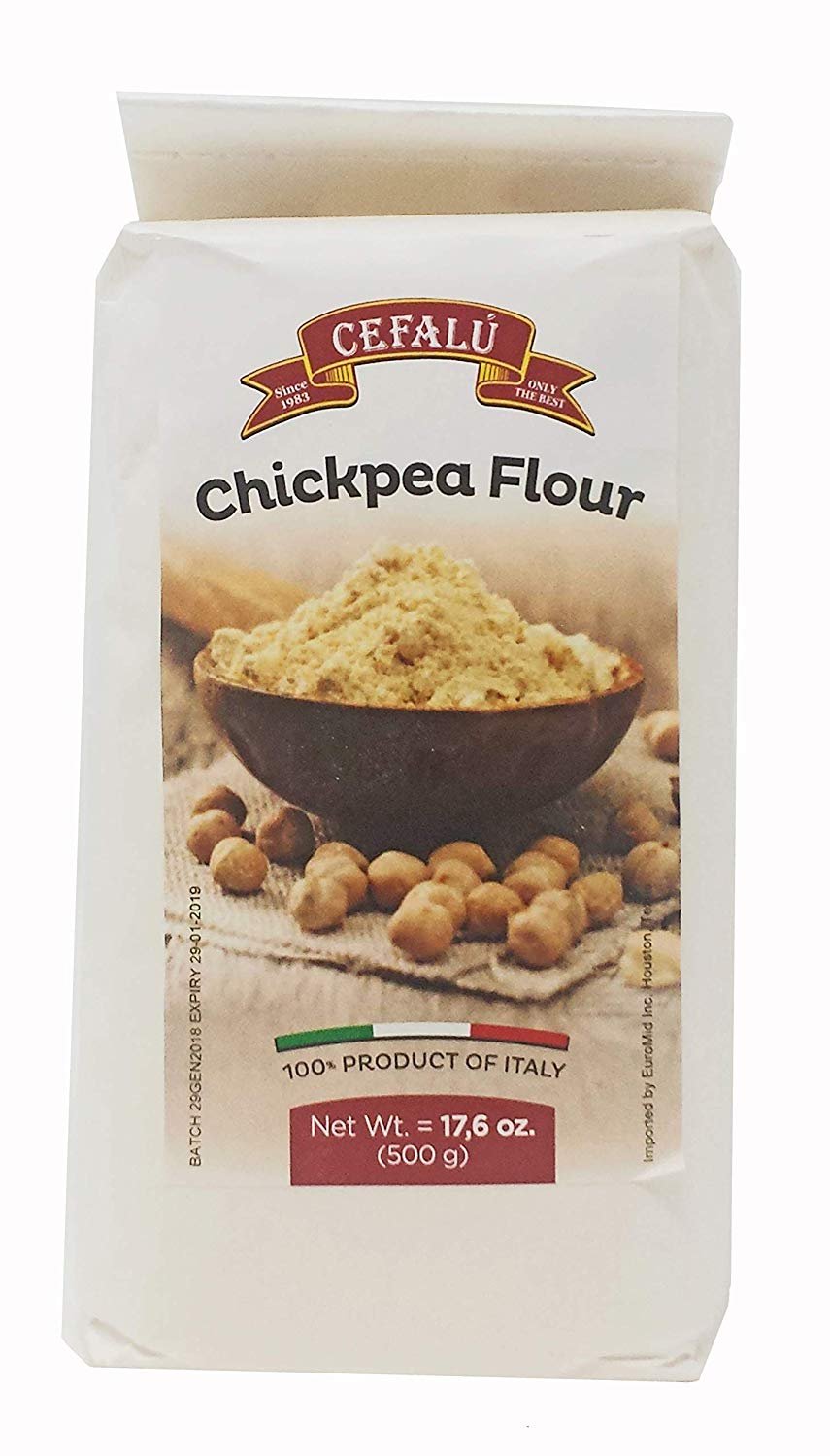
    Though I didn't love the taste of unboiled garbanzo bean flour water, I decided to try garbanzo bean flour as a solid – by adding the flour directly to the drink before shaking. 

    I tried 1/4 teaspoon chickpea flour, 1/8 tsp, amd 1/16 tsp.

    IMG_5583

    I found that 1/16th wasn't quite enough, but 1/8 teaspoon seemed to work just fine. (note this experiment was with vodka and water plus the flour) 

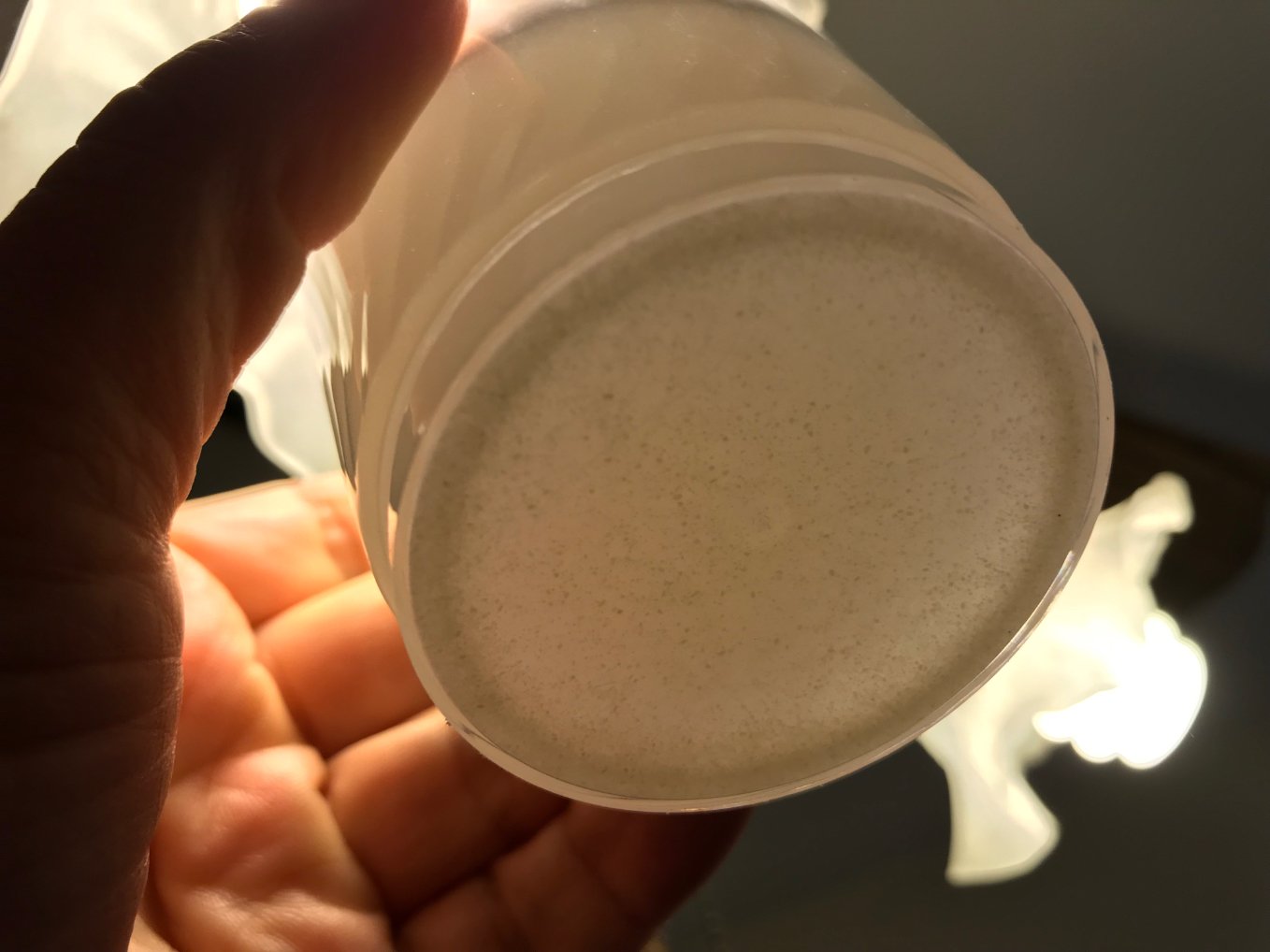
    One issue with using the flour (rather than water with flour in it that's left to settle as in previous experiments) is that it settles out relatively quickly to the bottom of the glass. That's why I wanted to minimize the amount in the first place. 


    IMG_5586

    A second issue is the flavor: though not incredibly powerful, there are notes of raw flour and a slight tannic or metallic flavor. 

    On the plus side, if only occasionally using an egg white replacement in cocktails, chickpea flour is shelf stable compared with liquid. It might be worth testing to see if the flavor of the uncooked flour and the settling is tolerable. 

    However if you're hoping to use aquafaba more often or switch to an egg white alternative permanently, I would think you'd want something that doesn't settle in the glass and has less of a flavor impact. For that, I would return to the posts with the technique by Hannes Schmitt or Aquafaba Experiments Round 1 to see a few options. 


  • Aquafaba Experiments Round 2

    In my previous post I tried some ways to see what preparation method makes the best aquafaba: chickpea/garbanzo bean water used in place of egg whites to make cocktails frothy. 

    To recap, I found the best aquafaba waters were, in order: 

    1. From the can
    2. Chickpea flour boiled then letting the solids settle off.
    3. Cooking water for chickpeas.

    In the next set of experiments I wanted to see if I could produce more water in cooking and see if I could use unboiled chickpea flour. So my aquafabas were:

    1. Quick-Soaked Beans Cooked for 90 Minutes in Lots of Water: I did the quick soak method this time: I brought the beans to a boil for 3 minutes, then let them soak for 2 hours before discarding the water. This water had only a slight flour aroma. 
    2. Quick-Soaked Beans Cooked for 3 Hours in Lots of Water. This had a touch of flour aroma. 
    3. Boiled Chickpea Flour Water: The same sample from the previous experiment. Its aroma was kind of like flour. 
    4. Unboiled Chickpea Flour Water: I shook some chickpea flour with water in a jar then let it settle overnight. I used only the lightest of this water to minimize solids. It had a fairly yucky "raw" flour aroma. 
    5. Second Cook Water, from previous experiment: After cooking beans, I reboiled half of them for an additional 30 minutes and kept this water.

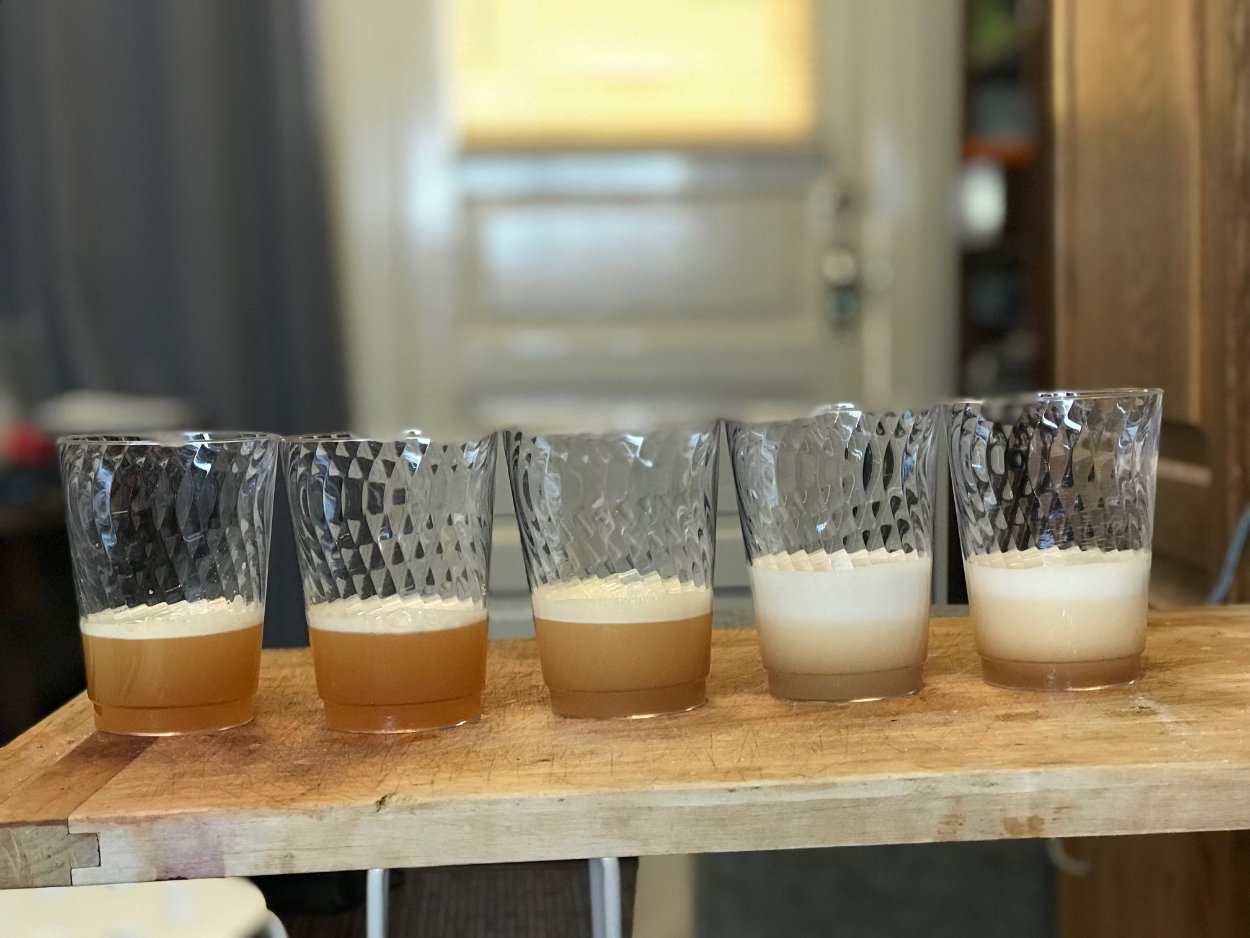
    For the experiments, I used a Disaronno Sour (2 parts Disaronno to 1 part lemon juice), plus 1/2 ounce aquafaba.  

    Aquafaba foam experiments round two (2)

    The winners were:

    • #4 Unboiled Chickpea Flour Water. The downside to this is that it has the most flavor – I consider it tannic but others might say metallic; plus it's greyish in color compared with the brownish ones. 
    • #5 Second Cook Water, which was sort of the control. It tasted better than the winner. 
    • #3 Boiled Chickpea Flour Water. This also tasted fine/neutral. 
    • Then 1-2, the chickpea water made from long boils with lots of water, didn't produce enough foam to count. 

    Conclusions

    1. My experiments in boiling less beans for a long period of time failed. 
    2. Boiled chickpea flour tastes better than unboiled, plus it looks better in the glass. It's not quite as foamy but may be worth the tradeoff. 
    3. Regular chickpea cooking water is still pretty decent. It would be worth looking at the costs between using dried chickpeas vs the flour. 

    Future Experiments:

    If this chickpea flour is working so well, maybe I should try using the smallest scoop possible I can of it. I did try this previously and found that the solids were too problematic, but it's worth another shot. 

    I've now tried it and here is the post!


  • Aquafaba Experiments Round 1

    After reading the detailed description of making the best aquafaba by Hannes Schmitt from Electric Eel on yesterday's post, I decided I wanted to try some experiments myself to see what makes the best, frothiest, least expensive, least smelly chick pea/garbanzo bean water frother. 

    Schmitt's method is to hydrate the chickpeas (discarding the water), then cook them (saving the water), then soak them again (keeping the water). You combine the water from the cooking and the soaking together. After my experiments, that looks to be a very good method. 

    In the first round of experiments I prepared 6 types of chick pea water and made the same drink with all of them:

    1. Chickpea Soaking Water: The water used to hydrate dried chickpeas. This was light in color. 
    2. Cooking Water: The water used to boil chickpeas (about 90 minutes, probably too long). The resulting water the next day was super gloppy, nearly gelatinous. In the future I would boil the beans for less time.
    3. Second Cook Water: After cooking the beans, I boiled half of them for an additional 30 minutes and kept this water. This water was also gelatinous the next morning. 
    4. Post-Cook Soak Water: The other half of the beans after cooking I left to soak with water overnight. This water was lighter in color, with more of a fresh bean aroma than cooked.
    5. Canned Chickpea Water (unsalted! make sure to buy unsalted): Traditional aquafaba from the can. Note that I had opened the can previously and transferred the water to another container. It seems to have lost most of the initial farty smell and smelled more like the flour. 
    6. Boiled Chickpea Flour Water: I have some chickpea flour, which makes great froth if you add a small scoop in a cocktail, but all the solids settle out. By boiling the chickpea flour I was trying to isolate whatever it is in chickpeas that makes good foam. After boiling for about half an hour or so, I placed the water in a tall jug then the next morning poured off the top portion with less solids evident. It had a touch of bean smell but nothing dramatic. 

    I then made drinks with all these waters: 1 ounce vodka, 1/2 oz simple syrup, 1/2 ounce lemon juice, 1 ounce water (to mimic ice), and 1/2 ounce aquafaba. 

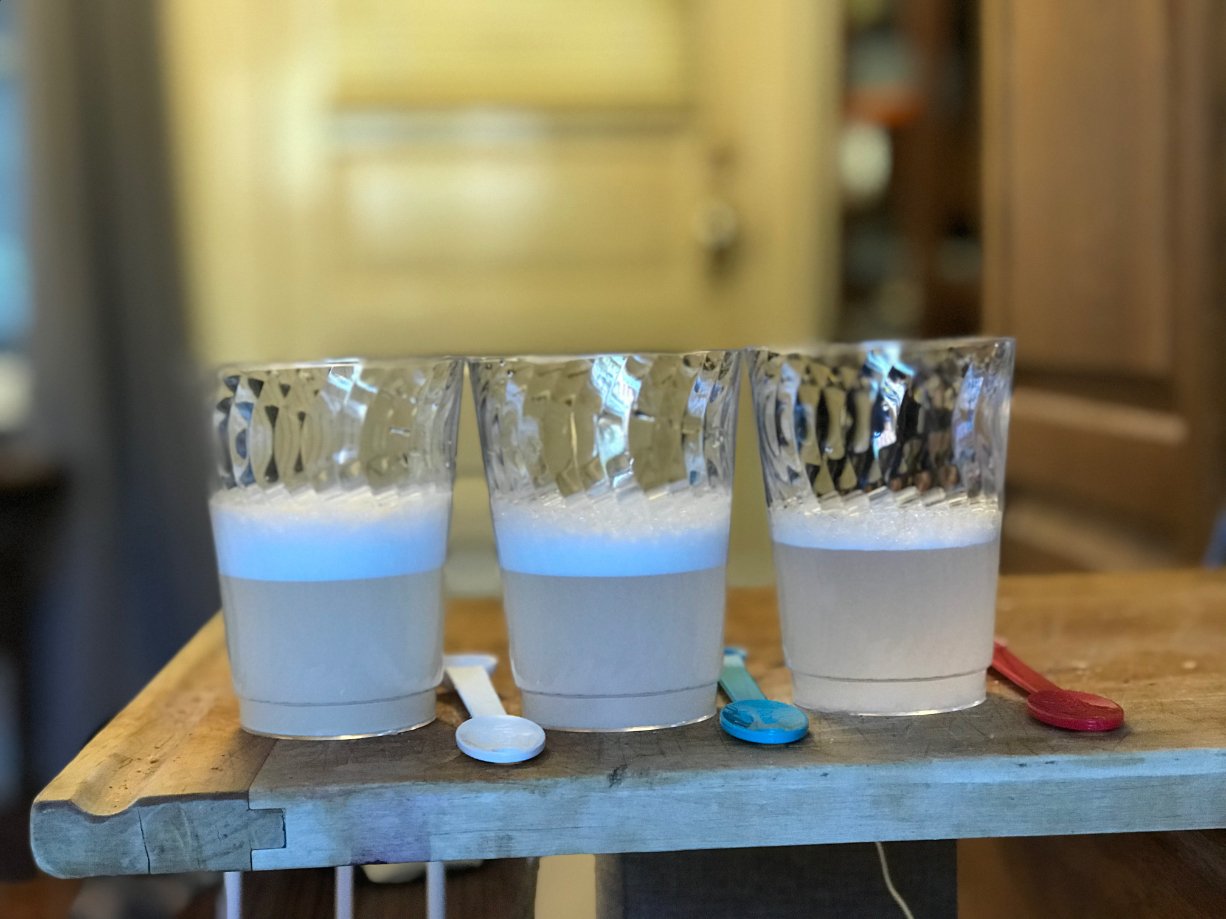
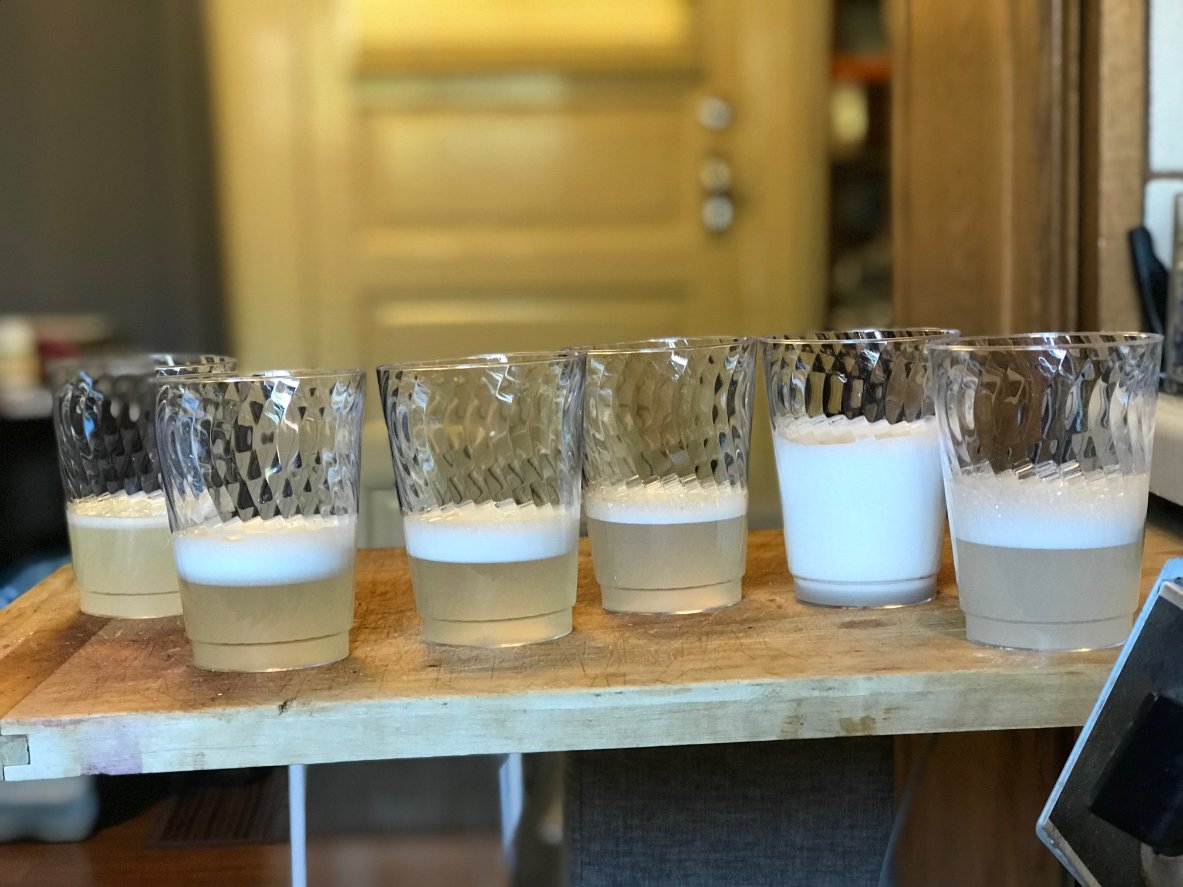
    In the first picture below, you can tell the relative colors of the bean waters. The cooking water was darkest, while the flour water was milky. 

    Aquafaba foam experiments round one (1)

    After shaking in a cocktail. (Number 5 had been freshly reshaken as I spilled some so it's a little more dramatic than in real life.) Note that the flour water #6 on the right has a greyish tint. 

    Aquafaba foam experiments round one (1)

    Results:

    • #5 Canned Chickpea Water was the best, densest foam, by a lot. Note that in other experiments I determined the way to minimize the funky bean smell is to use as little of this as possible. I found that 1/2 teaspoon/barspoon is enough.
    • #6 Boiled Chickpea Flour Water was second best. It had the airiest foam.
    • #2  Cooking Water. This one had some smell but not too intense. 
    • Then #3 Second cook water, #4 Post-Cook Rinse water
    • Then #1 the Soaking Water didn't do much at all. 

    It seems that Schmitt's method of adding #2 to #4 (cooking water to post-cook soaking water) would combine some very thick water with a lighter one that still has some foaming action to minimize color and aroma. 

    The second boil water did produce nice foam, though the beans were probably ruined for anything but hummus after that point. But it did make me think about boiling beans for a super long time with more water to see if that would effectively give us more bang for the buck. 

    This inspired another round of experiments for the next day (and next blog post): Comparing boiled flour vs unboiled, and seeing if I could boil a small amount of rehydrated chickpeas for a long time to get a good aquafaba.  

    Next Up: Aquafaba Experiments Round 2

    and then Aquafaba Experiments Round 3 


  • Rainbow Mini Ice Balls

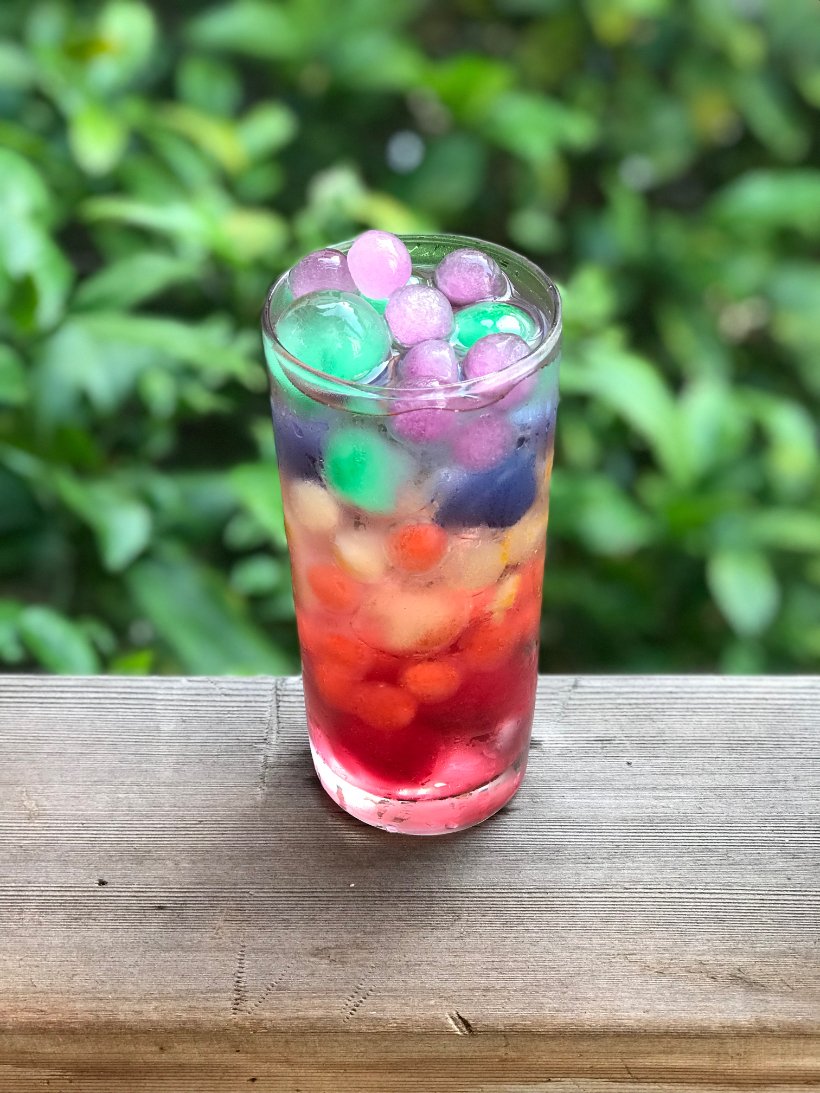
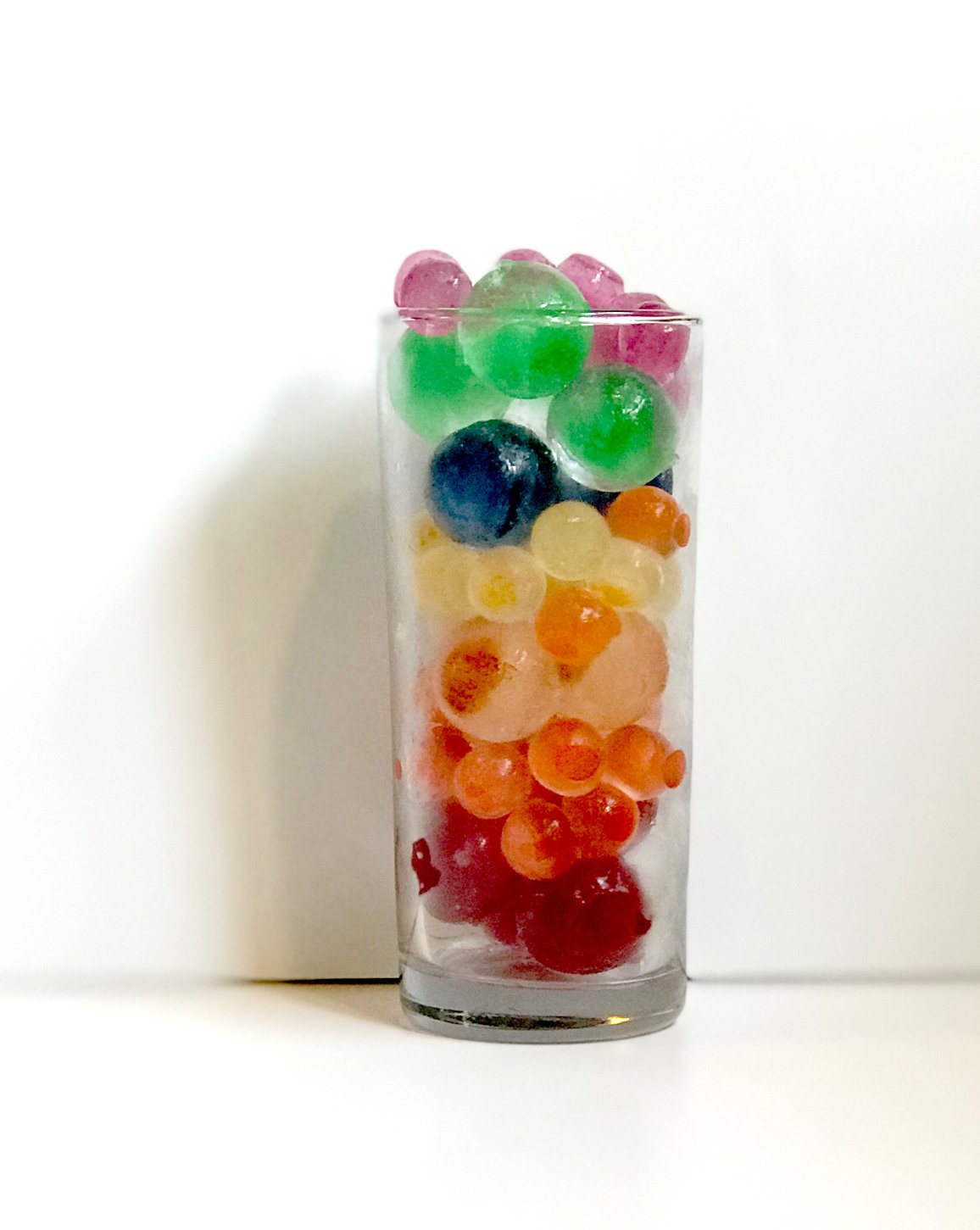
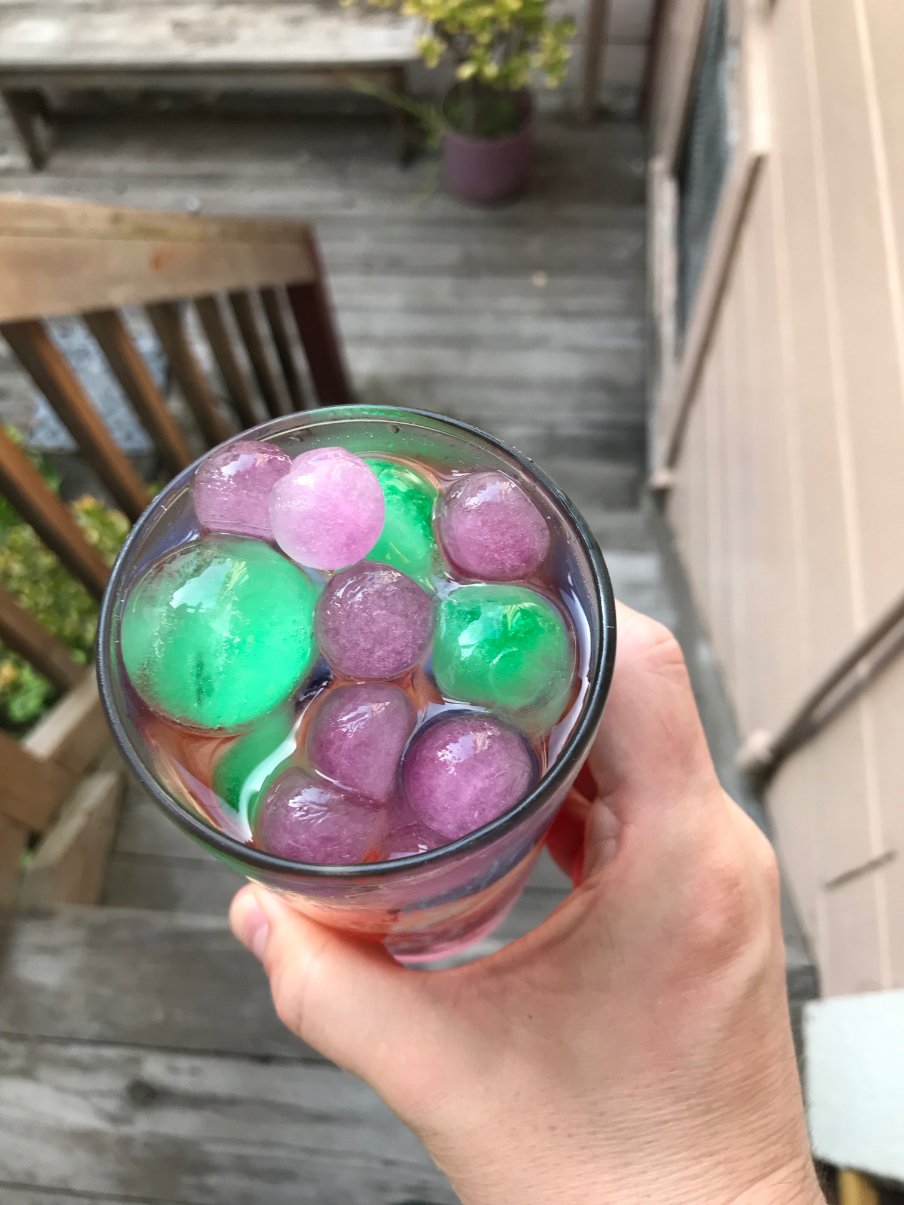
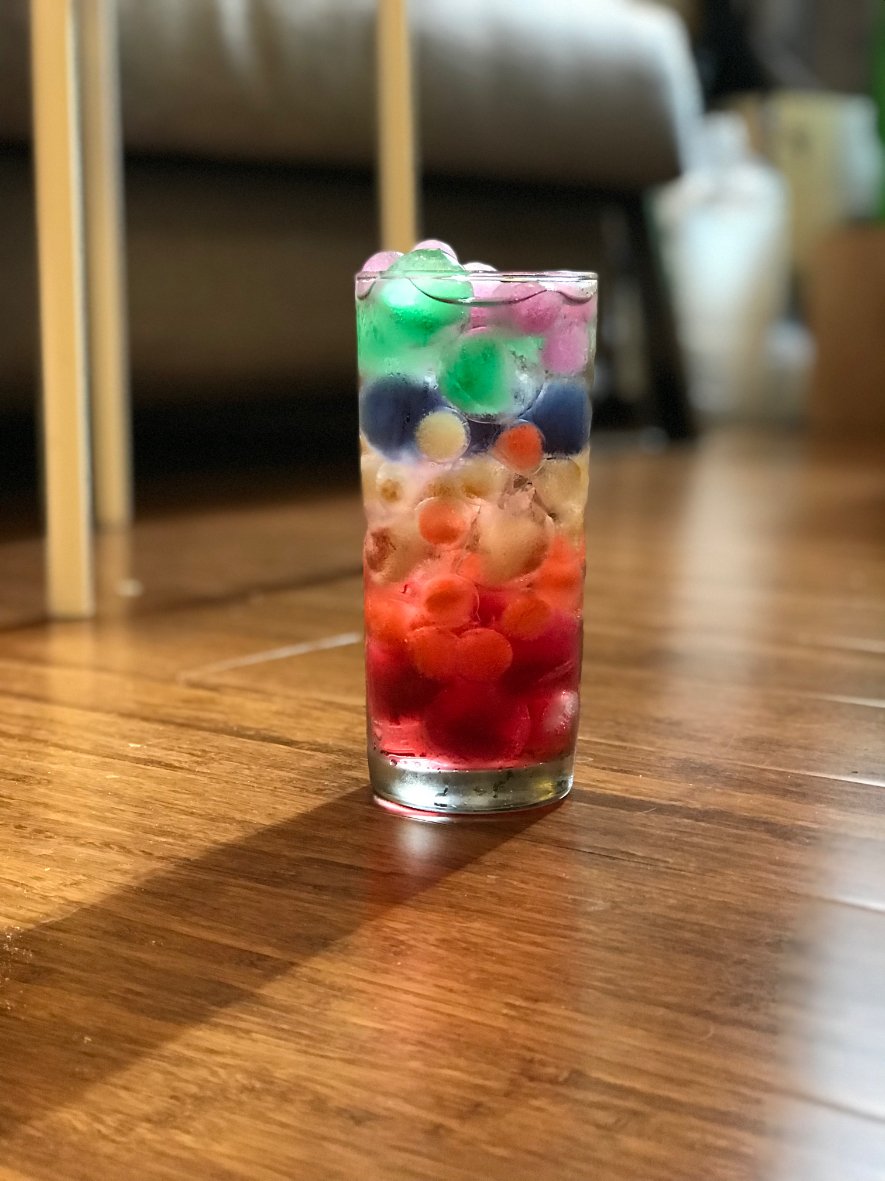
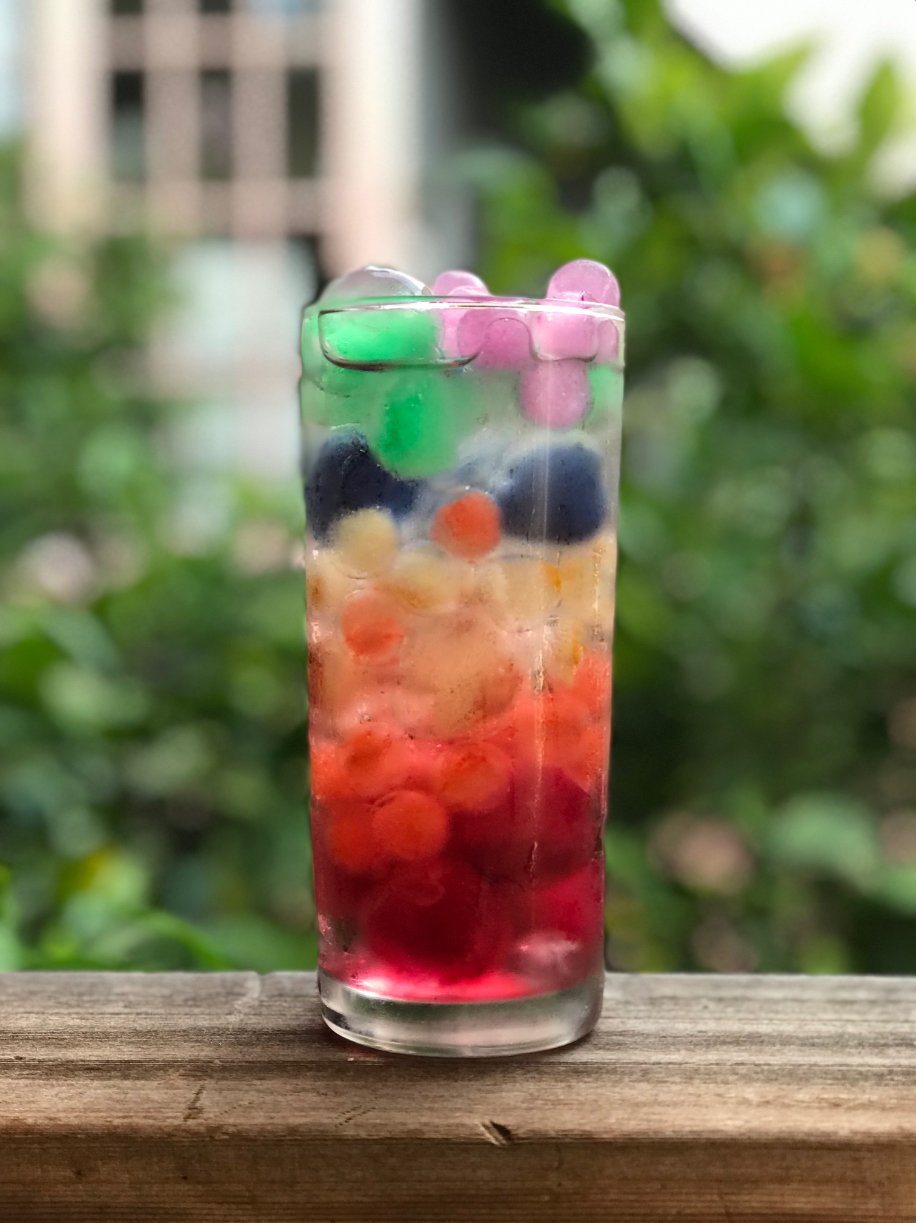
    I purchased a couple of ice cube trays online and made rainbow ice for Pride. 

    Rainbow Ice Marbles55

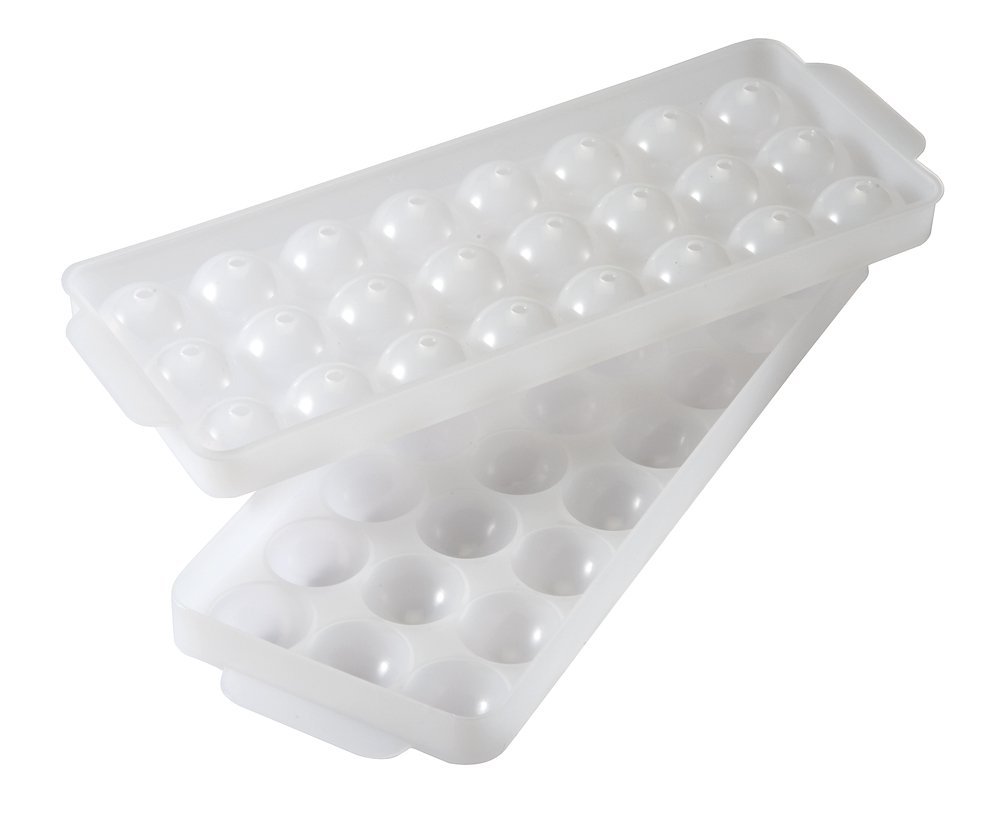
    I bought the trays on Amazon. The Hutzler 324 Ball Ice Tray makes 1-inch sized ice balls. It seems pretty good so far though I'm not certain of its longevity. 

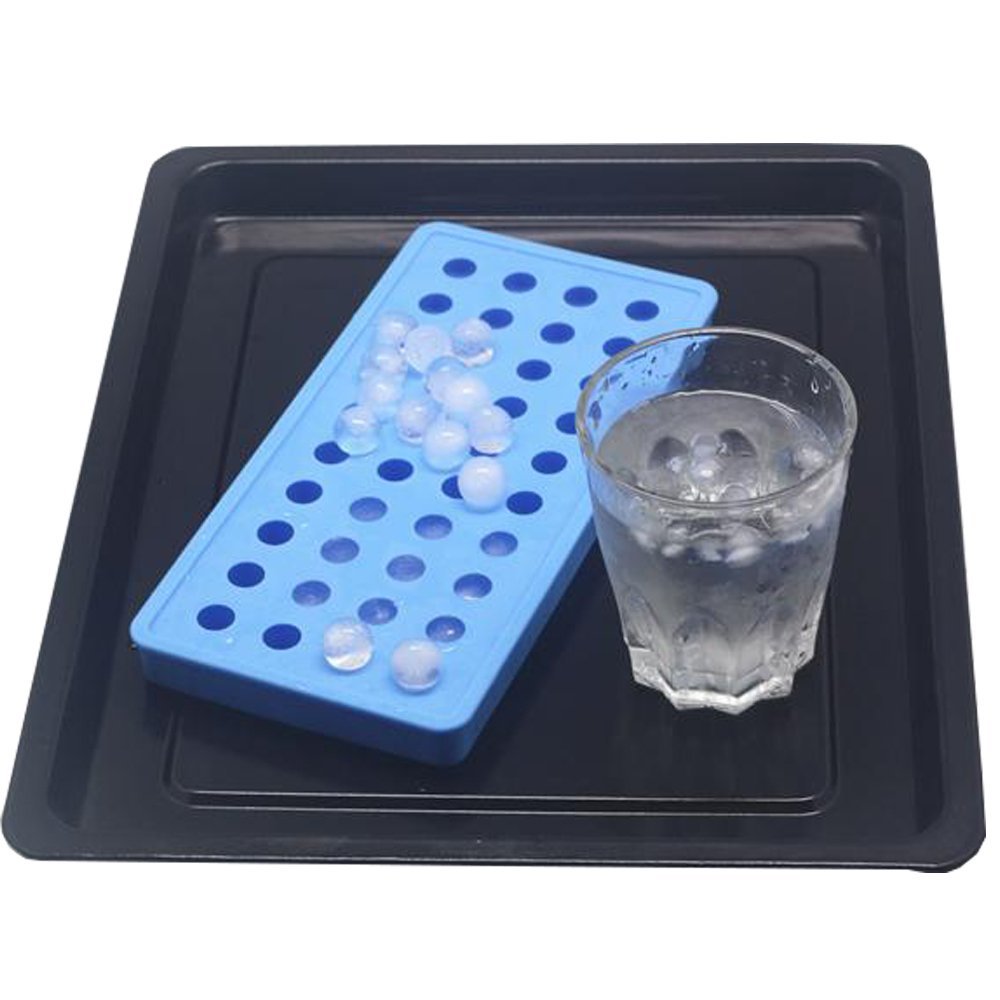
    The Mydio 40 Tray makes small marble-sized ice balls of about half an inch in diameter. It's made of high-quality silicone and seems super sturdy. 

    Neither make clear ice (that's my jam, as you know), but the size of ice they make is very fun. 

    51yMONGylEL._SL1000_
    51yMONGylEL._SL1000_To make the colored ice balls I used either commercial food coloring or natural colorings like turmeric and hibiscus. 

    Then I just stacked them up in a glass in rainbow order.  Silly, fun. 

    Rainbow Ice Marbles02
    Rainbow Ice Marbles02
    Rainbow Ice Marbles02
    Rainbow Ice Marbles02

  • Using Burrata Water in Place of Egg Whites in Cocktails

    Last week I received a pitch about the cocktails at Oxalis in Prospect Heights, Brooklyn. One drink ingredient stood out to me: 

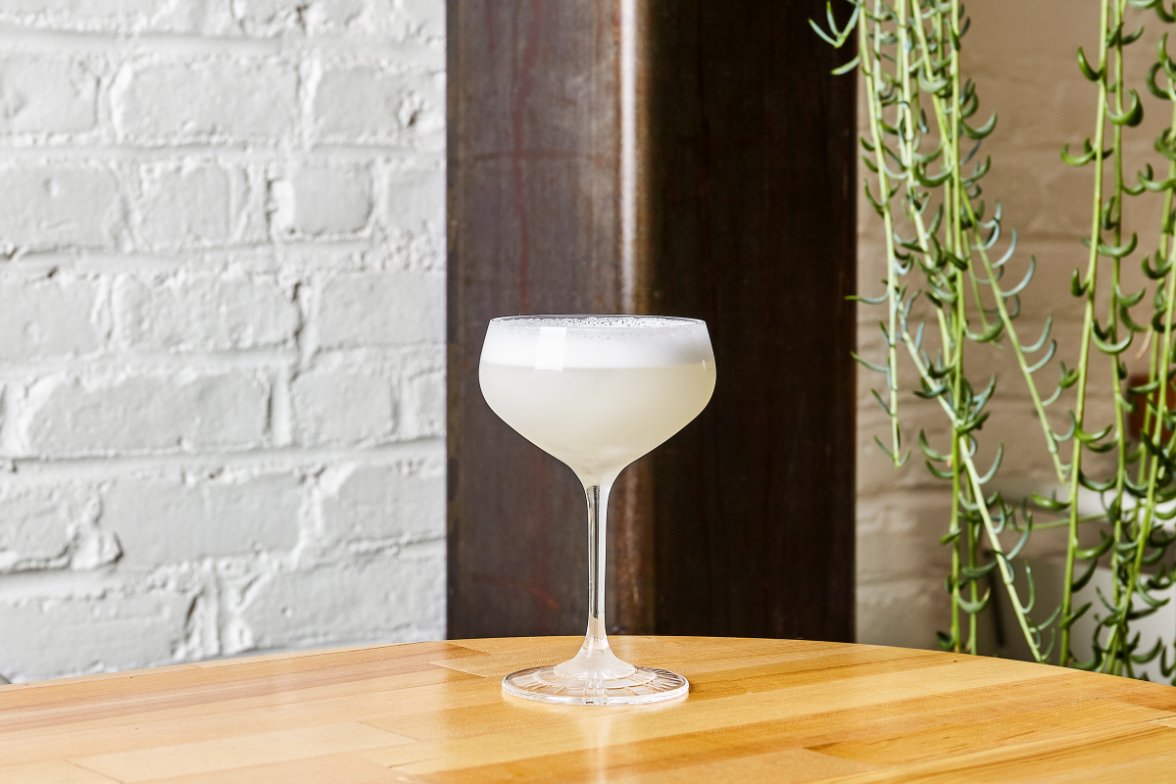
    Breakfast Martini, inspired by the classic cocktail and exclusively offered during brunch, this frothy cocktail features burrata water instead of egg white and gomme syrup instead of orange marmalade, in addition to bergamot, gin and citrus.

    Burrata Water!

    Oxalis - Breakfast Martini - Heidi's Bridge

    Lately bartenders' attentions are turning to egg white alternatives for cocktails, from aquafaba (chick pea water) to quillaja soap bark foamer to high-tech products with thickeners and emulsifiers. Burrata water would be another second-use ingredient

    Oxalis' Beverage Director Piper Kristensen previously worked at Booker & Dax and Bearded Lady before joining Oxalis, which originally launched as a pop-up dinner series in 2016. I sent Kristensen some questions. 


    Was the burrata water an original idea or did you see it elsewhere first? I hadn't heard of this previously.
    • We have been using whey to boost texture for a while. I don't know of anyone using burrata water now, but I think it's statistically impossible for me to have been the first to think of it. 
    What is the quantity of burrata water needed to replace egg white? So I guess what's one drink's portion? 

    • We add 1 oz per drink. I tried 3/4oz- wasn't enough.
    Where do you get the burrata water? Is it housemade at the restaurant or is the burrata purchased? (I'm wondering if it matters how fresh the water is or if people can use store-bought stuff.)

    • We have a duck purveyor named John Fazio who makes the absolute best burrata we've ever had. I've never tried making the drink with grocery store burrata. I assume it would work. The burrata has to be in the water long enough to equilibrate, and the burrata at my local has been in there for a while.
    Is burrata water about the same amount of frothy as using egg white? 

    • For sure. We goofed around with an eggless ramos and got decent stove-pipe. What I like most about it is that it doesn't break down where the surface of the drink meets the foam, like an egg white. There's a clinical line. 
    Does it have a flavor? 

    • We introduced it to make a dirty martini because it's got great salinity and a pleasant hint of milk, but the high alcohol system denatured the proteins like egg drop soup. That flavor marries nicely with citrus in a sour. It's not a strong flavor, but it's distinct. 


    Cool idea! I may give it a try myself. 


  • Sour Mashing as Industrial Waste Recycling

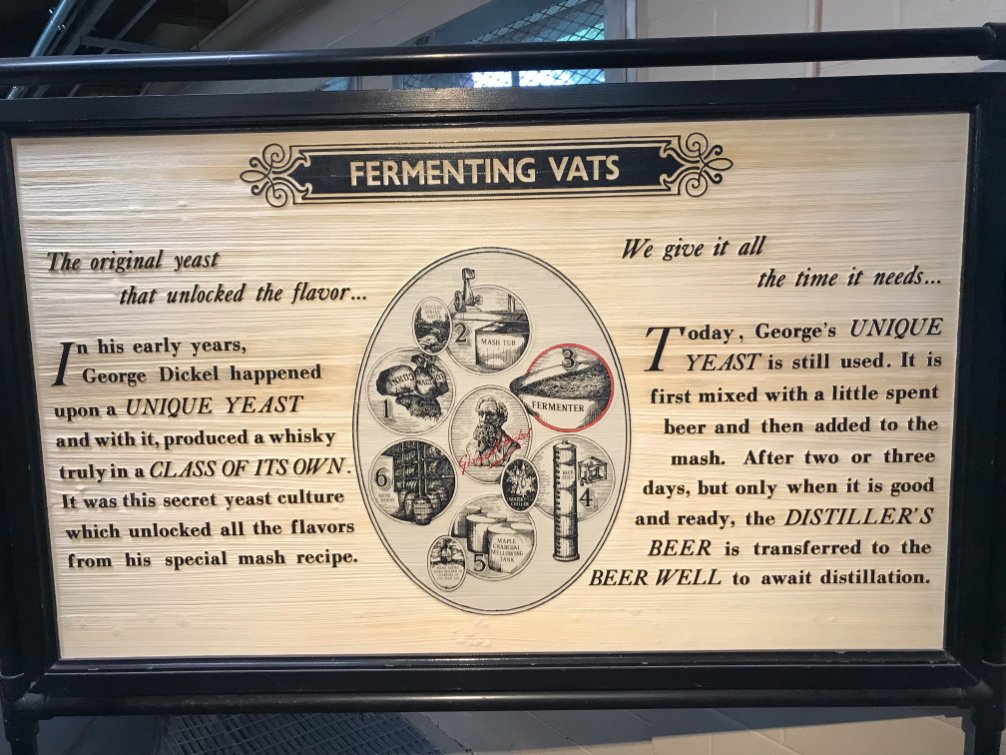
    Another exciting bit of information to come out of my visit to the George Dickel distillery was learning more about the sour mashing process. 

    To review (from a recent post about souring at Jack Daniel's):

    "Souring" is not like sourdough starter in that the process' job is to remain consistency between batches. "Souring" means lowering the pH, making it more sour/acidic. "Sour mash"ing is adding backset (stillage) from the previous distillation run to the next one. The stillage contains lots of dead yeast that is food for the new yeast, but also it is acidic and lowers the pH. 

    At Jack Daniel's they use 30% backset/sour mash. That seems like a lot, so I was wondering: If the purpose of it is to simply lower the pH and provide nutrients, wouldn't a far simpler way to do that be to add some dried nutrients and acid like citric or hydrochloric acid? 

    Dickel's distiller Nicole Austin set me straight: the sour mash process is smart industrial waste reuse. Yes, the yeast get nutrients from the sour mash (dead yeast; they're cannibals like that). But the distillery also gets recycled water and heat out of it. 

    IMG_4627

    The sour mash is the hot liquid that comes off the still, separated from the grain solids but still containing dead yeast and other small particles. It has just been boiled during distillation, so obviously it's hot.

    That stillage is added to the cooking as well as the fermentation process at Dickel. In preparing grains for distillation, they are ground up, cooked with hot water to break down carbohydrates into fermentable sugars, and then fermented in the next step. The cooking requires lots of super hot water, and a free source of hot water is the stillage! 

    At Dickel they also add some stillage/sour mash to the fermentation process as well as in cooking. 

    Austin says that in the ideal situation, you'd use all stillage water for cooking and fermentation – that would save fresh water. But the dead yeast solids are a limiting factor – too many of them and they stress the live yeast that needs to ferment the cooked grains. So the stillage water needs to be watered down, essentially. Additionally solids retain a lot of heat so it doesn't cool down as fast and this limits how much they can use. 

    I asked Austin if the sour mashing process then actually has much impact on the flavor of the finished whiskey. She said that it's basically "setting yourself up for success" with a good fermentation. 

    In conclusion, in addition to acidifying and providing dead yeast as nutrients for a healthy fermentation, the sour mash process is industrial recycling, using stillage both for water and for heat. 

    Hooray for new-to-me information!