Author: Camper English

  • A Revisit of the Appleton Rum Distillery in Jamaica

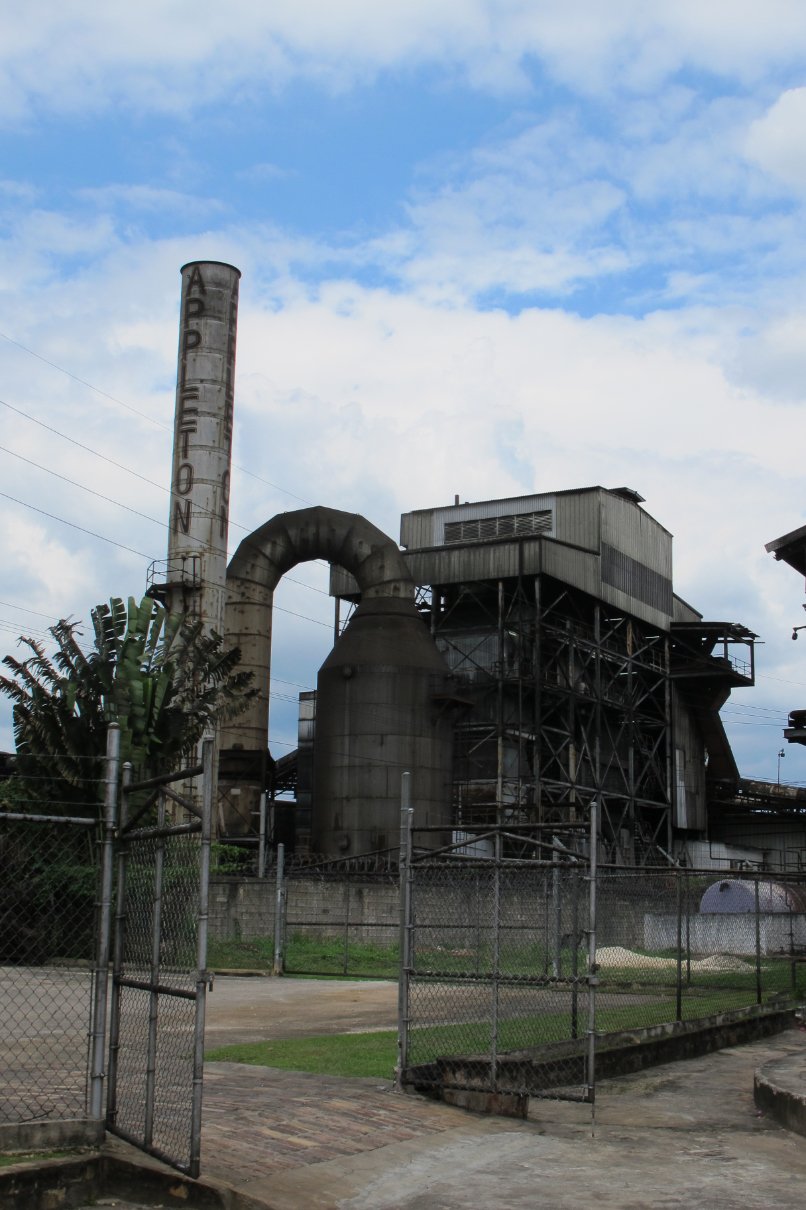
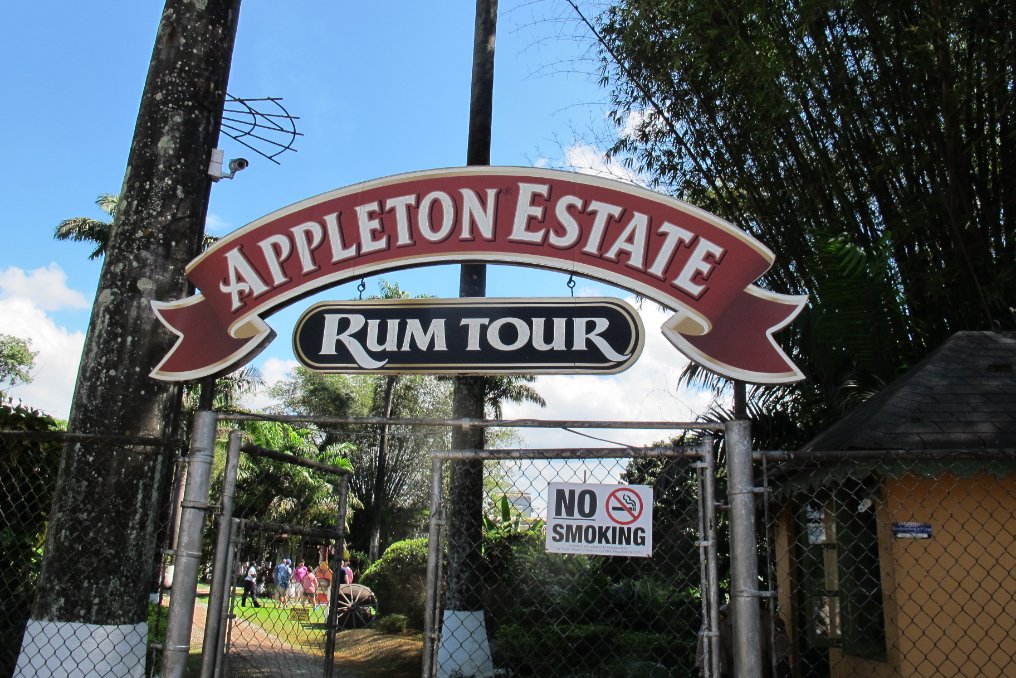
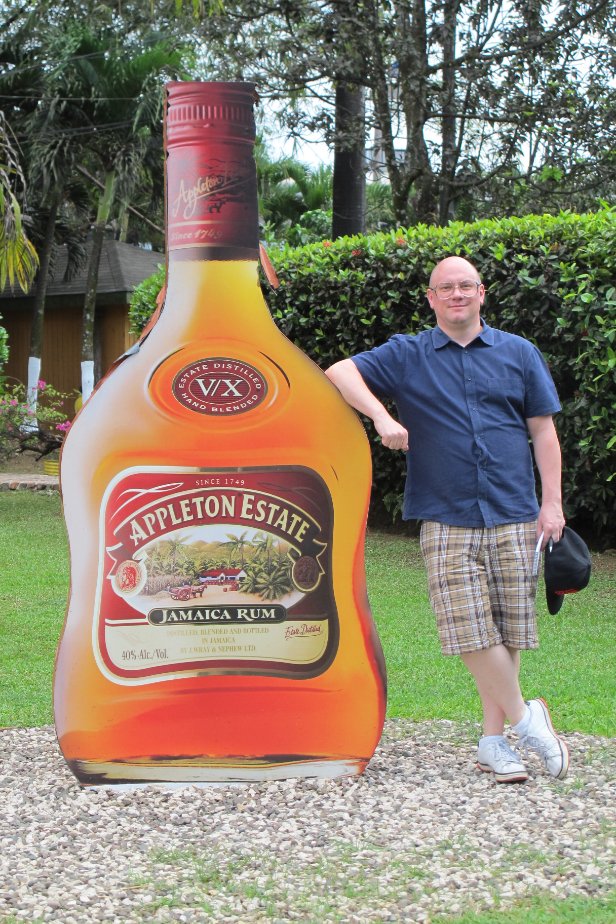
    In 2016 I visited the Appleton rum distillery on Jamaica for the second time. It's possible some of the information in this blog post may have changed since then. 

    This trip was organized by WIRSPA (West Indies Rum and Spirits Producers' Association Inc.) and their quality marque system ACR for Authentic Caribbean Rum. The attendees on the trip were the hugest bunch of rum nerds, so it was great. We were headquartered in Kingston and drove to a different distillery each day, often 3-5 hours drive in each direction. 

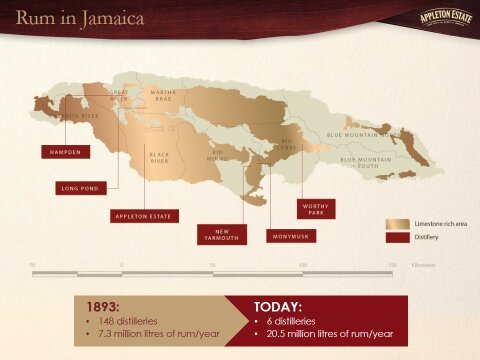
    Jamaica distilleries

    Much of this information is going to seem like random facts. First the facts that I found in my notes: 

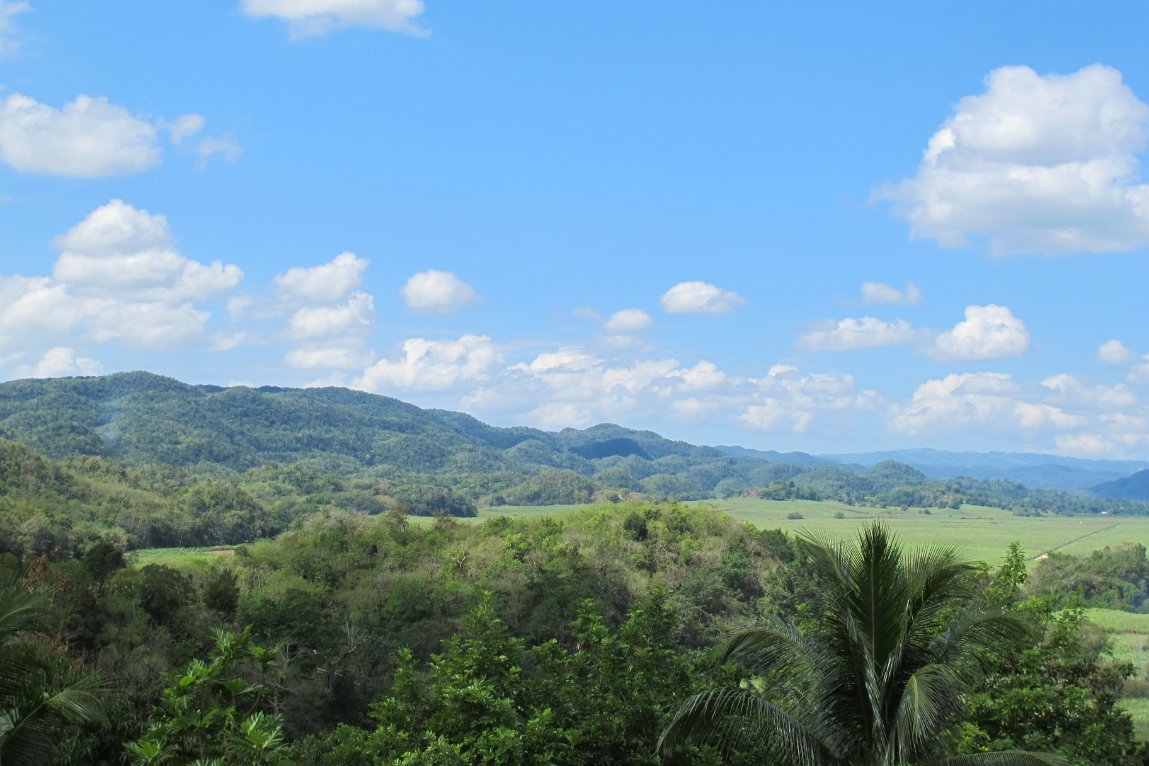
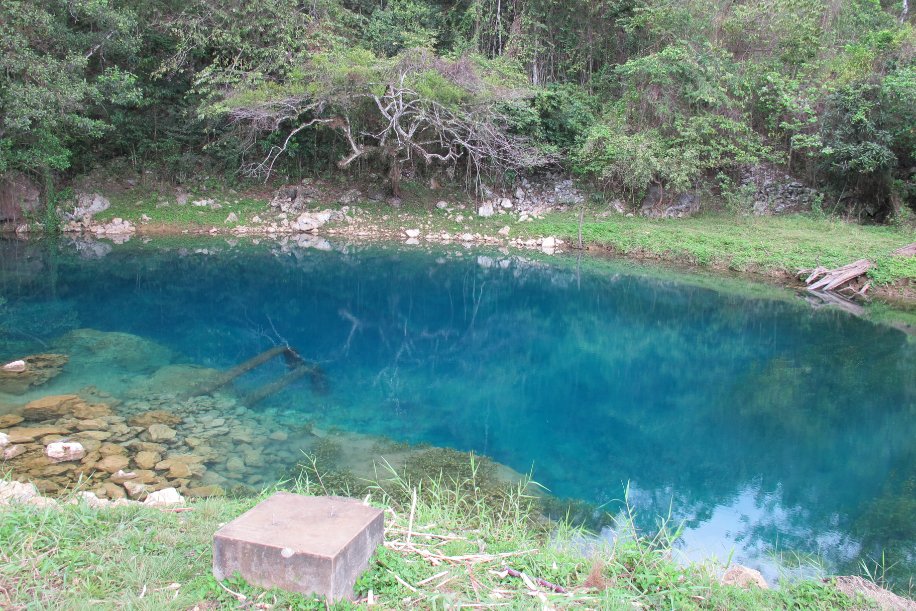
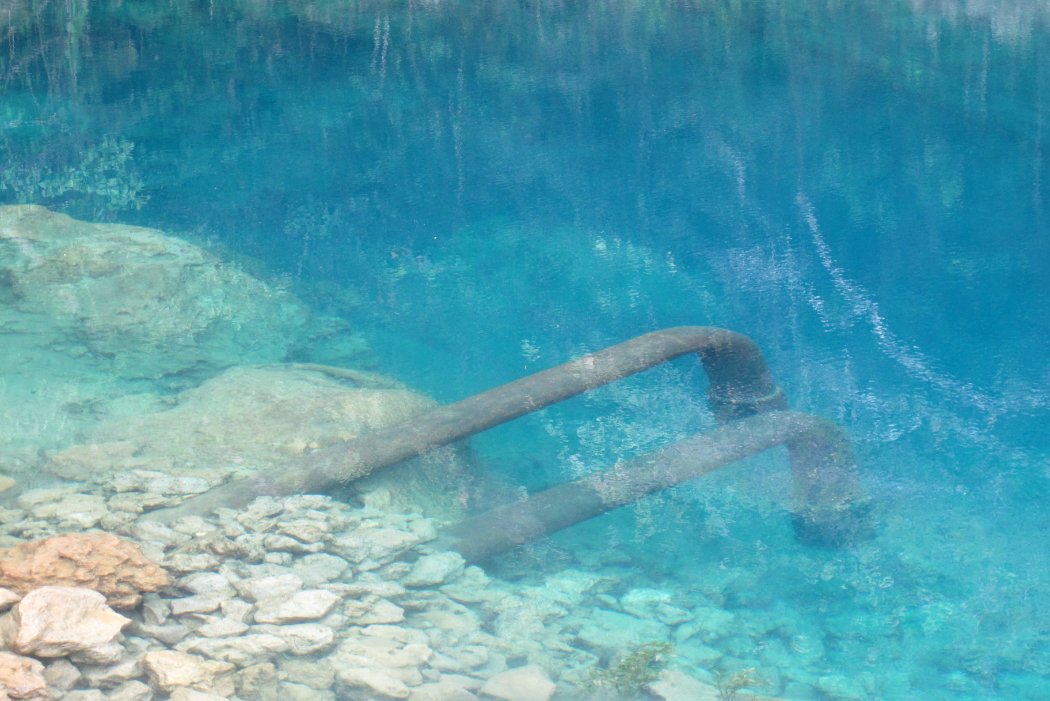
    We first visited a viewpoint looking down into the valley where Appleton is made. Then we visited a water source. The water source they say is the origin of the Black River. It filters through limestone and tastes very sweet. THey say 85% of Jamaica is limestone and all the rum distilleries on the island are located in limestone areas. This water is used in fermentation, not in barrel proofing nor bottling. 

    IMG_4469
    IMG_4469
    IMG_4469


    Appleton does not irrigate their sugar cane. They grow more than 10 varieties of sugar cane, all of which are harvested together. 

    Fifteen percent of their cane is hand-harvested due to the terrain. All of it is burned before harvesting, but they're slowly transitioning to non-burning where possible. 

    Ten tons of sugar cane makes about 30 cases of rum. 

    Molasses, after sugar extraction, still contains about 60% sugar. 

    Appleton uses a cultured yeast and a 36 hour temperature-controlled fermentation of the molasses. At the end it's about 7% ABV before distillation. 

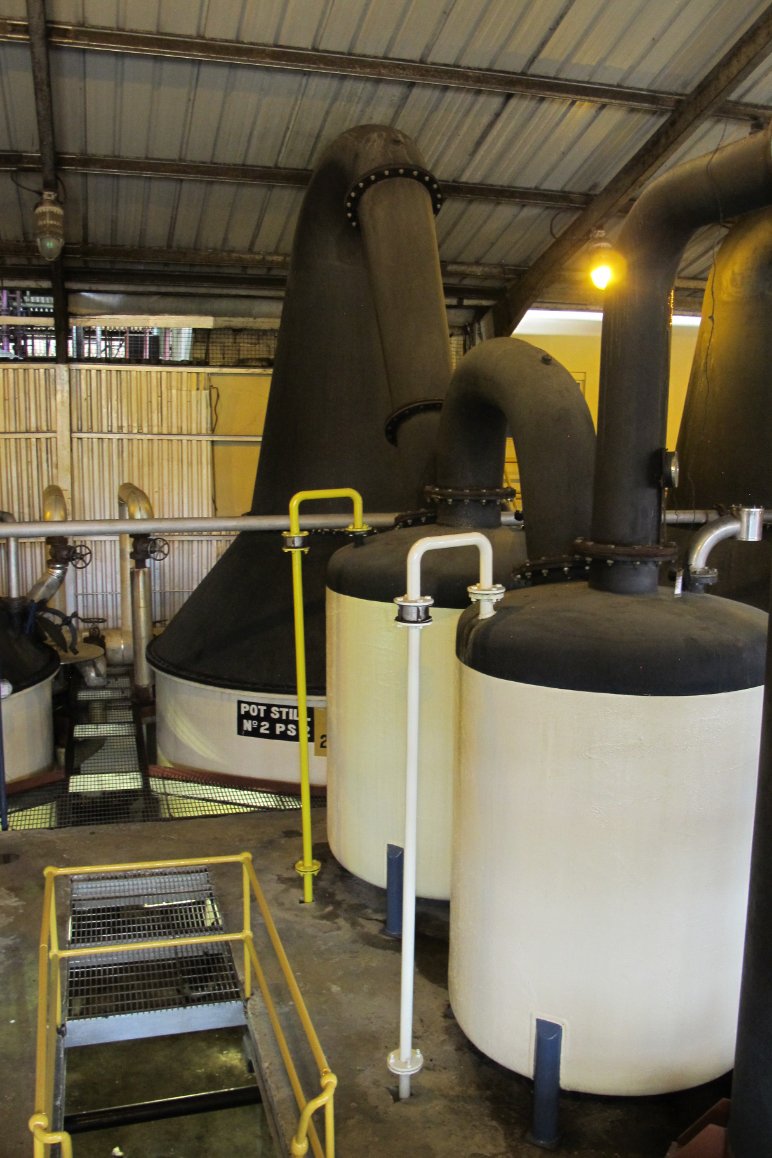
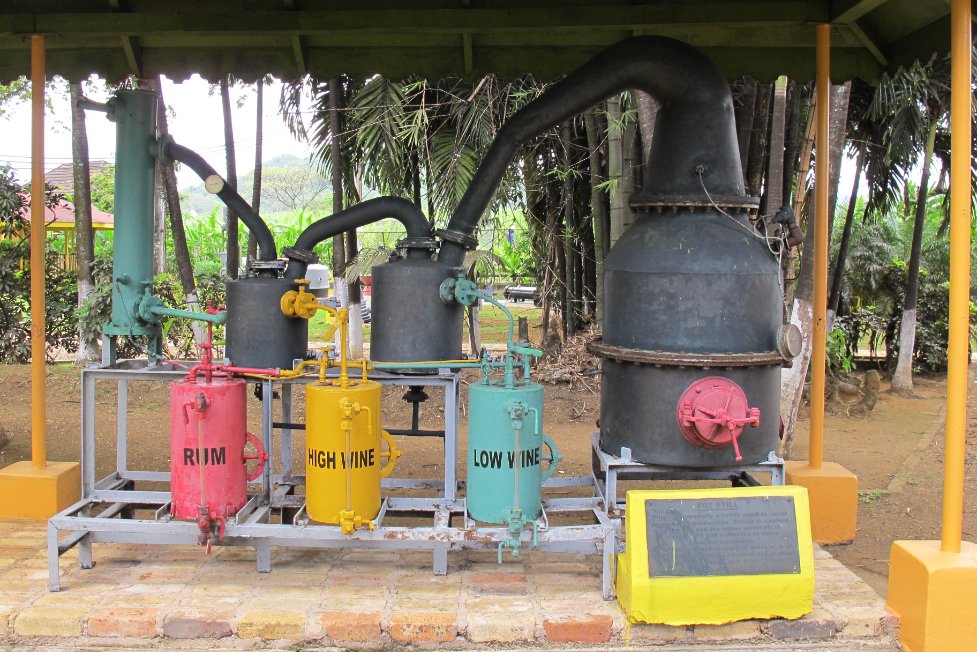
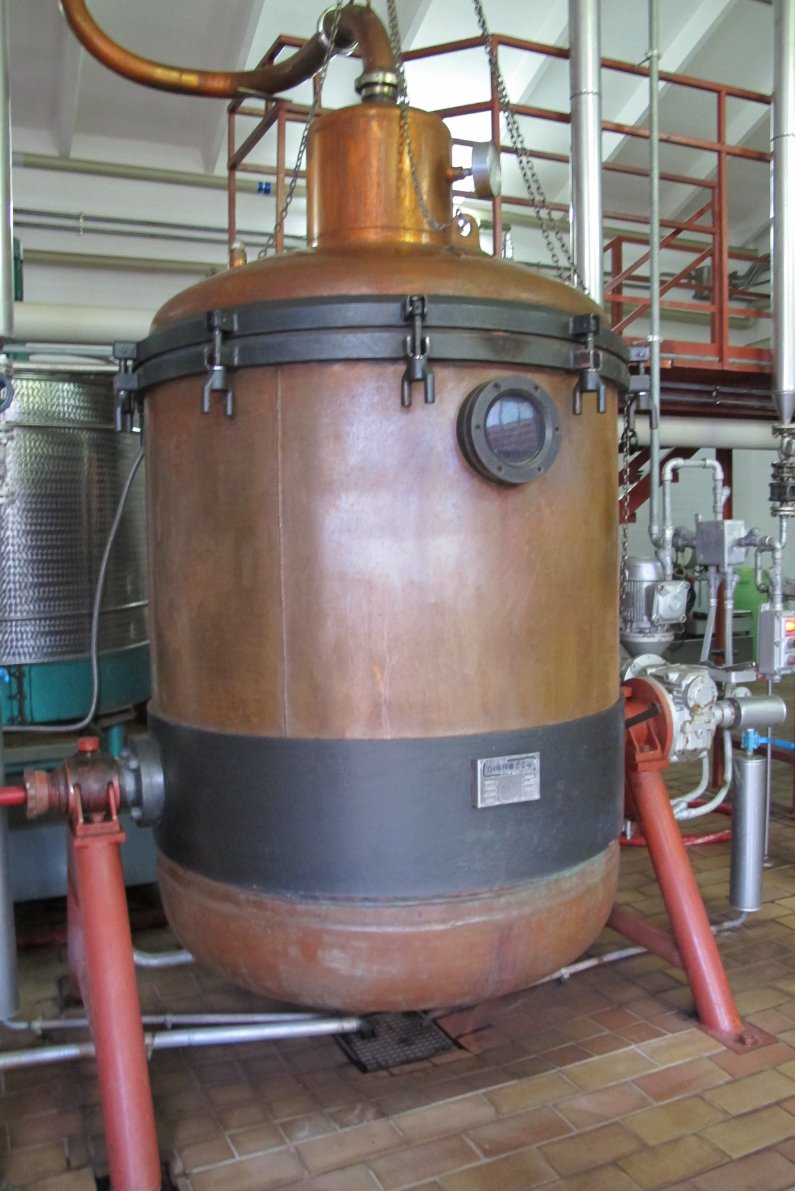
    They say the signature orange peel top note of Appleton comes from the shape of their still. They have five 5,000 gallon pot stills. 

    IMG_4549
    IMG_4549
    IMG_4549
    IMG_4549


    They age, blend, and bottle the product in Kingston, not here at the distillery. They have over 240,000 barrels aging. During aging, the rum loses ABV. Every three years, they combine the rum in a batch of barrels to minimize headspace and evaporation. 

    After blending, they let the rum marry for about 6 weeks before bottling it. They do dilution in stages. 

    Different marques of rum have different head and tails cuts. 

    They have 16 warehouses. All the barrels are palletized. 

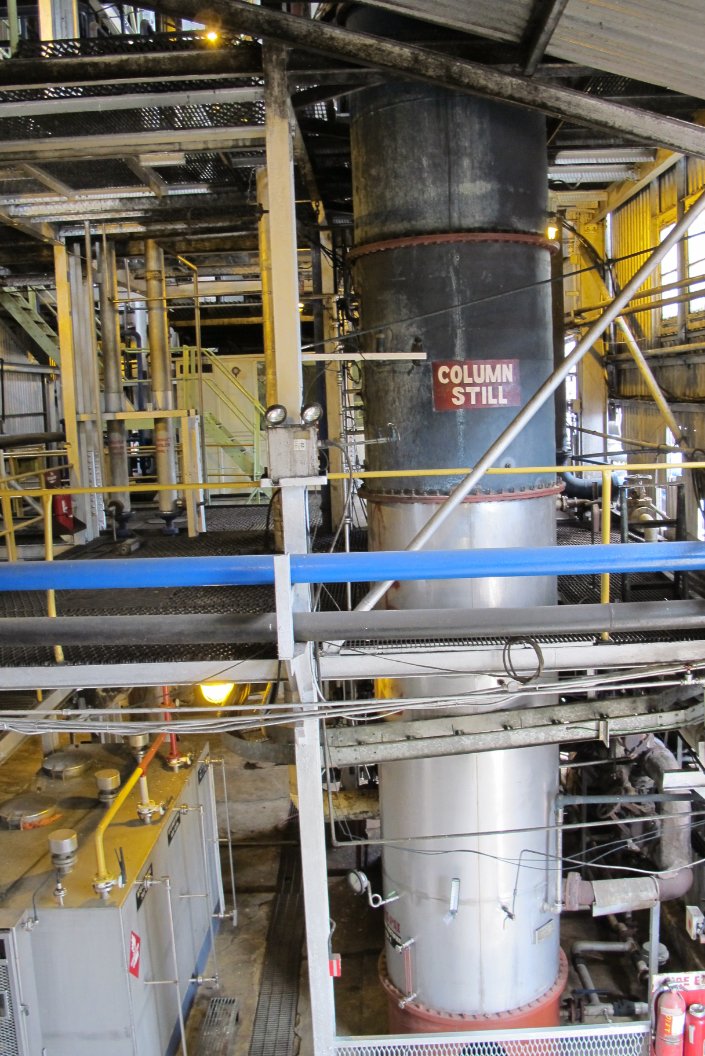
    At Appleton's other distillery, New Yarmouth (the only distillery on the island we didn't see on this trip) they have smaller pot stills and column stills. Wray & Nephew is made there. 

    Molasses used in Jamaican rum can come from outside of Jamaica. 


    IMG_4464


    A second set of facts: We had a slideshow and tasting. I took pictures of some of the interesting slides and here are more random facts from slides:

    • Appleton Estate accounts for 28* of all rum produced in Jamaica
    • J. Wray & Nephew Ltd accounts for over 60% of all rum produced on Jamaica 
    • Sugarcane is harvested every 12 months (though it matures between 10 months and 2 years generally)
    • 10 tons of sugar cane is equivalent to 1 ton of sugar, .4 tons of molasses, or 30 cases of rum
    • Jamaican rum is used in blending around the world, and it is categorized and purchased in bulk according to the marques, which have names or codes and are associated ester counts – the amount of funk in the rum. The marques mentioned by Appleton are Common Clean (40-80 esters); Plummer (180 esters); Wedderburn (200 esters); Light continental (400-700 esters); Continental (900-1600 esters). 
    • Rum is barrel aged at 80% ABV here
    • There is up to a 6% evaporation loss (angel's share)

    IMG_4500


  • A Visit to the Cocchi Vermouthery in Asti, Italy

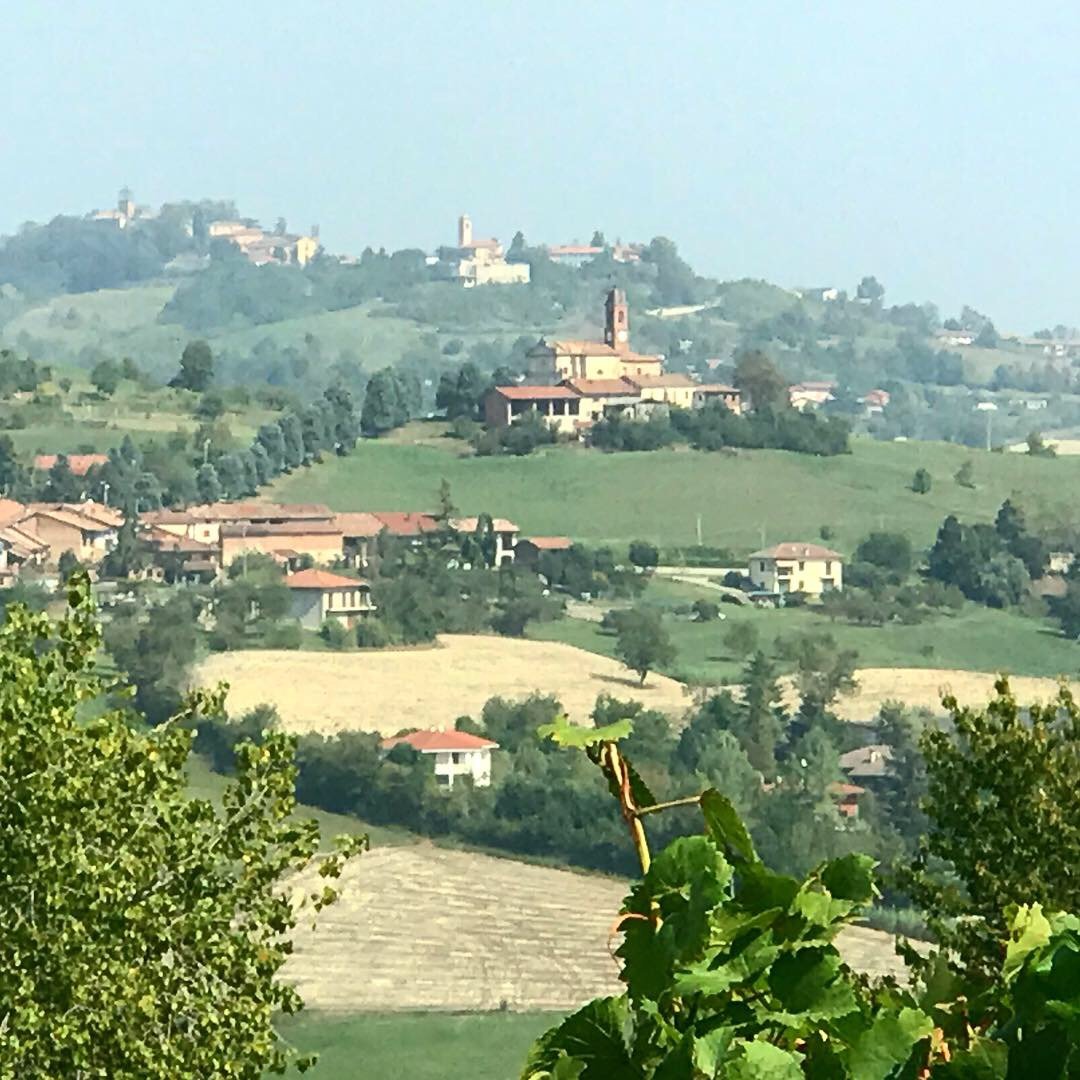
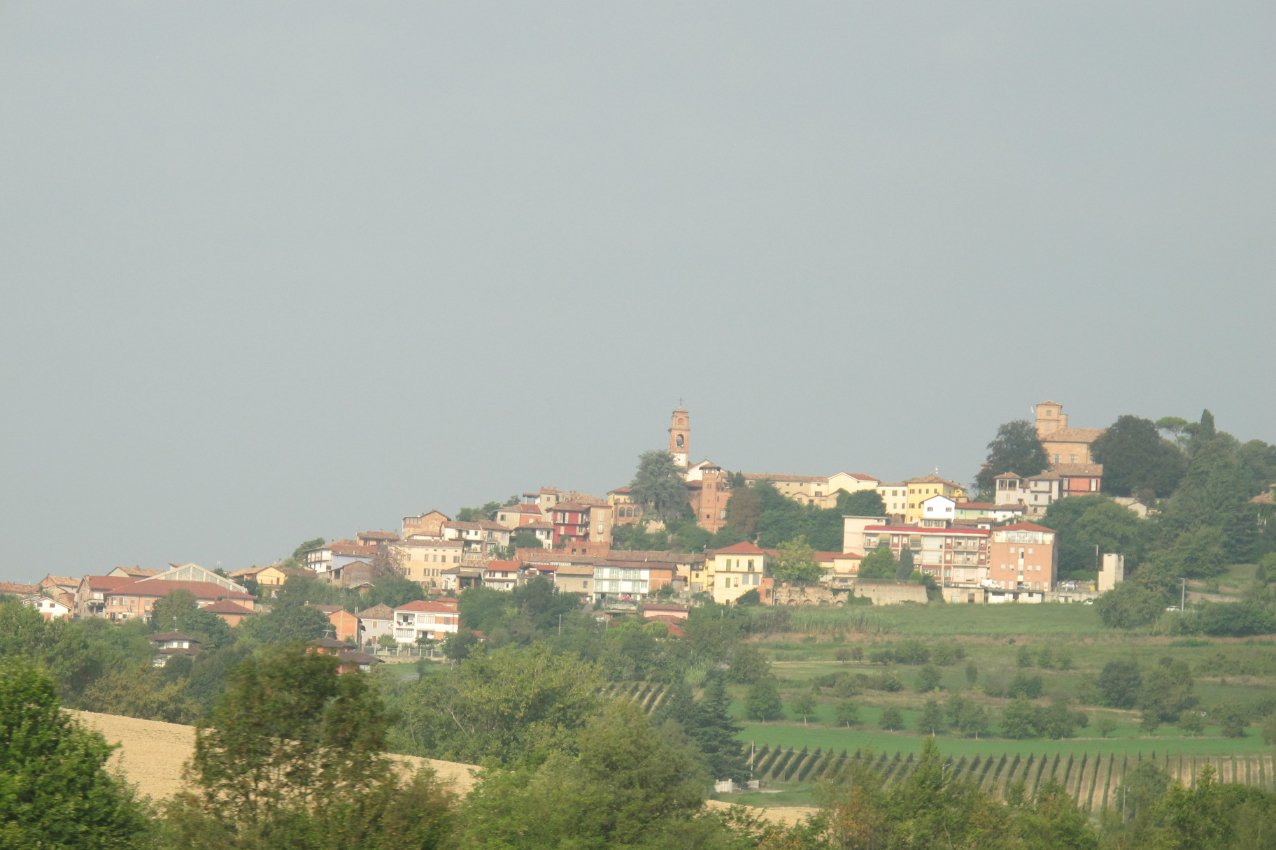
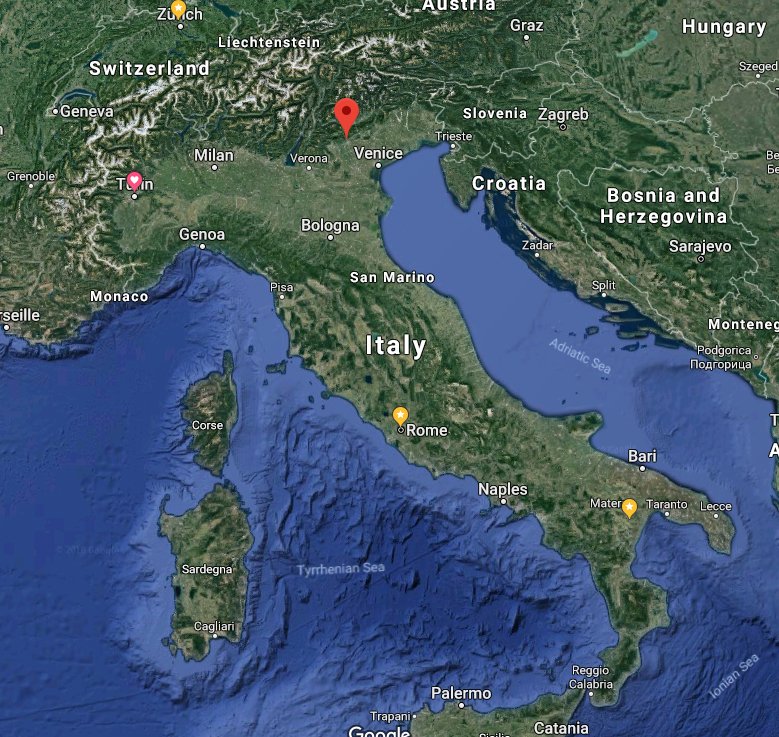
    Cocchi wines and vermouths are made in Asti, in the heart of Piedmont region of northwest Italy. I had a chance to visit the facilities this fall. 

    Cocchi map

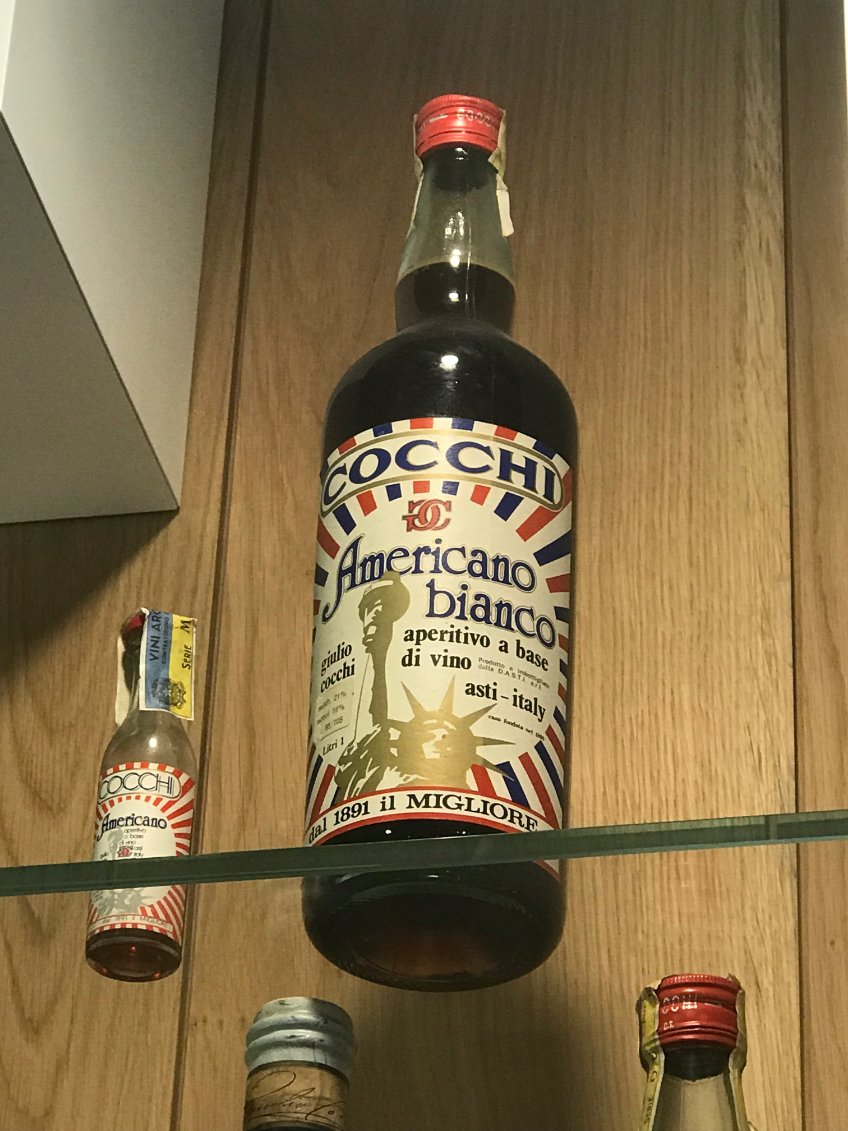
    The company was founded in 1891 in Asti by Giulio Cocchi. He made flat, sparkling, and aromatized wines. Since 1978, the Cocchi company has been run by the Bava family. Our host was Roberto Bava, who is often seen around the global cocktail circuit at events like Tales of the Cocktail and Bar Convent Berlin. 

    Bava is currently the president of the Vermouth di Torino Institute and was part of the coalition of vermouth makers to get legal recognition for the Vermouth di Torino geographical indication (GI) in 2017. In order to qualify, the production and bottling must be in Piedmont, with alcohol between 16-22%, with Italian wine, artemisia absinthium and/or pontica also from Piedmont.   

    IMG_1954
    IMG_1954
    IMG_1954
    IMG_1954
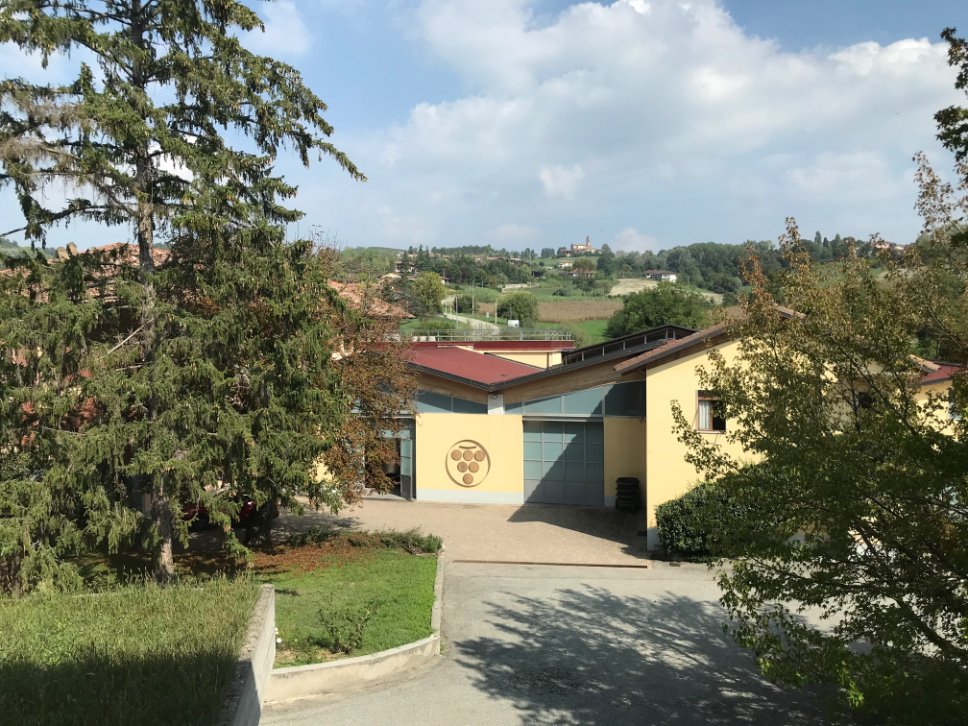
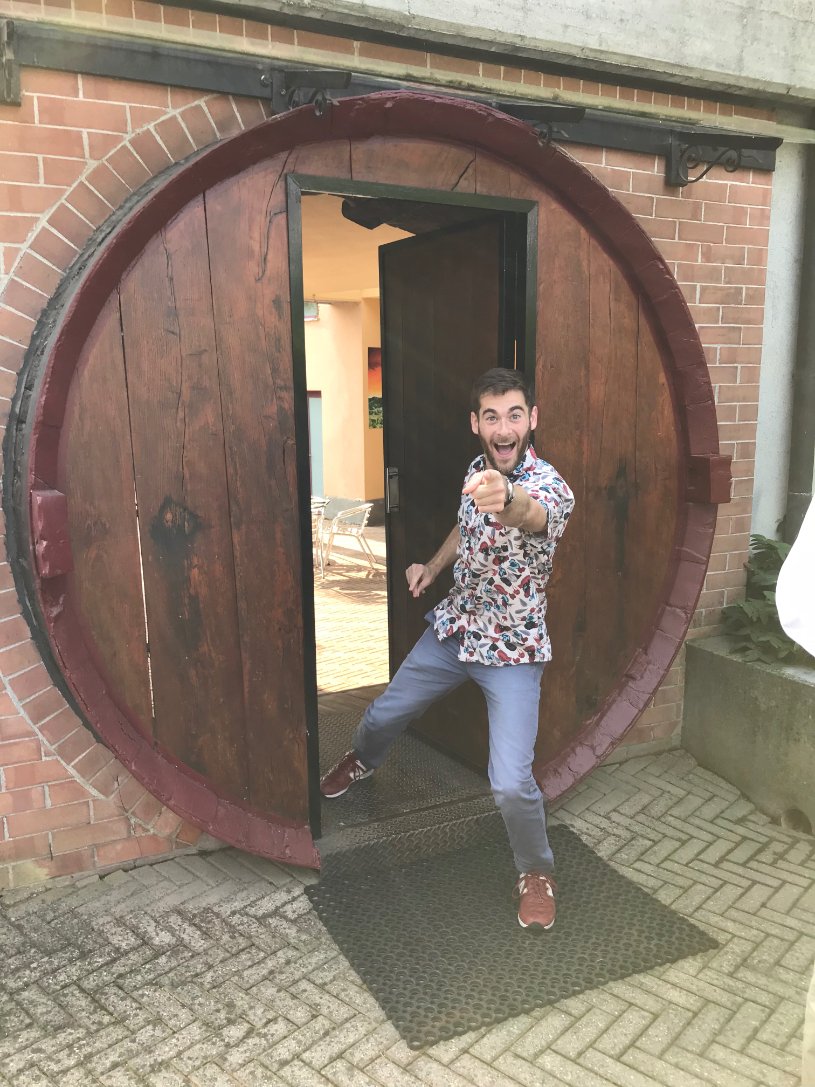
    IMG_1954This is the entrance to the winery. 


    Cocchi previously produced products like fernets, annisetts, and rababaros that were discontinued in the 1980s, along with vermouths I believe. But with the cocktail renaissance the vermouths came back into necessity. 

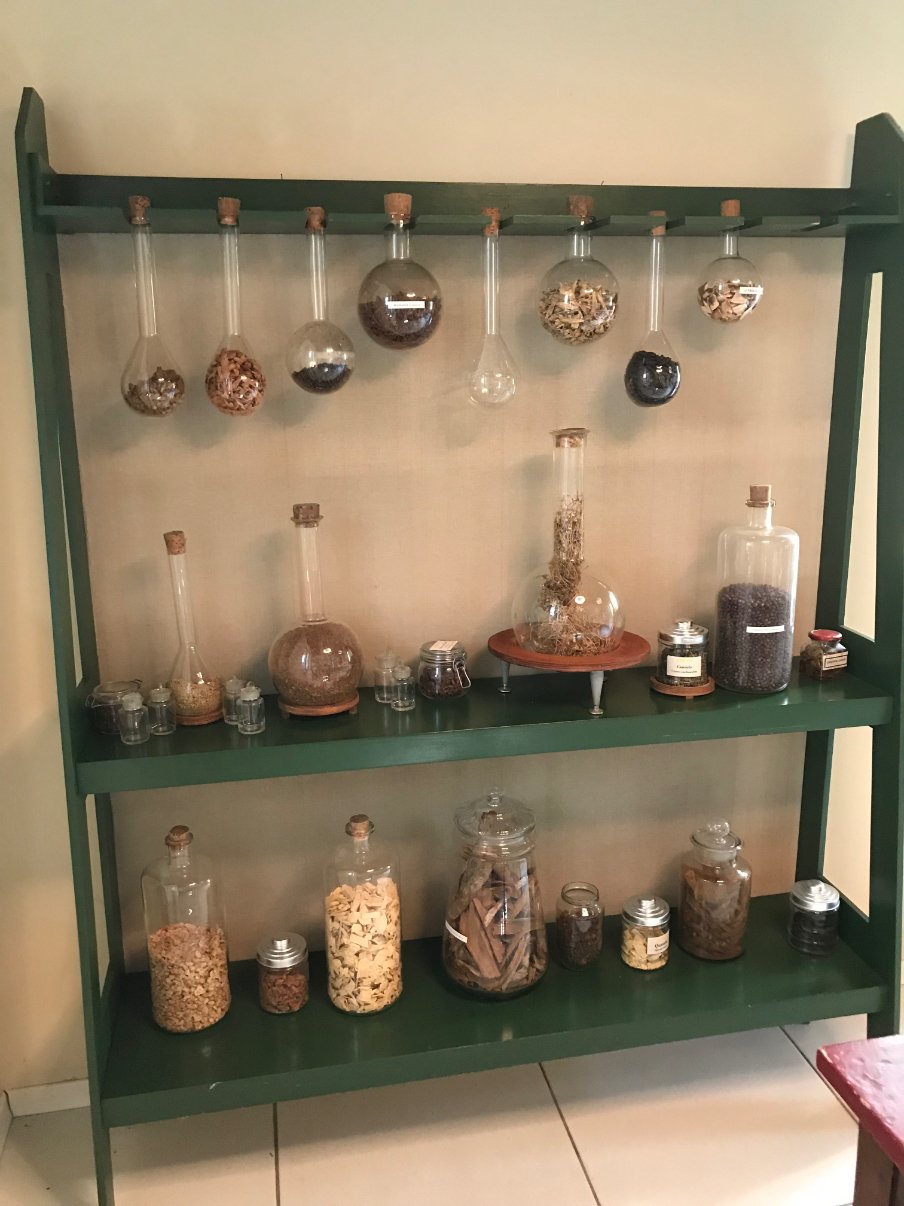
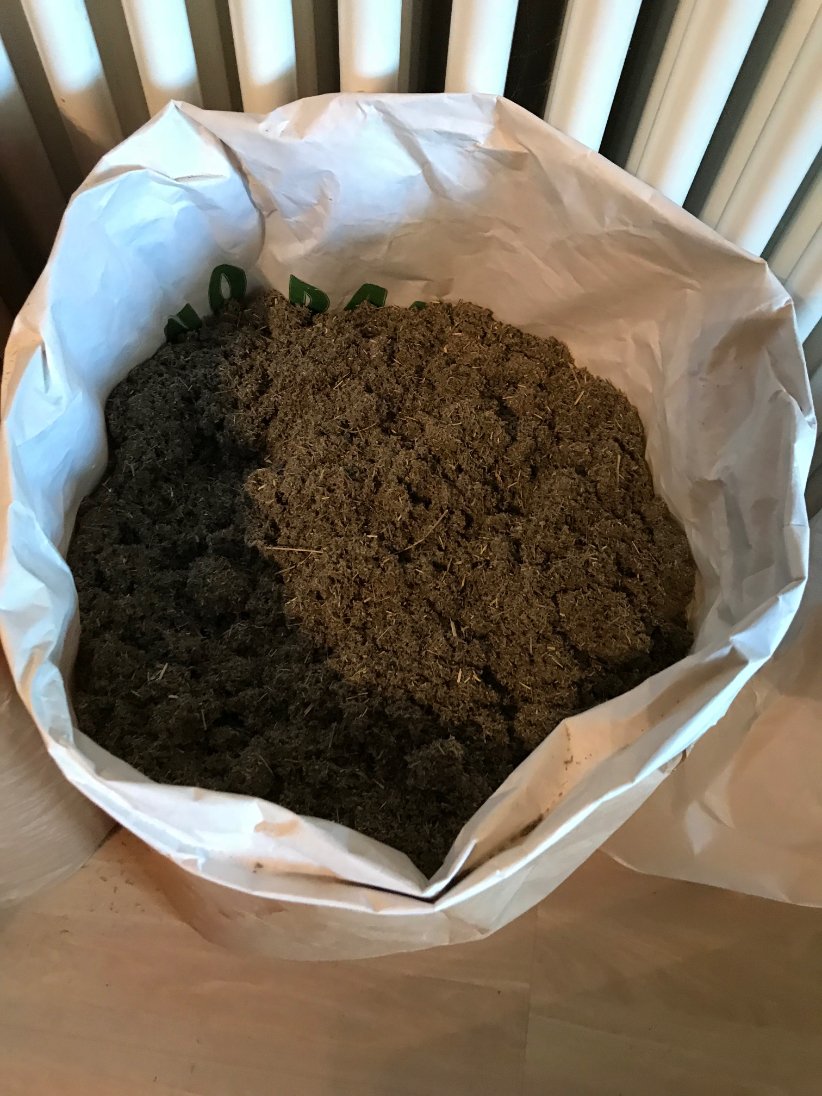
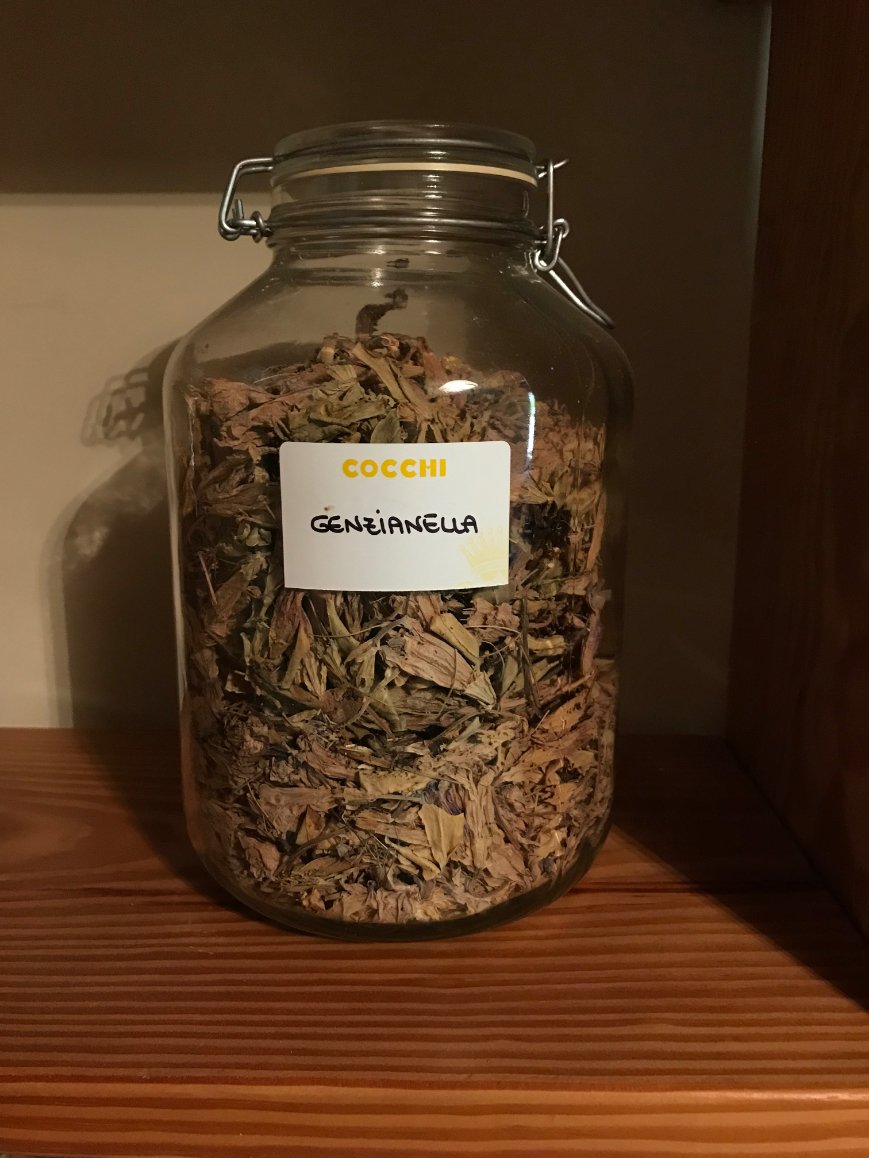
    They only use macerated (rather than distilled) botanicals in their products. They do extractions in groups- a few botanicals at a time that can be used in various products. We visited the botanical room, where I would have stayed all day if I could have. 


    IMG_1863
    IMG_1863
    IMG_1863
    IMG_1863
    IMG_1863


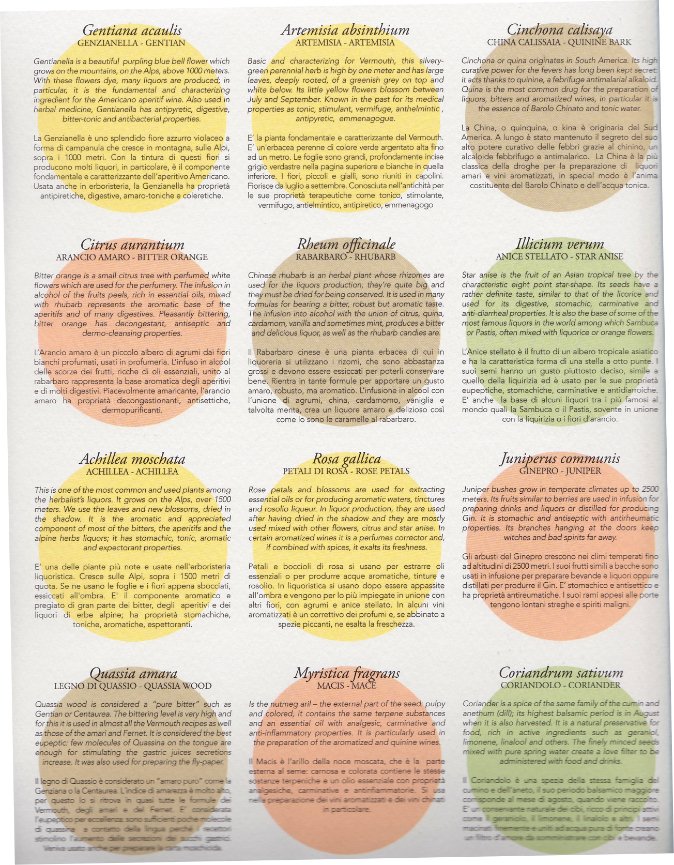
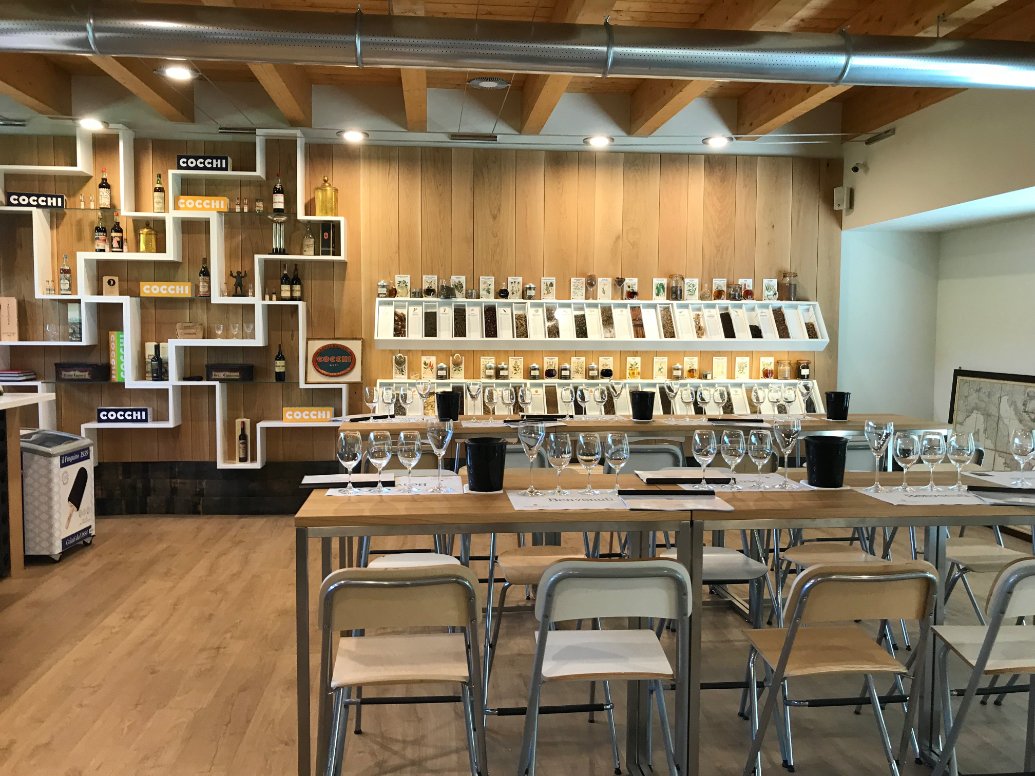
    We then went upstairs to the visitor's center where we did a tasting and I took pictures of the botanical descriptions, which I put in this post on A Guide to Botanicals Used in Cocchi Aromatized Wines & Vermouths.

    When I got home, I found I also had this printed document with more botanical information:

    Cocchi botanical info


    Visitor's Center: 

    IMG_1867
    IMG_1867
    IMG_1867
    IMG_1867
    IMG_1867


    Cocchi Products

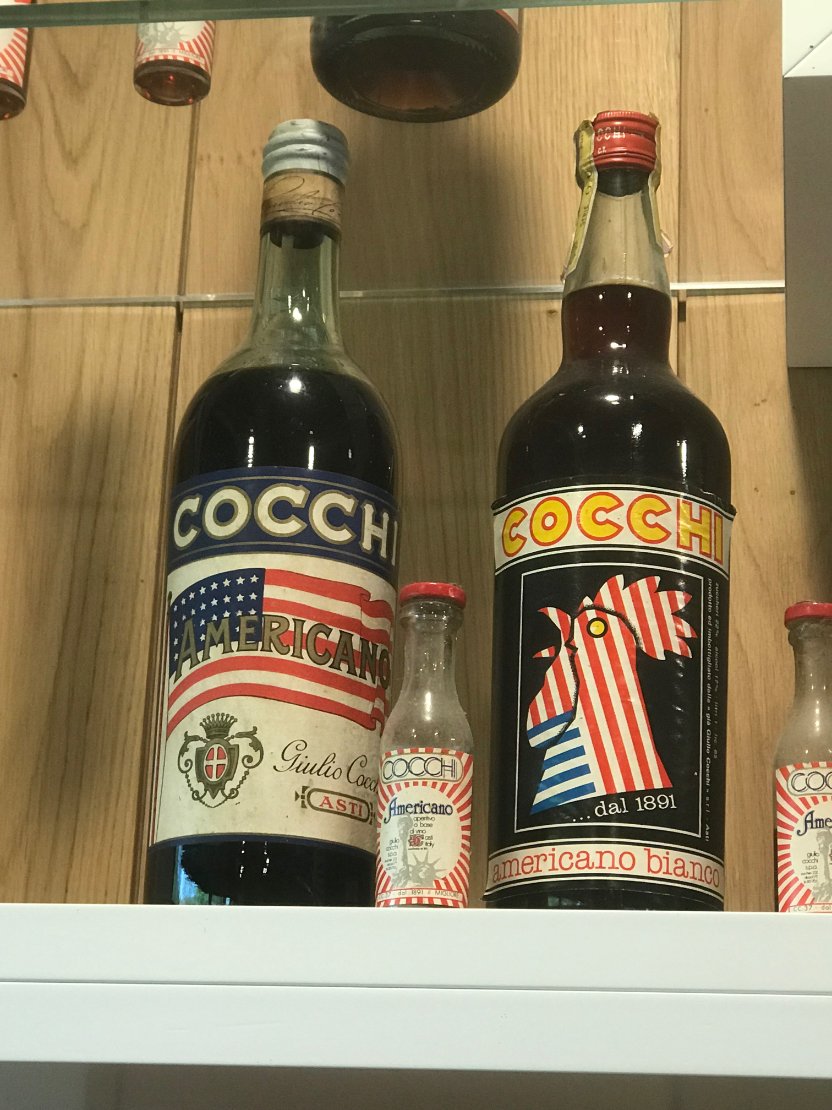
    Cocchi Americano is an aromatized wine with gentian, cinchona bark, bitter orange, and wormwood. It is used (and was probably designed) for drinking with ice and soda water. 

    Cocchi Rosa is made from a red wine base with the same extracts as the bianco, but with additional ginger and rose petals. 

    Cocchi Vermouth Di Torino is a sweet vermouth with wormwood, cinchona, bitter orange, and rhubarb.

    They also make Dopoteatro Vermouth Amaro, an "evening vermouth" with wormwood, a double dose of cinchona, rhubarb, quassia, and chiretta (which is sometimes called Indian gentian and tastes very much like gentian). 

    Barolo Chinato Cocchi contains barolo wine and cinchona bark (as you'd guess from the name), rhubarb, gentian, and cardamom.

    In addition to their still and sparkling wines, they also make grappa and made one batch of brandy. 


  • A Visit to the Monkey 47 Distillery in Germany’s Black Forest

    About a year and a half ago I visited the Monkey 47 gin distillery in Germany's Black Forest area. Today I'm finally writing about it. 

    IMG_8375


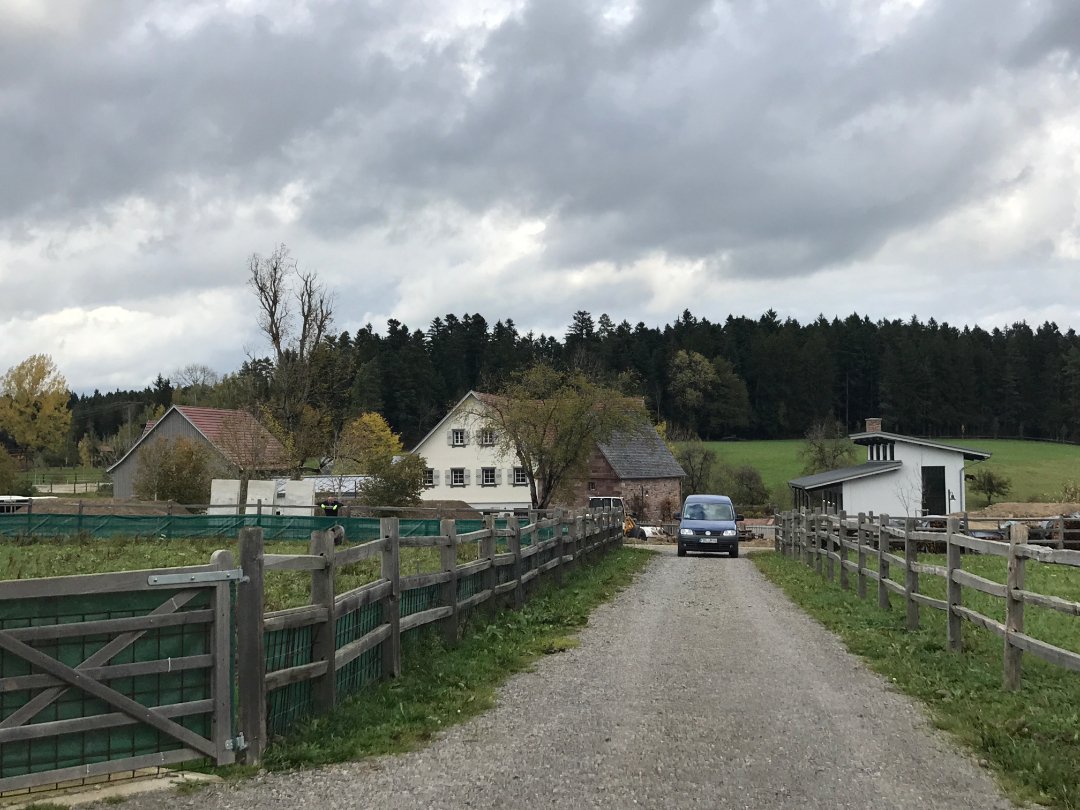
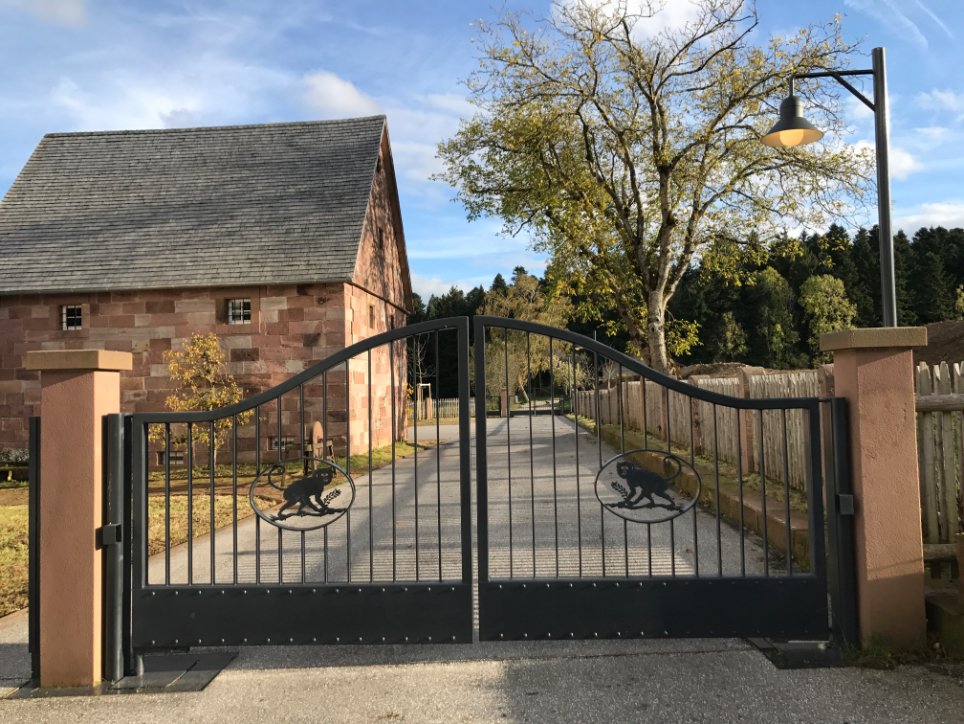
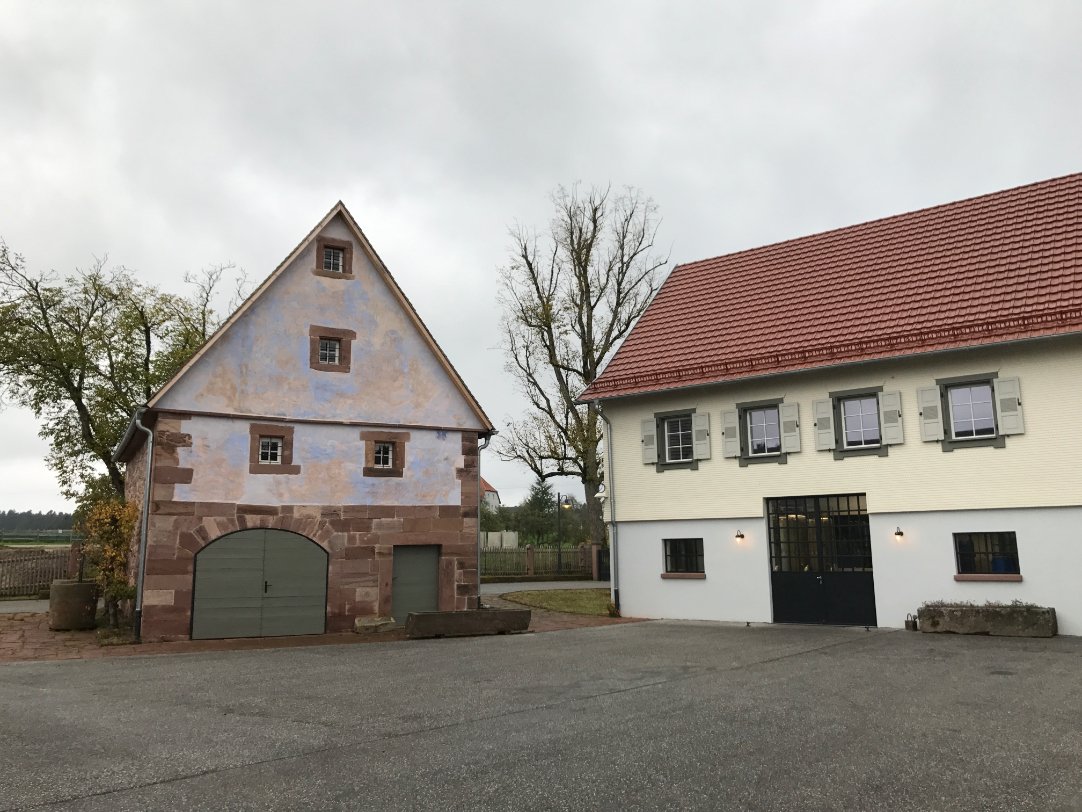
    The distillery is located in southwest Germany, with the closest city being Stuttgart. I pictured a distillery in the Black Forest to be a dark, densely forested area opening up to a house in the woods like Hansel and Gretel, but the distillery is really more of a farmhouse amongst fields. (It's a former dairy farm.) There is a bee house on the property and a small garden. It's very peaceful there. 

    IMG_8430
    IMG_8430
    IMG_8430


    According to our hosts, there are about 28,000 microdistilleries in the region.  

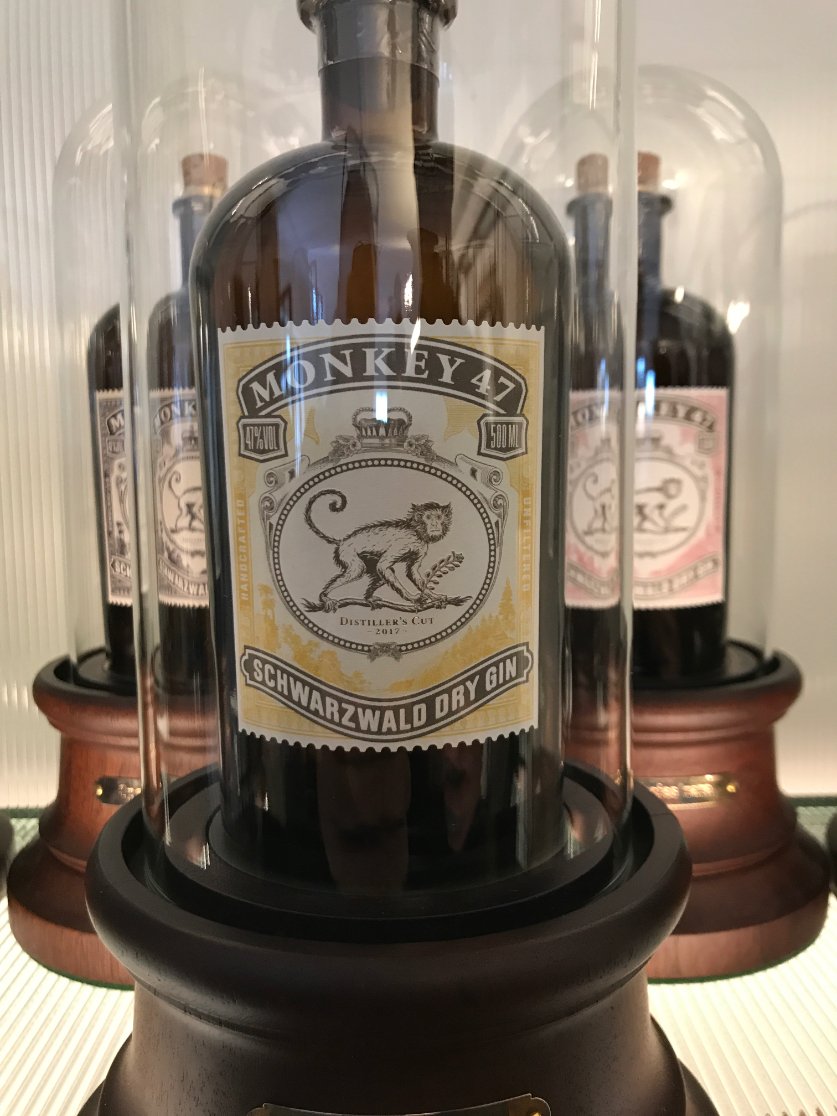
    Monkey 47 has 47 botanicals distilled into it. That's a lot. The base is a molasses-based alcohol from France.

    Ingredient notes:

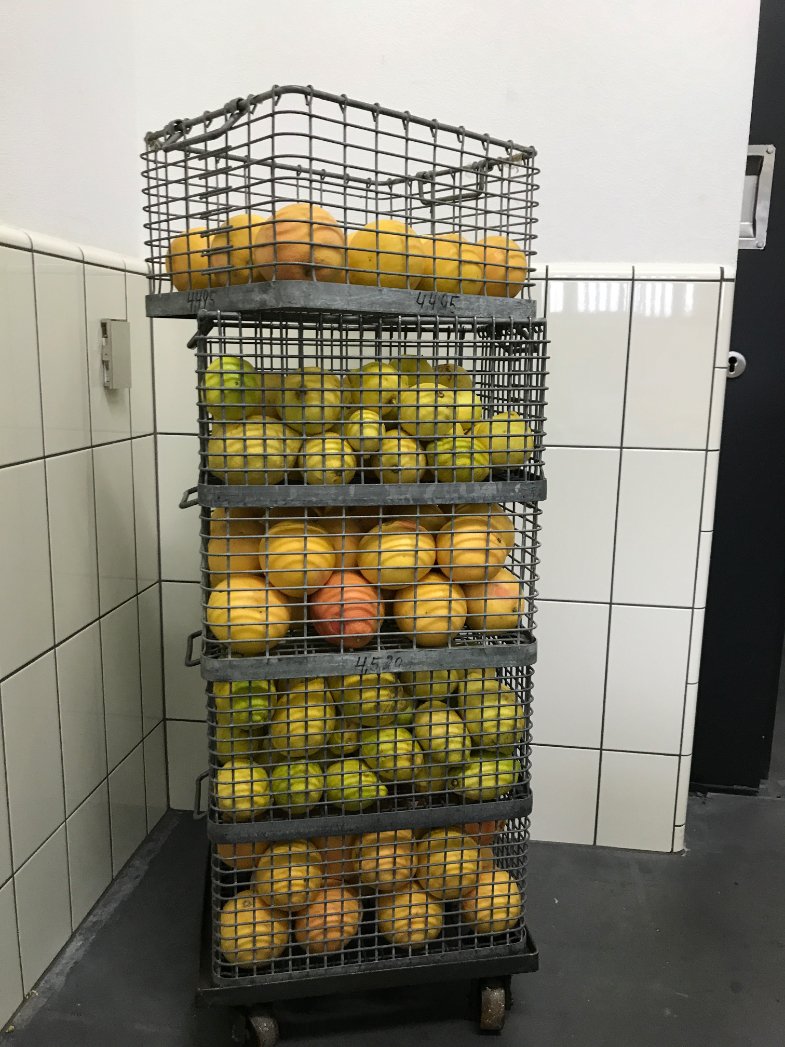
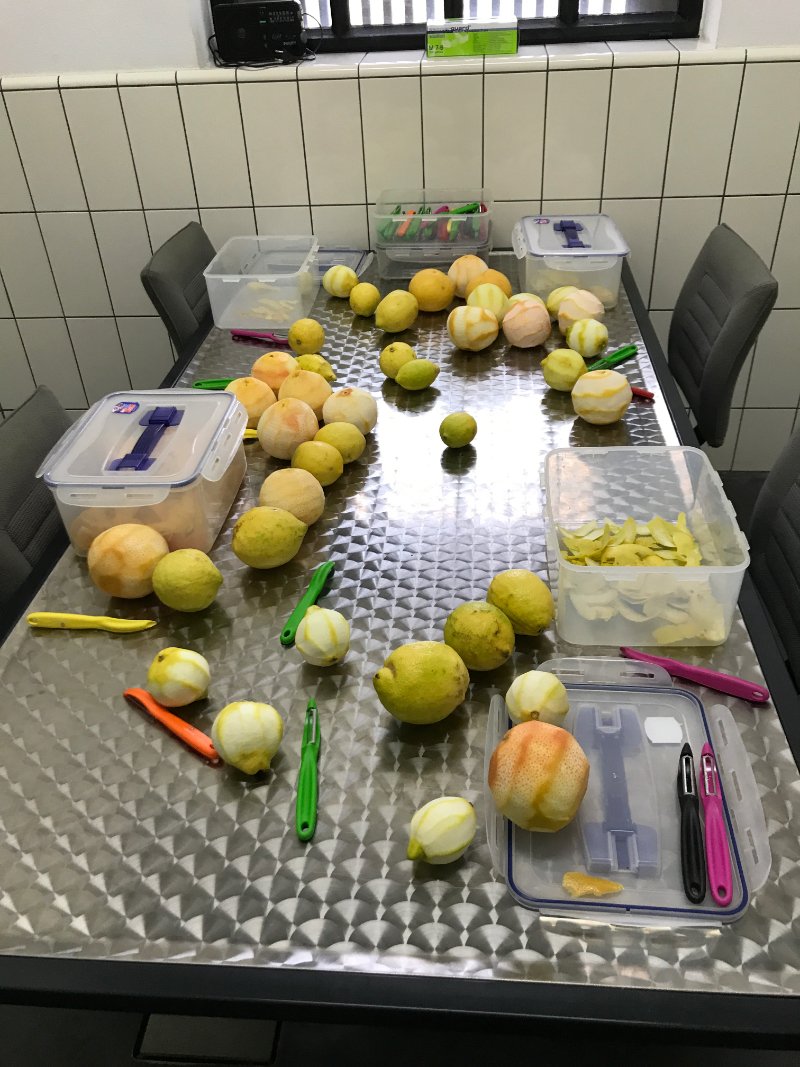
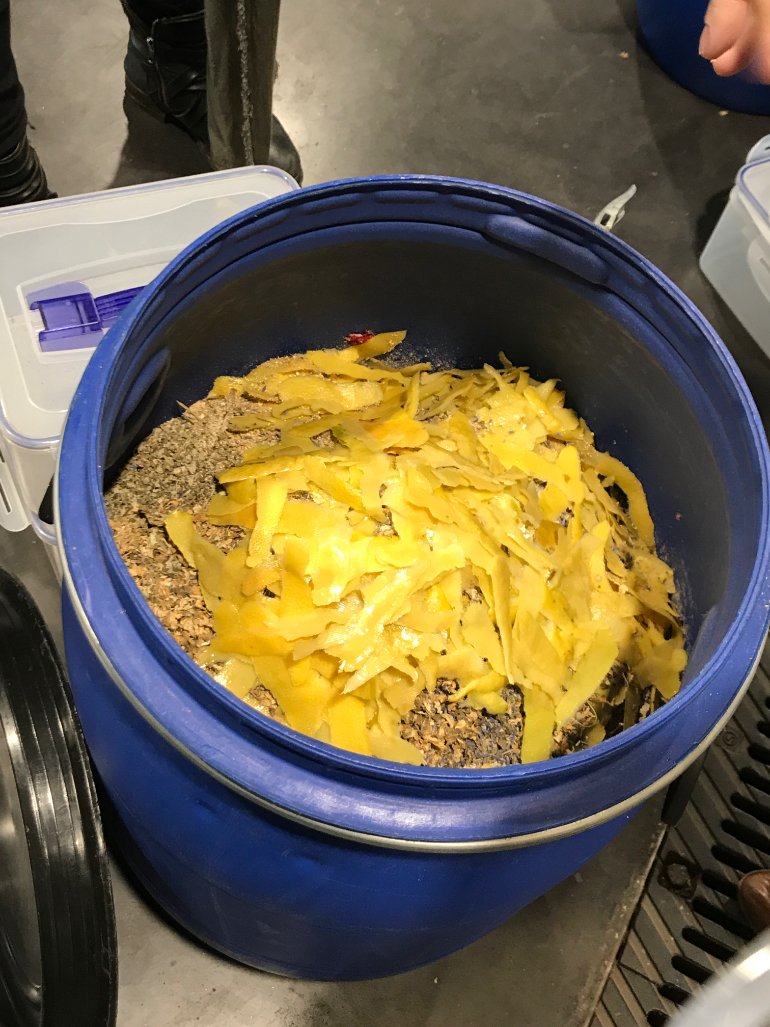
    • They use fresh peeled grapefruits and lemons- no pith. They eat the grapefruits and some of the lemons are used to make biogas. 
    • The juniper comes from Croatia or Tuscany. It is ground up before macerating.
    • Angelica seed is also ground up.
    • A 'pepper mix' of cardamom, cubeb, and grains of paradise are mixed and grinded in a secret ratio.
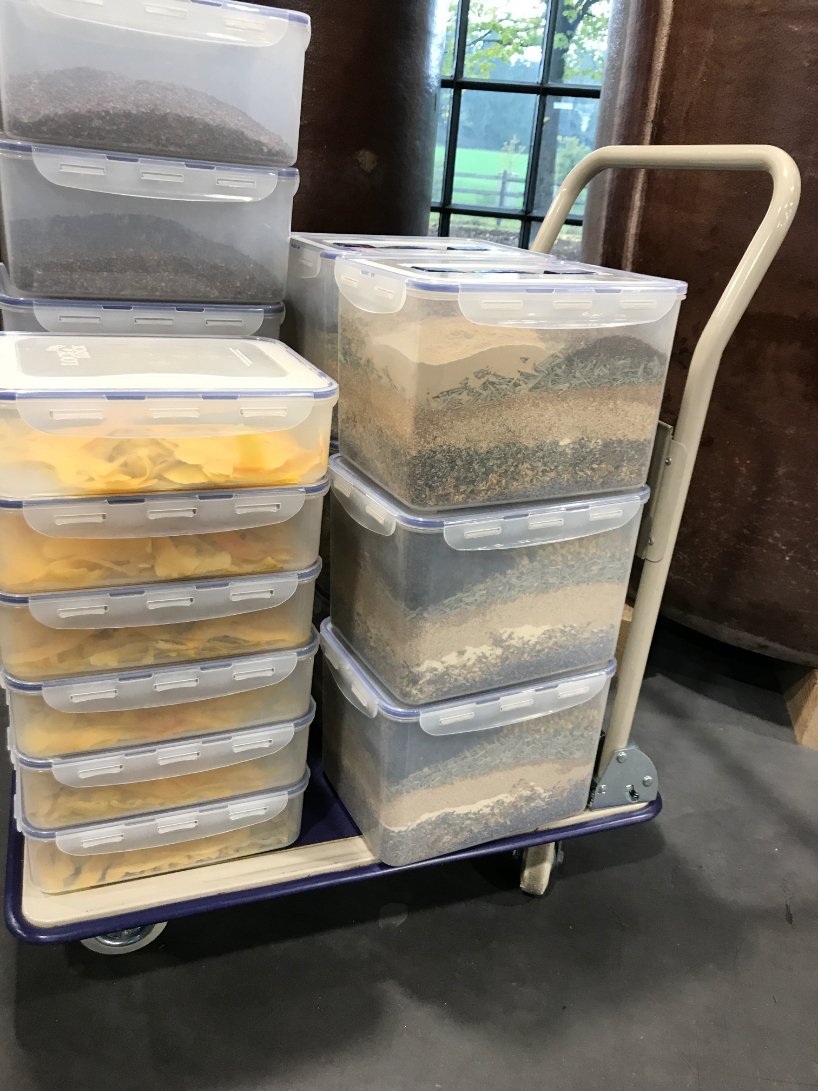
    • Ground botanicals are stored in plastic boxes until use. 
    • Other botanicals include lemongrass, corriander, angelica, orris root, spruce tips, raspberry leaves, acacia, and lots of lavender, which should be clear if you've tasted it. 

    For maceration, the neutral 96.4% ABV spirit is diluted down to 70%.

    Lingonberries go into the maceration barrel first, as they can stay a long time in the spirit without over-extracting. The rest of the botanicals macerate for 36 hours before being distilled. 

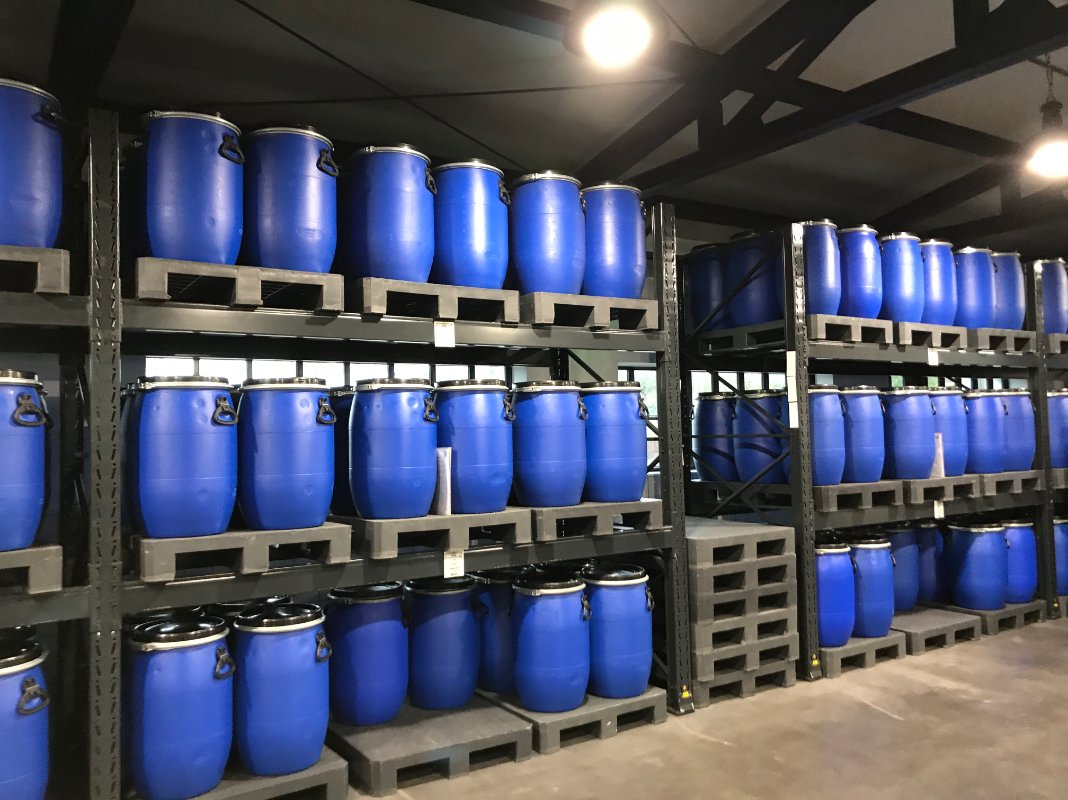
    Each of the blue barrels makes 120, 500ml bottles of gin. Each barrel has about 25 liters of alcohol in the 60L bucket- they're not filled all the way. 


    IMG_8257
    IMG_8257
    IMG_8257
    IMG_8257
    IMG_8257
    IMG_8257
    IMG_8257
    IMG_8257


    After maceration, one bucket is dumped into a still and then water is added to fill it to 100 liters. The system is pretty efficient: one bucket to one still to one batch. 

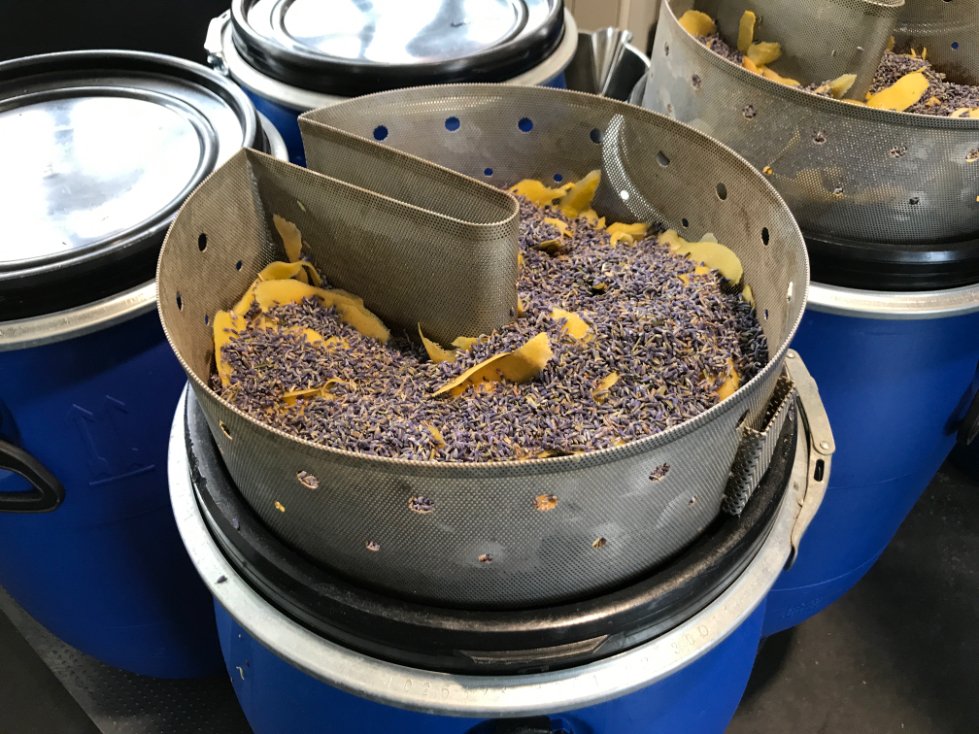
    Additional botanicals are put in a botanical basket in the steam section of the still – fresh lavender and lemon peels, not sure if anything else.  


    IMG_8336
    IMG_8336 IMG_8247


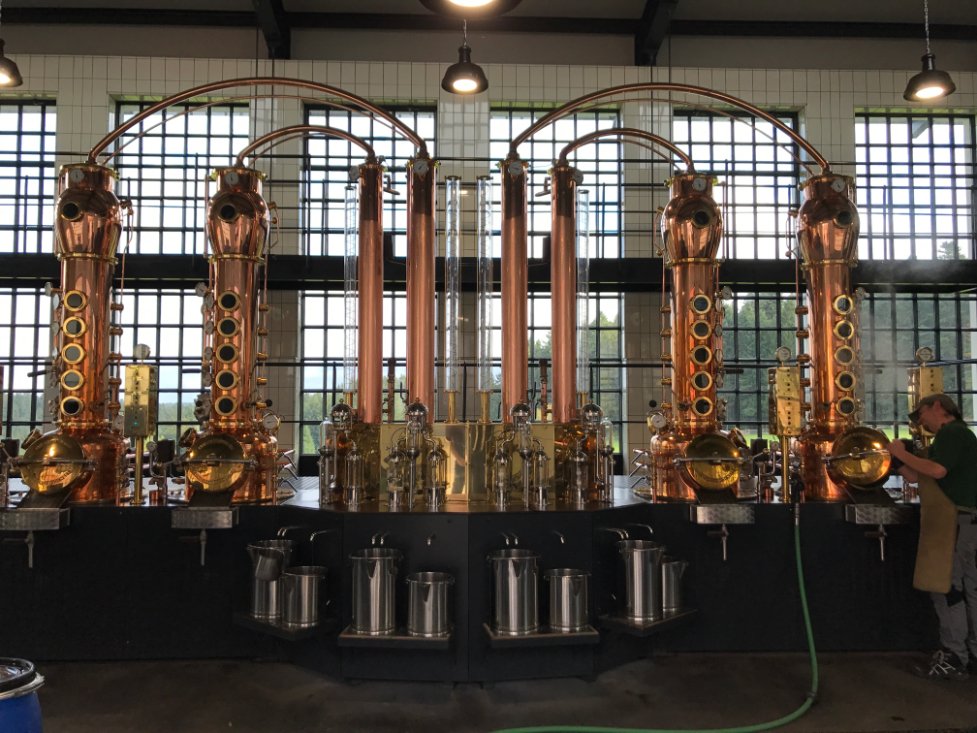
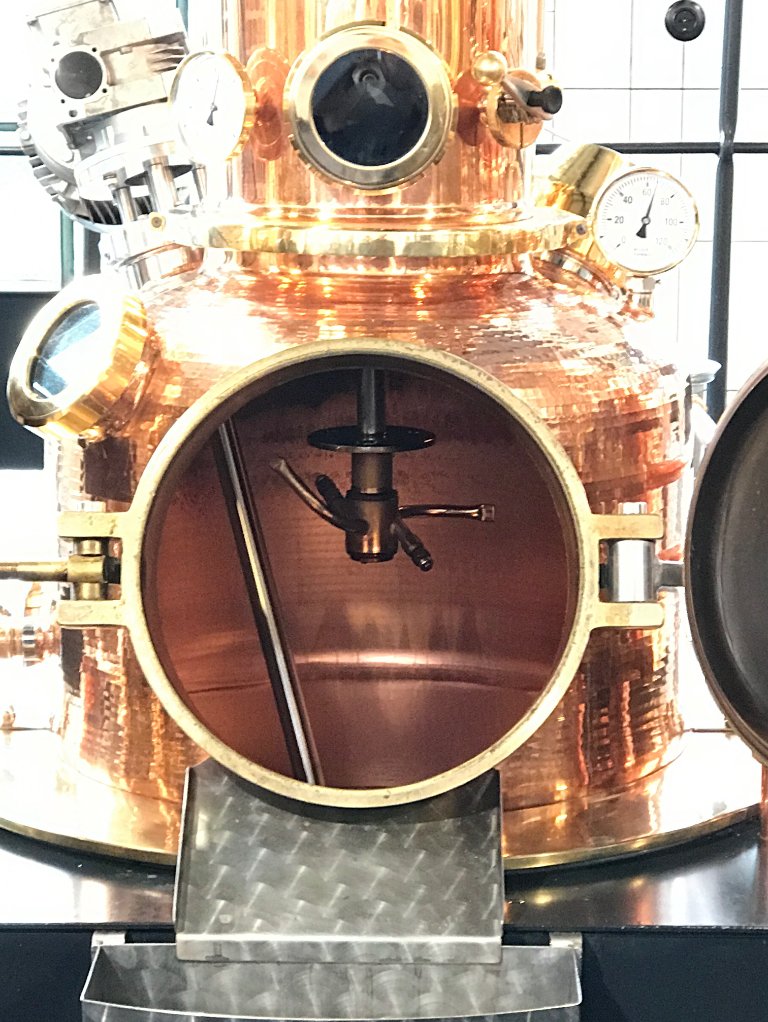
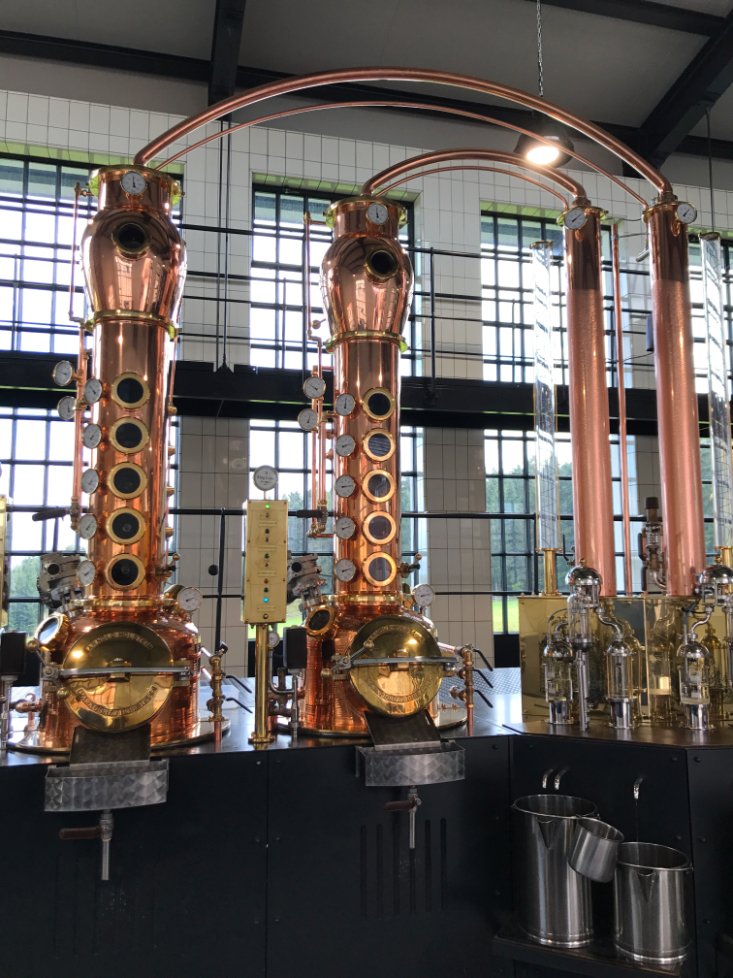
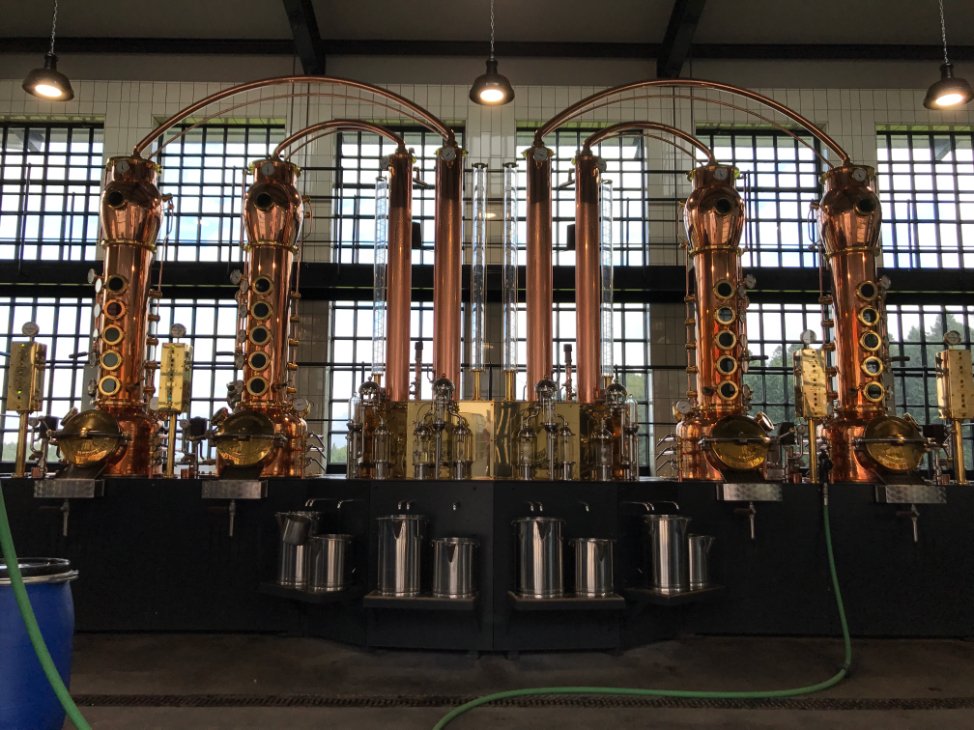
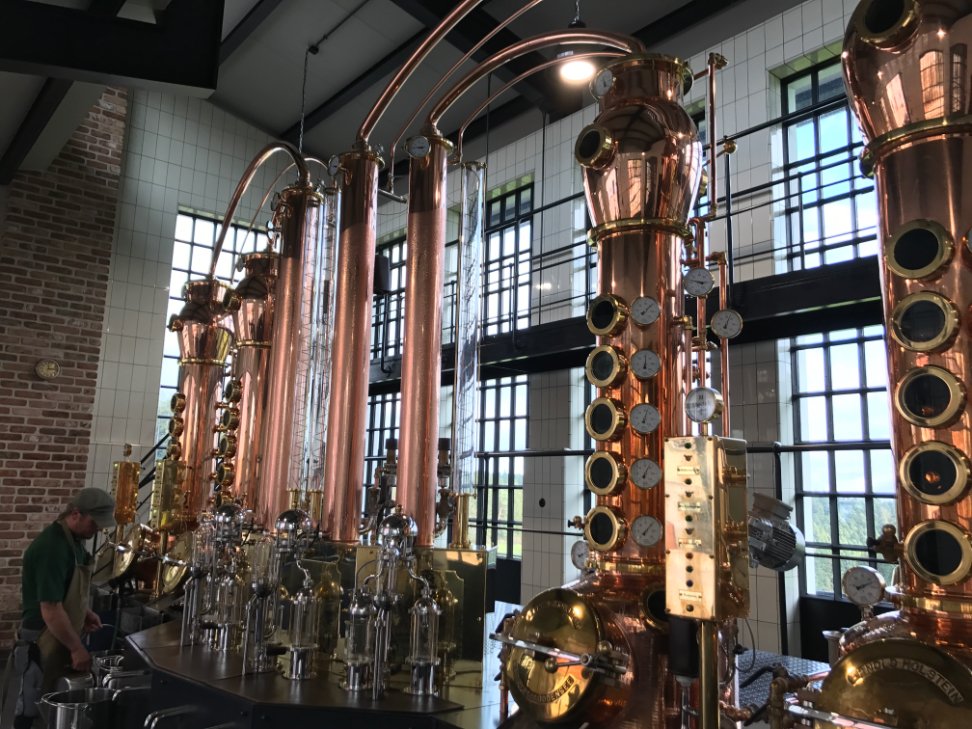
    You may have seen a picture of the stills before – it's a gorgeous custom-made set-up with four stills. 

    They can make 6 distillation runs per day per still, or 24 total distillation runs per day. It takes a little over an hour to distil. Each distillation run produces 25-30 liters of 88% ABV spirit. After distillation, only water is added, no additional neutral alcohol (making this a "single-shot" gin). 

    After distillation, they flush out the solids from the still. These solids are also used to produce biogas. 


    IMG_8389
    IMG_8389
    IMG_8389


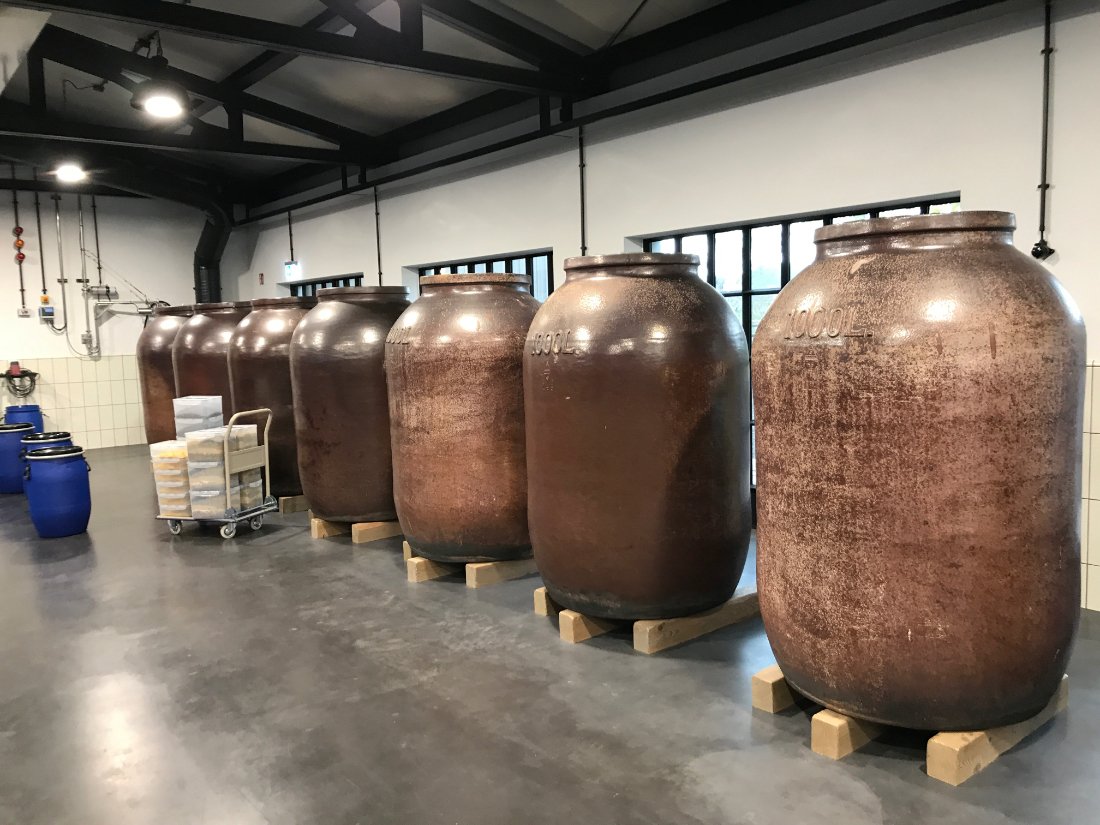
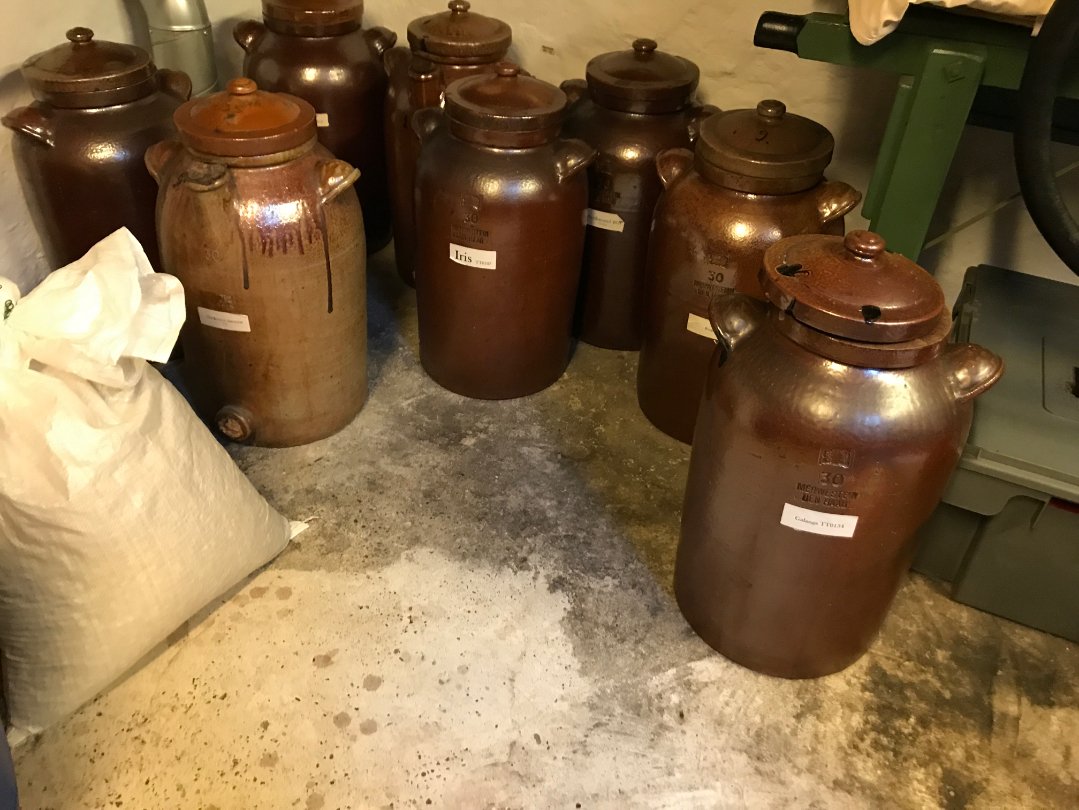
    After being distilled, the spirit at full proof is rested for 90 days in these large urns before being diluted and bottled. The dilution process, which takes place at the bottling plant, is slow and takes place over 10 days. The product is bottled at 47% ABV, which is above the level that it would louche, so the gin is not chill-filtered. 

    IMG_8246


    In addition to the flagship gin, they produce annual Distiller's Cut bottlings with different botanicals added to the mix.

    IMG_8436


    All told, I had this strange vision in my head that Monkey 47 was going to be this blend of Black Forest eau de vies made in wooden shack by a wizard, and that turns out not to be the case at all. The overall procedure is pretty standard for gin with some tweaks such as the fresh-peeled citrus and long maceration time before distillation. So what makes this gin unique is not so much its rustic location, but the recipe. 


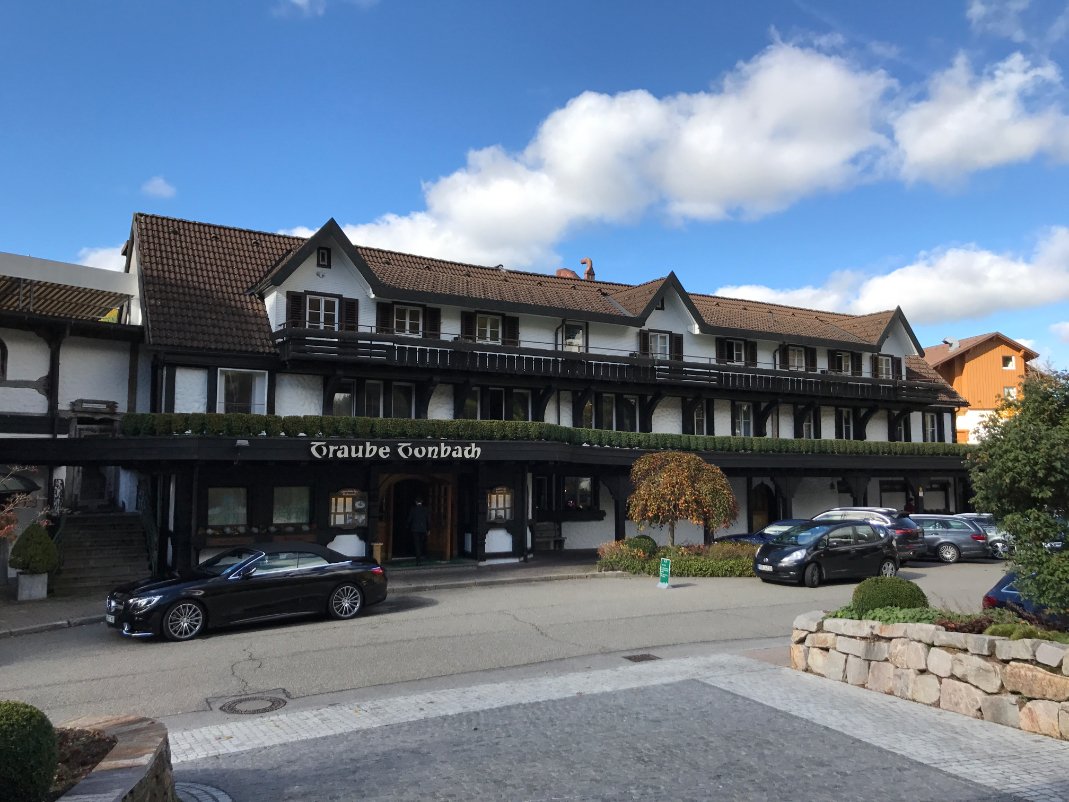
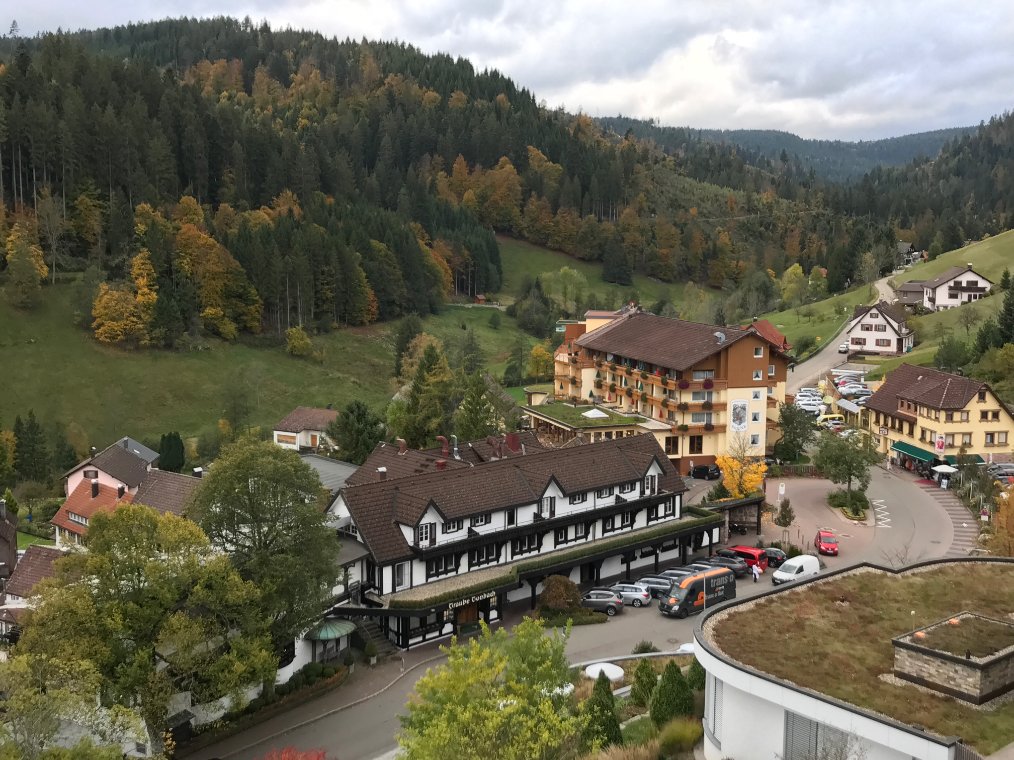
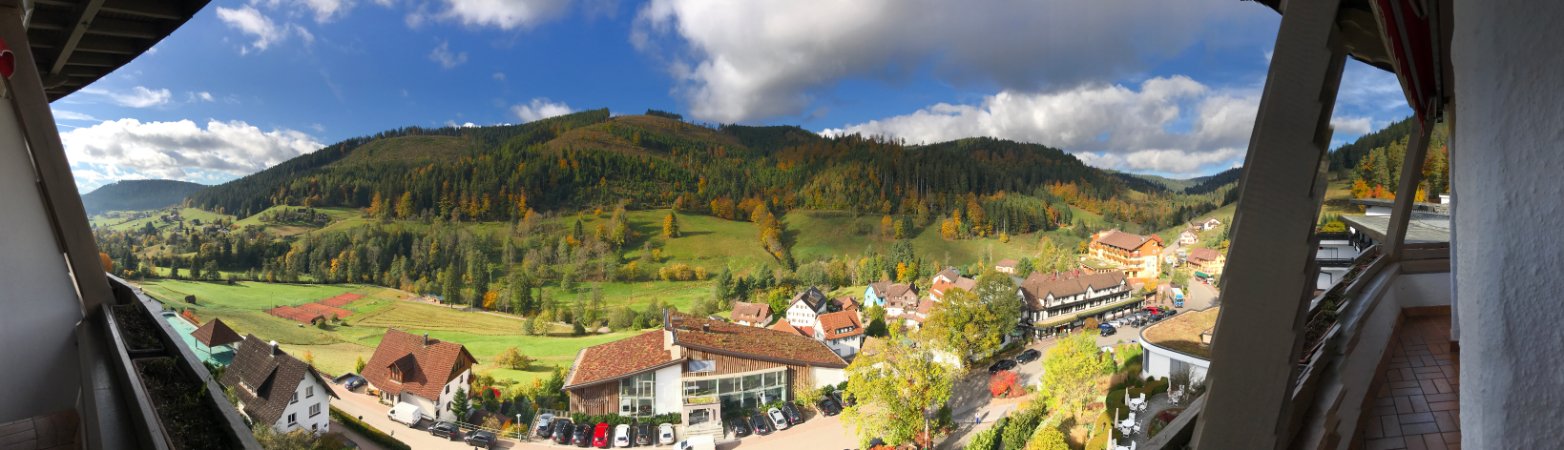
    After the distillery visit, we spent the night in an amazing big Bavarian-style lodge nearby. Here are just a couple pics of that. I love this part of the world, but then again I haven't seen it in the winter. 


    IMG_8523
    IMG_8523
    IMG_8523


  • A Visit to the Luxardo Distillery in Torreglia, Italy

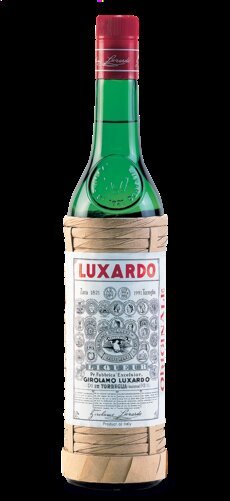
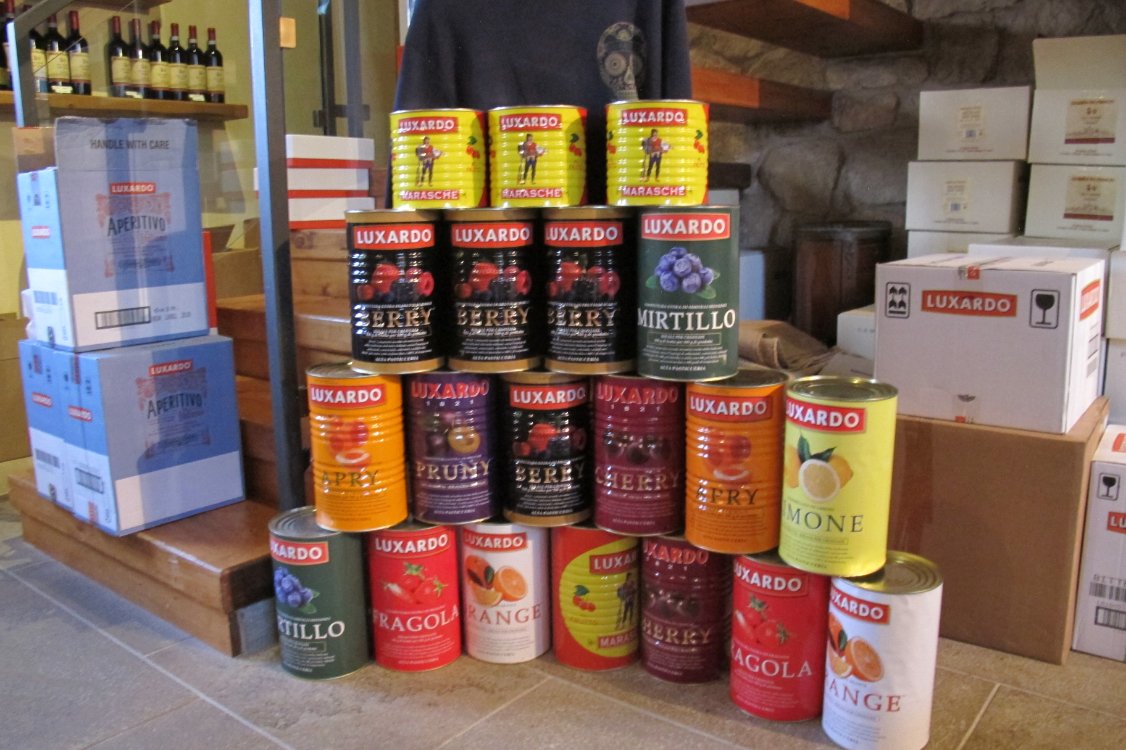
    Static1.squarespaceThis fall I visited the Luxardo distillery in Torreglia, Italy. Luxardo is of course famous for their maraschino liqueur and maraschino cherries, but they make a range of other products. 

    The company was founded in Zara in what is now Croatia but was then Austria. The flagship product was their maraschino liqueur then as it is now. It was exported to New Orleans by 1839, and as we know turned up in many of the "improved cocktail" recipes later that century. 

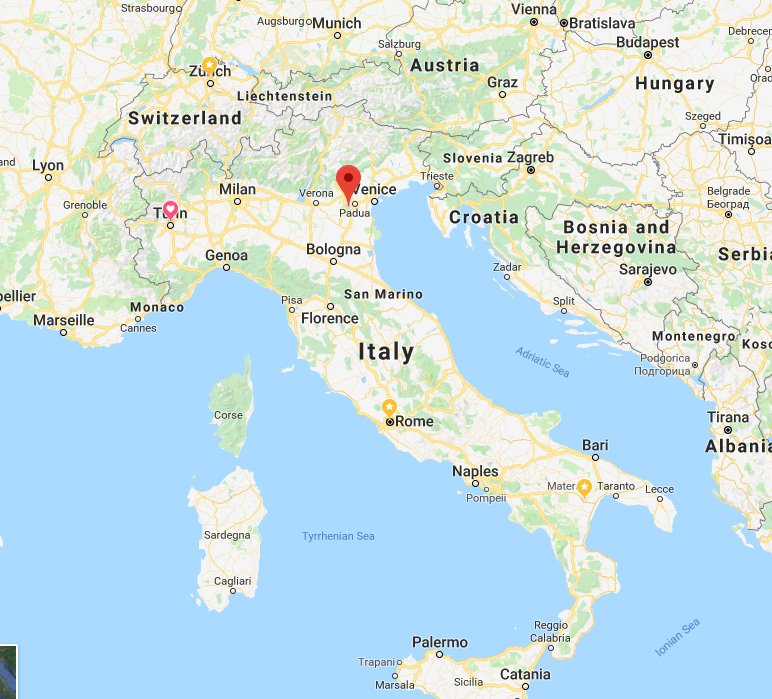
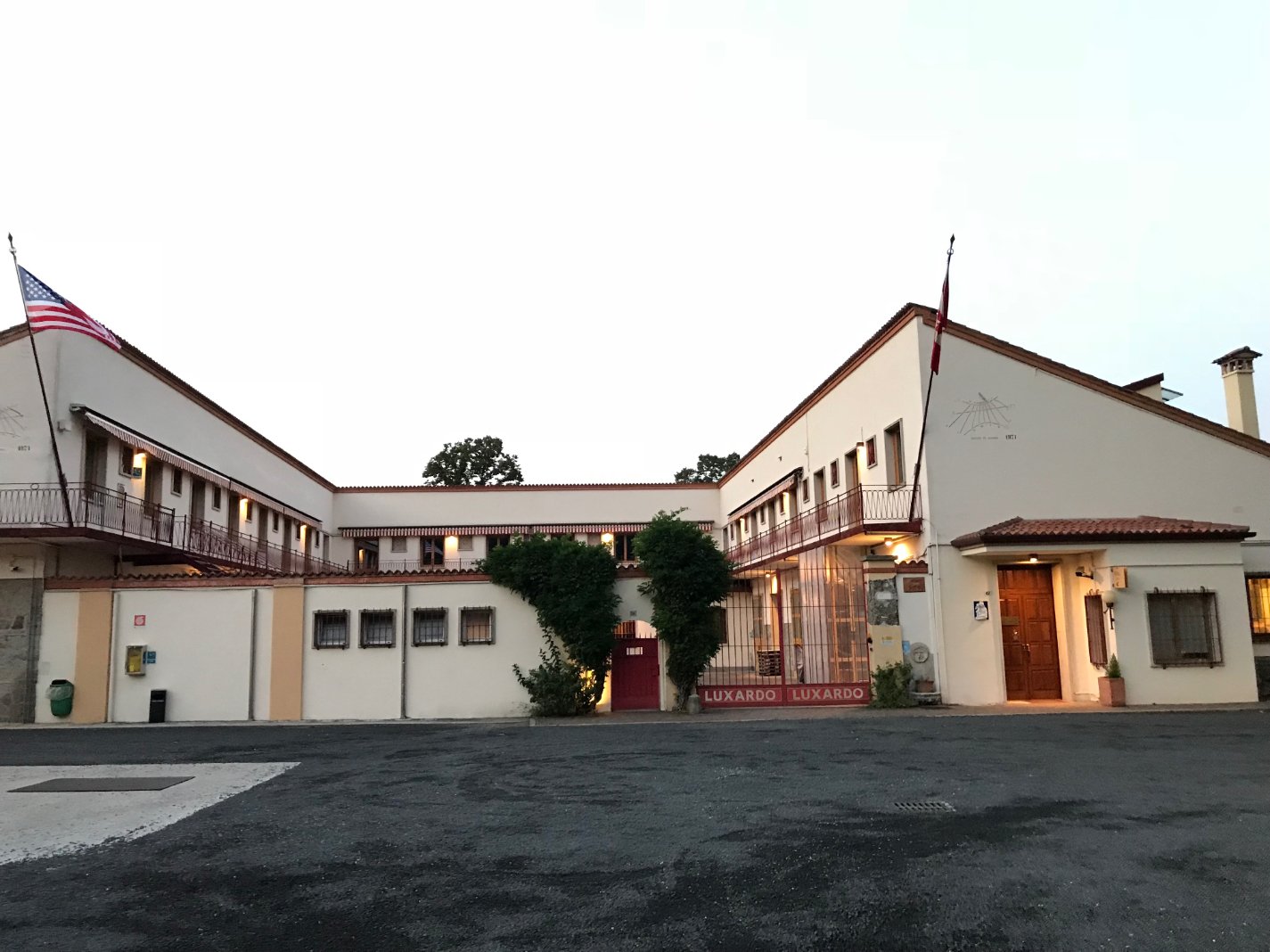
    In the early 1900s, they were the biggest distiller in Europe. Zara became a part of Italy after WWI, but the distillery was destroyed in WWII. In 1947 the company bought a distillery in Torreglia from the former owner of Cynar. That's where we visited. 

    Luxardo map

    IMG_1717
    IMG_1717
    IMG_1717


    Making Luxardo Maraschino 

    Cherries are harvested in late June. The variety of cherry is "Marasca Luxardo." They don't own the land where most of the cherry trees are grown (not at the location we visited). The do own a few trees on that property though. The lifespan of the trees is only 18-20 years, and they take 3-5 years to start producing useable cherries. Below are some newly planted cherry trees at the distillery. 

    IMG_5829

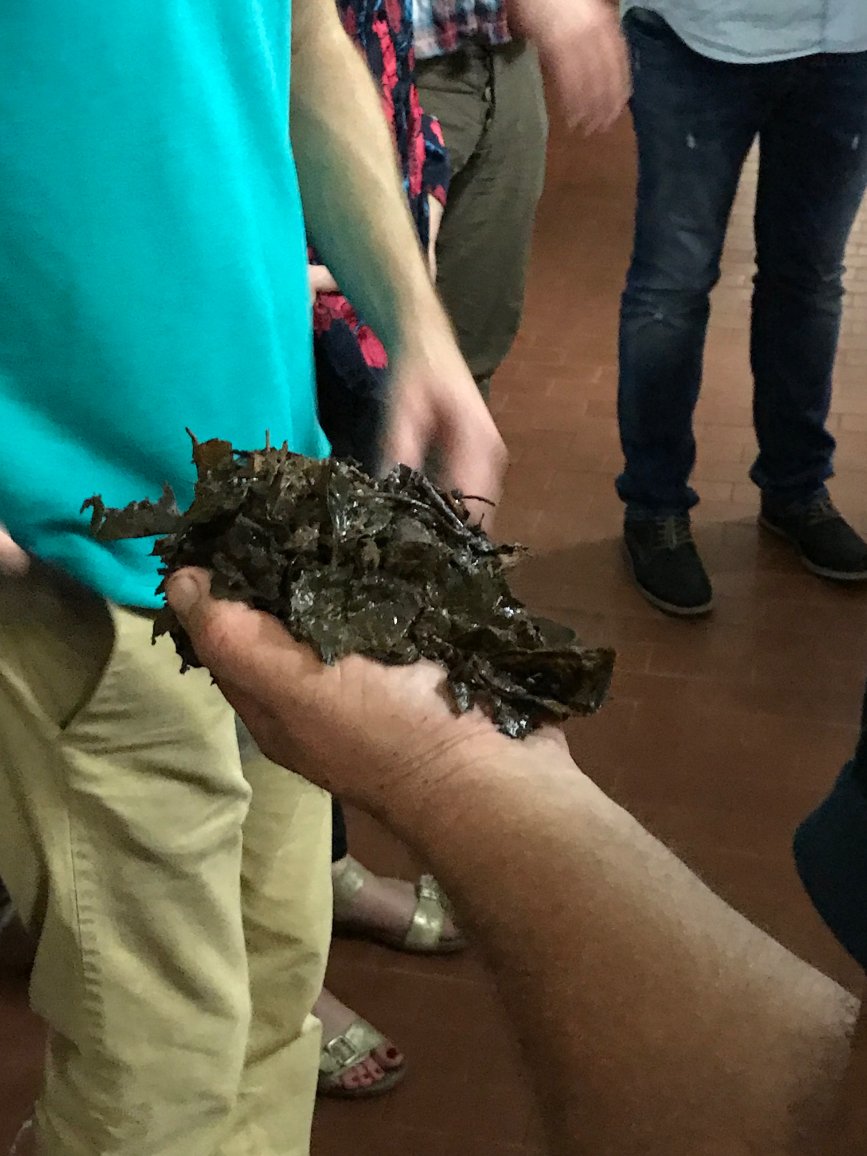
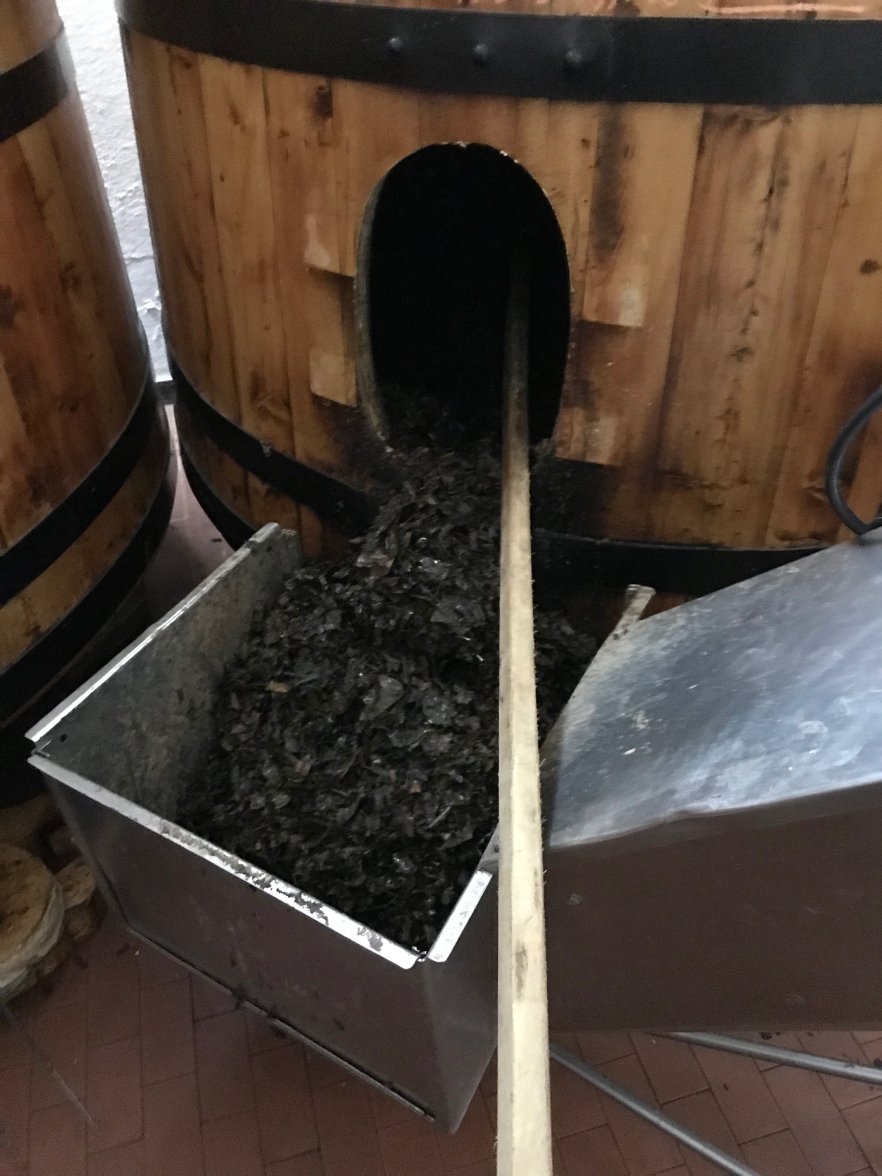
    The leaves, branches, and cherry solids (everything but the cherry juice) are macerated together with water and neutral beet alcohol (about 12% ABV) for up to three years. 

    The solids go into canvas bags. The liquids are distilled. The heads and tails from distillation go toward macerating the next batch. It's distilled up to 70% ABV in a single distillation. 

    IMG_1679

    Cherry solids after maceration. 

    IMG_1665

    IMG_1679

    The maceration tanks are emptied with a rake and then placed into canvas bags (below).

    IMG_1679 IMG_5817

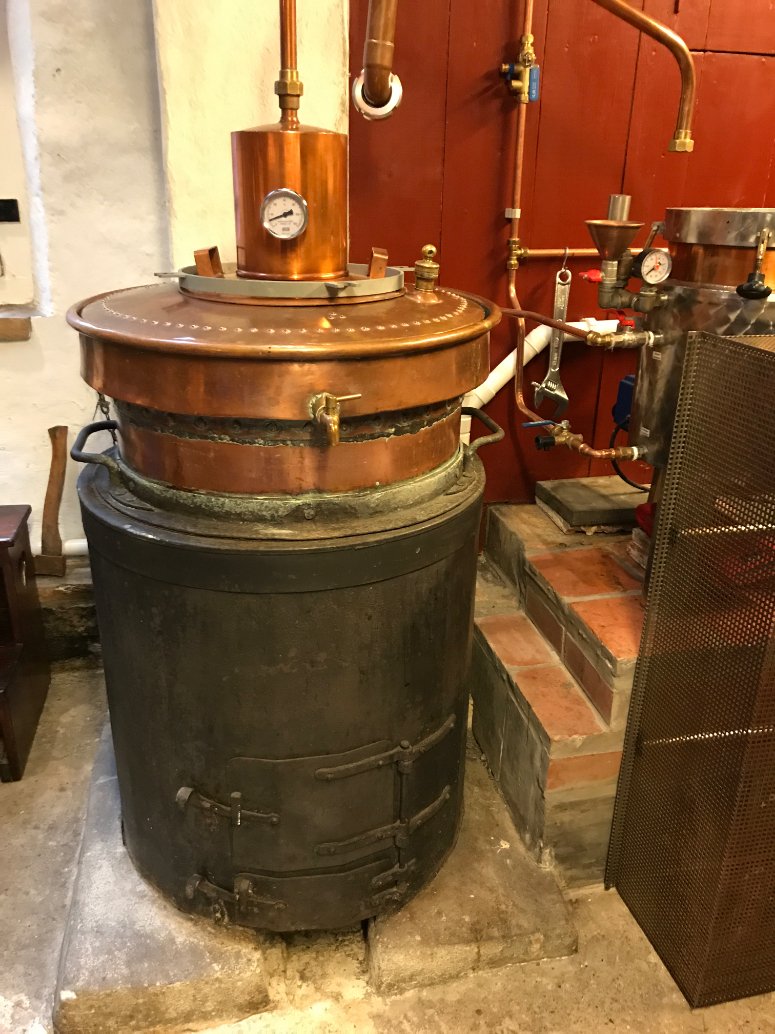
    Several types of stills are used at the Luxardo distillery. I think this first one is used for the maraschino. 

    IMG_5817
    IMG_5817


    The distillate is then rested in wooden vats for up to 12 months. Then sugar and water are added and it's stored until bottling.

    IMG_5828
    IMG_1657


    The juice of the cherries takes a different route: It is fermented with no added yeast. When it gets to 5% alcohol naturally, they fortify it to 40%. This becomes the base of the syrup for cherries, the Sangue Morlacco, and other products. 

    IMG_5823
    IMG_5823
    IMG_5823
    IMG_5823

    To make the maraschino cherries, they remove the stone/pit, add sugar and water, and soak them in the cherry syrup. They sell about 1.2 million 400g jars of cherries annually. 

    IMG_5837

    Thanks to Luxardo for our visit!


  • A Visit to the Rutte Gin Distillery in Dordrecht, the Netherlands

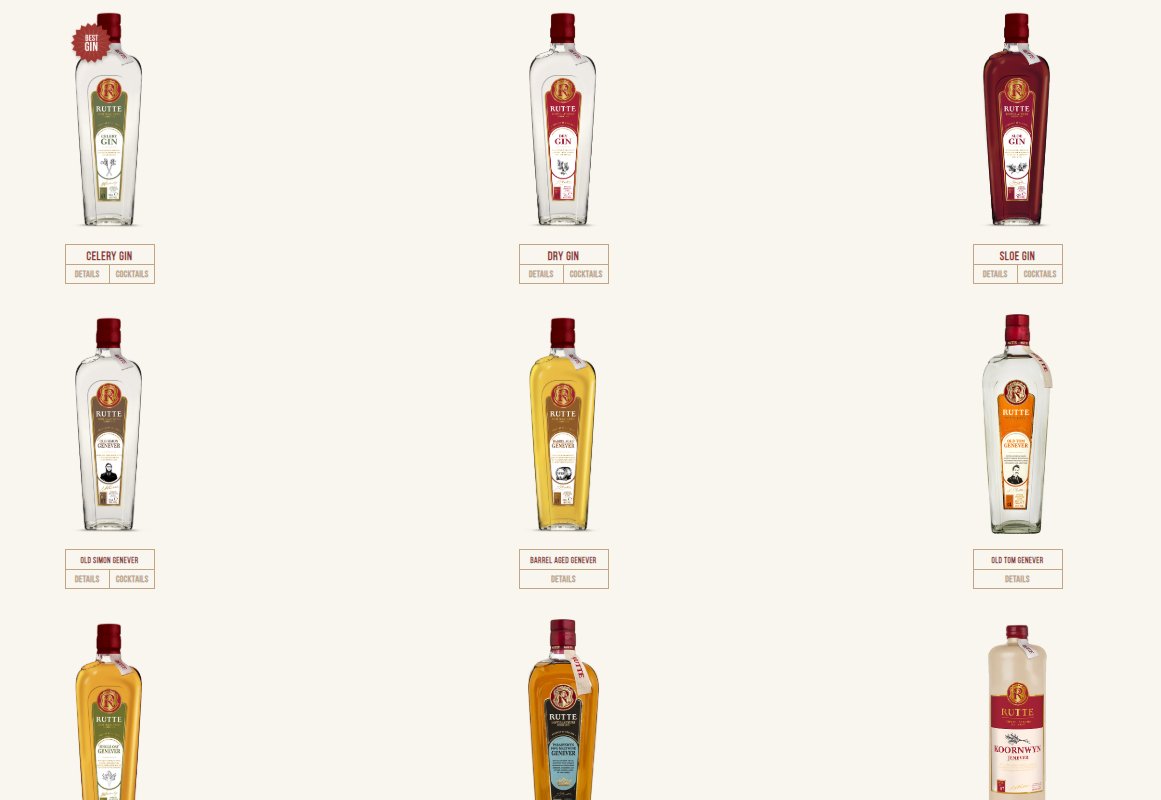
    Rutte brandsIn the fall of 2017 I had the opportunity to visit the Rutte distillery in Dordrecht, The Netherlands, on my way to Bar Convent Berlin. In the US, Rutte sells their celery gin, dry gin, and Old Simon genever. It is sold in the Royal Dutch Distillers portfolio along with Cherry Heering, Mandarin Napoleon, and Italicus.


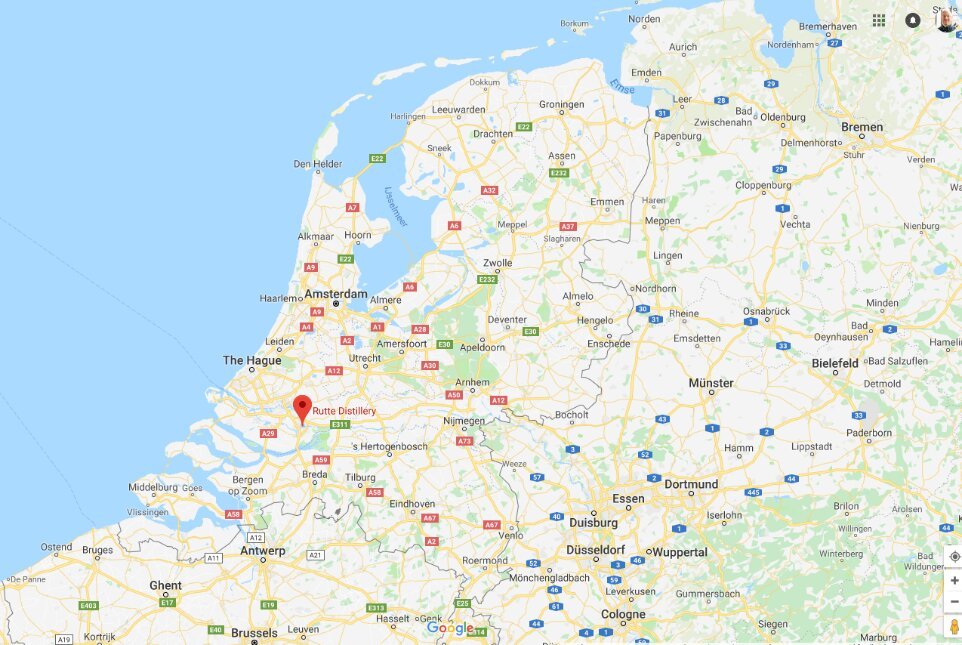
    Dordrecht is connected by waterways to Rotterdam and the former center for genever production, Schiedam. 


    Rutte map

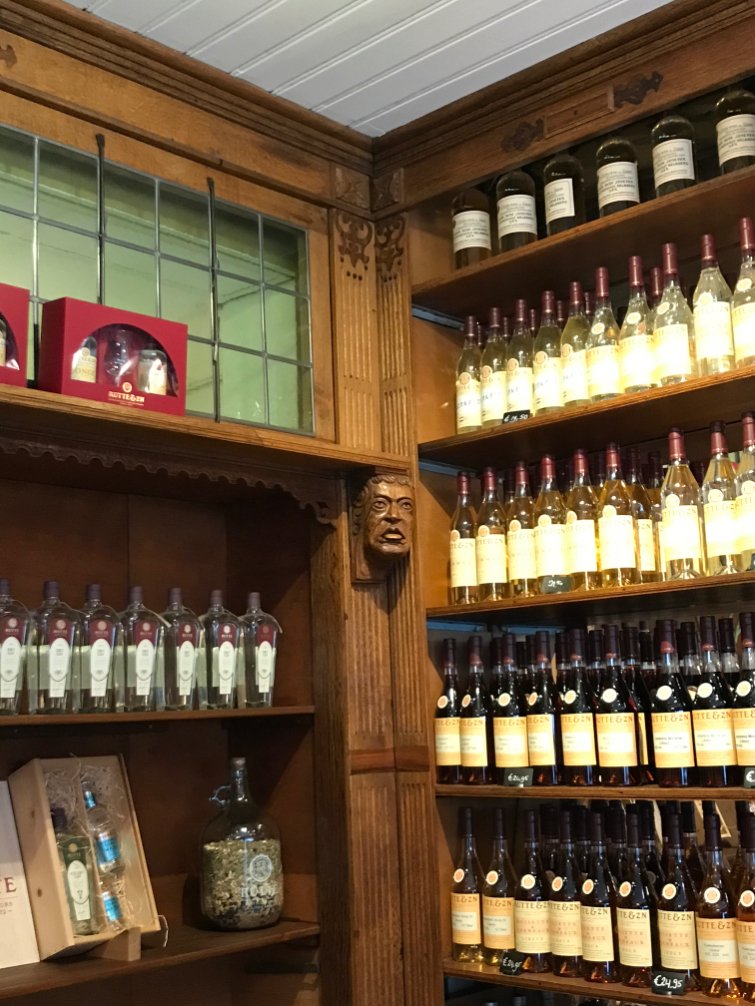
    The Rutte Distillery is actually a distillery and shop, with former family housing upstairs. It is unlike any other distillery I've visited as it's more of a town shop rather than a industrial warehouse. The best analogy I've come up with is that it's like the town butcher or baker, where they do the work to prepare the food in-house and sell it from the counter in the front shop. At different times of the year, they have a different selection of offerings to sell. 

    IMG_7953
    IMG_7953


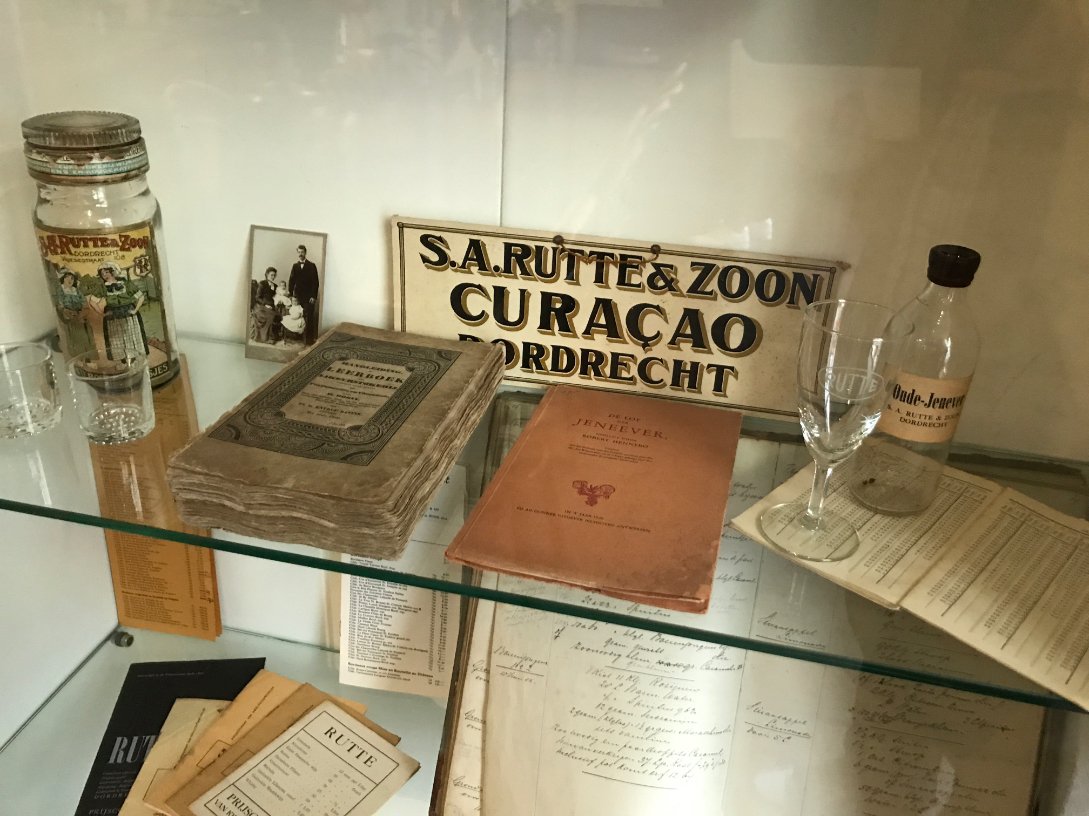
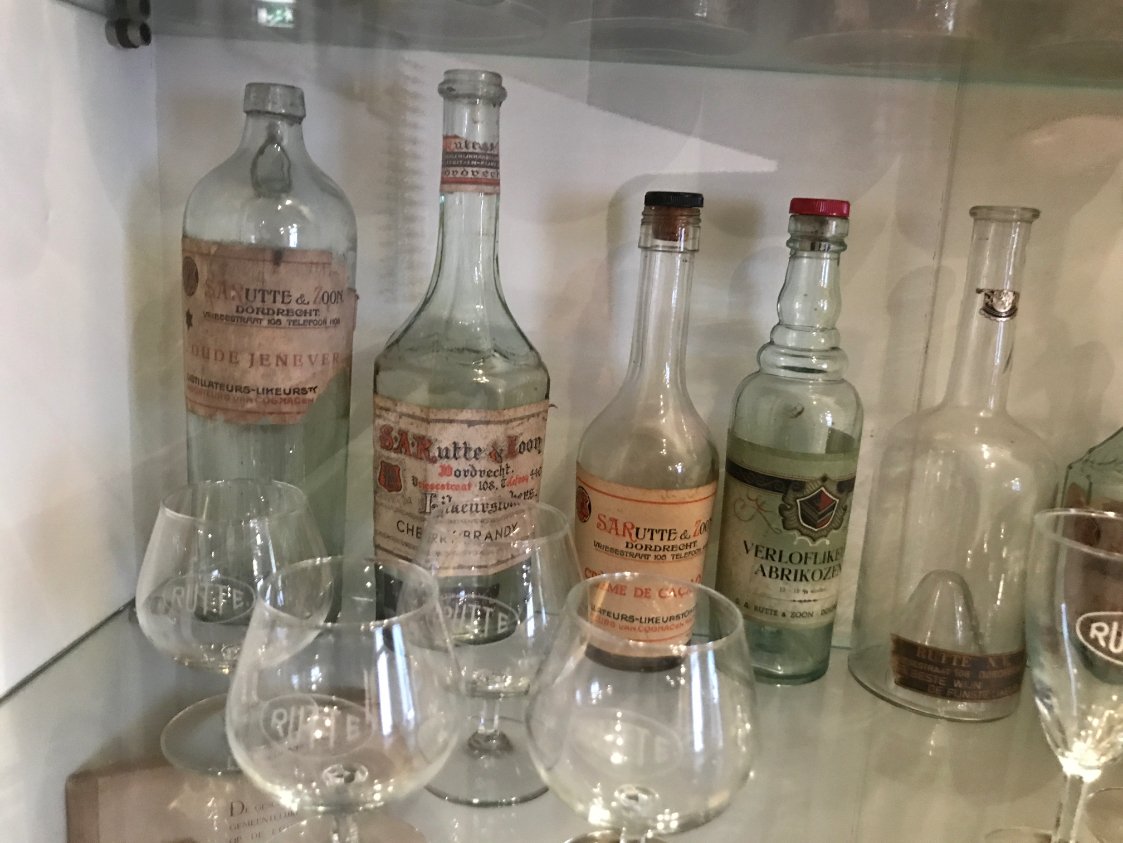
    The company dates back to 1749 in Rotterdam. In 1872, the fourth generation Rutte family member bought a cafe and distilled in the back. It was converted into a wine shop something like it is today after being renovated in the 1920s. The last Rutte family member  sold the distillery in the 1990s while continuing to work there. He died in 2003. 

    The distiller since 2003 is Myriam Hendrickx, who comes from a food science background. She had only about a month of overlap between meeting the last Rutte distiller and his death. She kept some formulas like the Old Simon Genever true to the original (except they took out the tonka bean as it is prohibited in the US), while tweaking other recipes.

    The malt wine, the malty, flavorful part of genever is purchased from Belgium (almost all malt wine is made there), and I believe all other the Rutte products are based on purchased neutral spirits. Hendrickx says that traditionally the Dutch are "botanical distillers," meaning they make flavored spirits like gin, ginever, and liqueurs, moreso than base spirits like whiskey and rum. 

    Random Rutte Facts

    • They produce about 60 products in the small distillery. 
    • The celery in th celery gin comes from celery leaves and celery seeds, not the stalks. 
    • In general, they dilute the neutral spirit with the flavoring elements down to 50% ABV and distil it up to 80%; before bottling to proof. 
    • The current still is a pot-column hybrid still, but Hendrickx says they don't use the rectifying column much, only more like a filter than a distillation. 
    • The smaller products are bottled in-house, but the larger ones (we'll assume the gins) are bottled at DeKuyper. 
    • They make a "monastery liqueur" of similar complexity to Chartreuse, as well as an "Abbey gin" with the same distillate. 
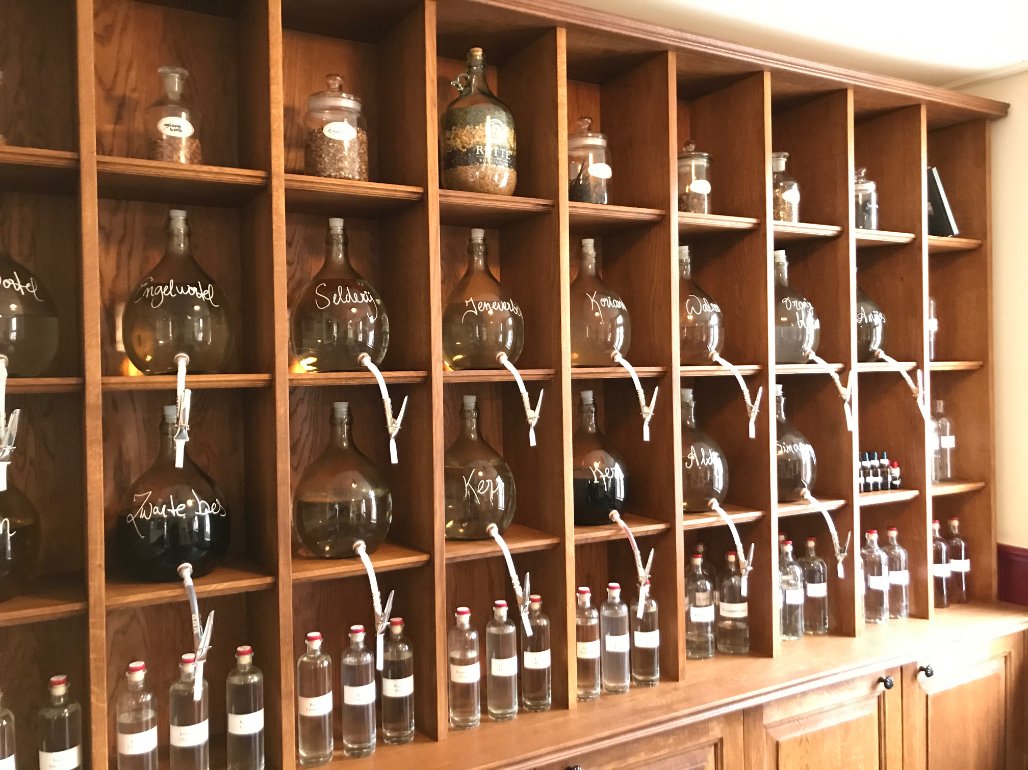
    • They distil botanics that are used in multiple products together in groups, then combine them as needed. 
    • The gins are made as a concentrate that is diluted with more neutral spirit and water at the bottling facility. I asked her about the difference between "single-shot" gins where all the spirit goes through the still with the botanicals. She said, "I don't understand why anyone would do it that way" but sounded interested in hearing the other side of the story. That could make for a fun experiment or debate. 


    A Look at the Shop in the Front of the Distillery

    IMG_7957
    IMG_7957


    Upstairs: Former Family Housing, Now a Tasting and Education Center


    IMG_7963
    IMG_7963
    IMG_7963
    IMG_7963
    IMG_7963
    IMG_7963

    Down Into the Distillery in the Back

    IMG_7989
    IMG_7989
    IMG_7989
    IMG_7989
    IMG_7989
    IMG_7989
    IMG_7989
    IMG_7989

    As you can tell, the place is tiny! There is only room for 40 small barrels of aging genever on site. The rest rests elsewhere. 

    So yes, a charming little place where they make some tasty gins. 


  • A Visit to the Nardini Distillery in Bassano, Italy

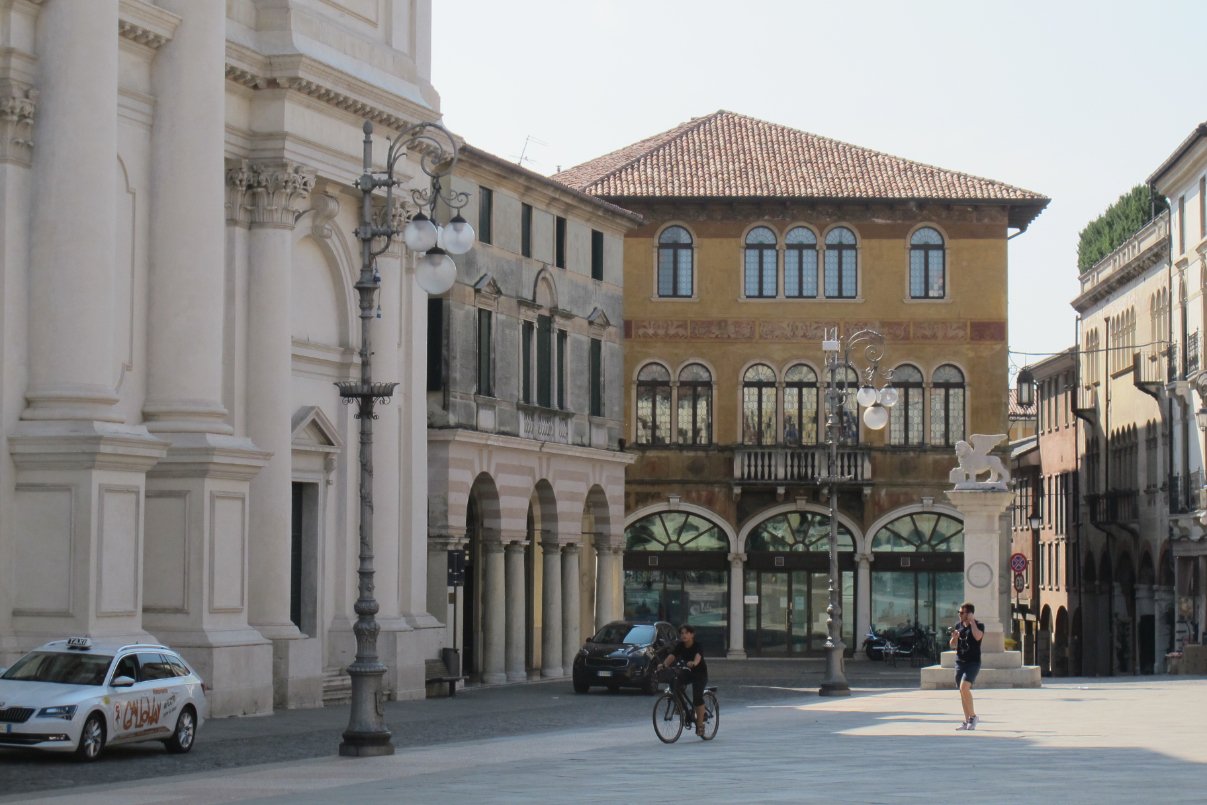
    BassanoNardini, a company known for grappa but which produces a range of liqueurs and amari as well, is headquartered in Bassano del Grappa, Italy, and dates to 1779. I had the chance to visit the company this past fall and wow!


    We started our tour in the distillery, or rather, one of the distilleries. The distillery and offices are fronted by Bolle, a building finished in 2004 to celebrate the brand's 225th anniversary. 

    The building is shaped like bubbles, has a pond underneath it, and the building continues underground. You can see peepholes into the lower level. 

    IMG_1570
    IMG_1570
    IMG_1570

    This building has an auditorium, meeting space, and laboratory testing space just to embrace the sci-fi look. When you're inside the building it doesn't look Coke bottle green as it appears in these pictures. 

    IMG_5701
    IMG_5701

    Then we left the Bolle and went into the actual distillery. This distillery in Bassano makes the batch distilled products, another one in Treviso (closer to Venice) has column/continuous stills and waste processing facilities. 

    IMG_5721

    IMG_5721Y'all know I can't resist a good filtration picture. 


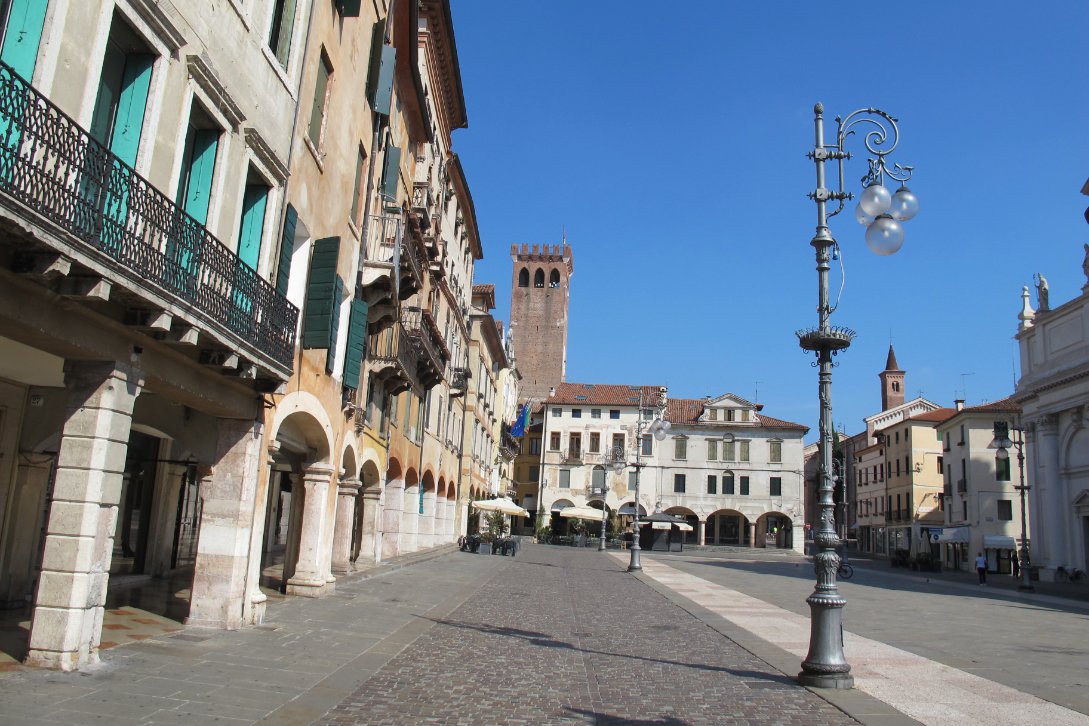
    We then went into Bassano proper. The town has a famous wooden bridge. One end of the bridge is the Nardini Grapperia (the bridge is embedded in the building) – the original distillery site. On the top level there is a tiny grappa shop, but the building goes down several levels. A 360 Google map of the little shop is here.

    This first picture is from Wikipedia.

    1024px-Bassano_del_Grappa_AbendstimmungBy Museshare – Own work, CC BY-SA 3.0

    IMG_5744
    IMG_5744
    IMG_5744

    We had aperitifs here and a chance to try some of the products. 

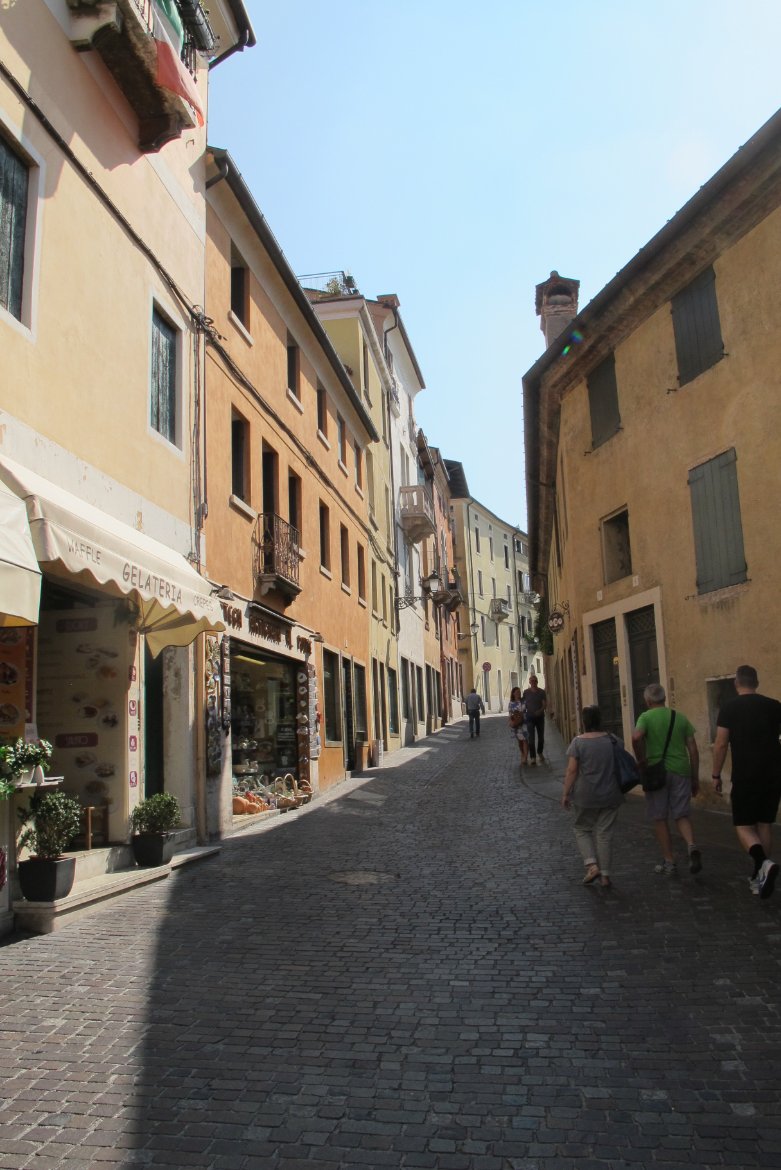
    Then we walked uphill through the ridiculously charming Bassano city (the cocktail bar you see wasn't open or we'd have stopped in).

    IMG_5790
    IMG_5790
    IMG_5790
    IMG_5790


    Then we hit our third Nardini venue that day, Nardini Garage. It's a restaurant and bar and event space where we had lunch.


    IMG_1636
    IMG_1636
    IMG_1636


    Making Grappa at Nardini

    There was so much to see on my visit to Nardini (and we didn't even get to the second distillery) that there wasn't as much time as usual for me to geek out on production. So my notes on grappa production are going to be super brief. 

    • They use a variety of grape pomace including merlot, tokai, and pinot grigio
    • The pomace is covered and sealed and left to ferment in cement vats. No yeast is added. 
    • Distillation is via steam in air-tight stills (so it can be done at a lower temperature). [Note – as covered in my baijiu posts, baijiu is also distilled with steam as a solid.] The steam passes to the distillation column next, where the alcohol and water are separated. It is then redistilled in a rectifying column.
    • Grappa made at the two different distilleries is blended; I'd imagine much like rum with column still providing the bulk and discontinuous still grappa providing more of the flavor.
    • demineralized water is used to reduce
    • Aged grappa is aged in Slovenian oak
    • The grappa is chill filtered at -10 Celsius 
    • Then they filter with "fossil flour" (which I think is diatomaceous earth) to remove oil. The oil comes from the seeds of the grapes and apparently it's not great for you – contributes to head and stomach aches. Then it's filtered through cellulose. 
    • The oil is recycled and used for the cosmetic industry and grape seed oil; the grape skins are used for cattle feed. 


    Nardini Products

    • Nardini produces unaged and aged grappas bottled at 40, 50, and 60% ABV
    • Rue-infused grappa  (rue is apparently a bitter plant that was once used as a vermicide like wormwood)
    • Tagliatella liqueur- grappa cherry distillate, bitter orange, herbs and spices
    • Mandorla – almond essential oil plus marasca cherry distillate
    • Acqua di Cedro in citron
    • Ginepro is juniper berries with cumin and other herbs
    • Mistra is star anise 
    • They also have a fernet, elixir china (quinine), rabarbaro, amaro, and red gentian drinking bitters. 
    • Mezzoemezzo is a blend of the rhubarb and gentian bitters


  • Announcing the Launch of CocktailSafe.org

    Announcing a new website dedicated to safety in cocktail ingredients and techniques, CocktailSafe.org

    Cocktail Safe Banner

    It has been a lot of hard work and there is much more to do, but today we are live! 


    The site was covered in a story in today's New York Times. 

    Screen Shot 2019-02-08 at 7.15.52 AM

  • A Visit to the Bently Heritage Estate Distillery

    America has been opening some truly impressive distilleries and distillery tasting rooms as of late, mostly in Louisville. Since the last time I visited only about four years ago, Michter's just opened a new distillery a week ago, Rabbit Hole distillery looks modern and impressive, and Angel's Envy,  the Evan Williams Experience, whatever Bulleit is doing at Stitzel-Weller, Kentucky Peerless, and Old Forester  have opened their visitors' centers.

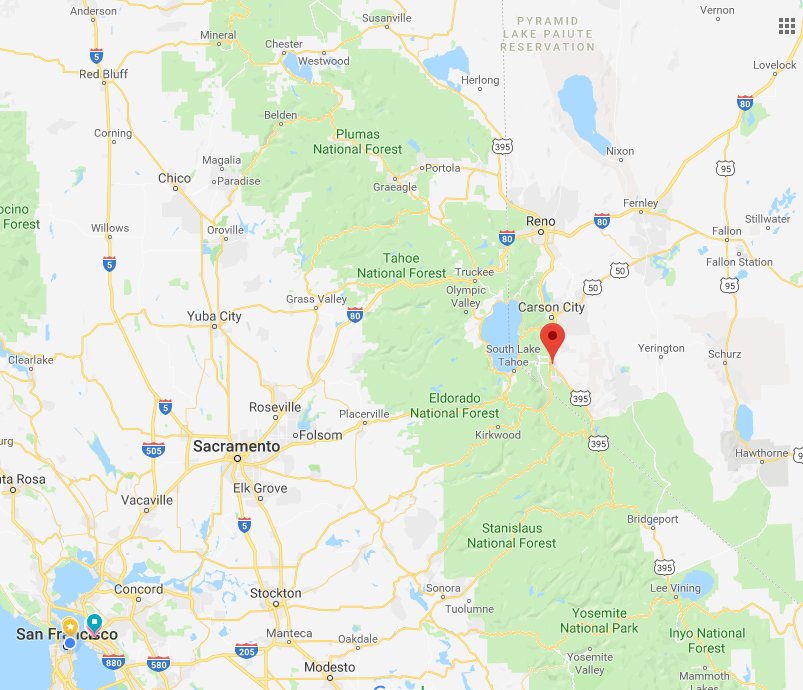
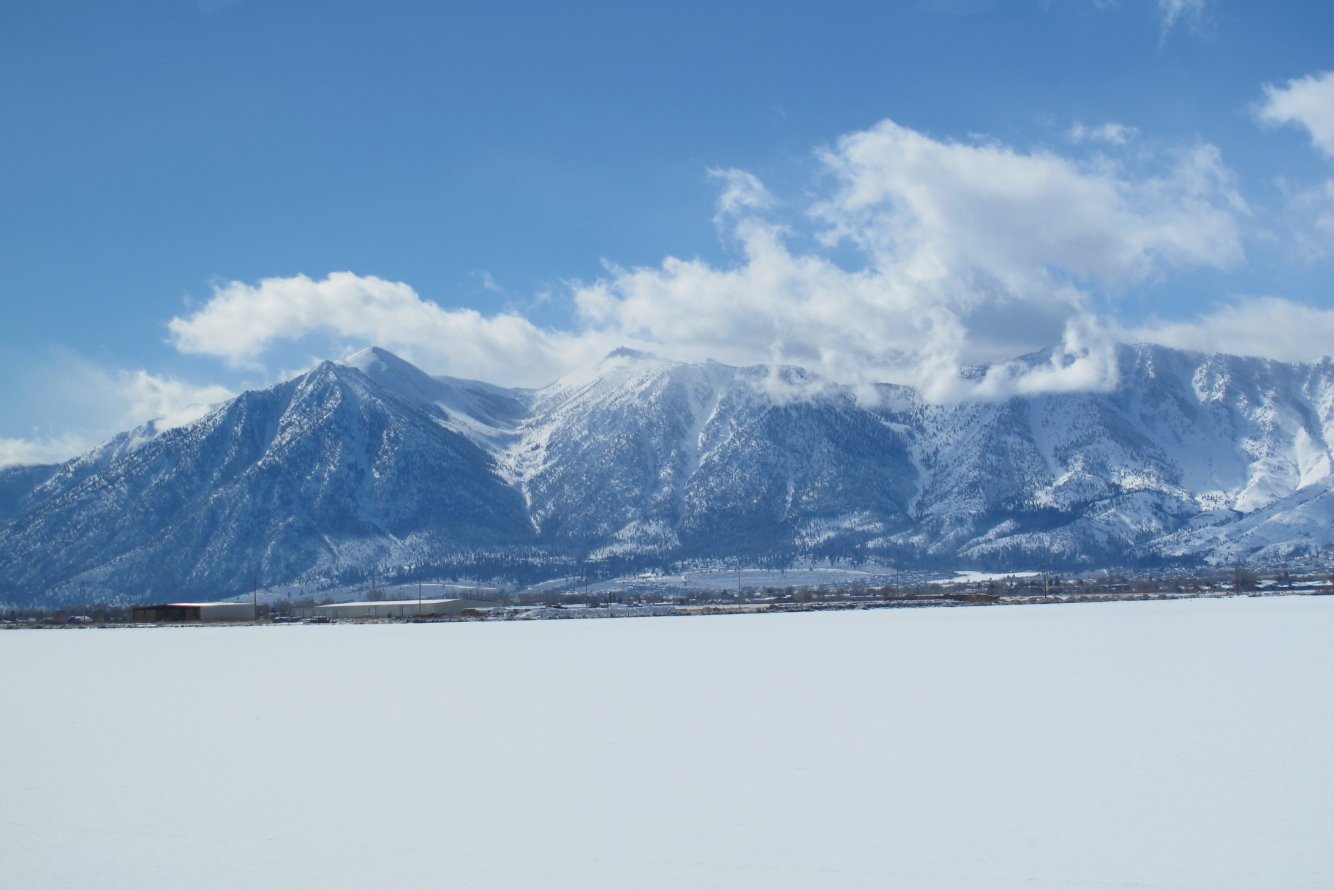
    But probably the most exciting new distillery in America to open just popped in Minden, Nevada. The area is a high desert environment, a plateau surrounded by mountains on all sides, about 45 minutes south of Reno. 

    The scale of Bently Heritage Estate Distillery, which opens to the public Saturday, February 9, 2019, is going to blow your mind. Keep reading.


    Minden


    This is a ranch and an estate distillery, so nearly everything in their bottles is grown on the property (minus botanicals for the gin… so far). That includes barley, oats, wheat, rye, and corn for their base spirits. They also raise cattle and have a butcher shop on the property, and grow other crops including hops and alfalfa. 

    But let's talk about the stills, because:

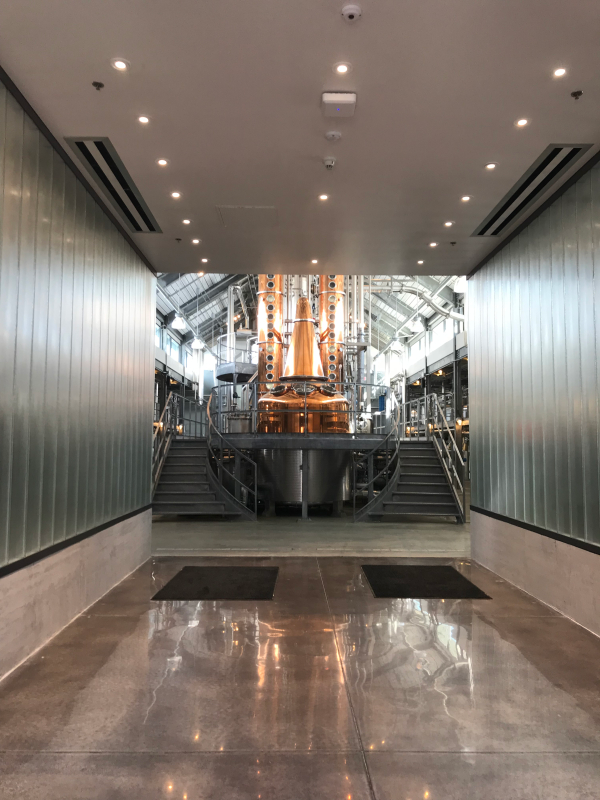
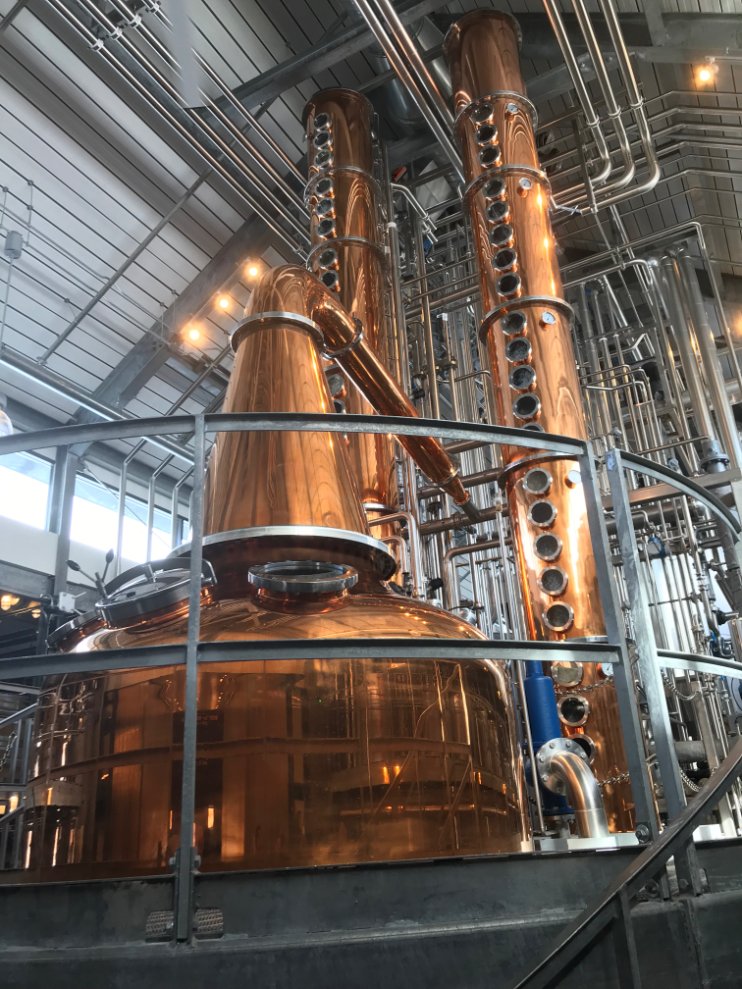
    IMG_3535


    Yeah. So there are actually two separate distilleries on the property. This one that looks like the Holy Mother Church of the Order of Saint Juniper; and the other one with where you can sit on a couch and watch American single malt whiskey being made in traditional scotch whisky stills. 

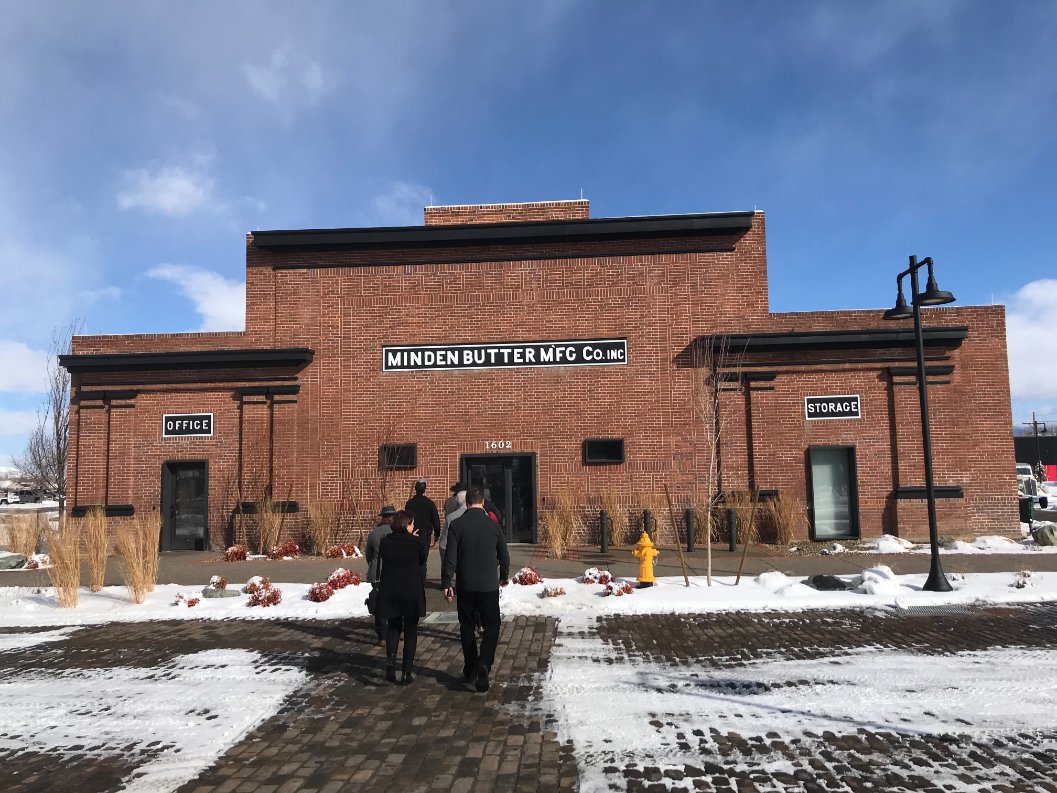
    The cathedral-like space is a former creamery dating to 1906. From the outside, it doesn't look like much. 
     

    IMG_3514
    IMG_3514


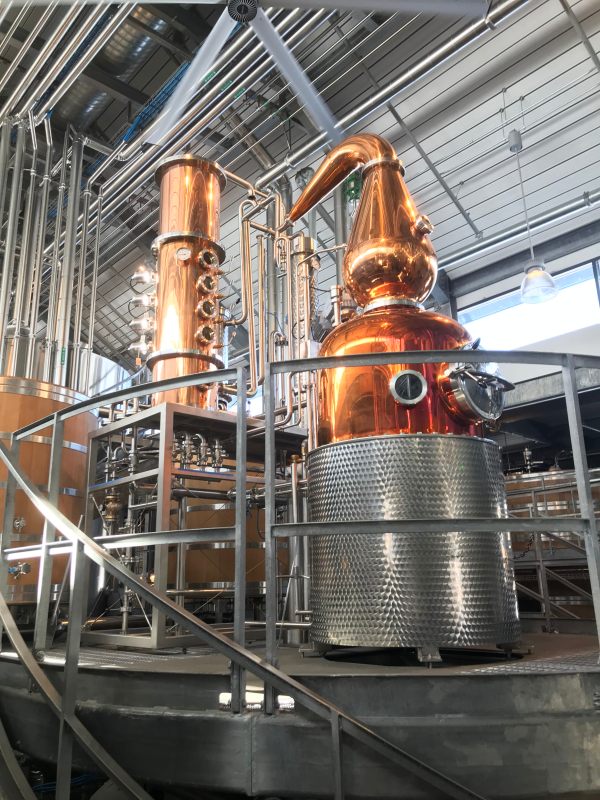
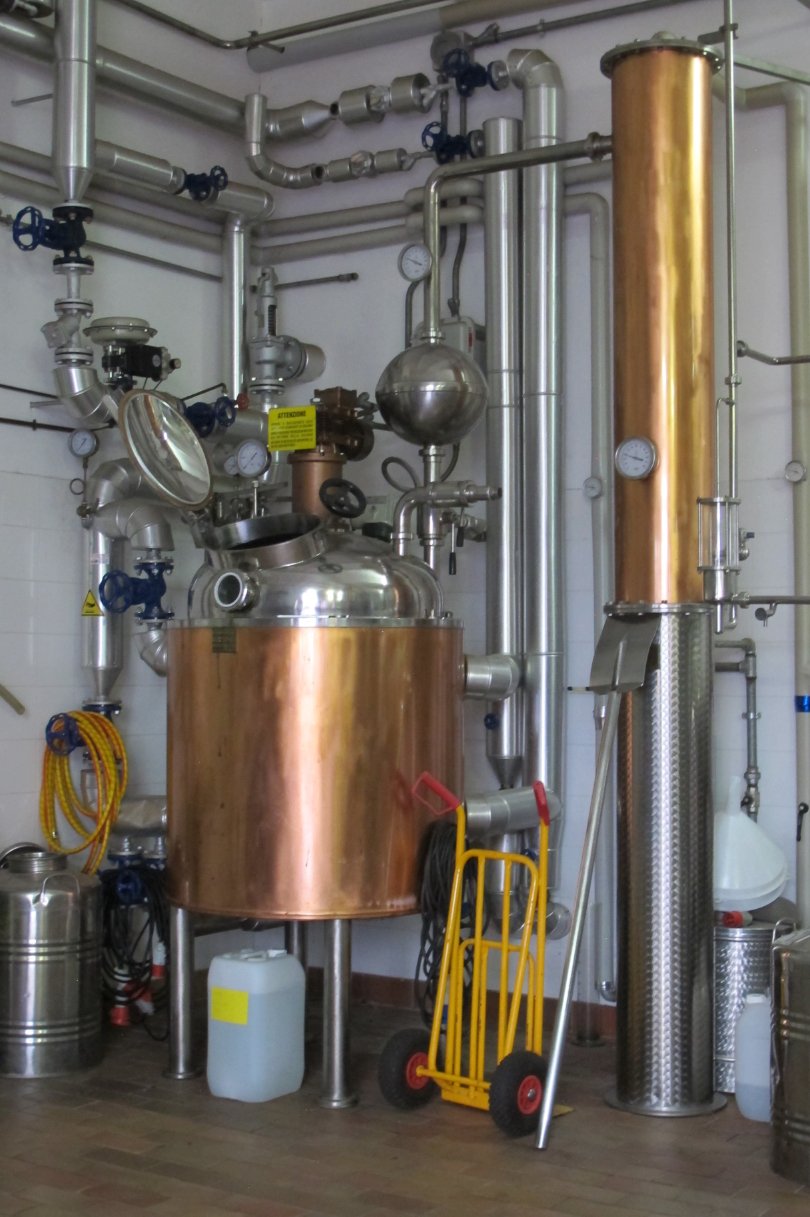
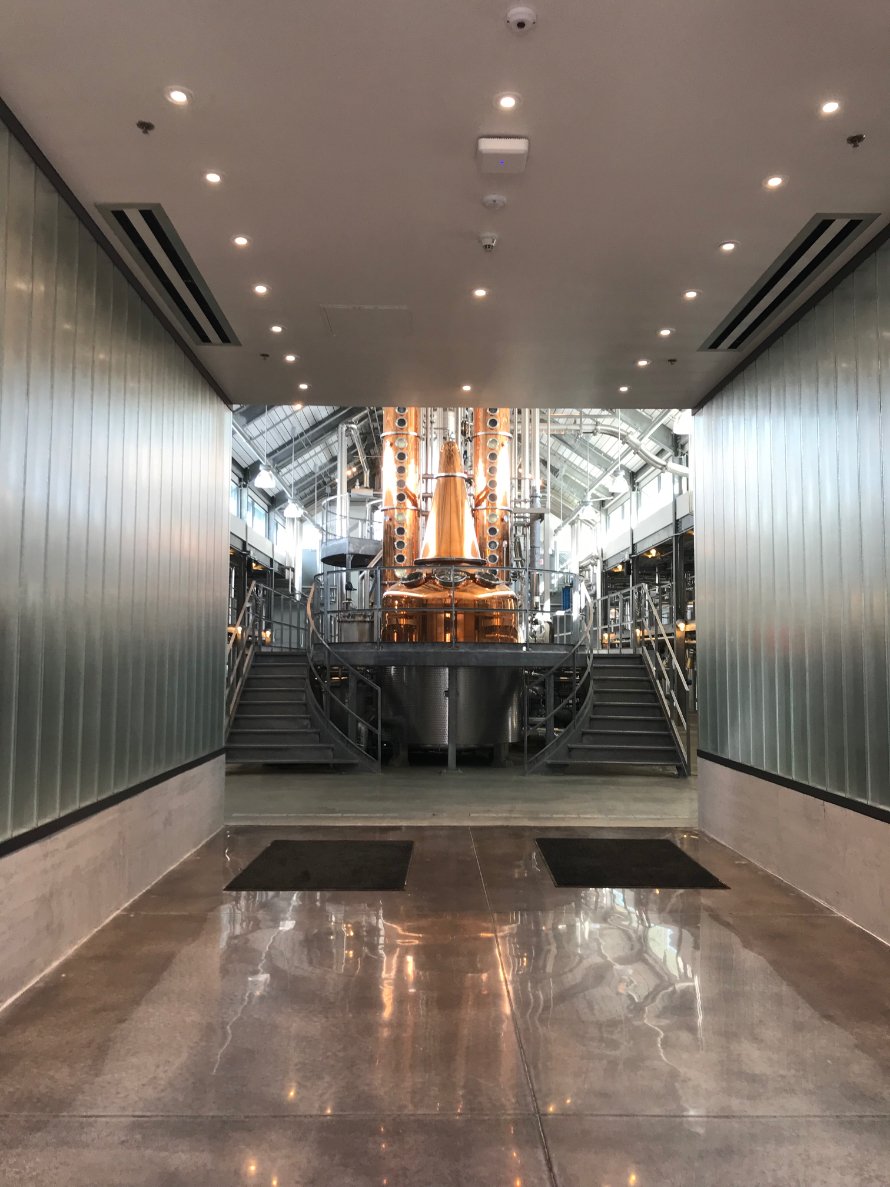
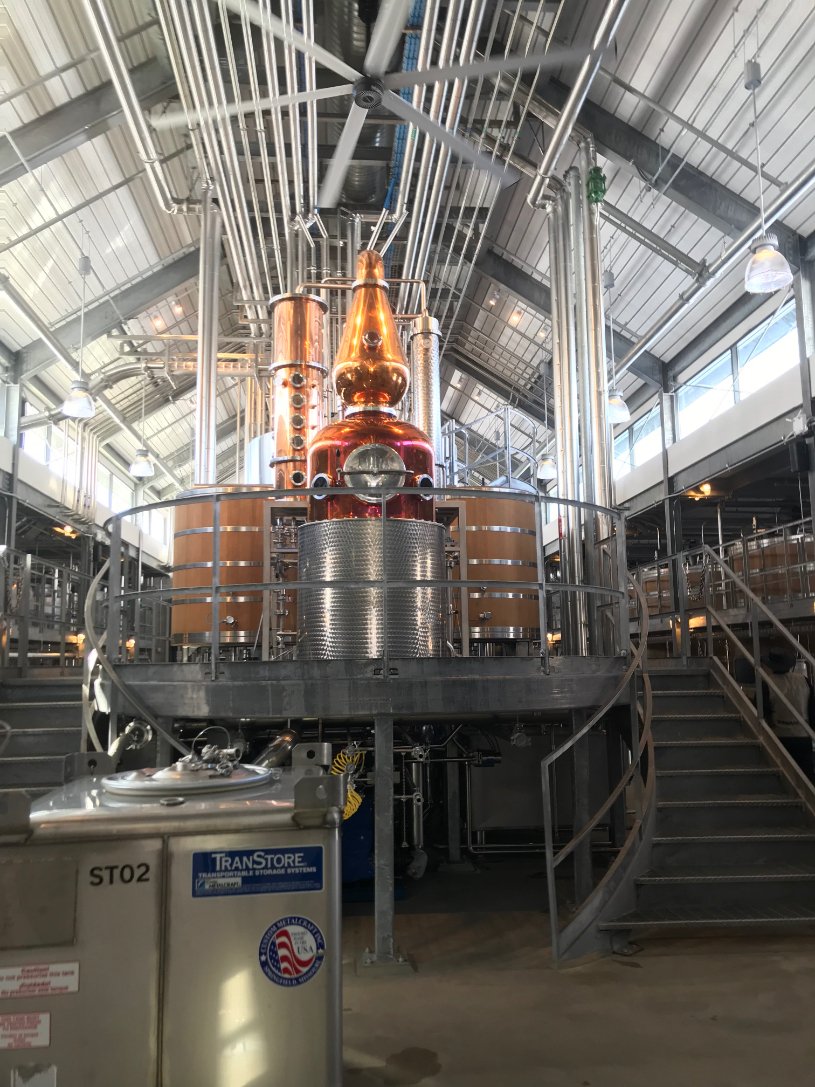
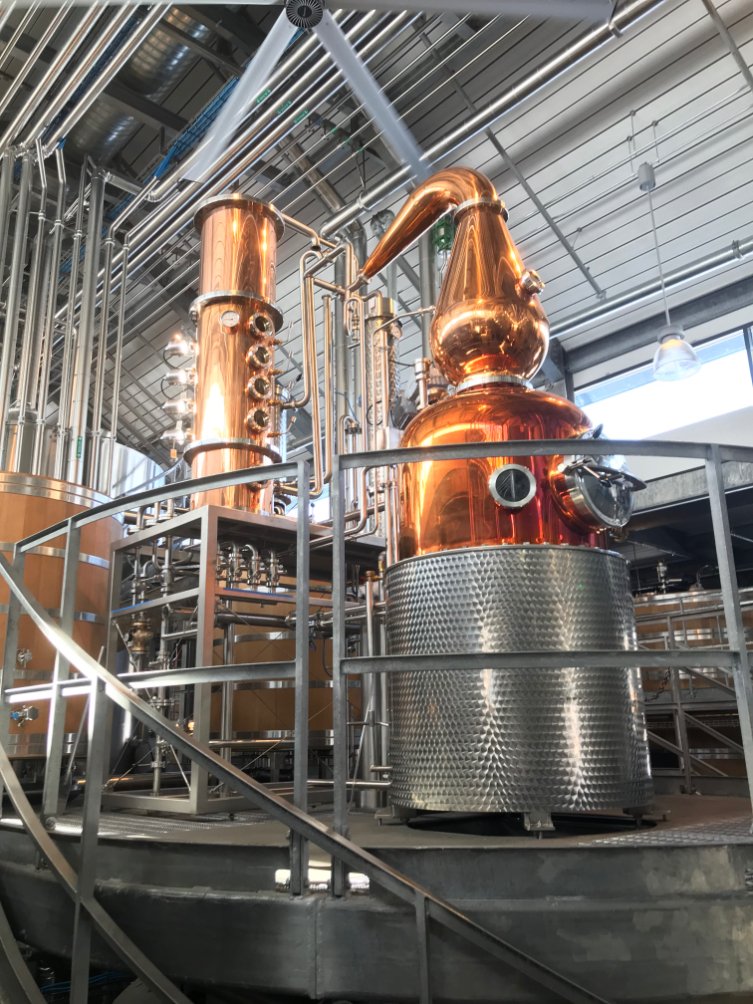
    Inside, you enter facing this gargantuan pot still with two columns behind it. This is a discontinuous pot-column hybrid system that works together. In this still they make gin, vodka, and forthcoming liqueurs. The two columns are more like a single column cut in half – after the liquid moves through one still it's pumped to the top of the other one to continue its journey.  
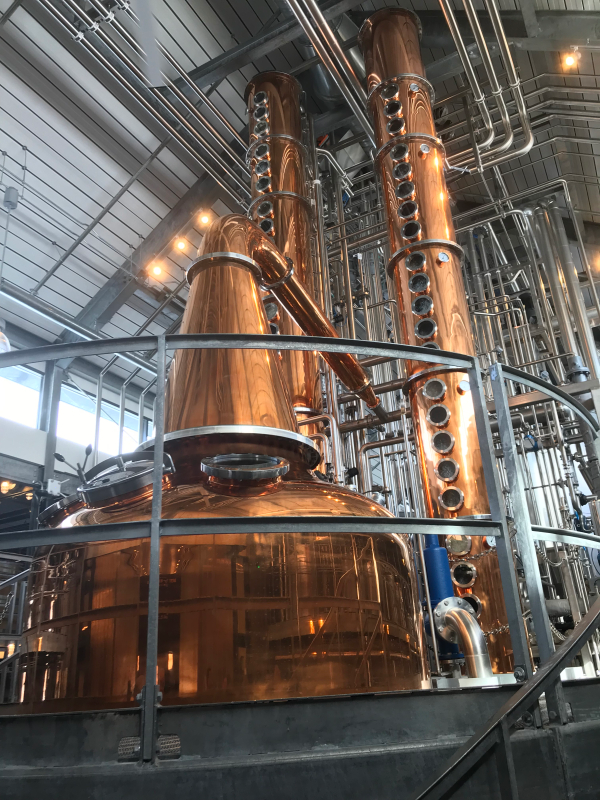
     

    IMG_3538
    IMG_3538


    Behind this still is a stainless steel continuous column still. I believe they said that for anything that will go into the pot still they first strip the solids and give it a first distillation in the column.

    The column still is narrow and has so many pipes and parts connecting to it that it's not really recognizable as a still. It's called a Headframe still. It has a capacity of 5000 gallons per day. 


    IMG_5982


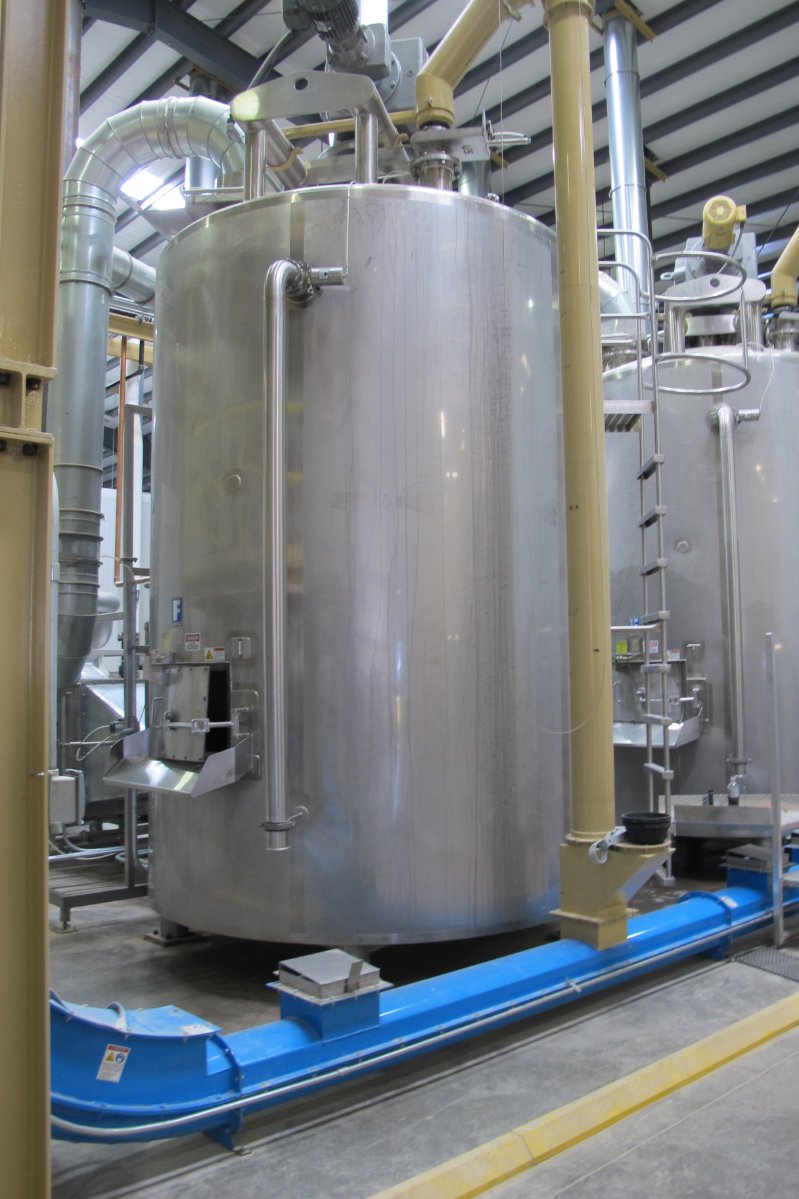
    Behind the column still is a grain cooker. Grains are pumped in from the ceiling and cooked for 3-4 hours. In the case of their oat spirit that is the base of the vodka and gin, they use "a ton" of enzymes so that the oats don't gunk up the cooker. 

    Behind the cooker at the far end of the same cathedral room is their experimental still, which is the size of a standard start-up distillery still. It's a pot with rectifying column. 
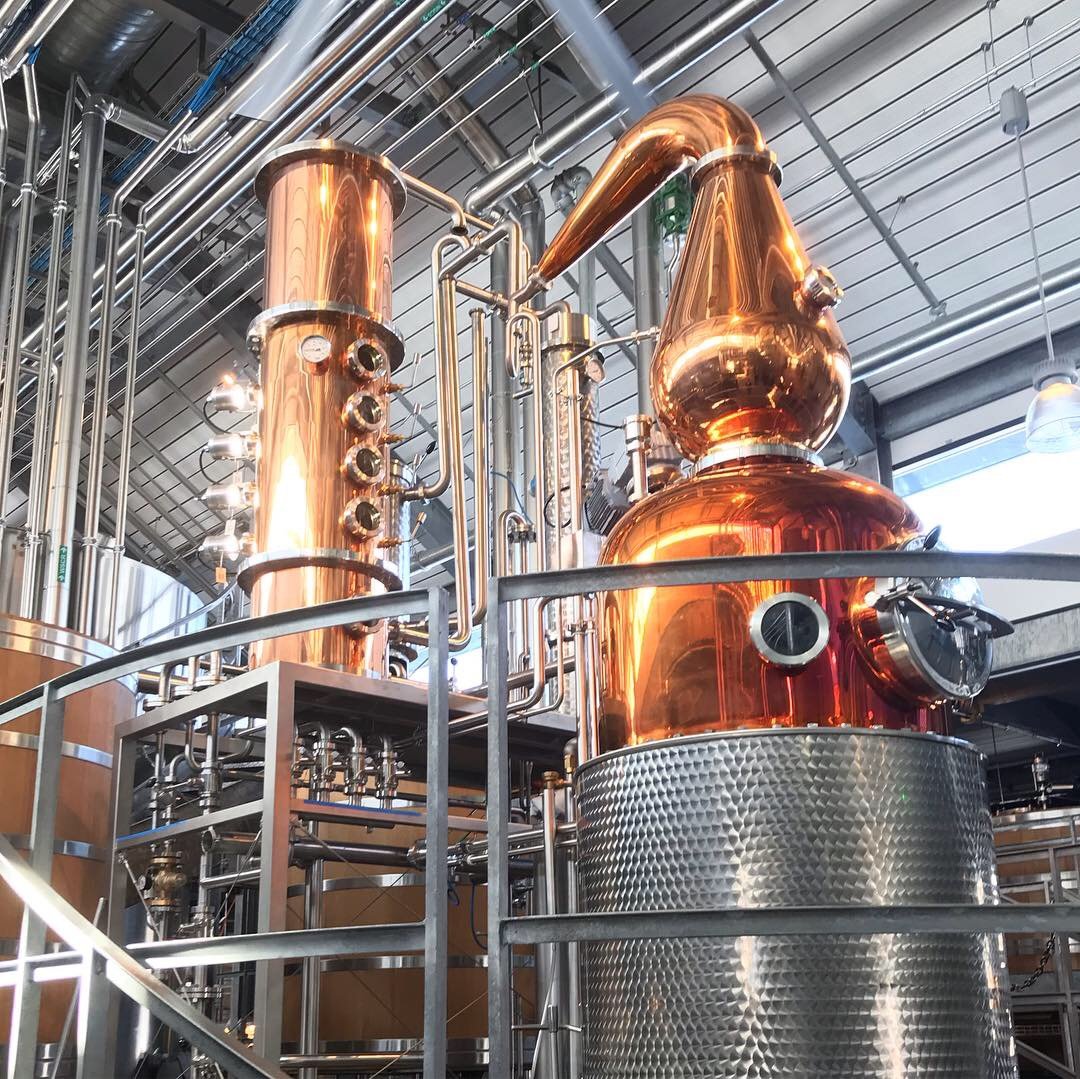
     

    IMG_3656
    IMG_3656
    IMG_3656


    On the sides of the cathedral room are fermentation and storage vats and tanks to hold liquids in the various states of production. 

    Beyond this room the building continues into a barrel filling room and a bottling line. 


    IMG_3576


    Rickhouses

    The rickhouses are a mile or so from the other site. We didn't get a chance to peek inside them (I think they are being developed for visitors as well so that certain groups can get barrel tasting experiences there in the future), but they have three separate temperature and humidity controlled areas (so they can imitate the weather changes of Kentucky and Scotland at the same time), plus an experimental climate control area that I assume is smaller. 

    About the only thing they don't have onsite is a cooperage. 


    The Feedmill, Scotch Stills, and Visitors' Center

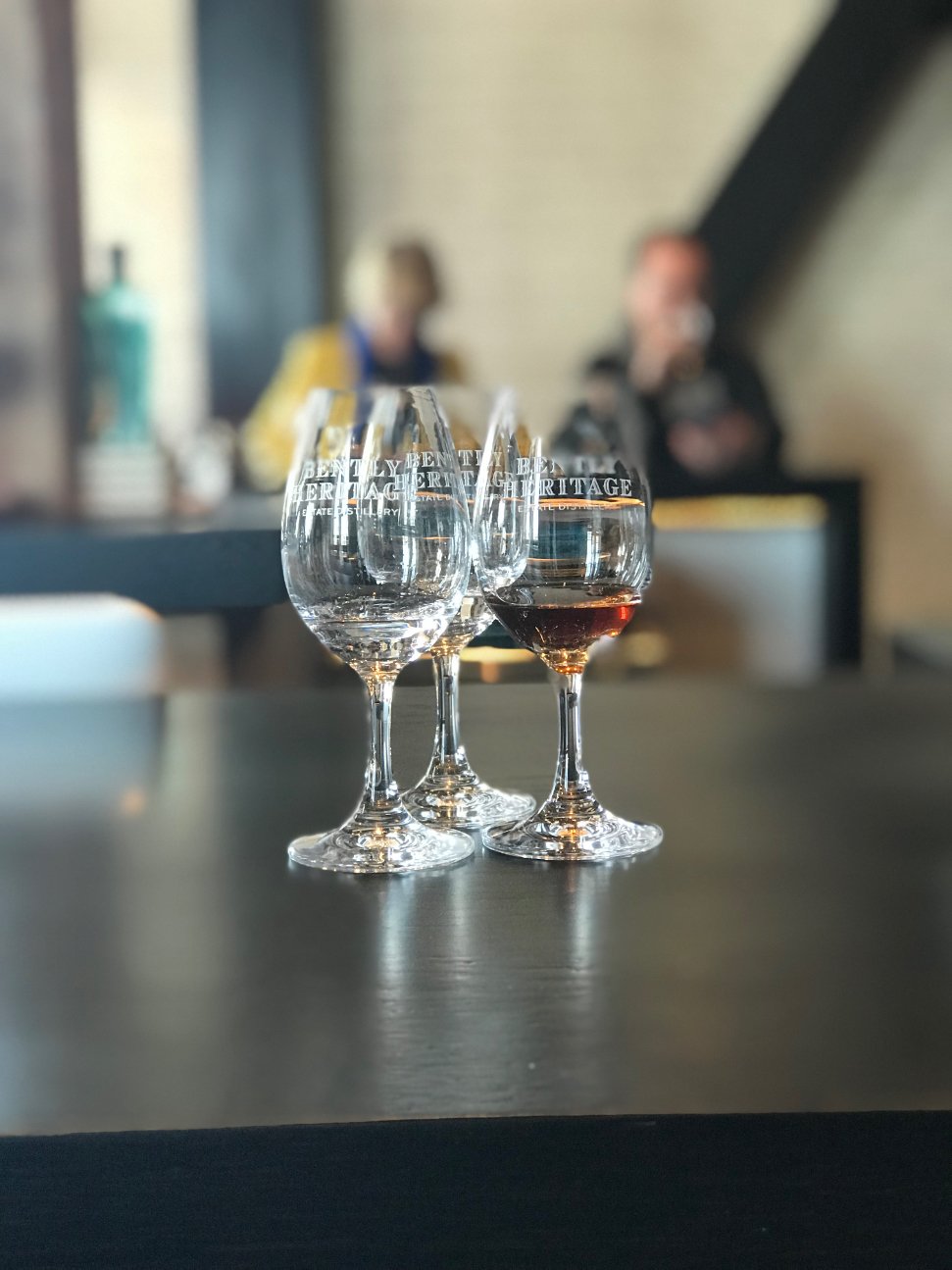
    The main visitor's center is the former feedmill with grain silos that date to 1906 as well. The room that makes up the main visitors center apparently held a huge vat of molasses which was used to enrich the grain to make feed. That's used as the design inspiration for the central three-story spiral staircase. There will be a retail shop on the ground floor, a bar on the second floor, and I believe the third floor will be used for special events like mixology lessons. (On my visit, Tony Abou-Ganim was there teaching the press how to make cocktails.) 
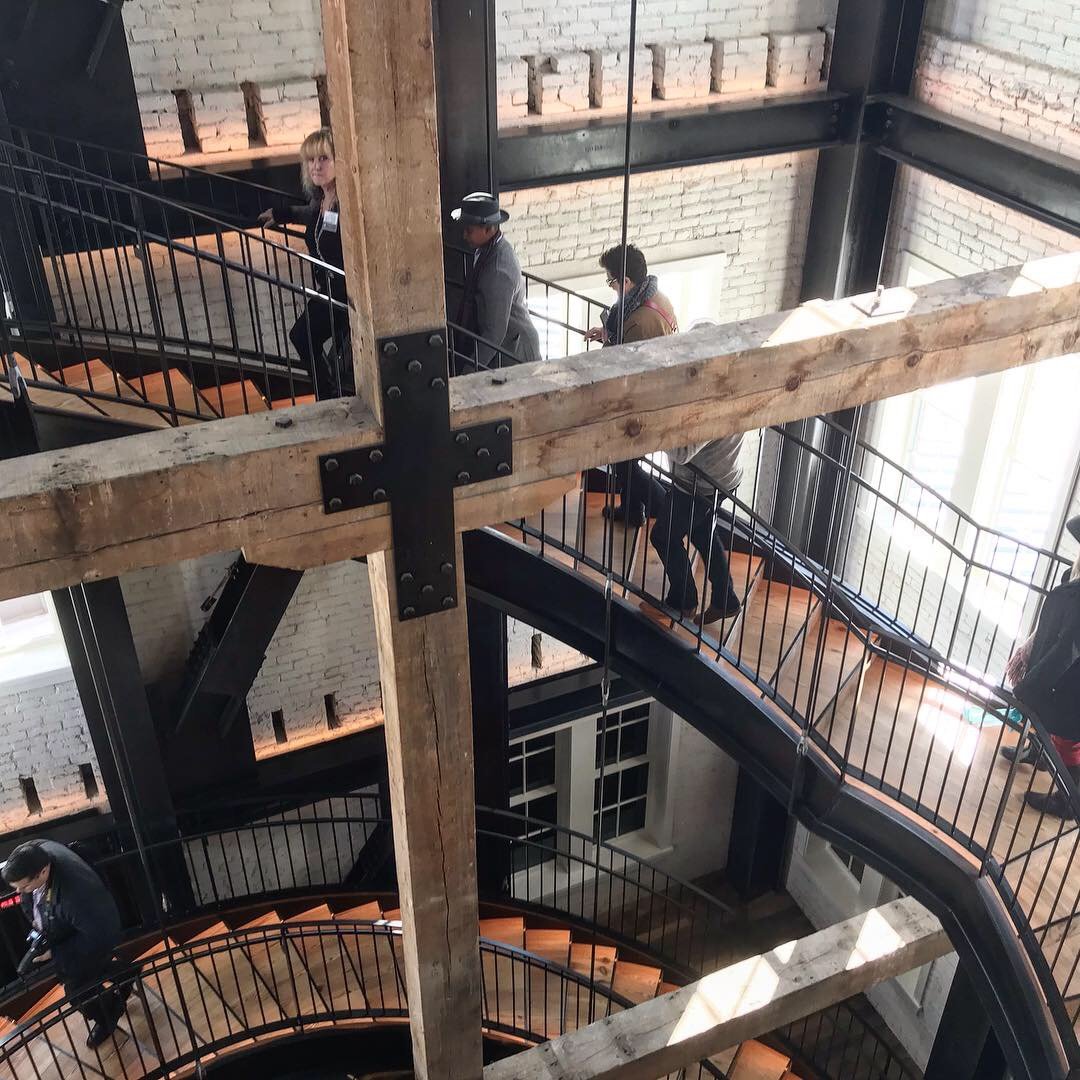
     

    IMG_3655


    All three floors of this building have a glass wall that looks into the adjacent concrete silos. The two buildings were joined and the interior of the silos were carved out to make a clover shape. [For an amazing example of this type of architecture, check out the mind-melting pictures of the Zeitz Museum in South Africa.]


    IMG_3636
    IMG_3636


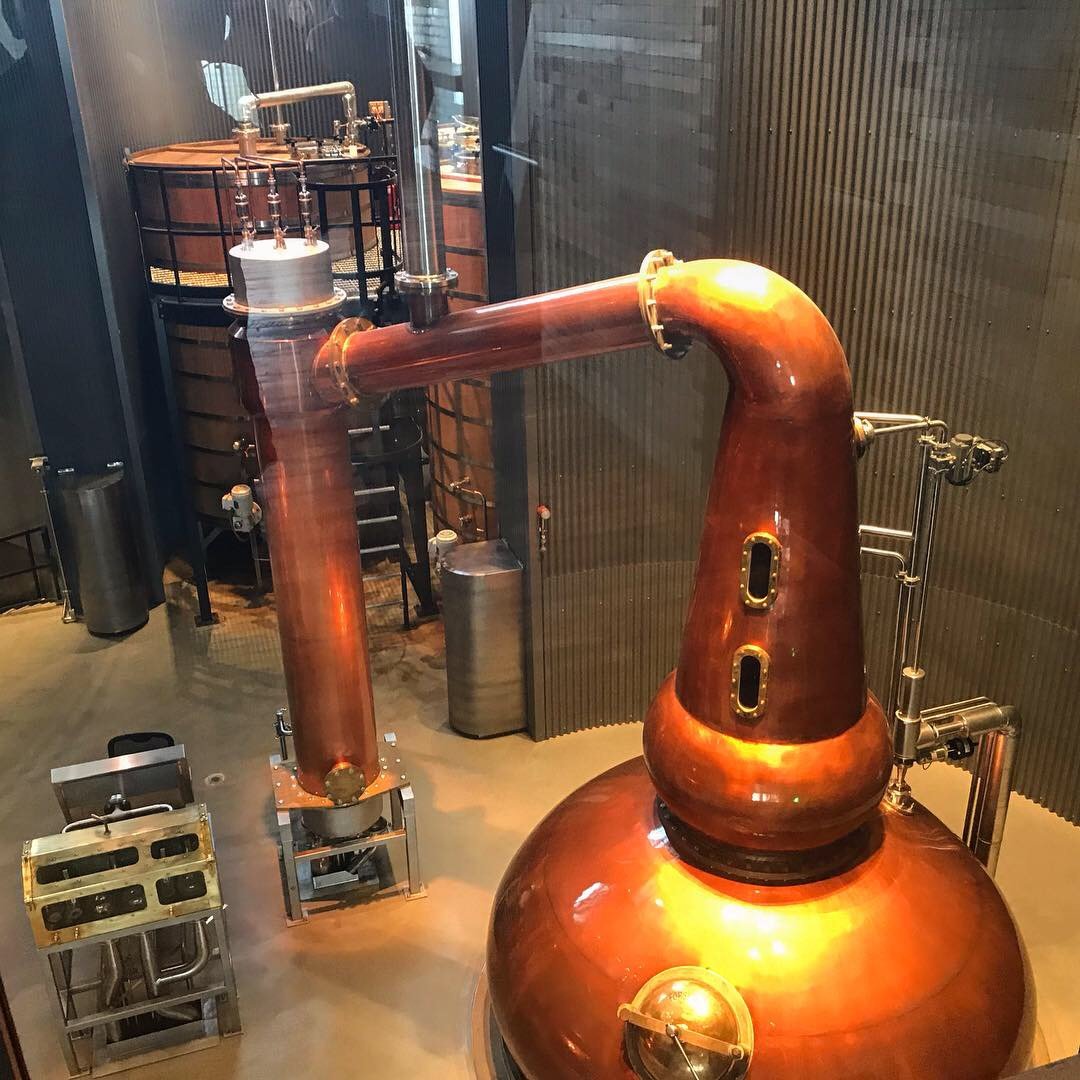
    Inside the former grain silos are two enormous Forsyth stills for making American single malt whisky. There is also a mash tun and fermentation vat in the room so that all the distillation production is self-contained – except for the malting, which we'll see in a second.

    The lyne arm of the still is at quite an angle so in single malt scotch they would tell us that this makes for a meaty, oily style of whisky. Here the distillers said they can make that style of make adjustments so that it comes out in a lighter style if they so wish it. 
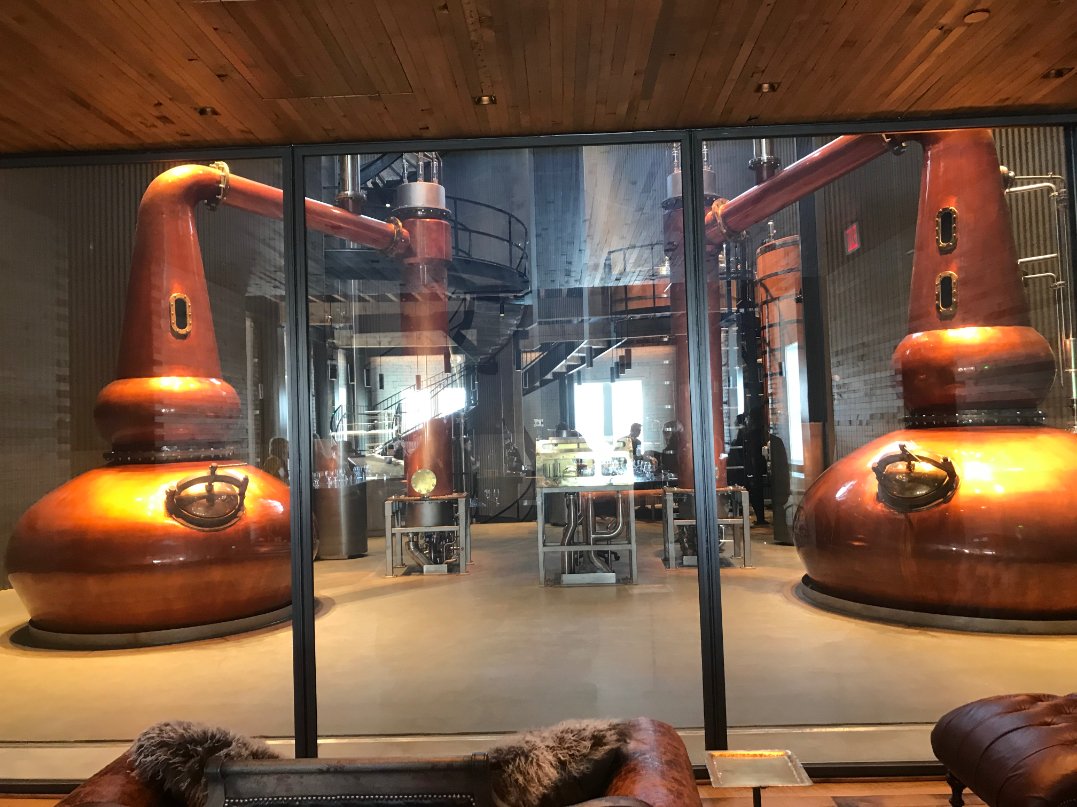
     

    IMG_3613
    IMG_3613


    The Ranch and the Malt

    Elsewhere on the ranch they raise cattle and have a retail butcher shop (they're getting into cheese soon as well). The ranch also has the largest compost facility in Nevada, which they use for their spent grains from distilling. This all gets composted and is used as fertilizer in the fields on site. 

    For spirit production, they're growing heirloom corn varieties, oats, rye, and barley. The distillers make request from the farm managers and they attempt to grow different grain varieties to try in their distillation experiments.

    As the Bently Heritage ranch has been operational for about 4.5 years preparing for the distillery to officially open, they have a lot of grains stored up for future spirits. (I think they said they were still distilling 2016 grains for their current products; they've got a lot of backlog.) They have 5 cultivars of barley and I think they've tried a lot of different types of corn. 

    They have 60,000 acres under cultivation. Even when no grains are currently growing, there's some stuff to look at. 
    IMG_6030
    IMG_6030


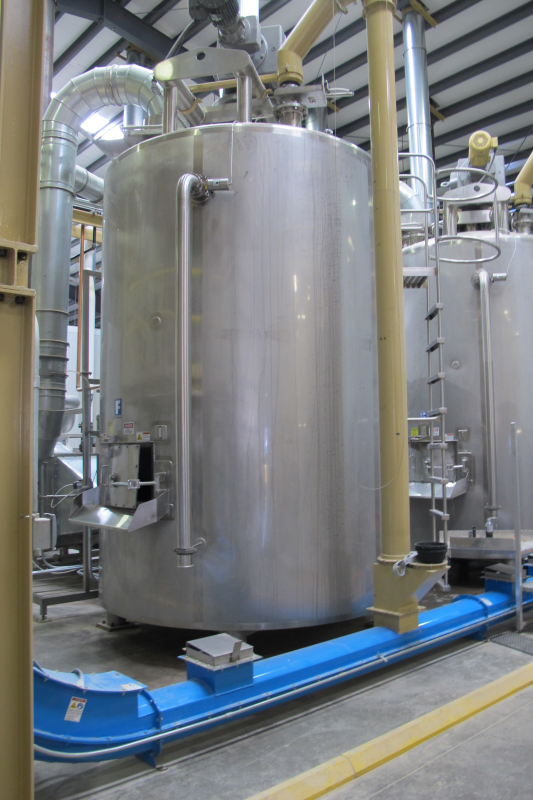
    With the scale of this production, it may not surprise you to find that they also malt their own grains. The malt house main room is full of grain storage and big tanks, which are self-contained "auto-malter" makers. Inside, the grains are soaked, dried (kilned), and come out as malted barley. 

    They also have a separate floor malting room, where wet grains are spread over a concrete floor, turned by hand for a few days, and then dried. (They'll be able to smoke the floor malted barley in the future, as is done in Islay scotch.) They'll be able to process 10 tons of malt per week (!!) here. They'll not use it all for themselves, but will sell some to beer producers. 
     

    IMG_6001
    IMG_6001


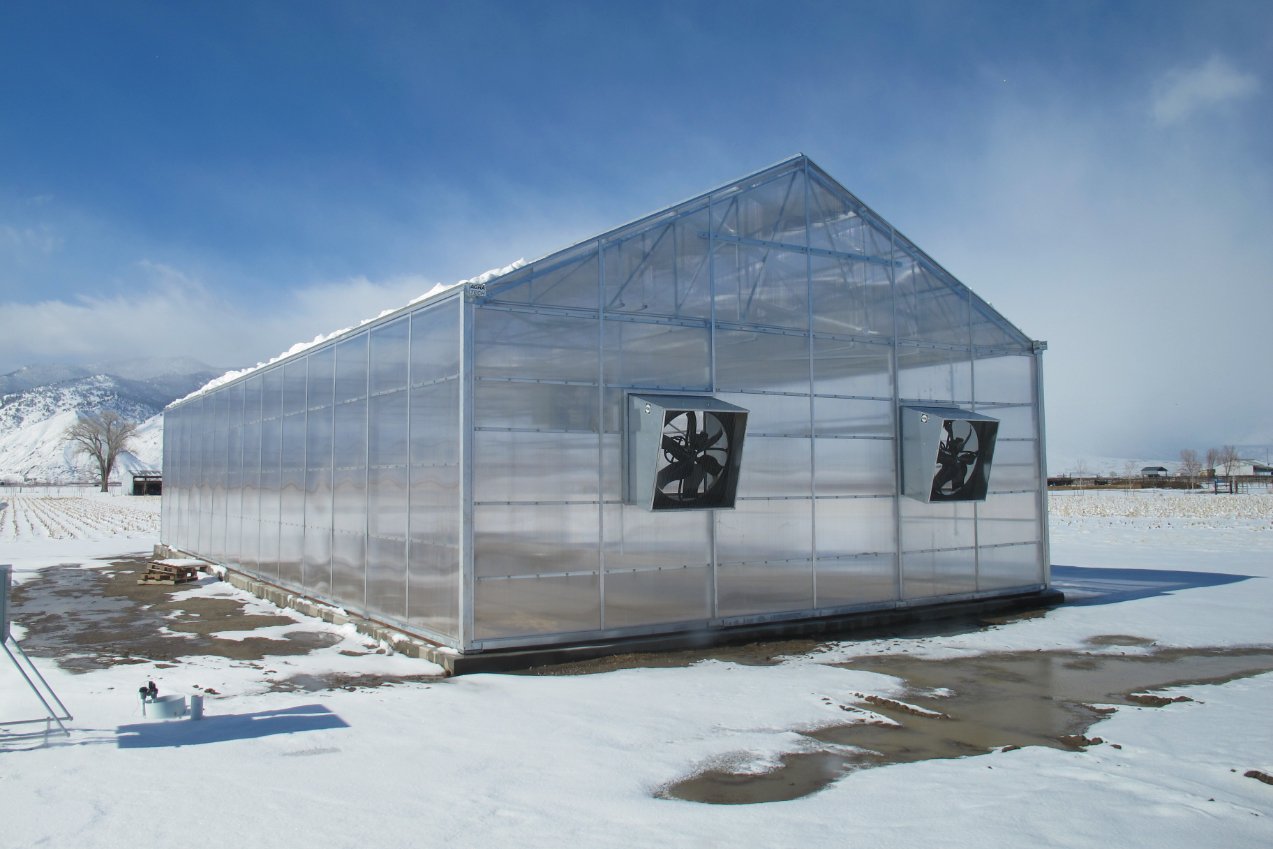
    They build a greenhouse that hasn't been planted yet (expect citrus trees and other botanicals probably to be used in future gin) and have a hop growing area next to it. 
    IMG_6015

    Beyond all this, they have a seed bank – apparently some of their heirloom varietals of grains can be hard to source from one year to the next so they propagate and store seeds. 

    The farm is all-natural and no-GMO, but is not certified organic (and I don't think they plan to be). 


    The Current Products

    Obviously Bently Estate plans to make whiskey, and lots of it. But for now, the distillery is opening with three products: A vodka, a flavored vodka, and a gin. 

    Source One Vodka is distilled from estate grown oats, and it has a nice soft texture. They also produce a vodka rested in small oloroso sherry barrels.

    Juniper Grove Gin is their London dry-style gin that's juniper forward with traditional gin botanicals except for the use of lime rather than other citrus. 

    Two more gins are forthcoming: Atrium, which will be closer to a New Western style of gin; and Alpine, which includes pinecones and will reflect the botanicals of the region. 


    IMG_3578
    IMG_3578
    IMG_3578


    What the Hell is Happening Here? 

    I'm glad you asked. I don't know. 

    Obviously this is an operation on a scale that is just not seen. Distilleries typically start small and/or focus on one spirit product. This one is starting huge and will be making tons of different spirits – anything that can be grown on the estate. (Which means no rum and maybe no vermouth.) So this one company will have in a few short years an entire portfolio of products, all self-grown and self-made in one location. 

    I'm very impressed and will continue to watch. 


  • China Baijiu Trip Miscellany, in Pictures

    If you've been following along, I've made… quite a few posts after my amazingly informative trip to China with Ming River Baijiu. Today is all fun and photos.

    Previous posts, all from this one trip: 


    So here are just some sights and scenes. 


    Luzhou

    The Luzhou Laojiao distillery is located in the city of Luzhou. It's very much not dialed in for Western tourists. We were only there one night. 

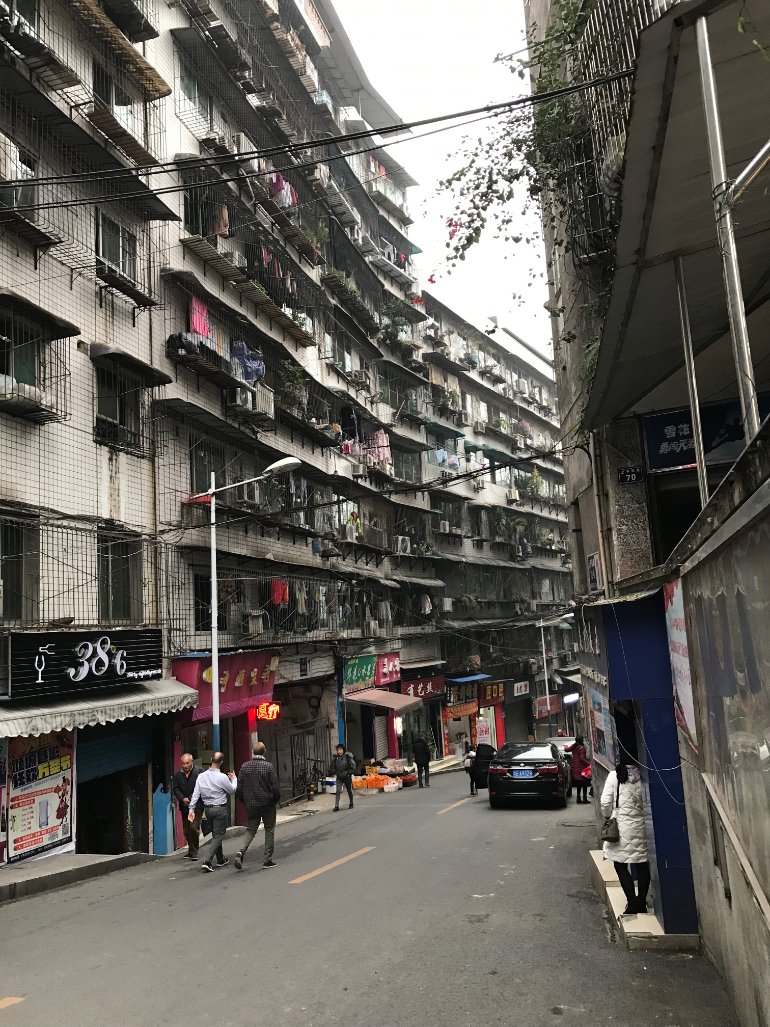
    IMG_2644

    Above: The street right near our hotel.

    IMG_2652The Yangtze River! 

    IMG_2671

    A lot of the buildings light up in China. 

    IMG_2671

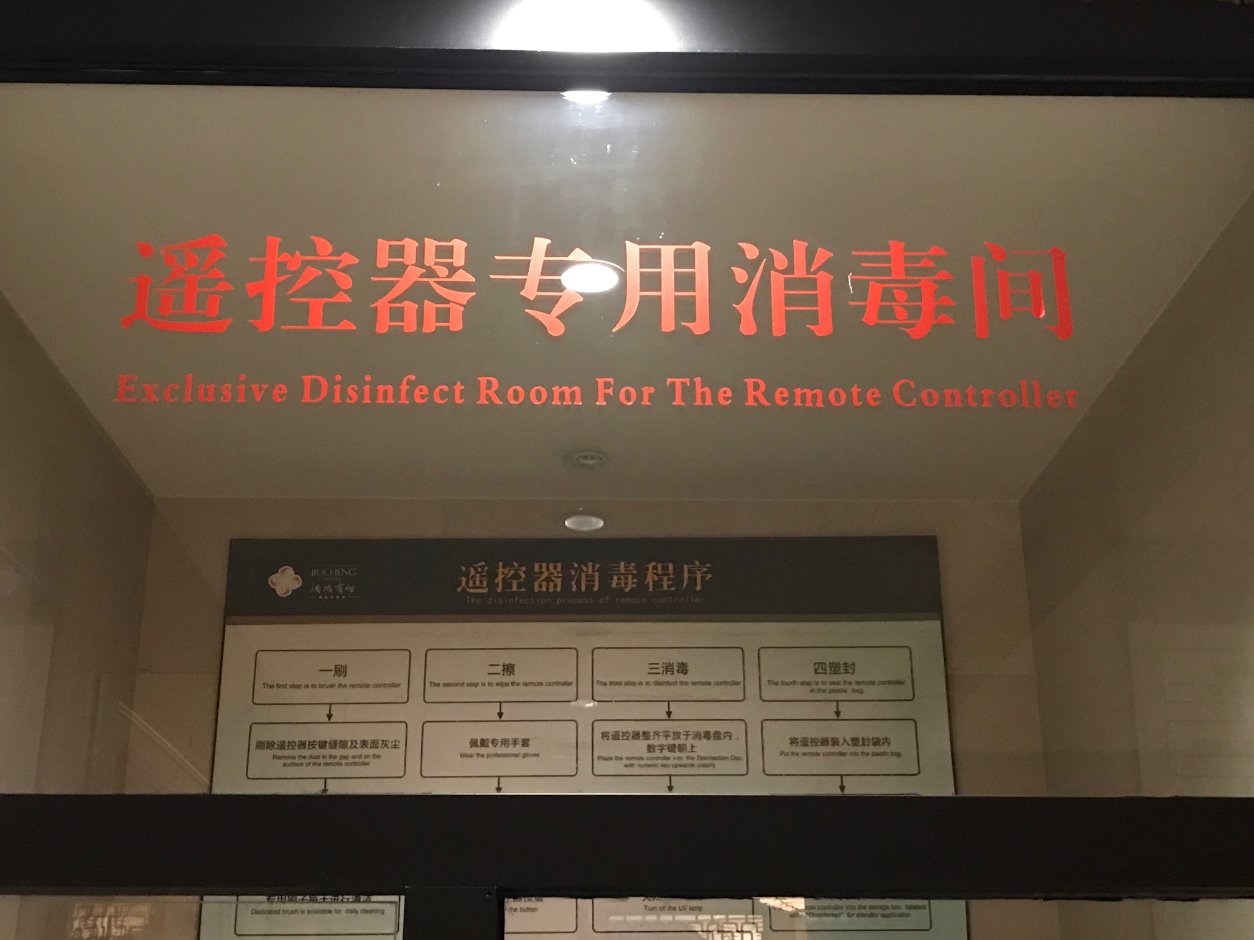
     In the lobby of the hotel we stayed in had this glass cubby for the exclusive use of disinfecting TV remote controls. That's a new one.


    Chengdu

    From Luzhou we drove to the larger, most cosmopolitan city of Chengdu. It is a growing city and growing tourist and shopping destination. 

    IMG_3103My hotel room view.

    IMG_3103

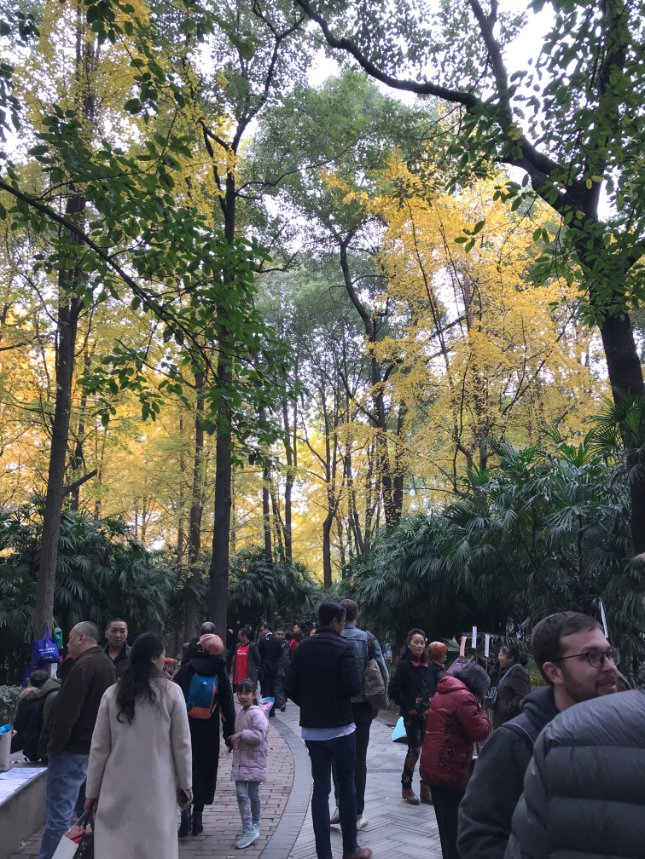
    A large, busy park in Chengdu. The yellow trees were a beautiful color not well captured here.

    IMG_3103

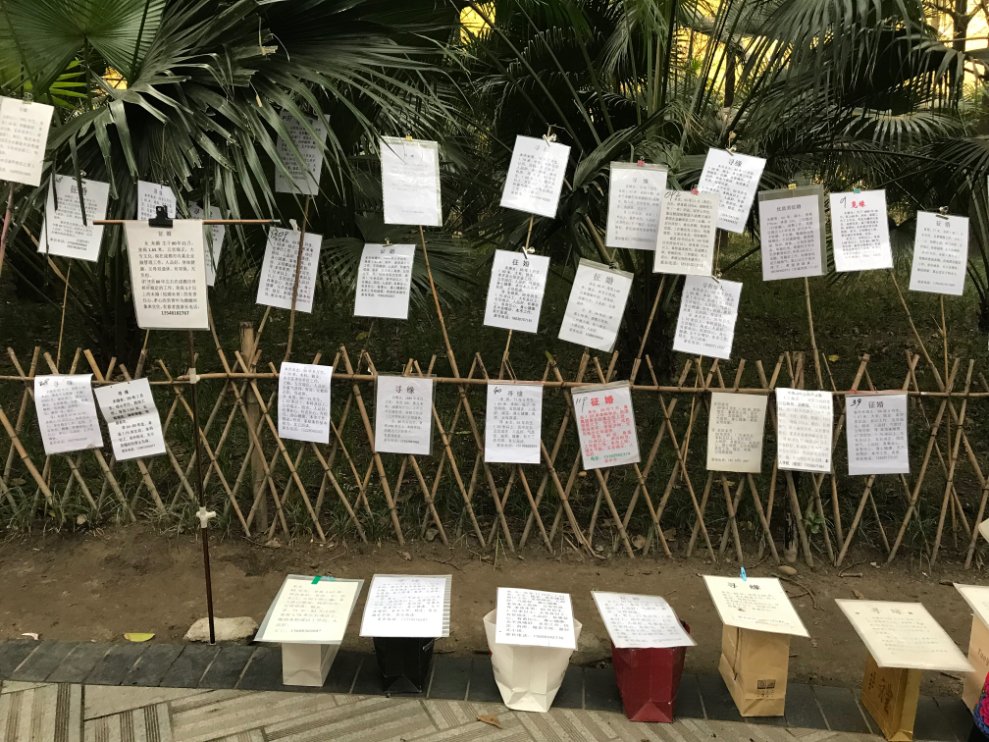
    In the park, parents of single children put up signs advertising their adult children's assets. The parents stand around matchmaking in what must be the most humiliating act for the children. 

    IMG_3123

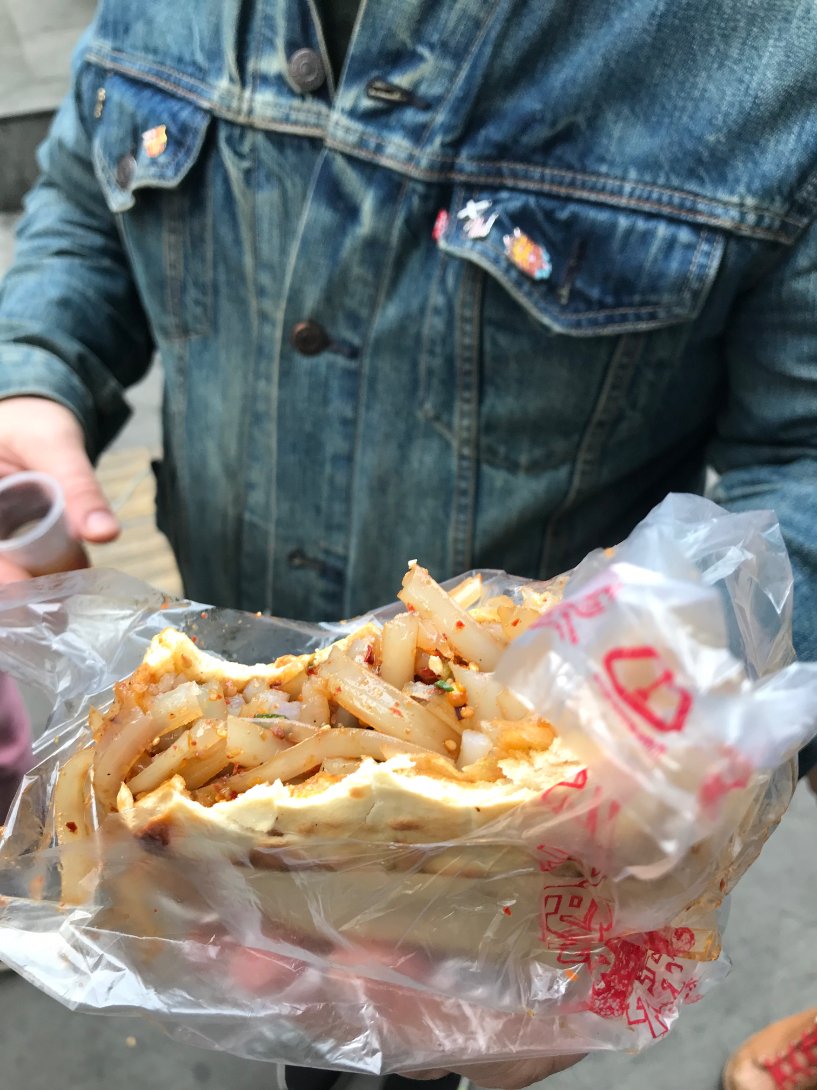
    We took an awesome street food tour. I didn't eat much but hello noodle sandwich!

    IMG_3123

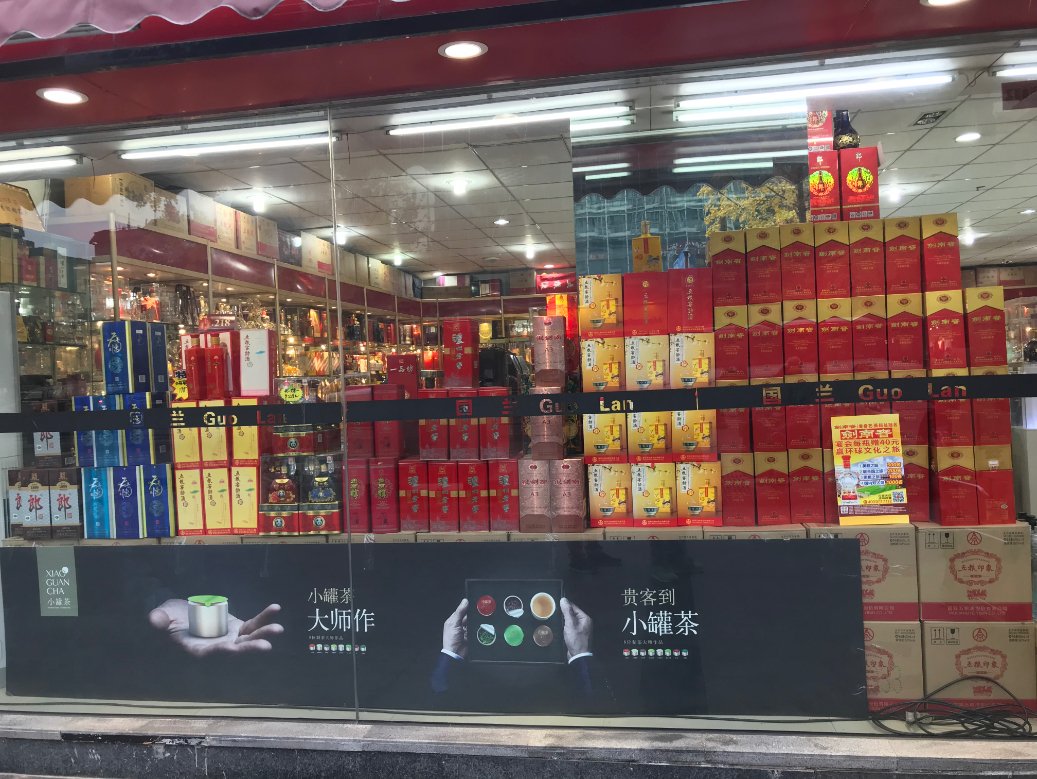
    This is a typical baijiu store- the bottles are usually red and gold. 

    IMG_3123

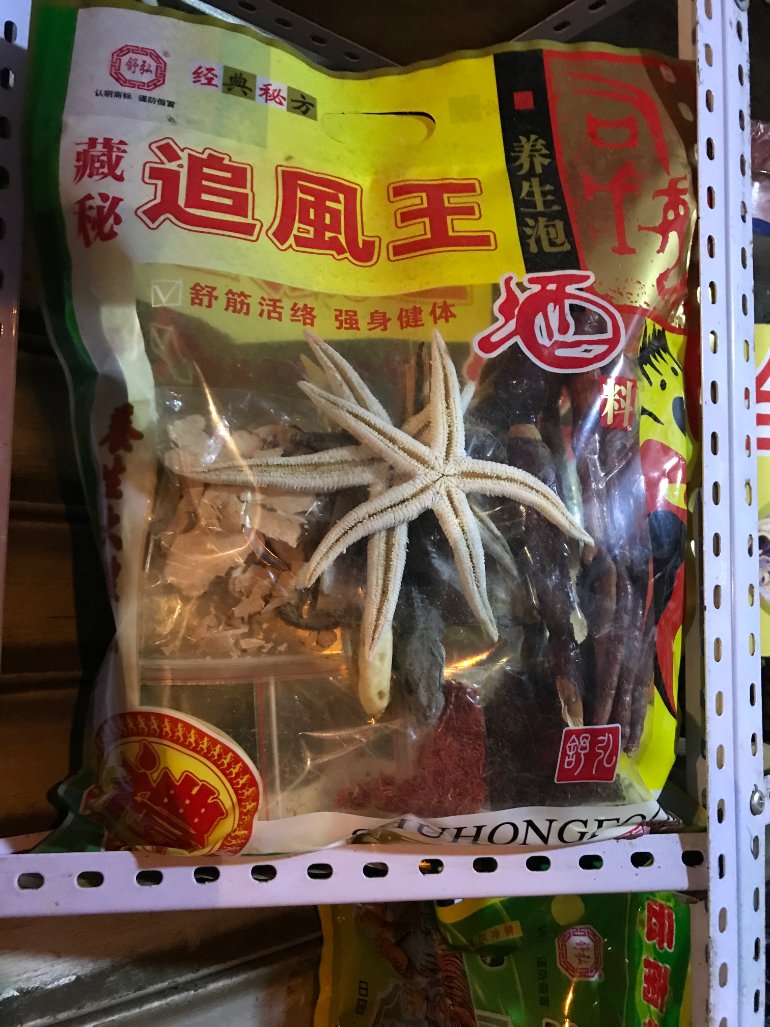
    We stopped by a more traditional street baijiu shop. This is a medicinal ingredient infusion kit. Yes, that's a starfish. There's a snake head poking out there too and who know what else.

    IMG_3123

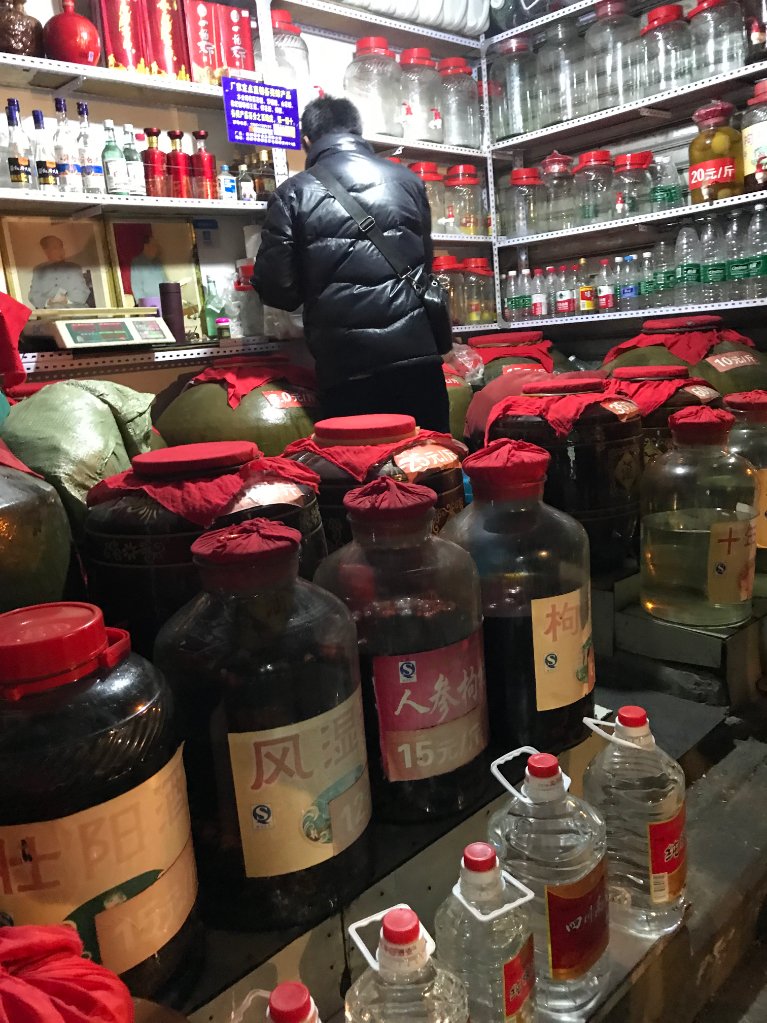
    The baijiu stand sells house infusions kept in the big jars, in various flavors. 

    IMG_3123

    The bottles are more infusion-grade bulk baijiu. 


    IMG_5954

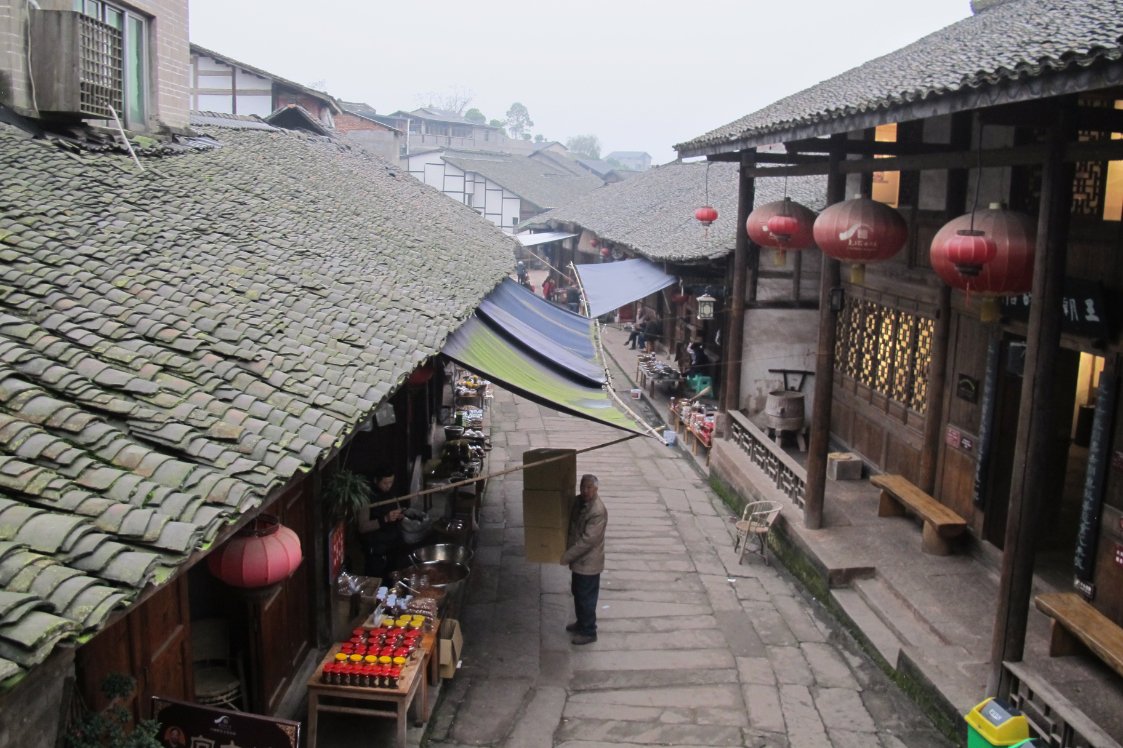
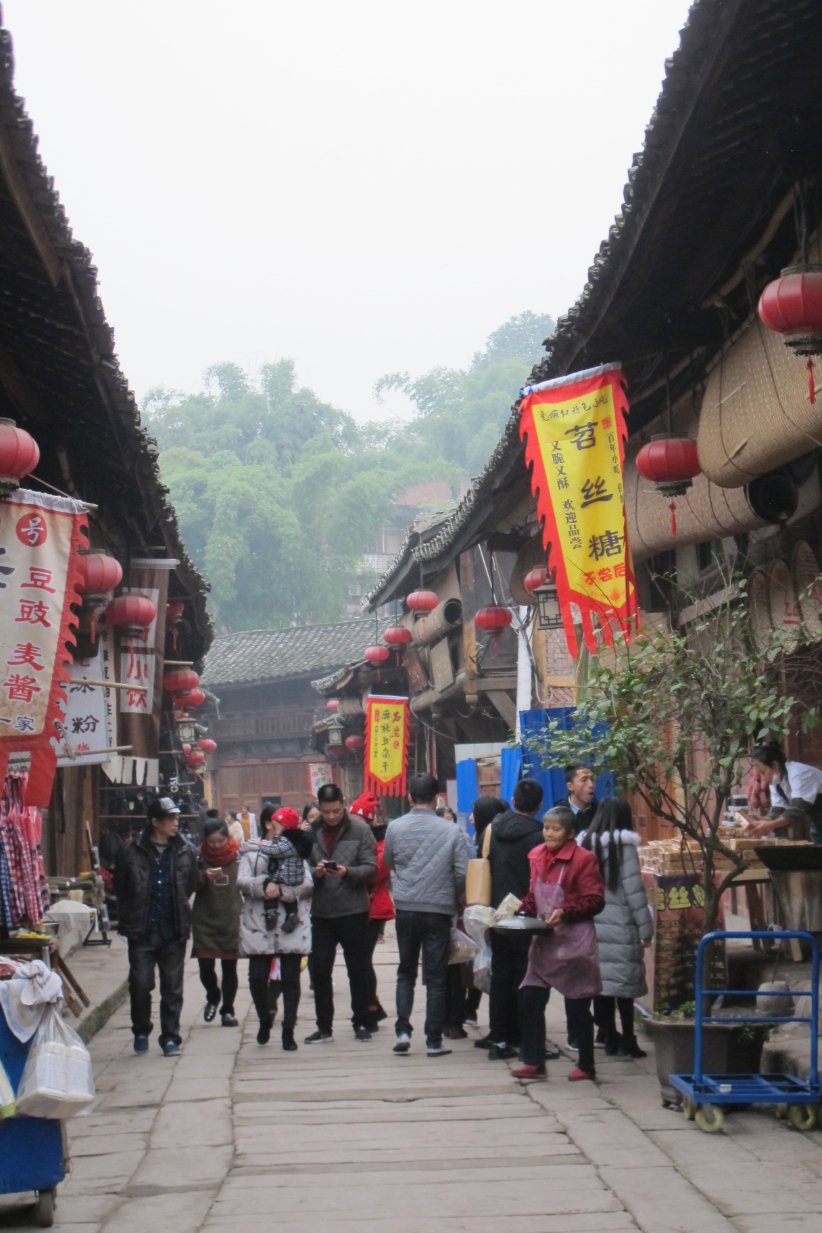
    Somewhere not far outside the city, we visited a traditional old Chinese village that has been preserved for tourism. Our group of Americans was an attraction for the locals working in the village. People were taking pictures of us as we were taking them of the old buildings. 

    IMG_5954
    IMG_5954

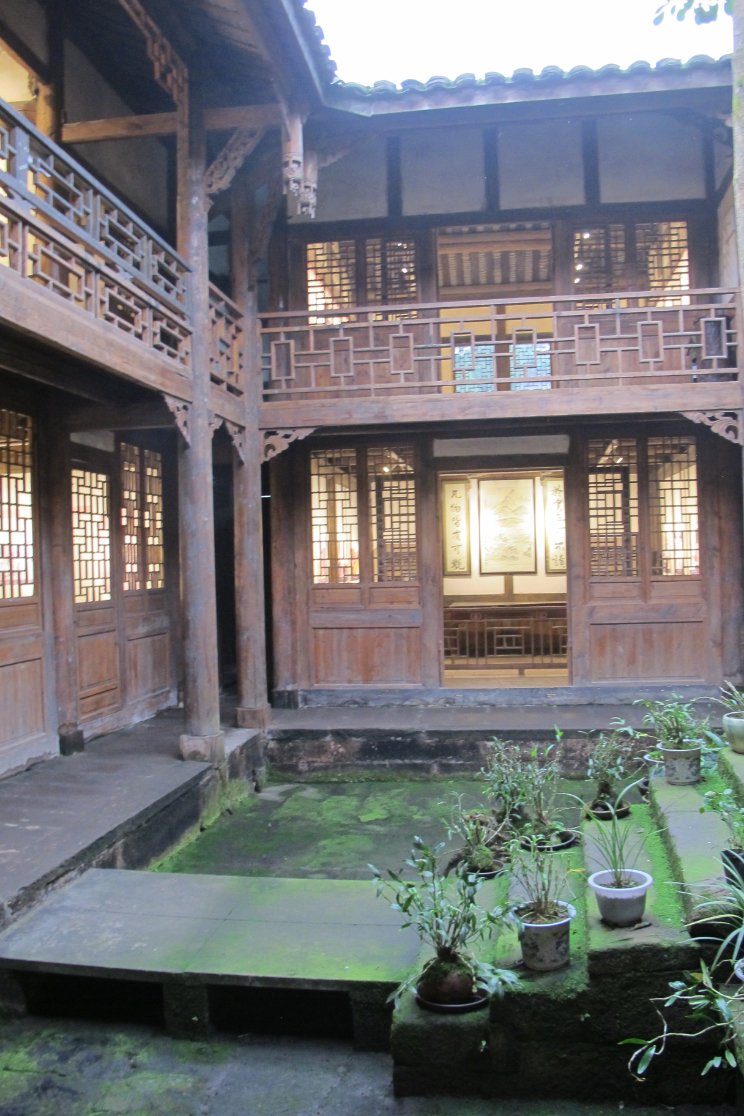
    The interior courtyard of a famous artist's house. 

    IMG_5954

    Street vendors were selling local delicacies, along with tchotchkes, traditional parasols, and clothes.


    Panda Sanctuary!

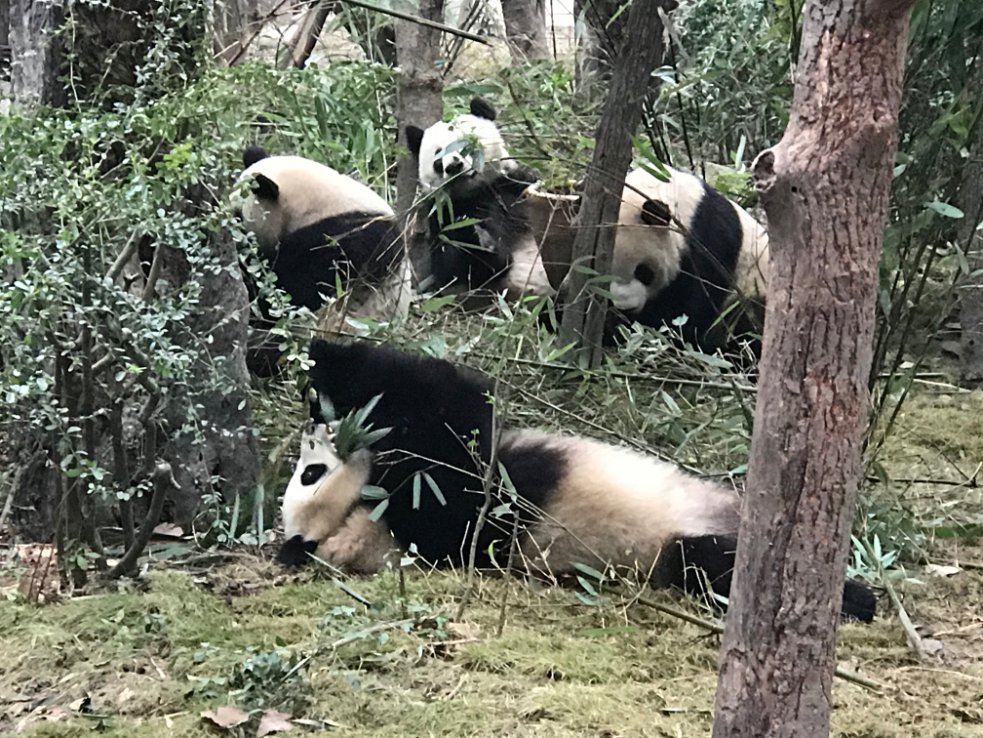
    Part of what puts Chengdu on the tourism map is their huge panda breeding center and park. We played it right and got there right when it opened. Within two hours, thousands of tour busses pulled up all at once and it became insanely crowded. 

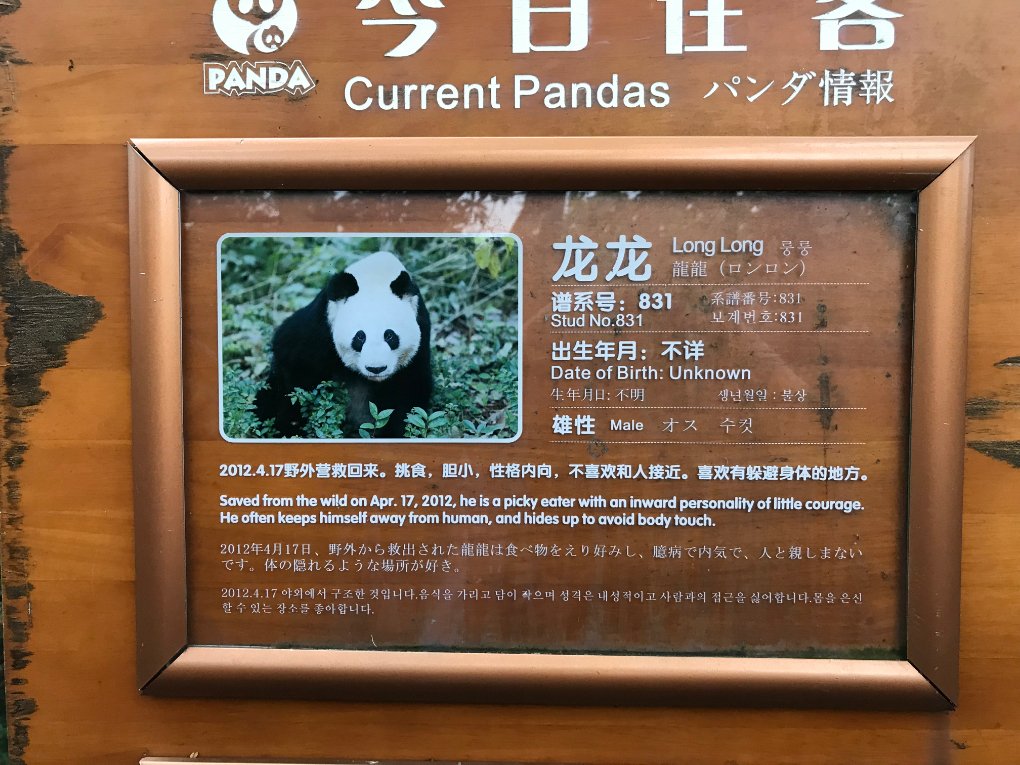
    The pandas are adorable of course, and the name plates describing their personalities were hilarious. 

    IMG_3050

    Part of the entrance to the park. The Kung Fu Panda movie has been integrated into the whole park.

    IMG_3050
    IMG_3050
    IMG_3050
    IMG_3050


    That's all folks! 


  • Comparing Continuous Fermentation in Baijiu with Sour Mash Whiskey and Jamaican Muck Pits

    Another baijiu post yessss! Today I want to think about how the circular fermentation process in baijiu is like and unlike sour mash in whiskey and muck pits in Jamaican rum. 

    Recent posts have been:

    No need to read them all now. 


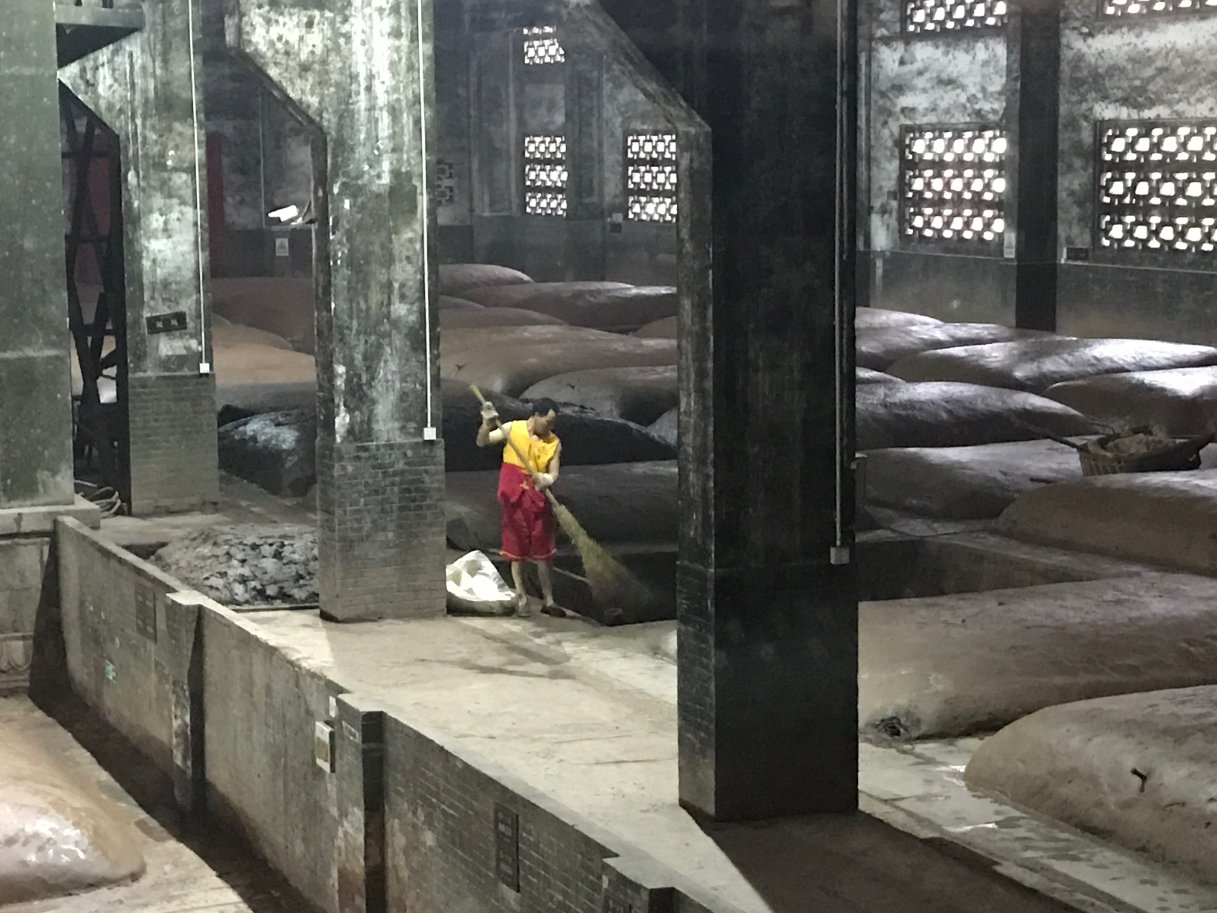
    As described in this post, in strong aroma baijiu, grains are fermented in earthen pits, distilled as solids, and fermented again in the same pits they came out of. A little bit of new grain is added to each fermentation cycle along with the already-distilled grain. 

    This may sound slightly familiar: in "sour mash" whiskey, some of the post-distillation materials are added to the next fermentation batch. 
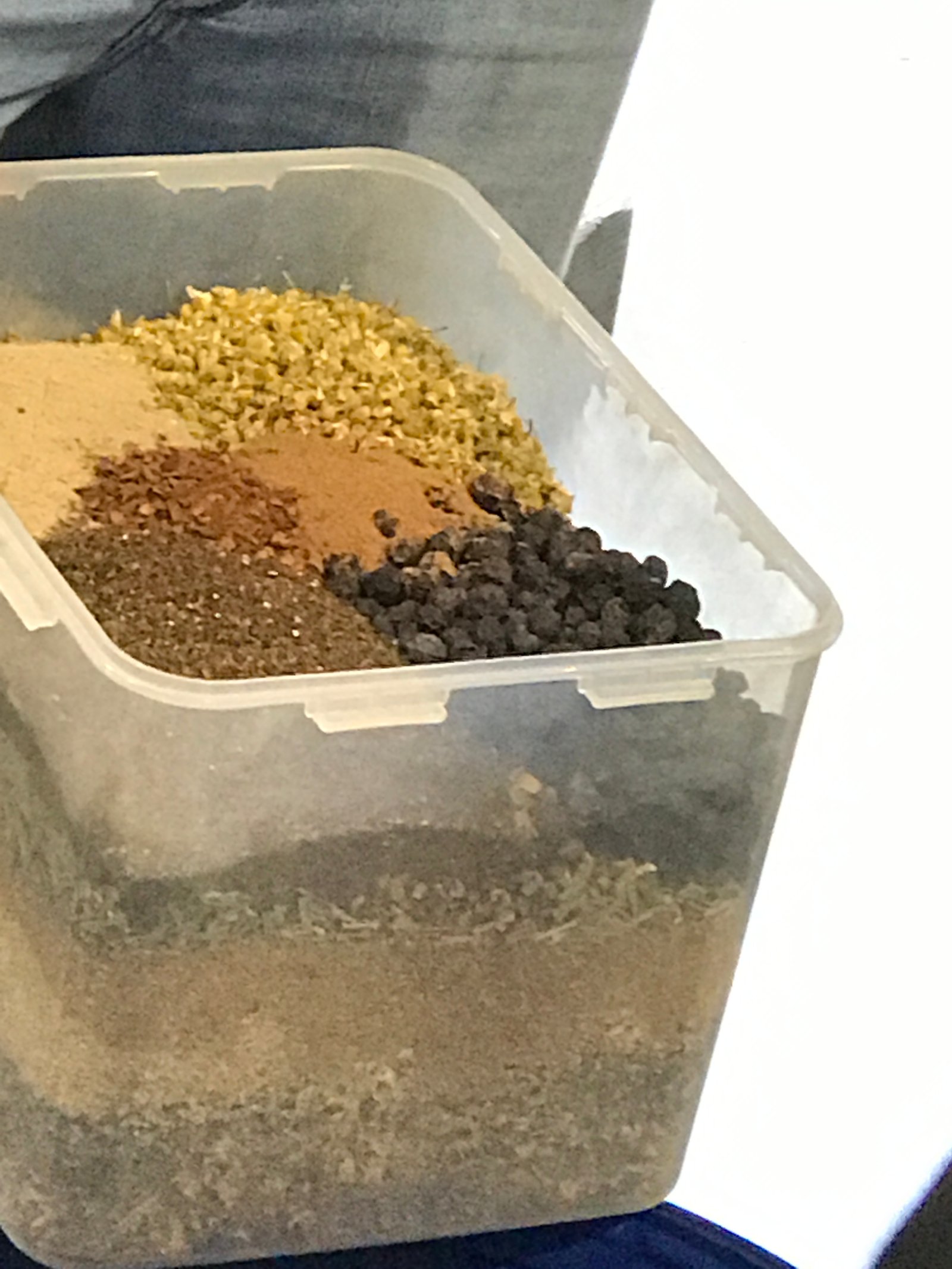
    And in Jamaican rum, some distilleries use "muck pits" that are blends of previous stillage fermenting together. Some amount of this is thrown into new fermentation batches. 

    So let's talk about how these are alike and how they may be different. 


    Sour Mash

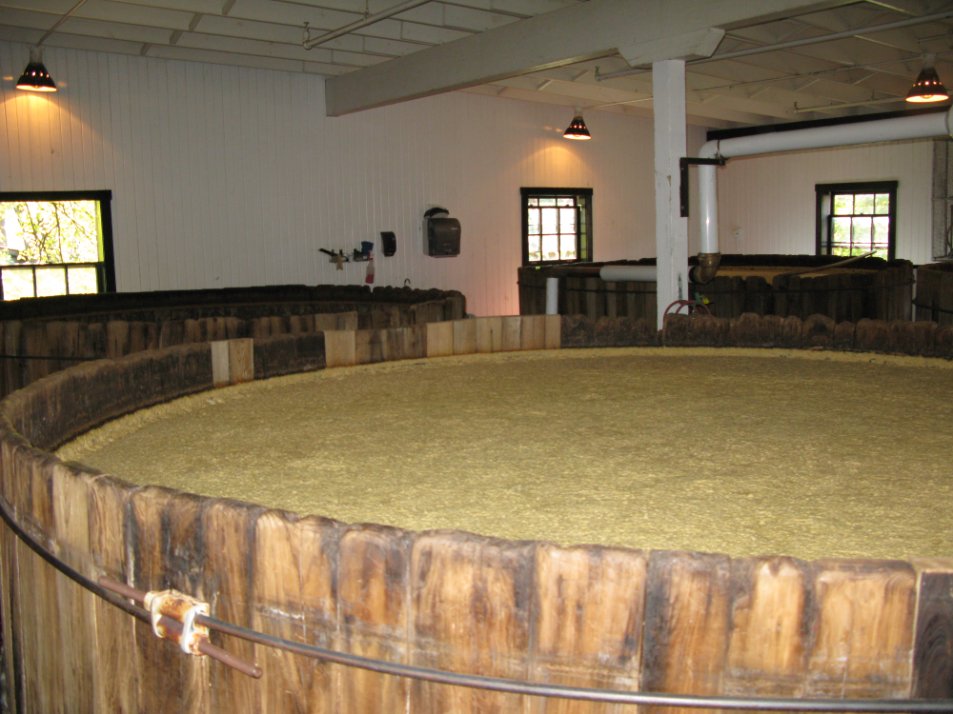
    Frementation vatsI had always heard that sour mashing was done for "consistency between batches" and thought that "sour mash" is like sourdough, where live fermenting material goes into following batches so they're consistent with each other. This turns out not to be the case. 

    Instead, some of the stillage (the leftover liquid in the still after distillation) is added to the next fermentation batch. Because the stillage has just been in a still that is literally boiling hot, there is no live yeast to transfer from one batch to the next. The sour mash is just acidifying the fermentation vessel to adjust the pH for a better fermentation and to prevent bacterial infection. The quantity of stillage used could be considered part of a distillery's recipe. 
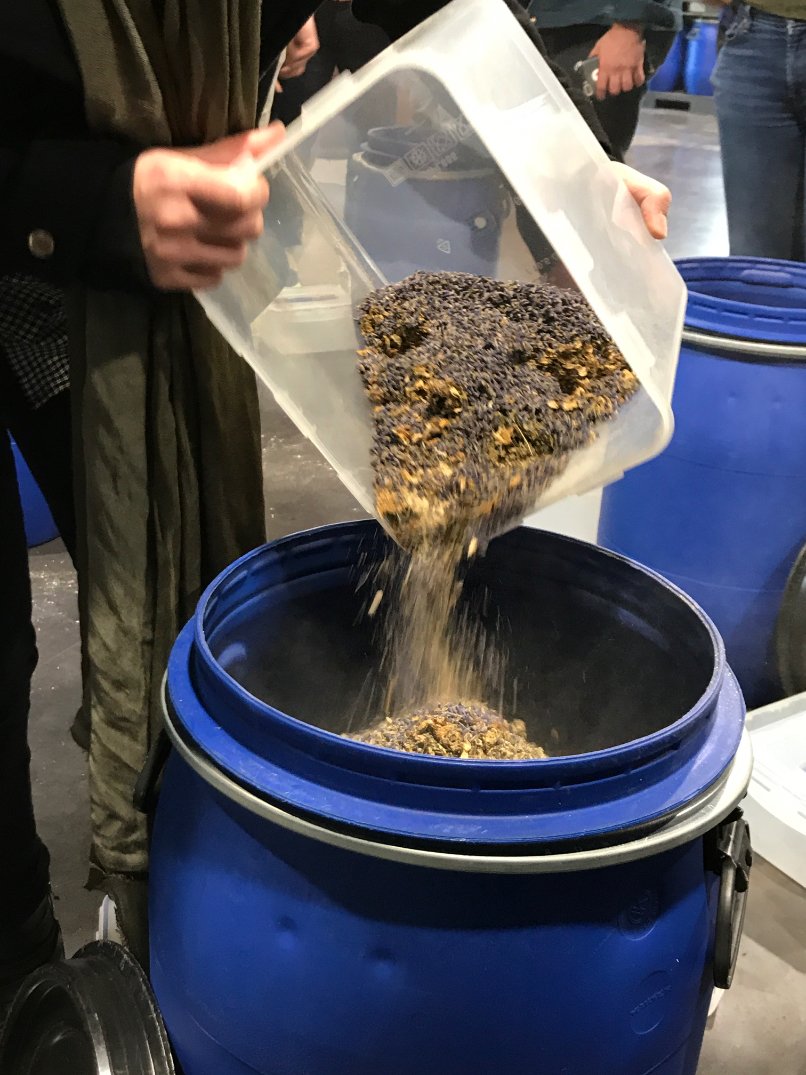
     

    Muck Pits

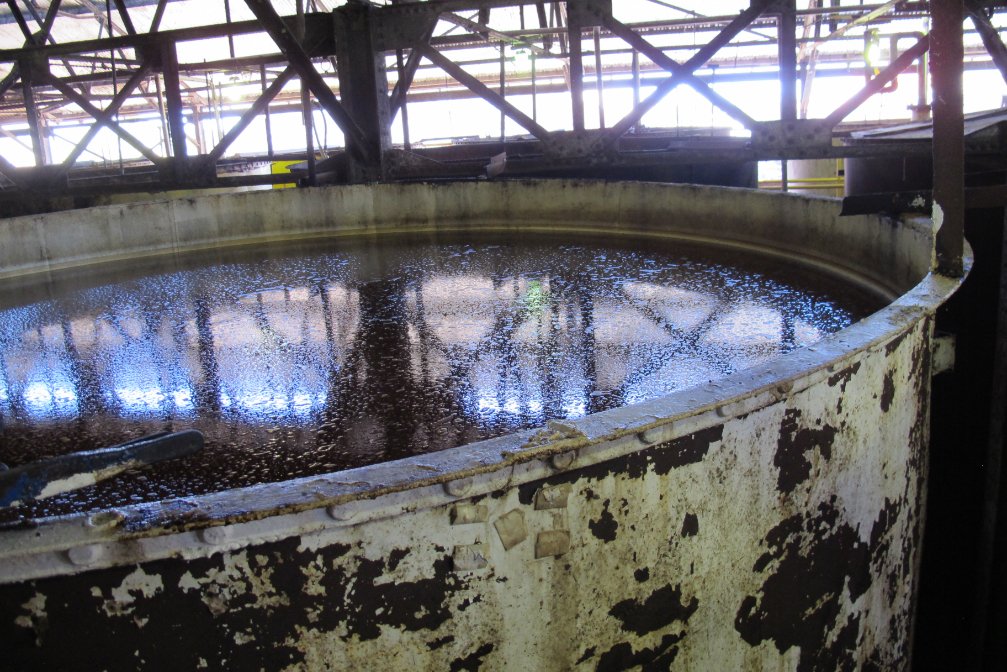
    IMG_4631In some Jamaican rums, the stillage (leftovers after distillation) is called dunder, and it is mixed up with other leftovers of the rum production process into something called muck. 

    From an excellent post on CocktailWonk.com called, "Days of Dunder: Setting the Record Straight on Jamaican Rum’s Mystery Ingredient"

    [Muck is] a giant bolus of bacteria that creates a soup of carboxylic acids…  muck is essentially a biological reactor for generating acids that eventually turn into yummy esters. It’s fed refuse from various parts of the rum production process, and its pH level is carefully nurtured via the addition of marl to keep it in humming along or dormant, as necessary. 

    At the end of fermentation, a portion of muck is tossed in with the fermented molasses and it's distilled together to produce hugely-flavorful rum. Note that unlike in sour mashing, they want to promote bacteria- at least the right bacteria.

    So, here again we have leftover products from the distillation being added to the next batch, but the purpose is to get those bacteria-generated acids into the still. 

    Not only is the muck not just the leftovers of one distillation, some of the core bacteria of it is stored in nerd-famous "muck graves" at some distilleries. CocktailWonk writes in the same blog post:

    So what of these stories about outdoor muck pits in the bare ground? … they do store a semi-solid version of the muck in the ground, as a form of long-term storage for the dormant bacteria. Distilleries commonly start and stop production [and the semi-solid bacteria can be used to restart the muck]. By carefully adjusting the pH of the muck, it can be put into a semi-stable state, where it can be stored in an earthen pit. … the pit is slightly bigger than the size of a human grave.


    1,000-Year Pit, 10,000-Year Mash

    IMG_2715The name for the process of repeat fermentation in baijiu is "1,000-year pit, 10,000-year mash." I was confused by the phrasing: how could the mash (the fermenting material) be older than the pit that the mash is fermented in? But it was explained to me that 10,000 years basically means "forever" or "endless" So we could rephrase "1,000-year pit, 10,000-year mash" as something like "ancient pit, endless mash." It speaks to the endless cycle of always using some of the previous distillation run in the next fermentation. 

    So as with sour mash and muck, some of the stuff comes out of the still and goes into the next fermentation (in strong aroma baijiu, it's all of the stuff that comes out of the still). 

    Like muck, qu  (the fermentation agent for baijiu made up of mold, yeast, and bacteria) contains flavor-creating bacteria that distillers want to impact their beverage. But it's not the only place that bacteria come into contact with the fermenting mash. Because the fermentation takes place in earthen pits and covered with mud, the dirt and mud is a home to bacteria from all the previous batches as well- thus the continuity. Sort of like a muck pit.  But in this case, that bacteria is present throughout the fermentation, and no doubt that's the reason the pits are covered and sealed rather than left open to ferment as with other spirits. 


    Different Places

    Now, there are other cracks and crannies in distillation where bacteria can live and have multi-batch impacts on the resulting distillates.

    Many distilleries are very proud of their wooden fermentation vats, rather than using stainless steel. Like the mud pits and muck pits, bacteria could technically live on between batches of whatever is being fermented. 

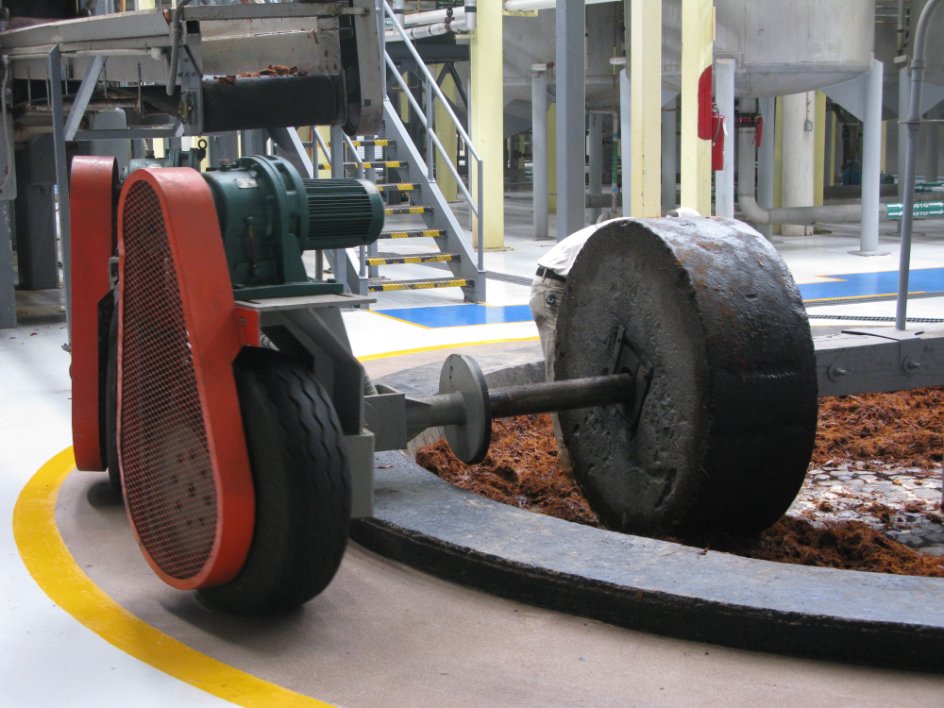
    Olmeca altos tahona2In a recent story for The Daily Beast, Wayne Curtis wondered if the volcanic tahona stones that are sometimes used to crush agave before fermentation might harbor bacteria as well. He writes:

    Another factor possibly in play: microbes. Volcanic stones are semi-porous, hard to clean, and can serve as a home to microorganisms, which in theory could make their way into the fermentation process and influence flavors. Camarena doesn’t rule out microbial influence. “I don’t know,” he says. “We’re dealing with microorganisms floating around here, and nothing gets sterilized.”

    “Fantasy,” argues Rodriguez. “Here at Patrón, we do an intensive cleaning process from batch to batch. Our yeast and production process are what is responsible for the flavors of Patrón tequila.”
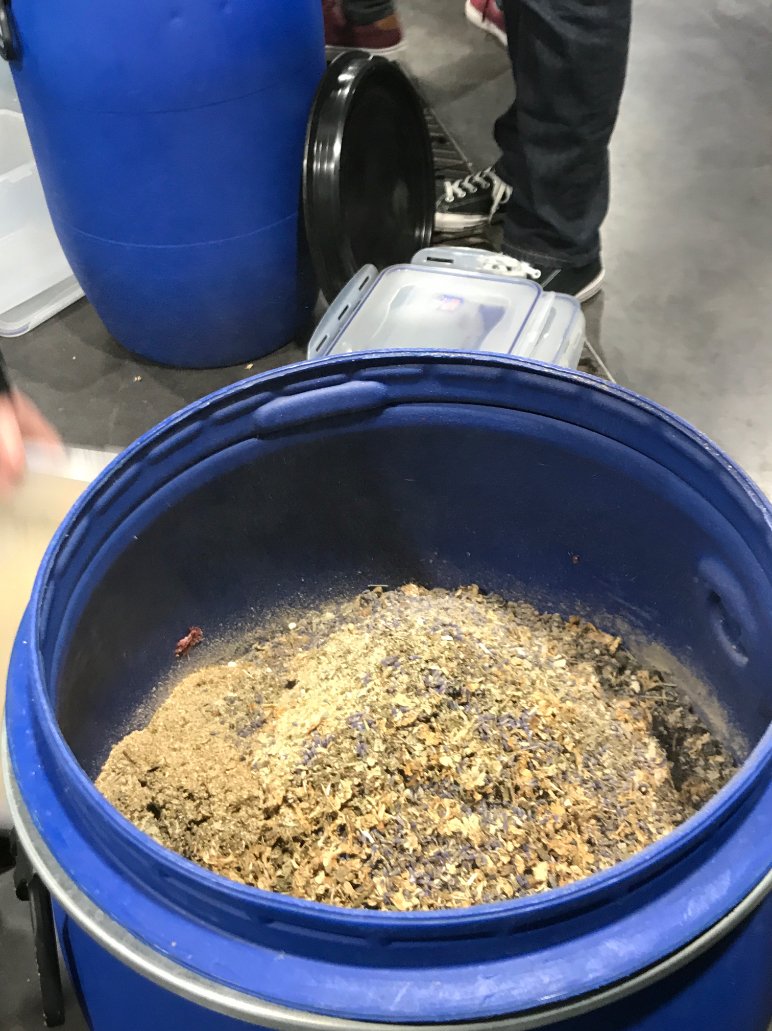
    I suppose there could be other pieces of equipment, containers, and tools harboring helpful bacteria in various spirit production around the world.
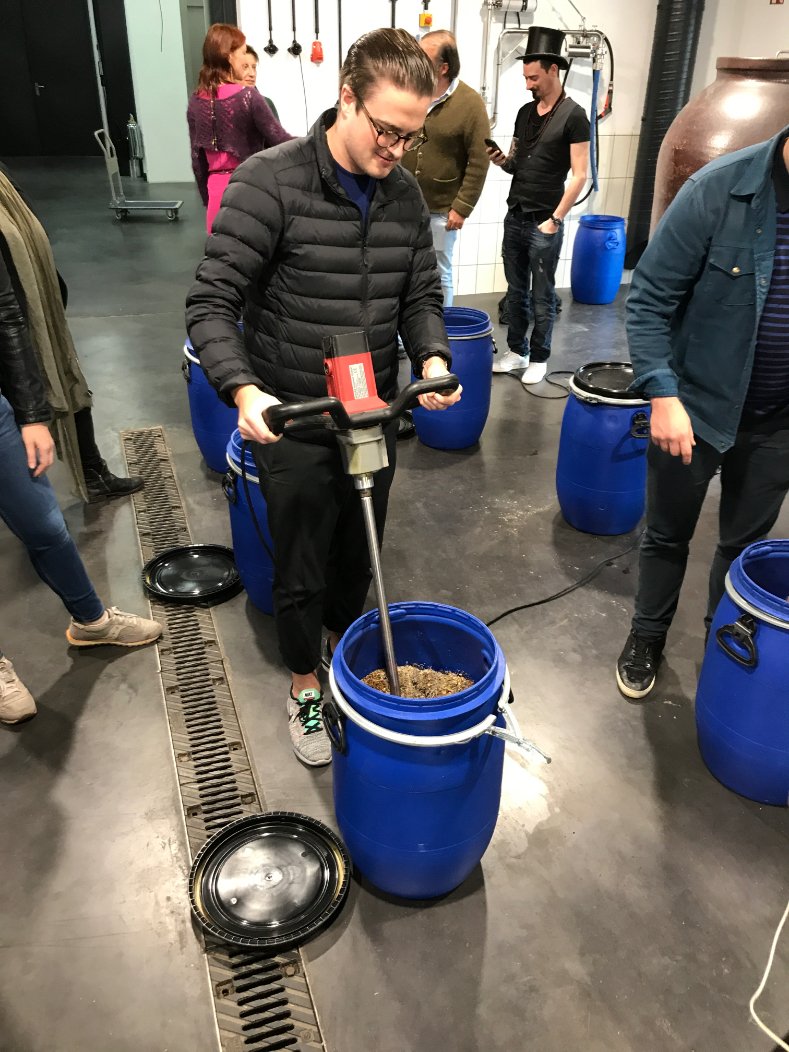
    To what extent each may impact the final flavor of the individual distillate I don't know, but it's fun to compare common practices across categories.