Category: distilling

  • A Visit to the Bently Heritage Estate Distillery

    America has been opening some truly impressive distilleries and distillery tasting rooms as of late, mostly in Louisville. Since the last time I visited only about four years ago, Michter's just opened a new distillery a week ago, Rabbit Hole distillery looks modern and impressive, and Angel's Envy,  the Evan Williams Experience, whatever Bulleit is doing at Stitzel-Weller, Kentucky Peerless, and Old Forester  have opened their visitors' centers.

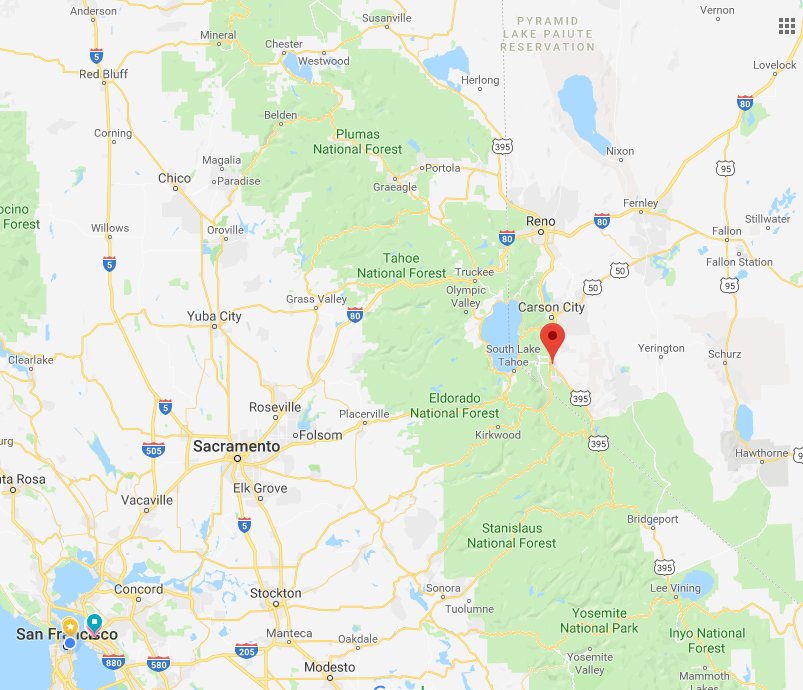
    But probably the most exciting new distillery in America to open just popped in Minden, Nevada. The area is a high desert environment, a plateau surrounded by mountains on all sides, about 45 minutes south of Reno. 

    The scale of Bently Heritage Estate Distillery, which opens to the public Saturday, February 9, 2019, is going to blow your mind. Keep reading.


    Minden


    This is a ranch and an estate distillery, so nearly everything in their bottles is grown on the property (minus botanicals for the gin… so far). That includes barley, oats, wheat, rye, and corn for their base spirits. They also raise cattle and have a butcher shop on the property, and grow other crops including hops and alfalfa. 

    But let's talk about the stills, because:

    IMG_3535


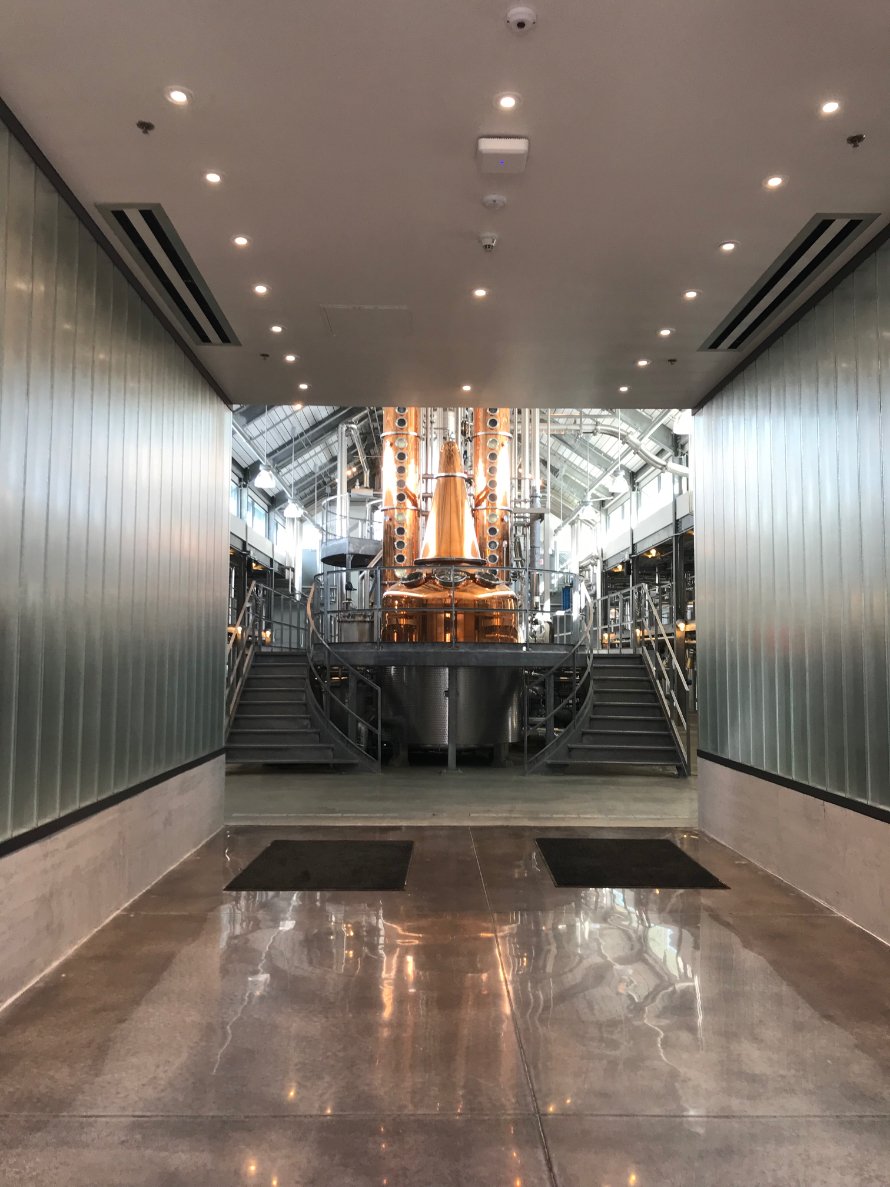
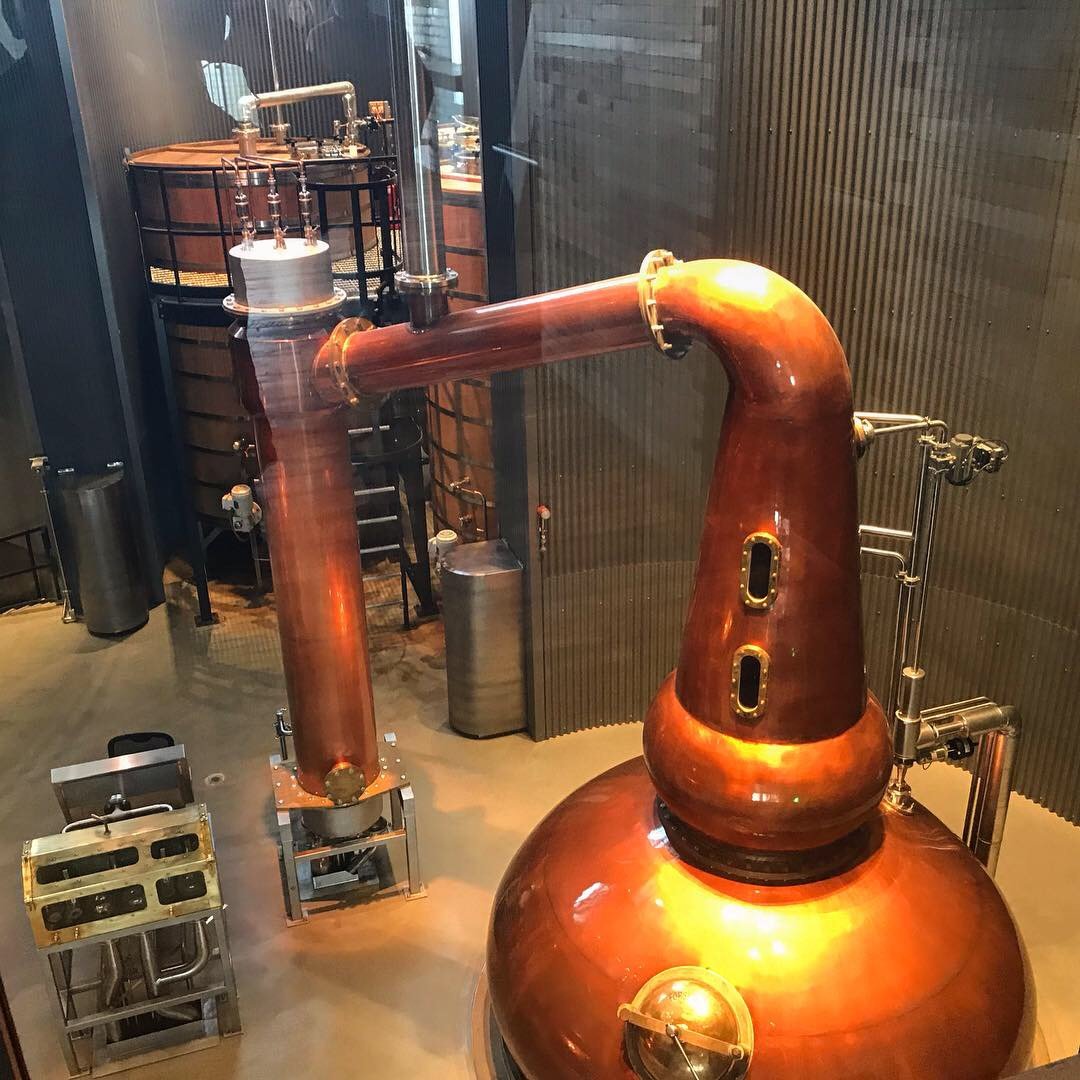
    Yeah. So there are actually two separate distilleries on the property. This one that looks like the Holy Mother Church of the Order of Saint Juniper; and the other one with where you can sit on a couch and watch American single malt whiskey being made in traditional scotch whisky stills. 

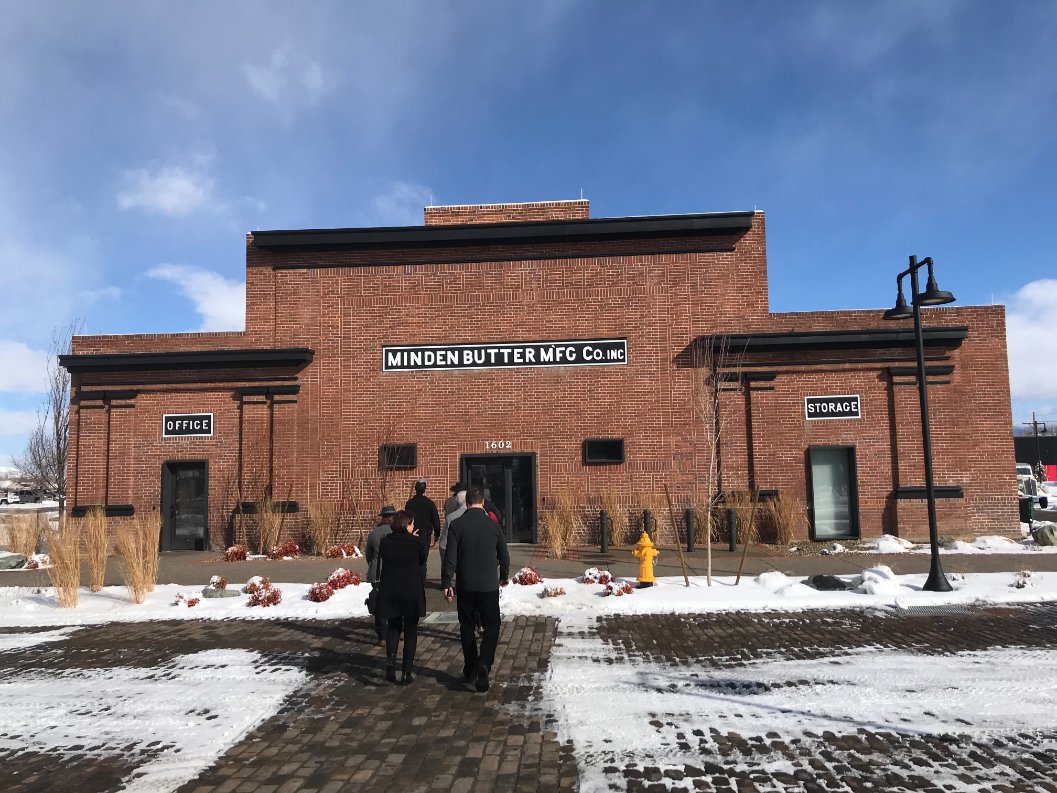
    The cathedral-like space is a former creamery dating to 1906. From the outside, it doesn't look like much. 
     

    IMG_3514
    IMG_3514


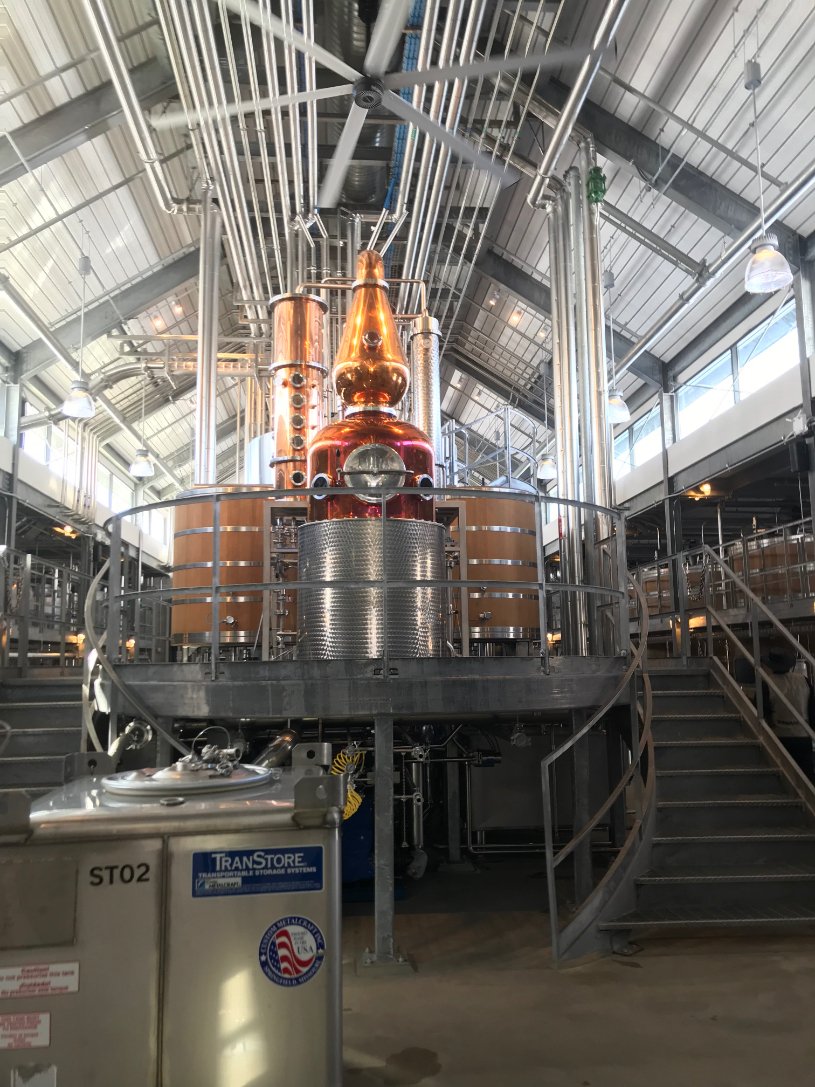
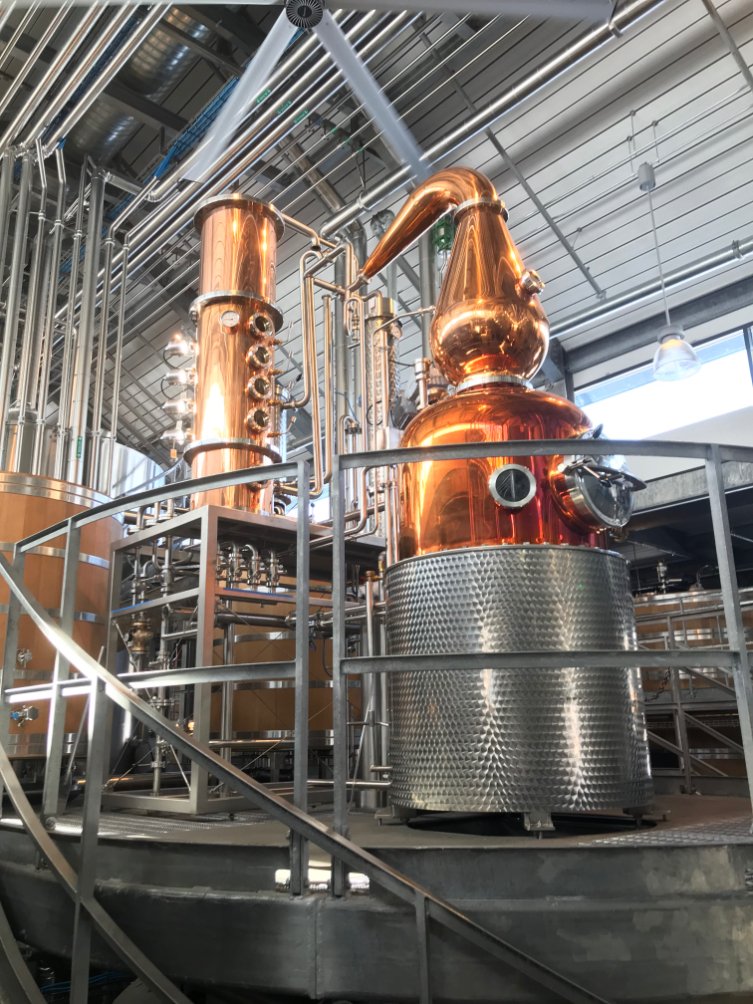
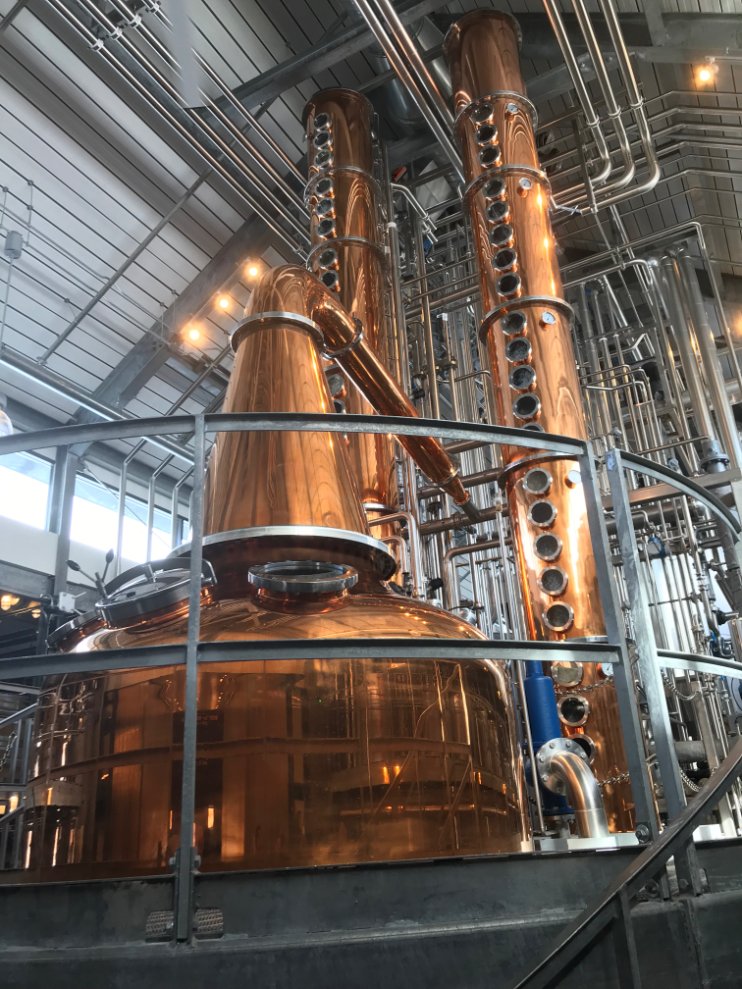
    Inside, you enter facing this gargantuan pot still with two columns behind it. This is a discontinuous pot-column hybrid system that works together. In this still they make gin, vodka, and forthcoming liqueurs. The two columns are more like a single column cut in half – after the liquid moves through one still it's pumped to the top of the other one to continue its journey.  
     

    IMG_3538
    IMG_3538


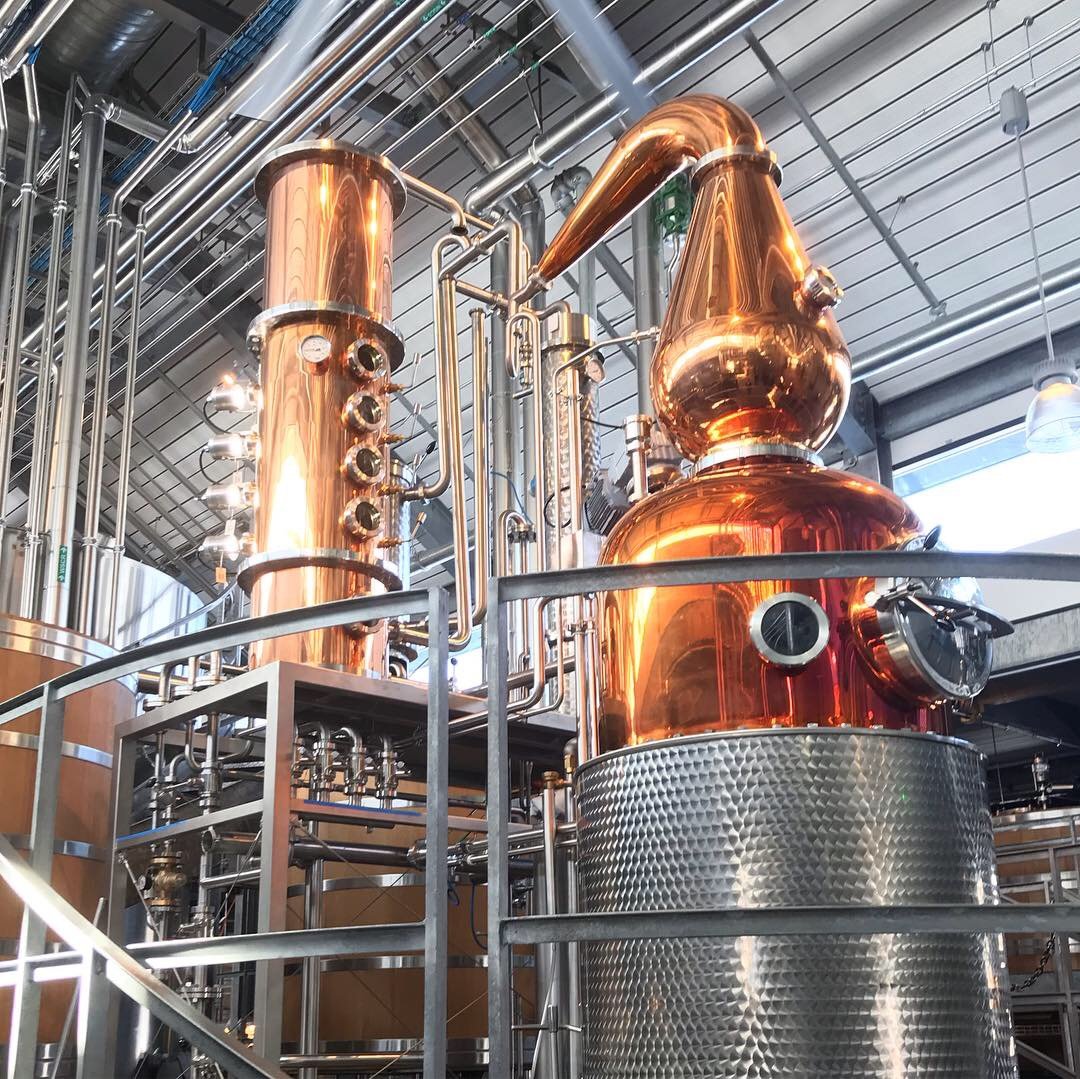
    Behind this still is a stainless steel continuous column still. I believe they said that for anything that will go into the pot still they first strip the solids and give it a first distillation in the column.

    The column still is narrow and has so many pipes and parts connecting to it that it's not really recognizable as a still. It's called a Headframe still. It has a capacity of 5000 gallons per day. 


    IMG_5982


    Behind the column still is a grain cooker. Grains are pumped in from the ceiling and cooked for 3-4 hours. In the case of their oat spirit that is the base of the vodka and gin, they use "a ton" of enzymes so that the oats don't gunk up the cooker. 

    Behind the cooker at the far end of the same cathedral room is their experimental still, which is the size of a standard start-up distillery still. It's a pot with rectifying column. 
     

    IMG_3656
    IMG_3656
    IMG_3656


    On the sides of the cathedral room are fermentation and storage vats and tanks to hold liquids in the various states of production. 

    Beyond this room the building continues into a barrel filling room and a bottling line. 


    IMG_3576


    Rickhouses

    The rickhouses are a mile or so from the other site. We didn't get a chance to peek inside them (I think they are being developed for visitors as well so that certain groups can get barrel tasting experiences there in the future), but they have three separate temperature and humidity controlled areas (so they can imitate the weather changes of Kentucky and Scotland at the same time), plus an experimental climate control area that I assume is smaller. 

    About the only thing they don't have onsite is a cooperage. 


    The Feedmill, Scotch Stills, and Visitors' Center

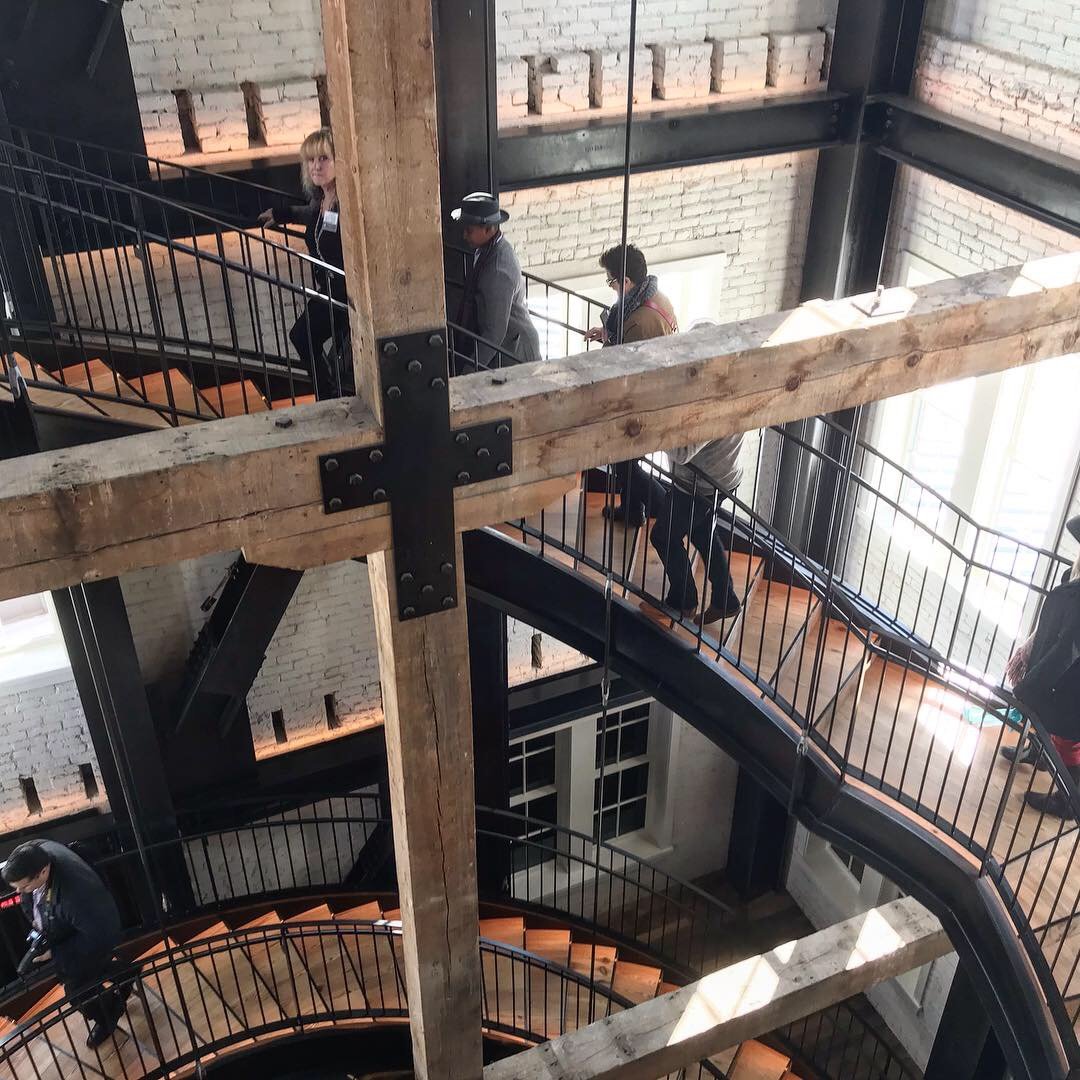
    The main visitor's center is the former feedmill with grain silos that date to 1906 as well. The room that makes up the main visitors center apparently held a huge vat of molasses which was used to enrich the grain to make feed. That's used as the design inspiration for the central three-story spiral staircase. There will be a retail shop on the ground floor, a bar on the second floor, and I believe the third floor will be used for special events like mixology lessons. (On my visit, Tony Abou-Ganim was there teaching the press how to make cocktails.) 
     

    IMG_3655


    All three floors of this building have a glass wall that looks into the adjacent concrete silos. The two buildings were joined and the interior of the silos were carved out to make a clover shape. [For an amazing example of this type of architecture, check out the mind-melting pictures of the Zeitz Museum in South Africa.]


    IMG_3636
    IMG_3636


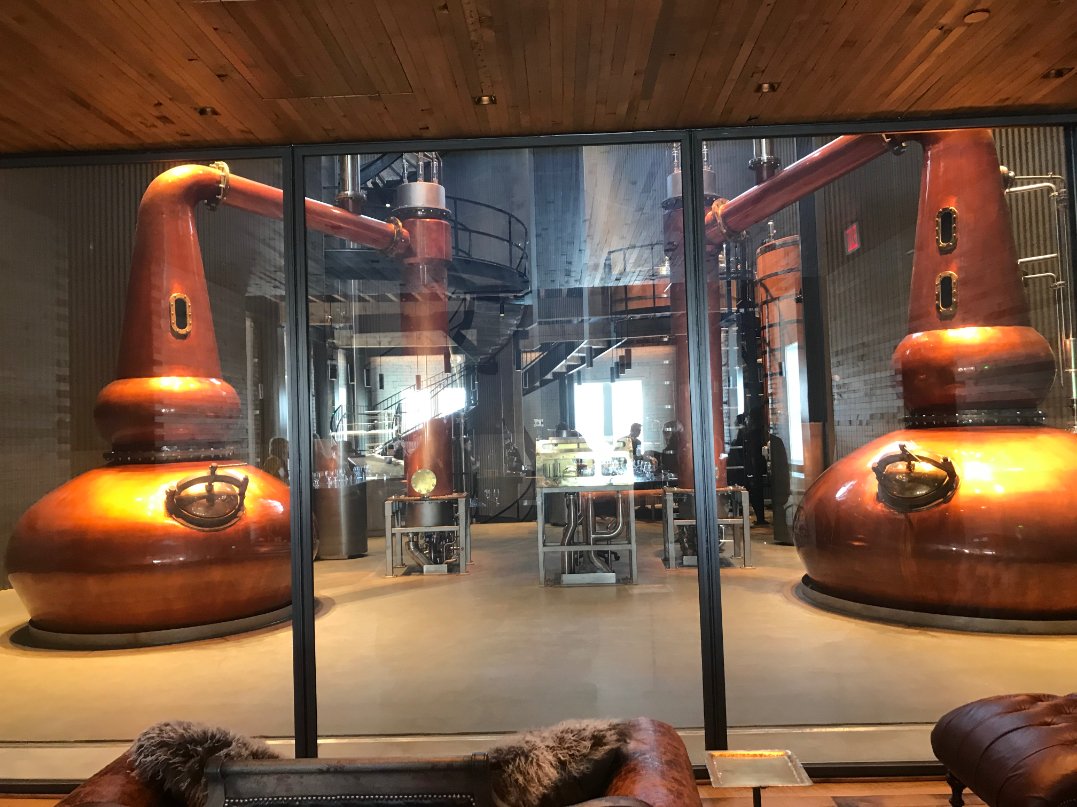
    Inside the former grain silos are two enormous Forsyth stills for making American single malt whisky. There is also a mash tun and fermentation vat in the room so that all the distillation production is self-contained – except for the malting, which we'll see in a second.

    The lyne arm of the still is at quite an angle so in single malt scotch they would tell us that this makes for a meaty, oily style of whisky. Here the distillers said they can make that style of make adjustments so that it comes out in a lighter style if they so wish it. 
     

    IMG_3613
    IMG_3613


    The Ranch and the Malt

    Elsewhere on the ranch they raise cattle and have a retail butcher shop (they're getting into cheese soon as well). The ranch also has the largest compost facility in Nevada, which they use for their spent grains from distilling. This all gets composted and is used as fertilizer in the fields on site. 

    For spirit production, they're growing heirloom corn varieties, oats, rye, and barley. The distillers make request from the farm managers and they attempt to grow different grain varieties to try in their distillation experiments.

    As the Bently Heritage ranch has been operational for about 4.5 years preparing for the distillery to officially open, they have a lot of grains stored up for future spirits. (I think they said they were still distilling 2016 grains for their current products; they've got a lot of backlog.) They have 5 cultivars of barley and I think they've tried a lot of different types of corn. 

    They have 60,000 acres under cultivation. Even when no grains are currently growing, there's some stuff to look at. 
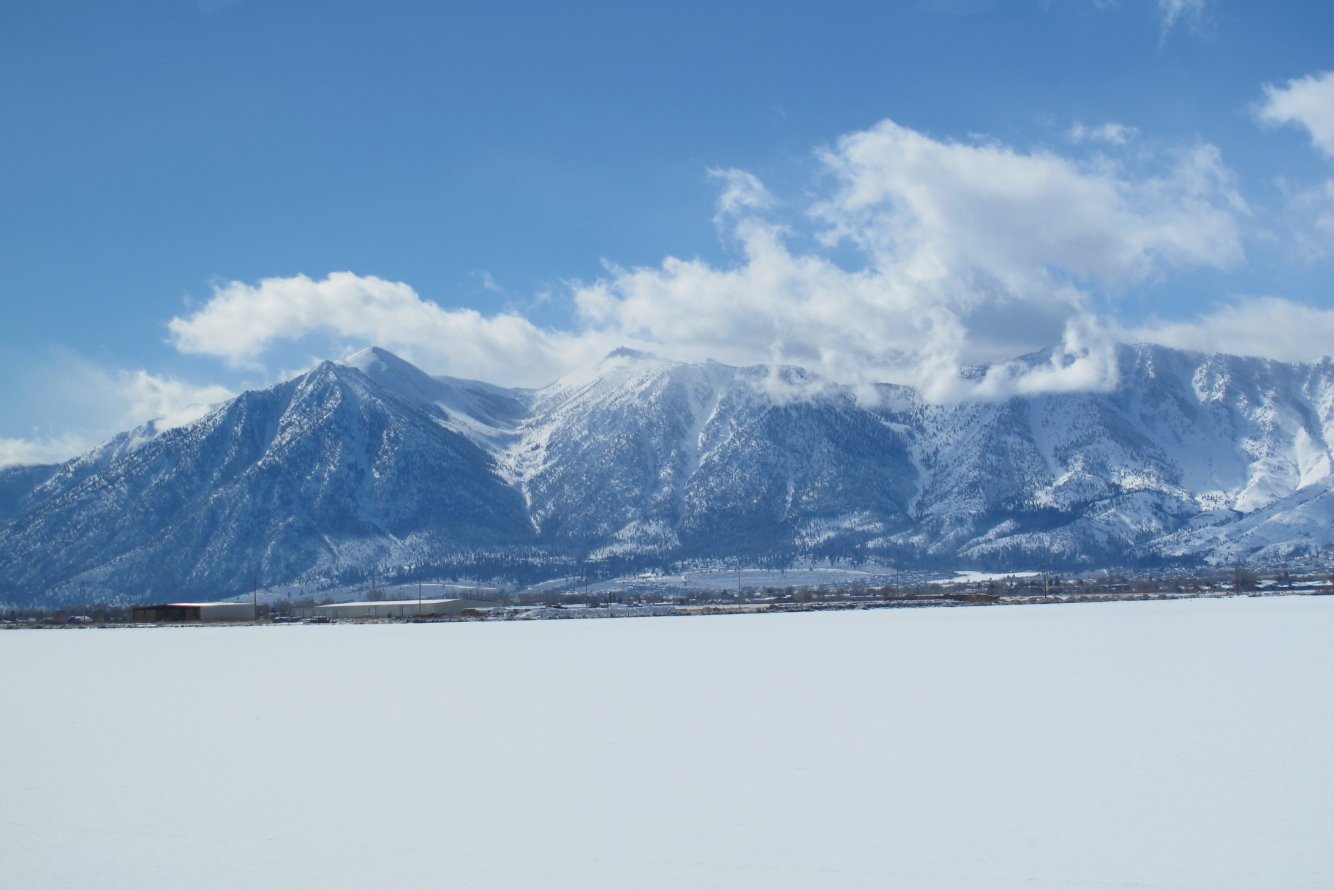
    IMG_6030
    IMG_6030


    With the scale of this production, it may not surprise you to find that they also malt their own grains. The malt house main room is full of grain storage and big tanks, which are self-contained "auto-malter" makers. Inside, the grains are soaked, dried (kilned), and come out as malted barley. 

    They also have a separate floor malting room, where wet grains are spread over a concrete floor, turned by hand for a few days, and then dried. (They'll be able to smoke the floor malted barley in the future, as is done in Islay scotch.) They'll be able to process 10 tons of malt per week (!!) here. They'll not use it all for themselves, but will sell some to beer producers. 
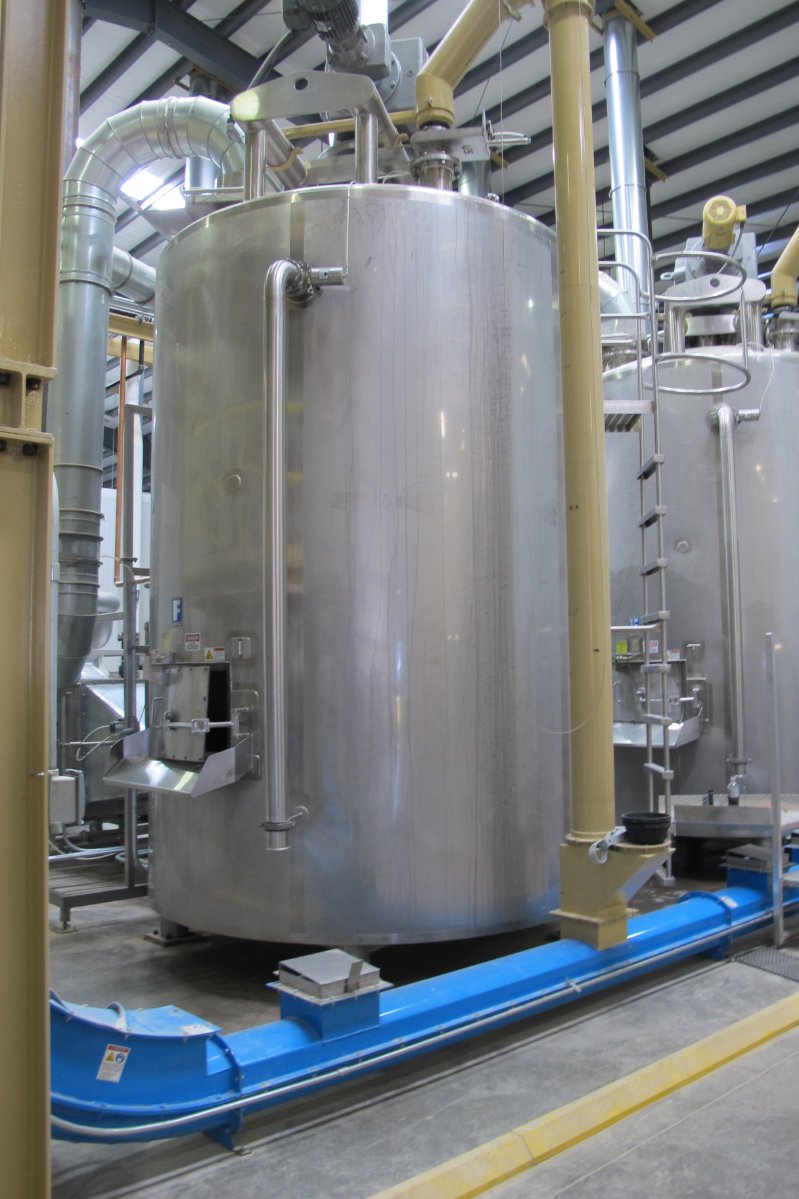
     

    IMG_6001
    IMG_6001


    They build a greenhouse that hasn't been planted yet (expect citrus trees and other botanicals probably to be used in future gin) and have a hop growing area next to it. 
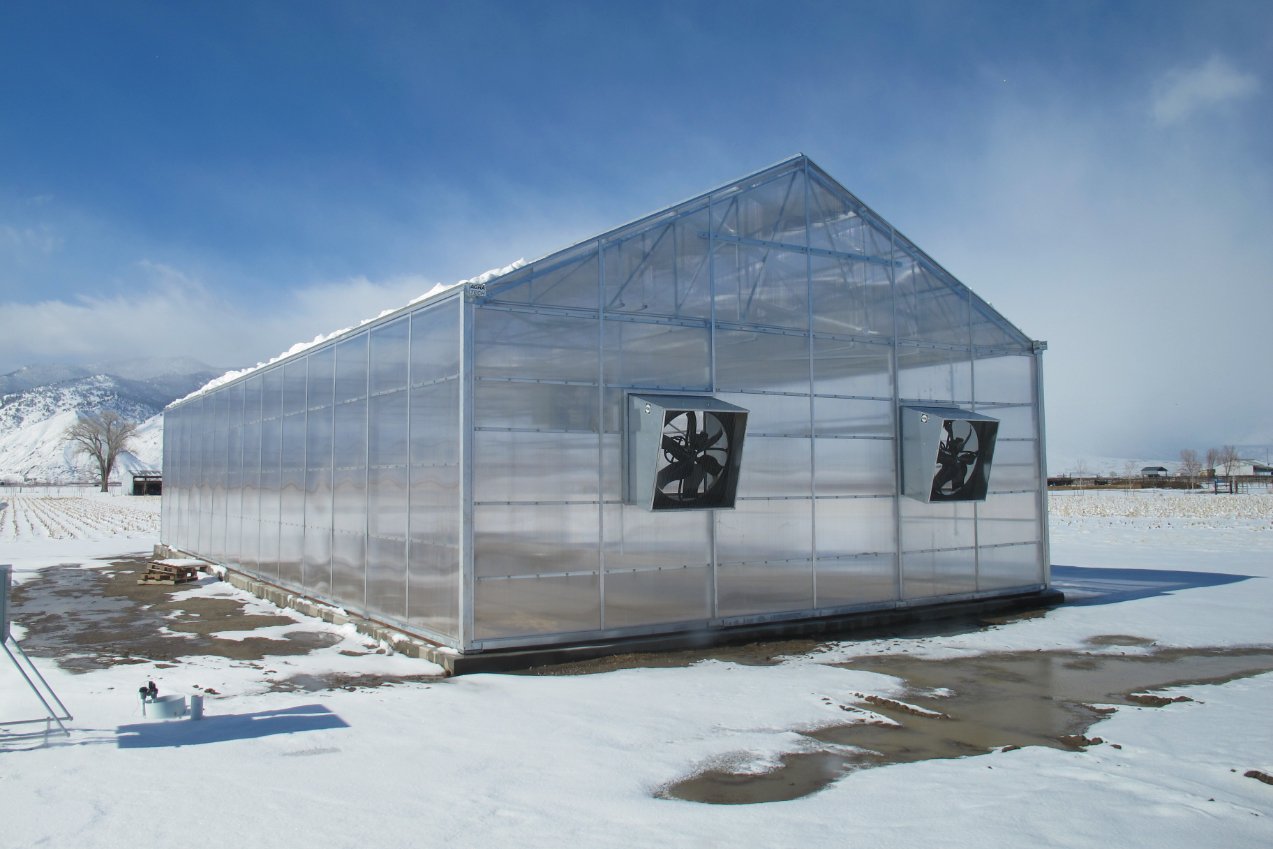
    IMG_6015

    Beyond all this, they have a seed bank – apparently some of their heirloom varietals of grains can be hard to source from one year to the next so they propagate and store seeds. 

    The farm is all-natural and no-GMO, but is not certified organic (and I don't think they plan to be). 


    The Current Products

    Obviously Bently Estate plans to make whiskey, and lots of it. But for now, the distillery is opening with three products: A vodka, a flavored vodka, and a gin. 

    Source One Vodka is distilled from estate grown oats, and it has a nice soft texture. They also produce a vodka rested in small oloroso sherry barrels.

    Juniper Grove Gin is their London dry-style gin that's juniper forward with traditional gin botanicals except for the use of lime rather than other citrus. 

    Two more gins are forthcoming: Atrium, which will be closer to a New Western style of gin; and Alpine, which includes pinecones and will reflect the botanicals of the region. 


    IMG_3578
    IMG_3578
    IMG_3578


    What the Hell is Happening Here? 

    I'm glad you asked. I don't know. 

    Obviously this is an operation on a scale that is just not seen. Distilleries typically start small and/or focus on one spirit product. This one is starting huge and will be making tons of different spirits – anything that can be grown on the estate. (Which means no rum and maybe no vermouth.) So this one company will have in a few short years an entire portfolio of products, all self-grown and self-made in one location. 

    I'm very impressed and will continue to watch. 


  • Comparing Continuous Fermentation in Baijiu with Sour Mash Whiskey and Jamaican Muck Pits

    Another baijiu post yessss! Today I want to think about how the circular fermentation process in baijiu is like and unlike sour mash in whiskey and muck pits in Jamaican rum. 

    Recent posts have been:

    No need to read them all now. 


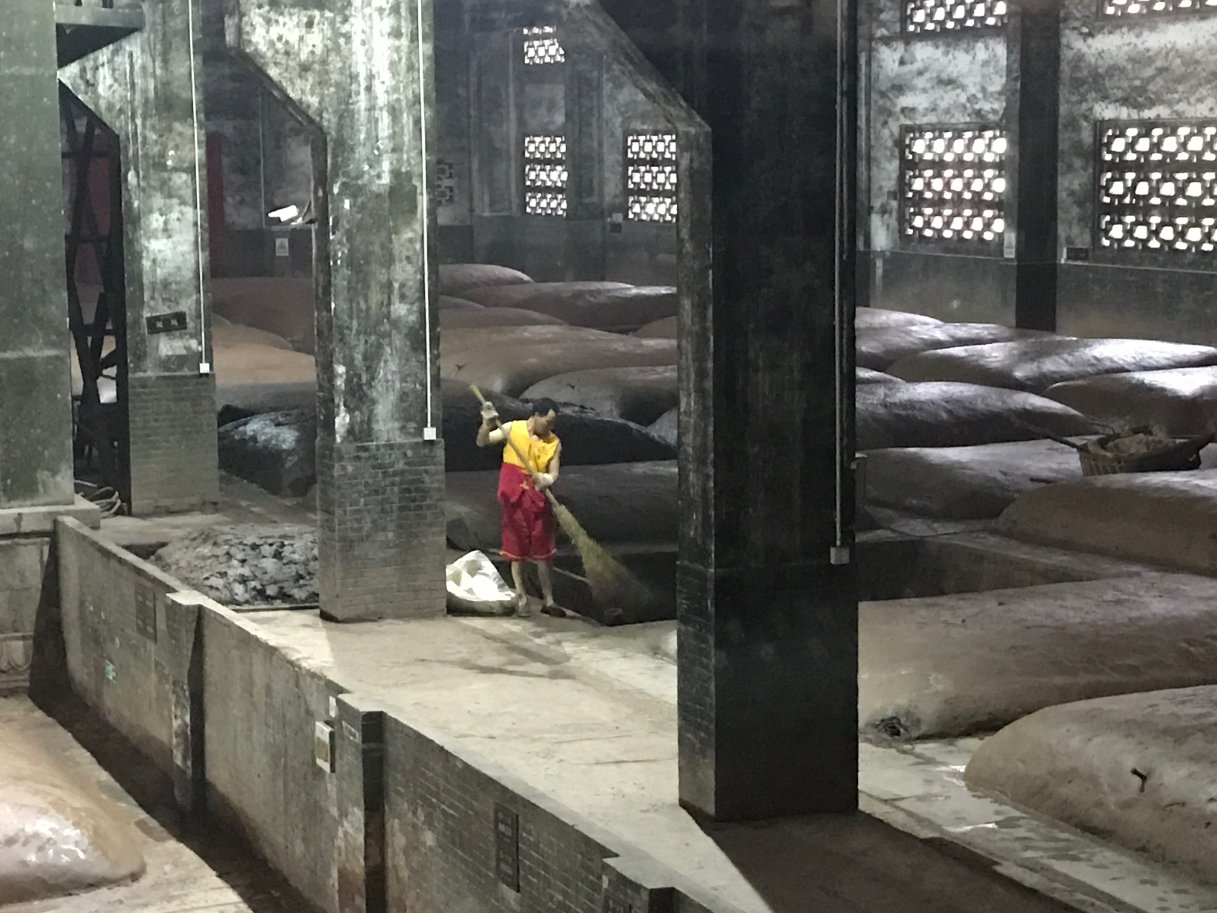
    As described in this post, in strong aroma baijiu, grains are fermented in earthen pits, distilled as solids, and fermented again in the same pits they came out of. A little bit of new grain is added to each fermentation cycle along with the already-distilled grain. 

    This may sound slightly familiar: in "sour mash" whiskey, some of the post-distillation materials are added to the next fermentation batch. 

    And in Jamaican rum, some distilleries use "muck pits" that are blends of previous stillage fermenting together. Some amount of this is thrown into new fermentation batches. 

    So let's talk about how these are alike and how they may be different. 


    Sour Mash

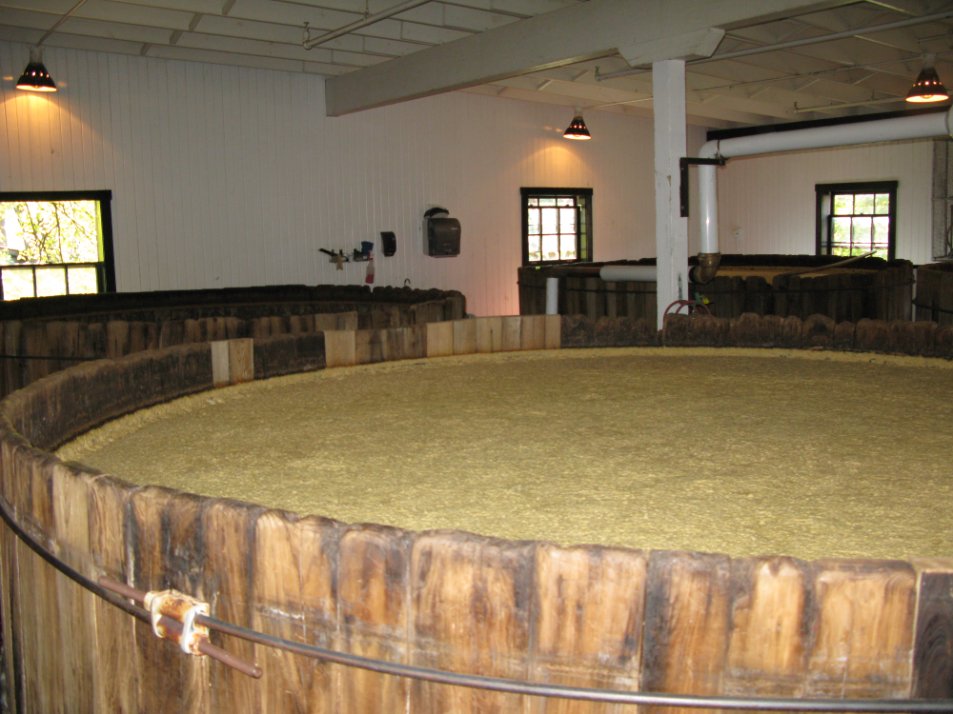
    Frementation vatsI had always heard that sour mashing was done for "consistency between batches" and thought that "sour mash" is like sourdough, where live fermenting material goes into following batches so they're consistent with each other. This turns out not to be the case. 

    Instead, some of the stillage (the leftover liquid in the still after distillation) is added to the next fermentation batch. Because the stillage has just been in a still that is literally boiling hot, there is no live yeast to transfer from one batch to the next. The sour mash is just acidifying the fermentation vessel to adjust the pH for a better fermentation and to prevent bacterial infection. The quantity of stillage used could be considered part of a distillery's recipe. 


    Muck Pits

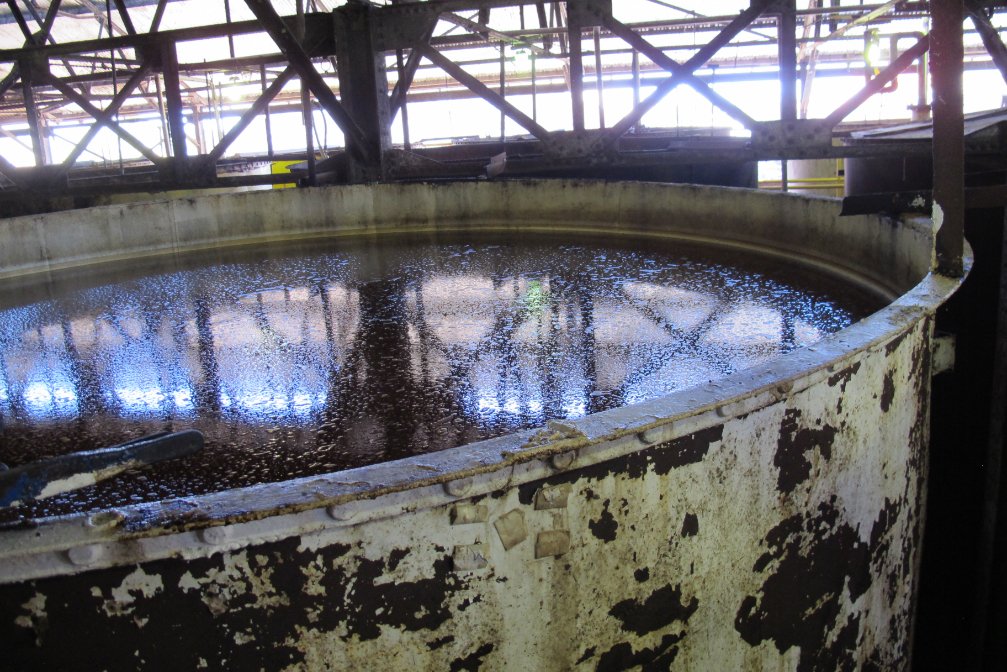
    IMG_4631In some Jamaican rums, the stillage (leftovers after distillation) is called dunder, and it is mixed up with other leftovers of the rum production process into something called muck. 

    From an excellent post on CocktailWonk.com called, "Days of Dunder: Setting the Record Straight on Jamaican Rum’s Mystery Ingredient"

    [Muck is] a giant bolus of bacteria that creates a soup of carboxylic acids…  muck is essentially a biological reactor for generating acids that eventually turn into yummy esters. It’s fed refuse from various parts of the rum production process, and its pH level is carefully nurtured via the addition of marl to keep it in humming along or dormant, as necessary. 

    At the end of fermentation, a portion of muck is tossed in with the fermented molasses and it's distilled together to produce hugely-flavorful rum. Note that unlike in sour mashing, they want to promote bacteria- at least the right bacteria.

    So, here again we have leftover products from the distillation being added to the next batch, but the purpose is to get those bacteria-generated acids into the still. 

    Not only is the muck not just the leftovers of one distillation, some of the core bacteria of it is stored in nerd-famous "muck graves" at some distilleries. CocktailWonk writes in the same blog post:

    So what of these stories about outdoor muck pits in the bare ground? … they do store a semi-solid version of the muck in the ground, as a form of long-term storage for the dormant bacteria. Distilleries commonly start and stop production [and the semi-solid bacteria can be used to restart the muck]. By carefully adjusting the pH of the muck, it can be put into a semi-stable state, where it can be stored in an earthen pit. … the pit is slightly bigger than the size of a human grave.


    1,000-Year Pit, 10,000-Year Mash

    IMG_2715The name for the process of repeat fermentation in baijiu is "1,000-year pit, 10,000-year mash." I was confused by the phrasing: how could the mash (the fermenting material) be older than the pit that the mash is fermented in? But it was explained to me that 10,000 years basically means "forever" or "endless" So we could rephrase "1,000-year pit, 10,000-year mash" as something like "ancient pit, endless mash." It speaks to the endless cycle of always using some of the previous distillation run in the next fermentation. 

    So as with sour mash and muck, some of the stuff comes out of the still and goes into the next fermentation (in strong aroma baijiu, it's all of the stuff that comes out of the still). 

    Like muck, qu  (the fermentation agent for baijiu made up of mold, yeast, and bacteria) contains flavor-creating bacteria that distillers want to impact their beverage. But it's not the only place that bacteria come into contact with the fermenting mash. Because the fermentation takes place in earthen pits and covered with mud, the dirt and mud is a home to bacteria from all the previous batches as well- thus the continuity. Sort of like a muck pit.  But in this case, that bacteria is present throughout the fermentation, and no doubt that's the reason the pits are covered and sealed rather than left open to ferment as with other spirits. 


    Different Places

    Now, there are other cracks and crannies in distillation where bacteria can live and have multi-batch impacts on the resulting distillates.

    Many distilleries are very proud of their wooden fermentation vats, rather than using stainless steel. Like the mud pits and muck pits, bacteria could technically live on between batches of whatever is being fermented. 

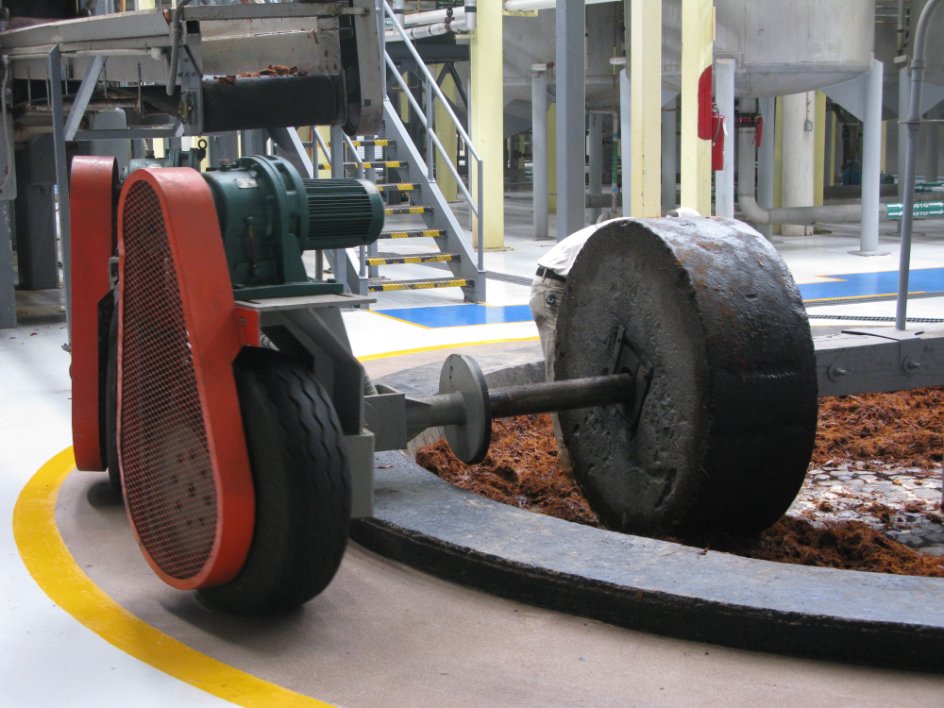
    Olmeca altos tahona2In a recent story for The Daily Beast, Wayne Curtis wondered if the volcanic tahona stones that are sometimes used to crush agave before fermentation might harbor bacteria as well. He writes:

    Another factor possibly in play: microbes. Volcanic stones are semi-porous, hard to clean, and can serve as a home to microorganisms, which in theory could make their way into the fermentation process and influence flavors. Camarena doesn’t rule out microbial influence. “I don’t know,” he says. “We’re dealing with microorganisms floating around here, and nothing gets sterilized.”

    “Fantasy,” argues Rodriguez. “Here at Patrón, we do an intensive cleaning process from batch to batch. Our yeast and production process are what is responsible for the flavors of Patrón tequila.”

    I suppose there could be other pieces of equipment, containers, and tools harboring helpful bacteria in various spirit production around the world.

    To what extent each may impact the final flavor of the individual distillate I don't know, but it's fun to compare common practices across categories. 


  • All the Cocktail and Spirits Books Released in 2018, In Consideration for Gifting or Reading

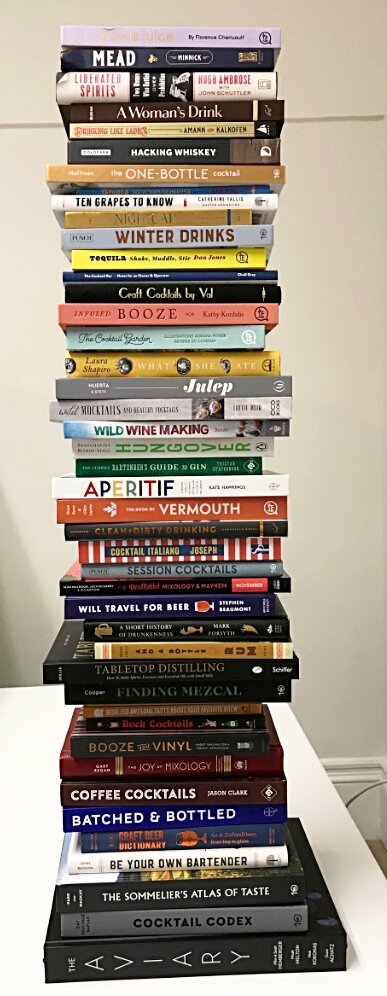
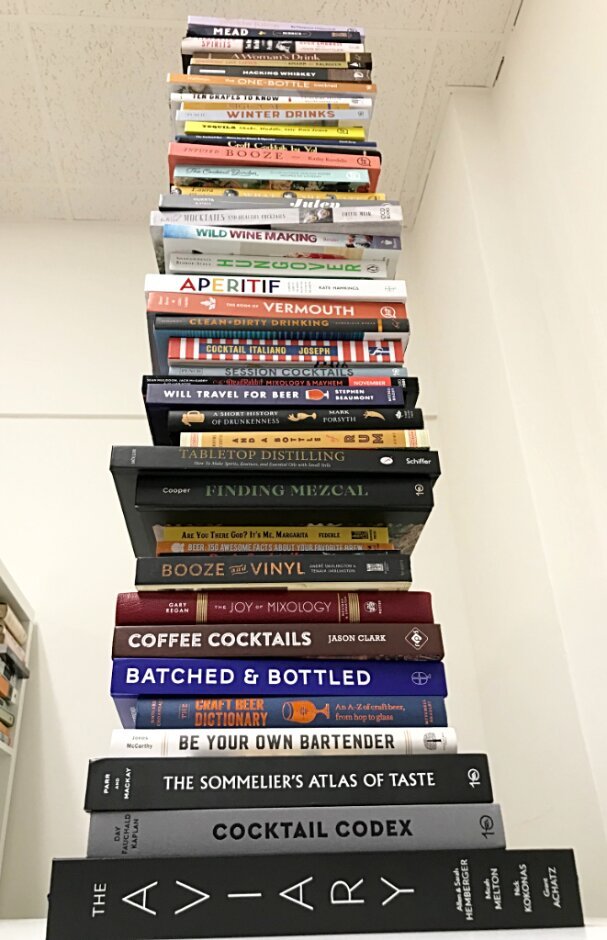
    It's the annual Alcademics drink book round-up! These are all the cocktails and spirits books that I know about published in 2018, with a couple of wine and beer books thrown in for good measure. It's over 60 books in total. Read them yourself or give 'em as gifts. 

    This year there appear to be less overall history books, and more women-centric books, whether history or not. Cocktail recipe books are all quite specific, with several that focus on theory and technique; and these overlap with books designed with the professional bartender in mind.

    Get to reading.  


    Cocktail/Recipe Books

    IMG-2556Julep: Southern Cocktails Refashioned by Alba Huerta and Marah Stets 

    The One-Bottle Cocktail: More than 80 Recipes with Fresh Ingredients and a Single Spirit by Maggie Hoffman

    Tequila Beyond Sunrise: Over 40 tequila and mezcal-based cocktails from around the world by Jesse Estes

    Finding Mezcal: A Journey into the Liquid Soul of Mexico, with 40 Cocktails by Ron Cooper and Chantal Martineau

    Wild Mocktails and Healthy Cocktails: Home-grown and foraged low-sugar recipes from the Midnight Apothecary by Lottie Muir

    Infused Booze: Over 60 Batched Spririts and Liqueurs to Make at Home by Kathy Kordalis

    Session Cocktails: Low-Alcohol Drinks for Any Occasion by Drew Lazor and Editors of PUNCH

    The Cocktail Garden: Botanical Cocktails for Every Season by Ed Loveday and Adriana Picker

    Booze & Vinyl: A Spirited Guide to Great Music and Mixed Drinks by André Darlington and Tenaya Darlington

    Doctor's Orders: Over 50 inventive cocktails to cure, revive & enliven by Chris Edwards and Dave Tregenza

    Cocktail Italiano: The Definitive Guide to Aperitivo: Drinks, Nibbles, and Tales of the Italian Riviera by Annette Joseph

    Clean + Dirty Drinking: 100+ Recipes for Making Delicious Elixirs, With or Without Booze by Gabriella Mlynarczyk

    Are You There God? It's Me, Margarita: More Cocktails with a Literary Twist (A Tequila Mockingbird Book)  by Tim Federle 

    The Art & Craft of Coffee Cocktails: Over 80 recipes for mixing coffee and liquor by Jason Clark

    Aperitif: A Spirited Guide to the Drinks, History and Culture of the Aperitif by Kate Hawkings

    The Joy of Mixology, Revised and Updated Edition: The Consummate Guide to the Bartender's Craft by Gary Regan

    The Dead Rabbit Mixology & Mayhem: The Story of John Morrissey and the World’s Best Cocktail Menu by Sean Muldoon and Jack McGarry

    Nightcap: More than 40 Cocktails to Close Out Any Evening by Kara Newman

    Be Your Own Bartender: A Surefire Guide to Finding (and Making) Your Perfect Cocktail by Carey Jones and John McCarthy

    Cocktail Codex: Fundamentals, Formulas, Evolutions by Alex Day and Nick Fauchald

    Winter Drinks: 70 Essential Cold-Weather Cocktails by Editors of PUNCH

    Tequila: Shake, Muddle, Stir: Over 40 of the Best Cocktails for Tequila and Mezcal Lovers by Dan Jones

    Pickle Juice: A Revolutionary Approach to Making Better Tasting Cocktails and Drinks by Florence Cherruault

    The Mini Bar: 100 Essential Cocktail Recipes; 8 Notebook Set by Editors of PUNCH

    The Curious Bartender Volume II: The New Testament of Cocktails by Tristan Stephenson 

    Glamorous Cocktails: Fashionable mixes from iconic London bars  by William Yeoward 

    Prosecco Made Me Do It: 60 Seriously Sparkling Cocktails by Amy Zavatto 

    Rock Cocktails: 50 rock 'n' roll drinks recipes―from Gin Lizzy to Guns 'n' Rosés

    Northern Hospitality with The Portland Hunt + Alpine Club: A Celebration of Cocktails, Cooking, and Coming Together by Andrew Volk and Briana Volk

    The Aviary Cocktail Book by Grant Achatz, Micah Melton, Nick Kokonas, Allen and Sarah Hemberger.

    The Cocktail Companion: A Guide to Cocktail History, Culture, Trivia and Favorite Drinks by Cheryl Charming

    Drink London (London Guides)  by Euan Ferguson

    Beachbum Berry's Sippin' Safari: Tenth Anniversary Expanded Edition by Jeff Beachbum Berry


    Wine Books 

    Wild Winemaking: Easy & Adventurous Recipes Going Beyond Grapes, Including Apple Champagne, Ginger–Green Tea Sake, Key Lime–Cayenne Wine, and 142 More by Richard W. Bender

    Ten Grapes to Know: The Ten and Done Wine Guide by Catherine Fallis

    Wine Food: New Adventures in Drinking and Cooking by Dana Frank and Andrea Slonecker

    The Sommelier's Atlas of Taste: A Field Guide to the Great Wines of Europe by Rajat Parr and Jordan Mackay 

    Prosecco Made Me Do It: 60 Seriously Sparkling Cocktails by Amy Zavatto


    Spirit Books, Misc.

    The Connoisseur’s Guide to Worldwide Spirits: Selecting and Savoring Whiskey, Vodka, Scotch, Rum, Tequila . . . and Everything Else (An Expert’s Guide … and Savoring Every Spirit in the World) by Richard Carleton Hacker

     Tabletop Distilling: How to Make Spirits, Essences, and Essential Oils with Small Stills by Kai Möller

    The Gin Dictionary by David T. Smith

    The Book of Vermouth: A Bartender and a Winemaker Celebrate the World's Greatest Aperitif by Shaun Byrne and Gilles Lapalus

    The Curious Bartender's Guide to Gin: How to appreciate gin from still to serve by Tristan Stephenson 


    Women-Centric Drink Books

    IMG-2558Craft Cocktails by Val: Drinks Inspired by Hillary Rodham Clinton

    Drinking Like Ladies: 75 modern cocktails from the world's leading female bartenders; Includes toasts to extraordinary women in history by Misty Kalkofen and Kirsten Amann

    Liberated Spirits: Two Women Who Battled Over Prohibition by Hugh Ambrose and John Schuttler

    A Woman's Drink: Bold Recipes for Bold Women by Natalka Burian 

    Movers and Shakers: Women Making Waves in Spirits, Beer & Wine by Hope Ewing

    Free the Tipple: Kickass Cocktails Inspired by Iconic Women 
    by Jennifer Croll (Author), Kelly Shami (Illustrator)


     History Books

    A Short History of Drunkenness: How, Why, Where, and When Humankind Has Gotten Merry from the Stone Age to the Present by Mark Forsyth 

    A Thousand Thirsty Beaches: Smuggling Alcohol from Cuba to the South during Prohibition by Lisa Lindquist Dorr

    Moonshine: A Celebration of America's Original Rebel Spirit by John Schlimm

    A Drinkable Feast: A Cocktail Companion to 1920s Paris  by Philip Greene 


    Beer, Mead, Cider

    Mead: The Libations, Legends, and Lore of History's Oldest Drink by Fred Minnick 

    Will Travel for Beer: 101 Remarkable Journeys Every Beer Lover Should Experience by Stephen Beaumont 

    Beer: 150 Awesome Facts About Your Favorite Brew by Caroline West

    Ciderology: From History and Heritage to the Craft Cider Revolution by Gabe Cook

    The Craft Beer Dictionary: An A-Z of craft beer, from hop to glass by Richard Croasdale

    Kitchen Brewing: A New, Easier and Quicker Way to Home Brew by Jakob Nielsen and Mikael Zetterberg


    Bar, Drinking Culture, and Professional Books 

    IMG-2560Bars, Taverns, and Dives New Yorkers Love: Where to Go, What to Drink by John Tebeau

    Drinking Distilled: A User's Manual by Jeffrey Morgenthaler

    I'm Just Here for the Drinks: A Guide to Spirits, Drinking and More Than 100 Extraordinary Cocktails by Sother Teague

    Hungover: The Morning After and One Man's Quest for the Cure by Shaughnessy Bishop-Stall

    Allergen Awareness: A Chef's Perspective by Myron Keith Norman

    Batched & Bottled by Max Venning 

    The Cocktail Bar: Notes for an Owner & Operator by Chall Gray


    Whiskey Books

    From Dram to Manhattan: Around the world in 40 whisky cocktails from Scotch to Bourbon by Jesse Estes

    Hacking Whiskey: Smoking, Blending, Fat Washing, and Other Whiskey Experiments by Aaron Goldfarb 

    The Bourbon Bible by Eric Zandona 

    Whiskey America  by Dominic Roskrow 

    Single Malt: A Guide to the Whiskies of Scotland: Includes Profiles, Ratings, and Tasting Notes for More Than 330 Expressions by Clay Risen

    World's Best Whiskies:750 Unmissable Drams from Tain to Tokyo by Dominic Roskrow  

    Bourbon Justice: How Whiskey Law Shaped America by Brian F. Haara 


    Not enough books for you? Check out:

    All the drink books that came out in 2017

    All the Cocktails and Spirits Books Published in 2016 for Reading or Gifting

    All the Cocktails & Spirits Books Published in 2015, For Reading or Gifting

    More Than 40 Drink Books Published in 2014 for Reading or Gifting


  • A Belvedere Distillery Visit and Vodka Terroir in the Single Estate Series

    Single estate seriesIn the summer of 2017 I visited Poland with Belvedere Vodka to see how the vodka is made and to learn about the then-forthcoming Single Estate Rye series of vodkas, in which the same rye was grown in two different parts of Poland and separate, unfiltered vodkas were made from each.  We got super deep into the science of terroir. 

    Belvedere is made from rye, which is first distilled at one of seven regional farm distilleries, and then redistilled and bottled at a distillery named Polmos Zyrardow. ("polmos" = "distillery") From other trips to Poland I've learned regional distilling followed by central distilling is quite common- why truck all that grain around when you can condense it into high-proof spirit and just transport the liquid?

    The Polmos Zyrardow distillery dates back to 1910, and they've been making Belvedere exclusively at the facility since 1993. 

    Polish Vodka

    • If the bottle says it's Polish vodka, it can't have additives like sugar/glycerin etc.
    • It must also be made from a grain (rye, wheat, triticale, oats or barley) or from potatoes, rather than other fermentable material like molasses. 
    • Though it must be additive-free (this is exclusive of flavored vodka of course), it can be aged. 
    • The first reference to vodka is from Poland in 1405. 
    • Here's a more official page of Polish vodka production rules and processes

    Belvedere is made from rye, which has been grown in Poland for over 1000 years. Rye can thrive in harsh conditions; both hot and cold. Belvedere Pure (the flagship original) is distilled from golden rye, a high starch strain good for making alcohol that dates to the 1800s. The Single Estate series is made from another variety called diamond rye. 


    Belvedere Zyrardow Distillery (18)


    On site at Polmos Zyrardow is a water treatment plant that processes water from their well water source a 3km from the distillery. Water is purified in four stages: oxidation to break down chemical compounds into smaller parts; mineral filtration to remove iron and manganese; a soft filter to remove calcium and magnesium, and a carbon filter to remove all taste and odor. For water that is used to dilute Belvedere to its final proof, this water is then further filtered with reverse osmosis. 

    High-proof spirit comes in from the 7 farm distilleries and is redistilled at Polmos Zyrardow. It comes in at around 90-92% ABV, then it is watered down to 44-45% ABV before going into the stills. There are three columns in this distillery:

    • The first column is the purification column, which removed impurities at the lower boiling temperatures than alcohol.
    • The second column is the main rectification column, which removes impurities at a higher boiling point than alcohol, and brings the spirit back up to 96.5-96.6% ABV. 
    • The third column is the methanol column, which removes methanol created during fermentation. 

    The distillery runs for two seasons per year (corresponding to rye harvests I imagine), 24 hours/day (because it's harder to start and stop column stills) for a total of 167 days per year. 

    All the flavored varieties of Belvedere are made in house in the "alembic area." There they have cognac stills. The various ingredients are macerated in vodka of different strengths, and left to sit from anywhere from 2 days to 2 weeks. The fleshy fruits might go into higher alcohol spirit and stay for longer than things like tea. They're then redistilled to make the concentrated flavors. They make each flavor separately, then blend them together for their combination products. 

    Belvedere Pure is charcoal filtered. (The single estate range is not.)

    Finally the vodka is diluted and bottled at the distillery. 


    The Single Estate Rye Series, and the Science of Terroir

    Our group then flew to the Lake District of Poland, to the Bartezek estate, where the rye for one of the two Single Estate Series vodkas is grown and first distilled. The flight passed over lots of green farmland, forests, and small farms before getting to the Lake District- from our flight path it looked like a series of lakes and streams between them. 

    The Lake District is made up of about 2000 lakes, and it's located far from industry and sources of pollution. The climate is of long snowy harsh winters and short summers. 


    Belvedere trip Lake Country Education Site (1)


    We didn't visit the Smogory Forest estate, but the climate there is "the mildest in Poland." Belvedere Unfiltered vodka was the same product as the Smogory Forest single estate vodka is now- they changed the name to accent the difference between it and the other estate. This region has a longer growing season. It's not much of a farm region but a forestry one – half the land is forest. 

    The rye used for the Single Estate Series is a baker's rye called Dankowskie Diamond Rye- both farm distilleries grow the same rye. Typically bakers and distillers want different things from their grains: distillers want grains with high starch and low proteins (as I learned in Sweden), as they want to convert all those carbs to alcohol.

    In fact, the golden rye used in Belvedere pure takes 1 square meter of rye to make 1 bottle of vodka. For this less efficient bread-making rye for the Single Estate series, it take 1.4 square meter's worth of rye. 

    Each of the Single Estate vodkas use the same yeast, though this yeast is different from that used to ferment Belvedere Pure. 

    We visited the local farm distillery where the Lake Bartezek-grown rye is first distilled. The grains have enzymes and water added to break it down into fermentable sugars, then it is fermented for 72 hours at 35C. After fermentation, the rye beer is from 7-11% ABV. After distillation in the single, 60-plate column, the spirit ranges from 88-93% ABV. 


    Bartezek Distillery (3)


    These two vodkas in the Single Estate series were sent out to laboratories for analysis: not just the final vodkas, but also the rye beer (the wort) from each. They were sent to analytic labs as well as reviewed by tasting panels. The results were that the differences between the two were much more pronounced before distillation, but chemical differences were found between them as well as tasting differences – so if you taste the vodkas differently, it's not just all in your head.

    We went through the scientific and tasting panel analysis reports rather quickly, so hopefully the below doesn't have errors, but here were some results:

    • The main flavor differences between the two single estate vodkas were due to Maillard reaction congeners (that produce toasty sweet notes) and lipid congeners (that produce fatty, waxy aroma compounds).
    • The Lake Bartezek vodka had more impact by Maillard reaction congeners, with less lipid congener notes, and a higher amount of esters in raw spirit. 
    • The Smogory Forest vodka had more nitrogen containing hectacycles such as pyrazines (toast nutty, peanut, coffee, cooked notes), furfural (caramelized notes), 2-acetylfuran (almond honey sweet bready woody notes), and methyl 2-methyl 3-something notes (umami character). 


    Tasting sheet estate series


     The brand describes the tasting differences between the two vodkas as:

    • Smogory Forest: "a bold and savory vodka with notes of salted caramel, white pepper and honey-kissed hints. It brings out the richer flavors of rye." 
    • Lake Bartezek: "a fresh and delicate vodka with hints of spearmint, toasted nuts and black pepper. It brings out the more nuanced characteristics of rye."

    The production of the two vodkas wasn't 100% exactly the same: The way to do that would be to grow the rye in different places and distill it in the same place. For the single estate series, each vodka was distilled where it was grown. So beyond the local soil/weather conditions where the rye was grown (terroir), there were some other factors that could have influenced the final vodka's flavor. These include:

    •  The length of time the rye grew in each location was different, but I'd say this is an aspect of terroir rather than an exception. 
    • The water used for fermentation at each site. Water isn't just water, but includes different quantities of various minerals that can impact fermentation.
    • The fermentation times were different at the two distilleries.
    •  One of the worts (rye beer) was filtered after fermentation but before distillation, and the other wasn't. I'm not sure what impact this would have in a column still specifically, but it makes sense that it would be some. 

    In any case, the brand admits that this product launch and overall experiment is merely "the beginning of the exploration of terroir" in vodka, according to former Head of Spirit Creation and Mixology Claire Smith-Warner. 

    It was a terrific trip for me – y'all know how much I love distillery visits – with about five times the science as usual.  


      Rye Fields Lake District Poland Belvedere Trip (1)

  • The Future of San Francisco Cocktails (Predicted By Me) in San Francisco Magazine

    SF Mag cover Feb 2018It has been many years since I have contributed to San Francisco Magazine, but now I'm back! In the new February Bars & Nightlife issue, I have ten stories loosely themed around "Future proofing the cocktail: How Bay Area drink makers are reinventing our favorite alcoholic beverages."

    Below is the intro with links to all ten stories and brief intros from me. 


    Two decades into the Bay Area’s cocktail awakening, you’d think that bars would have settled into a comfortable middle age—the imbibing equivalent of staying home to Netflix and chill. But you’d be wrong.

    Creativity stirs all over the region, and drink makers and bar owners continue to spin out new ways to stay relevant and keep us guessing: with secret menus, popup concepts, and menu launch parties; with vibrant drinks, exotic ingredients, and bar-specific spirits; with quality concoctions served at double the speed, thanks to newfangled juices and outsourced ice. And to meet the expanding demand for quality, novelty, and expediency in booze consumption, new clusters of great bars have sprung up not just in the East Bay but also to the north and south. These changes are often nuanced but pervasive, taking place across many bars in many precincts throughout the ever-thirsty Bay Area.

    Scanning the cocktail horizon, you can spot the big ideas and the small revisions that are changing the way we drink in 2018 and beyond. Here are 10 of them.

    Bartenders Are Going Straight to the Source 

    How bartenders are directing spirits creation from distillers. 

    Forget The Simple Description: These Are Very Complicated Cocktails

    A look into the mind of Adam Chapman from The Gibson.

    Wine Country Has An Unofficial Cocktail AVA

    Drinks at the fantastic Duke's and other Healdsburg cocktail bars. 

    The Future (and Present, Actually) Is Female

    Who runs the bars? Girls. A sampling of ten women running things in Bay Area Bars. 

    Asian Restaurants Are the Center of Cocktail Innovation

    Once the home of sake bombs and soju immitations of real drinks, now Asian restaurants are some of the most forward-looking. 

    Viking Drinks Are So Hot Right Now

    Aquivit will be everywhere in 2018.

    You'll Be Spending the Night in San Jose

    Paper Plane and other great bars in San Jose.

    Your Highball Intake Is About to Increase Dramatically

    Whiskey and other highballs are happening. 

    Outsourcing Is In

    Blind Tiger Ice and Super Jugoso are going to have a major impact on prep work in SF bars. 

    The Mission Has Only Just Begun 

    So, so many new bars are opening in the Mission District. 


    I've already got my next assignment for San Francisco Magazine, so hopefully this will be a regular thing. 


  • Distillery Visit: Stranahan’s Colorado Whiskey in Denver

    IMG_3520This December, I visited the Stranahan's single malt Colorado whiskey distillery in Denver, in order to partake in the fun and insanity of waiting in line overnight for the annual Snowflake whiskey release

    The previous night, however, we were given a tour by Stranahan's distiller Rob Dietrich.

    Background

    Stranahan's was launched by Jess Graber, who along with George Stranahan came up with the original recipe and product launch. This was back in 2004-2006, and in 2010 the brand was sold to Proximo (created by Jose Cuervo and owner of stylishly-branded brands including The Kraken rum and Boodles Gin).  

    In Denver, there is clearly no animosity towards Proximo's ownership, as the Snowflake whiskey release events show. Likewise, Jess Graber's newer whiskey brand TinCup is "finished" at Stranahan's (and I believe owned by Proximo), so that relationship remains in good standing as well.

    Production

    Stranahan's is an American single-malt, meaning it's distilled from 100% malted barley. The barley they use is mostly a "bulk" barley, plus three other "specialty" barleys making up their custom recipe. 

    The barley is milled on-site, then put into the mash tun to extract sugars for fermentation. Water is added. Next it goes into a "boil kettle" that kills bacteria/sterilizes it basically. This is not typical in bourbon or scotch production, but comes from the facility's historical use as a brewery. This is the stage at which hops would have been added.

    I'm guessing that between what they call the mash tun and the boil kettle, it's doing the same thing as the mash tun and wash back of scotch whisky (soaking the grains and washing out the fermentable sugars with hot water), minus the filtering of the liquids (which at Stranahan's comes in the next step). 

    Then it goes into a "whirlpool," another brewery tool, which spins it to separate the liquids from the solids and gets "clean distiller's wort" out of it. 


    IMG_3522


    Fermentation is in closed-top, temperature-controlled stainless steel fermenters that are 5500 gallons in size. These also come from the former brewery. The yeast Dietrich says is an unusual strain, chosen not for producing high alcohol content necessarily, but for flavor production. Fermentation lasts six days. The ABV after fermentation? They won't say. 


    IMG_3526


    Interestingly, the water they use for fermentation is charcoal-filtered city water, while the water they use to dilute post-distillation to barrel-proof and bottle-proof is Colorado Springs mineral water. Typically, it's the other way around – the "special" local water is used for fermentation, then the reverse osmosis filtered city water is used for the rest. Interesting.

    After fermentation, they suck out everything except the spent yeast and keep it in the "wash storage" until they're ready to distill it. 

    There are three large wash stills. One is the distillery's first still that they used to use for everything. They've since expanded to three wash stills for the first distillation, and two smaller spirit stills for the second distillation (as there is less volume of liquid to distill after the first distillation is done).

    As you can see, both sets of stills are pot-column hybrid stills. If I recall correctly, Dietrich said their hybrid still was the first of its type used to make whisky in the state. 

    After the first distillation the spirit is 40%, and the spirit comes off the second distillation at 150 proof (75% ABV). 


    IMG_3535
    IMG_3535
    IMG_3535

    IMG_3550
    IMG_3550
    IMG_3550


    The spirit is then diluted with water from Colorado Springs and put into the barrels at 110 proof (55%).  Amazingly, this spring water for barrel and bottle proofing is El Dorado Springs water, purchased in 5-gallon bottles, same as you'd buy for the water cooler in your office. There was a huge rack of them in the distillery. So I guess if you wanted to make matching ice cubes or bourbon and branch water, you'd know exactly which water to use. 

    In Colorado's weather, the alcohol percentage rises in the barrel, so after 2-3 years it comes out of the barrel at 114-166 Proof.  The barrels are all new oak barrels, toasted first then charred with #3 alligator char by Independent Stave

    After aging, the spirit is put through a 5-micron filter just to keep out barrel char, then diluted with water from Colorado Springs for bottling. None of the whiskies are chill-filtered. 


    IMG_3579
    IMG_3579


    Stranahan's Whiskeys

    The three Stranahan's releases are distilled the same way – same recipe and process. The difference between them is in age and finishing. 

    The Stranahan's Original single-malt is aged a minimum of two years in new American oak barrels. The majority of the liquid is two years old, with some 3-, 4-, and 5-year whiskey blended in. 

    The Stranahan's Diamond Peak is all aged four years in new American oak barrels. 

    The Snowflake whiskies are annual releases first aged in new American oak barrels, then finished in a variety of casks that held other wines/spirits and blended. Those are available for one day and then gone for the year. 


    IMG_3608


  • Between the Heart and the Tails, the ‘Seconds’

    In pot-still distillation we always talk about the cuts: the heads and tails that are discarded (or recycled), and the hearts cut that become the spirit that ends up in the bottle.

    But some distillers make another cut between the heart and the tails called the seconds. (Say it with a french pronunciation seh-kuhnndz rather than like seconds on a clock.)

    At Privateer Rum in Massachusetts, they make a special rum called The Queen's Share that is a redistillation of just seconds. We'll get to that in a second. 

    Seconds in Cognac

    Frapin stillThe first place I heard the term seconds was in Cognac, and frankly I don't know much about it. Luckily for us, Privateer Rum's head distiller Maggie Campbell was trained by Hubert Germain-Robin, a frenchman who has distilled fantastic cognac-style brandies in California since 1984. Campbell was able to fill me in on how this cut of the spirit is used in some cognacs.

    To review the process: Cognac is distilled twice in pot stills. The first distillation is the wine distillation. The second one is called the brouillis or low-wines distillation. In cognac, since they only distill for a small part of the year after the grape harvest/fermentation period, they do not make a separate product out of the seconds, but they do often recycle them back into a their next batch of wine bound for distillation, or in the next batch's second distillation. 

    Note that in single-malt scotch whisky and in some other spirits production they also put the heads/tails back into the first or second distillation, just to get all of the usable alcohol out of it. So this isn't unique to cognac or the seconds. But different brands/categories decide where they "re-pitch" (put into the next distillation batch) the heads, tails, and sometimes seconds. These may be in different places.

    Queens shareCampbell says of seconds in cognac: 

    In Cognac each distiller has their recipe as to where they re-pitch each one and claim how it changes the flavor of the following distillates. 

    Some producers redistill the heads and tails and put them into the wine, and others put them into the low wines (brouillis).

    They say if it goes into the wine the ABV is significantly raised on the first installation causing the rest of the distillations to be higher in alcohol. Apparently when it goes in the wine there's less concentration of congeners and lighter flavor brandy is made. This is what Martel does.

    If the heads and tails go into the brouillis (second distillation) then it makes it richer and deeper. This is what Hennessey does.

    Note that doesn't account for the seconds and where they go. Next time I'm in cognac I'm going to research this further. 

    Seconds in Rum and the Queen's Share

    So at Privateer Rum, they do not re-pitch the heads and tails at all so that they don't affect the heart of the distillation or build up.  

    But the seconds are collected during each distillation and saved. From the explainer sheet:

    As the hearts run off the still they become more powerful & flavorful approaching the tails cut. Even once these tails have overpowered the hearts and we’ve made our cut, some of these rich hearts are still intertwined with the bitter tails. At this stage we collect… the ‘seconds’. 

    These seconds (collected over many runs) are redistilled (a third distillation); the tails of this distillation are discarded; and this special batch of rum is then aged separately.

    This is what made up the release of the first single barrel of Privateer's Queen's Share. It was aged 3 years and bottled. 

    If you've read this far, I've got bad news for you: There wasn't very much of it and it's probably long-since sold out.


  • How to Make Whisky in a Hot Climate in a Short Amount of Time

      KavalanIf it were easy to make good whisky anywhere, it would be made everywhere. And if it were easy to make good single-malt whisky in four years, everyone would do it. But Kavalan makes some very well-respected juice in four years in the mostly-hot country of Taiwan. 

    On my trip to the Kavalan whisky distillery that you can read out here and here, I spent a lot of time asking questions about what the differences in production are between Kavalan and scotch whisky, and other places where they had to compensate for their unique aging environment. Here are a few observations:

    Preparation

    They know that that they'll only be aging their whisky for 4-7 years, most of it closer to 4. They also know that their climate is hot and humid, though there can be a temperature range during the year that will suck the whisky into and out of the barrels causing interaction. They also know there will be a significant evaporation rate (angels' share) so that's another reason not to leave it aging too long. 

    In short, they don't have much time to get it right. There is no "fix it in the barrel" mentality, as too long in the barrel will taste just as bad as too little time in the barrel. They've basically got one shot to get it right so they go into it with cautious perfectionism.

      Kavalan Whisky Taiwan barrels 4

    Ingredients

    • American oak barrels give less tannin absorption than do French oak. So their ex-sherry, port, etc. barrels must be made from American oak.
    • Like other top whisky producers, they fly over to Spain and Portugal to personally source the best barrels. 
    • Yeast – They use an alcohol-producing yeast and a flavor-producing yeast. I am not sure if this has to do with climate at all, or is just a unique method. See fermentation below.

    Kavalan Whisky Taiwan maturation quality slide

    Process

    • Fermentation is temperature-controlled to ensure consistency in batches. It is a long fermentation using 2 different yeasts and an additionally long period for lactic fermentation. This contributes to the signature fruity flavor profile Kavalan is after. I am guessing that given the short amount of aging time, they want the fruit notes to be most forward and the grain notes (signaling too-young whisky) less prominent. 
    • Heads and tails cuts are different: A tight heart cut (so less heads and tails overall), but a little bit more of the heads and way less of the tails. Most whiskies that will sit in barrels a long time include a fair portion of the tails, as they break down/interact with the wood/oxygen over time and turn into good stuff. At Kavalan they don't have that much time.  
    • Larger barrels (ex-port and sherry) are stored mostly on the hotter top floor of the aging warehouse. Larger barrels take longer to age the whisky inside them, as there is less wood-to-liquid ratio of smaller bourbon barrels. 
    • Cautious Rechar. They do rechar barrels but the whisky aged in them is used for the base-level single-malt and the 46% version of that, not for any of the (so much better) Solist bottlings. Which helps explain why I like the single-cask bourbon barrel bottling so much better than those other two.
    • The sherry barrels come off a real solera after 20 years or so, then they are seasoned with 20 years old oloroso before Kavalan gets them. 


    Kavan Whisky Taiwain stills 10

    Budget

    • Kavalan is a small part of a huge company, so they have budget advantages that they have certainly used. 
    • I have sipped so many failed experiments over the years, many from otherwise quality distillers. I hate it when otherwise-quality producers put their failed experiments into bottles and try to pass them off to consumers. At Kavalan they purchased I believe 8 hybrid pot-column stills when they first built the distillery, which that they stopped using after they found that they didn't produce good whisky. (Don't worry, I think they have found another use for them that we'll hear about later.) That was an expensive decision; clearly one of many. 
    • They hired whisky doctor Jim Swan, who is certainly not cheap, to get things running and continually checking in. He was there during my visit distilling a peated malt. 
    • They throw away (or rather, recycle into the next batch) a lot of heads and tails. 
    • The shave-toast-rechar process used on the Vinho Barrique barrels is also quite precious and must be super expensive, as they have to rebuild all those barrels in the process. I don't know too much about this process but have heard it is done in the wine industry (probably minus the recharring). 


    Kavalan Whisky Taiwan char barrel 6

    Consistency/Computer Control

    • Computers control washing, fermentation, and distillation. 
    • They test everything along the way. 


    So, I'm sure that's not quite everything they do at Kavalan to make good whisky quickly in a hot climate, but it's a lot of it. So you might not want to run right out and set up your distillery in Sumatra just yet. 

    Kavan Whisky Taiwain barrel


  • Kavalan Whisky Distillery Visit in Yilan, Taiwan

    This spring I had the unique pleasure of visiting the Kavalan single-malt whisky distillery in Yilan, Taiwan.

    This is a long post, so get comfy if you want to read, or just scroll through the pictures. 

    The week previous to my visit, their Vinho Barrique Solist whisky won the World's Best Single Malt Whisky award from the Beverage Tasting Institute, so everyone was in a really good mood. I think we were the first American journalists invited to visit, so that was double awesome. 

    The young distillery already receives 1 million visitors per year, 30% of them foreign. It's free to visit and to get a whisky sample at the distillery, which also has a gift shop and a huge cafe. 

    IMG_7583


    Kavalan's History

    Kavalan is located in the county of Yilan, not far from Taipei, and the name Kavalan is the name of the indigenous people of the region. 

    Our hosts for the trip were master blender, global brand ambassador, and director of global business development Ian Chang; and consultant whisky maker Dr. Jim Swan. 

    Kavalan whisky is just one small part of the multi-billion dollar King Car company. (King means "gold", so it's supposed to represent a golden car rolling in to the future.) This company and Kavalan whisky was founded by Mr. Lee Tien-Tsai, whose 50-year old son we met for an epic banquet later in the trip. The company has many different divisions including, in part, consumer products (Mr. Brown Coffee, cans, cleaners and insecticides, instant noodles), health supplements and biotech research, food safety analysis, horticultural research, and more. 

    Kavalan distillery view10

    The factory where Kavalan is located also produces bottled water (from the local mountains), yogurt, and tea beverages. There is also a small conference center on-site. The factory was established in 1995. Then the rather large distillery was built in 2005 – all in 9 months.  The first drop of new make spirit was made on March 11, 2006 at 3:30 PM. 

    Kavalan is so far the only whisky made in Taiwan, though another company has recently announced plans to begin. 

    Water, Barley, Yeast, and Fermentation

    The water comes from the nearby mountains, naturally filtered through the earth and comes out as spring water. Swan said the water is clean and pure and there is plenty of it. It has a nearly neutral pH, and 17-20 ppm Calcium, which is a little higher than in Scotland according to Chang, but overall it’s soft water. 

    As covered a bit in my Water Project here on Alcademics, Chang notes that calcium, zinc, and magnesium quantities in the water are important for fermentation. (The yeast needs these minerals.)

    Kavalan Whisky Taiwan distillery3

    Kavalan Whisky Taiwan pagoda roof1

    The mountains not far from the distillery provide the water used for Kavalan.

    They use untreated water for fermentation, and then reverse osmosis-filtered water for barrel proofing and bottle proofing, starting with same water source. (Many other distilleries like those in Kentucky use municipal water for the watering to bottle strength from barrel strength.) 

    The 2-row malted barley comes from Scotland. When it arrives it is ground in a malt mill, then mashed and fermented just like scotch whisky.

    Kavan Whisky Taiwain fermentation 5
    Kavan Whisky Taiwain fermentation 5

    Washing is when hot water is poured on top of the ground-up barley to rinse out the fermentable sugars and leave behind the husks (which would burn against the side of the still). The barley is washed three times in the mash tun.

    The copper mash tun was made in Scotland. It takes a 4 ton mash 8 hours each. There are three washes: 65 Celsius for the first, 85C for the second, and 90C for the third wash. The water from the third wash goes into the first wash of the next batch rather than into the next barley wash. This is the same process and more or less the same temperatures used in Scotland, according to Chang.

    Fermentation takes place in  stainless steel tanks called washbacks. These are temperature controlled to ensure consistency. 

    Kavan Whisky Taiwain 20

    Fermentation is a bit different at Kavalan. They use two strains of yeast, both "dry-pitched" (added dry rather than wet). One is a "core fermenter" that produces lots of alcohol from the grains. This ferments for about 10 hours.

    The second yeast they called a "fruit producer," meaning the fermentation with this yeast brings out a lot of fruit notes to the fermented barley. They let this ferment for about 20 hours, after which most of the yeast die. 

    The yeast then undergoes mostly lactic fermentation for an additional 30 hours, so that it's 60 hours total. "We need that long to get the fruit," said Swan.

    Fermentation here is temperature controlled for a slow gradient of heat rise. It begins at 18C and ends at 34C. The beer is between 8-8.5% ABV after fermentation, which is slightly high compared to Scotland. 


    Distillation

    Initially they were using hybrid stills – discontinuous stills with pot stills on the bottom and a short column on top. These are no longer used for whisky production. 

    Unused gin stills at kavalan 2

    Stills no longer used for whisky at Kavalan.

    In 2006 they brought in 2 pot stills (a set of wash and spirit stills), and then 2 more stills in 2008. They have three more pair of stills coming.  

    Kavan Whisky Taiwain stills 1

    Today they produce 9 million bottles of Kavalan per year. Wow.

    Chang told me that since they know with the hot climate their whisky will not age long in barrels, they have to make adjustments to the heads/tails cuts over what one might do in Scotland. They make a tighter cut overall (less heads and tails), do keep in a little bit more of the heads than is typical, and less tails. 

    They use less tails because they know they won’t be aging it for very long, and tails take longer to purify as they interact with the wood in a barrel.

    As it typical they recycle feints and foreshots into the next batch's second distillation.

    Their pot ales (stuff at the bottom of the still that's not alcohol) are treated to neutrality then released into water system. 

    The spent grains from the barley mostly go to pig farmers as they don’t have a lot of cattle on Taiwan. 

    The spirit comes off the still around 65% ABV and is diluted to 59.5 – 59.9 %  before going into the barrel. (This is the flash point for whisky, according to Chang.) Swan says that this makes no flavor difference to the whiskey as opposed to the standard 63% barrel fill proof in Scotland. 

    Because of demand they run their stills then 24/7/365. As mentioned, more are on the way. 

    Kavan Whisky Taiwain spirit safe 1

    Aging in a Hot Climate

    Between October and March they have cold winds coming from Siberia that bring precipitation and humidity along with the breeze. In fact, the average temperature ranges from 58F (14.4C) in January to 83F (28.4C) in July.  So it's not like the region is always the same temperature.  However the humidity is always high: 89-94% humidity all year round. 

    Chang says that the sub-tropical climate of the reason accelerates maturation but it's bad for the angel's share – lots of evaporation. It was either Chang or Swan who said, "Subtropical heat is like sandpaper – it sands away all the rough edges into a soft and round crystal ball of whisky.” 

    After a particularly hot summer they noticed their angel's share was as high as 18%, but normally it’s 10-12%. 

    Barrels and Warehousing 

    They age all their whisky in American oak, which Swan says is better in hot weather because it has less tannins than European oak.  

    The barrels are stored in a 5-storey warehouse. All the barrels are palletized (stand on their ends rather than their sides) except the large puncheons on the top floor.

    The bottom and top floors have high ceilings. The bottom floor's ceiling height was because they thought they were going to put big vats there but then didn’t. The top floor have high ceilings because the sun hits the roof and they want to minimize that heat. 

    On the 5th floor it gets up to 42 degrees Celsius, while on the ground floor it’s 27 degrees at the same time. 

    I believe they are using one of two warehouses onsite currently, each has the capacity to hold 60,000 casks. 

    They do not rotate casks, but they put different sizes of casks on different floors. On the top floor are stored sherry butts (500L) and port pipes (600L). The bigger the cask, the slower the maturation, they say. The first through fourth floors hold mostly the ex-bourbon casks. 


    Barrels kavalan

    Barrels kavalan2
    Barrels kavalan2
    Rechar Barrels

    As you'll read in the next post for specific whiskies, sometimes they rechar barrels at Kavalan. They are used in certain expressions as noted in the next post.

    Kavalan Whisky Taiwan rechar cooperage
    Kavalan Whisky Taiwan rechar cooperage
    Kavalan Whisky Taiwan rechar cooperage


    Because this post is already 2 billion words long, I'll save until tomorrow a post about how all these processes come together to make the bottles of Kavalan you see on the shelf. 


    Kavan Whisky Taiwain stills 1


  • Domaine Du Tariquet Armagnac Distillery Visit

    This was the last of 12 armagnac houses I visited and we certainly saved the largest until the end. Domaine Du Tariquet is a gargantuan operation in the Bas Armagnac, but they mostly make table wine. 

    We walked all around this property, up on top of huge wine tanks (I'm scared of heights but I do it for you, dear reader), to a super modern bottling line, and then to the completely incongruously ridiculously small room in the middle of it all, where the single wood-fired armagnac still is slowly churning out eau de vie. 

    Coming down tanks at Chateau du Tariquet Armagnac
    Coming down tanks at Chateau du Tariquet Armagnac

    The family owns 900 hectares of land for both table wine and armagnac. They grow and distill the usual Ugni Blanc, Baco, and Folle Blanche (no Colombard as far as I know), but also Plant de Graisse. This grape varietal is one of ten allowed for armagnac, but this is the first place I heard of that actually used any but the top four. They say they began planting these when the future of Baco was uncertain (at one point they were going to have to get rid of all Baco vines because it's a hybrid). 

    For their armagnac they use only free-run juice and allow a long skin contact maceration before fermentation. For 4-5 days it sits on lees  in temperature-controlled tanks. The distillation is also slow and takes 3-4 weeks. At the end of fermentation they try to distill the wine for armagnac as quickly as possible.

    Presses at Chateau du Tariquet Armagnac

    As is typical for armagnac, they distill on "light lees." As mentioned, their still is wood-fired, which seems pretty crazy given all the technology they're surrounded by. They have to add wood to the fire every 20 minutes or so. (They are purchasing an additional still soon, but I'm not sure where they'll put it.)

    The still is a mobile armagnac continuous still, but it stays in place in the small room where it lives. During the distillation season, they run the still 24 hours but stop once each week to clean it. 

    They distill up to 55% ABV. 

    Still Chateau du Tariquet Armagnac
    Still Chateau du Tariquet Armagnac
    Still Chateau du Tariquet Armagnac
    Still Chateau du Tariquet Armagnac
    Still Chateau du Tariquet Armagnac
    Still Chateau du Tariquet Armagnac

    They have between four and five thousand barrels aging.

    For dilution, they use the 'petite des eaux, which is a mix of water  fortified with brandy to prevent spoilage at 19% ABV in their case. The water ages in barrels alongside the armagnac barrels it will dilute. 

    All their varietals are distilled and aged separately, not blended in the barrel. We visited an aging warehouse located at another family-owned property, a castle where our host Remy Grassa's father lives when he's in town (as one does). Most of their barrels are not made of local Gascony oak. 

    Spiderwebs Chateau du Tariquet Armagnac
    Spiderwebs Chateau du Tariquet Armagnac
     

    Before bottling they chill filter to -8 degrees Celsius and run it through a cellulose pad.

    Unlike many brands of armagnac, they do not specialize in vintages, only releasing three or four of them every 10 years.  

    Tariquet is the brand of armagnac I see most often mixed into cocktails in San Francisco. Here are some probably-useless notes on stuff we tasted:

    • Folle Blanche 8 year: 50.5% herbaceous, minty, sticks
    • Folle Blanche 12 year old: 48.2% Mellower minty version of the 8
    • Folle Blanche 15 year old: 47.2% Creamed spinach and mint, my favorite of these three
    • 1995 vintage: 45.8% (60% Ugni Blanc, 40% Baco) Minty, herbaceous, singular, deep long finish, fresh and Doubleminty
    • 1993 Vintage: 45.2% (60% Ugni Blanc, 40% Baco) Creamy French Oak, light
    • 100th Anniversary Blend: 53.5% uses all four grape varietals. Nice mix of mint, rancio, wood, "narrow pepper", a touch smoky. Interesting/complex/fun. And of course, no longer available. 

      Range at Chateau du Tariquet Armagnac 2