Category: history

  • Happy 60th Birthday, Golden Cadillac Cocktail

    Poor Red's BBQ in the California gold country is famous for the Golden Cadillac, a cocktail created in 1952. Next year will be the drink's 60th birthday.

    It's a combination of Galliano, creme de cacao, and cream, thrown into a blender.

    Poor Red's sells them by the thousands. 

    Golden_Cadillac_1s
    (They don't look this fancy at Poor Red's. Image courtesy of Galliano.)

    As you might imagine, it's not the most… nuanced drink in the world but should you find yourself in El Dorado (located between Sacramento and South Lake Tahoe) it's one of those when-in-Rome cocktails. 

    Here's some history of the drink. 

    Poor Reds

    In El Dorado, California exists a bar known as Poor Red’s. Originally constructed as a weigh station for Wells Fargo, it previously operated under the name Kelly’s Bar from 1927 until 1945. Poor Red won the bar in a game of dice, and he and his wife and bookkeeper Rich Opal took it over then.

    The murals currently on the walls of Poor Red’s were installed in the 40s. They are all former employees and patrons, including the dog which used to sit out front. It is rumored his dog ran for office, but he lost.

    People come from all over California to enjoy 2 things at Poor Red’s: great barbeque and their famous Golden Cadillac cocktails.

    The Golden Cadillac

    Sometime in 1951 or 52, a woman and her new fiancé came into Poor Red’s. To celebrate their engagement they decided their very own cocktail should be created in their honor. The couple and long-time bartender Frank Klein decided it should be created to match their newly purchased golden Cadillac. Several recipes were tried, butt he final concoction is still known worldwide as the Golden Cadillac: a cocktail whose success has been credited to the unmatched quality of Bols Crème de Cacao, the clean mountain water that makes up the ice, decades old metal blenders, the perfect measure of half and half, and of course – the unique flavors and golden color of Galliano L’Autentico.

    Since this was written the bar has narrowed its creation date to 1952.

    Galliano recently gave Poor Red's a Golden Cadillac to display indefinitely outside the bar. 

    Golden cadillac car small
    And if you're not in the area any time soon, here is the recipe. 

    Golden Cadillac
    by Frank Klein of Poor Red's BBQ 

    1 oz Galliano L’Autentico
    1 oz Bols White Crème de Cacao liqueur
    1 oz cream
    Dark chocolate shavings

    Shake the ingredients and double strain through a sieve into a small wine glass. Place on a white tray and grate with dark chocolate.


  • Sugarcane and Slavery

    SugarSpiritLogoSquare1

    Boy is this ever a topic I'd rather avoid! However there is no denying the historic link between sugarcane production.

    We were tracing the spread of sugarcane and the sugar industry from the Old World to the new. But slave labor used to harvest and process sugarcane began long before sugarcane was brought to the Caribbean.  

    Before sugarcane made its way to the Atlantic islands off the coast of Spain and Portugal, slave labor was used in Crete, Cyprus, and Morocco. Warfare and plague had diminished the local labor force so slaves were 'needed' to harvest it.

    Slavery and sugar remained tied for a very long time, most notably so in the New World. 11 million African slaves were exported from their homelands. Six million of them went to work making sugar- the most of any profession. When the Haitian Revolution occurred near 1800, ending slavery there, it cut off 43 percent of Europe’s sugar supply.

    One cool note: female slaves were often the distillers of rum in the islands. 

    Abolition

    Gillray_Anti-Saccharites-or-John-Bull-and-his-Family-leaving-off-the-use-of-Sugar
    (Anti-Saccharites parody cartoon.)

    The abolition movement in England linked sugar to slavery, and encouraged people to boycott sugar. The movement was largely lead by women, who purchased the sugar for the home. They were known as anti-saccharites. 

    1807 the British House of Commons made the slave trade- but not slavery- illegal.  It wasn't until the 1830s before it was by British law. 

    The Emancipation Proclamation that finally freed the American slaves took effect in 1865.

    After the abolition of slavery in Cuba in 1884, all Caribbean sugar was made by non-forced labor.

    Sugar After Slavery

    After slavery ended, new labor was needed to harvest sugar cane, as many former slaves weren't about to take it up again.

    Laborers came from many places, but especially from China and India. They worked as  indentured servants, paying off their ride to the new island for several years. Indentured workers were called coolies.

    This and other policies kept former slaves from buying land and becoming economically equal to whites.  

    After 1869, Trinidad granted small parcels of land to people who completed their indenturship. They bought up 23,000 acres between 1885 and 1895.

    On Mauritius, nearly half a million Indian workers imported between 1834 and 1910. At one point they produced 9.4 percent of the worlds sugar supply, mostly providing it to Britain.

    Though it was far from smooth sailing, eventually things worked out. According to Sugar: A Bittersweet History by Elizabeth Abbott:

     “Mauritius is an anomaly in the colonized sugar world. Its minorities, Creole and white, have accepted its Indianness- at 68 percent of the population, it has the largest concentration of Indian outside India- and a succession of Indo-Mauritian leaders have governed. An elite minority speaks English, the country’s official language, while everyone else speaks French-derived Creole. Hindu and Muslim holidays are observed, and since 1877, the Mauitian currency has been its rupee. Mauritius’s unique circumstances and the dynamics of its society have enabled its people to unite in racial harmony. Ironically, they have embraced sugar as their common denominator.” 

    In Hawaii, the indentured laborers were Chinese, Japanese, Korean and Filipino. Chinese workers were later banned from immigrating because the powers that be felt there were too many who stuck around after their indenture time expired. 

    What fascinates me about the post-slavery indentured servant era of sugar production is the racial and cultural makeup of Caribbean islands that results from it. There are interesting mixes of whites, blacks, and Asian/Indian populations that vary depending on the island. The cross-cultural pollination over many years has lead to some fascinating local customs, celebrations, and cuisines that we think of as unique local island traditions when we visit on vacation. You go to Martinique and it's all very French and people drink champagne on the beach. You go to Trinidad and eat roti and other Indian food for every meal. As it turns out, those traditions developed due to the unique mix of people from diverse parts of the world, united under a shared history of sugarcane.  


    The Sugar Spirit Project is sponsored by Bacardi Rum. Content created and owned by Camper English for Alcademics. For the project index, click on the logo above or follow this link


  • The Spread of Sugarcane in the New World

    SugarSpiritLogoSquare1

    When we last left off looking at sugarcane's spread from India/Indonesia to the rest of the world, the sugar industry had shifted from the Mediterranean to the Atlantic islands of Spain and Portugal, including Madeira and the Canary islands. 

    During this time, the powers in Europe were developing a taste for sugar. 

    Sugar was only known in Europe after the 8th century. This is about the time that references to growing cane in the Mediterranean appear. Molasses reached England by late 1200s, coming from Sicily. 

    King Henry III (in the 13th century) ordered three pounds of sugar “if so much is to be had,” as it was rare luxury item.

    But by 1319 one Venetian trader carried 100,000 pounds of it to London. The sweet tooth for sugar developed fast. 

    Starting in 1470, European countries radically changed how sugar was produced. They imported crude sugar and refined it locally. This changed the power dynamic – refineries had power and profits – and plays into how the sugar colonies in the New World were treated.

    Sugar's Voyage to the New World

    Columbus carried sugarcane from the Canary islands to New World on his second voyage to Hispaniola (Dominican Republic and Haiti) in 1493. However they were more concerned with finding gold than farming, so the sugarcane failed.

    Later they brought in experts from the Canary Islands to help get it established. It was first grown in the new world in Santo Domingo (though it failed a few times first) and was first shipped back to Europe in 1516.

    Portugal soon got into the sugarcane farming business as well. Brazil was shipping sugar to Lisbon Portugal by 1526 in large quantities. The Portuguese ruled the 1500s in terms of sugarcane dominance.  

    In early 1500s, Spain conquered the Mexican mainland, and used the Caribbean islands more as protected harbors along shipping routes than as sugar growing islands. From 1580 to 1650 (when the English and French got into the game on smaller islands) the Caribbean didn’t produce all that much sugar for export. 

    In 1625 Brazil was still supplying nearly all of Europe with sugar, but when English colonies got into full swing they drove Portugal out of the Northern European trade areas.

    Until the mid-1600s, the British navy drink was "beer sometimes supplanted by brandy." Then the British started making rum. Barbados was settled in 1627 and sugar was grown there. Then after the 1655 British conquest of Jamaica, they started replacing the  brandy ration with Jamaican rum. (Rum is distilled from molasses, the byproduct of sugar production.)

    In 1731 rum became part of the official ration all the way up until Black Tot Day in 1970. Navy rum didn't just provide tasty nutrients, it killed bacteria in the drinking water. 

    Though the Portuguese, Spanish, and British were growing sugarcane, French prices were the best in Europe. Unable to compete, England just supplied its own needs from its islands, keeping pace with increasing demands. 

    As we touched on before sugarcane was even grown in the New World, England  eventually forbade colonies from refining their own sugar. This kept the sugar colonies“infantilized and dependent.” Europe kept all the control, kept wealthy landowners in power in the colonies. The sugar colonies were to be used, not respected. 

    In the early 1600s, the British, Dutch and French all established Caribbean plantations. Years later in the 1800s, Cuba and Brazil were the major producers. Between these eras, sugar production increased as people got a taste for it. The technology to grow and refine sugar didn't change much in this era, but consumer demand did. 

    In the next post we'll look at sugar production and the labor used to do the work. 

    *Bonus fun fact* The West India Docks in Jamaica had gang members with the best names: The River Pirates, Night Plunderers, Heavy Horsemen, Scuffle-Hunters, and Mud Larks.


    The Sugar Spirit Project is sponsored by Bacardi Rum. Content created and owned by Camper English for Alcademics. For the project index, click on the logo above or follow this link


  • The Spread of Sugarcane in the Old World

    SugarSpiritLogoSquare1

    In the last post we looked at what sugarcane is. Now we'll see where it came from and how it traveled around the world.


    Sugarcane is a tall grass native to the region of the India and Southeast Asia. It was first domesticated in New Guinea, perhaps independently in Indonesia.


    In 325 BC Alexander the Great’s general Nearchus said, “A reed in India brings forth honey without the help of bees, from which an intoxicating drink is made though the plant bears no fruit.”


    Around the same time, sugar was referred to as khanda, from which we probably derive the word candy.


    In China there are references to sugar in 286 BC. Sugar spread with Buddhism and the Buddha was even referred to as the “King of Sugarcane.”


    Sugar loaves were probably first produced in India 2000 years ago. Sugar loaves are hardened in ceramic molds or cones from which the more liquid molasses was drained, leaving behind the dark-brown, crystalline loaf.


    Dioscorides (circa 40—90 AD) wrote, “There is a kind of concentrated honey, called saccharon, found in reeds in India and Arabia Felix, like in consistence to salt, and brittle to be broken between the teeth, as salt is. It is good for the belly and the stomach being dissolved in water and so drank, helping the pained bladder and the reins.” This shows he was familiar with the crystalline form of sugar. 


    Sugar making in Egypt probably came before Arab conquest. The Arabs were experts at irrigation and used their skills to grow sugarcane and spread it to new places. Arabs spread it to the Mediterranean, Sicily, Cyprus, Malta, Morocco, and Spain. 


    During the First Crusade (1096-99) Christians discovered Arab cane farms. Soon they were growing and transferring sugar cane to new locations.  


    From the Canary Islands it traveled to the New World. We'll pick up sugar's spread to the West in the next post. 


    The Sugar Spirit Project is sponsored by Bacardi Rum. Content created and owned by Camper English for Alcademics. For the project index, click on the logo above or follow this link


  • What’s the Difference Between Orange Curacao and Triple Sec?

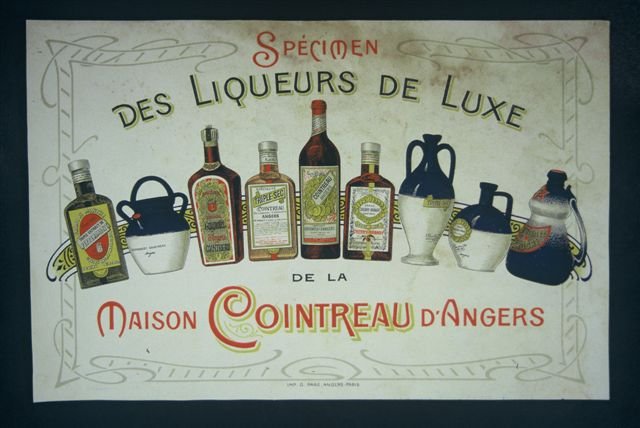
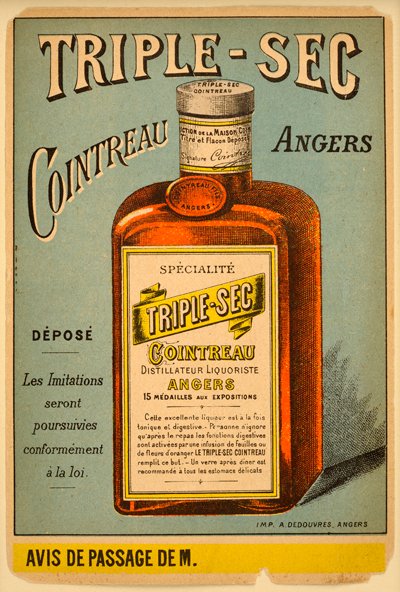
    Historical Cointreau smallerThere are no legal differences between triple sec and Curacao, only a few practical and many historical differences. In summary: 

    • Both triple sec and Curacao are orange-flavored liqueurs, and today’s triple secs are typically clear, while curacao is either clear or sold in a variety of colors, including blue.
    • Curacao liqueur is not required to come from the island of Curacao nor use Curacao-grown oranges, and according to US law, both triple sec and curacao are simply defined as “orange flavored liqueur/cordial.”  
    • Some orange liqueurs including Grand Marnier use an aged brandy base, while most use a neutral spirit base.

    In short, today there are no hard and fast differences between curacao and triple sec (other than curacao is sometimes colored), and bartenders should use what is best for a particular drink. But the history of how orange liqueur came to be known by these different names is interesting.

    From the Caribbean to the Netherlands

    "Curacao" liqueur refers to a liqueur with flavoring from oranges that grow on the island of Curacao, off the coast of Venezuela. These oranges are known as bitter oranges or Laraha oranges, with the botanical name Citrus aurantium var. curassuviensis.

    These are a variety of sweet Seville oranges that changed in the arid island climate and are reputed to taste awful on their own, but the sun-dried peels of them are prized in making liqueur compared with traditional sweet oranges. Today, bitter oranges are still used in many liqueurs and some gins, though these are most often sourced from other regions including Haiti and Spain.

    However the Senior & Co. company, based on Curacao since 1896, still produces curacao (in a variety of colors) made on the island with the island’s oranges.  It claims to be the only brand that uses the island’s oranges.

    The island of Curacao has been a Dutch island since the 1600s, and was a center of trading and commerce for The Netherlands. The dried peels of the island’s oranges made their way back to Holland where they were infused, distilled, and sweetened. The Dutch Bols company, which dates back to 1575, states that their first liqueurs were cumin, cardamom, and orange, though they don’t specify that the oranges in the first liqueur came from Curacao just yet.

    The base spirit for orange liqueurs changed many times over the years. According to Bols historian Ton Vermeulen, the earliest records of distillation in the Netherlands dating to the 1300s detail distilling grapes. The northerly climate isn’t conducive to grape-growing however, and by the end of the 16th century many distillers used distilled molasses (sugar from colonies was often refined back in the home countries, with distillable molasses as a secondary product). In the 1700s the Bols company has records of both grain alcohol and the molasses-based “sugar brandy” being used as base spirits. Grape brandy was seen as more refined, and according to Vermeulen, the “owner of Bols around 1820 would prefer to use [grape] brandy and if it was too expensive would use grain alcohol instead.”

    Column distillation that spread after 1830 allowed for any fermentable matter to be distilled to near neutrality and make a suitable base for liqueurs. The Netherlands and most of Europe switched to using neutral sugar beet-based spirit in the second half of the 19th century, after Napoleon heavily promoted the sugar beet industry in France. Today neutral sugar beet spirit is the base of Cointreau.


    France and Triple Sec

    The most famous and well-respected orange liqueurs on the market today, Grand Marnier and Cointreau, don’t come from Curacao or from the Netherlands, but from France, and it seems to be in France where Curacao liqueur evolved into triple sec liqueur.

    Cointreau initially produced a product called “curacao,” and then a “curacao triple sec” and then a “triple sec." According to Alfred Cointreau, the product labelling (and it seems the sweetness levels and possibly accent flavors) evolved over the years:

    1859

    • Curacao
    • Curacao ordinaire
    • Curacao Fin
    • Curacao sur fin

    1869

    • Curacao Triple-Sec

    1885

    • Triple-Sec

    Historical Cointreau - full rights (7)

    Cointreau cites  1875 as the creation date of its orange liqueur, which is made with both bitter and sweet orange peels. Grand Marnier cites  1880 for its blend of cognac and orange peels. Both of these brands now shy away from the words “Curacao” and “triple sec,” on their labels.

    The brand Combier claims 1835 as its creation date, with “sun-dried orange peels from the West Indies, local spices from the south of France, alcohol from France’s northwest, and secret ingredients from the Loire Valley – a formula that became the world’s first triple sec: Combier Liqueur d’Orange.”

    But to what are the “triple” and “sec” referring?” The “sec” is French for “dry,” and the “triple” could point to several things.

    Alexandre Gabriel, president of Cognac Ferrand, says that in conjunction with cocktail historian David Wondrich, they researched the history of triple sec and curacao and found a listing from a 1768 Dutch-French dictionary that described an infusion (without redistillation) of Curacao oranges in probably-grain spirit, but by 1808 recipes appear for redistillation of the oranges in spirit.

    Gabriel’s theory is that the triple refers to three separate distillations or macerations with oranges. His Dry Curacao product is described as, “a traditional French ‘triple sec’ – three separate distillations of spices and the ‘sec’ or bitter, peels of Curacao oranges blended with brandy and Ferrand Cognac.”

    By Gabriel’s definition, the ‘sec’ refers to the drier-tasting (due to bitterness) oranges from Curacao, independent of the sugar content of the liqueur. A contrary opinion comes from Andrew Willett of the blog Elemental Mixology, who makes a convincing argument that the ‘triple sec’ is a level of dryness from sugar on a scale from extra-sec, triple-sec, sec, and doux (‘sweet’).

    Willett also proposes that the ‘triple’ could indicate three types of oranges: many French brands call for both bitter and sweet oranges in the recipe, plus some add an orange hydrosol (water-based orange distillate). That an early product from Grand Marnier was called Curacao Marnier Triple Orange could help support this argument. Willett concludes in another post that a “Curacao triple sec” is “Curaçao liqueur that is both triple-orange and sec.”

    So “Curacao triple-sec” may refer to three distillates that include Curacao oranges, three types of oranges including Curacao in a very dry liqueur, or just a specific level of dryness from sugar of a Curacao liqueur. As mentioned, these differences and definitions are not meaningful today.

    Curacao comes in many colors, but coloring of the liqueur is more traditional than one might imagine. It dates back at least to the early 1900s (when the liqueur was colored with barks) and some cocktail books including the Café Royal Cocktail Book from 1937 specify using brown, white, blue, red, and even green Curacao in various recipes.

    Today, bartenders might consider each part of the liqueur in deciding which brand is appropriate for a particular cocktail: the orange flavor, the base spirit, the proof of the liqueur, and yes, the color. There’s a whole rainbow to choose from when choosing an orange liqueur.


    Below Here is the Original Post that I updated with the above information. Please ignore it! It's just here for legacy purposes.

    I tried to answer that question as best as I could in my recent post for FineCooking.com.

    Four hundred years ago, the Dutch were some of the world’s greatest traders and, not coincidentally, great distillers. They’d preserve the spices, herbs, and fruit brought home on ships in flavored liqueurs and other spirits. Curacao was one of those liqueurs, flavored with bitter orange peels from the island of the same name. At the time, the liqueur would have had a heavy, pot-distilled brandy as its base.

    Then the French came along (a couple hundred years later) and invented triple sec. The “sec” meaning “dry,” or less sweetened than the Dutch liqueur. The origin of the “triple” is still up for debate, but the two leading schools of thought are “triple distillation” versus “three times as orangey”. Triple sec was also clear, whereas curacaos were dark in color.

    Today, triple secs are usually still clear (made from a base of neutral spirits), whereas curacaos may start that way and be colored orange, blue, and even red. Cointreau is probably the most recognized brand of orange liqueur in the triple sec style, and Grand Marnier, despite being French, is more in line with the Dutch curacao style as it has an aged brandy base.

    Nerds: Do you think that's an accurate summation?

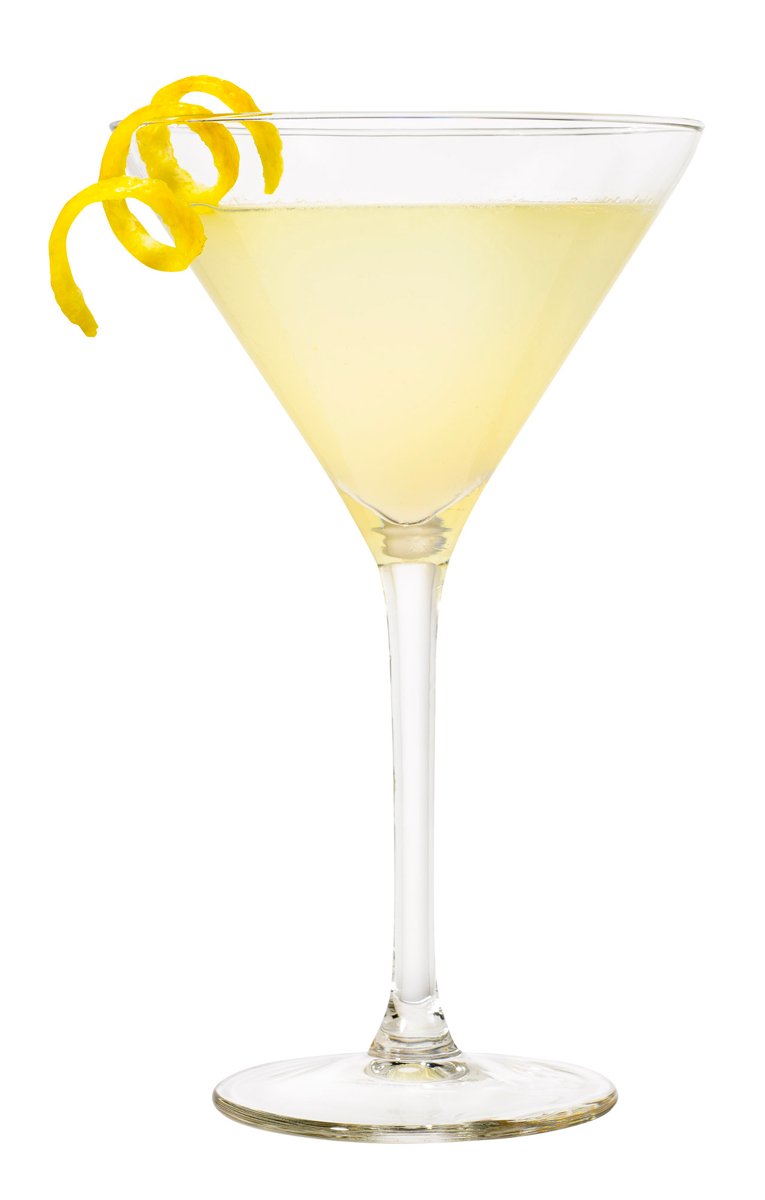
    The full post is here, and it includes a recipe for the White Lady cocktail.
    White_ladyM

  • Germany, Ensslin, Aviation, and Blue Cocktails

    My latest post on FineCooking.com is up. It's typical of my thought process: I was going to write about my time in Germany and ended up talking about a German bartender who wrote an American cocktail book in which the Aviation cocktail was first mentioned and later forgotten. 

    Read it here

    Aviation close1_tn

    (I took this picture- not bad for me!)

  • History of the El Diablo Cocktail in Trader Vic’s Books

    I was trying to find the first reference to the El Diablo cocktail recently.

    Mexican El Diablo


    1/2 lime


    1 ounce tequila


    1/2 crème de cassis


    Ginger Ale


    Squeeze lime juice into a 10-ounce glass; drop in spent shell. Add ice cubes, tequila, and crème de cassis. Fill glass with ginger ale.

    Searching the web, the earliest reference I read to it was from Trader Vic's books of 1946 and 1947.

    I asked tiki expert Martin Cate, who has these books, if he knew if the drink was a Trader Vic original. After his research it's still not entirely clear, but the research is interesting in itself.

    Martin says:

    IT IS in the 1946 TV Book of Food and Drink- It is
    called a "Mexican El Diablo" and it IS singled out as an original
    cocktail.
     
    IT IS in the 1947 TV Bartender's Guide again as a
    "Mexican El Diablo", but does not declare it an original- although that book
    does not specify.
     
    It's not in the TV Kitchen Kibitzer
    1952
     
    IT IS in the TV Pacific Island Cookbook of
    1968, but now called "El Diablo" only
     
    IT IS in the TV Bartender Guide Revised 1972 as an
    "El Diablo", but does not say it's his.  This edition DOES call out
    original drinks.

    Thanks Martin!

    If anyone finds an earlier reference to the El Diablo or Mexican El Diablo, please let me know.

  • San Francisco Cocktails, Past and Present

    It's unusual for me to miss days of blogging, but I've been busy writing up some stuff for SF Cocktail Week. Check out these pieces I wrote and let me know if I'm missing anything big (or am completely full of beans).

    San Francisco's Historic Cocktails and Barbary Coast Saloons

    Connecting the Past to the Present: Modern Cocktails in San Francisco