The bar Elixir was recognized this weekend as being the second oldest (known) drinking location in San Francisco by the wacky historical/drinking club E. Clampus Vitus (aka The Clampers).
The oldest is the Old Ship Saloon, which was literally a ship dry-docked in what is now the Financial District that was turned into a bar.
Elixir dates back to at least 1858 and it has been continually operated as a drinking establishment since then (we know this thanks to the thorough research by The Clampers) - with the exception of the 1906 earthquake and fire when it burned down and was rebuilt, and during Prohibition when it was a soda fountain.
The Mission seems pretty far out for an old drinking establishment, but keep in mind that Mission Dolores nearby is the oldest surviving building still standing in SF dating back to 1791.
I attended the event and took a couple of snaps. It was fun because The Clampers are ridiculous and also because the bar's owner, H. Joseph Ehrmann, has been a long-time Clamper himself. Also, there were two-dollar shots of whisky so I didn't get much else done that day.
I love books! Here are all the books on cocktails and spirits I know of (please do comment if I've missed something) published this year. Give some gifts or just stock up on your winter reading for the cold months. I've got stacks to get through myself.
Whiskey Books
Bourbon: The Rise, Fall, and Rebirth of an American Whiskey by Fred Minnick
Shrubs: An Old-Fashioned Drink for Modern Times (Second Edition) by Michael Dietsch
A Proper Drink: The Untold Story of How a Band of Bartenders Saved the Civilized Drinking World by Robert Simonson
Colonial Spirits: A Toast to Our Drunken History by Steven Grasse
DIY Bitters: Reviving the Forgotten Flavor – A Guide to Making Your Own Bitters for Bartenders, Cocktail Enthusiasts, Herbalists, and More by Jovial King and Guido Mase
Amaro: The Spirited World of Bittersweet, Herbal Liqueurs, with Cocktails, Recipes, and Formulas by Brad Thomas Parsons
The owners of Range Restaurant announced that they'll be closing at the end of the year after 12 years in operation. Let's talk about how important this restaurant was for the world of San Francisco cocktails.
This little restaurant was a surprising nexus of talented bartenders. I've been making mental notes of "nexus bars" for a while as I find it fascinating- the bars that see the most important bartenders come through them. Sometimes it's because those were the hottest venues in town, sometimes it's because everyone wanted to work with the bar manager, sometimes like at Range, well, I just don't know. Which makes it interesting.
In San Francisco, some of those bars include Stars (from way before my time), Absinthe, Bourbon & Branch, Heaven's Dog, and certainly Range.
When Range first opened, the cocktail scene (as well as all of the bartenders compared to now) was fresh and young. Muddling and infusions and using fresh juice were still news.
Heck, I was still writing about nightlife as well as cocktails, still learning about them, and soon to move to full-time coverage of them by 2006. In a lot of ways, I came up in my career too learning from the bartenders at or from Range.
Let's look at where some of those bartenders are now:
Carlos Yturria – Has since consulted on many different Bay Area bars and now is a co-owner of The Treasury in Downtown SF. When Range first opened, I was obsessed with a (now embarrassingly simple) drink that was a Gin & Tonic with a splash of Lillet Blanc. Turns out Carlos created that one. We've each come a long way since then.
Perhaps Yturria's most-loved drink from his time at Range was the Sungold Zinger – a simple and exquisitely delicious cocktail with gin, lemon, and heirloom tomatoes that they'd bring back every year during tomato season. I'm not positive, but I think his drink Flash (kiwi, cucumber, gin) may have been created in that era and it's on his current menu at The Treasury.
Camber Lay – Has been the longtime lead bartender at Parallel 37 at the Ritz-Carlton in SF. I remember she was using a food dehydrator to create dried fruit rims on drinks and I was all, "What will those crazy mixologists think of next??" Ha!
Jon Santer – Now owns the much-loved/respected Emeryville bar Prizefighter. Kind of a big deal.
Santer in 2004. No idea what/where.
Jeff Lyon became co-owner (along with Range chef Phil West) of Third Rail, a jerky and cocktail bar, in San Francisco's Dogpatch district.
Enrique Sanchez – San Francisco's omnipresent bartender, currently often working at my local-local ABV.
Brooke Arthur– Came up through the ranks at Range and was the face of the bar for a long time. Later ran the programs at venues including Prospect and super-favorite Wo Hing General Store. She is now a brand ambassador and vice president for House Spirits out of Portland, OR.
Brooke Arthur at Range
Thomas Waugh – Moved to New York and is doing incredible things as the cocktail king of Major Food Group. You might have one of his drinks at a half dozen places in town.
Dominic Venegas – After working pretty much everywhere great in SF, moved to New York and was bartending at the every-award-winning Nomad before taking a brand ambassador job with Pernod-Ricard. Way back just post-Range, Venegas and Yturria were awarded the SF Chronicle's "Bar Stars" as a team.
So… Yeah a lot of great people went through that bar- and more than just these folks I'm sure. Respect. Range is/was one of the most important restaurants in San Francisco's cocktail history.
San Francisco restaurant The Perennial has a cocktail program in which none of the drinks on the menu are either shaken or stirred. What's up with that?
The program, lead by Jennifer Colliau (also of The Interval and Small Hand Foods) focusses on reducing waste with a big emphasis on water waste.
Ice frozen into bottom of glasses. Photo by Jason Rowan.
Ice Machine Waste
According to Colliau, both Kold Draft and Hoshizaki ice machines (which produce the large clear cubes in most better bars in the US) waste 50% of the water that goes into them. The way these machines make their ice is that water runs over or is sprayed over a cold plate; and apparently the run-off is simply sent down the drain.
The Scotsman pellet ice machine, on the other hand, she says is 95% efficient. Thus the desire was to not use the water-wasteful machines in the program. They use only the Scotsman machine, but they don't use it for everything.
A second point of water waste: The average shaken or stirred cocktail is assembled in a mixing glass or cocktail shaker, shaken or stirred, and then strained and poured onto new ice in the serving glass – and the shaking/stirring glass ice is dumped out (using nearly twice the amount of water). Then the cocktail shaker/mixing glass must also be washed/rinsed out. Colliau sought to eliminate this waste.
Reducing Ice Use
For stirred cocktails on the menu at The Perennial, the drinks a batched in advance and are served in glasses in which a specific amount of water has been frozen to the bottom (glasses are kept in the freezer obviously). Stirred drinks on the menu are also pre-diluted so they don't need to be stirred but rather just poured. The liquids are kept refrigerated until service, then simply poured into the ice-containing glasses. I asked Colliau how she developed the system. She said:
I originally stirred these drinks to various temperatures, depending on their alcohol content, until they tasted the best. I measured the drink going in to the beaker then out to see how much dilution resulted from the ice melt. Then, because all of our freezers are the same, I took that dilution proportion and held the resulting drink in the freezer to make sure it tasted great even at that colder temperature.
Served in rocks glasses with ice frozen into them, approximately every 5 minutes the drink gets about 5 degrees warmer until it hits around 35F. It's important that the drink taste delicious over time.
Ideally we would White Lyan-style this execution and have different freezer temps for different drinks, but we use these freezers to chill glassware and keep sherbet and large ice in them, so we hold them all cold and manipulate the dilutions to work for each drink.
For shaken cocktails, things are even more complicated – the act of shaking is to roughly mix and emulsify ingredients together. To accomplish this, they use 1/3 cup of Scotsman ice, and run the cocktail through a blender in a small mason jar until there is no ice left. Thus the drink is "shaken" and no ice is dumped out at the end. Colliau says she'd definitely prefer a less noisy option, but it's the best they can do so far.
Mason jar mouths fit blender blades. "Shaken" cocktails are blended until the ice is all gone.
For off-menu cocktails, they have cubes from 2" Tovolo ice cube trays that they can use for rocks or cracked for stirring.
Stirring to Temperature
For off-menu drinks that are not pre-diluted, they stir drinks to temperature; as temperature directly relates to dilution.
The idea is that because ice kept in the well is basically at 32 degrees (F), all dilution of the drink will result in known temperature reductions (and vice versa). Thus to serve a drink the bartender can put in some cracked ice in the glass, stir a bit, prepare other more complicated drinks while it is diluting/melting, then check the temperature and stir more/add more ice if needed, until it reaches the desired final temperature. Any extra ice will be dumped.
Colliau notes, "Cobbled ice has so much surface area that it over-dilutes too quickly to stop when the drink is ready to go."
Tall drink served on pellet ice with straw straw and dehydrated citrus wheel. Photo by Jason Rowan.
Temperature of Stirring
For low-alcohol drinks and those served on glasses with ice frozen into the bottom, they stir to 35 degrees. For regular stirred drinks like a Manhattan or Martini, they stir to 32 degrees as there will be no additional dilution from ice in the glass. And for the Gimlet at The Interval, they stir down to 25 degrees because the drink uses high-proof gin and additional dilution is needed.
Colliau says, "These are temps that I like for certain drinks, and they are guidelines rather than hard rules. Above all the drinks should be delicious! Using temps makes consistent execution across staff much, much easier."
Other Eco Savings
For straw tasting of cocktails, not only do they not use plastic straws (actual ones made of straw are give to customers), they use a system of a spoon and metal straw – you dip the straw into the drink then empty it into a spoon that you use to taste. Thus you don't need to wash the equipment each time.
Water un-drank from water pitchers on tables is collected, combined, and used to water the rooftop garden.
They don't "burn" the ice wells at the end of each night: Ice in the wells is used the next day as the ice for chilling syrup and juice bottles. At the end of the week (they are closed on Sundays) they drain clean the ice wells.
To cut down on waste of citrus, they used preserved whole limes in one drink and make whole-grapefruit marmalade for another.
For fresh juice, they will use leftovers for one day, and then make sherbet for any leftovers at the end of the week. She notes, "Closed on Sundays, juice on Mondays, use 1-day-old juice on Tuesdays in the service well and squeeze fresh to par, keep rotating like that so ideally we use all of the day-old juice the next day, then on Saturday night we mix the lemon, lime and orange juices with milk and pineapple gum syrup and turn it into sherbet. (No grapefruit for medical contraindications.)"
For purchasing decisions, they look at the carbon footprint of not only the actual product, but its bottling and transportation. High-proof spirits mean less water is shipped in bottles; heavier bottles mean more carbon as well. Shipping is a far less carbon-intensive mode of transport than trucking, so Colliau notes that trucking bourbon across the country from Kentucky might ultimately have a higher carbon footprint than shipping it to California from Japan, even though the distances are vastly different.
I'm sure there are tons more environment-saving considerations and processes in place – and this is just on the drink side of the program. This is definitely a more thoughtful process than pretty much every other bar attempting to reduce waste. Really, really impressive.
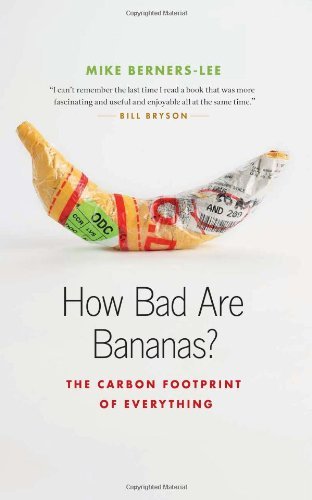
Homework: Colliau says she got a lot of information about carbon footprint of transporting bottles and other ingredients from the book How Bad Are Bananas? I'm planning to read it one of these days.
ABV in San Francisco won the Best New Cocktail Bar award at Tales of the Cocktail in 2015.
I decided to interview one of the owners, Ryan Fitzgerald, on what he feels they did right and wrong, and what changed from initial plans, when opening it.
There are some really good and interesting tips for other bar owners to consider; stuff about bar ergonomics and having bartenders working the floor.
Throughout the year I post new drink books to Alcademics, because I love drinking and books. Below is all of them put together so that you can make your holiday wish list for yourself or see them all together to pick presents for friends and family.
Know of a book I missed? Let me know and I'll add it.
Culture and Fun
You Suck At Drinking: Being a Complete Guide to Drinking for Any and All Situations in Your Life, Including But Not Limited to Office Holiday Parties, Weddings, Breakups and Other Sad Times, Outdoor Chores Like Deck-building, and While in Public, Legally and Illegally By Matthew Latkiewicz
Cocktails of the Movies: An Illustrated Guide to Cinematic Mixology by Will Francis , Stacey Marsh
Imbibe! From Absinthe Cocktail to Whiskey Smash, a Salute in Stories and Drinks to “Professor” Jerry Thomas, Pioneer of the American Bar (Updated and Revised Edition) By David Wondrich
Contraband Cocktails: How America Drank When It Wasn't Supposed To by Paul Dickson
Narrative Cocktail Books
The Cocktail Chronicles: Navigating the Cocktail Renaissance with Jigger, Shaker & Glass by Paul Clarke
Ten Cocktails: The Art of Convivial Drinking by Alice Lascelles
Cocktails from Specific Bars
The Dead Rabbit Drinks Manual: Secret Recipes and Barroom Tales from Two Belfast Boys Who Conquered the Cocktail World by Sean Muldoon, Jack McGarry, Ben Schaffer
Experimental Cocktail Club: Paris, London & New York by Romée de Goriainoff, Pierre-Charles Cros, Olivier Bon, Xavier Padavoni
Cuban Cocktails: 100 Classic and Modern Drinks by Ravi DeRossi, Jane Danger, Alla Lapushchik
Tujague's Cookbook: Creole Recipes and Lore in the New Orleans Grand Tradition by Poppy Tooker
The fine folks at the Bay Area Newsgroup, which includes newspapers the San Jose Mercury, Oakland Tribune, Contra Costa Times, and others, asked me to write a long profile of Trick Dog's Caitlin Laman, so that's what I did.
The story comes out in this Sunday's Eat Magazine, an insert into all those papers. I'm not sure if it's going online in traditional format, but here it is in Issu, the online magazine format. If it comes out as traditional text I'll share the link.
They did a nice job! Lots of photos and a lovely layout.
The article also includes illustrated recipes by 8 Bay Area bartenders:
Caitlin Laman of Trick Dog
Suzanne Long of Longitude
Nick Kosevich for Mortar and Pestle
Antoine Nixon of Jack's Oyster Bar and Fish House
Russ Stanley of Jack Rose Libation House
Jimmy Marino of The Lexington House
Brandon Clements of The Village Pub
Andrew Majoulet of Rich Table
They asked for ten but chose eight – sorry if yours was one of the ones left out.
While they haven't crossed all the T's and dotted the I's (or added the prices) to it, the good folks at ABV in San Francisco let me photograph their new menu.
The bar is in soft-opening mode beginning Tuesday (and they'd really, really appreciate it if everyone didn't show up on Tuesday), and it will be open from 2PM – 2AM after that.
Reminder: ABV is a partnership between Erik Reichborn-Kjennerud (owner of Dalva, Dalva Hideout), Ryan Fitzgerald (former Beretta bar manager and Del Maguey Mezcal brand ambassador), and Todd Smith (former bartender at Dalva Hideout, former distributor rep with Pacific Edge, founding Bourbon & Branch bartender).
The menu contains 20 cocktails, including 4 non-alcoholic ones, divided by spirit. The menu flips at an angle and the bottle list of spirits is on the underside of the previous page. Click these photos to make them larger – you should be able to read it.
There will also be a food menu, written above the back bar, but I'll let someone else cover that.
ABV is at 3174 16th Street, in the former Tokyo GoGo space.