Category: trips

  • Heaven Hill Distillery Visit

    This spring I visited 8 American whiskey distilleries, including Heaven Hill.

    Heaven Hill Distillery8crop

    Heaven Hill makes whisky brands Evan Williams (the second largest bourbon after Jim Beam), Elijah Craig, Bernheim Wheat Whiskey, Old Fitzgerald, Rittenhouse Rye, and Georgia Moon Corn Whiskey, plus they make and/or own Burnett's vodka, Hypnotiq, Lunazul tequila, and many other brands. They are the only company that makes all of  bourbon, rye, corn whiskey, and wheat whiskey. They have nearly 1 million barrels in storage. 

    Though the visitors' center and many rickhouses are here, the distillery is elsewhere – the distillery and many warehouses burned down in a major fire in 1996. After the fire they purchased the Bernheim distillery in Louisville to do the distillation, along with some rickhouses there. 

    Heaven Hill Distillery visitors center_tn

    For three generations, master distillers at Heaven Hill have been descendants of Jim Beam. 

    Heaven Hill Distillery beam family tree_tn

    We visited one of the warehouses – actually the rickhouse in which several "whisky of the year"s have aged. It is seven floors tall and we walked to the top for the view. Most of those "best whiskies" were aged on the top floor here.

    Heaven Hill Distillery rickhouse_tn

    Our guide pointed out where the distillery was that burned down. 

    Heaven Hill Distillery view from rickhouse_tn

    For all their bourbons, they use a single mashbill. (They didn't give out the specific numbers but said it's about 70% corn and 10% each rye and malted barley. Update: see the comments for specifics.) Between all the brands, age and proof are the only differences; not the recipe. When they distill a spirit and put it into a barrel, it's not designated to be a specific brand – they pull barrels as needed to make specific flavor profiles of their products. 

    Heaven Hill Distillery2_tn

    Visiting Heaven Hill

    The Bourbon Heritage Center opened in 2004, and still looks shiny and new. Inside, you get the typical displays of bourbon history and the history of the company, plus there is a cool round bar tasting room inside.  

    There are several tours available – mini tour inside the visitors' center, an 1.5 hour tour that visits a rickhouse as I did, a trolley tour around downtown Bardstown, and a 3 hour "Behind the Scenes" tour. More information about visiting Heaven Hill is here.


  • Noilly Prat Vermouth: The Differences Between Original Dry, Rouge, and Ambre

    In yesterday's post I discussed how Noilly Prat vermouth is made, as learned on my visit to the vermoutherie in Marseillan, France. Today I want to talk about the differences between the types of vermouth they make. 

    In most parts of the world, Original Dry is the only Noilly Prat. The Rouge is primarily for the US market, and the Ambre is available in a few liquor stores in Europe and at the distillery. (The Rouge is also available at the distillery.) 

    Three types of Noilly Prat Marseillan France_tn

    Noilly Prat Original Dry

    One-year-aged clairette and picpoul wines, aged, fortified sweet mistelle wine the from muscat grape, a raspberry and lemon-infused distillate are combined and infused wtih herbs and spices. The filtered results of this are then aged for three more weeks. 

    The Original Dry is macerated with 20 ingredients. These include: 

    • Chamomille. This is the dominant note. As a delicate dried flower, this maceration is done separately from the main maceration. Chamomille gives the vermouth both a slight bitterness and the dry finish. 
    • Nutmeg.
    • Bitter orange peels from Tunisia. 
    • Gentian. This adds bitter and earthy notes. Gentian is used in gin and many perfumes to add base notes. 
    • Wormwood. By European law, all vermouth contains wormwood. The word "vermouth" actually comes from the German word for wormwood.

    Three types of Noilly Prat Marseillan France (2)_tn

    Noilly Prat Rouge

    This is Noilly Prat's sweet vermouth, which was created in 1956. It uses the same base wines, but also includes caramel coloring to give it its red hue. (Many people assume sweet vermouths are made from red wines- nope!) The Rouge calls for the same 20 ingredients as the Original Dry, but used in different ratios than the dry. It then adds an additional 5 ingredients not found in the Original Dry, for 25 ingredients in total. These ingredients include:

    • Cloves
    • Coco beans from Venezuela
    • Saffron
    • Quinine (like in tonic water)

    Noilly Prat Ambre

    This is basically a special 'distillery edition' of vermouth, only available here and in a few important wine shops in Europe. It is amber in color and much sweeter than the Original Dry- in fact sweeter than the Rouge. It contains all of the 25 herbs and spices used in Rouge, plus 24 additional ingredients, for a total of 49 herbs and spices. These include:

    • Cardamom
    • Lavender
    • Cinnamon
    • Rose petals
    • Vanilla

    There is also an Extra-Dry coming to the US market this fall, but I'll save that for another post… Update! Here is a post about the Extra-Dry vermouth

  • Making Vermouth: A Trip to Noilly Prat in Marseillan, France

    Though vermouth as an essential ingredient in cocktails, I never gave much though to its production, figuring it was just a simple infusion of herbs in fortified wine. It turns out there is a lot more to it than that. 

    This June I visited Marseillan, France, the home of Noilly Prat vermouth. There, it is pronounced "No-ah-lee Pra" or "No-ah-lee Praht". 

    This brand is considered the first commercial dry-style vermouth in the world, dating to 1813. The recipe was created then in Marseilles by Joseph Noilly. His son moved production to Marseillan in 1850 and his when his grandson-in-law joined the company it became Noilly Prat. In the early 1970s Noilly Prat was purchased by Martini & Rossi, and that company was purchased by Bacardi in the early 1990s. 

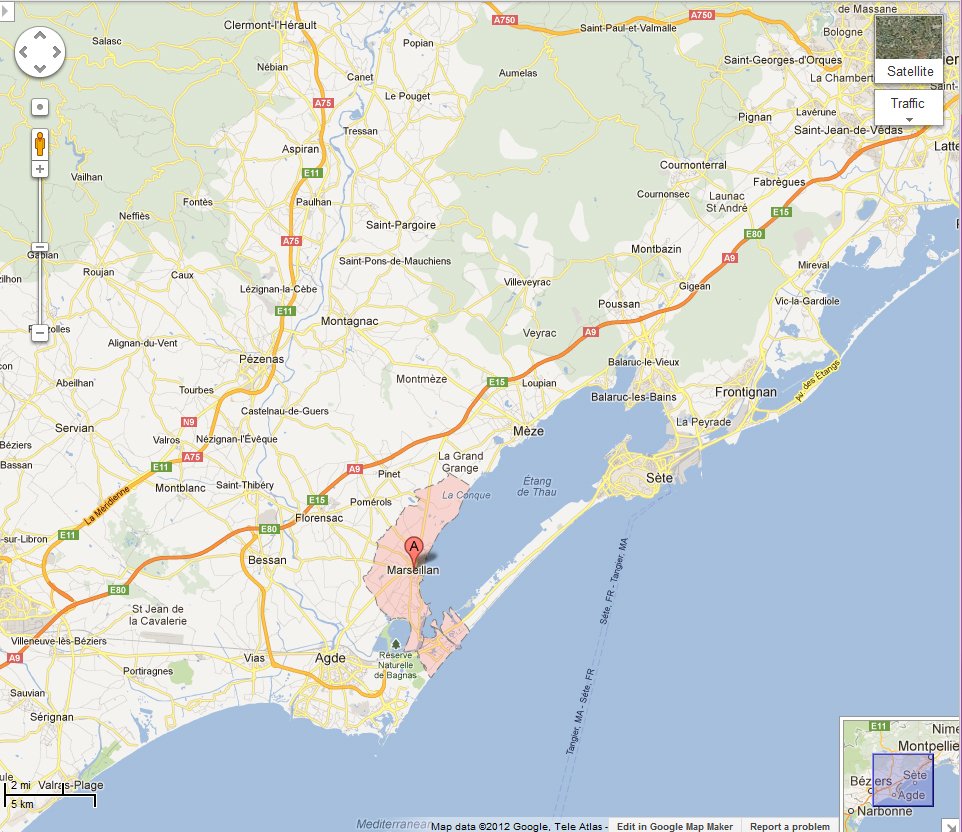
    Marseillan france map
    Marseillan france map

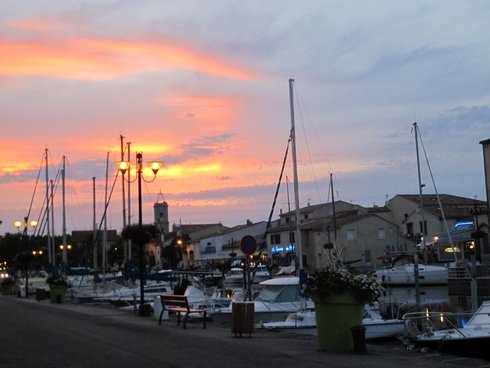
    Marseillan is a small fishing town in the Southeast of France, located near the vineyards of the Languedoc region, which abut the oyster farms separated from the Mediterranean Sea by a small strip of land. Not coincidentally, Noilly Prat Dry is served with oysters in the region, and oysters are served everywhere.
    Marseillan France6_tn

    Vermouth is a fortified, aromatized wine. So let's get into how it is made. 

    The Wines in Noilly Prat

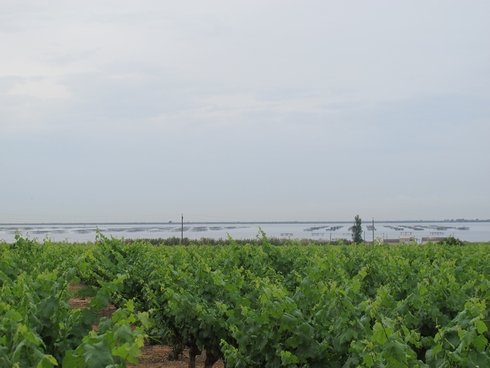
    Three kinds of wine go into Noilly Prat Original Dry: Picpoul, Clairette, and muscat for the sweetening mistelle. Many of the wines are grown next to the ocean Mediterranean Sea, adjacent to the oyster farms. What grows together, goes together. 
     

    Vineyard Noilly Prat Marseillan France1_tn

    Those rows of things in the water beyond the vines are oyster tables
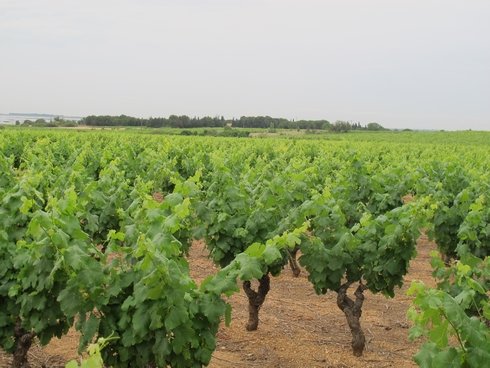
    Vineyard Noilly Prat Marseillan France1_tn


    Picpoul is an AOC wine in the area, smelling and tasting citrusy and a little tart. It too pairs with the local seafood. It makes up 60 percent of the wine in Noilly Prat. 

    Clairette, making up the other 40% of the wine blend in Noilly Prat, is less acidic than picpoul. It is fruitier and less citrusy than picpoul.

    These wines are usually harvested in September. Noilly Prat doesn't own the vineyards but purchases them from local cooperatives. In fact, they buy wines, not the grapes themselves. The wines are 12.5 to 14 percent alcohol by volume, and not aged in oak (yet).

    The Mistelle is the sweetening agent for Noilly Prat. Is is made from the partially fermented muscat grape juice. Fermentation is stopped by adding spirit (neutral sugar beet spirit) before it fully completes, leaving the wine very sweet at around 100 grams per liter sugar content. 

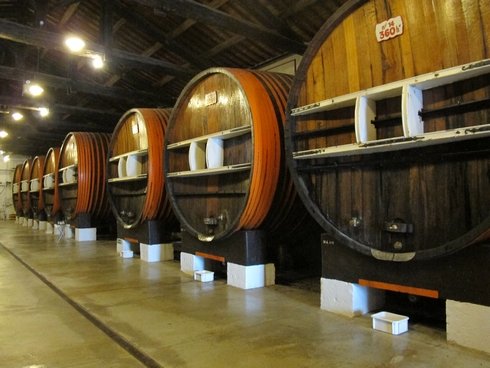
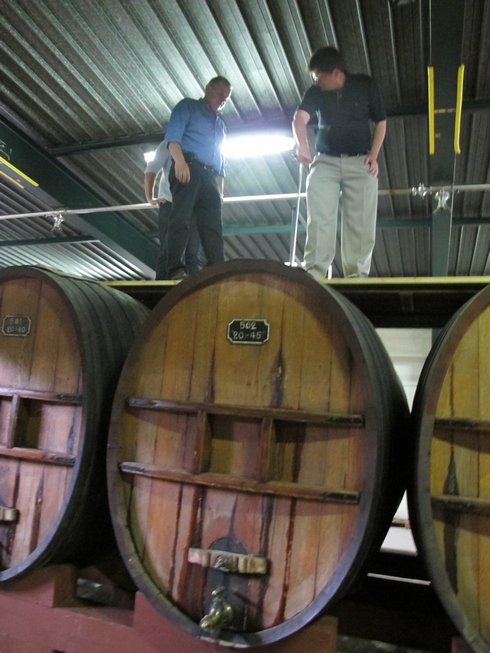
    The room where the mistelle ages is filled with huge vats. It dates back to around 1850. The vats were so big they were installed first, and then the building was built around them. In this room the mistelle ages for a year. 
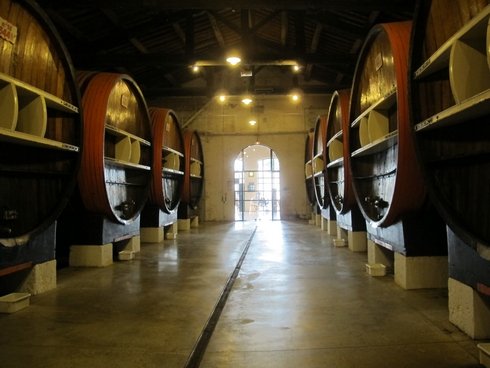
    Mistelle room Noilly Prat Marseillan France3_tn
    Mistelle room Noilly Prat Marseillan France3_tn

    Aging The Wines

    In the olden days,wines would have been sent out on boats to their destinations, aging in barrels along the way. However with faster transportation the wine was not the same. So Noilly Prat began replicating the aging step with their unique method called L'Enclos. 

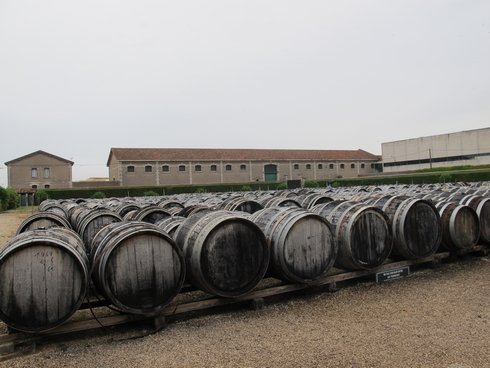
    Behind the front building at the Maison of Noilly Prat is a courtyard, and in this courtyard are 2,000 barrels where the picpoul and clairette wines age separately outdoors for a full year, oxidizing and taking on aspects of the salty sea air. 
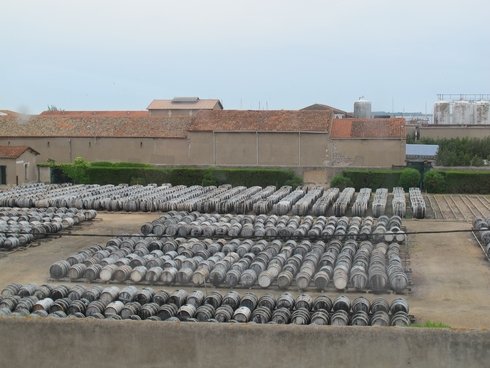
    LEnclose barrels Noilly Prat Marseillan France12_tn
    LEnclose barrels Noilly Prat Marseillan France12_tn

    LEnclose barrels Noilly Prat Marseillan France12_tn

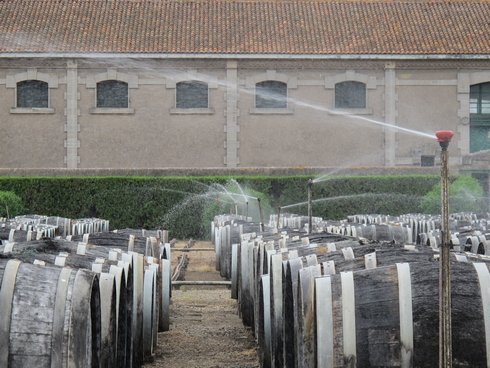
    The barrels are watered regularly to minimize evaporation of the wine


    Before aging these wines are fortified (with neutral sugar beet distillate) to 18 percent for picpoul and 16 percent for the clairette. We sampled wines aged about 6 months from the barrels – the picpoul wine still tasted very citrusy (apparently picpoul means something like "lip stinger") but took on an oxidized smell that reminded me of flan. The Clairette also tasted oxidized and quite salty, reminded me a little bit of manzanilla sherry.

    All the wine for Noilly Prat ages in this one courtyard, though they have more room in other courtyards should we start drinking more vermouth.

    The barrels used are all more than 30 years old, some of them more than 100 years old. I believe they said they purchase them from scotch whisky distilleries, but they didn't look to me like ex-bourbon barrels but ex-sherry butts and ex-port pipes as they were all larger than the typical 55 gallon barrels of bourbon.  

    As the barrels are so old (thus quite neutral and won't lend woody characteristics to the wine), there is a cooperage repair shop on site, located in a building where they used to distill absinthe. 
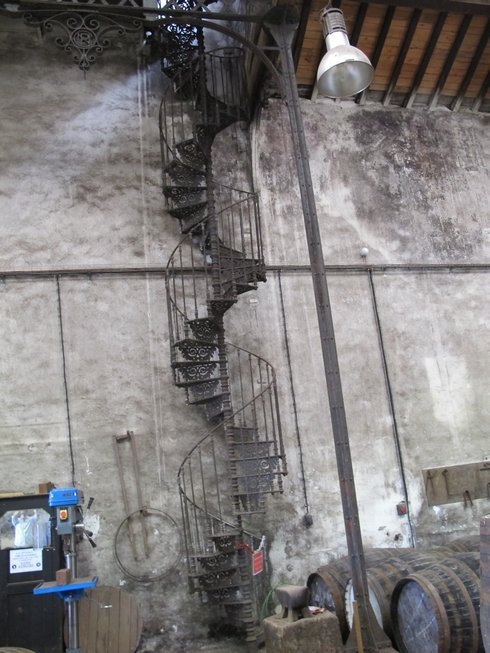
     

    Eiffel staircase Noilly Prat Marseillan France (2)_tn

    In the cooperage. That staircase? Designed by a guy named Eiffel.


    Infusing the Vermouth, and One Last Aging 

    Indoors in the Vermoutherie, the aged wines and aged mistelle are transferred here. Another distillate now comes into the equation: Lemon peels and raspberries are macerated in neutral sugar beet spirit for one week and then redistilled in a pot still to 76 percent alcohol. This flavored distillate is then used to further fortify the wine.
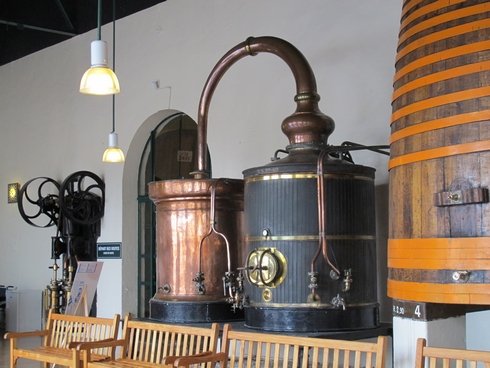
     

    Still Noilly Prat Marseillan France_tn

    Pot still of the same kind used to make the lemon-raspberry flavored distillate.


    In 2050 liter oval pine wood vats, the aged picpoul, clairette, and mistelle, plus the flavored distillate, are infused with the custom blend of herbs and spices for three weeks. 

    Every day during this period a person stirs the macerating wine for two minutes with a special sickle-shaped tool for the purpose. 

    La Salle Des Secrets Noilly Prat Marseillan France (2)_tn
    La Salle Des Secrets Noilly Prat Marseillan France (2)_tn

    La Salle Des Secrets Noilly Prat Marseillan France (2)_tn

    Stirring the macerating herbs


    After maceration, the vermouth is filtered in a big rotary filter to remove the herb particles. The vermouth is then further aged 3 more months in the same sized vats that hold the mistelle. 

    In tomorrow's post, I'll discuss the different herbs and spices (plus a few other production differences) used in Noilly Prat Original Dry, Rouge, and Ambre. 

    But I hope this post makes it clear that producing vermouth (at least this vermouth) is no simple business. I no longer just twist open a bottle and dump it into my cocktails- I now pour a bit into a glass with a single ice cube and savor it on its own first. Props.
    Logo Noilly Prat Marseillan France_tn

    Next Up: Read about the differences between Noilly Prat Original Dry, Rouge, and Ambre

    Then read about the new Extra Dry on the US market in summer 2013 and the difference between Original Dry and Extra Dry.

  • Maker’s Mark Distillery Visit 2012

    This spring I visited the Maker's Mark distillery, along with seven other American whiskey distilleries in Kentucky and Tennessee. I had previously been to Maker's Mark and wrote about my visit here. As you'll read, I learned a lot of different stuff on this trip. 

    Makers Mark Distillery8_tn

     Maker's Mark uses a mashbill of 70% corn, 16% soft red winter wheat, and 14% malted barley. Bourbon must be a minimum of 51% corn but 70+ is normal. Malted barley is always used to aid in fermentation, and the remaining percent is usually made of up rye or wheat, more often rye. 

    At Maker's they prepare the grains a little differently than at other distilleries. They use a roller mill to crunch up the grains, rather than a hammer mill. This cracks the husk of the wheat but leaves it intact. The husks do go into the boiler with the other grains, but they boil it at a relatively low temperature so it won't break down and become available to the yeast for fermentation. They also cook their grains (to prepare them for fermentation) in an open-topped cookers, rather than pressure cooking them. 

    The grains are then fermented with yeast for three days. 

    Makers Mark Distillery fermenting grains_tn

    The fermented grains are then distilled, up to 120 proof in the column still, and then up to 130 in the doubler. We smelled the two distillates: The first was very oily and minerally. After the second distillation it smelled fruity and light, like a typical white dog. 

    Makers Mark Distillery column still_tn

    They put the new spirit into barrels at 110 proof. Most of the warehouses for Maker's Mark at six storeys tall. They are the only bourbon distillery that rotates all of their barrels throughout the aging process. Barrels are first racked on the top floors, then moved after two years and then moved lower again after another two. 

    Makers Mark Distillery Rob Samuels_tn

    Maker's 46, a new bourbon from Maker's Mark, begins as the same distillate, aged for the same amount of time. It is then aged an additional 8-11 weeks in barrels with 10 seared French oak staves in the barrels. They do this only in the winter, as that way the liquid sucks flavor out of the staves rather than sucking liquid into the wood of the staves as it would do in the hotter months of summer. I think the final product tastes like wood-spiced Maker's Mark- pretty tasty. 

    Visiting Maker's Mark

    Free tours are available. Check the Maker's Mark website for more information. 

  • Woodford Reserve Distillery Visit

    This spring I visited eight American whiskey distilleries, including Woodford Reserve. 

    Woodford Reserve Distillery building_tn

    Woodford Reserve's distillery is in a charming setting, nestled down next to a stream in a little valley. The distillery is in a grey stone building dating to 1838, though everything inside it is new. Like most American whiskey distilleries, it changed names and owners many times over the years, changing to the Woodford Reserve distillery in 2004.

    Woodford Reserve grounds3_tn
    Woodford Reserve grounds3_tn

    Woodford Reserve is made from a mashbill of 72% corn, 18% rye, and 10% malted barley. They use limestone-filtered well water to ferment the grains in Cyprus wood fermentation vats. They ferment for six days – quite a long time. The fermenting grains taste very sour, kind of like sour green beer. 

    Woodford Reserve Distillery fermenter2_tn

    The sour mash process is where you take leftover grains that have been fermented back into the new batch of grains that are going to be fermented. Here at Woodford Reserve, they "sour in the cook" as opposed to souring in the fermenter. That means they add the last batch's spent grains to the new grains when it is being cooked, previous to when yeast is added for fermentation. Sour mash is known for keeping consistency between batches, but also it is acidic and helps reduce bacteria in the new batch.

    Woodford Reserve is unique in that they make a portion of their whiskey in pot stills. The stills look much as they do in Scotland, but here there are three of them. In Scotland, after the grains have fermented they separate out the grain solids from the sugary beer and only distill the liquids. In bourbon, solids and liquids are put together into the column still. So at Woodford Reserve, they put solids and liquids into the first pot still and distill it only up to 20 percent alcohol. For the most part they are just separating out the solids in this step, taking care not to burn them into the inside of the still.

    Woodford Reserve Distillery 3 stills_tn

    The second and third distillations bring the alcohol up to 55 percent and 78 percent (this is just under the legal limit of 80 percent maximum distillation percent for bourbon), and then it is put into barrels. The spirit goes into the barrels at 55 percent alcohol. 

    The rickhouses for the aging spirits are heated for Woodford Reserve. They put a temperature sensor in a barrel on the ground level. When it reaches 60 degrees Fahrenheit, they heat the warehouse until the spirit reaches 85 degrees and then turn off the heat. This makes for faster cycles of the spirit moving in and out of the barrel wood. 

    Woodford Reserve Distillery rickhouse3_tn

    Woodford Reserve is aged for an average of 7.3 years, and when they take it out of the barrel, they've lost about 50% of the whiskey to evaporation. 

    After aging, the pot distilled spirit is blended with column distilled spirit (distilled elsewhere) to make the final bottling blend. They do not say at which ratio these two spirits are blended for the bottle (and they didn't mention the column spirit at all until it came up in conversation), but say that it changes depending on flavor.  

    Woodford Reserve Distillery barrel_tn
    Woodford Reserve Distillery barrel_tn

    Visiting Woodford Reserve

    Tours of the Woodford Reserve distillery cost $7. It is the most visited distillery on the Kentucky Bourbon Trail, despite the fact that they only sell 165,000 cases of bourbon annually- a tiny fraction of what Jim Beam sells. For more information, visit the Woodford Reserve website.

    Woodford Reserve grounds4_tn
    Camper at Woodford Reserve Distillery_tn

  • Wild Turkey Distillery Visit

    This spring I visited eight American whiskey distilleries, including Wild Turkey. 

    Wild Turkey Distillery from afar_tn

    The Wild Turkey brand has been around a while, but the current distillery is just three years old, having moved across the street from the old one. It's clean, modern, and spacious. 

    Wild Turkey Distillery shiny and new_tn
    Wild Turkey uses all non-GMO grains in their bourbon and rye, but they don't tell us their specific mashbill. Despite having several products (Russell's Reserve, Rare Breed, etc.) there is just one mashbill for their bourbon, and another one for their ryes.

    They ferment the grains for three days before distillation. 

    The bourbon is distilled up to 115 proof in the 48-foot tall column still, and then up to 125 proof in the doubler, which acts like a pot still. 

    Wild Turkey Distillery column still2_tn

    In column distillation, there are actually heads and tails, but they only appear when you first turn on the still (heads) and when you turn it off (tails). However, you can just add these back into the column when you start it up again, so there really is no middle cut from the column still.

    The rickhouses for Wild Turkey are 7 storeys tall, and they have a total inventory of about 480,000 barrels. The barrels have a #4 char. 

    Wild Turkey was recently purchased by Campari. Previously it was owned by Pernod-Ricard, and in the deal of the sale Pernod-Ricard still gets to buy 90% of their used barrels for the next 10 years. I'm guessing all those barrels go to Jameson. 

    They have just released Wild Turkey 81 Rye. It is 81 proof. They have a 101 proof rye, but it was sold out already for the year back in April. 

    Wild Turkey Distillery Jimmy Russell_tn

    Visiting Wild Turkey

    Free tours are available, and visitors do get tasting samples. Visit WildTukey.com for more information. 

  • Jack Daniel’s Distillery Visit

    This spring I toured eight American whisky distilleries, including Jack Daniel's. 

    Jack Daniels Distillery3_tn Jack Daniels Distillery Jack_tn

    As you'd expect, Jack Daniel's is a huge operation with a very slick tour. You start with a video at the visitors' center, then take a shuttle up to the top of the hill. There, they burn sugar maple wood into charcoal for the Lincoln County Process, in which newly-distilled spirit is filtered through charcaol before barrel aging. They weren't burning wood on the day I visited, so no bonfire for me. 

    Jack Daniels Distillery charcoal_tn

    Then we visited the cave spring where they get the water to ferment the grains before distilling, and then into Jack's old office. We saw the safe that killed Jack Daniel – he kicked it out of frustration one day and the injury caught gangrene and it eventually killed him. 

    Jack Daniels Distillery cave spring (2)_tn
    Jack Daniels Distillery cave spring (2)_tn

    The mashbill for Jack Daniel's is 80% corn, 8% rye, and 12% malted barley. The corn is #1 yellow corn. They say with a higher corn amount, you need a higher malted barley amount to help ferment it. They have 56 fermentation vats on-site that hold 40,000 gallons apiece. Fermentation lasts for 6 days – quite a long time. It reaches 11-12 percent alcohol after fermentation. 

    There are four distillation columns, all made of copper, and needing to be replaced every 9 or 10 years. (The whisky is only distilled in one of them, not all four. They just have four because they make so much whiskey.) Unlike most bourbon, there is no second distillation in a "thumper" or "doubler." They distill the whisky up to 140 proof (160 is the legal limit).

    Jack Daniels Distillery stillhouse_tn

    Then the whiskey goes through the Lincoln County Process. There are 72 vats, each filled with a ten foot layer of sugar maple charcoal. The whiskey is sprayed on the top of the vats and it slowly drips down through the charcoal, taking about 4-6 days to get all the way through. The charcoal in each vat is replaced every 4-5 months.

    This is in contrast to George Dickel, the other major Tennessee whiskey, where they fill the vats up with charcoal and spirit, let it sit a week, and then drain the whole thing. 

    They say the charcoal filtering removes 80 percent of hte oils and impurities from the distillate. Gentleman Jack is filtered through charcoal a second time at bottling, through a thinner layer of charcoal. 

    The whiskey is aged in their 81 warehouses spread throughout the region. Barrels are "quarter-sawn American oak" with a #4 char. It takes one 60 year-old tree to make one barrel. On the plus side, there is extra wood left over from the tree for other things, and many barrels are reused after aging American whiskey to age other spirits for more than 60 years apiece. 

    The barrels are first toasted and then charred at their own cooperage, the Brown-Forman Cooperage. 

    Last year they sold 10.23 million cases of Jack. 

    Master Distiller Jeff Arnett describes the taste of Jack as "Sweet and oakey," as opposed to the "bold and spicy" of other American whiskies. We tasted Jack before it goes through the Lincoln County Process – it was noticeably oilier and grainier than it is afterward. Arnett says that the Lincoln County Process "removes the bitterness associated with the grain bill."

    The Jack Daniel's Single Barrel bottlings always come from the top (hottest, most wood-influenced) floors of the rickhouse, while the Green Label comes from the ground floor. 

      IMG_3982_tn

    Visiting Jack Daniel's

    Contrary to popular belief, there are some tours where you're allowed to taste whiskey at Jack Daniel's. Those cost $10.

    Though they don't really sell whiskey at the gift shop, they do sell "commemorative bottles" full of whiskey. 

    Visitor information is on the website here.

    Camper and Jack at the Jack Daniels Distillery_tn

  • Distillery Visit: George Dickel

    This spring I visited the George Dickel distillery, located in Cascade Hollow, Tennessee. 

    George Dickel distillery7crop_tn
    Dickel and Jack Daniel's are the two defining Tennessee whiskies: both employ the "Lincoln County Process" of running the new spirit through 10+ feet of charcoal before it is aged. Contrary to popular belief, this is not a requirement of Tennessee whisky, as Tennessee whisky is not its own category by US law. By putting "Tennessee" on the label it must be made in Tennessee, but beyond that Dickel and Daniel's meet all the requirements for bourbon. 

    In 1870, George Dickel founded the distillery, originally called Cascade Whisky, and it was renamed by his wife after Dickel died. Prohibition came early to Tennessee, so in 1911 the distillery moved to Kentucky, then closed during national Prohibition. Twenty years after Prohibition the distillery was rebuilt about half a mile from its original location. 

    George Dickel distillery3_tn

    The mashbill for Dickel bourbon is 84% corn, 8% rye, and 8% malted barley. All bourbon uses a majority of corn, malted barley to aid in fermentation, and a minority of either wheat or rye. At Dickel it is a pretty high percentage of corn for a sweeter tasting whiskey. 

    Most of the corn used for George Dickel is local, and the rye and barley comes from North Dakota. They distill here four days each week currently, so they have the capacity to make a lot more bourbon than they currently do.

    The grains, which are cooked to make them easier to ferment, ferment with yeast for three or four days before they are distilled. The still is 42 inches in diameter and is three storeys tall. In a column still, the fermented mash (the grain solids and the liquids, unlike in scotch whisky where only the liquids are distilled) goes in near the top of the column. During distillation the alcohol comes out the top of the still and everything else goes out the bottom. 

    George Dickel distillery fermenting_tn
    George Dickel distillery fermenting_tn

    Most bourbons (but not Jack Daniel's) undergo a second distillation in either a "thumper" or "doubler." This second distillation acts like a pot still, so they say. Doublers are more common, and used here at George Dickel. 

    Originally Dickel distilled whiskey in the winter as they said it tasted best then. To mock that, the newly-distilled whisky is chilled to 40 degrees Fahrenheit before it is added to vats of sugar maple charcoal for the Lincoln County Process. 

    While at Jack Daniel's the whiskey is continuously dripped through a huge vat of charcoal and collected at the bottom, at Dickel the chilled distillate fills up the tank with the charcoal and sits together for about a week before it is drained. They have to refill the charcoal in each vat every 12-18 months. 

    The first distillation reaches 115 proof. The second distillation brings it up to 135 proof (160 is the legal limit). Though they can put whiskey in the barrel at up to 125 proof, at Dickel they store it at 115. The whiskey is aged in new American oak barrels with a char #4 on the staves and char #2 on the barrel heads. 

    George Dickel distillery rickhouse_tn
    George Dickel distillery rickhouse_tn
     As is common in American whiskey, the barrel warehouses (rickhouses) are not located right at the distillery, but are scattered about the hilltops nearby. This way they can take advantage of the cooling winds that blow through. Dickel has about 150,000 barrels of whiskey aging today. 

    Dickels rickhouses are all one storey structures. (Four Roses also uses one storey rickhouses but six storeys is the norm.) With one storey warehouses, there is less temperature differential between barrels aging at the top of the warehouse (those will be the hottest and get the most wood influence the fastest) and the bottom of the warehouse (where whiskey ages relatively slowly). 

    The angel's share, the amount of alcohol that evaporates from the barrels during storage, is 5 percent the first year and 3 percent each year after. 

    After aging, the whiskey is run though a paper filter to remove any charcoal bits before bottling. 

    George Dickel distillery2_tn
    George Dickel distillery2_tn

    Visiting George Dickel

    Last year 17,000 visitors came through the distillery. The tour is free, but unfortunately there is no whiskey tasting as part of it. Visitors can buy bottles but can't drink them on site. For more information, visit Dickel.com.

  • 2011: A Year of Spirituous Travel

    In 2011, I traveled to 12 foreign countries not counting repeats on 22 different trips, flying 156,000 miles to do so. I had a mere 80 nights in hotel rooms and one or two hangovers.

    My trips this year were: 

    • Vino 2011 in NYC
    • Jameson Irish Whiskey in Ireland
    • Casa Noble Tequila in Mexico
    • Angostura Bitters/Rum in Trinidad
    • Pioneers of Mixology in Los Angeles
    • Wine and Spirits Wholesalers of America in Orlando
    • Bacardi Global Legacy Cocktail Competition in London and Spain
    • Bombay Sapphire Botanicals in London and Italy
    • Karlsson's Vodka in Sweden
    • G'Vine Gin Connoisseur Competition in France
    • Diageo World Class Competition in India
    • Tales of the Cocktail in New Orleans
    • ZU Vodka in Poland
    • Purity Vodka in Sweden
    • Cherry Heering in Copenhagen
    • Bombay Sapphire/GQ Most Inspired Bartender Competition in Las Vegas
    • DonQ Rum in Puerto Rico
    • Pallini Limoncello in Italy
    • Cointreau in France
    • Auchentoshan Switch Competition in Las Vegas
    • Yamazaki Whisky in Japan
    • Taste of the Times Event in Los Angeles

    I am hoping for a more localized but equally awesome 2012. 

  • Bars in Japan: Miscellany

     On my five-day visit to Japan with Suntory whiskies I hit 21 bars by my count. I am talking about them in groups. Next up: The Rest of Them.

    The difference between the various styles of bars is subtle and I'm defining them as I see them. I'll be describing whisky bars, cocktail bars, highball and standing bars, and pubs/clubs/dives. This is that last section.

    Rippongi Nouen is actually a restaurant but it's notable because they serve highballs with flavors like ginger and rosemary.

    The restaurant has big glass cubes in the back that have (or used to have, can't tell) herbs and vegetables growing in them. 

    Roppongi nouen rosemary highball_tn

    The tasting menu had some great food. I think they picked this place not just for the drinks but for its vegetarian tasting menu.

    Roppongi nouen personal grill_tn
    (Everyone gets their personal smoking grill in one dish.)

    One Shot Bar The Door (I'm not sure if it's called The Door or One Shot Bar) is located in Kyoto. I didn't see much of the bar downstairs as we were in a private room upstairs with our shoes off on with tatami mats having a great conversation. It has a short cocktail menu, mostly of classics. I ordered a Martini. 

    One shot bar kyoto japan_tn

    One shot bar kyoto japan martini_tn

    Three Martini Bar in Yokohama is full of good. The walls are lined with vintage whisky decanters and ice buckets and they were playing a soundtrack of yacht rock. Good vibes all around.

    Three martini bar yokohama_tn

    Three martini bar yokohama2_tn

    Three martini bar yokohama menu_tn
    (Mmm, tequira.)

    Our hosts gave us a few reasons why it's called Three Martini, but I only remember one of them. "Three" in German is spelled "dreit" as in "dry." In exchange, I told them that in America it might refer to the three-martini lunch or Dorothy Parker's "two at the most" rhyme.

    Anyway, we ordered Moscow Mules and the three Martinis.

    Three martini bar yokohama moscow mule mugs_tn

    Three martinis at three martini bar yokohama_tn

    For bar snacks they had several options including fried sugar(!*!*!*!).

    Three martini bar yokohama fried sugar_tn

    Eagle Bar in Shinjuku area of Tokyo looks like a speakeasy gentleman's club with patterned wallpaper, wooden walls, and carpeting. To enter you walk down a flight of stairs to find a room with the main bar. Walk down another flight of stairs (two storeys below the street) and there is another small bar room where we sat. 

    Eagle bar upstairs shinjuko tokyo2_tn

    We sat at the bar. It has low barstools so your feet are touching the floor. While a couple to our right were working their way through the cocktail list, we stuck to highballs. 

    Eagle bar shinjuko tokyo2_tn

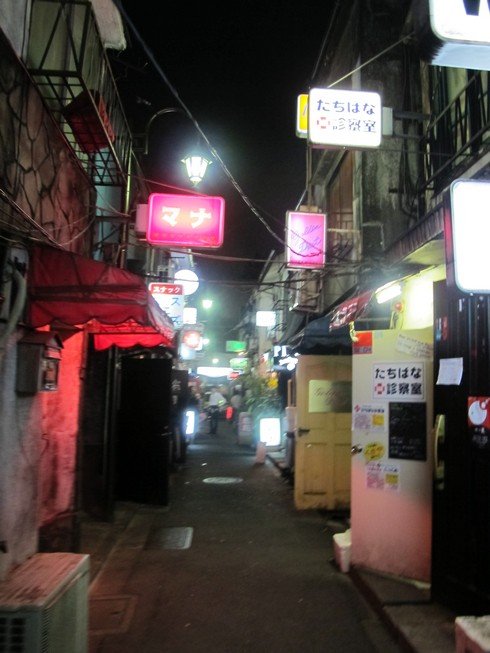
    Bigri Bar is located in Golden Gai, the neighborhood of tiny bars I mentioned previously. 

    Street Golden Gai Tokyo Japan_tn

    You enter in a set of incredibly steep stairs into a room that looks like a kitchen in a studio apartment.

    Steep stairs Bigri Bar Golden Gai Tokyo Japan_tn

    I think this is what is called a "mama-san bar" as the owner is an older lady who serves drinks and also cooks you (not exactly good-looking) food from behind the same bar counter. 

    Coaster Bigri Bar Golden Gai Tokyo Japan_tn
    (Hand-knit cocktail coasters. Adorable.)

    Cooking Bigri Bar Golden Gai Tokyo Japan_tn

    Track Bar is an uber-hipster bar that wasn't filled with hipsters at the time we visited. They have a wall of 33" records and a DJ spinning them. There were mason jars full of help-yourself snacks. But it still operated like a cocktail bar – you ask when you walk in the door if there is enough seating before entering. 

    Bar track  ebisu tokyo3_tn

    Bar snacks bar track  ebisu tokyo_tn

    It seems like a whisky bar but I saw cocktails being made as well. I ordered a highball, and their house style at this bar is to serve it in a frosted glass without ice. 

    Highball without ice bar track  ebisu tokyo_tn