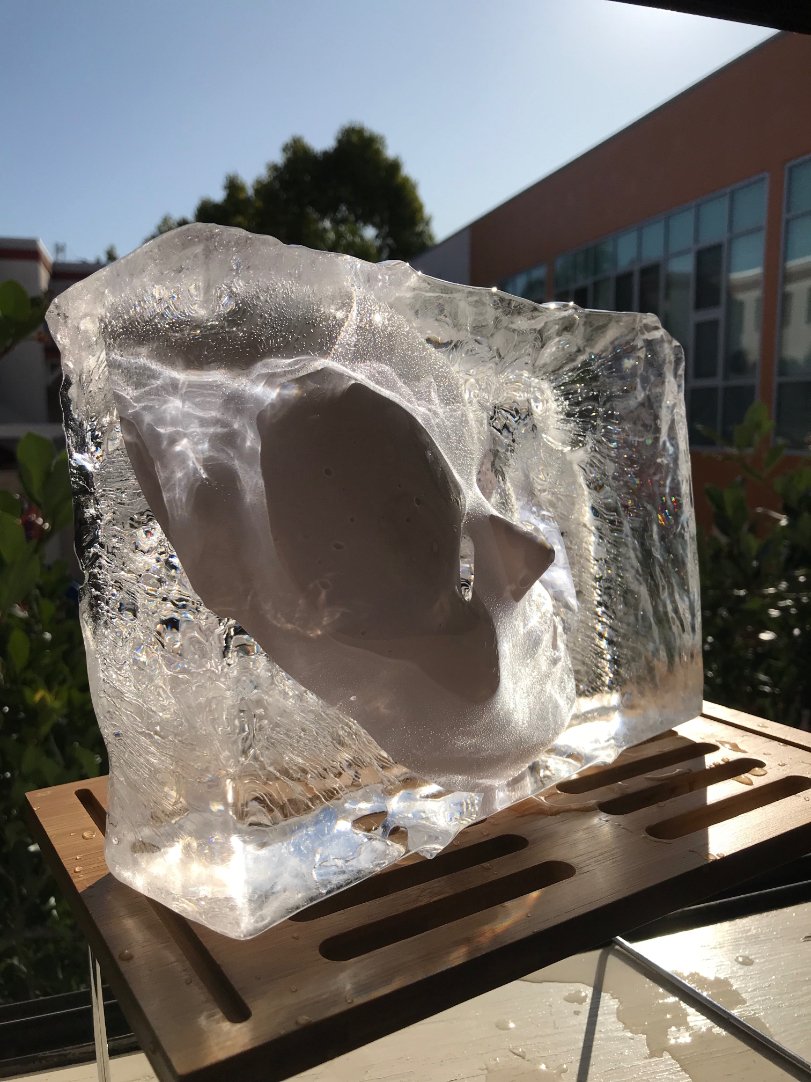
Author: Camper English

  • More Eyeball Ice Balls and Ice Fangs for Halloween

    I made more fun ice for Halloween. Recently I put some bouncy eyeballs into ice balls and froze a Halloween mask into an ice block.

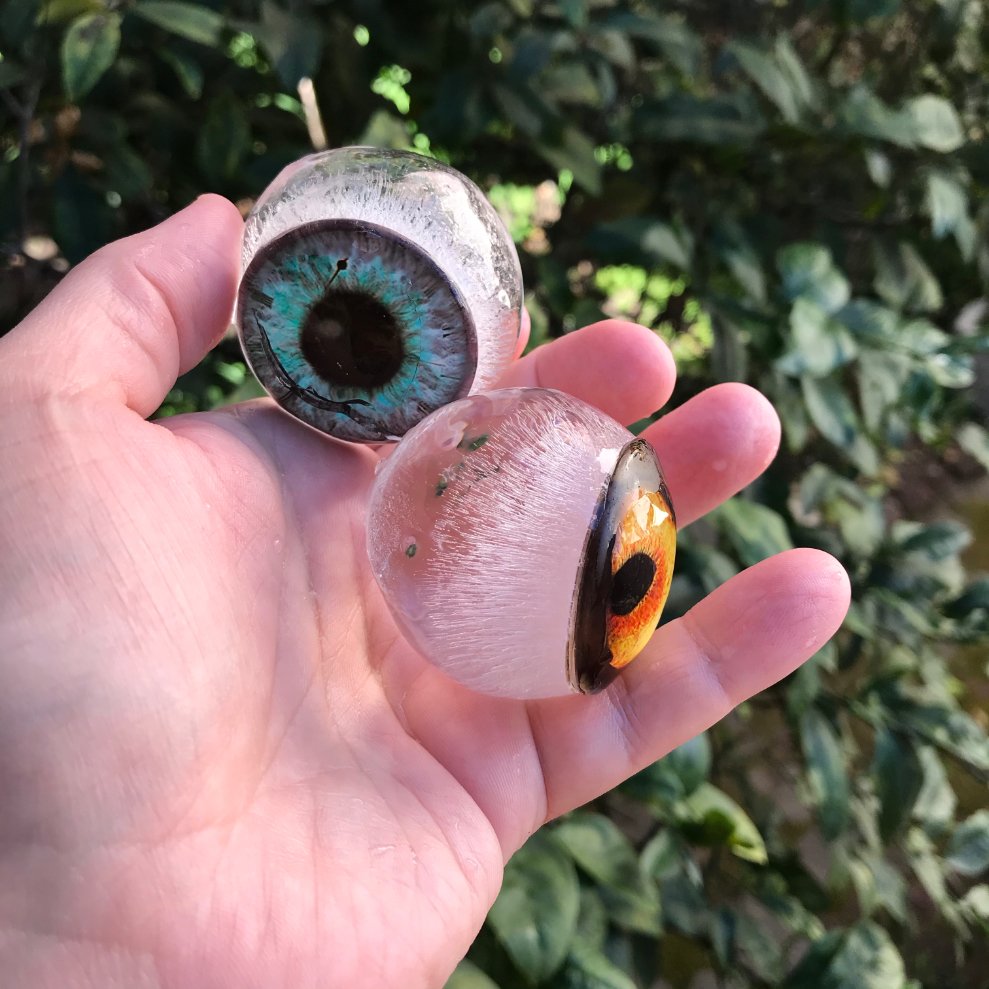
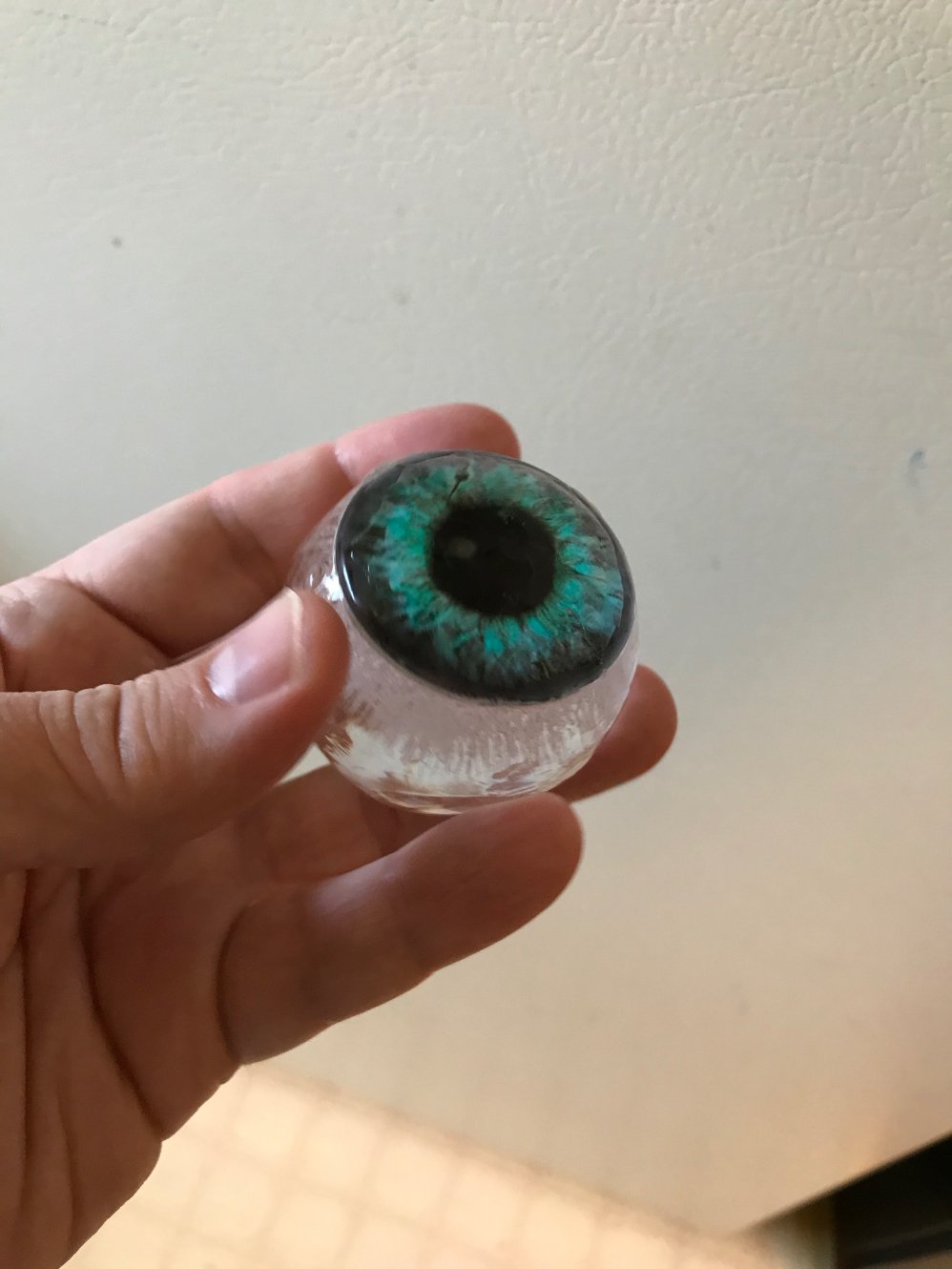
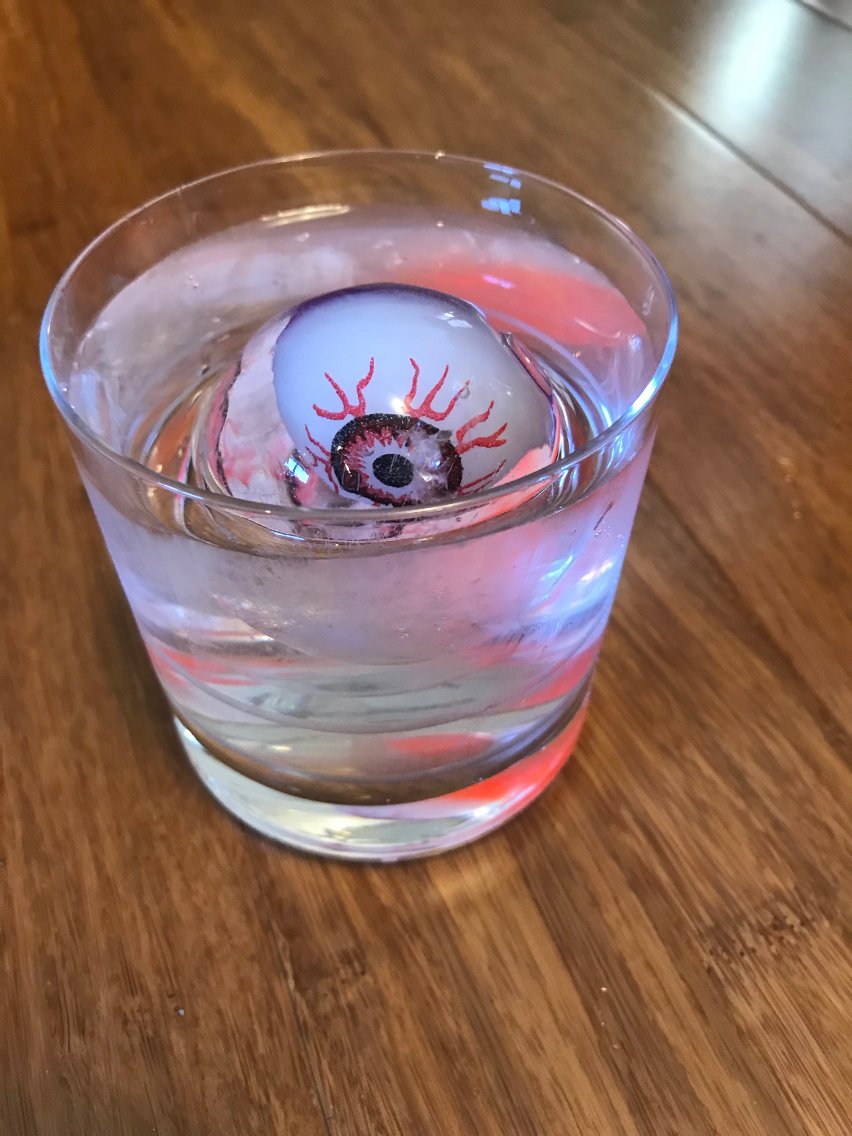
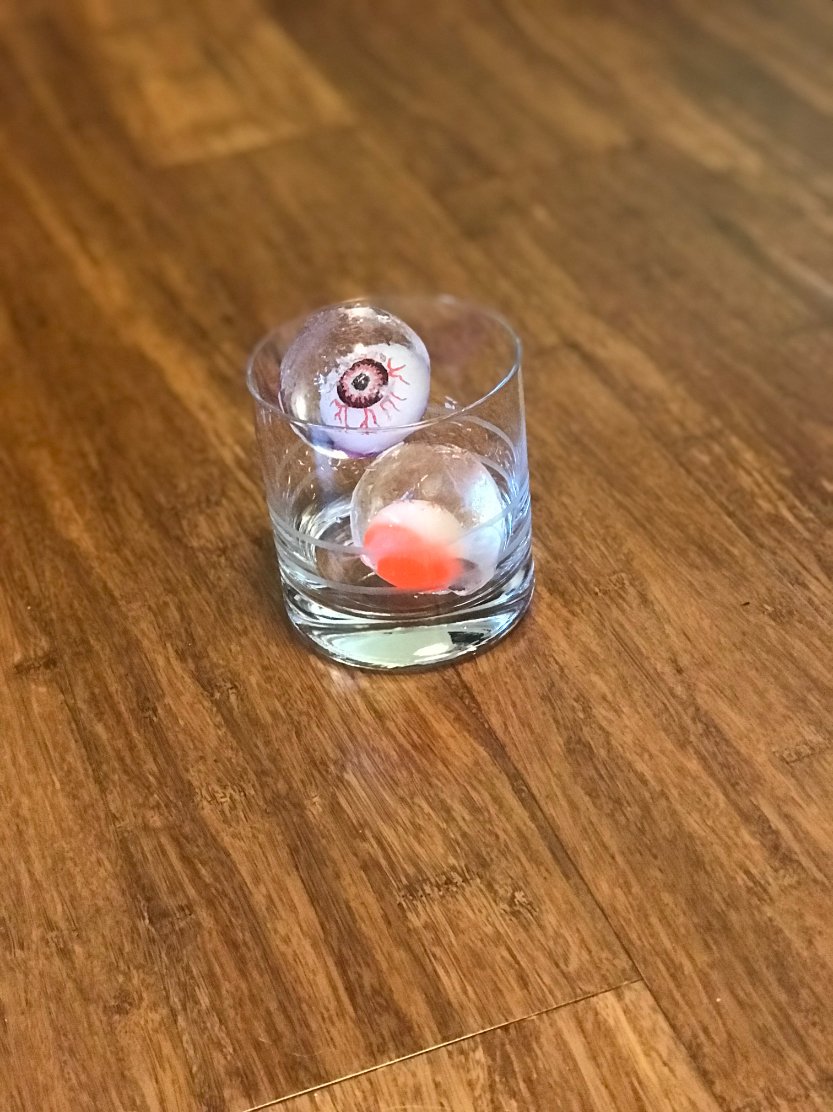
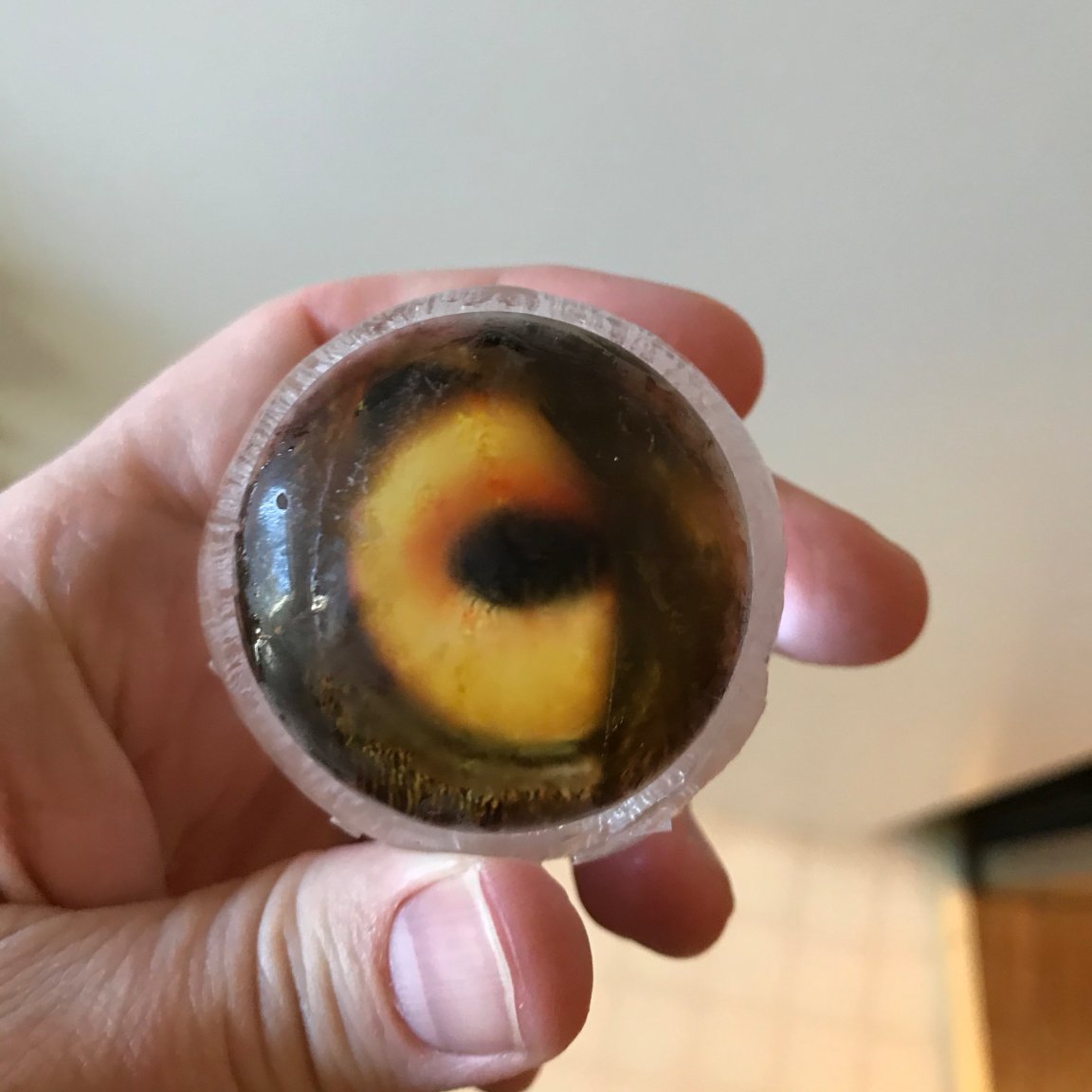
    This time I put some big glass eyes into ice balls and put vampire fangs into other ice balls. The glass eyes were an idea from bartender Ramon Pinon – they are available on Amazon at this link. I got these super large ones that fit into the ice ball mold that I use atop the Thermos Funtainer similarly to how I made these bugs and spider ice balls last year

    IMG_6623
    IMG_6623
    IMG_6623


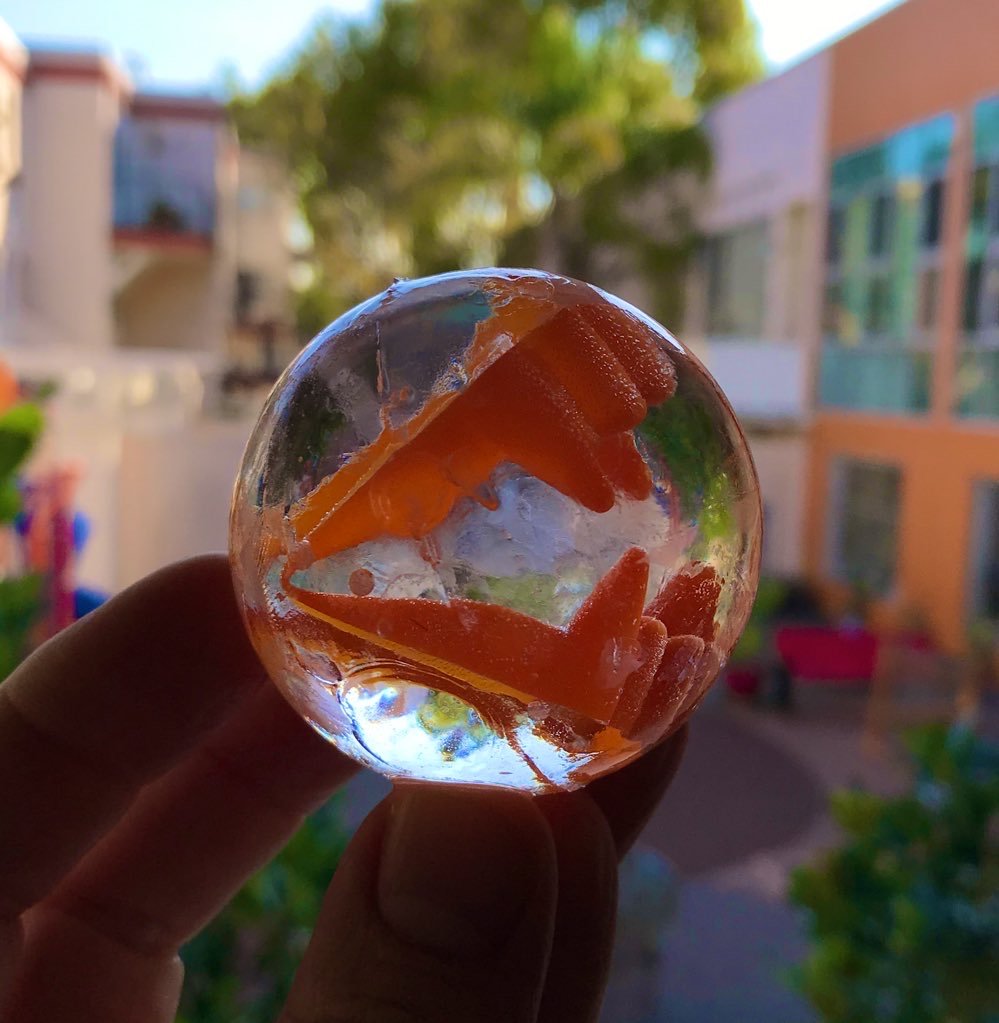
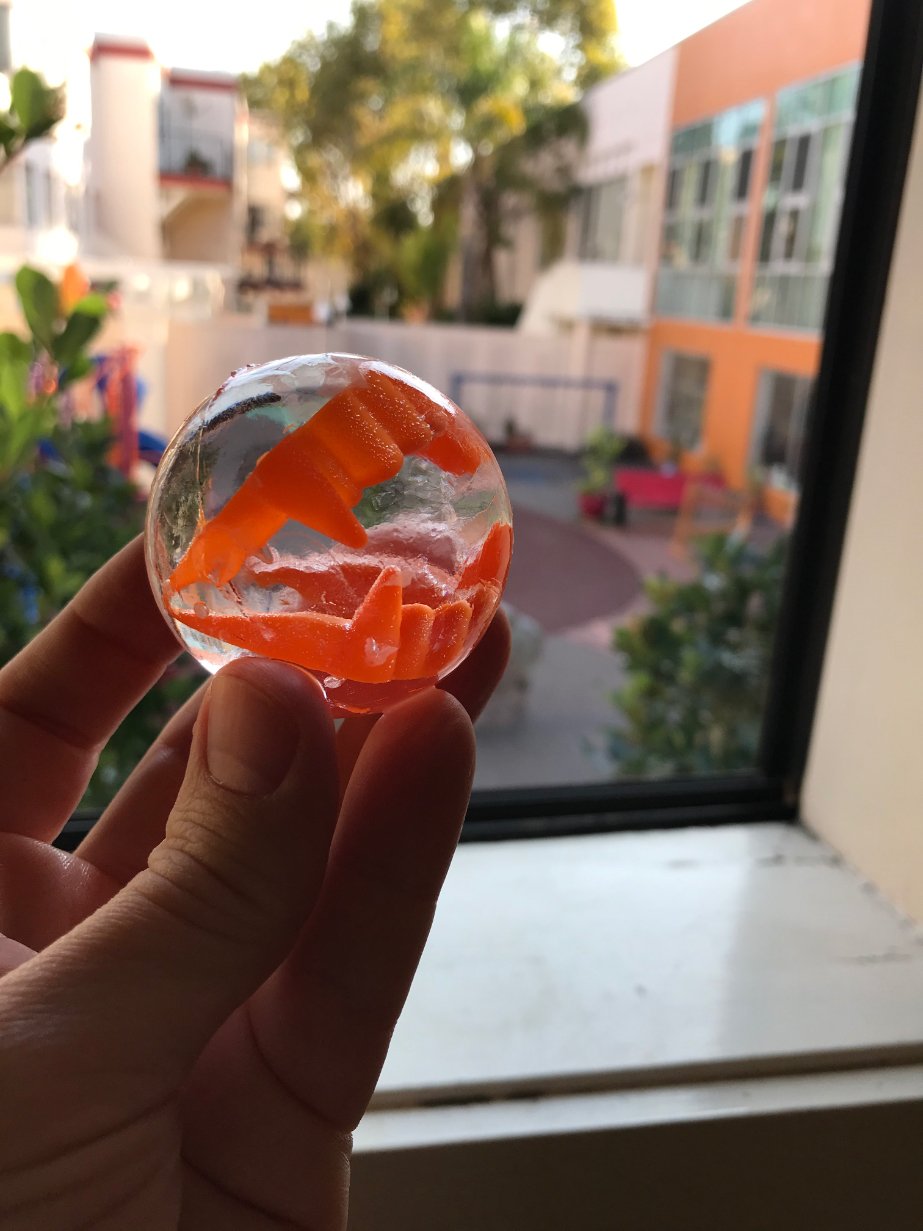
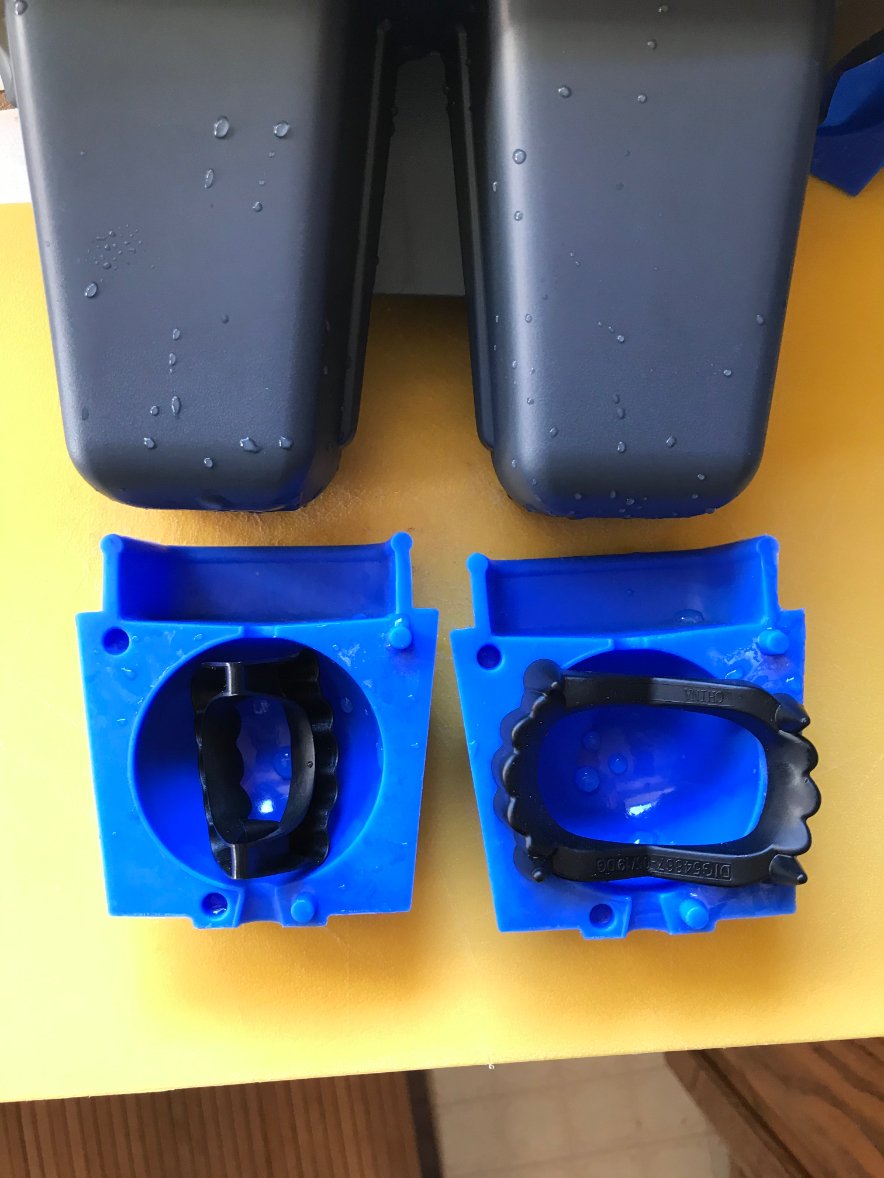
    For the vampire fangs, I found colored ones at CVS and put them into the IceOlogy ice ball trays. The trick here is to put them in sideways so that air pockets don't form underneath them. 


    IMG-6715
    IMG-6715
    IMG-6715


    Anyway, good times, enjoy. 


  • A Fascinating Interview with Remy Martin Cognac Cellarmaster Baptiste Loiseau

    I was recently in Calistoga to meet with Baptiste Loiseau, cellarmaster for Remy Cognac. We had a quick interview early in the day but I wanted more info, so I ended up monopolizing his time after dinner. We spoke for a very long time (I promised it was "quick questions" but I think it went an hour) and I learned so, so much!

    (However, please note that I wrote up this post working from my brief notes, rather than from a transcript, and it has not been fact-checked. )

    The trip was to introduce the new permanent expression to the Remy line, Tercet. In this post I'll talk about the points of uniqueness of Tercet as well as Remy Martin cognac in general.

    Tercent sits in the range as such:

    • VSOP  $46
    • 1738  $60 
    • Tercet $110 
    • XO $200

    Plus the older/fancy bottlings. Tercet is aged to the legal VSOP level (4 years) but is closer in average age to an XO, according to Loiseau.
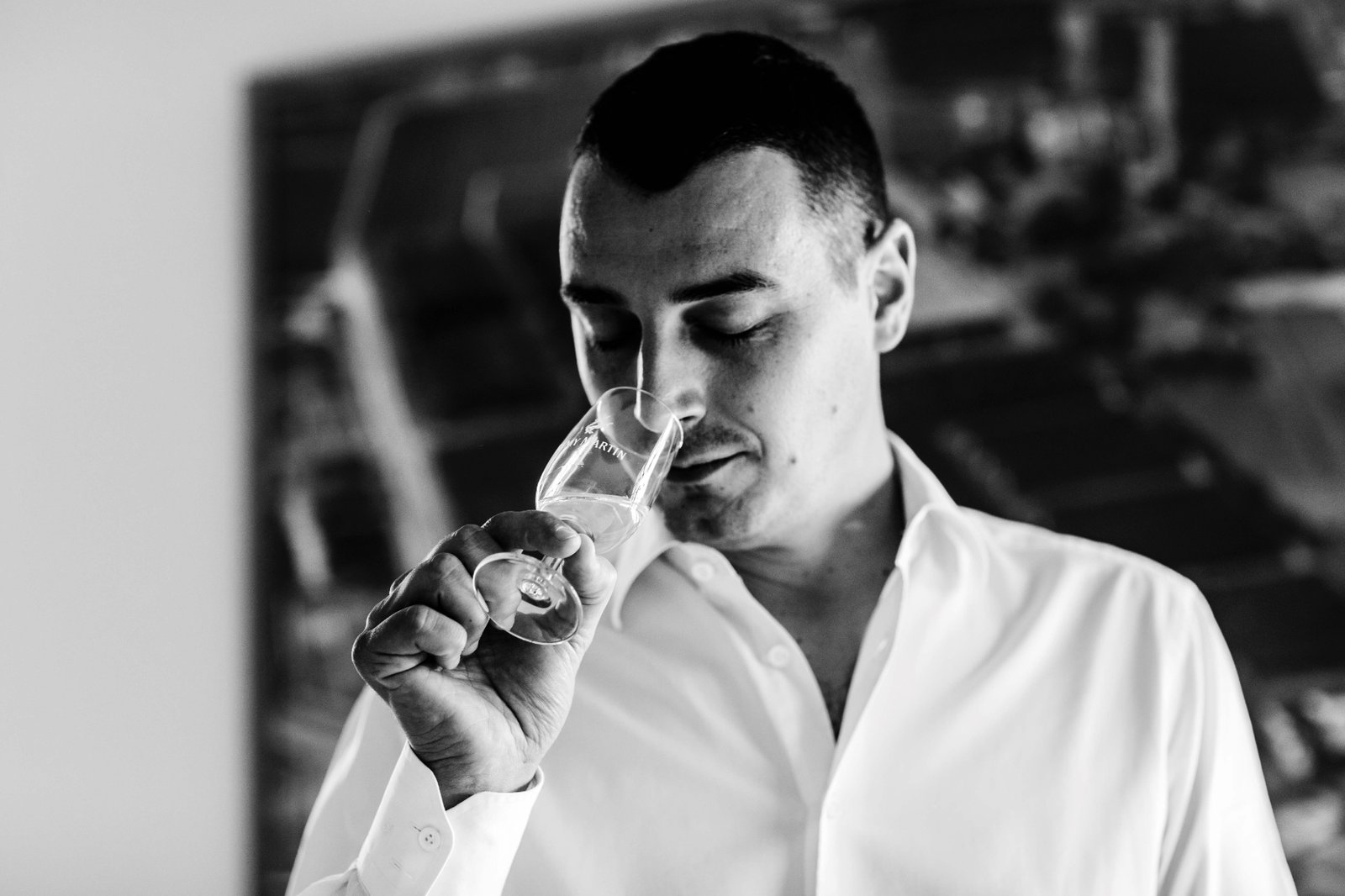
    Tercet 14

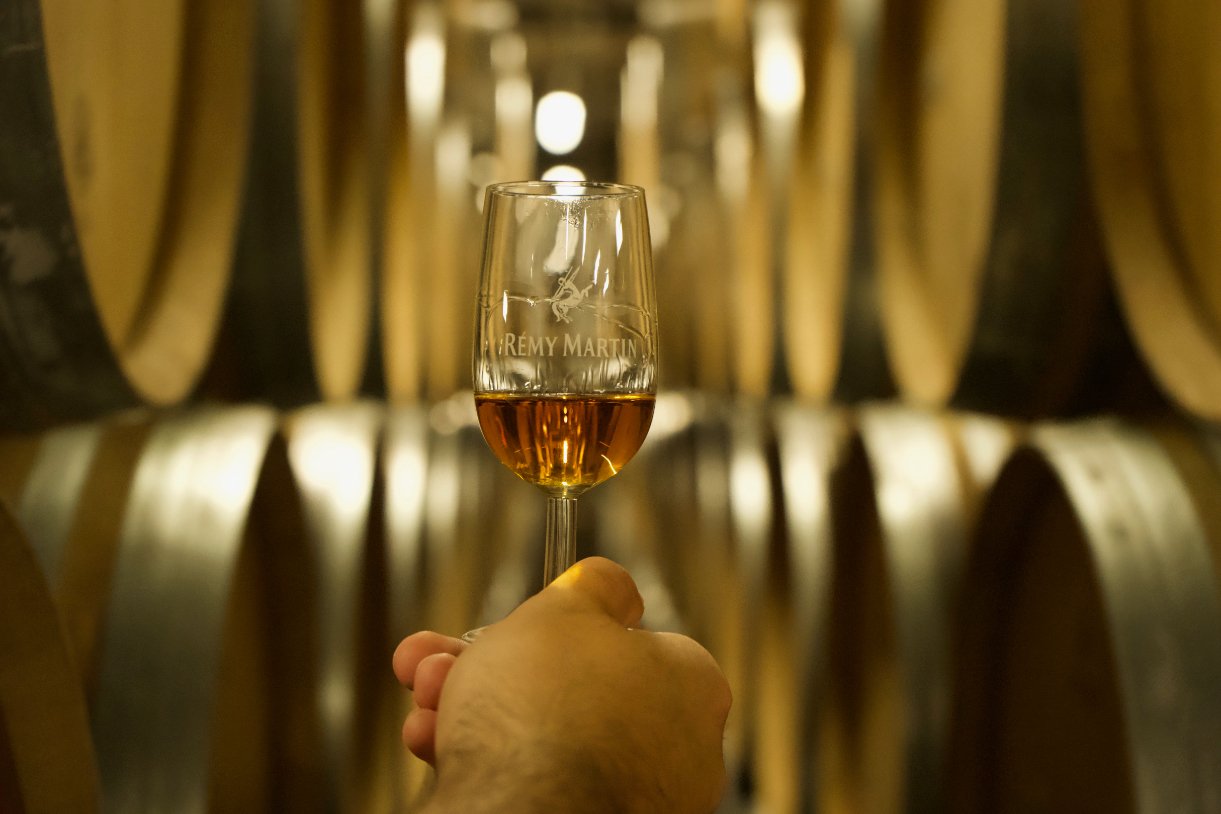
    Baptiste Loiseau. All images provided by Remy Martin.

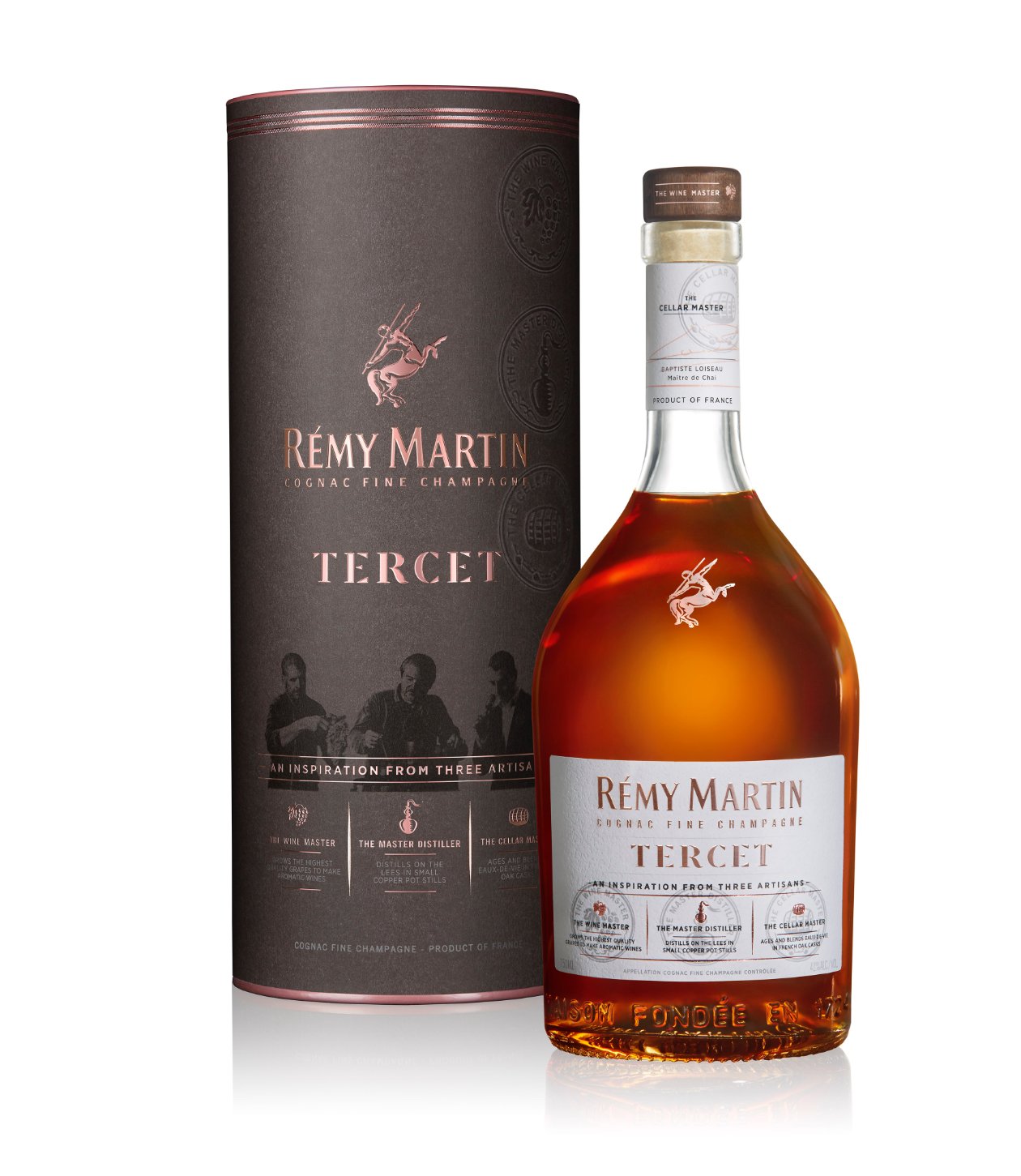
    The marketing emphasizes "three artisans," – the wine master (grower), the master distiller, and the cellar master. The flavor profile notes emphasize it being "fruit-forward," "fresh," and with a "long and complex finish." And to me, the bottle evokes earthiness/rusticness/artisanship.   

    As always, I'm interested in why a brand story and flavor profile are described a certain way.  In the process of asking what is unique about Tercet and why it's positioned in this way I learned tons of information. 
    Remy Martin Tercet

    The Why of Tercet

    The brand found that many drinkers didn't know where cognac comes from or that it's made from grapes, even many fans and regular drinkers of cognac. (This is the case for many of the world's strongest spirit brands- people who drink Patron don't know it's tequila, people who drink Jameson don't know it's whiskey.)

    Loiseau said, and this is the only direct quote I have in this whole huge write-up, "People are enjoying a brand or a category, but if we want them to choose cognac in future years [if/when they become more educated drinkers] we have to emphasize what makes it special."

    To accomplish this goal, Tercet emphasizes grapiness/freshness in flavor, and the three producers on the label. And by emphasizing the producers on the label, this is a visual key to how it's made: it's made from Wine that is Distilled and Aged. 

    As to how Tercet is positioned in the line, Loiseau said that the 1738 blend more emphasizes woody notes while Tercet emphasizes the fruit. 

    Tercet is bottled at 42% ABV, which is higher than nearly all cognac. I asked Loiseau if the marketing department had come to him with a brief of needs list of a higher proof, but he said that no – he approached marketing with his desired proof for Tercet and they liked it as a point of differentiation. 
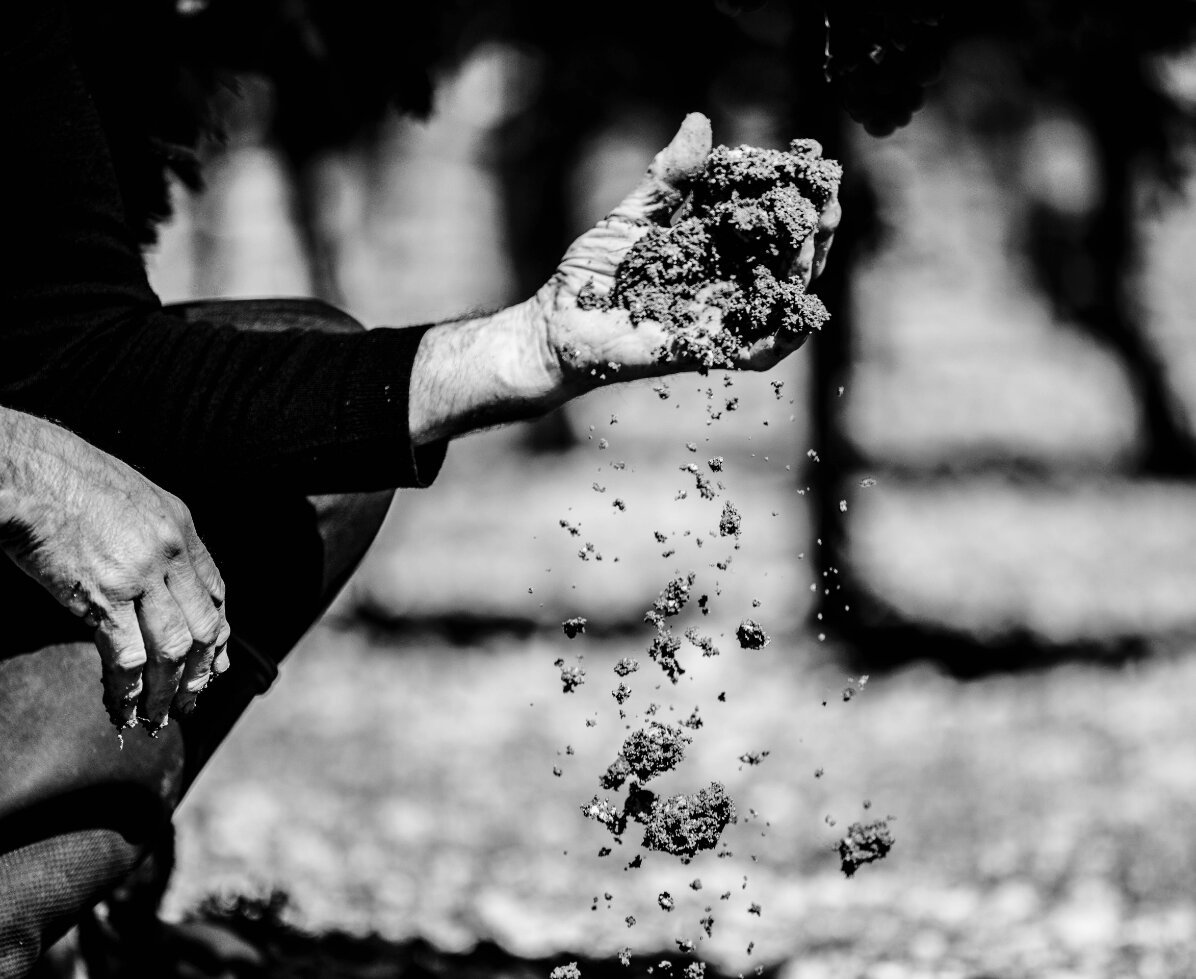
    Tercet 18


    Winemaking

    Loiseau's history is as an agronomist and oenologist – in other words, an expert in winemaking. The marketing copy seems to imply that Loiseau  discovered wines from the artisan winemaker Francis Nadeau that were super interesting and he put some aside for special experimentation, but the reality is a different (not a huge surprise there, but much easier to explain). Loiseau estimated that Nadeau's distillates make up just about 1% of the liquid Remy buys overall. 

    On the other hand, Nadeau sells about 90 percent of his eau de vie to Remy, and his father and grandfather sold to the house also. So the company and the winegrower have a close and great working relationship, as well as an expertise in winemaking. 

    The new blend Tercet doesn't have a distinctly large amount of wine from Nadeau's vineyards – his emphasis on the packaging/marketing of the new release is a nod to his involvement of growing/pressing/fermenting/distilling the specific style of grape/wine used in the Tercet blend. 

    Sidebar: For the wines purchased by Remy Martin, the winegrowers distill at their own properties. Remy only distills wine from their own wineries. 

    Loiseau said that when he was working on this project, previous cellar master Pierrette Trichet expressed concern that when the distillate aged and evolved, it might not match the Remy Martin house style. But it all worked out: They followed this eau de vie along as it aged until they felt it was ready to take the spotlight. Then they had to make more of it. 

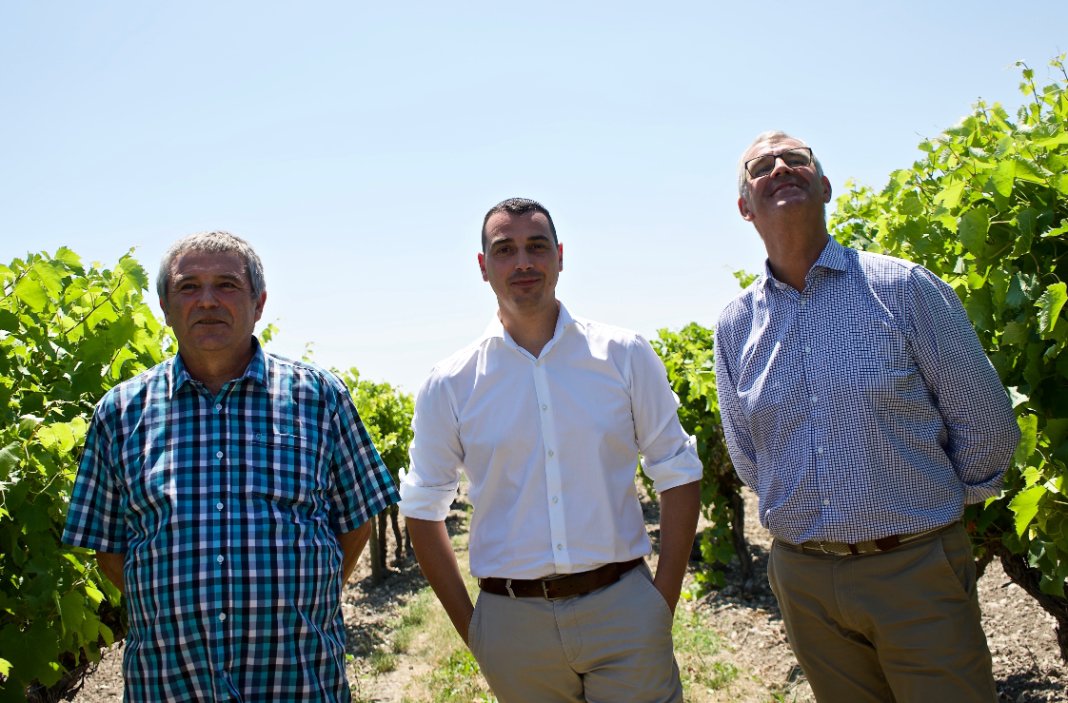
    Remy buys wine from about 800 winegrowers. They grow the grapes, press the juice, ferment, and distill them. They do this in the style of the cognac house they will sell to – for example some cognac brands distill on the lees (yeast and grape skin bits post-fermentation) and others do not. So going into the harvest, the winegrowers are given directions from the brands they plan to sell to about how they should make their distillates. Loiseau mentioned an "annual winemakers meeting" which sounds exciting to me, but you know, I'm special. 

    Many growers sell to multiple brands, so they are making different styles of eau de vie in one facility. (Fascinating! My idea of how this works was that after distillation various brands come and just pick and choose what they want from a bunch of vats of eau de vie, but rather it's "here's your order, make sure it's to your specifications, and then pay us!") 

    So Loiseau and his team must talk to all the growers each year and give them directives – not just specific to their house style, but specific to the wine produced at each vineyard: his team will taste the wines made at a vineyard and tell the local distiller to remove X amount of heads when distilling. A winemaker with a very good wine may be told to keep in a larger part of the heads, while a bad batch of wine will result in being advised to keep a much smaller percentage of the heart and discard more of the heads. Loiseau says that only more skilled winemakers can achieve the style of wine they're looking for (I think he was saying the type of wine specific to Tercet at this point in the conversation), so not everyone is advised to distill their wine the same way. 

    Only after newly distilled eau de vie is produced do people from Remy evaluate it and choose to buy or reject the eau de vie, so the the winemakers don't actually have to take this advice on how to make it. Remy pays more for distillate that has a potential for longer aging, so I wondered if winemaker/distillers try to include more of the heads than they should. Then the winemaker would have more distillate to sell if they keep in more of the liquid, but Loiseau essentially dismissed this as something that doesn't really happen. They work with winemakers every year to ensure they know what the parameters are going in, so why risk it? 
    Rémy Martin Tercet


    Aging

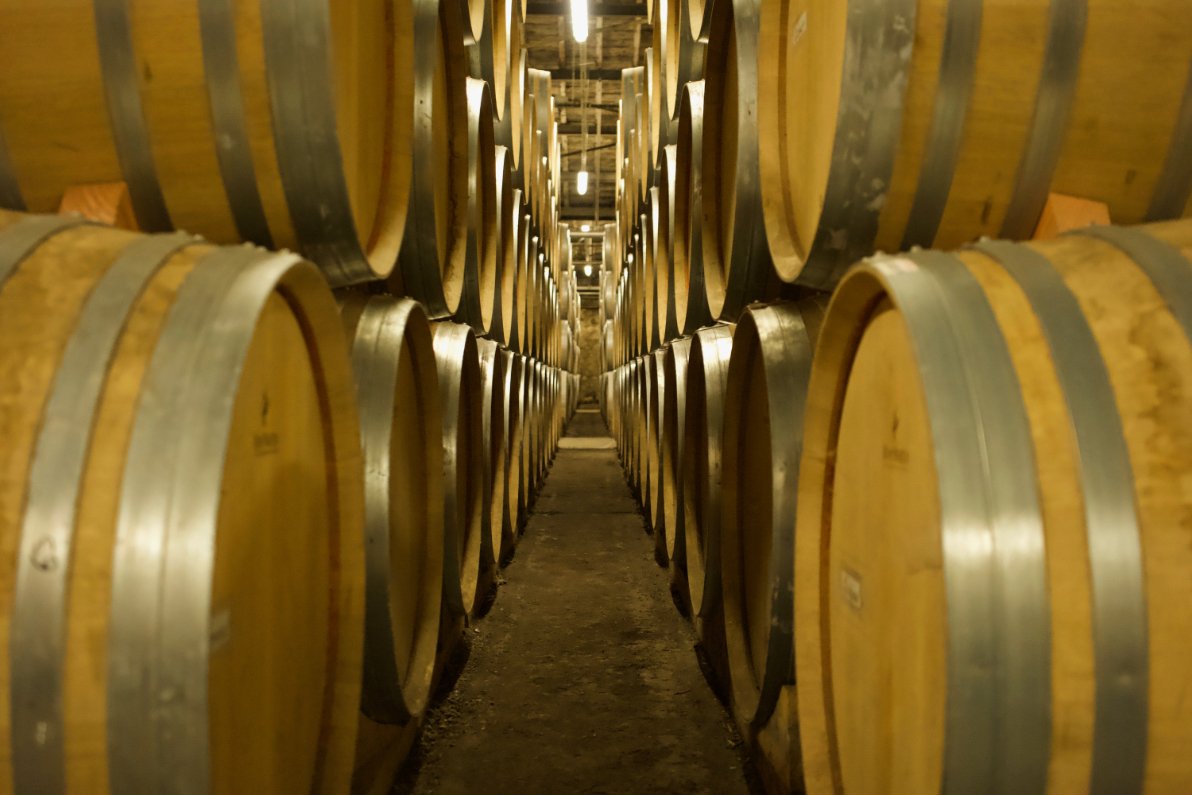
    Remy has two different types of contracts, for aging either at the winemaker's site, or aging in Remy's cellars. In either case, it's aged in Remy-purchased casks. Loiseau says the reason for not aging it all themselves isn't necessarily space issues, but for diversity of cellars and resulting flavor. 

    Cognac is aged in a combination of dry and wet cellars, but Loiseau says that the balance between cellars is not a point of differentiation for Tercet anyway. The barrels they use for Tercet are the point – they're older and give less wood impact in order to let the fruit shine through. 
    Rémy Martin Tercet 21
    Rémy Martin Tercet 21


    Make It Rich

    Tercet is also meant to have a richness to it, coming from distilling on the lees that bring more fatty acids to the final product. However when you distill on the lees, you have to pay extra careful attention to saponification  – when you dilute a spirit too quickly it can make unwanted soapy flavors. Loiseau says that for cognacs not distilled on the lees you can do a faster dilution scheme compared with the stuff distilled on the lees. 

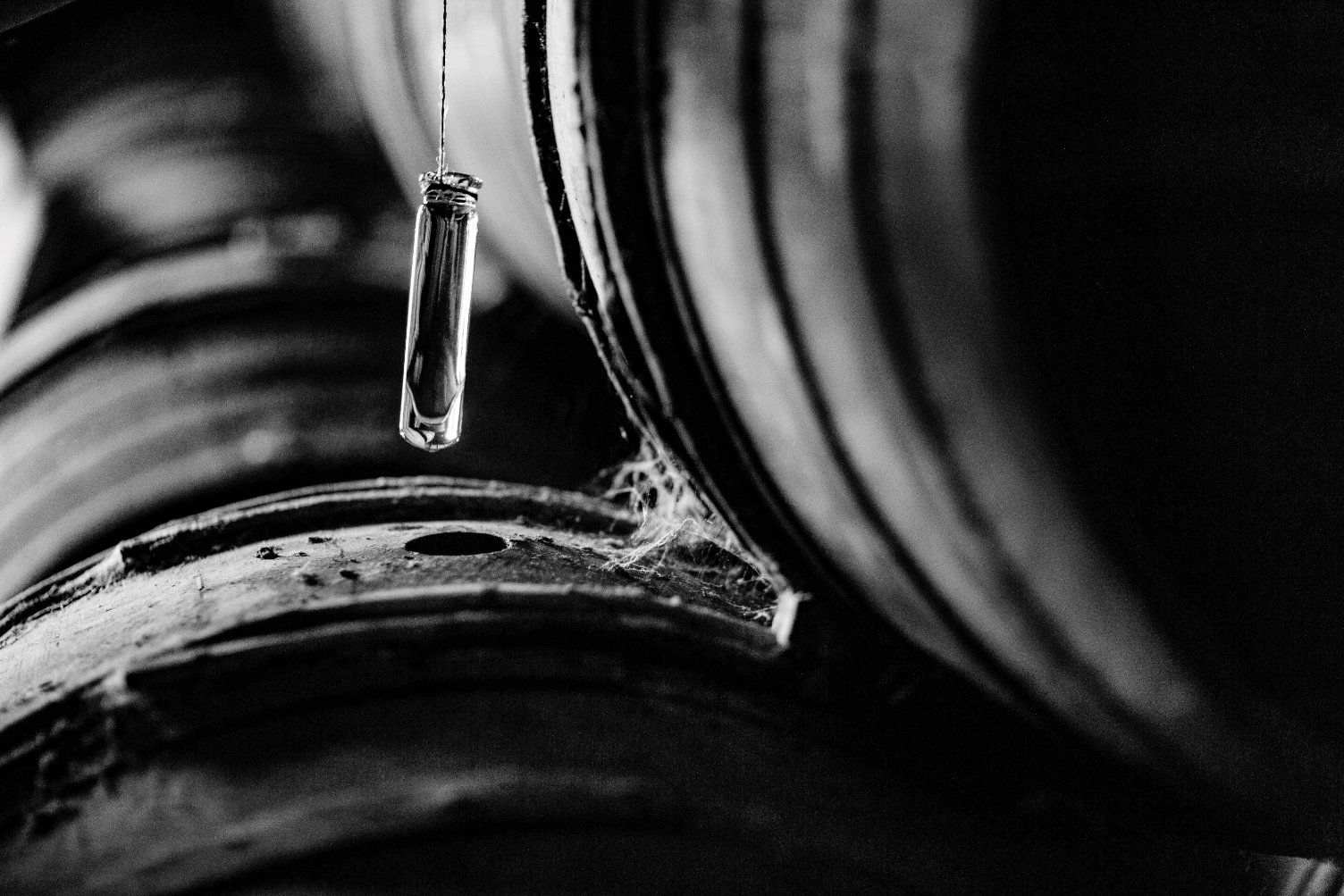
    Another thing I learned is that you don't proof in the barrel directly due to the fear of saponification – those molecules (don't recall what type they are) tend to stick to the barrel and particularly when you reuse barrels the next thing to age in it is impacted by soapy flavors sticking around. 

    Even within a line of products from one maker, there are different dilution rates – unlike in some spirits, producers do not simply let a cognac age then add enough water to bottling proof. The richer products aging for longer get a slower rate of dilution: They add some water before putting the fresh distillate into barrels, then more at certain lengths of aging, then slightly adjust the proof before bottling. 

    Loiseau said that this gentler dilution rate also impacts barrel proof: To cognacs that are destined for younger products, you add water before putting them into the barrel the first time. This meets the ideal or target entry level proof found to best in cognac (overall in the industry – much like in bourbon, barrel entry proof was studied and a common standard was determined). Remy VSOP and 1738 go into the barrel at this standard proof. 

    So, for future fattier Tercet, less water is added at the outset, resulting in a higher barrel proof. Higher barrel proofs (higher than the ideal standard) do not, as you'd assume is the case, mean more wood extraction from the barrel, but less. So this means that there will be less wood flavor impact on this blend. And this helps ensure that the blend has the less-wood-more-fruit flavor they're going for. 

    Loiseau used the word "gentle" to describe how Tercet is produced to reach the desired flavor profile and said they use a gentleness in other ways too: There's a gentle pressing of the grapes to get a clearer juice/wine, a slower fermentation (temperature controlled) to keep more delicate aromas in the wine, a slower speed of distillation (longer warm-up), and slower water reduction scheme. So we can see that a cognac maker can identify the end product that they want to make and adjust many factors that will steer it toward that end – in the fermentation, distillation, aging, and dilution. 

    Dear Reader: This was so much new, exciting, revealing, and mind-blowing information – and most of it explained to me over the course of a single hour – that I was jacked up on science at 11pm and couldn't get to sleep for hours, despite all the cognac.  Of course, on rereading this post I could add another 20 questions about how Tercet's wine, distilling, and aging schemes differ from those of 1738 in particular, but that will have to wait for another opportunity I hope to get one day. 
    Tercet 17
    Tercet 17


    The Flavor of Tercet and Why

    As mentioned above, Tercet is meant to emphasize fruitiness, freshness, and a long finish.

    Distilling on the lees is meant to give the cognac body – softness and also a nuttiness, in addition to a potential for longer aging. 

    The grape and fruity flavors are emphasized by gentle handling of the liquid to ensure more of the raw material notes stay in the liquid rather than become covered up or evaporate off. 

    The fresh: notes Loiseau is talking about are actually tropical/exotic fruit notes like banana, pineapple, mango, and lychee. 

    The higher proof of 42 percent ABV helps these notes pop out first – on nosing they quickly pop. And then it's time for that long finish – tons of Christmas cake, ginger, nutty, nutmeg and spice notes come out. These come in part from the fatty acids there from distilling on the lees. Loiseau noted that the base notes are present in Tercet while the woody, tannic notes of the barrel are not emphasized in the blend. 

    This long and spicy finish comes from using older cognac in the blend that has had time to develop this complexity and a rancio notes. When we added ice to the cognac (which I was hesitant to do) the extra 2% ABV helped it stand up better to dilution, the creamy body remained in the brandy in the glass, and leathery sort of notes and that ginger dominated. It had the notes of many peoples' ideal Old Fashioned. 
    Tercet 1


    Thanks to Remy Martin and Baptiste Loiseau for an awesome opportunity to geek out on cognac!
     

  • Grains of Peril: The Frivolous Florida Gin Lawsuit and Adulterant Analysis by Lance Winters

    You may have heard that a lawyer in Miami is suing Bombay Sapphire gin because it includes grains of paradise in the recipe

    DownloadThe suit is due to a 150 year old law meant to prevent potentially dangerous adulteration of alcoholic beverages. Also included in the law were several other "adulterants." As posted to the HoochLaw blog, the law reads

    Whoever adulterates, for the purpose of sale, any liquor, used or intended for drink, with cocculus indicus, vitriol, grains of paradise, opium, alum, capsicum, copperas, laurel water, logwood, brazil wood, cochineal, sugar of lead, or any other substance which is poisonous or injurious to health, and whoever knowingly sells any liquor so adulterated, shall be guilty of a felony of the third degree.

    When I saw this, I realized cochineal, a common red coloring derived from scale insects, would also render many spirits illegal in Florida if grains of paradise are.

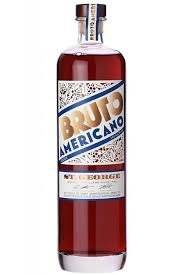
    One of those spirits is St. George Spirits' Bruto Americano, an Italian-inspired aperitif liqueur colored with cochineal.

    Lance Winters, President & Master Distiller for St. George Spirits, sent me an email with his (amazing!) analysis of the situation. 

    Winters wrote:

    To adulterate something is to corrupt it, often in an effort to perpetrate fraud by creating a counterfeit of something. In 1860 when this law was written, there were small rectifiers and liquor compounders across the country who would often "create" one spirit out of another.

    For example, a "French brandy" could be made from a mixture of high proof grain spirits, Cognac oil and coloring. Another recipe in Lacour advises on making Cognac: "One barrel of whiskey, say forty gallons, add tincture of grains of paradise, one quart; powdered catechu, three ounces; mucilage of slippery elm bark, two thirds of a pint; oil of lemon, eighty drops; well rubbed in an ounce of dry white or brown sugar, and added to the liquor; then add six ounces of acetic ether".

    As these recipes show, ingredients like those listed in the Florida law were often used to create imitation versions of spirits, hence the use of the term adulteration. Grains of paradise in particular were used for hundreds of years to make a spirit seem stronger than it actually was, allowing an unscrupulous compounder to label a spirit with a higher alcohol content than was actually in the bottle. Capsicum, also listed in the regulation, was often used to give the false sensation of a higher alcohol content.

    The statement that the use of grains of paradise was "unconscionable" relates to [the lawyer's] prior claim of the spice to induce abortion. Grains of paradise are not an abortifacient. Their intense flavor was often used to mask the taste of abortifacients which were administered without the knowledge of the pregnant woman.

    Cocktail Geeks will know that in the back of the original Jerry Thomas' Bar-Tenders Guide was the Guide to Manufacture of Cordials, Liqueurs, etc., which had similar recipes for adulterating neutral spirit to make gin, whiskey, etc.. 

    Lance Winters then went on to describe what the other illegal ingredients were used for in adulteration: 

    Cocculus indicus was added to beer to promote a sense of giddiness. It's now commonly used as a homeopathic remedy for motion induced nausea.

    Vitriol is good old sulfuric acid, used for the "beading" effect in liquor in an effort to further falsify alcohol content. If it's so dangerous, why is there so much food grade sulfuric acid available?

    Grains of paradise were also known as Guinea pepper. In "Lacour, on the Manufacture of Liquor" (1853), an old how-to for both genuine purveyors and shysters, the author states that "Of the different varieties of pepper, none answers for the purpose of giving a false strength to liquors, except Guinea pepper; a tincture prepared from this variety has a taste analogous to alcohol, whereas the taste from the other varieties remains on the palate a considerable length of time after being swallowed."

    Alum was used to intentionally impart roughness to wines, again (I assume) to give the sense of a higher alcohol content. We most often use it in pickles.

    Capsicum was another tool to falsify alcohol content. It's also food. Packed with vitamin C. Say goodbye to pepper flavored vodkas in Florida.

    Copperas is an Old-Timey name for iron II sulfate. Probably used to color spirits that were supposed to have some sort of herb content or to stabilize same. Now found in supplements for people with iron deficiencies.

    Laurel water was distilled from the leaves of the cherry laurel and consisted chiefly of prussic acid. Probably used to give almond notes to artificial kirsch. Totally poisonous. Not going to argue that one.

    Logwood is a dye, brown, red and purple. Not sure about its toxicity, but was probably used to give the impression of barrel aging.

    Brazil wood would have been used in the same way.

    Cochineal, same use, currently used to color foods and cosmetics.

    Sugar of lead? C'mon, that's just silly. And toxic. And already prohibited.


    Lacour
    Lacour
    Lacour

    Thanks to Lance Winters for his analysis/rant in the form of detailed information!
    As is probably obvious to all but the lawyer in question, the spirit of the law seems to be to prevent using these ingredients to fool customers into purchasing counterfeit and potentially dangerous alcohol. Most of the ingredients are Generally Recognized as Safe by the US government, so they're permitted in the standard production of food and beverages. 


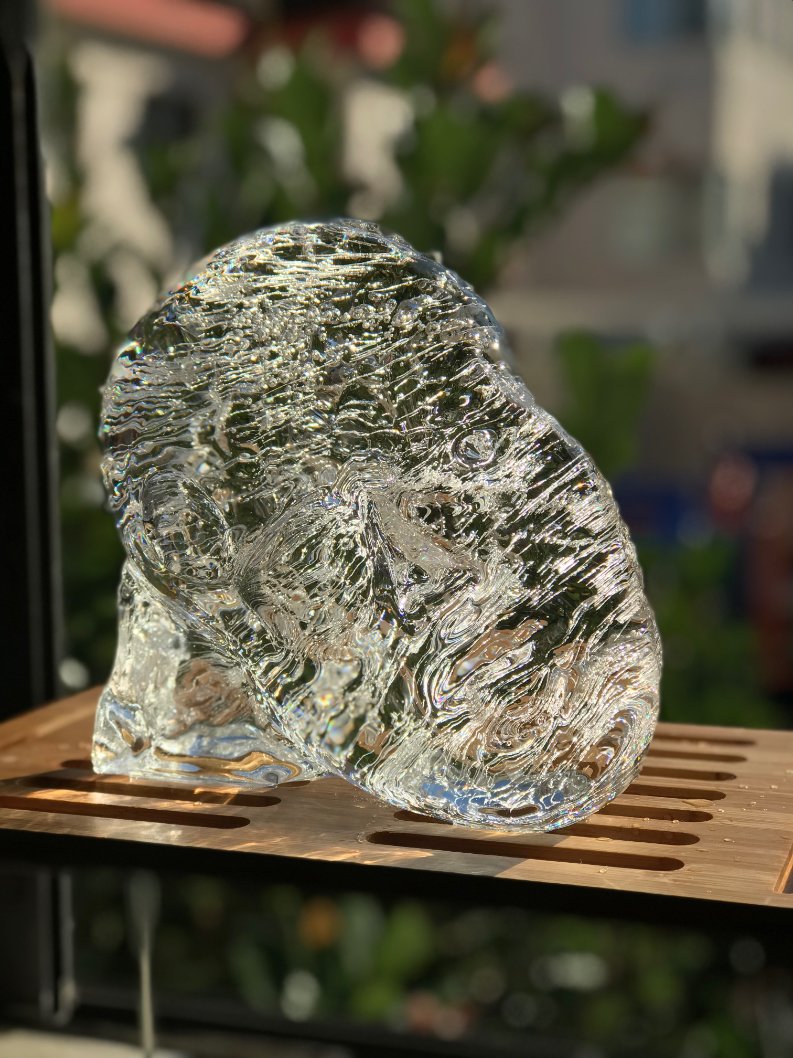
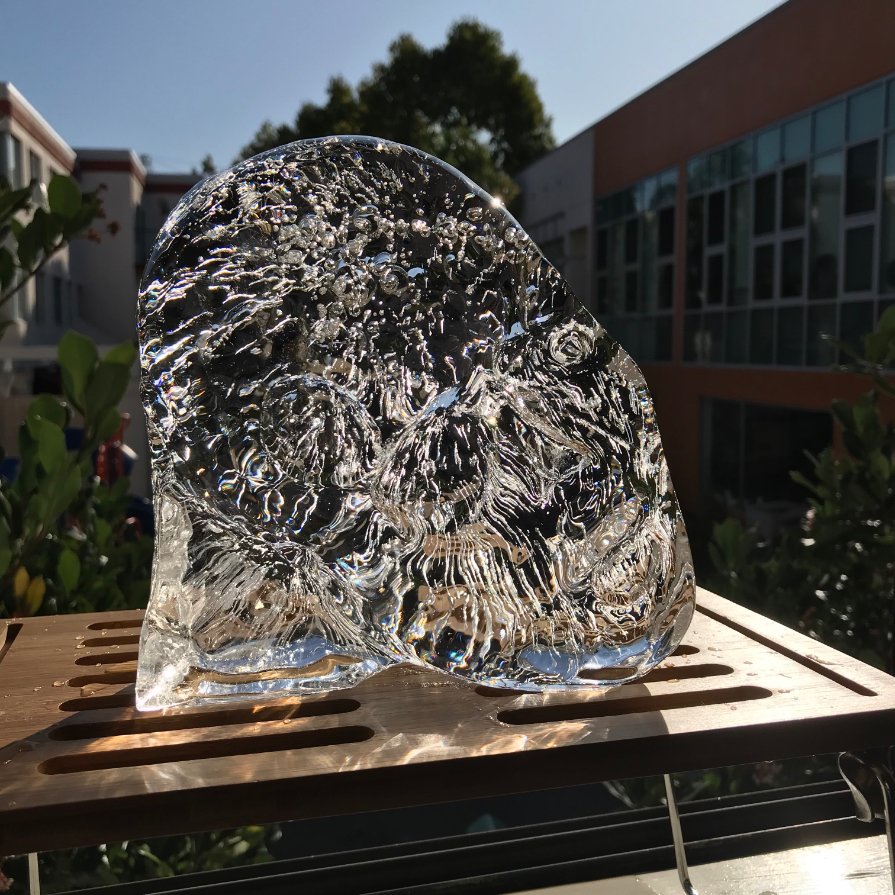
  • Creepy Halloween Mask Frozen In Ice Blocks

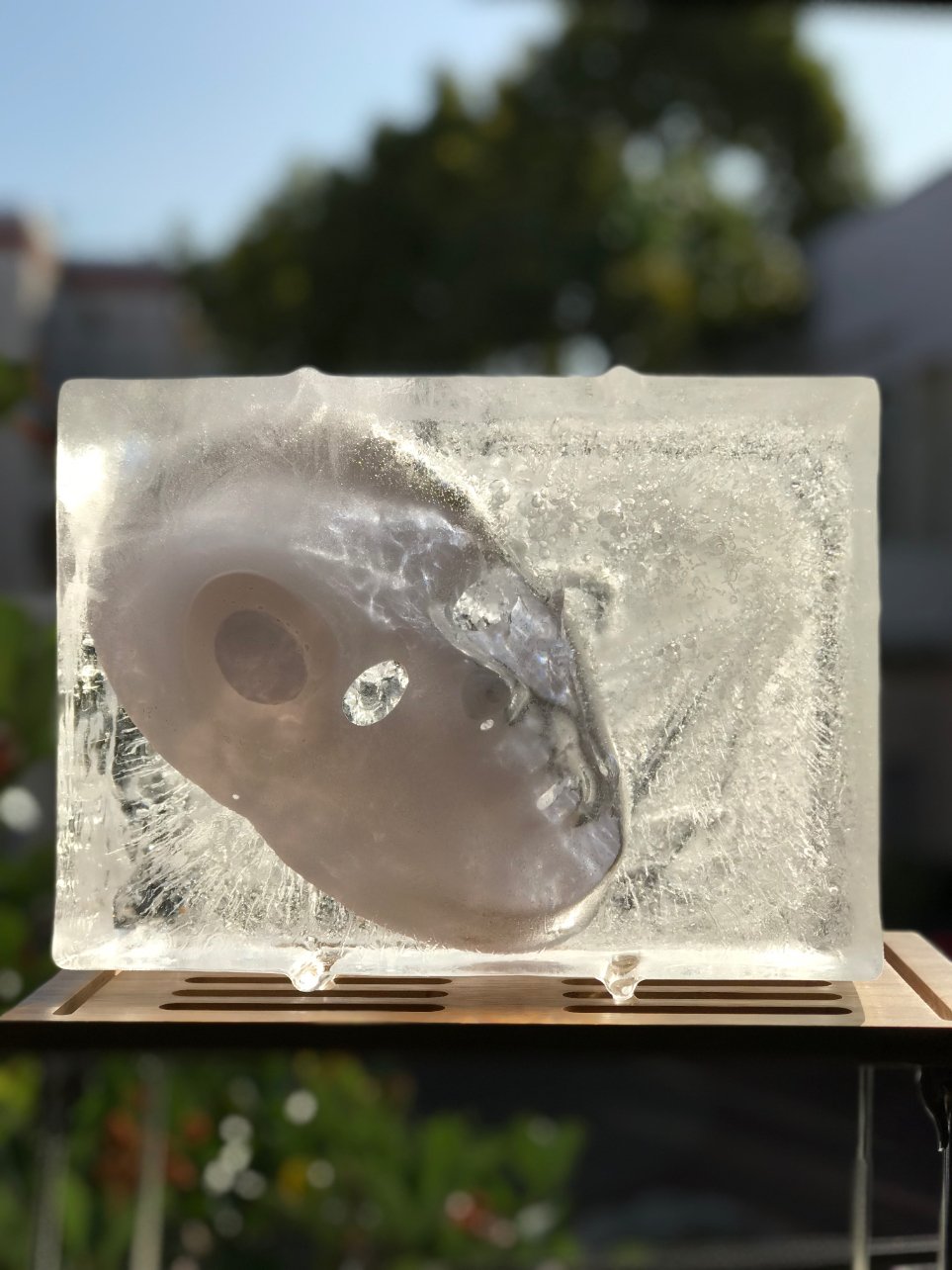
    I'm up to my silliness again. I had the idea that I could freeze masks into ice blocks for decoration, so in advance of Halloween Superstores opening around town, I bought some masks on Amazon. 

    I bought this terribly ugly Frankenstein mask, but as it's made of foam it just floats on top of the water rather than freezes inside the block. 

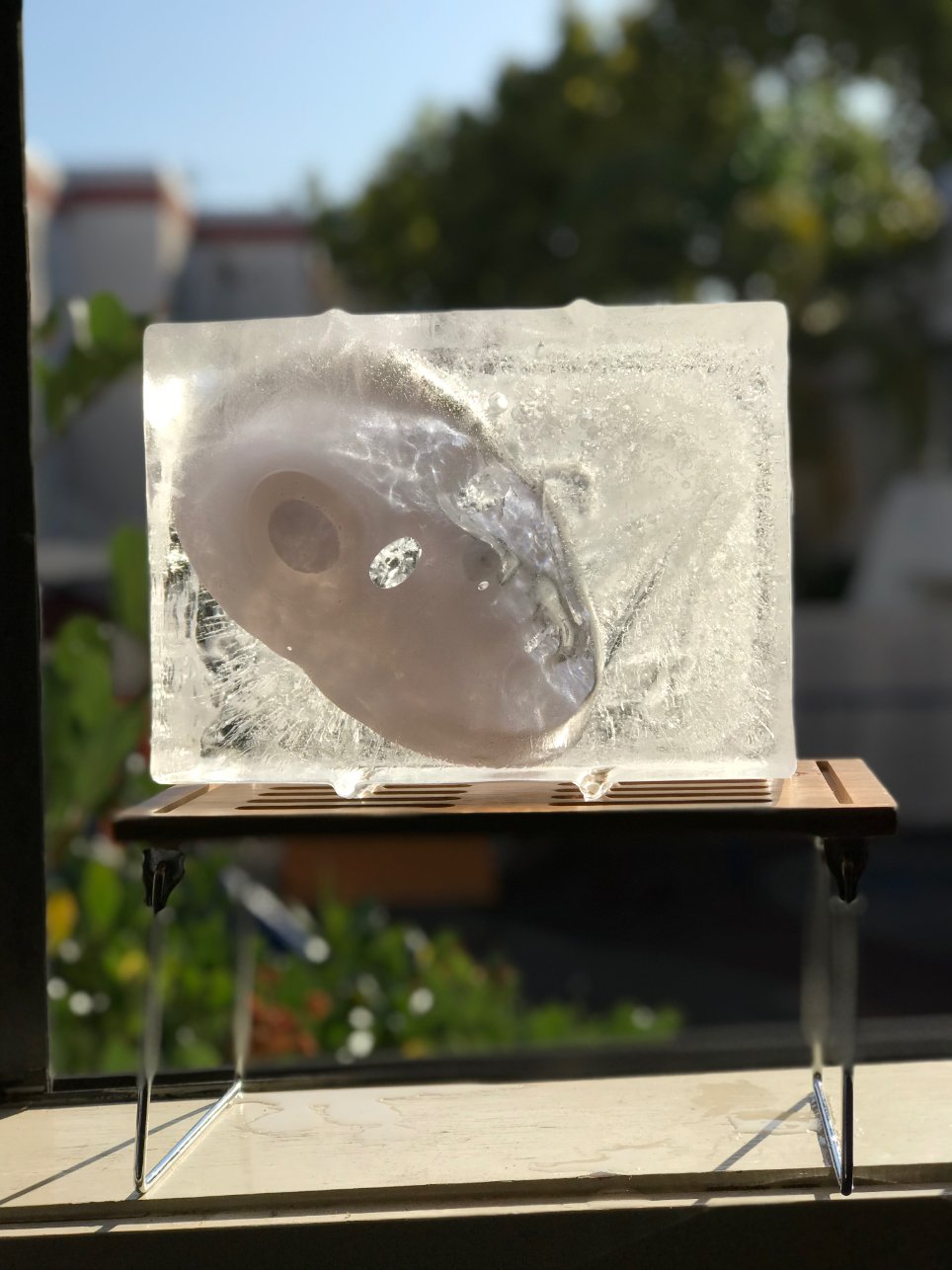
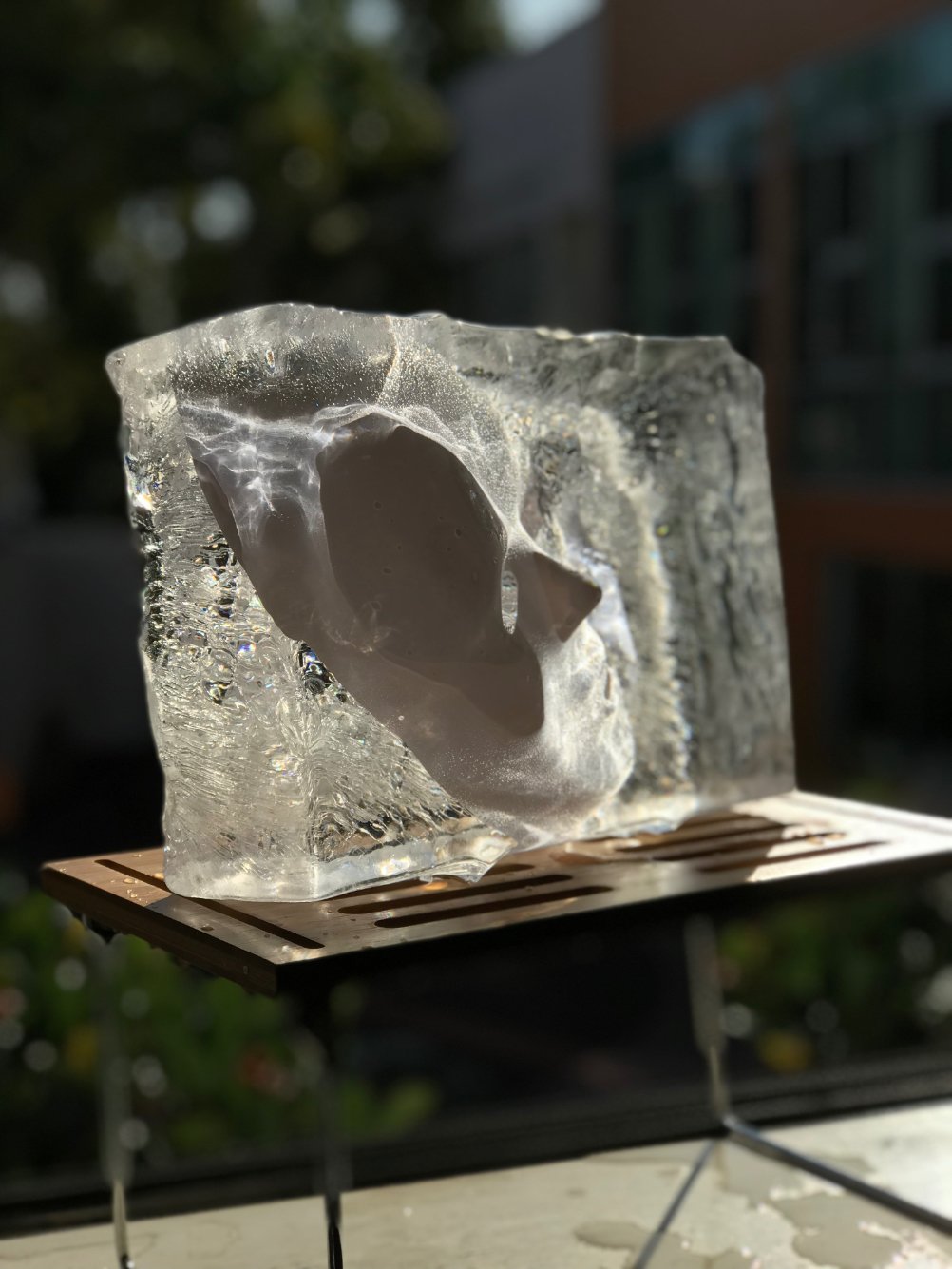
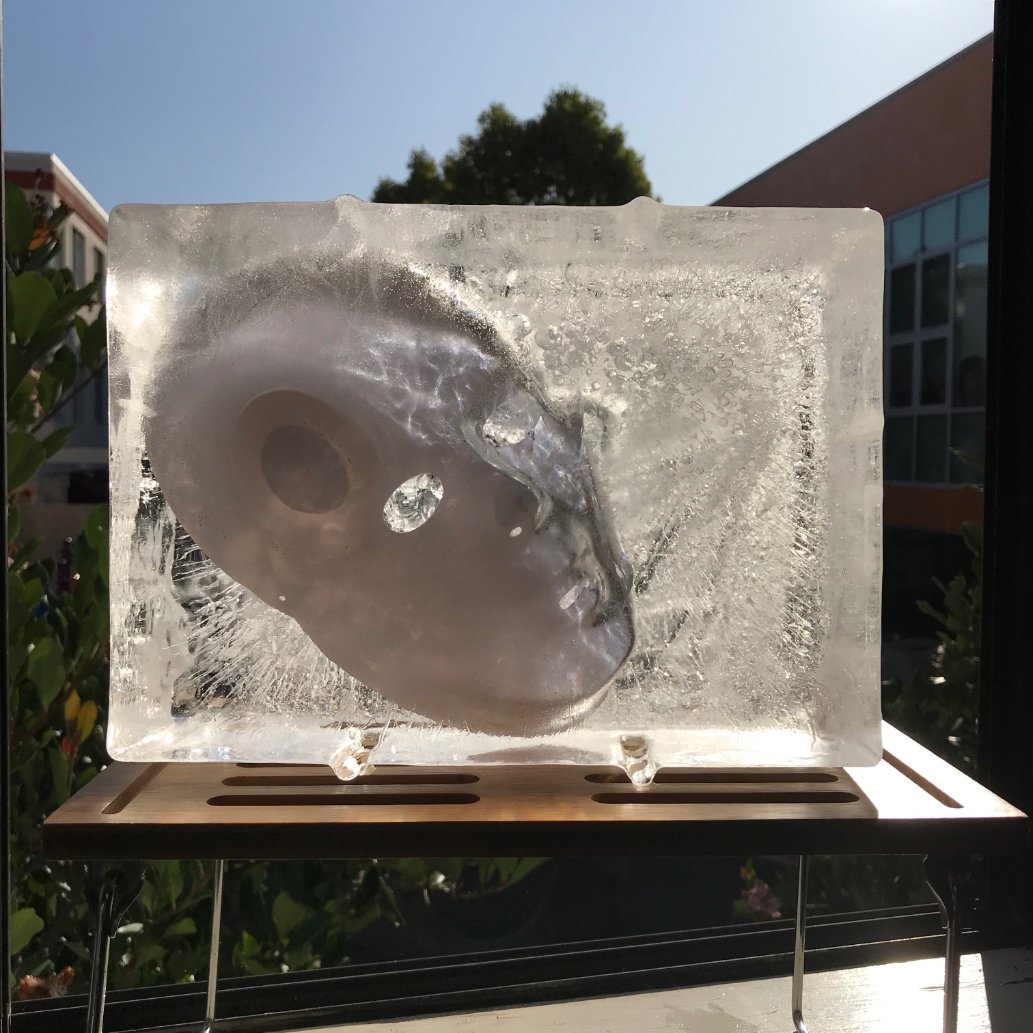
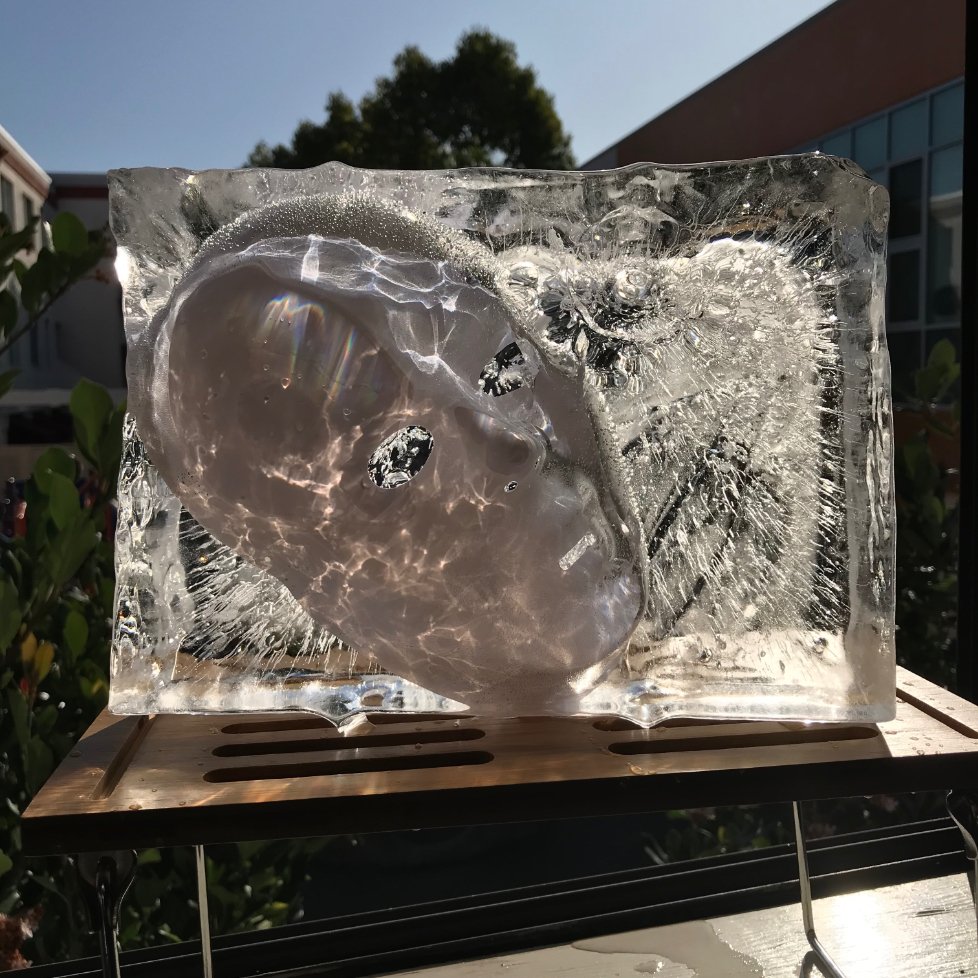
    I also bought a set of cheap plastic "drama party kids face masks" and tried those. They sink inside the cooler (by the way, I make them similar to how I did this dinosaur head ice block using Directional Freezing in an Igloo cooler) so I was going to suspend it in the Igloo cooler from the elastic string on the mask, but instead I just left a tiny bit of air under the part of the forehead of the mask – you can see it pokes out from the block. The mask stayed suspended in the ice block pretty well. 

    I left it to freeze for a few days and if I do it again I'll let it go a shorter time as the cloudy part of the ice formed on the bottom (behind the mask). But anyway it came out pretty cool. 

    Mask White in Ice Block7
    Mask White in Ice Block7
    Mask White in Ice Block7
    Mask White in Ice Block33
    Mask White in Ice Block33


    After I thought I was done with the experiment and taking pictures,  I was rinsing off the block in hot water in my sink. As I was able to pull the mask out of the block I found that the mask left the impression of the face in the block! It looked super creepy and now I'm thinking for future experiments I should see about other shapes I can press into ice blocks… 

    Mask White in Ice Block13
    Mask White in Ice Block13
    If you like this post, you might also like:

    Dinosaur Head Ice Block

    Eyeball Ice Balls for Halloween

    and as usual, the complete Index of Ice Experiments on Alcademics is here


  • Eyeballs Inside Ice Balls – Halloween Ice

    I did another stupid thing! 

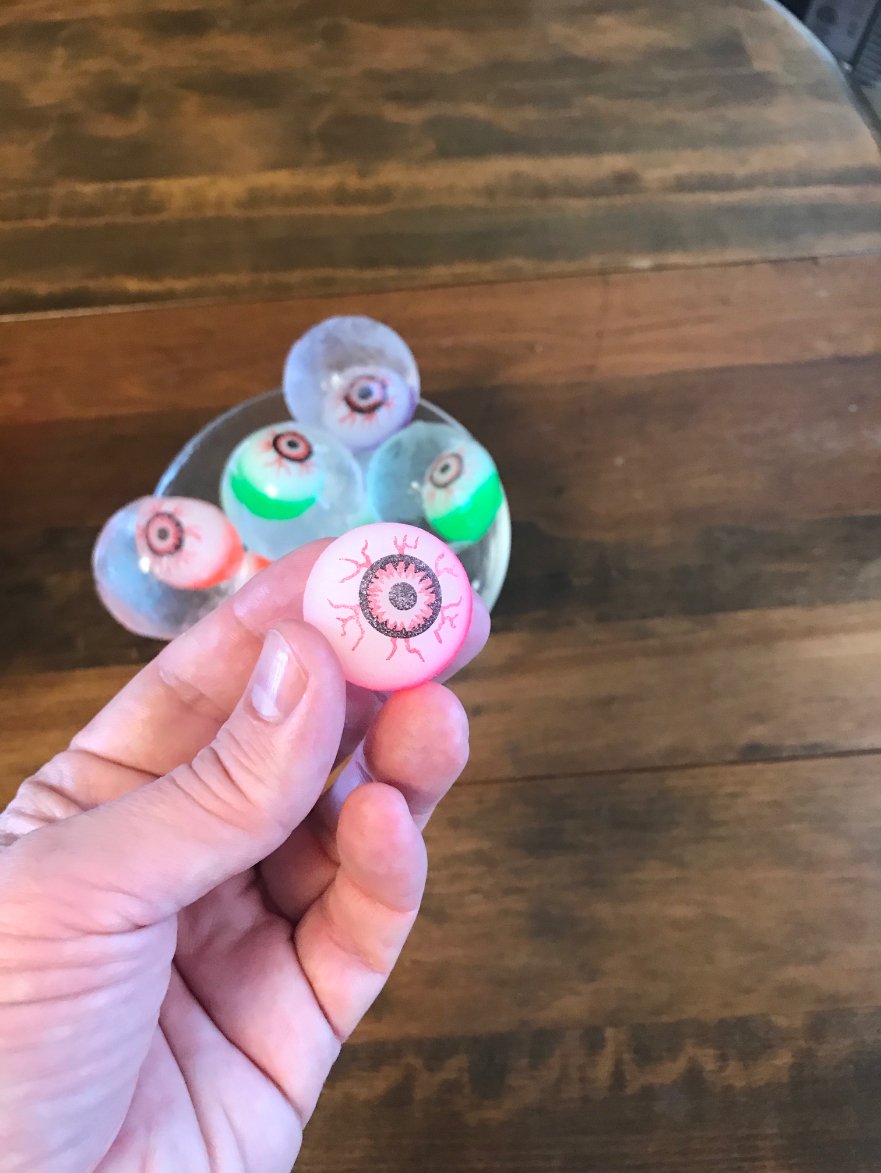
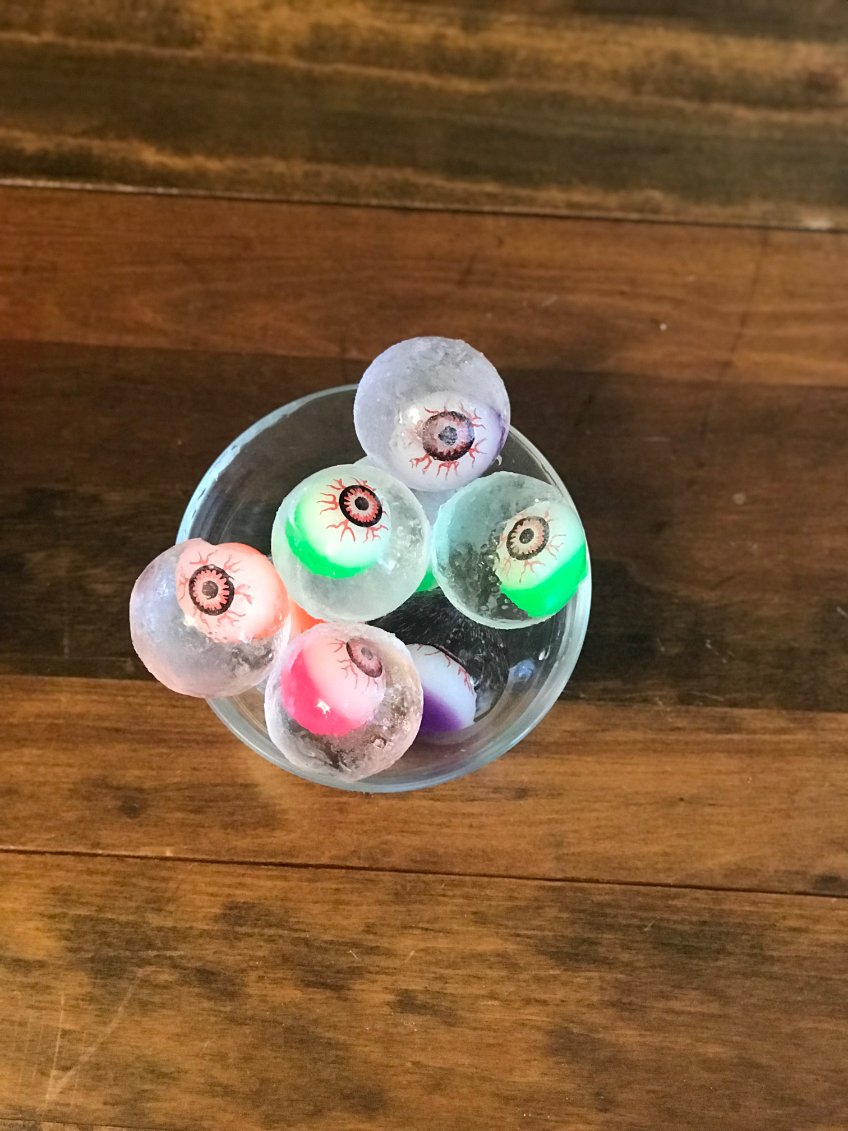
    I bought some bouncy eyeballs in the Halloween section of the drug store and put them inside the IceOlogy clear ice ball maker.

    The balls float inside the ice ball molds so when they freeze they're touching the outside of the ice ball- I'd prefer them to be fully enclosed in ice. Because the balls are not food safe I would not recommend serving these to customers in a bar setting, and because they touch the outside of the ice I'd not recommend serving them in alcohol, lest it degrade the plastic. 

    Eyeballs in ice ballsIMG_6387
    Eyeballs in ice ballsIMG_6387
    Eyeballs in ice ballsIMG_6387

    Eyeballs in ice ballsIMG_6397
    Eyeballs in ice ballsIMG_6397

    But anyway, another fun ice project for home. If you liked this, you might also enjoy these Spiders and other Insect Ice Balls I did last year. 

    6a00e553b3da208834022ad3763c1b200c.jpg

    For an index of all sorts of exciting clear ice projects, visit the Index of Ice Experiments!


  • Ramping up Aromatics in Cognac: How Camus Does it

    When I was in China helping judge the Camus cognac Shanghai Shake, I had the opportunity to interview president Cyril Camus. 

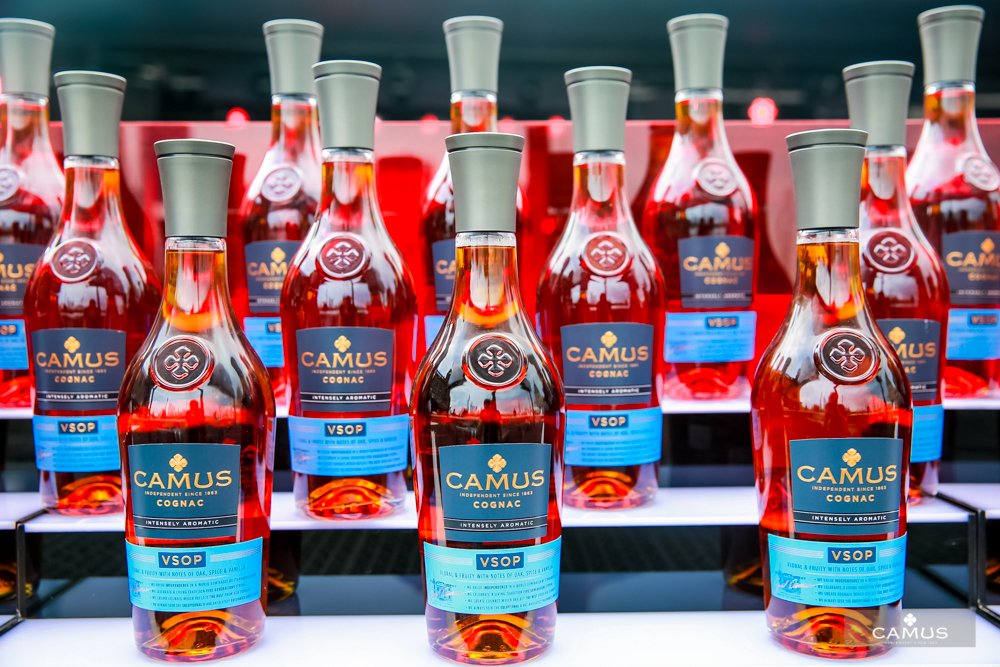
    Recently the language on Camus' core line changed to invoke "intensely aromatic" language on the branding. Cyril says that this has rolled out in the US and some other markets, with more to come. They're particularly promoting the VSOP (using the phrase "Very Special" instead of VS on that marque).

    SONG4598_w3207


    I asked Cyril about the reason for the rebrand/change in flavor profile- particularly from a marketing perspective. What was the consumer demand for the change, if any? Was it to be more useful in cocktails? 

    He says that this was not the case. "I think that the density of aromas and lower level of wood allows you to make more aroma-forward cocktails. It's good timing, but wasn't the reason we did it." 

    SONG4956


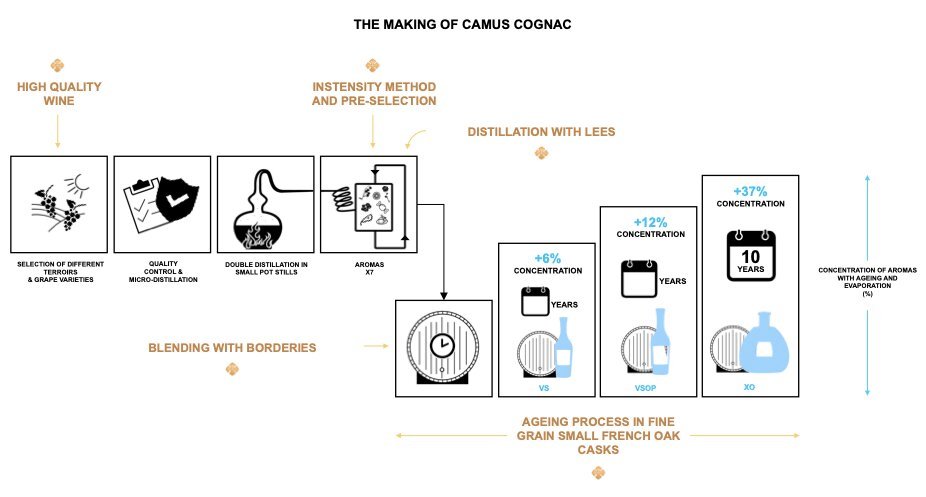
    In the first place, I didn't realize that this flavor profile change wasn't instant; it's more of an evolution of flavor profile building up to the VSOP/XO of today. Cyril says about 15 or 16 years ago, they were trying to define from a consumer standpoint how people define or judge a cognac as the best. They wanted to have a "measureable, distinctive point" of quality over other brands so that they didn't need to rely on the typical language of 'a blend over over X cognacs aged up to Y years' that all the other brands use. 

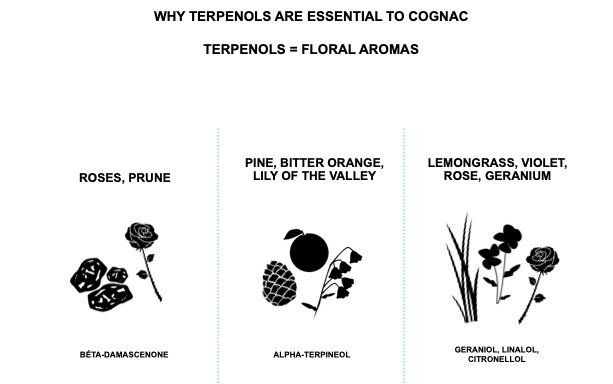
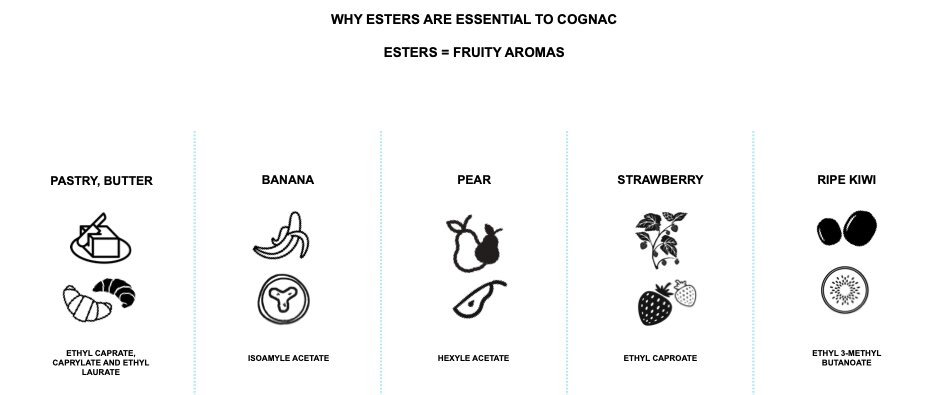
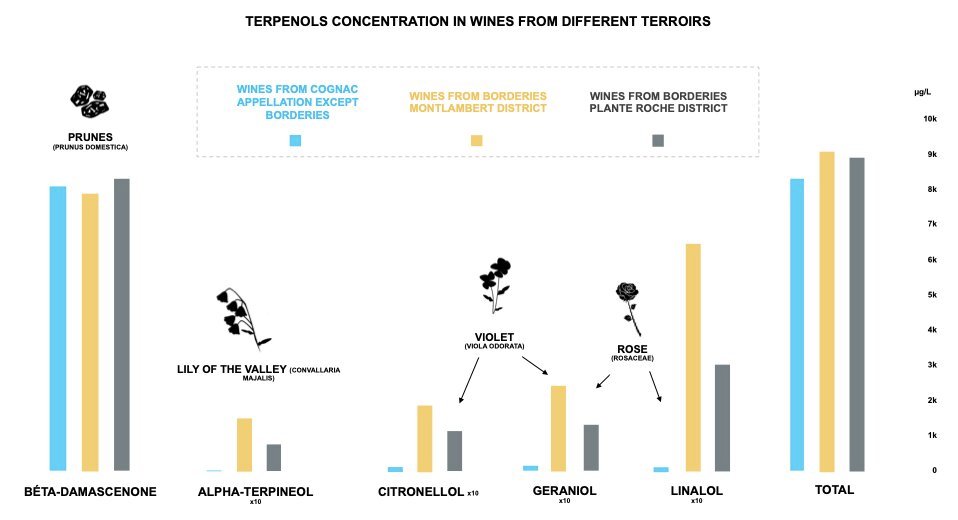
    They determined three important factors: the density of floral aromas (which they measure via concentration of terpenols); density of fruity aromas (measured in count of esters); and the balance between fruit notes and wood impact. With this in mind, they set out to move the flavor profile towards something "obviously distinctive." 


    [all images in this post provided by Camus]


    Screen Shot 2019-09-13 at 4.13.21 PM
    Screen Shot 2019-09-13 at 4.13.21 PM


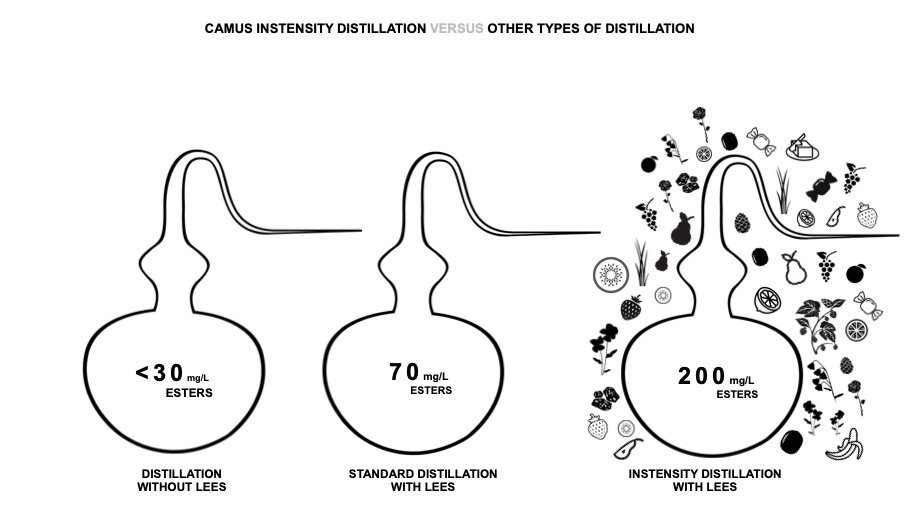
    The biggest change made (about ten years or so ago) was distilling on the lees – the dead yeast and other particles from the winemaking process left unfiltered. According to their materials, this raises the amount of esters from 30mg/L up to 70 mg/L. 

    One thing that hasn't changed is Camus' use of grapes from the Borderies region, where Camus is based. Cognac from this region is said to be more floral than from other regions, and this adds to the terpenol count. The Borderies is only about 5% of the total cru for growing cognac grapes. 


    Screen Shot 2019-09-13 at 4.13.50 PM


    In the vineyard, they make efforts to have the best wine by putting weather stations in the vineyards (only about 10-15% of the grapes they use are from their own property) to know best when to harvest, and then harvesting extra-quickly with larger machines than are strictly necessary. As grapes are being transported to the presses they are seeded with yeast, which I'm guessing is to ensure any natural fermentation that happens along the way happens with their own yeast strains rather than the natural ones from the vineyards. 

    Camus distills about 90% of the wine sourced from about 200 growers (plus their own grapes), and the rest is distilled according to their patented process. 

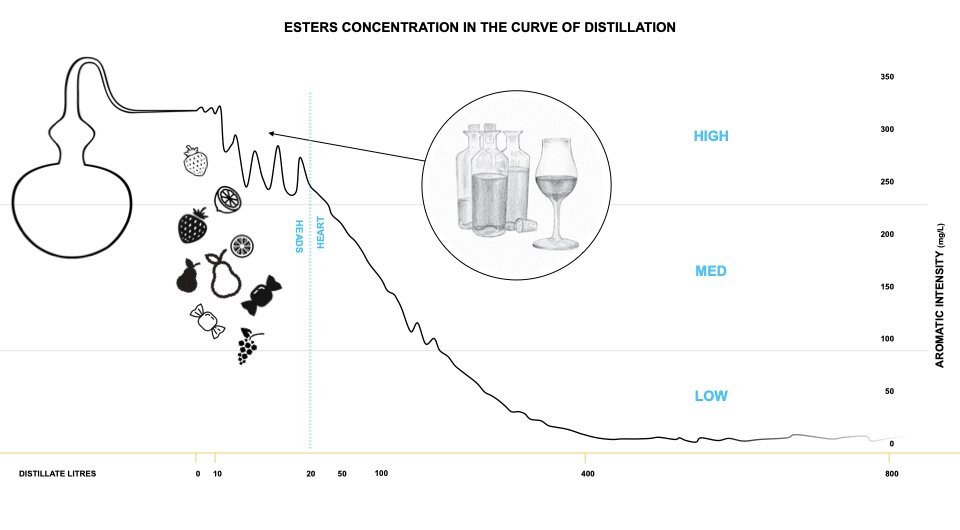
    About that: another factor in ramping up aromatic intensity is including more of the heads of distillation in the product. Cyril says that the first 20L of the second distillation are the heads are removed and stored separately liter by liter. Cyril says that though the heads are known for being very aromatic and full of esters, they're also pretty unpredictable in quality. So the master distiller will go through and taste/nose the heads and include back into the heart the desired heads fragments. These heads are not aged separately but put into barrel with the hearts.


    Screen Shot 2019-09-13 at 4.21.20 PM


    This brings up the esters from 30mg/L without lees to 70 with lees to 200 mg/L with their "intensity distillation" process. 


    Screen Shot 2019-09-13 at 4.13.37 PM


    I asked Cyril if since they were making these adjustments gradually if the XO (a minimum of 10 years old) was of the same level of aromatic intensity as they were seeking to achieve with the VSOP. He said that distilling on the lees, which they've been doing for 10 years now, has the majority of the impact, and though the flavor profile will change a bit in the future years, those changes will be minor overall. But, he says, they're now in the position to explain to consumers why they're different. 

    As for the balance of fruit to wood notes, they're also using fine grain oak for their barrels low in tannins and lightly toasted to minimize the wood impact on the spirit. They also use older barrels that have had many of their tannins stripped already. 


    Screen Shot 2019-09-13 at 4.14.13 PM

    It's terrific to see some numbers and logic behind what a cognac brand is doing!


  • Dinosaur Head Ice Block

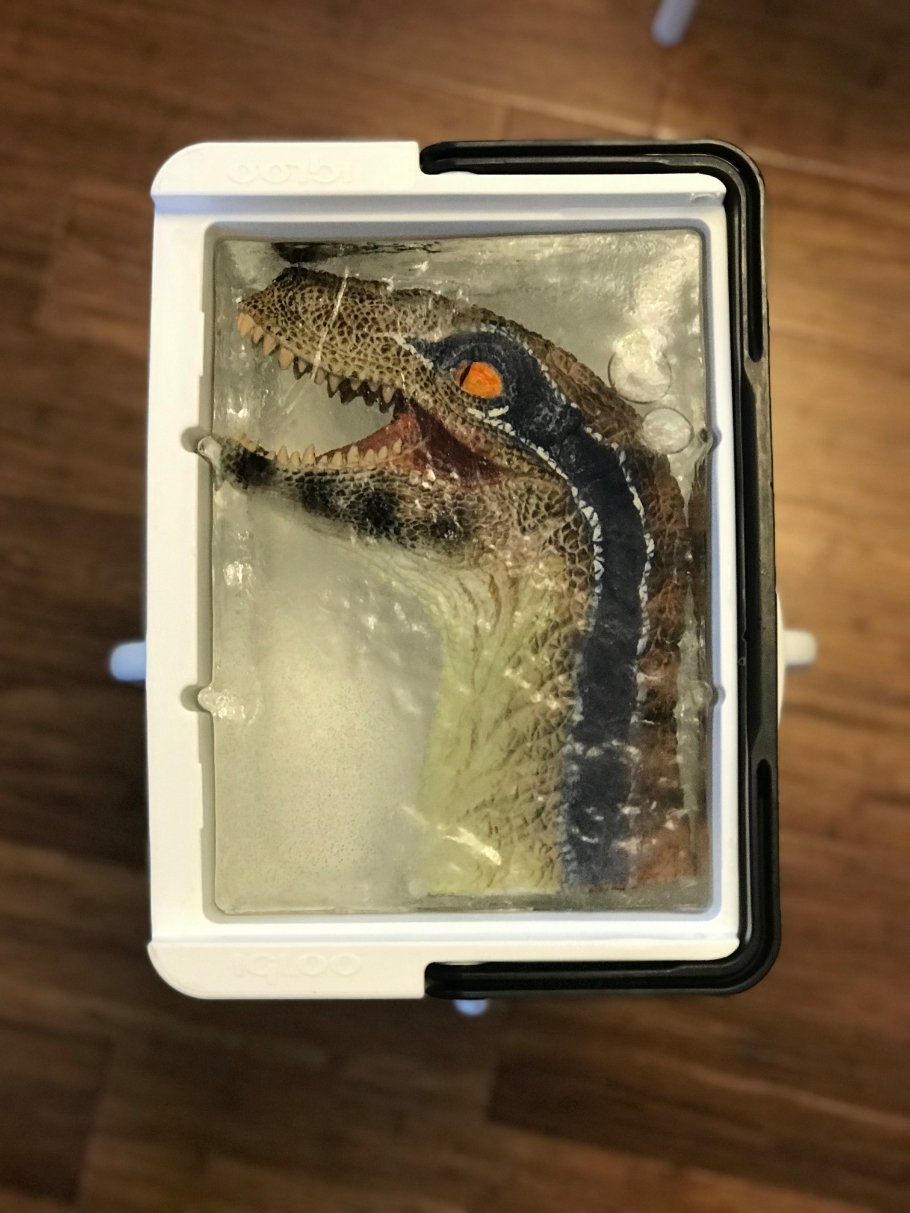
    I was recently in Shanghai judging a cocktail competition and saw a dinosaur hand puppet for kids in a store. Naturally, I thought, "I bet this would fit in my cooler and make an awesome ice block."

    Ice fans, I was correct. 

    Dinosaur mask ice block2
    Dinosaur mask ice block2

    The head fit perfectly into my igloo cooler. I filled it with water along with the cooler and stuck it near the water's surface. It was just touching the sides so I didn't need to support it- perfect fit. 

    If you're not up to speed on how the block came out so clear, it is because of Directional Freezing. I didn't allow the entire cooler to freeze, but removed it before the whole block froze; about 2 days. (In fact the bottom side of the dinosaur isn't frozen enough and pokes out of the ice a bit – if I do it again I will leave it in a little longer.)


    Dinosaur mask ice block9

    This would be a fun presentation as a display block for events.

    Even better, if I made yellow-tinted ice balls (saffron-infused water) and put mosquitos inside them, for a full Jurassic Park themed cocktail service! 

    For more information about directional freezing and wacky ice projects of all types, check out the Index of Ice Experiments page here on Alcademics. 


  • Testing Out IceOlogy Clear Ice Cube Trays

    I was recently contacted by Dexas, a company that makes ice*ology ice cube trays, to give them a trial run. 

    81jQvJG0sTL._SL1500_
    81jQvJG0sTL._SL1500_

    The company makes three versions:

    The cubes are about 1.75 inches on each side, I believe the spheres are also 1.75" diameter. 

    They cost $40 for 2 cube/sphere trays and $50 for the 8 cube trays

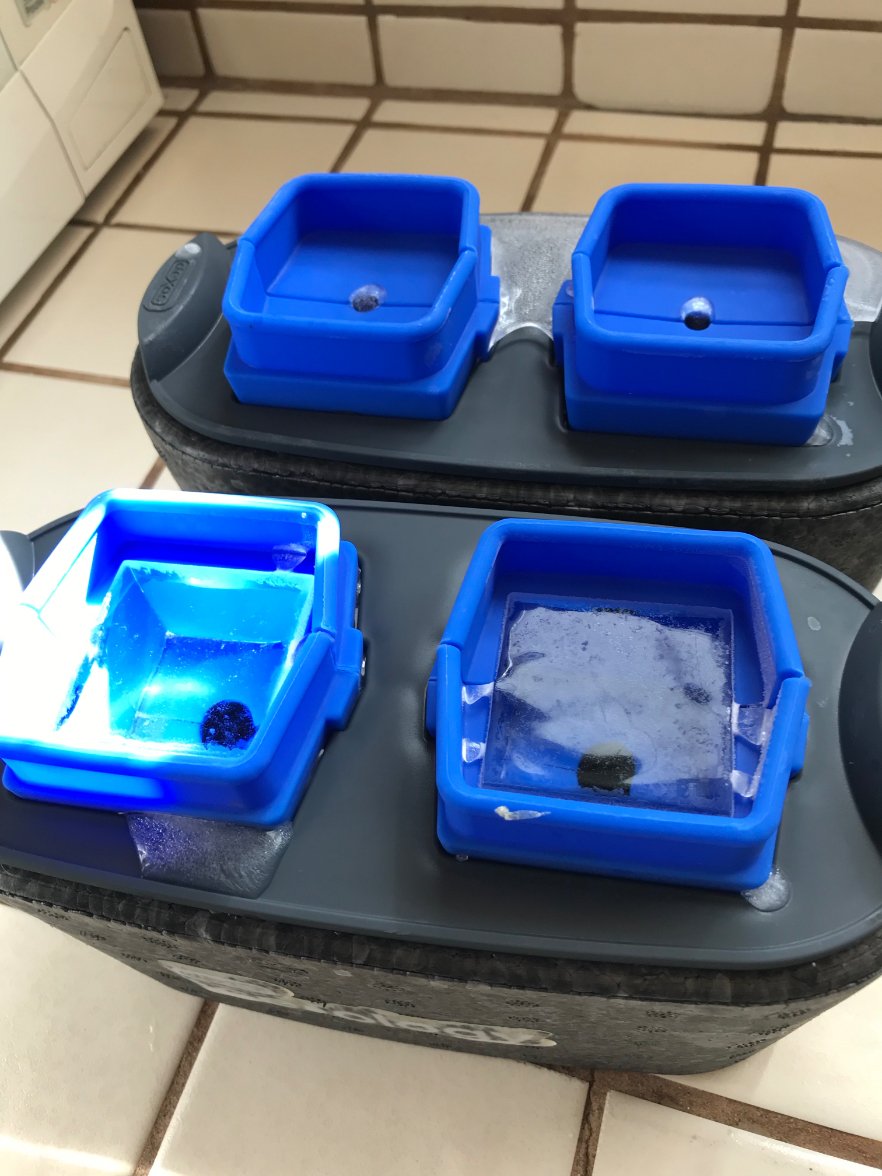
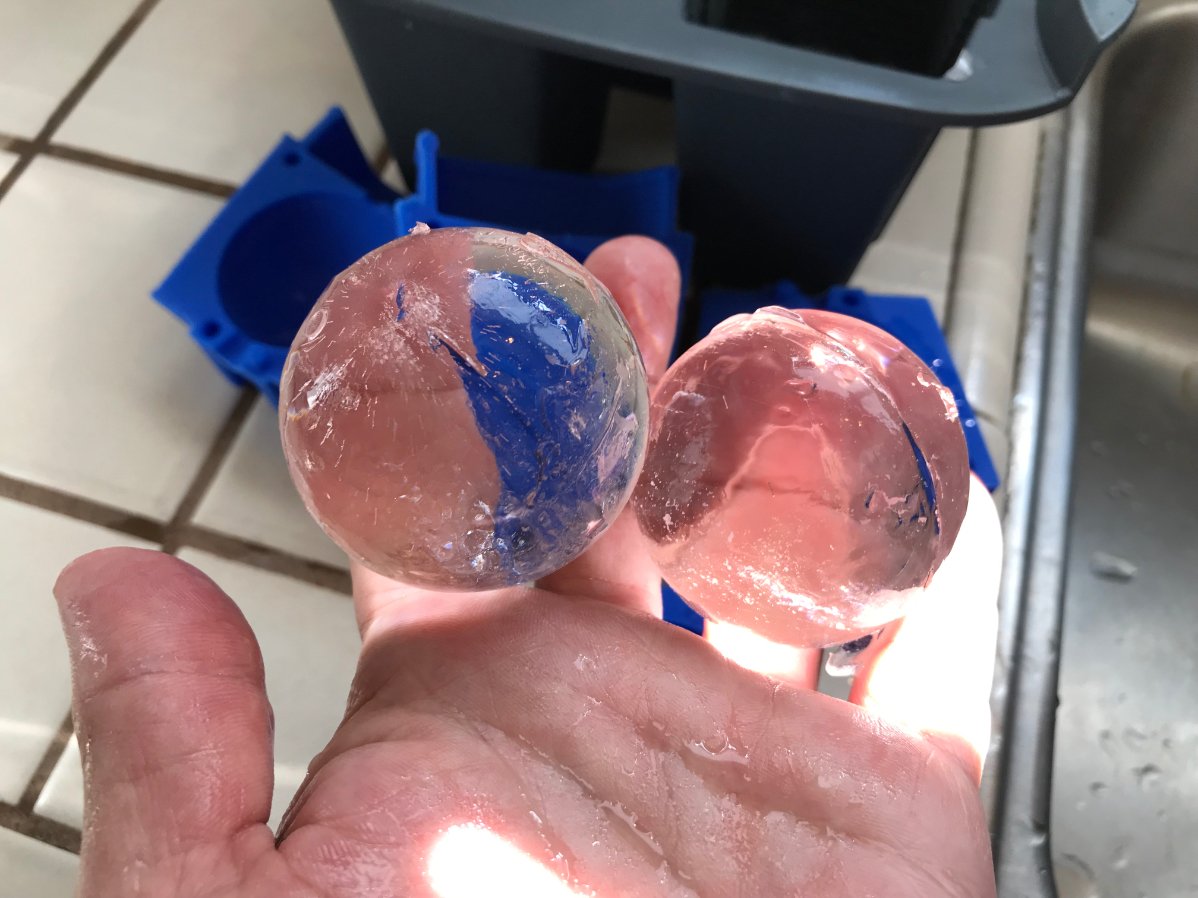
    I tried them out twice, and they're good. Like all clear ice cube trays, they take advantage of directional freezing, the process I uncovered nearly 10 years ago on Alcademics. 

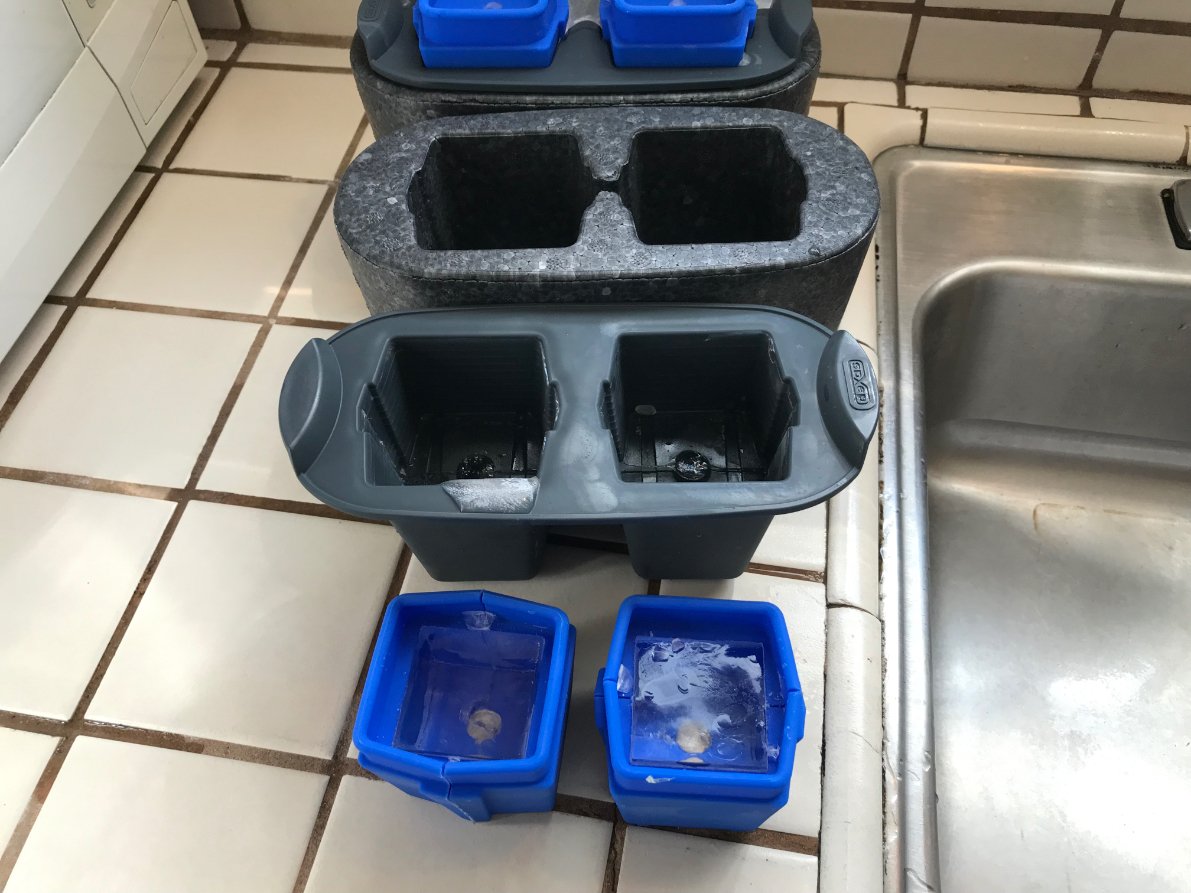
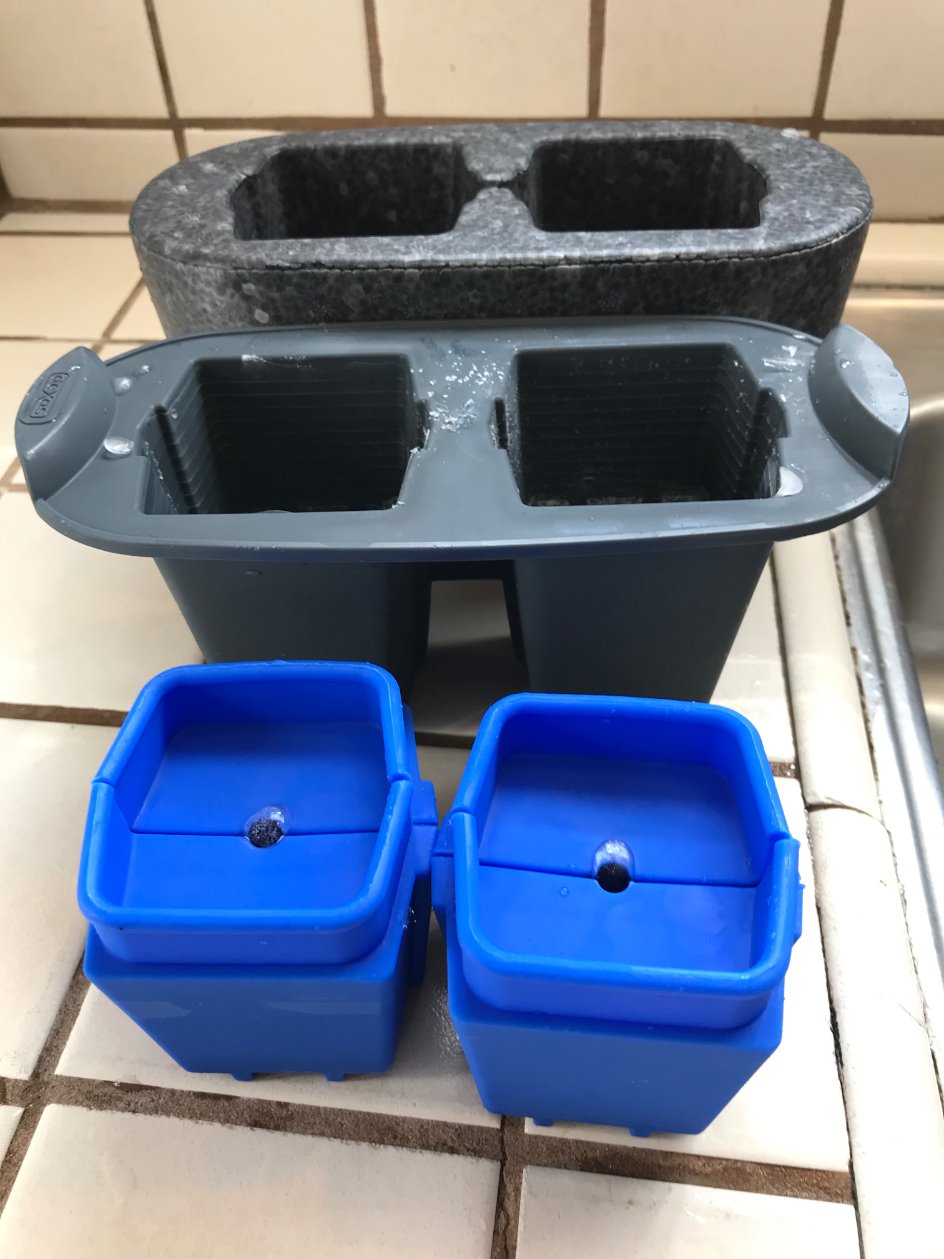
    Like most clear ice trays, they employ an insulated container, a big tray that holds a water reservoir, and a smaller tray in the shape of the desired ice cubes.

    The main difference between these trays and others is that the cube/sphere trays separate sideways, which makes them easier to remove from the silicone container than others that must be pried apart. 

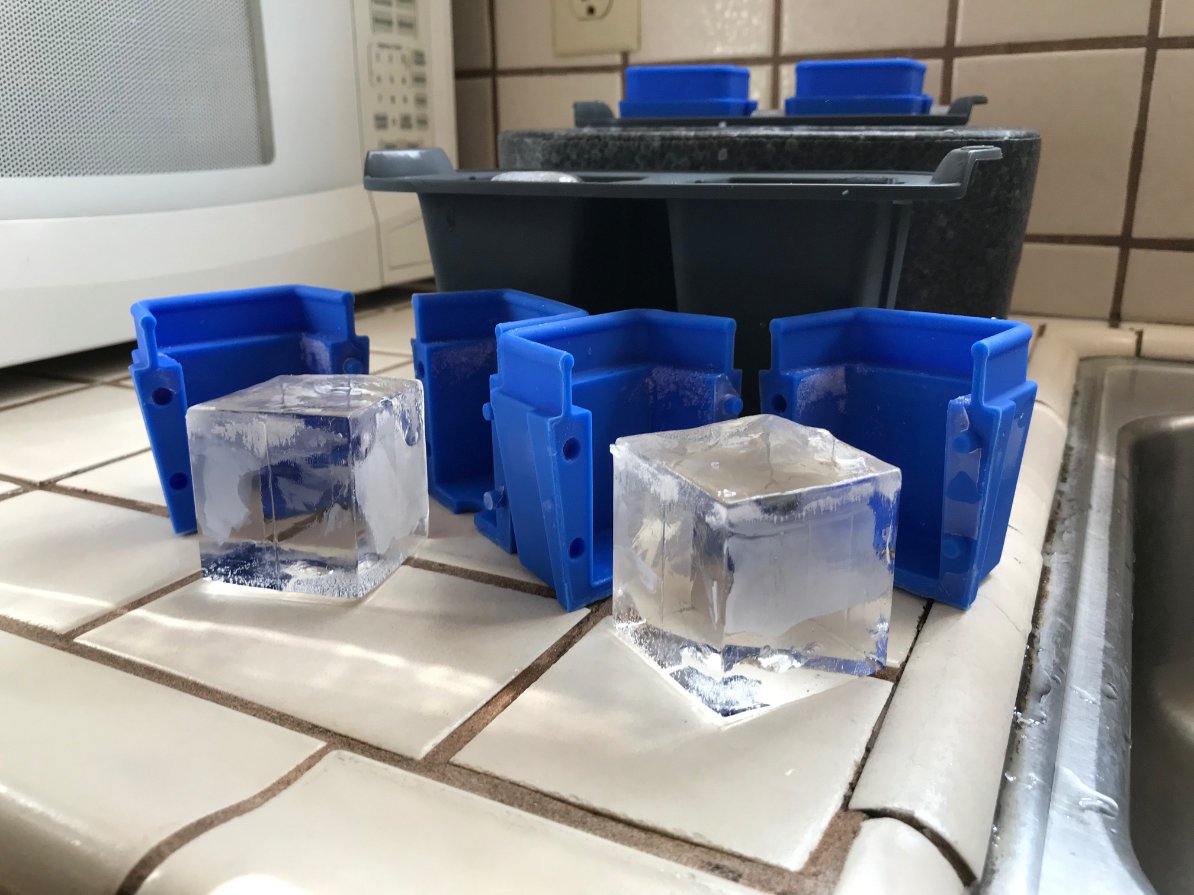
    They recommend that the reservoir trays be microwaved to release the cloudy part of the water so that they can be reused quickly for the next batch. I didn't try that but just ran hot water over them and this was effective, but I appreciate the easy turn-around time. 

    Iceology Ice Tray01
    Iceology Ice Tray01
    Iceology Ice Tray01
    Iceology Ice Tray01
    Iceology Ice Tray01
    Iceology Ice Tray01
    Iceology Ice Tray01


    Pros: 

    • easy to use
    • easy to remove cubes/spheres from trays
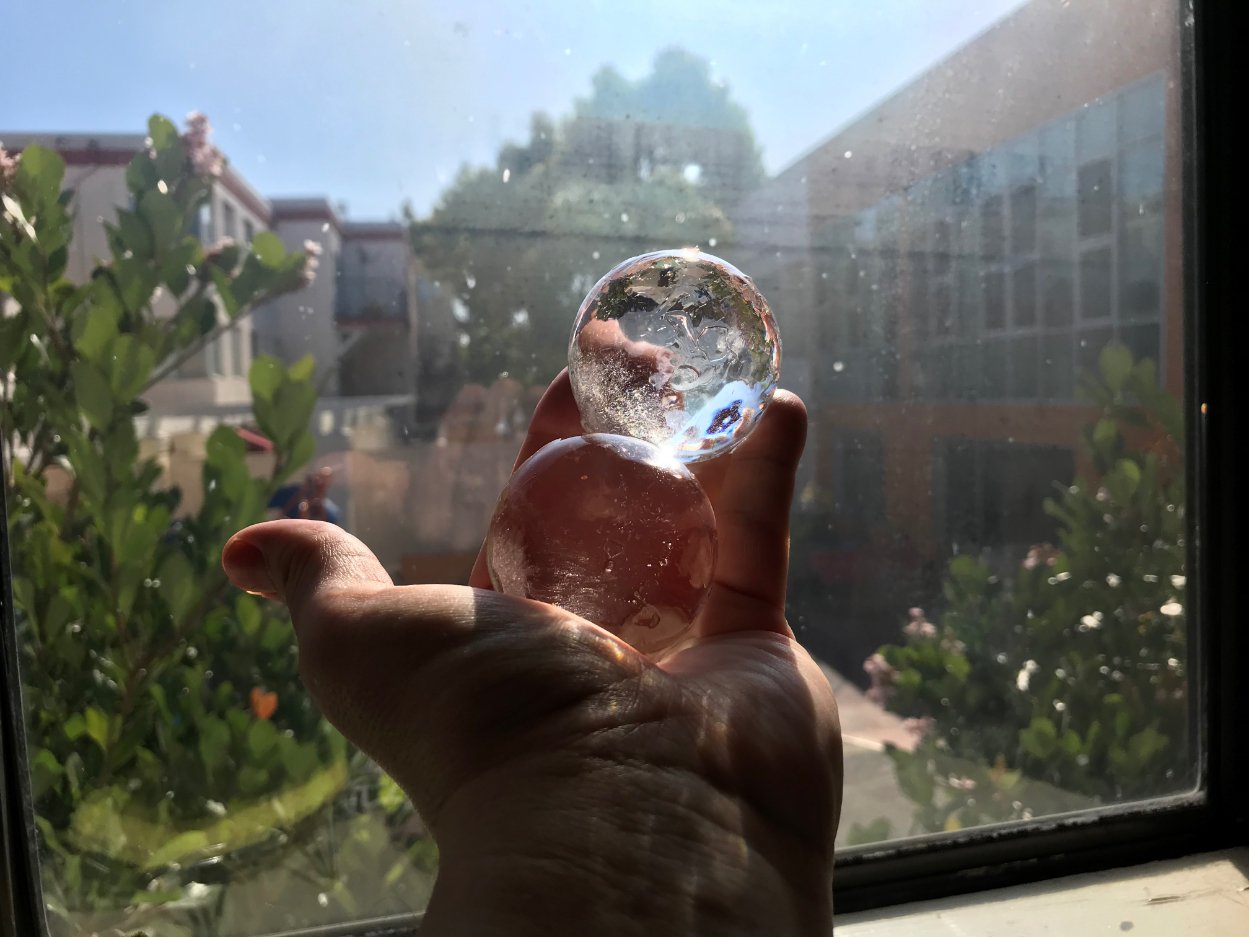
    • make very good clear and solid shaped ice
    • seem sturdy and long-lasting after a few trials

    Cons:

    • a bit small – 2" cubes would be better
    • a bit pricey at $40 per two-cube tray
    • 2 cubes at a time isn't many 


  • The Life and Death of Kold-Draft

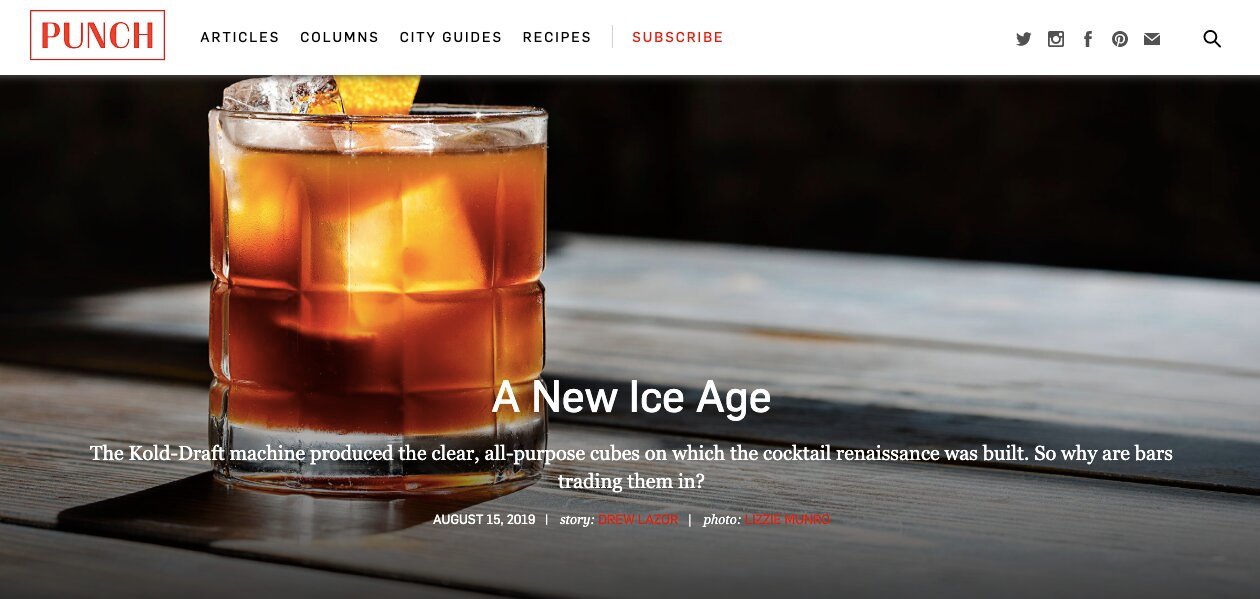
    Over at Punch, Drew Lazor wrote a story about the Kold-Draft ice machine. He covers the role the big clear ice cube maker played in the cocktail renaissance (I didn't realize it was around so long), and how many bars are abandoning the machine today due to its problematic performance record. 

    Lazor quotes me in the story:

    “I used to say at the time that the Venn diagram of America’s best cocktail bars and bars that owned Kold-Draft machines was a near-perfect circle,” recalls drinks journalist and ice enthusiast Camper English.

     Check out the story on Punch


    Screen Shot 2019-08-16 at 6.26.53 AM

  • Color Talk Resources from Tales of the Cocktail

    For attendees of my talk on Color in Cocktails and Spirits at Tales of the Cocktail 2019, below are notes and links from the slides. 

    Product links are to Amazon.com. 

    For all the natural colorings to use in cocktails, see Cocktail Coloring – Natural Food Colorings to Use in Drinks


    71BWuqYNPxL


    For anyone who missed it, the talk was: