Category: cocktails

  • All the Cocktails and Spirits Books Published in 2016 for Reading or Gifting

    I love books! Here are all the books on cocktails and spirits I know of (please do comment if I've missed something) published this year. Give some gifts or just stock up on your winter reading for the cold months. I've got stacks to get through myself.


    Whiskey Books

    6a00e553b3da20883401b8d22461da970c.jpgBourbon: The Rise, Fall, and Rebirth of an American Whiskey by Fred Minnick 

    More Kentucky Bourbon Cocktails by Joy Perrine and Susan Reigler 

    The Big Man of Jim Beam: Booker Noe And the Number-One Bourbon In the World by Jim Kokoris  

    Whisky Japan: The Essential Guide to the World's Most Exotic Whisky by Dominic Roskrow 

    Iconic Whisky: Tasting Notes & Flavour Charts for 1,500 of the World's Best Whiskies by Cyrille Mald and Alexandre Vingtier

    Whiskey: A Spirited Story with 75 Classic and Original Cocktails by Michael Dietsch

    The Manhattan: The Story of the First Modern Cocktail with Recipes by Philip Greene 


    Miscellany 

    6a00e553b3da20883401bb09376999970d.jpgMade of Iceland: A Drink & Draw Book  by Reyka Vodka, Snorri Sturluson 

    Inside The Bottle: People, Brands, and Stories  by Arthur Shapiro 

    The Craft Cocktail Coloring Book by Prof Johnny Plastini 

    Drinking with Republicans and Drinking with Democrats by Mark Will-Weber 

    The Moonshine Wars by Daniel Micko

    Drinks: A User's Guide by Adam McDowell

    Shrubs: An Old-Fashioned Drink for Modern Times (Second Edition) by Michael Dietsch 

    A Proper Drink: The Untold Story of How a Band of Bartenders Saved the Civilized Drinking World by Robert Simonson 

     Colonial Spirits: A Toast to Our Drunken History by Steven Grasse  

    DIY Bitters: Reviving the Forgotten Flavor – A Guide to Making Your Own Bitters for Bartenders, Cocktail Enthusiasts, Herbalists, and More by Jovial King and Guido Mase  

    Amaro: The Spirited World of Bittersweet, Herbal Liqueurs, with Cocktails, Recipes, and Formulas by Brad Thomas Parsons 

    Drink Like A Grown-Up by The League of Extraordinary Drinkers 

    The Coming of Southern Prohibition: The Dispensary System and the Battle over Liquor in South Carolina, 1907-1915 by Michael Lewis

    American Wino: A Tale of Reds, Whites, and One Man's Blues by Dan Dunn 

    Distilled Stories: California Artisans Behind the Spirits by Capra Press

    Building Bacardi: Architecture, Art & Identity by Allan T. Shulman 

    Craft Spirits by Eric Grossman 


    Cocktail Books, General

    6a00e553b3da20883401bb08fac9f3970d.jpgCocktails for Ding Dongs by Dustin Drankiewicz (Author), Alexandra Ensign (Illustrator)

    Zen and Tonic: Savory and Fresh Cocktails for the Enlightened Drinker by Jules Aron 

    Pretty Fly For a Mai Tai: Cocktails with rock 'n' roll spirit   

    Cocktails for Drinkers: Not-Even-Remotely-Artisanal, Three-Ingredient-or-Less Cocktails that Get to the Point  by Jennifer McCartney 

    Aperitivo: The Cocktail Culture of Italy by Marisa Huff 

    The Complete Cocktail Manual: 285 Tips, Tricks, and Recipes by Lou Bustamante and the United States Bartenders' Guild 

     Shake. Stir. Sip.: More than 50 Effortless Cocktails Made in Equal Parts by Kara Newman

    101 Cocktails to Try Before you Die  by Francois Monti 

     Drink Like a Man: The Only Cocktail Guide Anyone Really Needs by Ross McCammon and David Wondrich

    The New Cocktail Hour: The Essential Guide to Hand-Crafted Cocktails by Andre Darlington and Tenaya Darlington 

    Spritz: Italy's Most Iconic Aperitivo Cocktail, with Recipes by Talia Baiocchi and Leslie Pariseau  

    Eat Your Drink: Culinary Cocktails by Matthew Biancaniello 

    Cannabis Cocktails, Mocktails & Tonics: The Art of Spirited Drinks and Buzz-Worthy Libations by Warren Bobrow

    Tiki with a Twist: 75 Cool, Fresh, and Wild Tropical Cocktails by Lynn Calvo and James O. Fraioli 


    Cocktail Books from Bars or Places

    6a00e553b3da20883401bb094fd3d5970d.jpgThe Canon Cocktail Book: Recipes from the Award-Winning Bar by Jamie Boudreau  and James O. Fraioli 

    Regarding Cocktails by Sasha Petraske and Georgette Moger-Petraske 

    Brooklyn Spirits: Craft Distilling and Cocktails from the World's Hippest Borough By Peter Thomas Fornatale and Chris Wertz

    Smuggler's Cove: Exotic Cocktails, Rum, and the Cult of Tiki by Martin Cate and Rebecca Cate

     Cuban Cocktails: Over 50 mojitos, daiquiris and other refreshers from Havana

    Brooklyn Bar Bites: Great Dishes and Cocktails from New York's Food Mecca by Barbara Scott-Goodman

    The Waldorf Astoria Bar Book by Frank Caiafa 

    Lift Your Spirits: A Celebratory History of Cocktail Culture in New Orleans by Elizabeth M. Williams and Chris McMillian


    Science!

    6a00e553b3da20883401b7c893f3cb970b.jpgShots of Knowledge: The Science of Whiskey by Rob Arnold and Eric Simanek

    Distilled Knowledge: The Science Behind Drinking’s Greatest Myths, Legends, and Unanswered Questions  by Brian D Hoefling  


    Classic Cocktail Book Reprints

    THE HOME BARTENDER'S GUIDE AND SONG BOOK {By Charlie Roe and Jim Schwenck}

    AMERICAN BAR {By Frank P. Newman}

    LOUIS' MIXED DRINKS {By Louis Muckenstrum} 


    Beer (A few beer books slip through the cracks and come to me)

    The United States of Beer: A Freewheeling History of the All-American Drink by Dane Huckelbridge 

    The Beer Geek Handbook: Living a Life Ruled by Beer by Patrick Dawson  


     MY BOOK! 

     Please consider supporting Alcademics by  purchasing a copy of my book Tonic Water AKA G&T WTF. It's a gift to yourself, and a gift to me.

    Tonic water aka gandt wtf by camper english cover


    Want to see some of the previous years' books? Well, here they are:

    More Than 40 Drink Books Published in 2014 for Reading or Gifting

    All the Cocktails & Spirits Books Published in 2015, For Reading or Gifting

  • Sherry, As Simply as I can Describe It

    I was asked recently about sherry and it reminded me of a story I wrote one hundred million years ago in 2011 for the Los Angeles Times Magazine. The publication has since closed (not the LA Times, just the magazine) and the story is no longer online, but I scooped it from the Internet Wayback Machine so I could share it again here. (As far as I know the information is still current.) 

    I think it offers a concise overview of the sherry category. And after you read it, check out this set of cool charts on sherry I made here, as it displays the information in easy visual form. I know you people hate reading. 
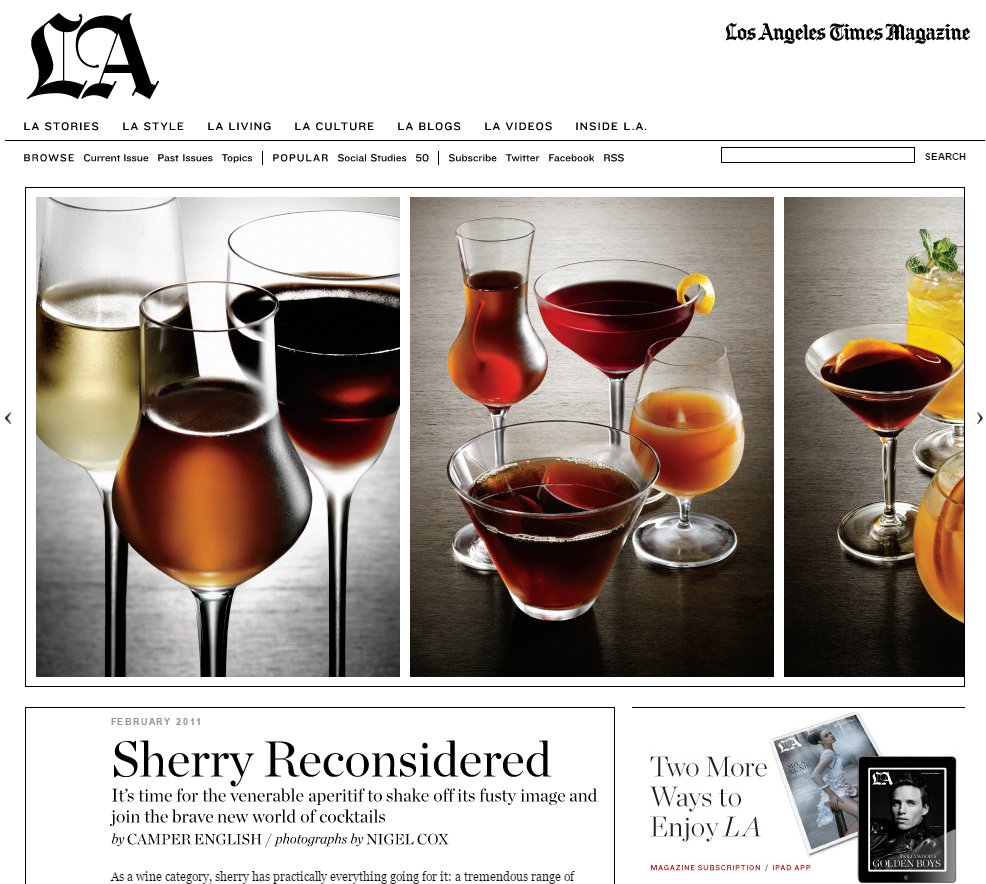
     

    Sherry in LA Times Magazine


    FEBRUARY 2011
    Los Angeles Times Magazine

    Sherry, Reconsidered
    Camper English

    As a wine category, sherry has practically everything going for it: a tremendous range of flavors, a rich history dating at least as far back as the Romans, the ability to pair magnificently well with food and an increasingly hip status as a cocktail ingredient used by top bartenders.

    Most people, when they think of sherry at all, consider it an ingredient their grandmothers cooked with rather than something ripe for sipping on its own. Sherry is about due for a comeback, but it’s so unfamiliar to us now that it really needs a thorough reintroduction.

    SPANISH BODEGAS
    In the three main cities of the delimited sherry region in the southern corner of Spain next to the Atlantic—inland Jerez de la Frontera, coastal El Puerto de Santa María and Sanlúcar de Barrameda—sherry remains both big business and a tourist attraction. More than 230,000 people visit the González Byass each year to ride the miniature train around the bodegas. At Grupo Estévez, visitors browse a gallery filled with Picasso sketches. At Williams & Humbert, they sit for a horse show inside a bodega so large you can’t see one end from the other.

    Unlike the vineyard-adjacent grand mansions of California’s wine-tasting rooms, sherry bodegas are usually urban warehouses that may or may not be attached to a visitor’s center. Inside, hundreds to tens of thousands of barrels, usually no more than four high, are stacked on their sides beneath vaulted cathedral ceilings that help stabilize the temperature. The wines will be transferred over the years from the top-row barrels down to the ground-level ones, blending with the wine in each lower barrel in a method known as the solera system.

    THE SOLERA SYSTEM
    Like port and Madeira, sherry is a fortified wine—meaning distilled spirits are added. Historically, these coastal wines were largely produced for export and needed extra alcohol to survive the sea voyages to Holland, England and America without spoiling. (Christopher Columbus and Magellan both loaded up on sherry before setting sail; Sir Francis Drake allegedly sacked Jerez to get it.)

    Until the early 1800s, sherry was heavily fortified and unaged. But around that time, wine traders began experimenting with methods of aging and edification that resulted in the solera system, which is still in use.

    Through blending and aging that’s designed to produce a consistent product with characteristics of older wine, the system is almost mathematic. Consider a barrel of three-year-old wine that is ready to be bottled. Instead of emptying the barrel into bottles, only a third of the liquid is used, and the barrel is then filled with wine from a two-year-old barrel; the space in the barrel of two-year-old wine is filled with wine from a one-year barrel; and to the empty space in the one-year-old barrel, new wine is added.

    The next year, when the wine is ready for bottling, two-thirds of the barrel will be four years old and a third of it will be three. The following year, after one third of that barrel is removed and refilled as before, there will be three-, four- and five-year-old wine in the barrel—and in the bottle. Run this system for 100 years or so, and some tiny portion of very old wine will be sharing space in the bottle with three-year-old juice.

    Because of this (admittedly highly simplified in this description) continuous blending system, sherry should not vary wildly from year to year, and there can be no vintage solera sherry, because it is always a blend of years (though there is a small category of vintage-dated sherries aged outside of the solera system called añadas). Even the newly approved age-dated sherry (VOS, VORS) of 20 and 30 years are average ages based on a complicated algorithm.

    THE MAGIC OF AIR AND YEAST
    Sherry is made in three styles: dry, sweet and blended. The sweet wines are made from Pedro Ximénez—often known as PX—and muscatel grapes. The grapes are left out in the sun after harvest to further concentrate their sugar, and their fermentation process is halted early to ensure the resulting wines are sweet. The wines are then fortified and aged in the solera system.

    These naturally sweet wines can be blended with the five types of dry sherry (fino, manzanilla, palo cortado, amontillado and oloroso) to make wines classified as medium (the brand Dry Sack is a medium sherry) or cream (like Harveys Bristol Cream, the top-selling sherry in America). Yet another type of blended sherry is pale cream, which is fino or manzanilla sweetened with concentrated rectified grape must instead of other sweet wines.

    Then there are the dry sherries. The five types mentioned above are all made from palomino grapes (since recovering from a phylloxera infestation in the early 1900s) and aged in barrels by the solera through radically different methods: under air so the wine oxidizes, under a layer of yeast called flor or a combination of the two.

    After fermentation, the winemaker decides the aging method for the sherry. The juice destined for aging under air—to become oloroso—is fortified to around 18 percent alcohol as it enters its solera cycle. The barrels, which rest on their sides, are not completely filled, to increase air contact with the wine and change its flavor over time. As it ages, oloroso becomes darker and woodier, with walnut and autumn-leaf flavors.

    While oxidative—or air—aging is the muscle that directs the flavor of some sherries, flor is the magic. Flor is a living layer of yeast in the barrel that floats on top of the wine and consumes nutrients within it. (Wine destined for aging under flor is fortified to only about 15 percent alcohol, which permits the flor, but not other organisms, to live.) Not only does this impart pungent, doughy flavors to the wine, the layer of flor prevents the wine from oxidizing like an oloroso.

    Wines that age entirely under flor are classified as fino or manzanilla sherries. These differ not just in flavor but in where they are aged: Manzanilla comes from the ocean-adjacent Sanlúcar de Barrameda, where salty ocean air affects the aging environment of the barrels and the makeup of the naturally occurring flor. It cannot be replicated elsewhere. The top-selling finosherry brand in the U.S. is Tio Pepe, and among the top manzanilla brands is La Gitana.

    These sherries, aged entirely under flor, taste nothing like oloroso sherries that are aged entirely under air. Except for the solera system binding them together, these sherries are as distinct as red and white wine. Following this analogy, the two remaining dry-sherry categories are analogous to rosé wines, with production and flavor characteristics of the other two styles. Amontillado sherries are aged under flor for at least three years (often several more), then the flor either dies naturally or is eliminated, and the wine continues aging through oxidation.

    Palo cortado sherry spends less time under flor and is redirected to oxidative aging earlier on. Traditionally, these wines were oddball finos salvaged by redirecting them toward olorosos, but with better technology, this method is deliberate and no longer a happy accident. Each bodega interprets palo cortado differently, putting their house signature on the style. Palo cortado is often the focus for sherry obsessives.

    MIXING IT UP
    Adventurous cocktailians in the States use any type of sherry at their disposal—and have been doing so pretty much for more than 200 hundred years—while in Jerez, about the only cocktail you’ll find with sherry is the rebujito, a mixture of fino or manzanilla sherry with Sprite.

    Classic sherry drinks include the Sherry Cobbler (sherry with sugar and muddled fruit and berries), the Adonis (with sweet vermouth and bitters), Bamboo (with dry vermouth and bitters) and Coronation (a Bamboo with maraschino liqueur). Not only does sherry pair with vermouth in low-alcohol cocktails as above, it can sub in for either dry (fino/amontillado) or sweet (oloroso) vermouth in drinks like the martini and Manhattan.

    These classics pop up on cocktail menus from time to time, as do new creations like the Dolly Dagger at the Varnish (dry sherry, rum, lime juice, sugar-cane syrup, vanilla syrup) and the Bomb at Seattle’s Zig Zag Café (amontillado sherry, triple sec, orange juice, bitters).

    For those who want their sherry unadorned, serving directions are simple. No need for the special sherry copita; a white-wine glass will do nicely. Chill the fino and amontillado down to slightly above refrigerator temperature, and serve the others at slightly below room temperature. In Spain, a grand meal often begins with a subtle fino, moves into oloroso to pair with the main course and ends with sweet, rich Pedro Ximénez with (or for) dessert. ¡Salud!

    Should you choose to serve sherry in cocktail form—perhaps one of the sherry drinks featured in these pages, which were developed by top bartenders from around the country—you’ll find them as diverse as the flavors in sherry itself. Maybe sherry skipped a generation, but now you and your grandparents have something in common.


    Recipes

    THE BOMB
    by Murray Stenson
    Zig Zag Café, Seattle

    “From the 1977 Jones’ Complete Bar Guide, by Stan Jones. It’s on our current drink menu and is unique and delicious.”

    • 1 1/2 ounces amontillado sherry
    • 1/2 ounce Cointreau
    • 3/4 ounce orange juice
    • 1 dash orange bitters
    • 1 dash St. Elizabeth Allspice Dram

    Combine ingredients in mixer with ice and shake. Strain into cocktail glass. Serve without garnish.

    PÉTANQUE
    by Andrew Bohrer
    Mistral Kitchen, Seattle

    “I like to make delicate flavor balances tailored especially for mood and food. it would be perfect with a charcuterie plate. This was created to show the adaptability of sherry.”

    • 2 ounces fino sherry (Toro Albalá Fino Eléctrico)
    • 1 ounce Luxardo Amaretto di Saschiro liqueur
    • 2 dashes Peychaud’s bitters
    • Luxardo Maraschino cherry for garnish

    Combine ingredients in a mixing glass, stir with ice and strain into grappa glass. Garnish with cherry.

    SHERRY SHRUB
    by Neyah White
    Nopa, San Francisco

    White, currently brand ambassador for Suntory Yamazaki whisky, created this drink, which won the prestigious Vinos de Jerez Cocktail Competition in 2008. It has been influential as bartenders have begun making their own shrub syrups with local produce. Shrub syrup is a colonial-era preservative (a liquid jam, in a way) that’s drinkable with soda water or used in cocktails in place of the acid ingredient. “The beauty of this cocktail,” White says, “is seasonality and custom flavors; it should be made with whatever produce is peaking that week. The base recipe is equal parts sugar, vinegar and cut fruit. The sugar-to-acid ratio varies by the sugar of the fruit.” White has made this with plums, peaches, apples, pears, strawberries, grapes, rhubarb, quinces, persimmons and beets. “I never use melons, citrus or pineapples, as there are some sanitation issues with aging those fruits.”

    • 3⁄4 ounce shrub syrup*
    • 2 ounces Bodegas Hidalgo La Gitana manzanilla sherry
    • Lemon twist for garnish

    Combine sherry and syrup, stir with ice and strain into small sherry glass. Garnish with lemon twist.

    *Shrub Syrup

    • 1 quart fresh elderberries, trimmed from stems
    • 1 cup fresh huckleberries
    • 5 cups evaporated cane sugar (available at Whole Foods)
    • 1 quart cider vinegar
    • 1 ounce kosher salt
    • 5 brown cardamom pods
    • 1 ounce white peppercorns

    In a large bowl, gently press fruit with the bottom of a metal shaker, until every berry is at least bruised. In mixing glass, muddle spices until all pods are cracked and add to berry mixture. Add sugar, cover and let stand five hours in a cool place—refrigerate if preferred—until a syrup has formed. Add salt and vinegar and stir until salt has dissolved. Cover and return to cool storage. Let age for at least a week. To remove seeds, filter successively through a chinois (china cap) and then through cheesecloth. Bottle in sterile glass containers, leaving a few inches of air. It is now ready to use, but another week of aging allows for a more lingering flavor.

    SMOKED PEACH
    by Kevin Diedrich
    Burritt Room, San Francisco

    “I chose sherry for this drink because it gives it a nice nutty flavor—kind of a stone-fruit aspect. Also, it dries out the sweetness of the honey and peaches. The cocktail is in balance, matching scotch and honey, sherry and scotch and peaches and honey. I almost didn’t have to do any work with this—it just came together naturally!”

    • 1 1/2 ounces Dry Sack Medium sherry
    • 1 ounce Glenfiddich 12-year-old scotch
    • 1/2 ounce honey syrup*
    • 3/4 ounce lemon juice
    • 4 thin peach slices, plus extra slices for garnish

    Muddle sliced peaches into mixing glass. Add liquid ingredients and shake with ice. Strain into rocks glass with ice. Garnish with peaches presented in a fan shape.

    *Honey Syrup
    Dilute one part honey with half part of hot or boiling water. Store in capped bottle in the refrigerator.

    O.G. (ORIGINAL GIN)
    by Zahra Bates
    Providence, Los Angeles

    “I roast red grapes that I then add to the sherry to evoke a mulled-wine flavor. Sherry is a great way to add warmth to a cocktail without creating a cloying, sweet taste.”

    • 2 ounces Bols Genever
    • 1 ounce red-grape sherry reduction*
    • 1 ounce Lillet Blanc
    • 1 dash anise bitters or 1⁄2 teaspoon Pernod
    • Orange peel for garnish

    Combine liquid ingredients in an ice-filled mixing glass and stir until well chilled. Garnish with flamed orange oil: Hold quarter-size orange peel in your fingers and squeeze it with peel side facing cocktail about six inches from glass, with lit match in front of the peel.

    *Red-Grape Sherry Reduction

    • 1 pound red grape, preferable Kyoho
    • 1/3 bottle dry sherry

    On baking sheet, roast grapes at 350 degrees with a bit of salt and no oil or grease of any kind for 11–15 minutes. Grapes are done when they split and juices start running out. Muddle grapes in saucepan and add sherry. Bring to a boil, lower heat and simmer until reduced to about half the volume. Strain out the solids and let liquid cool. Store in refrigerator.

    EAST INDIA TRADING COMPANY
    by Brian Miller
    Death + Company, New York

    “I was playing around with making some classic cocktails with rum. I got inspired by the Boulevardier and the Negroni, and this establishment was a nice little twist on it. I won the NYC semifinal for the AppletonReserve Remixology contest with this one, and it’s still on the Death + Company menu.” Miller recently left the bar and is currently consulting.

    • 2 ounces Appleton Estate Reserve rum
    • 3/4 ounce Lustau East India Solera sherry
    • 1/2 ounce Ramazzotti
    • 2 dashes Bittermens Xocolatl Mole Bittersh

    Combine all ingredients, stir with ice and strain into chilled cocktail glass. No garnish.

    RED BAMBOO
    by Kenta Gogo
    Pegu Club, New York

    “This is my way to reintroduce the Bamboo, a clean, dry aperitif cocktail—the first cocktail created in Japan. It sometimes is nice to step away from hard liquor. I was picking apples somewhere in Hudson Valley on my birthday last year, and everything just came into my mind—add fall essence to give the drink a whole brand-new face without losing the fundamental structure. A modern twist on classic.”

    • 2 ounces Eve Apple vermouth*
    • 1 ounce Harveys Bristol Cream
    • 1⁄2 teaspoon Drambuie
    • 3 dashes absinthe
    • 1 dash Angostura bitters
    • Apple slices for garnish

    Combine all ingredients and stir with ice until well chilled. Strain into a small chilled cocktail glass. Garnish with apples presented in a fan shape.

    *Eve Apple Vermouth
    by Audrey Saunders
    Pegu Club, New York

    • 1 liter Dolin dry vermouth
    • 8 McIntosh apples

    In a nonreactive container, slice apples deli thin and add vermouth. Cover and chill 5 days. Strain and store in refrigerator.

    DOLLY DAGGER
    by Alex Day
    The Varnish, Los Angeles

    “I started playing around using sherry as a base and other spirits as modifiers, inverting the ratio that most people use in cocktails. I made it into a swizzle, because I felt Smith & Cross was so aggressive that using crushed ice and getting it super cold had the ability to round out the flavor better. I also like using mint only as an aromatic component of a drink.”.

    • 1 1⁄2 ounces Dry Sack sherry
    • 1 ounce Smith & Cross rum
    • 3⁄4 ounce lime juice
    • 1⁄2 ounce sugar cane syrup
    • 1 teaspoon vanilla syrup (homemade or Trader Tiki’s)
    • Mint sprig for garnish

    Combine ingredients in cocktail shaker and shake without ice. Pour into pilsner glass filled with crushed ice. Swizzle until outside of glass is frosted. Garnish with mint sprig.


  • Slushie Machine Cocktails: Calibration Tips from a Pro

    The San Francisco temporary bar TSK/TSK, which will sometime this year be reincarnated as Horsefeather, featured several alcoholic slushies on its menu. 

    Slushmaster Mitchell Lagneaux said he was often asked for his advice on how to make them delicious, and rather than writing the same advice over and over he thought he'd point them to this post on Alcademics instead. 

    So here goes. The below is all courtesy of Mitchell Lagneaux.


    Slushies.

    12094791_886391494777162_4228967532620882327_o

    Photo by Deb Leal

    There are a few ways one can go about making adult slushies for the masses. You can fill the machine with Slushie mixers, add a bit of booze, or a lot of booze, flip a switch, and an hour later its game on. Nothing wrong with this approach but sometimes you want to achieve a frosty, brain freezing booze bomb with more of a fresh taste, or maybe there isn't a mixer that fits the occasion. I don't know, pick your excuse to not use a margarita mix. Here's a guideline to help you achieve the coolest of cool, the coldest of cold, sweet yet refreshing, adult slushie.

    First, if you are looking to serve slushies in a bar or for an event, you want to consider the portion sizes of the beverage. This is going to help you later on with tracking cost. Lets say you want to serve a slushie at 10 ounces. There will probably be at least 2 ounces of liquor in the cocktail. In order to freeze up you are going to need to add quite a bit of water. Think about how much ice you put into a blender when making a frozen drink. You should be filling the blender with ice if you want to get that heavy frozen consistency. So I recommend adding twice the water to booze when assembling your ice palace.

    So already we have 2oz booze + 4oz water= 6oz total liquid.

    Now it's time to think about the modifiers. Lemon, lime, pineapple, coconut? Sugar, honey, crazy house made syrup? You probably already have the drink in mind that you want to make though. The thing is, the drink is not going to come out tasting the same once frozen as when it's shaken or stirred. The drink is going to taste thin and diluted. So we need to beef up our mixers. Lets take, for example, a Daiquiri.

    Some might make a non-slushie Daiquiri like so:

    2oz rum
    1oz lime
    .5oz simple syrup.

    But when making a Daiquiri that's going to be colder that a witch's teat, we need to add a bit more sugar to the mix. Adjusted, our Daiquiri might look as such:

    2oz rum
    1oz lime
    1oz simple syrup.


    Testing Proportions

    If you're like me you are going to want to test the drink out before letting the world taste you masterpiece. I've heard of some people weighing ice, or letting a cup of ice melt and seeing how much water it's made up of. The most simple way I can tell how to test out what your frozen beverage is like this.

    Make a modified Daiquiri (2oz rum, 1oz lime, 1oz simple). Build this bad boy in a shaker, fill it with as much ice as you can, shake it till the wheels come off, and when you strain the cocktail, measure it. What do you have? Let's say 7oz.

    7oz total – 2oz rum – 1.5oz lime – 1oz simple syrup = 2.5 water (dilution)

    Lets add another 1.5oz of water to get the drink to the level of water required to freeze. That's brings us to 8.5oz per cocktail. And there you have the serving size. It should taste bit sweet but once frozen the drink should balance itself out. If you feel like it's too sweet or sour make the adjustments as needed.

    Now that we have a basic formula for making our slushie we need to have some batched and ready for when it gets low.

    Spending time abroad made me appreciate the metric system. Let just remove the "oz" from our recipe and replace it with "mL" and it's that easy.


    Refilling Routine

    The last, and one of the most important things in my opinion when it comes to serving slushies is the time at which you refill the machine. It typically takes at least an hour for a full machine to freeze the liquid. With that being said, the lower you let the batch go before you add more, the longer it's going to take to get cold.

    I recommend topping up the machine when it's about half way down. A trick I've learned is to roll, or rack it once you fill it. This means pour in more of your batch. Next, take the same container you used to fill the machine, fill it back up with the slushie you just topped, and do this 3 or 4 times. This is going to get all of the liquid in the machine to the same temperature, resulting in a faster freeze. Otherwise the new batch will sink to the bottom and the frozen portion will float at the top.

    Brain freezes for all!


  • (Almost) All the Cocktails & Spirits Books Published in 2015, For Reading or Gifting

    Throughout the year I post new drink books to Alcademics, because I love drinking and books. Below is all of them put together so that you can make your holiday wish list for yourself or see them all together to pick presents for friends and family.

    Know of a book I missed? Let me know and I'll add it.


    Culture and Fun

    Party-like-a-president-2d-high-resjpg-f9aeaf69d8544ad7You Suck At Drinking: Being a Complete Guide to Drinking for Any and All Situations in Your Life, Including But Not Limited to Office Holiday Parties, Weddings, Breakups and Other Sad Times, Outdoor Chores Like Deck-building, and While in Public, Legally and Illegally  By Matthew Latkiewicz

    Toasts: The Perfect Words to Celebrate Every Occasion By June Cotner and Nancy Tupper Ling

    Party Like A President: True Tales of Inebriation, Lechery, and Mischief from the Oval Office By Brian Abrams

    The Field Guide to Drinking in America By Niki Ganong 

    You Deserve a Drink: Boozy Misadventures and Tales of Debauchery by Mamrie Hart

    A Visual Guide to Drink by Pop Chart Lab: Ben Gibson, Patrick Mulligan


    Vintage Reprints

    ImgresHoffman House Bartender's Guide By Charley Mahoney

    The Ideal Bartender By Tom Bullock

    W. C. Whitfield's Mixed Drinks and Cocktails: An Illustrated, Old-School Bartender's Guide by W. C. Whitfield (Author), Tad Shell (Illustrator), Joaquín Simó (Foreword)

    Shaking Up Prohibition in New Orleans: Authentic Vintage Cocktails from A to Z
    By Olive Leonhardt and Hilda Phelps Hammond


    Historical Books

    Cocktail Noir: From Gangsters and Gin Joints to Gumshoes and Gimlets by Scott Deitche

    UrlLost Recipes of Prohibition: Notes from a Bootlegger’s Manual by Matthew Rowley

    To Have and Have Another Revised Edition: A Hemingway Cocktail Companion by Philip Greene

    Gone with the Gin: Cocktails with a Hollywood Twist by Tim Federle

    Cocktails of the Movies: An Illustrated Guide to Cinematic Mixology by Will Francis , Stacey Marsh

    Imbibe! From Absinthe Cocktail to Whiskey Smash, a Salute in Stories and Drinks to “Professor” Jerry Thomas, Pioneer of the American Bar (Updated and Revised Edition)
    By David Wondrich

    Contraband Cocktails: How America Drank When It Wasn't Supposed To by Paul Dickson 


    UrlNarrative Cocktail Books

    The Cocktail Chronicles: Navigating the Cocktail Renaissance with Jigger, Shaker & Glass by Paul Clarke  

    Drinking the Devil's Acre: A Love Letter from San Francisco and her Cocktails by Duggan McDonnell

    Ten Cocktails: The Art of Convivial Drinking by Alice Lascelles 


    Cocktails from Specific Bars

    6a00e553b3da20883401b8d17a925a970cThe Dead Rabbit Drinks Manual: Secret Recipes and Barroom Tales from Two Belfast Boys Who Conquered the Cocktail World by Sean Muldoon, Jack McGarry, Ben Schaffer

    Experimental Cocktail Club: Paris, London & New York by Romée de Goriainoff, Pierre-Charles Cros, Olivier Bon, Xavier Padavoni 

    Cuban Cocktails: 100 Classic and Modern Drinks by Ravi DeRossi, Jane Danger, Alla Lapushchik 

    Tujague's Cookbook: Creole Recipes and Lore in the New Orleans Grand Tradition by Poppy Tooker 

    Cocktails for Dingdongs Vol. 1. by Dustin Drankiewicz and Alexandra Ensign


    Themed Cocktail Books

    51bB5UXlUyL._SX258_BO1,204,203,200_Summer Cocktails: Margaritas, Mint Juleps, Punches, Party Snacks, and More! By MarТa del Mar Sacasa and Tara Striano

    The Negroni: Drinking to La Dolce Vita, with Recipes & Lore  By Gary Regan

    Cocktails on Tap: The Art of Mixing Spirits and Beer By Jacob Grier

    The Tippling Bros. A Lime and a Shaker: Discovering Mexican-Inspired Cocktails by by Tad Carducci & Paul Tanguay with Alia Akkam

    Classic Cocktails by Salvatore Calabrese

    Tea Cocktails: A Mixologist's Guide to Legendary Tea-Infused Cocktails by Abigail R. Gehring

    The Mason Jar Cocktail Companion by Shane Carley

    Tiki Drinks: Tropical Cocktails for the Modern Bar  by Robert Sharp and Nicole Weston 

    The Manhattan Cocktail: A Modern Guide to the Whiskey Classic by Albert W. A. Schmid

    Paris Cocktails: An Elegant Collection of Over 100 Recipes Inspired by the City of Light  by Doni Belau 

    Wild Drinks & Cocktails: Handcrafted Squashes, Shrubs, Switchels, Tonics, and Infusions to Mix at Home by Emily Han

    The Periodic Table of COCKTAILS by Emma Stokes 

    Forager's Cocktails: Botanical Mixology with Fresh, Natural Ingredients by Amy Zavatto

    Bitters and Shrub Syrup Cocktails: Restorative Vintage Cocktails, Mocktails, and Elixirs by Warren Bobrow

    The Essential New York Times Book of Cocktails  by Steve Reddicliffe 

    Good Things to Drink with Mr Lyan and Friends by Ryan Chetiyawardana

    The Craft Cocktail Party: Delicious Drinks for Every Occasion by Julie Reiner


    Whisky and Whiskey

    51YffZpl9ML._SX258_BO1,204,203,200_Whiskey: What to Drink Next: Craft Whiskeys, Classic Flavors, New Distilleries, Future Trends By Dominic Roskrow 

    Bourbon Curious: A Simple Tasting Guide for the Savvy Drinker by Fred Minnick

    Bourbon Empire: The Past and Future of America’s Whiskey by Reid Mitenbuler 

    Spirit of Place: Scotland's Great Whisky Distilleries by Charles MacLean 

    The Essential Scratch & Sniff Guide to Becoming a Whiskey Know-It-All: Know Your Booze Before You Choose  by Richard Betts

    The Birth of Bourbon: A Photographic Tour of Early Distilleries by Carol Peachee

    American Whiskey, Bourbon & Rye (New Edition): A Guide to the Nation's Favorite Spirit by Clay Risen


    Other Spirits

    51VHrm7ytCL._SX359_BO1,204,203,200_Bitterman's Field Guide to Bitters & Amari: 500 Bitters; 50 Amari; 123 Recipes for Cocktails, Food & Homemade Bitters  by Mark Bitterman


    How the Gringos Stole Tequila: The Modern Age of Mexico's Most Traditional Spirit By Chantal Martineau

    Divided Spirits: Tequila, Mezcal, and the Politics of Production  by Sarah Bowen

    Gin: The Manual by Dave Broom 

    Vermouth: The Revival of the Spirit That Created America’s Cocktail Culture by Adam Ford

    Branca: A Spirited Italian Icon by Niccolo Branca di Romanico


    Science-Minded

    Cognitive Cooking with Chef Watson: Recipes for Innovation from IBM & the Institute of Culinary Education

    Hidden Scents: The Language of Smell in the Age of Approximation by Allen Barkkume 


    Miscellany

    51u5h1zPGDL._SX258_BO1,204,203,200_Fika: The Art of the Swedish Coffee Break with Recipes for Pastries, Breads, and other Treats By Anna Brones and Johanna Kindvall

    The River Cottage Booze Handbook by John Wright

    The Beer Bible by Jeff Alworth

    Cider Made Simple: All About Your New Favorite Drink  by Jeff Alworth

    Discovering the New York Craft Spirits Boom by Heather D. Dolland

    Branding: Distilled by Cynthia Sterling


  • Cocktails in Sydney’s Downtown District

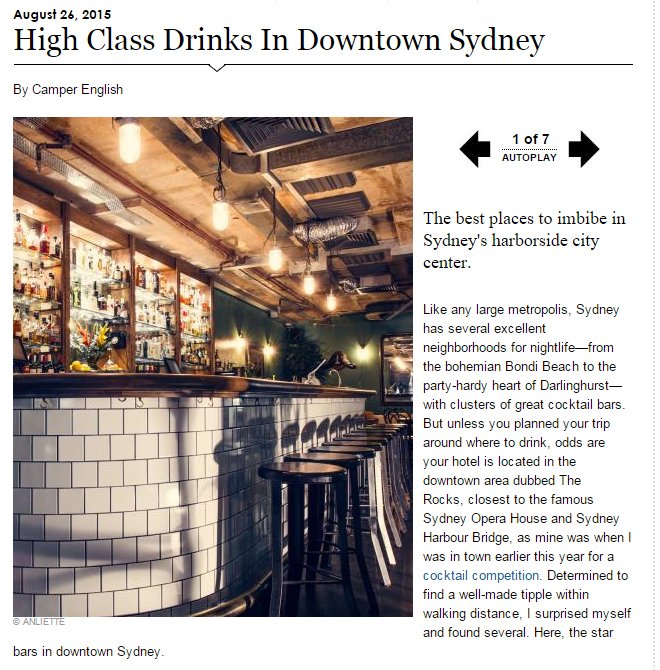
    While I was in Sydney for the Bacardi Legacy global cocktail competition earlier this year, I checked out a bunch of the bars.

    Here is a write-up I wrote for Departures.com of several of them more or less in the Downtown areas closest to the Opera House.


    Sydney bars


  • A Brief History of Popcorn in Cocktails

    In my latest piece for Details.com I wrote about the history and current status of popcorn in drinks, be it fat-washed in or garnished atop.  

    Details

    It turns out that a million different places are doing it, and I mentioned about half of them and the various ways they're incorporating the movie food into the drinks.

    Check it out here.


  • Natural Food (And Drink) Coloring Notes and Future Experiments

    I'm at the very beginning of some research into natural food colorings for my seminar on Prehistoric Cocktail Technology at Tales of the Cocktail this July in New Orleans. 

    Last week I was in my local hippie grocery store (this doesn't narrow it down much when you live in San Francisco) and saw a line of plant-based natural food colorings called Color Garden. I wanted to see if they declared what they used to make the colorings, and they did:

    Color Garden Food Coloring Label

    The colors used are:

    • Beet juice
    • Purple carrot juice
    • Turmeric
    • Red cabbage juice
    • Annatto (an orange tree seed)
    • Caramel color

    I am playing around with some of these flavors at home, dehydrating ingredients to concentrate them and adding them to water or vodka to make them liquid again. I'll keep you posted. 

    But an interesting thing to note is that while some of the colors have added citric acid, others have added baking soda: an acid and a base. Luckily, the website explained why this is the case for natural colors (content edited for clarity):

    10408778_394500390721029_7523786792890577741_nWarm colors (red, orange, and yellow) prefer an acidic environment. You might consider adding lemon juice.

    Cool colors (green, blue, and purple) prefer an alkaline environment. You might consider adding baking soda.

    Watch out for cream of tartar (in frosting). Cream of tartar lowers the pH of the icing (makes it more acidic), which is good for shelf-life, but this may limit pure natural food colors to the “warm” colors: red, orange, and yellow.

    This could be something to keep in mind if you/I want to use colors in cocktails, as they tend to be acidic rather than basic.


  • The Glorious Return of the Gibson

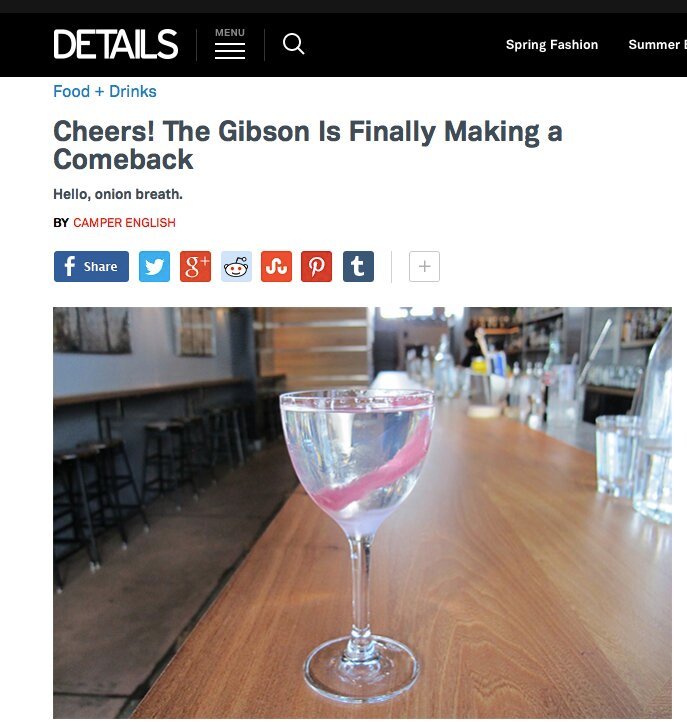
    Over the past year I've noticed the Gibson popping up on cocktail menus, so I decided to have a deeper look and write about it for Details.com. 

    Read the story here


    Screen Shot 2015-04-05 at 8.10.54 PM


  • Bars, Restaurants, and Sights of Lima, Peru

    In 2014 I visited Peru with Pisco Porton. In this post, I wanted to write up some places I visited in the city of Lima. I was only in town for about a day in a half, so I didn't see much. 

    Cocktail Bars and Restaurants in Lima

    Johnny Schuler's Key Club

    This restaurant is sort of like a speakeasy bar: It's open to the public, but there is no sign so you've gotta just know where it is. It looks very much like a place politicians and other power players would dine. I ate there with Schuler, who is the distiller of Porton. (He has a long history as a restaurateur and pisco television host before running his own distillery.) 

    Key Club Lima Peru Pisco Porton Tasting
    Key Club Lima Peru Pisco Porton Tasting

    amaZ

    This funky restaurant and bar in the Miraflores district specializes in fresh juices and herbs, with Amazonian ingredients in the food and drink and decor. There is a small central bar, lots of tables and chairs, and another dining room with wicker/rattan umbrellas over the top. 

    Amaz restaurant lima peru cocktail
    Amaz restaurant lima peru cocktail

    Malabar

    This restaurant has the same chef-owner as amaZ, but it's located in the San Isidro district. While it looked to be a ice restaurant, I sat at the bar and made friends with the bartender Jesus Avila Sovero. The restaurant is reportedly known for its Pisco Punch, which was sweet but nice. I also had a Chilcano (pisco and ginger ale) with anise; one with purple rice-infused pisco, tonic, and orange juice; and another with yellow tomatillo (that they call gooseberries). 

    This was definitely a good stop. 

    Malabar restaurant lima peru cocktails
    Malabar restaurant lima peru cocktails
    Malabar restaurant lima peru cocktails

    La Calesa

    The name means "buggy" or more likely "carriage" as you can see reflected in the hilarious laminated menu. Actually the whole place was pretty silly (located super close to Malabar) but I liked it. It is known for its traditional Pisco Sours, which are served double size.

    You can get those from a pre-batch or try any of the 16 pisco infusions featured on a shelf of jars. I had a Chilcano with camu-camu-infused pisco, as well as a touch of canela (cinnamon) pisco. I also tried the Algarrobina, which is sort of like eggnog but made with bean syrup. It was weirdly good. 

    La Calesa Restaurant Lima Peru Menu
    La Calesa Restaurant Lima Peru Menu
    La Calesa Restaurant Lima Peru Menu

    Huaca Pucllana

    This is a fancy/trendy restaurant adjacent to an ancient temple site from a civilization dating to 1000 years before the Incas. However it mostly looks like a pile of bricks. 

    The restaurant has a beautiful view though, over the ruins toward part of the city. 

    Huaca Pucllana temple Lima Peru7
    Huaca Pucllana temple Lima Peru7
    Huaca Pucllana temple Lima Peru7
    Huaca Pucllana temple Lima Peru7


  • 2500 Words on the Blood and Sand Cocktail

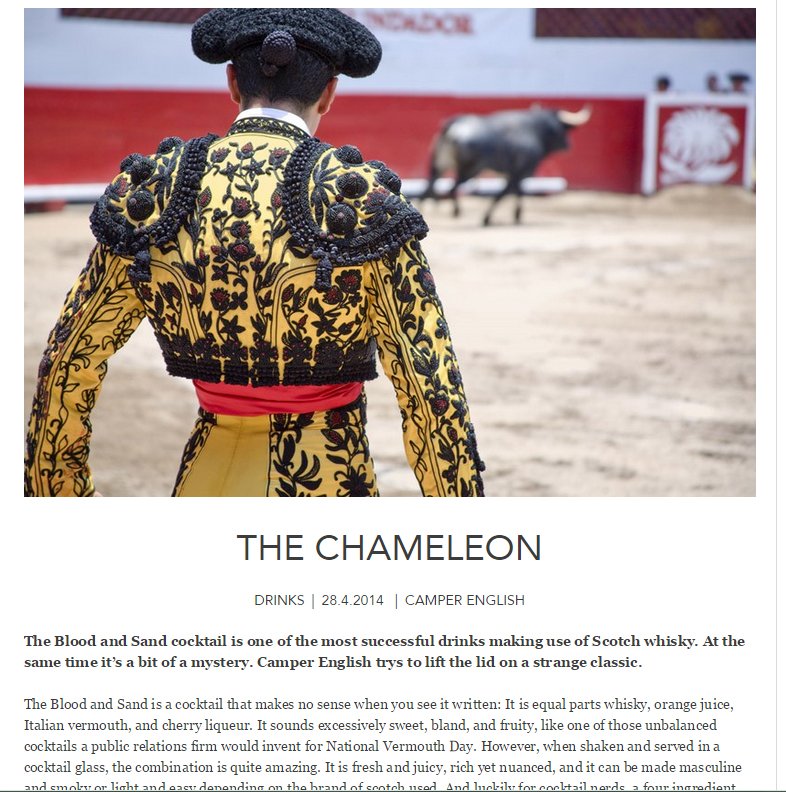
    A few years back I wrote a long feature about the Blood and Sand cocktail, made with scotch, cherry brandy, orange juice, and vermouth.

    It was written for the German magazine Mixology, but recently they have put the story online in the original English.

    Blood and sand

    For the story I covered the origins of the drink as best as I could find them, and many variations of the drink. There is a large discussion of the best type of orange juice to use, alternates to sweet vermouth and Cherry Heering, and how to find out if your flamed orange peel is spitting wax and pesticides onto your drink.

    Give it a read over at Mixology.eu.