Lost Lantern independent whiskey bottler released their Spring 2026 collection, which was themed as a collection of high vs low proof whiskeys.
The collection includes American single malts with unsmoked barley, Rocky Mountain bourbons with different mashbills, southern bourbons with different mashbills and malt influence, and rye whiskies with different ryes – and each of these sets of two whiskeys includes a low proof one (well relatively low proof at 50+ percent ABV) and a high proof one (as high as 77 percent ABV!).
These pairings are of the same styles, but not identical bottlings. In the same collection though, they include one for direct comparison:
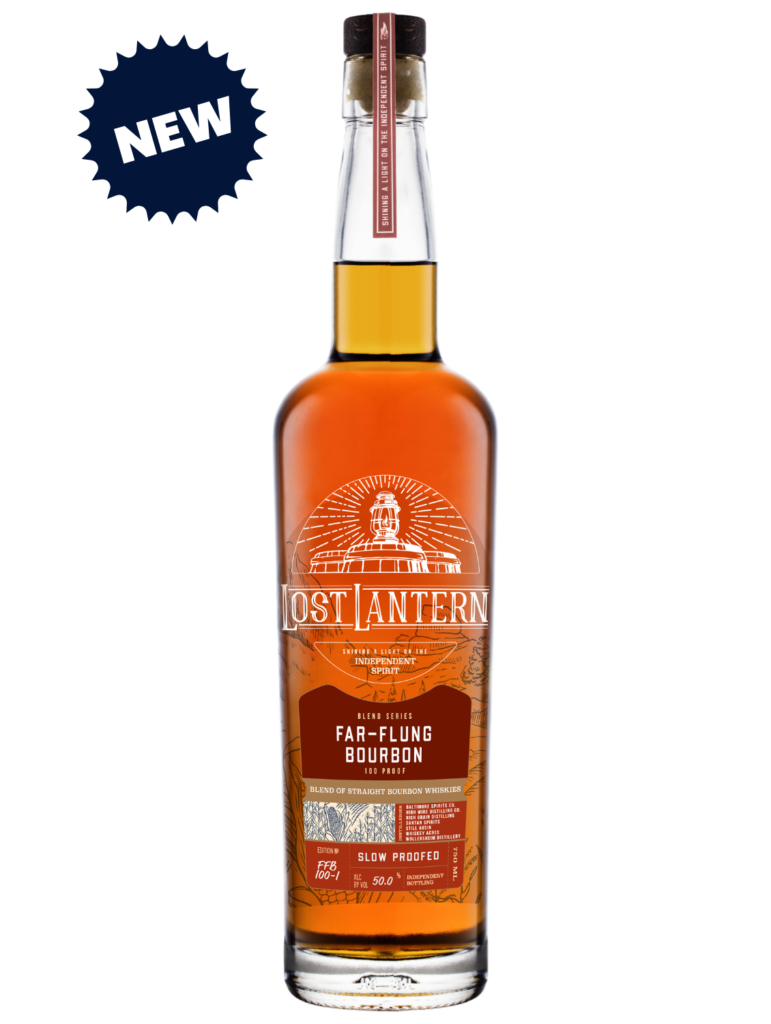
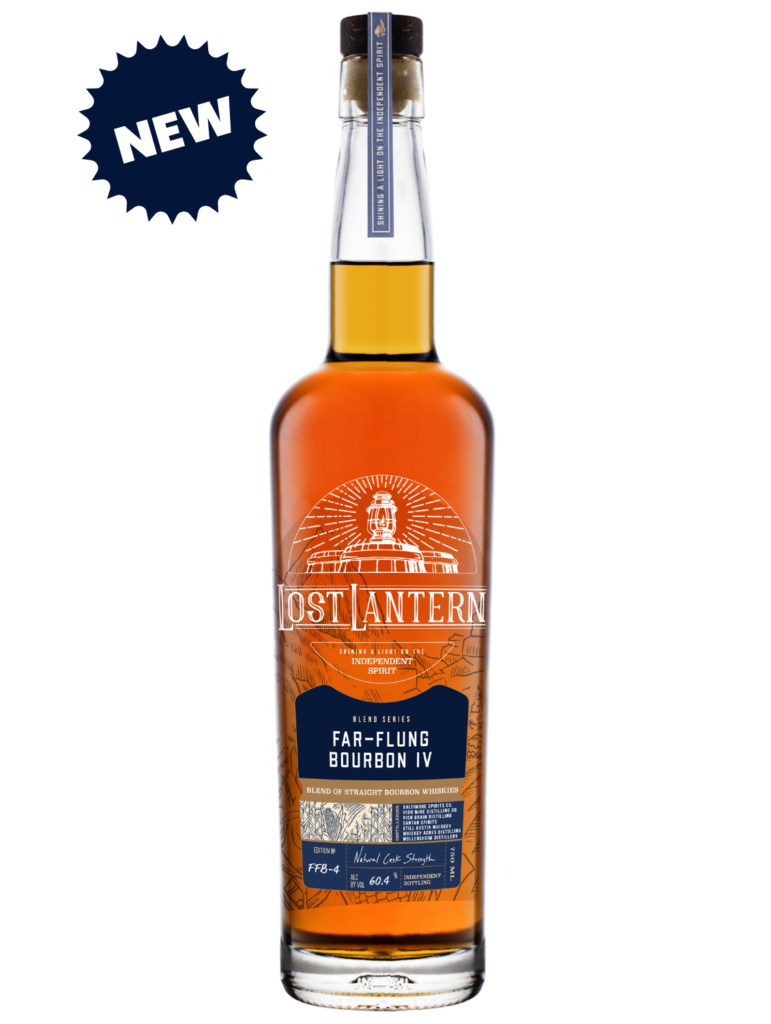
Far-Flung Bourbon IV 60% vs Far-Flung Bourbon 100 50%. These are both blends of straight bourbons from seven different distilleries in seven states:
Baltimore Spirits, Baltimore, MD
High Wire Distilling Co., Charleston, SC
Rich Grain Distilling, Canton, MS (ghost distillery)
SanTan Spirits, Chandler, AZ
Still Austin Whiskey Co., Austin, TX
Whiskey Acres Distilling Co., DeKalb, IL
Wollersheim Distillery, Prairie du Sac, WI
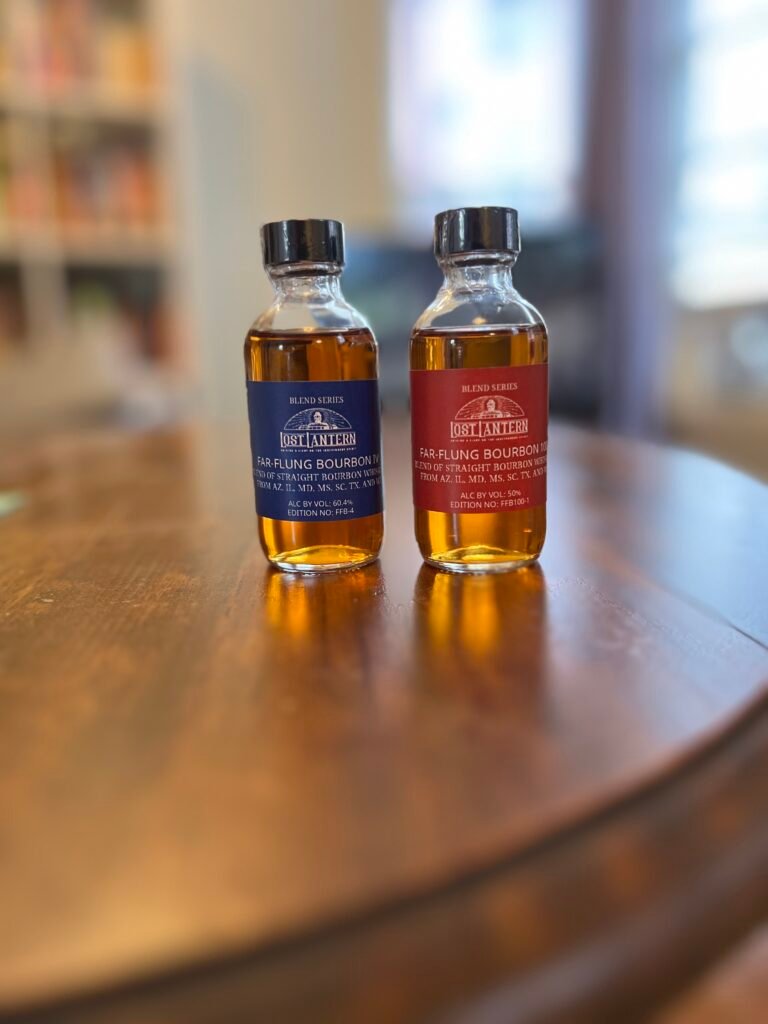
Comparing the 50% and 60% Bourbons:
Because they were kind enough to send samples, I compared the two.
I found the 50% ABV bourbon to be a little thinner on the nose than the 60% that smelled richer and woodier. The 50% tastes relatively hot for its proof, and seems like it’s going to be thin but really opens up to a buttery body with notes of mahogany wood (I used to have a mahogany desk) and copper, with a lot of other flavors flitting about, making it clear this isn’t a straight bourbon but a blended of straights.
The 60% bourbon also enters a bit thin, but like the 50% what seems like it would go right into wood flavors stays thick and almost syrupy, a touch of nuttiness; and rather than a finish, a lingering body. I think I like the 50% dilution better, but that’s typical for me.
The decision to bottle at a certain proof is a conversation between the distiller, who should find the proof at which a spirit/blend shines best (within the legal and typical parameters of its category), and the marketing team that may dictate products that speak to trends or holes in the current line – such as a need for older, high-proof American whiskey; or whiskey finished in a certain trendy barrel like mizunara oak.
Can You Dilute Your Own Whiskey, and Who Would Want To?
It’s rare that we are given the chance to compare the exact same blend of the same age at different proofs. Technically I could add the right amount of water to the higher proof one and reduce it to the lower proof that I prefer. So I chose to ask the bottlers if it would taste the same, or how they do it.
Lost Lantern Co-Founder Nora Ganley-Roper wrote, “At Lost Lantern we slow-proof our whiskey, which means that we gradually add water over the course of multiple weeks. We do this to ensure that solids don’t come out of solution when the water is added (i.e. saponification) but we also find that the mouthfeel of the whiskey is entirely different after slow-proofing. The process provides a creaminess that I don’t generally experience when I add drops to a glass or when I taste whiskey that has been proofed quickly. The profile is also more integrated than we see otherwise.
To be clear, I’m all for adding a few drops of water to your whiskey! I think it’s an important part of understanding the whiskey itself and is something we expect that people will do when I’m blending a whiskey. But, the whiskey you get won’t taste like our proofed version!”
So if you’re going to proof down your own whiskey, do it slowly – and probably with distilled water btw.
Who Proofs Down Their Own Whiskey?
There’s a huge trend toward high-proof, ‘hazmat’ strength whiskeys, which I think is largely macho bullshit, like seeking the smokiest scotch or the hoppiest IPA or… Malort. But people like it.
I decided to ask some people – specifically the people in a Facebook Bay Area whiskey group I am a member of. I asked, “Do you think of super high proof whiskeys as “whiskey concentrates” that you proof down, or do you enjoy everything at the super high strength.
The least number of people responded that they think of them as concentrates. The second least number of people (a much larger percentage) said that they drink everything at high proof. And probably 60 percent of responders said that it depends on the whiskey – that they like to try it and see. (Most wouldn’t be pinned down to name specific whiskies better at lower proof though.)
As for me, I *could* have done the math to slowly lower the 60% ABV Far Flung bourbon down to the 50% ABV version and compared the two, but not today. Today I mixed the two together and poured them over a big ice sphere. I’ll wait until the ice slowly melts to a point at which I’m enjoying the mix the most.
Leave a Reply