Author: Camper English

  • A New Clear Ice Ball Maker That Seems To Work Okay

    You may recall from a billion years ago I found a clear ice maker that works similarly to the directional freezing/Igloo cooler method. It was the Polar Ice Tray and I wrote about it here.

    Now the same company has launched a clear ice ball maker and they sent me one to test out. So that's what I did.

    Long story short: It worked great on my first trial, but not every time. 

    IMG_7100

    The Polar Ice Tray works just like the directional freezing method of making clear ice balls (read about that here or all the ice experiments on Alcademics here): The container is insulated on all sides but the top is not. The ice freezes from top-down, pushing trapped air and impurities downward. 

    What this product does is offer an easy way to get the water into the molds and the balls out afterward. It's shaped like a little tug boat. 

    IMG_2773

    The outer blue container is just softish foam. Inside there is a top and bottom half of the ball mold (this model comes with animal shapes that are pressed into the top), and a bottom water receptacle. 

    IMG_2778

    The bottom half is perforated so the cloudy part is pushed into the receptacle. To use it, you fill water in the little spout and then let it freeze for a day. Here it is after freezing. 

    IMG_7093

    IMG_7095

    The cloudy part of the ice is on the bottom. 

    IMG_7094

    Now for the big reveal. 

    IMG_7096
    IMG_7096
    IMG_7096

    It is super easy and the spheres are nice when they come out perfectly. It may be more space efficient than the insulated mug method for two spheres, depending on whether your freezer offers more horizontal or vertical space. 

    However, on subsequent uses, I've found the tray can separate during freezing, spilling water out the sides and making incomplete ice balls – only partial spheres because the water has leaked out the sides. So you need to make an effort to get a really good seal on the different parts that fit together. I tried and still failed twice. 

    So far I've used the tray 10 times and 7 of those times it worked and 3 times it failed. (For the record the insulated mug method has never failed me.) If I discover a good way to ensure a seal I'll update this post. 

    The tray is a bit pricey at $55 plus postage, but I spare no expense for ice! You can buy them on the Polar Ice Tray website.


  • A Daylong Visit to Cognac Hine

    I visited a bunch of cognac houses in the fall of 2014, and spent nearly a whole day with Cognac Hine at their vineyards, winery, distillery, and blending house.

    I didn't realize that there are 250 or so cognac houses, so my visit to less than 20 of them is small potatoes. The big potatoes belong to Hennessy, which makes 42% of all cognac. They, plus the other 3 of the Big Four houses, create 80% of cognac sold. Hine does about 1 percent of Hennessy's volume. 

    Vineyards for Hine Cognac Grande Champagne8

    The Vineyards

    Hine owns 70 hectares under vine in Grande Champagne but don't grow all of their own grapes – they produce about 25% of their own needs.  

    Cellarmaster Eric Forget says that in 2014 (I was there just before harvest) they expected to harvest grapes that would make 9.5% alcohol at about 3.4 pH. Just about all harvesting is mechanical in Cognac. Hine rents the picking machines and grape presses to make their portion of wine. 

    Forget says that vines in the region are typically sprayed to prevent mildew, and it is difficult to make organic wine in the region because of the humid weather. Near to harvest time, they can't spray anymore as that could get into the wine. 

    When the grape juice arrives at the winery, they start fermentation with dry yeast in stainless steel tanks at 17 degrees Celsius. They temperature control fermentation and storage because for cognac you can't add sulfur or anything else as a preservative while the wine waits to be distilled. 

    Vineyards for Hine Cognac Grande Champagne3
    Vineyards for Hine Cognac Grande Champagne3
    Vineyards for Hine Cognac Grande Champagne3
    Vineyards for Hine Cognac Grande Champagne3

    Distilling For Hine

    The distillery we visited isn't owned by the brand, but they're independent distillers who make almost all of Hine's brandy. (Hine is only 10% of the distillery's business on the other hand.)

    The wine that comes into the distillery is distilled up to 30% ABV after the first distillation. They do make a heads and tails cut after the first as well as the second distillation. The second distillation brings the spirit up to 70-72% ABV. Each distillation takes about 12 hours. 

    It takes approximately 10 liters of wine to produce 1 liter of spirit. 

    When a brand like Hine has wine distilled for them, they are able to specify certain distillation parameters. These may include whether or not to distill on the lees, that the heads cuts are 30 liters or whatever, how long the distillation time should be, the temperature of distillation, etc. 

    For Hine, they distill the wine on the lees, which are the bits of yeast and other bits left floating in the liquid after fermentation. Hine also specifies a smaller cut (meaning more heads in the spirit) but generally tells the distiller to do what they think is best. 

    I asked the distiller why a premium brand would direct the distillation of a smaller cut, which includes what we think of as more undesirable elements of the heads/tails into the spirit. He said that larger brands do larger cuts because its a 'safer' cut, but also probably results in less interesting brandy. 

    Distillery for Hine Cognac11
    Distillery for Hine Cognac11
    Distillery for Hine Cognac11

    Aging Cognac at Hine

    Forget says, "The philosophy of Hine is to use as little wood as possible," which means they're avoid woody flavors and wood influence. The use fine grain oak, and have their barrels toasted to a low level char. 

    They say that cognac won't improve in barrel after 50-60 years or so, and they'd transfer it to glass demijohns at that point. 

    Hine is a cognac that produces a lot of "Early Landed" cognacs, which are not aged in France but in England. By the way, I learned that the amazing grocery/liquor store in Sacramento, Corti Brothers, has a small specialty selection of early landed cognacs. 

    Hine cognac barrels2
    Hine cognac barrels2
    Hine cognac barrels2
    Hine cognac barrels2
    Hine cognac barrels2

    They also released a unique single-vintage, single-vineyard cognac called Domaines HINE Bonneuil 2005.

    Anyway, this visit was my last cognac house for my 2014 trip, and a beautiful way to end it. 


  • The Complicated Aging Process for Cognac, as Seen at Cognac Hardy

    In 2014 I visited several cognac houses, and had the pleasure to spend several hours with Benedicte Hardy of Cognac Hardy in their aging and blending facilities.

    We got really nerdy with specifics on aging cognac. But first, some background.

    Hardy specializes in luxury cognacs, and in general is blended in an "approachable" and "feminine" style. It's a very large operation, with 20,000 barrels aging at their warehouses valued at more than 50 million dollars worth of booze.

    It was Benedicte's father who made the company famous in recent years putting the emphasis on luxury. She herself has a law degree and is in charge of the US market, so there may be opportunities to meet with her at events in the States (and I'd highly recommend doing so if the occasion arises- she's a character). 

    Benedicte Hardy

    A Cognac Maker, Not A Distiller

    Hardy is not a cognac house that grows, ferments, and distills grapes, but they do work with a co-op of 200 growers. 

    The blender, Michael, buys spirit from Grande Champagne, Petite Champagne, Fin Bois, and Bon Bois. But he doesn't just purchase already-distilled wine, he goes to the distillery/wineries to taste before/after and helps direct the distillation if need be. He said that for example, if a wine is super aromatic he might instruct the distillery to distill on the lees, which will mark the spirit for longer aging.

    Regardless, he tastes the new-make spirit after purchase and makes a determination on which product they're destined for – VSOP, XO, etc. He says that 90% of the time the initial determination is correct and they won't have to redirect it off its appointed path later on.  

    Cognac Hardy9

    Aging Cognac Versus Other Spirits

    Many of the world's spirits, including nearly all scotch whisky, rum, and tequila, age in ex-bourbon casks. The wood has had its influence on the bourbon and vice-versa. So the next time that barrel is used to age rum or whatever, it will not have the same amount of influence on the color and flavor of the next spirit.

    In cognac and armagnac, on the other hand, they do not use ex-bourbon casks but new and used French oak barrels.  The wood gives a lot of influence when it is first used, and in the case of French oak it brings in lots of tannins along with flavor.

    So while bourbon ages only in new barrels for its entire life, cognac is usually aged only for a small amount of time in new barrels then it is transferred into older barrels for the rest of its life so that the wood doesn't take over. (One thing to note that in Cognac, a 'new' barrel means that it has been used for three years or less; it's doesn't necessarily mean brand new.) 

    In scotch whisky and rum and tequila, since they're using used barrels from the get-go, they don't have to worry so much about the over-oaking so they don't need to move the liquids around unless they feel like it. 

    Cognac Hardy3
    Cognac Hardy3

    Aging at Hardy

    So that was a lot of lead-up. Here is how the VSOP is aged at Cognac Hardy.

    1. The brandy is purchased at 70% ABV
    2. It is reduced with water down to 55% and put in Small  (220 liter), New barrels. (Note that a typical cognac barrels is 350 liters)
    3. The barrels are divided up – some are put into dry cellars and others are put into humid cellars. The ratio is a house secret. 
    4. At 18 months the barrels are moved into Dry cellars 
    5. At 24 months, the cognac is reduced to 47% ABV and placed in Humid Cellars
    6. After 5 years, the cognac is reduced to 43% ABV and placed back into Small barrels 
    7. After 8 years, the cognac is blended and reduced to 40%
    8. After another 6 months marrying, it is bottled. 

     Notes About That:

    • At each barrel transfer stage, the cognac is taken out from individual barrels and put into a big vat before dilution, then redistributed to the next barrels. No wonder cognac is so pricey.
    • Humid cellars at Hardy have about a 3% annual angels' share, while dry ones have 6%.
    • For longer-aged XO cognac, they put it into barrels that have been toasted for longer so that these will continue to contribute their toasted effects to it
    • XO has the same reduction with water scheme as the VSOP, but the toasting is different. (Additionally it is made from brandy that was more distilled on the lees than the younger brandies.)
    • Chill filtration before bottling is at -7 degrees Celsius for 7 days before running it through the filter

    Cognac Hardy bottles

    The $64,000 Tasting

    We were allowed to taste the highest of the high end Hardy cognacs bottled in Lalique decanters, which retail for $16,000 per bottle. They all come from the same stock of cognacs distilled in the 1920s-1940s, but are blended to bring out different aspects of each. 

    They are named for each of the four seasons, though currently only the spring (Le Printemps) is on the market. Summer launches in November 2015, and Fall and Winter will follow every 2 years from that.

    It's weird and rather awesome to be able to taste a cognac that won't hit the market until 2019. 

    Cognac Hardy le printemps
    Cognac Hardy le printemps
    Cognac Hardy le printemps

  • Cognac Deau Visit

    While in France last year, I had time for a quick unscheduled visit to the house of Deau Cognac

    Deau is located about 40 minutes from the town of Cognac, between the Fin Bois and Petite Champagne. They grow about 30 hectares of grapes, and buy wine from other growers (Fin Bois, Grande Champagne, and Petite Champagne) that they distill on-site. 

    IMG_1509
    IMG_1509

    The distillery itself is quite large, with 12 stills. 

    IMG_1531
    IMG_1531
    IMG_1531
    IMG_1531

    I met Véronique Bru Legaret, who along with her son heads up the company.  They actually produce three cognac brands: Deau, Moisans, and Roland Bru (named for Véronique's father, who brought the company into the current era).  

    Previously they sold all their cognac to large brands (I think they no longer do), but now seem to be emphasizing their luxury products. New fancy, sail-shaped bottles have just hit the USA market recently further emphasizing their luxury positioning. 

    I quickly tasted through most of the Deau line, and here are my nonsensical-as-usual notes:

    • VS: Tight but good
    • VSOP: Smells more mature than the VSOP bottling would suggest; sweet cream.
    • Napoleaon: 7-8 years old. Sweet yellow raisins. 
    • XO: Around 15 years old. Christmas spices including buttery cinnamon with a spicy/minty finish.
    • Black: Around 10 years old. Sweet and thin, meant for mixing.
    • Louis Memory: Supple, creamy, like a more mature version of the XO
    • L.V.O.: Stands for the French translation of "Life in Gold." Made from 1915, 1930, 1950 Grande Champagne cognacs. Banana, raisins, subtle and sandy. 

    IMG_1517

    A superquick but lovely visit!


  • A Visit to Merlet Cognac and Liqueurs in France

    The Merlet family has been distilling in France for 5 generations, but have only launched their own brand of cognac in recent years. They have a really interesting history that I learned on a visit to their chateau, vineyards, and distillery in 2014. 

    A Brief History of the Cognac Market

    • Many people from different countries around the  world (occupying as well as liberating armies) discovered cognac in World War II. The demand for cognac was very high globally after the war. 
    • In the 1960s based on the brandy's success, the region planted a lot of vines.
    • In the 1970s there was a big glut in the market, resulting in some economic problems for producers who over-planted and over-extended themselves.
    • Today those vines planted all those years ago are nearing the end of their lifespan and need to be replanted or maintained. 

    The Merlet family made wine and distilled cognac for many brands, including Hennessy until 2000. In the 1970s due to the market glut, the Merlet family diversified away from just making cognac into making liqueurs. Today the company's business model reflects both history and that same ingenuity.

    Merlet Today

    • Produces liqueurs including the Creme de Cassis for which they are particularly well-known
    • Makes their own brand of cognac, and produce an unaged brandy for the European market
    • Distill brandy for sale to cognac houses 
    • Produce Hypnotiq liqueur
    • Run the Leblon cachaca distillery in Brazil 

    Visiting Merlet – The Home and Vineyards

    I visited the family home, vineyards, wine production facility, distillery, and aging facility, which are scattered about the area of Saint Sauvant, a little village near Cognac with a 12th century church as its central feature. 

    The family home is Luc Merlet(my host for the day)'s father's house. It looks out over vineyards (they own 40 hectares) and was the former location of the distillery.

    Merlet Winery Cognac France3


    The house was also once the home of Baron Otard, who was a real person as well as the name of a Bacardi-owned cognac brand. That brand home is now located in a tourist attraction/castle/aging warehouse in the heart of the city of Cognac. 

    I visited the vineyards in the fall, about 10 days before they'd begin harvesting the ugni blanc grapes for distillation. (Ugni blanc is the same grape as Italy's Trebbiano.) These vineyards are in the Borderies delimited region, while the current distillery is in the Fin Bois. 

    Merlet Winery Cognac France6
    Merlet Winery Cognac France6
    Merlet Winery Cognac France6

    Making Wine for Cognac

    We then drove to the winery, where they receive the grapes, crush, and ferment them. Grapes are harvested over the course of just 3 weeks and made into wine, then the wine rests until they have a chance to distill it, which can be months away (by March 31 all distilling for cognac must be completed). The winery was a former co-op winery that they purchased.

    Ideal ugni blanc grapes for cognac production are low in sugar/alcohol potential, because distillation will concentrate all the flavors in the grape. The lower the potential alcohol the more times you need to concentrate it to reach the final proof, and thus the more you'll concentrate the flavors getting there. (For example, a 10% ABV wine would be concentrated 4 times to reach 40%, while a 5% wine would be concentrated by 8 times.) 

    Also, for cognac you cannot add sulfates to the wine to preserve it (as those would be horrible after distillation), so they want high-acid grapes. 

    Merlet Winery Cognac France 8
    Merlet Winery Cognac France 8
    Merlet Winery Cognac France 8

    Distilling and Tasting

    At the distillery, they have 9 stills, including a gargantuan 100 hectoliter still. This huge one can only be used for the first distillation; smaller ones will be used for the second. 

    Merlet Distillery Cognac France4
    Merlet Distillery Cognac France4
    Merlet Distillery Cognac France4

    Merlet's Brothers' Blend cognac (named for Luc and his brother) is a VSOP aged between 4-12 years and created for mixing in cocktails. 

    They recently released the first of the Seleccion Saint Sauvant cognac, which is a higher-end bottling. 

    The flagship of the liqueur line is their Creme de Cassis. Legally creme de cassis must have a minimum of 400 g/l sugar added, but theirs has 500-550 g/l according to Luc Merlet. He says the local blackcurrants (which are the only of the fruits for liqueurs that they grow themselves) require more sugar. 

    Merlet infusion tank

    Luc Merlet mentioned a traditional cocktail that is a mix of Cassis and Suze, sometimes with soda added. It has a name that means "panty bottom." 

    Merlet has also released a couple of liqueurs branded as C2, for Cognac and Cassis and Cognac and Citron. These are meant to be premade aperitifs meant for mixing with ice and soda water. 

    Merlet products

    That was a lot of information gleaned from such a short visit! Thanks for Luc Merlet for hosting. 


  • Distillery Visit: Bunnahabhain Single Malt Scotch Whisky on Islay

    In 2014 I visited the Bunnahabhain (boo-nuh-ha-bin) distillery on the island of Islay off the western coast of Scotland. Bunnahabhain is the northernmost distillery on Islay (home to whiskies including Laphroaig, Bowmore, and Ardbeg) with the Paps of Jura just across the water. They call Bunnahabhain "the welcoming taste of Islay" because unlike those other scotch whiskies, Bunnahabhain is mostly not smoky and heavy.

    Bunnahabhain Distillery Islay Scotland outside2
    Bunnahabhain Distillery Islay Scotland outside2
    Bunnahabhain Distillery Islay Scotland outside2

    Not So Smoky

    It wasn't always that way. Until 1963, according to Distillery Manager Andrew Brown, Bunnahabhain made smoky Islay-style whisky. In olden days, they used to malt the barley on-site, but now the old malt hall holds barrel aging facilities.

    Now they use unpeated barley (less than 2 ppm phenol) for most of their whisky except special editions. Those take place during only a few weeks during one period of the year. In 2014 the were doing 9 weeks of peated malt distilling, using barley with a phenol level of 35-40 parts per million. Malted barley is delivered to the island and ground on-site.

    Bunnahabhain Distillery Islay Scotland malt mill
    Bunnahabhain Distillery Islay Scotland malt mill
    Bunnahabhain Distillery Islay Scotland malt mill

    It is then washed with hot water to wash out (and keep) the fermentable sugars and leave behind the solids. The mash tun holds 50,000 liters.  

    While most scotch whiskies (at least most that I've visited) wash the barley three times, with the last wash going to the next batch, at Bunnahabhain they wash it four times with the last two washes going to the next batch. Not sure why. 

    If I got this right, the barley contains 20% fermentable sugars going into the wash, and sugars are washed out (to go to fermentation) at each step:

    • 64 Celsius water brings the sugar content down to 15%
    • 80 Celsius water bring it down to 5%
    • 90 Celsius water for both the second and third washes brings it down to basically zero.

    Bunnahabhain Distillery Islay Scotland mash tun4
    Bunnahabhain Distillery Islay Scotland mash tun4
    Bunnahabhain Distillery Islay Scotland mash tun4

    Fermenting and Distilling

    The sugary liquid is now ready for fermentation, which is done is one of six wash-backs. The liquid ferments for either 48 hours (on Mondays and Tuesdays so they can distill the fermented beer later in the week) or 110 hours (on Wednesdays, Thursdays, and Fridays, as these will be distilled the next week after the weekend). Brown said this doesn't make a change in the final spirit's flavor after distillation, but they do blend together the spirit made from the two different fermentation times before barreling anyway. 

    Bunnahabhain is the only distillery on the island to use pure spring water for fermentation. Much of the water for other distilleries starts at one place on Islay and runs over peat bogs on the way down to the distillery, but Bunnahabhain pipes their water 2 miles from the spring so it doesn't run through peat.   

    Bunnahabhain Distillery Islay Scotland wash back1
    Bunnahabhain Distillery Islay Scotland wash back1

    The stills here are the tallest on Islay, all packed into a little still room. Two of the stills are quite old, while the other two were added in 1963 along with other equipment when the distillery changed format from Islay-style to unpeated scotch. 

    When they distill peated whisky during those few weeks of the year, they take different heads and tails cuts on the second distillation as opposed to when they're distilling unpeated whisky. 

    Bunnahabhain Distillery Islay Scotland stills 11
    Bunnahabhain Distillery Islay Scotland stills 11
    Bunnahabhain Distillery Islay Scotland stills 11

    Water used to bring the newly-distilled whisky down to barrel proof is the same spring water used in distillation but run through a 5 micron particle filter and then a UV light filter.

    All of the single-malt whisky made by Bunnahabhain is aged on Islay. They have 21,000 casks aging locally in 6 dunnage and 1 racking warehouses. Whisky for the blends ages on the mainland. 

    The whisky is bottled on the mainland outside of Glasgow, using the same water that Deanston does (demineralized municipal water). 

    Bunnahabhain sells about half of the whisky they make to other brands for use in blends. Of the remaining half, 10-20 percent of it is sold as Bunnahabhain single-malt, while the rest goes to their own blends. The parent company Burn Stewart produces Scottish Leader and Black Barrel blends. 

    Quick Tastes 

    I visited the distillery during Feis Ile (more on that later), which didn't give a lot of time for quiet contemplation, but here are a few notes on what I tasted. 

    • Bunnahabhain 12 year old: A mix (not a finish) of whisky aged in ex-bourbon and ex-sherry casks. It has a lot of nutty flavors, dried fruits, and a whisp of smoke. 
    • 18 year old: Aged in ex-sherry barrels. It is softer yet spicier than the 12 year, and richer due to that sherry influence. My tasting notes, which you should know by now don't make sense to anyone but me, describe it as "rosemary stems and velour tracksuit in dark green."
    • 25 year old: First and second-fill ex-sherry casks. Rich, lovely, wood-soaked and showing the good qualities of age. 
    • Toiteach: From peated barley aged in bourbon and sherry casks. Young canned peaches and ash, a touch of hospital, interesting and well-made. 
    • Helmsman's Dram (a special edition for the festival): Aged 9 years in ex-bourbon then 1 year in a Marsala cask. Seemed Marsala-influenced (old wood tastes), "chicken jerky and chocolate covered salty raisins."
    • Westering Home (also a festival edition): 10 years in ex-bourbon casks then 6 years in cognac casks then 1 year in Sauternes. To me it tastes like Bunnahabhain  with a touch of wine and spice. 

    Bunnahabhain Distillery Islay Scotland chocolate pairing2
    Bunnahabhain Distillery Islay Scotland chocolate pairing2
    Bunnahabhain Distillery Islay Scotland chocolate pairing2


    It was a great day on Islay and my third visit to the island, yet I can't wait to go back again. 


  • Distillery Visit: Deanston Single Malt Scotch Whisky

    The Deanston distillery is located just a half an hour's drive north of Glasgow, Scotland (and not far from Edinburgh either), near the town of Stirling alongside the River Teith. It's just barely in the Highlands and has that honey-forward flavor I associate with the lower Highland area. 

    Deanston map
    Deanston map
    Deanston map

    In addition to producing single malt scotch whiskies, Deanston is the "spiritual home" of the Scottish Leader blended scotch brand. The distillery is open to the public for tours. 

    Deanston Scotch Whisky Distillery original label painting
    Deanston Scotch Whisky Distillery original label painting

    The River Teith is the source not only of water for distillation, it is the power source of the distillery. River water flows into the distillery and passes through a hydro-electric station. They use only 25% of the power generated to supply the distillery (they say it is the only self-powered distillery in Scotland), and sell the rest of it back to the national power grid. 

    Deanston Scotch Whisky Distillery hydro electric station
    Deanston Scotch Whisky Distillery hydro electric station
    Deanston Scotch Whisky Distillery hydro electric station

    Previously the water powered a huge water wheel to accomplish the same thing. The distillery was originally built as a cotton mill. Here's a brief overview of the history:

    • 1785 The Deanston Cotton Mill opened. The cotton mill employed and housed a whole town (the houses are still a few hundred yards away), printed their own currency, and offered schools and other services for the workers. 
    • 1965 The mill closed.
    • 1967 The mill reopened as a distillery. The weaving shed became the barrel warehouse.
    • 1974 The first Deanston single malt was released
    • 1982 The distillery closed in the bad whisky economy that was about to turn around
    • 1991 The distillery reopened in the good whisky economy from the 1980s
    • 2000 Deanston received certification to produce organic whisky
    • 2008 Deanston begins bottling only non-chill-filtered single-malts

     Making Whisky at Deanston

    For Deanston's single malts they use all un-peated barley (less than 2ppm phenol), and soft river water that flows over granite (so no peat in there either). 

    Their malt mill is a Porteus mill, which is so sturdy they've only had to recalibrate it twice since the 1960s. Unfortunately for the company they made their machines so well they went out of business as people didn't tend to need to buy new ones. The mill grinds the malted barley but does not separate out the husks.

    Deanston Scotch Whisky Distillery malt mill sign
    Deanston Scotch Whisky Distillery malt mill sign
    Deanston Scotch Whisky Distillery malt mill sign

    They have a rare, huge open-top mash tun that holds 11 tons of barley/water though they do 9-ton mashes. Mashing is where the ground barley is washed with hot water to release sugars and leave behind the solids. As is typical, they wash the grains three times with different temperature waters:

    • 64 Celsius water: Gets the enzymes out of the barley without destroying them, along with some sugars. (These enzymes will help break up the larger sugars so they can be fermented by yeast.) The sugary/enzyme water goes toward fermentation. 
    • 78 Celsius water: To remove the majority of the sugars. The sugary water goes toward fermentation. 
    • 88 Celsius water: To remove last bits of sugar. The sugary water goes into the next mash (the next batch) rather than into fermentation. 

    Deanston Scotch Whisky Distillery mash tun

    There are 8 washbacks, 60,000 liter steel (not stainless) tanks. Yeast is added to the sugary water for fermentation. Yeast comes in liquid form via tanker. Yeast is combined with the wort (sugar water) at about 19-20 degrees Celsius. During fermentation, the liquid naturally heats up then cools at the lend. 

    They do a long fermentation- 100 hours- that includes a secondary fermentation to bring in fruity, green-apple notes.

    Distillation and Aging

    Then it's time for distillation. At Deanston they have 4 stills – 2 wash stills (first distillation) and 2 spirit stills (second distillation). 

    The first distillation in a 15,000 liter still brings the fermented beer from 8% ABV up to 23-25%. They don't make any heads/tails cuts in the first distillation. The second distillation in a 14,000 liter still takes the spirit up to an average of 68% ABV. 

    The lyne arm/swan's neck of the still tilts slightly upwards at an angle, which also helps produce a lighter, fruitier style of Highland whisky. 

    Deanston Scotch Whisky Distillery stills5
    Deanston Scotch Whisky Distillery stills5

    During distillation, they manually adjust the stills to prevent over-foaming – the distiller looks into the windows of the stills and cuts down the temperature if it's foaming all over the place.  They boil the spirit at a relatively low temperature to increase reflux/copper contact, which also helps produce a light spirit.  

    New make spirit goes into barrels at 63.5% ABV. The water used to reduce the spirit to barrel proof is river water that has been treated with a UV filter to ensure nothing grows in it. The barrels, 50,000 or so of them for their single-malts, are stored in the former weaving shed – a unique aging facility in Scotland.

    This building has a ceiling (unfortunately difficult to photograph) similar to sherry bodegas with tall cathedral-style arches and central poles that collect water from the roof down through their middles. The high ceilings were to maintain consistent temperature year-round (better for the sewing equipment) and were covered with grass. 

    Deanston Scotch Whisky Distillery aging warehouse2
    Deanston Scotch Whisky Distillery aging warehouse2

    There is only a 5-6% temperature change in the warehouse during the year, which gives them less than a 2% evaporation rate (angels' share). 

    To bring the whiskies down to bottle strength, they use municipal water that has been demineralized on-site using a resin bed filtration system. They do not chill filter their whiskies, but they run them through a paper filter before bottling at room temp. 

    Deanston Whiskies

    • 12 Year – The flagship product, with tastes of biscuit and ginger spice. All the whiskies have a honey note. 
    • Virgin Oak – No age statement whisky aged in ex-bourbon casks of various ages, then finished in virgin oak casks from Kentucky for 9-12 weeks.  My host and brand ambassador for the Burn Stewart Distillers whiskies, Dr. Kirstie McCallum, calls the Virgin Oak a "summer whisky."
    • Spanish Oak – Aged 10 years in ex-bourbon casks then 9 years in ex-Spanish brandy barrels, with dried fruits and nutty sherry notes. 
    • Sherry Cask – I think this was a limited edition, aged for 10 years in ex-Oloroso sherry barrels
    • 1974 – Aged 37 years in ex-Oloroso sherry casks, yet it still comes in at 50.3% ABV (showing their super low angels' share). It has rancio, ashy, high vinegar notes of super old sherry. 

    Deanston Scotch Whisky Distillery tasting2

     My trip was hosted by the parent company, Burn Stewart Distillers, who also own Bunnahabhain, Tobermory, Ledaig, Scottish Leader, and Black Bottle. I also visited Bunnahabhain and will write about that more in another post. 

     By the way, Deanston was my 100th distillery visit! 

  • Dunder and Dragons: Making Rum at Lost Spirits Distillery

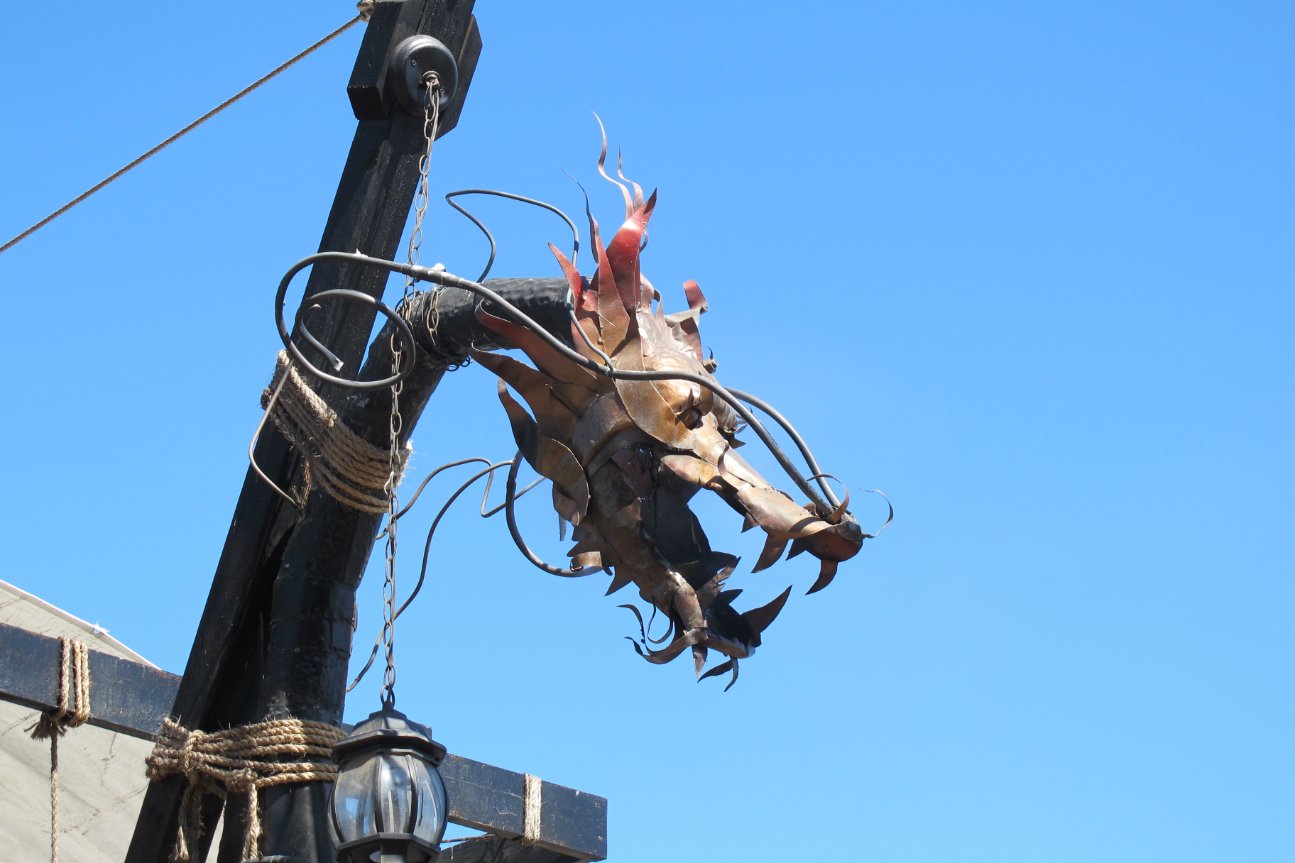
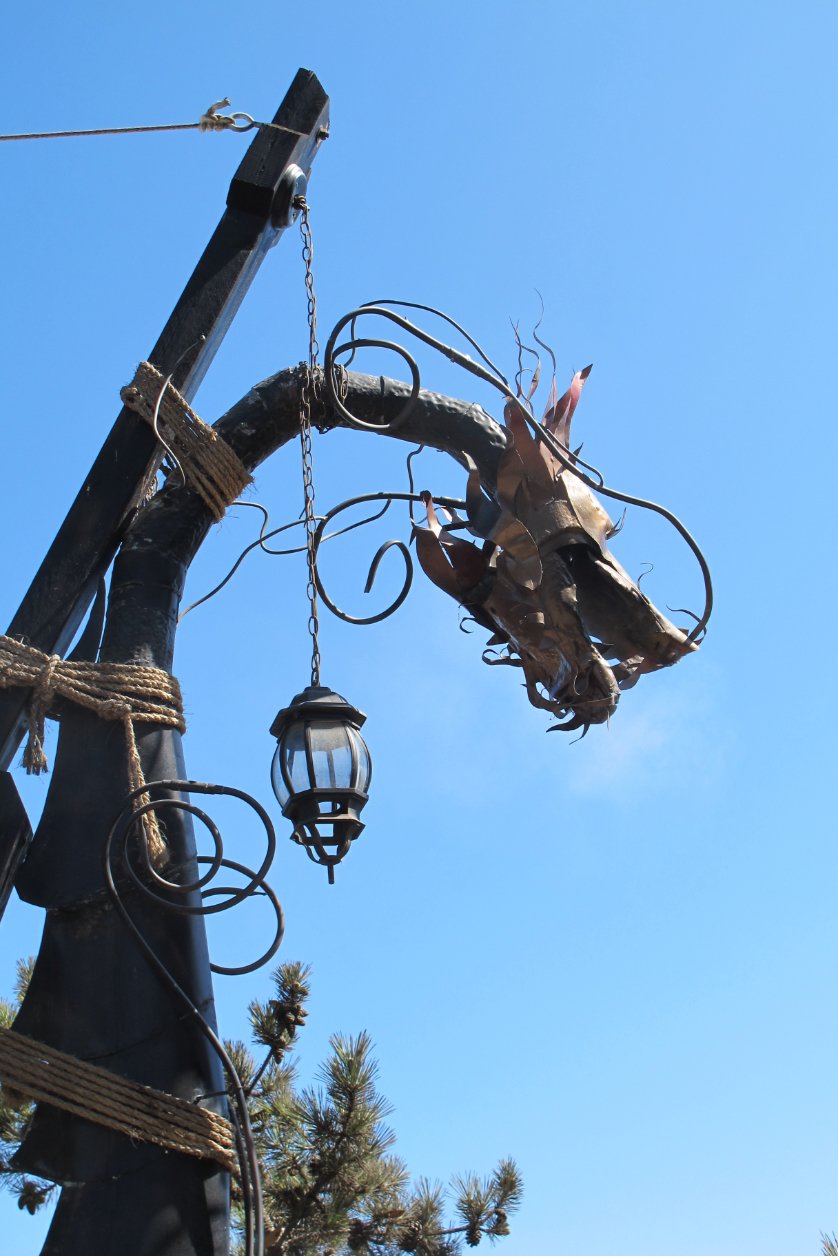
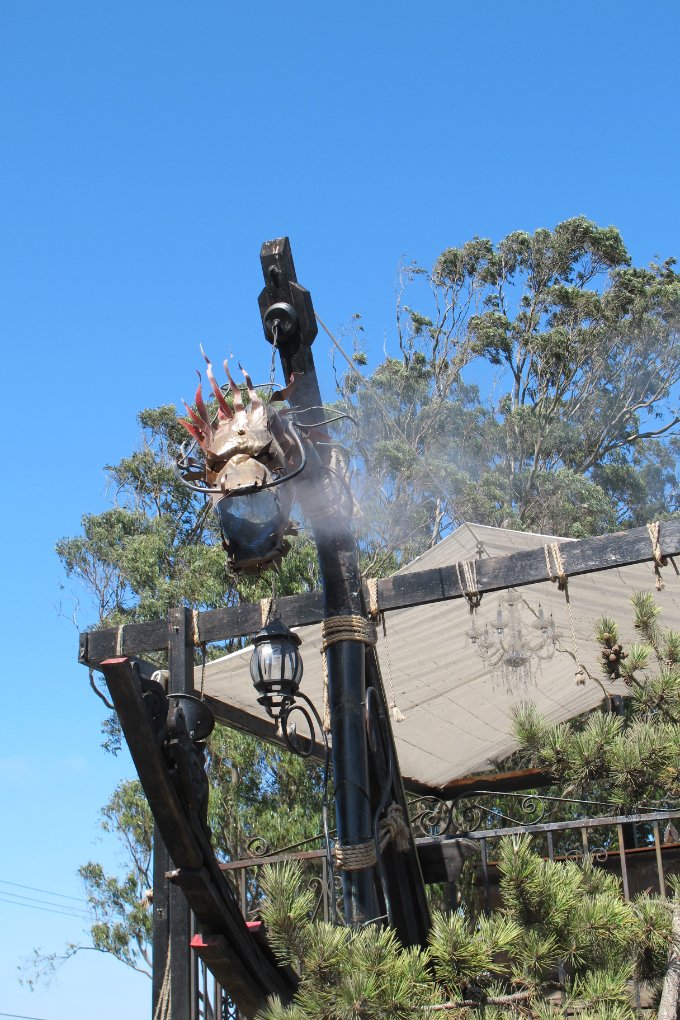
    Lost Spirits Distillery in Monterey County, California, is a kooky little place, resembling more a back yard miniature golf course than a typical distillery. Most of the equipment is outdoors, including the pot still that's shaped like a dragon, miniature grain-smoking pagoda, and the above-ground pool that serves as the cooling water for the condenser. 
    IMG_1469

    The distillery is run by Bryan Davis and Joanne Haruta. You may remember them from several years back when they ran a distillery in Spain that produced Obsello absinthe and Port of Barcelona gin. Davis is a former art teacher and zoo exhibit designer but he has picked up more than a little bit of chemistry as we'll soon see.

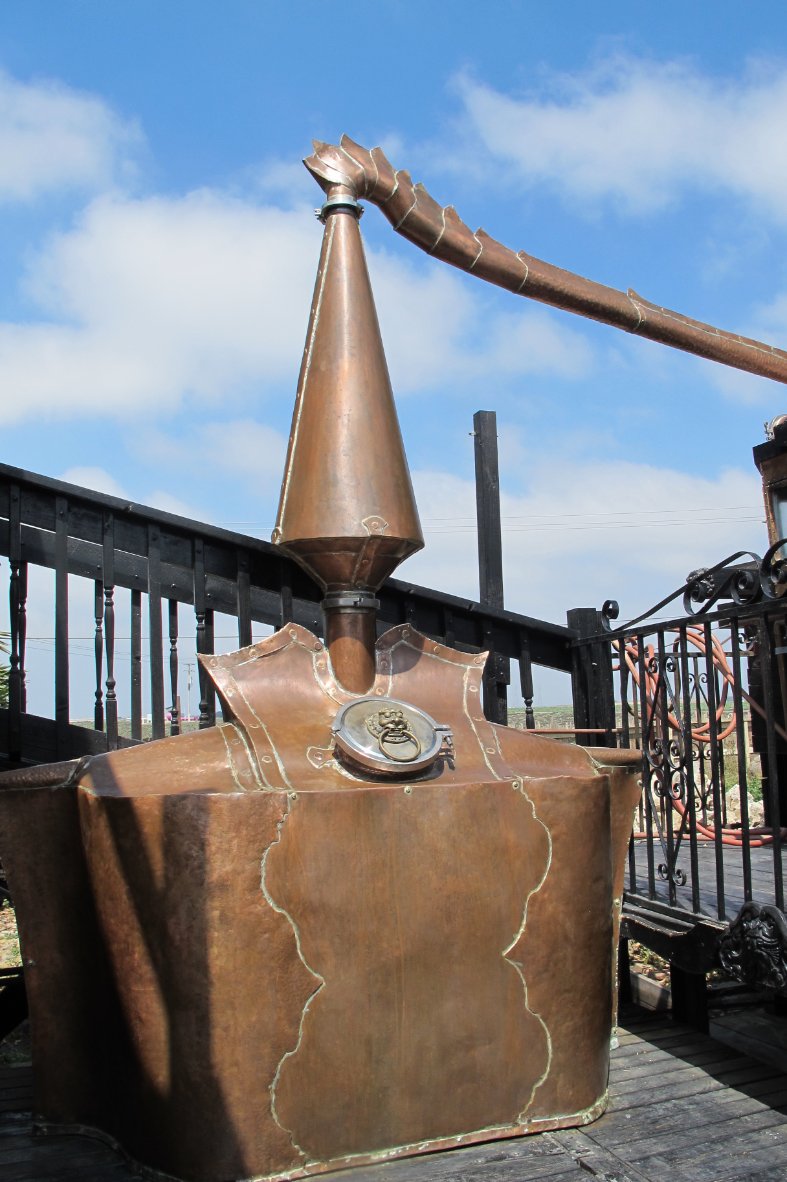
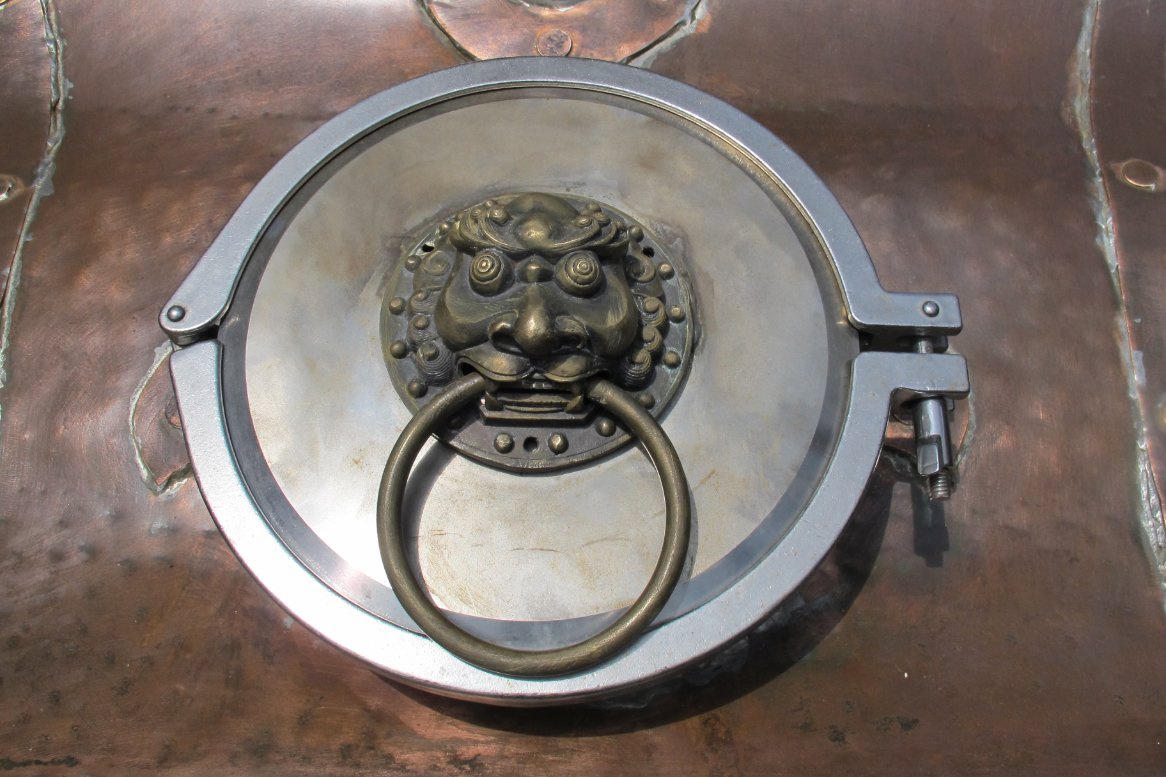
    So, that dragon-shaped pot still: It's powered by an old apartment building steam boiler for heat. The body of the still (300 gallons) looks like a big barbecue grill but it's made out of roofing copper. The shape was built in a way to minimize removing flavors, rather than rectifying much like tall round pot stills. Davis says, "We engineer the fermentation so much that we want to capture more of the flavor in distillation."
    IMG_1424
    IMG_1424

    The dragon tail is the lynne arm, which dips into a horizontal condenser. The water for the condenser comes from the bottom of a swimming pool, which heats up over the day of distilling, sometimes reaching 100 degrees Fahrenheit.

    With their old still, which was built out of wood, they would hop in the warm pool at the end of the day and use it as a hot tub. But chlorine and wood doesn't mix – the still actually got corked and they had to replace it. (For those of you barrel-aging cocktails, never rinse your barrels with chlorinated tap water for this reason.)

    Davis would like you to know that the pool water does not actually go into the whiskey; it stays in the pipes for cooling purposes only. 

    The dragon's head is a steam release, so while distilling steam shoots out its mouth. 
      IMG_1467
    IMG_1467

    Making Rum at Lost Spirits

    At this distillery they make whiskey and rum. The whiskey I wrote about for Whisky Advocate and I'll try to publish some more info here when the story comes out. 

    We watched an incredibly scientific Powerpoint presentation about the rum called, "Engineering Rum: The Fruit Nature Forgot to Make." I'll cover what I think I learned from it. 

    There will probably be some mistakes in the below text, so please don't take it as gospel but as starter info for further exploration. 

    • The goal, in part, as Lost Spirits, is to make high-ester rum 
    • A given rum may have up to 300 unique esters
    • Simple phenol smell is that familiar Band-Aid smell, but phenols as a group are a category
    • To make a high-ester rum, you need to make acids
    • Phenolic acids come from when we burn things. (In scotch whisky we're always talking about the phenol content of smoky whiskies.)
    • Lignin in sugar cane contains phenols you release by heating
    • For their rum, they want to start with a molasses that has high phenolics; has low anisoles (anise flavors); and is free of sulfur compounds. They use Grade-A molasses particularly for the latter reason. 

    Dunder

    • Rum nerds have heard about dunder pits- pits of decaying vegetation (and sometimes things like a rotting goat head) in wood-lined pits, found in old distilleries particularly on Jamaica. 
    • These pits acts as a bacteria starter. To these pits distillers in the olden days added stillage from distillation (the leftover stuff from distilling).
    • Then the dunder pit contents would be added to fermenting molasses to increase the esters in the rum distilled from it. 

    At Lost Spirits, they imitate the dunder pit process in a more… clean way. They mash up bananas and add lab-controlled bacteria to it. Then they add this to the fermenting molasses.  

    In the process of fermentation, there is a battle of yeast versus bacteria. The byproduct of yeast's battle against bacteria is acetic acid and trace carboxylic acid. Yeast under stress bind acids to alcohol and make esters. They accomplish this stress by adding dunder to yeast.

    As the goal is to get funky, stanky (high-esther, high-acid) rum out of the still, their still is a low-rectification model (short and squat). This will allow more of these compounds to pass over in distillation.  

    Aging Rum at Lost Spirits
    RumOne flavor they want to get out of their rum is a honey flavor, which is phenol-ethyl acetate. This comes from ethyl acetate (ester) plus phenol. And the ethyl acetate comes from from acetic acid (that comes from wood, yeast, and bacteria), wood as a catalyst, and ethanol. 

    Got that? Yeah me neither but sorta. 

    To age their rum they use new American oak barrels, smoked and charred to release lots more esters. These barrels are then seasoned with sherry. 

    Another flavor they want to crank up in their rum in rancio, a flavor found in old cognac and other spirits but that usually doesn't turn up until about 30 years of aging. However, Davis notes that it shows up earlier in solera-aged spirits, which are aged in super old barrels.

    Rancio comes from lignin (from long-aged wood barrels) decomposing in liquid. So they have figured out a way to copy this process and are patenting it. So all I know is what they're doing; not how. 

    Rums Coming Out of the Distillery

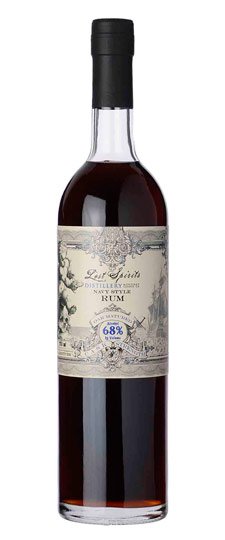
    Rums coming out of the distillery come in small batches and include Navy-style rum, Cuban-style rum, Colonial American-style rum, and Polynesian-style rum. I'm not sure what the difference is between the various styles, but they're all high-proof.

    I believe that the navy-style rum is the easiest to find. Some of it comes in at a whopping 68% and retails for about $45, which is an absurd bargain. 

    Science is delicious! 


  • Peru, Bird Poop, and the Birth of the Agro-Industrial Complex

    Last year while on a trip to Peru with Pisco Porton, we took a side trip to Las Islas Ballestas near the town of Paracas. The islands are important bird habitats, but more importantly they're covered in bird poop.

    Peru is an exciting country for drink nerds like me, as it is the birthplace of the potato, pisco, and the cinchona tree that produces quinine for tonic water. I didn't realize until recently that it was also the birthplace of the international guano industry, perhaps the world's first exported industrial fertilizer. 

    Guano, the bird poop that covers these ocean islands, is high in nitrogen, phosphate, and potassium, according to this surprisingly rich guano history page on Wikipedia. It is such a good fertilizer that it was exported to Europe in an era of Peruvian history from the 1840s to the 1870s called The Guano Age.

    (Much of the harvest of guano was performed by Chinese indentured servants, which is probably only interesting to me in that the same populations were dragged around the world to harvest sugar cane after slavery was abolished; another tie-in to the global booze business.)

    Recently, DNA testing has revealed that the Irish Potato Famine of 1845-52 may have been caused by new potato varieties imported along with Peruvian guano to Europe.

    And the end of international potato blight was the development of even more agro-chemicals, this time synthetic ones designed to cure the potato of the disease. 

    History is amazing.

    Here are some pictures from my visit to Las Islas Ballestas. 

    Ballestas Island Boat Tour Paracas Peru pelicans2
    Ballestas Island Boat Tour Paracas Peru pelicans2
    Ballestas Island Boat Tour Paracas Peru pelicans2
    Ballestas Island Boat Tour Paracas Peru pelicans2
    Ballestas Island Boat Tour Paracas Peru pelicans2
    Ballestas Island Boat Tour Paracas Peru pelicans2


  • Bars, Restaurants, and Sights of Lima, Peru

    In 2014 I visited Peru with Pisco Porton. In this post, I wanted to write up some places I visited in the city of Lima. I was only in town for about a day in a half, so I didn't see much. 

    Cocktail Bars and Restaurants in Lima

    Johnny Schuler's Key Club

    This restaurant is sort of like a speakeasy bar: It's open to the public, but there is no sign so you've gotta just know where it is. It looks very much like a place politicians and other power players would dine. I ate there with Schuler, who is the distiller of Porton. (He has a long history as a restaurateur and pisco television host before running his own distillery.) 

    Key Club Lima Peru Pisco Porton Tasting
    Key Club Lima Peru Pisco Porton Tasting

    amaZ

    This funky restaurant and bar in the Miraflores district specializes in fresh juices and herbs, with Amazonian ingredients in the food and drink and decor. There is a small central bar, lots of tables and chairs, and another dining room with wicker/rattan umbrellas over the top. 

    Amaz restaurant lima peru cocktail
    Amaz restaurant lima peru cocktail

    Malabar

    This restaurant has the same chef-owner as amaZ, but it's located in the San Isidro district. While it looked to be a ice restaurant, I sat at the bar and made friends with the bartender Jesus Avila Sovero. The restaurant is reportedly known for its Pisco Punch, which was sweet but nice. I also had a Chilcano (pisco and ginger ale) with anise; one with purple rice-infused pisco, tonic, and orange juice; and another with yellow tomatillo (that they call gooseberries). 

    This was definitely a good stop. 

    Malabar restaurant lima peru cocktails
    Malabar restaurant lima peru cocktails
    Malabar restaurant lima peru cocktails

    La Calesa

    The name means "buggy" or more likely "carriage" as you can see reflected in the hilarious laminated menu. Actually the whole place was pretty silly (located super close to Malabar) but I liked it. It is known for its traditional Pisco Sours, which are served double size.

    You can get those from a pre-batch or try any of the 16 pisco infusions featured on a shelf of jars. I had a Chilcano with camu-camu-infused pisco, as well as a touch of canela (cinnamon) pisco. I also tried the Algarrobina, which is sort of like eggnog but made with bean syrup. It was weirdly good. 

    La Calesa Restaurant Lima Peru Menu
    La Calesa Restaurant Lima Peru Menu
    La Calesa Restaurant Lima Peru Menu

    Huaca Pucllana

    This is a fancy/trendy restaurant adjacent to an ancient temple site from a civilization dating to 1000 years before the Incas. However it mostly looks like a pile of bricks. 

    The restaurant has a beautiful view though, over the ruins toward part of the city. 

    Huaca Pucllana temple Lima Peru7
    Huaca Pucllana temple Lima Peru7
    Huaca Pucllana temple Lima Peru7
    Huaca Pucllana temple Lima Peru7