Blog

  • The 2021 Best Drink Books Round-Up

    Makephotogallery.net_1637959840342For the past bunch of years, I've done a round-up of all the drink books (mostly cocktails and spirits) that have come out during the year, in consideration for gifting. I'm not doing that this year, as there are too many cocktail books, and if you want to see them all, you can visit these posts:

    But I decided to do a Best-Of list. Importantly, I must note that I haven't read all of these. I have looked through most, and it's fair to say that I have confidence in these selections. There were some other books that sure sound good but I don't know enough about the book or its author to commit. 


    Do Some Reading

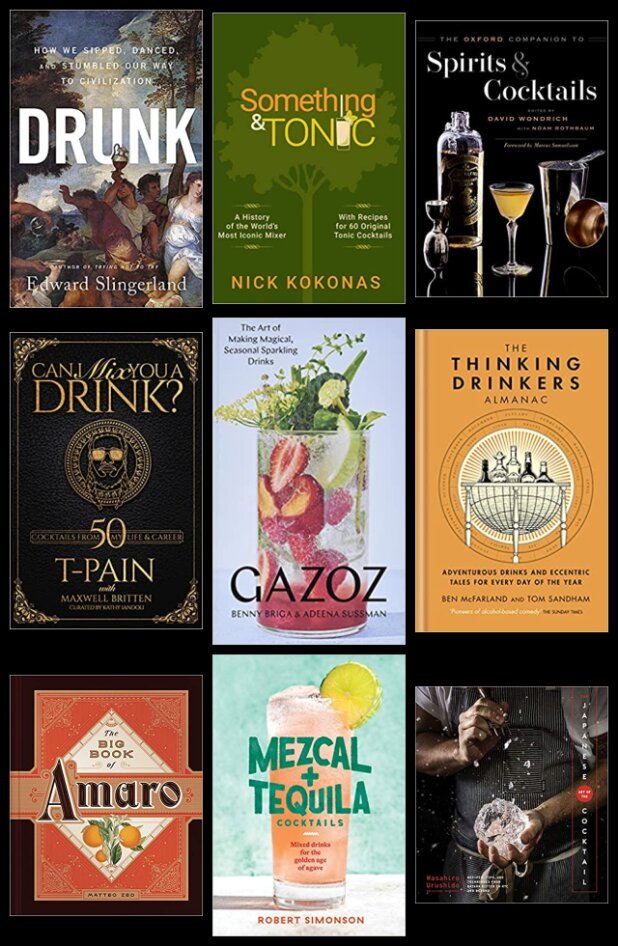
    • 6a00e553b3da2088340282e1130225200b.jpgSomething and Tonic: A History of the World's Most Iconic Mixer by Nick Kokonas [amazon] [somethingandtonic.com]
    • Drunk: How We Sipped, Danced, and Stumbled Our Way to Civilization by Edward Slingerland [amazon][bookshop]
    • A Good Drink: In Pursuit of Sustainable Spirits by Shanna Farrell [amazon][bookshop]

    • A Woman's Place Is in the Brewhouse: A Forgotten History of Alewives, Brewsters, Witches, and CEOs  by Tara Nurin [amazon][bookshop]
    • Girly Drinks: A World History of Women and Alcohol by Mallory O'Meara  [amazon][bookshop
    • Smashing the Liquor Machine: A Global History of Prohibition by Mark Lawrence Schrad [amazon][bookshop]
    • The Thinking Drinkers Almanac: Drinks For Every Day Of The Year by Ben McFarland, Tom Sandham [amazon][bookshop
    • The Oxford Companion to Spirits and Cocktails by David Wondrich, Noah Rothbaum [amazon][bookshop]


    Non-Alcoholic Cocktail Books

    • Zero Proof: 90 Non-Alcoholic Recipes for Mindful Drinking by Elva Ramirez [amazon] [bookshop]
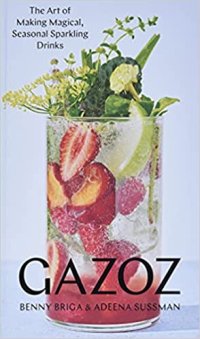
    • Gazoz: The Art of Making Magical, Seasonal Sparkling Drinks by Benny Briga, Adeena Sussman [amazon][bookshop]


    6a00e553b3da208834026bdeec4e06200c.jpgTopic-Specific Cocktail Books

    • Mezcal and Tequila Cocktails: Mixed Drinks for the Golden Age of Agave by Robert Simonson [amazon][bookshop]
    • The Japanese Art of the Cocktail by Masahiro Urushido and Michael Anstendig [amazon][bookshop]
    • The Way of the Cocktail: Japanese Traditions, Techniques, and Recipes by Julia Momosé and Emma Janzen  [amazon][bookshop


    Base Spirits

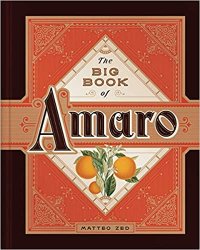
    • The Big Book of Amaro  by Matteo Zed [amazon][bookshop]

    • The Atlas of Bourbon and American Whiskey: A Journey Through the Spirit of America by Eric Zandona [amazon][bookshop]


    6a00e553b3da2088340282e13042ad200b.jpgGeneral Cocktail Recipe Books

    • The Cocktail Seminars by Brian D. Hoefling [amazon][bookshop]
    • HOME BAR BASICS (AND NOT-SO-BASICS) by Dave Stolte [website]
    • The Curious Bartender: Cocktails At Home: More than 75 recipes for classic and iconic drinks by Tristan Stephenson  [amazon][bookshop]
    • Mixology for Beginners: Innovative Craft Cocktails for the Home Bartender by Prairie Rose [amazon][bookshop]
    • Death & Co Welcome Home by Alex Day, Nick Fauchald, Dave Kaplan [amazon][bookshop
    • The Cocktail Workshop: An Essential Guide to Classic Drinks and How to Make Them Your Own by Steven Grasse, Adam Erace [amazon][bookshop]
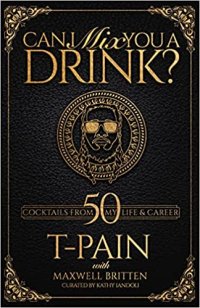
    • Can I Mix You a Drink? by T-PAIN, Maxwell Britten [amazon][bookshop]

    Beer

    • The Beer Bible: Second Edition  by Jeff Alworth [amazon][bookshop]

    • World Atlas of Beer: The Essential Guide to the Beers of the World by Tim Webb, Stephen Beaumont [amazon][bookshop]


    Cocktails and Spirits Books from Previous Years


  • A Visit to Hawaii’s Ko Hana Distillery

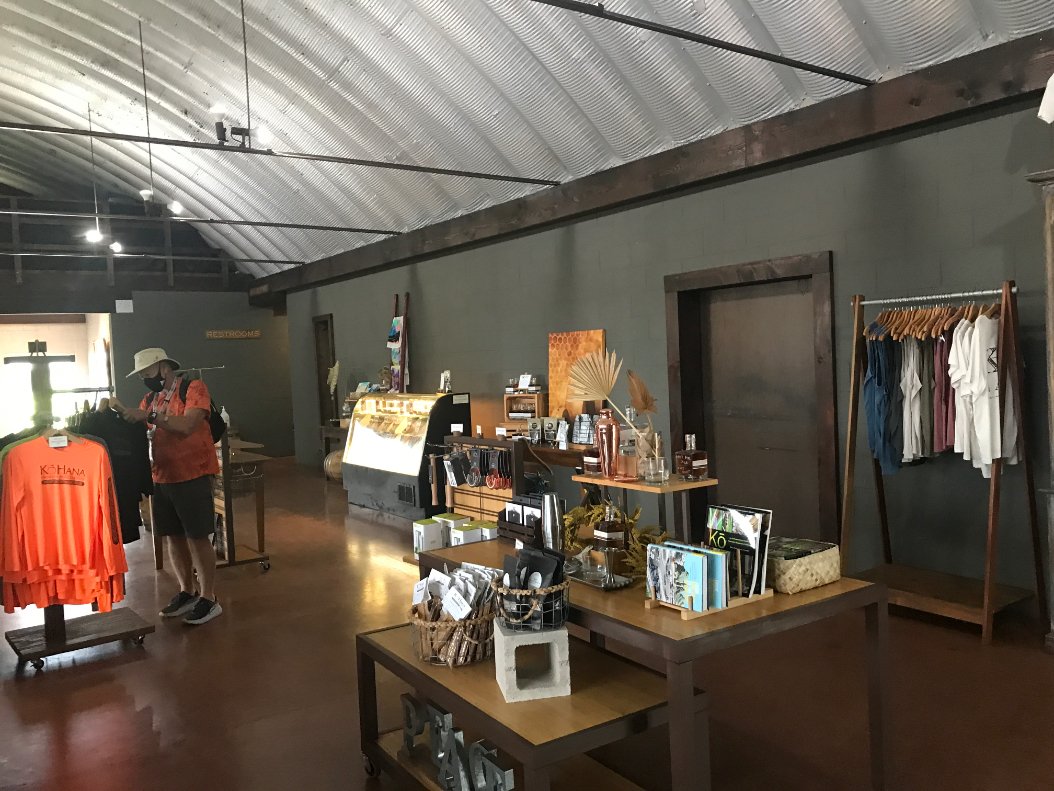
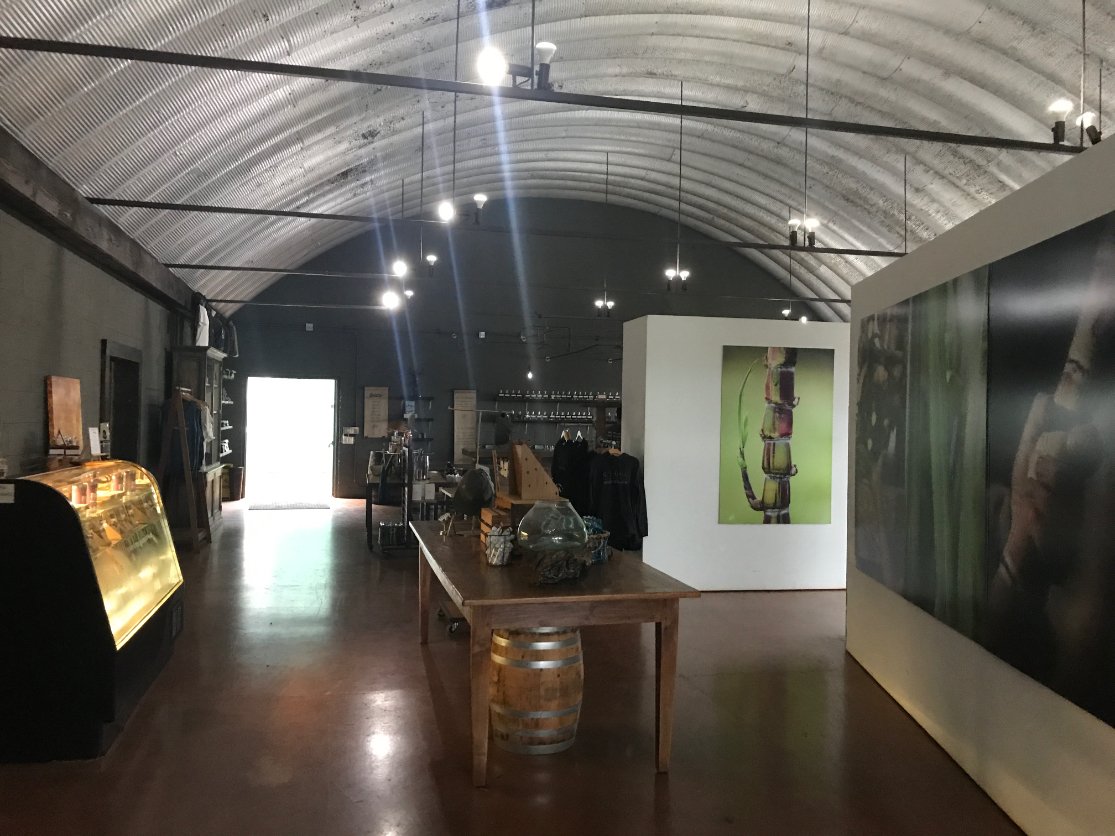
    I was recently in Hawaii and finagled a visit to the Ko Hana Hawaiian Agricole Rum distillery. General Manager Kyle Reutner
    drove me a short distance to a nearby cane field then we walked through the distillery and I got to taste through the line. 

    Agricole-style rum is distilled from freshly pressed sugar cane juice instead of molasses. Ko Hana makes this style of rum from native Hawaiian  sugarcane varietals grown on 312 acres spread across several farms, which they manage themselves. 
     

    IMG_6330

    The Cane 

    They're currently growing 34 varieties of native Hawaiian sugarcane. 11 of those varietals are in production (meaning they make rum from them). The canes they chose were the most flavorful and/or they had the best Hawaiian history. 

    Something I've always wondered about Hawaiian sugar cane: The Oceanic peoples transported sugar cane with them on boats as they populated different islands moving east from Asia and arriving about 900 years ago, according to Reutner, but the sugar cane grown by the colonizers of the 1800s were the varietals that moved West over the centuries (from India to the Middle East to southern Italy and the islands off the Spanish/African coast, then to the Caribbean with Columbus and to South America with the Portuguese).

    I had always wondered if the indigenous Hawaiians had ever really farmed sugar cane before the colonizers came, and Reutner says not so much, at least not on big farms. They were used as food on the boats that travelled between islands on long sea voyages, but on the land they didn't really need it as a food source given other options. The Hawaiian cane was grown more of a co-crop with other crops. 


    A989FD19-CC63-4106-ACCF-0C8FAB41E195
    A989FD19-CC63-4106-ACCF-0C8FAB41E195

    Ko Hana harvests year-round. In many different growing environments, cane has an 18 month growing cycle, but it's a year here. 

    They harvest, press, ferment, and distill each varietal individually. They used to make a blended rum of multiple varietals but no longer do.

    Each trailer as pictured holds about 4000 pounds of cane, which translates to about 500 gallons of juice, which fills 1 fermenter, and results in 50 gallons of rum. 

    The cane is currently hand-harvested from unburned sugar cane (I believe in most places where cane is cut by hand the cane is burned both to make it easier to cut and to clear the land of critters like rats and snakes. But Hawaii doesn't have snakes. ) They have ordered a cane harvesting machine that they'll move to after it arrives. 

    They press the cane (using the green piece of equipment pictured above) in the field, and bring the juice back to the distillery to ferment it. They bring the cane press from field to field when they harvest. Usually they press the cane the same day it is harvested in the field, but always within 24 hours of harvest. 

    Fermenting, Distilling, and Aging

    The juice is fermented with inoculated yeast (not the natural yeast on the cane) in a closed-top fermenter. You might expect such a natural-focussed product to allow a natural fermentation, but Reutner says that specifically because they're focussing on the native Hawaiian sugar cane varietals that they keep that the variable factor in production, and keep fermentation fixed. 

    That said, fermentation time varies depending on cane varietal and time/temperature of the year. They ferment until dry (all the sugar is consumed by yeast), with their shortest ferment on record at 24 hours and the longest was 14 days – but that ended up being a bad batch. 3-5 days is the average amount of time. I tasted the cane "wine" after fermentation and it was super acidic. 

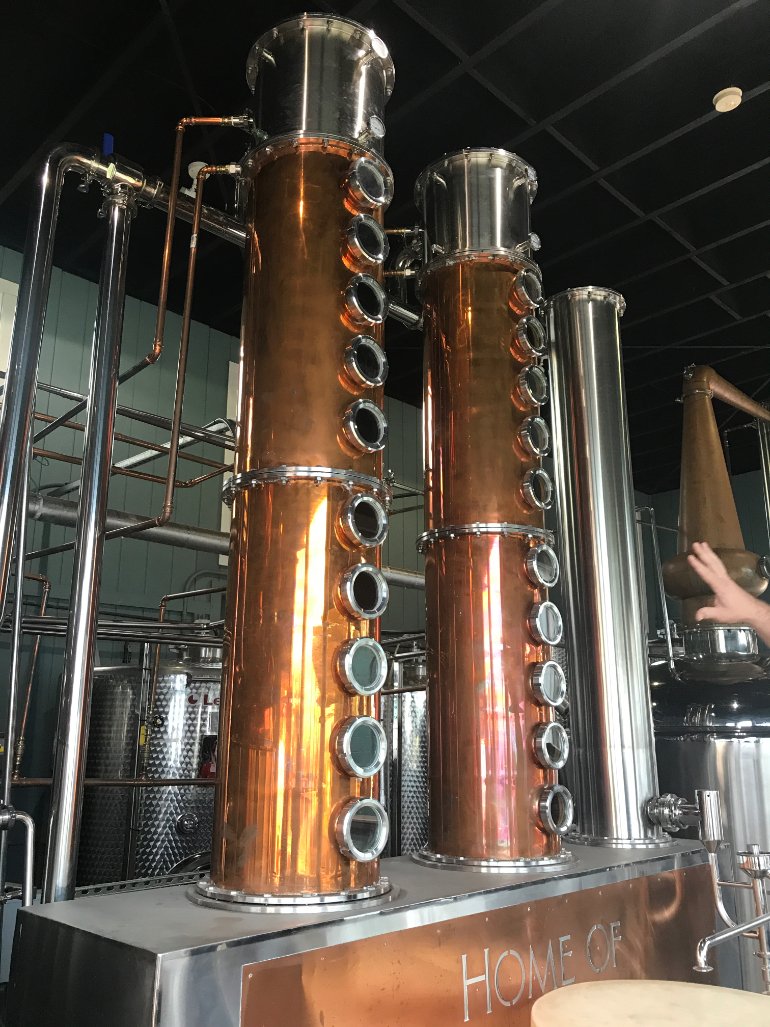
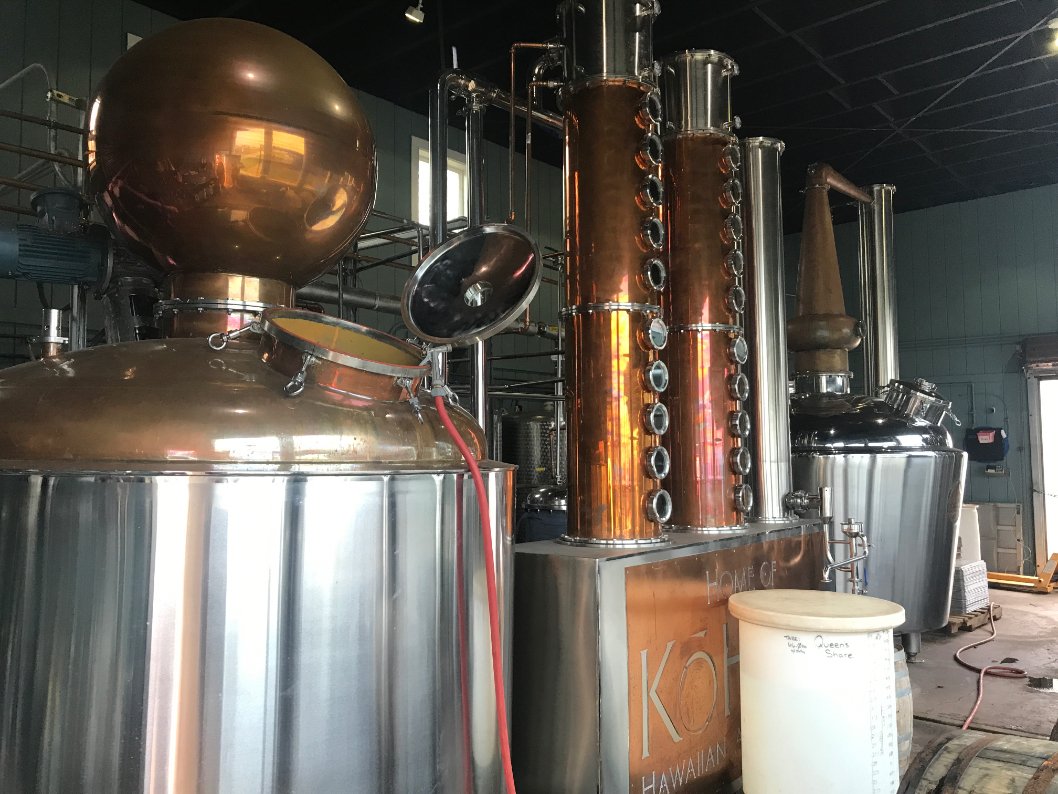
    The cane wine is distilled in the bulb cap helmet still named "The Brain" (the other pot still, their original one, is named "Pinky") then flows through just one column afterward that has only three plates in it. (This is a discontinuous hybrid still set-up. They were planning to experiment with double pot distillation.) 
     

    IMG_6324
    IMG_6324
    IMG_6324


    They distill on the lees, the dead yeast from fermentation. They distill up to 165 proof down to about 140, with an average once collected of 162-164. 

    The white rum is rested a minimum of 90 days.

    Their core aged rum, Koho, is aged for a minimum of two years in a combination of:

    • New American oak barrels (char 1 with toasted heads from Independent Stave)
    • The above barrels previously used to age their rum
    • Ex-bourbon American oak barrels 

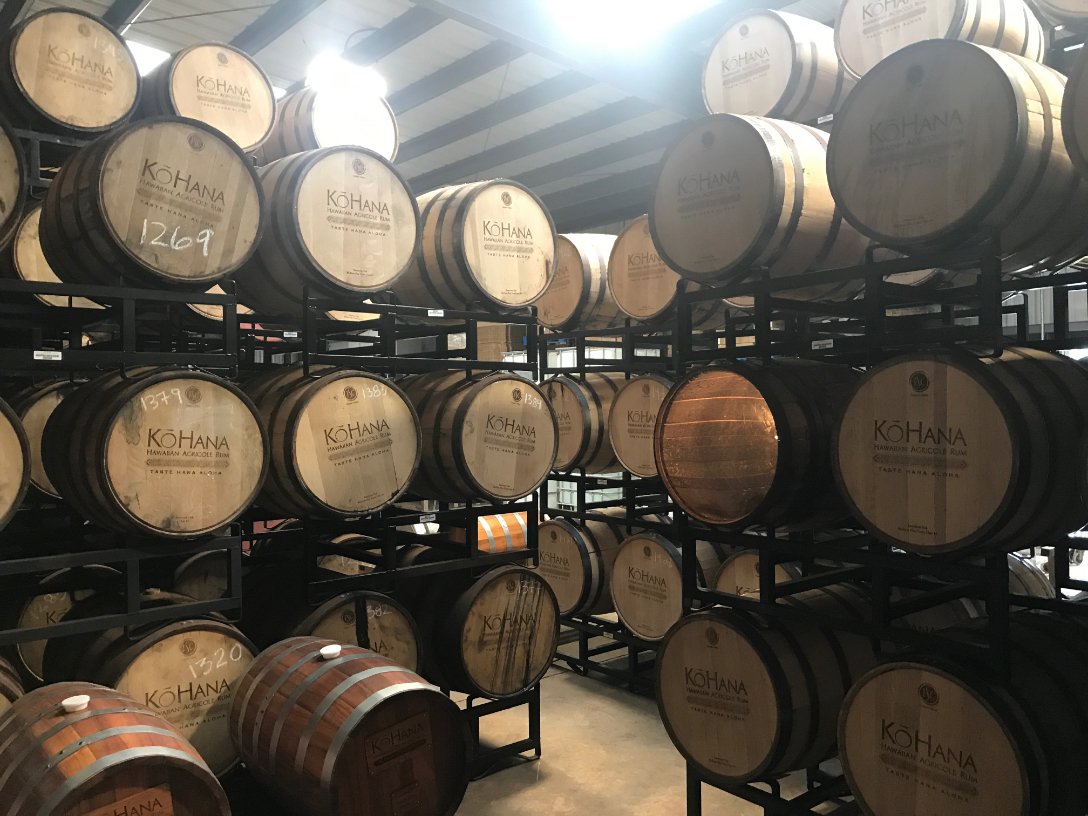
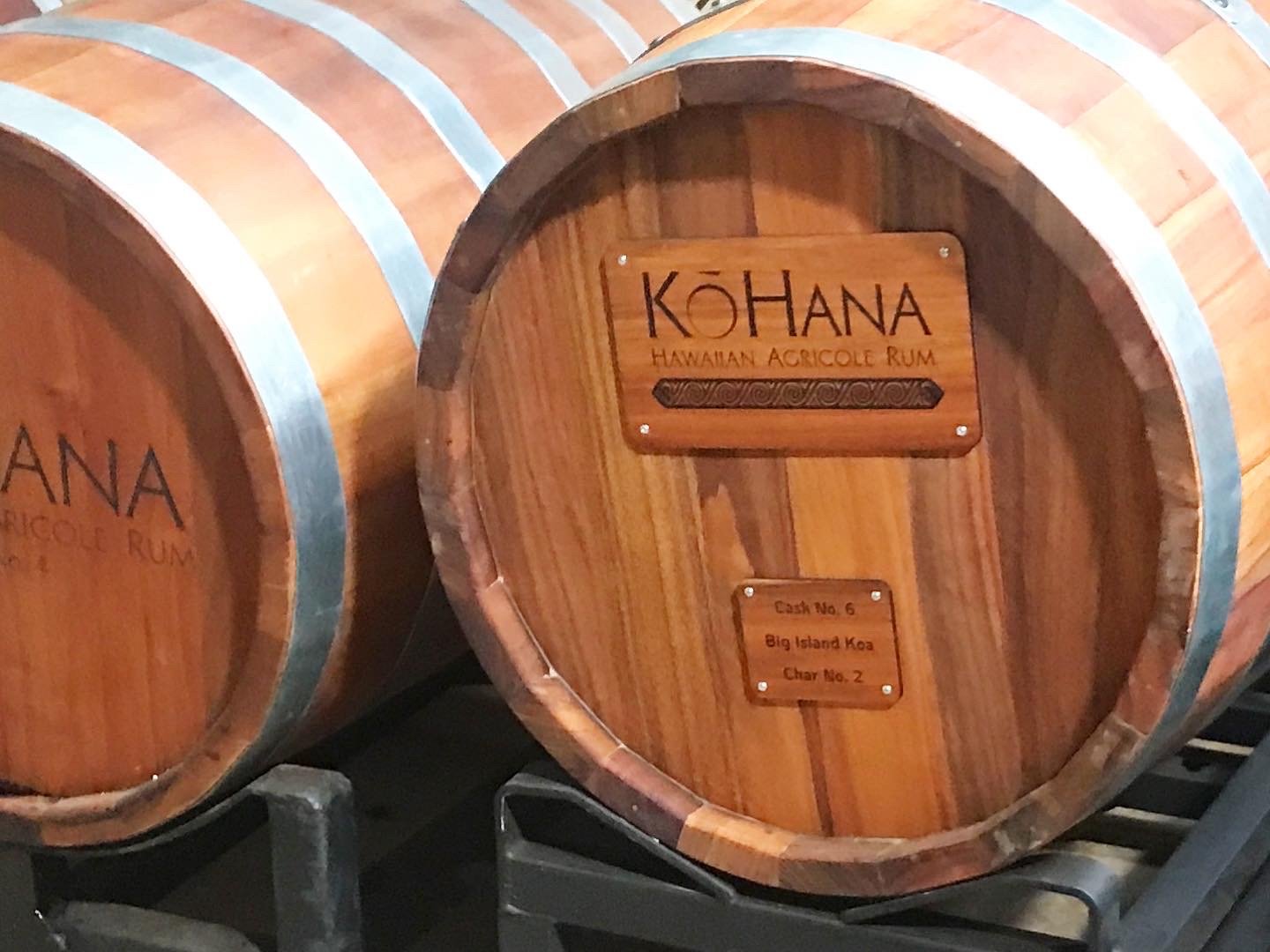
    They do have a few koa casks – this is a native hardwood used to make ukuleles and such. They're pictured below. 

    They angels' share is about 8.7%.

    They have about 120 barrels aging currently, but are hoping to get up to 350 by the end of 2022, so they seem to be growing at a good pace. 
    9C5671B4-A852-47D3-87B8-DED07C13DE56
    9C5671B4-A852-47D3-87B8-DED07C13DE56


    The rum is non-chill filtered and no sugar is added. They use reverse osmosis water for proofing to barrel and bottle proof. They are aging some water (in the brandy style; Privateer rum under Maggie Campbell was also doing this) but I'm not sure if they're using it currently or experimenting with it. 

    Tasting Notes

    My tasting notes aren't really meant to translate, so read at your own risk. 

    Unaged Rums: 

    Kea – This is the most popular varietal, and you can taste why it is: a solid, dry, citrusy agricole that will work just fine in cocktails. This is the only one you can buy online at their store, it seems. I'm not so sure how available the various varietal expressions are but I tasted through the line. These first four are 40% ABV.

    Lahi – Smoky and a touch gamey, super citric acidity to the point of tasting carbonated. 

    Kalaoa – "rabbit glue" with a funky nose and a tight body

    Hinachina (sp?) –  a milder version of Kalaoa

    Manuleilei – 50% ABV. "aluminum paste" with a fiery body 


    IMG_6340

    Aged Rums: 

    Koho: 45% ABV with Kea cane, barrels as mentioned above. Spicy Red Hots, new barrel tannins 

    Kila: Kea cane, aged and then finished in a rye barrel for Skull & Crown bar in Downtown Honolulu. 61.5% ABV, delicious, with a lot going on. 

    Kila: Kea cane, single barrel bourbon. Syrupy aroma and a big spicy jump mid-palate

    Koa: Finished in Koa casks – Chocolately macadamia nut (I know, sorry) with raisin-clove Christmas spices. 


    Visiting the Distillery

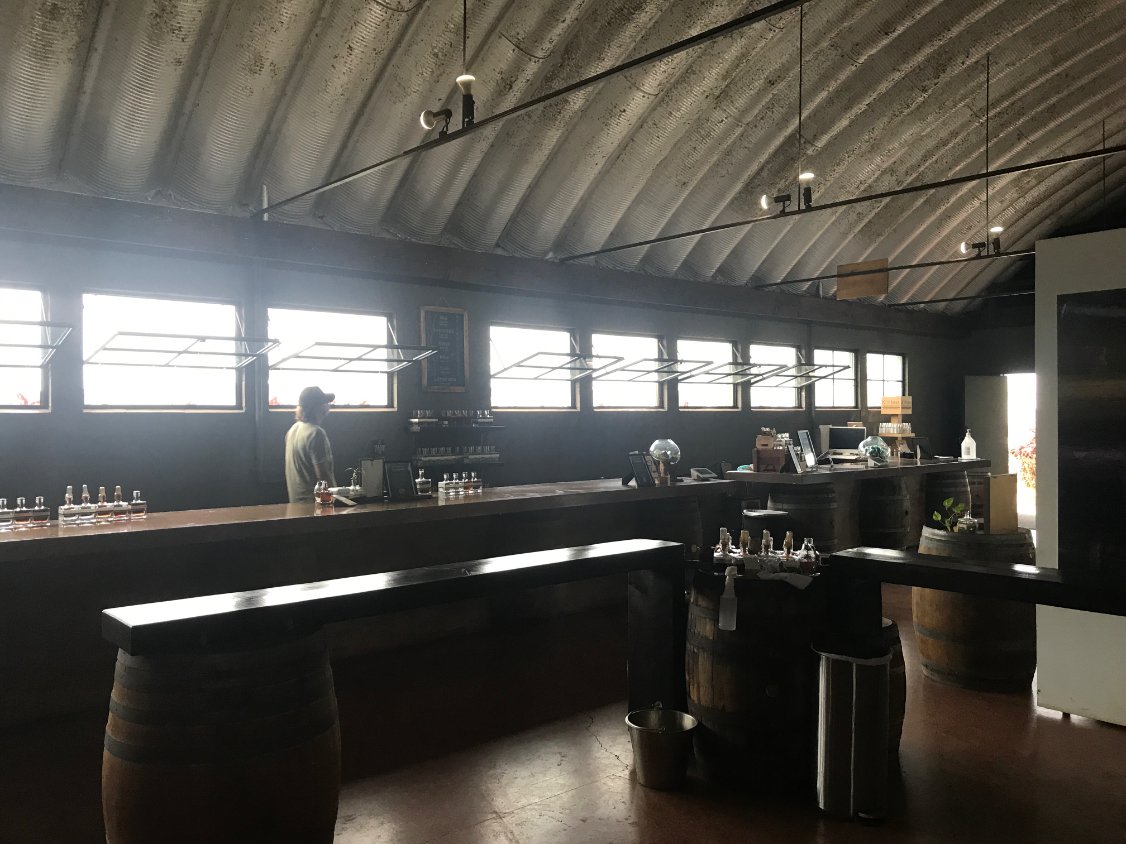
    Visiting the distillery: You can make reservations for a tasting at the bar or a longer educational tour in which you learn about native Hawaiian sugar cane varietals. 

    The visit is so popular (it's located near the Dole Plantation) that Ko Hana employs 14 farmers to grow the cane, 4 people in production to make the rum, and 10 tour guides to give tastings. 
    IMG_6338
    IMG_6338
    IMG_6338

    Thanks for a great visit, Kyle and Ko Hana!
     

  • English at Eater: Earthy Ube Purple Pina Coladas

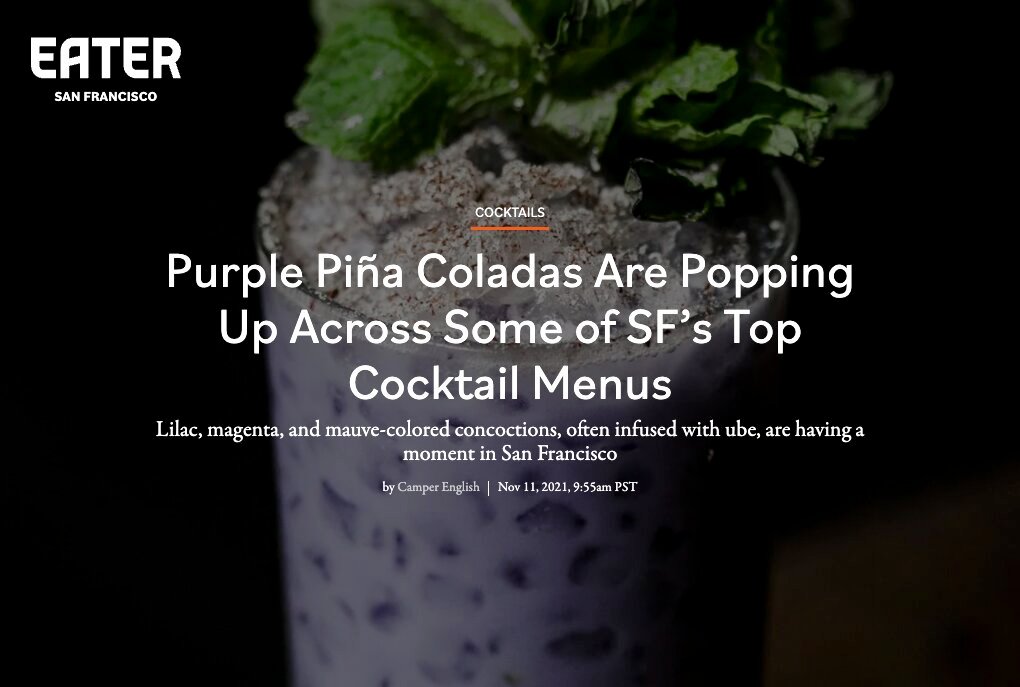
    I wrote a story for Eater San Francisco on a trend of purple drinks with coconut cream and usually ube as a flavoring. 

    Makephotogallery.net_1636659811252

    Photos by @vivo.visuals, Melissa de Mata, @equal_parts_cocktail, Allison Webber

    You should probably go read it


    Screen Shot 2021-11-11 at 12.05.37 PM

  • Using Untreated Water to Proof Whiskey

    Many distilleries brag about their pure water supply, but typically that water is only used for fermentation, and then reverse osmosis filtered or distilled tap water is used to dilute spirits down to bottle proof. So the quantity of that special water left in the bottle is small – in the case of vodka it's just a few percent. 

    Some producers claim to use special water but then do the RO or distillation to it to remove minerals and other organic matter from it for bottling, making the special water a lot less special.

    That's what I suspected was going on when I noticed that on the new Lucky Thirteen bottling from Widow Jane bourbon the label says, "Pure limestone water from the legendary Rosendale mines of NY." 

    So I asked their PR team for clarification- it would be pretty unusual to be using untreated/filtered water.

    I heard back from Lisa Wicker, President and Head Distiller for Widow Jane. She wrote: 

    It is very unusual to use mineral-rich water for proofing! When I “inherited” proofing using water from the Rosendale limestone mines, it took me a while to determine how to handle it. We worked with water engineers on a withdrawal system that does not strip the minerals. The water tests beautifully, it does not need to be treated. Our cave is under lock and key for purity and we hold the only permit of its' kind in New York for withdrawing cave water as an ingredient. Finally, we “polish” the whiskey without chill and conventional filtration, which would have stripped the minerality out that makes Widow Jane whiskey, “Widow Jane.”
    So, it turns out that they do something that I think is pretty unique. I will have to see if I can detect any mineralogy when I taste it. 

    Lucky 13 USA 750 ML 2021 Batch

    Photo: Michele Clark


  • The Big Non-Alcoholic Spirits Taste Test

    For a long time I've been tracking the increasing number of non-alcoholic spirits. There are now more than 115 brands on the market. 

    I've also made hundreds of non-alcoholic cocktails with these n/a spirits (mostly Seedlip) for events, when there used to be events pre-Covid. In my opinion, these products do not perform well when you taste them neat, nor when they are mixed with carbonated beverages like soda water and tonic water.


    IMG_2507


    I have found that taste good when mixed in a basic Daiquiri or with a strongly flavored syrup, as in these recipes I shared a couple years back. Since then, I've received a lot more n/a spirits in the mail – I share new products on Instagram by the way, in case you're not already following the @alcademics account over there. 

    So I decided to lead a tasting of all the non-alcoholic spirits in my house in a Daiquiri format. Actually, I didn't taste them at all – I invited three bartenders over to my house to do it. I made one batch of sweet-and-sour mix (lime, simple syrup) and added equal parts of each n/a spirit to it. The bartenders tasted them all and I wrote down their impressions, which are recorded below. 

    After we tasted all of them, the bartenders went back through and tasted them unmixed. Boy did that ever give different reactions! And that confirmed that trying these products neat really doesn't reveal all that much about how they'll taste mixed. 

    We tried 11 gins or herbal spirits, 2 tequilas, 2 rums, and the Three Spirit line of herbal beverages. 

    The tasting notes are below (from the bartenders, opinions are not mine), and some conclusions I wrote down after the tasting notes. 

    IMG_2521


    Gin/Botanical Spirits
    1. Bowser Leaf –
      1. lots of licorice, playdough, elmer's glue
      2. cloves
      3. I like it, I don't think it's a gin though. Little bit of a piney finish, mentholy
    2. Seedlip Spice
      1. cloves, allspice, warm spices, like chai – cardamom,
      2. overpowering in this application but in another application it could be useful
    3. Wilderton Luster
      1. tastes like earl gray tea to everyone – tannic drying oversteeped tea
      2. acid- citric acid
      3. very low rated
    4. Sipsong Indira Tea
      1. cumin? culinary spice , caraway
      2. not so aggressive after a couple of sips
      3. "that doesn't taste like gin" – taste like Kummel
    5. Seedlip Garden
      1. they all identified it blind as seedlip garden
      2. it's its own flavor; not trying to be gin
      3. everyone enjoys
    6. Lyre's London Spirit
      1. this is bangin' i like this; banana candy; banana runts
      2. real bitter finish though,
      3. tastes like candy but that's a hard finish
      4. (turns out the finish is quinine)
    7. Damrak 0.0
      1. most like water to me
      2. a touch of apple and pear but that could be me grasping
      3. it lets the citrus shine
      4. expensive water
    8. Ginnocense
      1. taste reminds me of something chewy
      2. playdough on the nose
      3. taffy notes
      4. not gin-like
    9. Wilderton Earthen
      1. omg why! terrible
      2. cinnamon ret hots – dried out,
      3. not good in a daiquiri
      4. "sour cinnamon" and that doesn't go well together
    10. Seedlip Grove
      1. it's bitter, resiny
      2. I would not be surprised if this is what  juniper does in water distillation
      3. Musty, like when you walk into a thrift store
      4. Tastes more like gin – resiny but mellow; not the bright herby of the gin but not citrusy
      5. "interesting" i don't dislike it; it's weird, need a better application for it
    11. Fleure Floral Blend
      1. neutral
      2. wood thing going on, woody
      3. a finish more than a flavor; i don't get much
     
    Rum
    1. Fleure Spice Cane Dark Roast
      1. smells like rum, spiced rum, bubblegum
      2. smells like coffee cake
      3. workable as a rum; but rum is easier than other spirits
      4. sweeter – i feel like this has sugar in it
      5. I dont hate it but it tastes like coffee
    2. Ritual Rum Alternative
      1. banana bread
      2. tropical fruit
      3. cadaverine /decay
      4. I lke this! tastes like a daiquiri, butterscotch, caramel, but good in a daiquiri
      5. Everyone enjoys and prefers this one
     
    Tequila/Agave
    1. Fleure  Smoked Agave
      1. liquid smoke
      2. i don't hate that
      3. burnt rubber but not in a bad way; iodine
      4. everyone likes it !  – but not on its own; in this margarita
    2. Ritual Tequila Alternative
      1. "it has the cuervo smell"; mixto
      2. taste is more fruity but it smells like tequila – "smells like bad decisions"
      3. there's actual heat – spicy note – too spicy – spicy margarita
      4. pepper spice; not alcohol spice – too much of the spicness; maybe better in a long drink; if it was intended as a spicy margarita it would be fine
      5.  
     
    Liqueur Fleure Raspberry Blend
      1. soapy
      2. raspberries and violets
      3. pink lemonade –
      4. could use it as a modifier but not a base spirit – but cheaper to use raspberries in a cocktail rather than this product – could be useful as a martini style drink where you don't want to add sugar
     
     
    Herbal Liqueurs (these were tasted neat; not in a Daiquiri)
    1. Three Spirit Livener
      1. smells like tea, tastes a little like prune juice
      2. not a fan of this
      3. tons of warm spices
      4. capsaicin
      5. 1 didn't hate it, 2 hated it
    2. Three Spirit Social Elixir
      1. molasses
      2. bitter, burnt caramel
      3. not pleasant
      4. i could sub that for Averna in a cocktail
    3. Three Spirit  Nightcap
      1. something sour in the smell
      2. kinda like it – juicy
      3. spice in all of them, well integrated
      4. favorite of the Three Spirit line
      5. after-dinner beverage, one bartender would serve it as a digestif to a non-drinker after dinner

    Conclusions of this Tasting:

    • This is a good way to taste/compare these products. When we went back through to taste them neat, bartenders had some radically different opinions; particularly with regard to the spicy notes that may have gone unnoticed mixed. 
    • Lyre's London Spirit- people liked flavor a lot but didn't like the quinine finish at all.
    • Seedlip Garden was enjoyed and identified easily – the favorite product of the whole tasting.
    • Seedlip Grove was considered interesting and generally well-received.
    • Every one wished there was juniper present in the gins, and found that none had any detectable. So none were really gin substitutes.
    • "I wish more of them were better" said one bartender. 
    • The rums and tequilas overall tasted more like their alcoholic versions. 


    IMG_2541


  • Grid Patterned Ice, Plus Blueberries and Cherries

    I made some fun ice, as I tend to do. 

    For the grid ice, I first made ice using the Ghost Ice tray, then I just set it on a cookie drying rack that I heated up on the stove burner. I think it looks like the tardis from Dr. Who. 

    26FFD234-E39C-40FD-B836-5BE9CA5033B1
    26FFD234-E39C-40FD-B836-5BE9CA5033B1
    26FFD234-E39C-40FD-B836-5BE9CA5033B1
    26FFD234-E39C-40FD-B836-5BE9CA5033B1


    For these cubes, I used the Dexas trays (purchase links here). For the cherry, I used a binder clip and clipped the stem sticking out of the top hole in the tray. 

    The blueberries – some floated and some sunk, so it turned out great with no effort. 

    IMG_2463
    IMG_2463
    IMG_2463
    IMG_2463
    IMG_2463


  • Ice Jenga

    I bought some collins-sized ice cube trays (these ones) and decided to make an ice spear version of Jenga. I mean, why not? 

    I didn't expect it would actually work. I mean, it didn't work all that well but I was able to get three out! Probably the second two on the bottom only came out because those ones had melted the most, but I'll take it. 

    Here are some pictures. Your mileage may vary. 


    IMG_1393 IMG_1413
    IMG_1431
    IMG_1431
    IMG_1449
    IMG_1454
    IMG_1454
    IMG_1465


  • Striped Ice

    I made striped ice cubes.

    Stripedice6

    The first time I made striped ice was just before I figured out directional freezing to make clear ice. Having realized that the cloudiness in ice was caused by trapped air and not minerals, I tried to pour very thin layers of water in a tray so that the air might fizz off when the layer froze. It did not work, but it did make cool stripey ice. 

    6a00e553b3da2088340120a6a2be69970b

    So just for fun I decided to make some striped ice cubes. Using the Dexas IceOlogy tray (my recommendations for ice tools are all here) I filled the water up to the bottom of the tray, let it freeze, then added another layer, let it freeze, then repeated this a couple more times. You should be able to accomplish this more or less with a conventional ice cube tray. 

    So each layer is a clear part and a cloudy part. I still like the taste of clear ice better, but these cubes are fun. There are three cubes in the glass.

    Stripedice4
    Stripedice4
    Stripedice4

    The index of ice experiment on Alcademics is here


  • A Clear Ice Story at VinePair

    VinePair writer Tim McKirdy wrote a story on How to Create Perfectly Clear Ice, so naturally he included Directional Freezing, and the method I created way back in 2009 using a picnic cooler. 

    This is just a quick post to link to it so that I don't forget. Check it out here.


    Screen Shot 2021-02-19 at 5.18.32 PM

  • Clear Ice with Quotes from Me in Men’s Journal

    Men's Journal did a story on directional freezing highlighting my cooler method of 11 years ago. Spoiler: It still works. 

    Check it out here


    Screen Shot 2021-01-16 at 12.27.51 PM


agave alcademics Angostura bartenders bitters bodega bourbon bowmore Campari Camper English chartreuse clear clear ice cocktail cocktail powder cocktails cognac curacao dehydrated dehydrated liqueurs dehydration directional freezing distillery distillery tour distillery visit france freezing objects in ice hakushu harvest history how to make clear ice ice ice balls ice carving ice cubes ice experiments isle of jura jerez liqueur makepage making clear ice mexico midori molasses orange orange liqueur penthouse pisco potato powder production recipe Recipes rum san francisco scotch scotch whisky sherry spain spirits sugar sugarcane sweden tales of the cocktail tequila tour triple sec visit vodka whiskey whisky