Blog

  • Thinking Thoughts About Bottled in Bond

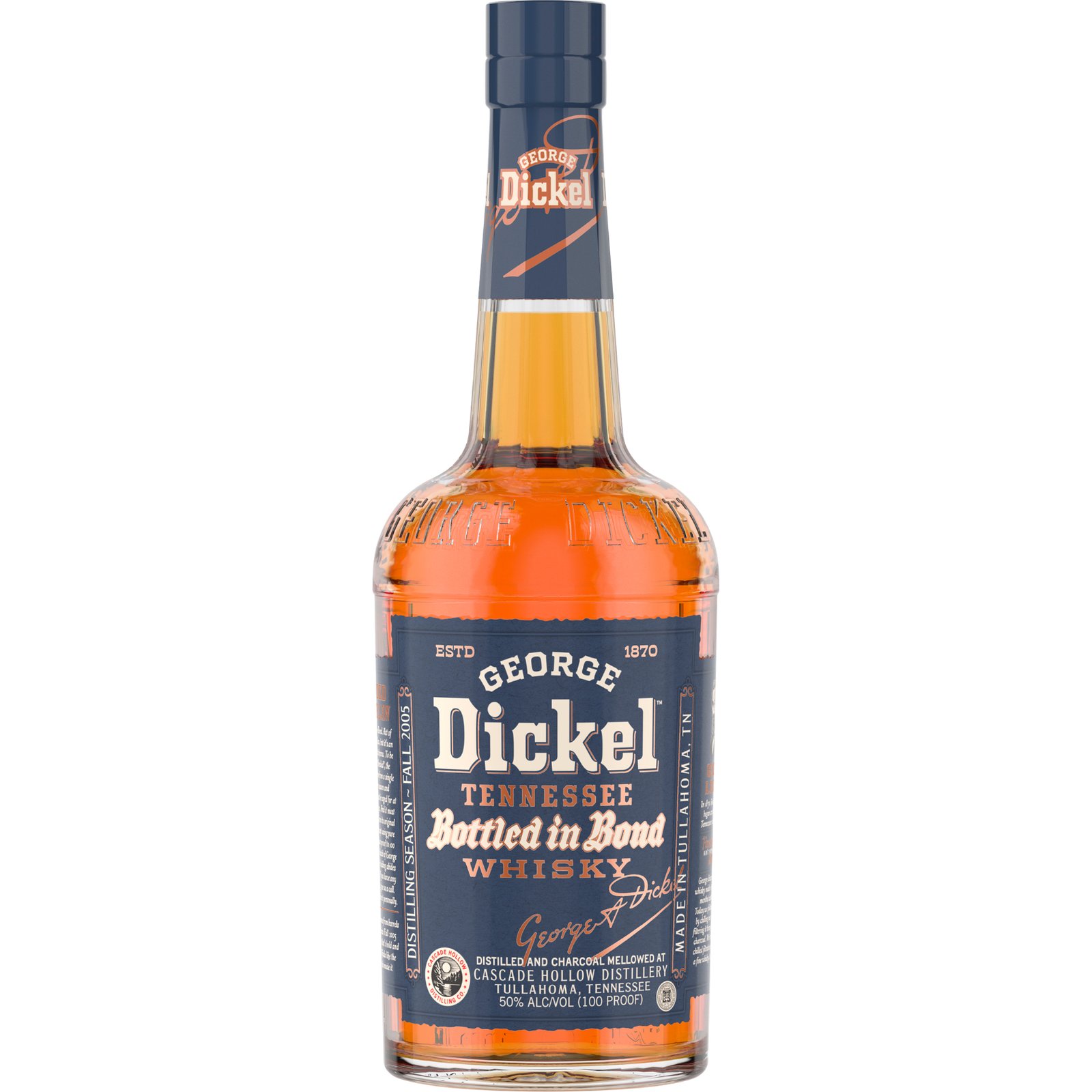
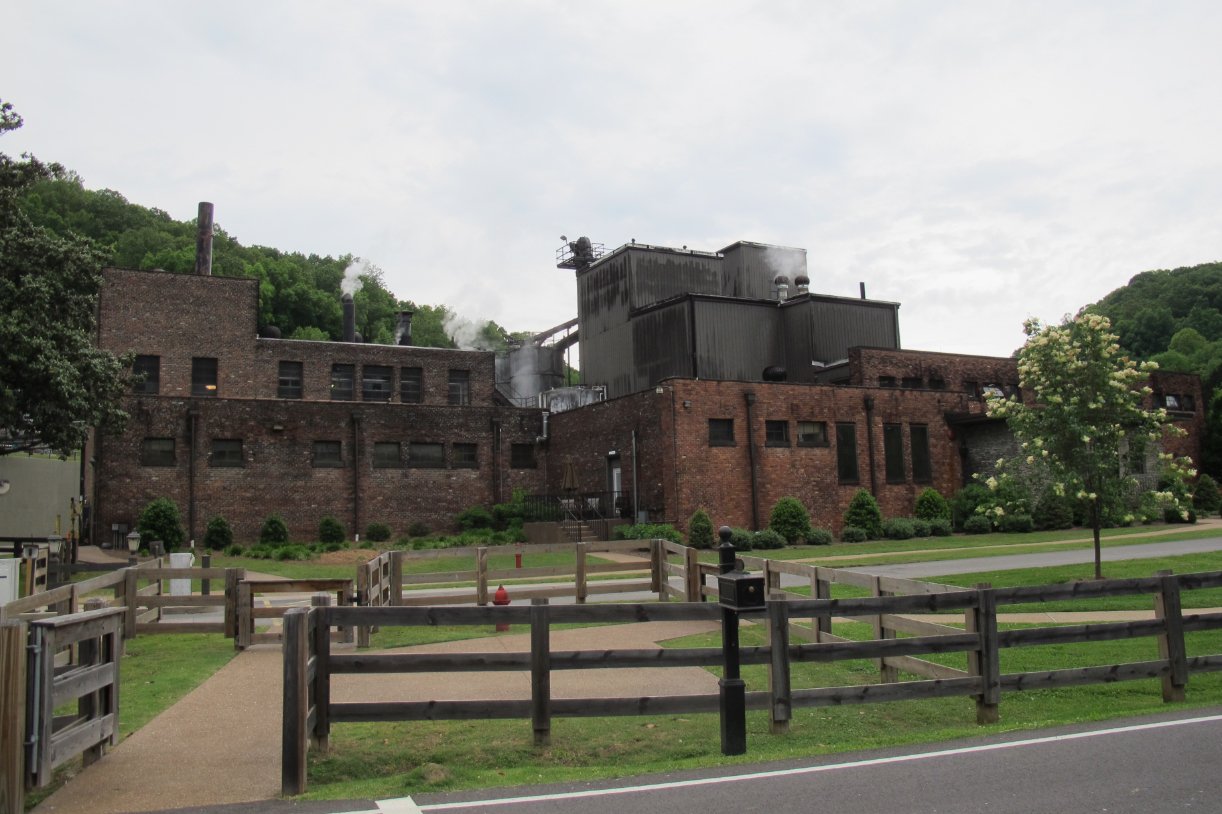
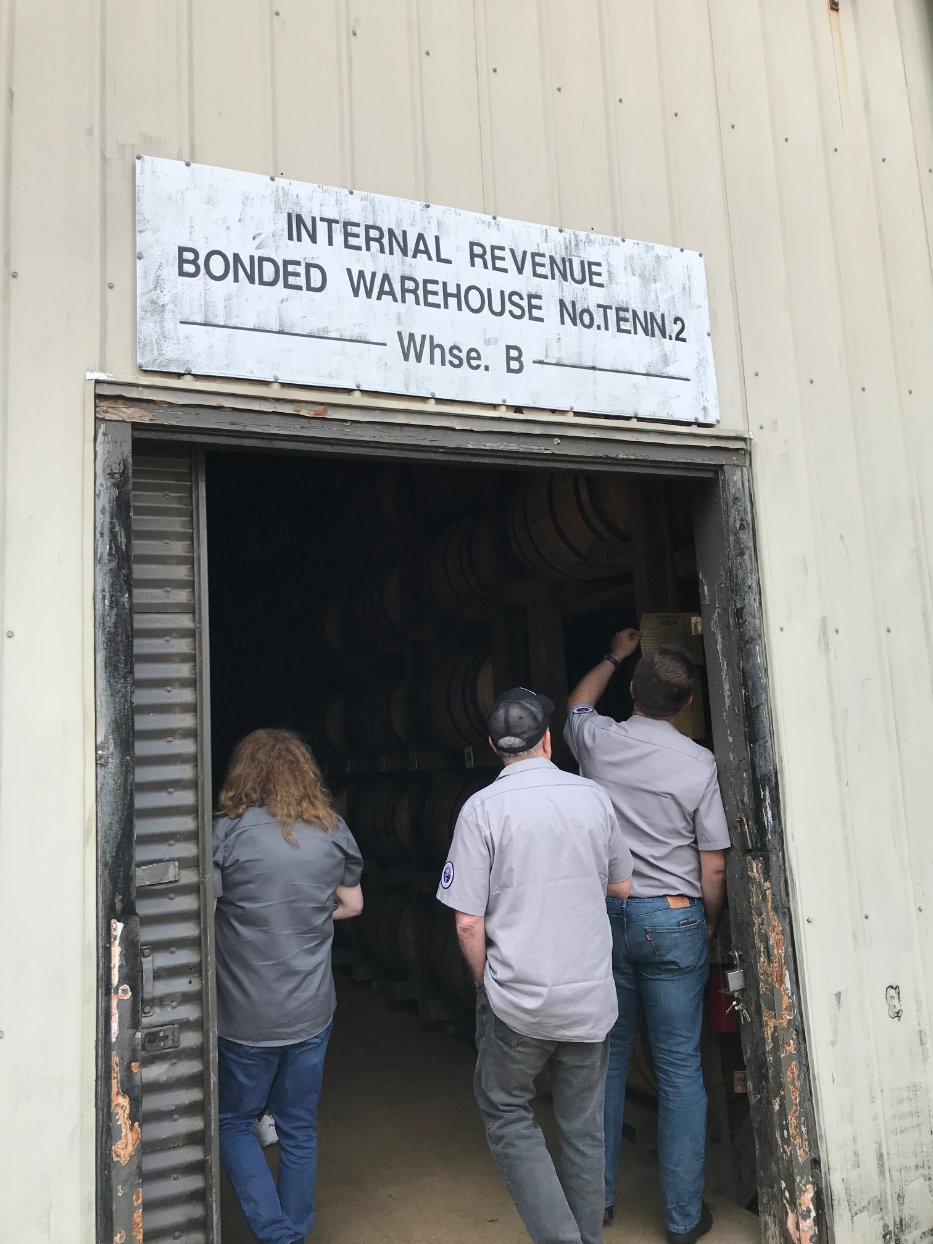
    George Dickel Bottled in BondThough I know the rules for bottled in bond whiskey and other spirits, in my head the whole thing operated differently than it does in reality. This came to light for me on a visit to the Cascade Hollow Distilling Co., home of George Dickel. The trip I took was to celebrate their bottled in bond (BIB) release. 

    I knew that BIB is a guarantee of certain standards – the spirit must be distilled in one season by one distiller at one distillery, be a minimum of 4 years old and bottled at 50% ABV – but I thought it went further than that. In my head the government had an active role in overseeing the bonded warehouse and maybe observing the actual bottling, and that was the point of the whole thing. How naive!

    As George Dickel distiller Nicole Austin pointed out, all pre-taxed liquor warehouses are bonded warehouses. So any non-blended whiskey over 4 years old bottled at 50% can be stuck in a bottle and labelled as BIB; there's no special extra process to it. Most single barrel bottlings would meet that if they were bottled at 50% (not that there is any real definition of single barrel).  BIB is just a weirdly specific set of rules.

    Some Specifics

    Speaking of rules, there are some neat things in the wording of bottled in bond spirits on the government's website that I don't usually see spelled out.

    Stored for at least four years in wooden containers wherein the spirits have been in contact with the wood surface except for gin and vodka which must be stored for at least four years in wooden containers coated or lined with paraffin or other substance which will preclude contact of the spirits with the wood surface;

    So gin and vodka can be bottled in bond if they're stored in non-reactive wood containers. No wonder we don't see any of those on the market. 

    Unaltered from their original condition or character by the addition or subtraction of any substance other than by filtration, chill proofing, or other physical treatments (which do not involve the addition of any substance which will remain incorporated in the finished product or result in a change in class or type);

    They can't have any additives. I assumed this, but never see it spelled out when reading about BIB products. I guess because mostly BIB products are straight bourbon and can't have additives anyway. 


    Putting Bottled in Bond in Context

    We frequently hear the BIB Act of 1897 as the first first consumer protection law, predating the Pure Food and Drug Act by nearly a decade. In an era when many whiskeys were blended and adulterated, this was a guarantee to the consumer of certain minimums.

    But also the BIB Act seems to have changed the way whiskey was stored: pre-tax rather than post-tax, in bonded warehouses. 

    As Wikipedia states, "The practice was also connected to tax law, which provided the primary incentive for distilleries to participate. Distilleries were allowed to delay payment of the excise tax on the stored whiskey until the aging of the whiskey was completed, and the supervision of the warehouse ensured proper accounting and the eventual collection of the tax." 

    That's a huge deal, tax-wise. If you're aging spirits, imagine having to pay tax on every gallon of whiskey distilled four-plus years before you've sold it. That's a huge burden and this act would have been a huge relief.

    [Note that I haven't researched if there was a way to defer tax payment previous to the BIB act, it's possible that this wasn't the first act to defer taxes but it could be.] 

    So for me, understanding the tax part puts it all together. In 1897 the BIB law guaranteed an unadulterated product to the consumer, and incentivized it to the producer via the tax deferment. I needed to understand both parts of this. 

    Today most mass market bourbon is 4+ years old and additive-free anyway, the only difference between regular and BIB bottlings is that most brands are blends of various ages and bottled at various proofs. I wouldn't consider bottled in bond products to be a higher statement of quality these days; just a quirky set of standards. 


  • A Daylong Visit to the George Dickel Distillery

    I first visited the Cascade Hollow Distillery aka George Dickel in 2012, and rereading my previous post it seems a lot has changed since then! 

    This May (2019) I had the opportunity to revisit the distillery in advance of their release of the new Dickel Bottled in Bond Tennessee Whiskey. For the trip they had us "intern" with various members of the production staff. We didn't really have to do anything (so don't worry I didn't screw up the whiskey); we just got to spend time with team members and were able to ask lots of questions. 

    At Dickel they distill 6 days per week, on two shifts per day. They shut down distillation every night, unlike larger distilleries that run 24/7. Dickel is expanding but it will take a lot of work to expand to 24/7 production; it didn't sound like that was going to happen in the next couple of years anyway. 

    They run two staff shifts, roughly  6AM-2PM and 2PM to 10PM. 

    IMG_4611
    IMG_4611 IMG_6042
    IMG_6042

    Grinding and Cooking

    The Dickel Tennessee whiskey mashbill is 84% corn and 8% each rye and malted barley. Their rye is made at MGP so for the most part they're just making the same thing every day. Distiller Nicole Austin said that though you'd think she'd be in the distillery actively tasting and blending and such, all the work you'd assume she does daily only takes a few weeks per year. The rest of the time seems to be administration, marketing, research and other tasks related to running the brand. 

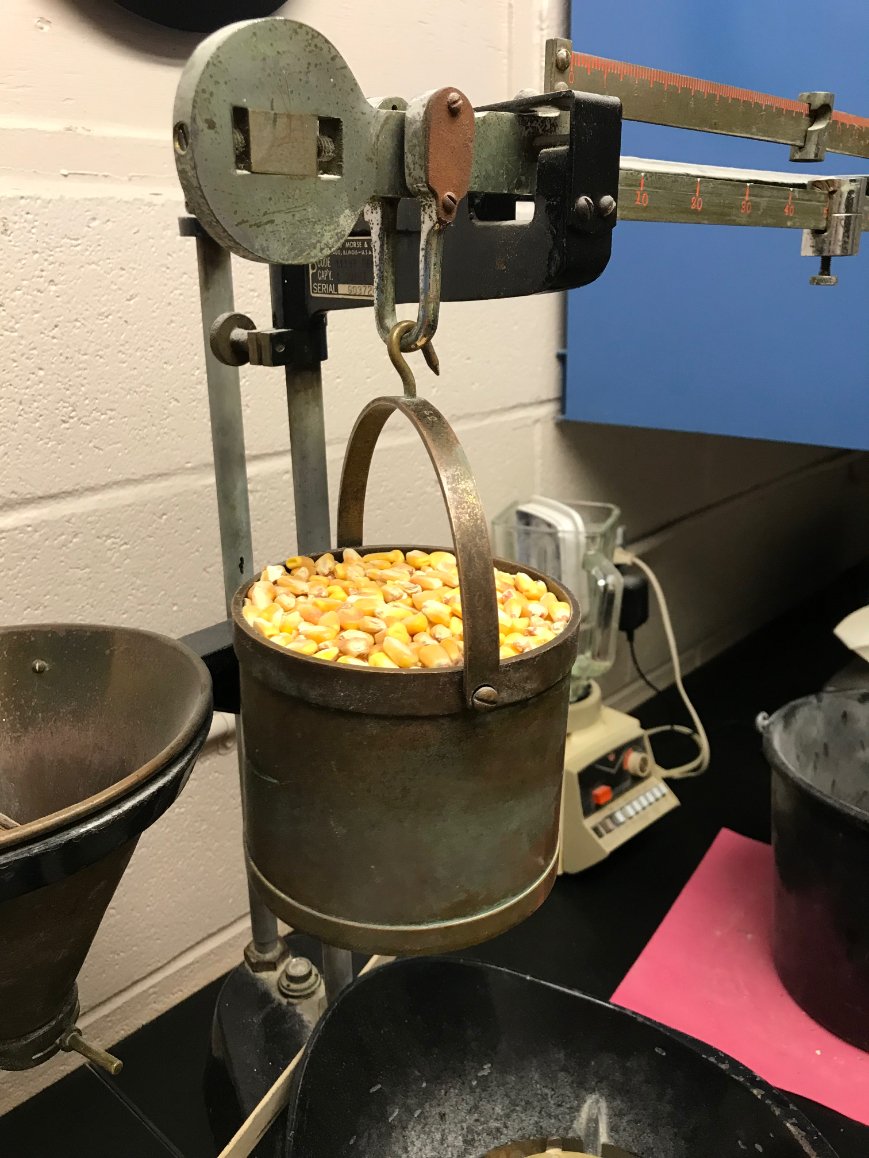
    They receive two truckloads of grain per day. The grains are measured for moisture content to ensure it's less than 15%. They said they've only had one bad load of grains in 15 years, and that was due to someone at the grain producer accidentally mixing in wheat. 

    The corn they mill (grind up) in advance of using. The corn, malt, and rye are each milled separately then combined by weight into the cooker at different times. The guy in charge of this "drops" grains into the cookers located on the floor below.

    They go in order : pre-malt, corn, then rye then the rest of the malt. I missed what the pre-malt is for. But the order is because the corn needs a hard boil to cook it properly. After cooking, the liquid cools a bit before rye is added ("We don't want to cook the crap out of it" because it's there for flavor, says Austin.). Then most of the malted barley is added- they don't want it too hot because that would kill the enzymes in the malt. Each of these stages begins or ends when the mash reaches certain temperatures. 

    They also add liquid enzymes to the mash – it looked to be about 4 cups worth of liquid to each cooker. 

    The mashing/cooking process takes 3-4 hours. 

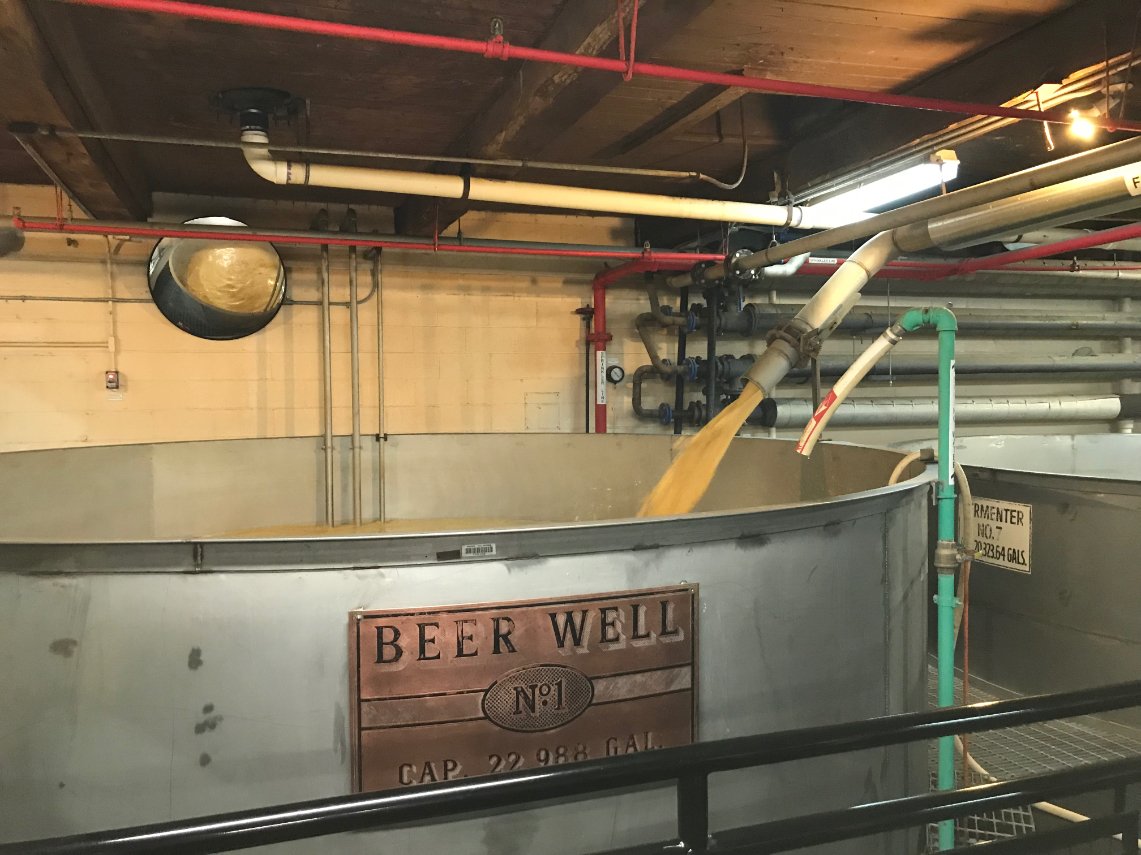
    Some of the sour mash, the yeasty water from the previous distillation, goes into the cookers along with fresh water, and some goes into the fermenters directly. They say splitting it in these two stages is just because of volume, not for any flavor reason. I have another post just about the sour mash process going up later this week. 

    IMG_4673


    Fermentation

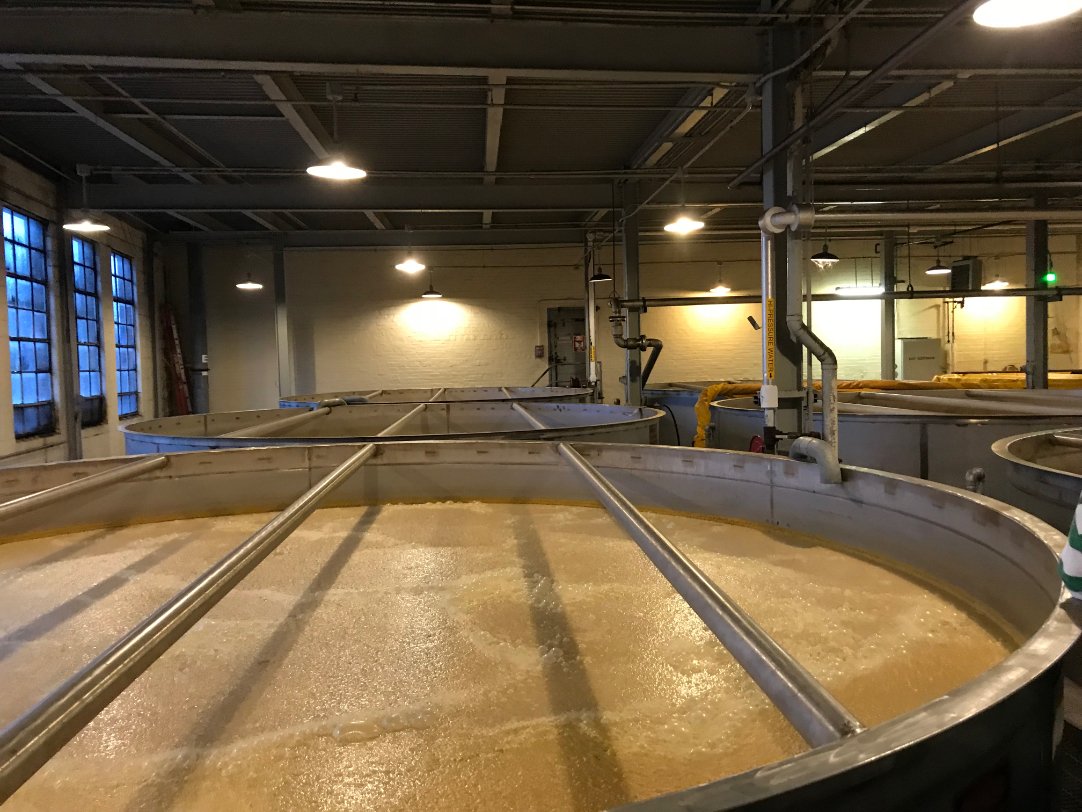
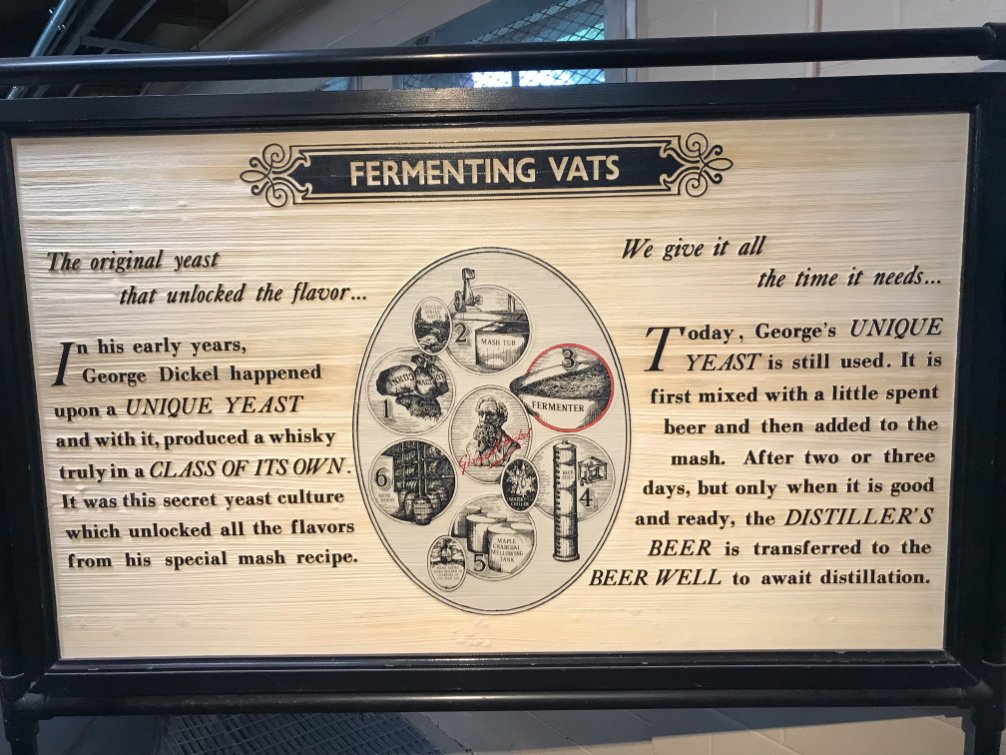
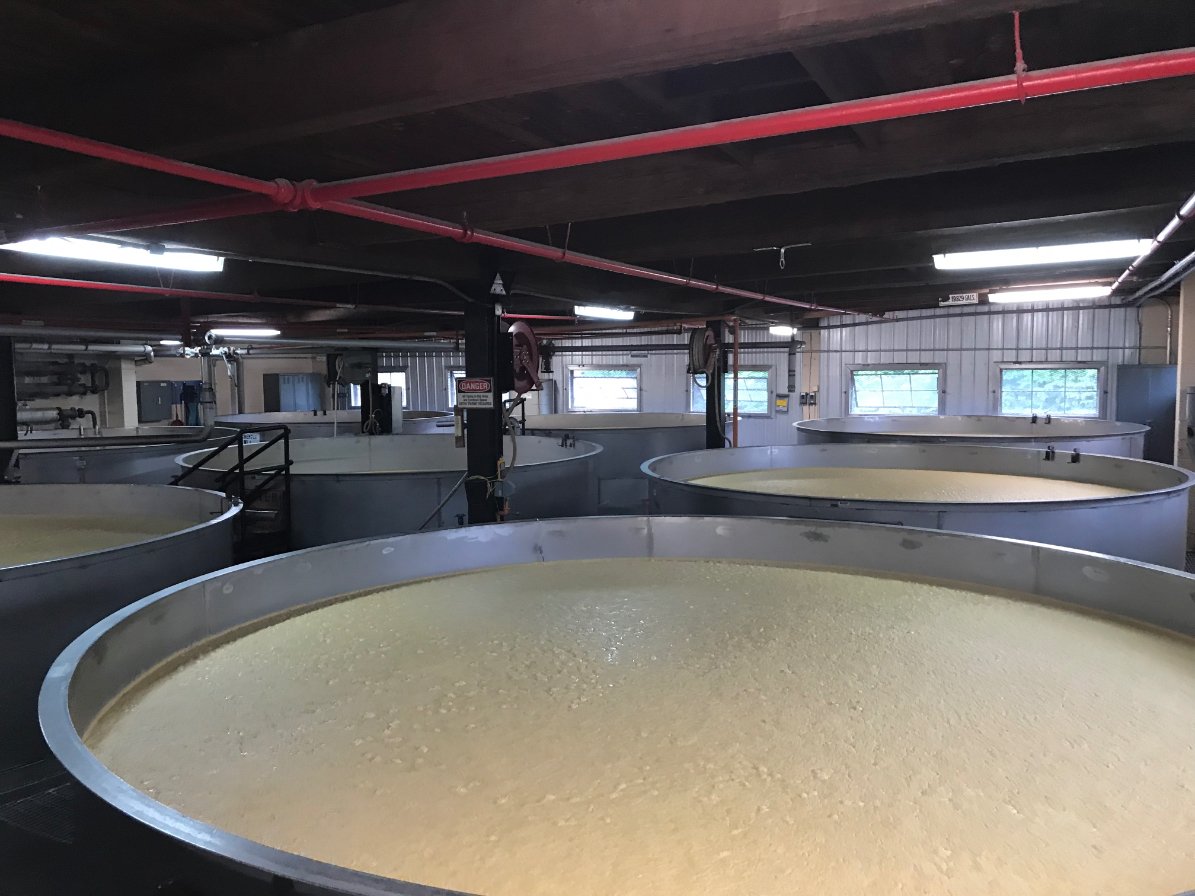
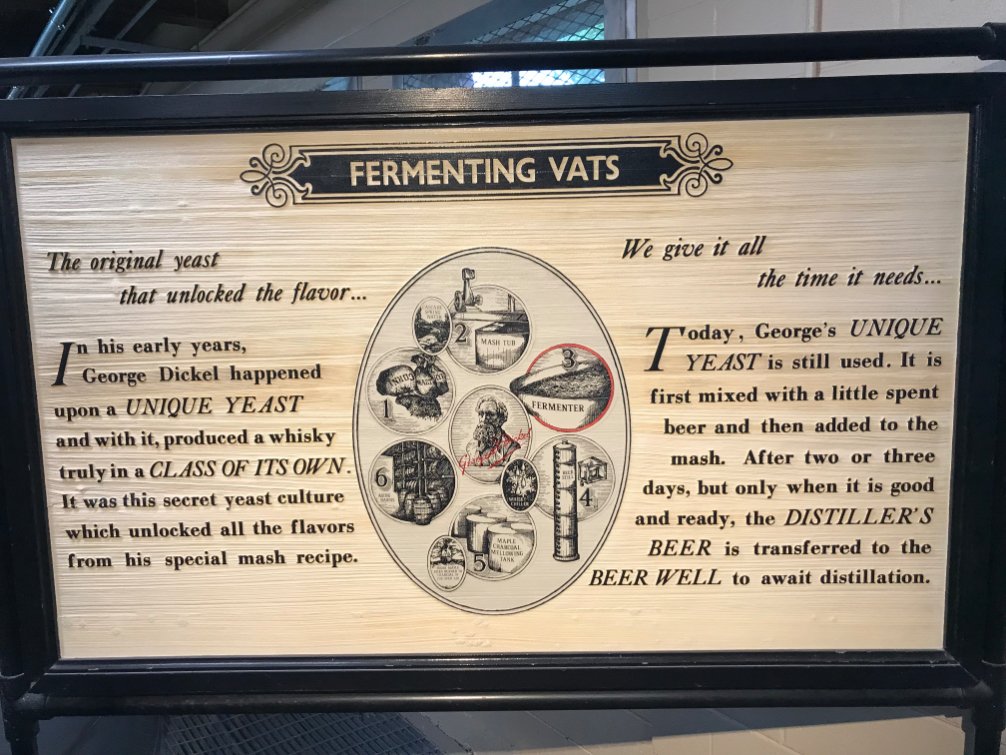
    Grains and water come out of the cooker at 150 (Fahrenheit, I think) and are cooled to 72 as they go into the fermenter so that the hot water doesn't kill the yeast. They use a custom made dry yeast that's propagated elsewhere. 

    They have 3 sets (distilling 3 vats daily) of 3 vats. Because of the 6 day workweek, they have "3 day beers" and "4 day beers" for the fermentation that needs to go an extra day. They said the only difference between them is the fermentation temperature is slightly different to allow for the extra time. 

    The fermentation expert also takes samples of the uncooked, cooked mash and the backset (sour mash) and measures/makes notes of their pH, total acid, and brix. After fermentation the beer is 10% ABV. 

    IMG_4628
    IMG_4628
    IMG_4628


    Distillation

    It takes 4.5 hours to distill 1 fermenter. 

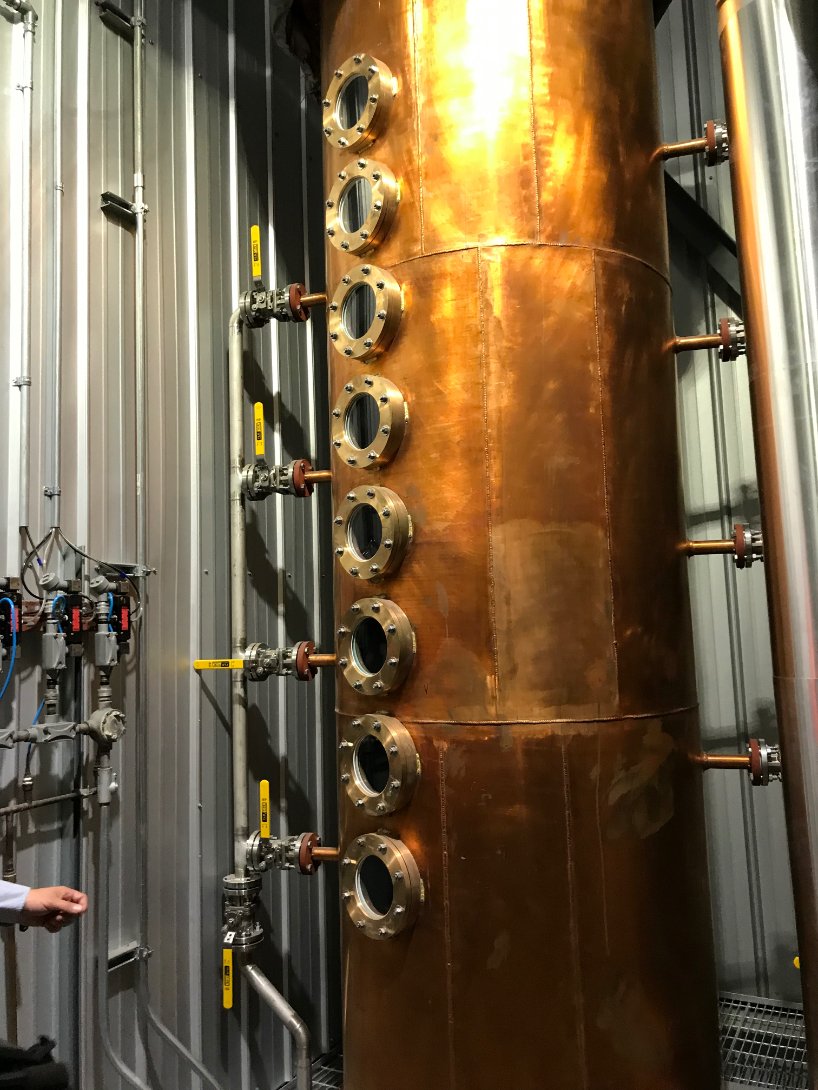
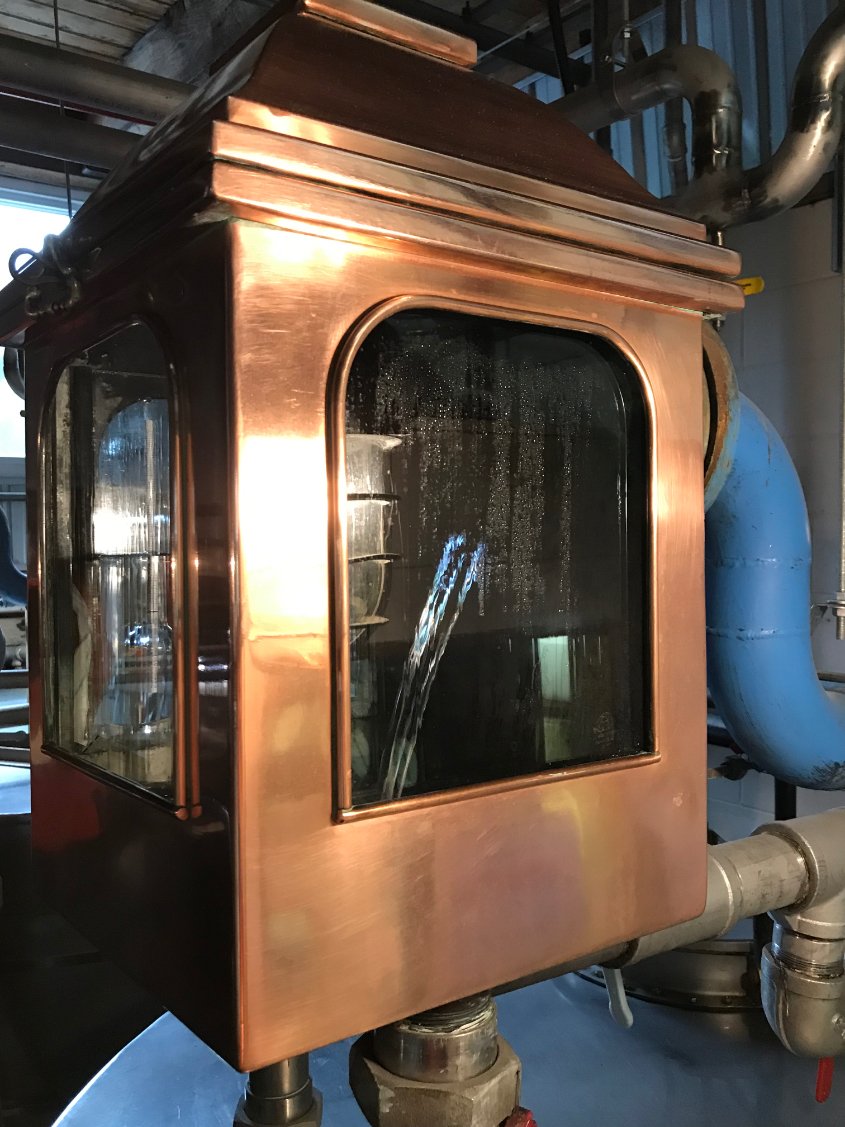
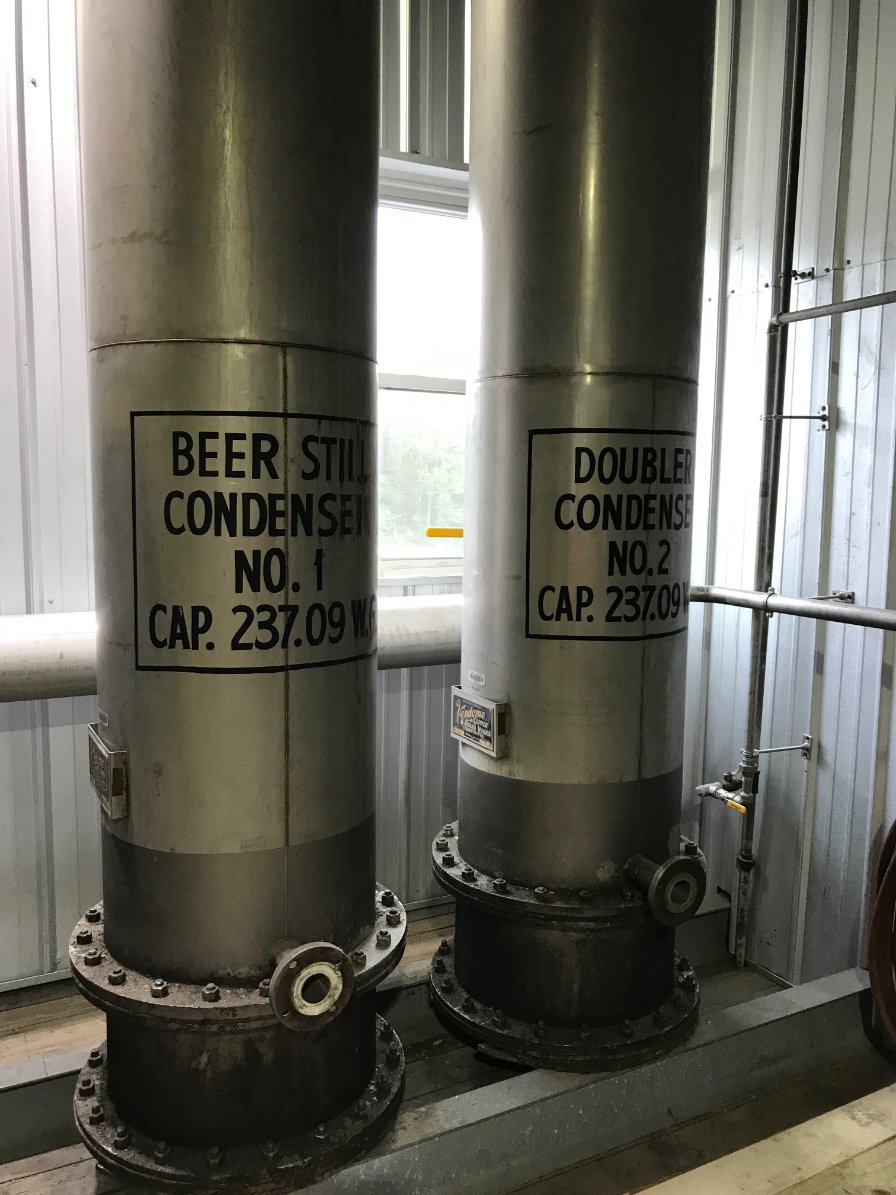
    The distillation column has 19 plates. The mash goes in at the 17th plate near the top and drips down the column as it removes alcohol from the mixture. The alcohol passes up through the column and comes off the top above the 19th plate. 

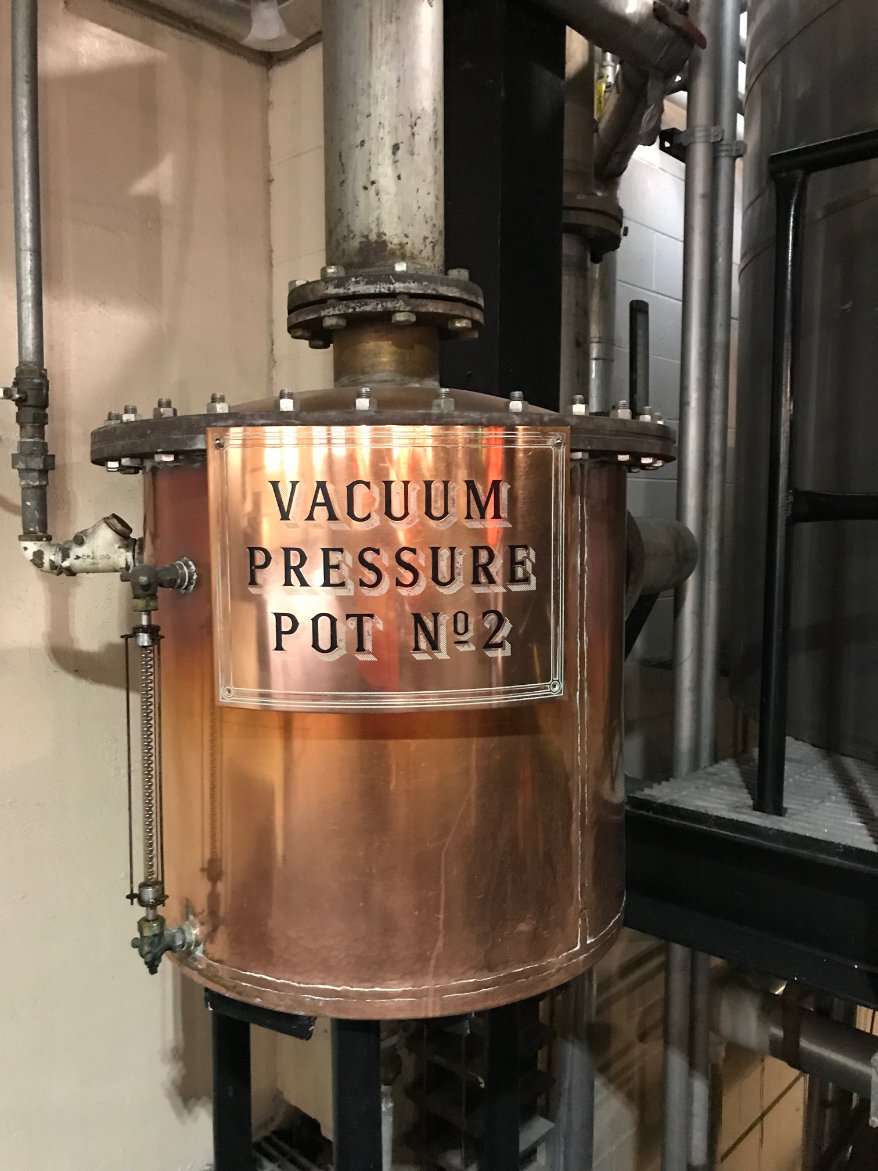
    The alcohol comes off the still at 135 proof, then it is redistilled in the double up to 150 proof. 

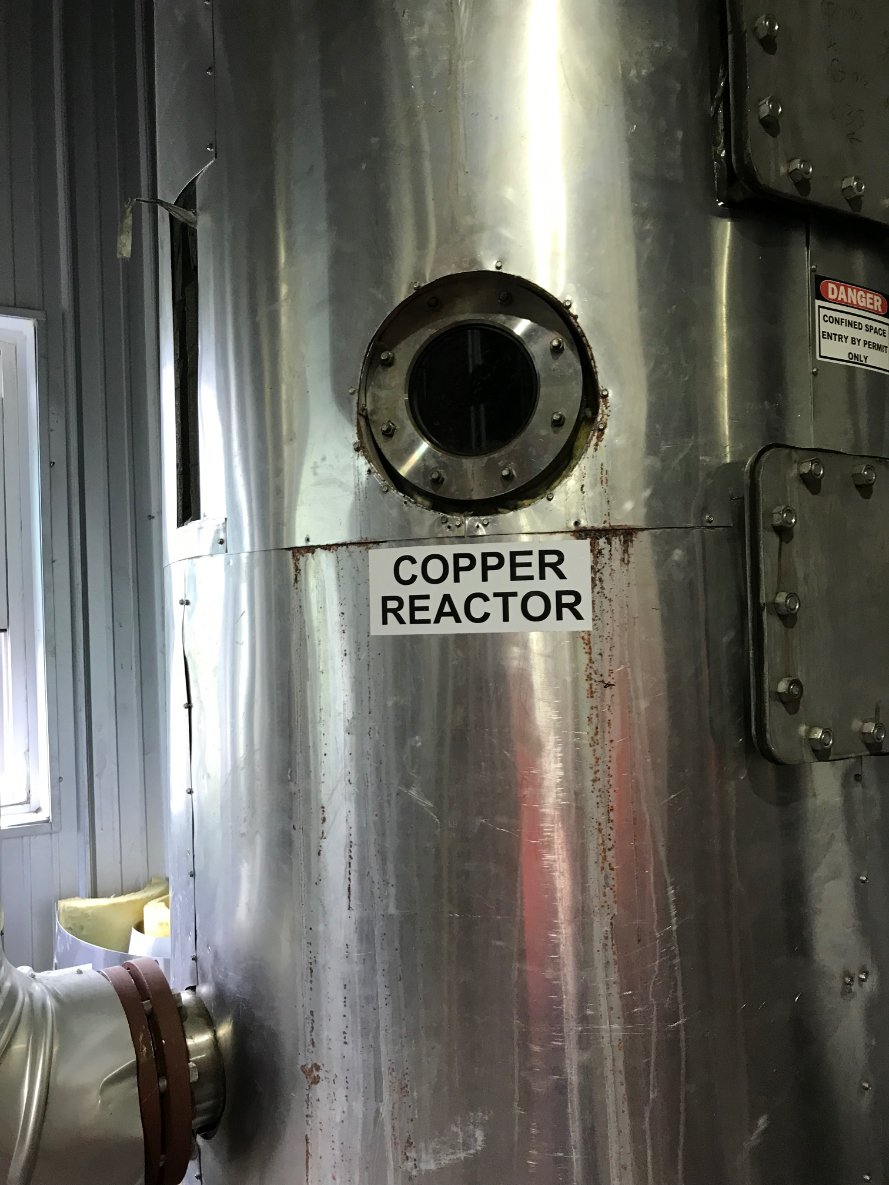
    After the spirit comes off the still, it is run through a copper reactor filled with copper "Raschig rings" before it goes into the doubler. Though I'm not positive, I think in other distilleries the top of the still above where solids enter is filled with these copper rings, rather than being in a separate container as at Dickel. 

    Because they shut down the plant each night, the heads and tails at the beginning and end of each day are simply redistilled in the next run. 

    The byproducts of distillation are the wet grains and the yeasty liquids. Some of the liquids go into the sour mash. The wet grains are sold as animal feed. (At some distilleries like MGP the drains are dried first. Here they are not.)

    IMG_4656
    IMG_4656
    IMG_4656
    IMG_4656
    IMG_4656
    IMG_4656
    IMG_4656


    Charcoal Filtration

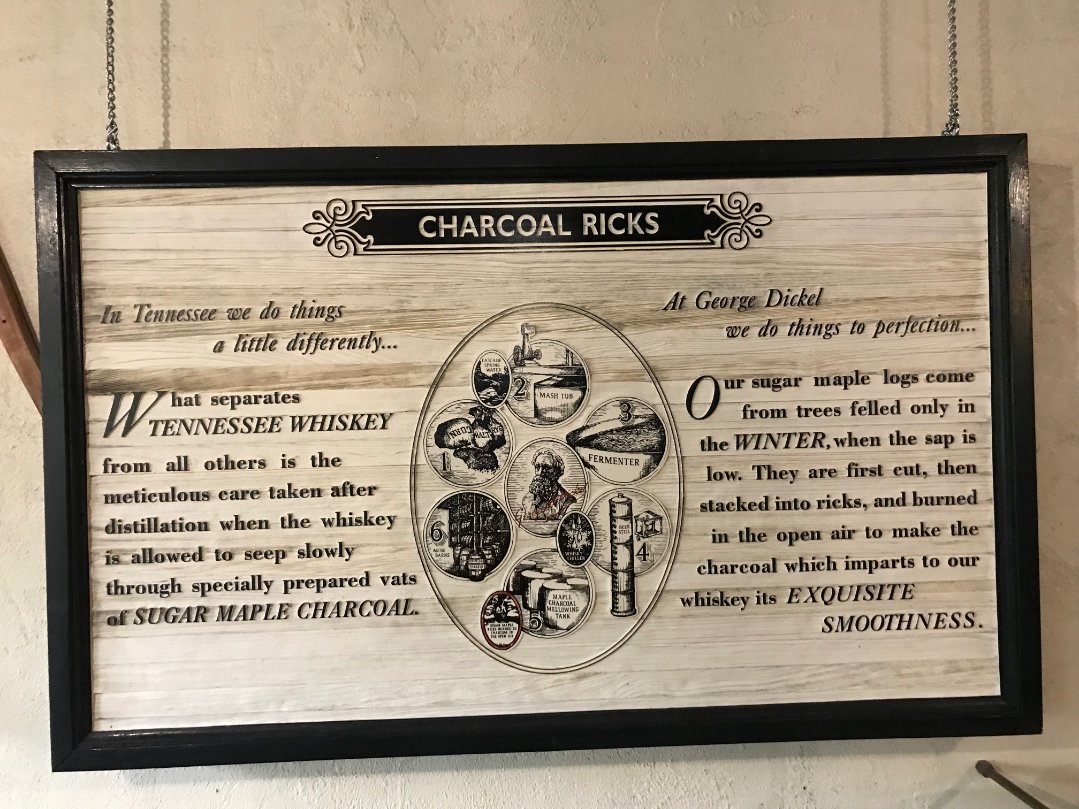
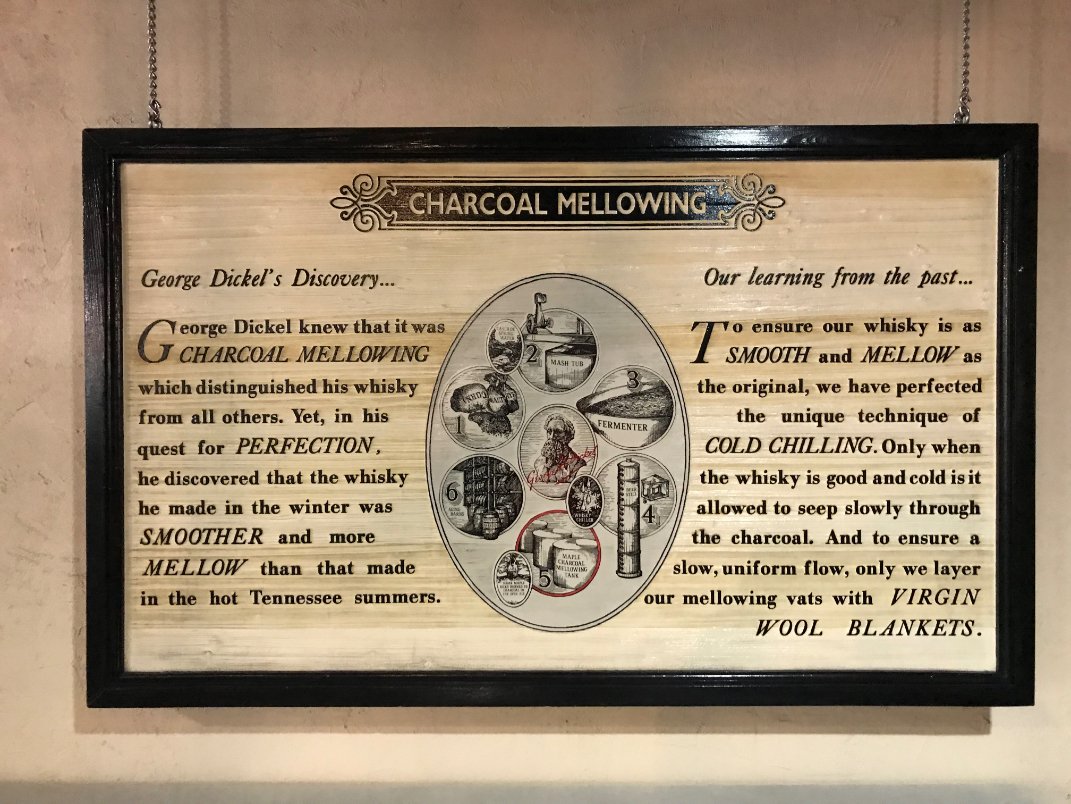
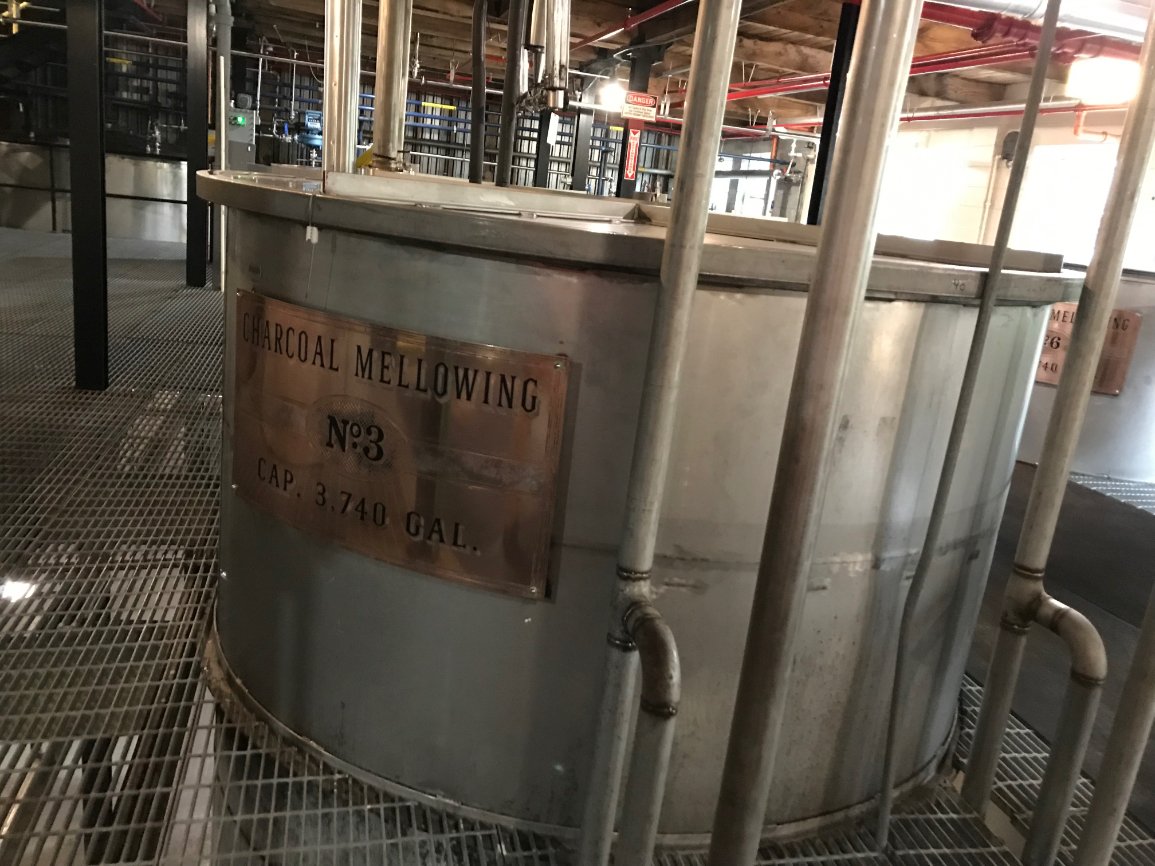
    Because this is Tennessee Whiskey, it is filtered through charcoal before aging, like at Jack Daniel's. But unlike at JD, they chill the whiskey to 42 (Fahrenheit, I think) before running it through the charcoal. The chilling increases flocculation.  

    The sugar maple charcoal is prepared on site – burned and then extinguished at a certain point. 

    It takes about 24 hours to filter one day's worth of distillate. The distillate comes off the still at 150 proof, is reduced to 126.5 before charcoal filtration, and comes out at 125 proof. 

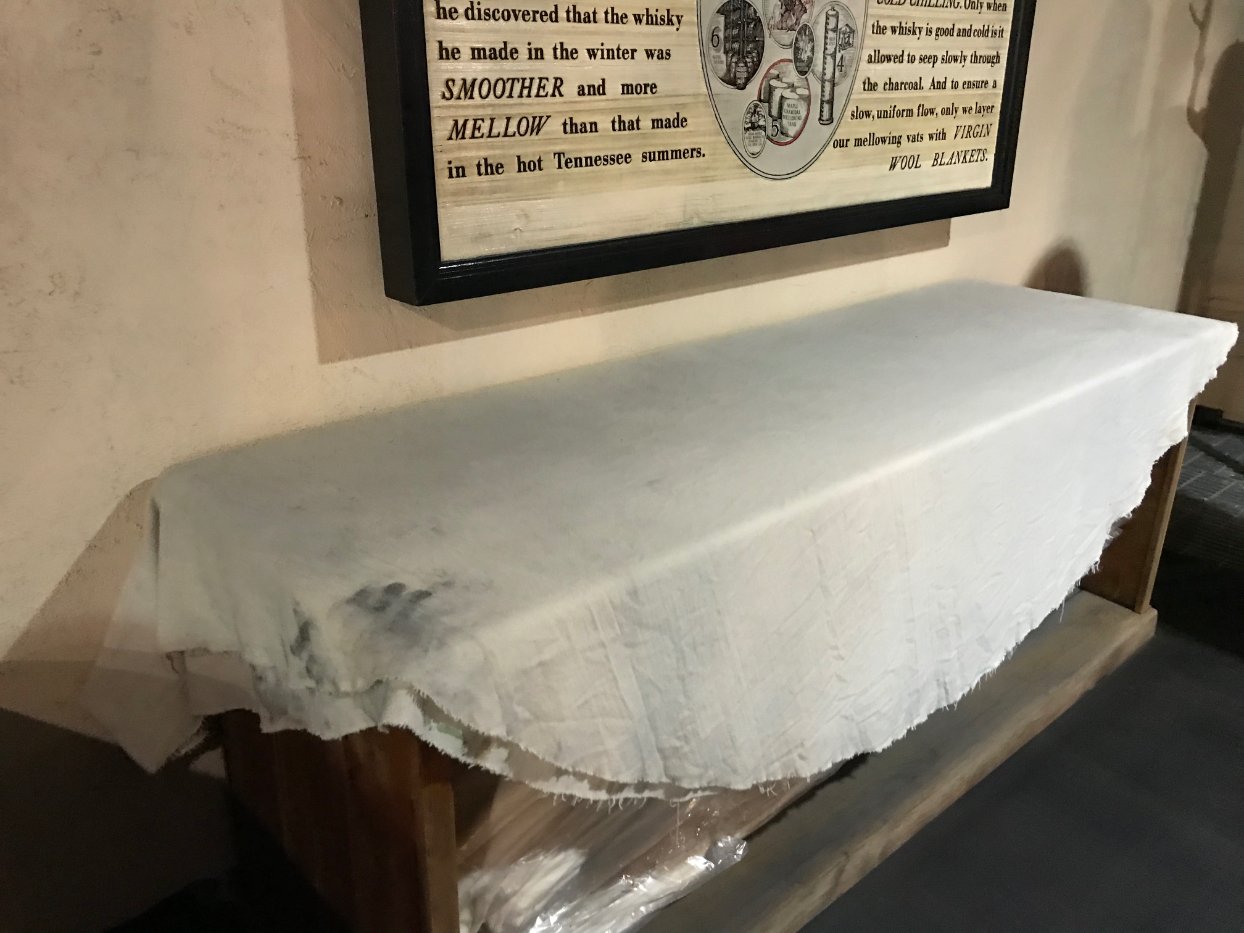
    Virgin wool blankets line the bottom of the filtration tubs to collect the charcoal dust. In my last visit to Dickel, I noted that they fill the charcoal vats up with liquid then let it drip out rather than having it drip into and out of the vats continually. I'm not sure that's the case anymore, though I could be mistaken. 

    Austin gave more detail on the charcoal filtration process. She said that the liquid comes off the still very oily, buttery, and fruity smelling with popcorn notes due to their distilling with low reflux. Filtration through charcoal is a selective filtration that takes out the heavy oily notes while leaving the fruity ones in the spirit. So according to Austin they can distill in a way that builds lots of character because the charcoal filtration takes out notes that they don't want in the final spirit. 

    IMG_4642
    IMG_4642
    IMG_4642
    IMG_4642


    Aging and Warehouses

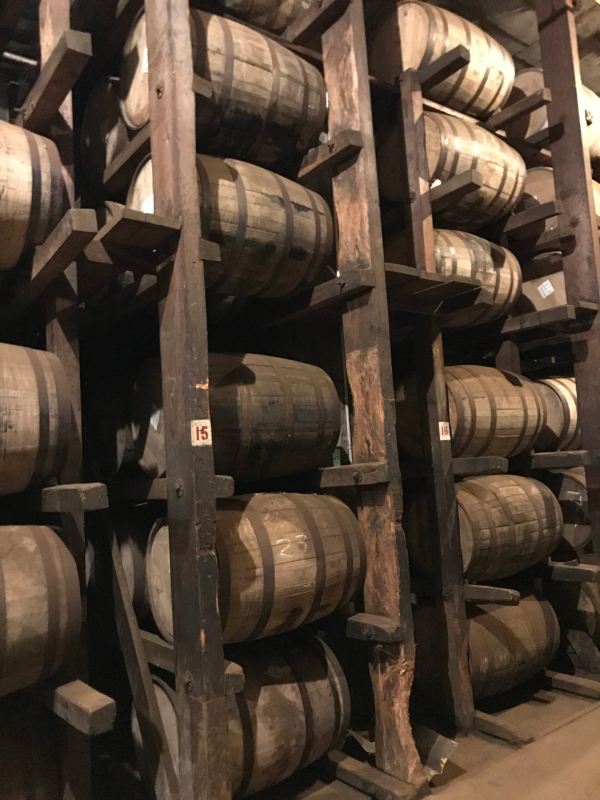
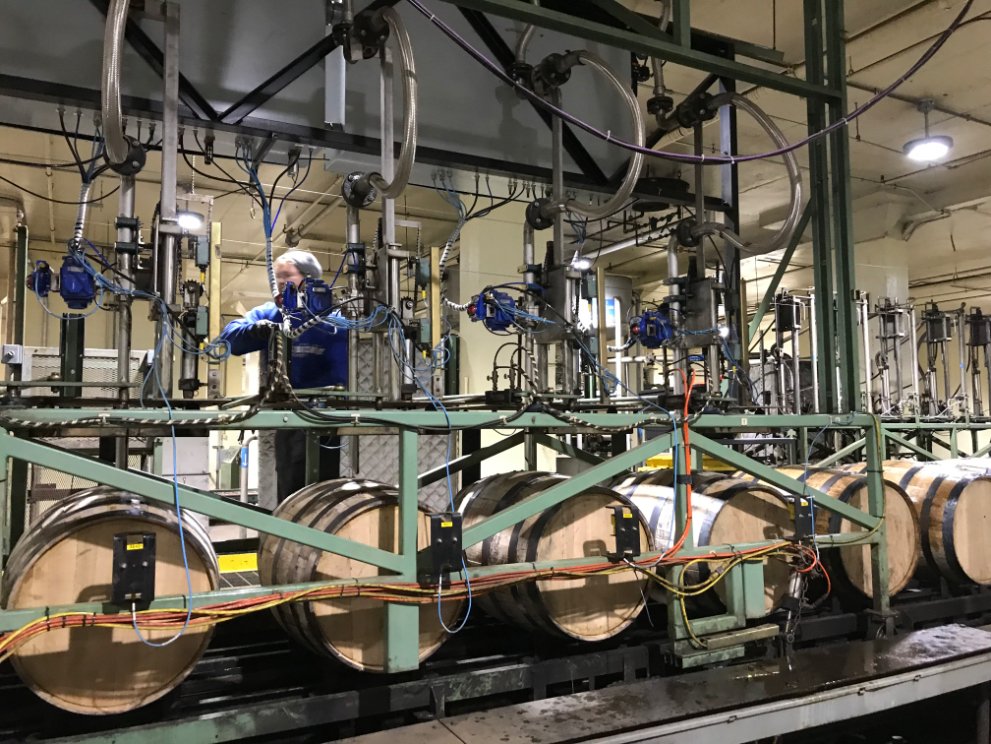
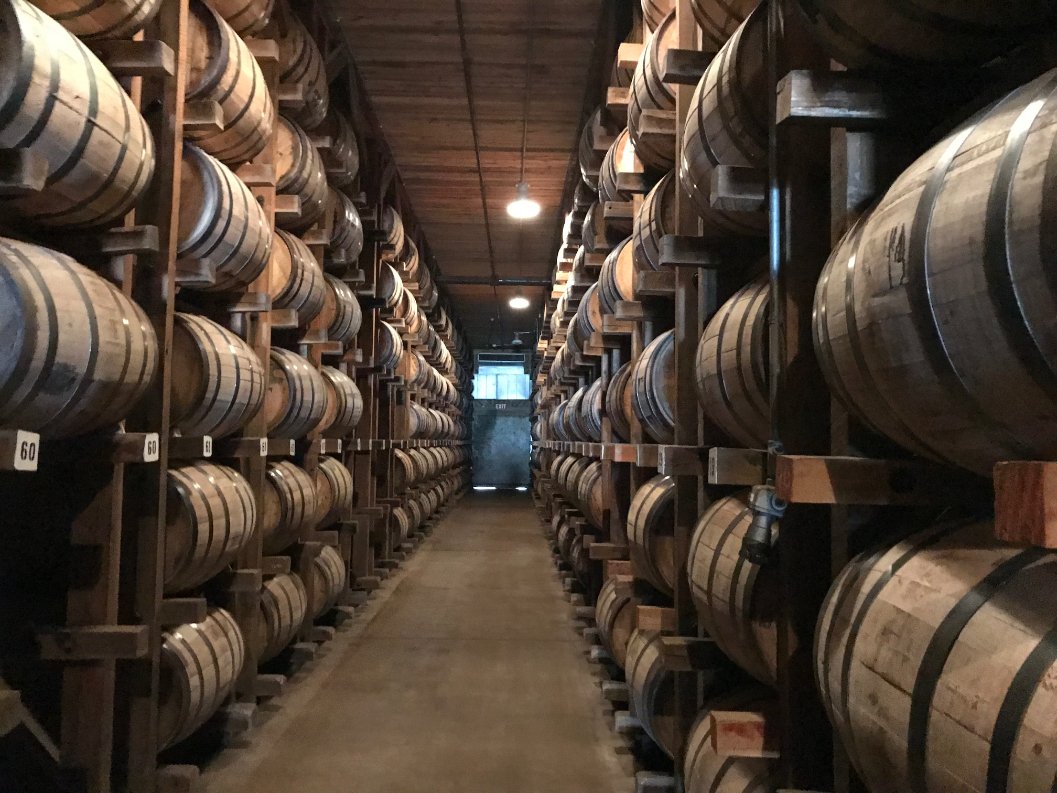
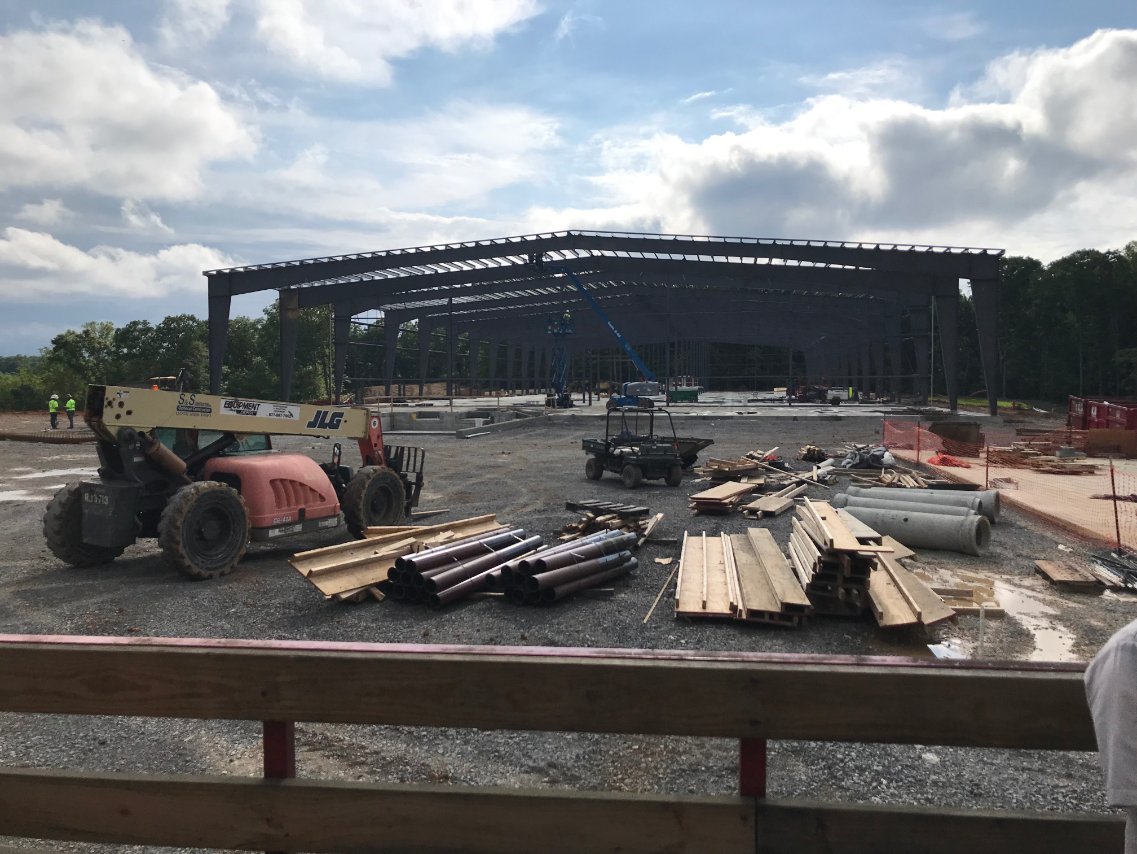
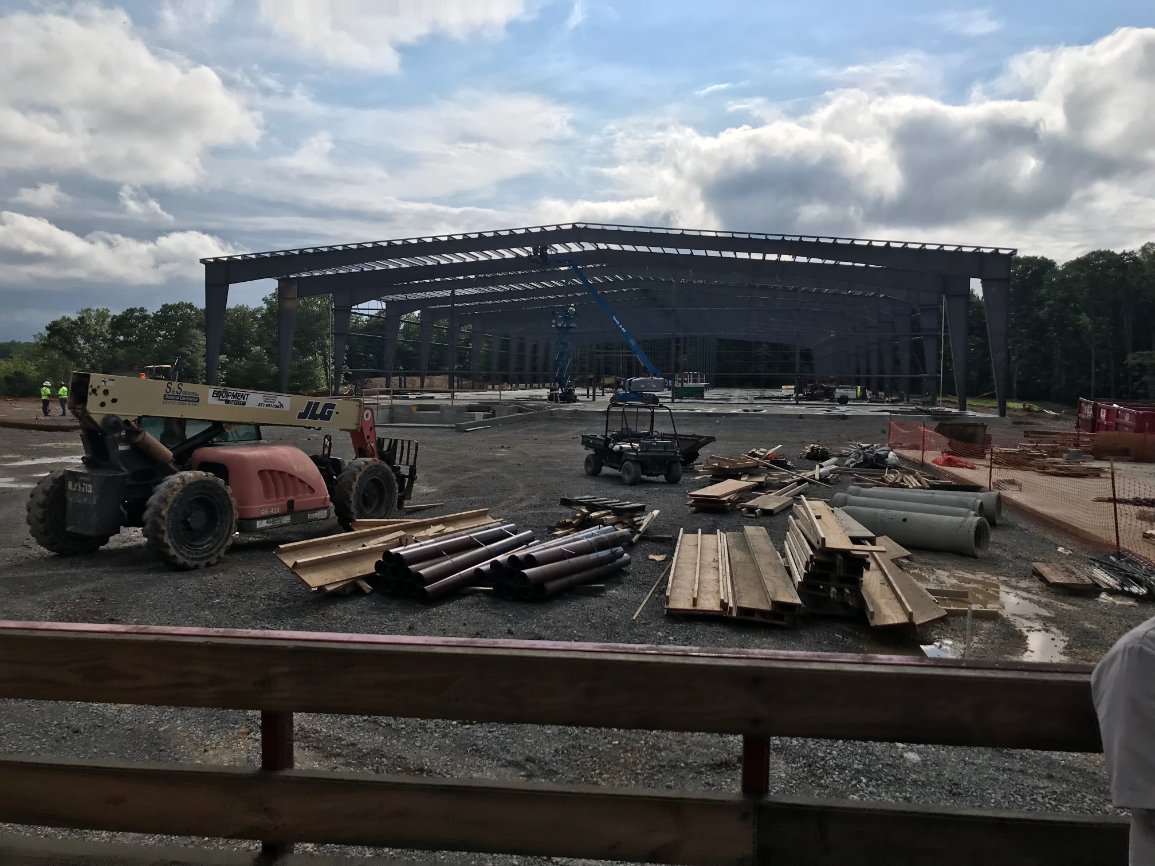
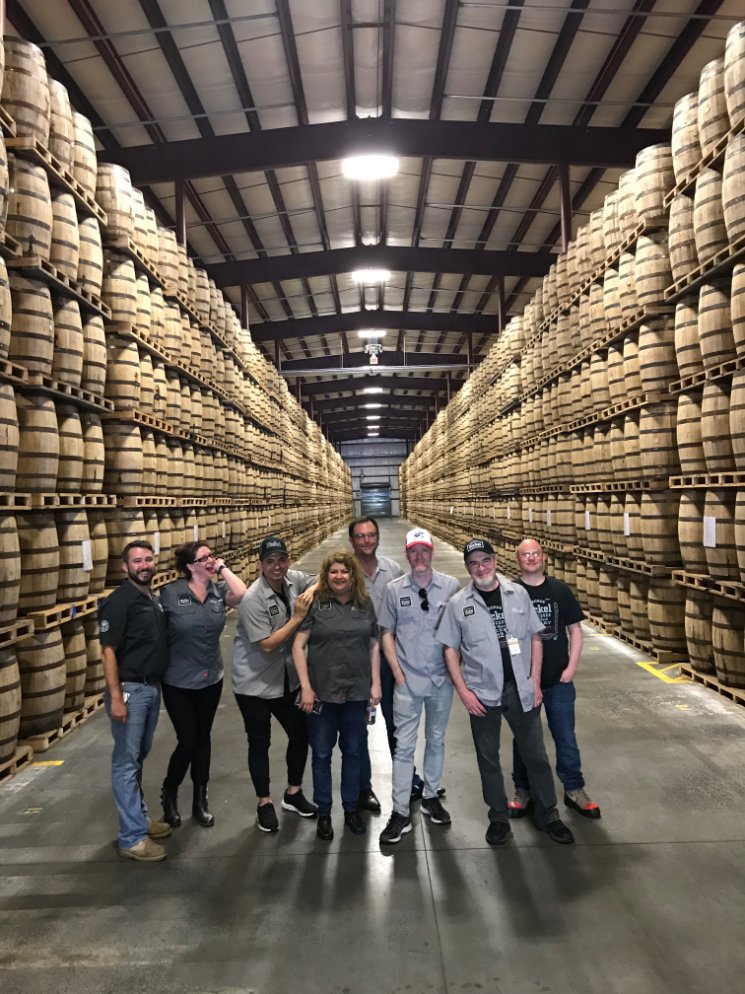
    Barrels are filled at the distillery and then are delivered to the warehouses. We took a hay ride up the road behind the distillery to where several warehouses are located – and where many more are being built. 

    Most of the time this distillery produces their Tennessee whiskey, just making the same mashbill daily. But distiller Austin has been doing some experiments. She said they're "exploring" making their own rye "to see if there is a reason to do it" themselves, rather than continuing to use MGP's rye in their bottling. They've also tried some other mashbills recently, but I don't know if any new products are in the pipeline.

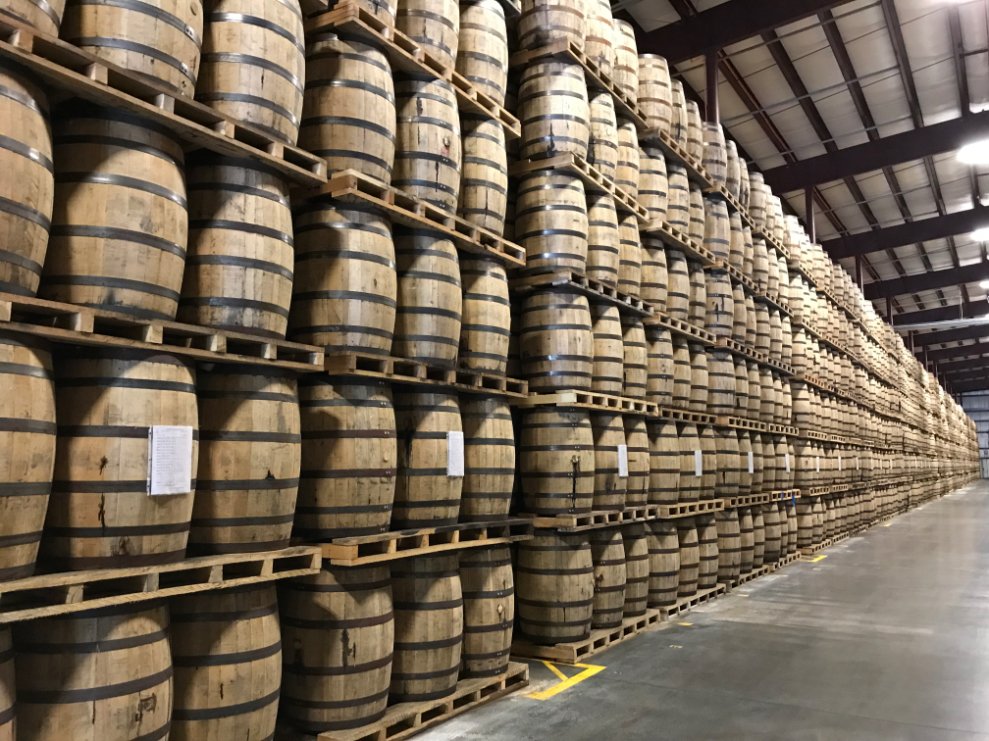
    The warehouses are all single-storey warehouses 6 barrels high. There is only about  5 degree temperature variation between the bottom and top of these warehouses, unlike the 6 storey warehouses many bourbon producers use. The newer warehouses are palatized, meaning the barrels stand on their flat ends rather than on their sides. This is more space efficient than rickhouses. 

    The angel's share takes about 50% of the liquid in each barrel after 7 years. And because they don't combine and refill barrels, the angel's share is even more as the barrels get emptier. They told me that each 9 year old barrel makes between 10 and 16 12-packs of whiskey. Not a lot! 

    IMG_4692
    IMG_4692
    IMG_4692
    IMG_4692
    IMG_4692
    IMG_4692

    Thanks to George Dickel for a great visit! 

    Stay tuned for a couple more posts related to my visit. 

  • Nice Rats, But How Were the Drinks?

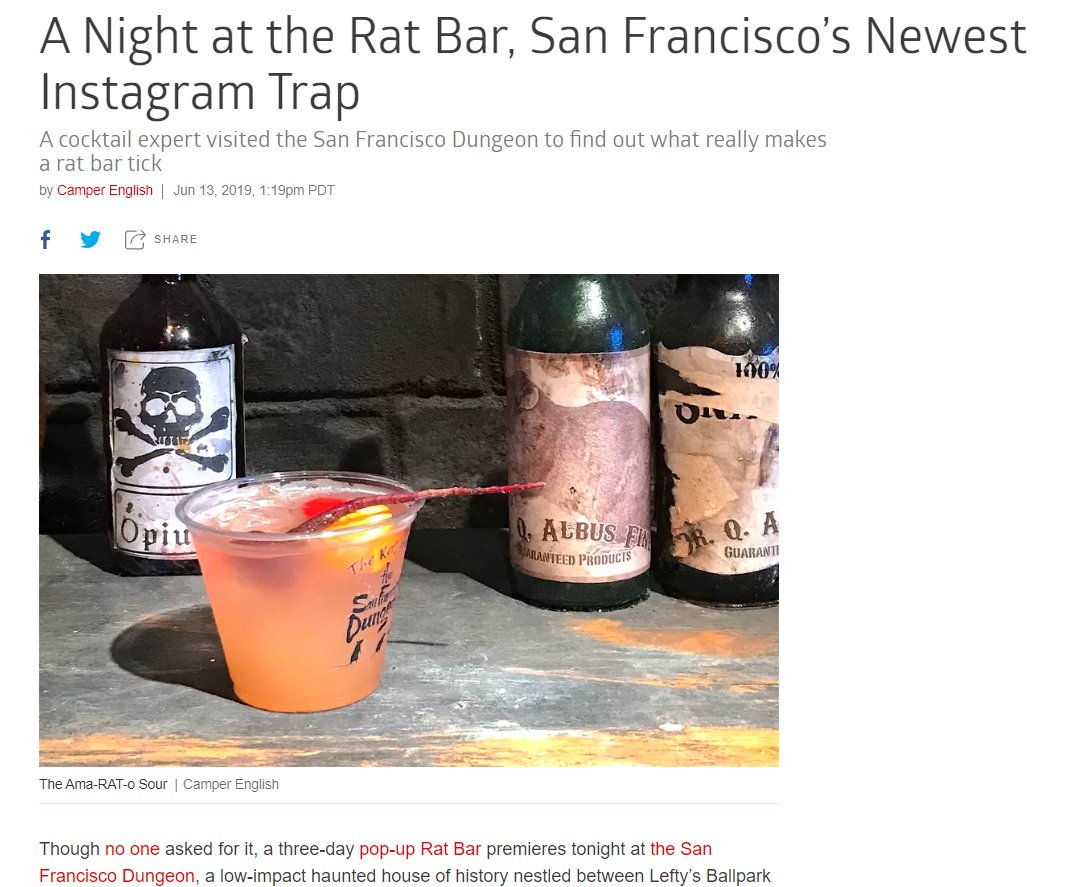
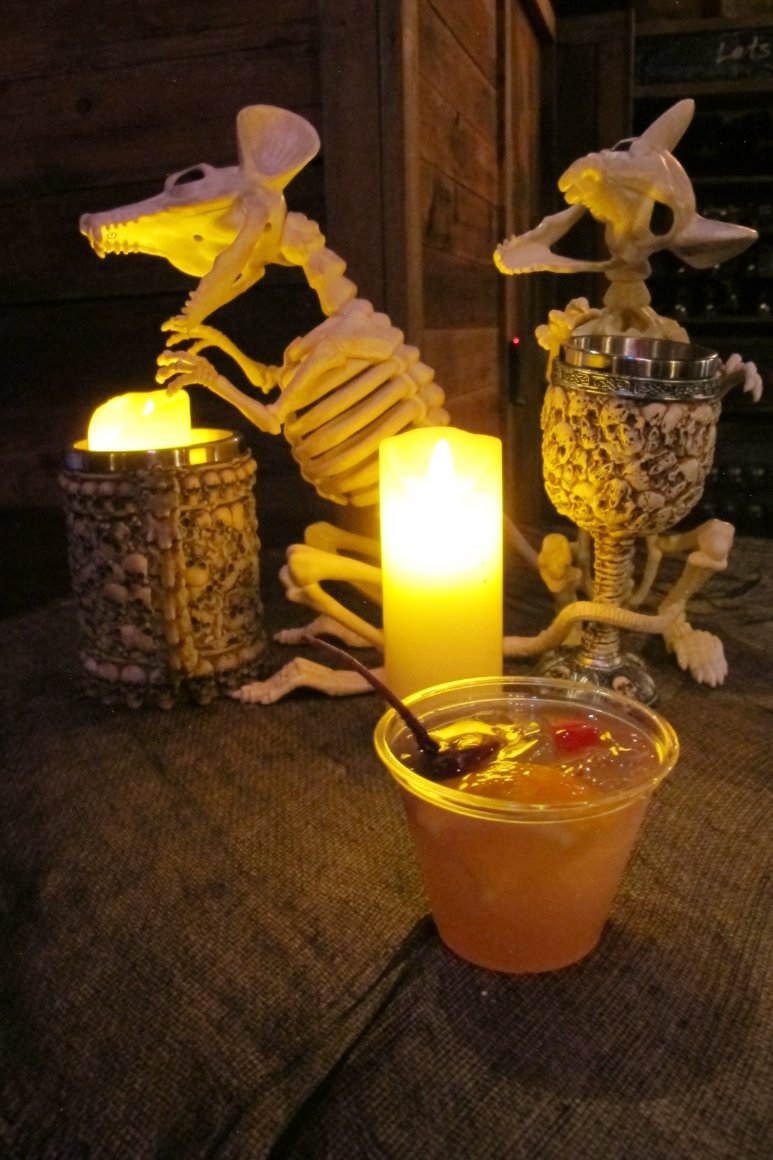
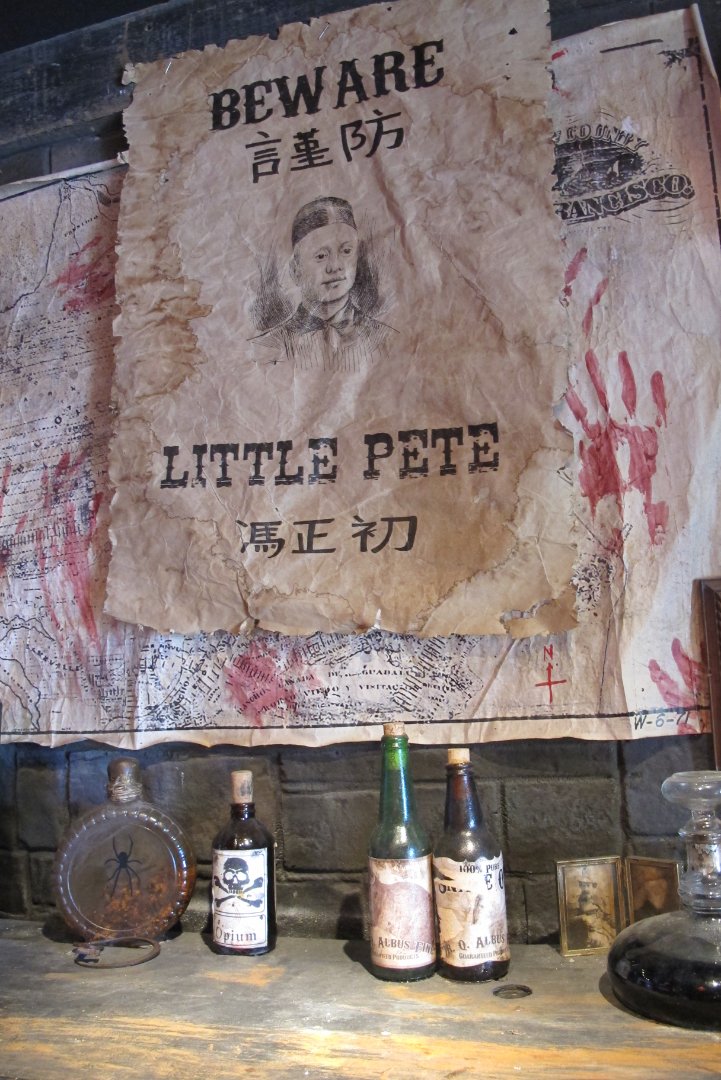
    THIS WAS FUN: I was paid to go to a pop-up live rat bar and review it for Eater.com

    Eater rat bar story 06132019

    I had a good time with it, of course. In describing the drink, I wrote

    On my visit the cocktail was pre-poured at least a few minutes earlier, with ice melting on top of the drink, adding a watery welcome layer to the sickly sweet entry-level cocktail dying in the cup below. The drink’s garnish is perhaps the most exciting component, featuring the root-end of a beet intended to mimic a decapitated rat’s tail (so, de-butt-itated?), which to be fair, is awesome.

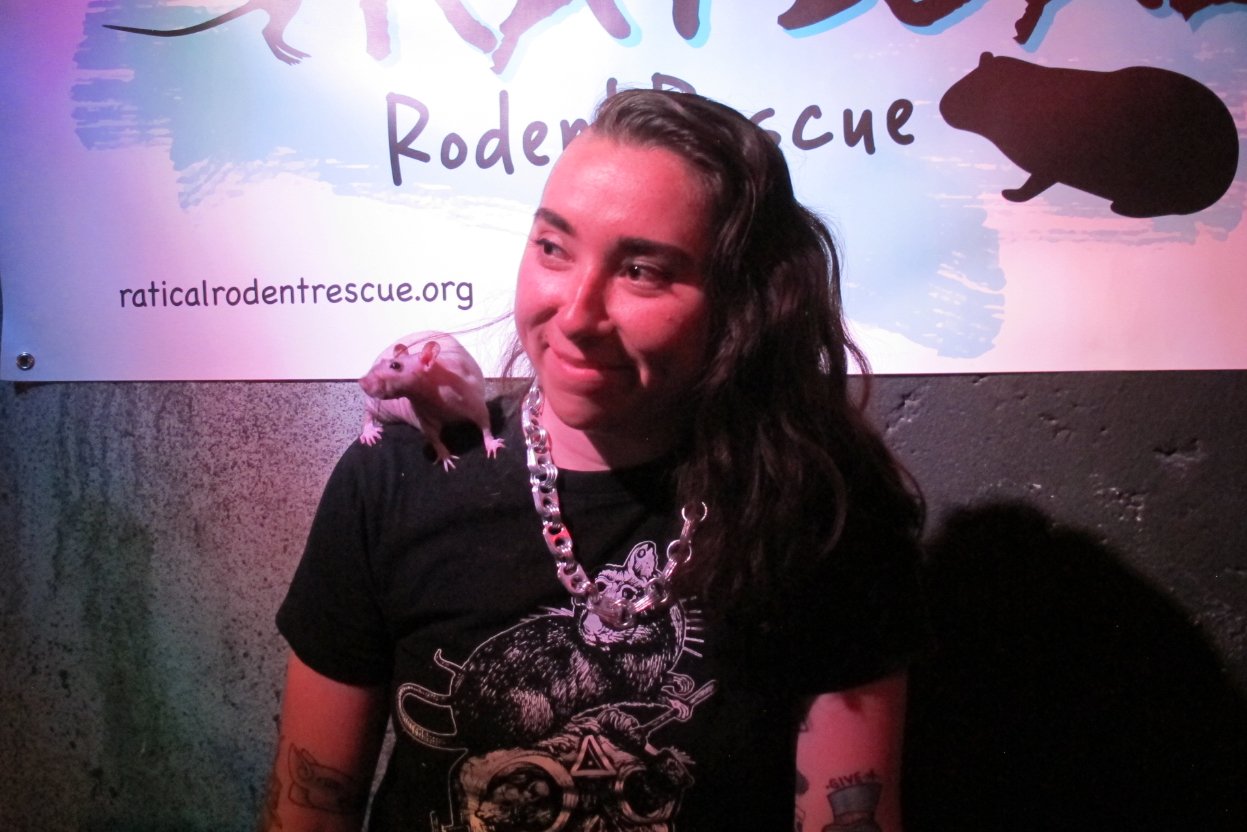
    Please give it a read. More pictures from the Rat Bar are below. 


    RatBar003 - Copy
    RatBar003 - Copy
    RatBar003 - Copy
    RatBar003 - Copy
    RatBar003 - Copy
    RatBar003 - Copy
    RatBar003 - Copy
    RatBar003 - Copy
    RatBar003 - Copy
    RatBar003 - Copy

  • Moving on from the World’s 50 Best Bars

    Global-logoSince 2011 I have been a polling coordinator- a person who chooses the judges- for the World's 50 Best Bars. I have just received notice that they'll be using a new polling coordinator in the US/Canada going forward, so I'll just be a voter myself (if they'll have me). 

    I was first asked to help build out the voting panel globally by Lucy Britner, then an editor at Drinks International Magazine that was the creator and owner of the awards. I met Britner the previous year at a cocktail competition where she saw I had a large network of international bartenders. It was a good fit as they wanted to grow the list into what it eventually became.

    Drinks International started the World's 50 Best Bars list two years earlier in 2009, and they had conducted their polling via telephone!  The 2010 World's Best Bars list supplement in PDF is here. At the time the top bars were Milk & Honey London, PDT, Harry's Bar Venice, Milk & Honey NYC, Buddha Bar Paris, Pegu Club, Death & Co, Employees Only, Harry's New York Bar Paris, and The Academy (formerly LAB). 

    At first I was a global polling coordinator, reaching out to bartenders, brand ambassadors, cocktail journalists, and other cocktailian world travelers I knew in every country. To toot my own horn a bit, my selection of global contacts (in part, I was not the sole coordinator) helped grow the reputation of the W50BB list into the most respected list of its kind over the next few years. Not only was my reputation as an honest and thorough journalist good for the credibility of the list, the judges I chose brought the same qualities to the voting panel.

    I still think that you can argue with the selection of bars that win, the voting procedures of one list versus another, and with ranking bars in lists like this in general, but it's impossible to deny that the voting panel is solid. (Actually it might be possible to deny it now – the list of voters used to be public but no longer is, in order to prevent any potential bribery. But I'm telling you as of 2018 the voters were the best of the industry.)

    Later I was assigned the role as polling coordinator just of the US and Canada, which was still a ton of work to ensure we had voters from every region of the countries and not just 100 voters from New York. In my last year of the gig, I achieved just under 40% female voters (not perfect, but pretty good).  The European poling coordinator was and still is Hamish Smith of Drinks International, and we both worked incredibly hard on the back end to ensure the list was always fairly executed. We had many wonky conversations about things like "can you vote for a bar inside another bar, or is that considered the same bar?"

    The World's 50 Best Bars was purchased by William Reed Media, owners of the World's 50 Best Restaurants list, in 2017. The restaurant list works a bit differently, with unpaid regional polling coordinators. It seemed clear with the new management that they wanted to work differently, bringing the bar list more inline with the restaurant one, and that my time as US/Canada polling coordinator would eventually come to an end. It did, and the 2019 list will be handled by a new polling coordinator. I will leave it to that person to announce their involvement, as I'm not sure how they intend to move forward with choosing voters but the contact page is here if you have questions. 

    So for all my past voters, thank you for honesty and for meeting your voting deadlines, even if it took a few reminders for most of you 🙂


  • Deeply Nerdy Stuff About Jack Daniel’s Production – Charcoal, Souring, Fermentation

    B6B63D48-56B5-4613-BA53-9DA2107BE960I just attended an amazing talk by Kevin Brent Smith (Micro-Biologist & Distillery Manager – Jack Daniel's Distillery). I wasn't planning on doing a blog post about it but I learned so much I wanted to write it down! 

    Kevin B. Smith authored the chapter on "Yeast practices in the production of American whiskies" in The Alcohol Textbook.

    First up, you may want to review my notes on my visit to the distillery from 2012 to see the production process in general and in order


    Miscellany

    • According to Smith, if your fermentation doesn't finish and you still have sugars in your mash, these can burn and stick in your still, lending off  flavors to the final whiskey. 
    • Whiskey isn't made from grain, it's made from the seeds of grain. (not his point, but my observation)
    • When grinding grains before fermentation, the grinding process can release heat and damage the quality of the grain, but a hammer mill works well and doesn't have an impact. 


    Souring In Two Places

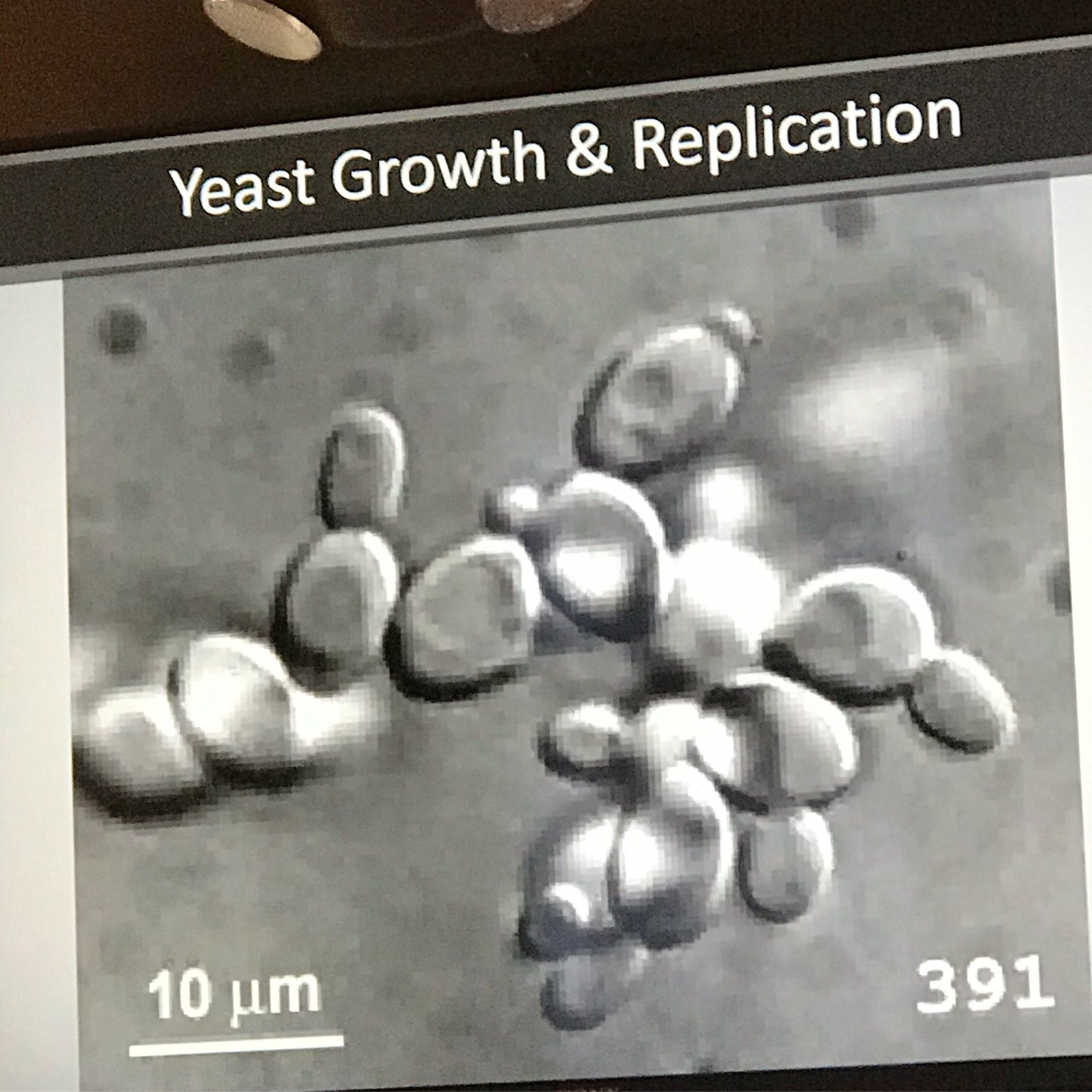
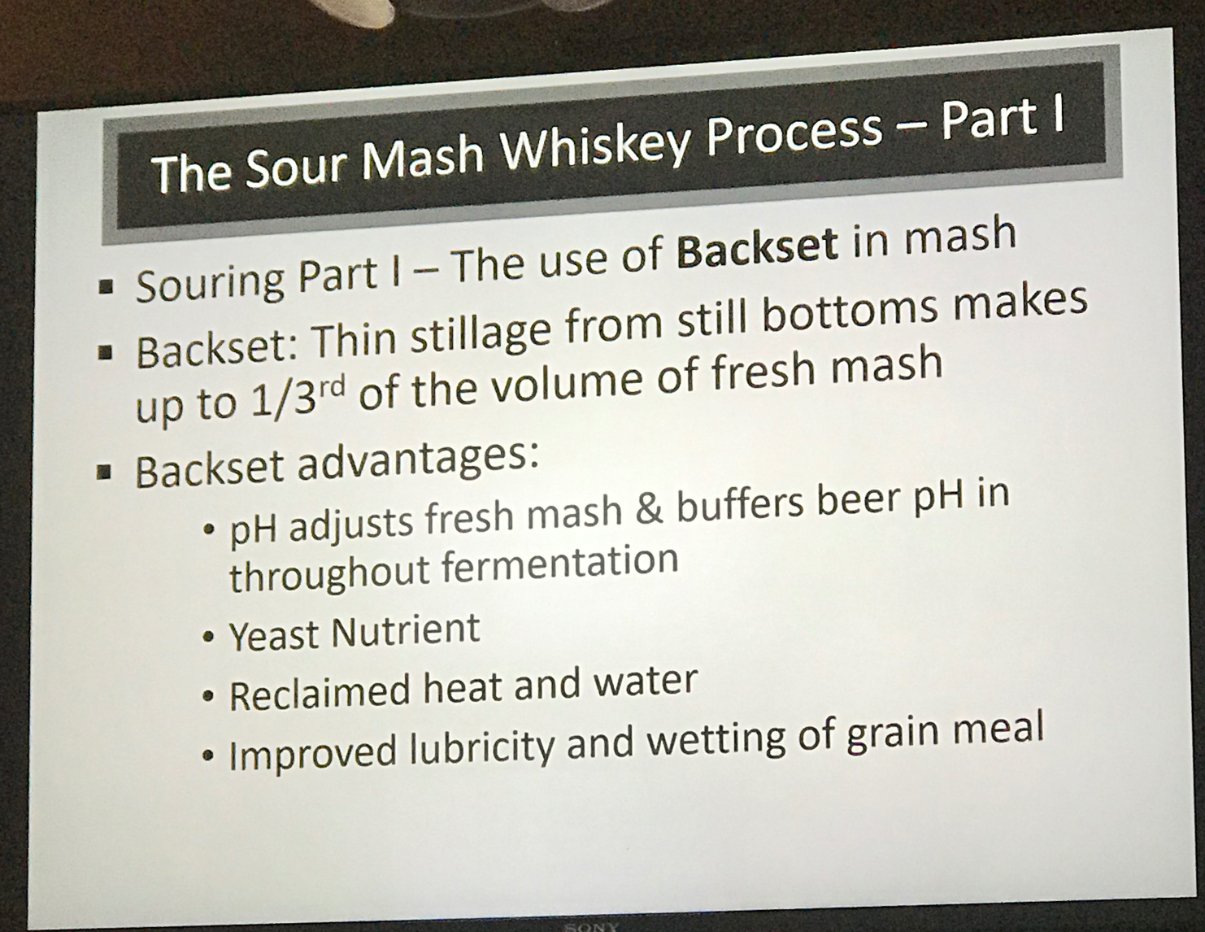
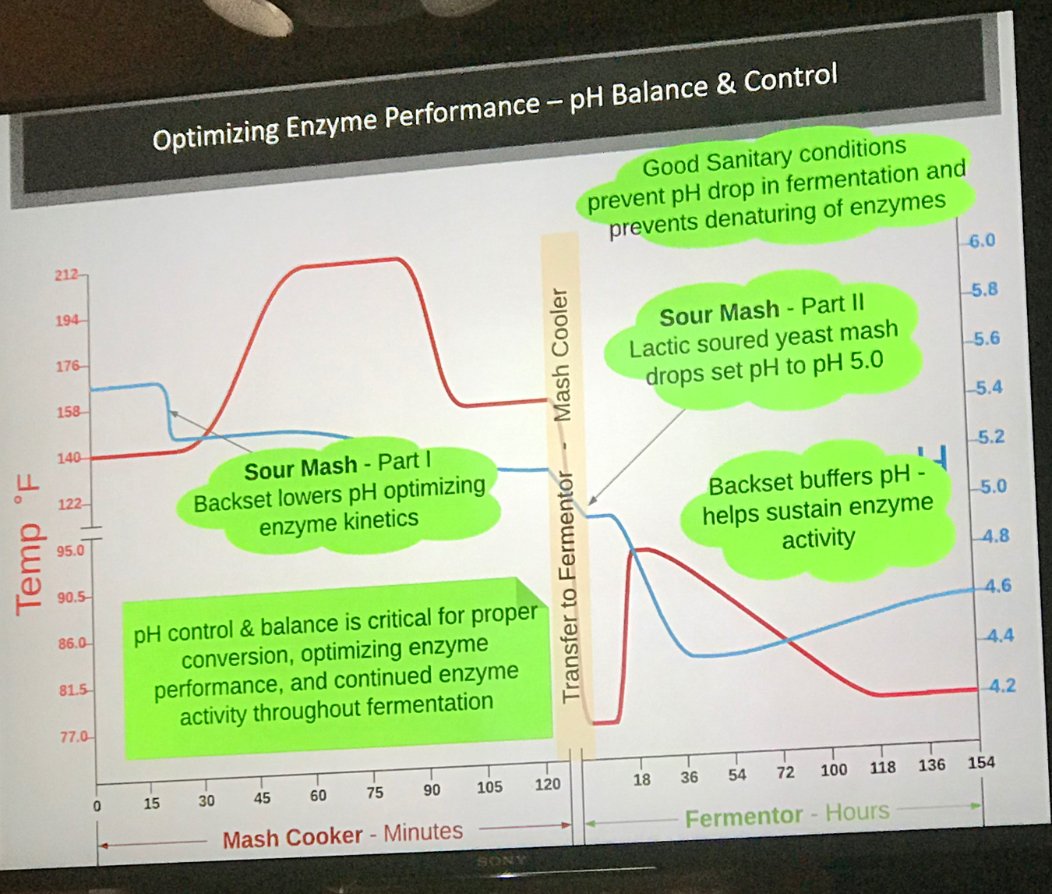
    • "Souring" is not like sourdough starter in that the process' job is to remain consistency between batches. "Souring" means lowering the pH, making it more sour/acidic. "Sour mash"ing is adding backset (stillage) from the previous distillation run to the next one. The stillage contains lots of dead yeast that is food for the new yeast, but also it is acidic and lowers the pH from about 5.6 to 5.3. 
    • They use about 30% backset in each distillation. 
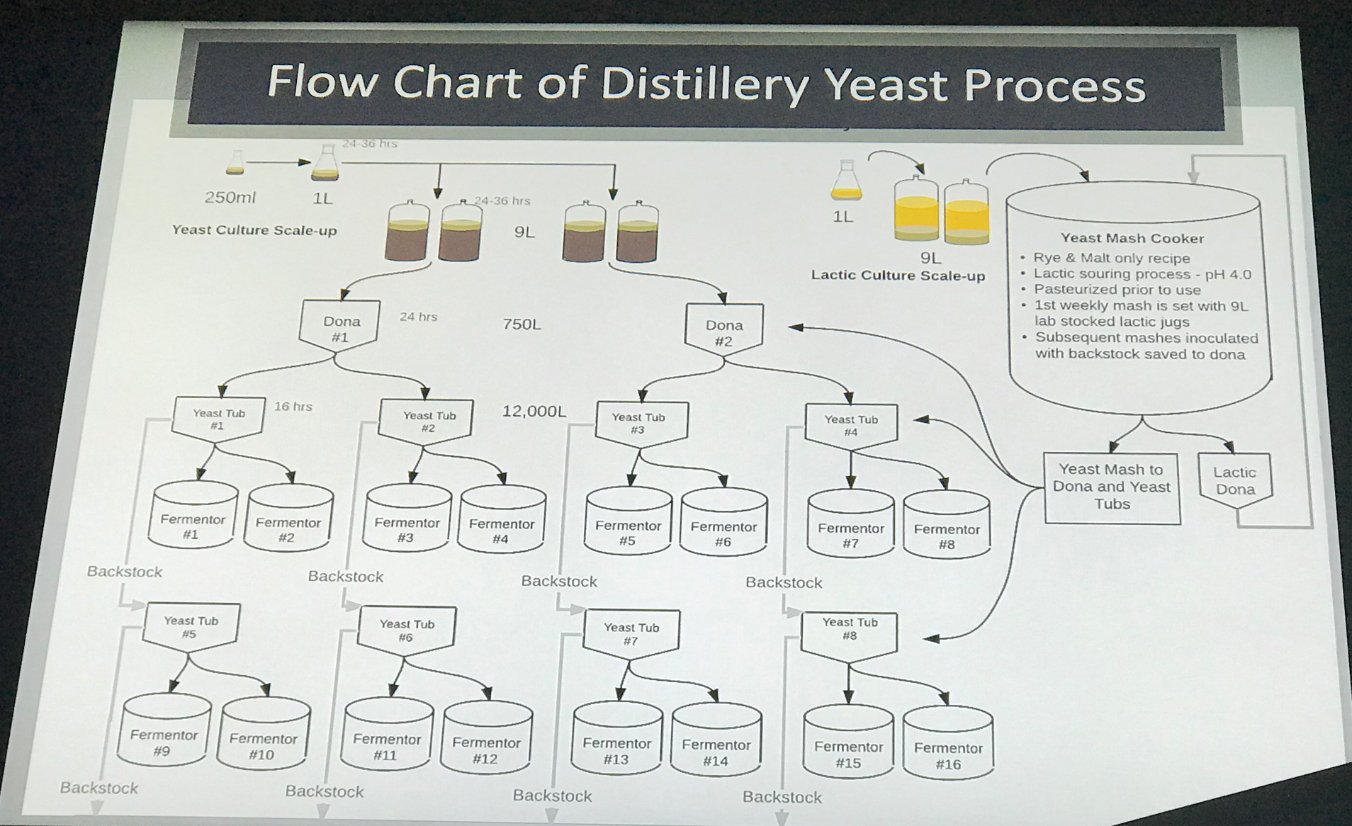
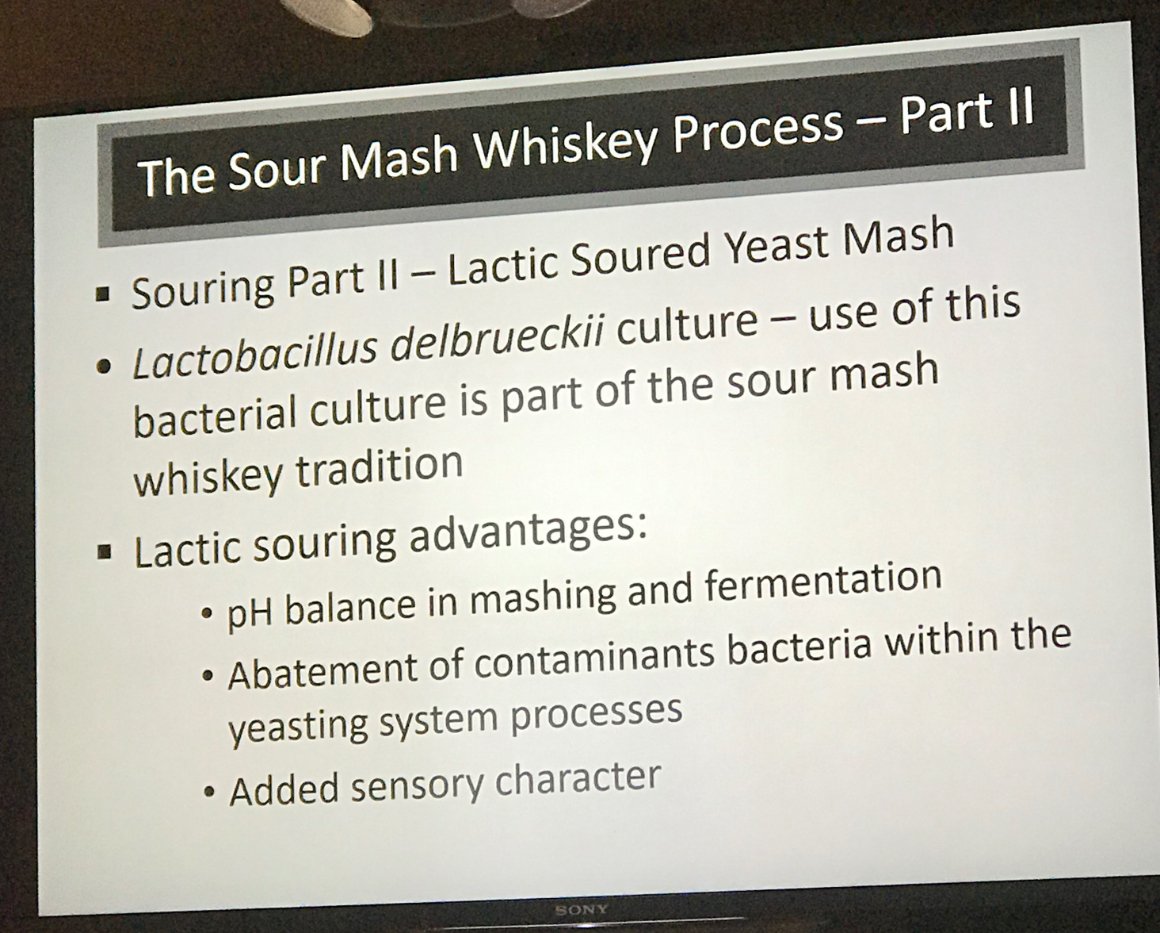
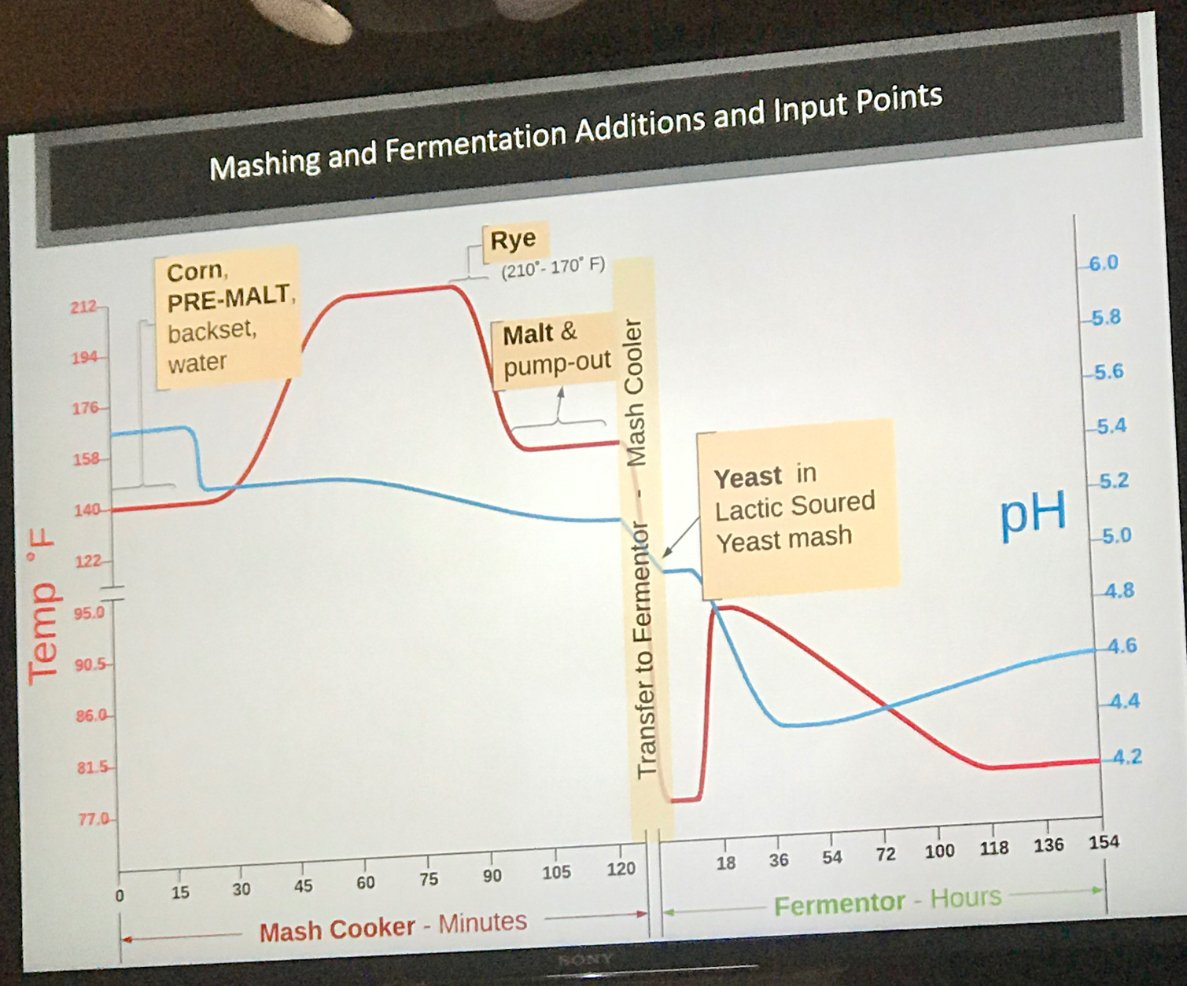
    • There is another place where they used soured mash, in the production of "lactic soured yeast mash." This is used in yeast propagation. 
    • Yeast is started from a lab-preserved copy, then propagated in several steps. It grows on a medium for the first couple of rounds, then it's transferred to a grain mash – the lactic soured yeast mash – to propagate further. 
    • In essence, lactic soured yeast mash is propagating yeast with lactic material (lactobacillus; not from the stillage) to lower the pH to about 5.0. 
    • Not all distilleries do this, but Smith says it's a traditional process. All Brown-Forman distilleries use lactic soured yeast mash. 
    • This lactic soured yeast mash will have flavor impacts on the whisky. 


    IMG_4157
    IMG_4157
    IMG_4157


    Enzymes, Fermentation, and Rye Grain

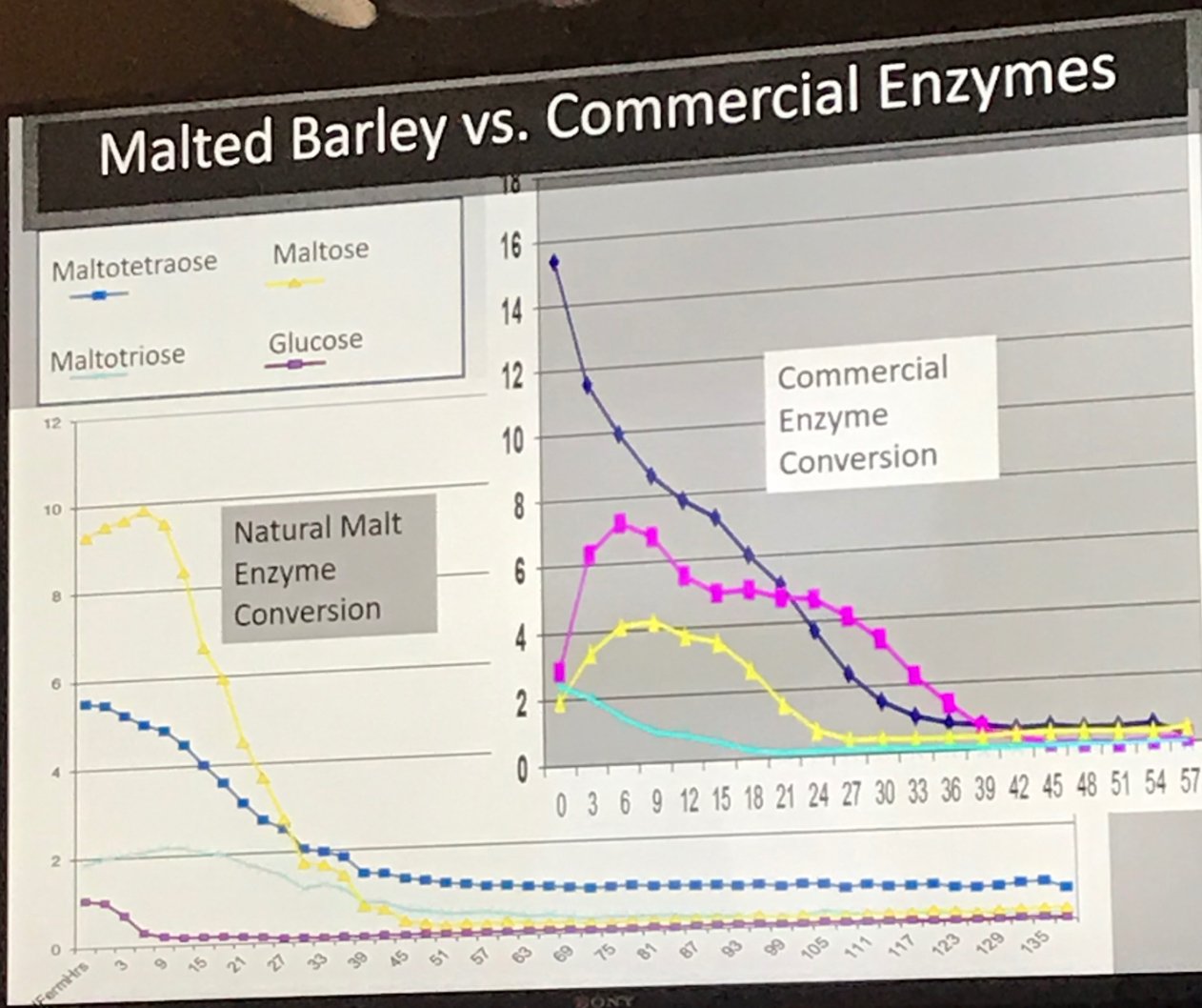
    • Rather than, or in addition to, using malted barley (whose job in American whiskey is to provide enzymes that break down long chain carbohydrates into fermentable simpler sugars), commercial enzymes (not from the barley) can be added to whiskey. This has become common.
    • Jack Daniel's does not use commercial enzymes, and in fact most Brown-Forman whiskies do not. This is because commercial enzymes produce less maltose in the conversion process, which they feel leads to less flavor in the whiskey. 
    • (However they keep some enzymes around in case of emergencies, for if a batch of mash didn't convert all the way they could add some enzymes rather than trying to throw away a huge vat of basically sticky grain pudding.)
    • Rye as a grain is notoriously viscous/sticky and tends to gum up the process. At Jack Daniel's they do use a type of enzyme (different from the standard one for conversion) to help make it less sticky; but not to convert its starches into sugars. 
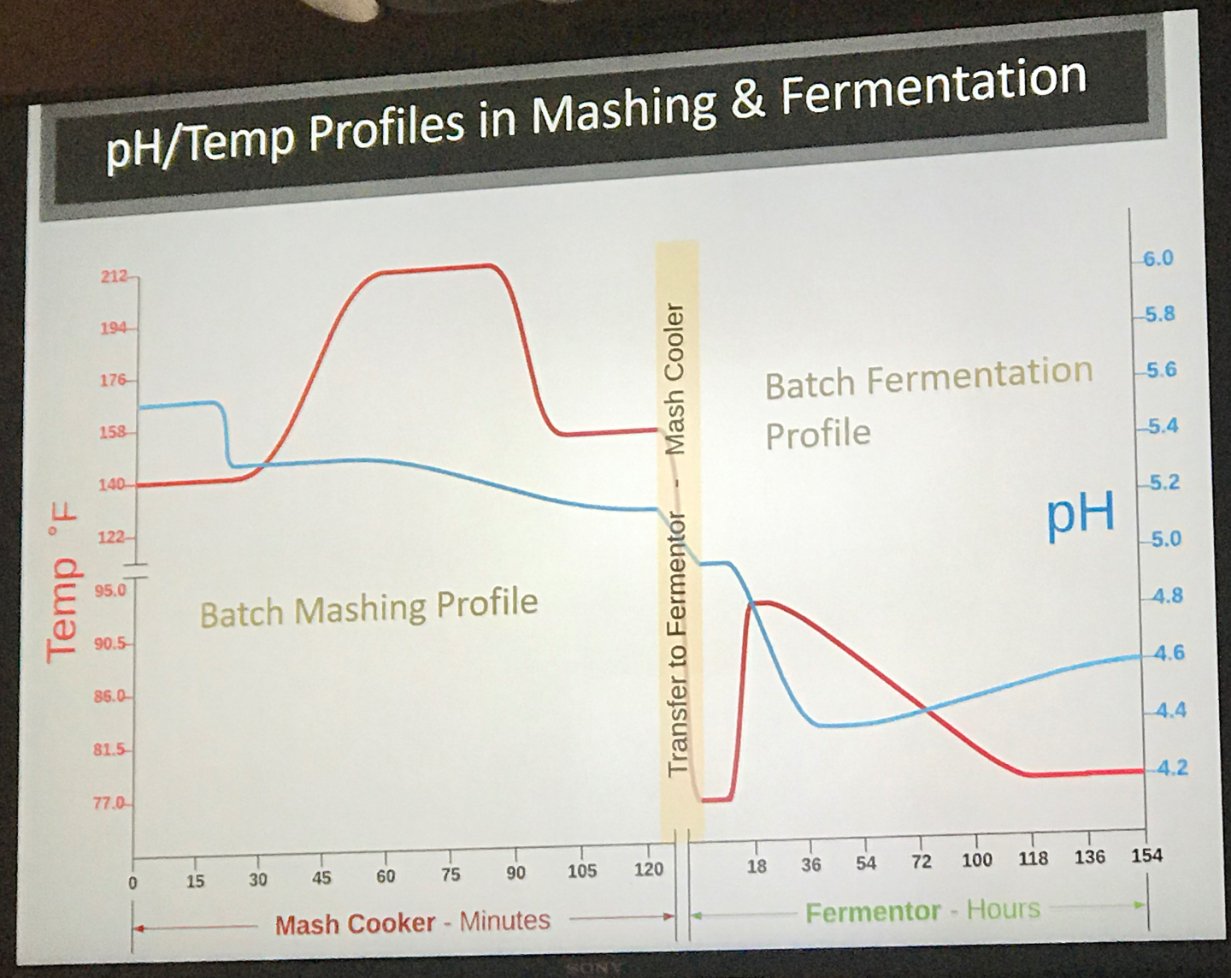
    • Another thing that helps rye not be so sticky is that it is added to the mash later in the process than the corn is. Corn is mashed at a hot temperature which is necessary for gelatinization, but if you leave rye with the hot water for very long it gets stickier. So it's added just before the malt is added at the end of the mashing process just before fermentation. You can see this on the graph below. 
    • After fermentation, their beer is at a pH of 4.6, while companies that don't use the soured yeast mash have a more acidic 4.0 beer.


    IMG_4160


    Note that the next three charts are the same, with added information each time. 

    IMG_4160IMG_4160IMG_4160


    Charcoal

    • Charcoal mellowing (aka the Lincoln Country Process) was needed in the olden days because distillers didn't have a good handle on consistent fermentation; charcoal filtration was needed to remove some off flavors in whiskey.
    • Running the newly-distilled spirit through charcoal is not a purely subtractive process, which is what I thought until today.
    • Sugar Maple trees are used to make the charcoal because it's an abundant but not terribly useful wood generally, and it doesn't impart much flavor. The wood is burned and then the fire put out. The larger pieces of charcoal are broken up and filled into vats. 
    • The charcoal production does not make activated charcoal. However the charcoal does do some adsorptive filtration of the whiskey to remove certain components. 
    • The additive quality of the charcoal is that minerals in the charcoal are extracted by the whiskey. The whiskey comes off the still at around 5.5 pH, and after charcoal filtration it goes up to a pH of 7.5 -  8.0!  So this has lowered the acidity of the whiskey substantially and probably adds to the perceived "mellowness" of the whiskey. FASCINATING. 
    • Why is this exciting? Because it makes me think about either running spirits/cocktails through a Brita to raise the pH for certain purposes, and or taking the direct route of "mellowing" spirits (or just de-acidifying them) by adding minerals to them.
    • (I've done lots of work on how the minerals in water affects how whiskey tastes, would be curious to try things with just minerals and whiskey.)
    • For example, most spirits are a bit acidic so if we filtered them or added minerals that will raise the pH. Butterfly pea flower tea usually starts out blue in water (neutral pH) but purpleish in spirits. If we want it to start out blue in spirits, maybe we just alter the pH first? 

    Charcoal Practicalities

    • In olden days, the charcoal vats were used until the charcoal was no longer effective, as measured by taste. Then (I think in the 1980s-ish) they standardized it so that vats were used for 6 months then the charcoal was replaced. However in recent years they did chemical analysis and found that this was excessive, so now they use the charcoal for one year before replacing it. [When I last visited the distillery in 2012 it was 4-5 months.]
    • When the whiskey is poured over new charcoal it comes out watery (as the charcoal starts out wet) and they cannot use it until it comes out the bottom of the vat at the same 140 proof that it went in. Also, at the end of the year before they replace the charcoal they run water through it and the resulting water has lots of whiskey in it. So these watery "heads and tails" of the charcoal mellowing process are redistilled. [I'm not sure if the redistilled parts are used for whiskey or, more likely I'd guess, refined into neutral spirit for other products.] 
    • To make sure all the whiskey comes through the process tasting the same, their many different vats are spaced out in the freshness of their charcoal so that there is an average age of 6 months age on the charcoal being used, rather than having all whiskey from one vat change over time and be barrelled tasting different. 


    Thanks to Jack Daniel's for a wonderfully nerdy session. 


  • A Visit to MGP’s Lawrenceburg Distillery

    As most of you nerds already know, most of the rye whiskey produced in the US is made at MGP Ingredients, aka Midwest Grain Products. They also make a ton of bourbon and neutral spirit used for vodka and gin. These products are fermented and distilled on site, aged on site or elsewhere, and bottled up as a zillion different brands on the marketplace. 

    Now in the past few years, MGP has begun to release a range of their own products. Interestingly they're not all under MGP as a brand name but under various names including George Remus bourbon, Till vodka, and Rossville Union rye whiskey. The press trip I took to the distillery was more about introducing these products to the world than the various client brands made here, but naturally that was of interest too. 


    History and Products

    The distillery was officially founded in 1847 by George Ross as Rossville Distillery, though they've found evidence that there has been distilling on the site going back to at least 1808. In 1933 at the end of Prohibition, the distillery was purchased by Seagram and run by the company until 2001. The company was sold to Pernod-Ricard and owned by them until 2007, when it was purchased by MGP. 

    MGP itself is a company founded in 1941 to make high-test alcohol for torpedos to support the war effort. They actually own two distilleries though we only hear about this one.

    At the Lawrenceburg distillery (outside Cincinnati but on the border of Ohio, Kentucky, and Indiana) they mostly produce the aged products – whiskies- though they also do some gin and neutral spirits. The other distillery, located in Atchison, Kansas (the site of the company headquarters where it was founded) distills neutral spirits and makes gin.  
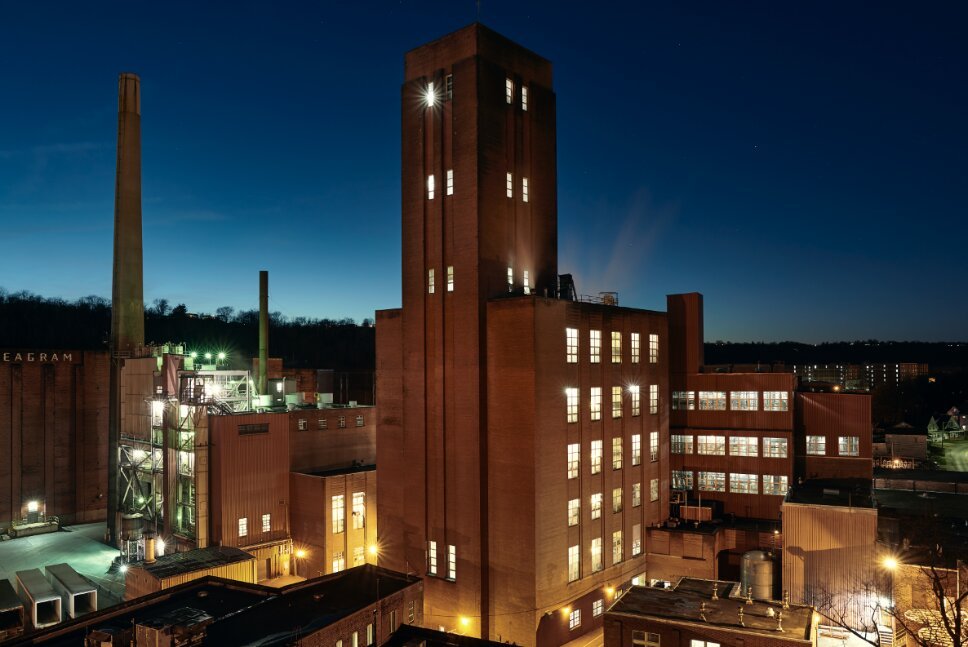
     

    MGP - Lawrenceburg(The Lawrenceburg distillery, pics from MGP)
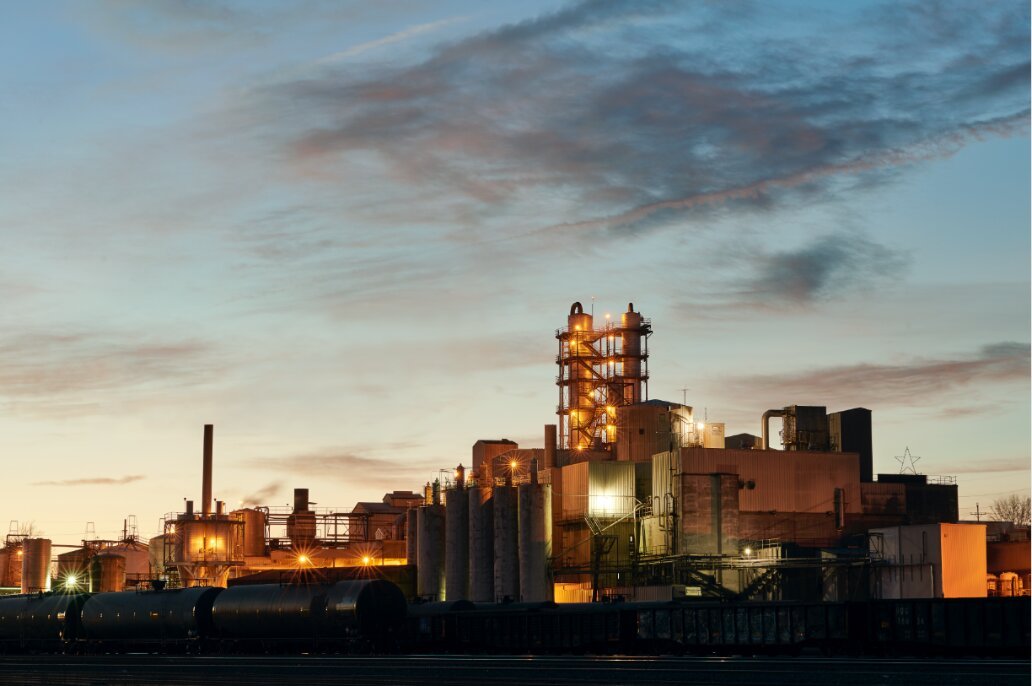
    MGP - Lawrenceburg(The Atchison distillery that I did not visit. Pic from MGP.)
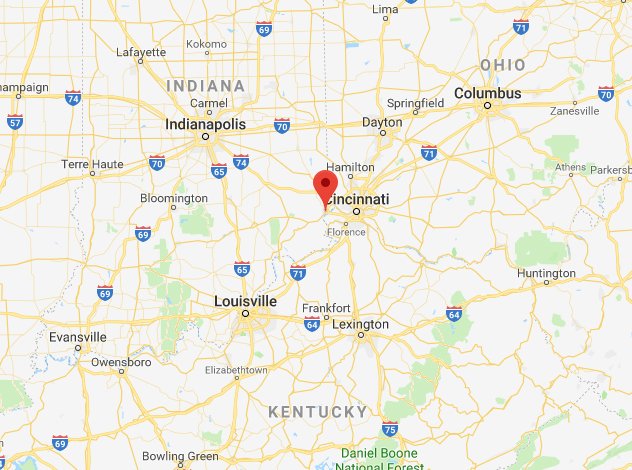
     

    Lawrenceburg


    Of all the products (listed here), the most well-known and popular that they sell to various brands are the:

    • 95% rye whiskey (a mashbill of 95% rye, 5% malted barley)
    • 51% rye whiskey (51% rye, 45% corn, 4% malted barley)
    • bourbon 36% rye (60% corn, 36% rye, 4% malted barley)
    • bourbon 21% rye (75% corn, 21% rye, 4% malted barley)

    So when you see those mashbills listed on products with various names (particular the 95% rye), there is a super good chance they were distilled at MGP. 

    Since they're dealing with lots and lots of grain, they also make grain products (list here), including raw ingredients for everything from pastries to pizza crust to imitation cheese. 

    I asked them how many mashbills they make in total. "We make a lot," came the definitive reply. 


    MGP Spirits

    I was a bit worried that the MGP brands were just going to be the regular MGP products as all the various other brands with a different label and not have anything to say about them. Luckily there is a clear point of differentiation. When it comes to the vodka, theirs is made from wheat, when most of their clients' vodka is made from corn. But more importantly, the whiskies:

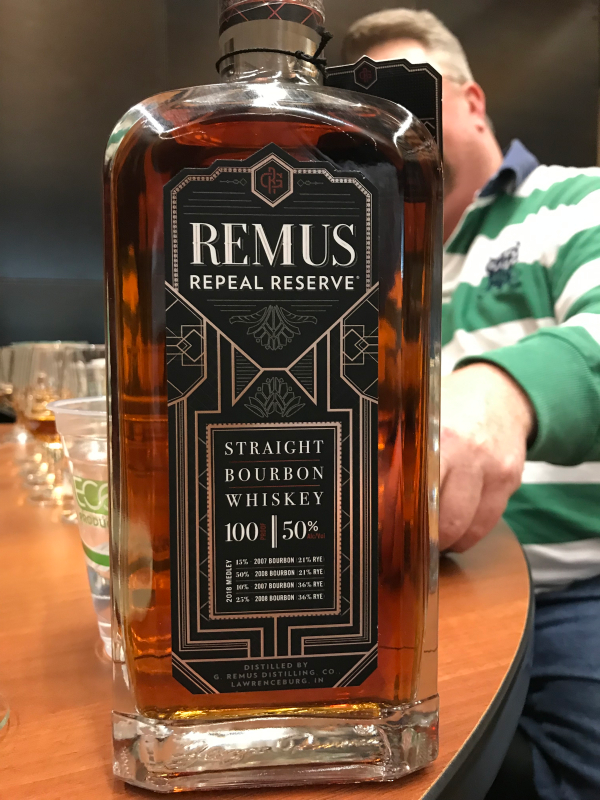
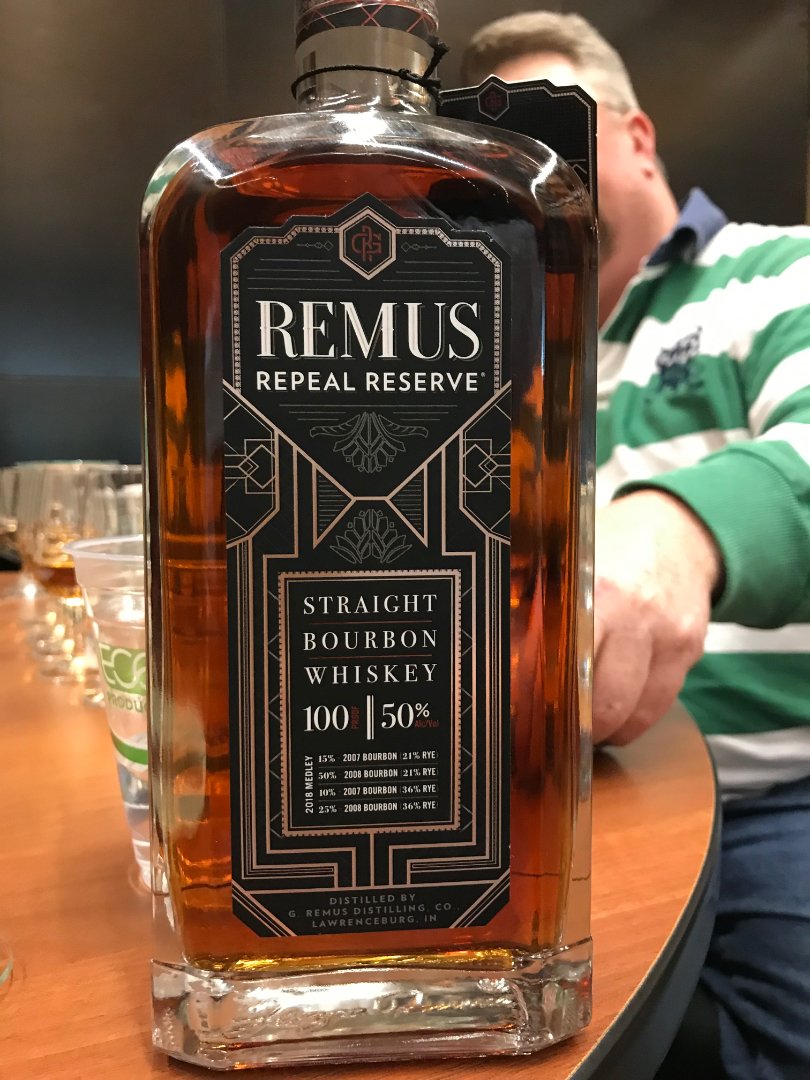
    While nearly all their clients bottle whiskey that's of a single mashbill, MGP brand whiskies are all combinations of multiple mashbills. So George Remus Straight Bourbon Whiskey is a mix of the 21 and 36 percent high rye bourbons, and Rossville Union is a blend of the 95 and 51 percent rye mashbills.

    This gives these products a point of differentiation from their many clients' products. 


    A Look Around the Distillery

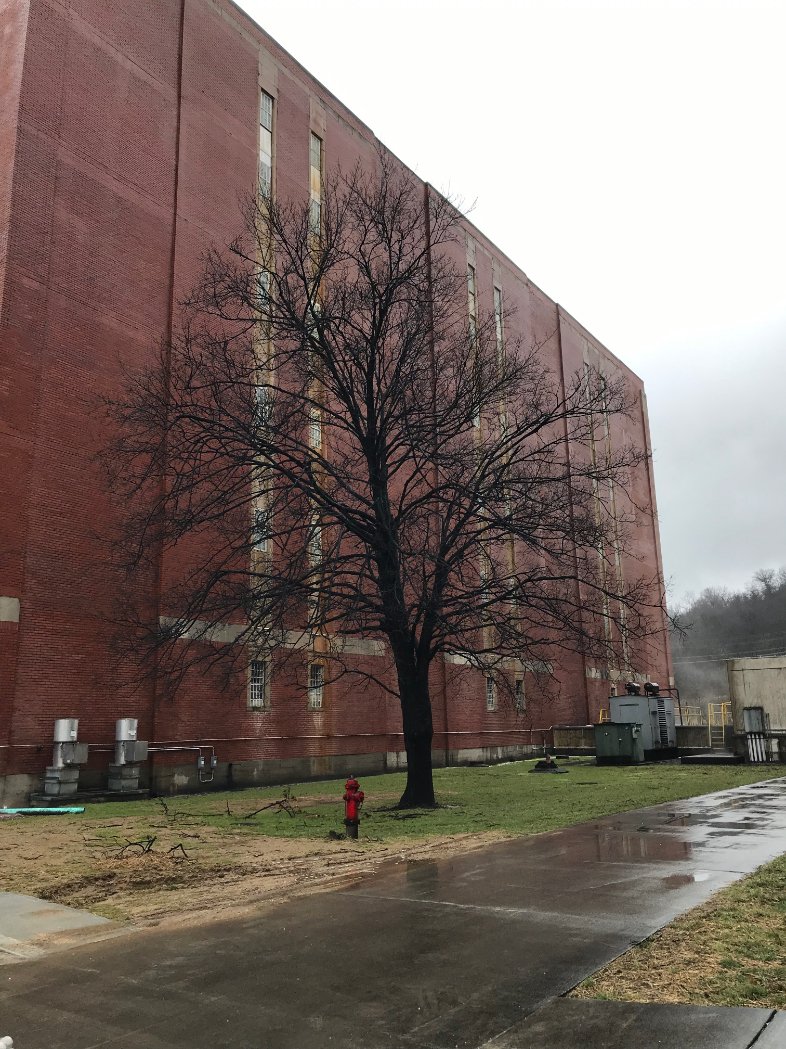
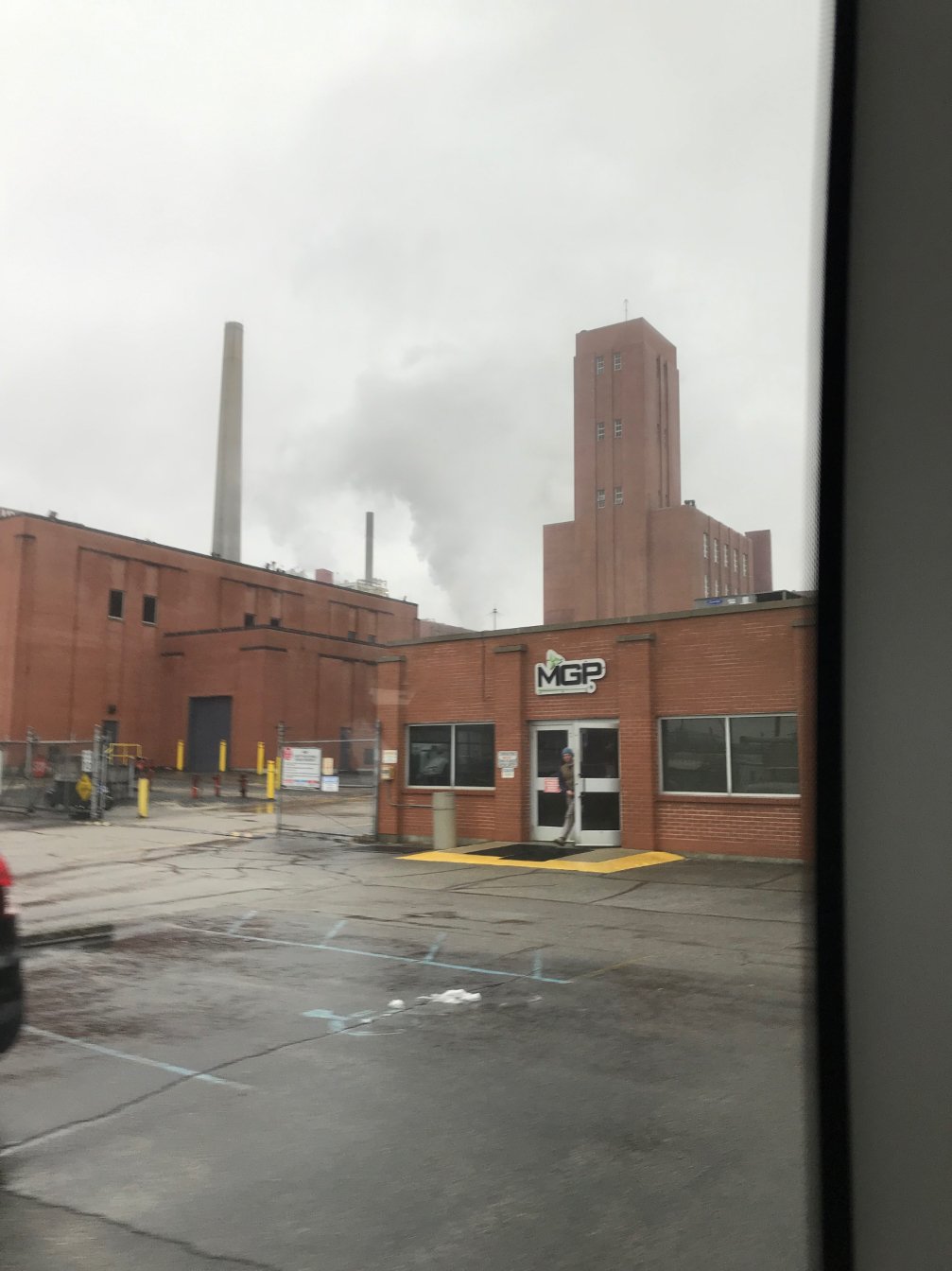
    The facility is a bunch of brick buildings located on one site, like a campus with no student lawns or a really big depressing orphanage. Different buildings house different parts of the operation – the grain store, fermentation room, distillery, grain dryer, barrel warehouses, etc. 

    The facility is not set up for tourists or photography, and basically we were able to see what we could see. 
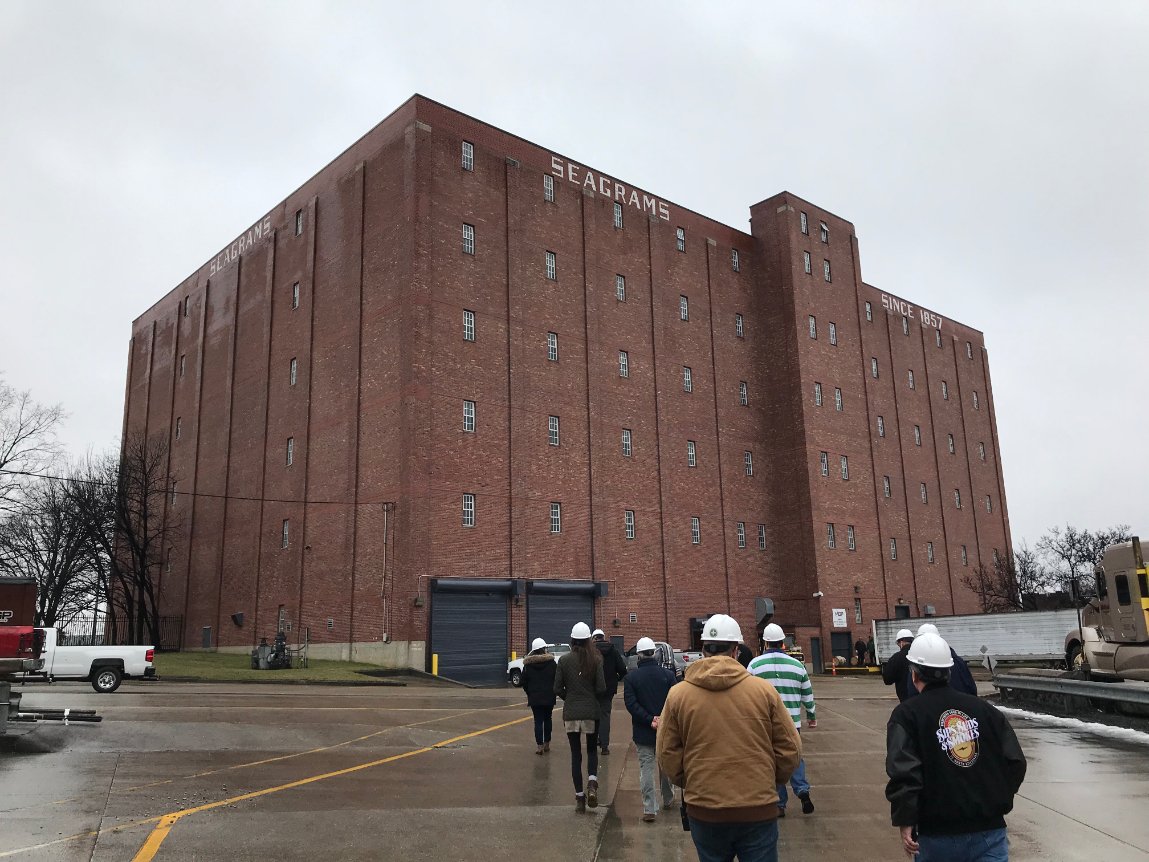
    IMG_3762
    IMG_3762
    IMG_3762

    IMG_3762
    IMG_3762


    The water for the distillery comes from an aquifer, and it remains a constant 56 degrees Fahrenheit year-round. That's very convenient as in the hot summers the water is still cool to run through the condensers. 

    The fermentation room (there are 14, 27,000 gallon vats in this room; there is another room but I'm not sure if it's the same size). Fermentation takes about 3 days. 


    IMG_3780
    IMG_3780


    We were unable to take pictures in the distillery room, but as it passes through several floors of a building we could really only see one section of the column still and a part of the squareish gin stills anyway. In this facility there are three gin stills and two continuous column stills.

    We visited one warehouse – there are seven on-site and I think 5 more elsewhere (though I'm not confident in those numbers). 

    This warehouse has six floors with six tiers per floor, with each floor separate from those above and below it acting as a "horizontal aging chamber." This is unlike the "vertical aging chamber" rickhouses in Kentucky where it's an open model (there's a frame on the outside but it acts as one big room) and the bottom level is cool while the top floor is super hot. The Kentucky rickhouses lose more water, as opposed to the humid ones here. They say that makes for a mellower whiskey. 

    Their standard barrel entry proof for whiskey is 120. We visited just the one warehouse that was racked. I inquired if their others might be palletized and the person I spoke to was evasive enough about answering that we can assume some are. 
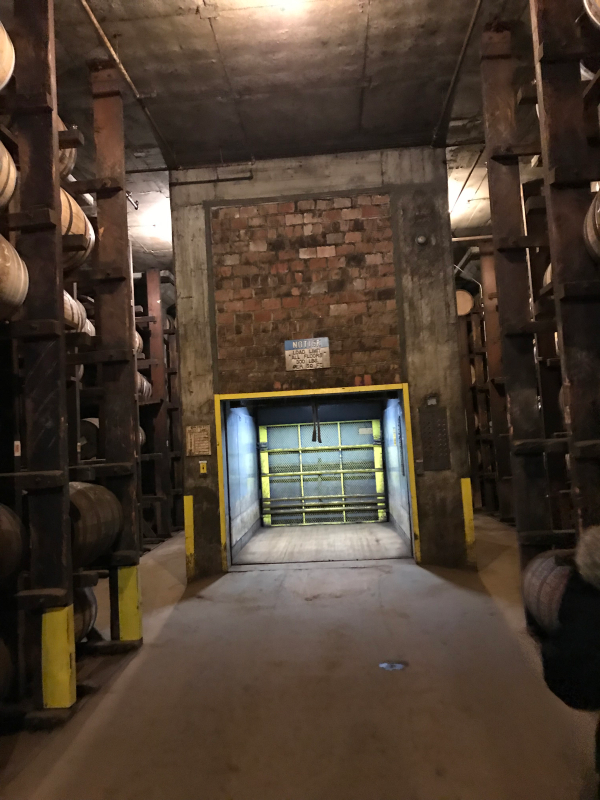
     

    IMG_3786
    IMG_3786
    IMG_3786


    Product Specifics

    So far, most of the line of MGP spirits is available in about 13 states. They're moving systematically rather than hitting the whole country at once. 
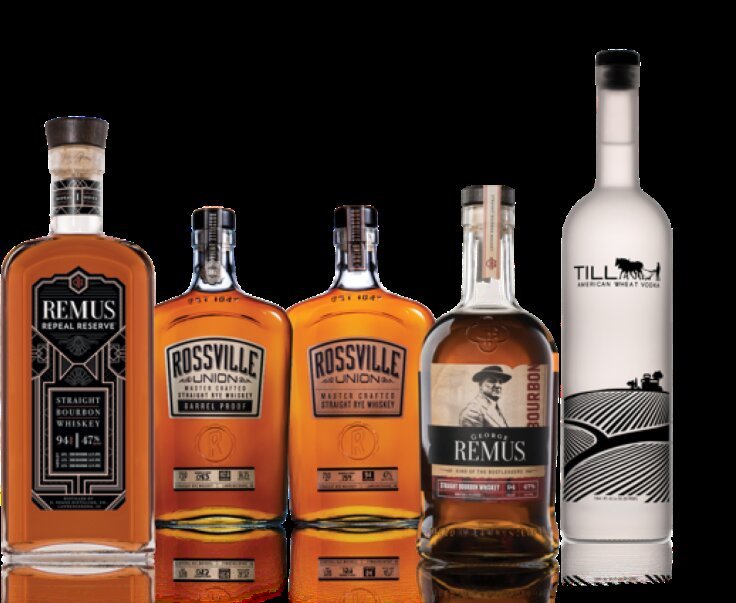
    MGPProductLineUp


    Tanner's Creek whiskey, a blended bourbon, is only available in Indiana. 

    Eight & Sand blended whiskey is the newest product. It contains no GNS (grain neutral spirits), and no coloring.  It's more than 51% bourbon bottled at 44% ABV. It's a blend of bourbon, rye, light whiskey, and corn whiskey. 

    "Eight and Sand" refers to a train going full-throttle (the eight) with added traction (sand on the tracks). 

    George Remus Bourbon is a blend of 21 and 36% rye bourbons, aged 5-6 years and bottled at 47%. 

    George Remus, the person, was a pharmacist turned attorney. He  wrote prescriptions for medicinal whiskey during Prohibition and had his own brand of medicinal whiskey. Not only that, but he had his own medicinal whiskey trucks "hijacked" so that he could report the whiskey stolen and sell it illegally. He was known as "King of the Bootleggers" and may have been the inspiration for Jay Gatsby. He murdered his wife but was acquitted for 'temporary insanity.' More about his life here

    There is also a George Remus Reserve bottling and so far there have been two of these.

    Rossville Union rye whiskey is a blend of their 51% and 95% rye whiskey mashbill whiskeys aged about 5-6 years. The standard bottling is 47% ABV. 

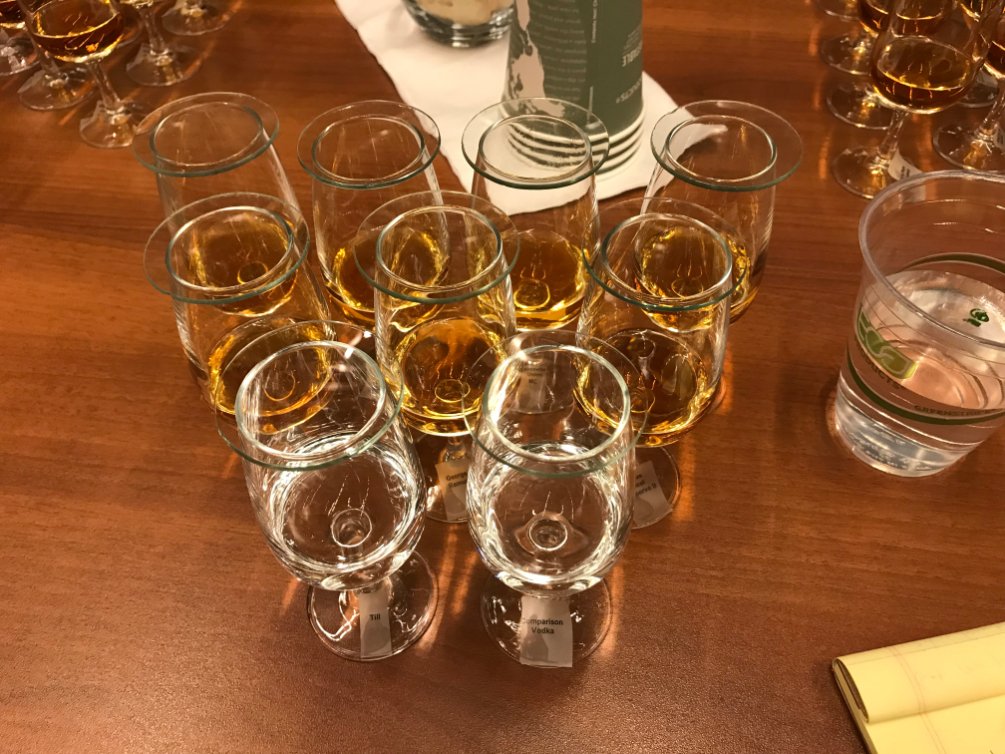
    They also sell a barrel-proof Rossville Union rye, and it's my favorite of their products. It's about the same age as their standard rye, but with a different ratio of rye mashbills. It has all that lovely pickle brine flavor but bottled at 56.3% ABV. 
     

    IMG_3791
    IMG_3791


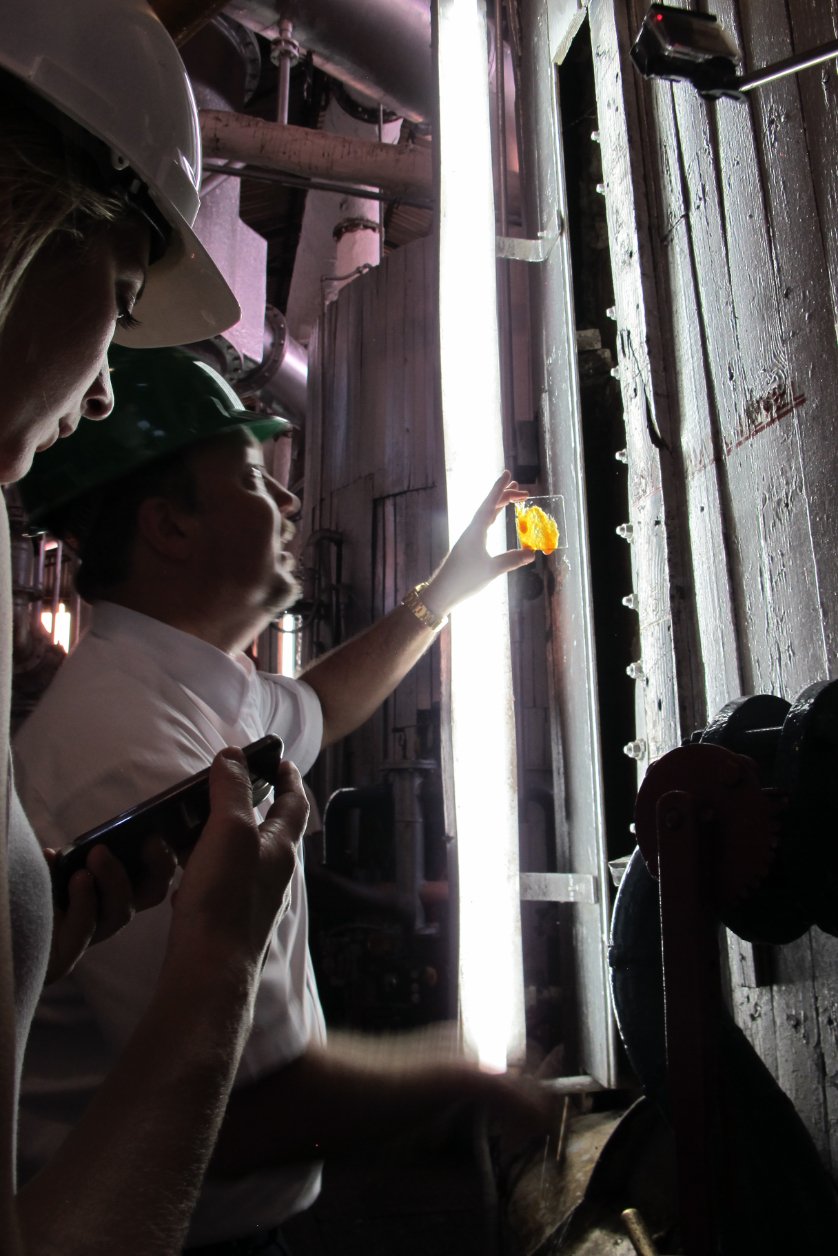
  • A Visit to the Worthy Park Distillery and Sugar Refinery on Jamaica

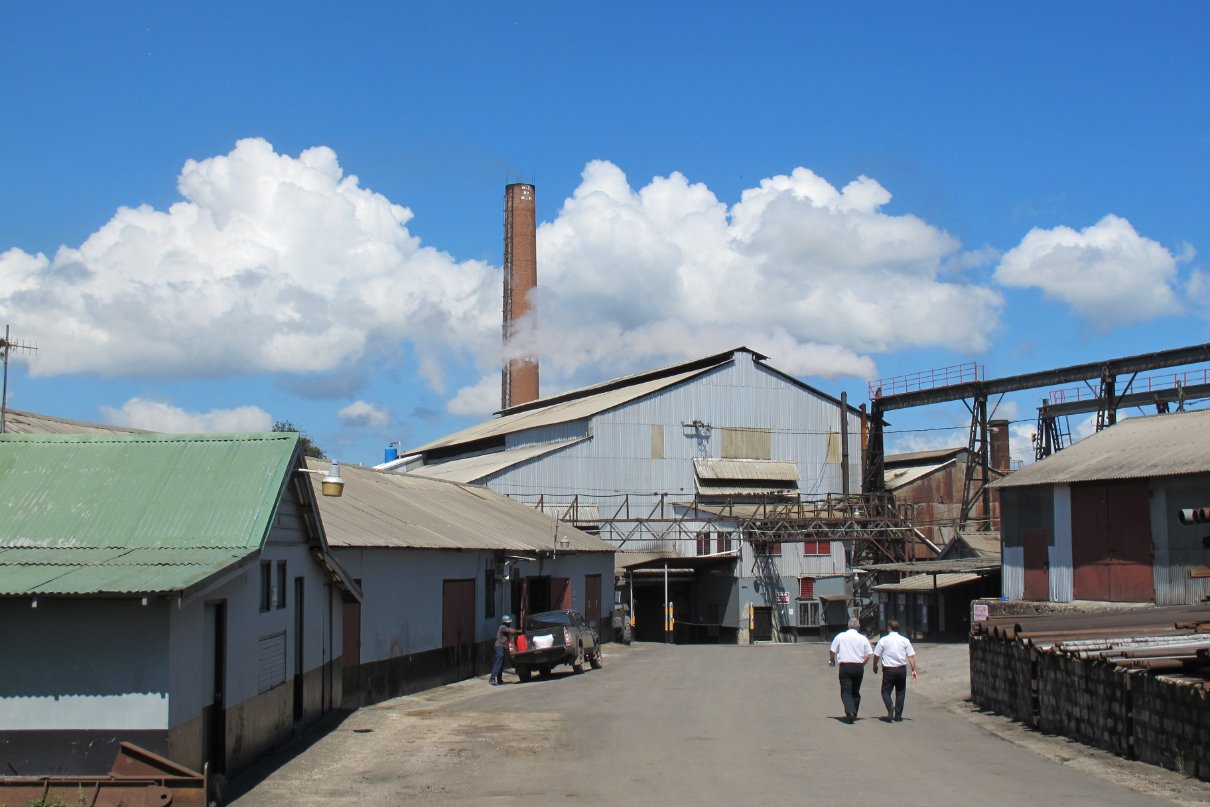
    Rum_rum5In 2016 I took a trip organized by WIRSPA (West Indies Rum and Spirits Producers' Association Inc.) and their quality marque system ACR for Authentic Caribbean Rum. As this was a few years ago, this blog post is somewhat of a photo-and-data dump for you to enjoy photos and for me to refer to as notes for the future.

    I would start this write-up with "I visited a very special distillery in Jamaica" but I visited 6 of them and they were all very unique and amazing! At this one, however, there was a working sugar refinery.

    You might know Worthy Park for their Rum Bar brand, probably the main competitor to the ever-present Wray and Nephew on the island. 

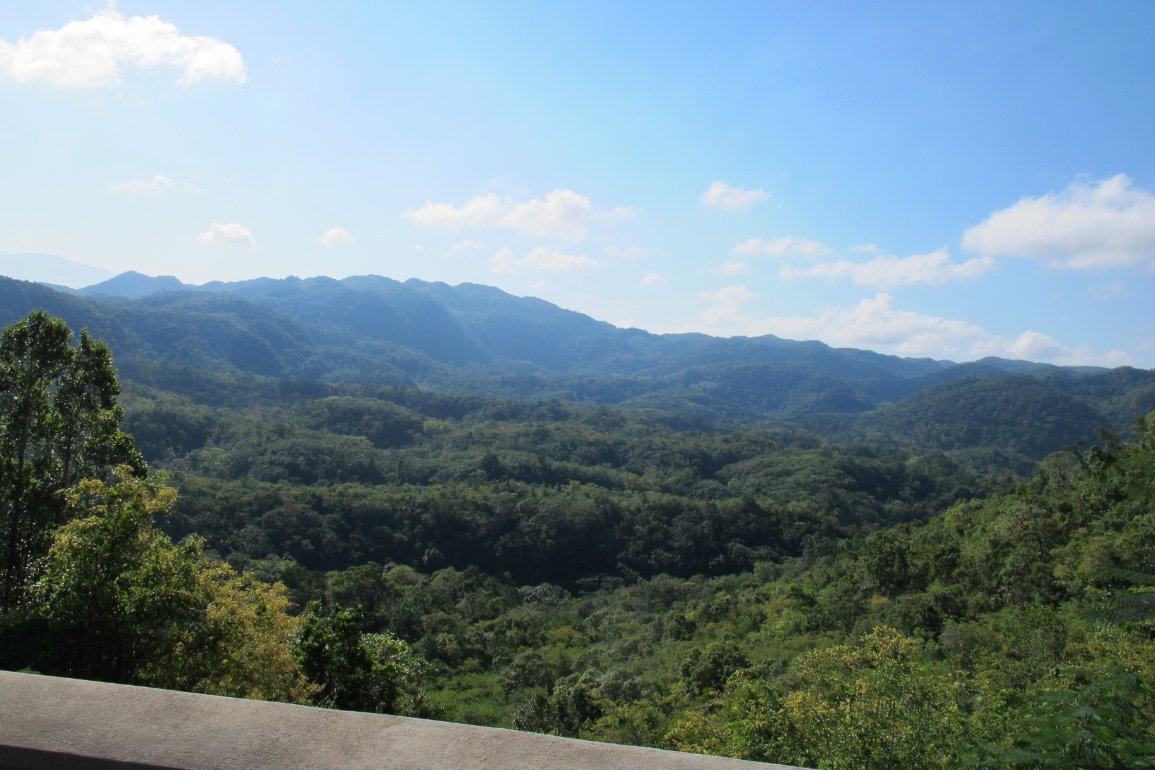
    Driving to Worthy Park is quite an experience – there are tons of hills and mountains in Jamaica, and you come over one of them and before you is a giant valley filled with growing sugar cane and the refinery in the middle.

    The plantation was planted in 1670 and there used to be 5 sugar factories in the valley, while now there is only one. They have made rum on site since 1741, but not continuously. In 1960 they stopped distilling for a time, only to restart in 2005. They were exporting their rum in bulk until 2007 when they launched the 100% pot distilled Rum Bar brand. 

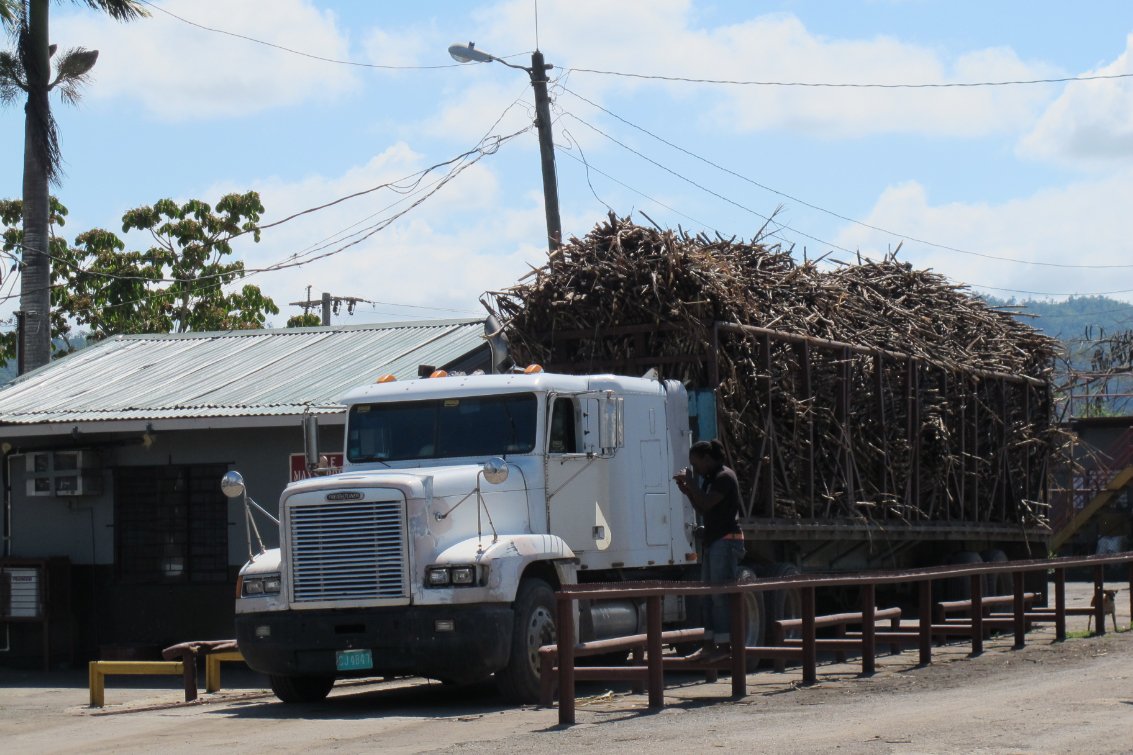
    At Worthy Park they're able to use all of their own molasses from their refinery, and sell some of it to other distilleries. Worthy Park is the mopst efficient cane farm in the country they claim. It takes 9 tons of cane to make 1 ton of sugar here, while less efficient facilities take 11 tons for the same amount. Their cane is harvested both by machine and manually. 
    IMG_4782
    IMG_4782
    IMG_4782
    IMG_4782


    Cane Sugar Production

    Sugar cane is burned before hand-harvesting, but machine-harvested cane is not burnt first. 

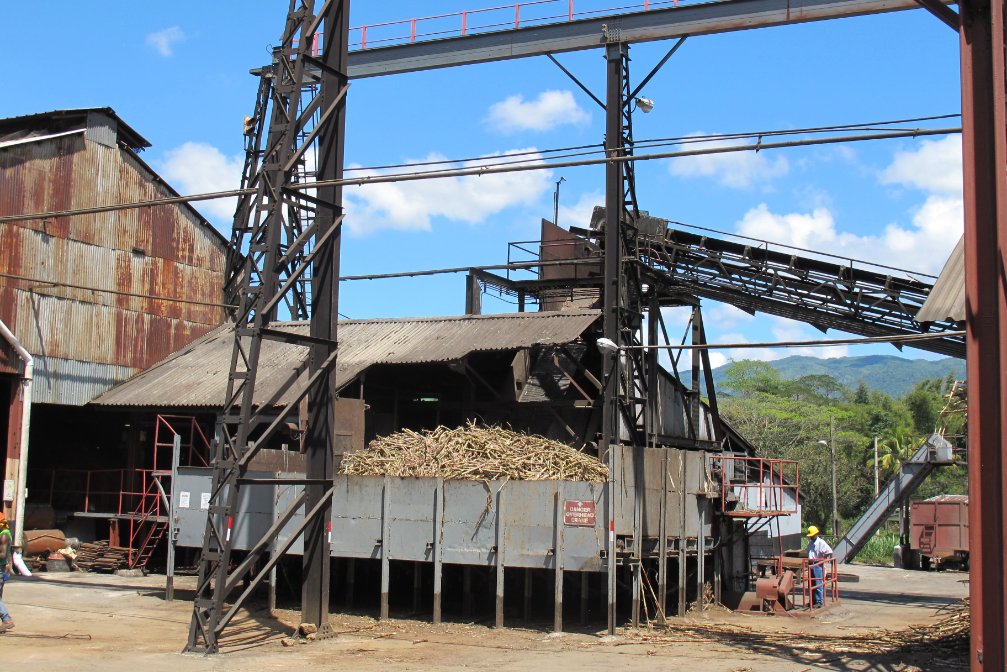
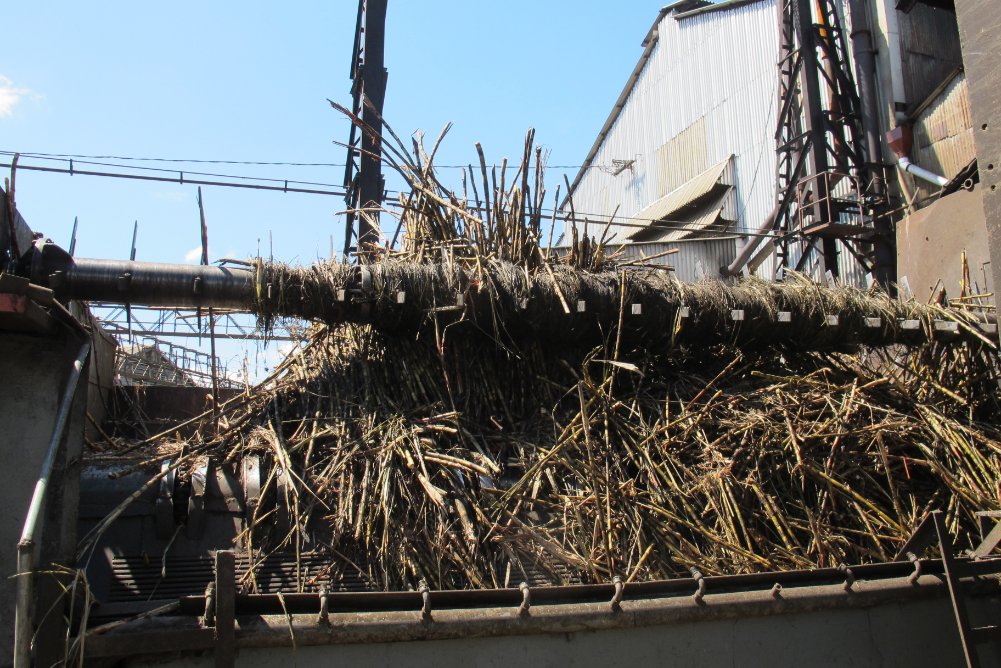
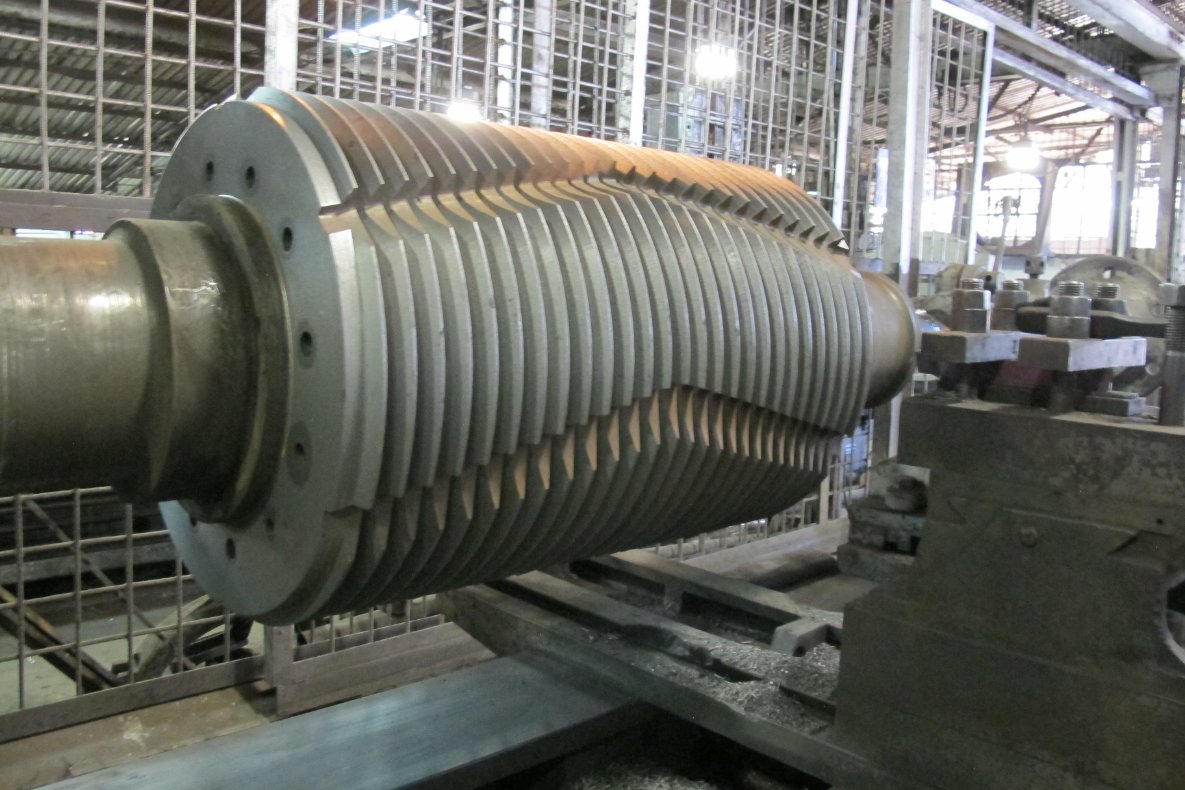
    Sugar cane is washed, shredded and juiced in a 5-stage mill.

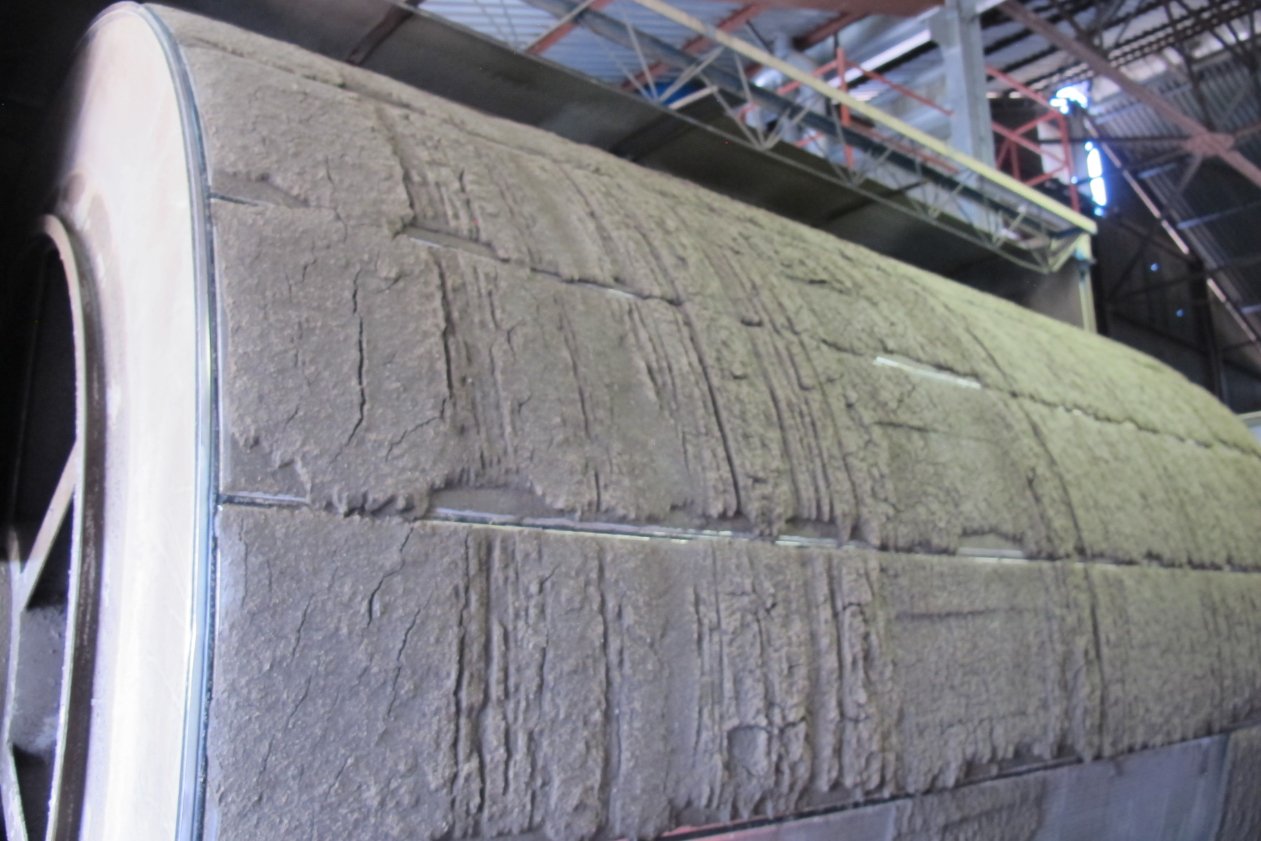
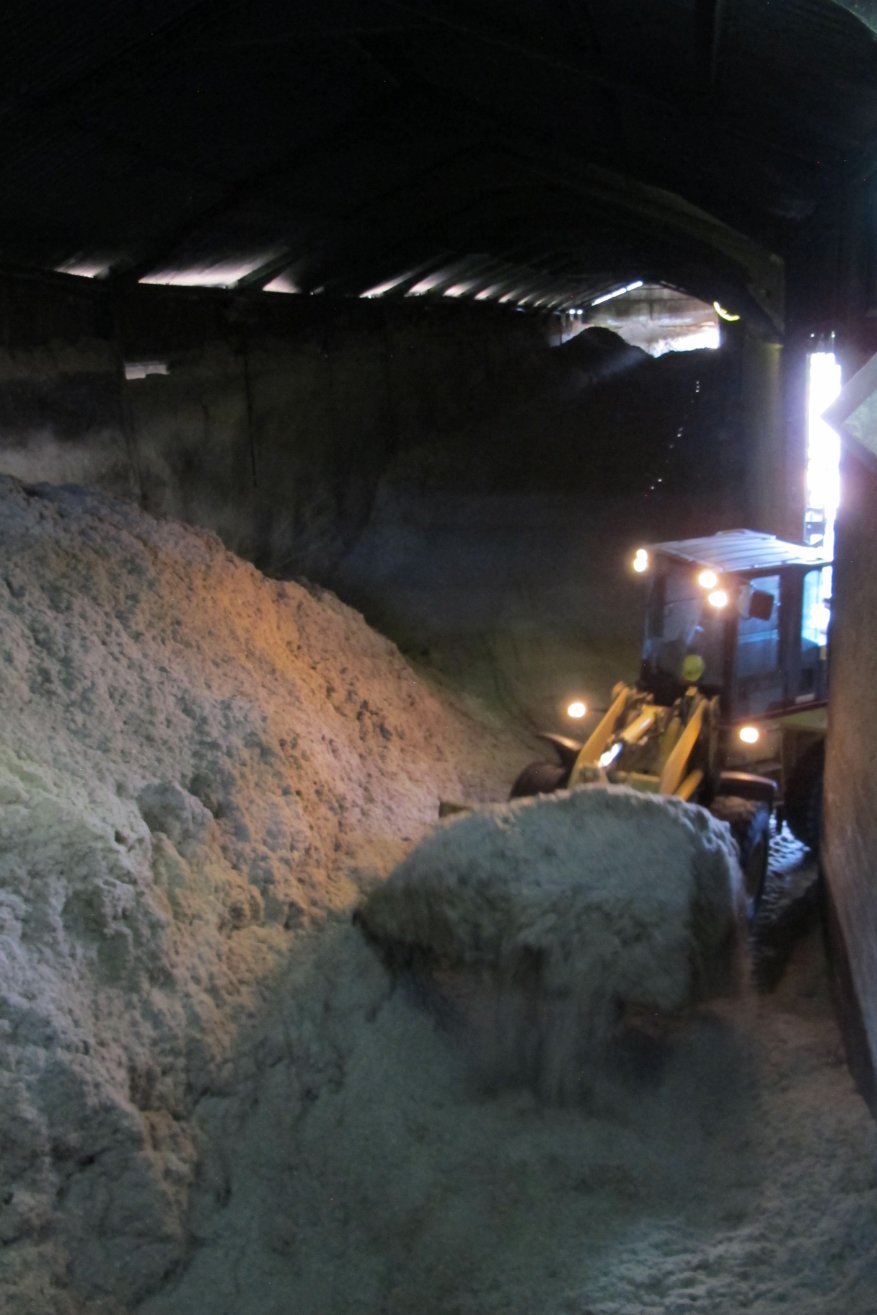
    The bagasse (solid bits) leftover are used to heat the boilers on-site, right after juice extraction. The leftovers are piled up in huge pile to be used later. 

    The sugar cane juice is mixed with lime (assuming they meant calcium, not like.. limes) to assist with clarification. 

    It then goes to he evaporator to remove 75% of the water, with the resulting juice at about 62 brix. 

    The thick juice is then centrifuged to make crystallized sugar – there is a screen to which the crystals stick and the molasses passes through. 

    IMG_4794
    IMG_4794
    IMG_4794
    IMG_4794
    IMG_4794
    IMG_4794
    IMG_4794
    IMG_4794
    IMG_4794
    IMG_4794


    Rum Production

    Over in the distillery, the molasses is pumped underground from the sugar plant. 

    The molasses is acid-adjusted before fermentation. They say their molasses has the least amount of residual sugar in it (on the island) because they're sugar production is so efficient. 

    Here they don't use dunder in the process at all (though they do add some cane juice in fermentation). The highest ester rum they make is 900 ppm (while Hampden Estate goes all the way up to 1600)

    Fermentation takes 2-3 weeks for their highest ester rums. The resulting beer is 8.5 – 9% ABV for light pot still rum, lower for heavier rum. (We learned on this trip that after regular fermentation happens, the additional fermentation actually eats up alcohol and lowers the ABV. So there may be good flavor reasons for long fermentations, but it's bad for yield.)

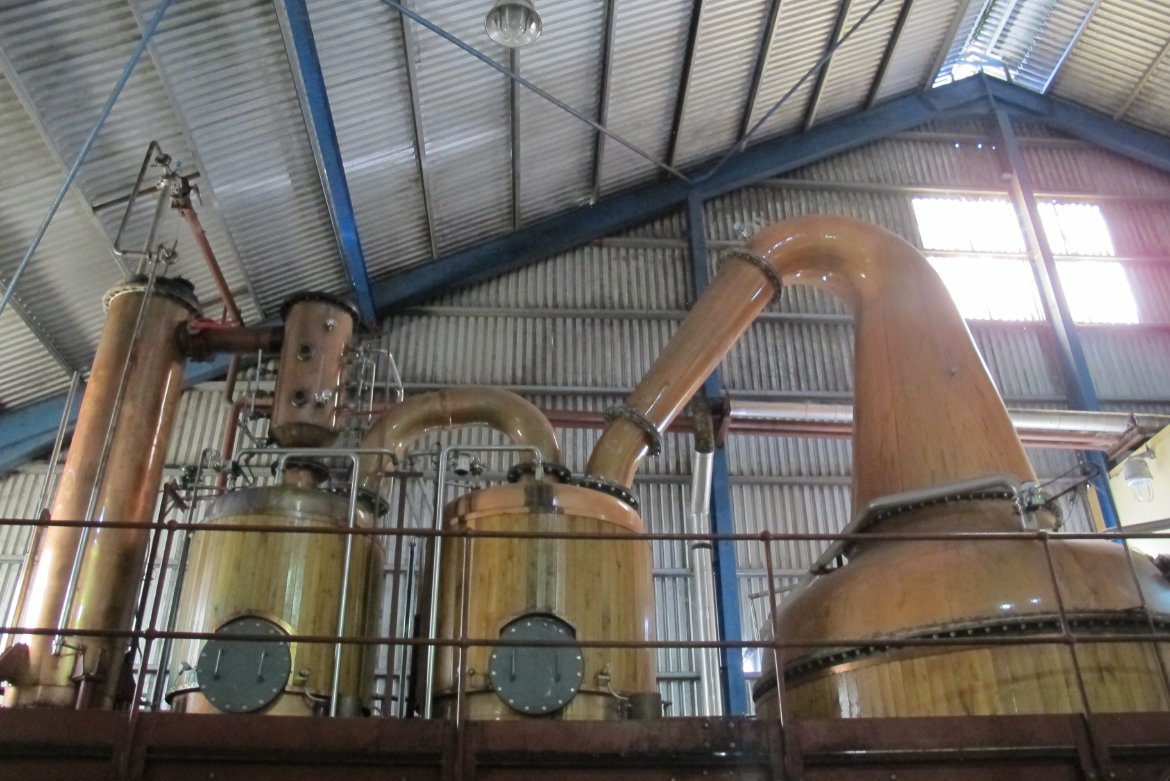
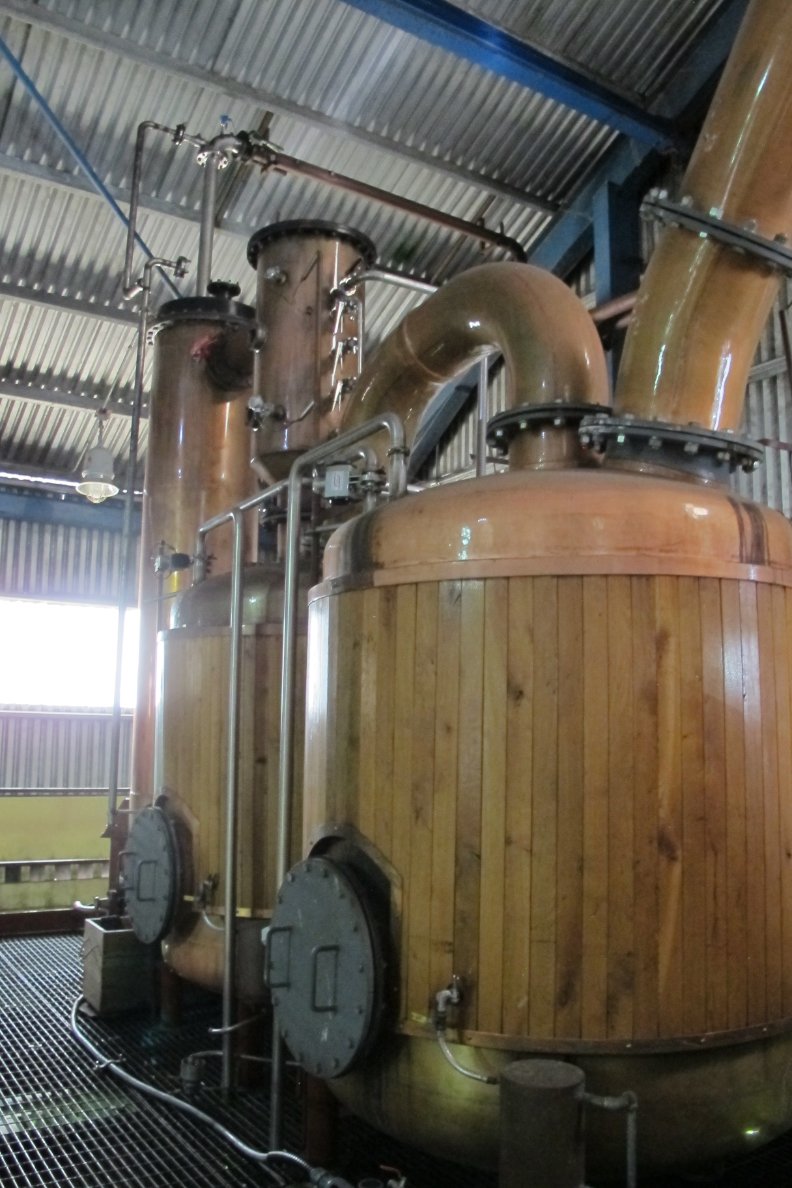
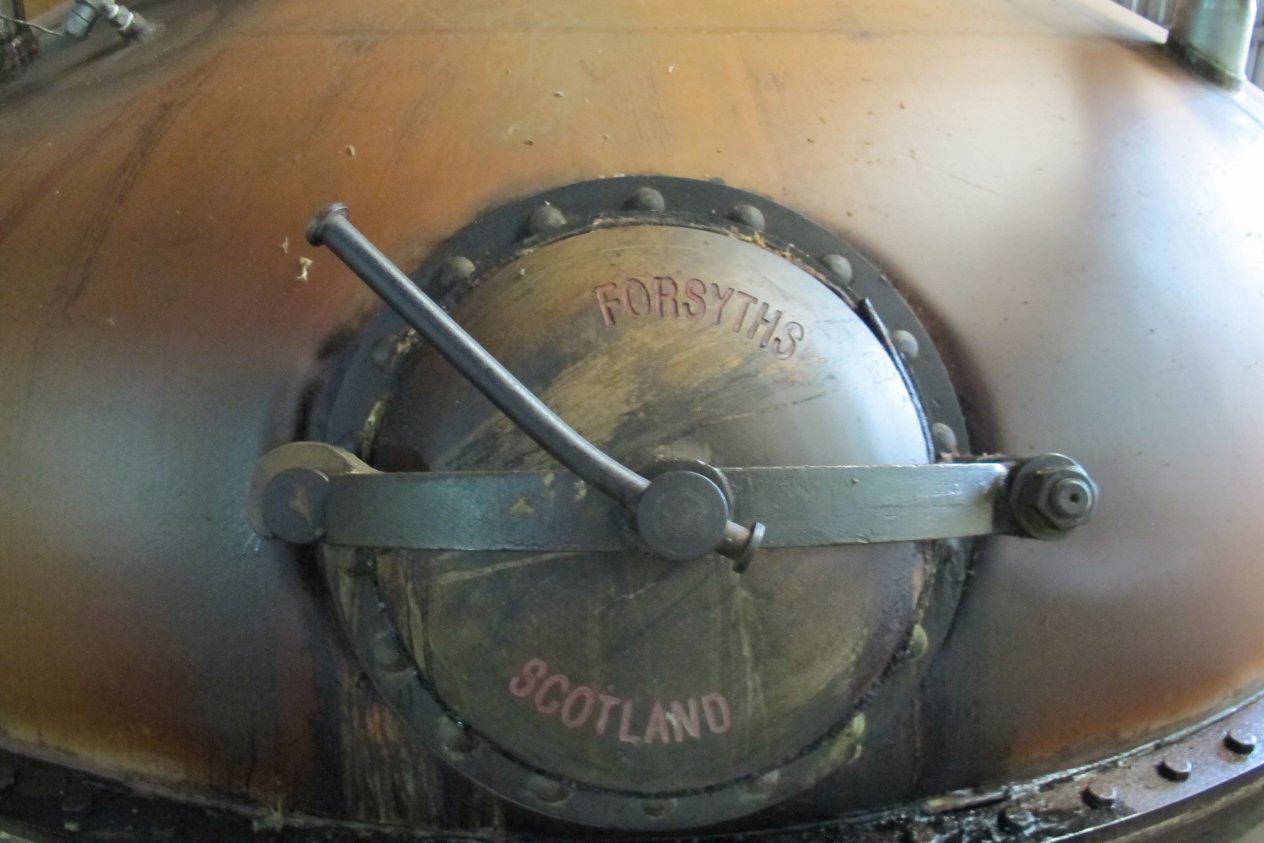
    It is distilled in a Forsyth still- they had just one at the time of my visit. They did not have a column still.

    The distillation time is about 1.5 to 1.75 hours in the actual rum extraction, but the total distillation time is 5-6 hours. The rest of the time is making the high and low wines that get redistilled. The rum comes out of the pot stills at 85-87%. 

    The stillage at the end of the process is used as fertilizer for the cane fields. 

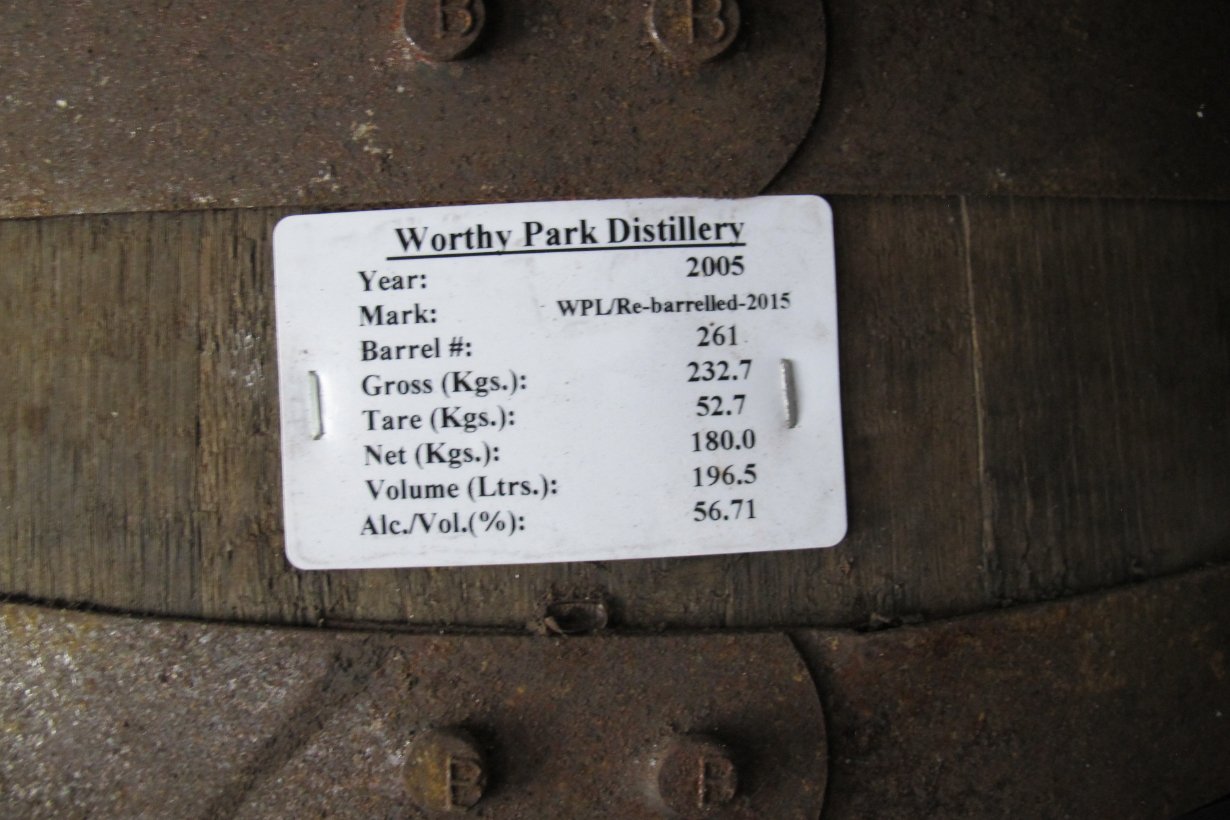
    Most of the barrels they age in are ex-Jack Daniel's.  They have a 4-6% annual angel's share. The rum is diluted to 70% ABV before barrel aging. 

    The rum is bottled at the distillery. They do carbon and paper filtration depending on the product. 

    IMG_4868
    IMG_4868
    IMG_4868
    IMG_4868
    IMG_4868
    IMG_4868

    More Pictures, Just for Fun

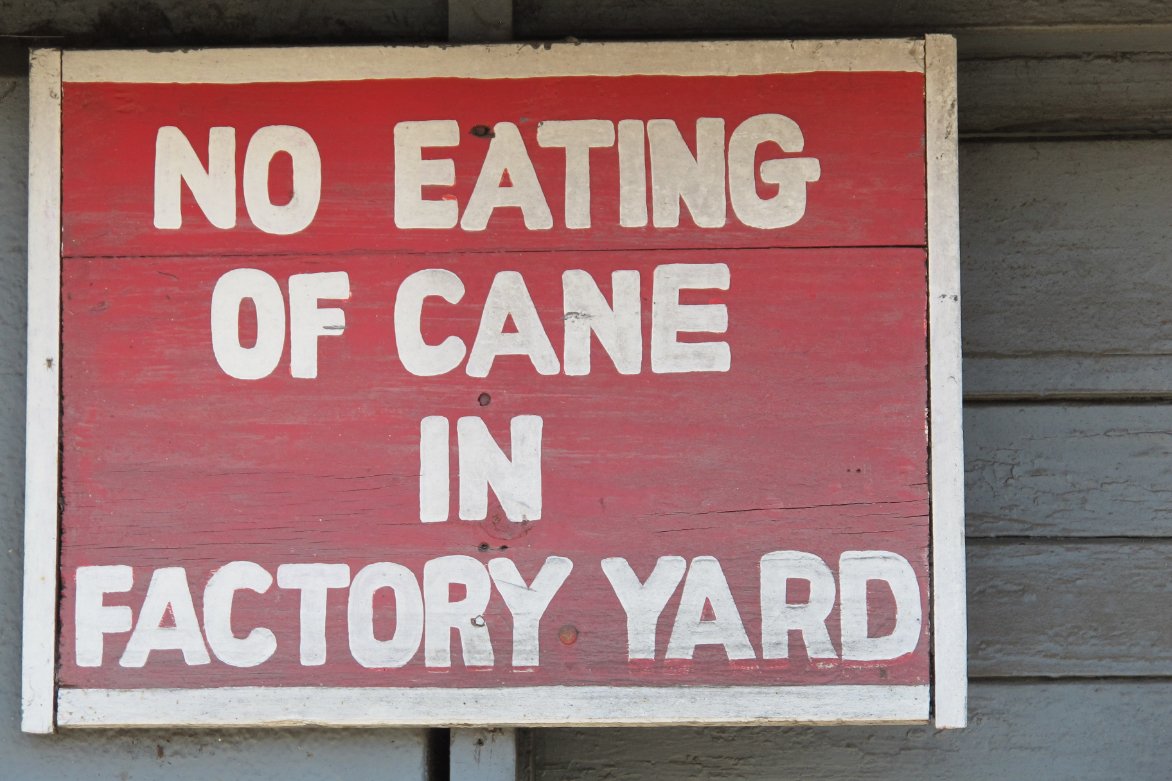
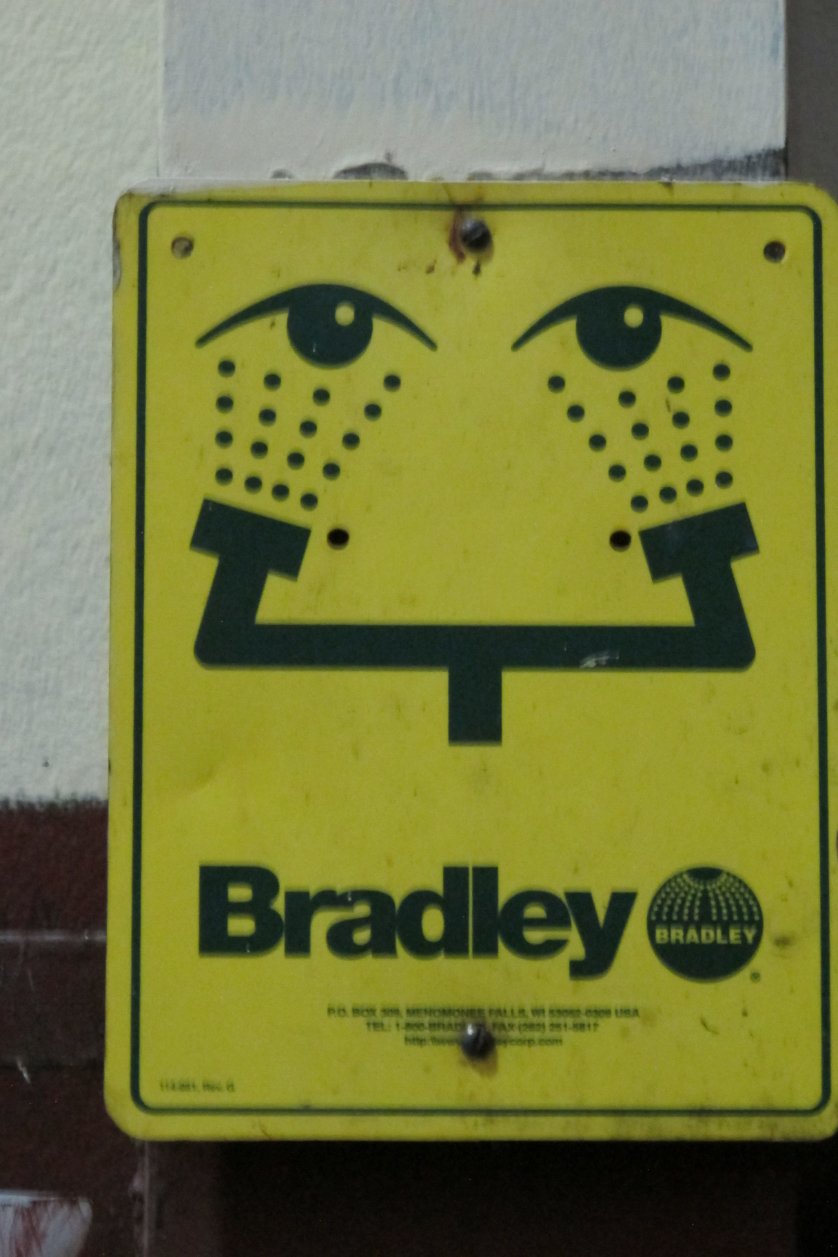
    Y'all know I can't resist a warning sign picture. 

    IMG_4880
    IMG_4880
    IMG_4880
    IMG_4880
    IMG_4880


  • A Visit to the Hampden Estate Rum Distillery on Jamaica

    In 2016 I took a trip organized by WIRSPA (West Indies Rum and Spirits Producers' Association Inc.) and their quality marque system ACR for Authentic Caribbean Rum. As this was a few years ago, this blog post is somewhat of a photo-and-data dump for you to enjoy photos and for me to refer to as notes for the future. If you'd like to read a detailed narrative write up from the visit, please check out CocktailWonk's blog post

    Here are some notes, and then some pretty pictures. 

    • Hampden Estate dates back to 1753.
    • They've obviously been making rum the whole time, but have only been aging rum since 2010. 
    • They estimate 60% of the Jamaican rum purchased by Europe doesn't go into actual bottles of rum, but into cosmetics. tobacco, and confectionaries.
    • The maximum allowed ester count from Jamaica is 1600 ppm by law. This was established in a law in 1934. (I don't know how they counted esters in 1934.) They say they could get up to about 1700-1800 ppm if they tried. 
    • There is a claim that the use of dunder may have begun at Hampden, and everyone copied their method. 
    • They have four pot stills on site.
    • We learned that what we thought of as "dunder" is actually "muck." Dunder is stillage – waste from the still after distillation. Muck is a combination of cane juice, dunder, cane solids, molasses, and water. A bunch of muck is added to the just-fermented molasses of a new batch and distilled together to create the super-flavorful, high-ester rums. 
    • They add 11 parts fermented molasses to 7 parts dunder before distilling. 
    • They generally don't need to add yeast to their fermentation – there is a lot of it around the distillery. 
    • They ferment for about 2 weeks.
    • Their highest ester mark is called D.O.K. that has 1500-1600 ppm esters
    • Rum Fire, which is spreading around the US like… a rum fire, has about 500-570 ppm esters, where Hampden Estate Gold has 80-100. 


    The fermentation room we visited was the only time I've had to wear a hard hat at a distillery where I really felt happy to be wearing one: The room was full of wooden fermentation vats in a wooden room with wood floors, covered in spider webs, and smelling like a deep level of hell from the muck. I almost threw up it was so powerful (was actually looking for a place to vomit but barely managed to hold it in). It was amazing and the type of old-school rum-making that nobody gets to see.

    They embrace the stank and that's what makes their rums so special. We weren't supposed to take any pictures in there but pictures wouldn't do it justice. You'd have had to smell it to believe it. 

    IMG_4692
    IMG_4692
    IMG_4692
    IMG_4692

    IMG_4717
    IMG_4717
    IMG_4717
    IMG_4717
    IMG_4717
    IMG_4717


  • A Look at the Once-Closed Long Pond Distillery on Jamaica

    In 2016 I took a trip organized by WIRSPA (West Indies Rum and Spirits Producers' Association Inc.) and their quality marque system ACR for Authentic Caribbean Rum

    At the time, the Long Pond distillery was closed, but our group was soooo nerdy and adorable we were able to convince the owners to let us sneak a peek. The best write-up on this visit comes from CocktailWonk.com, so I encourage you to visit that site for good details. 

    Since the time of our sneak peek, the distillery was partially acquired by Maison Ferrand, maker of Plantation Rums. (I'll skip the details of the sale as it would take me a lot of research to figure out the ownership structure.) The distillery caught fire in 2018. It was a big setback, according to the brand, but luckily not a total loss. 

    This post is just to show some pictures of a spooky amazing closed distillery. It had only been closed for about five years but with its super old technology and knobs and dials instead of computers, it looked like it had been sitting dormant since about 1964. 

    IMG_4780
    IMG_4780
    IMG_4780
    IMG_4780
    IMG_4780

    IMG_4772
    IMG_4772

  • A Visit to the Monymusk Rum Distillery and the National Rums of Jamaica

    In 2016 I took a trip organized by WIRSPA (West Indies Rum and Spirits Producers' Association Inc.) and their quality marque system ACR for Authentic Caribbean Rum. As this was a few years ago, this blog post is somewhat of a photo-and-data dump for you to enjoy photos and for me to refer to as notes for the future. (I end up searching my own website for information kind of a lot.) 

    Two of our stops in Jamaica were with the National Rums of Jamaica Limited. At the time they owned three rum distilleries, with only one of them operating, but since that visit Long Pond was sold. Our first stop was to the old Innswood Distillery, which stopped producing rum about 1993, after opening in 1959 initially. 

    At this Innswood location, they age rum in two warehouses but no longer distil. The distillery once belonged to Seagram's and then Diageo. There was an old abandoned still in one of the buildings we peeked into. 


    IMG_4605
    IMG_4605
    IMG_4605
    IMG_4605
    IMG_4605
    IMG_4605
    IMG_4605
    IMG_4605


    Clarendon

    We then drove to the Clarendon Distillery, which is owned by the National Rums of Jamaica and where they produce the Monymusk brand. Monymusk has only been around since 2012. All Monymusk is a blend of pot and column distilled rum. 

    Our hosts told us they make more rum marques than most distilleries, about 5-6 column still marques and about 20 pot still marques. 

    They receive their molasses from the sugar refinery next door. When it is not in production, they receive it via tanker ships. 

    At one point, each sugar refinery had its own distillery. But with consolidation and sales of many sugar facilities to Chinese companies, the sugar producers and rum producers have separate entities. This seems to have great impacts on rum production: the rum distilleries rely on molasses from the sugar refineries (though they can purchase molasses from other countries if need be), and importantly the rum distilleries' waste products are treated and spread on sugar cane fields as fertilizer. So if a distillery doesn't have an active deal with a sugar cane farm, they have nowhere to dispose of their waste, and Jamaican laws seem pretty strict about not just dumping it into the ocean. The lack of waste treatment/management can and has closed distilleries. 

    IMG_4631
    IMG_4631
    IMG_4631
    IMG_4631
    IMG_4631


    To the molasses, water and nutrients are added to help with good fermentation. Fermentation for their light rums takes 30-36 hours. It's longer for their heavier rums, as that long fermentation allows flavors to build up. They can use the same fermented molasses (molasses beer) for their light marques distilled in pot and column stills, but use a different molasses beer for the heavy pot still rum. They have 24 open-top fermenters.


    IMG_4613
    IMG_4613
    IMG_4613


    For the heavy pot still rum, fermentation takes place over 1 month: 2 weeks in wood (during which yeast are propagated) and 2 in stainless steel (with more molasses added).  

    The column stills here looked shiny and modern, installed in 2009. The four columns are the wash still, aldehyde and fusel oils, rectifiers (where cuts are made), and methanol column that is only used when they make neutral spirit. The pot stills here are older. They distill for 300 days per year, and have a capacity of 9 million liters of absolute alcohol per year from the column stills alone; another 3 million from their pot stills.  Diageo at the time was purchasing 90% of the rum produced at Clarendon. 

    They age their rum at 70% barrel proof. They don't rechar barrels.  At the time of my visit, they had recently started topping up barrels from the same batch. 

    IMG_4638
    IMG_4638


    The third distillery, Long Pond, was closed at the time of my visit- but we visited that anyway. See the next post. 


    IMG_0718


agave alcademics Angostura bartenders bitters bodega bourbon bowmore Campari Camper English chartreuse clear clear ice cocktail cocktail powder cocktails cognac curacao dehydrated dehydrated liqueurs dehydration directional freezing distillery distillery tour distillery visit france freezing objects in ice hakushu harvest history how to make clear ice ice ice balls ice carving ice cubes ice experiments isle of jura jerez liqueur makepage making clear ice mexico midori molasses orange orange liqueur penthouse pisco potato powder production recipe Recipes rum san francisco scotch scotch whisky sherry spain spirits sugar sugarcane sweden tales of the cocktail tequila tour triple sec visit vodka whiskey whisky