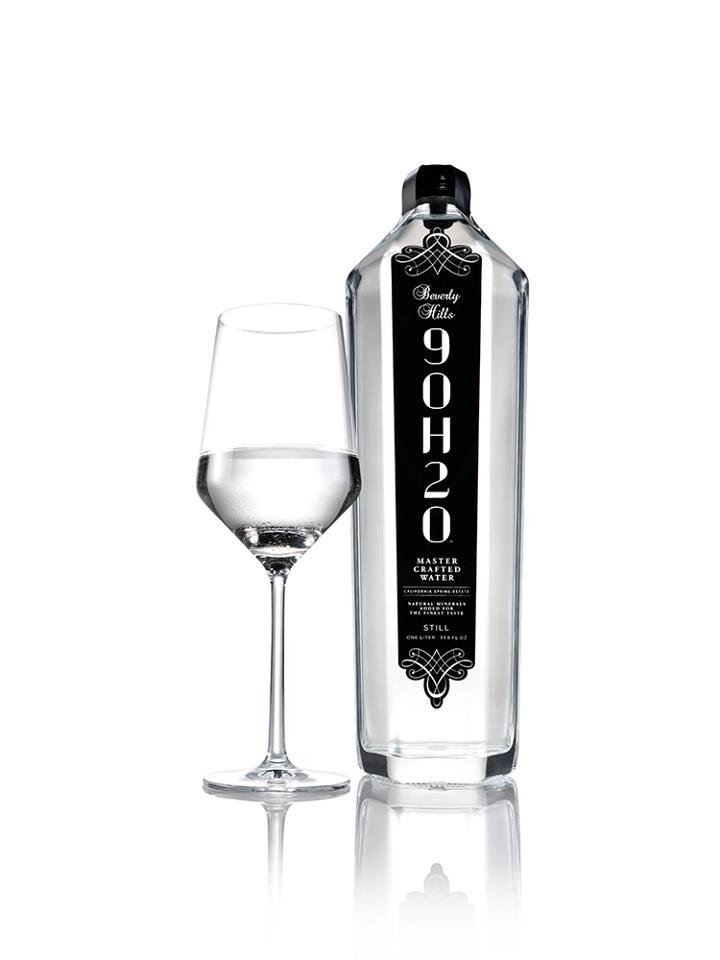
Most books about bottled water seem to trace the history and environmental impact of the industry, but Fine Waters by Michael Mascha is quite a different book from that.
Mascha is a water sommelier and runs the website FineWaters.com, which contains pretty much all of the information in the book as far as I can see. (The book from 2006 is out of print but still available on Amazon and other sites.)
In the book Mascha lays out a categorization scheme for bottled waters, which I'll briefly repeat below.
Bottled Water versus Bottled Water
Mascha is not concerned with municipal waters put into a bottle (the to-go part of it- the bottle- being the emphasis), but on bottled natural waters, in which the water is the important part.
Source of Water
Spring – This is a tricky term because in the US, spring water doesn't have to come from a spring, but can come from a well drilled next to a spring if the two water sources are linked somewhere underground.
Artesian – I thought this was another word for 'artisinal' but I was wrong. Artesian aquifers are basically trapped water under pressure, which will pump itself to the surface if a hole is drilled. Fiji and Voss are artesian waters.
Well – Similar to spring water, but comes from a well.
Rain – rain.
Glacier – Very old water with low mineral content tasting similar to rain water.
Iceberg – Not as pristine as you might imagine, with microorganisms found in old ice and some layers from the 1950s when the air was impure and atomic tests were common.
Lake, stream, reservoir – typically purified before bottling.
Deep sea – melted iceberg water now on the sea floor, pumped up in Hawaii from a 3,000 foot pipe into the ocean. Cool!
Carbonation Level
Mascha says that the carbonation level controls the mouthfeel of water, and is the most important factor in matching water with food. He developed a scale that he calls the FineWaters Balance:
Still – No carbonation
Effervescent – nearly still with some bubbles. Badoit is an example.
Light
Classic – Typical carbonation level we expect from a bottled water
Bold – Big bubbles with big pops, like in Perrier.
Total Dissolved Solids (TDS)
This is the amount of dissolved minerals in the water. Interestingly, this is different from Water Hardness, which only considers the calcium and magnesium levels of a water. So a water can be hard water (lots of calcium and/or magnesium) but have a low TDS level overall.
pH Level
Acidic water can taste sour. Alkaline (basic) water can taste bitter and have a slippery feel. Slightly basic waters may taste sweet. Mascha says this only account for 5 percent of the overall flavor of bottled water though.
In future posts, I'll cover other topics from the book, which I found completely fascinating.
—
The Water Project on Alcademics is research into water in spirits and in cocktails, from the streams that feed distilleries to the soda water that dilutes your highball. For all posts in the project, visit the project index page.
The book focusses on the history and mechanics of the pre-Prohibition soda fountain. Though largely filled with information on sodas, it includes a chapter and some recipes on mineral waters.
Before global shipping became easy, soda fountains made their own soda and mineral waters, with the carbonation being the main attraction.
Here are a few things I learned from the book:
Club Soda is a trademarked brand. Seltzer water was a brand but is now generic.
Carbonation's sensation on the tongue is a chemical sensation rather than a mechanical one. O'Neil likens it to eating peppers, which release endorphins in response to the mild noxious action on the tongue, so the end result is a pleasurable experience.
Bubble formation in carbonated water is affected by CO2 pressure (more pressure gives larger bubbles), temperature (colder allows more CO2 to go into solution), and nucleation points (stuff in the water and imperfections in the serving glass).
Common minerals found in mineral waters are calcium, magnesium, sodium, and potassium. But most minerals waters have a relatively low sodium chloride (table salt) level, compared with sodium carbonate/bicarbonate (baking soda).
One should add mineral salts to plain water then carbonate it, as they don't dissolve well in already-carbonated water.
Sometimes it is hard to get all the salts to dissolve. O'Neil provides a chart of the order in which they should be added for best dissolution.
There are also recipes for 12 soda waters in the book, which are useful as comparisons more than recipes as they're scaled for batches of 19 to 50 liters.
There's a lot more in the book (and you really should buy it for the soda stuff- it's fascinating) but those were a few take-aways for my experiments.
Now it's back to the lab for me…
—
The Water Project on Alcademics is research into water in spirits and in cocktails, from the streams that feed distilleries to the soda water that dilutes your highball. For all posts in the project, visit the project index page.
In my research on the Paloma I have come across many variations on the drink, so I thought I'd link to them here.
Typically the Paloma is made with tequila (always use 100% agave!), grapefruit soda such as Squirt or Jarritos, a squeeze of a lime wedge and a pinch of salt. Esquire's standard recipe is here. A version using fresh grapefruit and soda water is here.
Here are some Paloma variations from around the internet.
Blood Orange and Thyme Paloma by Airda Molenkamp [recipe]
Nuestra Paloma by Thad Vogler of Beretta, SF. It contains St. Germain, bitters, Cointreau, and grapefruit juice. [recipe]
The Charred Grapefruit Paloma by Warren Bobrow [recipe]
Paloma, Mi Amante by Paul Clarke – A Paloma using strawberry-infused tequila. [recipe]
Paloma Variation – A Paloma using IPA beer, plus tequila, grapefruit cordial, and lime. [mentioned here; no recipe]
Palomita – A Paloma without tequila; just using Coinreau, lime, and grapefruit. [recipe]
Green Palomarita – Mezcal, lime, grapefruit, Chartreuse [recipe]
Dove & Daisy – Tequila, lime, Aperol, orange liqueur, salt, soda water. [recipe]
One of Alcademics' readers figured out a simple way to make perfectly clear ice balls by using a silicon ice ball mold, a piece of wire, and a pot of water.
His name is Craig Belon and so he calls it the Belon Method. No actual parrots are required.
Artwork by Craig Belon, as are all photos in this post except the next one.
The method is this:
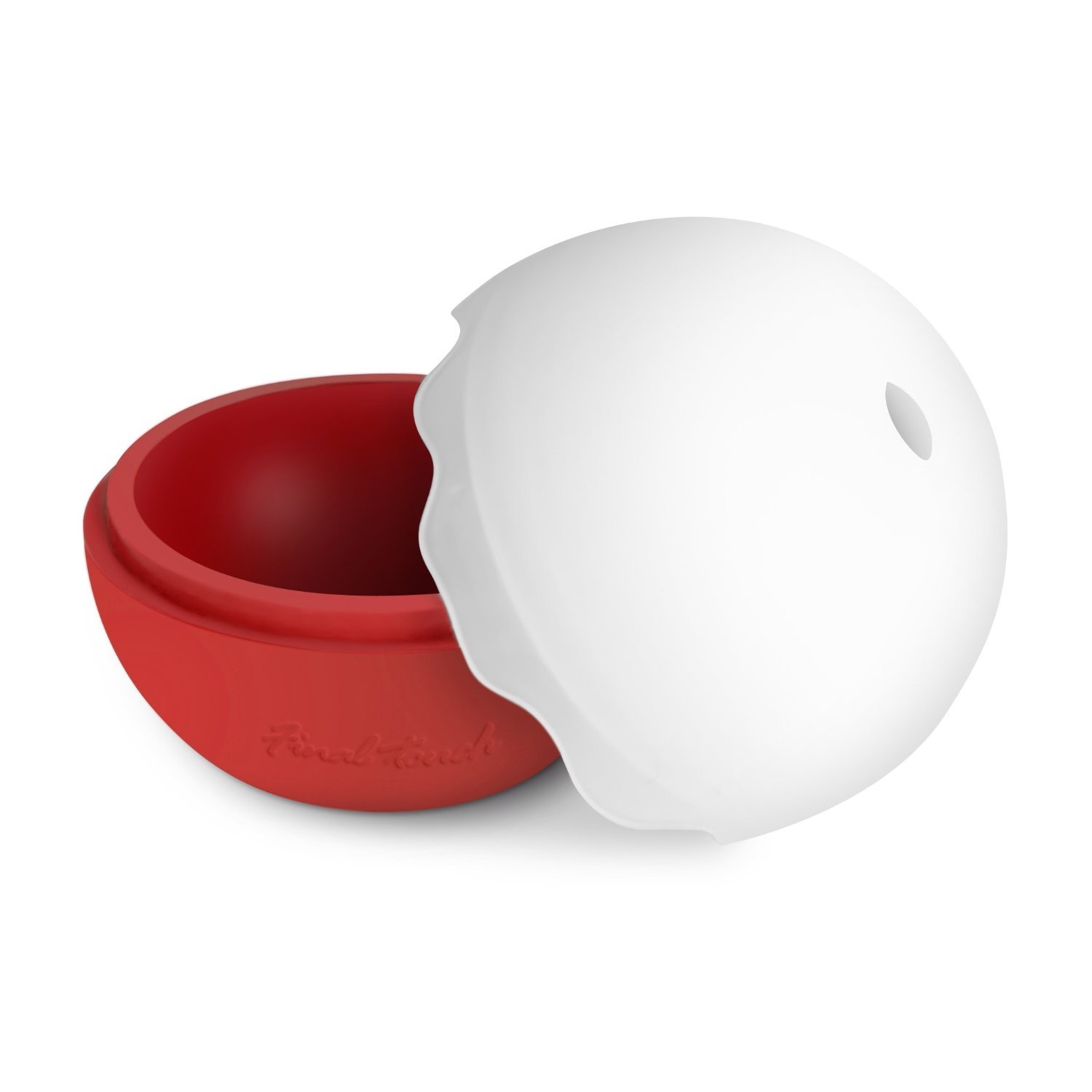
1. Get yourself a silicone ice ball tray like this one that comes in a pack of six.
2. Over a pot of water (or better yet, a cooler as that will produce lots of clear ice) make a wire loop that the ice ball mold will sit on.
3. Fill the pot with water just up to the wire. Also fill ice ball with water. Feel free to fill the ice ball with distilled or filtered water for better taste.
Dunk the filled ice ball mold into the pot of water with the hole FACING DOWN. As you pull the mold up out of the water to set it on the wire. The water should stay inside the ice mold rather than running down into the pot. That's the whole trick.
4. Freeze it.
As I figured out during all the ice experiments, the water freezes directionally from the coldest place to the warmest; and the first parts to freeze are perfectly clear whereas the last area to freeze is cloudy from trapped air, impurities, and pressure cracks.
In a typical ice cube, that's outside-in, with the cloudy part in the center. In the Cooler Method I force that to be top-down. Using this pot the water will freeze from the outside-in, but the big pot creates a big heat sink so the top will be clear until after the ice ball is fully frozen.
So with the hole in the ice ball mold facing the bottom of the pot, as the water in the mold turns to ice and expands, it pushes out the extra air-filled water out the hole into the pot below.
5. Let it freeze, then remove it.
Now that's a sexy ice ball! Thanks for sharing Craig!
For those of you who want to freeze more than one ball at a time, I'm guessing you could simply make multiple loops in the wire to hold multiple ice balls, but suspend it over a cooler (as in the Cooler Method) instead, as that is all freezing from the top-down. And at the end, you'd have a bunch of ice balls plus a slab of clear ice with which to make cubes.
Belon also included a way he likes to drink absinthe using an ice ball.
"Flawless Absinthe" by Craig Belon
Recipe:
1 Ice ball using the Belon Method 1 Absinthe glass (essential due to its shape) 1 Sugar cube Chilled water
Directions:
-place just enough absinthe into an absinthe glass to fill the bottom bulb part
-Insert Belon Method ice ball, corking off the absinthe in the bottom
-SLOWLY add water to the top over a sugar cube in the standard absinthe preparation fashion.
Physics: the water is denser than the liquor anyway, but with sugar dissolved especially more so. This water will flow around the miniscule gap between the ice ball and the edge of the glass, further cooling it. It will slip past the ball to the bottom of the glass, forming an absinthe-sugarwater interface in the bulb that slowly rises, producing the characteristic white precipitate…. but only at the interface! The fluids of differing densities will remain mostly unmixed over the course of 5-10 minutes, with a rising line of precipitate, until most of the absinthe is on the TOP of the glass, freezing, (it started at the bottom) and still crystal clear, and the sugar water at the bottom. This process produces a beautiful cascading effect (properly: Schlering lines)
What this means is that the drink actually starts as a pretty stout swig of pure absinthe that is frigid-cold, and as you drink it changes to become sweeter and sweeter.
A cocktail that changes as you drink it, each sip different than the last. Thanks to physics.
—
Well then, thanks to physics, and thanks again to Craig Belon for his brilliant little trick.
An index of all of the ice experiments on Alcademics can be found here.
The next step was to examine what each mineral in mineral water tasted like on its own.
Again referring to the information on Khymos.org, I could see that the primary minerals in mineral water are Calcium, Sodium, Magnesium, and Potassium. The website also allows you to look at bicarbonate, sulfate, chloride, and nitrate.
To taste each of these minerals/salts on its own, I looked up the mineral water with the greatest concentration of a particular mineral, then added the ingredient in the proper amount to mineral-free water to give me that water's amount of it. In other words, if Apolinaris water had the most Magnesium (it did), then I started with water with no minerals in it and added the magnesium-containing ingredients in its recipe (epsom salts and magnesium carbonate) without worrying about the other minerals in the recipe.
I measured the pH and total dissolved solids (TDS) of the new mineral water before carbonation, and the pH again afterward. This was mostly to make sure I wasn't adding anything that would put the mineral water outside of a safe range of pH for drinking.
Single-Mineral Mineral Water Chart
Mineral
Brand
Added
pH
TDS
pH after carbonation
Notes
Calcium
Contrex
Plaster of Paris
9.9
244
4.8
Cleared up after carbonation. Nice fizz. Taste: powdery/dry but not flavorful
Magnesium
Apolinaris
Epsom salts and Magnesium Carbonate
10
132
5.1
Cloudy until carbonate, creamy, mineraly, soft carbonation though
Sodium
Saint-Yorre
Baking soda and Table salt
8.2
2170
5.9
Clear before carbonation, great fizz, tastes very salty
Potassium
Saint-Yorre
Potassium Bicarbonate
8.4
158
4.8
Clear before carbonating, fizzes over with carbonation when charging, flavor is dryness; not much else
Sufate
Contrex
Epsom salt and Plaster of Paris
7.4
459
5.1
A little sweet. Really good carbonation. Nice texture.
Chloride
San Narciso
table salt
6.9
876
6.9
Good carbonation but just salty, blech
It was interesting to see how these salts affected carbonation; not just flavor of the water.
The next step was to taste these one-mineral-rich waters with alcohol to see what happened. I thought they might bring out different aspects of flavor in booze and I was right.
I made an equal-parts Vodka Soda with each of the soda waters above. My tasting notes were:
Mineral
Notes
Calcium
Bright and flavorful
Magnesium
Not a lot of character; a little salty
Sodium
Salty, way too salty
Potassium
Chalky but kinda good
Sulfate
Brighter and sweeter, but perhaps too much so
Chloride
Salty
After this, I made a mineral blend of what I thought might work, using a combination of baking soda, epsom salt, and plaster of paris. This blend did make the flavor in vodka (and whisky) pop, but was too salty tasting.
My next experiments will be to build other mineral blends to find one(s) that I like. There is much more work to be done!
—
The Water Project on Alcademics is research into water in spirits and in cocktails, from the streams that feed distilleries to the soda water that dilutes your highball. For all posts in the project, visit the project index page.
In my search for information about water sources used for various spirits as part of the Water Project, I came across Uisge Source, a company that bottles waters from different regions in Scotland.
The waters from Speyside, Islay, and the Highlands are meant to be representative of the waters used by distillers in those regions to make scotch; for dilution of drinks in the bourbon-and-branch style.
As I learned in the book Whisky on the Rocks, even distilleries next to each other may have different water sources, so it shouldn't be assumed that all the distilleries in an area use waters just like these in their whisky, but it seems like a good place to start.
The really cool thing about Uisge Source that it's not just water they sourced from these regions; they actually tell you about the chemistry of the water.
Islay’s Ardilistry Spring produces water with higher natural acidity which is created by filtration through peat.
St Colman’s Well in the Highland region produces a hard water, high in minerals due to filtration through porous and brittle red sandstone and limestone.
The Cairngorms Well in the Speyside region produces a soft water, low in minerals as a result of being filtered through hard rock such as granite.
And they give a chart of each water's properties. I love charts! (Click to make it bigger.)
As you can see from the chart, the Highland water is full of minerals including calcium and magnesium. Islay water is high in potassium, chloride, and sodium, and has a lower (more acidic) pH. Speyside water is low in nearly all minerals and has a slightly higher (more basic) pH than the other waters.
So: How do they taste? Happily, they sent me some to experiment with.
Uisge Source Taste Test
Speyside: Tastes quite dry. I notice this in distilled waters without mineral content, though at 125 ppm dissolved solids this still has a lot more minerals in it than my tap water. There is a granite taste to the water as well – not a creamy soft minerality but a hard one.
Highland: I measured the total dissolved solids (TDS) in this one at 225 ppm. It tastes softer in body and sweeter than Speyside. It's also more earthy.
Islay: At 183 ppm TDS it is halfway in mineral content between the other two, but this water has the most flavor- it's got a pronounced dirt/earthiness to it but I also taste grainy minerality.
Then the natural test would be to try different whiskies with the different waters, so that's what I did. The results were surprising!
Tasting Uisge Source with Scotch
I tried a 25-year-old Highland single-malt with each water, and a 10 year-old cask-strength Islay with each. I was surprised to find that each whisky tasted best with its regional water! Maybe I just got lucky – I didn't measure quantities down to drops and such, but I really didn't expect these to align.
The Speyside water made both the Islay and Highland whisky taste sweet. The Highland water brought out honey notes from whiskies, but it was totally in synch with the flavor profile of the Highland scotch where it wasn't a perfect fit for the Islay. The Islay water brought out the creme brulee and smoke of the Highland scotch which was good but not the typical flavor profile I associate with it, while it did the same for the Islay scotch to great effect.
This could all be in my head (and down my throat at this point) but I was surprised at how much these waters with subtle differences brought out pronounced differences in the whisky. Awesome.
Looking to buy Uisge Source? Unfortunately it's not in the US yet, though they tell me they're in talks with an importer and I'll share the news when it's available. They have a list of retailers on the site for UK customers and you may find it in duty-free shops in some airports.
—
The Water Project on Alcademics is research into water in spirits and in cocktails, from the streams that feed distilleries to the soda water that dilutes your highball. For all posts in the project, visit the project index page.
In my latest post for Details.com, I talk about the interesting trend of leafy green salad vegetables making their way into cocktails.
Shut Up and Drink Your Salad: Cocktails Embrace Spinach, Kale, and Arugula By Camper English
The West Coast style of cocktail in which bartenders muddle a cornucopia of fruits and herbs in their drinks has long been known as a "salad in a glass," but that term is taking on a whole new meaning as mixologists move to mashing leafy greens like spinach, kale, and arugula into drinks this spring.
In the Water Project I'm studying water in spirits in cocktails, from the source water for fermentation through to the sparkling water we use to dilute drinks. As part of the latter research, I'm looking into deconstructing and reconstructing mineral water.
Much of the work on this has been done by other people and I'll just be reproducing it here. In short, the mineral content of mineral waters is publicly available, so you can add minerals to your own water to recreate your favorite brand.
You can either start with your tap water, taking into account its mineral content, and add more minerals to it (as done on the Khymos blog), or you can start with completely mineral-free water and add to that (as done in the Craft Cocktails at Home book).
What's in My Water?
I decided to look at San Francisco tap water to see what it contains. From the annual Water Quality Report we can see the standard minerals that we look at in bottled water including calcium, magnesium, and sodium. My local water also contains metals like copper, lead, and aluminum. Then it has added chloramine and fluoride for disinfectant and dental health.
I know my water tastes good even without filtering it, but is it appropriate for use to make mineral water? Most of the numbers in the water report are given in ranges, and some of those ranges are pretty wide. They also give average levels of minerals and contaminants. Some averages from the report are:
The average amount of Total Dissolved Solids (TDS) in my water 132 ppm. The TDS is an important number as we use it to measure mineral waters. Water sold as mineral water in the US has to have TDS of 250 at minimum.
Intrigued by the fact that my water seems to be halfway to mineral water, I decided to test the TDS of my tap water.
Testing Total Dissolved Solids (TDS)
TDS is super easy and cheap to test – a TDS meter costs about $15 on Amazon.com, or you can get one for free when you buy a Zero Water pitcher for $33. The pitcher is designed to get reduce the TDS in tap water to zero, so I bought one.
Using the enclosed TDS meter, I found that my tap water has super low TDS in the first place – only 32 ppm, compared with the San Francisco average of 132! I then compared it with filtered water:
San Francisco Tap Water, Average = 132 ppm Camper's Tap Water = 32 ppm Camper's Tap Water, after filtering with Mavea water pitcher = 28 ppm Camper's Tap Water, after filtering with Zero Water pitcher = 0 ppm Distilled Water (purchased), no minerals added = 0 ppm
I also tested Carbonated water, just to see how it reads, as most mineral waters that I'll be looking at later will be sparkling. It turns out that this is harder to read – the meter jumps around quite a bit and then settles around a number range. When I carbonated TDS 0 water it settled to 17 – 22 ppm. Interesting.
But what about the rest of the stuff in the water?
So even if I get the solids down to zero, what about the chloramine and fluoride? Are they still there and can you taste them? It turns out that the Zero Water pitcher gets rid of fluoride and some chloramine. From the FAQ:
Q. Does the ZeroWater filter remove Fluoride? A. ZeroWater filters are not certified for the reduction of fluoride however fluoride is an inorganic compound. The TDS meter is designed to detect inorganic compounds. Fluoride levels in water are usually around 2 to 4 ppm, which will show up on the meter as 002 to 004. So when filtered water reads 000 it is not likely that fluoride is present in water.
Q. Does the filter remove Chloramine? A. We have done internal lab testing that shows our filters can reduce chloramine. However, the presence of chloramine can reduce the expected life of the filter, so if you have chloramine in your water, you may need to change your filter more often than normal.
I then looked about getting rid of chloramine on the SF Water website:
Chloramine is not a persistent disinfectant and decomposes easily from a chemistry point of view but for water supply purposes chloramine is stable and it takes days to dissipate in the absence of substances exerting chloramine demand. Therefore, it is not practical to remove chloramine by letting an open container of water stand because it may take days for chloramine to dissipate.
However, chloramine is very easily and almost instantaneously removed by preparing a cup of tea or coffee, preparing food (e.g., making a soup with a chicken stock). Adding fruit to a water pitcher (e.g., slicing peeled orange into a 1-gal water pitcher) will neutralize chloramine within 30 minutes. If desired, chloramine and ammonia can be completely removed from the water by boiling; however, it will take 20 minutes of gentle boil to do that. Just a short boil of water to prepare tea or coffee removed about 30% of chloramine.
If desired, both chlorine and chloramine can be removed for drinking water purposes by an activated carbon filter point of use device that can be installed on a kitchen faucet.
Can you taste chloramine in drinking water? Several sites say that chloramine tastes better than chlorine in drinking water, but can you taste it at all?
"Chloramines do not give off any taste or smell and are relatively safe." [link]
The Water Quality Association, says [pdf]: "While chloramines are not a drinking water health concern to humans generally, their removal improves the taste and odor of drinking water. " They do not mention boiling but activated carbon filtration.
So maybe you can taste chloramine, and better safe than sorry.
My guess is that if I boil water for 20 minutes to remove chloramine, then cool and filter it in the Zero Water filter, I could get pretty good quality water, with which to begin mineral water experiments.
Or, you know, just buy distilled water by the gallon at the store.
—
The Water Project on Alcademics is research into water in spirits and in cocktails, from the streams that feed distilleries to the soda water that dilutes your highball. For all posts in the project, visit the project index page.
In my studies of water in spirits and cocktails, I picked up the book Whisky on the Rocks: Origins of the 'Water of Life' by Stephen and Julie Cribb. The book is about the geography of Scotland and how that influences the water sources for scotch whisky.
It turns out Scotland's geology is pretty varied between very old (2900 million years) and new (60 million years), with large faults that divide the country into different areas, rift valleys, metamorphosed Dalradian rocks, schists, volcanic islands, and more. I don't know what most of those words mean either.
Distilleries in Scotland draw their water from streams, rivers, springs, reservoirs, wells, and other sources. Even within a single distilling city like Dufftown, water comes from several different sources. The water used for scotch whisky seems to be just as varied as the whisky produced there.
One of the most interesting and useful passages in the book (to me), comes from an early page.
The primary source of water is rain, but what happens to rainwater before its arrival at the distillery affects its chemistry and thus the uniqueness of the resulting malt whisky. The rain may end up as a stream or river, in a loch or a reservoir, coming from the rock as deep or shallow boreholes, or as a spring high on a hillside.
If it falls on bare mountains made of crystalline rocks it will flow rapidly downhill as streams. This water has little chance to interact with the underlying rocks and often has a low mineral content. It will be acid and soft.
On the other hand if the strata are more permeable, or have many joints and fractures, the rain will percolate into and through the rock, dissolving it and increasing the water's mineral content. Limestones and sandstones, for example, yield water rich in carbonates or sulphates; such waters will be neutral or slightly alkaline and hard.
'Soft water, through peat, over granite' was the traditional and still oft-quoted view of the best water for distilling. Remarkably, out of the 100 or so single malt whiskies, less than 20 use water that fits this description.
Though the book covers how geography influences the water sources for scotch and the paths it takes to get to the distilleries, it doesn't really get to deep into how that water then influences the distillation and importantly the taste of scotch, noting that it is just one factor along with peat smoke, still shape, and aging that may influence the final product. But of course, that's a big question that I'm researching in my Water Project.
Some facts about water sources for whiskies from the book (keeping in mind it was published in 1998 so it may be out of date):
Water for Laphroaig is acidic due to quartz mountains and peaty lowlands, but the mineral content in the water is low.
At Bunnahabhain on the same island, in contrast, spring water is piped from the hills without passing over peat. The spring from which it is sourced is rich in calcium and magnesium so the water contains more minerals.
Bowmore's water takes a long path to the distillery passing through quartites, limestones, sandstones, and through peat.
Tamdhu uses well water beneath the distillery and is the only Speyside whisky using water from the River Spey.
Those are just a few tidbits from the book, which is only 70 pages but rich with diagrams of the geography of the regions being discussed. It is definitely a geography book rather than a whisky book, and can be a little hard for the novice (me) to parse. That said, I have a feeling that the more I learn about water and its effects on fermentation and distillation, the more I'll refer back to this book.
—
The Water Project on Alcademics is research into water in spirits and in cocktails, from the streams that feed distilleries to the soda water that dilutes your highball. For all posts in the project, visit the project index page.