Blog

  • Gin Definitions

    A few months back I attended a seminar hosted by Plymouth and Beefeater gins. This was held on the same day the new EU definition of London gin became law.

    The law sets down three categories of gin by production method- not by flavor. They are:

    Gin- Can be basically vodka with flavors added at bottling time.

    Distilled Gin – Flavors are distilled with the neutral spirit, then additional flavors may be added after distillation.

    London Gin – Flavors (must be natural, not artificial) are distilled with the neutral spirit, then nothing may be added after distillation except more neutral spirit and water and a tiny amount of sweetener. You will notice that it does not need to be distilled in London.

    The full definitions are here

    I was confused about one point after the seminar so I thought I'd clear it up here. Gins like Hendrick's and Martin Miller's are not London gins because they add flavors after distillation (so they are distilled gins). Gins like Bombay Sapphire that are made in Carterhead stills (and meeting all the other requirements) are London gins, though they are made a little differently than gins like Beefeater and Plymouth.

    In the Carterhead still, botanicals can be placed in the vapor stream of the still instead of (or in addition to) putting them in the pot and infusing them in the neutral spirit. This adds a lighter touch of the botanicals to the gin. Initially I thought this disqualified gins distilled in this method from being labeled London gins. (I was thinking that if the botanicals were not in the pot, it was considered post-distillation.) But that's not true. I guess if it's all contained within the still set-up it's not considered post-distillation.

    In the end, there are good and interesting gins in each category, and the categories don't account for flavor. Increasingly people are referring to gins as traditional vs. "new west" in style; boldly juniper-forward in flavor versus lighter in style with non-traditional flavorings and usually less dominated by juniper. So perhaps a gin officially labeled as a London gin can also be "new west" in flavor.

  • Does Refreezing Ice Make it Clearer?

    I am trying a series of experiments to find the best and most practical way to make clear ice in my home freezer. Future experiments include distilled vs. tap water, boiled vs. not boiled, hot vs. cold water, different shapes of containers, etc.

    For this experiment, I started with plain tap water. I then froze it, took a picture, let it thaw back into liquid, and repeated the process. 

    The test was to see if freezing and refreezing tap water would make it become clearer on successive freezings (due to the release of oxygen trapped in the ice) each time. 

    So did it become clearer? The short answer is No. The long and visual answer is below.

    (more…)

  • USB Drives are the New Press Kits

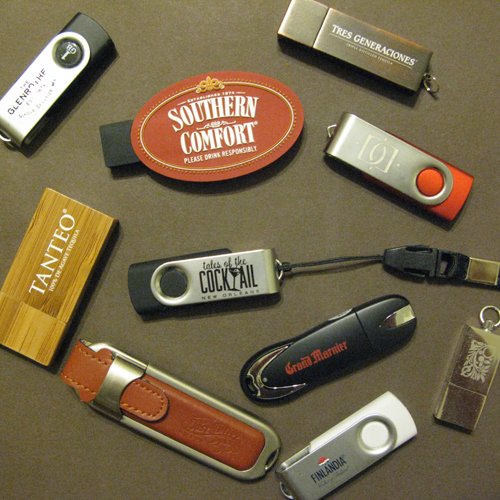
    I get a lot of press kits in the mail. Lately the USB drives they put the images and information on have been getting really colorful.

    You know how some people have really awesome collections of vintage barware and cocktail books from the 1800's? Maybe in 50 years I'll have the biggest collection of branded thumb drives and novelty muddlers. Then you'll be jealous!

    USB press kits for tanteo, grand marnier, southern comfort, beefeater 24, the glenrothers, cuervo 250

  • The Ultimate Test of your Liquor Cabinet

    Not only is the Laphroaig Project delicious and surprisingly tropical for its ingredients, it's a test of your liquor
    cabinet. If you have all of these ingredients at home you are a huuuuge cocktail geek.

    The Laphroaig Project was created by Owen Westman at Bourbon & Branch and it's
    also available at Rickhouse, both in San Francisco. It contains:

    • Green
      Chartreuse
    • Yellow Chartreuse
    • Laphroaig Islay Single Malt Whisky
    • Luxardo Maraschino liqueur
    • Peach bitters
    • Lemon juice

    What? Yes. The recipe is here.

    And if you can make it without shopping, I think you are cool. 

  • Drinks With: Cuervo Tequila Bigshots

    Drinks With… is a regular Alcademics category where I share what I learned when meeting with industry notables.

    Last week I asked Alcademics readers what I should ask Francicso Hanal Alfaro, Cuervo's Maestro Tequilero and Araceli Ramos, Director at La Rojeña, the Cuervo Distillery. You answered here and on Facebook. I didn't get to ask all your questions but I learned some really interesting stuff.

    Alfaro lives in Mexico City and is also one of the people who helped decide on the Riedel tequila glass that I use nearly every day.

    Pre-Spanish Distillation?

    I first asked about the theory beginning to be espoused by Steve Olson and others that distillation predates the Spanish coming to Mexico. The theory is based on some findings of a very old still and some chemical analysis. It doesn't sound like anything conclusive has been proven by archeologists though. But one contributing theory that was brought up at the Agavepalooza session at Tales of the Cocktail is that as the natives were drinking pulque when the spanish arrived, and if you distill pulque you get rubber instead of delicious tequila. Thus it would take a longer time to develop the technology to distill tequila from the hearts of roasted agave plants than the actual time from the Spanish arriving in Mexico to tequila showing up. The technology couldn't have developed that fast, says the theory.

    Though Alfaro wasn't familiar with this pre-Spanish theory, he said that natives in the tequila region (as opposed to the areas where they were drinking pulque- uncooked, fermented juice of certain types of agave) were consuming vina de mescal- mescal wine. "Mescal" he said means something like "the thing that is cooking," and thus vina de mescal refers to baked/cooked agave that is then fermented into wine. So if cooking and fermenting mescal is pre-Spanish also, then the theory that it couldn't have been developed between the time the Spanish arrived and the time tequila was known to exist would not be valid. (This is not to say Alfaro was speaking directly to this theory, he just added his thoughts to my question. Hopefully this will advance the conversation.)

    Where Does your Agave Come From, and Are you Hurting Small Agave Farms and Families?

    Cuervo gets agave from three different types of source. Most is estate owned. The next most is leased land- other people own the land but they own the agave and tend to the land. (Much "estate-grown" tequila from other brands is on leased land.) Third, they buy agave on the open market.

    The important point that I hadn't heard before (my kingdom for a few hours with the CRT) is that they said they have to buy some agave from small farmers by law. A recent paper said that because more brands are buying land, they are putting small farmers out of business. (See the question Neyah proposed in the comment here for more information on why this is important.) Yet as I wrote a while back, the reason brands are buying up land is because of the gluts and shortages in the agave market when left to small players- Alfaro brought this up as well. I really would like to know more about this law to better understand the issue.

    Cuervo employs 3500 jimadors (the folks who harvest the agave). They also own most of their land in the Tequila Valley (lowlands), but also some in the highlands and some also in the neighboring state of Nayarit. Some of it is in the area close to Puerto Vallarta (thus very low in elevation) and Alfaro says the agaves grow to be huge there.

    Though all the talk in tequila these days is about terroir, Alfaro emphasized that no matter where they grow their agave, they use the same fertilizer and even irrigation to keep it consistent between areas. We didn't get into this as much as I wanted as we ran out of time to talk.

  • Moldy Ice

    I got these alphabet ice molds on Amazon.

    Iceicebaby500

    They're fun because I can send love notes to myself in my cocktails, and leave subliminal messages in other peoples' drinks.

    The item description says they can also be used in the oven and for things like butter molds and chocolate, but that sounds hard. I'll stick to ice. because I'm cool like that. Get them here.

    An index of all of the ice experiments on Alcademics can be found here.

  • Simple Syrup: It’s Good to be Rich

    This post lists the spoilage times for different simple syrups. You can use it to determine how long until simple syrup will spoil. 

    Simple syrup is never just that simple. Some people make it 1:1 sugar to water. Others make it 2:1, and call it "rich simple syrup."

    One-to-one simple syrup is easy to make- put equal amounts sugar and water in a bottle and shake it up. No heat is necessary. For rich simple syrup if you shake and wait and shake and wait you can get it into solution without heat, but most people heat up the water first on the stove and the sugar dissolves almost instantly (but then you have to wait for it to cool before using). Either way, you need to plan for it.

    So why would anyone bother with rich simple syrup? Because you can use less of it in a drink to get the same amount of sweetening, but more importantly it lasts longer before spoiling in your refrigerator.

    Syrupjars

    To test this, I made up four syrups and decided to wait to see how long it was until they spoiled. For each ratio, I added a tablespoon of vodka, as this is another method of making syrup last longer before spoiling.

    • 1:1 simple syrup
    • 1:1 simple syrup plus one tablespoon vodka 
    • 2:1 rich simple syrup
    • 2:1 rich simple syrup plus one tablespoon vodka

    Then I put them all in the refrigerator and waited. Eventually, the syrup would become cloudy then that cloudiness would start to mold. I stopped the experiment when the cloudiness appeared.

    Results:

    • 1:1 simple syrup lasted One Month
    • 1:1 simple syrup plus one tablespoon vodka lasted Three Months
    • 2:1 rich simple syrup lasted Six Months
    • 2:1 rich simple syrup plus one tablespoon vodka lasted more than six months

    So depending on how fast you go through simple syrup you may want to adjust the syrup that you make. Of course, you'll have to go back and adjust all your drink recipes too.

  • Heirloom Tomatoes, Ripe for Drinking

    It's tomato season and all the local restaurants are rolling out the tomato carts and tomato specialty dinners. The bartenders are getting in on the action too.

    Zing At Range, Carlos Yturria's famous Sungold Zinger is back on the menu, made with Sungold Zinger cherry tomatoes, No. 209 gin, lemon, agave syrup, and salt.

    The bartenders at Range restaurant in San Francisco have started two blogs, by the way. Cocktail of the Day lists the daily cocktail served at the restaurant, and Inside the Blood Bank (from which I stole the picture) is a more general bartender and drink blog.

    Elsewhere in tomato drink news, Carneros Bistro & Wine Bar in Sonoma is serving a tomato basil martini with your choice of gin or vodka.

    And as part of the tomato dinner Sent Sovi in Saratoga greets guests with a Lemon Boy Bellini. Tomato Bellini? That sounds oddly delicious.

  • Ginger Beer Gives a Buck more Bang

    My latest story in the San Francisco Chronicle (from Sunday's paper) went online today. Read it here.

    Erickcastrorickhouse

    Ginger beer gives a buck more bang

    Camper English, Special to The Chronicle

    Friday, July 24, 2009

    When ginger ale or beer is mixed with citrus in a drink, it is – or more accurately, was – known as a buck.

    Early cocktail books list recipes for the gin buck or London buck cocktail, and variations of rum bucks were called the Shanghai buck, Jamaica buck or Barbados buck, depending on the type of rum used. If you squeeze your lime garnish into a Dark 'n' Stormy, you've got a rum buck.

    "The buck is one of those cocktails that works with every base spirit," says Erick Castro, beverage director at Rickhouse, the new Financial District bar. "Most cocktails don't work with gin and scotch and vodka and rum."

    Read more about bucks and mules and get the recipe for Erick Castro's Kentucky Buck here.

  • The Count of San Francisco

    Silly me, I didn't even notice that my story on Count Niccolo Branca of Fernet-Branca was in this month's San Francisco Magazine. Here it is.

    The count comes a-courting

    Bottle talk with the CEO behind San Francisco's favorite shot, Fernet-Branca.

    By Camper English, Photograph by Cody Pickens

    Branca

    San Franciscans consume around 35 percent of all the Fernet-Branca
    sold in the United States, thanks mostly to the local palate, which
    tends to skew toward bitter. Recently, the chairman and CEO of Branca
    International (and the great-great-grandson of Fernet’s creator), Count Niccolò Branca,
    paid a visit to San Francisco to meet with bartenders and visit
    high-selling accounts. We met him at Foreign Cinema, where he shared
    some company lore and addressed a few persistent rumors about the brand.

    Branca
    says he hasn’t been to town for about 25 years, though San Franciscans
    have repeatedly tried to visit his distillery in Milan, where all the
    Fernet-Branca imbibed in the States is made. “Sometimes they come on
    Saturday or Sunday, when the company is closed. Monday morning, we find
    on the door a paper—they write, ‘I want to visit. I see where is born
    the Fernet-Branca,’” the count reports. And now they can, since the
    distillery and its museum have finally opened for tours (by
    appointment).

    Branca insists that his bitter liqueur has never
    contained opiates, as some have alleged over the years. His evidence is
    circumstantial but still convincing: Opiate possession is currently
    prohibited in Italy, and he says the recipe for Fernet-Branca hasn’t
    changed in the 164 years it’s been produced. But he assured us that a
    couple of perceptions are true: one, that drinkers across the world ask
    for Fernet-Branca served “San Francisco–style,” meaning a shot
    accompanied by a ginger ale chaser; two, that Fernet-Branca remained
    legal during Prohibition because of its medicinal qualities.

    The count complimented San Franciscans on our pronunciation of his product’s name (fur-net), which he hears incorrectly all over the world. “Even in Italy, some people say fur-nay,” he explains. “But the important word is Branca!

agave alcademics Angostura bartenders bitters bodega bourbon bowmore Campari Camper English chartreuse clear clear ice cocktail cocktail powder cocktails cognac curacao dehydrated dehydrated liqueurs dehydration directional freezing distillery distillery tour distillery visit france freezing objects in ice hakushu harvest history how to make clear ice ice ice balls ice carving ice cubes ice experiments isle of jura jerez liqueur makepage making clear ice mexico midori molasses orange orange liqueur penthouse pisco potato powder production recipe Recipes rum san francisco scotch scotch whisky sherry spain spirits sugar sugarcane sweden tales of the cocktail tequila tour triple sec visit vodka whiskey whisky