Blog

  • Distillery Visit: Stranahan’s Colorado Whiskey in Denver

    IMG_3520This December, I visited the Stranahan's single malt Colorado whiskey distillery in Denver, in order to partake in the fun and insanity of waiting in line overnight for the annual Snowflake whiskey release

    The previous night, however, we were given a tour by Stranahan's distiller Rob Dietrich.

    Background

    Stranahan's was launched by Jess Graber, who along with George Stranahan came up with the original recipe and product launch. This was back in 2004-2006, and in 2010 the brand was sold to Proximo (created by Jose Cuervo and owner of stylishly-branded brands including The Kraken rum and Boodles Gin).  

    In Denver, there is clearly no animosity towards Proximo's ownership, as the Snowflake whiskey release events show. Likewise, Jess Graber's newer whiskey brand TinCup is "finished" at Stranahan's (and I believe owned by Proximo), so that relationship remains in good standing as well.

    Production

    Stranahan's is an American single-malt, meaning it's distilled from 100% malted barley. The barley they use is mostly a "bulk" barley, plus three other "specialty" barleys making up their custom recipe. 

    The barley is milled on-site, then put into the mash tun to extract sugars for fermentation. Water is added. Next it goes into a "boil kettle" that kills bacteria/sterilizes it basically. This is not typical in bourbon or scotch production, but comes from the facility's historical use as a brewery. This is the stage at which hops would have been added.

    I'm guessing that between what they call the mash tun and the boil kettle, it's doing the same thing as the mash tun and wash back of scotch whisky (soaking the grains and washing out the fermentable sugars with hot water), minus the filtering of the liquids (which at Stranahan's comes in the next step). 

    Then it goes into a "whirlpool," another brewery tool, which spins it to separate the liquids from the solids and gets "clean distiller's wort" out of it. 


    IMG_3522


    Fermentation is in closed-top, temperature-controlled stainless steel fermenters that are 5500 gallons in size. These also come from the former brewery. The yeast Dietrich says is an unusual strain, chosen not for producing high alcohol content necessarily, but for flavor production. Fermentation lasts six days. The ABV after fermentation? They won't say. 


    IMG_3526


    Interestingly, the water they use for fermentation is charcoal-filtered city water, while the water they use to dilute post-distillation to barrel-proof and bottle-proof is Colorado Springs mineral water. Typically, it's the other way around – the "special" local water is used for fermentation, then the reverse osmosis filtered city water is used for the rest. Interesting.

    After fermentation, they suck out everything except the spent yeast and keep it in the "wash storage" until they're ready to distill it. 

    There are three large wash stills. One is the distillery's first still that they used to use for everything. They've since expanded to three wash stills for the first distillation, and two smaller spirit stills for the second distillation (as there is less volume of liquid to distill after the first distillation is done).

    As you can see, both sets of stills are pot-column hybrid stills. If I recall correctly, Dietrich said their hybrid still was the first of its type used to make whisky in the state. 

    After the first distillation the spirit is 40%, and the spirit comes off the second distillation at 150 proof (75% ABV). 


    IMG_3535
    IMG_3535
    IMG_3535

    IMG_3550
    IMG_3550
    IMG_3550


    The spirit is then diluted with water from Colorado Springs and put into the barrels at 110 proof (55%).  Amazingly, this spring water for barrel and bottle proofing is El Dorado Springs water, purchased in 5-gallon bottles, same as you'd buy for the water cooler in your office. There was a huge rack of them in the distillery. So I guess if you wanted to make matching ice cubes or bourbon and branch water, you'd know exactly which water to use. 

    In Colorado's weather, the alcohol percentage rises in the barrel, so after 2-3 years it comes out of the barrel at 114-166 Proof.  The barrels are all new oak barrels, toasted first then charred with #3 alligator char by Independent Stave

    After aging, the spirit is put through a 5-micron filter just to keep out barrel char, then diluted with water from Colorado Springs for bottling. None of the whiskies are chill-filtered. 


    IMG_3579
    IMG_3579


    Stranahan's Whiskeys

    The three Stranahan's releases are distilled the same way – same recipe and process. The difference between them is in age and finishing. 

    The Stranahan's Original single-malt is aged a minimum of two years in new American oak barrels. The majority of the liquid is two years old, with some 3-, 4-, and 5-year whiskey blended in. 

    The Stranahan's Diamond Peak is all aged four years in new American oak barrels. 

    The Snowflake whiskies are annual releases first aged in new American oak barrels, then finished in a variety of casks that held other wines/spirits and blended. Those are available for one day and then gone for the year. 


    IMG_3608


  • I Waited in a Long Line for Whiskey, or, A Heroic Tale of Endurance

    6 AM, December 3, Denver: While using the port-a-potty, my glasses fogged over with the steam rising from my pee. I knew at that moment I had made the right decision. 

    A couple weeks earlier, I had been invited to the Stranahan's distillery for the release of their annual Snowflake bottling. The press trip would involve a helicopter ride into the snowy mountains and then waiting outside overnight along with hundreds of other people for the whiskey to be released at 8AM.

    Cold weather? Heights? Waiting overnight in a line for drinks?  These are all things I very much do not like, yet I very much *do* like to be made uncomfortable. Count me in. 

    IMG_3671


    Arriving in Denver, we were told the helicopter ride would not be happening due to poor weather. I was relieved and disappointed as you'd expect. The point of the helicopter ride was to visit Crestone Peak – the Rocky Mountain peak after which this year's Stranahan's Snowflake whiskey was named. (Each annual bottling is named for a different peak, and this year is the 100th anniversary of the first successful summit of Crestone.)

    Luckily the clever public relations team found a new way to arouse my discomfort, by taking myself and the other journalists on the trip to a western wear store to buy a cowboy hat, and then to perhaps America's least vegetarian-friendly restaurant. Well-played, team. 

    The store in question is Rockmount Ranch Wear, and there I picked up a snazzy new hat without too much fuss. The restaurant is The Buckhorn Exchange, Denver's oldest restaurant, taxidermy museum, and server of elk and yak meat. While I didn't eat much there, nor have more than one cocktail (their Old Fashioned has ginger ale in it), I did enjoy plenty of whiskey with Stranahan's distiller Rob Dietrich. I peppered him with nerdy distillery questions that I'll talk about in a future post. (post is here)


    IMG_3505

    Howdy.

    IMG_3631

    At 5AM the next morning, we headed out to the distillery and took our place in line. There were already hundreds of people there, in the very, very cold, near-pitch-dark line that wrapped all the way around the distillery then looped around the roads surrounding it.

    The point of the trip was to experience this phenomena- the cultish devotion to the brand by locals (and a few people who came from pretty far away). The first person in line was there on Thursday afternoon for the Saturday morning event – and it turns out it's his thing to always be the first in line. 


    IMG_3612

    The previous nights the line already wrapped around the building- you can see a couple tents.

    IMG_3612

    Most "StranaFans" were in small groups of four or so people, huddled together in lawn chairs wearing heavy winter clothing. Many were in sleeping bags, some had space heaters, there were some tents, a lot of people had been drinking, and I would expect that more than a few had partaken in the state's legal marijuana.  At five in the morning, though, most of the line was more mellow and sleepy/asleep than wild.

    In our group, we had a small tent with a space heater in it, a little boom box, and people to grill up food for us.  It was as genteel as you could make it, but damn it was still cold! I had not expected to start drinking whiskey by 5:30AM, but umm, I needed it. By the time I'd get near the end of an ounce and a half or so of whiskey in my tin cup, both the liquid and the cup itself would be uncomfortably cold. (I was also hoping not to use the port-a-potty but after a lot of liquid I needed it, and had embraced my fate.)

    IMG_3652

    Still life with whiskey, sneakers, and space heater.

    IMG_3652

    Soon enough though, the sun began rising and people started stirring. After a few drinks, our little place in line got a tiny bit loud. Others got up and started stamping their feet to shake off the cold. Eventually towards 7AM or so (forgive me for inaccurate timing reports, I had consumed a fair amount of whiskey at this point), then line started moving.

    They handed out tickets for the number of bottles that people wanted to purchase (maximum of two), so that when it reached the point where no more bottles would be available, people would know they'd not bother getting in line.

    The fast-motion videos below should give you an idea of just how long the line was.


    They began letting people into the distillery, directing the line along probably the longest route through it so that people could warm up while waiting. They had entertainment inside including live bands, and everyone was in a jolly mood at that point. (Not that anyone was in a bad mood at any point… there was a lot of whiskey around.) 

    IMG_3667


    IMG_3667


    The line wriggled all the away around the warehouse and back to the front counter, we were able to purchase our bottles of whiskey and have them signed by distiller Rob Dietrich. 


    IMG_3724

    IMG_3724

    First guy in line I think, walking out with his bounty as we were getting to the front of the building.


    Then, very tipsily, the group of journalists piled into some Ubers with our newly-aquired, hard-earned whiskey, and headed out to a much-needed breakfast. With discomfort, comes success! 


    About Stranahan's Snowflake Batch 19: Crestone Peak

    IMG_3757Each year Stranahan's Colorado single-malt releases a special Snowflake batch (no two are the same- get it?), named for one of the peaks of the Rocky Mountains. 

    The whiskey begins as Stranahan's Original (mostly two-year-old single malt with some 3- 4-, and 5- year mixed in) that is finished in a variety of casks. The press release notes, "Rob has chosen to celebrate Crestone Peak – Colorado’s seventh highest summit – by marrying the whiskeys from seven different barrels to create this edition of Snowflake."

    The seven barrels in this year's single-malt blend are:

    • 1 Syrah Amador wine cask
    • 1 Madeira wine cask
    • 1 Old Vine Zinfandel wine cask
    • 1 Saint Croix Rum cask
    • 2 4-year old Stranahan’s whiskey casks
    • 1 5-year old Stranahan’s whiskey cask

    Of course, the annual Snowflake release is already sold out, so if you didn't get one, you didn't get one. 


     Read about how Stranahan's makes their whiskey with my distillery visit blog post here.


  • All the Cocktails and Spirits Books Published in 2016 for Reading or Gifting

    I love books! Here are all the books on cocktails and spirits I know of (please do comment if I've missed something) published this year. Give some gifts or just stock up on your winter reading for the cold months. I've got stacks to get through myself.


    Whiskey Books

    6a00e553b3da20883401b8d22461da970c.jpgBourbon: The Rise, Fall, and Rebirth of an American Whiskey by Fred Minnick 

    More Kentucky Bourbon Cocktails by Joy Perrine and Susan Reigler 

    The Big Man of Jim Beam: Booker Noe And the Number-One Bourbon In the World by Jim Kokoris  

    Whisky Japan: The Essential Guide to the World's Most Exotic Whisky by Dominic Roskrow 

    Iconic Whisky: Tasting Notes & Flavour Charts for 1,500 of the World's Best Whiskies by Cyrille Mald and Alexandre Vingtier

    Whiskey: A Spirited Story with 75 Classic and Original Cocktails by Michael Dietsch

    The Manhattan: The Story of the First Modern Cocktail with Recipes by Philip Greene 


    Miscellany 

    6a00e553b3da20883401bb09376999970d.jpgMade of Iceland: A Drink & Draw Book  by Reyka Vodka, Snorri Sturluson 

    Inside The Bottle: People, Brands, and Stories  by Arthur Shapiro 

    The Craft Cocktail Coloring Book by Prof Johnny Plastini 

    Drinking with Republicans and Drinking with Democrats by Mark Will-Weber 

    The Moonshine Wars by Daniel Micko

    Drinks: A User's Guide by Adam McDowell

    Shrubs: An Old-Fashioned Drink for Modern Times (Second Edition) by Michael Dietsch 

    A Proper Drink: The Untold Story of How a Band of Bartenders Saved the Civilized Drinking World by Robert Simonson 

     Colonial Spirits: A Toast to Our Drunken History by Steven Grasse  

    DIY Bitters: Reviving the Forgotten Flavor – A Guide to Making Your Own Bitters for Bartenders, Cocktail Enthusiasts, Herbalists, and More by Jovial King and Guido Mase  

    Amaro: The Spirited World of Bittersweet, Herbal Liqueurs, with Cocktails, Recipes, and Formulas by Brad Thomas Parsons 

    Drink Like A Grown-Up by The League of Extraordinary Drinkers 

    The Coming of Southern Prohibition: The Dispensary System and the Battle over Liquor in South Carolina, 1907-1915 by Michael Lewis

    American Wino: A Tale of Reds, Whites, and One Man's Blues by Dan Dunn 

    Distilled Stories: California Artisans Behind the Spirits by Capra Press

    Building Bacardi: Architecture, Art & Identity by Allan T. Shulman 

    Craft Spirits by Eric Grossman 


    Cocktail Books, General

    6a00e553b3da20883401bb08fac9f3970d.jpgCocktails for Ding Dongs by Dustin Drankiewicz (Author), Alexandra Ensign (Illustrator)

    Zen and Tonic: Savory and Fresh Cocktails for the Enlightened Drinker by Jules Aron 

    Pretty Fly For a Mai Tai: Cocktails with rock 'n' roll spirit   

    Cocktails for Drinkers: Not-Even-Remotely-Artisanal, Three-Ingredient-or-Less Cocktails that Get to the Point  by Jennifer McCartney 

    Aperitivo: The Cocktail Culture of Italy by Marisa Huff 

    The Complete Cocktail Manual: 285 Tips, Tricks, and Recipes by Lou Bustamante and the United States Bartenders' Guild 

     Shake. Stir. Sip.: More than 50 Effortless Cocktails Made in Equal Parts by Kara Newman

    101 Cocktails to Try Before you Die  by Francois Monti 

     Drink Like a Man: The Only Cocktail Guide Anyone Really Needs by Ross McCammon and David Wondrich

    The New Cocktail Hour: The Essential Guide to Hand-Crafted Cocktails by Andre Darlington and Tenaya Darlington 

    Spritz: Italy's Most Iconic Aperitivo Cocktail, with Recipes by Talia Baiocchi and Leslie Pariseau  

    Eat Your Drink: Culinary Cocktails by Matthew Biancaniello 

    Cannabis Cocktails, Mocktails & Tonics: The Art of Spirited Drinks and Buzz-Worthy Libations by Warren Bobrow

    Tiki with a Twist: 75 Cool, Fresh, and Wild Tropical Cocktails by Lynn Calvo and James O. Fraioli 


    Cocktail Books from Bars or Places

    6a00e553b3da20883401bb094fd3d5970d.jpgThe Canon Cocktail Book: Recipes from the Award-Winning Bar by Jamie Boudreau  and James O. Fraioli 

    Regarding Cocktails by Sasha Petraske and Georgette Moger-Petraske 

    Brooklyn Spirits: Craft Distilling and Cocktails from the World's Hippest Borough By Peter Thomas Fornatale and Chris Wertz

    Smuggler's Cove: Exotic Cocktails, Rum, and the Cult of Tiki by Martin Cate and Rebecca Cate

     Cuban Cocktails: Over 50 mojitos, daiquiris and other refreshers from Havana

    Brooklyn Bar Bites: Great Dishes and Cocktails from New York's Food Mecca by Barbara Scott-Goodman

    The Waldorf Astoria Bar Book by Frank Caiafa 

    Lift Your Spirits: A Celebratory History of Cocktail Culture in New Orleans by Elizabeth M. Williams and Chris McMillian


    Science!

    6a00e553b3da20883401b7c893f3cb970b.jpgShots of Knowledge: The Science of Whiskey by Rob Arnold and Eric Simanek

    Distilled Knowledge: The Science Behind Drinking’s Greatest Myths, Legends, and Unanswered Questions  by Brian D Hoefling  


    Classic Cocktail Book Reprints

    THE HOME BARTENDER'S GUIDE AND SONG BOOK {By Charlie Roe and Jim Schwenck}

    AMERICAN BAR {By Frank P. Newman}

    LOUIS' MIXED DRINKS {By Louis Muckenstrum} 


    Beer (A few beer books slip through the cracks and come to me)

    The United States of Beer: A Freewheeling History of the All-American Drink by Dane Huckelbridge 

    The Beer Geek Handbook: Living a Life Ruled by Beer by Patrick Dawson  


     MY BOOK! 

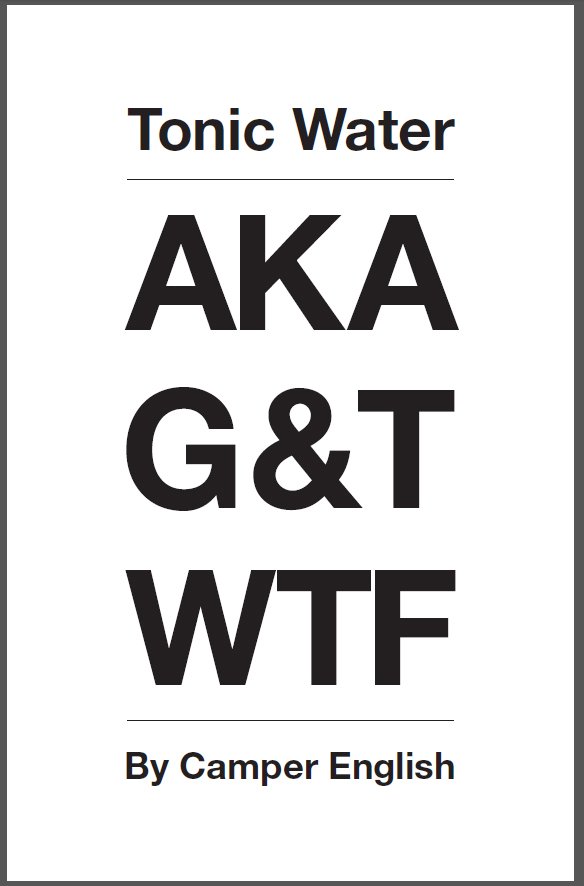
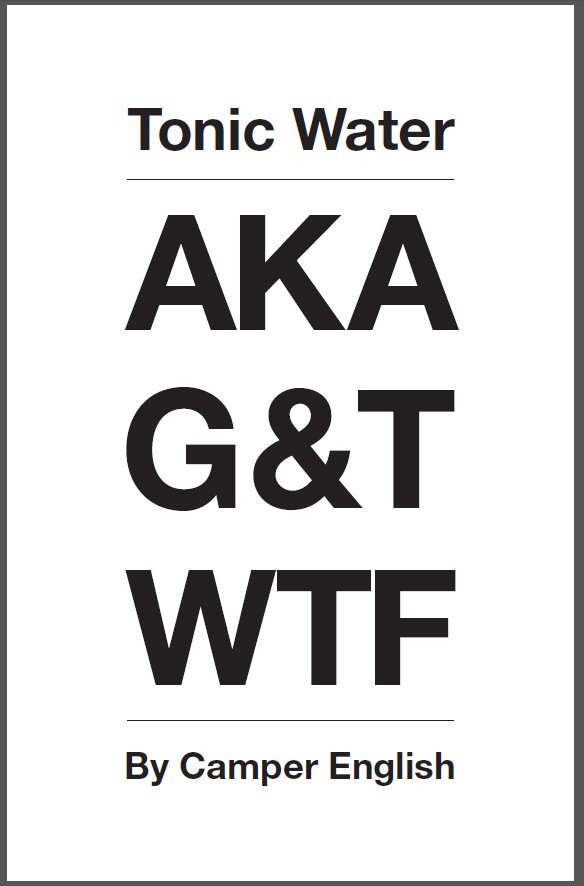
     Please consider supporting Alcademics by  purchasing a copy of my book Tonic Water AKA G&T WTF. It's a gift to yourself, and a gift to me.

    Tonic water aka gandt wtf by camper english cover


    Want to see some of the previous years' books? Well, here they are:

    More Than 40 Drink Books Published in 2014 for Reading or Gifting

    All the Cocktails & Spirits Books Published in 2015, For Reading or Gifting

  • Bartender Nexus: Range in San Francisco and its All-Star Cast

    Range_interior_2The owners of Range Restaurant announced that they'll be closing at the end of the year after 12 years in operation. Let's talk about how important this restaurant was for the world of San Francisco cocktails.

    This little restaurant was a surprising nexus of talented bartenders. I've been making mental notes of "nexus bars" for a while as I find it fascinating- the bars that see the most important bartenders come through them. Sometimes it's because those were the hottest venues in town, sometimes it's because everyone wanted to work with the bar manager, sometimes like at Range, well, I just don't know. Which makes it interesting.

    In San Francisco, some of those bars include Stars (from way before my time), Absinthe, Bourbon & Branch, Heaven's Dog, and certainly Range. 

    When Range first opened, the cocktail scene (as well as all of the bartenders compared to now) was fresh and young. Muddling and infusions and using fresh juice were still news.

    Heck, I was still writing about nightlife as well as cocktails,  still learning about them, and soon to move to full-time coverage of them by 2006. In a lot of ways, I came up in my career too learning from the bartenders at or from Range.  

    Let's look at where some of those bartenders are now:

    Carlos Yturria – Has since consulted on many different Bay Area bars and now is a co-owner of The Treasury in Downtown SF.  When Range first opened, I was obsessed with a (now embarrassingly simple) drink that was a Gin & Tonic with a splash of Lillet Blanc. Turns out Carlos created that one. We've each come a long way since then.

    Perhaps Yturria's most-loved drink from his time at Range was the Sungold Zinger – a simple and exquisitely delicious cocktail with gin, lemon, and heirloom tomatoes that they'd bring back every year during tomato season. I'm not positive, but I think his drink Flash (kiwi, cucumber, gin) may have been created in that era and it's on his current menu at The Treasury. 

    Camber Lay – Has been the longtime lead bartender at Parallel 37 at the Ritz-Carlton in SF. I remember she was using a food dehydrator to create dried fruit rims on drinks and I was all, "What will those crazy mixologists think of next??" Ha! 

    Jon Santer – Now owns the much-loved/respected Emeryville bar Prizefighter. Kind of a big deal.

    Santer

    Santer in 2004. No idea what/where.


    Jeff Lyon became co-owner (along with Range chef Phil West) of Third Rail, a jerky and cocktail bar, in San Francisco's Dogpatch district. 

    Enrique Sanchez – San Francisco's omnipresent bartender, currently often working at my local-local ABV.

    Brooke Arthur– Came up through the ranks at Range and was the face of the bar for a long time. Later ran the programs at venues including Prospect and super-favorite Wo Hing General Store.  She is now a brand ambassador and vice president for House Spirits out of Portland, OR. 

    Unnamed

    Brooke Arthur at Range

    Thomas Waugh – Moved to New York and is doing incredible things as the cocktail king of Major Food Group. You might have one of his drinks at a half dozen places in town. 

    Dominic Venegas – After working pretty much everywhere great in SF, moved to New York and was bartending at the every-award-winning Nomad before taking a brand ambassador job with Pernod-Ricard. Way back just post-Range, Venegas and Yturria were awarded the SF Chronicle's "Bar Stars" as a team.   


    So… Yeah a lot of great people went through that bar- and more than just these folks I'm sure. Respect. Range is/was one of the most important restaurants in San Francisco's cocktail history. 


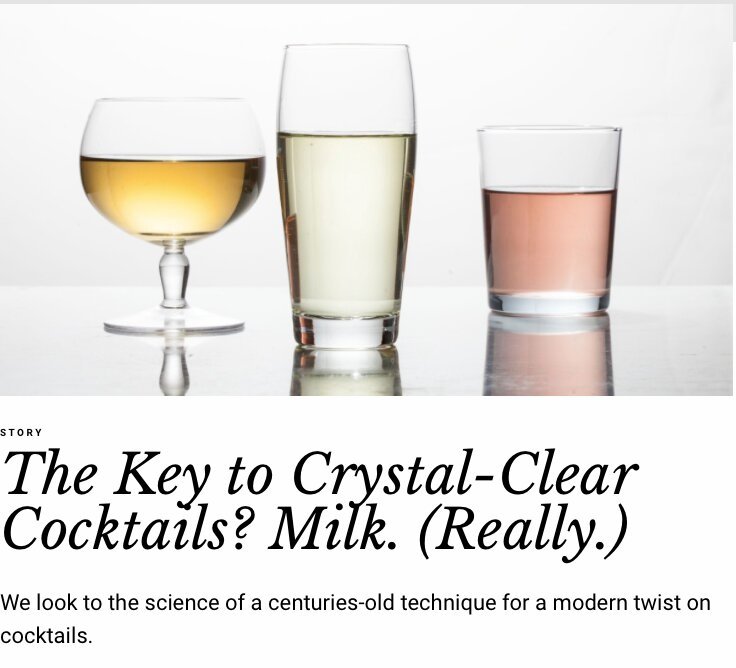
  • Milk Punch: Science and Practice

    My first story for Cook's Science is online and boy is it a doozy! I spoke with more than a dozen bartenders to find out how they made their Milk Punch – and it turns out there are a lot of variations and contrasting opinions on how to to do. Hot or cold milk? How much acid is needed? What is the best way to strain it? Is high-fat milk better than low fat? 


    Screen Shot 2016-12-05 at 5.28.10 PM


    Milk Punch, as you may know, is a method of clarifying and preserving a punch by curdling it with milk and stringing the curds, so that it's shelf-stable in a cool environment. 

    They way Cook's Science works is that I did the initial research – talking to all the bartenders – and then their test kitchen tests the theories and tries to figure out the best practical way to achieve great drinks in as much of a controlled environment as they can make. They came up with some interesting confirmations and refutations of bartender Milk Punch lore. 

    Trying to write about the actual science of it was really challenging, and for that I relied heavy on Dave Arnold's Liquid Intelligence and Harold McGee's On Food and Cooking. I think I understand why milk punch is a clarification method well enough, but honestly I'd love to narrow down why exactly it preserves citrus too. 

    Anyway, I hope you enjoy the story. It was a big effort and a delight to write. 


    Screen Shot 2016-12-05 at 5.30.37 PM

    Read the story here.


  • Sherry, As Simply as I can Describe It

    I was asked recently about sherry and it reminded me of a story I wrote one hundred million years ago in 2011 for the Los Angeles Times Magazine. The publication has since closed (not the LA Times, just the magazine) and the story is no longer online, but I scooped it from the Internet Wayback Machine so I could share it again here. (As far as I know the information is still current.) 

    I think it offers a concise overview of the sherry category. And after you read it, check out this set of cool charts on sherry I made here, as it displays the information in easy visual form. I know you people hate reading. 
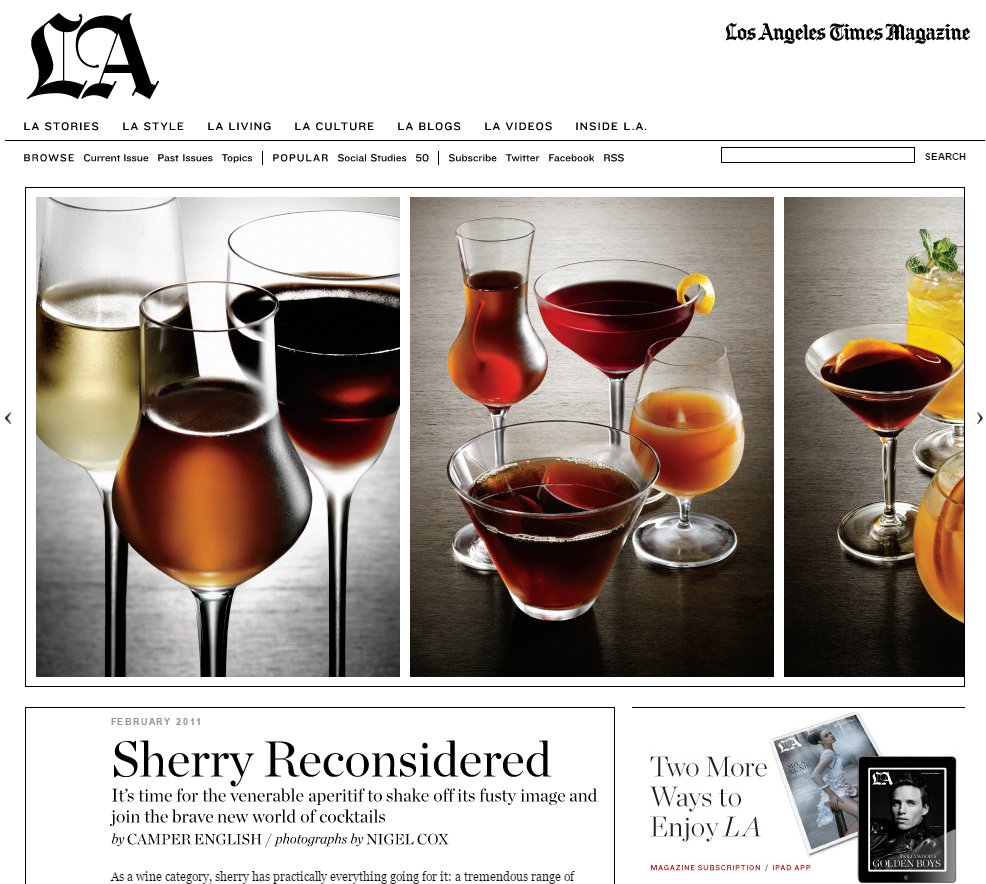
     

    Sherry in LA Times Magazine


    FEBRUARY 2011
    Los Angeles Times Magazine

    Sherry, Reconsidered
    Camper English

    As a wine category, sherry has practically everything going for it: a tremendous range of flavors, a rich history dating at least as far back as the Romans, the ability to pair magnificently well with food and an increasingly hip status as a cocktail ingredient used by top bartenders.

    Most people, when they think of sherry at all, consider it an ingredient their grandmothers cooked with rather than something ripe for sipping on its own. Sherry is about due for a comeback, but it’s so unfamiliar to us now that it really needs a thorough reintroduction.

    SPANISH BODEGAS
    In the three main cities of the delimited sherry region in the southern corner of Spain next to the Atlantic—inland Jerez de la Frontera, coastal El Puerto de Santa María and Sanlúcar de Barrameda—sherry remains both big business and a tourist attraction. More than 230,000 people visit the González Byass each year to ride the miniature train around the bodegas. At Grupo Estévez, visitors browse a gallery filled with Picasso sketches. At Williams & Humbert, they sit for a horse show inside a bodega so large you can’t see one end from the other.

    Unlike the vineyard-adjacent grand mansions of California’s wine-tasting rooms, sherry bodegas are usually urban warehouses that may or may not be attached to a visitor’s center. Inside, hundreds to tens of thousands of barrels, usually no more than four high, are stacked on their sides beneath vaulted cathedral ceilings that help stabilize the temperature. The wines will be transferred over the years from the top-row barrels down to the ground-level ones, blending with the wine in each lower barrel in a method known as the solera system.

    THE SOLERA SYSTEM
    Like port and Madeira, sherry is a fortified wine—meaning distilled spirits are added. Historically, these coastal wines were largely produced for export and needed extra alcohol to survive the sea voyages to Holland, England and America without spoiling. (Christopher Columbus and Magellan both loaded up on sherry before setting sail; Sir Francis Drake allegedly sacked Jerez to get it.)

    Until the early 1800s, sherry was heavily fortified and unaged. But around that time, wine traders began experimenting with methods of aging and edification that resulted in the solera system, which is still in use.

    Through blending and aging that’s designed to produce a consistent product with characteristics of older wine, the system is almost mathematic. Consider a barrel of three-year-old wine that is ready to be bottled. Instead of emptying the barrel into bottles, only a third of the liquid is used, and the barrel is then filled with wine from a two-year-old barrel; the space in the barrel of two-year-old wine is filled with wine from a one-year barrel; and to the empty space in the one-year-old barrel, new wine is added.

    The next year, when the wine is ready for bottling, two-thirds of the barrel will be four years old and a third of it will be three. The following year, after one third of that barrel is removed and refilled as before, there will be three-, four- and five-year-old wine in the barrel—and in the bottle. Run this system for 100 years or so, and some tiny portion of very old wine will be sharing space in the bottle with three-year-old juice.

    Because of this (admittedly highly simplified in this description) continuous blending system, sherry should not vary wildly from year to year, and there can be no vintage solera sherry, because it is always a blend of years (though there is a small category of vintage-dated sherries aged outside of the solera system called añadas). Even the newly approved age-dated sherry (VOS, VORS) of 20 and 30 years are average ages based on a complicated algorithm.

    THE MAGIC OF AIR AND YEAST
    Sherry is made in three styles: dry, sweet and blended. The sweet wines are made from Pedro Ximénez—often known as PX—and muscatel grapes. The grapes are left out in the sun after harvest to further concentrate their sugar, and their fermentation process is halted early to ensure the resulting wines are sweet. The wines are then fortified and aged in the solera system.

    These naturally sweet wines can be blended with the five types of dry sherry (fino, manzanilla, palo cortado, amontillado and oloroso) to make wines classified as medium (the brand Dry Sack is a medium sherry) or cream (like Harveys Bristol Cream, the top-selling sherry in America). Yet another type of blended sherry is pale cream, which is fino or manzanilla sweetened with concentrated rectified grape must instead of other sweet wines.

    Then there are the dry sherries. The five types mentioned above are all made from palomino grapes (since recovering from a phylloxera infestation in the early 1900s) and aged in barrels by the solera through radically different methods: under air so the wine oxidizes, under a layer of yeast called flor or a combination of the two.

    After fermentation, the winemaker decides the aging method for the sherry. The juice destined for aging under air—to become oloroso—is fortified to around 18 percent alcohol as it enters its solera cycle. The barrels, which rest on their sides, are not completely filled, to increase air contact with the wine and change its flavor over time. As it ages, oloroso becomes darker and woodier, with walnut and autumn-leaf flavors.

    While oxidative—or air—aging is the muscle that directs the flavor of some sherries, flor is the magic. Flor is a living layer of yeast in the barrel that floats on top of the wine and consumes nutrients within it. (Wine destined for aging under flor is fortified to only about 15 percent alcohol, which permits the flor, but not other organisms, to live.) Not only does this impart pungent, doughy flavors to the wine, the layer of flor prevents the wine from oxidizing like an oloroso.

    Wines that age entirely under flor are classified as fino or manzanilla sherries. These differ not just in flavor but in where they are aged: Manzanilla comes from the ocean-adjacent Sanlúcar de Barrameda, where salty ocean air affects the aging environment of the barrels and the makeup of the naturally occurring flor. It cannot be replicated elsewhere. The top-selling finosherry brand in the U.S. is Tio Pepe, and among the top manzanilla brands is La Gitana.

    These sherries, aged entirely under flor, taste nothing like oloroso sherries that are aged entirely under air. Except for the solera system binding them together, these sherries are as distinct as red and white wine. Following this analogy, the two remaining dry-sherry categories are analogous to rosé wines, with production and flavor characteristics of the other two styles. Amontillado sherries are aged under flor for at least three years (often several more), then the flor either dies naturally or is eliminated, and the wine continues aging through oxidation.

    Palo cortado sherry spends less time under flor and is redirected to oxidative aging earlier on. Traditionally, these wines were oddball finos salvaged by redirecting them toward olorosos, but with better technology, this method is deliberate and no longer a happy accident. Each bodega interprets palo cortado differently, putting their house signature on the style. Palo cortado is often the focus for sherry obsessives.

    MIXING IT UP
    Adventurous cocktailians in the States use any type of sherry at their disposal—and have been doing so pretty much for more than 200 hundred years—while in Jerez, about the only cocktail you’ll find with sherry is the rebujito, a mixture of fino or manzanilla sherry with Sprite.

    Classic sherry drinks include the Sherry Cobbler (sherry with sugar and muddled fruit and berries), the Adonis (with sweet vermouth and bitters), Bamboo (with dry vermouth and bitters) and Coronation (a Bamboo with maraschino liqueur). Not only does sherry pair with vermouth in low-alcohol cocktails as above, it can sub in for either dry (fino/amontillado) or sweet (oloroso) vermouth in drinks like the martini and Manhattan.

    These classics pop up on cocktail menus from time to time, as do new creations like the Dolly Dagger at the Varnish (dry sherry, rum, lime juice, sugar-cane syrup, vanilla syrup) and the Bomb at Seattle’s Zig Zag Café (amontillado sherry, triple sec, orange juice, bitters).

    For those who want their sherry unadorned, serving directions are simple. No need for the special sherry copita; a white-wine glass will do nicely. Chill the fino and amontillado down to slightly above refrigerator temperature, and serve the others at slightly below room temperature. In Spain, a grand meal often begins with a subtle fino, moves into oloroso to pair with the main course and ends with sweet, rich Pedro Ximénez with (or for) dessert. ¡Salud!

    Should you choose to serve sherry in cocktail form—perhaps one of the sherry drinks featured in these pages, which were developed by top bartenders from around the country—you’ll find them as diverse as the flavors in sherry itself. Maybe sherry skipped a generation, but now you and your grandparents have something in common.


    Recipes

    THE BOMB
    by Murray Stenson
    Zig Zag Café, Seattle

    “From the 1977 Jones’ Complete Bar Guide, by Stan Jones. It’s on our current drink menu and is unique and delicious.”

    • 1 1/2 ounces amontillado sherry
    • 1/2 ounce Cointreau
    • 3/4 ounce orange juice
    • 1 dash orange bitters
    • 1 dash St. Elizabeth Allspice Dram

    Combine ingredients in mixer with ice and shake. Strain into cocktail glass. Serve without garnish.

    PÉTANQUE
    by Andrew Bohrer
    Mistral Kitchen, Seattle

    “I like to make delicate flavor balances tailored especially for mood and food. it would be perfect with a charcuterie plate. This was created to show the adaptability of sherry.”

    • 2 ounces fino sherry (Toro Albalá Fino Eléctrico)
    • 1 ounce Luxardo Amaretto di Saschiro liqueur
    • 2 dashes Peychaud’s bitters
    • Luxardo Maraschino cherry for garnish

    Combine ingredients in a mixing glass, stir with ice and strain into grappa glass. Garnish with cherry.

    SHERRY SHRUB
    by Neyah White
    Nopa, San Francisco

    White, currently brand ambassador for Suntory Yamazaki whisky, created this drink, which won the prestigious Vinos de Jerez Cocktail Competition in 2008. It has been influential as bartenders have begun making their own shrub syrups with local produce. Shrub syrup is a colonial-era preservative (a liquid jam, in a way) that’s drinkable with soda water or used in cocktails in place of the acid ingredient. “The beauty of this cocktail,” White says, “is seasonality and custom flavors; it should be made with whatever produce is peaking that week. The base recipe is equal parts sugar, vinegar and cut fruit. The sugar-to-acid ratio varies by the sugar of the fruit.” White has made this with plums, peaches, apples, pears, strawberries, grapes, rhubarb, quinces, persimmons and beets. “I never use melons, citrus or pineapples, as there are some sanitation issues with aging those fruits.”

    • 3⁄4 ounce shrub syrup*
    • 2 ounces Bodegas Hidalgo La Gitana manzanilla sherry
    • Lemon twist for garnish

    Combine sherry and syrup, stir with ice and strain into small sherry glass. Garnish with lemon twist.

    *Shrub Syrup

    • 1 quart fresh elderberries, trimmed from stems
    • 1 cup fresh huckleberries
    • 5 cups evaporated cane sugar (available at Whole Foods)
    • 1 quart cider vinegar
    • 1 ounce kosher salt
    • 5 brown cardamom pods
    • 1 ounce white peppercorns

    In a large bowl, gently press fruit with the bottom of a metal shaker, until every berry is at least bruised. In mixing glass, muddle spices until all pods are cracked and add to berry mixture. Add sugar, cover and let stand five hours in a cool place—refrigerate if preferred—until a syrup has formed. Add salt and vinegar and stir until salt has dissolved. Cover and return to cool storage. Let age for at least a week. To remove seeds, filter successively through a chinois (china cap) and then through cheesecloth. Bottle in sterile glass containers, leaving a few inches of air. It is now ready to use, but another week of aging allows for a more lingering flavor.

    SMOKED PEACH
    by Kevin Diedrich
    Burritt Room, San Francisco

    “I chose sherry for this drink because it gives it a nice nutty flavor—kind of a stone-fruit aspect. Also, it dries out the sweetness of the honey and peaches. The cocktail is in balance, matching scotch and honey, sherry and scotch and peaches and honey. I almost didn’t have to do any work with this—it just came together naturally!”

    • 1 1/2 ounces Dry Sack Medium sherry
    • 1 ounce Glenfiddich 12-year-old scotch
    • 1/2 ounce honey syrup*
    • 3/4 ounce lemon juice
    • 4 thin peach slices, plus extra slices for garnish

    Muddle sliced peaches into mixing glass. Add liquid ingredients and shake with ice. Strain into rocks glass with ice. Garnish with peaches presented in a fan shape.

    *Honey Syrup
    Dilute one part honey with half part of hot or boiling water. Store in capped bottle in the refrigerator.

    O.G. (ORIGINAL GIN)
    by Zahra Bates
    Providence, Los Angeles

    “I roast red grapes that I then add to the sherry to evoke a mulled-wine flavor. Sherry is a great way to add warmth to a cocktail without creating a cloying, sweet taste.”

    • 2 ounces Bols Genever
    • 1 ounce red-grape sherry reduction*
    • 1 ounce Lillet Blanc
    • 1 dash anise bitters or 1⁄2 teaspoon Pernod
    • Orange peel for garnish

    Combine liquid ingredients in an ice-filled mixing glass and stir until well chilled. Garnish with flamed orange oil: Hold quarter-size orange peel in your fingers and squeeze it with peel side facing cocktail about six inches from glass, with lit match in front of the peel.

    *Red-Grape Sherry Reduction

    • 1 pound red grape, preferable Kyoho
    • 1/3 bottle dry sherry

    On baking sheet, roast grapes at 350 degrees with a bit of salt and no oil or grease of any kind for 11–15 minutes. Grapes are done when they split and juices start running out. Muddle grapes in saucepan and add sherry. Bring to a boil, lower heat and simmer until reduced to about half the volume. Strain out the solids and let liquid cool. Store in refrigerator.

    EAST INDIA TRADING COMPANY
    by Brian Miller
    Death + Company, New York

    “I was playing around with making some classic cocktails with rum. I got inspired by the Boulevardier and the Negroni, and this establishment was a nice little twist on it. I won the NYC semifinal for the AppletonReserve Remixology contest with this one, and it’s still on the Death + Company menu.” Miller recently left the bar and is currently consulting.

    • 2 ounces Appleton Estate Reserve rum
    • 3/4 ounce Lustau East India Solera sherry
    • 1/2 ounce Ramazzotti
    • 2 dashes Bittermens Xocolatl Mole Bittersh

    Combine all ingredients, stir with ice and strain into chilled cocktail glass. No garnish.

    RED BAMBOO
    by Kenta Gogo
    Pegu Club, New York

    “This is my way to reintroduce the Bamboo, a clean, dry aperitif cocktail—the first cocktail created in Japan. It sometimes is nice to step away from hard liquor. I was picking apples somewhere in Hudson Valley on my birthday last year, and everything just came into my mind—add fall essence to give the drink a whole brand-new face without losing the fundamental structure. A modern twist on classic.”

    • 2 ounces Eve Apple vermouth*
    • 1 ounce Harveys Bristol Cream
    • 1⁄2 teaspoon Drambuie
    • 3 dashes absinthe
    • 1 dash Angostura bitters
    • Apple slices for garnish

    Combine all ingredients and stir with ice until well chilled. Strain into a small chilled cocktail glass. Garnish with apples presented in a fan shape.

    *Eve Apple Vermouth
    by Audrey Saunders
    Pegu Club, New York

    • 1 liter Dolin dry vermouth
    • 8 McIntosh apples

    In a nonreactive container, slice apples deli thin and add vermouth. Cover and chill 5 days. Strain and store in refrigerator.

    DOLLY DAGGER
    by Alex Day
    The Varnish, Los Angeles

    “I started playing around using sherry as a base and other spirits as modifiers, inverting the ratio that most people use in cocktails. I made it into a swizzle, because I felt Smith & Cross was so aggressive that using crushed ice and getting it super cold had the ability to round out the flavor better. I also like using mint only as an aromatic component of a drink.”.

    • 1 1⁄2 ounces Dry Sack sherry
    • 1 ounce Smith & Cross rum
    • 3⁄4 ounce lime juice
    • 1⁄2 ounce sugar cane syrup
    • 1 teaspoon vanilla syrup (homemade or Trader Tiki’s)
    • Mint sprig for garnish

    Combine ingredients in cocktail shaker and shake without ice. Pour into pilsner glass filled with crushed ice. Swizzle until outside of glass is frosted. Garnish with mint sprig.


  • Hey I wrote a Gin & Tonic Book

    And all the information about it is on this page right here

    No recipes, no tasting notes. Just a little history of the bitter highball from 1630 to today.


    Tonic water aka gandt wtf by camper english cover

  • Frozen Dinosaur Incubator Laboratory, As An Event Bar Theme

    I made cocktails for a code developer event a week ago and was able to get theme approval of  "frozen dinosaur incubator laboratory" for it. This post is just some pictures from the event to show off. 

    The company has a dinosaur in some of its material, and I knew I was going to serve Old Fashioneds on big ice cubes, and part of my schtick for events is that I use chemistry glassware. So I filled in the blanks and that's what I came up with. Sort of like Jurassic Bar. 

    We used big ferns as line management, dressed as jungle scientists in khaki aprons and safari hats (with safety glasses), and put the drinks and hundreds of plastic dinosaurs in a series of beakers and flasks with bubbling liquids and dry ice. We had melting frozen dinosaurs, glowing ice cubes, the works. 

    The lighting was really red and it was hard to get good photos, but the professional photographer captured some good shots. 


    AlcademicsChromeDev2016 Photo provided by Google Inc5

    Photo provided by Google, Inc.

    AlcademicsChromeDev2016 Photo provided by Google Inc7

    Photo provided by Google, Inc.

    AlcademicsChromeDev2016 Photo provided by Google Inc

    Photo provided by Google, Inc.

    AlcademicsChromeDev2016 Photo provided by Google Inc6

    Photo provided by Google, Inc.


    ChromeDevAlcademics2

    Crappy photo by Camper English


    So yeah, if you didn't know, I not only write about drinks but now I create drinking spectacles.


  • Tonic Water AKA G&T WTF by Camper English

    Note: This book is sold out! Some of the material is included in my book Doctors and Distillers, due out in July 2022! 

    In the meantime, two books on tonic that I love are Just the Tonic [amazon][bookshop] and Something & Tonic [amazon][bookshop]


    Tonic Water History BookThe extraordinary and hilarious history of one of the world’s most popular cocktails!  

    Tonic Water: AKA G&T WTF by Camper English.

    This is a deeply researched but lighthearted look at the history of the Gin and Tonic from 1630 to today, including:

    • How a misunderstanding of disease led to the discovery of quinine. 
    • The history of carbonated water and where pig bladders come in.
    • How in Little House on the Prairie, “Ma” thinks you get malaria from eating watermelons.
    • How quinine was responsible for the invention of the color mauve.
    • Why the military threw cats out of airplanes on Borneo.
    • How Ginger Rogers’ great-great-great grandfather made his fortune.
    • Perhaps the earliest print reference to the Gin & Tonic in India.
    • How the Spanish Gin & Tonic renaissance is due to ice machines.
    • Where Dr. Seuss fits in with the history of the drink. 


    Sample Page of Tonic Water Book

    The book contains 35 hand-drawn illustrations from one of the great artists of our time. Just kidding!  I drew them all so they’re pretty terrible. Click on that page to pull up an illustration of a cat with a parachute. 

    Tonic Water AKA G&T WTF is a short version of an ultra-epic book of the same history I hope to publish a couple years from now. Support your local tonic water historian!


    Purchasing Info
     

    Gin and Tonic Book by Camper English

    Digital Version:

    The book is available as an ebook on Amazon Kindle. It should be available for sale on all international Amazon sites as well. It costs $4.99 US and the equivalent in international currency. 

    Get it on Amazon USA here, or on these international Amazon sites:  

    UK  Germany  Spain  Netherlands  Japan  Brazil 

    Canada  Mexico  Australia  India 


agave alcademics alcohol Angostura bartenders bitters bodega bourbon bowmore Campari Camper English chartreuse clear clear ice cocktail cocktail powder cocktails cognac colored ice curacao dehydrated dehydrated liqueurs dehydration directional freezing distillery distillery tour distillery visit france freezing objects in ice gin hakushu harvest history how to make clear ice ice ice balls ice carving ice cubes ice experiments jerez liqueur makepage making clear ice mexico midori orange orange liqueur pisco potato powder production recipe Recipes rum san francisco scotch scotch whisky sherry spain spirits sugar sugarcane sweden tales of the cocktail tequila tour triple sec visit vodka whiskey whisky