Thank you for your order.
Blog
-
Nothing Shaken, Nothing Stirred: The Perennial’s Strained Relationship with Ice
San Francisco restaurant The Perennial has a cocktail program in which none of the drinks on the menu are either shaken or stirred. What's up with that?
The program, lead by Jennifer Colliau (also of The Interval and Small Hand Foods) focusses on reducing waste with a big emphasis on water waste.
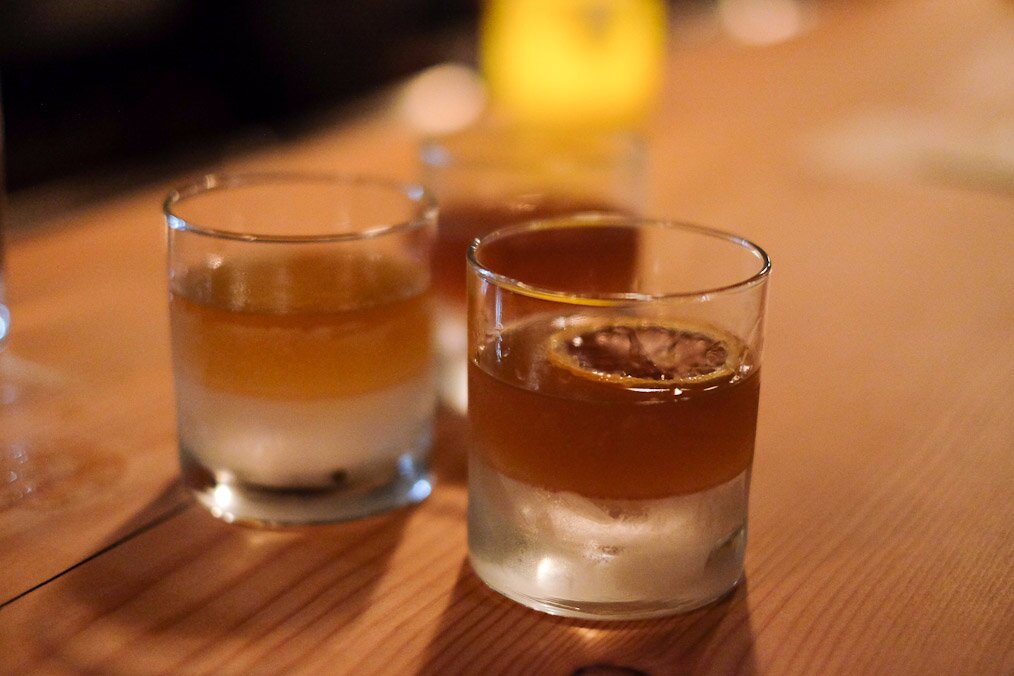 Ice frozen into bottom of glasses. Photo by Jason Rowan.
Ice Machine Waste
According to Colliau, both Kold Draft and Hoshizaki ice machines (which produce the large clear cubes in most better bars in the US) waste 50% of the water that goes into them. The way these machines make their ice is that water runs over or is sprayed over a cold plate; and apparently the run-off is simply sent down the drain.
The Scotsman pellet ice machine, on the other hand, she says is 95% efficient. Thus the desire was to not use the water-wasteful machines in the program. They use only the Scotsman machine, but they don't use it for everything.
A second point of water waste: The average shaken or stirred cocktail is assembled in a mixing glass or cocktail shaker, shaken or stirred, and then strained and poured onto new ice in the serving glass – and the shaking/stirring glass ice is dumped out (using nearly twice the amount of water). Then the cocktail shaker/mixing glass must also be washed/rinsed out. Colliau sought to eliminate this waste.
Reducing Ice Use
For stirred cocktails on the menu at The Perennial, the drinks a batched in advance and are served in glasses in which a specific amount of water has been frozen to the bottom (glasses are kept in the freezer obviously). Stirred drinks on the menu are also pre-diluted so they don't need to be stirred but rather just poured. The liquids are kept refrigerated until service, then simply poured into the ice-containing glasses. I asked Colliau how she developed the system. She said:
I originally stirred these drinks to various temperatures, depending on their alcohol content, until they tasted the best. I measured the drink going in to the beaker then out to see how much dilution resulted from the ice melt. Then, because all of our freezers are the same, I took that dilution proportion and held the resulting drink in the freezer to make sure it tasted great even at that colder temperature.
Served in rocks glasses with ice frozen into them, approximately every 5 minutes the drink gets about 5 degrees warmer until it hits around 35F. It's important that the drink taste delicious over time.
Ideally we would White Lyan-style this execution and have different freezer temps for different drinks, but we use these freezers to chill glassware and keep sherbet and large ice in them, so we hold them all cold and manipulate the dilutions to work for each drink.
For shaken cocktails, things are even more complicated – the act of shaking is to roughly mix and emulsify ingredients together. To accomplish this, they use 1/3 cup of Scotsman ice, and run the cocktail through a blender in a small mason jar until there is no ice left. Thus the drink is "shaken" and no ice is dumped out at the end. Colliau says she'd definitely prefer a less noisy option, but it's the best they can do so far.
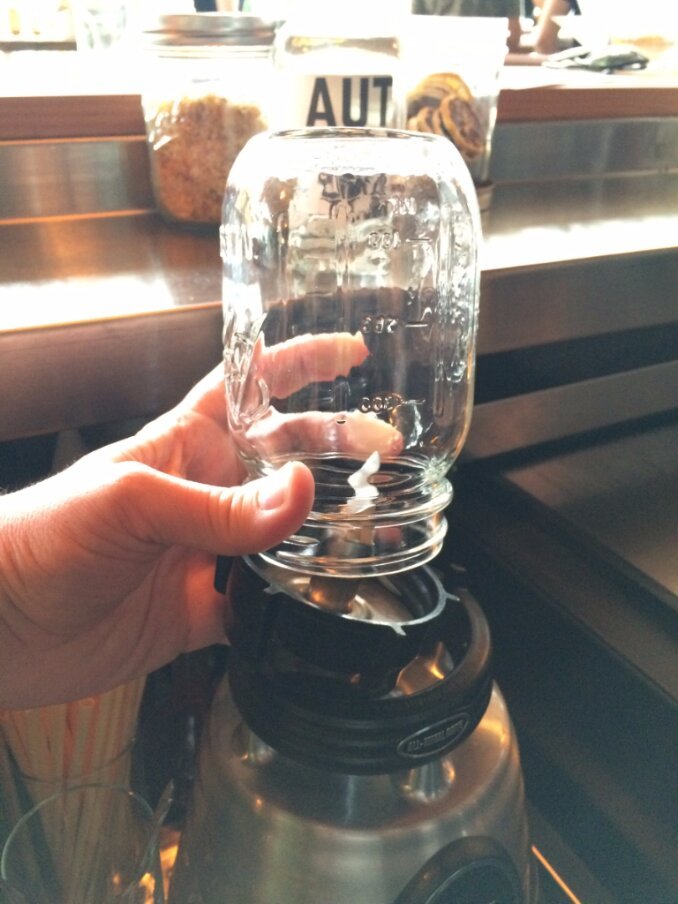 Mason jar mouths fit blender blades. "Shaken" cocktails are blended until the ice is all gone.
For off-menu cocktails, they have cubes from 2" Tovolo ice cube trays that they can use for rocks or cracked for stirring.
Stirring to Temperature
For off-menu drinks that are not pre-diluted, they stir drinks to temperature; as temperature directly relates to dilution.
The idea is that because ice kept in the well is basically at 32 degrees (F), all dilution of the drink will result in known temperature reductions (and vice versa). Thus to serve a drink the bartender can put in some cracked ice in the glass, stir a bit, prepare other more complicated drinks while it is diluting/melting, then check the temperature and stir more/add more ice if needed, until it reaches the desired final temperature. Any extra ice will be dumped.
Colliau notes, "Cobbled ice has so much surface area that it over-dilutes too quickly to stop when the drink is ready to go."
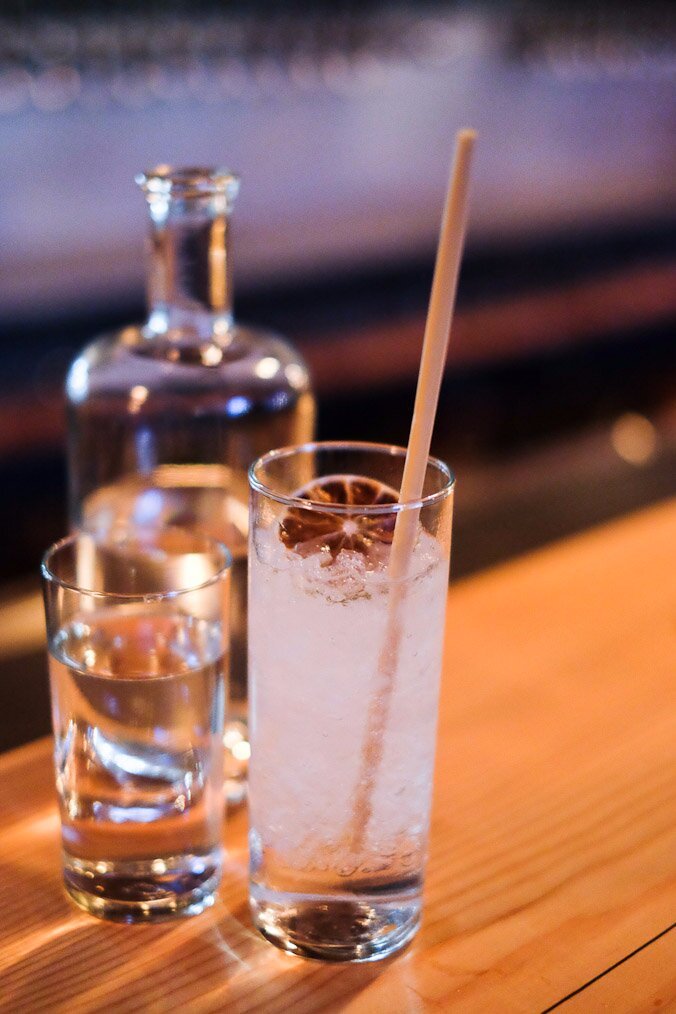 Tall drink served on pellet ice with straw straw and dehydrated citrus wheel. Photo by Jason Rowan.
Temperature of Stirring
For low-alcohol drinks and those served on glasses with ice frozen into the bottom, they stir to 35 degrees. For regular stirred drinks like a Manhattan or Martini, they stir to 32 degrees as there will be no additional dilution from ice in the glass. And for the Gimlet at The Interval, they stir down to 25 degrees because the drink uses high-proof gin and additional dilution is needed.
Colliau says, "These are temps that I like for certain drinks, and they are guidelines rather than hard rules. Above all the drinks should be delicious! Using temps makes consistent execution across staff much, much easier."
Other Eco Savings
- For straw tasting of cocktails, not only do they not use plastic straws (actual ones made of straw are give to customers), they use a system of a spoon and metal straw – you dip the straw into the drink then empty it into a spoon that you use to taste. Thus you don't need to wash the equipment each time.
- Water un-drank from water pitchers on tables is collected, combined, and used to water the rooftop garden.
- They don't "burn" the ice wells at the end of each night: Ice in the wells is used the next day as the ice for chilling syrup and juice bottles. At the end of the week (they are closed on Sundays) they drain clean the ice wells.
- To cut down on waste of citrus, they used preserved whole limes in one drink and make whole-grapefruit marmalade for another.
- For fresh juice, they will use leftovers for one day, and then make sherbet for any leftovers at the end of the week. She notes, "Closed on Sundays, juice on Mondays, use 1-day-old juice on Tuesdays in the service well and squeeze fresh to par, keep rotating like that so ideally we use all of the day-old juice the next day, then on Saturday night we mix the lemon, lime and orange juices with milk and pineapple gum syrup and turn it into sherbet. (No grapefruit for medical contraindications.)"
- For purchasing decisions, they look at the carbon footprint of not only the actual product, but its bottling and transportation. High-proof spirits mean less water is shipped in bottles; heavier bottles mean more carbon as well. Shipping is a far less carbon-intensive mode of transport than trucking, so Colliau notes that trucking bourbon across the country from Kentucky might ultimately have a higher carbon footprint than shipping it to California from Japan, even though the distances are vastly different.
I'm sure there are tons more environment-saving considerations and processes in place – and this is just on the drink side of the program. This is definitely a more thoughtful process than pretty much every other bar attempting to reduce waste. Really, really impressive.
 Homework: Colliau says she got a lot of information about carbon footprint of transporting bottles and other ingredients from the book How Bad Are Bananas? I'm planning to read it one of these days.
 -
Sulfur Control in Sherry Casks Headed to Midleton Distillery
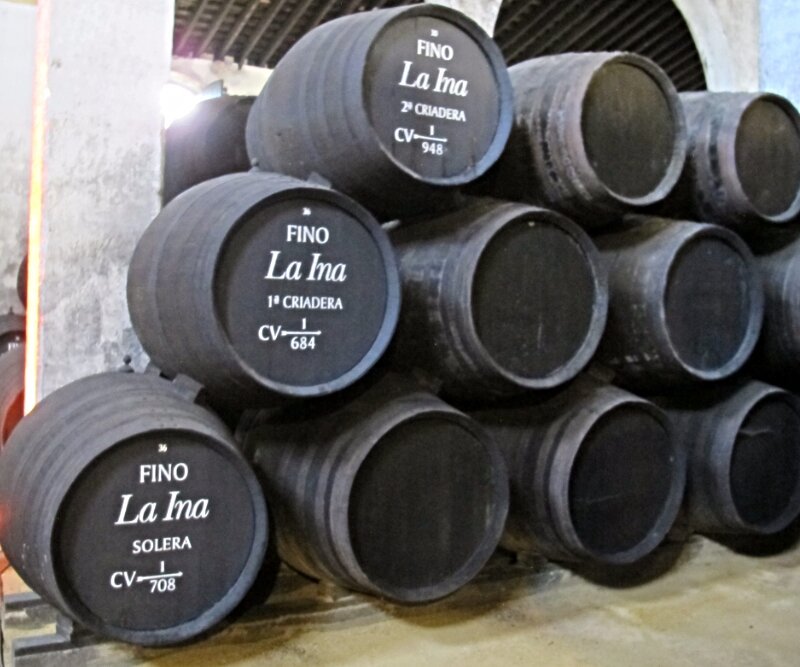 While in Jerez for the launch of the Redbreast Lustau Edition, I had the opportunity to speak with Midleton Distillery Head blender Billy Leighton. Since I had a couple extra minutes, I asked him about the effect of sulfur in barrels used for their whiskies.
As some background, the whisky writer Jim Murray, who seems to enjoy generating controversy to increase book sales, said that sulfured casks are ruining scotch whisky. I don’t know much about the topic, so I asked Leighton if it was an issue.
He said, “The use of sulfur to sterilize casks for shipping or storage is a common practice, but it has to be done carefully. In the year 2000 we stopped the cooperage from using sulfur candles when they’re shipping casks to us. There is always a little bit of a risk of infection or secondary fermentation when you do that. Also, we have only shipped barrels typically between Oct and Feb [the lower temperature months in order to avoid that fermentation/spoilage], though it’s expanding because of [increased sales] volume."
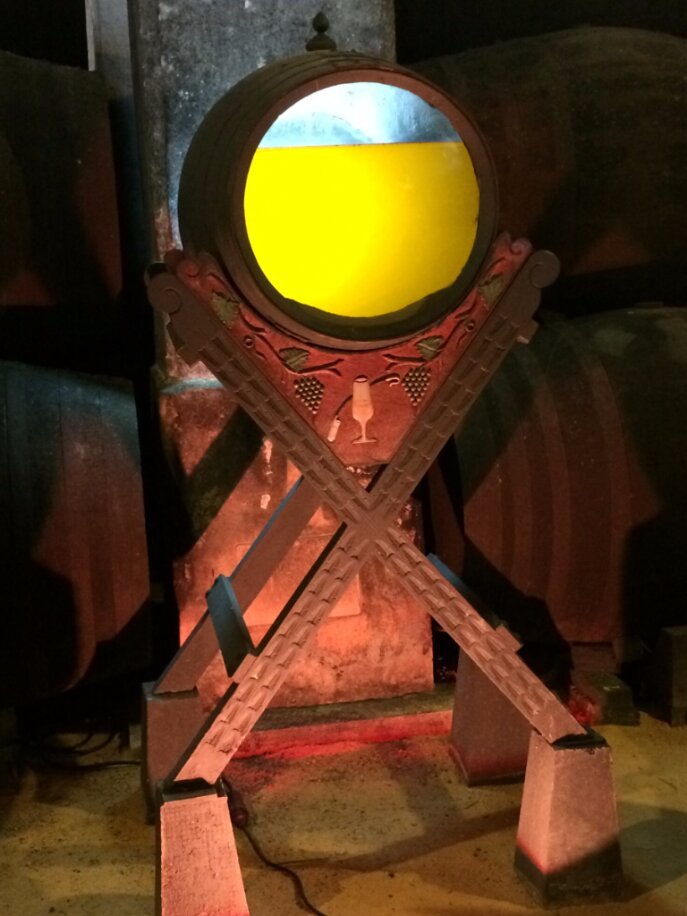 [Irish Distillers has a relationship with the cooperage Antonio Paez to build and prepare their sherry barrels, so they don't buy their casks on the open market. If they did they'd not be able to control/track this.]
He continued, "Historically you would have found a presence of sulfur from time to time. Now we have stopped that for 16 years. We don’t have the same problem certainly in our first fill casks. We could still see some sulfur raising its ugly head again in refill casks [casks purchased before 2000 that aged whisky and then were reused]. And one cask affected with it can ruin a vat. So even now every single sherry casks is personally screened by me."
That’s new info to me, and I thought I’d share.
-
Testing Out the Rabbit Clear Ice Tray
I received a sample of the forthcoming Rabbit Clear Ice Cube Tray, which will be "only available at Bed Bath & Beyond starting in the fall," though I don't see it on the site yet. I'll link to it when it goes live.
Now it's available here.
The predicted retail price is $19.99, far less expensive than any other clear ice tray on the market.
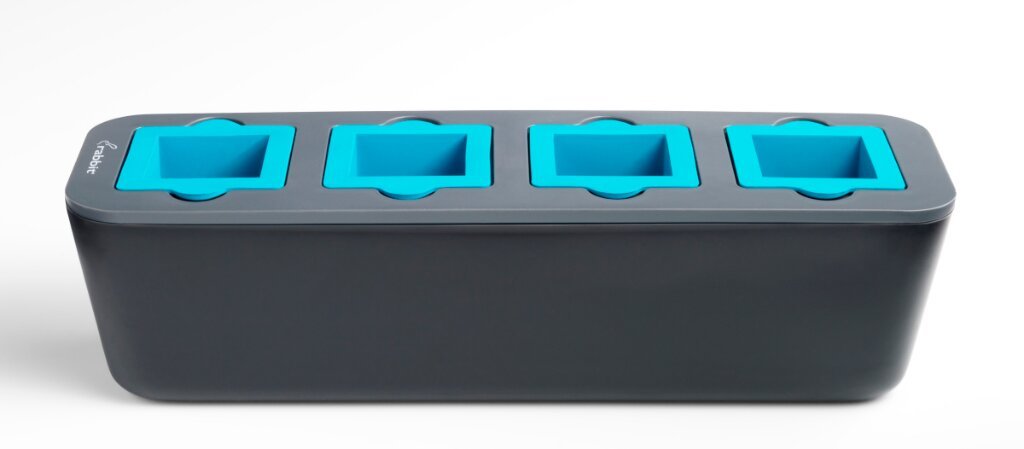 Brand Images
As you can probably tell from the images, this ice cube tray takes advantage of Directional Freezing, the technique I pioneered here on Alcademics.
What is not visible is that each of the four blue ice cube holders has a hole in the bottom, so you fill the tray with more water than fits in the cube part alone. Directional freezing (from the top to the bottom since the sides are all insulated) will cause trapped air and impurities to push down into the bottom of the chamber, leaving the top (the entire ice cube) very clear.
To remove the ice cubes, you pull the plastic part out of the base cooler, and pop the cubes out of the tray. My first trial with this was quick and painless. Below are pictures from my first trial.
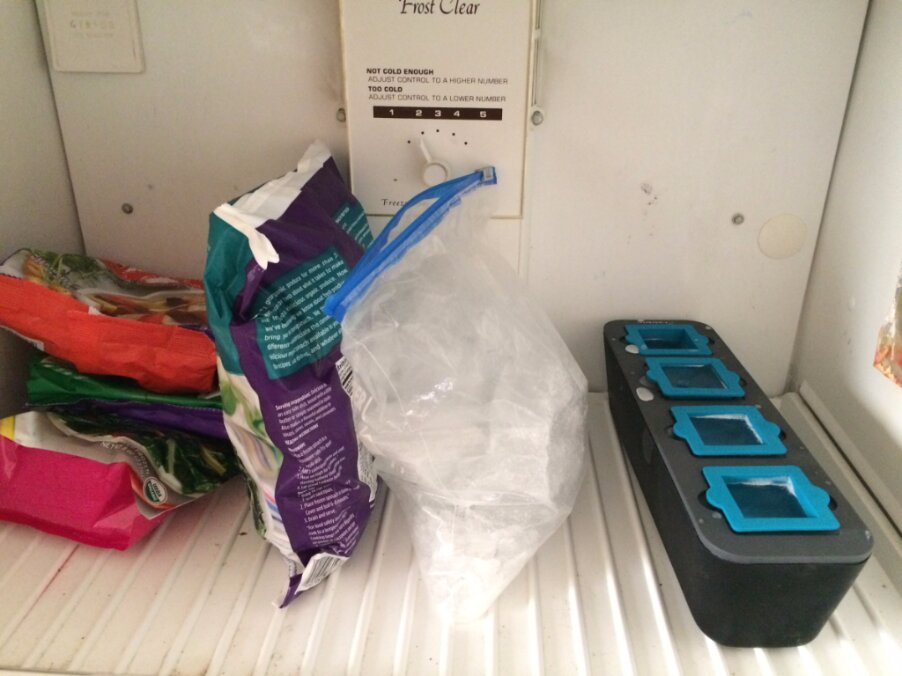 Takes up a "row" of freezer space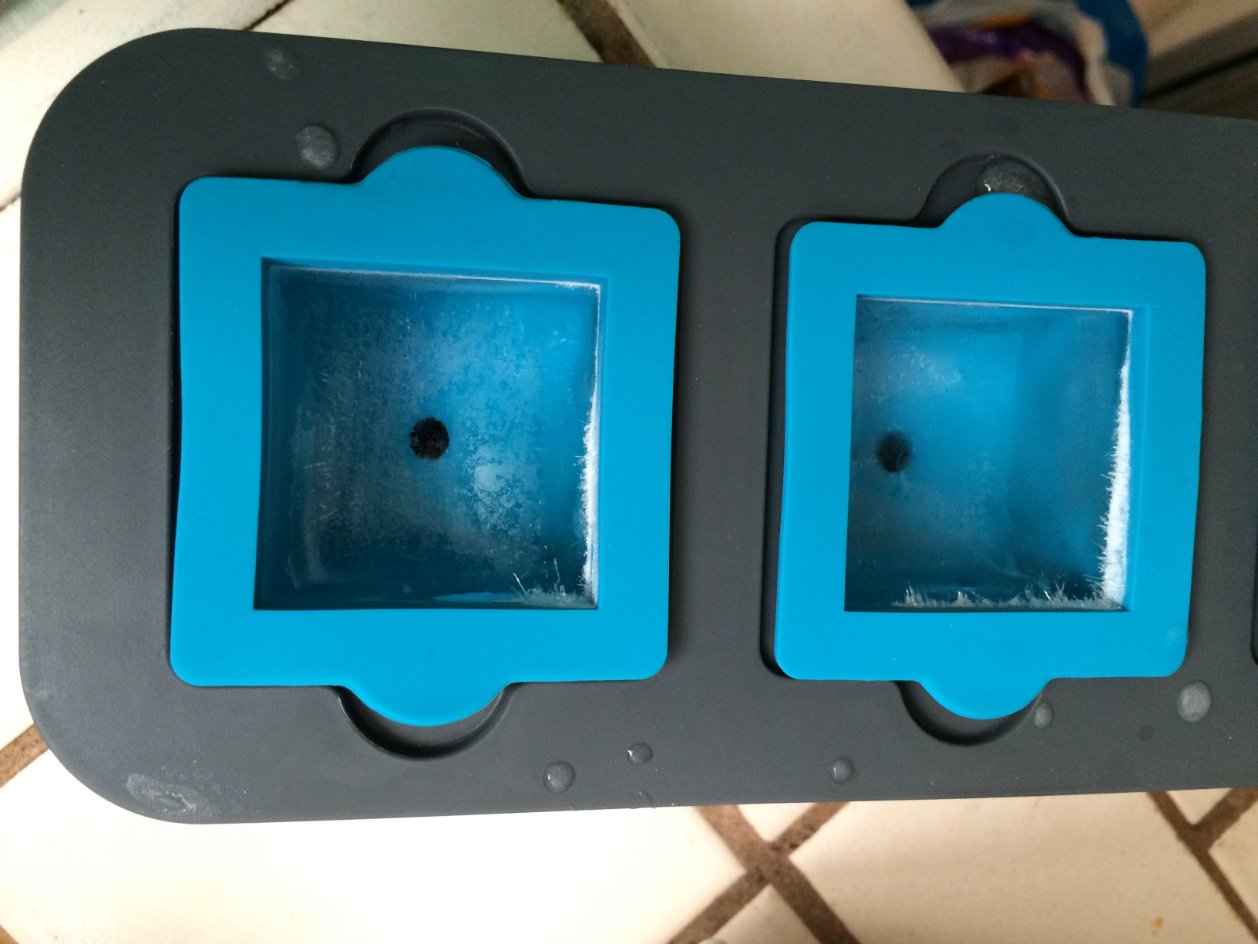
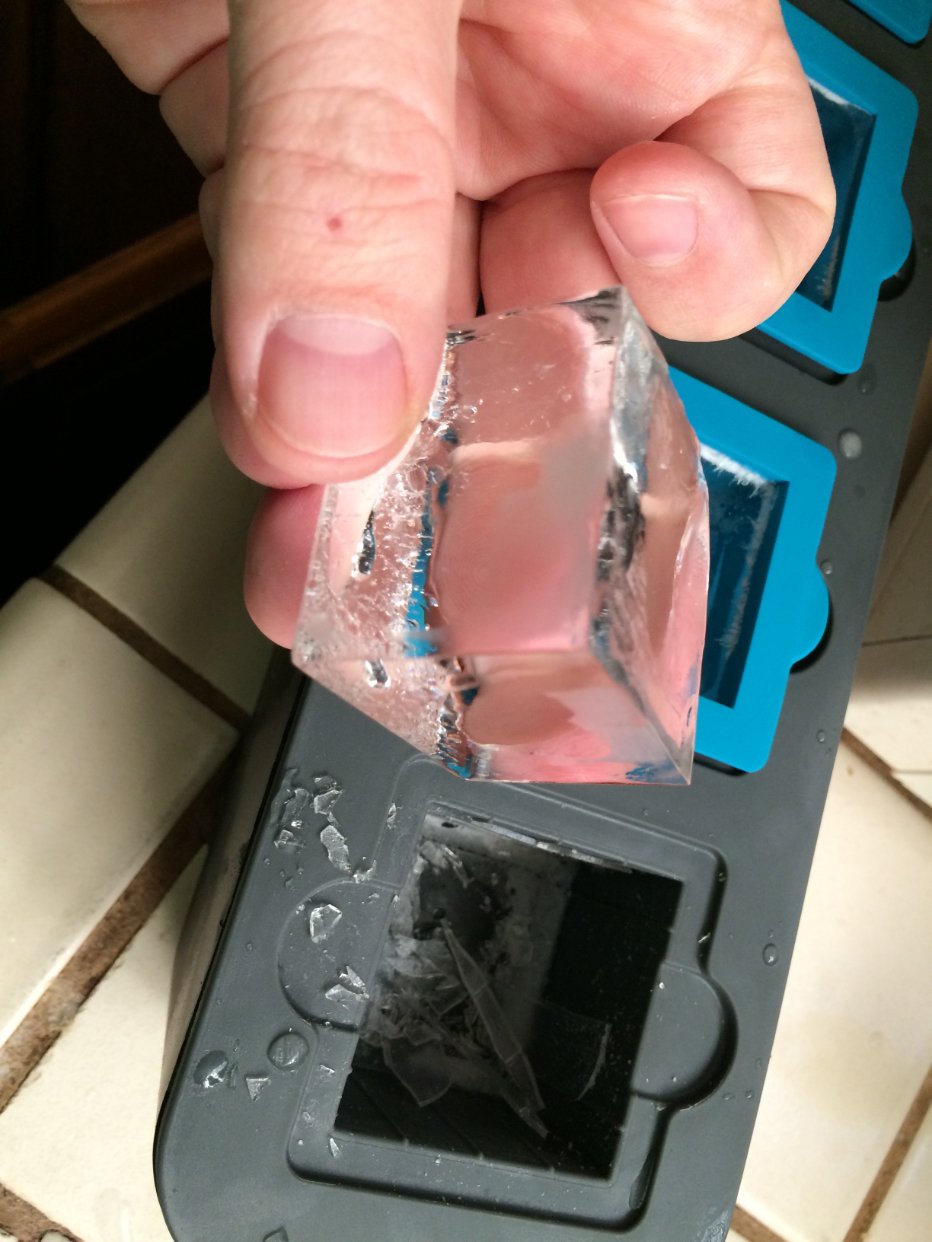
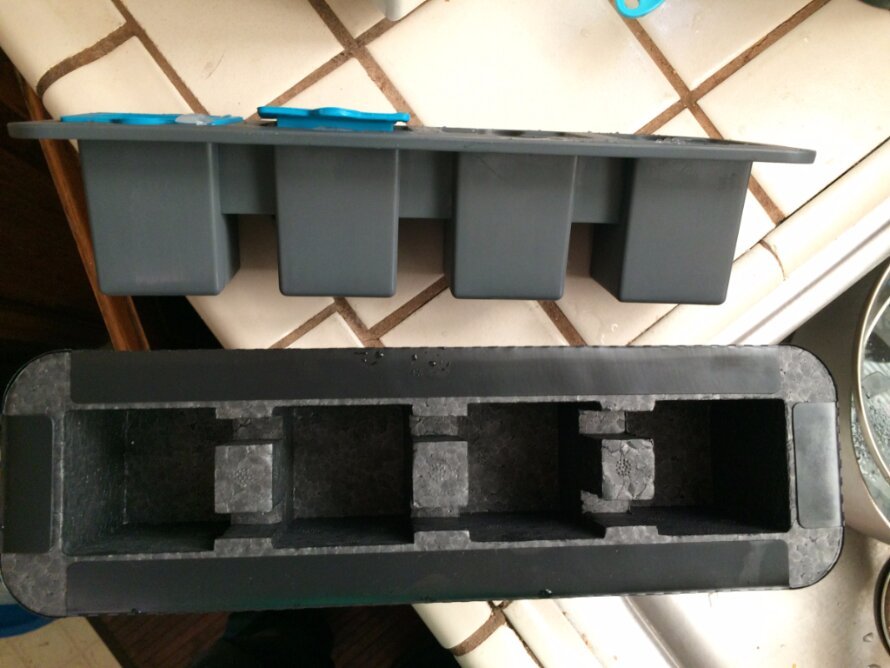 Pull out the top tray from the insulation and run warm water over to remove cubes easily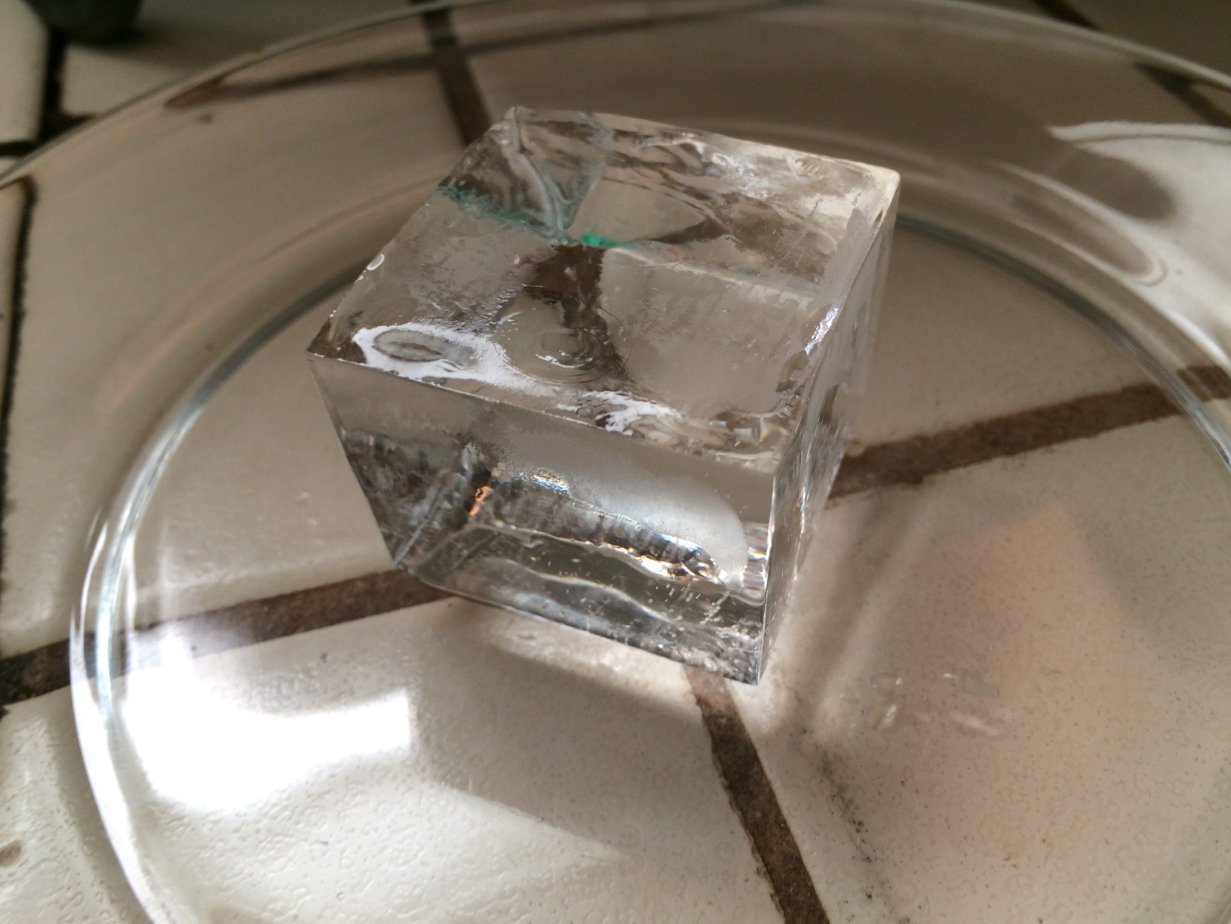
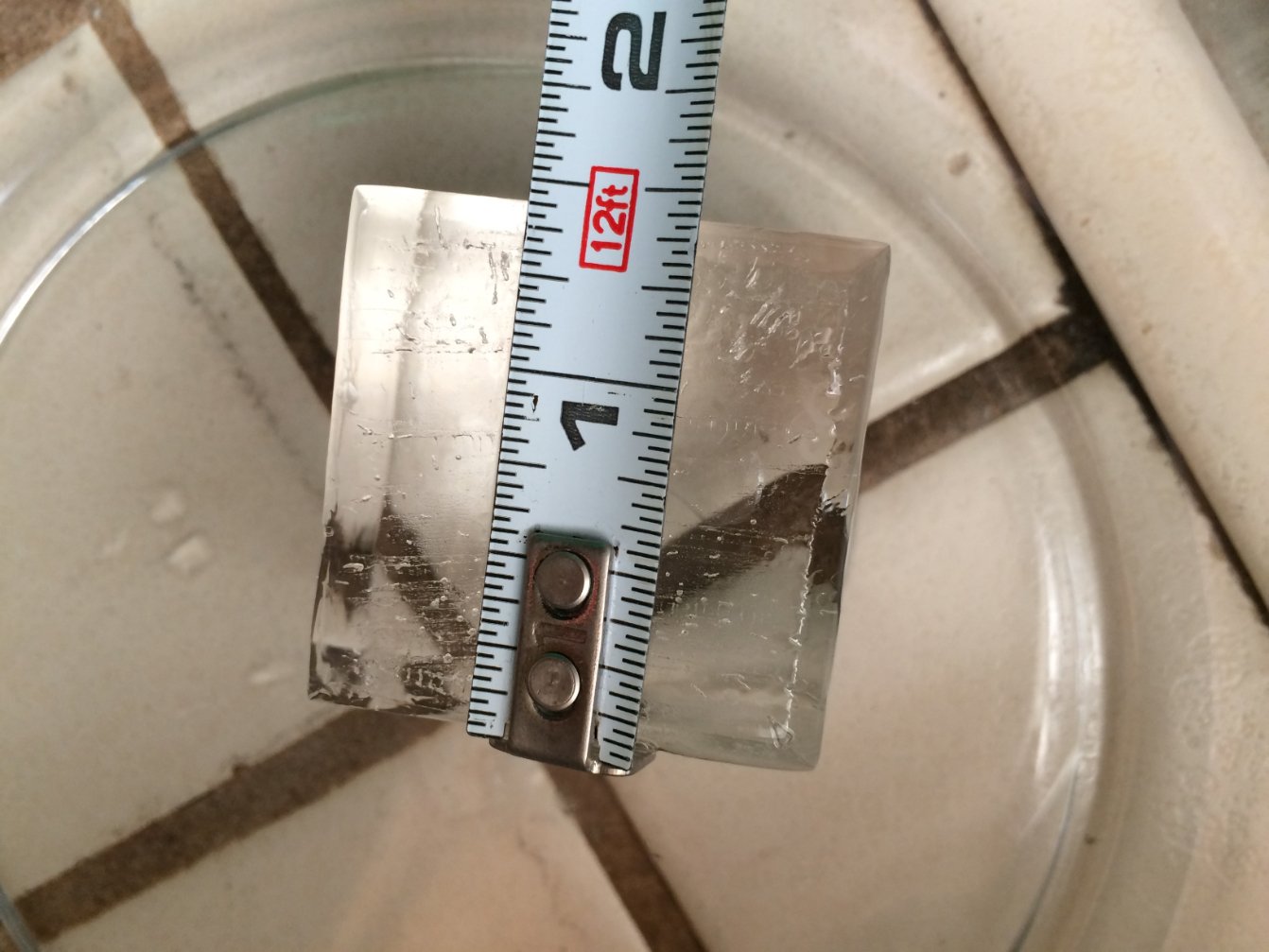
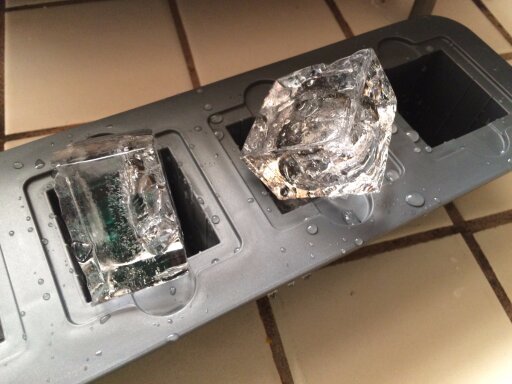 The remainder of ice beneath the tray. I didn't let them freeze completely so they look more clear than they'd be if completely frozen.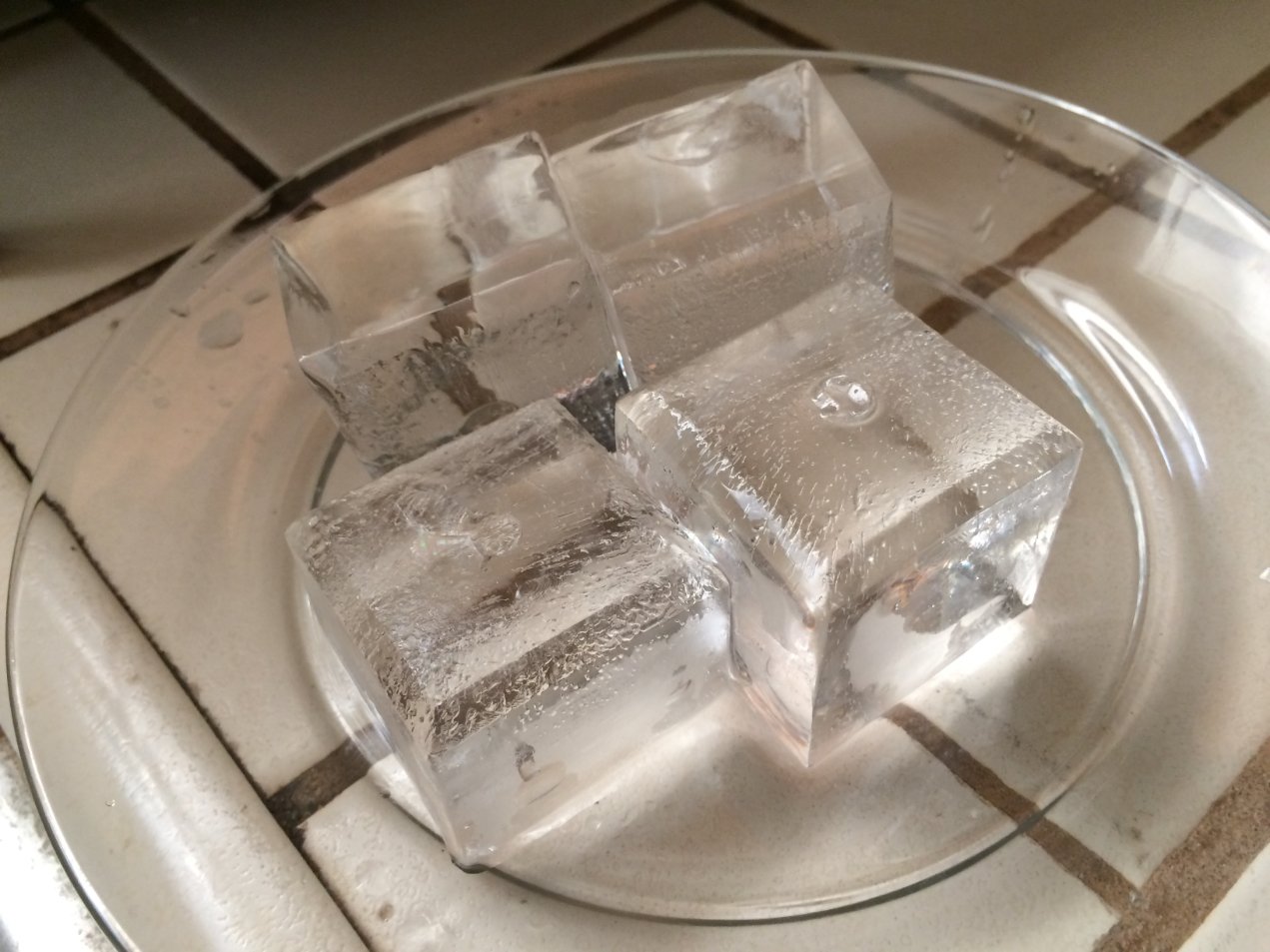
Pros: The price point is great; and it's a good proof-of-concept of a directional freezing tray. It's easy to use, and it will probably be a big gift this holiday season. If you take photos of cocktails at home, you can finally not have the ugly white bits in your cubes.
Cons: It's large; taking up a good chunk of freezer space, and you only get one highball glass worth of ice cubes out of it. The cubes aren't super big, so while you may impress yourself/your guests with your clear ice cubes, you're not going to blow their minds as you might with a 2-inch cube.
-
Why Sherry Cask Whiskies are Aged in Spanish Oak But Sherry is Aged in American Oak Casks
 This is a simple point but one I didn’t know before. Often you’ll see that scotch and other whiskies are aged in Spanish oak barrels that previously held sherry. However, I’ve always been told the barrels in the sherry soleras are American oak. What gives?
Thanks to Billy Leighton, Head Blender at Midleton Distillery, I have an answer. He says that yes, the true barrels on the sherry soleras are American oak and as old as possible. They do not want wood influence in sherry so the barrels don’t lend any flavor.
Traditionally, sherry was shipped to the UK in barrels (rather than bottles), and for that they would use the much less expensive/lower quality (at least at the time; I can’t speak for that now) Spanish oak casks, rather than American oak ones.
After being emptied, those casks would have been the ones reused to age scotch and other whiskies.
The Redbreast Lustau Edition is aged in ex-bourbon American oak barrels and sherry conditioned Spanish oak casks.
-
The Return of Blue Drinks: A Story from 2012
People are all excited about blue drinks these days, but I first wrote about their return in 2012. Since Details magazine went away and the story is no longer online, I rescued this story from the Internet Archives.
Memories….
Food + Drinks
Blue Cocktails Are Back—and Now They're Ironic

After years of worshiping brown spirits and classic drinks, booze fans at this year's Tales of the Cocktail convention in New Orleans turned the spotlight on a new color: blue. In particular, the sometimes-neon liqueur blue curaçao—often reviled as the antithesis of all things vintage and authentic—is back.
Blue drinks have long been a mixologists' in-joke. When bartenders were getting serious about pre-Prohibition cocktails about five years ago, jet-setting New Zealand bartender Jacob Briars invented the Corpse Reviver Number Blue, a piss-take on the sacrosanct classic Corpse Reviver #2 that was enjoying a major comeback.
Since then, he and other bartenders have been practicing "sabluetage"—spiking the drinks of unwitting victims with blue curaçao when no one is looking. The forbidden liqueur can now be found on the menus of a few of the world's best cocktail bars, including Jasper's Corner Tap in San Francisco, PDT in New York City (where it's mixed with other unfashionable ingredients, such as Frangelico and cream), and London's Artesian Bar (winner of the World's Best Hotel Bar award this week), where a new blue drink—called Blue Lagoon—also features Sprite and bubble tea.
What has spawned this artistic blue period? According to a panel discussion on the topic this weekend, blue-curaçao-cocktail recipes date back as far as 1908 (predating the margarita and even the original Corpse Reviver #2), but the reappearance of the ingredient is likely more an elitists' embracing of the down-market and absurd—the mixological equivalent of trucker hats among fashion's hipoisie several years ago.
There is also a consensus that perhaps everyone is taking all this classic-cocktail stuff a bit too seriously. Today's top bartenders may be walking encyclopedias of cocktail knowledge, but they're also aware that no one goes to a bar to hear an encyclopedia reading. Blue drinks are a reminder that drinking is supposed to be fun.
"At the end of the day, people want to have a good time," says Artesian's head barman, Alex Kratena, as he demonstrated making his drink for the Tales of the Cocktail audience. Of course, his cheeky blue bubble-tea drink will run you about $23 back in London. If you're willing to sacrifice the cool factor, you could always join the hordes of partying tourists on Bourbon Street, one block away from the convention, gulping down blue drinks that are served in souvenir plastic cups—for half the price. Irony, as always, costs extra.
—Camper English is an international cocktails and spirits writer and the publisher of alcademics.com.
-
All About Pechuga Mezcal: Meat Infused Agave Spirits
 A few years ago (Feb 2014) I wrote a story about pechuga mezcal, one of the most in-depth ones I'd seen at the time. The story was for Details.com, and the website (and magazine) no longer exist. Thinking it's a shame that the story disappeared (the URL now redirects to the front page of GQ's website) I am pasting it here.
Would You Like the Chicken, the Turkey, or the Rabbit? Inside the Weird World of Meat-Distilled Mezcals
In anticipation of a new ham-flavored mezcal, our cocktail maven traces the roots of pechuga, the oddest bird in the agave-based spirit family.
By Camper English
This March, chef José Andrés' restaurant Oyamel in Washington D.C. will be the first place to debut Del Maguey's new Ibérico, a mezcal made with ham that costs $200 per bottle. The pig parts are a new thing dreamed up by the Spanish chef, but there is a history of putting animals into mezcal in Mexico that dates back a few hundred years before bartenders dabbled with bacon infusions.
Most mezcals with meat available in the U.S. are known as "pechuga" mezcals; the word is Spanish for "breast." (Let's get this out of the way: We're not talking about mezcals with "worms" in the bottle, which are added afterward and are not actually worms, but usually arean indicator of a crappy product.) The first pechuga on the U.S. market came from Del Maguey; it is the same as the vegetarian Del Maguey Minero but infused with fruit, rice, and other ingredients and redistilled with a chicken breast hanging from strings inside the still. The technique isn't unique in the spirits world; many gins are made in a similar method called vapor infusion. Just not with livestock.
Odder still, there is actually a market for this stuff. Several other brands—like Pierde Almas,Fidencio, Real Minero, Tosba, La Niña del Mezcal, Benesin, and El Jolgorio sell pechuga mezcals, though most use turkey (guajolote) rather than chicken. Pierde Almas also sells a conejo mezcal, which swaps in a rabbit, and I've heard a few mentions of a venison mezcal in Mexico, though it's not available in the U.S..
 From left: Chicken breast suspended during distillation; Del Maguey's pechuga bottle.
HISTORICAL ROOTS
If you ask the folks behind the mezcal companies, they'll tell you the pechuga tradition dates back centuries. The producers of Del Maguey's pechuga trace it back at least 75 years, and the creators of El Jolgorio say it's been around for 100 years through five generations of distillers. (This information comes through mezcal importers, rather than the small distillers living in remote villages in Oaxaca who may not even have phones to give interviews, let alone Internet.)
According to the son-in-law of the distiller at Mezcal Vago (which has a corn-infused mezcal called Elote), the neighbors would request a special-occasion treat for events like weddings and baptisms. So the distiller got the idea to take the mezcal he'd already made, infuse it with dried corn from the family farm, and distill it another time. It proved so popular that they began bottling it commercially along with the base mezcal.
WHAT'S REALLY INSIDE
Del Maguey's version includes, in addition to the hanging chicken breast, an infusion of wild mountain apples and plums, plantains, pineapples, almonds, and uncooked white rice. According to importer Ron Cooper, the chicken balances the fruit. Fidencio's pechuga uses plantains, apples, pineapple, guava, and sometimes quince and pear, says Canadian importer Eric Lorenz. He also notes that Pierde Almas' version uses some combination of those ingredients, plus cloves, star anise, and a bag of rice, and then either turkey breast or rabbit.
The fruits and spices, in all likelihood, once helped mask the taste of some lackluster mezcal in the early days of distillation in Mexico. Today, however, most if not all of the pechuga-style mezcals are made from the same mezcal that the importers sell unflavored—so you could try the before- and after iterations in a taste test if you like.
Some of these ingredients are seasonally driven. El Jolgorio pechuga is made around the Feast of the Virgen de los Remedios (near September 1), while most others are made later in the year (November). The makers of Fidencio say their product is made specifically during the quince harvest.
"Basically, when they had something to celebrate like harvest abundance," Lorenz says, "they pulled out all the stops to do so, including making their usual beverage better for this and other special occasions."
BUT DOES IT TASTE LIKE CHICKEN?
Cooper, the founder-importer of Del Maguey and basically the guy who kicked off the whole mezcal renaissance, says the taste of chicken mezcal is quasi-feminine when compared to the more masculine ham version. Other tasters rely on textural descriptions, invoking the words umami and unctuous for these mezcals.
"Among the 15 or so pechugas I've tasted, truly the most prominent flavor in all of these is undoubtedly the fruit components," Lorenz admits. When I'm feeling extremely on my game (and when I'm no longer sober), I can indeed detect mild chicken- or turkey-broth hints . . . and I'm pretty sure those are the typical conditions under which everyone else believes they can detect the taste of the meat as well."
Perhaps it's easiest to think about these meaty mezcals like the strawberry-rhubarb pie your grandmother bakes from ingredients in her garden that she brings to the family-reunion picnic—a long-standing homemade delicacy for special occasions. But instead of fruit in a pie, it's a carcass in agave juice.
As for Andrés' Del Maguey Ibérico: It may not be like drinking bacon-flavored tequila, but it is made with the finest free-range, acorn-fed, black-footed Ibérico pig flown in from Spain. And I bet his family reunions are one hell of a good time. Where can you try it if you're not in D.C.? See our list below:
26 AMERICAN BARS THAT SERVE PECHUGA MEZCAL,
IN NO PARTICULAR ORDER- OYAMEL, WASHINGTON D.C.
- LA URBANA, SAN FRANCISCO
- PRIZEFIGHTER, EMERYVILLE, CALIFORNIA
- THE PASTRY WAR, HOUSTON, TEXAS
- WILLIAMS & GRAHAM, DENVER
- JIMMY'S, ASPEN, COLORADO
- MEZCALERIA OAXACA, SEATTLE
- LIBERTY, SEATTLE
- MAYAHUEL, NEW YORK CITY
- TACO LU, JACKSONVILLE BEACH, FLORIDA
- TEQUILA MUSEO MAYAHUEL, SACRAMENTO, CALIFORNIA
- VERDE, PITTSBURGH
- CANTINA MAYAHUEL, SAN DIEGO
- PORT FONDA, KANSAS CITY, MISSOURI
- ESQUIRE TAVERN, SAN ANTONIO
- LAS PERLAS, LOS ANGELES
- GUELAGUETZA, LOS ANGELES
- MOSTO, SAN FRANCISCO
- CASA MEZCAL, NEW YORK CITY
- HILLTOP KITCHEN, TACOMA, WASHINGTON
- AÑEJO TEQUILERIA, MANHATTAN, NEW YORK
- PENCA RESTAURANT, TUCSON, ARIZONA
- LONE STAR TACO BAR, ALLSTON, MASSACHUSETTS
- COMAL, BERKELEY, CALIFORNIA
- SCOPA ITALIAN ROOTS, LOS ANGELES
- MASA AZUL, CHICAGO
-
With Pokemon Ice Balls You Can Catch All The Drinks
Pokemon Go is taking America by storm, but if you want in on the action without leaving the comfort of your home bar you might try making these Pokemon-themed ice balls instead.
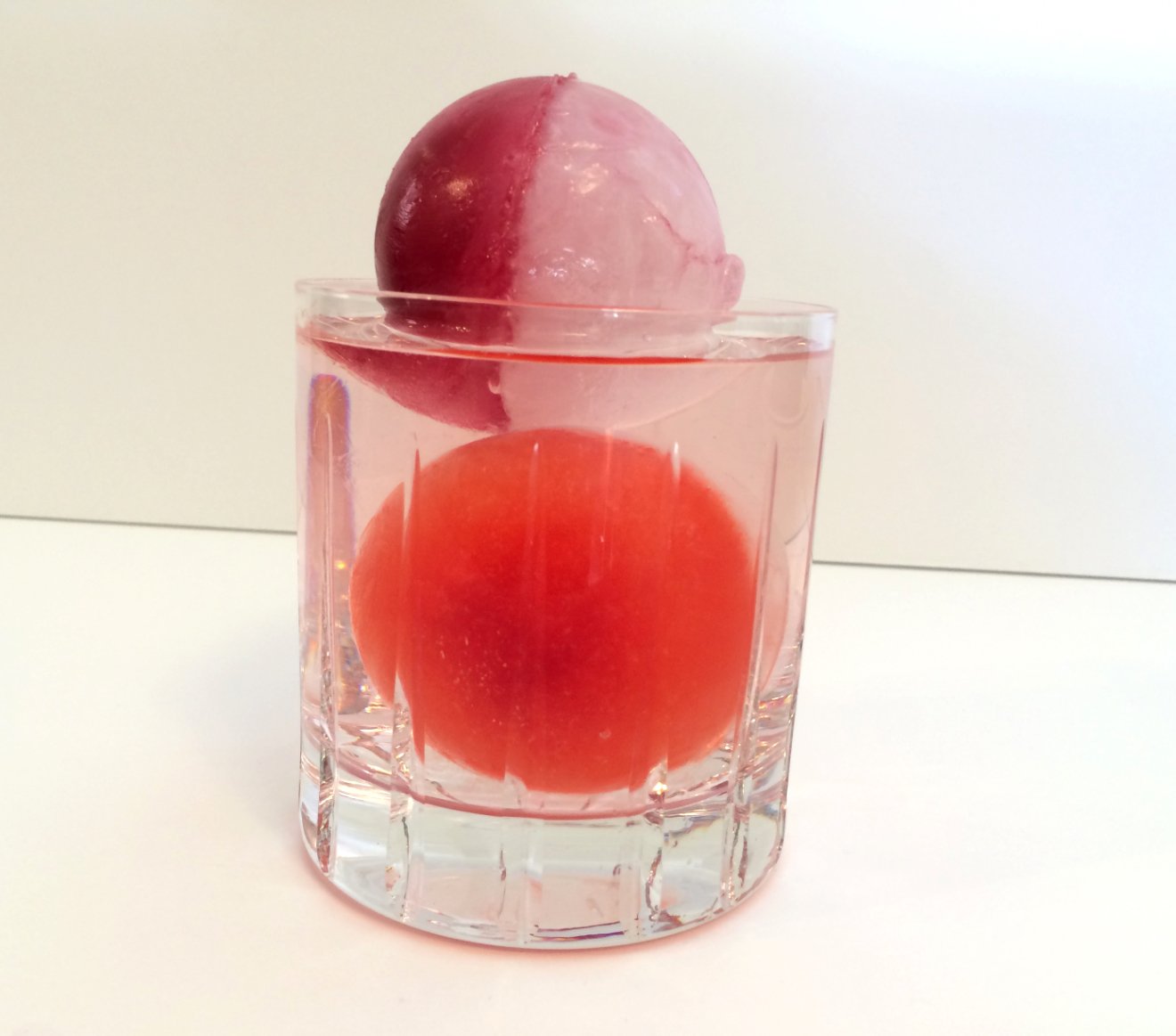
The process is really easy. I did it with two different sized ice ball molds:
- These smaller (roughly 2 inch diameter) Final Touch ice ball molds
- These large 2.5 inch diameter Arctic Chill ice ball molds
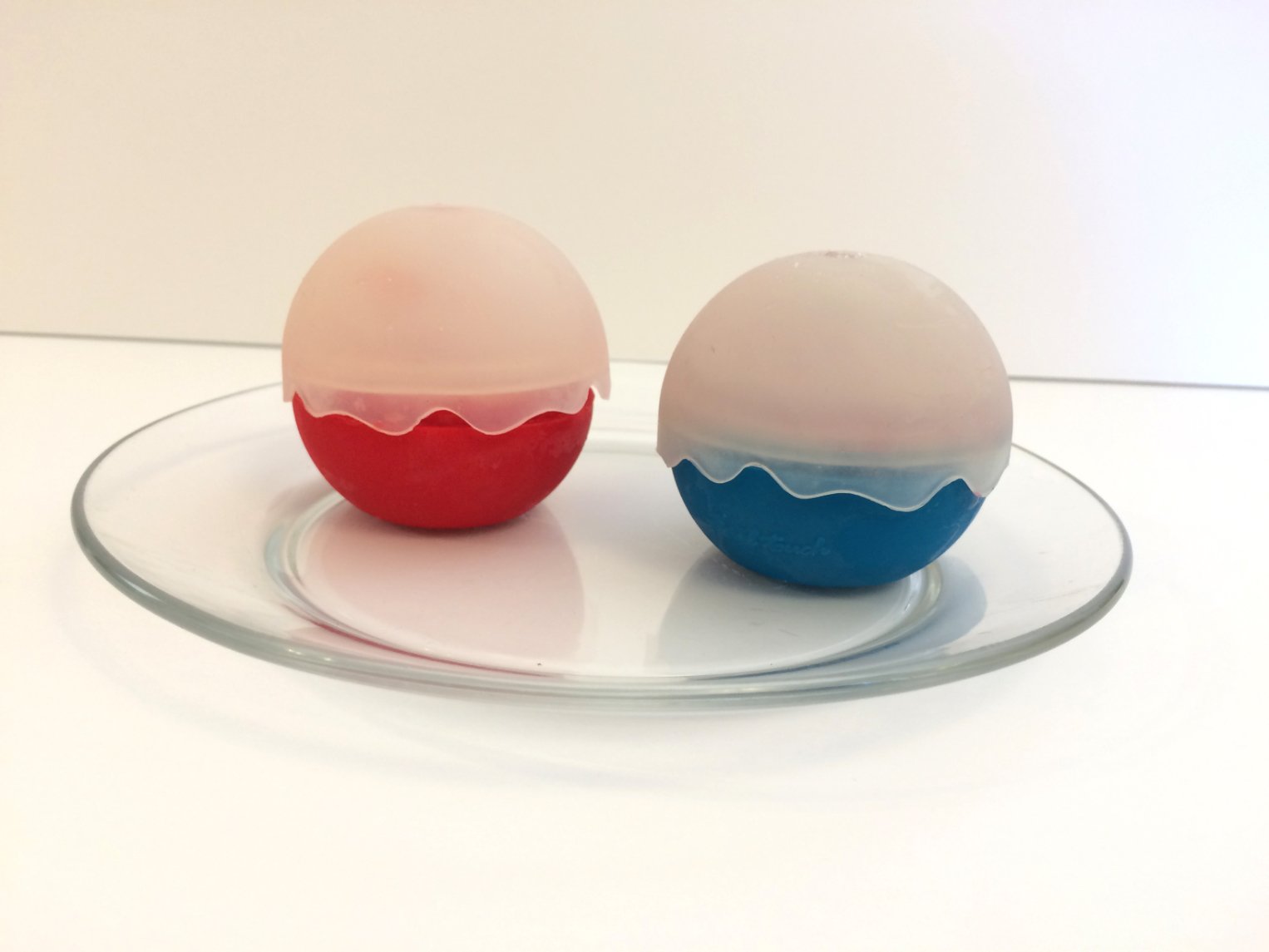
Step 1: Fill the bottom half of an ice ball mold with red liquid. I used cranberry juice in one (the darker one) and one of the red flavors of Gatorade in the other. Let it freeze overnight.

Step 2: Chill some water. Put it in the refrigerator for a long time, then into the freezer for 20-30 minutes so it is just above freezing. You don't want to add hot water to the mold or it will make the red color bleed into the other half of the ice ball.
Step 3: Attach the top of the mold and fill the other half with the cold water.
Step 4: Wait for it to freeze then pop it out and catch all the drinks.
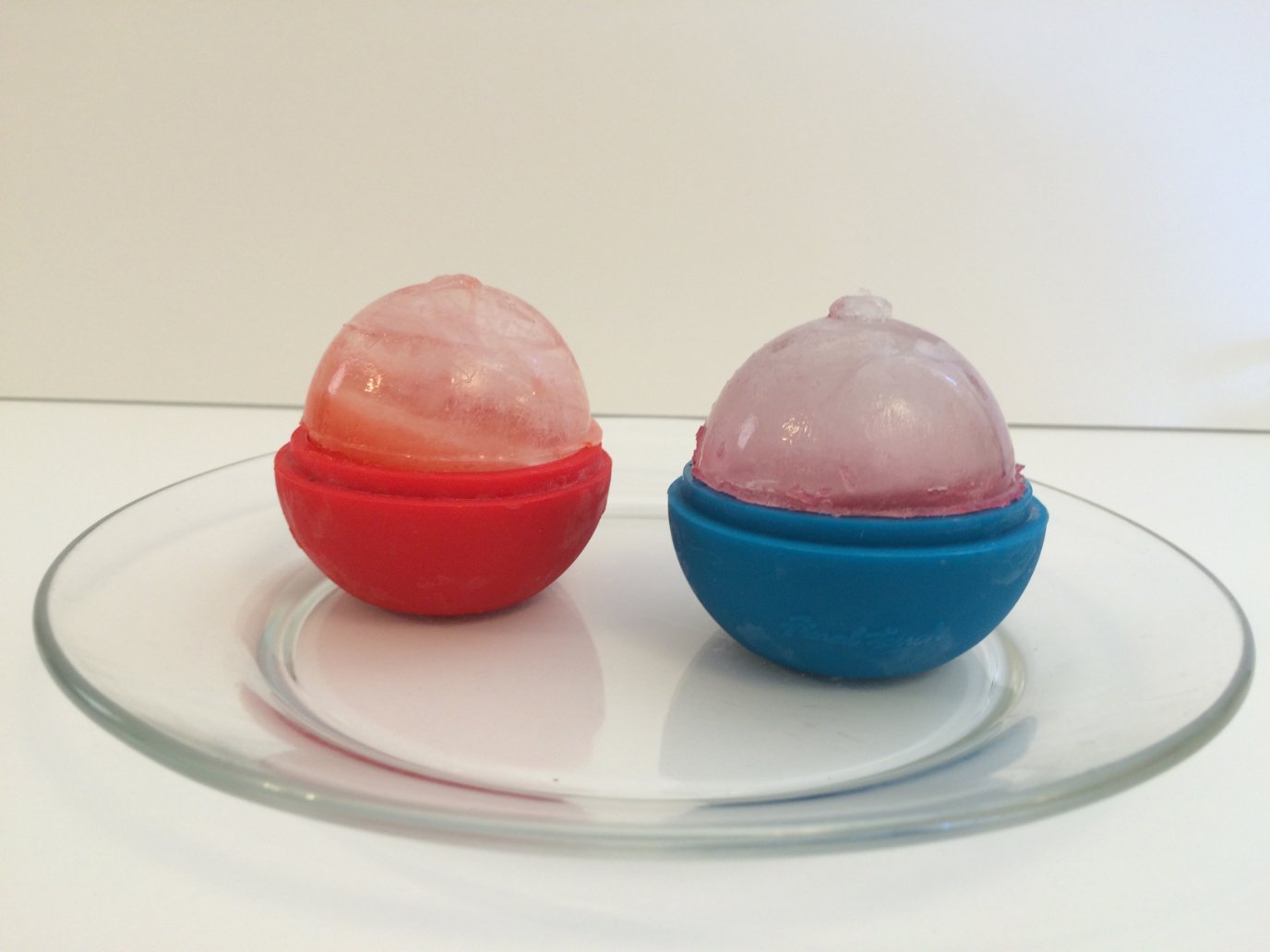
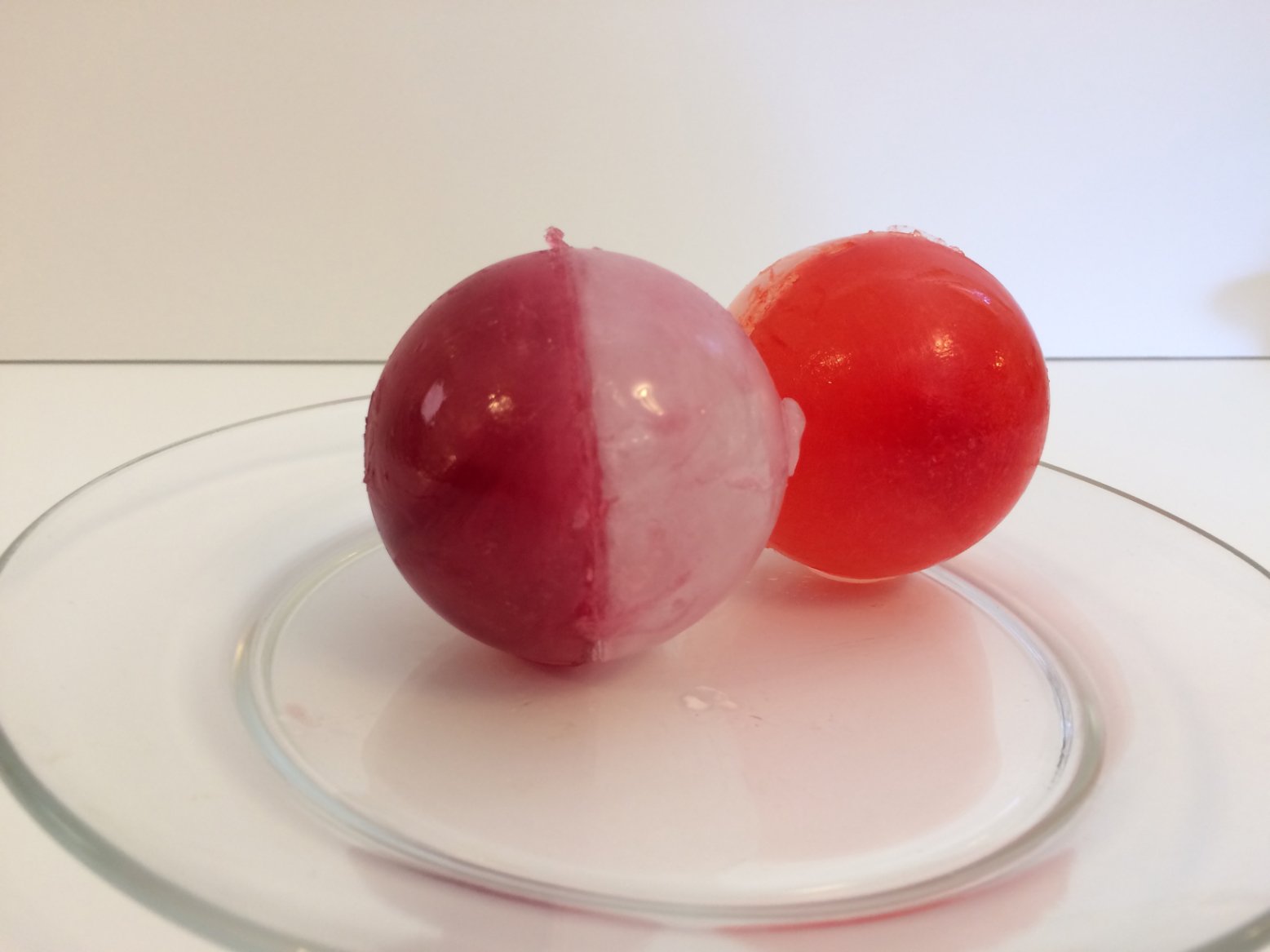
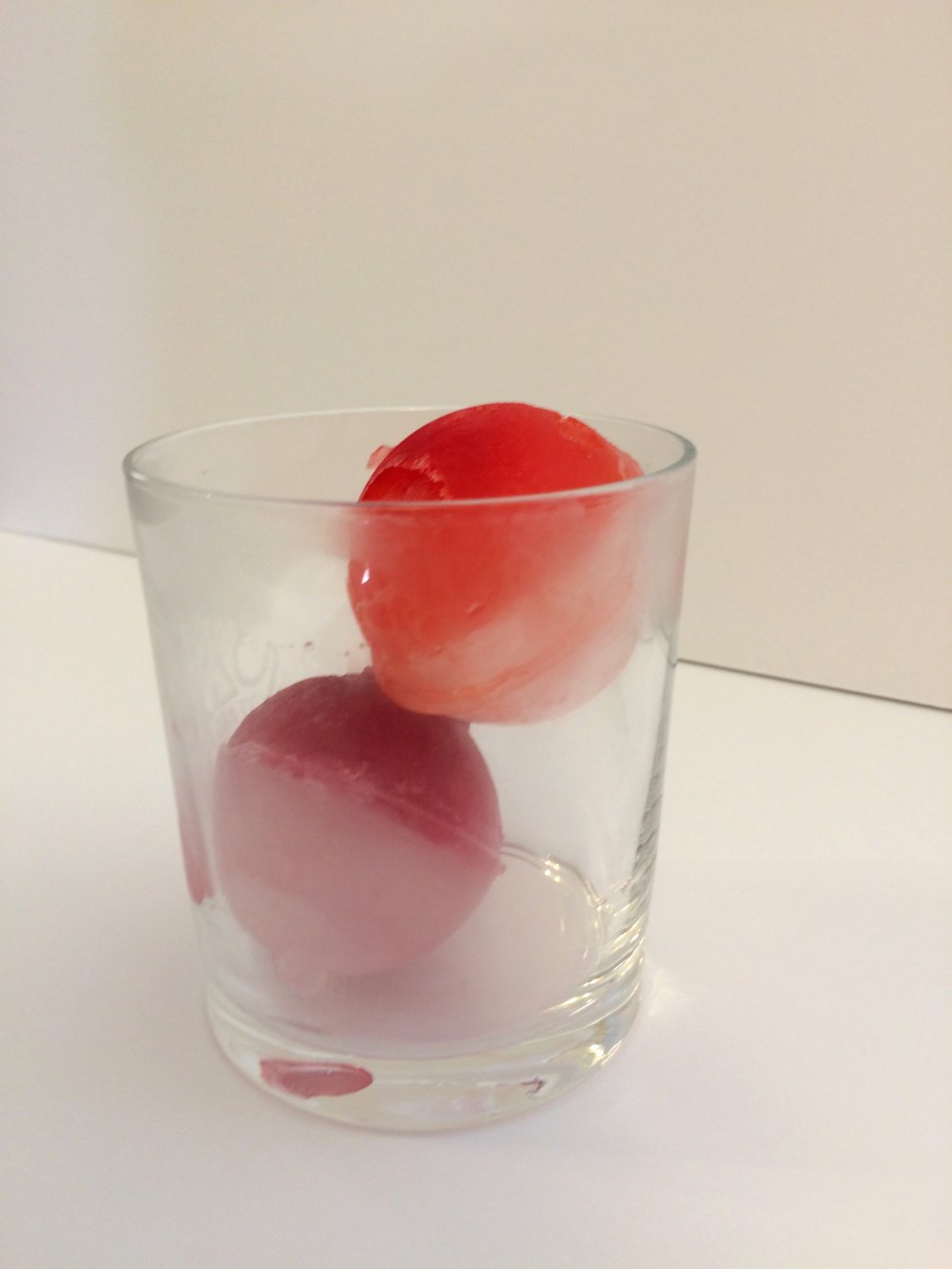
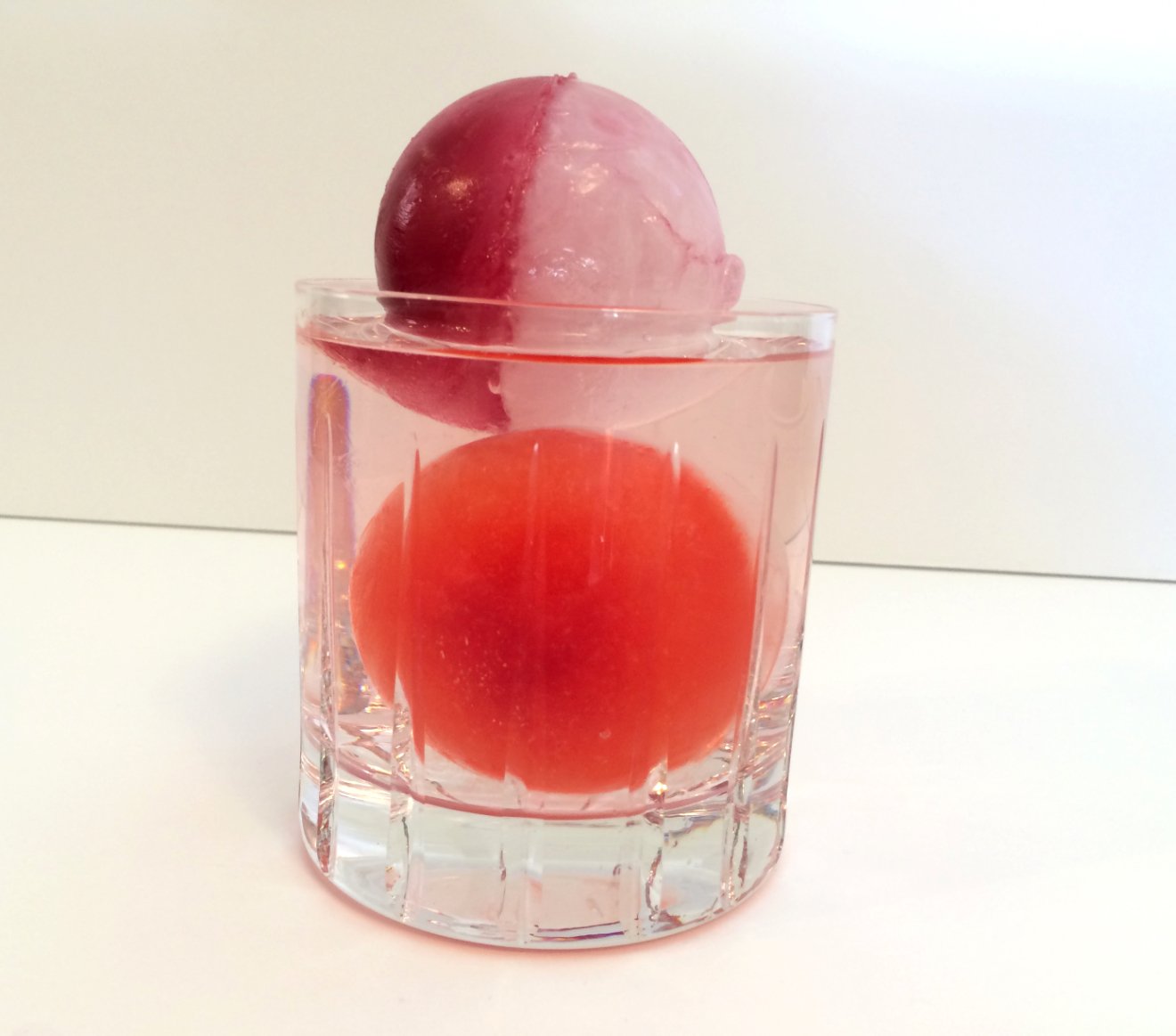
These Pokemon ice balls would be fun in non-alcoholic Pokemon cocktails or perhaps in a Pokemon Gin & Tonic.
-
The Difference Between Bitter Almonds, Sweet Almonds, and Stone Fruit Seeds
The difference between almonds, bitter almonds, "bitter almonds," and stone fruit pits/seeds like apricot, peach, and cherry can be very confusing. This post will hopefully help sort that out.
Almond trees come in either sweet or bitter varieties. Sweet almonds are the ones you eat, and considered safe.
Bitter almonds contain cyanide precursors and are not commercially available in the United States. According to Wikipedia, "Bitter almonds may yield from 4–9 mg of hydrogen cyanide per almond and contain 42 times higher amounts of cyanide than the trace levels found in sweet almonds."
The FDA requires that bitter almond oils are “free from prussic acid (cyanide).”
But bitter almond liqueurs like Disaronno and Luxardo Amaretto contain bitter almonds. Well, yes and not really. These liqueurs contain the oil of "bitter almonds," which is how they refer to the seeds of stonefruit.
Disaronno only uses apricot pits in their formulation, while Luxardo uses all three of the stone fruits. The stone fruit seeds are crushed and distilled, leaving behind the dangerous parts. The bitter almond oil is collected and used to flavor the liqueurs.
I bought some almonds, peach seeds, and apricot seeds online. As you can see, the unsafe "bitter almonds" just look like smaller sweet almonds.
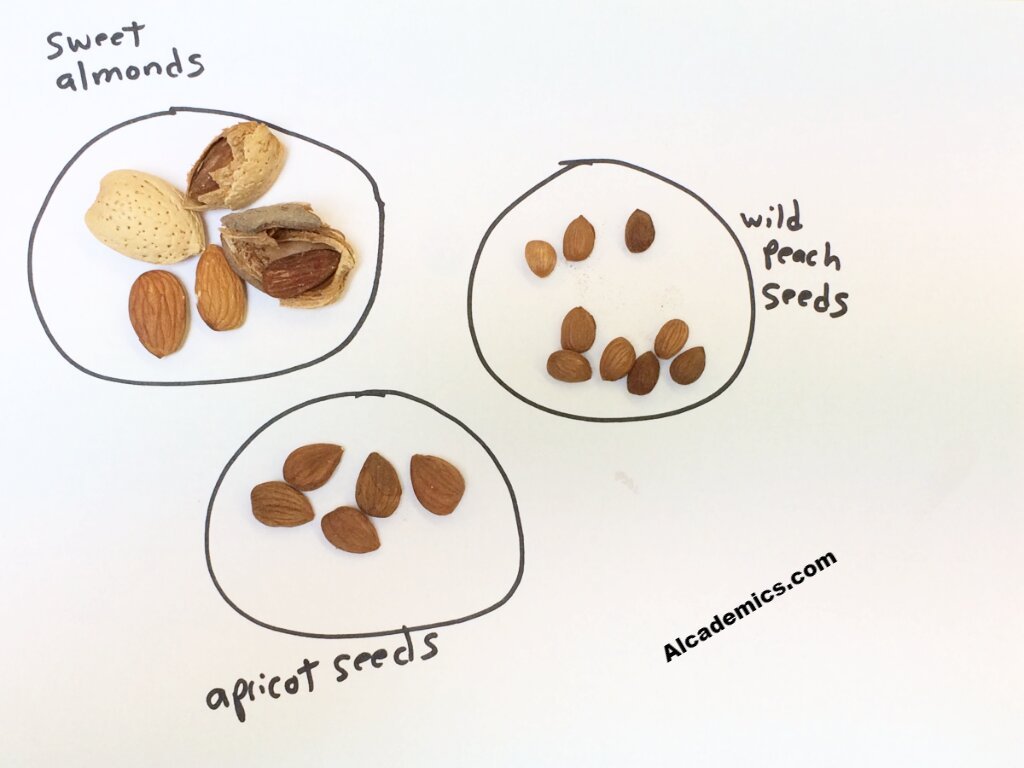
In short:
- Almonds are sweet almonds.
- Bitter almonds are a type of high-cyanide-containing almonds, but also:
- "Bitter almonds" you see for sale/on ingredient lists are usually the seeds of stone fruit like apricots, cherries, and peaches.
According to the TTB: "Bitter Almond Oil produced from the pits of Bitter Almond, Peach, Apricot or Cherry must be free from Prussic Acid (FFPA) as determined by the AOAC Method 973.19." So no matter which type of bitter almond one chooses, it must be free of cyanide.
Another note: There is some confusion (or at least I had some) about whether those stone fruits that resemble almonds are the pits or the seeds of the fruit. Pits are the containers of the seeds, and the seeds are the things that look like tree almonds. So in the picture, you can see that the sweet almonds refers to the seeds, which are surrounded by the pits.
For practical (rather than botanical) purposes, these seeds can also be called kernels.
-
Watch Me Say Things About Japanese Bartending in this Awesome Short Film
Alan Kropf and Matthew Noel made a short film about Japanese bartending in which they interviewed knowledgeable US bartenders, filmed working Japanese bartenders, and also had me say a few things. I sound smart, so you know the editing was great 🙂
But seriously they did a great job on the 17-minute featurette and I think it summarizes the uniqueness of the Japanese bartending style, technique, service, and of course, ice-handling.

Check it out here:


agave alcademics alcohol Angostura bartenders bitters bodega bourbon bowmore Campari Camper English chartreuse clear clear ice cocktail cocktail powder cocktails cognac colored ice curacao dehydrated dehydrated liqueurs dehydration directional freezing distillery distillery tour distillery visit france freezing objects in ice gin hakushu harvest history how to make clear ice ice ice balls ice carving ice cubes ice experiments jerez liqueur makepage making clear ice mexico midori orange orange liqueur pisco potato powder production recipe Recipes rum san francisco scotch scotch whisky sherry spain spirits sugar sugarcane sweden tales of the cocktail tequila tour triple sec visit vodka whiskey whisky