Blog

  • A Visit to a Cooperage in Armagnac

    I had a chance to visit the cooper M. Gilles Bartholomo in the armagnac region of France.  There was no sign out front and we were worried that we would miss it, but luckily a stack of air-drying barrel staves near the road clued us in. 

    This very small cooperage makes only barrels from local Gascony oak. On the property the staves are stacked up to air dry for between two and three years.

    Drying staves M Gilles Bartholomo Cooperage Armagnac

    On the day we visited it had been raining, so we wondered if that would slow the drying process. It turns out that rain is a good thing: it washes out some of the tannins. You may be able to see in this picture a smear of dark brown tannins running off the stack of wood. 

    Smear of tannins running off wood M Gilles Bartholomo Cooperage Armagnac

    Wood that had been air drying longer had less of the tannin run-off in front of it. In front of one stack, there was a small puddle filled with tannin water. I convinced one of our hosts that she needed to taste it first lest it be poison, then I gave it a try: it was slightly woody but very tannic and drying on the tongue.

    Pool of tannins M Gilles Bartholomo Cooperage Armagnac
    Pool of tannins M Gilles Bartholomo Cooperage Armagnac

    This facility produces a whopping 4 barrels per day, between 400 and 700 annually. The cooper says that contrary to rumor, there is no shortage of wood for barrels at the moment. Barrels cost 750 euros each.

    The cooper says that most armagnac barrel buyers request a heavy toast to their barrels. (Remember that for French oak barrels, they are not charred like in bourbon, but toasted.)

    Barrel work 5 M Gilles Bartholomo Cooperage Armagnac
    Barrel work 5 M Gilles Bartholomo Cooperage Armagnac
    Barrel work 5 M Gilles Bartholomo Cooperage Armagnac

    All the excess sawdust from the process is sucked up in a ventilation system then deposited out into a shed, where a machine compresses it into fireplace logs. 

    Sawdust logs M Gilles Bartholomo Cooperage Armagnac
    Sawdust logs M Gilles Bartholomo Cooperage Armagnac
    Sawdust logs M Gilles Bartholomo Cooperage Armagnac


  • Armagnac Baron De Lustrac Visit in Gascony, France

    Armagnac Baron De Lustrac was unique among the 12 armagnac houses I visited in the fall of 2014. Most houses grow grapes or make wine or distill wine or age brandy, but Baron De Lustrac, or more accurately the company Millésimes et Tradition, they mostly bottle up single-vineyard, single-grape, single-vintage armagnacs that have been stored on the property where they were distilled.

    Armagnac Baron de Lustrac sign

    Sometimes they do help with the on-site aging, performing tasks for the cask producers like aerating the brandy as is done in armagnac. The process seems weird but in armagnac small producers are often very, very small and may only make a barrel each year. 

    Baron de Lustrac has made a few vintages that are vintage blends from different vineyards, but this seems like the exception to their usual single-single-single scheme. 

    The property that I visited is really a bottling facility. Here they blend, filter, bring down to proof, and bottle by hand in a two-room garage. All the bottling is on-demand, so when someone calls in an order that's when they go to work. 

    On site, there aren't a mass of barrels rolled in from the farms where it's made (armagnac barrels don't move around much), but they're transferred to plastic containers to bring to here. Some are very small containers, as a customer may have requested a single special bottle from their birth year, etc.

    Containers Armagnac Baron de Lustrac
    Containers Armagnac Baron de Lustrac
    Containers Armagnac Baron de Lustrac

    Their reduction to bottle proof strategy is a lot faster than at other producers: On the day I visited they reduced a 48% ABV 30 liter barrel down to 40%, which requires 53 liters of water. The water is added in stages by half each time: 25 liters, then 12, 6, etc. over the course of one day. (Other producers we visited would reduce little by little over years, often with 'petite des eaux' – water that ages alongside the brandy.)

    Tiny bottling line Armagnac Baron de Lustrac
    Tiny bottling line Armagnac Baron de Lustrac

    Here they also add caramel color before bottling but say it is only an amount that brings the bottle back to the color of the barreled armagnac before they added water to it. 

    We were able to try tiny sips of some very old armagnacs including a 1979 Baco, a 1973 Folle Blanche, a 1965 Folle Blanche, and a 1936 Folle Blanche that had been in barrel until 2009. Our host described as "the youngest old man I ever met."

    1936 armagnac from the pitcher Armagnac Baron de Lustrac 2
    1936 armagnac from the pitcher Armagnac Baron de Lustrac 2


  • Chateau De Laubade Armagnac Distillery Visit

    I spent a great afternoon at Chateau De Laubade armagnac this past fall. Despite the huge fancy estate house, this wasn't much of a vineyard/winery/armagnac house until the 1970s. The property has a history as a research farm and is one of the southernmost properties in the Bas Armagnac. 

    Chateau de Laubade Armagnac 3

    The property has 260 acres (103 hectares) of vines: folle blanche, ugni blanc, colombard, and bcco. Their particular focus is on baco and folle blanche however, but you might not know it from their ratios: 50% ugni blanc, 35% baco, 15% folle blanche, and 8% colombard. 

    The region in which they're located, the Bas Armagnac, has sandy soil full of pebbles. 

    Vines at Chateau de Laubade Armagnac 5
    Vines at Chateau de Laubade Armagnac 5

    The estate property sits on a hill with a beautiful view of the surrounding forests and vineyards. They have even planted a small forest so that in 200 or so years they can make their own barrels on-site. That's some long-term thinking. 

    Though the wood is harvested elsewhere, they dry staves on the property for use in their barrels. These are air-dried for 3 years. Each year they make 70-100 new casks. The oak is all local and they help select the trees that will be used. The oak they like has wide grain and lots of tannins. This gives their armagnac lots of color so they don't have to use any coloring caramel in the bottled armagnac.

    Staves air drying at Chateau de Laubade Armagnac 3 Stave closeup at Chateau de Laubade Armagnac 2

    This year (the end of 2014), they'll be distilling for 32 days. This is a little less than usual due to a smaller harvest. 

    Still at Chateau de Laubade Armagnac
    Still at Chateau de Laubade Armagnac

    As is standard in armagnac, each year they combine the barrels for the year, often reduce it with water, then redistribute it to barrels. The barrels "never ever move",  just the liquid inside them. 

    They have 7 aging warehouses onsite of various sizes, holding around 3000 casks in total.  Some are rather huge, and some are tiny barns. 

    Cellar master filling barrels Chateau de Laubade Armagnac
    Cellar master filling barrels Chateau de Laubade Armagnac

    They do release some pre-1974 vintages from before they were in the armagnac business: these barrels were purchased. Their own still dates to 1975. They have just one continuous armagnac still and they distill 24/7 (as is normal) from October to December. 

    They distill different grapes to different proofs: 

    • Folle Blanche is distilled to 54-56% ABV
    • Ugni Blanc is distilled to 56-59%
    • Baco is distilled to 60-something 

    Every year they try distilling and keep raising the proof until they find the right one. 

    Here they have about a 2.5% angels' share. 

    Paradis at Chateau de Laubade Armagnac 2
    Paradis at Chateau de Laubade Armagnac 2

    The property is also notable because they hire artists-in-residence to build sculptures and installations on the property. The most recent was a cool little cottage dedicated to the angels' share with hoops and barrel staves suspended over water. 

    Angels share art installation at Chateau de Laubade Armagnac (2)
    Angels share art installation at Chateau de Laubade Armagnac (2)

    I'm hoping one day they decide to do writer-in-residence programs instead 🙂


  • The Glorious Return of the Gibson

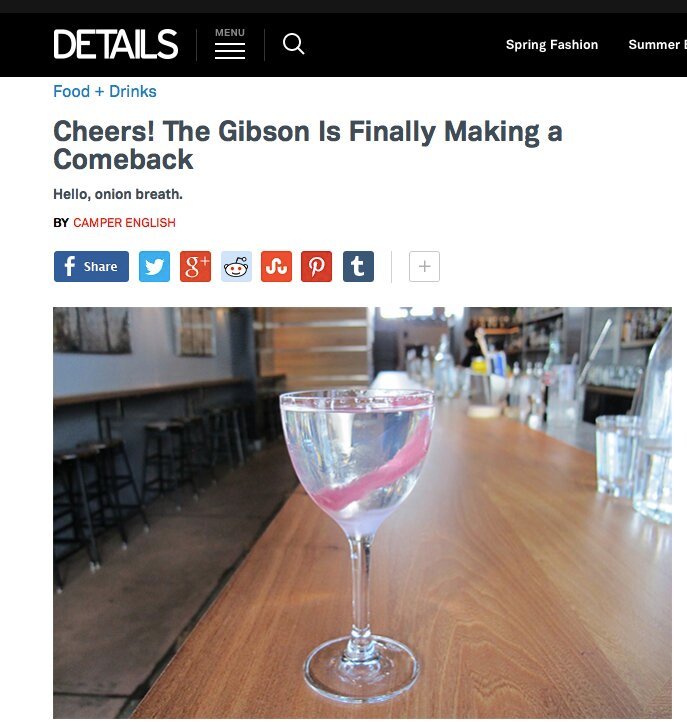
    Over the past year I've noticed the Gibson popping up on cocktail menus, so I decided to have a deeper look and write about it for Details.com. 

    Read the story here


    Screen Shot 2015-04-05 at 8.10.54 PM


  • De Montal Armagnac Distillery Visit

    This fall I visited 12 armagnac houses in France. Some produce armagnac by blending aged eau de vie, some buy eau de vie and age it, some distill and age, some make wine, distill, and age, and some do all of it. 

    De Montal is produced by a coop of grape growers called CPG for Compagnie des Produits de Gascogne, located in Nogaro. De Montal is a brand they make produced for the export market. The company is made of 60 members, all grape growers in the Bas Armagnac region. 

    Armagnac De Montal
    Armagnac De Montal
    Armagnac De Montal

    Distilling at De Montal

    The facility is a huge operation and they make a lot of table wine. The still room is pretty big as well, with three continuous armagnac stills named Athos, Porthos and Aramis for the three musketeers, with a bust of D'Artagnan watching over them. 

    Dartagnan watches over stills Armagnac De Montal

    This year they were producing 5000 hectoliters of spirit. They distill the spirit up to 61-62% ABV in their stills for all their brands made on-site. 

    Three stills at Armagnac De Montal
    Three stills at Armagnac De Montal
    Three stills at Armagnac De Montal
    Three stills at Armagnac De Montal

    They say there is no law about the size of barrels in armagnac, unlike in tequila for example. Thus their 3 stars is aged all in big vats rather than barrels. 

    Warehouse Armagnac De Montal

    Here are some notes on stuff I tried, I believe all at 40% ABV:

    • 3 Stars: Ages in huge barrels, never typical 400L armagnac barrels. 3 stars has the same age statement as VS but is typically of lower quality and used for cooking. 
    • VS: May age a bit in small barrels but mostly in large vats
    • VSOP: 7-8 years, tastes like cognac
    • XO: Around 15 years old: honey/cinnamon toast, woody
    • 1995 vintage: similar notes
    • 1985: buttery, more fruit, forest herbs, tastes more like armagnac
    • 1975: herbs in honey, very good

      Vintages Armagnac De Montal


  • Domaine De Pellehaut Armagnac Distillery Visit

    My visit to Domaine de Pellehaut armagnac was super quick, and so also is this post.

    The production facility is actually pretty huge. They grow vines, make wine, distill, and age on site.

    View from Chateau de Pellehaut 2

    They produce armagnac from the Tenareze region exclusively. Though they own the vines, they don't own the stills: they are serviced by one of the famous roving distillers. These distillers pull up, distill the wine, and move along to the next place. 

    Cows on the property, which are housed adjacent to the winery, are fed grape scraps to eat.

    Cows at Chateau de Pellehaut

    We tried a bunch of cognacs in the tasting room. Here are some notes that you will probably not find useful.

    • L'Age de Glace (ice age): 3 year old armagnac made to be served on ice.
    • 10 year old folle blanche: woody, french oak, balsam
    • Reserve De Gaston: There is a different blend of this in the USA, but the version I tasted had lots of umami and meaty notes with butter and allspice
    • 1989 Ugni Blanc 50% ABV: Tasty, rancio, wood in great balance
    • 1983 Ugni Blanc 48% ABV: All over the place 

    View from Chateau de Pellehaut 3

  • Janneau Armagnac Distillery Visit

    Maison Janneau armagnac is located near the town of Condom. It is the #1 exported brand of cognac, and it was purchased 10 days before my visit. 

    The brand was founded in 1851. In the 1970s it was sold to Martell cognac, then Martell was sold to Seagrams, then when Seagrams broke up it was sold to an Italian importer, then just sold to Spirits France. It is not currently for sale in the US, but that could certainly change. 

    Armagnac Janneau

    Making Armagnac at Janneau

    Janneau does not own vineyards. They purchase wine from about 20 different producers and distill it themselves. They purchase wine from all the top four grape varietals grown in both the Bas Armagnac and Tenareze regions.  

    They have both a typical armagnac column/continuous still and pot stills. They are one of just 3 armagnac houses that uses pot stills. They say that double pot still distillation is better for young armagnac. 

    Column still Armagnac Janneau

    The pot still for the first distillation is a huge 100 hectoliters still. It produces 40 hectoliters of spirit at 32% ABV after the first distillation. 

    The spirit is then split up and put into smaller stills for the second distillation. Each of the 25 hectoliters stills is filled with 20 hectoliters of spirit. During distillation, the first 50 liters are heads, then the heart is 700 liters at around 70-72% ABV, then the tails are 600 liters. In total, 100 hectoliters of wine produces 1400 liters of eau de vie using the pot stills. 

    Heads and tails are redistilled with the next batch, not discarded. 

    Pot stills Armagnac Janneau

    Dilution and Aeration of Armagnac

    Armagnac needs a lot of aeration during aging, according to my hosts. The distiller says that the aeration doesn't diminish the aroma or blow off much of the alcohol in the aging spirit, but it helps homogenize together the brandy while aging. (In armagnac, standard procedure is to combine aging barrels' contents together and redistribute them each year, rather than letting the barrels get empty as they evaporate due to the angels' share.) As far as I can tell, this is pretty unusual or at least not discussed in other spirits. 

    Brandy typically comes off the still at 70% ABV when they double distill in pot stills. They dilute it to 65% before putting it in the barrel (when they single distill, they distill it up to 65% and don't need to dilute). They reduce the proof by 5% ABV each year until it reaches 50% ABV in three years, then decide how to use it – for which bottling. Each year when they do this they purposefully aerate the armagnac. 

    We happened to be there as they were dumping out some barrels to redistribute – they pour the brandy through a metal grate to help it aerate. 

    Dumping barrels Armagnac Janneau 3

    Aging and Bottling

    Janneau's headquarters are quite amazing: It looks like an office with a garage entrance next to it, but then they gave us the tour. The structure is actually a gigantic barn with huge ceilings. We went down to the basement level where there were barrels aging beneath the ground floor offices, then another level beneath that. It was built, out of wood as far as I can tell, in 1851. 

    Downstairs cellars Armagnac Janneau
    Downstairs cellars Armagnac Janneau
    Downstairs cellars Armagnac Janneau

    We also visited a large and newer warehouse with metal racks for the barrels.

    Warehouse Armagnac Janneau

    One of the unique characteristics about armagnac is that often the aging facilities are combined with the offices and are centrally located. (There are more examples of this I'll talk about in other armagnac distillery visits from this trip.) Some aging warehouses are right near the centers of town – crazy given the amount of flammable liquids stored inside. 

    Janneau produces two different lines; the classic and the single-distillery line. Confusingly, the single-distillery line is all double distilled armagnac. But this allowed us to taste some comparisons: I tried an 18 year old single- and double-distilled armagnac blend versus an all double-distilled bottling. The one with some single-distilled armagnac had more body and texture, while the double distilled was thinner with more woody notes including allspice. 

    For my second armagnac distillery visited, this was pretty overwhelming in a good way. 

    1893 brandy Armagnac Janneau


  • Armagnac Marquis de Montesquiou Visit

    Marquis de Montesquiou is an armagnac brand owned by Pernod Ricard. It is their smallest production facility of all their brands, according to cellarmaster Eric Durand. The brand was created after WWII. 

    Armagnac Marquis De Montesquiou

    Eau De Vie

    They do not own vineyards nor a winery: they purchase eau de vie (distilled grape brandy) and produce armagnac with it. 

    The eau de vie they buy is primarily from the Bas Armagnac region, but they do buy some from the Tenareze which Durand says adds structure and freshness. They buy primarily from 10 producers, a little bit more from others. 

    The grape varietals they use are:

    •  50% Baco "for the flesh"
    • 40% Ugni Blanc "for the skeleton"
    • 10% Folle Blanche "for the spirit"

    They buy only eau de vie distilled in the traditional continuous armagnac still. They have contracts with several distillers.

    Warehouse Armagnac Marquis De Montesquiou

    Aging and Blending

    We visited the warehouse, named the Cathedral for obvious reasons. It holds 1000 barrels. It was built in 1975, and it looks it. 

    They age only in local Gascon oak in 400 liter barrels. They buy 20-50 barrels per year- not a lot! Some of the eau de vie is aged in the producers cellars – this is because some of those are more humid than this drier one. It is moved to this warehouse later.   

    Warehouse Armagnac Marquis De Montesquiou 2

    Durand says if you add water to dilute armagnac all at once it's called "breaking" the armagnac. Instead they dilute slowly 3-4 times over the course of aging. Durand says when you add water little by little it increases fatty acid sedimentation, which is apparently a good thing during aging. (They will come out just before bottling as they chill filter.)

    • The VS and VSOP have color added, the rest do not. 
    • The VSOP is aged 8-20 years
    • The XO is aged 20-40 years
    • The 1989 vintage is 100% folle blanche grapes from the Bas Armagnac region. It's bottled cask strength at 42.1% ABV
    • Cuvee D'Artagnan includes some vintages from 1896, 1929, and the youngest armagnac in the blend is from 1974.


      Warehouse Armagnac Marquis De Montesquiou 3


  • What’s the Difference Between Cognac and Armagnac?

    If cognac is tequila, armagnac is mezcal: Smaller, wilder, and more rustic.  I covered the history and production of armagnac in yesterday's post

    In this post I'll cover some of the differences between these two French grape brandies. One difference I forgot to mention below is that they're produced in different parts of France! 


    Armagnac Cognac
    Four primary grape varieties One primary grape variety (ugni blanc)
    Usually distilled once in a continuous still. Distilled twice in pot stills.
    Features vintages as well as blends Features more blends, few vintages
    Is consumed more locally    Is more an export product
    VS = 1 year minimum VS = 2 years minimum
    Often ages in local Gason oak barrels Ages in Limousin/Troncais oak barrels
    Often distilled to lower proof ~57% Distilled higher ~70%
    Grapes cost the same price whether from Bas Armagnac or Tenareze Grande Champagne grapes way more expensive than from other regions 
    More sandy soils in region More chalky soils in region
    Allows for an unaged product "Blanche De Armagnac"  Technically, no unaged variant permitted

    Beyond production differences, the two aged brandies taste significantly different.

    In my opinion, cognac tends to have a very sturdy but subtle backbone of aged grapes, while the aromas are are often delicate, ethereal, and floral.

    Armagnac I think of as "foresty," meaning there are often flavors I associate with the forest floor: wood, mushrooms, herbs, dirt. Mmm, dirt. 

    It's okay to drink them both. 

    Old bottles Armagnac Janneau

  • Introduction to Armagnac: History and Production

    Armagnac is a French grape brandy most similar to cognac, but ultimately very different in production and flavor profile. 

    In this post I'll cover the basics of armagnac. In the next post, I'll discuss the main differences between cognac and armagnac

    Armagnac History

    • Vines were introduced by the Romans circa 50 BC
    • The oldest document of armagnac production is from 1310, making armagnac over 700 years old and 150 years older than cognac. 
    • In 1879, phylloxera hit the region and destroyed half the vineyards. It wasn't worse because the Bas Armagnac region has sandy soils and the phylloxera mites didn't thrive in it.
    • 1936 the AOC was created and in 1941 the BNIA, the Armagnac Bureau, was created. 
    • In 2005, armagnac laws changed to allow blanche de armagnac – unaged armagnac

    Armagnac Region

    Armagnac is produced in the Gascony region of France, south of Cognac and more inland. They produce a lot of wonderful delicacies in the region and also foie gras that is the product of animal torture. In addition to grapes, they grow a lot of corn, which is used to force feed ducks. 

    The region has its own microclimate with the Pyranees mountains on one side and pine forests on the other to block winds.

    Arm

    There are three terroirs/appellations in the region. These are often found on the bottle labels. Hardly any armagnac is produced in the Haut Armagnac – only 1%. 

    • Bas-Armagnac
    • Tenareze
    • Haut-Armagnac

    CARTE ARMAGNAC 2014_2

    Ten grape varietals are allowed to be used in armagnac, but in reality people only use the first four:

    • Ugni Blanc 55%
    • Baco (aka Baco 22A) 35%
    • Folle Blanche 5%
    • Colombard 5%
    • Plant de Graisse
    • Meslier St François
    • Clairette de Gascogne
    • Jurançon blanc
    • Mauzac Blanc 
    • Mauzac Rosé 

    Baco is a hybrid grape and was going to be disallowed in armagnac (I believe this was due to an EU law), but they decided it would be allowed only for distillation, not table wine so it remains. 

    Folle Blanche was the main pre-phylloxera grape.

    Armagnac Fields of Vines2

    Distillation and Aging

    Grapes are harvested in the fall and the wine is distilled throughout the winter. All distillation must be finished by March 31. 

    As with cognac, the ideal grapes are low in alcohol and high in acid so that their flavors will compound through distillation and the wine is less likely to spoil in the weeks or months between harvest and distillation. (No sulfur is added to preserve the wine.)

    The wine is distilled on the lees, but only on the fine lees so it doesn't gunk up the stills.

    95% of armagnac is distilled in an Alambic Armagnacais, a small, sometimes mobile, continuous column still. The mobile stills have names, and producers will request the same stills each year. 25% of stills are wood-fired; the rest are gas. 

    The rest is distilled in pot stills, usually the typical cognac stills. Only 3 producers use pot stills. 

    Arm still

     This video does a good job at showing how armagnac flows through the continuous still. The good stuff begins at 1:30. 


    The plates inside the stills have what the bourbon distillers call "bubble caps" in different shapes – spiders, mushrooms, centipedes, or little houses.


    • Mushroom still plates Armagnac Delord
    • House shaped plates Armagnac Delord
    • Centipede plates at Armagnac Gelas
    Centipede plates at Armagnac Gelas


    In the continuous still, the vapor and wine are in contact with each other. This isn't the case in pot stills. There are no heads and tails cuts in continuous stills. 

    The maximum number of plates allowed by law is 15. Some distillers use as few as 3 plates, but the average is probably 5-8 plates. 

    Aging Armagnac 

    Armagnac is aged in large 400 liter French oak barrels. Many barrels are made from the local Gascon oak aka Black Oak. This wood has wide grains and most of it is given a medium-heavy toast.

    Limousin and other French oak barrels with narrow grains are also used. I'm not sure of the ratio of local to non-local barrels. 

    Barrel tight and toast M Gilles Bartholomo Cooperage Armagnac

    As with cognac, armagnac typically goes into new barrels for 6 months to 2 years of its life, then is transferred to used/older barrels so that the wood won't dominate the flavor. 

    Armagnac producers make a point of aerating their brandy while it ages, typically when mixing a bunch of barrels together and redistributing it. Typically when they move the brandy around in the aging warehouses they don't roll barrels – they pump out the brandy and pump it into other barrels. 

    Different grape varietals are often aged separately. 

    Dumping barrels Armagnac Janneau

    Minimum Aging Laws for Armagnac

    • VS: 1 year
    • VSOP: 4 years  
    • NAPOLEON: 6 years 
    • XO: 6 years 
    • 20 years  20 years  
    • Vintage:  Single Harvest from the year on the label (minimum 10 years old)

    Blanche de armagnac is unaged armagnac, but it is rested a minimum of three months in non-reactive containers, typically stainless steel. Once a batch has been declared that it will be blanche de armagnac, if it sits in tanks but doesn't sell they're not allowed to then age it in wood. 

    In fact this is the same with all armagnac: for each season the growers must declare which parcels will be for wine, blanche de armagnac, and armagnac. 

    Additives in Armagnac

    Typical additives in armagnac include coloring caramel (8-10 g/l is typical), sugar, and boise. The latter is wood flavoring to immitate age. The BNIA says it's not commonly used in armagnac, but they would.

    Those three additives combine to form the "obscuration rate." A company can measure the "gross" ABV, which is the number that goes on the bottle as measured by a hydrometer. The "real" ABV is measured in a laboratory, usually by redistillation. The difference between the "real" and "gross" ABV must be less than 4%. So rather than having a legal limit on sugar or caramel or boise, they have a limit on the total additives using the obscuration rate measurement. The BNIA representatives says it's rare that the obscuration rate is more than 2%.  

    Paradis Armagnac Dartigalongue (2)
     

    Learn more about armagnac from the BNIA's website.

    In the next post, we'll cover the difference between cognac and armagnac


agave alcademics Angostura bartenders bitters bodega bourbon bowmore Campari Camper English chartreuse clear clear ice cocktail cocktail powder cocktails cognac curacao dehydrated dehydrated liqueurs dehydration directional freezing distillery distillery tour distillery visit france freezing objects in ice hakushu harvest history how to make clear ice ice ice balls ice carving ice cubes ice experiments isle of jura jerez liqueur makepage making clear ice mexico midori molasses orange orange liqueur penthouse pisco potato powder production recipe Recipes rum san francisco scotch scotch whisky sherry spain spirits sugar sugarcane sweden tales of the cocktail tequila tour triple sec visit vodka whiskey whisky