Blog

  • Japanese Bartending Technique

     Orgo6s
    (Photo taken at Orgo in 2009)

    Last summer when I was in Singapore I had the chance to experience Japanese bartending for the first time. I went to Koffe Bar K, a chain with I think just one outpost in Sinagpore. They do ice ball carving there, though I didn't think to ask to see it. The menu was a giant picture book of mostly-awful looking blue and green drinks, but my friend always orders classics like the Sazerac there. I had the only good Singapore Sling I would drink in Singapore.

    Before making the drink, the bartender pulled down all the bottles and set them label-facing the customer. His movements were precise and nearly robotic, as he measured each ingredient and mixed the cocktail while keeping his work station meticulous, pausing to wipe away any stray drop with a white bar cloth.  When we finished and got up to leave the bar, the bartender literally ran out from behind his post to go hold the door for us. He asked if we were taking a taxi and ran again out to the curb to hail one for us, again holding the door and bowing ridiculously low as he did so.

    Later that week I went to Orgo, a rooftop bar specializing in blended mixto margaritas also run by Japanese barmen. They did a surprisingly good job with what sounded like awful recipes. Here too, a formality was in place with each person behind the bar handling specific tasks and each task having a specific movement associated with it. It's kind of a formal form of flair bartending.

    What I remember most about these two bars was not the drinks, but the bartenders and the level of service. There are plenty of bars in the US with ultra-attentive and doting bartenders, most often the bars at fine dining restaurants where the bartender is also your waiter and busboy. I've found most of them to have a friendly, rather than formal, demeanor, and that's just fine with me.

    There is a lot that American bartenders can learn (or at least study then decide to dismiss or not) from the Japanese style of bartending. From tricks like carving an ice ball (is this neccesary anymore now that there are machines to do it for us?) to the Hard Shake (a shaking technique that may be more about aeration then it is chilling) to the deft handling of bar tools: are these useful in an American bar (professional or home) or just flair?

    I hope to find out. I'm attending a seminar on just that topic in New York on May 3 and 4: Japanese Cocktail Technique.

    Japanese-banner

    The seminar features Japan's most famous bartender Kazuo Uyeda of Tender Bar in Tokyo, along with Stanislav Varda, a student of Uyeda who spreads the word of the Hard Shake and other Japanese bartending techniques with his Analog Bar Institute. This will be Uyeda's first time speaking in New York, coinciding with the release of the English language version of his book Cocktail Technique.

    Part of the session will be dedicated to technique- making ice balls and learning the Hard Shake- and part to philosophy with topics like "exploring color" and "developing your ability to concentrate." I'm also hoping to learn about the mentor and apprentice programs they have in Japan- people tell me that there are several levels of bartenders working beneath the head bartender and that you have to reach a certain level before you are even allowed to pour water for a customer. 

    Tickets are available at CocktailKingdom.com for $675 for two days. Yep, it's a lot, so there's that.

  • Home Bar Recommendations: One of Each

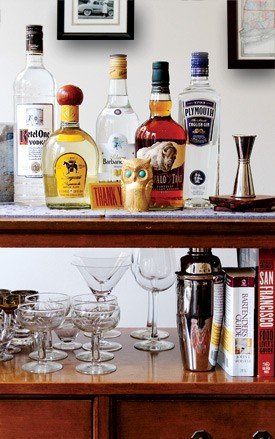
    OneofeachWhen Jonny Raglin and Jeff Hollinger were looking to open Comstock Saloon (hopefully this month), they had a big limitation to work with: the size of the back bar. It only has room for one or two types of each base spirit. This is a challenge for Raglin in particular as between his former post as Bar Manager at Absinthe and his consultant gig at Dosa on Fillmore he was working with probably 30 different types of gin alone. 

    This inspired a story I wrote for the April edition of 7×7 magazine. I also spoke with Martin Cate of Forbidden Island who had the luxury of choosing over 200 rums for the bar, but that didn't leave room for much else. Before opening he sent out an email requesting advice on one of each tequila (blanco, reposado, anejo) for the bar. I also spoke with Marcovaldo Dionysos, who was very selective when choosing the bottles for Clock Bar. He said he had to balance familiar brands that consumers know with less-recognized spirits he'd prefer to work with. 

    In the story I asked each of Raglin, Cate, and Dionysos to pick one of
    each- vodka, tequila, rum, whisky, and gin- that would work the best in
    the most cocktails, while also being good enough for sipping. The
    results should point home mixologists who may also not have room for 30 brands of gin toward the one bottle to buy.

    The Ultimate Five-Bottle Bar, Perfect for Apartment Dwelling

    by Camper English

    What happens when the city’s top bartenders are forced to choose? Introducing the ultimate five-bottle bar, perfectly sized for apartment dwelling. 

    Click the link above to read the story. In the print edition there are also recommendations for one each of sweet and dry vermouth and an orange liqueur/triple sec.

  • Traveling in Style at the Cocktail World Cup

    [This is one of many posts submitted live from the 42Below Vodka Cocktail World Cup
    international cocktail competition. For official event photos, go here. For my
    photos, go here.]

    On the fourth day of the Cocktail World Cup in New Zealand, we began the day in Queenstown, New Zealand and ended it in Wellington. Keeping with the theme of this year's event, Love, Drinks, and Rock and Roll, we did it all in superstar style. 

    First we had a morning lecture at top of the Gondola in Queenstown with Jim Meehan of PDT in New York (now the second person I've traveled with to three non-US countries) and Vernon Chalker of the Gin Palace in Melbourne. 

    Gondola ride
    Camper gondola view queenstown
      

    Then we took helicopters from the top of the mountain down to the airport.

    Helicopter1

    Then we took a private plane from Queenstown to Wellington. In the seat pockets were costumes and sunglasses that made the ride a heck of a lot of fun. 

    Private plane to wellington girls

    Then we were met by a team of people dressed as 1950's journalists with flashbulbs swarming the bartenders like paparazzi. We made our way through the crowd and into ridiculous stretch Hummer limos to the hotel. What a way to travel. 

    More updates to come…  

  • The New Sweet

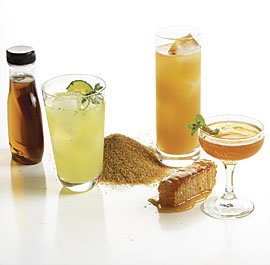
    Sweet-cocktails_ld The story on cocktail sweeteners I wrote for the April/May issue of Fine Cooking magazine is now online. 

    You can read it here

  • Fine Cocktails in Fine Cooking Magazine

    I have a story in the new March/April issue of Fine Cooking magazine. It's about the variety of ways to sweeten cocktails with raw sugars, maple syrup, agave, honey, etc.

    FineCookingMarchAprilCover

    Pick up a copy to find a Mamie Taylor variation with evaporated organic cane sugar by Thad Vogler of Bar Agricole in San Francisco, an agave-sweetened refresher from Ted Kilgore of Taste by Niche in St. Louis, and a honey champagne bittered mojito variation from yours truly.  

    I hope to blog some more information on various types of raw sugars I learned about while researching the story, as it might be useful. I was on the phone to sugar scientists conducting interviews for a couple hours and it turns out it's pretty hard to describe exact differences in any meaningful way. But I'll try when I get the chance.

    In the meantime, run screaming to your local newsstand to pick up the new copy of Fine Cooking!

  • Better Cocktails Creep Into the Castro

    My first story written for 7×7 Magazine is now online. 

    Castro's Last Stand

    Long a bastion of bad drinks and a good time, the city’s biggest party neighborhood is slowly but surely learning how to wield a muddler.

    by Camper English

    Badlands
    While the Tenderloin, Mission and Haight are reveling in white whiskeys and raw sugars, in the Castro, bartenders are still called bartenders, and the drink of choice is more likely to be an appletini than something made with absinthe. From Martuni’s to Moby Dick, drinks in the gay sector are still mixed with vanilla vodka, Long Island Iced Teas make up the happy-hour specials, and mojitos come in more than one flavor. Popular venues, like Toad Hall and Badlands, skip the cocktail menu altogether.

    As of late, however, there have been a few glimmers of change. 

    Read the rest on the 7X7 website

  • A Trip to Guatemala for Zacapa Rum

    The other week I went to Guatemala to learn about Zacapa rum at the source. It was great.

    The sugar cane for Zacapa is sourced from the western part of Guatemala, near the Pacific coast where it is hot and humid. Here they cleaned up the cane field for the demonstration of cutting. In reality they burn the fields first to get rid of all the low leaves and any critters that might be hiding. This is pretty common practice where sugar cane is cut by hand, as it is for Zacapa.

    Zacapa sugar cane field harvest demos

    Then the cut sugar cane is trucked to the distillery not far away.

    Zacapa sugar cane field trucks 

    At the distillery, the cane is crushed with giant roller mills to extract the juice.

    Zacapa distillery sugar cane presss
    Zacapa distillery colorful sugar cane press areas

    For most rum production, this juice is then processed to make sugar. The sugar is sold separately and the leftovers from the production, molasses, are used to make rum. (There is still enough sugar left in molasses to ferment and be distilled.)

    But at Zacapa, like on Martinique (rhum agricole) and in Brazil (cachaca) they don't bother making sugar out of it but turn all the juice into rum and aguardiente. For rhum agricole and cachaca they directly ferment and distill the sugar cane juice. Here at Zacapa, they instead condense the juice into a syrup by filtering and heating the juice to boil off the water. This condensed sugar syrup (they call it 'virgin sugar cane honey') can be stored for up to a year so that they can harvest the sugar cane during its season but distill year-round.

    Zacapa distillery control room views

    The 'honey' is fermented and distilled here at the distillery near the sugar cane fields. But the newly-distilled rum is barrel aged elsewhere.

    All the premium rums made at the distillery (Zacapa and Botran) are trucked up a mountain where the weather is cooler and temperatures are more consistent year-round. This allows for slower aging of the rum. 

    Rather than truck up the windy roads, we rode in helicopters over the mountainous terrain. I found this terrifying.

    Copter view2s

    It was so cloudy when we arrived we couldn't land at the tiny airport, and had to land in a soccer field a short distance away. This was a *big deal* in the village, and probably a hundred people came out to see us land and slowly get up close, take photos and touch the helicopters. People were super curious and we all felt like rock stars for the attention.

    Quetzaltenango landing kids4s

    At the aging facility, it was much cooler than at the sugar cane fields.

    Zacapa aging facility barrel storages
    Zacapa aging facility1s

    There the rums are aged and blended according to Zacapa's unique process. I'll address this in tomorrow's post, because it's kinda complicated.

  • Chartreuse Goes Through The Roof

    First, they came for our bitters. Then they outlawed our egg whites and our infusions. What more could go wrong for bartenders this year?

    I'll tell you what: Chartreuse now costs $11 more per bottle. 

    Chartreuse_Verte

    The wonderfully complex liqueur made by monks has been a favorite of bartenders who mix it into cocktails like the Chartreuse Swizzle and Laphroaig Project  at work and consume chilled shots of the stuff when not on the clock. Now those fancy cocktails are going to cost a little bit more.

    I spoke with Antoinnette Cattani of Cattani Imports, the Chartreuse broker for the California market. She said that the unannounced increase is national and will affect prices both at retail outlets and in bars. The VEP (high-end versions) are also increasing. The VEP Green will now cost $119 and the VEP Yellow $118, says Cattani. 

    But here's the good news: It doesn't look like all retailers have figured this out. While Beverages & More is now selling the Green Chartreuse for $62.99, a Google Shopping search revealed several online retailers still offering 750ml bottles of it for $40-$45.

    So if your bottles are running a little low or you just want to stock up, it might be time to do some online shopping. 

    *Breaking News Feb 23 1:51PM – It appears prices are being readjusted again. Still an increase, but perhaps a few dollars less than it was. I have also learned that because of retail mark-ups, the cost increase on retail bottles is likely to be even higher than it is to bars. Either way if you can still get it for cheap it's best to do it now.

    *Update Feb 23 3:44PM – I've learned that the price increase has been reduced from the approximately $11 increase per bottle on Green Chartreuse to about $7 as of today. Retail increases will likely be a little more. Look for the sky-high prices to drop a bit soon.

  • Curing Olives at Home, Part II

    This post is a continuation of this one on how to brine olives at home.

    My olives went from this:

    Raw-olives-bowl5s

    To this:

    Martiniglass4s

    To see the process, keep reading by selecting the link below.

    (more…)

  • Bars Inside Other Bars

    In my latest story for San Francisco Magazine, I talk about bars opening inside other bars.

    The-Hideout-4778.full

    Photograph by Chris Brennan

    Make it a double

    These bars within bars offer patrons a choice of drinking styles.
    By Camper English

    The hottest haute cocktails require a range of syrups, bitters, fresh herbs, several types of gin, a lot of storage space, and extra time to make every drink. One way in which bar owners are handling the demand is by dividing and conquering, opening two bars in a single venue—one to promote quick service, the other for slow sipping.

    Until recently, the back room at Dalva was a barren spot more suited for storage than for socializing, and it was often used by customers sneaking illegal indoor cigarettes. But with a fresh coat of paint and a bit of remodeling, including a custom-made bar and wrought-iron accents, this area has been rebranded as a boutique interior cocktail lounge called the Hideout. 

    Continue reading the story at the San Francisco Magazine website

agave alcademics Angostura bartenders bitters bodega bourbon bowmore Campari Camper English chartreuse clear clear ice cocktail cocktail powder cocktails cognac curacao dehydrated dehydrated liqueurs dehydration directional freezing distillery distillery tour distillery visit france freezing objects in ice hakushu harvest history how to make clear ice ice ice balls ice carving ice cubes ice experiments isle of jura jerez liqueur makepage making clear ice mexico midori molasses orange orange liqueur penthouse pisco potato powder production recipe Recipes rum san francisco scotch scotch whisky sherry spain spirits sugar sugarcane sweden tales of the cocktail tequila tour triple sec visit vodka whiskey whisky